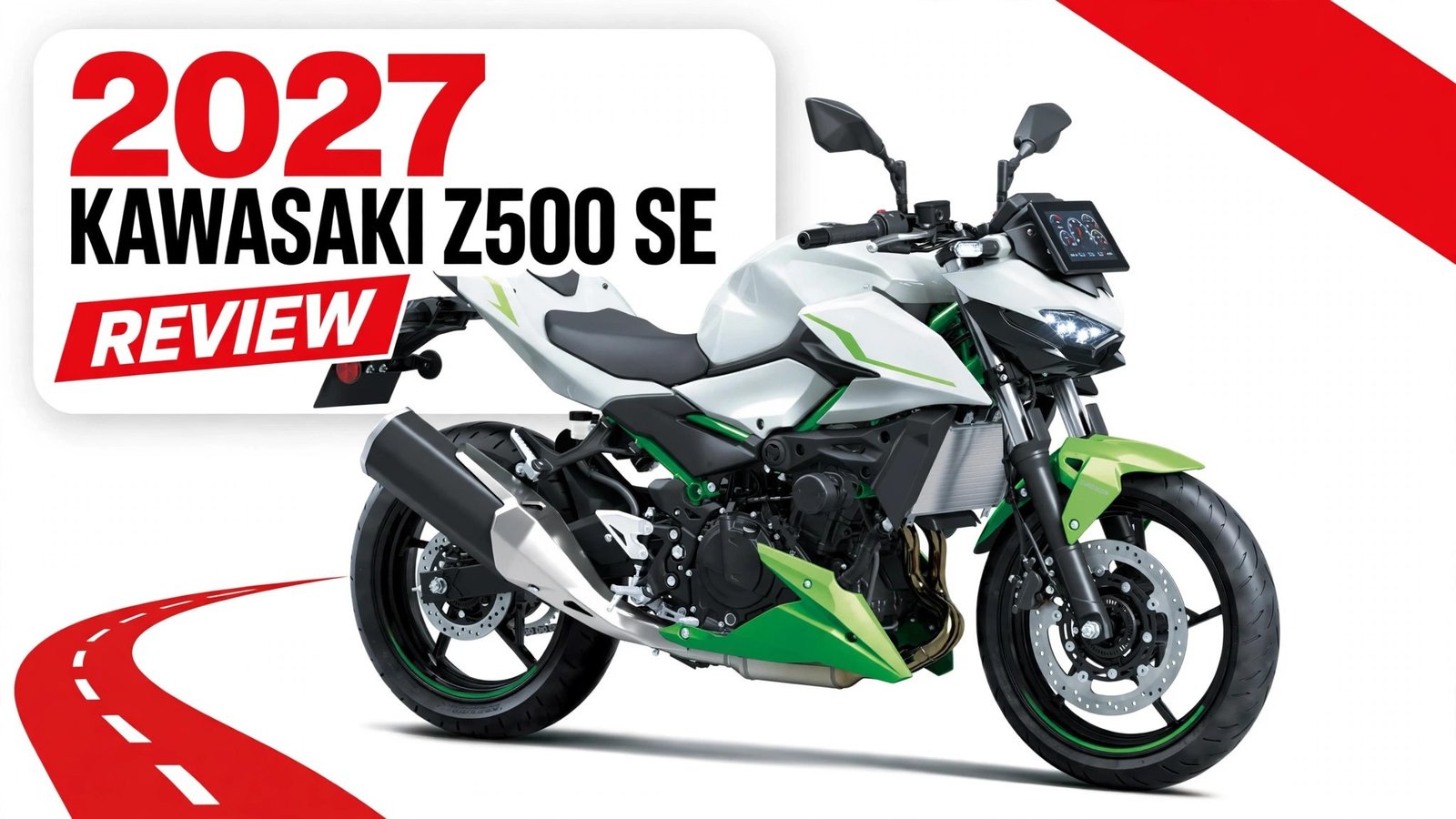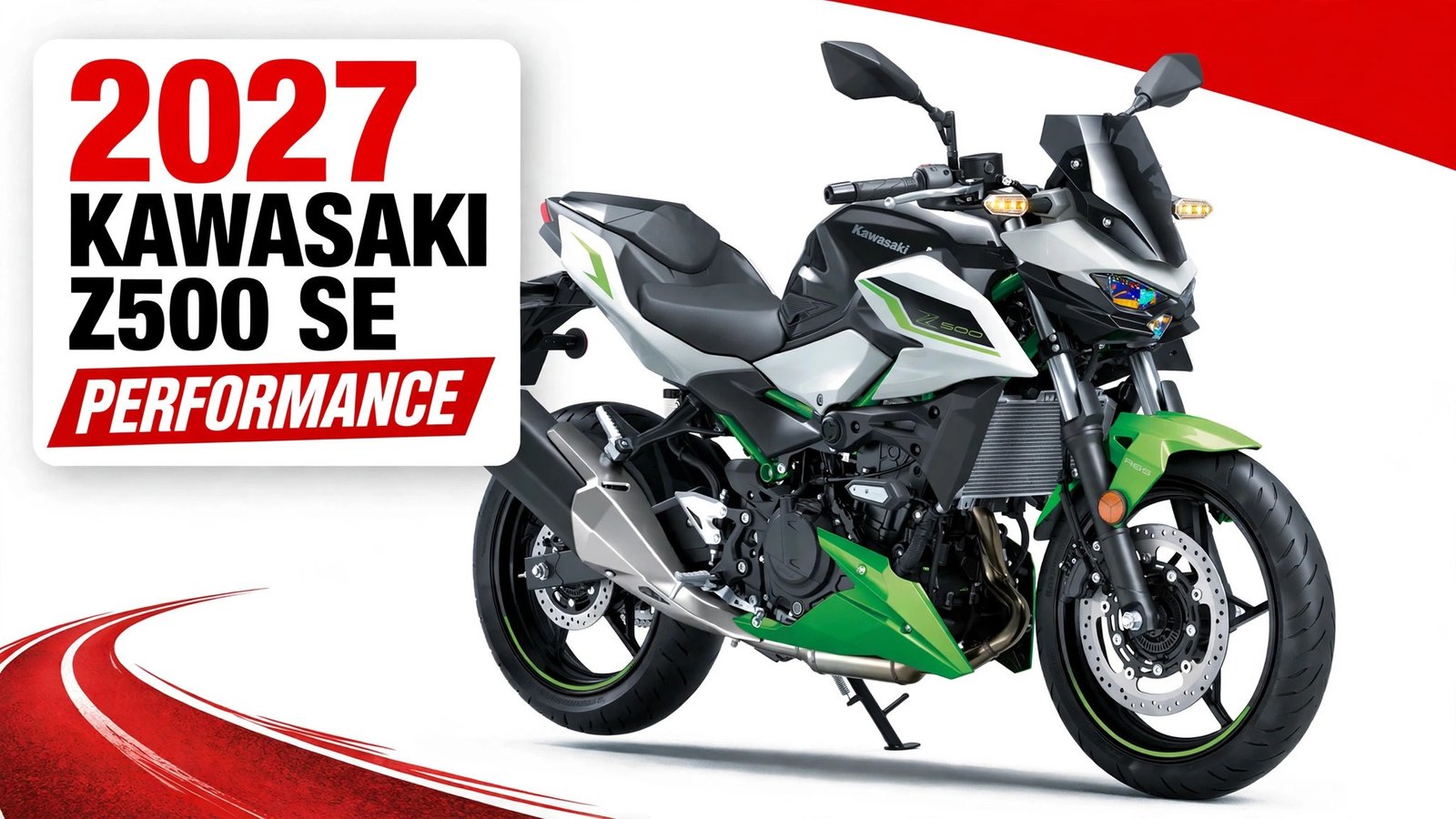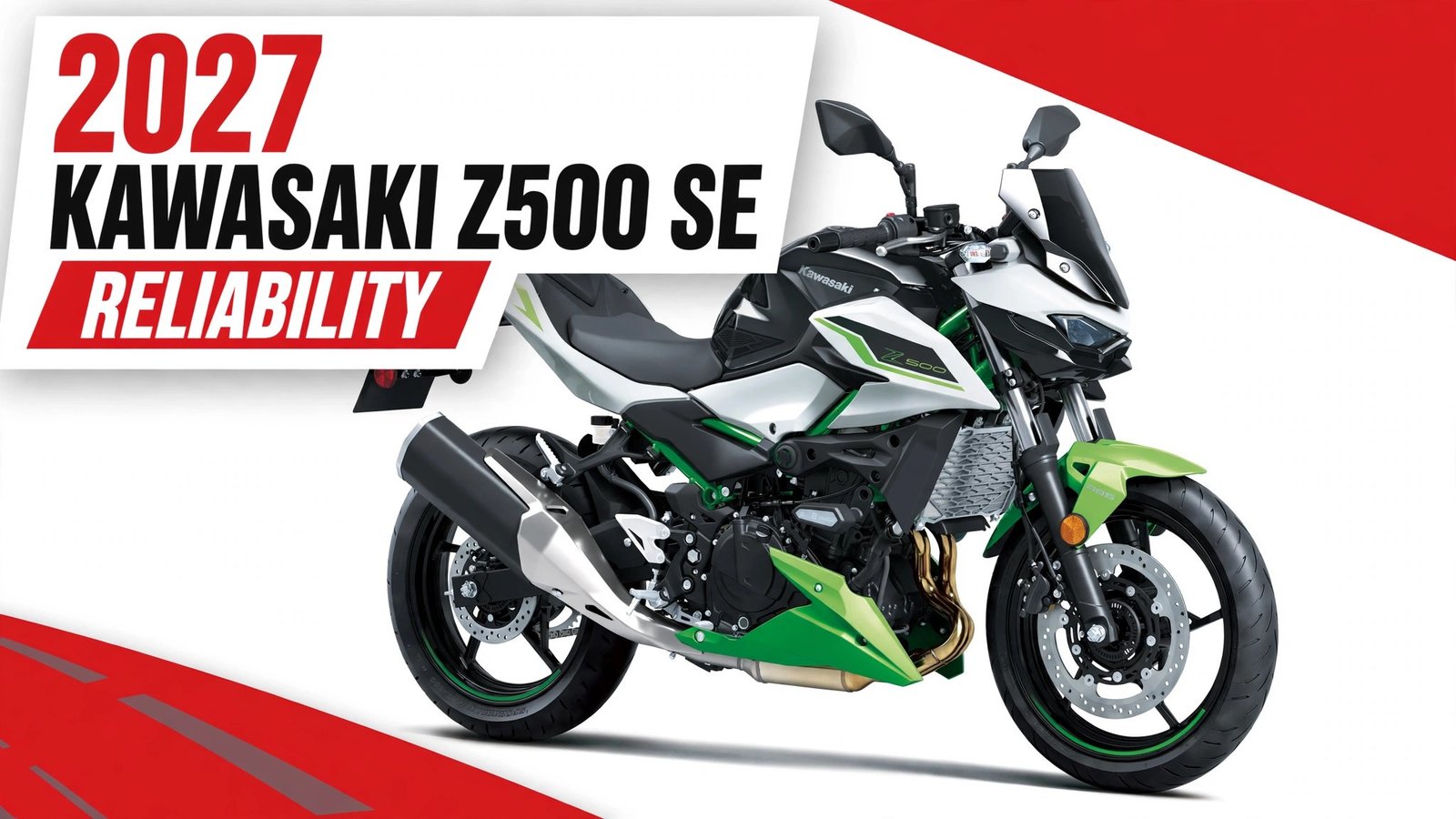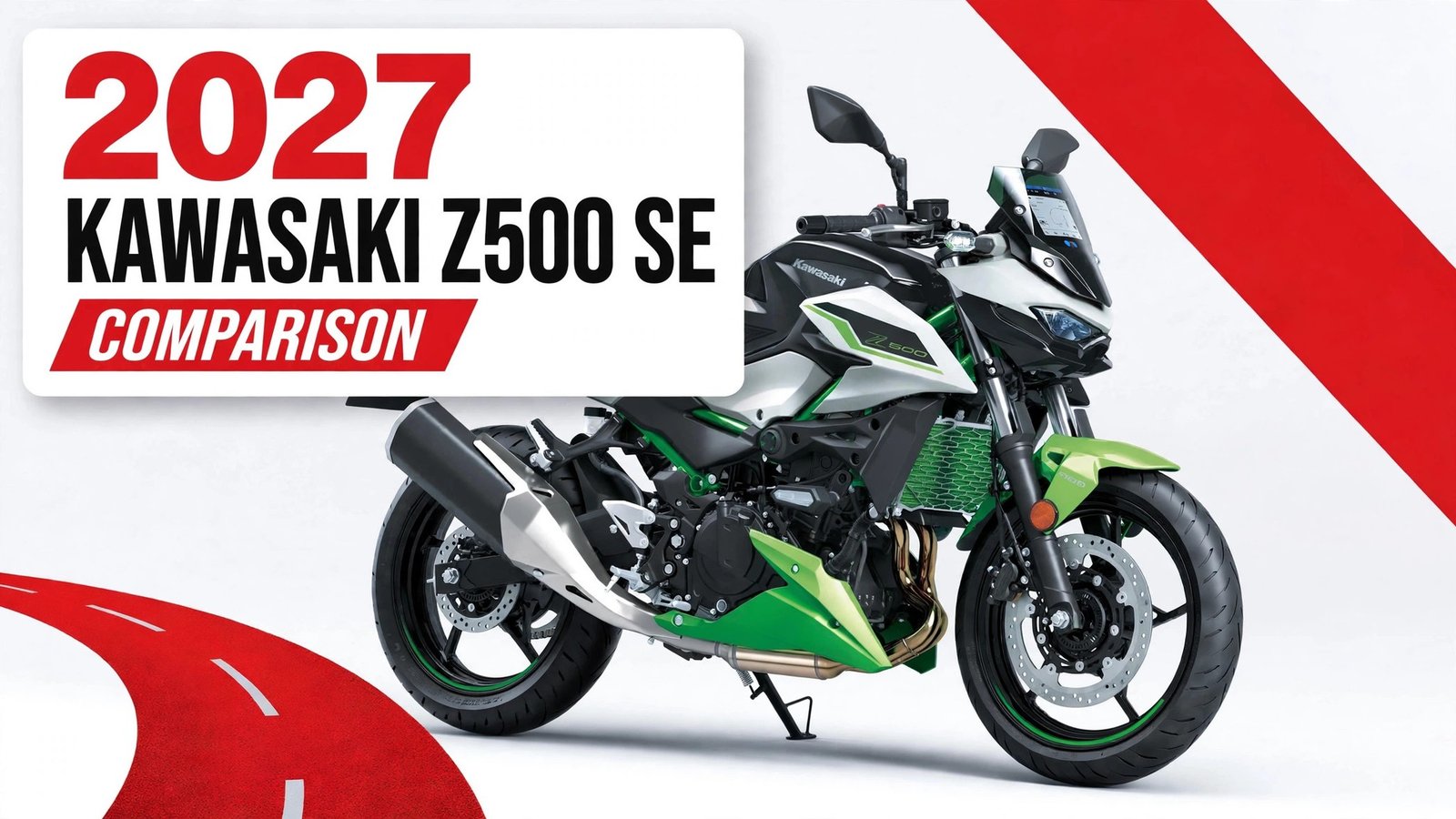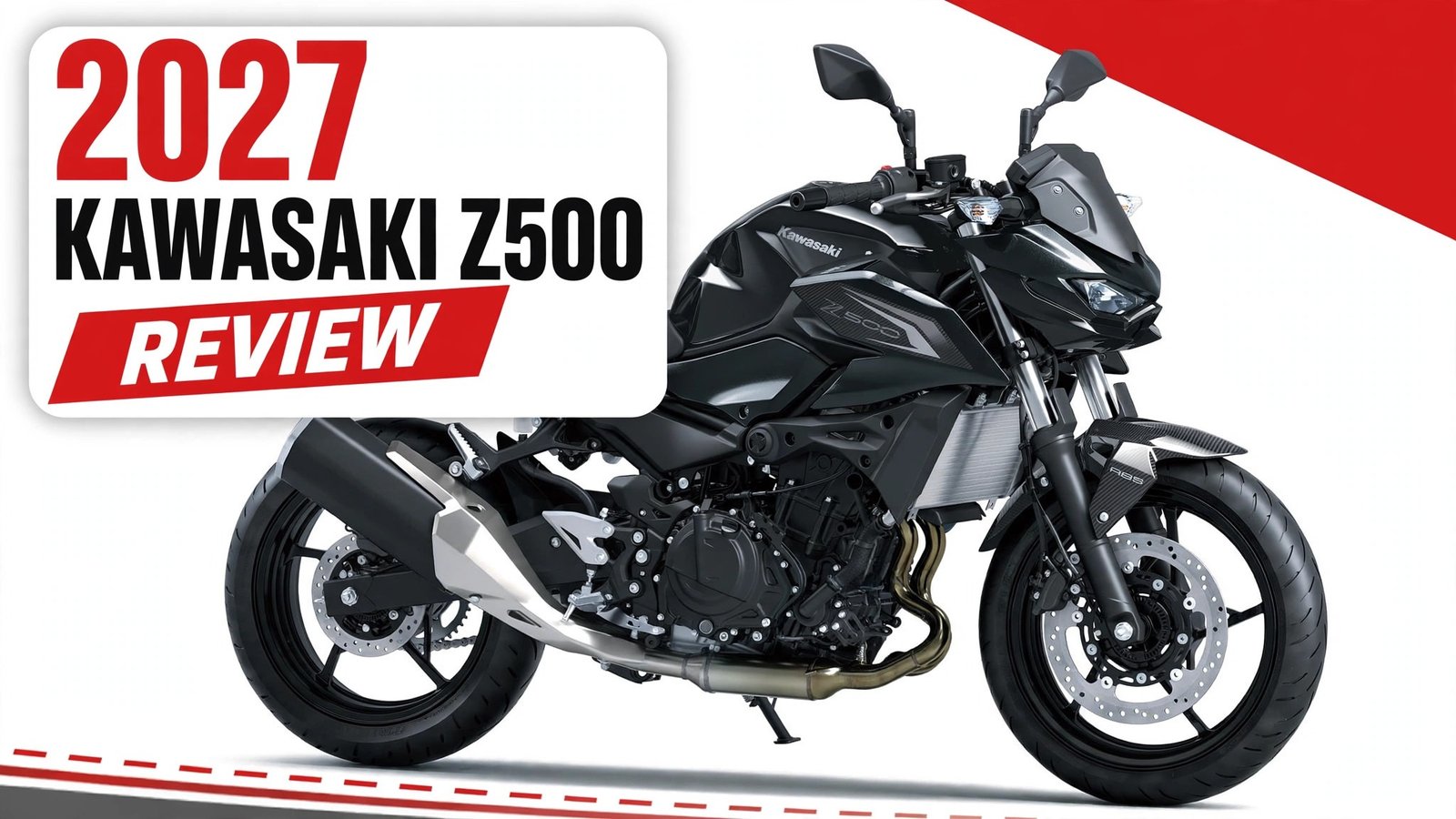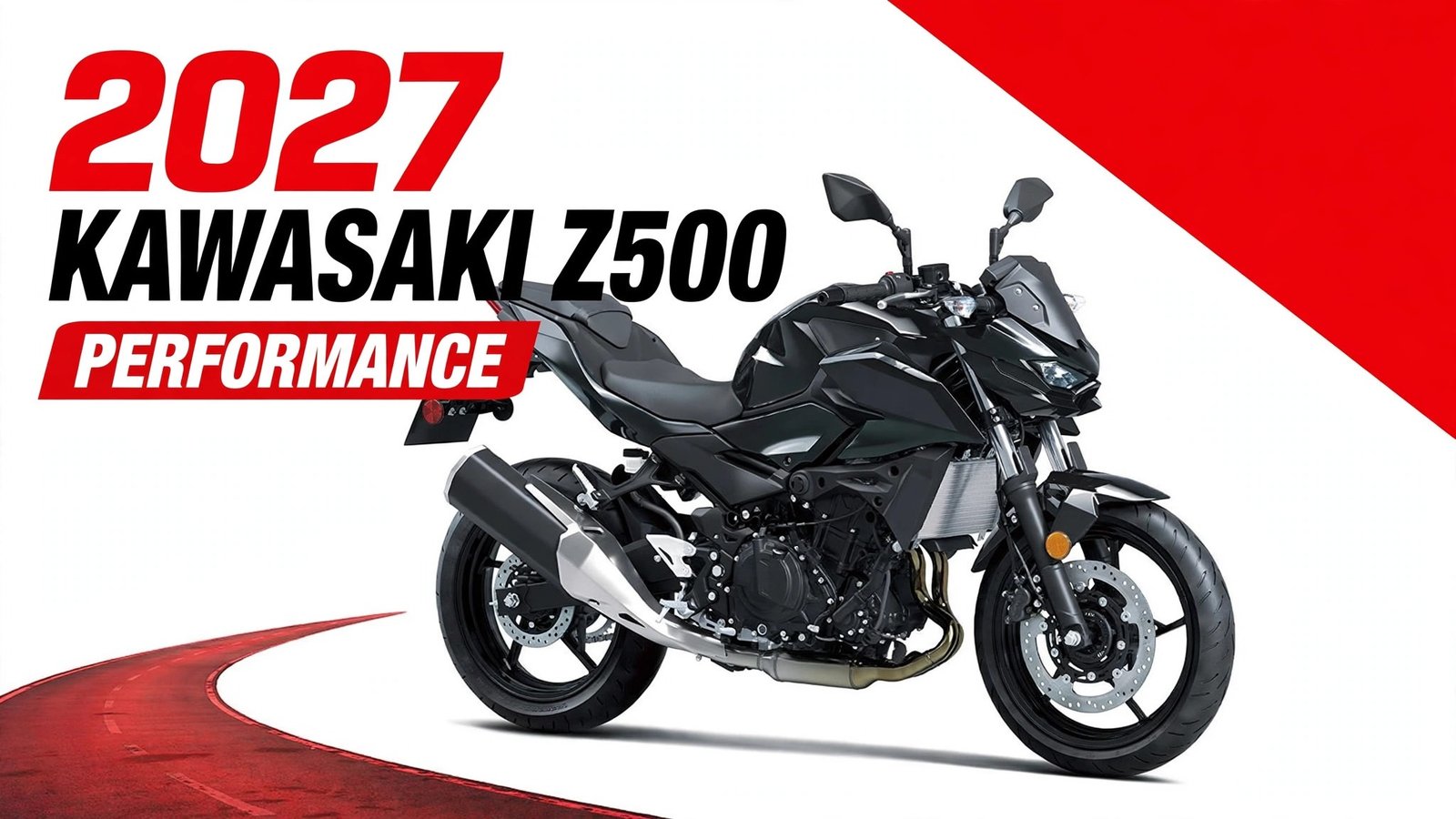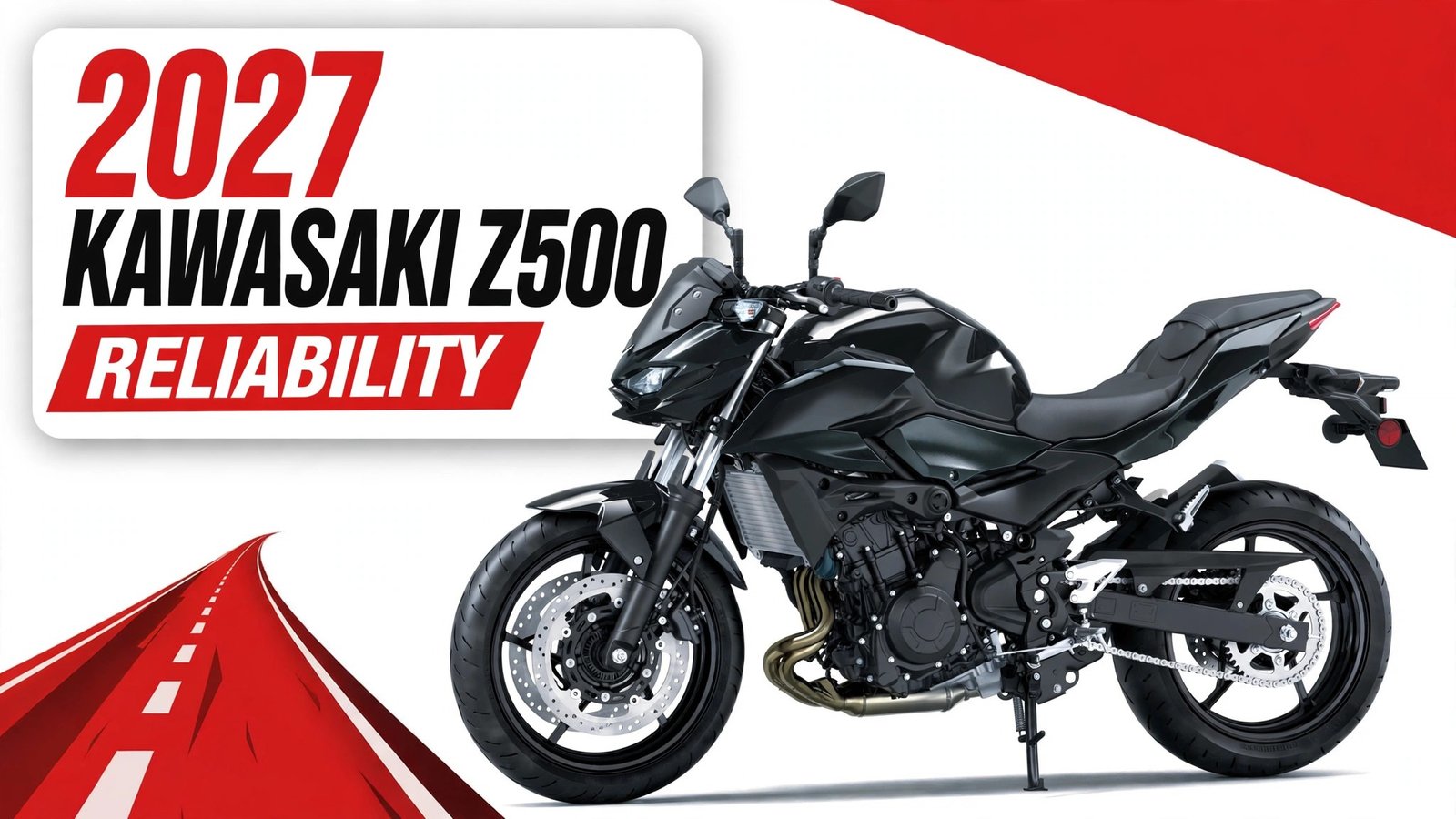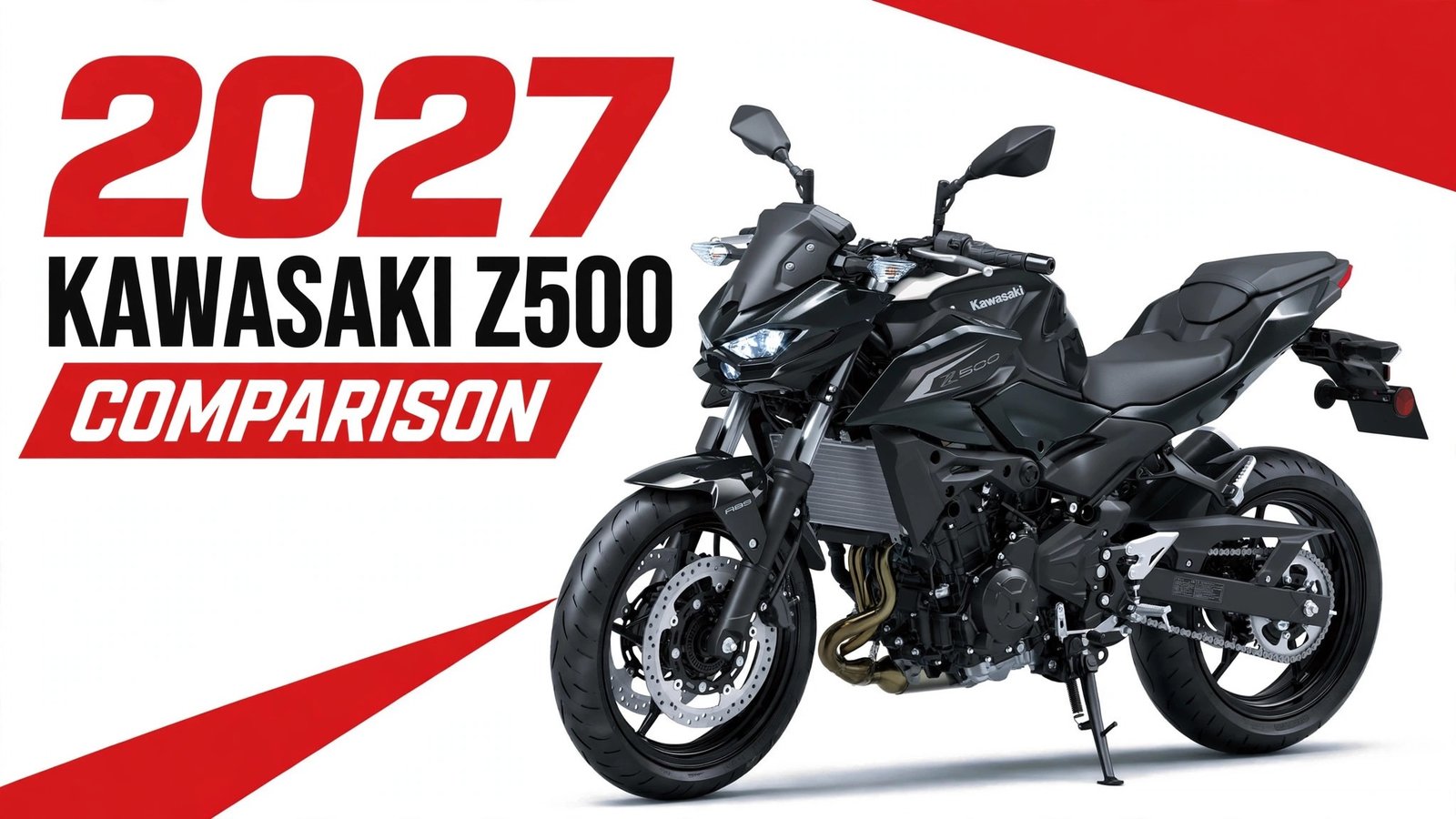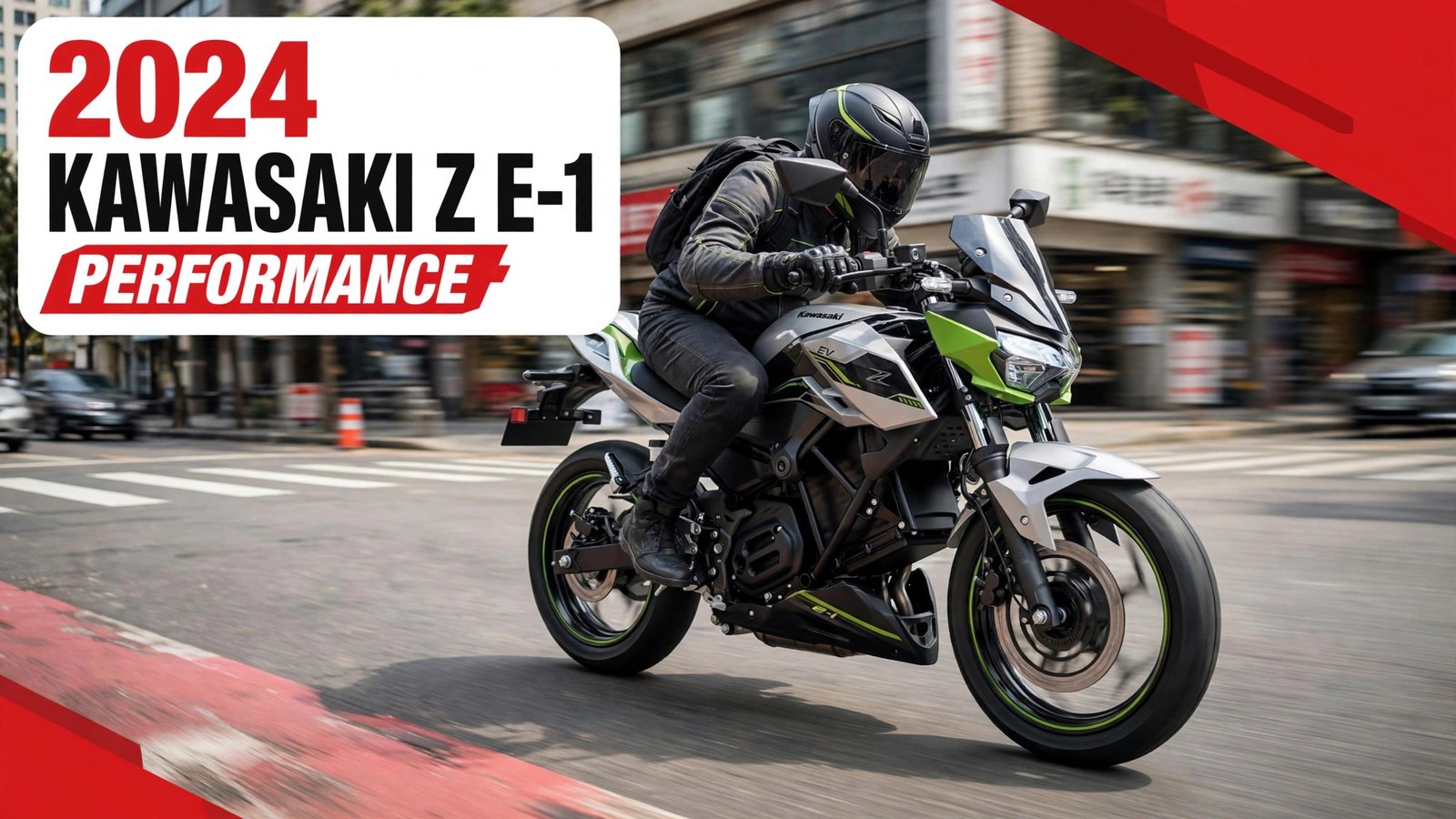
The Kawasaki Z e-1 is a small electric motorcycle with a small set of numbers, and every one of them needs its basis named. It makes 5.0 kW (6.7 hp) continuously and 9.0 kW (12.1 hp) for fifteen seconds, with 29.7 lb-ft of torque from a standstill. It runs 53 mph continuously in Road mode and 63 mph only in e-boost bursts, and claims 41 miles with no test cycle named — the first rides saw under 40 on the dash. This Kawasaki Z e-1 performance guide gives the direct answer first: at city speeds the bike is quick off the line and easy to manage, and past 53 mph it has nothing left to give. The Kawasaki Z e-1 performance verdict is simple: a quick city bike with a hard ceiling. There is no 0-60 time, no dyno figure and no MPG for this bike, because none exists.
Kawasaki Z e-1 Motor Performance and Power Delivery
There is no engine in this bike, so this Kawasaki Z e-1 performance guide treats the powertrain on its own terms.
125cc-Class, Say Testers
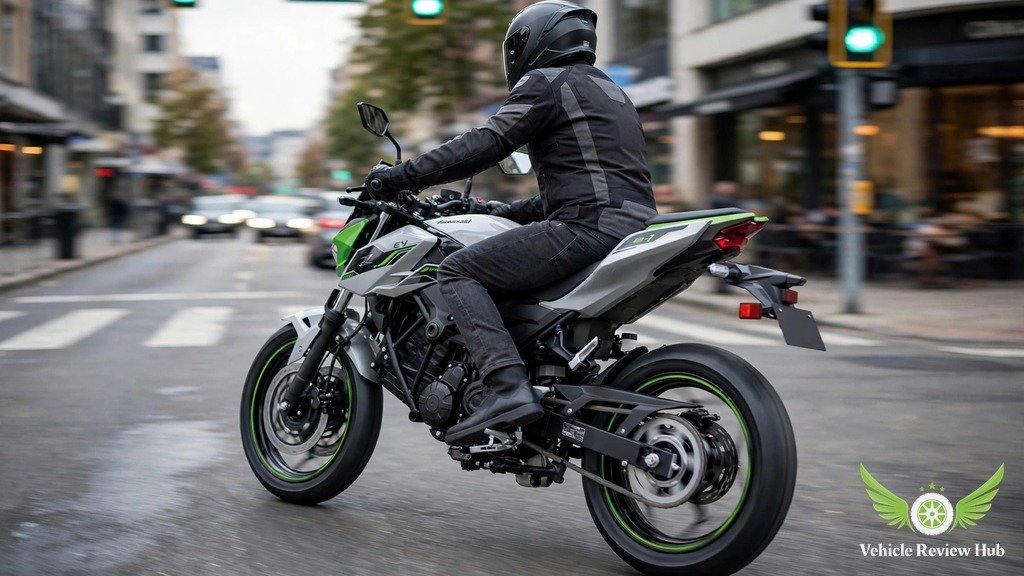
The e-1 pair was built for Europe’s A1 licence tier, which caps a 125cc-equivalent machine at 11 kW. TopSpeed calls the e-1s comparable to the 125cc class, and says they were designed to fit it. That is the honest frame for this Kawasaki Z e-1 performance guide: the bike performs like a 125, not like a 400, and anyone who reads the 12.1 hp peak as the bike’s everyday power will be disappointed. In the United States there is no A1 tier. The Z e-1’s answer is simplicity: twist-and-go, no clutch, no gears, and full torque from a standstill. At a traffic light, that is enough; away from the lights, the 125cc comparison holds. The Kawasaki Z e-1 performance numbers make the point plainly: 6.7 hp continuous is a 125’s power, and the 12.1 hp peak is a fifteen-second bonus, not the bike’s everyday output.
No 0-60 Figure Exists
No publication has published an instrumented 0-60 time for the Z e-1, and no publication has dyno-tested it. That is the state of the record, and this Kawasaki Z e-1 performance guide prints the absence rather than inventing a number. TopSpeed says the bike will “accelerate with the alacrity of a 400cc bike for about 15 seconds” with e-boost engaged, which is a feel claim, not a timed figure. The only timed-run video is a rider’s onboard clip, not an instrumented test, and no time from it belongs here. What the bike does have is instant torque: 29.7 lb-ft at 500 rpm, all of it from a standstill — which is why BikeReview says a turn of the throttle “will launch the bike quite enthusiastically”. After that the acceleration settles down, as BikeReview puts it, “to a somewhat phlegmatic pace”. A buyer who wants a stopwatch number will not find one anywhere, and should treat any number quoted for it as invented. The Kawasaki Z e-1 performance record is honest about what it lacks: no stopwatch time, no dyno sheet, and no reason to invent either.
| Figure | Value |
|---|---|
| Rated power | 5.0 kW @ 2,800 rpm (6.7 hp) — the continuous output |
| Maximum power | 9.0 kW @ 2,600–4,000 rpm (12.1 hp) — e-boost only, 15 seconds |
| Maximum torque | 29.7 lb-ft @ 500 rpm (40.3 Nm) — full torque from a standstill |
| e-boost duration | 15 seconds at a time |
| e-boost lockout | Unavailable below 35% battery charge — the bike drops into Eco mode |
| Transmission | Single reduction gear — twist-and-go, no clutch, no gears |
Note: All figures are from the Kawasaki USA 2024 Z e-1 spec sheet. The kilowatt figures govern — 9.0 kW is 12.1 hp, and a dealer brochure’s “11.8 hp” is a conversion error. This Kawasaki Z e-1 performance guide prints the sheet figure. The Kawasaki Z e-1 performance motor figures are the sheet’s, not a brochure’s.
Kawasaki Z e-1 Top Speed and Acceleration
Three figure sets circulate online for this bike’s top speed. This Kawasaki Z e-1 performance guide prints the spec sheet’s figures and explains the other two sets so a reader who finds them knows why they do not apply.
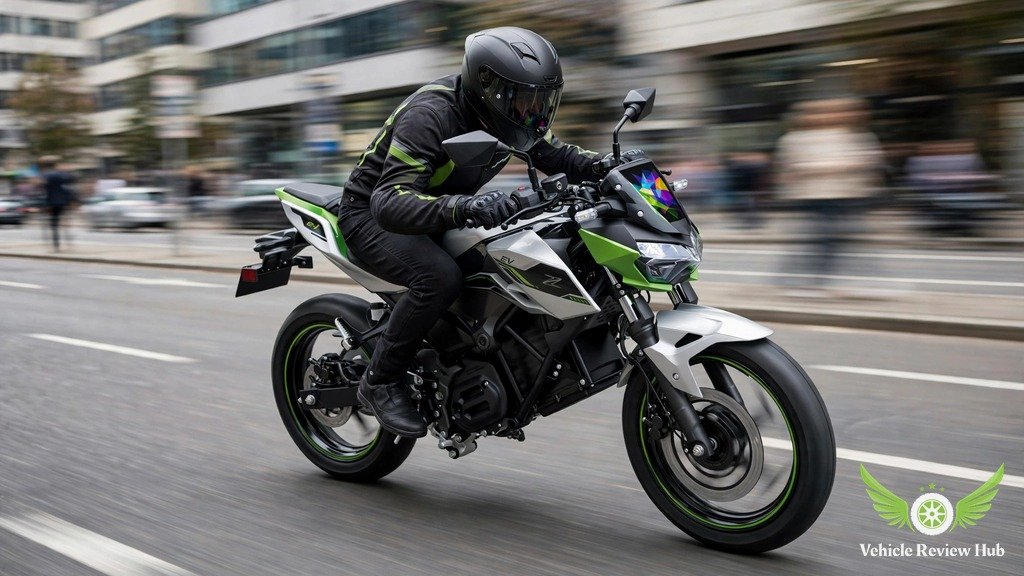
53 mph Continuous in ROAD
In Road mode the Z e-1 runs 53 mph continuously, according to the Kawasaki USA 2024 spec sheet, and 40 mph continuously in Eco mode. “Continuous” is the key word: 53 mph is the speed the bike holds without the boost button. The faired Ninja e-1 is 2 mph faster in Road mode at 55 mph — aerodynamics, not mechanics. A 53 mph ceiling defines the bike’s whole use case. The Kawasaki Z e-1 performance numbers make that limit plain: a continuous top speed of 53 mph, a boost top speed of 63 mph, and nothing beyond either. The Kawasaki Z e-1 performance top-speed story is therefore a 53 mph story with a 63 mph footnote.
63 Only in Boost Bursts
Press the e-boost button and the motor’s 9.0 kW peak unlocks for fifteen seconds, taking the bike from 53 to 63 mph in Road mode — and from 40 to 45 mph in Eco. Fifteen seconds is confirmed by five sources — MCN, TopSpeed, Ultimate Motorcycling, Cycle Gear and Carscoops. The boost is a full-battery feature: below 35% charge the bike switches to Eco mode and e-boost becomes unavailable, and BikeReview adds a second lockout below about 12 km of indicated range. In practice the boost is an overtaking tool for city roads — a fifteen-second push to get past a slow truck — not a way to hold highway speed. The Kawasaki Z e-1 performance boost is a fifteen-second push, not a top-speed tool: use it to pass, then the bike is back to 53 mph. Watch a European-market Z e-1’s onboard top-speed run with e-boost below — the dash reads in km/h, not mph: the European bike tops out at 99 km/h with boost, while the US bike’s figure is 63 mph. The Kawasaki Z e-1 performance figures on screen are European, not American: 99 km/h with boost, not 63 mph.
| Figure set | ROAD continuous | ROAD + e-boost | ECO continuous | ECO + e-boost | What it is |
|---|---|---|---|---|---|
| US spec sheet — print this | 53 mph | 63 mph | 40 mph | 45 mph | Kawasaki USA 2024 Z e-1 spec sheet |
| Pre-production US estimates | 51 mph | 59 mph | 36 mph | 44 mph | RevZilla, Ultimate Motorcycling, Cycle Gear, TechRadar |
| EU / global (km/h converted) | 49 mph (79 km/h) | 61.5 mph (99 km/h) | 35 mph (56 km/h) | 43 mph (69 km/h) | Kawasaki EU page, Autocar India, SportBikes Inc |
| 2027 Ninja e-1 (US sheet) | 55 mph | 65 mph | 40 mph | 47 mph | Kawasaki USA 2027 Ninja e-1 spec sheet |
Note: The US spec sheet governs this Kawasaki Z e-1 performance guide. The 51/59 mph figures are pre-production estimates from the November 2023 launch materials, and the 49/65 mph figures are European km/h conversions. SlashGear gets it right: the Road mode with e-boost takes the Z e-1 to 63 mph and the Ninja e-1 to 65 mph.
Kawasaki Z e-1 Range and Energy Use
There is no MPG for this bike, and this section explains that first, because the heading above it says “Mileage and MPG”. The Z e-1 burns no fuel, Kawasaki publishes no MPGe figure, and the EPA does not rate it. What the bike has instead is range: how far two packs carry it, what the dash shows, and how far real riding gets. That is what this section covers — range and energy use, not fuel economy. This Kawasaki Z e-1 performance section therefore measures the bike in miles per charge, not miles per gallon.
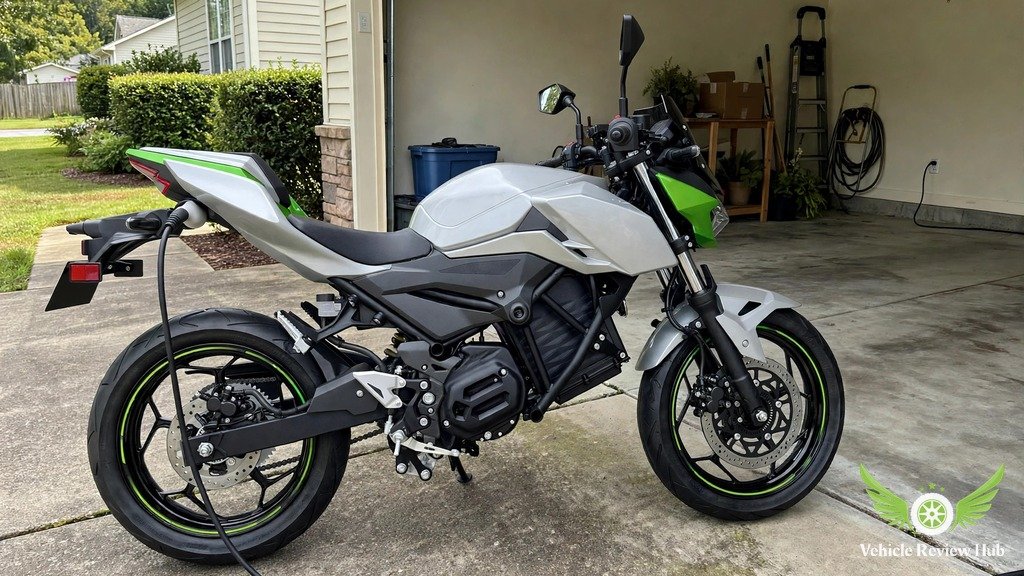
41 Miles, No Cycle Named
Kawasaki claims 41 miles, printed on the spec sheet as “41 mi (approximate in ROAD Mode w/o e-boost)” — with no test cycle named. No WMTC, EPA, WLTP or any other cycle appears on the sheet, and RevZilla notes that Kawasaki “specifies no conditions”. The 41 miles comes from about 3.0 kWh — two removable 1.5 kWh packs, each 50.4 V and 30 Ah. Charging takes 3.7 hours per pack on a standard 120 V outlet — about 7.5 hours for both packs. There is no Level 2 or DC fast charging — Level 1 at 120 V only, which TopSpeed lists as a limitation. One pack on its own means Eco mode only, with no e-boost. That is the Kawasaki Z e-1 performance range in one line: 41 claimed, unnamed conditions, slow charging. The Kawasaki Z e-1 performance picture on range is therefore a claimed 41 miles under unnamed conditions, charged slowly at home — a city figure for a city bike, and a ceiling rather than a promise.
Dash Showed Under 40
Cycle World’s Phoenix first ride reports “throwing a leg over a fully charged machine and seeing a range of less than 40 miles” on the dash — before the ride began. MCN’s UK test, a 29 km loop in spirited Road mode, started at 97% charge and ended with 16 km left — “30-40 km being the realistic ceiling of spritely city journeys”, 19 to 25 miles, before the tortoise light appears. The honest print for this Kawasaki Z e-1 performance guide is therefore a ladder: 41 claimed, under 40 on the dash, 19 to 25 in spirited Road riding, and more in gentle Eco riding. When the battery runs low the tortoise light appears. A rider planning a 35-mile round trip on this bike is planning a ride that ends with the tortoise light on. The Kawasaki Z e-1 performance range in the real world is therefore a 30-mile bike, not a 41-mile bike.
| Range figure | Value | Source |
|---|---|---|
| Claimed range (Road, no e-boost) | 41 mi, approximate | Kawasaki USA 2024 spec sheet — no cycle named |
| Cycle World first ride, full charge | Under 40 mi on the dash | Cycle World Phoenix first ride |
| MCN spirited Road riding | 19–25 mi (30–40 km) before preservation mode | MCN UK test, 29 km loop |
| BikeReview real riding | About 34 mi (55 km) | BikeReview Australia |
| Eco mode, global claim | 45 mi (72 km) — not a US figure | MCN, global Eco claim |
Note: No US Eco-mode range figure is published — the 45-mile figure is a global claim, printed with its attribution. The Kawasaki Z e-1 performance range table above keeps claimed, measured and global figures apart. Never print an MPG or MPGe figure for this bike; none exists, and the EPA does not rate it.
Kawasaki Z e-1 Real-World Riding Experience
This section describes the bike on the road, where the 53 mph ceiling and the 41-mile claim meet city traffic. The Kawasaki Z e-1 performance story in the real world is a city story.
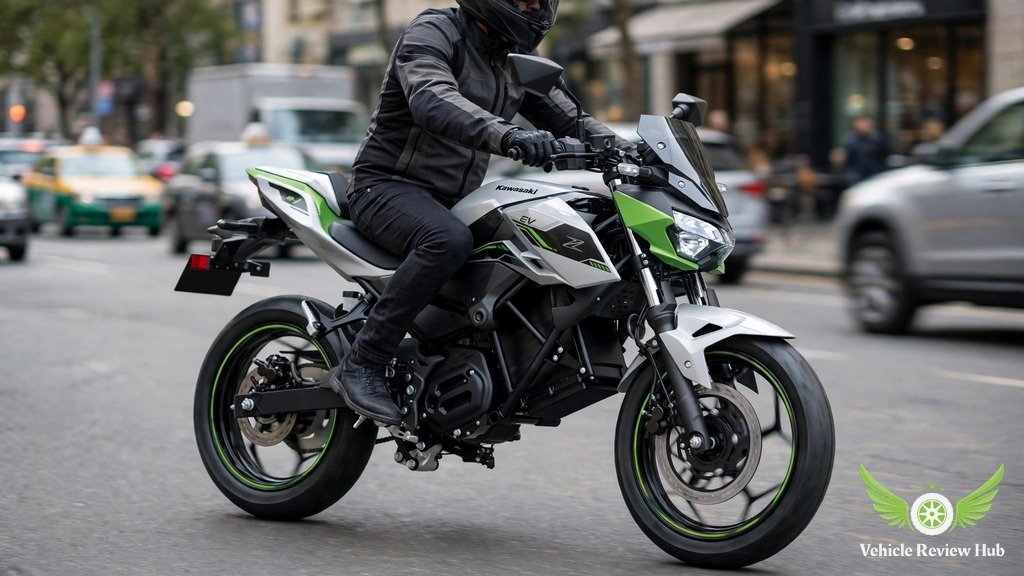
Not a Highway Bike
At 53 mph continuous and 63 mph in fifteen-second bursts, the Z e-1 is a city and urban machine, and every tester who rode it said so. Cycle Gear’s verdict on highway use was blunt — taking the e-1 onto a major US highway takes bravery to the point of foolishness. The bike’s strengths point the same way. None of that is a highway machine, and this Kawasaki Z e-1 performance guide does not suggest highway commuting, touring or long-distance riding. A buyer who needs a highway should buy a petrol bike — the Ninja 500 is the honest first bike for that rider, named in the beginner section below. The Kawasaki Z e-1 performance case for the highway does not exist, and this guide does not make one.
51/59 mph Conflict Stands
A reader who googles this bike will meet three top speeds. The pre-production figures, 51 mph in Road and 59 mph with boost, come from the November 2023 launch materials and still appear in RevZilla, Ultimate Motorcycling, Cycle Gear and TechRadar. The European figures, 49 mph in Road and 65 mph with boost, are the EU km/h figures — 79 km/h and 99 km/h — converted to mph. MCN’s “61 mph with boost” is the same European 99 km/h figure. None of those is the US figure. The Kawasaki Z e-1 performance figures in the guides a buyer actually reads are therefore a mix of launch estimates, European conversions and the sheet — and only the sheet governs. The US production spec sheet — the governing document — says 53 mph in Road and 63 mph with boost, 40 mph in Eco and 45 mph with boost. The conflict is therefore resolved in favour of the sheet — and it stands in the wider web for anyone who does not read it. The TopSpeed ride review prints the sheet figures, and SlashGear states them correctly too: the Road mode with e-boost takes the Z e-1 to 63 mph and the Ninja e-1 to 65 mph. The Kawasaki Z e-1 performance figures a buyer should trust are the sheet’s — 53 and 63, 40 and 45 — and every other figure set here is printed only so the buyer recognises it and knows why it does not govern.
Kawasaki Z e-1 Handling, Braking and Stability
Power and speed are only half the story. The other half is what the bike does with them at city speeds. At 297.7 lb the Z e-1 is light, and that lightness shapes everything here. The Kawasaki Z e-1 performance handling story starts with that lightness: 297.7 lb, a 53.9-inch wheelbase and a 24.4-degree rake.
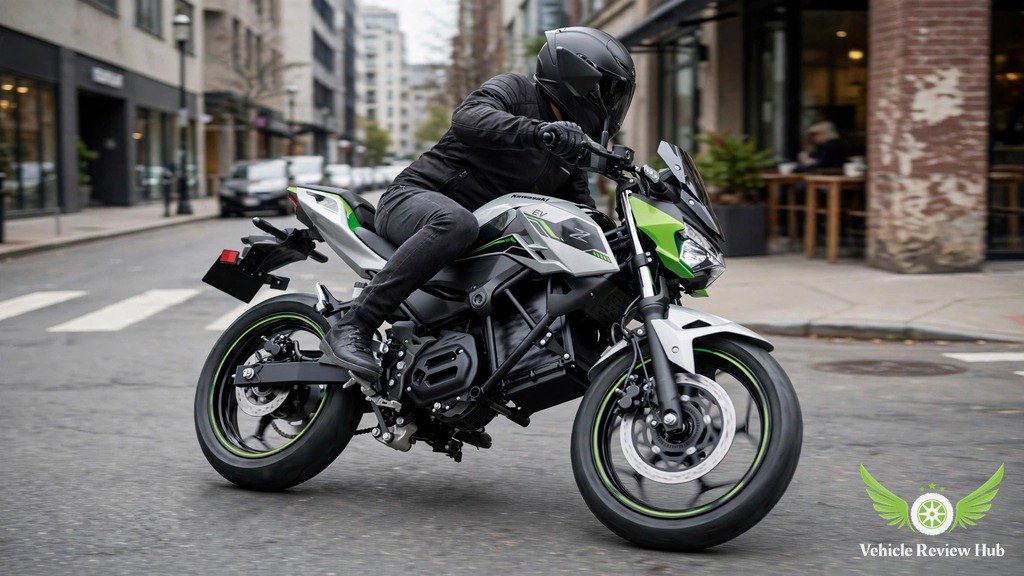
Handling, Braking and Stability on Real Roads
The chassis is a trellis frame in high-tensile steel, with a 41 mm fork (4.7 in travel) and a preload-adjustable Uni-Trak rear shock (5.2 in). The wheelbase is 53.9 inches and the rake is 24.4 degrees. BikeReview says “the light handling and responsive low-speed acceleration make it well suited to urban riding”, and that is the consensus at city speeds. MCN found the suspension “reasonably stiff over big bumps and potholes, especially on the rear”, and the tyres — narrow 100/80-17 front and 130/70-17 rear — offer, in MCN’s words, “little feel” and “don’t really inspire much confidence at all”. The brakes draw the same criticism: a single 290 mm front disc and a single 220 mm rear disc, both with dual-piston calipers and Nissin ABS, but MCN found them vague, “with a lack of any real bite, both front and rear”. Stability is not the issue — the bike is planted and predictable at the speeds it reaches. Feel is. The Kawasaki Z e-1 performance handling verdict is therefore a mixed one: easy and planted at city speeds, short on feel when the road gets rough.
Regen Waits Below 60%
The Z e-1’s regenerative braking recycles energy only once the batteries drop below 60% of capacity, according to TopSpeed. Above 60% the regen effect is dialled back — Cycle Gear: “the effect is dialled back as the battery approaches a full charge”. That means the regen contributes almost nothing to range on a short trip that starts full — the trip most owners ride. The regen is a real feature of this Kawasaki Z e-1 performance package, but a small one, and a buyer should not count it as extra range. The honest print is that the regen waits below 60%, the brakes are the bike’s stopping system, and the tyres and brake feel are the two things testers criticised most. The Kawasaki Z e-1 performance regen contribution is therefore a footnote, not a feature to count on for range.
Kawasaki Z e-1 Performance Compared With Other Sport Bikes
This section compares the bike with the one machine that shares its motor, battery and range — the Ninja e-1 — and then answers the beginner question honestly. The Kawasaki Z e-1 performance comparison starts with the twin that shares everything except the fairing.
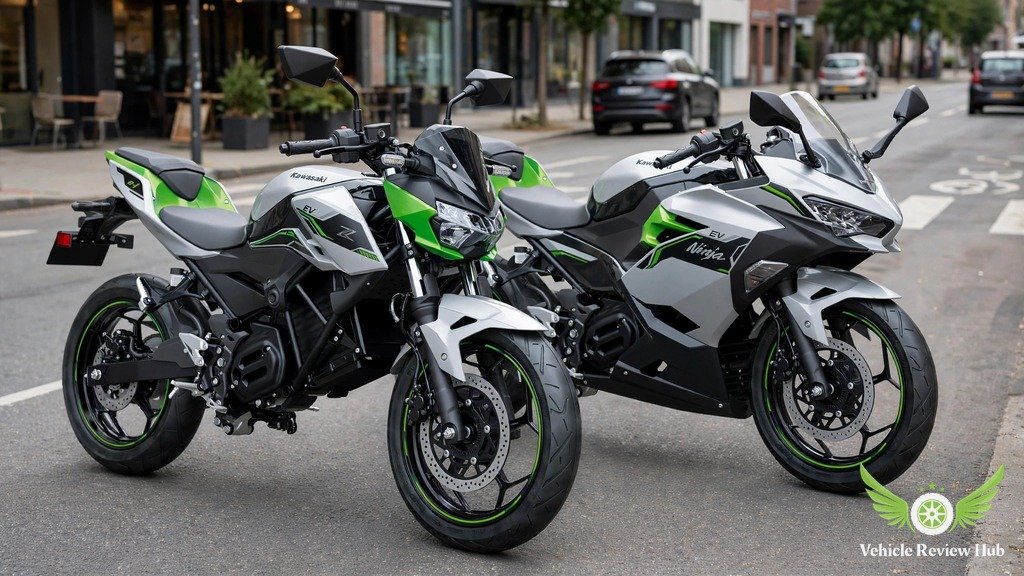
Kawasaki Z e-1 vs Kawasaki Ninja e-1
The Ninja e-1 is the Z e-1 with a fairing, and the comparison is short because the powertrains are identical: the same motor, the same torque, the same two packs, the same 41-mile range and the same charge time. The Ninja costs $300 more at $7,899, weighs 11 lb more at 308.7 lb, and is 2 mph faster in Road mode at 55 mph and 2 mph faster with boost at 65 mph — aerodynamics, not mechanics. The difference that matters for a buyer in 2027 is availability: the Ninja e-1 returned for 2027 at the same $7,899, announced in August 2026, while the Z e-1 is leftover-only. The 2027 Ninja returned unchanged from the 2024 bike — Eco mode with boost is 47 mph on both. The Z suits the upright naked position and city riding; the Ninja suits the faired sport look and the fact that it has a future. The Kawasaki Z e-1 performance comparison with its twin is therefore a comparison of position and purpose, not of power. The Kawasaki Z e-1 performance twin comparison ends there: same motor, same battery, same range — different bodywork. The full comparison of the two bikes, with prices and value, is the subject of the Z e-1 comparison guide.
| Figure | Z e-1 (2024) | Ninja e-1 (2027) |
|---|---|---|
| MSRP | $7,599 | $7,899 |
| ROAD top speed | 53 mph (63 mph with e-boost) | 55 mph (65 mph with e-boost) |
| ECO top speed | 40 mph (45 mph with e-boost) | 40 mph (47 mph with e-boost) |
| Curb weight | 297.7 lb | 308.7 lb |
| Claimed range | 41 mi (Road, no cycle named) | 41 mi (Road, no cycle named) |
| Charge time | 3.7 hr per pack (120 V) | 3.7 hr per pack (120 V) |
Note: The 2027 Ninja e-1 destination charge is unverified, so no delivered price is computed for it — never $8,549. This Kawasaki Z e-1 performance guide prints the Ninja’s $7,899 MSRP only.
Is the Kawasaki Z e-1 Suitable for Beginner Riders?
Yes, for city riding: twist-and-go with no clutch and no gears, 6.7 hp continuous, 297.7 lb, a 30.9-inch seat, ABS as standard, and Walk mode with reverse for parking. MCN’s owner review from September 2024 says it plainly: “I would recommend this bike for beginners, who want to build their ride experience and don’t want a scooter looking bike.” That frustration is the honest caveat, and it is why this Kawasaki Z e-1 performance guide draws the line at the highway. A beginner who needs a highway should look at the Ninja 500 performance guide — the 500 costs $1,800 less delivered and goes four times as far between fill-ups — or at the Ninja 650 review, the honest first bike for a rider who outgrows the e-1’s 53 mph ceiling. The Z e-1 is a genuine first bike for a city rider who charges at home and never needs a highway. It is not a first bike for anyone else. The Kawasaki Z e-1 performance beginner case is therefore a city case, and it ends at the highway.
Kawasaki Z e-1 Performance: Frequently Asked Questions
Buyers ask the same questions about this bike, and most of them are about numbers that do not exist. The Kawasaki Z e-1 performance answers below give the verified figures, and say plainly where no figure exists.
How much power does the Z e-1 make?
5.0 kW (6.7 hp) rated, 9.0 kW (12.1 hp) peak with e-boost, and 29.7 lb-ft of torque from a standstill. The peak lasts 15 seconds at a time.
What is e-boost and how long does it last?
A handlebar button that unlocks the motor’s 9.0 kW peak for 15 seconds, raising top speed from 53 to 63 mph in Road mode. It is unavailable below 35% battery charge, when the bike drops into Eco mode.
What is the Z e-1’s top speed?
53 mph continuous in Road mode (63 mph with e-boost); 40 mph in Eco (45 mph with boost). Figures of 51/59 mph in some guides are pre-production estimates; 49/65 mph are European km/h conversions — the US spec sheet governs.
What is the Z e-1’s 0–60 time?
No instrumented 0–60 figure exists for the e-1. No publication has timed one, and no dyno test exists either. The bike’s performance is best described by its instant low-speed torque, not a stopwatch figure.
What MPG does the Z e-1 get?
It has no MPG — it burns no fuel. Kawasaki claims 41 miles of range in Road mode with no test cycle named, and publishes no MPGe figure. Real-world riding shows under 40 miles on the dash.
Is the Z e-1 suitable for beginner riders?
Yes, for city riding: twist-and-go with no clutch or gears, 297.7 lb, a 30.9-inch seat, ABS and Walk mode with reverse. It is not suitable for highway riding — 53 mph continuous is not enough for a US highway — so a beginner who needs a highway should look at the Ninja 500 or Ninja 650 instead.