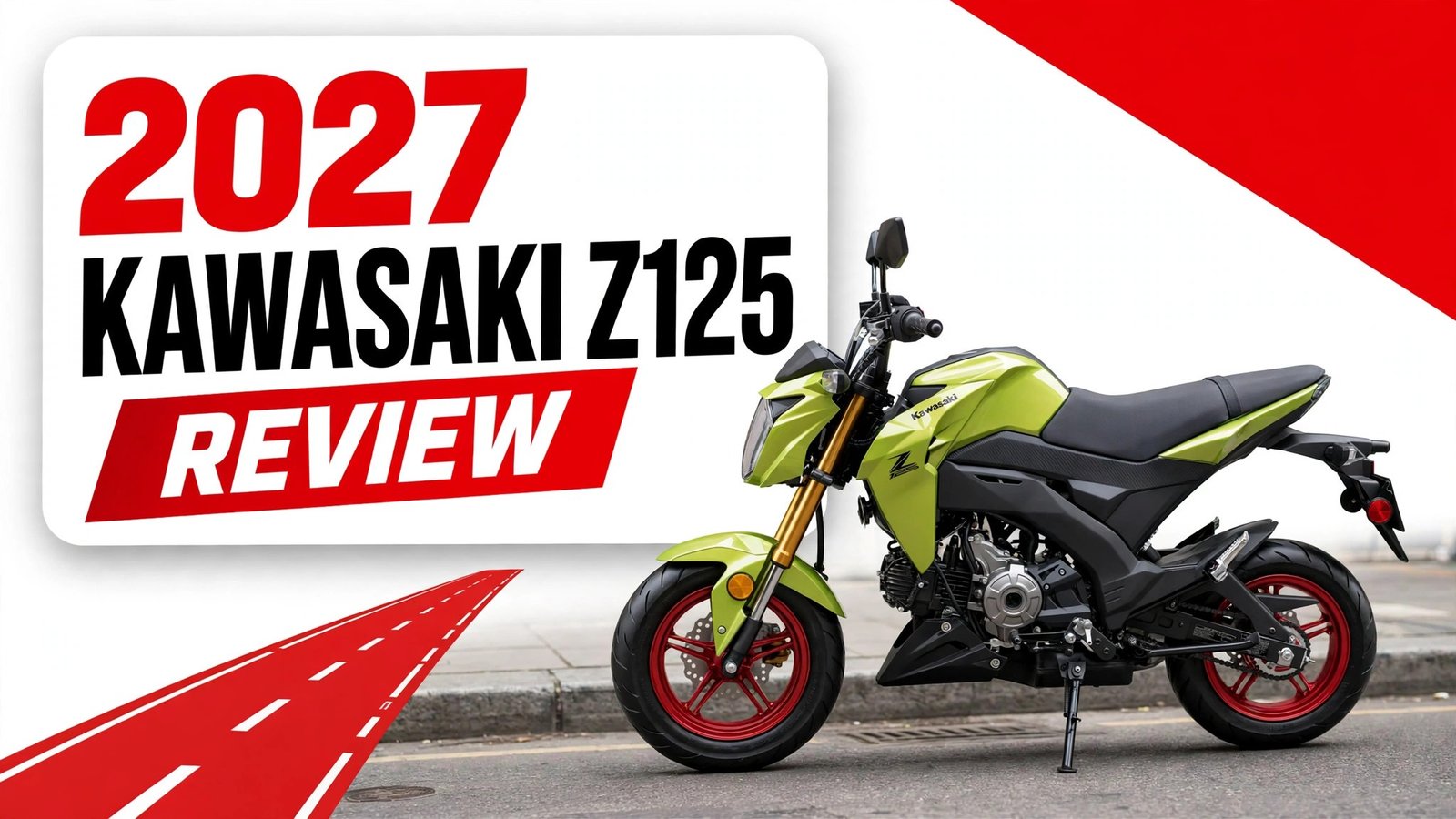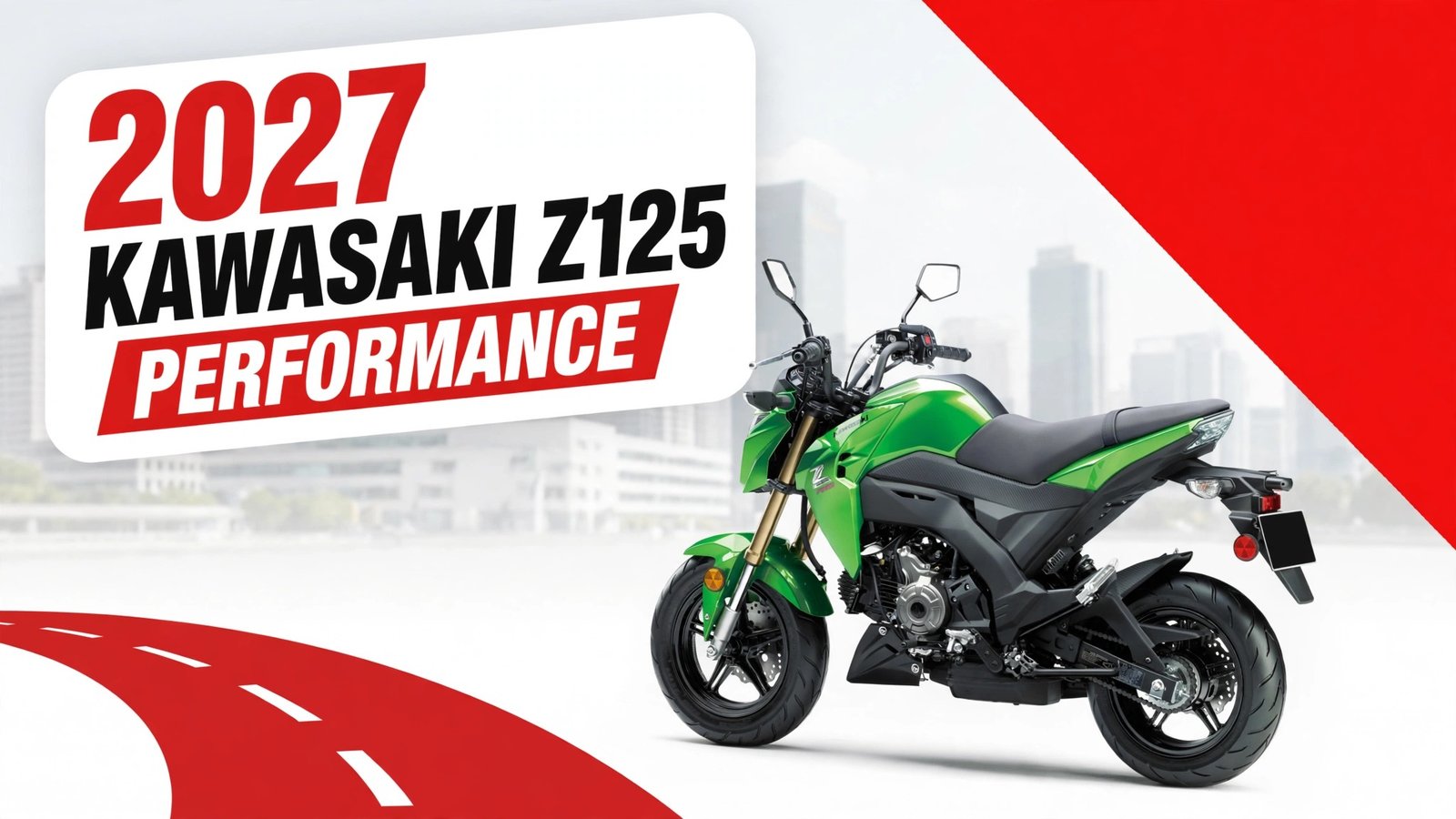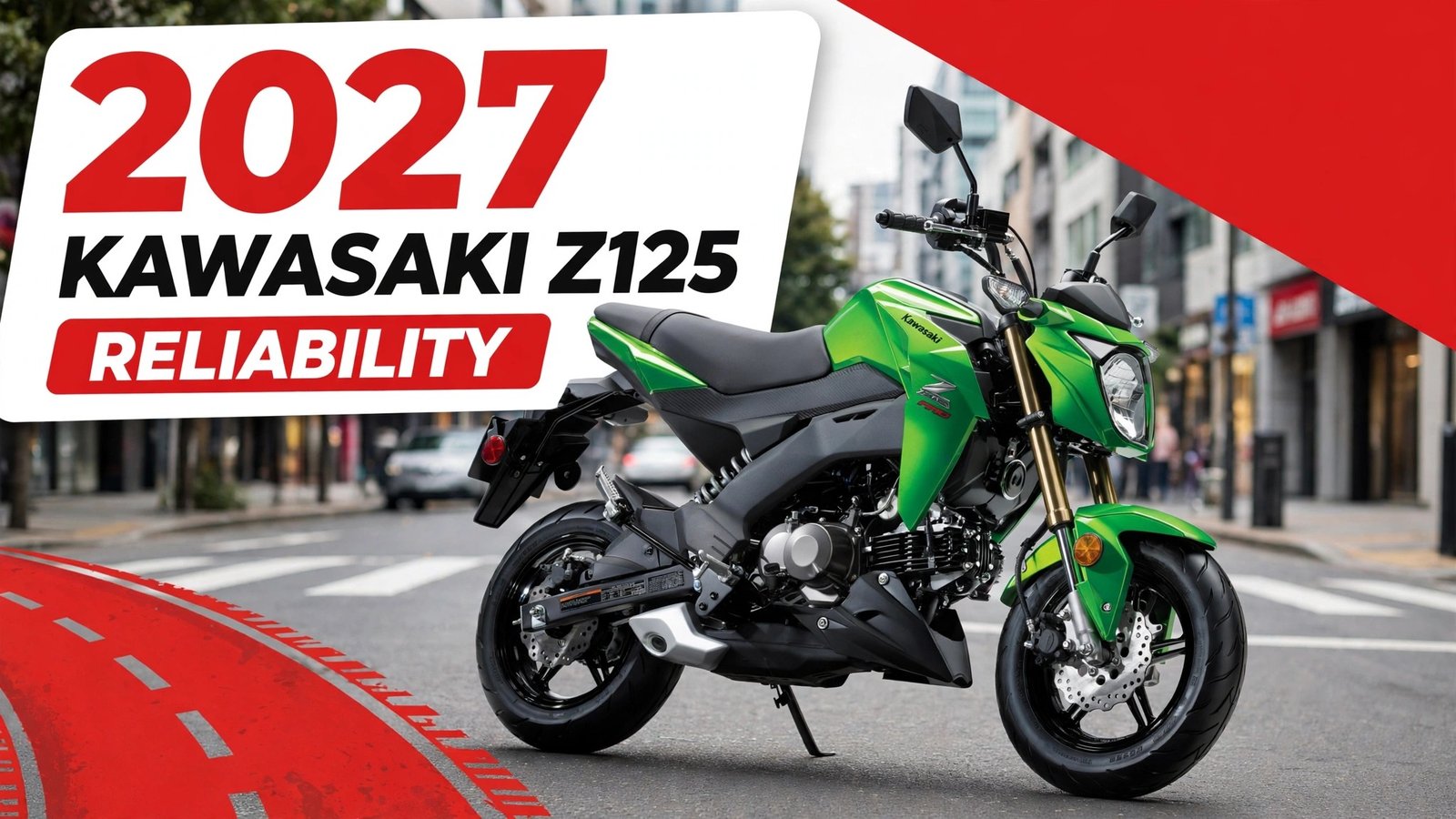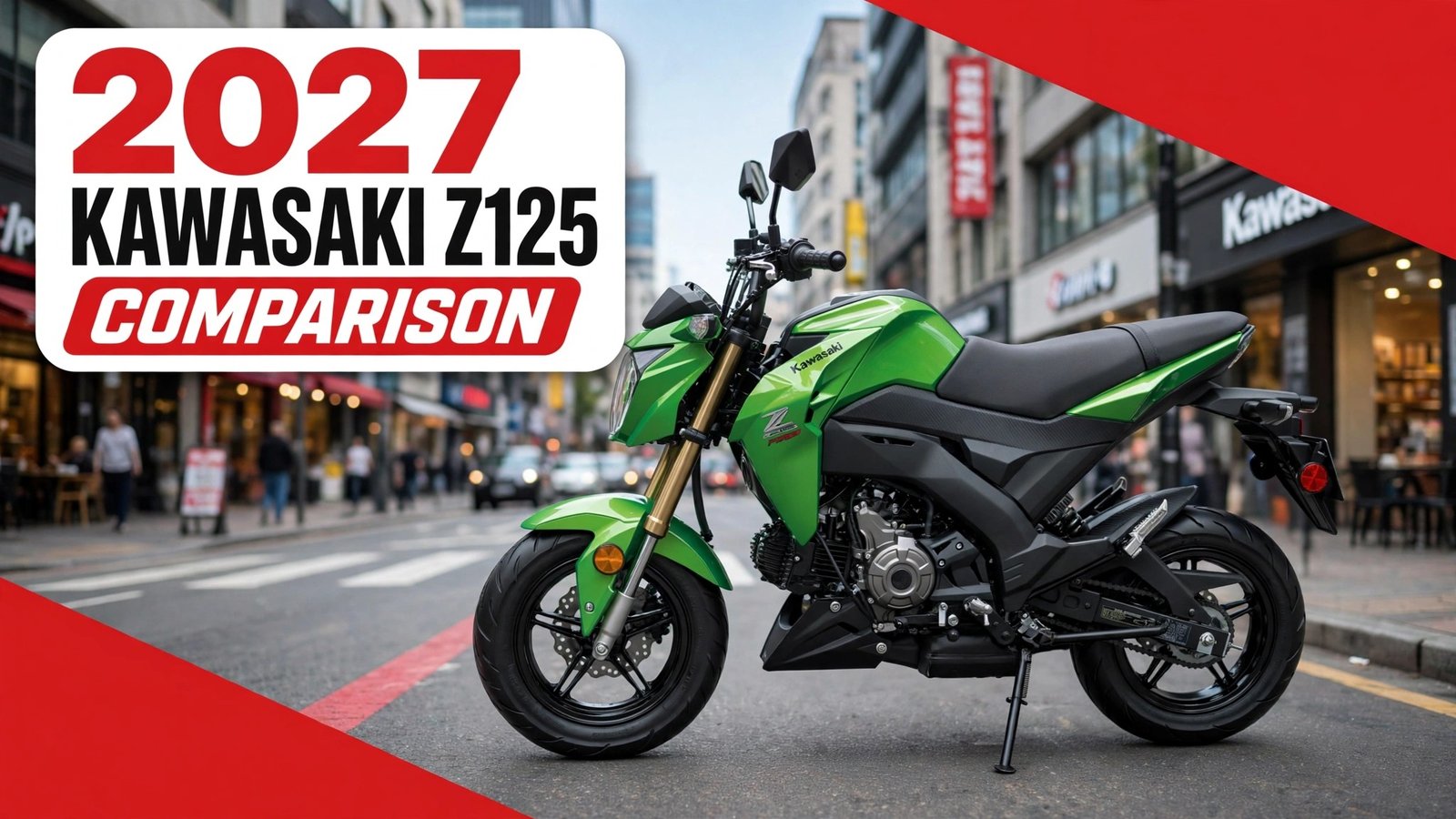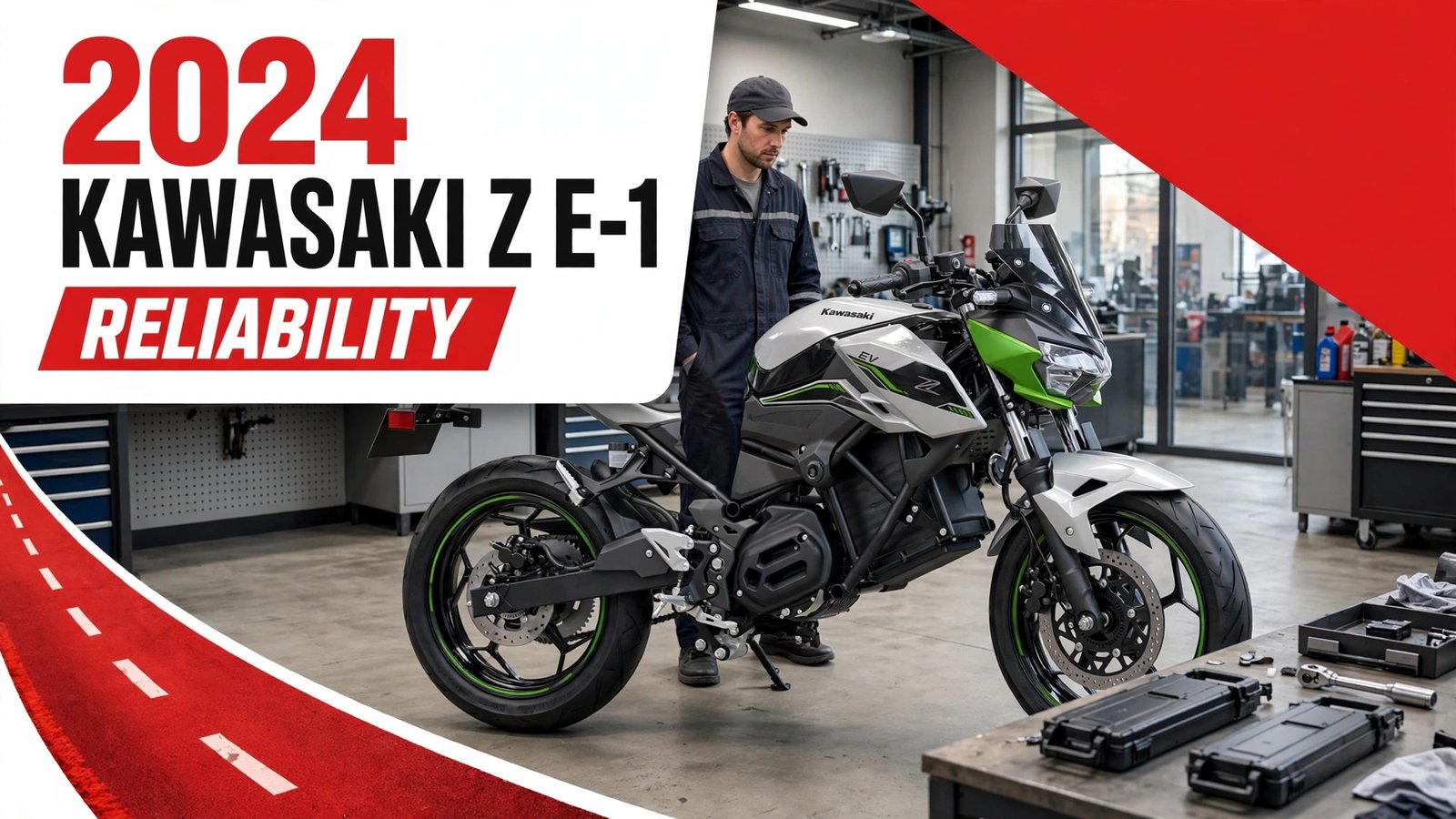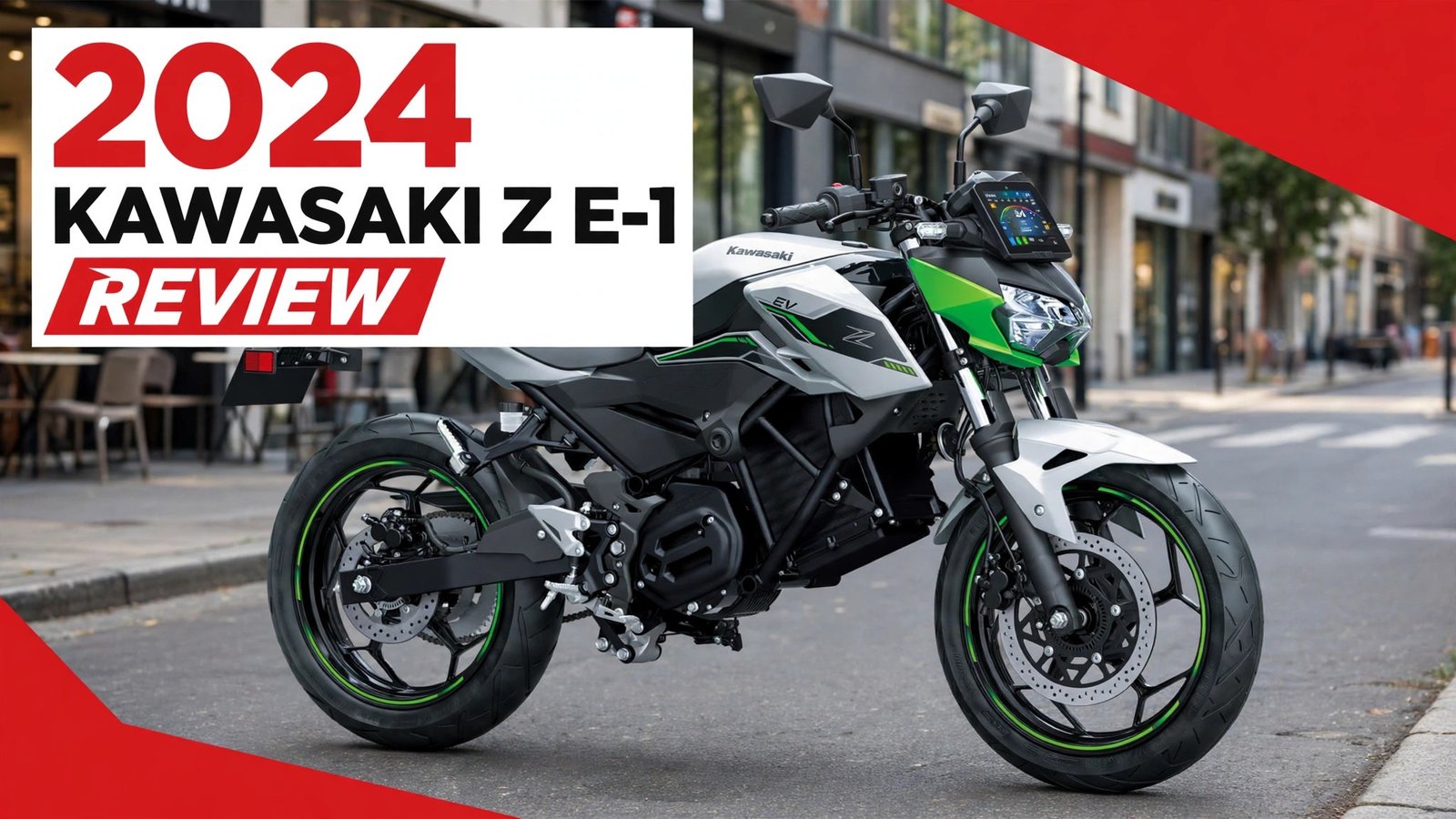
The Kawasaki Z e-1 is the first electric motorcycle Kawasaki has ever sold in the United States, and one of the strangest: a 2024-only model with a 41-mile claimed range, a 53 mph continuous top speed and a $7,599 list price, sold through the same dealers as the Ninja 500. This Kawasaki Z e-1 review gives the direct answer first: the bike makes sense as a city commuter and as a leftover bargain, and very little sense at full list price. It is a naked, 125cc-class urban machine with two removable battery packs and a 24-month warranty no petrol Z gets — and every US bike was recalled before its first birthday. Every figure in this Kawasaki Z e-1 review is one you can check, because it comes from Kawasaki’s own spec sheet, the NHTSA recall file or a named first ride. If you are looking at a leftover 2024 bike, this Kawasaki Z e-1 review is written for you.
Kawasaki Z e-1 Overview and Model-Year Updates
The Z e-1 arrived as Kawasaki’s first production electric motorcycle and left after a single model year. This Kawasaki Z e-1 review starts with that history because it explains everything else: the price, the recall, and why the only Z e-1s for sale today are leftover stock.

One Year Only in the US
Kawasaki unveiled the e-1 pair as prototypes at EICMA 2022, then launched the Ninja e-1 ABS and Z e-1 ABS in the US on October 4, 2023, with orders open until December 31, 2023, and deliveries running into the summer of 2024. One trim only: ABS, model code NR011ARFNN, in Metallic Bright Silver / Matte Lime Green / Ebony. The 2025, 2026 and 2027 pages and spec-sheet URLs all return 404 — the Z e-1 never returned, and this Kawasaki Z e-1 review treats that as settled. It was a one-year US model, the 2024 model year, launched in October 2023. This Kawasaki Z e-1 review calls it a 2024 model throughout, because Kawasaki sold it as a 2024 — the year in the launch date is not the model year.
Ninja e-1 Returned Instead
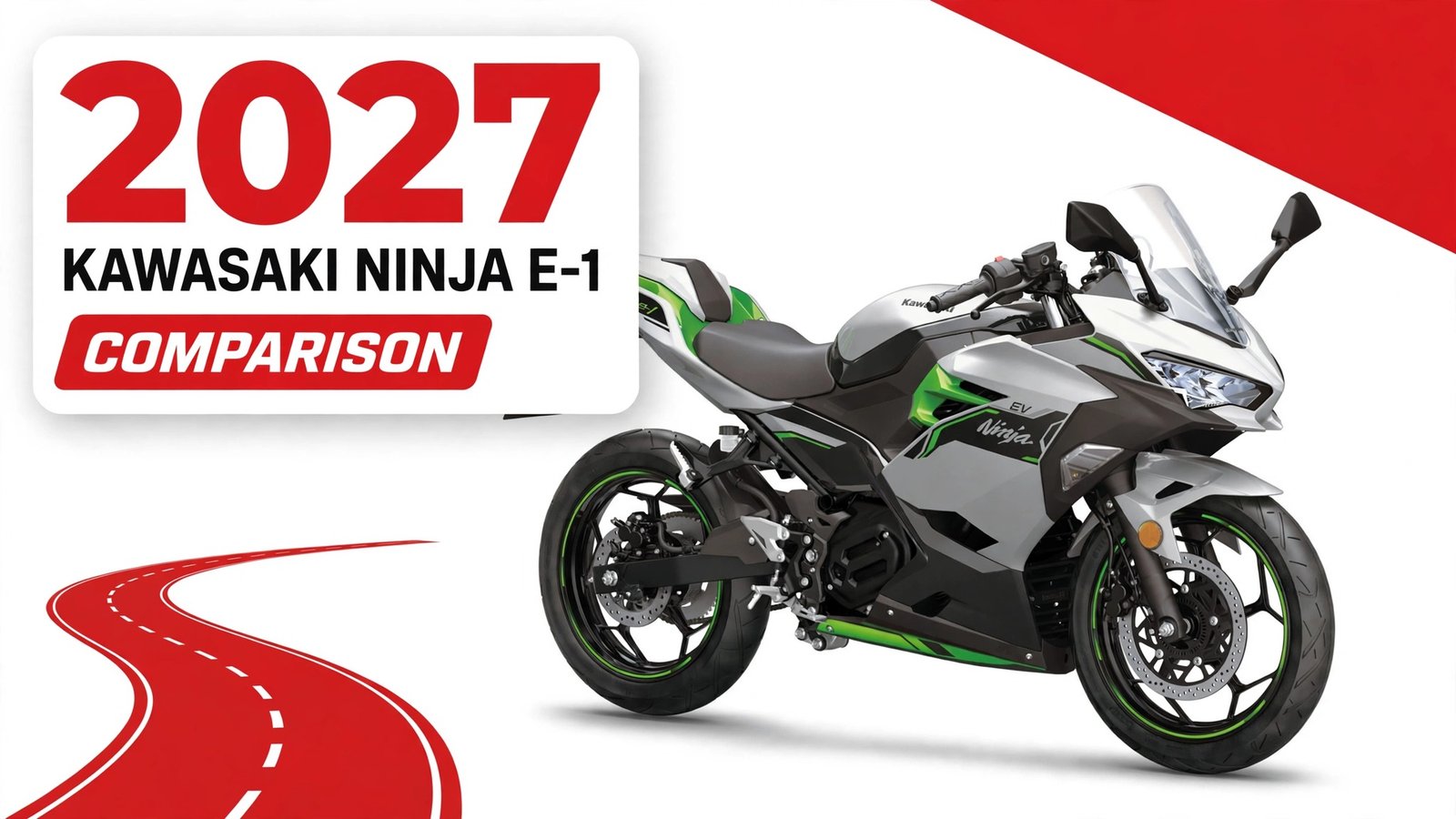
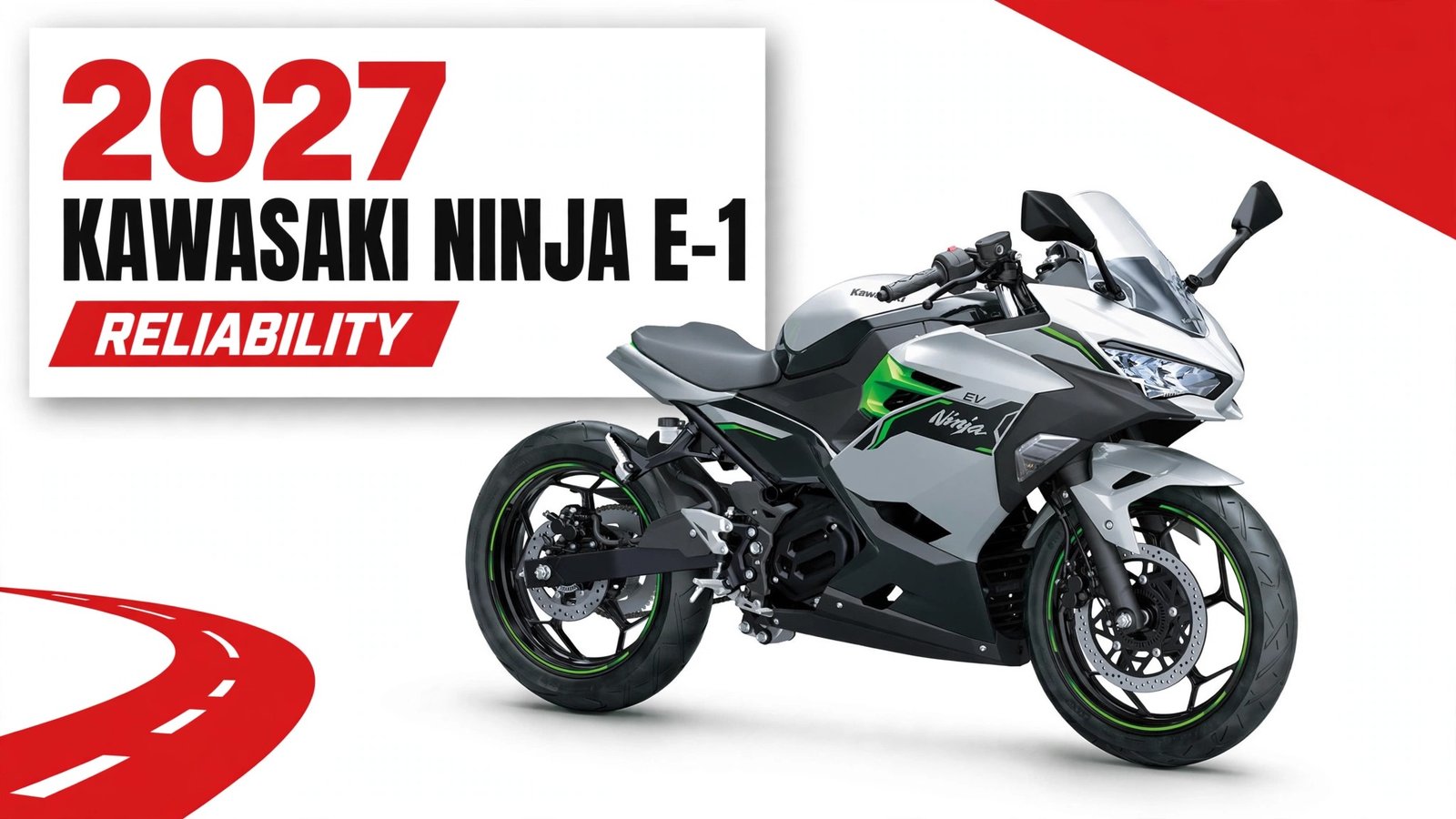
The faired twin did come back — for 2027, not 2025. Kawasaki announced the 2027 Ninja e-1 on August 18, 2026, with reservations through October 23, 2026, at $7,899, and its spec sheet is live on Kawasaki USA’s own site. The 2025 Ninja e-1 page and spec-sheet URL both return 404, so there was no 2025 Ninja e-1 in the US either. The returning bike is the same machine in a fairing — same motor, same battery, same 41-mile range — but ROAD 55 mph (65 mph with e-boost) against the Z’s 53 mph (63 mph with boost), and 308.7 lb against 297.7 lb. In Europe the Ninja e-1 continued into 2025 in select markets while the Z e-1 was dropped, but that is a European fact, not a US one, and this Kawasaki Z e-1 review does not present it as the American story: the naked twin lasted one year, and the faired twin is the only e-1 you can still buy new.
Kawasaki Z e-1 Motor and Specifications
The motor and the battery are the whole bike — no engine, no exhaust, no fuel system — so this Kawasaki Z e-1 review treats the powertrain on its own terms: a small air-cooled motor, two removable packs and a boost button that changes the bike for fifteen seconds at a time.
Rated 5 kW, Peak 9 kW
The spec sheet prints two power figures, and they are different things. Rated power is 5.0 kW at 2,800 rpm — 6.7 hp — the continuous output. Maximum power is 9.0 kW at 2,600–4,000 rpm — 12.1 hp — available only with e-boost, for fifteen seconds at a time. Five sources agree on the fifteen seconds: MCN, TopSpeed, Ultimate Motorcycling, Cycle Gear and Carscoops. That fifteen-second limit is the most important line in this Kawasaki Z e-1 review, because it is the difference between the headline figure and the bike you actually ride. Torque is 29.7 lb-ft at 500 rpm (40.3 Nm), all there from a standstill, which is why the bike feels quick away from a traffic light despite 6.7 hp continuous. A dealer brochure prints a lower horsepower figure for the peak — a conversion error, since 9.0 kW is 12.1 hp, and this Kawasaki Z e-1 review prints the sheet figure. TopSpeed places the bike in the 125cc class: Kawasaki built it for Europe’s A1 licence tier, capped at 11 kW, with no equivalent tier in the US. The e-boost button is the only way the Z e-1 ever makes its peak figure, and below 35% battery charge the bike drops into Eco mode and the boost becomes unavailable — so the fastest version of this bike is a full-battery bike.
Two Packs, 25.3 lb Each
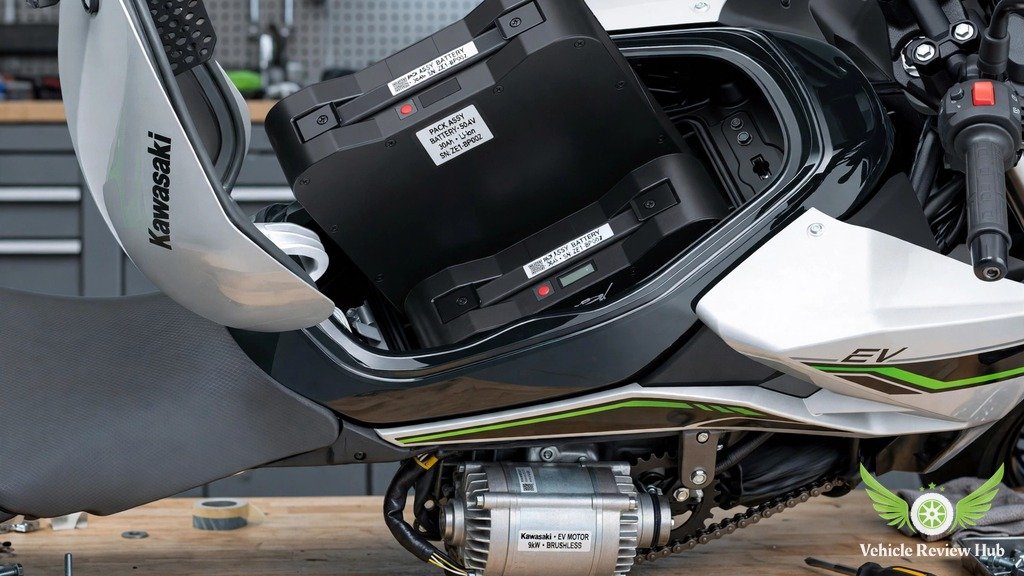
The battery is two removable 1.5 kWh lithium-ion packs, about 3.0 kWh in total. Each pack is 50.4 V and 30 Ah — 1,512 Wh — and weighs 11.5 kg, 25.3 lb, light enough to lift out by hand. The packs sit in parallel under a 1.3-gallon storage box where a fuel tank would be. Each one charges in 3.7 hours on a standard 120 V outlet; both packs on the single included charger take about 7.5 hours, and a partial charge from 20% to 85% takes about 1.6 hours per pack. Three ways to charge: the tail port with the packs installed, the packs out of the bike, or the standalone dock. No Level 2 or DC fast charging — 120 V only. The charger is part number 99994-1966 at $210.56 dealer price, and the standalone dock is part number 99994-1960 at $211.32, both from Kawasaki bulletin ST 23-02 of December 12, 2023. Kawasaki’s own service bulletin is the source this Kawasaki Z e-1 review relies on for both prices. Whether the dock charges both packs at once was not verified, so this Kawasaki Z e-1 review does not claim it. With only one pack installed the bike runs Eco mode only, with no e-boost.
| Item | 2024 Kawasaki Z e-1 |
|---|---|
| Motor | Air-cooled, interior permanent magnet synchronous motor |
| Rated power | 5.0 kW @ 2,800 rpm (6.7 hp) |
| Maximum power | 9.0 kW @ 2,600–4,000 rpm (12.1 hp, e-boost only) |
| Maximum torque | 29.7 lb-ft @ 500 rpm (40.3 Nm) |
| Power modes | 2 modes (ROAD/ECO) plus e-boost |
| Battery | 2 × 1.5 kWh lithium-ion packs, removable (50.4 V, 30 Ah each) |
| Claimed range | 41 mi (approximate, ROAD mode without e-boost, no cycle named) |
| Charge time | 3.7 hours per pack (120 V); about 7.5 hours for both packs |
| Transmission type | Single reduction gear |
| Shifter mechanism | Push button (single-speed, twist-and-go) |
| Primary reduction ratio | 3.211 (61/19) |
| Final reduction ratio | 3.867 (58/15) |
| Final drive type | Chain |
| Frame type | Trellis, high-tensile steel |
| Front suspension / wheel travel | 41 mm telescopic fork / 4.7 in |
| Rear suspension / wheel travel | Bottom-Link Uni-Trak with single gas-charged shock, adjustable spring preload / 5.2 in |
| Top speed | ROAD 53 mph (63 mph with e-boost); ECO 40 mph (45 mph with e-boost) |
| Front tyre / rear tyre | 100/80-17 / 130/70-17 |
| Brakes | Single 290 mm front disc, single 220 mm rear disc, ABS |
| Rake / trail | 24.4° / 3.7 in |
| Overall length / width / height | 78.0 in / 28.7 in / 40.7 in |
| Ground clearance | 6.7 in |
| Wheelbase | 53.9 in |
| Curb weight | 297.7 lb |
| Seat height | 30.9 in |
| Colour | Metallic Bright Silver / Matte Lime Green / Ebony |
| Electronic rider aids | WALK Mode (with Reverse), ABS |
| Model code | NR011ARFNN |
| MSRP (2024) | $7,599 (+ $650 destination = $8,249 delivered) |
Note: All figures are from the Kawasaki USA 2024 Z e-1 spec sheet. The 12.1 hp peak is available only in fifteen-second e-boost bursts, and the 41-mile range is an approximate ROAD-mode figure with no test cycle named. This Kawasaki Z e-1 review prints the sheet’s kilowatt figures as the governing numbers, and the horsepower figures as conversions.
Kawasaki Z e-1 Price and Market Availability
Price is where this Kawasaki Z e-1 review gets interesting, because the bike has two prices: the one Kawasaki printed, and the one dealers are actually asking two years later.
Kawasaki Z e-1 Price in the USA: $7,599 (2024)
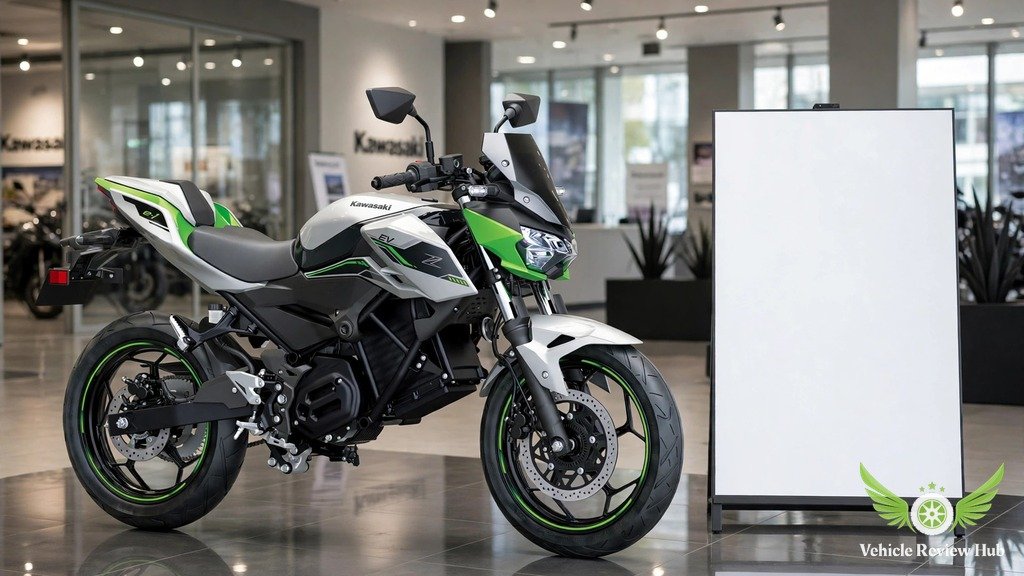
The spec-sheet price is $7,599, and Kawasaki USA’s own product page adds a $650 destination charge, so the delivered price is $8,249. At that price the Z e-1 cost $300 less than its faired Ninja e-1 twin, and $1,800 more delivered than a 2026 Ninja 500 ABS — $5,799 plus $650 destination for $6,449 delivered — a faster, highway-capable petrol bike. Leftover 2024 bikes were listed at $3,995 after offers at Columbia Powersports in Tennessee, a 47% cut, and at $5,249 at Motorsports International in Massachusetts, a 31% cut. At $3,995 the bike undercuts every petrol Kawasaki on sale, and the verdict changes completely — which is why this Kawasaki Z e-1 review keeps the list price and the leftover price separate in every paragraph that follows. The leftover figures are November 2026 dealer listings — re-check them before travelling.
Launch Price Still Conflicts
Anyone who googles the Z e-1’s price will meet a second figure, $7,299, and it is worth explaining rather than ignoring. The November 2023 announcement priced the Z e-1 at $7,299 and the Ninja e-1 at $7,599 — RevZilla, Cycle News, Ultimate Motorcycling, Electrek, Cycle Gear and TechRadar all printed those launch figures. By the time the bikes reached dealers in early 2024, both prices had risen $300, to $7,599 and $7,899 on the spec sheets — the spec-sheet price is the one the bikes sold at. Ultimate Motorcycling’s November 2026 buyer’s guide still prints the $7,299 launch figure, so this Kawasaki Z e-1 review does not cite that guide for price. Two other figures deserve the same treatment in this Kawasaki Z e-1 review. SlashGear prints a different figure that appears in no Kawasaki document and no other publication, most likely a typo — it is not printed here. Motorcycle.com’s database lists a lower destination charge — their database default, contradicted by Kawasaki’s own page printing $650. The manufacturer’s own page governs, and the delivered price in this Kawasaki Z e-1 review is $8,249: $7,599 plus $650.
| Figure | Value |
|---|---|
| Launch MSRP (November 2023 announcement) | $7,299 |
| Spec-sheet MSRP (2024) | $7,599 |
| Destination charge | $650 |
| Delivered price at list | $8,249 |
| Leftover, Columbia Powersports (Nov 2026) | $3,995 after offers (47% off) |
| Leftover, Motorsports International (Nov 2026) | $5,249 after offers (31% off) |
Note: The $7,599 spec-sheet price governs in this Kawasaki Z e-1 review — the $7,299 launch figure is explained above and is never printed as the price. The destination charge is $650 from Kawasaki USA’s own product page, not the lower figure in Motorcycle.com’s database. Leftover prices are November 2026 listings; re-check them before buying.
Kawasaki Z e-1 Design, Features and Technology
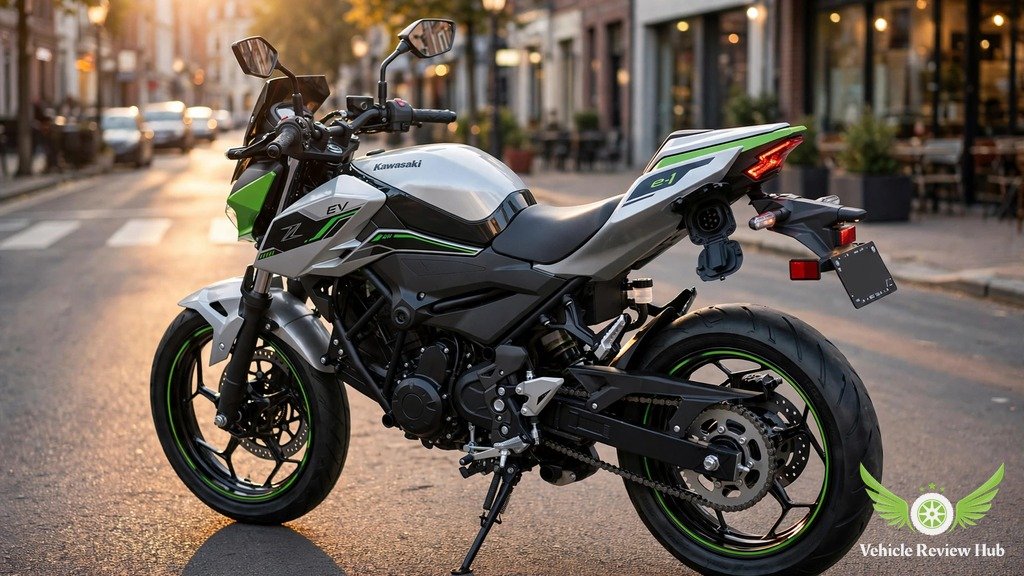
The Z e-1 looks like a naked Z and rides like one at city speed — until you notice what is missing. This Kawasaki Z e-1 review covers the design next, because the missing parts are the point: no exhaust, no fuel cap, no clutch lever, no gear shifter, and a storage box where the fuel tank would be.
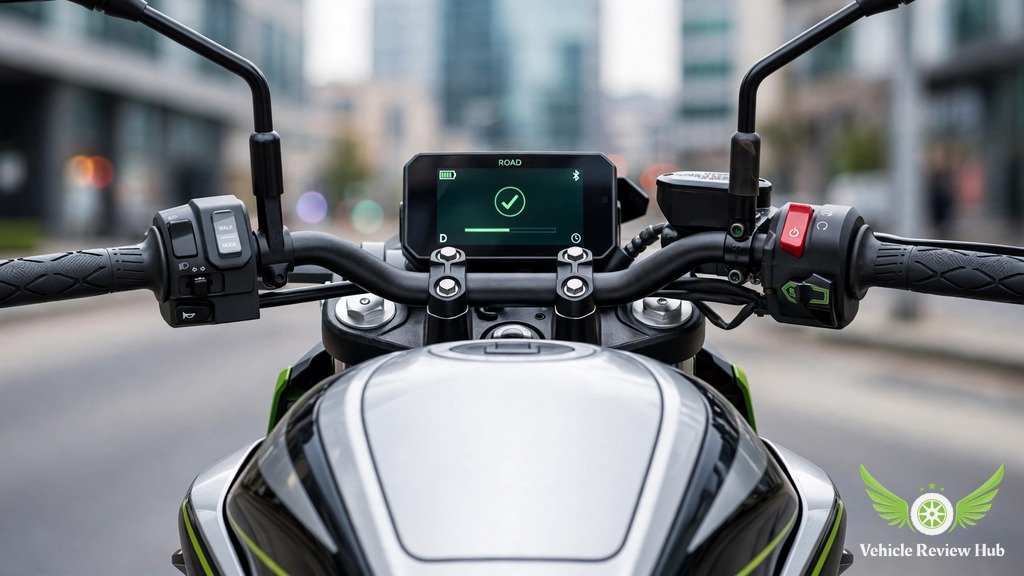
Walk Mode Reverses Too
Walk mode surprises people most, because it does something no petrol bike can do: it moves the bike under power at walking pace, forward and in reverse, for parking. Forward it runs at about 3.1 mph, reverse at about 1.8 mph, according to Cycle World; Ultimate Motorcycling puts it at roughly 3 mph forward and under 2 mph in reverse, and MCN reports up to 5 km/h in both directions. A 4.3-inch TFT display shows each pack’s charge level, plus remaining range and maintenance tracking, with Bluetooth connectivity. When the battery runs low the dash shows a tortoise light and the bike enters a preservation mode to get the rider home. ERGO-FIT is named on the spec sheet, but no adjustment figures are published, so this Kawasaki Z e-1 review does not invent any. The spec sheet lists the shifter mechanism as “Push button” — not a gear shifter; the bike is single-speed and twist-and-go.
Thai-Built, Forsee Batteries
The US e-1s are Thai-built: the Part 573 recall VINs begin ML5, the World Manufacturer Identifier for Kawasaki Motors Enterprise Thailand, and the battery supplier is Forsee Power Japan GK — PACK-ASSY-BATTERY, part number 26105-0009. That Thai origin is a fact this Kawasaki Z e-1 review verified from the recall file, not from a press release. The platform is derived from Kawasaki’s small-bore Z family: BikeReview in Australia calls the Z e-1 “based closely on the internal combustion-powered Z250”. The trellis frame is high-tensile steel and on show, the wheels are 17-inch, and the only green in the silver livery is lime green. The 1.3-gallon box under the “tank” cover holds the charger cable; MCN is blunt: there is no real storage besides the charger.
Peter Lowe’s first look at the 2024 Z e-1 — a walkaround and first impression filmed at a Canadian dealer, calling it an interesting first step rather than a replacement for a petrol bike. The bike on screen is a Canadian-market Z e-1, the same 2024 bike sold in the US, but the figures quoted in the video are Canadian, not US figures. This Kawasaki Z e-1 review uses it as a walkaround only, not as a source for US figures.
Kawasaki Z e-1 Riding Experience and Comfort
At 297.7 lb with a 30.9-inch seat, the Z e-1 is the lightest full-size Kawasaki on sale. This Kawasaki Z e-1 review turns to how it actually feels on the road — and where the comfort runs out.

297.7 lb, Built Like a 500
At 297.7 lb curb the Z e-1 is 15 kg lighter than the petrol Z250 it is based on, and 11 lb lighter than its faired Ninja e-1 twin — the weight gap this Kawasaki Z e-1 review keeps coming back to. The size is full-size, not mini-bike: 78.0 inches long, a 53.9-inch wheelbase and a 30.9-inch seat — “500-like” means the physical dimensions of a full-size motorcycle, not the Ninja 500’s chassis, which this bike does not share. BikeReview in Australia notes that a turn of the throttle launches the bike quite enthusiastically — after that the acceleration settles down, and the e-boost button is the bike’s trick. The comfort limits should be printed with attribution rather than softened. MCN found a cramped riding position, a seat that felt incredibly hard after just an hour, stiff rear suspension over bumps, tyres that offered little feel, and brakes that felt vague with no real bite. TopSpeed’s ride review agrees on the tyres, and notes charging is limited to Level-1 120 V.
24 Month Warranty, Double
The warranty is one of the few places where the Z e-1 beats every petrol Kawasaki: a 24-month limited warranty, double the standard 12-month Kawasaki warranty on petrol bikes, confirmed by dealer spec data and by SlashGear. Two wrong figures circulate: Motorcycle.com’s database lists “12 months” — their database default, contradicted by the dealer spec feed and by SlashGear. MCN prints “4 years parts / 5 years battery” — the UK warranty, not the US one — and neither belongs in this Kawasaki Z e-1 review as an American figure. It covers the whole bike, including the packs, for two years, with no separate battery term published. That is unusual among EV makers, and it is the risk the verdict weighs below. A leftover 2024 bike bought in 2027 may have little warranty left, so a buyer should ask the dealer for the warranty start date before signing anything. That is the warranty question this Kawasaki Z e-1 review would ask first at any dealer.
Kawasaki Z e-1 Review: Pros, Cons and Verdict
The verdict comes down to one number: the price you actually pay. This Kawasaki Z e-1 review ends with the honest call — and the honest call depends on whether the bike in front of you costs $7,599 or $3,995. Every line of this Kawasaki Z e-1 review points at the same conclusion.
Main Advantages and Limitations of the Kawasaki Z e-1
At list price the limitations win; at leftover prices the advantages do. The table below is the whole Kawasaki Z e-1 review in miniature: a silent, simple city bike with a warranty no petrol Z gets, against a 41-mile range, a 53 mph ceiling and a recall that touched every US bike. The Cycle World first ride is the evidence this Kawasaki Z e-1 review relies on for the range problem — a fully charged machine showing less than 40 miles on the dash — and the TopSpeed ride review is the clearest evidence for the verdict.
| Advantages | Limitations |
|---|---|
| Silent, twist-and-go city riding, no clutch, no gears | 41-mile claimed range, under 40 miles on the dash |
| Zero oil changes, no coolant, no valves | 53 mph continuous; 63 mph only in fifteen-second e-boost bursts |
| 24-month limited warranty, double the petrol standard | Level-1 charging only; about 7.5 hours for both packs |
| 297.7 lb and a 30.9-inch seat — the lightest full-size Kawasaki | No separate battery warranty; no replacement-pack price published |
| Two removable packs charge at home | Every US bike recalled (25V-118, DO NOT RIDE) over a missing battery terminal anchor |
| Walk mode reverses under power — no petrol bike does that | $7,599 at list — $1,800 more delivered than a Ninja 500 ABS |
Note: The range and speed figures are Kawasaki’s claimed figures and the first rides’ readings. The recall is NHTSA campaign 25V-118 — 104 Z e-1s and 112 Ninja e-1s, remedy free, up to ten minutes. This Kawasaki Z e-1 review does not soften the recall into a footnote: it is a DO NOT RIDE campaign, and a used buyer should check the VIN.
No Separate Battery Warranty
There is no separate battery warranty term published for the e-1, and that is the risk the verdict has to weigh. The 24-month limited warranty covers the whole bike, including the packs, for two years — after that, a pack failure is the owner’s cost, because Kawasaki publishes no replacement-pack price. The only published battery-adjacent prices are the charger at $210.56 and the dock at $211.32, both dealer prices from bulletin ST 23-02. Zero publishes a five-year battery warranty on the FXE, and Ryvid a 24-month one on the Anthem. A buyer who keeps the bike past its warranty should go in with eyes open — the packs are the most expensive part of the machine. At a leftover price near $4,000 that risk is acceptable, because the whole bike costs less than a single pack probably would — in this Kawasaki Z e-1 review’s judgement. At the $7,599 list price it is not, and this Kawasaki Z e-1 review says so plainly: buy the leftover, or buy the petrol bike. The Ninja 650 is the honest first bike for a rider who outgrows the 53 mph ceiling, and the petrol Z500 is the naked-bike alternative for a rider who wants the Z name with a petrol engine.
Kawasaki Z e-1 Review: Frequently Asked Questions
The questions buyers ask about the Z e-1, answered with the verified figures from this Kawasaki Z e-1 review.
What is the Kawasaki Z e-1?
Kawasaki’s first production electric motorcycle: a naked, 125cc-class urban commuter with a 5.0 kW rated motor (9.0 kW peak with e-boost), two removable 1.5 kWh battery packs, a 41-mile claimed range and a 53 mph continuous top speed. It was sold in the US as a 2024 model only.
How much does a Kawasaki Z e-1 cost?
$7,599 plus $650 destination — $8,249 delivered — at list price. The launch price was $7,299, but Kawasaki’s spec sheet price of $7,599 is what the bikes sold at. Leftover 2024 bikes were listed near $3,995–$5,249 in November 2026.
How far can the Z e-1 go on a charge?
Kawasaki claims 41 miles in Road mode without e-boost, with no test cycle named. In the real world Cycle World’s first ride showed under 40 miles on the dash, and MCN’s spirited Road-mode test suggested 19–25 miles before the preservation mode.
How fast is the Z e-1?
53 mph continuous in Road mode, 63 mph in 15-second e-boost bursts; 40 mph in Eco mode, 45 mph with boost. It is a city bike — not a highway bike.
Does the Z e-1 have a warranty?
Yes: a 24-month limited warranty, double Kawasaki’s standard 12-month warranty on petrol bikes. There is no separate battery warranty term published.
Is the Z e-1 still sold new?
No. It was a one-year US model (2024 only) and the Z e-1 never returned. Its faired twin, the Ninja e-1, returned for 2027 at $7,899. Remaining Z e-1s are leftover 2024 dealer stock.