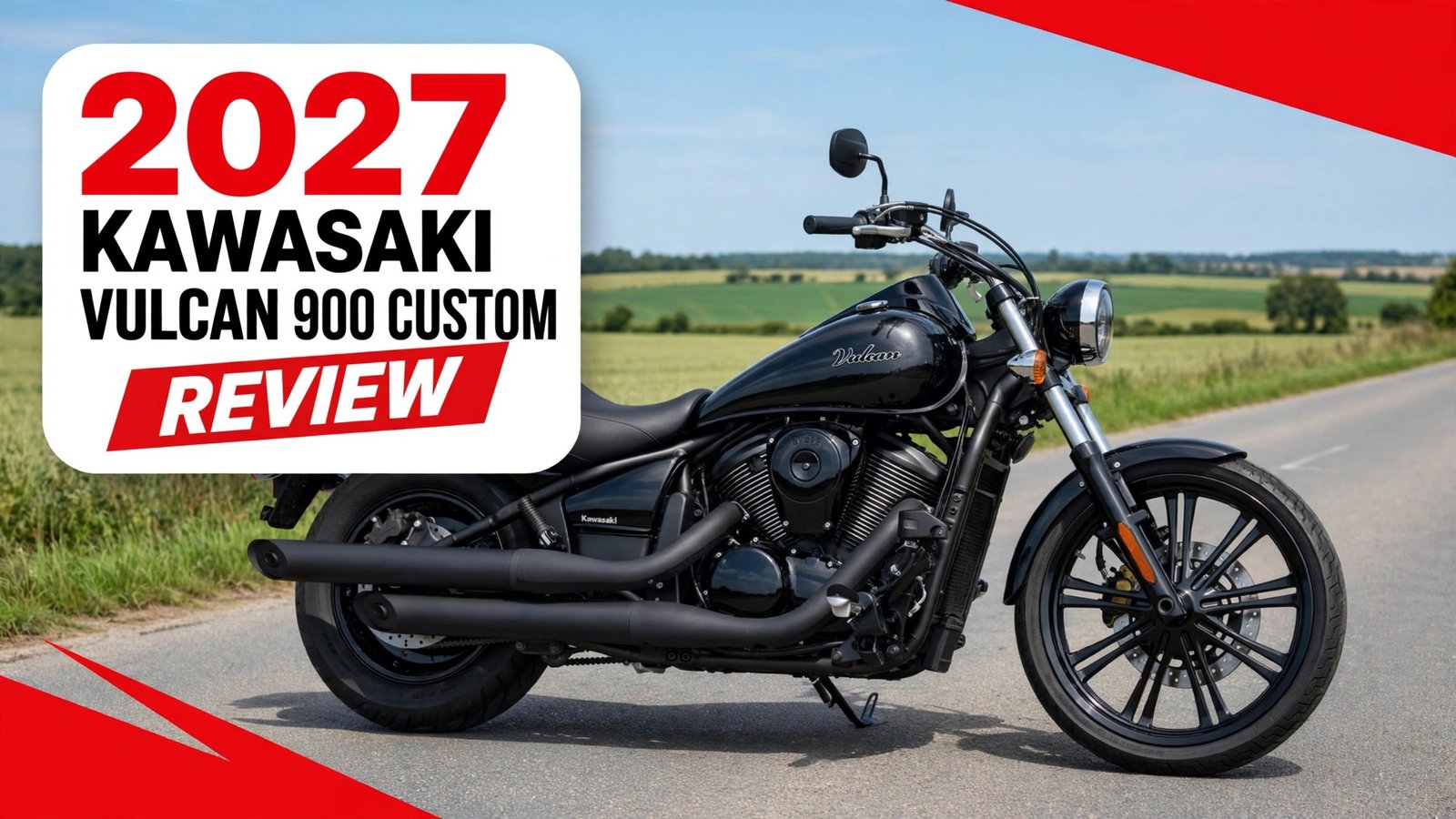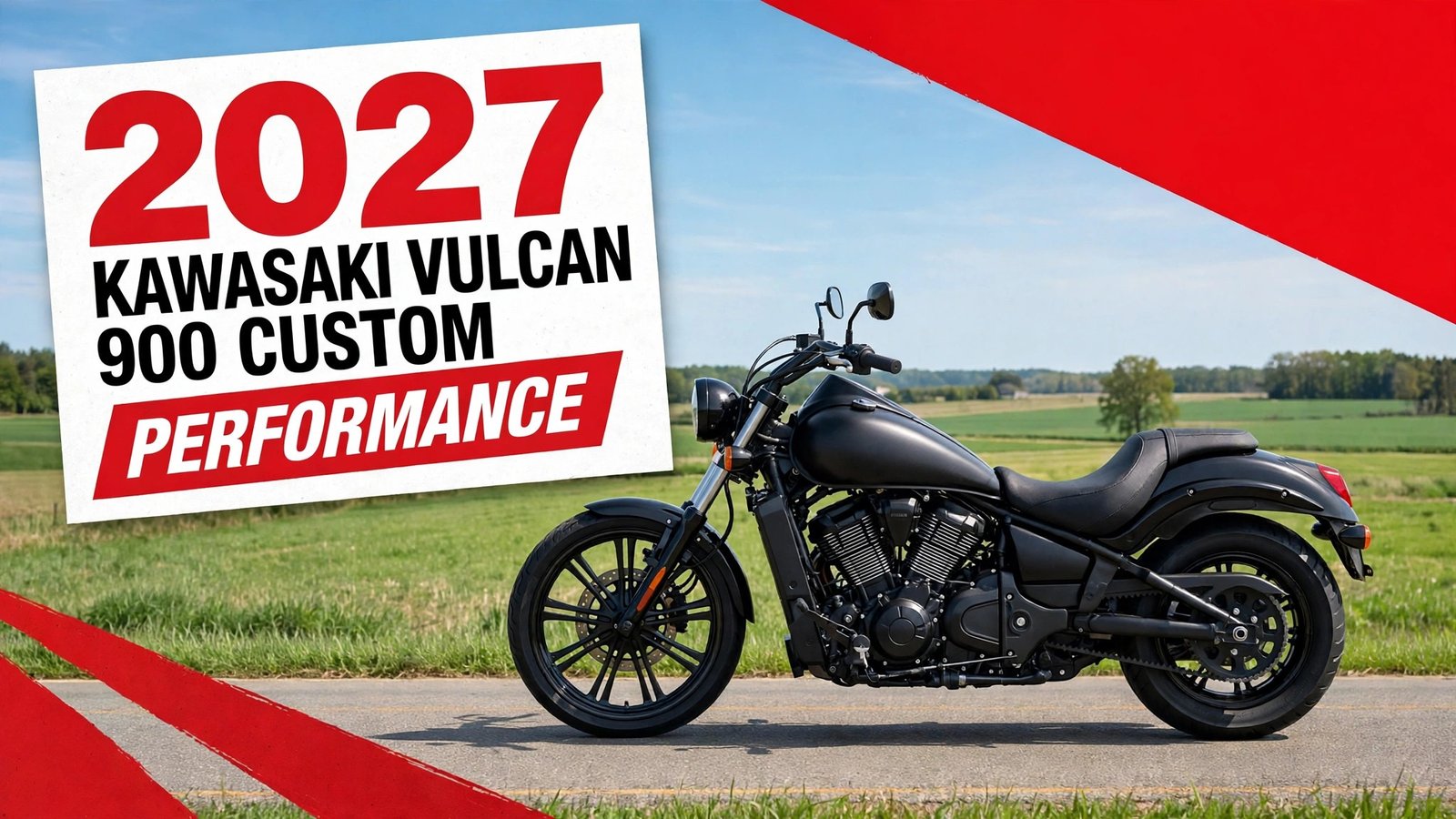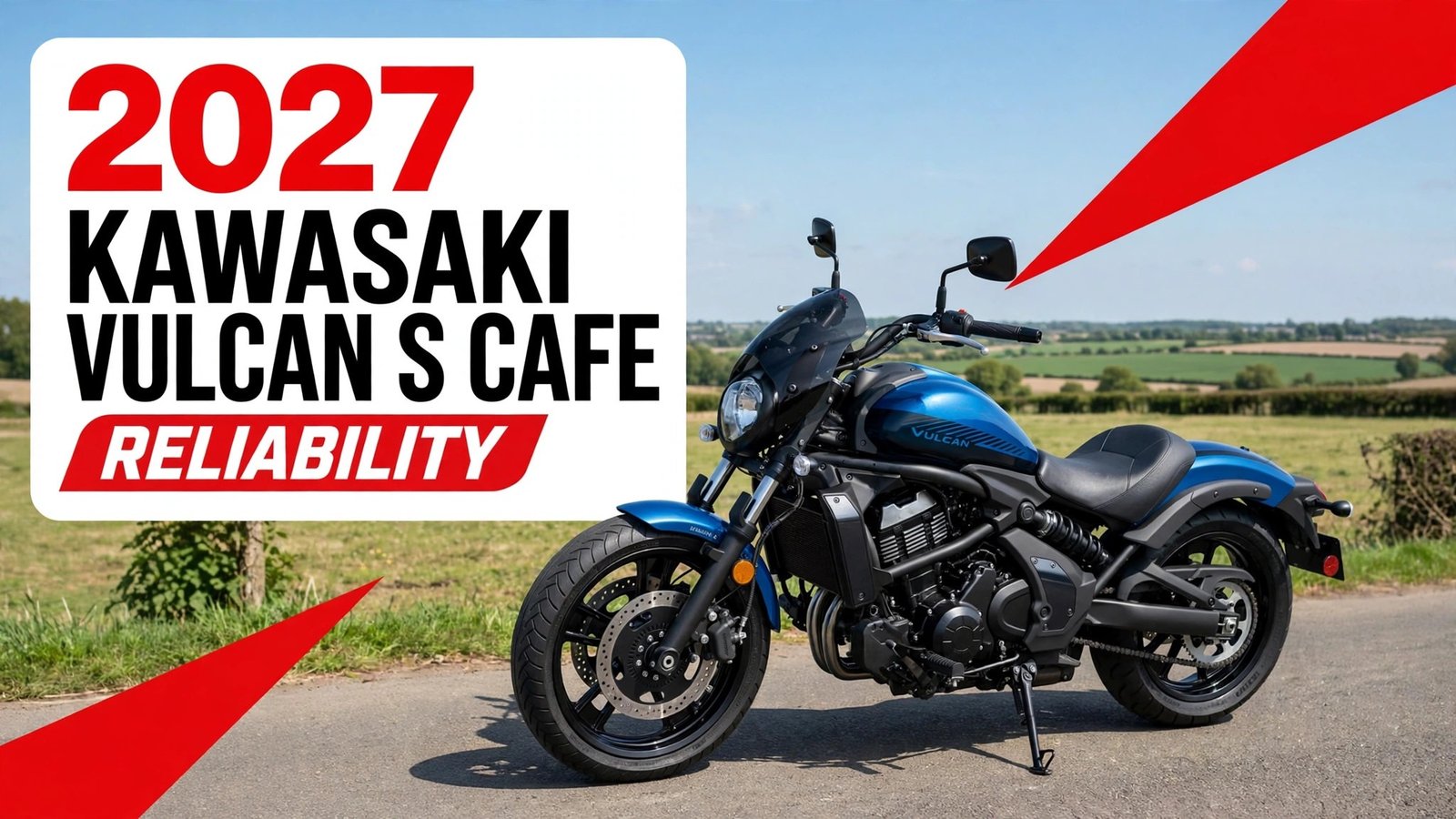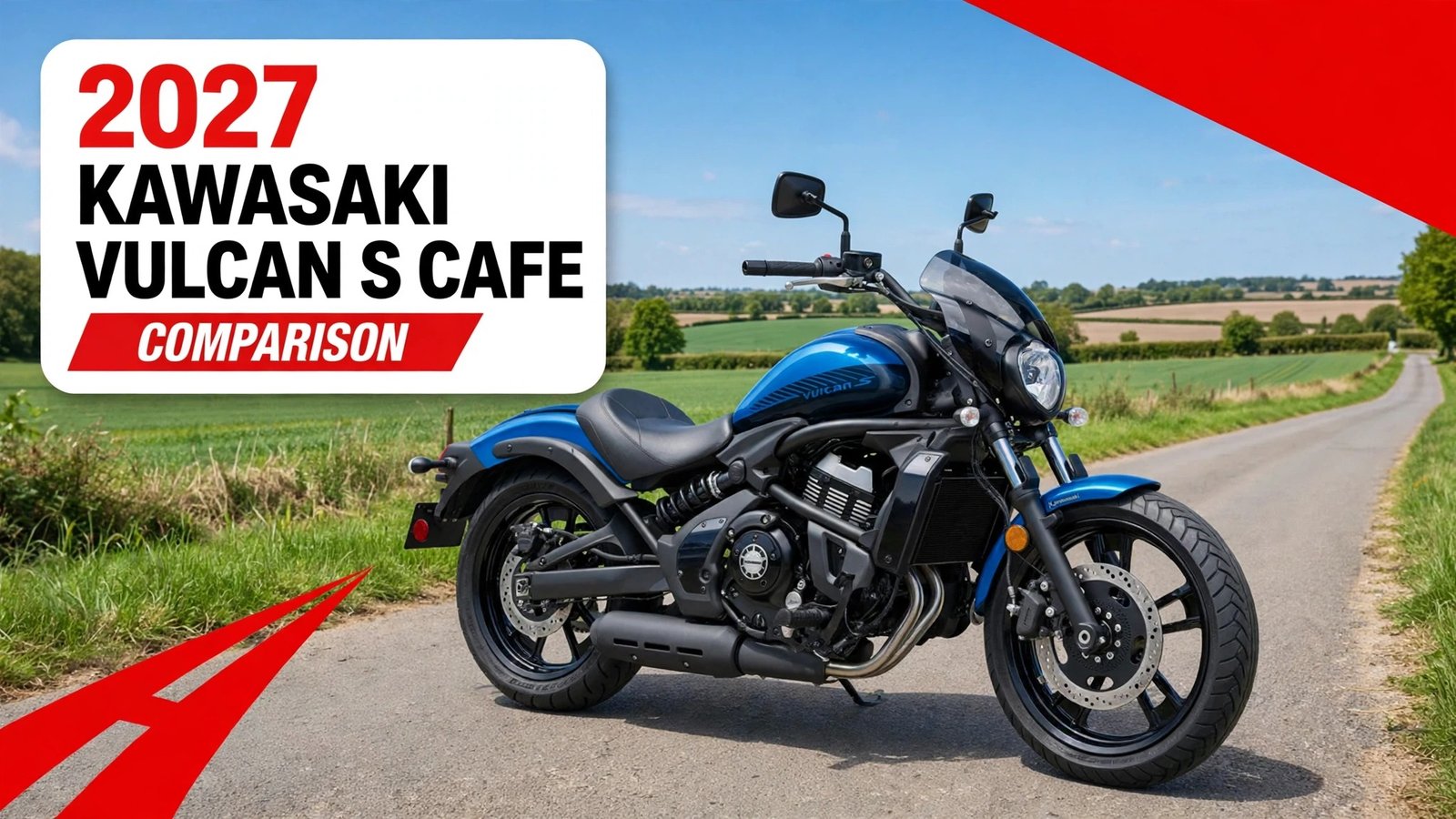
The short answer is that the Cafe asks $800 for a look. The 2027 Kawasaki Vulcan S Cafe ABS costs $9,584 delivered, while the standard Vulcan S ABS — the same bike without the Cafe equipment — costs $8,784. That $800 buys a fly screen, clubman bars, a solo seat and paint — nothing mechanical. The two other SE trims in this Kawasaki Vulcan S Cafe comparison charge far less: Honda asks $200 for the Rebel 500 SE, and Kawasaki asks $300 for the Eliminator SE ABS.
Kawasaki Vulcan S Cafe Overview and Its Closest Rivals
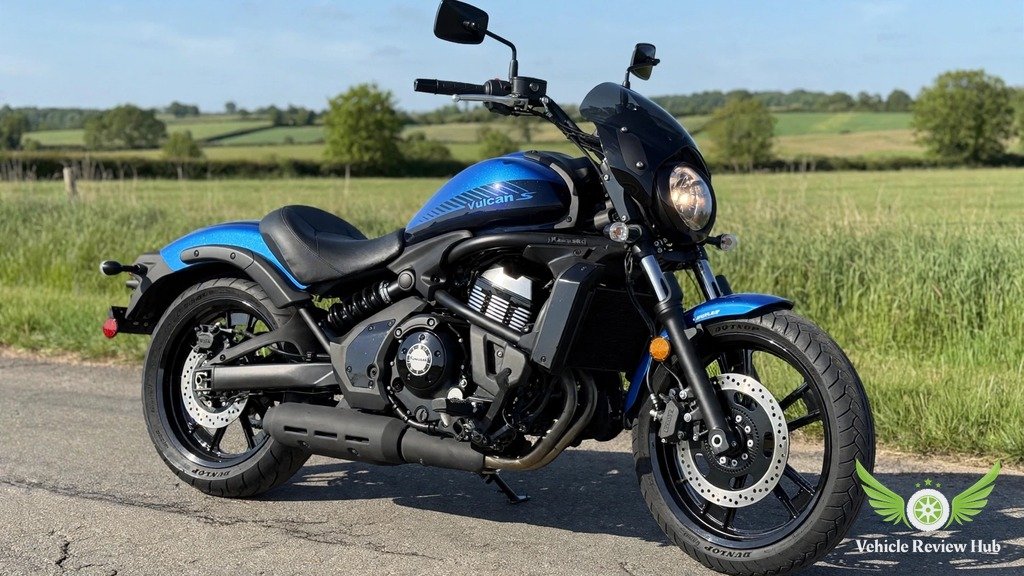
The Cafe is the top trim of Kawasaki’s sport cruiser line, and this Kawasaki Vulcan S Cafe comparison starts from one fact: the Cafe is the standard Vulcan S ABS with Cafe equipment added — same 649cc twin, same chassis, same brakes, same service schedule. The rivals below are the only three that test the premium honestly: the same bike, and the two SE trims that play the same cosmetics-only game at lower prices.
Why These Three Rivals: Same Bike, Two SE Trims
The standard Vulcan S ABS is the purest test of the premium: it is the same motorcycle, so the only difference is the Cafe equipment. In this Kawasaki Vulcan S Cafe comparison, that makes it the benchmark. The Honda Rebel 500 SE and the Kawasaki Eliminator SE ABS play the same game. Honda’s SE adds special paint, fork covers, a headlight cowl and a diamond-stitch seat to the base Rebel 500 and charges $200. Kawasaki’s Eliminator SE adds special paint, a headlight cowl and fork boots and charges $300.
How the Four Bikes Differ at a Glance
The table below is the whole Kawasaki Vulcan S Cafe comparison in one place. The Cafe and the standard S ABS share every line except weight and price. The Rebel SE is the lightest-feeling rival on paper — 414 lb and a 27.2-inch seat — while the Eliminator SE ABS is the lightest bike here at 390.3 lb and the smallest engine at 451cc.
| Item | Vulcan S Cafe ABS | Vulcan S ABS | Rebel 500 SE | Eliminator SE ABS |
|---|---|---|---|---|
| Engine | 649cc parallel twin | 649cc parallel twin | 471cc parallel twin | 451cc parallel twin |
| Power | 60 hp @ 7,500 rpm | 60 hp @ 7,500 rpm | 47 hp (CMX500 figure) | 51 hp @ 10,000 rpm |
| Torque | 46.5 lb-ft @ 6,600 rpm | 46.5 lb-ft @ 6,600 rpm | 31.7 lb-ft (CMX500 figure) | 31.7 lb-ft @ 7,500 rpm |
| Seat height | 27.8 in | 27.8 in | 27.2 in | 30.9 in |
| Curb weight | 502.7 lb | 498.3 lb | 414 lb | 390.3 lb |
| Fuel tank | 3.7 gal | 3.7 gal | 3.0 gal | 3.4 gal |
| Wheelbase | 62.0 in | 62.0 in | 58.7 in | 59.8 in |
| 2027 delivered | $9,584 | $8,784 | Not verified | $7,749 |
| 2026 delivered | $9,434 | $8,834 | $7,599 | $7,749 |
Notes for this Kawasaki Vulcan S Cafe comparison at-a-glance table: the Cafe and the standard S ABS share the same engine, torque, seat, tank and wheelbase — only weight and price differ. The Rebel 500 power and torque figures are the published CMX500 figures, since Honda USA publishes no US torque figure. The 2027 Rebel 500 SE price was not verified.
The film below compares five small cruisers — the Honda Rebel 500, the Kawasaki Eliminator, the Royal Enfield Super Meteor 650, the Royal Enfield Shotgun 650 and the Kawasaki Vulcan S. Three things to know before you watch: the Vulcan S on screen is the standard trim, not the Cafe; the Rebel and the Eliminator in it are the base trims, not the SE trims this Kawasaki Vulcan S Cafe comparison is about; and it also covers the Super Meteor 650, which this comparison does not. The prices in the tables are the verified 2026 and 2027 delivered figures, not the video’s.
Kawasaki Vulcan S Cafe vs Kawasaki Vulcan S ABS
This is the section that matters most in this Kawasaki Vulcan S Cafe comparison, because nothing changes here but the trim. The standard Vulcan S ABS is the same motorcycle with the Cafe equipment removed — same engine, chassis, brakes, warranty and service schedule. The only question in this Kawasaki Vulcan S Cafe comparison is whether they are worth $800 in 2027.
Engine, Specs and Performance Side by Side
There is no performance difference to measure, because there is no mechanical difference. Both run the same 649cc liquid-cooled parallel twin — 60 hp at 7,500 rpm and 46.5 lb-ft at 6,600 rpm — with a 6-speed gearbox, chain drive and ABS standard. In this Kawasaki Vulcan S Cafe comparison, the instrumented record belongs to the Cafe itself: Cycle World’s Cafe ABS trio test recorded 53.5 hp at 7,150 rpm and 42.7 lb-ft at 5,650 rpm on the dyno, a 13.40-second quarter mile at 93.57 mph, a 4.3-second 0–60, and braking of 130 ft from 60 mph and 33 ft from 30 mph. The only spec differences are the ones the equipment creates: the Cafe carries 502.7 lb at the curb, 4.4 lb more than the standard S ABS, and stands 44.5 inches tall, 1.2 inches taller.
Price, Equipment and Which Suits Which Rider
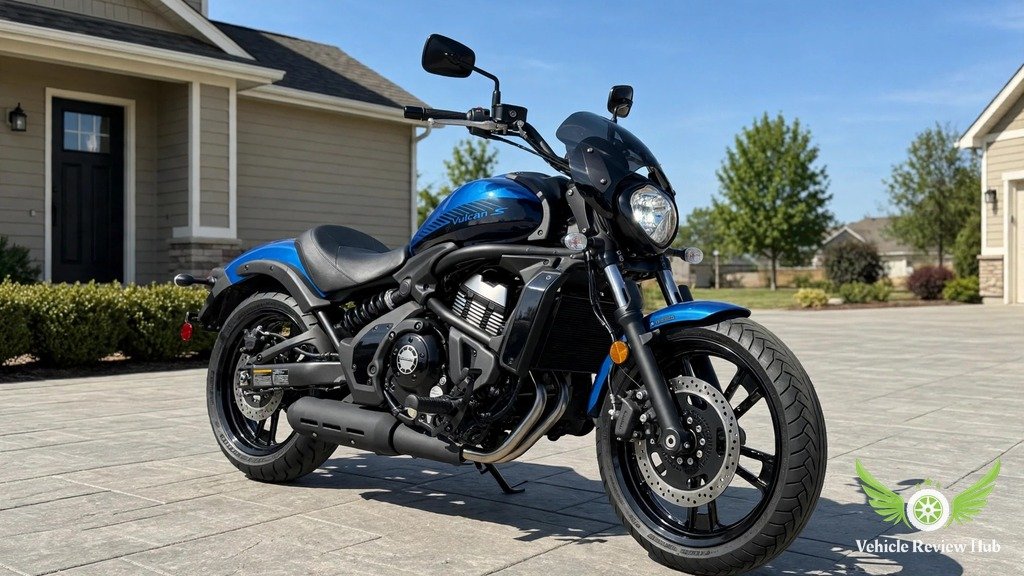
The price gap is $800 in 2027 and it has moved around. The Cafe cost $7,999 at launch in 2016 against the ABS trim’s $7,399 — a $600 premium — and the premium was $200 in 2022 and 2023, $600 in 2024 through 2026, and $800 in 2027. Delivered, the 2027 Cafe is $8,899 plus $685 destination, $9,584 in total, against the standard S ABS at $8,099 plus $685, $8,784. What the $800 buys is a fixed list: the stubby dark-tinted fork-mount fly screen, the low clubman bars, the solo seat with no passenger footpegs, the signature tank badging, the sport striping and the multi-tone paint. Rider’s verdict was that the screen “diverts enough windblast to make highway speeds tolerable.” None of it changes the engine, the brakes or the service schedule. In this Kawasaki Vulcan S Cafe comparison, the Cafe suits the rider who wants the look and rides solo — the stock Cafe carries no passenger — and the standard S ABS suits the rider who wants the bike and $800 in their pocket. The full price history is in the Cafe review, and the same-bike logic is in the Vulcan S ABS comparison.
Kawasaki Vulcan S Cafe vs Honda Rebel 500 SE
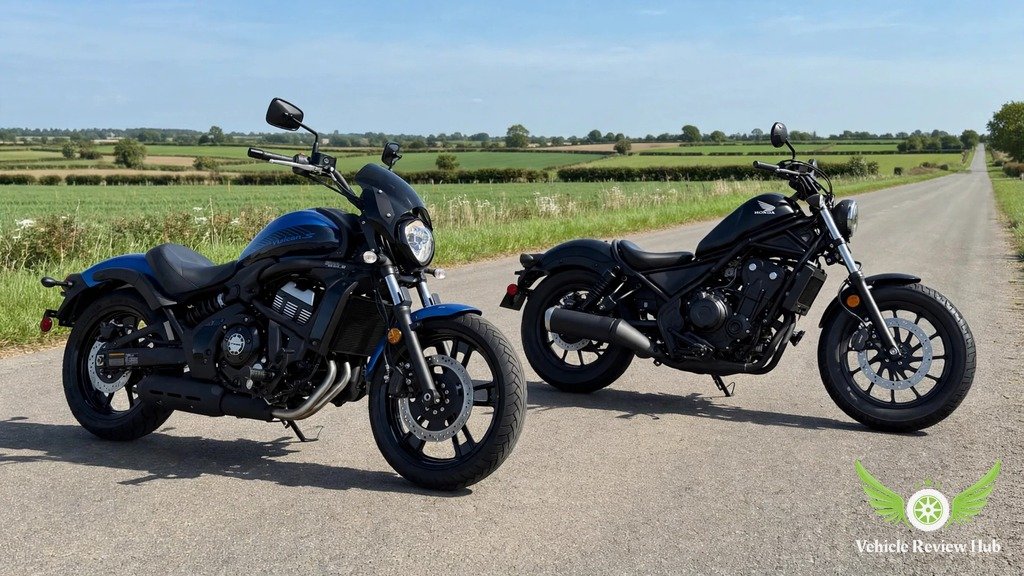
The Rebel 500 SE is the benchmark’s SE trim, and the cheapest way into this Kawasaki Vulcan S Cafe comparison. Honda’s SE plays the same cosmetics-only game as the Cafe — special paint, fork covers, a headlight cowl and a diamond-stitch seat — but Honda charges $200 where Kawasaki charges $800. The Rebel is smaller, lighter and less powerful; the Cafe is bigger, heavier and faster.
Engine, Specs and Performance Side by Side
The Cafe’s 649cc twin makes 60 hp at 7,500 rpm and 46.5 lb-ft at 6,600 rpm. The Rebel 500 SE runs a 471cc parallel twin rated at 47 hp, with torque of 31.7 lb-ft — both figures are the published CMX500 numbers, since Honda USA publishes no US torque figure for the Rebel. The gap is real: the Cafe’s instrumented quarter mile is 13.40 seconds at 93.57 mph, and the Rebel is a slower, gentler bike that trades pace for ease. At 414 lb the Rebel is 88.7 lb lighter than the Cafe, its seat is 27.2 inches — 0.6 inches lower — and its 58.7-inch wheelbase is 3.3 inches shorter, making it the easier bike in town. The Cafe carries the bigger tank at 3.7 gallons against 3.0, and its 47 mpg in Cycle World’s hands — 46.9 to 60.7 mpg in Rider’s Cafe test — means it goes further between fill-ups. In this Kawasaki Vulcan S Cafe comparison, the Cafe’s rear shock has only 3.2 inches of travel and rides harshly on broken pavement, while the Rebel’s softer setup is more forgiving.
Price, Equipment and Which Suits Which Rider
The Rebel 500 SE is $6,999 plus a $600 destination charge, $7,599 delivered, against the base Rebel 500 at $6,799 plus $600, $7,399 delivered — a $200 SE premium. The 2026 Cafe is $8,749 plus $685, $9,434 delivered — $1,835 above the Rebel SE — and the 2027 Cafe is $9,584 delivered, while the 2027 Rebel SE price was not verified: Honda’s Rebel 500 page still shows the 2026 figures, with the prior model year shown. In this Kawasaki Vulcan S Cafe comparison, the Rebel SE suits the rider who wants the lightest, lowest, easiest cruiser; the Cafe suits the rider who wants the bigger twin and the cafe look, and is willing to pay $1,835 more.
Kawasaki Vulcan S Cafe vs Kawasaki Eliminator SE ABS
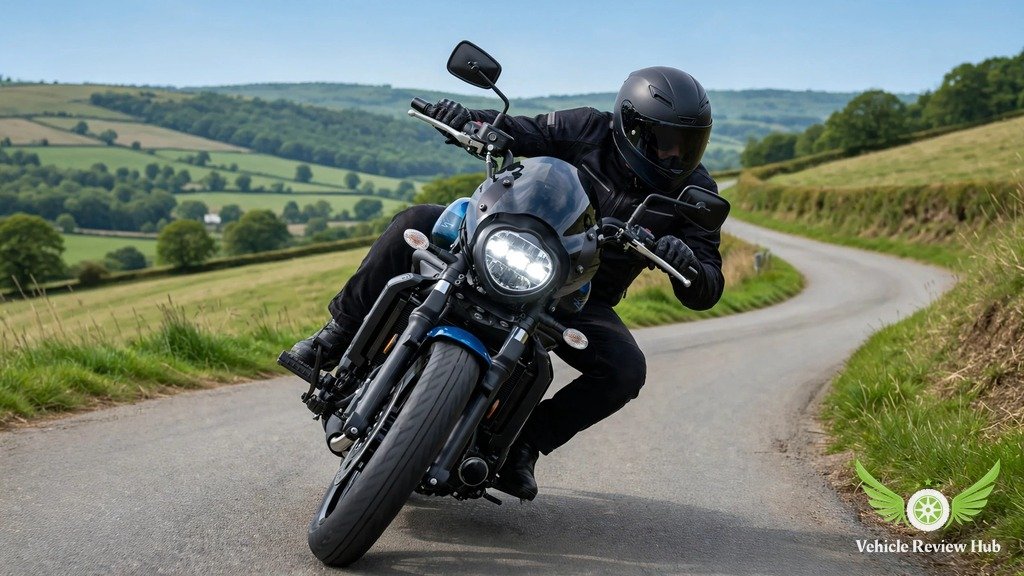
The Eliminator SE ABS is the in-house rival, and the closest fight in this Kawasaki Vulcan S Cafe comparison. Both are Kawasaki SE trims built on the same cosmetics-only logic, but the engines differ: the Eliminator runs the 451cc Ninja 500-derived twin, a smaller, higher-revving motor, while the Cafe runs the 649cc twin with far more torque.
Engine, Specs and Performance Side by Side
The Eliminator’s 451cc twin makes 51 hp at 10,000 rpm and 31.7 lb-ft at 7,500 rpm, against the Cafe’s 60 hp at 7,500 rpm and 46.5 lb-ft at 6,600 rpm. The 9-hp gap understates it: the Cafe makes 14.8 lb-ft more torque, 900 rpm lower, so it pulls harder from low revs where a cruiser lives. On weight the Eliminator wins: 390.3 lb at the curb, 112.4 lb lighter, with a 30.9-inch seat, 3.1 inches taller than the Cafe’s 27.8. Its 59.8-inch wheelbase is 2.2 inches shorter and its 3.4-gallon tank 0.3 gallons smaller. The Eliminator runs a 130/70-18 front tyre with a single 310 mm front disc, the Cafe a 120/70-18 with a single 300 mm Nissin disc; both have ABS, a single rear disc, a 6-speed gearbox and chain drive. In this Kawasaki Vulcan S Cafe comparison, the Cafe is the faster, torquier bike; the Eliminator is the lighter, more agile one.
Price, Equipment and Which Suits Which Rider
The Eliminator SE ABS is $7,099 plus a $650 destination charge, $7,749 delivered, in both 2026 and 2027 — unchanged across the two years. The base Eliminator ABS is $6,799 plus $650, $7,449 delivered, so the SE premium is $300. The $300 buys special paint — Metallic Bluish Green for 2027 — plus a headlight cowl and fork boots. The Cafe is $9,584 delivered in 2027, which puts it $1,835 above the Eliminator SE ABS — the same dollar gap as against the Rebel SE. In this Kawasaki Vulcan S Cafe comparison, the Eliminator SE suits the rider who wants the lightest bike in this group and the lowest price; the Cafe suits the rider who wants the torque, the highway legs and the cafe look.
Kawasaki Vulcan S Cafe Price and Value Compared
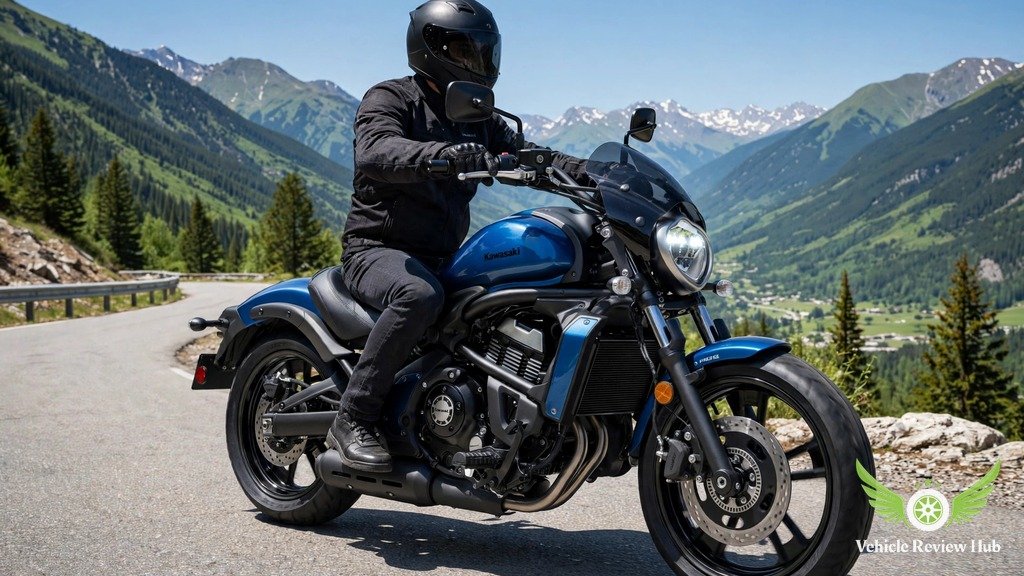
Price is where this Kawasaki Vulcan S Cafe comparison is decided. The Cafe is the most expensive bike here by a wide margin, and the premium is the whole argument: $800 in 2027 for a screen, bars, a solo seat and paint, against $200 and $300 for the same idea from Honda and Kawasaki’s own Eliminator.
Honda Charges $200 for Cosmetics, Kawasaki $800
The heading compares two different years, and this Kawasaki Vulcan S Cafe comparison says so plainly: the Rebel SE figure is 2026 and the Cafe figure is 2027, because the 2027 Rebel price is unverified. Honda’s Rebel 500 SE premium is $200 — the SE is $6,999 against the base Rebel 500 at $6,799, both 2026 figures from Honda’s own pages. Kawasaki’s Cafe premium is $800 — the Cafe is $8,899 against the standard S ABS at $8,099, both 2027 figures from Kawasaki’s 2027 Cafe page. The Eliminator SE premium sits between them at $300 — the SE ABS is $7,099 against the base Eliminator ABS at $6,799, both 2027 figures. Three SE trims, three premiums: $200, $300, $800. The Cafe’s $800 is the only premium that changes the riding position and the passenger provision.
Running Costs and Resale Value Compared
The Cafe is cheap to run, and the rivals are cheaper still to buy — the running-cost gap is smaller than the price gap. In this Kawasaki Vulcan S Cafe comparison, routine maintenance on the Cafe runs $150 to $400 a year by owner reports, a major service runs $500 to $800, and five years runs $1,000 to $1,500, per TopSpeed’s long-term ownership piece — what owners say they spend, not a Kawasaki price list. The service schedule is the same for the Cafe and the standard S ABS: oil and filter every 7,500 miles, a valve check every 15,000 miles, brake fluid every two years, and the chain lubricated every 400 miles. The full schedule is in the Cafe reliability guide. Resale is where the Cafe’s premium is hardest to defend: no priced premium for a used Cafe over a standard S of the same year was verified, so a buyer paying $800 more new cannot count on getting it back. One aggregator claims low-mileage Vulcan S examples typically retain 65 to 75 percent after three years — an aggregator claim, labelled as such.
| Bike | 2026 MSRP | 2026 delivered | 2027 MSRP | 2027 delivered |
|---|---|---|---|---|
| Vulcan S Cafe ABS | $8,749 | $9,434 | $8,899 | $9,584 |
| Vulcan S ABS | $8,149 | $8,834 | $8,099 | $8,784 |
| Rebel 500 SE | $6,999 | $7,599 | Not verified | Not verified |
| Eliminator SE ABS | $7,099 | $7,749 | $7,099 | $7,749 |
| Shotgun 650 | $6,899 | Destination unverified | $7,599 | Destination unverified |
Notes for this Kawasaki Vulcan S Cafe comparison delivered-prices table: delivered means MSRP plus the destination charge for that model year — $685 for both Kawasaki Vulcans, $600 for the Rebel, $650 for the Eliminator. The 2027 Rebel 500 SE price and the Shotgun 650 destination charge were not verified, so those cells say so instead of guessing. The Shotgun 650 is the alternative, not a doc rival.
Kawasaki Vulcan S Cafe Comparison Verdict and US Alternatives
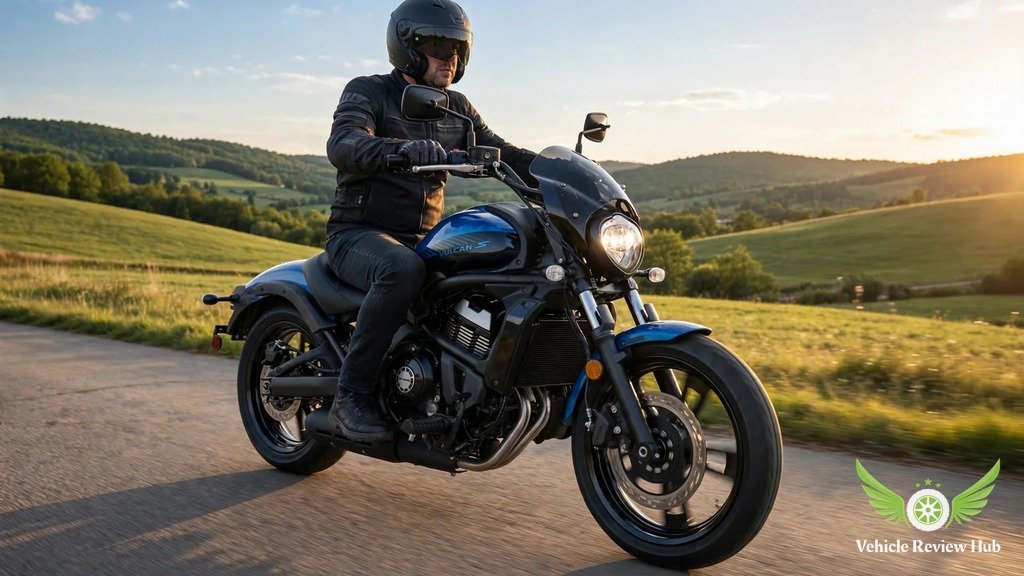
In this Kawasaki Vulcan S Cafe comparison, the verdict is the blog’s own judgement, built from the verified price gap and the equipment list. No outlet has published a verdict on the Cafe’s premium, so the call depends on what the buyer wants the bike to be.
Verdict: No Outlet Has Judged the Premium
No outlet was found publishing a verdict on whether the Cafe’s $600 to $800 premium is worth it. Cycle World praised the Cafe’s back-road play and Rider tested it, but neither judged the premium — a search result, and the verdict here is this blog’s own, labelled as such. On the numbers, the premium is hard to justify as value: $800 buys a screen, bars, a solo seat and paint on a bike otherwise identical to the $8,784 standard S ABS, while Honda charges $200 and Kawasaki’s own Eliminator charges $300 for the same cosmetics-only idea. But the premium is not a value purchase. The Cafe is the only bike here that looks like a cafe racer, the only one with the fly screen and clubman bars as factory equipment, and the only one with the solo seat as a statement rather than a compromise. In this Kawasaki Vulcan S Cafe comparison, the Cafe wins only for the buyer who wants the Cafe — which is, in the end, the only buyer the trim was built for.
Shotgun 650 Alternative
The Royal Enfield Shotgun 650 is the alternative for the buyer who likes the Cafe’s single-seat bobber look but not its price. The Shotgun is a 648cc air-cooled parallel twin making 47 hp at 7,250 rpm and 38.6 lb-ft at 5,650 rpm, with a 31.3-inch seat, a 529-lb curb weight, a 5-speed gearbox, chain drive and dual-channel ABS. It is heavier by 26.3 lb and slower by 13 hp, but it undercuts the Cafe on price. The Shotgun is $6,899 for 2024 and 2026, and $7,599 for 2027, per BMG Powersports’ 2027 Shotgun 650 listing and two more dealer listings at the same price — all MSRP, with the destination charge unverified, so no delivered figure is printed here. On MSRP alone, the 2027 Shotgun is $1,300 less than the Cafe’s $8,899. Its 3-year unlimited-mileage warranty is the longest in this group. In this Kawasaki Vulcan S Cafe comparison, the Shotgun suits the buyer who wants the bobber look and the lowest price and does not mind the smaller engine; the Cafe suits the buyer who wants the faster twin, the 6-speed box and the Kawasaki dealer network.
Kawasaki Vulcan S Cafe Comparison: Frequently Asked Questions
These are the questions riders ask most when choosing between the Cafe and its rivals, answered with the figures from this Kawasaki Vulcan S Cafe comparison.
Is the Cafe faster than the standard Vulcan S ABS?
In this Kawasaki Vulcan S Cafe comparison, no: the two bikes are mechanically identical. Both make 60 hp at 7,500 rpm and 46.5 lb-ft at 6,600 rpm, and the instrumented figures are the Cafe’s own, shared with the standard bike.
What does the Cafe’s $800 premium buy?
In this Kawasaki Vulcan S Cafe comparison, the $800 buys the fly screen, the clubman bars, the solo seat with no passenger footpegs, the tank badging, the sport striping and the multi-tone paint. It buys nothing mechanical — the engine, chassis, brakes and service schedule are identical to the standard S ABS.
Is the Rebel 500 SE cheaper than the Cafe?
In this Kawasaki Vulcan S Cafe comparison, yes, by a wide margin. The 2026 Rebel 500 SE is $6,999 plus $600 destination, $7,599 delivered, against the 2026 Cafe at $9,434 delivered — a $1,835 gap. The 2027 Rebel SE price was not verified; Honda’s own page still shows the 2026 figures.
How much is the Eliminator SE ABS?
In this Kawasaki Vulcan S Cafe comparison, the Eliminator SE ABS is $7,099 plus $650 destination, $7,749 delivered, in both 2026 and 2027. That is $1,835 less than the 2027 Cafe at $9,584 delivered, and its SE premium over the base Eliminator ABS is $300.
Which bike is best for a beginner?
In this Kawasaki Vulcan S Cafe comparison, the Rebel 500 SE is the easiest start: 414 lb, a 27.2-inch seat and 47 hp. The Eliminator SE ABS is the lightest at 390.3 lb but has the tallest seat at 30.9 inches. The Cafe is the heaviest at 502.7 lb and the most powerful at 60 hp.
Does the Cafe take a passenger?
In this Kawasaki Vulcan S Cafe comparison, no — not as standard. The Cafe’s solo seat has no passenger footpegs, so a pillion cannot ride on a stock Cafe. The standard Vulcan S ABS takes a passenger, and so does the Eliminator SE ABS.
Is the Cafe worth $800 more than the standard S?
In this Kawasaki Vulcan S Cafe comparison, that is the buyer’s call — no outlet has published a verdict on it. The $800 buys the look — screen, bars, solo seat and paint — and nothing else. A buyer who wants the look and rides solo gets a bike no other trim offers; a buyer who wants the bike should buy the standard S ABS and keep $800.
What is the cheapest bike in this comparison?
In this Kawasaki Vulcan S Cafe comparison, the Eliminator SE ABS and the Rebel 500 SE are the cheapest, at $7,749 and $7,599 delivered in 2026. The Shotgun 650 undercuts them on MSRP at $7,599 for 2027, but its destination charge was not verified, so no delivered figure is printed for it.
Does the Shotgun 650 beat the Cafe on price?
In this Kawasaki Vulcan S Cafe comparison, yes on MSRP: the 2027 Shotgun 650 is $7,599 against the Cafe’s $8,899 MSRP, a $1,300 gap before destination. The Shotgun gives up 13 hp, 7.9 lb-ft and a gear to do it.
Which bike holds its value best?
In this Kawasaki Vulcan S Cafe comparison, no priced used premium for a Cafe over a standard S of the same year was verified, so the $800 is not handed back at resale. One aggregator claims low-mileage Vulcan S examples typically retain 65 to 75 percent after three years — an aggregator claim, labelled as such.
Is the Super Meteor 650 part of this comparison?
In this Kawasaki Vulcan S Cafe comparison, no. The Super Meteor 650 was a rival in the standard Vulcan S comparisons, not in this one — $7,899 per November 2026 dealer listings, trim split and destination unverified. It appears in the comparison video, and the lead-in says so.
Which bike should I buy?
In this Kawasaki Vulcan S Cafe comparison, buy the Cafe if you want the cafe look and ride solo; buy the standard S ABS for the same bike at $800 less; buy the Eliminator SE ABS for the lightest bike at the lowest price; buy the Rebel 500 SE for the lowest seat and the easiest ride. The Cafe wins only for the buyer who wants the Cafe.