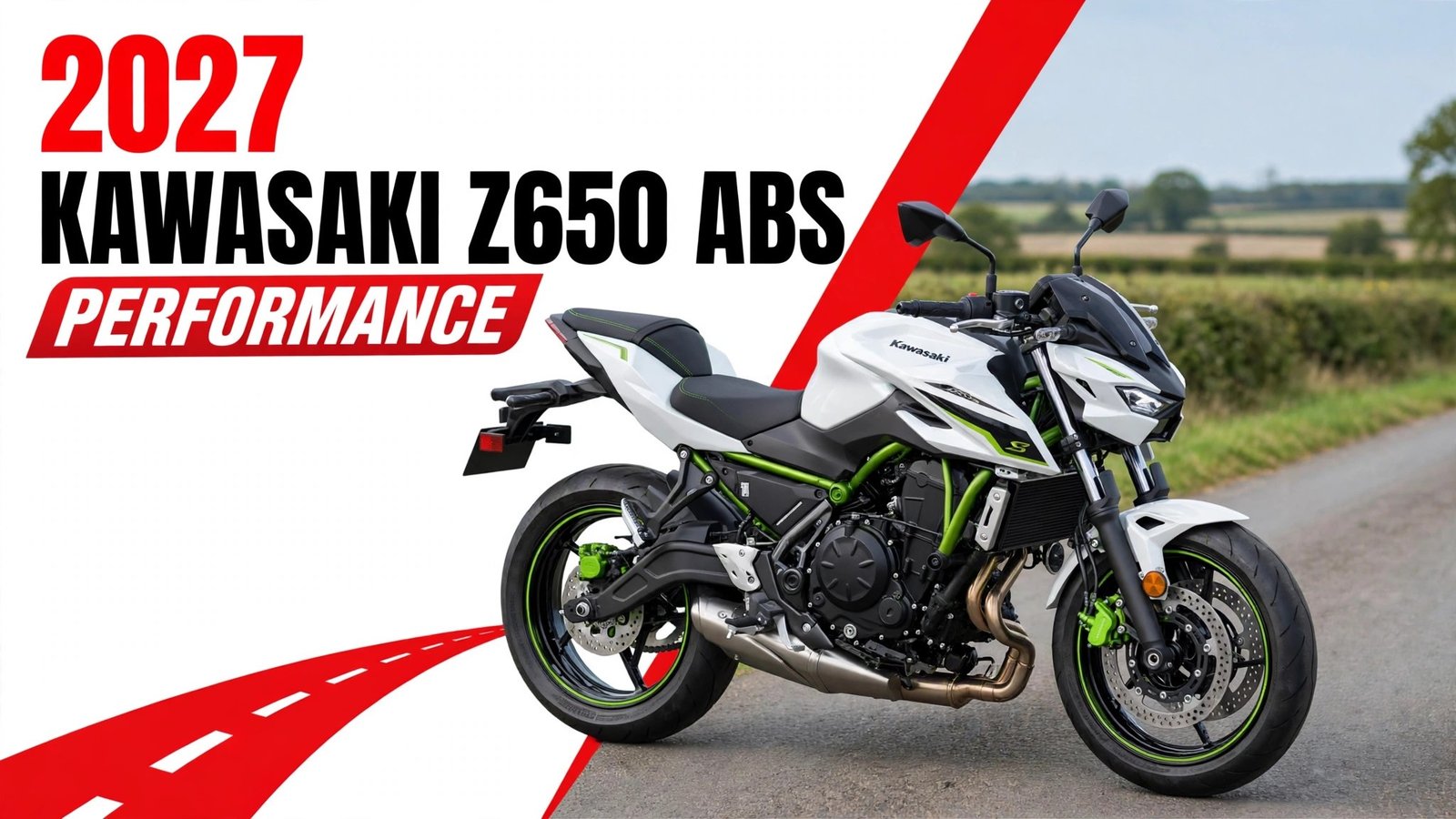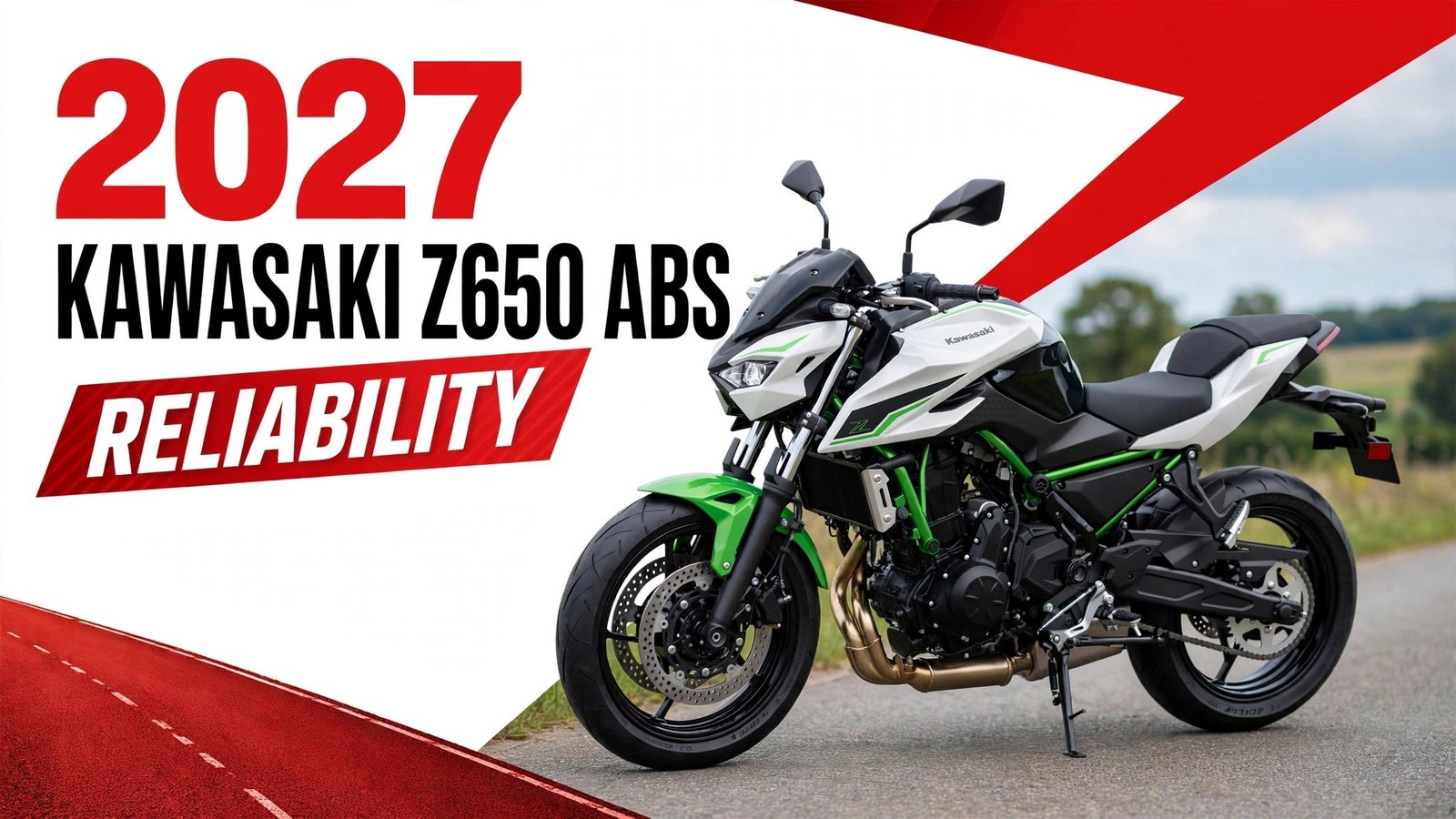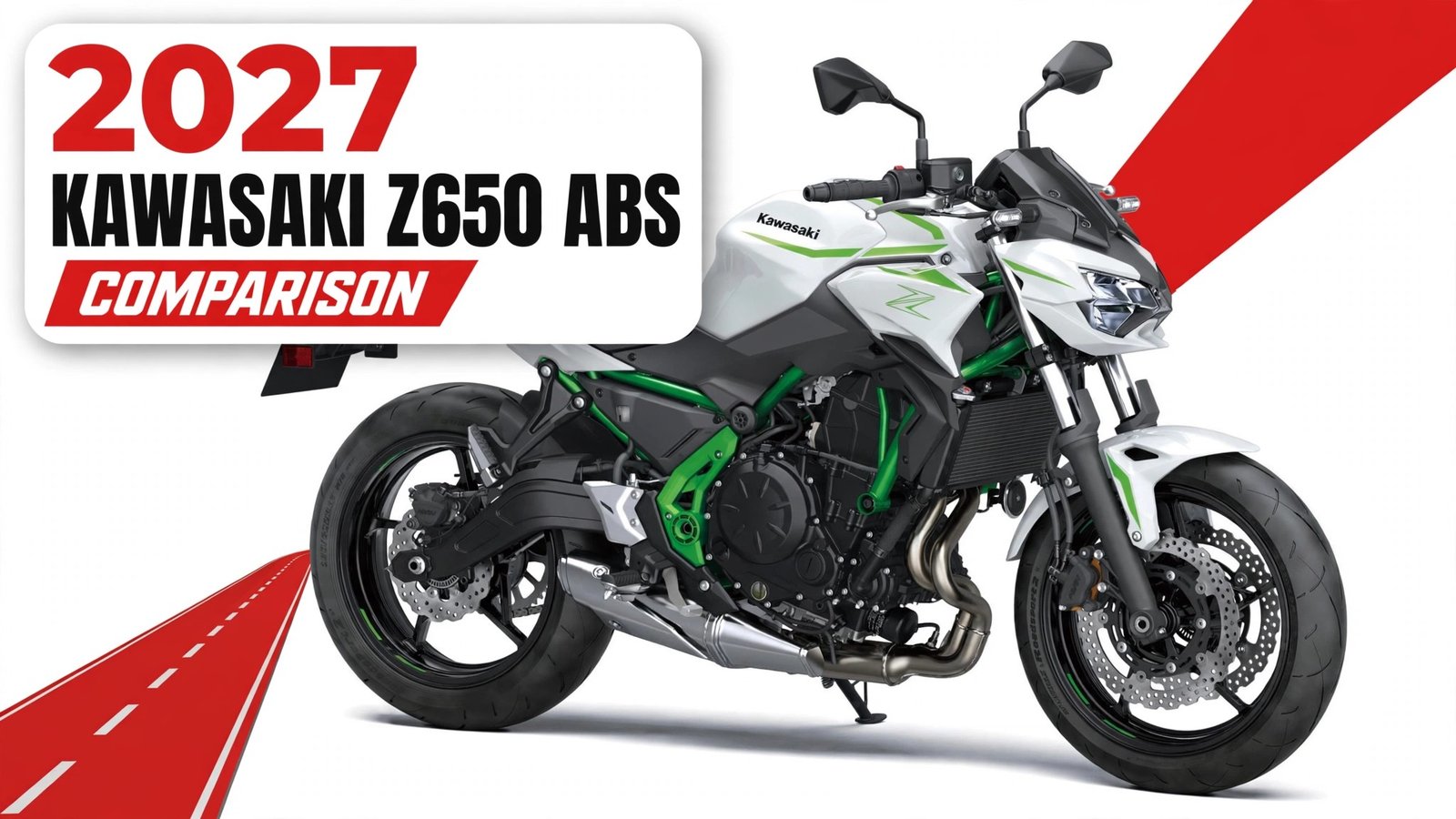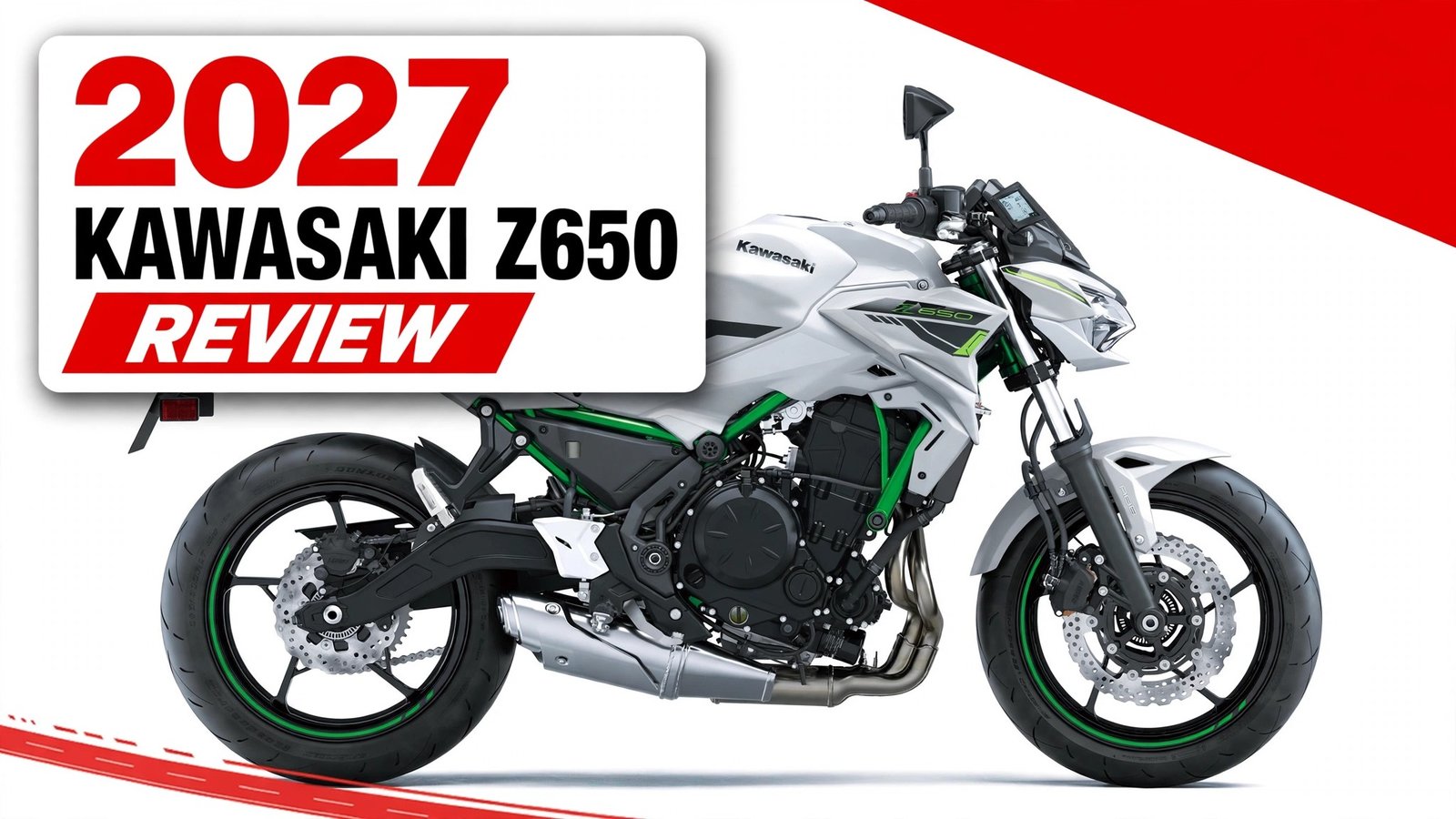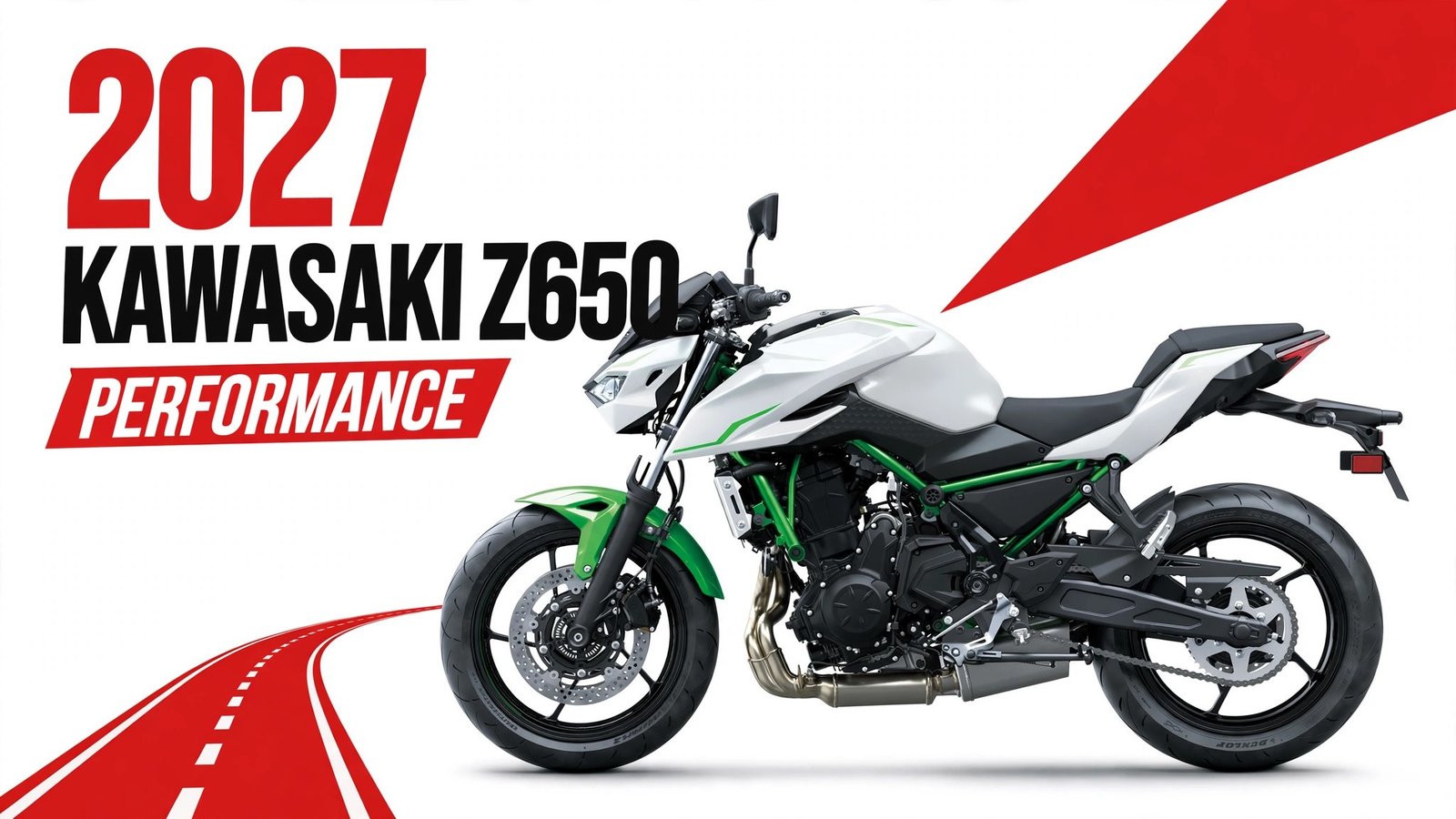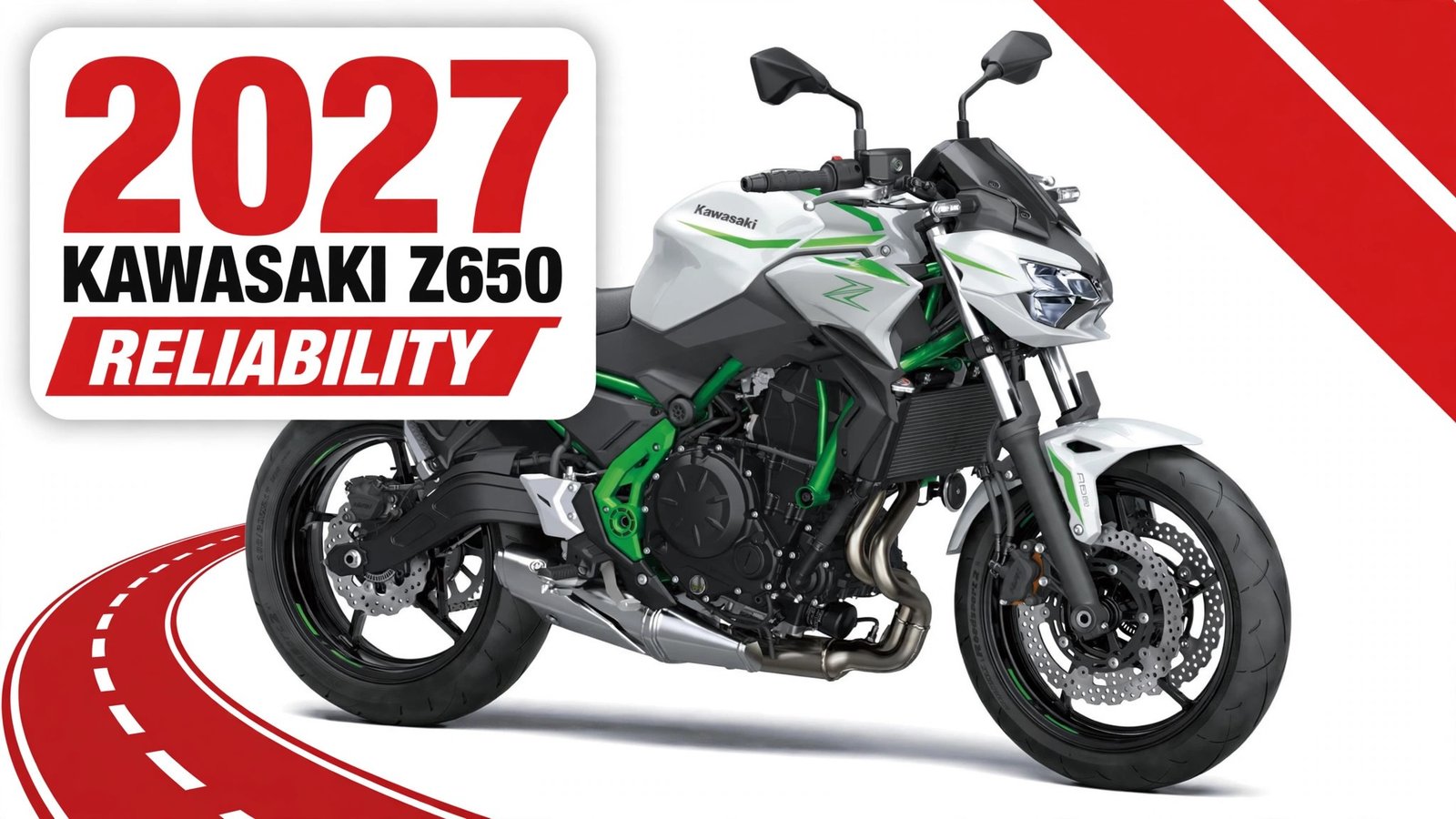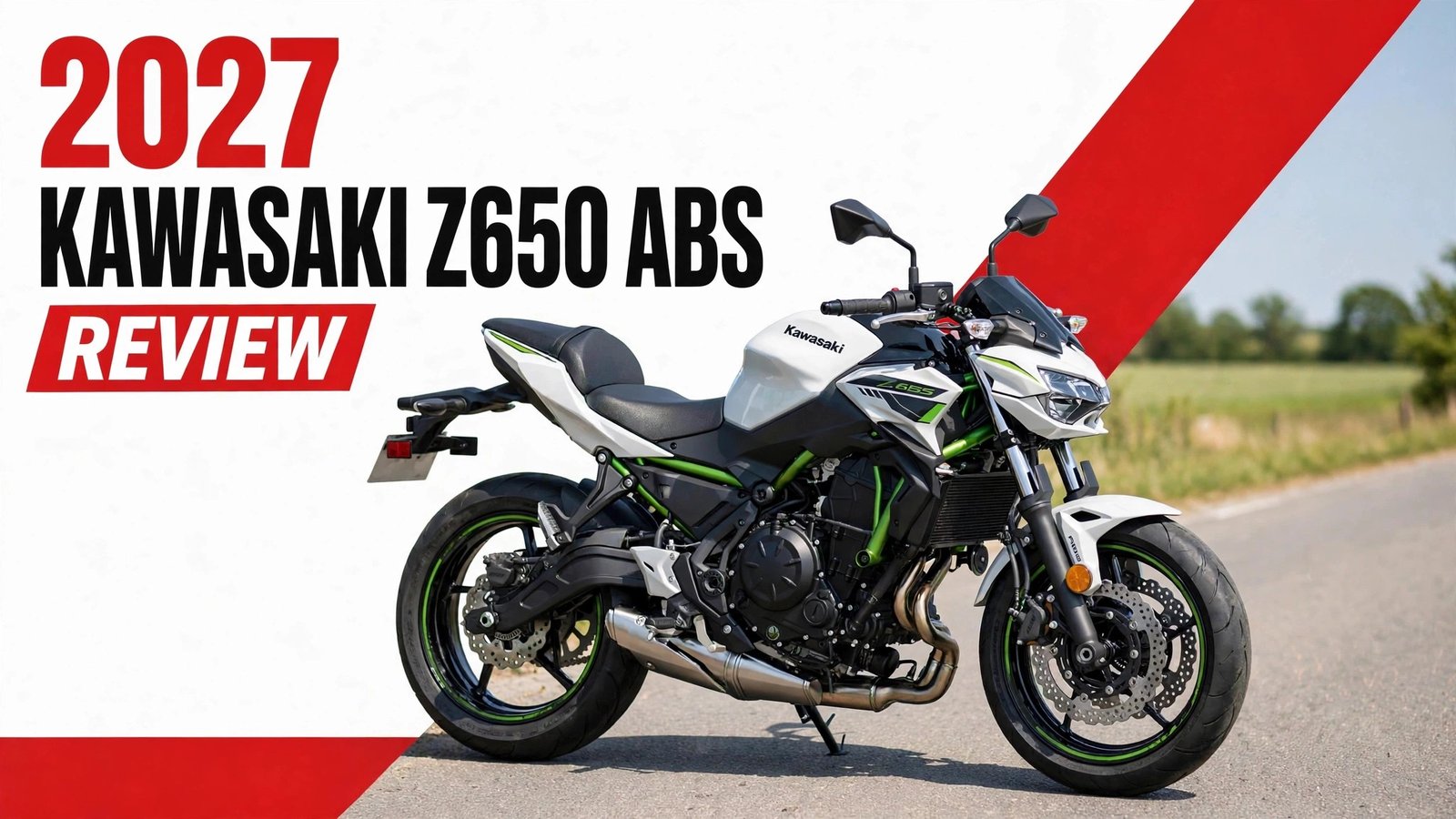
The Kawasaki Z650 ABS is the version most American buyers actually took home, and this Kawasaki Z650 ABS review starts there, with the trim buyers paid extra for. ABS was a $400 option at the 2017 launch, then $500 from 2021, and from 2026 it stopped being an option at all — the US bike became the Z650 S. This Kawasaki Z650 ABS review covers the whole run, 2017 to 2027, because that is how a paid safety option became standard equipment.
The short version: the ABS hardware is a Bosch 9.1M dual-channel unit from 2017 through 2025, then a Continental unit from the 2026 S. There is no cornering ABS, no IMU, and no off switch. The premium was $400, then $500, and the weight penalty is 2.2 to 4.4 lb. The bike is the same 649cc twin the standard Z650 review covers in full, with the same claimed 67.0 hp at 8,000 rpm. What this Kawasaki Z650 ABS review adds is everything the trim changes: the price ladder, the hardware swap, the colour split that only happened in 2025, and the fact that the bike’s NHTSA record is completely clean — zero recalls and zero complaints in every year from 2017 to 2027. That is the whole bike in one paragraph.
Kawasaki Z650 ABS Overview and Model-Year Updates
The Z650 ABS is not a different motorcycle from the Z650. It is the same naked twin of the Ninja 650 — same twin, same trellis frame, same running gear — with one addition: the ABS system, a modulator, tone rings and wiring, adding 2.2 to 4.4 lb. The US run is continuous from 2017 to 2027, and this Kawasaki Z650 ABS review follows it year by year: ABS was an option from launch until the 2026 rename to the Z650 S made it the only trim. The buying questions are different: what the option cost, when it became standard, and whether the used market charges for it.
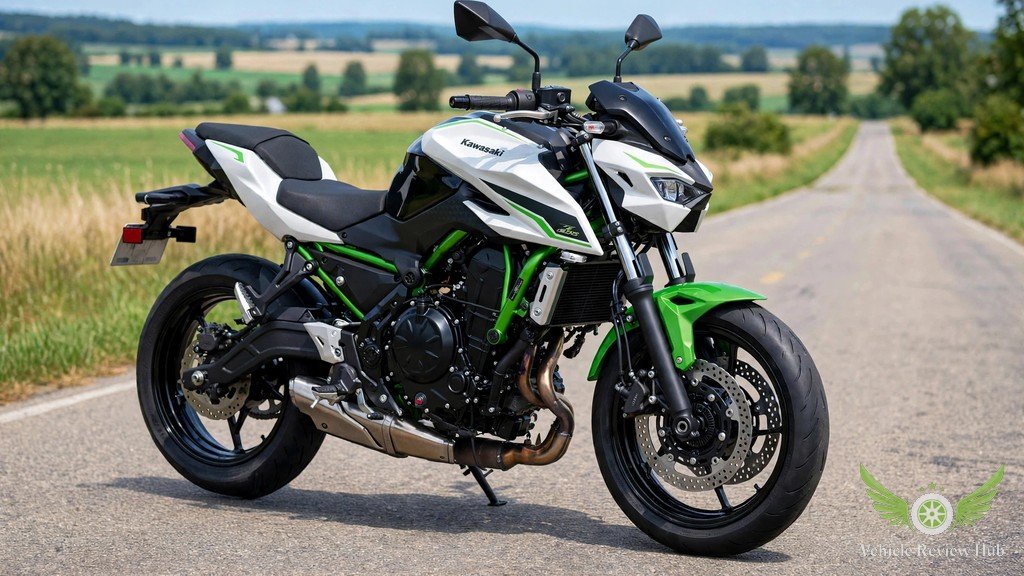
Premium: $400, Then $500
ABS cost $400 from 2017 through 2020, then $500 from 2021 through 2025, and then the premium disappeared — not because ABS got cheaper, but because the non-ABS bike disappeared. The 2020 row is colour-priced, so both ends of the range are printed, and the 2024 row is contested: two data feeds disagree by $900, and no Kawasaki 2024 spec sheet exists to settle it. Men’s Journal put it the same way in 2017, saying ABS “adds about $400–$500 to the price” — and this Kawasaki Z650 ABS review confirms that range year by year. The table below gives both 2024 figures, labelled, and the price section of this Kawasaki Z650 ABS review explains the conflict in full.
| Year | Non-ABS MSRP | ABS MSRP | Premium |
|---|---|---|---|
| 2017 | $6,999 | $7,399 | $400 |
| 2018 | $6,999 | $7,399 | $400 |
| 2019 | $6,999 | $7,399 | $400 |
| 2020 | $7,249–$7,349 | $7,649–$7,749 | $400 |
| 2021 | $7,249 | $7,749 | $500 |
| 2022 | $7,549 | $8,049 | $500 |
| 2023 | $7,749 | $8,249 | $500 |
| 2024 | $7,249 or $8,149 | $7,749 or $8,649 | $500 either way |
| 2025 | $7,249 | $7,749 | $500 |
| 2026 | — (S only) | $7,699 | — |
| 2027 | — (S only) | $7,899 | — |
Note: This Kawasaki Z650 ABS review premium table uses the verified year-by-year MSRPs — the 2024 row carries both figures, and the 2020 row is colour-priced, so the full range is printed.
S Made ABS the Only Trim
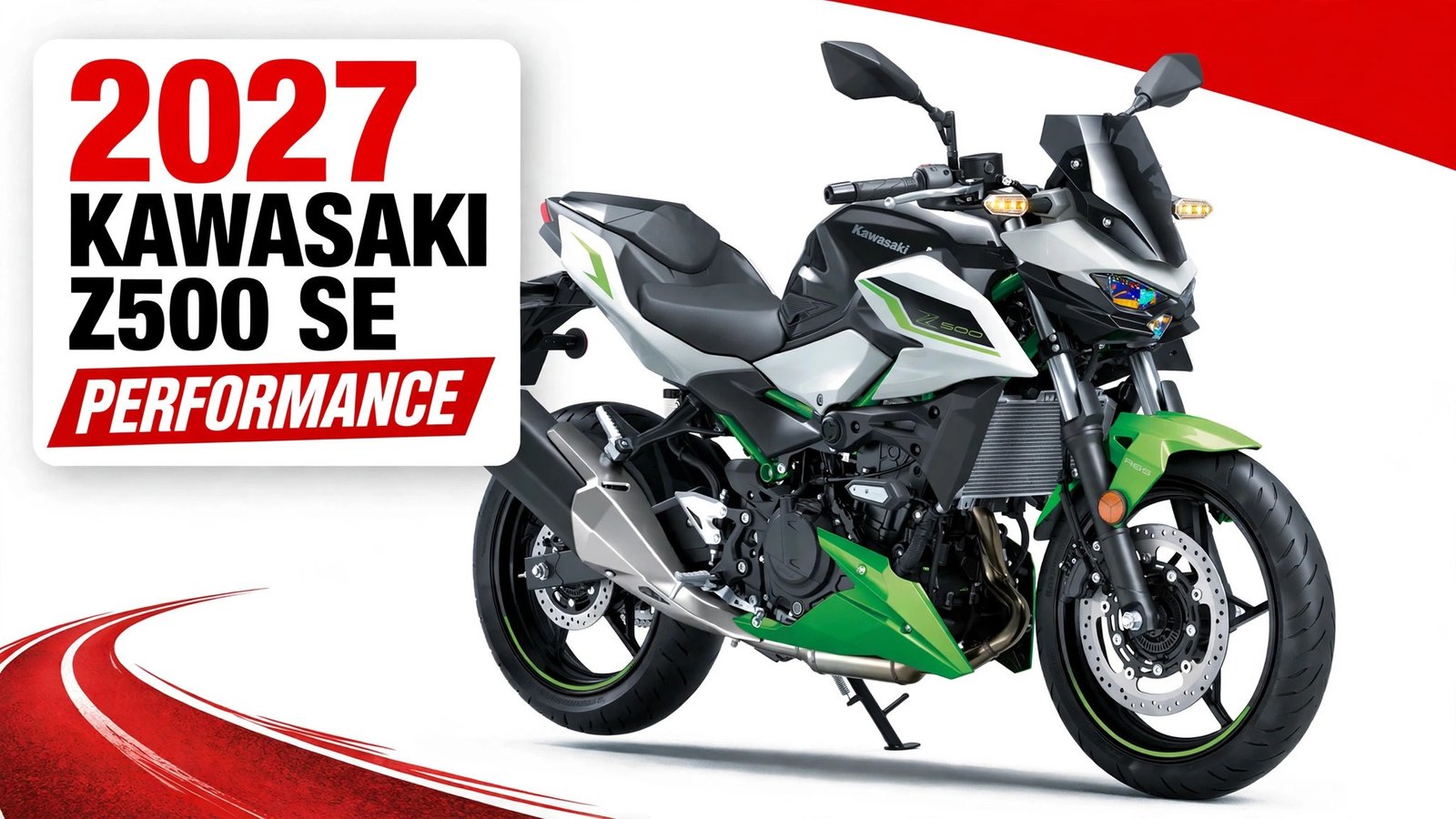
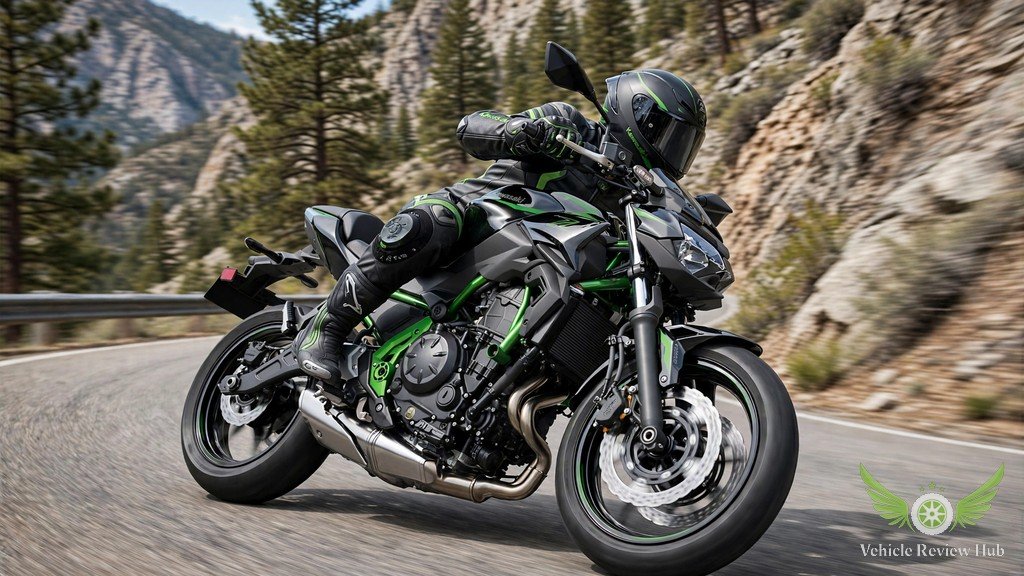
From 2026 the US bike is the Z650 S, and the S is ABS-only. The rename also raised the seat to 31.7 inches, moved the bars 40 mm forward, 10 mm higher and 30 mm wider, and added a TFT dash with voice command. The S is the bike this Kawasaki Z650 ABS review shows in its featured image. The UK and Europe still sell the base Z650 alongside the S. ABS was never standard on a non-S trim — it was always a paid option until the S rename removed the non-ABS bike entirely, which is why the premium ladder in this Kawasaki Z650 ABS review simply stops after 2025.
Kawasaki Z650 ABS Engine and Specifications
The engine does not know whether the bike has ABS. Both trims share the same 649cc liquid-cooled parallel twin — 83.0 by 60.0 mm, 10.8:1, dual 32 mm throttle bodies — with the same claimed 67.0 hp at 8,000 rpm on the ISO 4106 standard. Torque needs a year label — 48.5 lb-ft at 6,500 rpm for 2019 through 2025, then 47.2 lb-ft at 6,700 rpm for the 2026 and 2027 S. Motorcycle.com’s 2017 shootout measured 60.95 hp at 8,000 rpm and 43.71 lb-ft at 6,700 rpm on a 2017 bike, and the 2021 six-way measured 61.4 hp at 8,100 rpm — the lowest of the six bikes in that test. Neither figure is an ABS figure, and the two runs are never blended. The gearbox is a six-speed with an assist and slipper clutch, and the frame is the same steel trellis as the Ninja 650. That shared engine is why this Kawasaki Z650 ABS review treats every dyno figure as model-level, never trim-level.
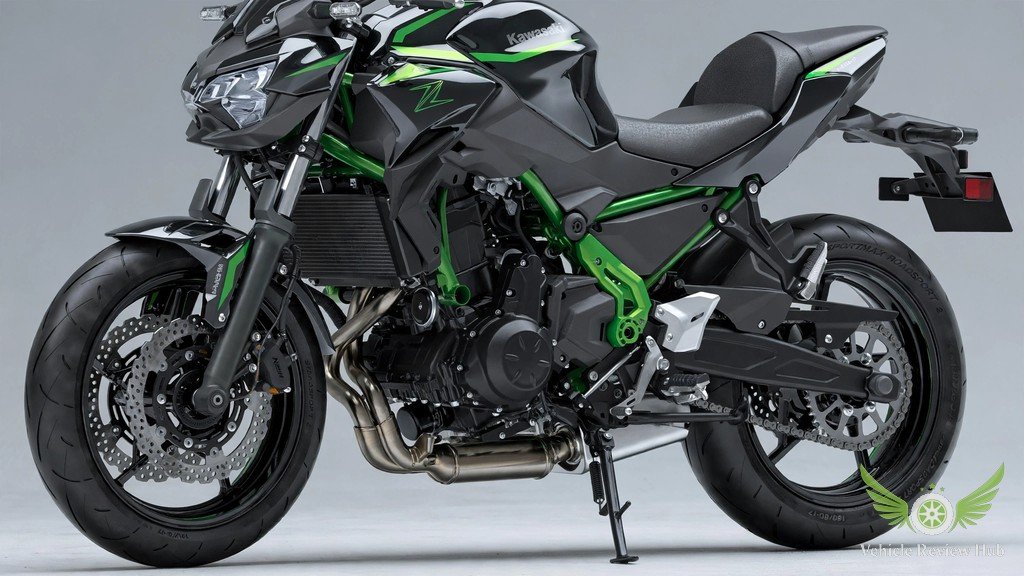
Bosch, Then Continental
The ABS unit changed exactly once. From 2017 through 2025 the Z650 ABS used the Bosch 9.1M dual-channel unit, named directly in MotorcycleDaily’s first ride of the 2017 bike. From the 2026 S the unit is a new Continental item, per Kawasaki EU’s own Z650 S page. TotalMotorcycle’s 2024 and 2025 pages still print “Bosch 9.1M”, but that is stale press-kit copy, not a fresh verification — this Kawasaki Z650 ABS review does not cite it for those years. The 2026 S also switches from petal discs to round front discs, still 300 mm and still dual.
No Cornering ABS, Ever
There is no IMU on this platform in any year, so there is no cornering ABS. The 2017 owner’s manual says it plainly: ABS “cannot control wheel slip which may be caused by braking during cornering”. That is a limitation worth knowing, not a defect — the two-channel system watches wheel speed and releases pressure when a wheel locks, but it cannot judge lean angle. The 2025 and later Triumph Trident 660 does have cornering ABS through a six-axis IMU; the Z650 never has, in any year, and this Kawasaki Z650 ABS review does not pretend otherwise.
| Specification | Kawasaki Z650 ABS |
|---|---|
| Engine | 649cc liquid-cooled parallel twin, DOHC, 8 valves |
| Claimed power | 67.0 hp @ 8,000 rpm (ISO 4106) |
| Claimed torque | 48.5 lb-ft @ 6,500 rpm (2019–2025); 47.2 lb-ft @ 6,700 rpm (2026–2027 S) |
| Bore x stroke | 83.0 x 60.0 mm |
| Compression ratio | 10.8:1 |
| Transmission | 6-speed, assist & slipper clutch |
| ABS unit | Bosch 9.1M dual-channel (2017–2025); Continental (2026–2027 S) |
| Front brakes | Dual 300 mm discs, two-piston Nissin calipers + ABS |
| Rear brake | Single 220 mm disc + ABS |
| Tyres | 120/70 ZR17 front / 160/60 ZR17 rear |
| Tyre pressures (cold) | 225 kPa front / 250 kPa rear (32 psi front) |
| Seat height | 31.1 in (2020–2025); 31.7 in (2026–2027 S) |
| Fuel capacity | 4.0 gal |
| Wheelbase | 55.5 in |
| Curb weight (ABS) | 414.5 lb (2025); 416.7 lb / 419.0 lb 50-state (2026–2027 S) |
Note: This Kawasaki Z650 ABS review spec table uses Kawasaki USA’s own spec sheets for 2017–2027 — the torque figure is year-labelled, and the front tyre pressure is 32 psi as the manual prints it, never 33 psi.
Kawasaki Z650 ABS Price and Market Availability
Every price in this Kawasaki Z650 ABS review is MSRP plus destination, year-labelled, because the destination charge changed almost every year. The 2017 and 2018 destination charges were never verified, so this Kawasaki Z650 ABS review never computes a delivered price for those two years — the MSRP is printed and the delivered figure is left open.
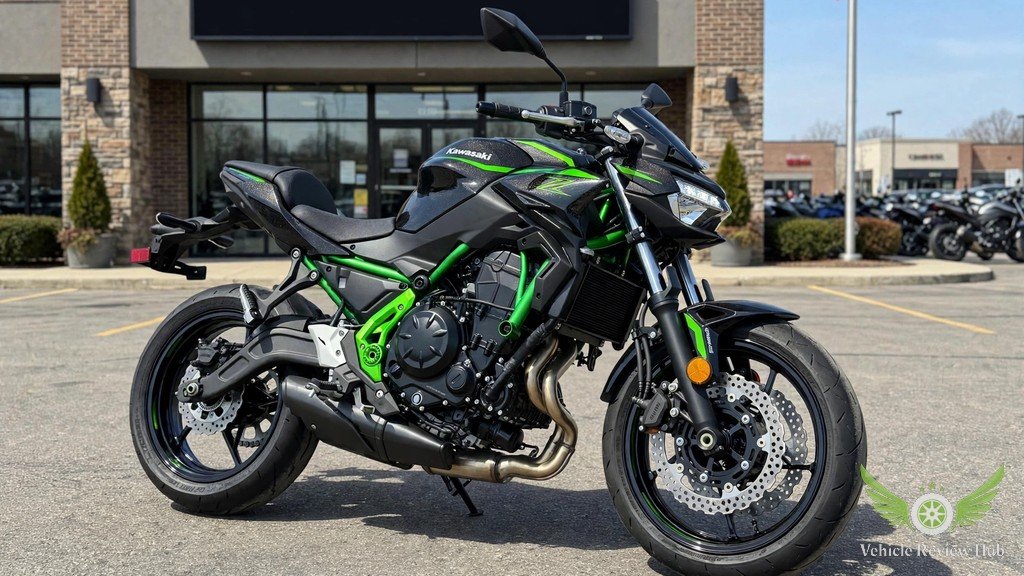
Kawasaki Z650 ABS Price in the USA: $7,899 (2027)
The 2027 US bike is the Z650 S ABS only, at $7,899 plus $685 destination, or $8,584 delivered — there is no separate 2027 non-S ABS trim. Kawasaki’s own 2027 spec sheet is the S ABS sheet. The 2026 S ABS was $7,699 plus $685, or $8,384 delivered — and this Kawasaki Z650 ABS review treats that $200 step to the 2027 bike as the normal year-on-year move, not a price jump. The one year that refuses to settle is 2024. Cycle World’s 2024 model page prints $8,149 and $8,649 for the ABS model, and the Motorcycle.com database plus two dealer listings agree — but five dealer brochures print $7,249 and $7,749 for the same bike, model code ER650NRFAL, and no Kawasaki 2024 spec sheet exists to break the tie. So this Kawasaki Z650 ABS review prints both: $8,199 delivered on the brochure figures, or $9,099 on the Cycle World figures. The 2025 MSRP is simpler — $7,749 for the ABS trim on Kawasaki’s own sheet — and only the destination is argued, in the next section.
| Year | ABS MSRP | Destination | Delivered |
|---|---|---|---|
| 2019 | $7,399 | $370 | $7,769 |
| 2020 | $7,649–$7,749 | $410 | $8,059–$8,159 |
| 2021 | $7,749 | $410 | $8,159 |
| 2022 | $8,049 | $430 | $8,479 |
| 2023 | $8,249 | $435 | $8,684 |
| 2024 | $7,749 or $8,649 | $450 | $8,199 or $9,099 |
| 2025 | $7,749 | $665 / $685 / $650 | $8,414 / $8,434 / $8,399 |
| 2026 | $7,699 (S ABS) | $685 | $8,384 |
| 2027 | $7,899 (S ABS) | $685 | $8,584 |
Note: This Kawasaki Z650 ABS review delivered-price table adds MSRP plus destination per model year — the 2024 row carries both contested MSRPs, the 2025 row all three contested destinations, and 2017–2018 are left out because their destination charges were never verified.
2025 Destination Conflicts
The 2025 destination is a three-way conflict, and all three figures come from documents a buyer could actually see. The Motorcycle.com database prints $665 — $8,414 delivered. Pioneer Motorsport prints “DESTINATION CHARGE + $685.00”, and Mid-Ohio Powersports and Del Amo Motorsports list the same $685 — $8,434 delivered. A Hicklin Power Sports brochure prints $650, and Leeson’s Import Motors says its price “does not include $650.00 in destination charges” — $8,399 delivered. Three sources, three answers, $35 apart — and this Kawasaki Z650 ABS review does not pick one. One figure that does not belong in the argument is $600. That number comes from the Z500’s destination dispute, and it appears nowhere in the Z650 record. Hudson Valley Motorcycles lists a $685 charge, but their listing reads “Doc Fee, $685, Setup Fee, $295, Freight, $175” — a documentation fee, not destination. The $685 destination figure still stands on the Pioneer, Mid-Ohio and Del Amo evidence; only the Hudson Valley citation was a misread.
Kawasaki Z650 ABS Design, Features and Technology
The Z650 has always been a plain, honest naked — a steel trellis frame, a conventional handlebar, and nothing the bike does not need. The ABS trim adds no styling of its own. What changed is the dash and the lighting: the 2020 update brought a TFT panel and LED headlights, and the 2023 bike got full LED lighting. The 2026 S moved the bars 40 mm further forward, 10 mm higher and 30 mm wider, and raised the seat to 31.7 inches. This Kawasaki Z650 ABS review judges the design on what a buyer can see and verify — the colours, the dash, and the traction-control switch, because there is no ABS switch.
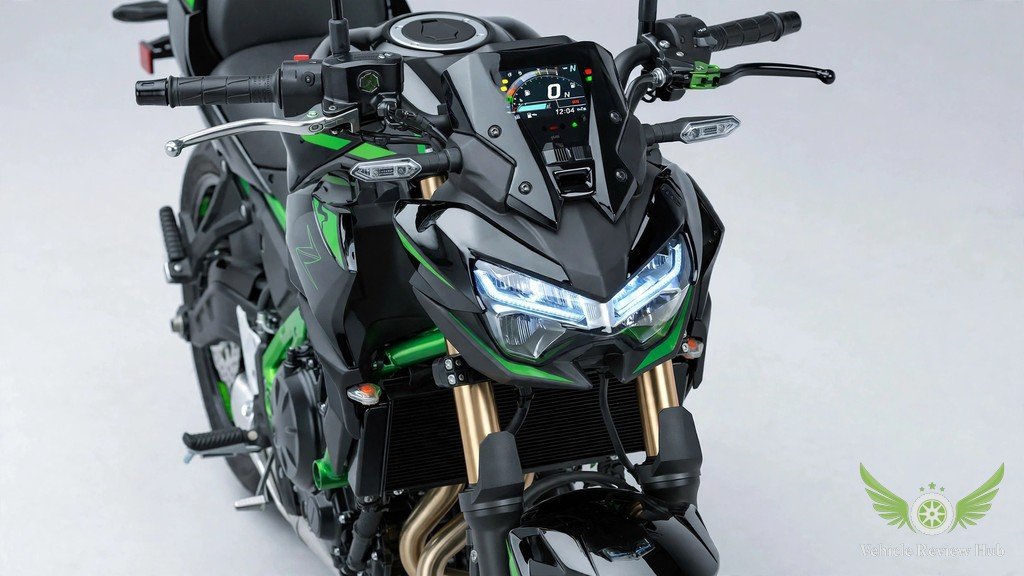
Colours Were Trim-Segregated
Colour only proves the trim in one year: 2025, when the ABS bike came in Metallic Spark Black with green and the non-ABS bike in Metallic Matte Dark Gray with Metallic Spark Black. In every other year the colours were shared — the 2020 pages, the 2022 ABS sheet and the combined 2023 sheet all list both colourways. One popular site gets the 2022 and 2023 split wrong, labelling the colourways “(non-ABS only)” and “(ABS only)” — Kawasaki’s own sheets contradict that, so this Kawasaki Z650 ABS review does not repeat it. The 2017, 2018, 2019, 2021 and 2024 splits were never verified at all. The safe claim in every year is the one the next cluster’s reliability guide carries as a heading: colour cannot prove ABS — and for every year but 2025, this Kawasaki Z650 ABS review treats colour as decoration, not evidence. A repaint defeats paint entirely — the buyer who wants certainty checks the VIN, not the colour: 2023 ABS VINs begin ML5EREN, non-ABS ML5EREP. The 2027 S ABS colours are Pearl Blizzard White with Candy Lime Green, and Candy Persimmon Red with Metallic Carbon Gray.
KTRC Is Separate From ABS
The switch on the left switch housing is traction control, not ABS, and confusing the two is the most common misunderstanding about this bike. KTRC — Kawasaki Traction Control — is the switchable system: two modes in 2023 and 2024, three modes in 2025, two modes on the 2026 S, and the rider can turn it off. It is always on when the engine starts. ABS is the non-switchable system, and this Kawasaki Z650 ABS review says so plainly because the confusion is common. There is no ABS off switch on any year, and the owner’s manual describes ABS as automatic only — a lit ABS lamp means the system is not working, not that the rider switched it off. The two systems do different jobs: KTRC watches rear-wheel slip under power, ABS watches wheel lock under braking. A rider who thinks the left-housing switch turns off ABS is wrong, and so is a rider who thinks ABS can be switched off for a track day.
Kawasaki Z650 ABS Riding Experience and Comfort
On the road the ABS bike rides exactly like the non-ABS bike — the only difference is 2.2 to 4.4 lb of hardware and a modulator the rider never feels until the moment it matters — and this Kawasaki Z650 ABS review records no riding difference between the trims. What buyers actually talk about is the rest of the bike: a light, narrow chassis, a friendly 649cc twin, and a seat that went from 30.9 inches to 31.1 inches in 2020 and 31.7 inches on the S. Kawasaki prints no MPG figure, so every economy number here is observed. Motorcycle.com observed 44 mpg in its 2017 shootout, Men’s Journal saw about 44 mpg over 474 spirited miles on a 2017 ABS bike, and Bennetts recorded about 53 mpg in normal riding and 50 mpg when ridden hard on a UK bike, with a 211-mile range. The “47 mpg in Cycle World Test” figure that some pages repeat could not be verified — the only 47 mpg in the record is the FZ-07’s observed figure in the same Motorcycle.com shootout, not the Z650’s. The full performance figures are covered in the Z650 ABS performance guide, and the Bennetts first ride called the brakes adequate and the bike fun, nimble and accurate.
Weight Gain: 2 to 4 lb
The ABS penalty is small and it shrank over the years. In 2017 the ABS bike weighed 410 lb against 406 lb — 4 lb, or 4.4 lb on the sheet figures of 410.1 against 405.7 lb. In 2019 the gap was the same 4.4 lb, and 2.2 lb in 2023 and 2025. The 2020–2022 ABS sheets print a single 412.3 lb figure. Four pounds on a 410 lb bike is about one percent, and no test ever found a measurable difference between the trims — the dyno figures are model-level and the engine is the same 649cc twin with the same claimed 67.0 hp. That is why this Kawasaki Z650 ABS review treats the weight gain as a footnote, not a buying factor. This Kawasaki Z650 ABS review calls the weight gain what it is — real, small, and not a reason to choose one trim over the other.
12 Month Warranty, Both
The warranty is the same on both trims, every year: a 12-month limited warranty, printed explicitly on the 2026 sheet and carried across the whole run. ABS added no warranty difference and no ABS-specific interval — and this Kawasaki Z650 ABS review lists the service items once, for both trims, because the schedule is shared. The maintenance schedule is the Z650’s own, shared by both trims — oil and filter every 7,500 miles or yearly, air filter and plugs at every 7,500-mile service, valves at 15,000 US miles, brake fluid every 15,000 miles or two years. The one place ABS changes the job is the fluid change: the modulator makes a proper bleed more involved, a dealer job for most owners, but the interval is the same and this Kawasaki Z650 ABS review does not invent an ABS-specific interval. The full schedule is in the Z650 reliability and maintenance guide.
Kawasaki Z650 ABS Review: Pros, Cons and Verdict
The verdict of this Kawasaki Z650 ABS review is simple: buy the ABS bike. The premium was $400, then $500, and for that money the buyer got a Bosch dual-channel system with no recall, complaint or documented failure in ten years. The bike is the cheapest delivered middleweight naked in its class at $8,584, and its service rhythm is the simplest — oil and filter every 7,500 miles, valves at 15,000. That is the honest summary this Kawasaki Z650 ABS review reaches, and the video below backs it up: Motorcyclist’s “Favorites & Fails” is their candid highs-and-lows after months with their long-term 2017 bike.
Main Advantages and Limitations of the Kawasaki Z650 ABS
The advantages start with the price: in 2017 the ABS bike cost $7,399, undercutting the SV650 ABS and the FZ-07 ABS by $100 each, and the 2027 S ABS at $8,584 delivered is still the cheapest bike in its class. The hardware is proven — Bosch for nine years, Continental from the S — and the NHTSA record is empty on both recalls and complaints. The limitations are equally plain, and this Kawasaki Z650 ABS review does not hide them: there is no cornering ABS and never has been, the ABS cannot be switched off, and one road test criticised the Bosch calibration — front ABS intervening too early, the rear wheel locking before the system acted — a calibration complaint, not a failure, partly blamed on the tyres. The bike also has a cable throttle rather than ride-by-wire. None of that changes the verdict: for a US buyer who wants a cheap, light, easy middleweight naked with ABS as standard, this Kawasaki Z650 ABS review points at the S and stops looking. For a buyer choosing between a used ABS and non-ABS bike, this Kawasaki Z650 ABS review says the same thing the used market says: buy on condition.
50th Edition Was Cosmetic
The 2022 50th Anniversary edition was paint and trim only. It cost $8,299 — a $250 premium over the standard 2022 ABS bike at $8,049 — and bought Firecracker Red paint, a gloss-black frame, a special seat cover and a commemorative coffee-table book. There was no mechanical change of any kind. Collectors pay for the book and the paint. This Kawasaki Z650 ABS review treats the 50th as what it is — a handsome anniversary paint job on the same honest bike.
Kawasaki Z650 ABS Review: Frequently Asked Questions
These are the questions buyers ask most about this Kawasaki Z650 ABS review — answered with the verified prices, the hardware facts and the NHTSA record above. Every answer in this Kawasaki Z650 ABS review FAQ section uses the same figures as the body, so nothing here contradicts the tables.
How much did ABS cost on the Z650 when it was optional?
$400 in 2017–2020, then $500 from 2021 through 2025. ABS became the only trim in 2026, when the US bike became the Z650 S — there is no premium to pay any more because there is no non-ABS bike to compare against.
Is the 2027 Z650 ABS a separate trim from the Z650 S?
No. The 2027 US bike is the Z650 S ABS only, at $7,899 + $685 destination = $8,584 delivered. There is no separate 2027 non-S ABS trim — Kawasaki’s own 2027 sheet is the S ABS sheet.
Which ABS unit does the Z650 use — Bosch or Continental?
Bosch 9.1M from 2017 through 2025, then Continental from the 2026 S. Kawasaki EU’s own Z650 S page says “The ABS unit for 2026 is a new item from Continental.”
Can you switch the Z650’s ABS off?
No. There is no ABS off switch on any year — the manual describes ABS as automatic only, and a lit ABS lamp means the system is not working, not that the rider switched it off. The switchable system is KTRC traction control, which is separate from ABS.
Does the Z650 have cornering ABS?
No, never. There is no IMU on this platform in any year, and the 2017 owner’s manual states ABS “cannot control wheel slip which may be caused by braking during cornering”. The 2025+ Triumph Trident 660 does have cornering ABS — the Z650 does not.
How much heavier is the ABS bike than the non-ABS bike?
Between 2.2 and 4.4 lb depending on the year: +4 lb in 2017 (410 vs 406 lb), +4.4 lb in 2019 (410.1 vs 405.7 lb), and +2.2 lb in 2023 and 2025 (412.3 vs 410.1 lb; 414.5 vs 412.3 lb).