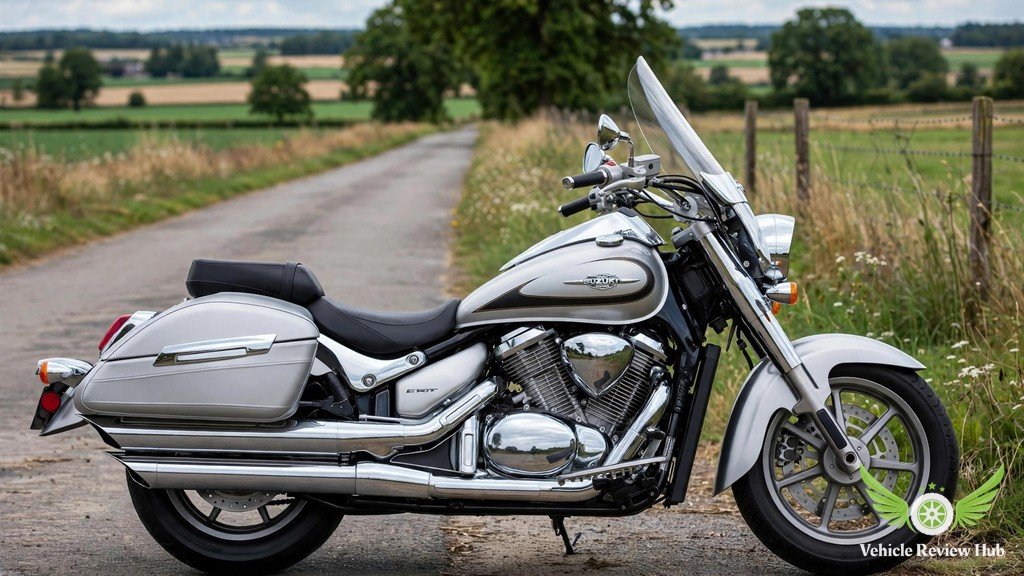
The Suzuki Boulevard C90T reliability story has a short answer first: a simple, understressed shaft-drive cruiser with a strong owner record, one fuel-tank recall, and a short list of wear items to check before buying. The C90T is the C90 with the factory touring kit fitted as standard, so its reliability record is the C90’s record. This Suzuki Boulevard C90T reliability guide works through what actually goes wrong, what the service chart really asks for, and what a used C90T costs to keep on the road.
Suzuki Boulevard C90T Reliability Overview
Suzuki changed very little about this motorcycle across fourteen years of production. The first generation ran from 2005 to 2009, the second from 2013 to 2019, and both share the same 1,462cc V-twin family, five-speed gearbox and shaft final drive. Nothing about the touring kit changes how the engine or drivetrain wears, so a buyer judging a used C90T is judging a C90 with luggage — and the owner record for the base bike is the record that matters. The Suzuki Boulevard C90 reliability guide covers the same record in full.
MCN C1500T Rating Rests on One UK Owner Review
The headline owner figure for this bike comes from MCN’s VL1500 Intruder page, which rates reliability 4.3 out of 5 from 11 owners, with an overall score of 4.1 out of 5. That is the number this Suzuki Boulevard C90T reliability guide uses — the VL1500 Intruder is the same 1,462cc V-twin family. There is a trap here, and the heading names it: MCN also runs a separate C1500T Intruder owner-reviews page, and that page has exactly one UK owner review, rating reliability 4.0 out of 5. One owner is not a rating — it is a single opinion — so any article quoting the C1500T page as the bike’s reliability score is leaning on a sample of one. The 11-owner VL1500 figure is thin too, but it is eleven times stronger. There is no C90T page on MCN — the bike was never sold in the UK under that name — so the VL1500 page is the closest match, and this guide says so plainly rather than pretending the number comes from a C90T-specific survey.
How Mileage, Storage and Previous Care Affect Reliability
On a bike whose newest example is from 2019, the previous owner’s habits matter more than the model year. A C90T ridden regularly, serviced on the chart and stored indoors will outlast a low-mileage bike that sat for years in a damp garage — the things that fail on this bike, charging system, fork seals, brake hoses, bag latches, fail from age and neglect as much as from miles. A 2013 bike with 30,000 miles and a full service history is a safer buy than a 2019 bike with 3,000 miles and no records, because the chart is mileage-based: oil at 600, 4,000, 7,500, 11,000 and 14,500 miles, brake fluid every two years, hoses every four, regardless of miles ridden. Storage matters most for the touring kit: vinyl covers crack and fade in the sun, windscreen hardware corrodes outside, and leather-texture seats dry out. Service records come first, storage second, and the odometer reading third — that is the order this Suzuki Boulevard C90T reliability guide recommends.
Suzuki Boulevard C90T Common Problems and Wear Items
The C90T has no long list of common failures: a charging-system weakness on high-mileage first-generation bikes, and a handful of touring-kit wear items on the second generation. Nothing in the record suggests a bike that strands its rider often, or a model year to avoid outright. The problems below are the ones a buyer should check on any used C90T, in the order that matters.

Gen 1 Charging Failures With No Recall Cover
The known weak point of the C90 family is the charging system, and it is a first-generation problem. Owners have documented stator and regulator-rectifier failures on high-mileage gen-1 bikes: windings break down with heat and age, the regulator stops holding voltage, and the battery goes flat or the bike dies on the road. This Suzuki Boulevard C90T reliability guide labels these as owner-documented failures, not a factory-admitted defect: Suzuki never issued a recall for the C90 or C90T charging system, and the regulator-rectifier campaign 11V-108 does NOT name the C90 or C90T — Suzuki’s own campaign letter lists the VLR1800 and VZ1500 only — so a failed regulator has no recall cover to claim. The check is a voltmeter across the battery at 5,000 rpm — roughly 13.5 to 15.5 volts — plus watching for a dimming headlight at idle or a battery that goes flat after a week parked. A bike that already had a stator or regulator replaced with a quality aftermarket part is not one to avoid. The second generation does not carry the same charging pattern.
Bag Latches, Screen Hardware and Touring Kit Wear
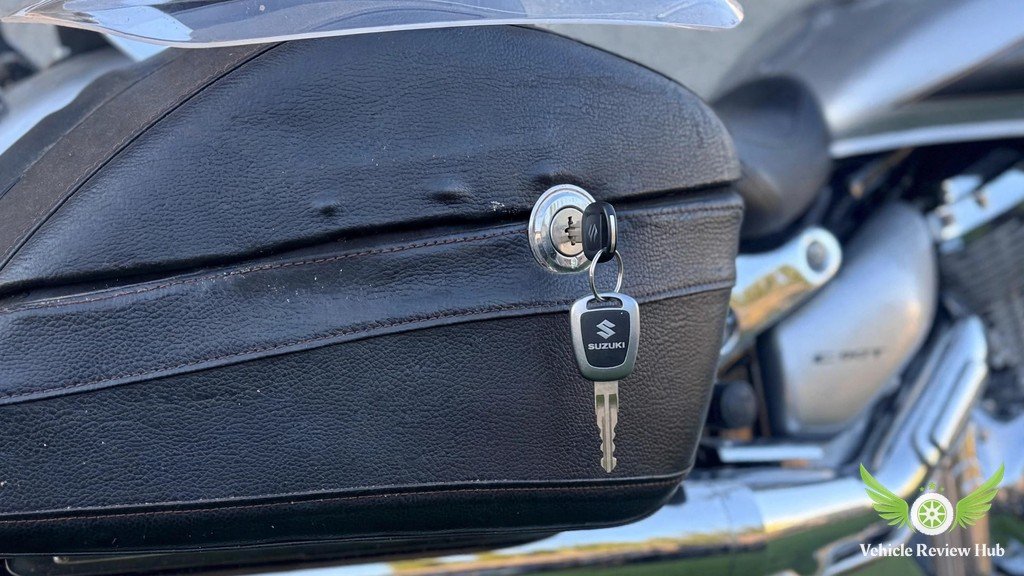
The second generation’s touring kit is the part of the bike that wears first, because it is the part the rider touches every day — and the part this Suzuki Boulevard C90T reliability guide checks first on a used bike. The hard saddlebags are rigid ABS plastic under leather-look vinyl covers, top-loading, opened only with the ignition key, non-detachable except from the inside with an allen key — so a latch that does not hold, a lock that turns without the key, or a split cover is a wear item to price into the purchase, not a cosmetic quirk. The windscreen hardware is the second check: the screen is fixed and non-adjustable, and its mounting bolts corrode if the bike lived outside — a rattling screen or a cracked bracket is the sign. The vinyl bag covers fade and stiffen in the sun, and the passenger grab sash frays at its mounting points. None of these is a named defect pattern, and no source quantifies them as failure rates; this Suzuki Boulevard C90T reliability guide lists them as wear items to inspect, because the bags cannot be unbolted like soft throw-overs and a broken latch means a bag that will not stay shut. The first generation’s kit wears differently: studded leather needs conditioning, the pivoting backrest pad loosens, and whitewalls age faster — but leather bags can be reconditioned, where a cracked ABS case cannot.
Suzuki Boulevard C90T Maintenance Schedule and Servicing
The service chart is the same in both generations, and it is a short chart: five columns — 600, 4,000, 7,500, 11,000 and 14,500 miles — cover the whole of the bike’s scheduled care, and the engine oil is replaced at every one of them. The two rules that catch owners out: the oil filter is replaced only at 600 and 11,000 miles, not with every oil change, and the first generation has no valve service at all — both the opposite of what a rider from another brand expects, and both printed in Suzuki’s own charts.

The video below is UechiCannon’s 14-minute maintenance walkthrough on a 2016 C90T — a second-generation bike, the same generation as the 2019 model — showing the routine service work on the bike this Suzuki Boulevard C90T reliability guide describes.
Oil at 600, 4,000, 7,500, 11,000 and 14,500 Miles
Engine oil is the one item the chart asks for at every column in this Suzuki Boulevard C90T reliability guide: replace it at 600 miles, then at 4,000, 7,500, 11,000 and 14,500 miles, and keep going on the same pattern after that. The oil filter is different — replace it only at 600 miles and again at 11,000 miles. This is the C50, M109R and M50 rule — the opposite of the S40’s, where the filter is replaced at every column. A filter costs little, but the rule tests whether the previous owner followed the chart or guessed at it. The Suzuki Boulevard C90 reliability guide covers the same chart for the base bike, and the Suzuki Boulevard C90T review covers the price of a used bike against the cost of catching up on missed services.
| Item | Gen 1 C90T (2005–09) | Gen 2 C90T (2013–19) |
|---|---|---|
| Engine oil | Replace at 600, 4,000, 7,500, 11,000, 14,500 mi | Replace at 600, 4,000, 7,500, 11,000, 14,500 mi |
| Oil filter | Replace ONLY at 600 and 11,000 mi | Replace ONLY at 600 and 11,000 mi |
| Valve service | None — hydraulic lifters | Inspect at 600, 7,500, 14,500 mi |
| Spark plugs | DPR7EA-9 (manual) — check fitted plug | CPR6EA-9 (one-sheet) — check fitted plug |
| Final-gear oil | Replace at 600 mi, then inspect | Replace at 600 mi, then inspect |
| Brake fluid / hoses | DOT 4 replace every 2 yrs; hoses every 4 yrs | DOT 4 replace every 2 yrs; hoses every 4 yrs |
Gen 1 Hydraulic Lifters Remove Valve Adjustment
The first generation’s engine has hydraulic valve lifters, and that single design choice removes the most expensive item from its service chart: the lifters adjust the clearance themselves as the engine wears, so the gen-1 chart has no valve row at all — nothing to inspect, nothing to shim, no valve service to budget for. Hydraulic valve lash adjusters eliminate valve adjustment maintenance. The gen-1 bike is the cheaper bike to own on this point alone, and the gen-2 bike is the one that needs its service records checked more carefully. The spark plugs carry a similar trap: the manual chart lists NGK DPR7EA-9, while Suzuki’s own 2019 C90T one-sheet lists NGK CPR6EA-9 or DENSO U20EPR9 — two different plugs, both printed by Suzuki. Check the plug actually fitted in the bike rather than trusting either sheet, and fit the same type that comes out.
Suzuki Boulevard C90T Tires, Brakes and Suspension Maintenance
The C90T’s tyres, brakes and suspension are where age shows before mileage does. The bike is heavy — 800 lb at the curb on the second generation — and it stops with a single 330 mm front disc and no ABS, so the brake fluid, the hoses and the tyre pressures are safety items, not service-chart trivia. The numbers below come from the chart this Suzuki Boulevard C90T reliability guide works from.
Gen 2 Valves Inspected at 600, 7,500 and 14,500
The second generation’s valves are inspected at 600 miles, then at 7,500 and 14,500 miles — inspection only, with no adjustment interval printed in the chart, and this Suzuki Boulevard C90T reliability guide treats that inspection as the expensive job to verify. The inspection itself is the expensive part: tank, airbox and valve covers come off, clearances are measured, and any valve out of spec needs shims. This Suzuki Boulevard C90T reliability guide warns that a gen-2 C90T with 14,000 miles and no record of a valve inspection is a bike with a job waiting to happen, and a buyer should price that job into the offer or walk away until it is done. The first generation has no such job — its hydraulic lifters remove valve adjustment entirely. If the record is missing, treat the inspection as undone.
Final-Gear Oil Replaced at 600, Then Inspected
The shaft final drive asks for almost nothing: replace the final-gear oil at 600 miles, then inspect it at the later services. There is no chain to adjust, no belt to replace, and no sprocket to wear. Look for oil weeping from the final-drive housing or the shaft boot, and check the oil level at the filler plug — a shaft drive that has run dry fails expensively and silently. A weeping seal is a cheap fix caught early and an expensive one caught late. After that, the drive asks for almost nothing — which is exactly why it is worth checking.
Suzuki Boulevard C90T Maintenance and Ownership Costs
Owning a C90T is cheap for a full-size cruiser: a simple engine, a shaft drive, and a service chart with very little in it — the ownership case this Suzuki Boulevard C90T reliability guide makes. The predictable costs in this Suzuki Boulevard C90T reliability guide are fuel, tyres, brake parts and the occasional electrical repair — and the biggest single cost is catching up on a previous owner’s skipped maintenance. The last new C90T cost $13,049 plus $380 destination in 2019, and the used market commonly lists the bike under $7,000, so the purchase price leaves room for the catch-up work. The Suzuki Boulevard C90T performance guide covers what the bike does on the road.

Fuel, Routine Servicing, Tires and Replacement Parts
Fuel is the largest running cost, and it is modest: the only published figure is webBikeWorld’s Australian test at about 6.5 litres per 100 km, roughly 36 mpg, which works out to about 173 miles from the 4.8-gallon tank — derived, not tested, so plan fuel stops at 150 miles. Routine servicing is an oil change at every chart column, a filter only at 600 and 11,000 miles, brake fluid every two years, hoses every four, and the gen-2 valve inspection at 600, 7,500 and 14,500 miles. Tyres are the next cost: the second generation runs a 130/80-17 front and a 200/60-16 rear, and the wide rear tyre is the expensive one — check the date code on both tyres, because a bike with five-year-old tyres and full tread still needs new rubber. Replacement parts are the touring kit’s weakness: a bag latch, a lock cylinder or a windscreen bracket is a Suzuki part at a Suzuki price, and a cracked ABS case cannot be reconditioned like leather — so check every latch and lock before buying, and budget for the charging system on a high-mileage first-generation bike, where a stator and regulator replacement is the one repair that can cost real money. The Suzuki Boulevard C90 comparison guide sets the C90T’s used price against the rivals still sold new, and the gap is the whole ownership case: thousands of dollars less for the bike, with running costs to match.
Recall 06V-025 Names the C90T: Tank Crack Fix
The C90T has exactly one recall in published notices, and this Suzuki Boulevard C90T reliability guide names it directly. Suzuki’s own recall letter of February 3, 2006 covers “ALL 1998-2005 AND CERTAIN 2006 VL1500 AND C90/T BOULEVARD MODELS — FUEL TANK INSPECTION/REPLACEMENT” — the C90T is named in the letter itself. The NHTSA investigation behind the campaign covered a population of 37,511 bikes; the campaign total could not be confirmed, so no total is printed as a fact. A buyer should check the fuel-tank mounting area for cracks or weeping and confirm the recall work was done — the NHTSA recall search can confirm it for any specific bike by VIN. The regulator-rectifier campaign 11V-108 and the ignition-switch campaign 05V-566 do not cover the C90T — see the table below. The bike’s recall history is one campaign, and it is the fuel tank.
| Campaign | Models named | C90T covered? |
|---|---|---|
| 06V-025 (2006, fuel tank) | 1998–2005 and certain 2006 VL1500 and C90/T | Yes — named in Suzuki’s letter |
| 11V-108 (regulator-rectifier) | VLR1800 and VZ1500 only | No — never named |
| 05V-566 (ignition switch) | VL800 and VZ800 only | No — different models |
How to Keep a Suzuki Boulevard C90T Reliable
Keeping a C90T reliable is mostly a matter of doing the small things on the chart and not skipping the checks that cost nothing. The bike asks for very little — oil, a filter twice, brake fluid every two years, a valve inspection on the second generation — and it rewards the owner who does those things with years of unremarkable service. The advice below is the short version, in the order a new owner should follow it.

Preventive Maintenance, Records and Regular Inspections
Start with the records — this Suzuki Boulevard C90T reliability guide puts them first: ask for every service receipt, and if the seller has none, treat the bike as if nothing was done and budget for a full catch-up — oil and filter, brake fluid, final-gear oil check, tyre date codes, and the valve inspection on a second-generation bike past 7,500 miles. Then follow the chart: oil at every column, filter only at 600 and 11,000 miles, brake fluid every two years and hoses every four. Check the charging system with a voltmeter once a year — roughly 13.5 to 15.5 volts at 5,000 rpm — because a failing stator gives warning long before it strands the bike. Keep the bike indoors or under cover. The Boulevard M109R review covers the bigger Boulevard for riders who want more power than the C90T offers, but the maintenance advice is the same: records first, chart second, voltmeter third.
Gen 2 Backrest Absence Is Factory-Correct, Not Missing
A used second-generation C90T with no passenger backrest is complete as Suzuki built it. The first generation had a standard touring backrest with a pivoting pad and lumbar adjustment; the second generation gives the passenger only a grab sash to hold, and webBikeWorld’s review of the 2013 bike says exactly that: “there is only a sash to hang on to”. Suzuki’s second-generation copy never lists a backrest, so a buyer coming from a first-generation bike or from the C50T — which kept its backrest — will look for one and not find it. This Suzuki Boulevard C90T reliability guide states it plainly because it is the single most common false “fault” found on used gen-2 bikes. If the pillion wants a backrest, the answer is an aftermarket sissy bar, not a missing factory part. Do not let a missing backrest knock money off a gen-2 bike — it was never standard equipment on this generation.
Suzuki Boulevard C90T Reliability: Frequently Asked Questions
Direct answers to the questions riders ask about this Suzuki Boulevard C90T reliability guide.
Is the Suzuki Boulevard C90T reliable?
Yes, by the owner record this Suzuki Boulevard C90T reliability guide uses — MCN’s VL1500 Intruder page rates reliability 4.3 out of 5 from 11 owners, with exactly one recall in published notices, the 2006 fuel-tank campaign 06V-025.
What is the most common problem on the Suzuki Boulevard C90T?
Charging-system failure — stator and regulator-rectifier faults on high-mileage gen-1 bikes, owner-documented with no recall cover. Check charging voltage with a voltmeter before buying.
How often does the Suzuki Boulevard C90T need an oil change?
Engine oil at 600, 4,000, 7,500, 11,000 and 14,500 miles — every column of the chart. The oil filter is replaced only at 600 and 11,000 miles, not with every oil change.
Does the Suzuki Boulevard C90T need valve adjustments?
The first generation needs none — hydraulic lifters adjust the clearance themselves, and its chart has no valve row. The second generation’s valves are inspected at 600, 7,500 and 14,500 miles.
What spark plugs does the Suzuki Boulevard C90T use?
Two part numbers are printed by Suzuki: NGK DPR7EA-9 in the manual chart, and NGK CPR6EA-9 or DENSO U20EPR9 on Suzuki’s own 2019 one-sheet. Check the plug fitted and fit the same type.
What recalls affect the Suzuki Boulevard C90T?
Exactly one in published notices, as this Suzuki Boulevard C90T reliability guide records: 06V-025, the 2006 fuel-tank inspection and replacement campaign, which names the C90T in Suzuki’s own letter. The 11V-108 and 05V-566 campaigns do not cover the C90T.
Does the Suzuki Boulevard C90T have ABS?
No. ABS was never offered on any US C90T in either generation. The gen-2 bike stops with a single 330 mm front disc and a 275 mm rear disc, both two-piston calipers — as Ultimate Motorcycling’s reviewer put it, “ABS is provided by judicious use of your right hand and foot.”
What tyres does the Suzuki Boulevard C90T use?
The gen-2 bike runs a 130/80-17 front and a 200/60-16 rear. The gen-1 front size is unresolved — Total Motorcycle prints 150/80-16, maintenanceschedule.com prints 130/70-16 — so check the size moulded into the tyre.
How much does it cost to maintain a Suzuki Boulevard C90T?
Running costs are low for a full-size cruiser: oil at every chart column, a filter only at 600 and 11,000 miles, brake fluid every two years, and a shaft drive with no chain or belt to replace. The expensive jobs are a stator or regulator on a high-mileage gen-1 bike and a valve inspection on a gen-2 bike.
Are the Suzuki Boulevard C90T saddlebags leather?
No, on the second generation — rigid ABS plastic under leather-look vinyl covers, top-loading, opened only with the ignition key, non-detachable except from the inside. The first generation’s bags were textured leather.
Does the gen-2 Suzuki Boulevard C90T have a passenger backrest?
No — and that is factory-correct, not a missing part. The gen-1 bike had a standard backrest; the gen-2 bike gives the passenger only a grab sash.
What should I check before buying a used Suzuki Boulevard C90T?
This Suzuki Boulevard C90T reliability guide says to check the service records first, then the charging voltage, the fuel-tank mounting area for the 06V-025 recall, the bag latches and windscreen hardware, the tyre date codes, and the valve-inspection record on a second-generation bike.