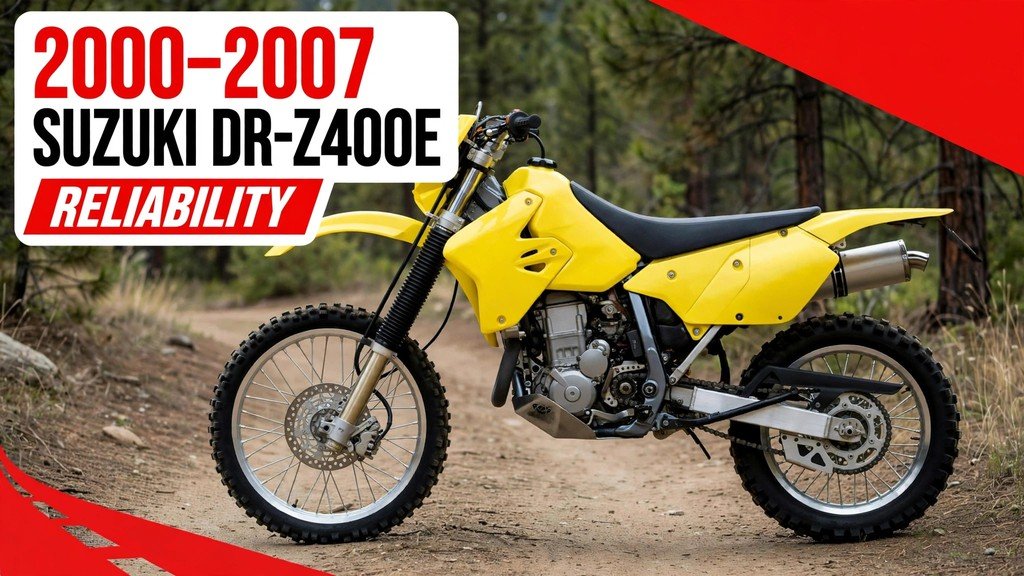
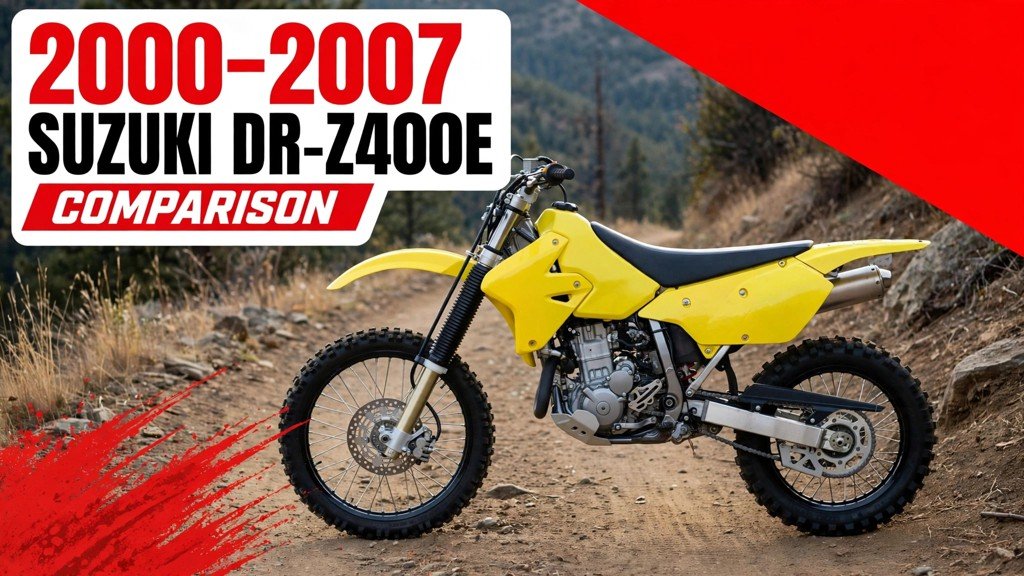
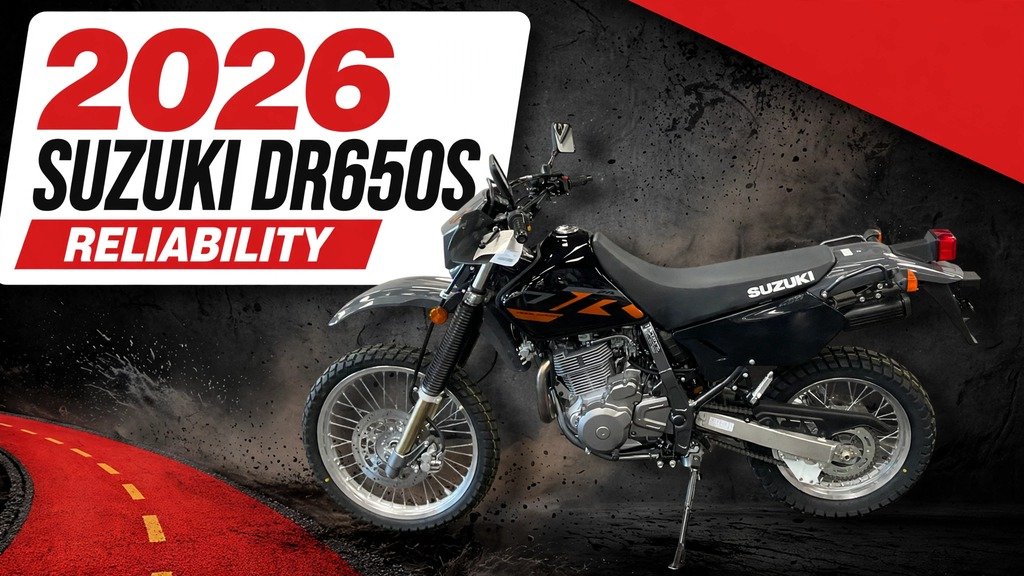
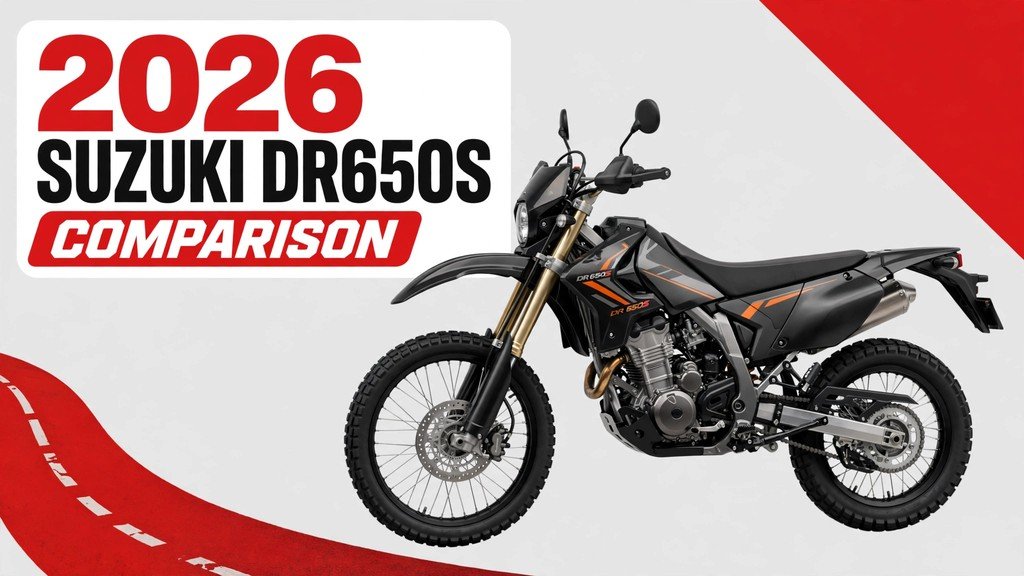
The short answer first: the Suzuki DR-Z400S is a reliable bike by the owner record — MCN’s owner reviews rate it 4.4 out of 5 overall and 4.2 out of 5 for reliability from 21 owners — and its only recall in published notices is a single 2018 campaign covering 191 bikes. The reason is simple: a liquid-cooled single with a carburettor, no electronics and a service chart that asks for oil at every interval and a valve check only once, at 15,000 miles. This Suzuki DR-Z400S reliability guide works through the owner record, the common problems, the full maintenance schedule and the ownership costs, so a buyer can judge a used bike on its service history rather than its age.
Suzuki DR-Z400S Reliability Overview
The DR-Z400S earned its reputation the slow way: by staying in production for 24 years with almost nothing changed, and by racking up high mileages in owner hands. There is no factory reliability claim to quote — Suzuki never published one — so this Suzuki DR-Z400S reliability guide rests on the owner record instead: MCN’s owner ratings, Cycle Insider’s 146 US ratings and reviews, and the high-mileage bikes still riding in the video in the maintenance section below.

MCN UK Owners: 4.4 Overall, Reliability 4.2, 21 Owners
MCN’s DRZ400S owner-reviews page rates the bike 4.4 out of 5 overall and 4.2 out of 5 for reliability from 21 owners, with the engine at 4.3, ride quality and brakes at 4.2, and value for money at 4.5 out of 5. Annual servicing cost is listed at £60. Those are UK owners of 2001–2009 bikes, and they are the best named-source owner figure available for Suzuki DR-Z400S reliability — the US voice comes from Cycle Insider, which carries 146 ratings and reviews for the DR-Z400S. The two sources agree on the shape of the story: owners rate the bike highly for value and engine, slightly lower for reliability than for the bike as a whole, and the gap is small. Read alongside the recall record — exactly one campaign in published notices — it is the strongest evidence this Suzuki DR-Z400S reliability guide can offer that the old bike is, by and large, a dependable machine.
How Mileage, Storage and Previous Care Affect Reliability
On a bike that ran unchanged for 24 years, the year matters less than the history. A 2005 bike with a full service record, a manual cam chain tensioner already fitted and a clean stator is a better buy than a 2020 bike that sat in a garage for three winters with old fuel in the carburettor. Mileage alone does not condemn a DR-Z400S: owner forums are full of 50,000-mile bikes, and the video in the maintenance section below rides a 2001 DR-Z400 with 75,000 km — about 46,600 miles — still riding strongly. What matters is storage and care. A bike stored dry, with the carburettor drained and the battery on a tender, wakes up cleanly; a bike stored with fuel in the float bowl comes back with a gummed pilot jet and a hard cold start, which is the most common “unreliable DR-Z” story and is entirely the previous owner’s doing. That is the shape of Suzuki DR-Z400S reliability: the bike forgives mileage and punishes neglect. The Suzuki DR-Z400S review covers the price and specs in full, and the Suzuki DR-Z400S performance guide covers the dyno figures and fuel economy.
Suzuki DR-Z400S Common Problems and Wear Items
Every common problem on the DR-Z400S is owner-reported — none is a recall and none is a factory defect claim, and this Suzuki DR-Z400S reliability guide labels them that way in every sentence. The list is short, the fixes are cheap and well documented, and most of them are one-time jobs: fit the part once and the problem does not come back.
Pre-2003 Cam Chain Tensioner Failures, Owner Reports
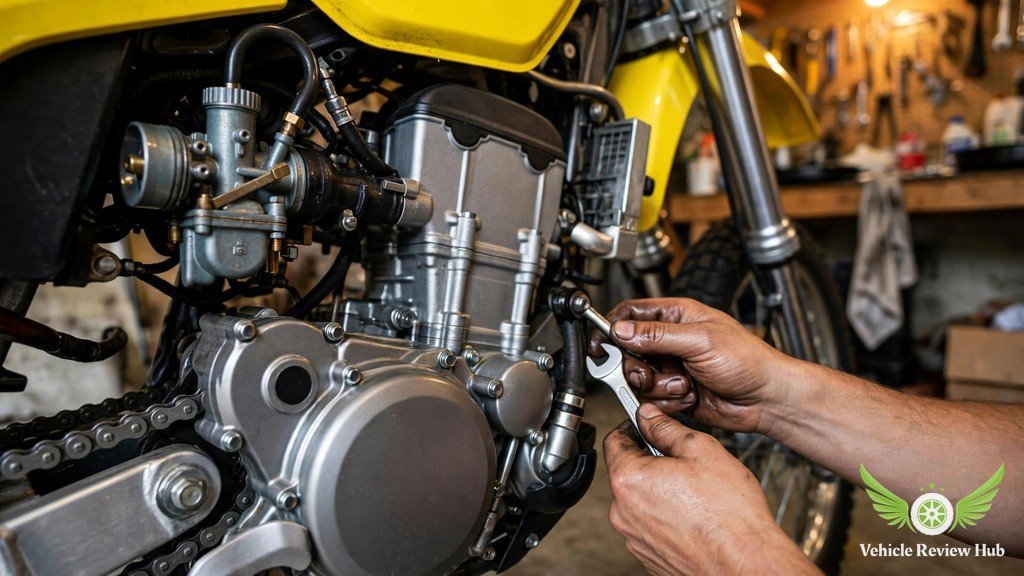
The best-known DR-Z400S problem is the automatic cam chain tensioner on pre-2003 bikes, and it is owner-reported, never a factory defect and never a recall. ThumperTalk owner reports, quoted in EnginePatrol’s round-up of common DR-Z400 problems, describe “a few reported cases of pre-2003 DRZ400 cam chain and adjuster failure” — the automatic tensioner stops holding tension, the chain rattles, and in the worst cases the chain jumps and the engine is damaged. The fix is well known: owners fit a manual cam chain tensioner, and Suzuki sells an updated automatic tensioner as well. Either way it is a one-time job, and a bike that already has a manual tensioner fitted has had the problem solved for good. What this Suzuki DR-Z400S reliability guide does not print is a date for the fix: the year of Suzuki’s part update was not verified from a named source, so it never prints “Suzuki fixed the tensioner in 2003” as a fact. On a pre-2003 bike, listen for a cam chain rattle on a cold start and ask whether the tensioner has been replaced; on a later bike, the same check costs nothing and the answer is usually reassuring.
Countershaft Seal Leaks and Stator Reports, All Owner
The other owner-reported issues are smaller and cheaper. The countershaft seal — the seal where the front sprocket shaft leaves the engine — can weep oil, and owner DIY fix videos exist for it; it is a seal, not a design failure, and it is replaced in a home garage. The stator has two owner-reported stories: stator failures themselves, including a 2007 DR-Z400SM with about 13,000 miles whose stator showed continuity to ground on all three phases, and oil leaking through the rubber block where the stator wires pass through the engine case — a Horizons Unlimited rider reported exactly that leak on a DR-Z400S in 2019. Related to the stator is the well-known owner procedure of Loctiting the stator retaining bolts, which can back out and chew the stator — described by owners as a common fault on the DR-Z400. The vacuum petcock — the fuel tap — is owner-reported as notorious for failing and leaking, and the must-do owner modification is a manual petcock for under $30. None of these is a recall and none is a factory defect claim; all are owner-reported, and all have cheap, documented fixes — which is why Suzuki DR-Z400S reliability holds up despite the list.
Suzuki DR-Z400S Maintenance Schedule and Servicing
The maintenance schedule is the best news in this Suzuki DR-Z400S reliability guide: oil at every chart interval, a filter only twice in 15,000 miles, and a valve check only once. The chart below is transcribed from the owner’s manual, The maintenanceschedule.com DR-Z400 chart prints the same schedule in a clearer format, and this guide uses its intervals throughout.

The video below is a 2001 DR-Z400 with 75,000 km on the clock — about 46,600 miles — still riding strongly, with ride impressions, suspension and brake checks and a top-speed run. It is the high-mileage premise of this guide, not a new-bike test.
Oil at Every Chart Interval After the 600-Mile Service
The service chart runs in columns of 600, 4,000, 7,500, 11,000 and 15,000 miles, and the engine oil is replaced at every column — including the 600-mile first service. The trap is the filter: the oil filter is replaced only at 600 miles and at 11,000 miles — not with every oil change. That is the same rule as the Boulevard C50, M109R, M50 and C90 in this line, and the opposite of the Boulevard S40, where the filter is changed at every service. Auto-generated FAQ pages get this wrong — ManualsLib’s auto-FAQ claims the filter is replaced every 12 months or 7,500 miles, and the same pages claim the valves are inspected every 7,500 miles, and both are wrong. The manual’s own chart says filter at 600 and 11,000 miles only, and this Suzuki DR-Z400S reliability guide follows the chart, never the auto-FAQ.
| Service item | Interval (owner’s manual chart) |
|---|---|
| Engine oil — replace (SAE 10W-40, ~1,700 ml) | Every column: 600, 4,000, 7,500, 11,000, 15,000 miles |
| Engine oil filter — replace (HiFloFiltro HF139) | Only at 600 and 11,000 miles — not with every oil change |
| Spark plug — inspect (NGK CR8E, gap 0.7–0.8 mm) | 4,000 and 11,000 miles |
| Spark plug — replace | 7,500 and 15,000 miles |
| Valve clearances — inspect / adjust | Only at 15,000 miles / 24 months |
| Air cleaner element — inspect / replace | Inspect 4,000, 7,500, 15,000 miles; replace 11,000 miles |
| Engine coolant — replace (Suzuki Super Long Life, blue) | Every 4 years (or 48,000 km / 29,000 miles) |
| Brake fluid — replace (DOT 4) | Every 2 years |
| Drive chain — clean and lubricate | Every 600 miles; slack 40–50 mm at the loosest point |
Valve Clearance Inspection at 15,000 Miles Only
The valve check is the one expensive job on the chart, and it comes only once: the service manual says “Inspect every 24 000 km (15 000 miles, 24 months)”, and nothing in the chart asks for it sooner. The clearances are shim-under-bucket, checked cold — intake 0.10–0.20 mm, exhaust 0.20–0.30 mm — and adjusting them means removing the camshafts and doing arithmetic with 25 shim sizes from 2.30 to 3.50 mm in 0.05 mm steps. The maintenance guide puts it plainly: “The tricky part is the valve service.” The long interval is part of why Suzuki DR-Z400S reliability holds up in owner hands: the expensive job is rare, the cheap jobs are simple, and nothing on the chart asks for specialist tools before 15,000 miles. The Suzuki DR-Z400S comparison guide sets the old bike against the DR-Z4S, the KTM 390 Enduro R and the Honda CRF300L, including their service demands.
Suzuki DR-Z400S Tires, Brakes and Suspension Maintenance
Tyres, brakes and suspension are the wear items that tell the truth about how a DR-Z400S was used, and this Suzuki DR-Z400S reliability guide treats them as inspection points first and service items second. A bike that lived on the trail wears them differently from a bike that commuted,

Tire Wear, Brake Pads and Suspension Seals Off Road
The tyres are 80/100-21 at the front and 120/90-18 at the rear, tube type, on Bridgestone Trail Wing rubber, and the manual’s cold pressures are 18 psi at the front and 22 psi solo or 25 psi dual at the rear. Knobby tyres wear faster on pavement than on dirt, and a bike that commuted on knobbies will show it in the rear tyre’s squared-off centre — a wear pattern that costs grip off road and tells a buyer the bike lived on tarmac. Brake pads wear faster off road, where the rear brake does real work in the dirt, and the single 250 mm front disc with its two-piston caliper and the 220 mm rear disc with a single-piston caliper are simple to service — no ABS in any year, on road or trail, so there is no ABS pump or sensor to fail. The fork seals are the wear item to check on a bike that sees trail use: the 49 mm Showa conventional fork is externally adjustable from 2002 onward — compression, rebound and preload — and a weeping fork seal is a cheap fix that a neglected bike will show as oil on the fork leg. Dirt Rider’s 2022 ride review called the supple Showa fork and shock extremely plush and comfortable for its 125-pound tester, — and it is the kind of simple, owner-done work that Suzuki DR-Z400S reliability rests on.
Coolant Every Four Years, Chain Lube Every 600 Miles
The coolant — Suzuki Super Long Life, blue — is replaced every four years or 48,000 km, about 29,000 miles, and the DR-Z400S is liquid-cooled, so the coolant is doing real work: a smooth-cylinder single with a radiator, never a finned air-cooled engine, The drive chain is cleaned and lubricated every 600 miles, with slack of 40–50 mm at the loosest point and the rear axle nut at 110 Nm — an RK520 chain of 112 links on a 44/15 sprocket pair. Six hundred miles sounds frequent until the chain is measured: a dry, tight chain wears the sprockets and the countershaft seal, and the seal is already on the owner-reported list above. Brake fluid is DOT 4, replaced every two years, and the steering, exhaust bolts, fork and rear suspension and the PAIR system are checked per the chart at 600, 7,500 and 15,000 miles. None of this is specialist work — it is the owner doing the simple things on time, which is the whole of Suzuki DR-Z400S reliability in practice.
Suzuki DR-Z400S Maintenance and Ownership Costs
Ownership costs are where the old bike’s case is strongest: the last new DR-Z400S cost $7,199 plus $460 destination, clean used bikes from 2020 to 2023 typically list between $3,500 and $6,000, This Suzuki DR-Z400S reliability guide prices the ownership year honestly, including the one job that is not cheap.

Fuel, Routine Servicing, Tires and Replacement Parts
Fuel is the smallest line in the budget: owners report 50 to 58 mpg in ordinary riding against 35 mpg on Cycle World’s 2001 test loop, and on a 2.6-gallon tank that works out to about 130 miles at the owner figure — derived, never tested. Routine servicing is oil at every chart interval and a filter only at 600 and 11,000 miles, a spark plug every other service, and a valve check only at 15,000 miles; MCN’s owner page lists annual servicing at £60, and the US figure is in the same shape — cheap, because the jobs are simple. That parts commonality is part of Suzuki DR-Z400S reliability: nothing on the bike is rare, and nothing is dealer-only. Replacement parts are where 24 years of the same bike pays off — the aftermarket is enormous, parts commonality means a 2005 bike and a 2020 bike share most of their hardware, and a used part from any year usually fits. The Suzuki V-Strom 800DE review covers Suzuki’s modern dual-sport with fuel injection and electronics for riders comparing the old bike’s running costs with a newer machine, and the Boulevard M109R review covers the shaft-drive contrast for riders comparing the chain-drive S with Suzuki’s bigger cruiser.
The Only Recall: 18V441, 2018 Bikes, 191 Units
The recall record is unusually clean: exactly one recall in published notices, NHTSA campaign 18V441 from 2018, covering 191 units of the 2018 DR-Z400S and DR-Z400SM for a rear brake stop-lamp switch whose resin-adhered contacts could stop the brake light working when only the rear brake was applied. Suzuki’s campaign is 2A84, bulletin 18-086, dated June 22, 2018, and the recall began July 16, 2018. The NHTSA recall search can confirm the 18V441 work for any specific bike by VIN.
| Campaign | Year | Bikes | Issue |
|---|---|---|---|
| 18V441 (Suzuki 2A84) | 2018 | 191 units, DR-Z400S and DR-Z400SM | Rear brake stop-lamp switch — brake light fails on rear brake only |
| 25V873 (Suzuki 3A09) | 2025–2026 | About 3,003 units, DR-Z4S family only | Rear brake master-cylinder reservoir cap screws — NOT the old bike |
How to Keep a Suzuki DR-Z400S Reliable
Keeping a DR-Z400S reliable is a short list of simple habits, and this Suzuki DR-Z400S reliability guide ends on it: do the chart, keep the records, and do not confuse the old bike with its successor.

Preventive Maintenance, Records and Regular Inspections
Preventive maintenance on this bike is the chart, done on time: oil at every interval, a filter at 600 and 11,000 miles, a chain cleaned and lubricated every 600 miles, coolant every four years and a valve check at 15,000 miles. Records matter more than mileage for Suzuki DR-Z400S reliability — ask for service records first, storage second and odometer third, because a documented bike is a known bike and an undocumented bike is a gamble at any mileage. Regular inspections are the owner’s own work: tyre pressures cold at 18 psi front and 22 psi solo rear, chain slack 40–50 mm, fork seals dry, no oil around the countershaft or the stator cover, and a cold start that settles into its 1,400–1,600 rpm warm idle without a cam chain rattle. The Cycle News June 2025 review of the successor called the DR-Z4S significantly improved over the previous DR-Z400S in nearly every way, and still felt like a DR-Z, only better — which is the honest comparison for a buyer choosing between the old bike’s simplicity and the new bike’s electronics.
The 2025-2026 Recall Under This Name Is the DR-Z4S
The last thing to get right is the recall that is not this bike’s. NHTSA campaign 25V873, Suzuki campaign 3A09, covers the 2025–2026 DR-Z4S, DR-Z4SM and the plus trims — about 3,003 US bikes — for rear brake master-cylinder reservoir cap screws that were under-torqued, a failure to meet the FMVSS 122 braking standard. Dealers were informed on December 17, 2025, and owner notices went out on January 9, 2026. It is the successor’s recall, not the DR-Z400S’s, and it must never be counted as a second DR-Z400S recall — the old bike has exactly one, 18V441, and this Suzuki DR-Z400S reliability guide says so in the recall section above. Buy the old S for the simplest maintenance and the biggest aftermarket; buy the DR-Z4S for fuel injection, ABS and ride modes, at $1,800 more.
Suzuki DR-Z400S Reliability: Frequently Asked Questions
Direct answers to the questions riders ask about this Suzuki DR-Z400S reliability guide.
Is the Suzuki DR-Z400S reliable?
By the owner record, yes. MCN’s owner-reviews page rates it 4.4 out of 5 overall and 4.2 out of 5 for reliability from 21 owners, and Cycle Insider carries 146 ratings and reviews for the bike in the USA.
How often should I change the oil on a Suzuki DR-Z400S?
At every chart interval: 600, 4,000, 7,500, 11,000 and 15,000 miles. The oil is SAE 10W-40, about 1,700 ml or 1.8 US quarts, in a dry-sump engine.
How often should I change the oil filter?
Only at 600 miles and at 11,000 miles — not with every oil change. Auto-generated FAQ pages that say every 7,500 miles are wrong; the manual’s own chart says 600 and 11,000 miles only.
When do the valves need checking on a Suzuki DR-Z400S?
Only at 15,000 miles or 24 months. The clearances are shim-under-bucket, checked cold — intake 0.10–0.20 mm, exhaust 0.20–0.30 mm — and adjusting them means removing the camshafts, so most owners treat it as a dealer job.
What is the cam chain tensioner problem on the DR-Z400S?
Pre-2003 bikes have owner-reported automatic tensioner failures — the tensioner stops holding tension and the chain rattles. Owners fit a manual tensioner or Suzuki’s updated automatic one; it is a one-time fix, and the year of Suzuki’s part update was not verified, so this guide never prints “fixed in 2003” as a fact.
What recalls affect the Suzuki DR-Z400S?
Exactly one in published notices: NHTSA campaign 18V441 from 2018, covering 191 units of the 2018 DR-Z400S and DR-Z400SM for a rear brake stop-lamp switch. The 2025–2026 recall 25V873 is the DR-Z4S successor’s, not the old bike’s.
How long does a Suzuki DR-Z400S last?
Owner forums are full of 50,000-mile bikes, and the video in this guide rides a 2001 DR-Z400 with 75,000 km — about 46,600 miles — still riding strongly. Service history matters more than the odometer.
Does the Suzuki DR-Z400S have fuel injection?
No. Every DR-Z400S ever sold has a Mikuni BSR36 carburettor. Fuel injection arrived only with the 2025 DR-Z4S successor.
Does the Suzuki DR-Z400S have ABS?
No. ABS was never offered on any DR-Z400S in any year. The DR-Z4S successor has switchable ABS.
How much does it cost to maintain a Suzuki DR-Z400S?
Routine servicing is cheap — oil at every interval, a filter twice in 15,000 miles, a plug every other service — and MCN’s owner page lists annual servicing at £60. The one expensive job is the 15,000-mile valve check, which most owners treat as a dealer job.
What should I check before buying a used Suzuki DR-Z400S?
Ask for service records first, storage second and odometer third. Then check the oil, listen for a cam chain rattle on a cold start, look for oil around the countershaft seal and stator cover, check the chain and fork seals, and confirm the 18V441 recall work by VIN.
Should I buy a DR-Z400S or a DR-Z4S?
Buy the old S for the lowest price, the simplest maintenance and the biggest aftermarket — the value case this Suzuki DR-Z400S reliability guide makes. Buy the DR-Z4S for fuel injection, ABS, ride modes and a warranty, at $8,999 plus $600 destination.