The short answer first: the Suzuki GSX-R750 is the only 750cc four-cylinder supersport still on sale new in the USA, and that is exactly why it is hard to compare. The 2027 bike costs $13,549 plus a $750 destination charge, $14,299 delivered, and it sits in a gap no other bike occupies — cheaper tech below it, litre power above it. This Suzuki GSX-R750 comparison puts it against the Kawasaki Ninja ZX-6R, the Yamaha YZF-R9 and the new-generation Suzuki GSX-R1000 on price, electronics, power, weight and value,
Suzuki GSX-R750 Overview and Its Closest Rivals
The GSX-R750 is a class of one. It is the only over-700cc four-cylinder supersport still on sale new in the USA, built on the 2011 (L1) platform and mechanically unchanged since. It carries 600-class weight — 419 lb curb — with near-litre midrange, and it is the last analogue Japanese supersport on sale in its original form: no ABS, no traction control, no quickshifter, no IMU, no TFT display and no ride-by-wire. The GSX-R600 review covers the same platform in the smaller bike, and the 750 is that bike with 150cc more, 7 lb more and $1,050 more in 2027 — $14,299 delivered against the 600’s $13,149.
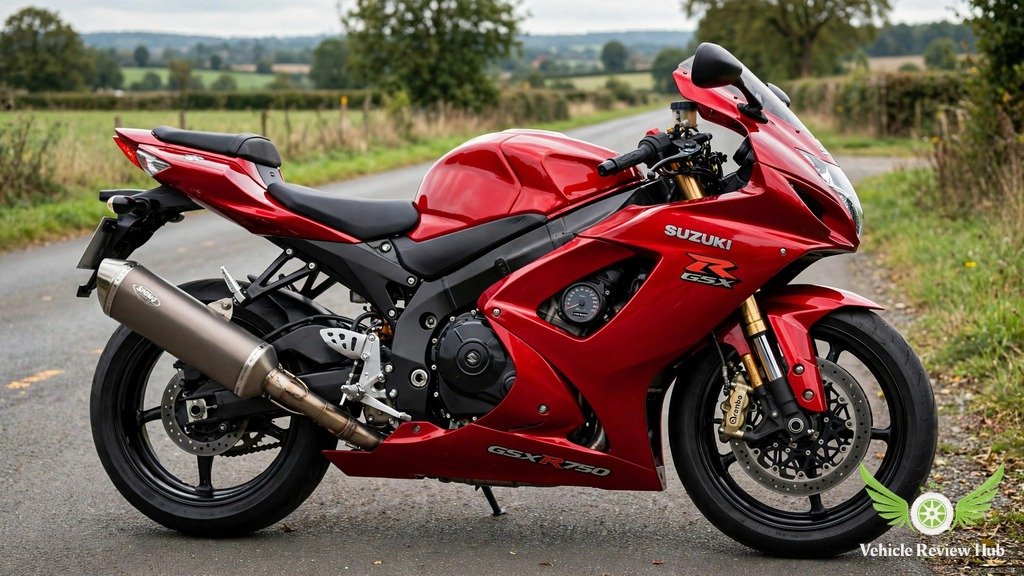
The video below is Motorcycle.com’s 2025 Next Gen supersport shootout — a three-bike test of the Ducati Panigale V2, the Yamaha YZF-R9 and the Suzuki GSX-R750. It is a full shootout, not a solo review, and the 750 finished third in it, behind the Panigale V2 in first and the R9 in second.
Why These Three Rivals: a Class of One
There is no direct 750cc rival, so this Suzuki GSX-R750 comparison picks the three bikes a real buyer actually cross-shops. The ZX-6R is the direct rival: a 636cc supersport that undercuts the 750 by $865 delivered and brings a full modern electronics suite the Suzuki cannot match. The YZF-R9 is the modern rival: an 890cc triple that undercuts the 750 by $1,100 delivered and beats it on torque, with lean-sensitive electronics and a quickshifter. The GSX-R1000 is the family rival: Suzuki’s own litre bike, now a new generation for 2027, costing $2,850 more delivered than the 750 at the base trim — the bike a 750 buyer steps up to when the 750 stops feeling like enough. The 2027 Suzuki press release confirms the 750 and the 600 share the same announcement, and the 750’s story has not changed since 2011: more power than any 600, less money than any litre bike, and nothing electronic in between.
How the Four Bikes Differ at a Glance
One table tells most of the story. The 750 makes the most peak power of the four at the rear wheel and weighs the least, yet it is the only one without a quickshifter, traction control or a TFT dash. The ZX-6R claims more power than the 750’s rear-wheel dyno figures, but claimed crank power and measured rear-wheel power are different numbers — this guide compares claimed with claimed and wheel with wheel, never mixed.
| Bike | Engine | Claimed power | Rear-wheel dyno | Weight | Delivered price |
|---|---|---|---|---|---|
| 2027 Suzuki GSX-R750 | 749cc inline-four | 148 hp (2011 launch release) | 121.5 hp (Cycle World, 2022 model) | 419 lb curb | $14,299 |
| 2027 Kawasaki Ninja ZX-6R | 636cc inline-four | 127 hp @ 13,000 rpm | 121.5 hp @ 12,800 rpm | 432.2 lb curb | $12,284 |
| 2026 Yamaha YZF-R9 | 890cc inline triple | 117.5 hp @ 10,000 rpm | 104.9 hp @ 9,500 rpm | 431 lb wet | $13,199 |
| 2027 Suzuki GSX-R1000 | 999.8cc inline-four | Not published | Not tested | Not published | $17,149 |
Suzuki GSX-R750 vs Kawasaki Ninja ZX-6R
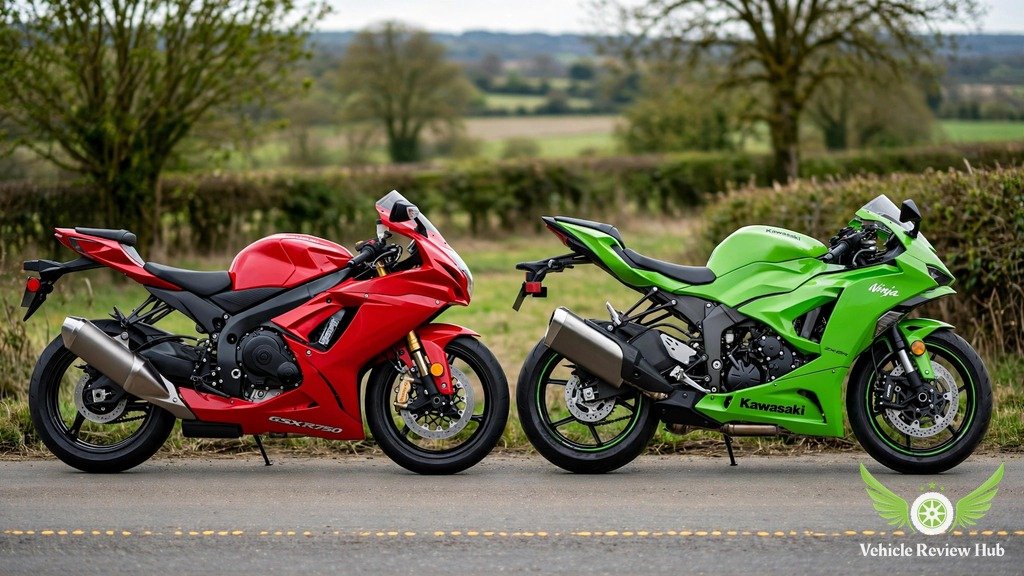
The ZX-6R is the fight the 750 has been in since 2013, when Motorcycle.com’s Oddball shootout put the two against each other and the Triumph Daytona 675R: the Suzuki won the power contest, the Kawasaki won the price category. Thirteen years later the same split holds. The 2027 ZX-6R costs $11,599 plus a $685 destination charge, $12,284 delivered — $865 less than the 750 — and it brings the electronics the Suzuki has never had.
Engine, Specs and Performance Side by Side
On paper the ZX-6R looks like it should win the power argument: Kawasaki claims 127 hp at 13,000 rpm and 52.1 lb-ft at 10,800 rpm from its 636cc inline-four, while Suzuki publishes no power figure at all for the 750 — the 148 hp crank figure comes from the 2011 launch release, not from the 2027 brochure. At the rear wheel the two bikes are effectively tied: Motorcycle.com’s 2018 dyno measured the ZX-6R at 121.5 hp at 12,800 rpm and 48.8 lb-ft, and Cycle World’s most recent dyno run measured the 750 at 121.5 hp at 12,560 rpm and 53.0 lb-ft at 10,840 rpm on a 2022-model bike. Same peak, different shape: the 750’s extra 113cc gives it more torque everywhere below the top end, and the GSX-R600 performance guide shows the same pattern one step down — the 600’s 102.2 hp rear wheel against the 750’s 120.5 in Motorcycle.com’s 2011 test, a measured gap of about 20 hp. The ZX-6R is also the heavier bike: 432.2 lb curb against the 750’s 419 lb, and its 32.7-inch seat is 0.8 inches taller than the 750’s 31.9.
Price, Equipment and Which Suits Which Rider
The ZX-6R’s $865 price advantage comes with a full electronics suite: KTRC traction control, a KQS up-and-down quickshifter, selectable power modes, a full-colour TFT dash with smartphone connectivity and KIBS ABS. The 750 answers with none of that — two S-DMS engine maps, a slipper clutch and an analogue tachometer with an LCD. For a rider who wants the modern package, the ZX-6R is the better buy at the lower price: traction control and a quickshifter are genuinely useful on the road, and the ABS version at $12,599 plus $685, $13,284 delivered, still undercuts the 750 by $1,015. For a rider who wants the bigger engine and the analogue feel, the 750 is the better buy: more midrange, less weight, and nothing between the throttle cable and the rear wheel. Buy the ZX-6R if you want the tech; buy the 750 if you want the engine.
Suzuki GSX-R750 vs Yamaha YZF-R9
The R9 is the newest rival and the most modern one, and it is the bike that makes the 750 look its age. Yamaha’s 890cc CP3 triple costs $12,499 plus a $700 destination charge, $13,199 delivered as a 2026 model — $1,100 less than the 750 — and it finished second in Motorcycle.com’s 2025 Next Gen shootout, one place ahead of the 750. There is no confirmed 2027 US R9 price, so this Suzuki GSX-R750 comparison uses the 2026 price and labels it as such.

Engine, Specs and Performance Side by Side
The dyno tells the R9’s story in one line: Motorcycle.com’s 2025 shootout measured the R9 at 104.9 hp at 9,500 rpm and 64.9 lb-ft at 6,700 rpm at the rear wheel, against the 750’s 121.7 hp at 11,900 rpm and 55.8 lb-ft at 10,400 rpm. The 750 makes about 17 hp more at the top; the R9 makes about 9 lb-ft more in the middle, and it makes it 3,700 rpm lower. On the road that means the R9 pulls harder from a closed throttle and needs fewer downshifts, while the 750 needs revs and rewards them — the same character split the 750 has always had against triples. Yamaha claims 117.5 hp at 10,000 rpm and 68.6 lb-ft at 7,000 rpm for the CP3, and the R9’s 32.7-inch seat matches the ZX-6R’s while its 431 lb wet weight is 3 lb more than the 750’s 428 lb measured wet weight in the same shootout.
Price, Equipment and Which Suits Which Rider
The R9’s equipment list reads like a different decade: a 6-axis IMU with lean-sensitive traction control, slide control and lift control, lean-sensitive ABS that can be disabled or set to front-only mode, a bi-directional quickshifter the testers called near-faultless, cruise control included as standard and a 5-inch TFT dash. The 750 has none of it, and the shootout scorecard shows the gap plainly — the R9 scored 86.7% on technologies and 86.7% on instruments, the 750 scored 66.7% and 63.3%. For $1,100 less than the 750, the R9 is the better buy for a rider who wants modern electronics and midrange torque — and the only one of the three rivals with cruise control. For a rider who wants peak power, the lightest bike in the class and the simplest machine to own, the 750 still holds its ground. The 70th Anniversary Edition adds $400, $12,899, for riders who want the special paint.
Suzuki GSX-R750 vs Suzuki GSX-R1000
This is the family fight, and for 2027 it is a new one: the GSX-R1000 is an all-new generation, not a carry-over. Three trims, all 40th Anniversary Editions — the base GSX-R1000 at $16,399, the R at $17,939 and the RS at $18,639, each plus a $750 destination charge, so $17,149, $18,689 and $19,389 delivered. The base litre bike costs $2,850 more delivered than the 750; the R costs $4,390 more.

Engine, Specs and Performance Side by Side
The new 1000 runs a 999.8cc inline-four at 13.8:1 compression with ride-by-wire, Euro 5+ compliance, a Showa BFF fork and BFRC-Lite shock on the R, carbon winglets on the RS and Suzuki’s latest electronics suite. Suzuki calls it the quickest-accelerating GSX-R1000 in the nameplate’s history. What it does not say is how much power it makes, and the old bike’s figures do not carry over: the previous generation’s 202 hp at 13,200 rpm and 86 lb-ft at 10,800 rpm belong to a different engine, and this Suzuki GSX-R750 comparison will not print them as the 2027 bike’s. Against the 750’s 749cc engine, two S-DMS maps and cable throttle, the 1000 is a different species — ride-by-wire, a full IMU-based electronics suite and a chassis built around winglets and a new frame. Until an independent dyno run exists for the 2027 1000, any power comparison is a guess, and this guide does not guess.
Price, Equipment and Which Suits Which Rider
For $2,850 more than the 750, the base GSX-R1000 buys the newest Suzuki superbike: a new-generation engine, ride-by-wire, the full electronics suite and the 40th Anniversary trim as standard. The 750’s answer is value and feel: it is $2,850 cheaper, it is the lighter and simpler machine, and it still makes the most peak power of any bike in the 2025 Next Gen shootout’s rear-wheel dyno runs. A rider who wants the fastest Suzuki on sale buys the 1000. A rider who wants the best power-per-dollar in the Suzuki range, and a bike that can be serviced without a dealer computer, buys the 750 — and keeps $2,850. The Suzuki 2027 GSX-R750 brochure lists the 750’s full specification, and the contrast with the 1000’s brochure is the point: the 750’s spec sheet fits on a page because there is so little electronics to list.
Suzuki GSX-R750 Price and Value Compared
Price is where the 750’s case is strongest and weakest at the same time. It is $865 more than the ZX-6R and $1,100 more than the R9, both of which bring full electronics suites — and $2,850 less than the base GSX-R1000, which brings a new-generation litre engine. The 750’s delivered price of $14,299 is the middle of the class, and its value depends entirely on what the buyer values: electronics and midrange, or peak power and analogue feel.
Cheaper Tech Below, Litre Power Above
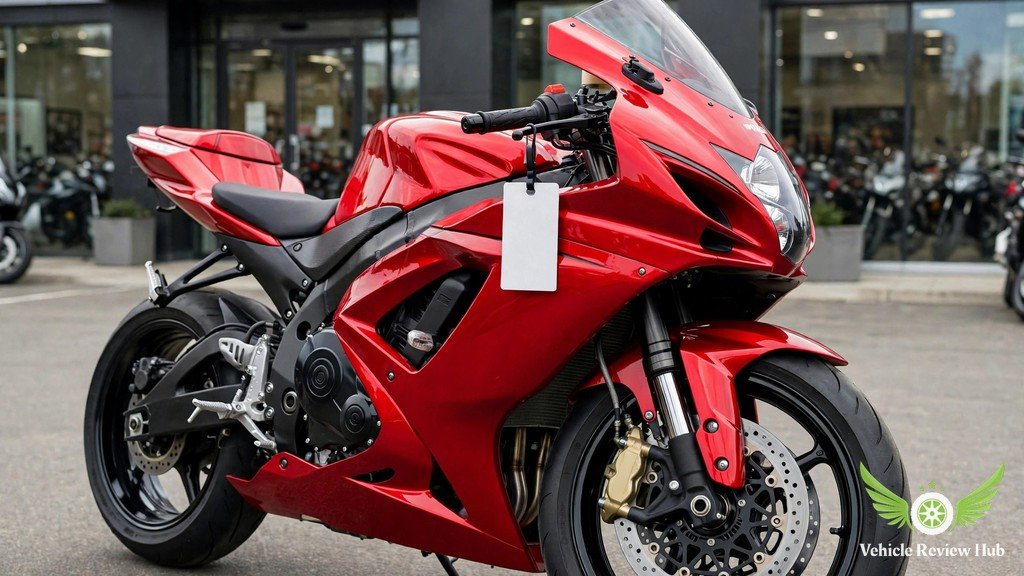
The delivered-price table below is the whole value argument in one place. Every figure is a delivered total — MSRP plus the destination charge — except the Panigale V2, where the destination charge is not confirmed and the table shows the MSRP only. The ZX-6R is the cheapest way into the class at $12,284, and its ABS version at $13,284 still undercuts the 750. The R9 is the cheapest modern bike in the class at $13,199 for the 2026 model year. The 750 sits $1,100 above the R9 and $865 above the ZX-6R, and the only way to justify that gap is the engine: 121.5 hp at the rear wheel, the most peak power in the class, in the lightest package. Above it, the GSX-R1000 starts at $17,149 delivered — $2,850 over the 750 — and the Panigale V2’s 2026 MSRP of $16,995 puts it $2,696 over the 750 before destination is even added.
| Bike | MSRP | Destination | Delivered | Notes |
|---|---|---|---|---|
| 2027 Suzuki GSX-R750 | $13,549 | $750 | $14,299 | Base trim |
| 2027 Suzuki GSX-R750Z | $13,749 | $750 | $14,499 | 40th Anniversary, blue wheels |
| 2027 Kawasaki Ninja ZX-6R | $11,599 | $685 | $12,284 | $865 under the 750 |
| 2026 Yamaha YZF-R9 | $12,499 | $700 | $13,199 | $1,100 under; 2027 price unconfirmed |
| 2027 Suzuki GSX-R1000 | $16,399 | $750 | $17,149 | $2,850 over the 750 |
| 2027 Suzuki GSX-R1000R | $17,939 | $750 | $18,689 | $4,390 over the 750 |
| 2026 Honda CBR600RR ABS | $12,499 | $600 | $13,099 | 2027 US price unconfirmed |
| 2026 Ducati Panigale V2 (890cc) | $16,995 | Not confirmed | MSRP only | Price conflict noted; 2027 unconfirmed |
Running Costs and Resale Value Compared
Running costs favour the 750 more than the sticker price suggests. There is nothing electronic to service and nothing exotic to replace: routine servicing runs $300–$400 a year, owner-reported, and the valve check comes once at 14,500 miles at $350–$600. Fuel is the smallest honest cost — Suzuki publishes no MPG figure, and MCN’s long-term test averaged 39 mpg Imperial, about 32.5 US mpg, over 10,000-plus miles. The GSX-R600 reliability guide shows the same service schedule, and the 750 shares it exactly except for the spark plug. Tyres are standard supersport sizes — 120/70 front, 180/55 rear — and the chain is a common RK525. The rivals cost more to own in the ways that matter: the R9 and ZX-6R carry electronics that need dealer diagnostics when they fail, and the Panigale V2’s Ducati service pricing sits in a different league. Resale is the 750’s quiet strength: sixteen years of production means every part is available, and the bike’s reputation — 4.8 out of 5 for reliability from 20 MCN owners — holds values better than the class average for a bike this old.
Suzuki GSX-R750 Comparison Verdict and US Alternatives
In this Suzuki GSX-R750 comparison, the verdict depends on what the buyer is actually buying. If the buyer wants the most modern motorcycle for the least money, the 750 loses — the ZX-6R and the R9 both undercut it and both bring electronics it will never have, and the 2025 Next Gen shootout said so plainly by putting the 750 third. If the buyer wants the most peak power per dollar, the lightest bike in the class and the simplest machine to own, the 750 wins — 121.5 hp at the rear wheel, 419 lb curb, $14,299 delivered, and nothing between the rider and the road. The GSX-R600 comparison reaches the same conclusion one step down: the old Suzuki wins on engine and value, and loses on electronics.
CBR600RR Is the Other Old-School Survivor
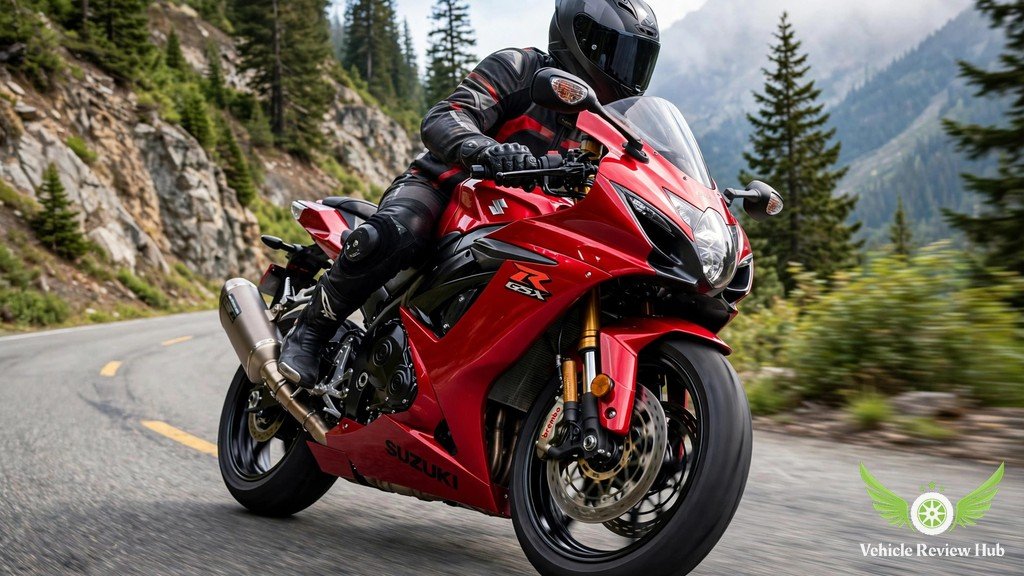
The Honda CBR600RR is the only other supersport still on sale new in the USA that is built on an old platform with no modern electronics suite — the 750’s fellow survivor. The 2026 US bike costs $11,499, or $12,499 with ABS, plus a $600 destination charge: $12,099 or $13,099 delivered, which is $1,200 to $2,200 less than the 750. There is no confirmed 2027 US CBR600RR price — the Euro 2027 bike is a different machine — so this guide uses the 2026 figures and labels them. Honda claims 118.3 hp at 14,000 rpm and 48.3 lb-ft at 11,500 rpm from its 599cc inline-four, which is less claimed power than the 750’s 148 hp crank figure and less than the GSX-R600’s 121.6 hp claimed figure. The CBR does not out-power the 750; it undercuts it on price by $1,200 and gives up 150cc to do it.
Panigale V2 Today Is an 890 Twin, Not a 955
The Panigale V2 is the premium alternative, and it is also the easiest bike in this guide to get wrong. The current V2 is an 890cc twin making a claimed 120 hp at 10,750 rpm and 69 lb-ft at 8,250 rpm, with 106.4 hp and 65.1 lb-ft at the rear wheel in Motorcycle.com’s 2025 dyno run — and it won that shootout unanimously, with the fastest Sonoma lap at 1:51.1 and the lightest wet weight at 419 lb. The old V2 was a 955cc twin with a claimed 155 hp, and its figures must never be mixed with the current bike’s. The price is the problem: $16,995 as the 2026 MSRP, with the conflict noted — Motorcycle.com’s 2025 test price was $15,995 and TopSpeed’s August 2025 table said $16,495 — and no confirmed 2027 price, with the destination charge unconfirmed on top. That puts the V2 at least $2,696 over the 750 before destination. The V2 is the better motorcycle in the shootout. The 750 is the better value by nearly $3,000.
| Alternative | Price | Why consider it | Why the 750 still wins |
|---|---|---|---|
| 2026 Honda CBR600RR ABS | $13,099 delivered | Cheapest old-school supersport; $1,200 under the 750 | 150cc more, more midrange, more peak power |
| 2026 Ducati Panigale V2 (890cc) | $16,995 MSRP | Shootout winner; best electronics; lightest wet weight | Nearly $3,000 cheaper; simpler and cheaper to own |
| 2027 Suzuki GSX-R750Z | $14,499 delivered | 40th Anniversary graphics and blue wheels | Same bike for $200 less in base trim |
| 2027 Suzuki GSX-R600 | $13,149 delivered | Same platform, $1,050 cheaper, 7 lb lighter | About 20 hp more at the rear wheel |
Suzuki GSX-R750 Comparison: Frequently Asked Questions
Direct answers to the questions riders ask in a Suzuki GSX-R750 comparison.
How much does a 2027 Suzuki GSX-R750 cost?
$13,549 plus a $750 destination charge, $14,299 delivered. The 40th Anniversary Z trim costs $13,749 plus $750, $14,499 delivered.
Which is cheaper, the GSX-R750 or the Ninja ZX-6R?
The ZX-6R is cheaper: $11,599 plus $685, $12,284 delivered, which is $865 less than the 750. The ABS ZX-6R at $13,284 delivered still undercuts the 750 by $1,015.
Is the Yamaha YZF-R9 cheaper than the GSX-R750?
Yes, by $1,100 delivered: the 2026 R9 costs $12,499 plus $700, $13,199. There is no confirmed 2027 US R9 price, so the 2026 figure is the one to use.
How much more does the GSX-R1000 cost than the GSX-R750?
The 2027 base GSX-R1000 costs $16,399 plus $750, $17,149 delivered — $2,850 more than the 750. The R costs $18,689 delivered, $4,390 more.
Does the GSX-R750 have more power than the ZX-6R?
At the rear wheel they tie: both measured 121.5 hp in independent dyno runs. The 750 makes more torque — 53.0 lb-ft against the ZX-6R’s 48.8 — and makes it from a bigger engine.
Does the GSX-R750 have more torque than the YZF-R9?
No. The R9 makes 64.9 lb-ft at the rear wheel against the 750’s 55.8, and it makes it 3,700 rpm lower. Torque is the R9’s whole argument.
Why did the GSX-R750 finish third in the 2025 shootout?
Motorcycle.com’s 2025 Next Gen shootout put the Panigale V2 first, the R9 second and the 750 third. The 750 made the most peak power but lost on electronics, instruments, brake feel and age.
Does the GSX-R750 have ABS or traction control?
No. The GSX-R750 has no ABS, traction control, quickshifter, IMU or TFT display in any year. Its only rider aids are the two S-DMS engine maps and a slipper clutch.
Is the GSX-R750 a good beginner bike?
No. It makes 121.5 hp at the rear wheel, weighs 419 lb and has no traction control or ABS. A beginner is better served by a smaller bike with rider aids.
Which is better value, the GSX-R750 or the GSX-R600?
The 750 costs $1,050 more delivered and makes about 20 hp more at the rear wheel. For midrange, the 750; on a budget, the 600.
Is the Panigale V2 a 955cc bike?
Not any more. The current Panigale V2 is an 890cc twin with a claimed 120 hp. The old 955cc V2 with a claimed 155 hp is a different bike, and its figures do not apply to the current one.
Should I buy the GSX-R750 or wait for a new model?
There is no new 750 coming — the 2011 platform is still the current bike for 2027, buy the 750 for what it is, not for what it might become.