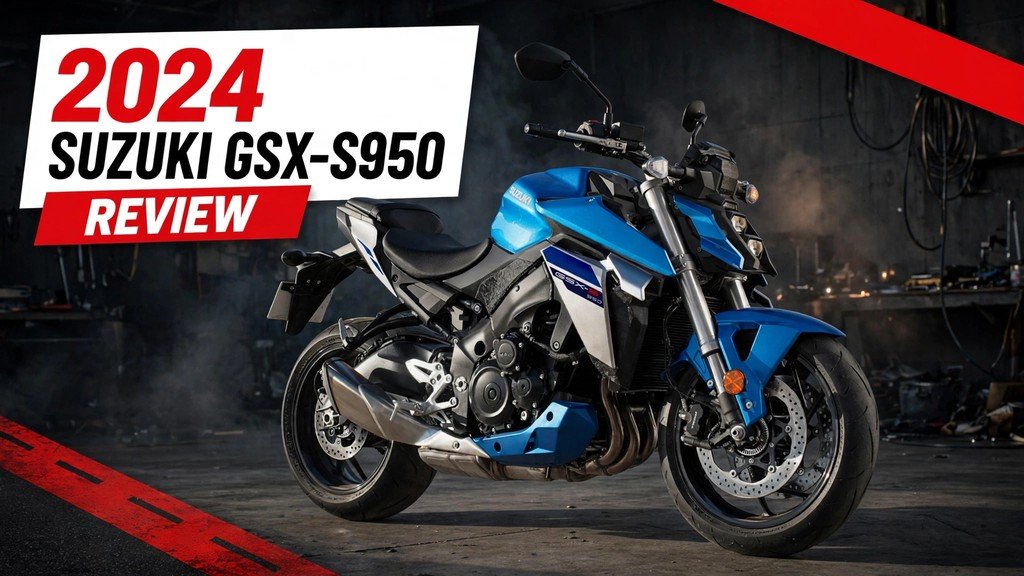
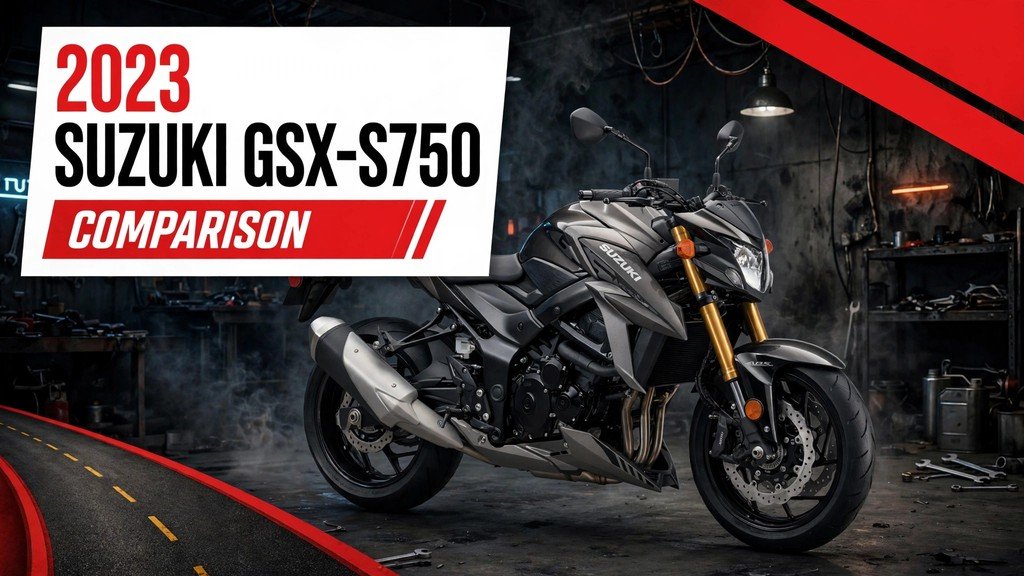
The 2027 Suzuki GSX-S1000 costs $10,798 before destination, or $11,548 delivered — $1,191 less than the 2026 bike on MSRP, the first price cut in the model’s history, with nothing changed on the bike itself. It is a 999cc K5-derived inline-four naked with a global claim of 150 hp, a 5-inch TFT dash, a bi-directional quickshifter and Brembo monobloc brakes, and it undercuts its closest rival, the Honda CB1000 Hornet SP, by $226 delivered. This Suzuki GSX-S1000 review covers the price cut, the full specs, the riding experience and what ownership actually costs.
Suzuki GSX-S1000 Overview and Model-Year Updates
The GSX-S1000 is Suzuki’s litre-class naked, the unfaired sibling of the GSX-S1000GT sport-tourer and a direct descendant of the 2005–2008 GSX-R1000’s K5 engine. It arrived in the USA for 2016, skipped 2021 entirely, and returned as a second generation for 2022 with ride-by-wire, a new look and a standard quickshifter. For 2027 the story is the price: Suzuki cut the MSRP by $1,191 while the motorcycle itself is mechanically unchanged from 2026.

Latest Year 2027 Brings the Deepest Cut Yet
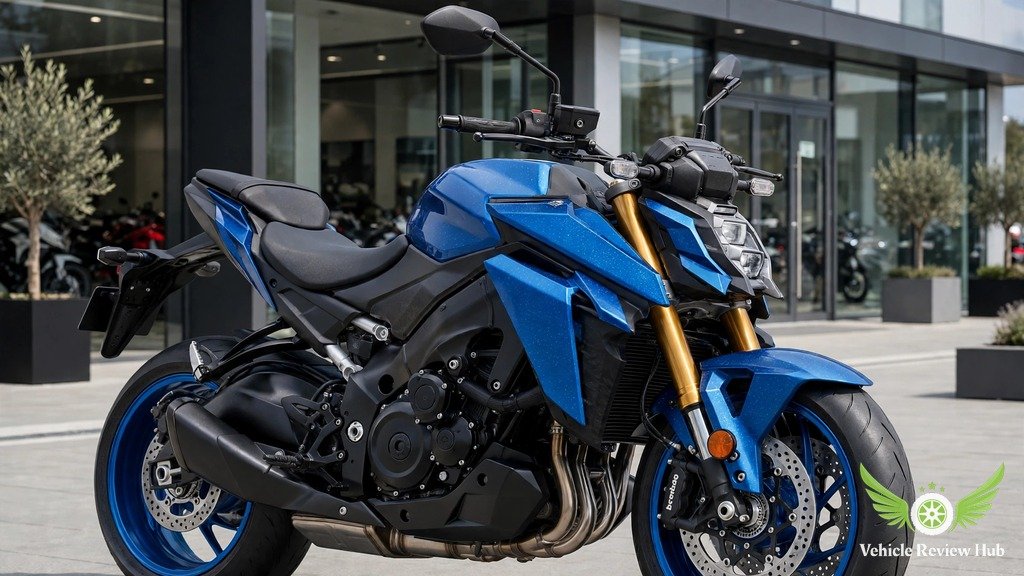
The 2027 GSX-S1000 is $10,798, down from $11,989 in 2026 — a $1,191 cut, or 9.9 percent, and the first time Suzuki has ever lowered this bike’s price. With the $750 destination charge, the delivered price is $11,548, down $1,141 from the 2026 delivered figure of $12,689. Suzuki’s September 2026 announcement described only updated pricing, and no mechanical change was announced or found: same 999cc engine, same chassis, same electronics. The 2027 colours are Metallic Triton Blue and Glass Sparkle Black, the black returning after a year away while Candy Daring Red is gone. Suzuki’s own 2027 page contradicts itself on colours — its prose pairs are stale 2025 and 2026 combinations — but every 2027 dealer listing and the page’s own options block agree on Triton Blue and Glass Sparkle Black. The Suzuki 2027 lineup announcement is the source for the price move, and the cut makes the GSX-S1000 cheaper than the 2026 Honda CB1000 Hornet SP on MSRP by $201.
No US 2021 Model: the Gap Year Explained
There is no 2021 GSX-S1000 in the USA, and it is not a missing year in the records — Suzuki simply did not sell one. The second generation launched in Europe for 2021, with the new styling, ride-by-wire and quickshifter, but American buyers had to wait until the 2022 model year. That means the first generation runs 2016–2020 in the US, and the second generation runs 2022 to the present. The gap matters when shopping used: a 2021-registered bike in the USA is either a grey import or a mislisted 2020, and the 2022 bike is the one with the modern electronics. The GSX-S1000GT review covers the faired sibling that shares this platform, and the GT arrived in the US on the same second-generation schedule.
Suzuki GSX-S1000 Engine and Specifications
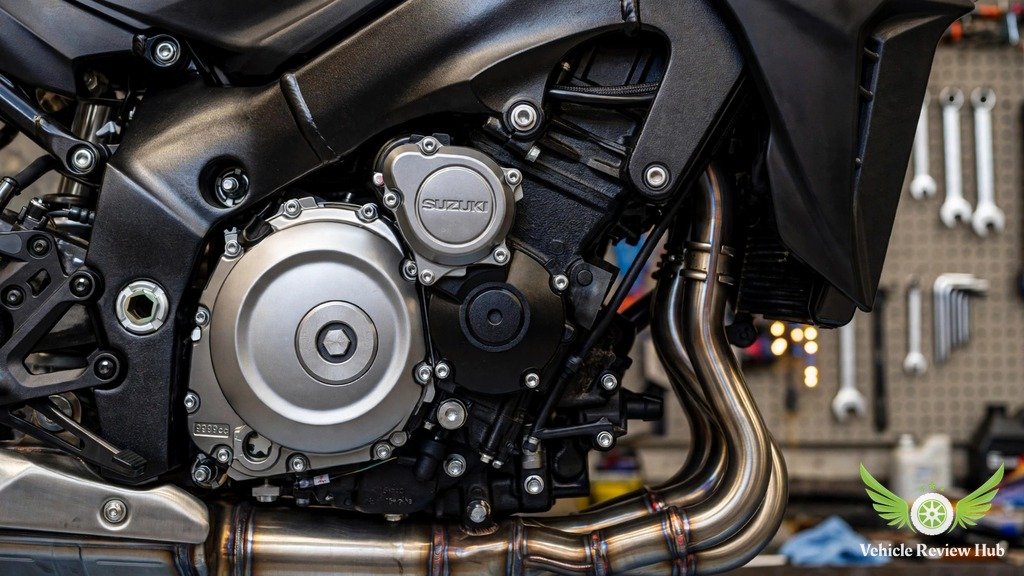
The engine is the heart of this bike and the reason it has survived a decade with only one major update. It is a 999cc inline-four with a 73.4 mm bore and a 59.0 mm stroke, a long-stroke layout taken from the K5 GSX-R1000 of 2005–2008, running 12.2:1 compression. Suzuki USA publishes no horsepower, torque or redline figure for the naked bike, so the claimed numbers are global: 150 hp at 11,000 rpm and 78 lb-ft at 9,250 rpm. The first generation made 145 hp in 2016, then 150 hp from 2017 onward.
| Specification | 2027 Suzuki GSX-S1000 |
|---|---|
| Engine | 999cc inline-four, 73.4 × 59.0 mm, 12.2:1, K5-derived |
| Claimed power (global) | 150 hp @ 11,000 rpm (112 kW = 152 PS) |
| Claimed torque (global) | 78 lb-ft @ 9,250 rpm (106 Nm) |
| Rear-wheel dyno (2022) | 136 hp @ 10,200 rpm (Rider Magazine / Jett Tuning) |
| Curb weight | 472 lb (214 kg) |
| Seat height | 31.9 in (810 mm) |
| Fuel capacity | 5.0 US gal (19.0 L) |
| Wheelbase | 57.5 in (1,460 mm) |
| Front brakes | Brembo monobloc 4-piston calipers, dual 310 mm discs |
| Rear brake | Nissin single-piston caliper, 240 mm disc |
| Front suspension | 43 mm KYB inverted fork, fully adjustable |
| Rear suspension | Link-type single shock, preload + rebound only |
| Tyres | Dunlop Roadsport 2, 120/70ZR17 + 190/50ZR17 |
999cc Long-Stroke Four From the K5 Lineage
The K5 connection is real and it shapes how the bike rides. The 2005–2008 GSX-R1000 engine was famous for mid-range strength, and Suzuki kept that long-stroke character when it retuned the motor for the naked bike: the power peaks at 11,000 rpm rather than chasing the superbike’s top end, and the torque peak sits at 9,250 rpm. On the rear wheel the numbers are more modest than the claim, as they always are: Rider Magazine’s Jett Tuning dyno run of the 2022 bike made 136 hp at 10,200 rpm and 73 lb-ft at 9,300 rpm, while Cycle World’s 2018 test of the GSX-S1000Z made 137 hp at 10,700 rpm. Cycle News measured 130 hp on a 2025 bike. The gap between the 150 hp claim and the 130–137 hp rear-wheel figures is drivetrain loss, not a contradiction — claimed and measured are different measures. The GSX-R1000 review covers the modern superbike that carries the K5’s bloodline today, but this naked uses the older, torquier tune. One number to be careful with: some sources print the PS figure as if it were horsepower, but 152 is the PS figure (112 kW = 152 PS = 150 hp), and writing it as horsepower is a unit error.
Quickshifter Standard Only From 2022
The bi-directional quickshifter arrived with the second generation and has been standard ever since — upshifts and downshifts without the clutch. First-generation bikes, 2016–2020, had no quickshifter at all, and no factory retrofit exists, so a used gen-1 bike will need an aftermarket unit if you want one. The 2022 update also brought ride-by-wire, which enabled the three SDMS ride modes (A, B and C — all full power; C mode does not cap peak power, full throttle gives 100 percent in any mode), five levels of traction control plus off, and the SCAS slipper/assist clutch. What the bike never gained, in either generation, is an IMU: there is no cornering ABS, no lean-sensitive traction control and no cruise control. Easy Start and Low RPM Assist round out the electronics, both small conveniences that work quietly in the background.
Suzuki GSX-S1000 Price and Market Availability
At $11,548 delivered, the 2027 GSX-S1000 is the cheapest litre naked Suzuki has sold in years, and the price cut is the single biggest reason to buy one now rather than last year. The bike is widely available at US dealers, and the 2026 bikes still on floors may carry discounts of their own — but the 2027 bike is already cheaper than a discounted 2026 was at full price.
| Model year | US MSRP | Notes |
|---|---|---|
| 2016 | $9,999 ($10,499 ABS) | Launch year, 145 hp |
| 2017 | $9,999 ($10,499 ABS) | Unchanged, 150 hp from here |
| 2018 | $10,799 ABS | Softer EFI mapping |
| 2019–2020 | $11,099 | Last gen-1 years |
| 2021 | — | No US model (gap year) |
| 2022 | $11,299 | Gen 2 launch, ride-by-wire |
| 2023 | $11,499 | Carryover |
| 2024 | $11,699 | Carryover |
| 2025 | $11,909 | 5-inch TFT dash arrives |
| 2026 | $11,989 | Candy Daring Red year |
| 2027 | $10,798 | First price cut, −$1,191 |
Suzuki GSX-S1000 Price in the USA: $10,798 for 2027
The $10,798 figure is confirmed on Suzuki USA’s 2027 GSX-S1000 page, and the cut is deep enough to change the bike’s position in the class: it now undercuts the 2026 Honda CB1000 Hornet SP’s $10,999 MSRP by $201, and it is $509 cheaper delivered than the 2027 Kawasaki Z900’s $11,039. The price history tells the story — the bike climbed from $9,999 in 2016 to $11,989 in 2026, then dropped back below its 2018 price in a single year. Used prices follow the same pattern: gen-1 bikes trade well under $7,000, while clean 2022–2024 bikes sit in the $8,000–$9,500 range, close enough to the new 2027 price that buying new is the better deal for most riders.
Plus $750 Destination on the Cut Price
The $750 destination charge needs a label, because Suzuki USA does not print a destination amount anywhere on its model pages — the footnote only says the MSRP excludes destination freight. The $750 comes from dealer listings, which show the charge alongside the $10,798 MSRP, so the delivered price of $11,548 is a dealer-sourced total rather than a factory-published one. Destination rose $50 from the 2026 figure of $700, which is why the delivered saving of $1,141 is $50 less than the MSRP saving of $1,191. Dealers may add their own fees on top, so the out-the-door price will vary — but the $750 destination itself is the number to budget around.
Suzuki GSX-S1000 Design, Features and Technology
The second-generation bike looks nothing like the first. The 2022 redesign brought stacked LED headlights, sharp angular bodywork and a short stubby muffler, replacing the first generation’s rounder, softer shape. It is a naked bike in the full sense — no fairing, no wind protection to speak of, and an upright riding position that puts the rider’s chest in the wind above 80 mph. The 5.0-gallon tank is the largest in its comparison set, which helps the range despite the thirsty four.

LCD Dash Until 2024, TFT From 2025
The dash changed in 2025, and it is worth knowing which one a used bike has. From 2022 to 2024 the bike used an LCD display; from 2025 it has a 5-inch full-colour TFT. Some sources print “6.5-inch” for the naked bike, but that is the GT+’s screen — the naked’s TFT is 5 inches, and the same error appears in articles that also get the traction-control modes wrong. Just as important is what the TFT does not do: there is no smartphone connectivity and no mySPIN on the naked bike. That feature belongs to the GT+, and a buyer expecting phone mirroring on the naked will be disappointed. The TFT shows speed, revs, gear, ride mode, traction-control level and fuel, and it does that job well — it simply is not a connected display.
Fully Adjustable KYB Fork, Preload and Rebound Rear Shock
The front end is the strong half of the chassis. The 43 mm KYB inverted fork is fully adjustable — preload, compression and rebound — and it is the same hardware family Suzuki fits to the faired GT. The rear is where the spec sheet needs reading carefully: Suzuki’s marketing calls it “fully adjustable”, but the adjusters are preload and rebound only, with no compression adjustment. That is still a useful range — preload sets the sag, rebound controls the return — but it is not the same as the fork, and riders who chase a firmer rear end will find the shock’s damping fades with age; one long-term owner replaced it around 35,000 km. The brakes match the front-end quality: Brembo monobloc four-piston calipers on dual 310 mm floating discs, with a Nissin single-piston caliper and a 240 mm disc at the rear. Note the rear disc size changed with the generation — pre-2022 bikes had a 250 mm rear disc, and some articles still print that number for the current bike.
Suzuki GSX-S1000 Riding Experience and Comfort
On the road the GSX-S1000 is a fast, honest motorcycle with one well-documented flaw. The engine pulls hard from the mid-range, the chassis is stable and the brakes are strong, and the upright bars make it comfortable for a full day. The flaw is the throttle: the first generation was famous for a snatchy, abrupt initial response, and the second generation improved it without fully solving it.
The video below is Motorcyclist Magazine’s 2022 review of the launch bike, ridden on the street, on a racetrack and at night. It is a 2022 bike, mechanically identical to the 2027 bike except for the colours and the 2025 TFT dash, so what it shows still applies.
Riding Position, Handling and Low-Speed Maneuverability
The riding position is upright and roomy, with wide bars and pegs set for a sporty but not cramped leg. At 472 lb ready to ride it is no lightweight, but the weight sits low and the bike steers easily at parking speeds. The throttle is where opinions split. The first generation’s snatch was documented by Motorcycle.com, MCN and owners alike, and the fix came in two steps: a softer EFI map in 2018, then ride-by-wire in 2022. The second generation is better, but the disagreement continues — BikeReview’s 2022 test said it was improved a little but not solved, with A mode feeling like a switch, either on or off, and RevZilla found B mode the most usable. MCN’s GT test, by contrast, said the problem was finally gone. The honest reading is that A mode is too aggressive for most riders, B mode is the sweet spot, and anyone sensitive to throttle response should test-ride before buying. Fuel economy is the other running cost to know: Rider Magazine’s 2022 road test averaged 33.4 mpg US, good for about 167 miles from the 5.0-gallon tank, while Motorcycle.com’s 2016 shootout managed 41.3 mpg US. The WMTC lab figure is 38.5 mpg US, and Suzuki’s own “46 mpg” claim is Imperial — 38.3 mpg US — so the real-world range is roughly 165 to 200 miles depending on how it is ridden.
472 Pounds and a 31.9-Inch Seat
At 472 lb curb and a 31.9-inch seat, the GSX-S1000 is middle-of-the-pack for a litre naked — heavier than the 465 lb Hornet SP, lighter than the 467 lb MT-10 wet figure suggests once fuel is accounted for, and low enough that most riders can flat-foot it. Cycle News weighed a 2025 bike at 473 lb full, confirming Suzuki’s figure rather than contradicting it. The seat is flat and firm, comfortable for an hour or two, and the pillion perch is usable for short trips. Wind protection is minimal, as on any naked: the small flyscreen deflects a little air from the chest, but above 80 mph the rider is holding on against the wind. For commuting and back-road riding the ergonomics are a strength; for long highway stretches, the faired GT+ is the better tool — and the GSX-8S review covers Suzuki’s lighter, cheaper middleweight naked for riders who want the same formula in a smaller package.
Suzuki GSX-S1000 Review: Pros, Cons and Verdict
The verdict is straightforward: the 2027 GSX-S1000 is the best value litre naked Suzuki has ever sold, because the bike is proven and the price just fell by nearly ten percent. It is not the most advanced bike in the class — it has no IMU, no cornering ABS and no cruise control — but it wins on engine character, brake hardware, fuel capacity and a reliability record with exactly one recall in ten years.

| Pros | Cons |
|---|---|
| $10,798 for 2027 — first price cut ever, −$1,191 | No IMU, no cornering ABS, no cruise control |
| 999cc K5-derived four with strong mid-range | Throttle snatch improved but not fully solved |
| Brembo monobloc brakes on 310 mm discs | Rear shock preload + rebound only, damping fades |
| 5.0-gallon tank — biggest in its class | No smartphone connectivity on the TFT |
| Standard bi-directional quickshifter (2022+) | Thirsty — 33.4 mpg US in Rider’s test |
| Exactly one recall in ten years (2016 calipers) | Minimal wind protection above 80 mph |
| 12-month unlimited-mileage warranty | Not a beginner bike — 150 hp, 472 lb |
Main Advantages and Limitations of the Suzuki GSX-S1000
The advantages start with the engine and the price. The K5-derived four is flexible and characterful, the quickshifter is standard, the Brembo brakes are genuinely good hardware, and the 5.0-gallon tank gives the best range in the class. The limitations are all electronic: no IMU means no lean-sensitive safety net, and the TFT has no phone connectivity. The throttle remains the bike’s most argued-over trait — better than the first generation, still not perfect in A mode — and the rear shock is the weakest chassis part. The bike won OVERDRIVE’s Performance Bike of the Year in 2016, its only outright award, and it finished third in MCN’s 2026 group test behind the Hornet SP. For a rider who values a strong engine and proven hardware over the latest electronics, the 2027 price makes it the value pick of the litre naked class.
Twelve-Month Unlimited-Mileage Warranty
Suzuki covers the GSX-S1000 for 12 months with unlimited mileage, the same warranty it offers across the range. The ownership record behind that warranty is strong: exactly one US recall in ten years, NHTSA 15V-788, covering 600 bikes from 2016 whose front brake calipers could leak — 489 naked bikes and 111 faired F models — fixed with a free caliper replacement. No other recall names this bike; the 25V505 headlamp recall that sometimes appears in searches belongs to the Katana, a different model whose formal name differs by one letter. Servicing is straightforward and cheap to plan around: oil every 3,750 miles, the filter only at 600 and 11,250 miles, spark plugs at 7,500 and 15,000 miles, and the valve inspection at 15,000 miles. The GSX-S1000 maintenance schedule lists the full chart, and no US dealer service price was found to publish — the only hard figure is Cycle World’s 2016 long-term test, where the 7,500-mile service cost $455 in 2017 prices. High-mileage evidence is encouraging: one New Zealand owner ran a 2015 bike past 45,000 km with the throttle as the only fault, and the chain and sprockets were still in excellent shape at that mileage.
Suzuki GSX-S1000 Review: Frequently Asked Questions
Direct answers to the questions riders ask about this Suzuki GSX-S1000 review.
How much does the 2027 Suzuki GSX-S1000 cost?
The 2027 GSX-S1000 is $10,798 before destination, or $11,548 delivered with the $750 destination charge. That is $1,191 less than the 2026 MSRP of $11,989, the first price cut in the model’s history.
How much horsepower does the GSX-S1000 make?
Suzuki USA publishes no horsepower figure. The global claim is 150 hp at 11,000 rpm and 78 lb-ft at 9,250 rpm. On the rear wheel, Rider Magazine’s dyno run of the 2022 bike made 136 hp, and Cycle World’s 2018 test made 137 hp.
Is the GSX-S1000 good for beginners?
No. With 150 hp claimed, 472 lb of weight and no IMU safety net, it is too much bike for a first rider. It suits an experienced rider stepping up to a litre naked, not someone learning to ride.
What is the top speed of the GSX-S1000?
No instrumented top-speed test of the naked bike exists; MCN lists 145 mph for it. The often-quoted 157.55 mph figure belongs to the faired GSX-S1000F, not the naked bike.
Does the GSX-S1000 have cruise control?
No. The naked bike has no cruise control, no IMU and no cornering ABS. The faired GT+ has Smart Cruise; the naked does not.
Does the GSX-S1000 have an IMU?
No. The naked GSX-S1000 has never had an IMU in either generation. Its traction control works from wheel speed only, and its ABS is conventional, not cornering ABS.
What colours does the 2027 GSX-S1000 come in?
Metallic Triton Blue and Glass Sparkle Black. Candy Daring Red is gone for 2027. Suzuki’s own 2027 page contradicts itself on colours, but dealer listings and the page’s own options block agree on this pair.
How often does the GSX-S1000 need an oil change?
Every 3,750 miles in the US manual. The oil filter is replaced only at 600 and 11,250 miles — not at every oil change.
When is the valve inspection due?
At 15,000 miles on second-generation bikes. First-generation bikes use 14,500 miles, which is the same 24,000 km interval — never 24,000 miles.
Has the GSX-S1000 been recalled?
Once. NHTSA recall 15V-788 covers 600 bikes from 2016 whose front brake calipers could leak, fixed with a free caliper replacement. No other recall names this bike.
Is there a 2021 GSX-S1000 in the USA?
No. Suzuki did not sell a 2021 model in the USA. The second generation launched in Europe for 2021 and reached American dealers as a 2022 model.
What is the difference between the GSX-S1000 and the GSX-S1000GT+?
The GT+ is the faired sport-tourer built on the same 999cc platform. It adds a 6.5-inch TFT with mySPIN smartphone connectivity, Smart Cruise, panniers and a 190/55 rear tyre, and it costs $14,599 before destination. The naked bike has a 5-inch TFT, no mySPIN and no cruise.