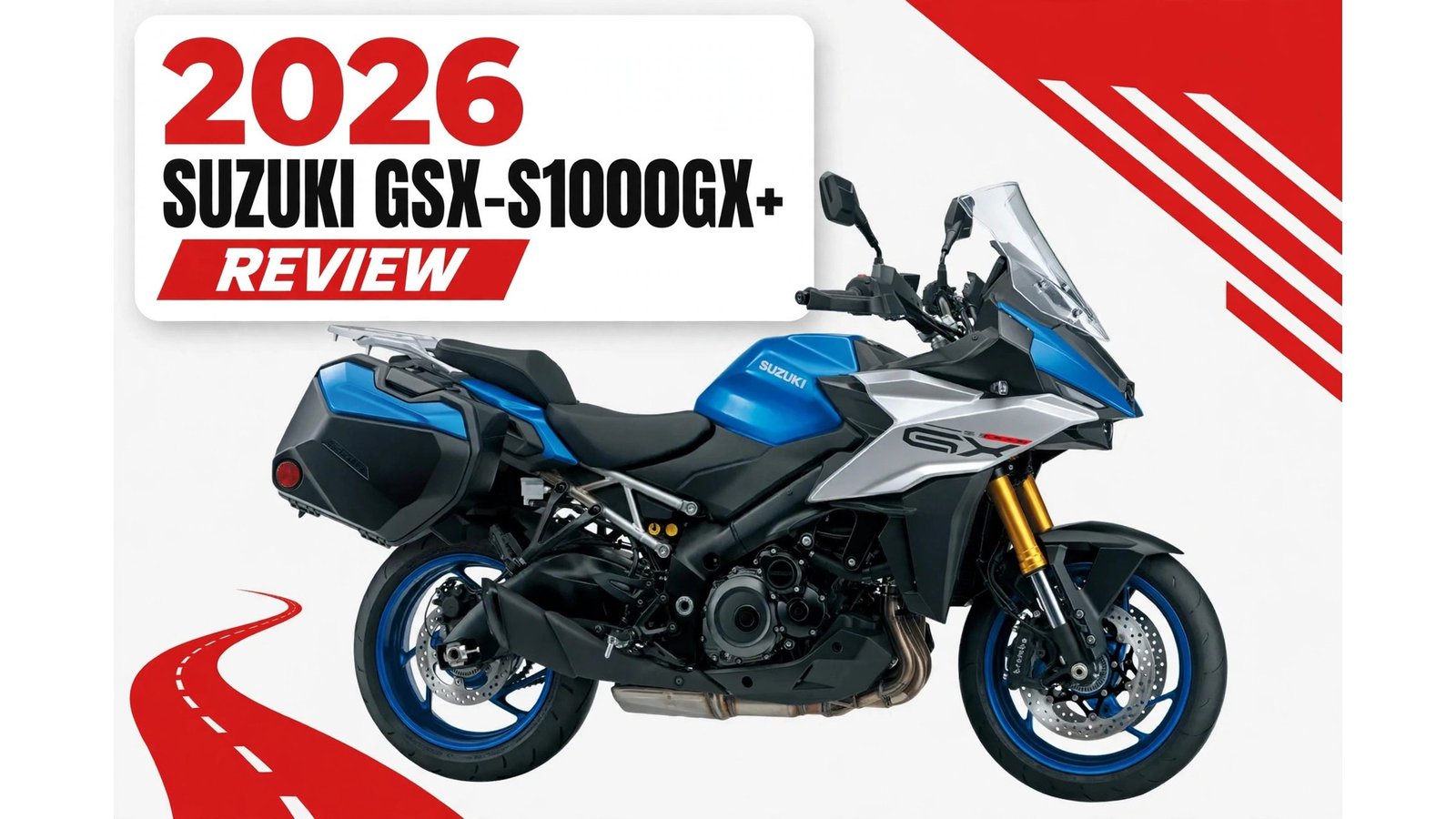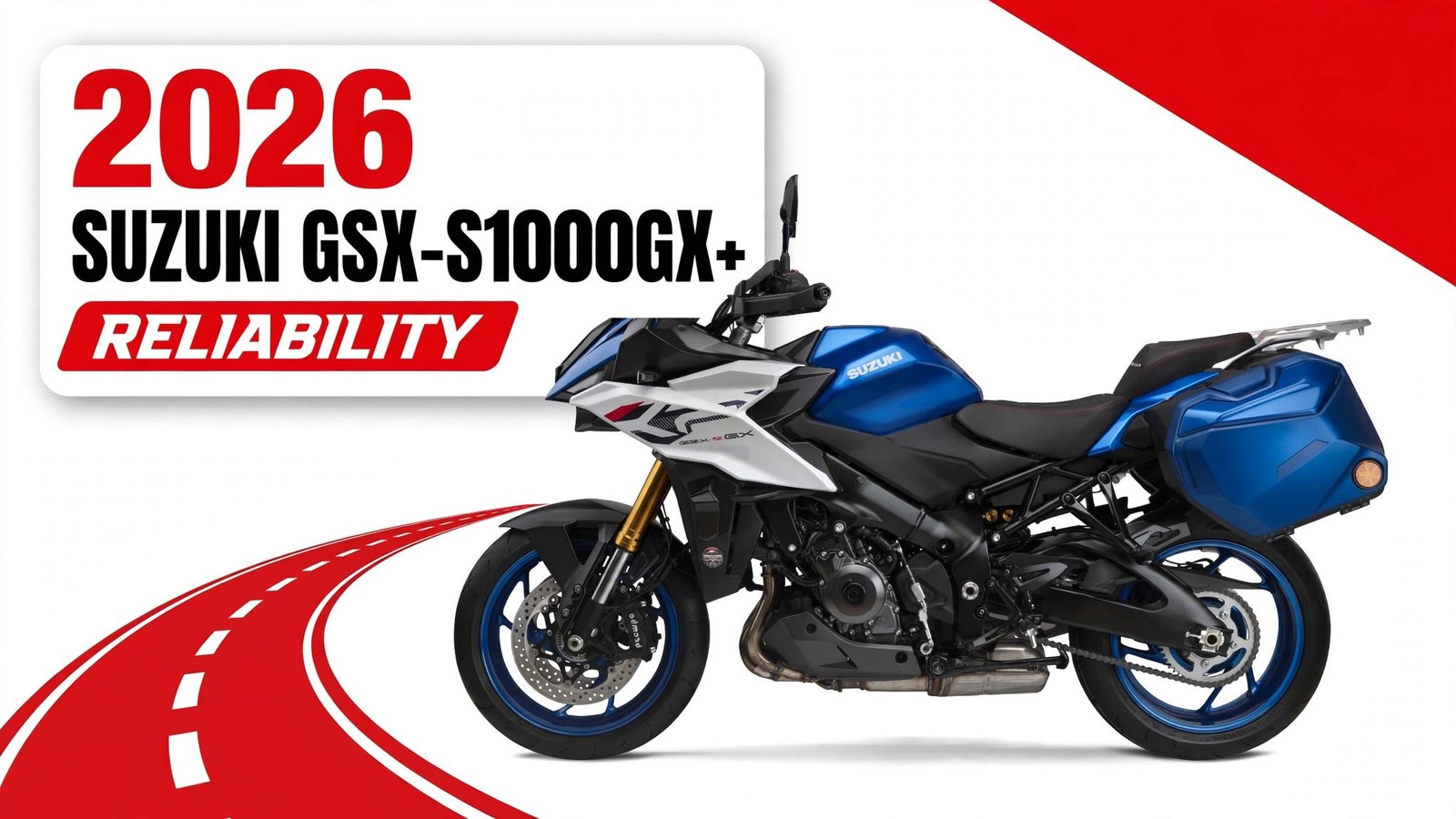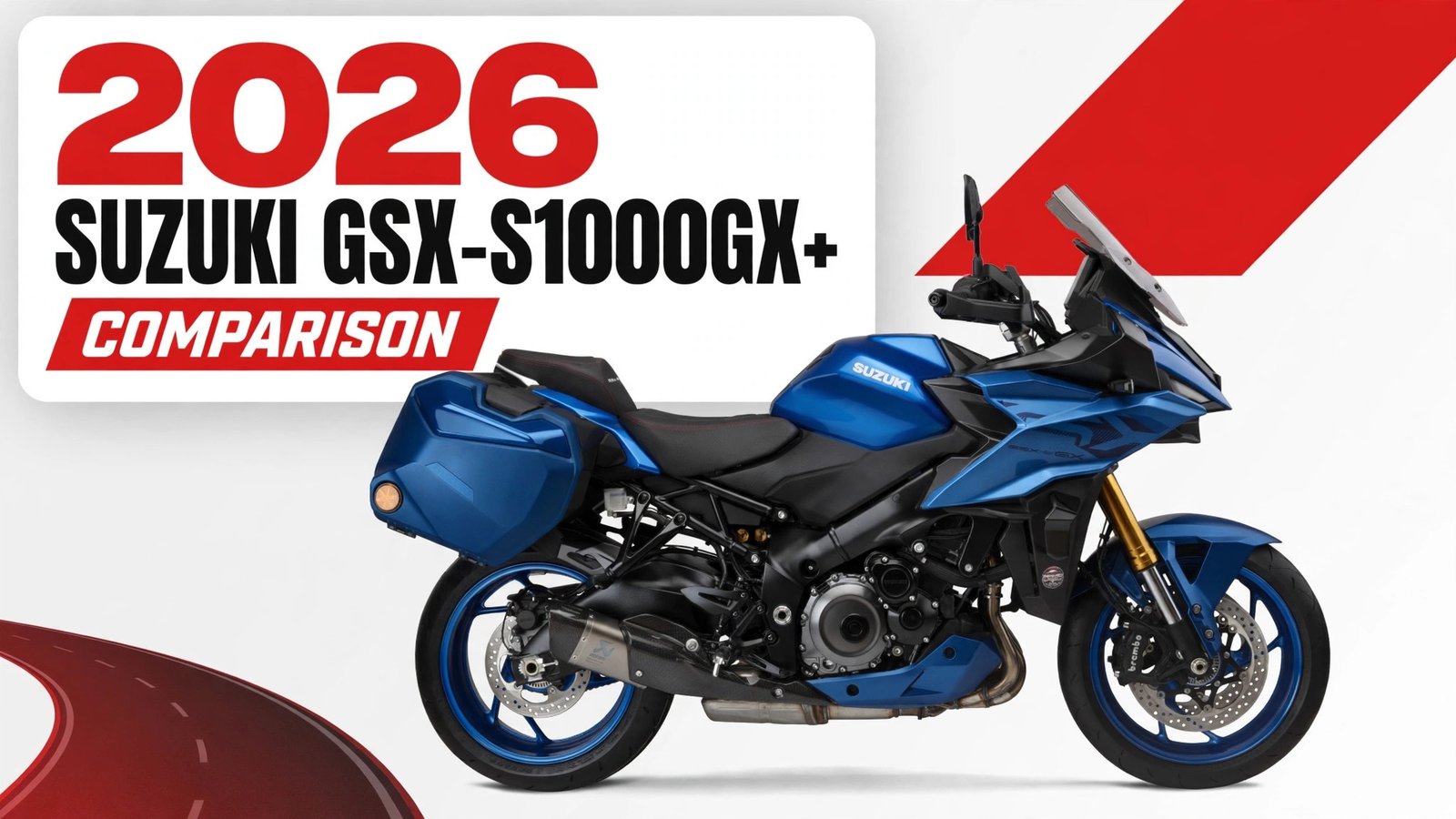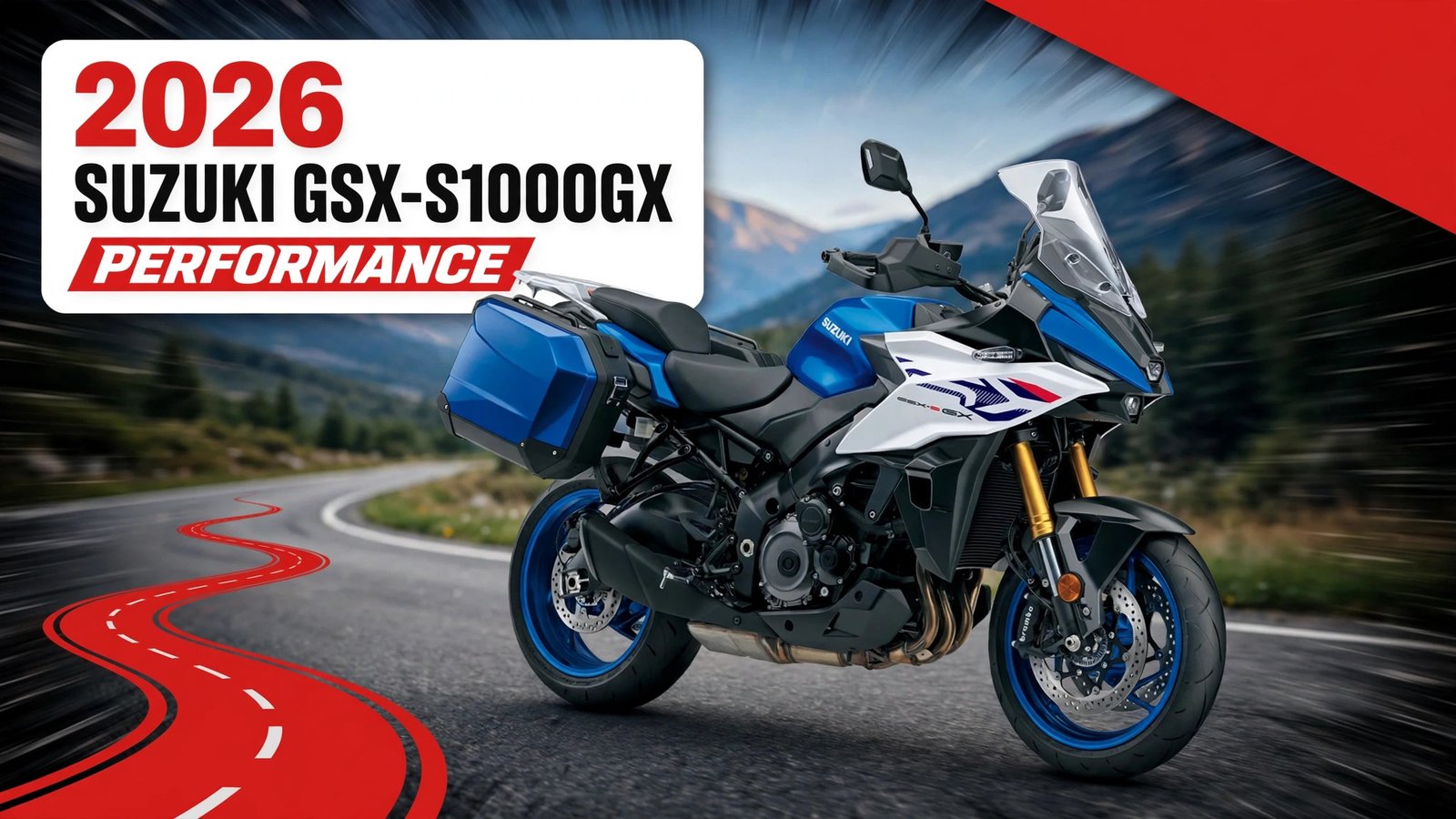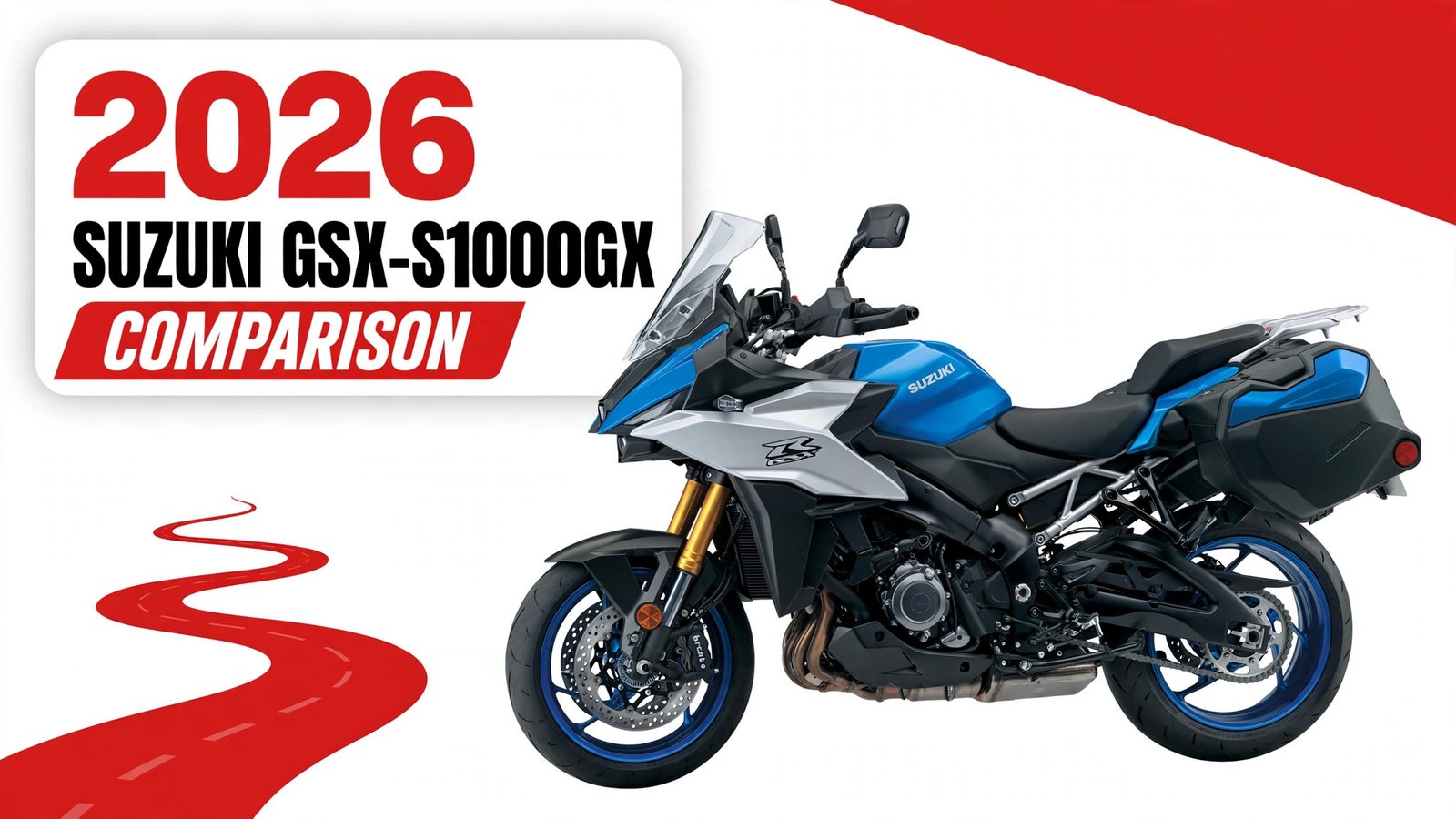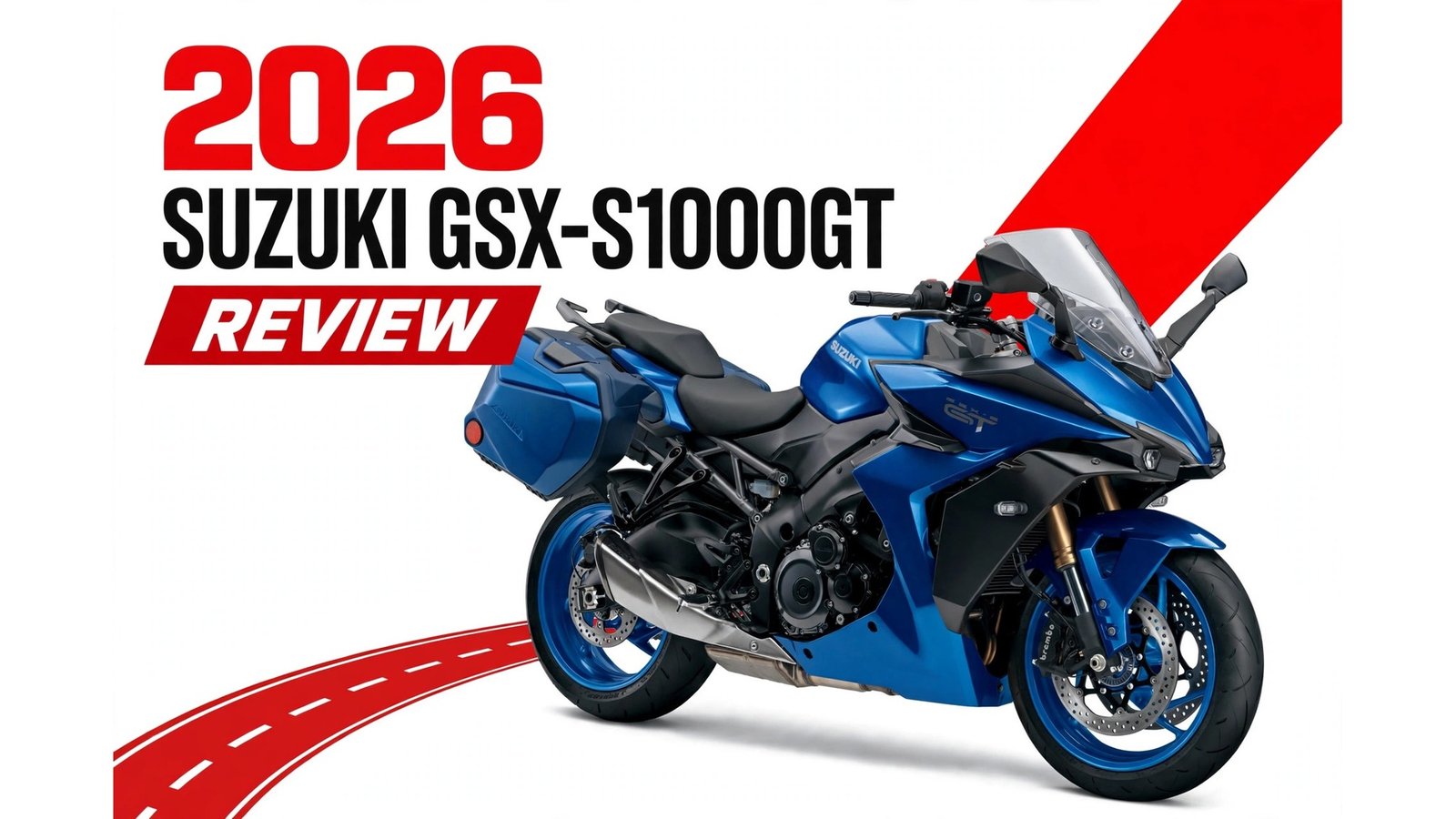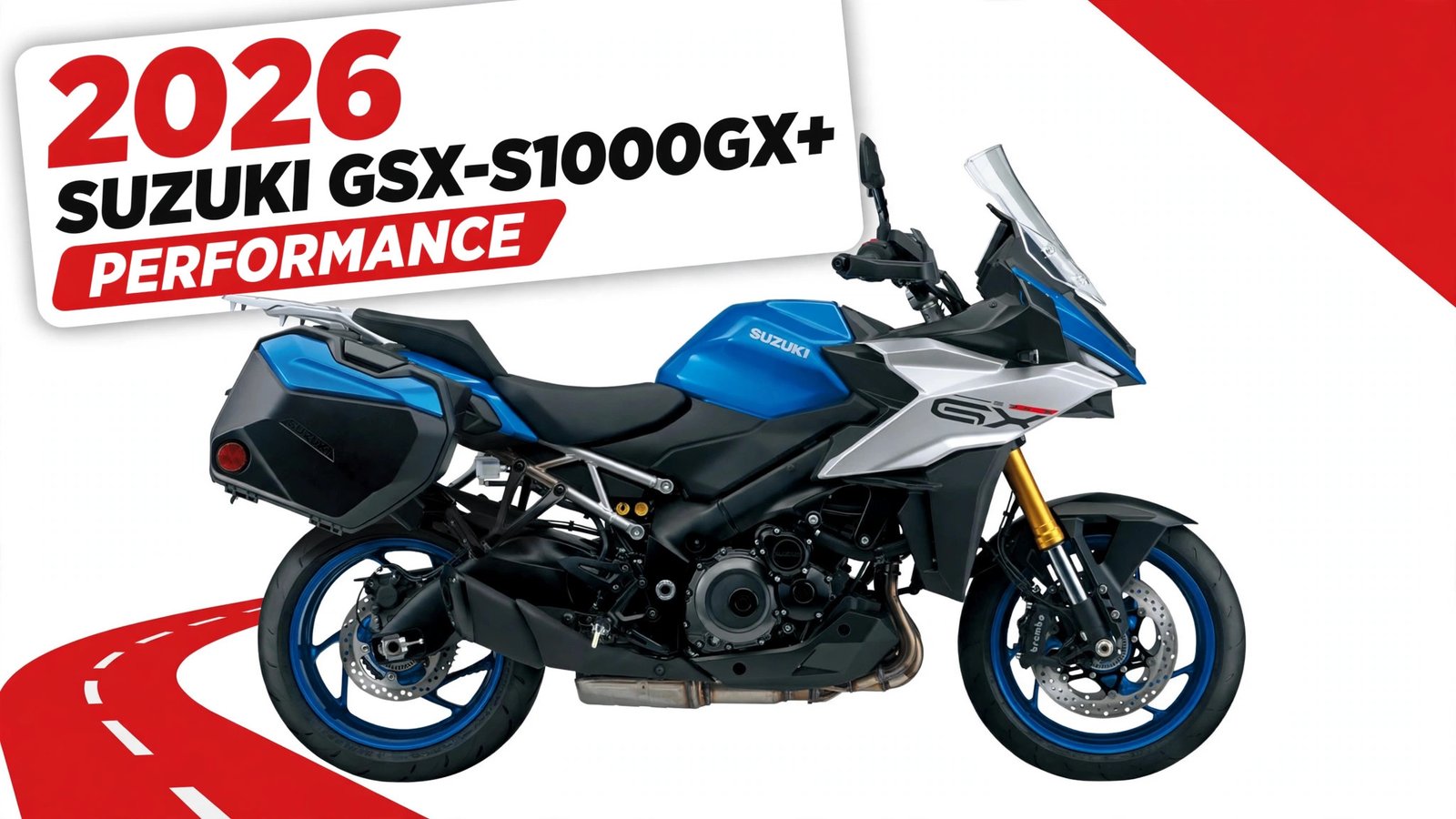
The short answer on Suzuki GSX-S1000GX+ performance is that the bike is quick where it counts and honest about where it is not: a UK dyno run put 143.2 bhp at the rear wheel, MCN measured a GPS top speed of 132.92 mph because the bike is electronically capped, and the same UK test returned 48 mpg imperial, about 40 mpg in US gallons. Every hard number in this Suzuki GSX-S1000GX+ performance guide comes from MCN’s UK test, labelled as such.
Suzuki GSX-S1000GX+ Engine Performance and Power Delivery
The GX+ runs the same 999cc K5-derived inline-four as the GT, with the same tune and only a slightly changed throttle response, according to motorcycle.com. Suzuki claims 150 hp at 11,000 rpm and 78 lb-ft at 9,250 rpm globally; Suzuki USA publishes no figure. What matters for Suzuki GSX-S1000GX+ performance is what the engine does at the wheel, and only one named test has measured that.
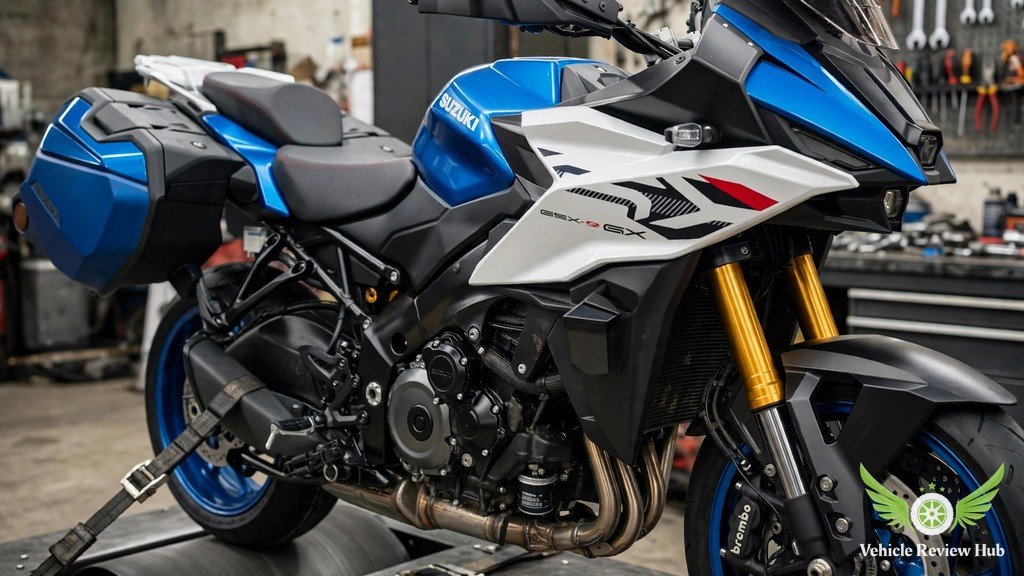
MCN Dyno: 143.2 HP From the GX Itself
MCN put the GX itself on its own dyno in the UK and recorded 143.2 bhp and 77.3 lb-ft at the rear wheel. That is the only named GX dyno figure found, and this Suzuki GSX-S1000GX+ performance guide uses it as the GX+’s because the GX+ shares the engine and tune — it is not a second, separate test. MCN’s own “Fast facts” box on the same deep-dive page labels these GX figures “Suzuki GSX-S1000GT+” — the 143.2 bhp, the 77.3 lb-ft, the 132.92 mph top speed and the 234.2 kg weight are all the GX’s figures, and the GT+ label on that box is wrong. The MCN GX deep-dive test is the source for the dyno numbers, and the mislabel sits on that same page. Power delivery is the engine’s strong point in this Suzuki GSX-S1000GX+ performance guide: motorcycle.com called it “smooth as butter from below 2,000 rpm” at the Portugal launch.
The 125.4 HP Dyno Quote Is the GT’s, Not This Bike’s
A second dyno number floats around GX+ articles, and it does not belong to this bike at all. Motorcycle.com’s Showdown dyno, run on the same dyno on the same day, put the GT+ at 125.4 hp at 10,400 rpm and 65.0 lb-ft at 9,700 rpm. That 125.4 hp figure is the GT+’s — it was never the GX+’s, and this Suzuki GSX-S1000GX+ performance guide never attaches it to the GX+. The motorcycle.com Showdown is the source, and it tested the GT+, not the GX+. The GX+ and the GT share the same tune, with only the throttle response changed slightly on the GX.
Suzuki GSX-S1000GX+ Top Speed and Acceleration
The GX+ is fast, and it is also capped, and both facts matter for Suzuki GSX-S1000GX+ performance. MCN’s UK test is the only named source for its straight-line numbers: the bike hits 60 mph in a fraction over three seconds, then runs into an electronic ceiling.

| Test (MCN, UK) | Suzuki GSX-S1000GX+ figure |
|---|---|
| Top speed (GPS) | 132.92 mph, restricted (indicated 139 mph) |
| 0–60 mph | 3.10 s |
| 0–100 mph | 6.98 s |
| Quarter-mile | 10.88 s @ 129.99 mph |
| Roll-on, top gear 40–120 mph | 10.81 s |
| Braking, 70–0 mph | 58.67 m (2.52 m worse than the GT) |
Measured 132.92 MPH GPS Against a 145 Claim
MCN measured the GX at 132.92 mph by GPS, with 139 mph showing on the speedometer, and the bike is electronically restricted — that is the measured top speed, and it is the number this Suzuki GSX-S1000GX+ performance guide uses. The 145 mph figure that appears in GX articles is a claim, not a measurement: MCN’s own GX review page lists a top speed of 145 mph in its “Top speed & performance” table, next to a listed 150 bhp and 78 ft-lb, but MCN’s own instrumented test of the same bike measured 132.92 mph GPS because the bike is capped. So the honest way to state Suzuki GSX-S1000GX+ performance at the top end is: MCN lists 145 mph for the GX, but its own test measured 132.92 mph GPS, and the bike is restricted. The roll-on figure tells the touring story better than the top speed does: 10.81 seconds from 40 to 120 mph in top gear, which is the kind of overtaking muscle a sport-tourer lives on.
No US Instrumented Test of the GX+ Exists
No US magazine has published a GX+ dyno run or an instrumented top-speed or 0–60 test, and this Suzuki GSX-S1000GX+ performance guide says so plainly rather than dressing a UK test up as an American one. Every US review comes from the November 2023 Portugal press launch — first impressions, not instrumented data. That is why the only named instrumented figures in this guide are MCN’s UK numbers, labelled UK every time they appear. The GX+ review covers the bike’s prices and specification year by year for buyers who want the ownership picture alongside these performance numbers.
Suzuki GSX-S1000GX+ Mileage and Fuel Economy
Fuel economy is the one area where Suzuki GSX-S1000GX+ performance has a tested figure and a missing figure at the same time: MCN measured the bike’s consumption in the UK, and Suzuki USA publishes no MPG figure at all.

MCN Tested 48 MPG Imperial in the UK
MCN measured 48 mpg average on test in the UK — imperial gallons — with the fuel light coming on at around 150 miles. In US gallons that is about 40 mpg, so the figure this Suzuki GSX-S1000GX+ performance guide prints every time is “48 mpg imperial (≈40 mpg US)”, with the unit labelled, never bare. As an illustration only, 40 mpg US times the 5.0-US-gallon tank gives about 200 miles in theory — the fuel light at around 150 miles shows the usable range is well under that. One more figure needs handling with care: TopSpeed reports 37 mpg for the GX+, with no test named, and that conflicts with MCN’s tested 48 mpg imperial — this guide does not print 37 mpg as a tested fact, and notes the conflict wherever the number comes up.
Suzuki USA Publishes No MPG Figure at All
Suzuki USA publishes no MPG figure for the GX+ — no EPA figure and no Suzuki USA figure was found — so this Suzuki GSX-S1000GX+ performance guide prints no US MPG for the bike and never presents a converted UK figure as an American rating. The GT comparison is a trap of the same kind: Rider tested the GT at 35.5 mpg US, about 178 miles of range, but the GX+’s UK figure of 48 mpg imperial is not directly comparable to the GT’s US-tested 35.5 mpg — different test cycles, different gallons — and this guide never writes that the GX+ is more economical than the GT from those two numbers. Short gearing plays a part too: MCN found the engine busy at 70 mph, just short of 5,000 rpm. For Suzuki GSX-S1000GX+ performance on a long tour, plan fuel stops around the 150-mile fuel light, not the theoretical 200 miles.
Suzuki GSX-S1000GX+ Real-World Riding Experience
On the road the GX+ is tall, upright and stable, trading some flickability for composure. Every US tester rode the bike only at the November 2023 Portugal press launch, so the American impressions in this Suzuki GSX-S1000GX+ performance guide are launch impressions, not long-term findings.
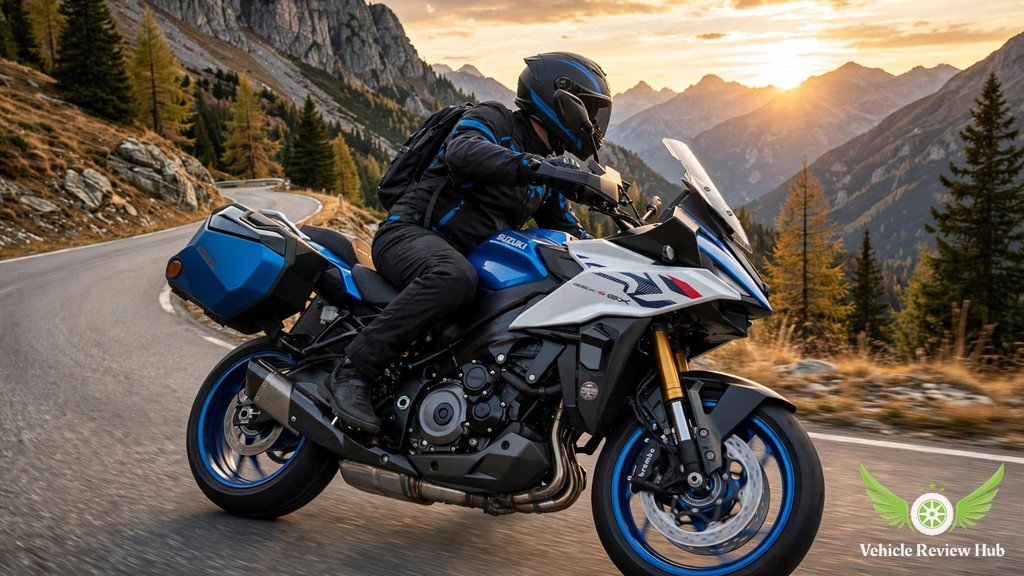
The video below is motorcycle.com’s Portugal launch-ride video of the 2024 GX+ — a full-length English road test from the same launch that scored the bike 88.5 percent, filmed on the Portuguese Riviera.
Motorcycle.com Scored the Launch Ride 88.5 Percent
Motorcycle.com scored the Portugal launch ride 88.5 percent overall — Engine 19/20, Suspension 13.5/15, Transmission 9/10, Brakes 7/10, Instruments 5/5, Ergonomics 9/10, Appearance 9/10, Desirability 9/10, Value 8/10. The engine score is the headline: smooth from below 2,000 rpm, with a strong midrange. The GX performance guide tests the same bike under its shorter name, since the engine, chassis and suspension are identical with or without the plus sign.
A Mirror-Blurring Tingle Near 5,000 RPM
The buzz is the one complaint that splits testers, and this Suzuki GSX-S1000GX+ performance guide attributes it to the sources that report it rather than calling it a universal defect. MCN found the engine busy at 70 mph, just short of 5,000 rpm, with vibrations blurring the mirrors slightly. Dancingthepolka, on a 2026 GX+, reported engine buzz at 70 mph and above, visible in the mirrors, with the mirrors unclear at motorway speed. Chaseontwowheels reported buzzy mirrors at 6,000 rpm. RevZilla and Rider, at the Portugal launch, made no buzz complaint in their launch reports. The pattern is tester-dependent, not a fault every rider meets: the engine has rubber mounts and dampers, the same family setup as the GT, and the buzz still gets through the seat, bars and mirrors at motorway rpm according to the UK sources that flag it. The 5,000 rpm figure is a framing from those reports, not a measured fact. Test-ride at 70 mph and watch the mirrors before buying — Suzuki GSX-S1000GX+ performance on a twisty road is where the bike is at its best.
Suzuki GSX-S1000GX+ Handling, Braking and Stability
Handling is where the SAES suspension earns its keep, and braking is where the GX+ gives ground — the two halves of Suzuki GSX-S1000GX+ performance that testers agree on most.

The SAES system — Suzuki Advanced Electronic Suspension, built by Showa — adjusts damping automatically up to 1,000 times a second from wheel sensors and IMU input, with Soft, Medium and Hard damping modes plus a User mode, tied to the three ride modes A, B and C but independently adjustable. The verdicts split: motorcycle.com found the SAES took time to dial in but the custom mode and a preload adjustment fixed the feel; dancingthepolka found the SAES too firm regardless of setting; chaseontwowheels found it too soft in its sportiest setting; and Visordown summed the split up neatly — “Soft is too soft… Hard… too hard… Medium, then, is where it’s at.” The pattern is that the SAES divides testers in both directions, and the custom or medium mode is the answer for both complaints. Braking is the weaker half of the story. MCN stopped the GX from 70 mph in 58.67 metres, 2.52 metres worse than the GT. Motorcycle.com agreed on feel rather than power: “front brake with little initial bite and vague feel at the lever. The power is there, but the feel is not.” The same test put the blame on the hardware: “To continue to use rubber lines on a ‘flagship’ is inexcusable these days. Steel lines and a pad swap could cure this ailment.” That rubber-lines quote is motorcycle.com’s wording, not this guide’s, and it is attributed as such. Flies on the Visor reports — single source, not a Suzuki announcement — that Suzuki improved the 2025 bike’s brake feel with an ABS/IMU software tweak.
Cruise Sets Above 18 MPH Per Suzuki, 20 Per MCN
Cruise control is a small detail that shows how Suzuki GSX-S1000GX+ performance figures need two sources rather than one. Suzuki says the cruise sets from 30 km/h, which is 18 mph in second gear. MCN’s GX review says “the non-adaptive cruise control works well and starts at a handy 20 mph.” This Suzuki GSX-S1000GX+ performance guide prints both — Suzuki’s 18 mph lower bound and MCN’s observed 20 mph — and picks neither, because both are sourced and the two miles per hour between them is the difference between a manufacturer’s minimum and a tester’s observed figure. The cruise is smart, not radar: the rider can change gear through the quickshifter without cancelling it.
Bennetts: Composed and Competent, Not Excellent
Bennetts rated the GX 3 out of 5 overall, and its verdict is the fairest single summary of Suzuki GSX-S1000GX+ performance: “To ride, the GX feels composed and competent – it’s stable as heck, comfy to a point and has plenty of meat in the engine. But it stops short of being an excellent bike in a few important areas.” The engine has plenty of meat, the chassis is stable, the comfort is real but stops short of excellent, and the areas where it stops short are the same ones every tester names: the seat, the brake feel, the mirrors and the screen. The GT performance guide shows the same engine in the lower, sportier GT.
Suzuki GSX-S1000GX+ Performance Compared With Other Crossover Bikes
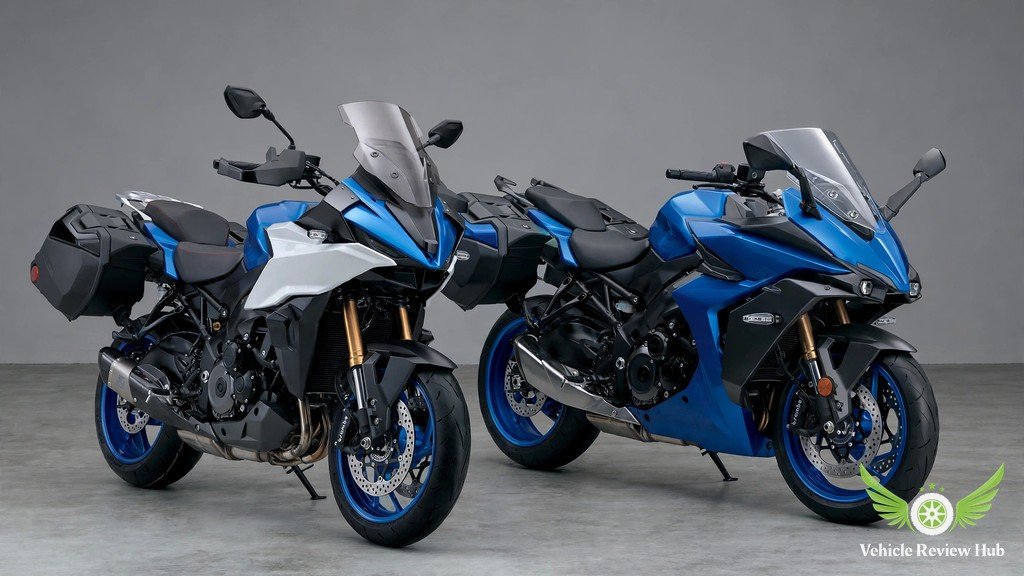
The GX+ has no direct twin in its own range, so the honest comparison is with the bike it shares its engine with — the GT+ — and the honest answer is that the two bikes trade performance for comfort in opposite directions. Suzuki GSX-S1000GX+ performance is not the GT’s performance with a taller seat: it is the same engine in a taller, heavier, more equipped package.
| Figure | Suzuki GSX-S1000GX+ | Suzuki GSX-S1000GT+ |
|---|---|---|
| Engine | 999cc inline-four, same tune | 999cc inline-four, same tune |
| Claimed power | 150 hp @ 11,000 rpm | 150 hp @ 11,000 rpm |
| Named dyno figure | 143.2 bhp (MCN, UK) | 135.53 hp (Cycle World, US) / 125.4 hp (Showdown) |
| Top speed | 132.92 mph GPS, restricted | ~145 mph, true 146.22 mph (MCN) |
| Seat height | 33.3 in | 31.9 in |
| Weight | 511 lb excl. cases | 498 lb |
| Suspension | SAES semi-active, 5.9-in travel | Conventional, shorter travel |
| IMU / cornering ABS | 6-axis IMU, cornering ABS | No IMU, standard ABS only |
Suzuki GSX-S1000GX+ vs the GT+: Same Engine, More Tech
The two share the same engine, tune, frame and swingarm, according to motorcycle.com — what changes is everything around the engine, and that is where Suzuki GSX-S1000GX+ performance splits from the GT+. The GX+ adds SAES semi-active suspension with SRAS, a six-axis IMU the GT does not have, cornering ABS where the GT has standard ABS only, a taller upright riding position with 5.9 inches of travel at both ends, a centrestand the GT has no option for, cases as standard where the GT+ is the cased version, and an adjustable windscreen where the GT’s is fixed. The performance differences follow from that list. The GX+ is heavier at 511 lb excluding its cases against the GT’s 498 lb, and taller at a 33.3-inch seat against the GT’s 31.9 inches. The GX+ is GPS-capped at 132.92 mph while the GT runs to about 145 mph, with a true 146.22 mph in MCN’s earlier tests. On price, the GX+ costs $4,350 more than the GT+ on both 2026 MSRP ($15,099 total) and 2027 totals ($15,349). That $4,350 buys the SAES suspension, the IMU, the cornering ABS, the taller stance, the adjustable screen and the centrestand — and it costs the GX+ its top speed, since the GT is the faster bike at the top end. The Cycle World GT+ dyno test is the source for the GT’s 135.53 hp figure.
Is the Suzuki GSX-S1000GX+ Suitable for Beginner Riders? No
No — and this Suzuki GSX-S1000GX+ performance guide says so plainly. The GX+ makes a claimed 150 hp, with about 143 bhp measured at the rear wheel on MCN’s UK dyno, weighs 511 lb before its cases are fitted, and carries a litre-bike throttle with an A-mode response that rewards experience. Power, weight and throttle response make it an experienced-rider bike, the same reasoning as the GT, and no honest reading of the numbers supports calling it a first big bike. A new rider should build up to a litre crossover on smaller, lighter machines. The rider aids are not substitutes for experience. The GX+ reliability guide covers the ownership side for riders who are ready for the bike — service intervals, wear items and the recall picture — and the GX+ review covers the prices and specification year by year.
Suzuki GSX-S1000GX+ Performance: Frequently Asked Questions
Direct answers to the questions riders ask about Suzuki GSX-S1000GX+ performance.
How much horsepower does the Suzuki GSX-S1000GX+ make on a dyno?
MCN measured 143.2 bhp and 77.3 lb-ft at the rear wheel on its own UK dyno — the only named GX dyno figure found. The GX+ shares the engine and tune, so that is its dyno figure too. Suzuki claims 150 hp globally; Suzuki USA publishes no figure.
Why does MCN’s table call the GX figures “GT+”?
Because MCN’s own “Fast facts” box on the deep-dive page mislabels them. The 143.2 bhp, 77.3 lb-ft, 132.92 mph and 234.2 kg figures in that box are the GX’s — the “Suzuki GSX-S1000GT+” label on the box is wrong, and this Suzuki GSX-S1000GX+ performance guide states the mislabel explicitly so readers are not confused by MCN’s own table.
What is the top speed of the Suzuki GSX-S1000GX+?
MCN measured 132.92 mph by GPS (139 mph indicated). Its review page lists 145 mph, but that is the claim — the measured figure is 132.92 mph, and the bike is restricted.
Is the GSX-S1000GX+ top speed restricted?
Yes. The GX+ is electronically capped at a GPS-measured 132.92 mph. The GT is not capped the same way — MCN recorded the GT at a true 146.22 mph in previous tests — so the GX+ is the slower bike at the top end in this Suzuki GSX-S1000GX+ performance guide.
What is the 0-60 time of the GSX-S1000GX+?
MCN measured 0–60 mph in 3.10 seconds in the UK, with 0–100 mph in 6.98 seconds and a quarter-mile of 10.88 seconds at 129.99 mph. No US magazine has published an instrumented 0–60 time for the GX+, so the MCN UK figures are the only named ones.
What MPG does the GSX-S1000GX+ get in real riding?
MCN measured 48 mpg imperial (≈40 mpg US) in the UK, fuel light at around 150 miles. A 1000PS long-term test reports a 306 km range, about 190 miles. Suzuki USA publishes no MPG figure.
How far can the GSX-S1000GX+ go on a full tank?
The fuel light comes on at around 150 miles, and that is the usable planning figure. The 5.0-US-gallon tank gives about 200 miles in theory at 40 mpg US, but that is arithmetic, not a measured result — the 1000PS long-term range of about 190 miles and the fuel light at 150 miles both say the real-world range is well under the theoretical figure.
Does the GSX-S1000GX+ vibrate at highway speed?
It depends on the tester. MCN found the engine busy at 70 mph, just short of 5,000 rpm, with vibrations blurring the mirrors slightly, and two owner-testers reported the same mirror blur at motorway speed. RevZilla and Rider made no buzz complaint at the Portugal launch. The buzz is tester-dependent, not a universal defect.
How does the SAES suspension work on the GX+?
SAES is Suzuki Advanced Electronic Suspension, a Showa semi-active system adjusting damping up to 1,000 times a second from wheel sensors and IMU input — the heart of Suzuki GSX-S1000GX+ performance in the corners. It offers Soft, Medium and Hard modes plus a User mode, automatic rear preload with three manual positions, and a custom mode that adjusts each setting by three levels.
How does the GSX-S1000GX+ compare to the GT+ for performance?
Same engine and same tune, different package. The GX+ adds SAES suspension, a six-axis IMU, cornering ABS, a taller stance and a centrestand, and costs $4,350 more than the GT+ on both 2026 MSRP and 2027 totals. The GT+ is the faster bike at the top end at about 145 mph against the GX+’s capped 132.92 mph GPS.
Is the GSX-S1000GX+ good for beginners?
No. A claimed 150 hp, about 143 bhp at the wheel, 511 lb before cases and a litre-bike throttle make it an experienced-rider bike, and Suzuki GSX-S1000GX+ performance at that level is not for beginners — the rider aids are not substitutes for experience.
Does the GSX-S1000GX+ need premium fuel?
Yes, premium unleaded. The GSX-S1000 family owner’s manual calls for a minimum of 90 pump octane, 95 RON, so the GX+ runs on premium fuel. That is the manual’s figure, and this Suzuki GSX-S1000GX+ performance guide prints it as such.