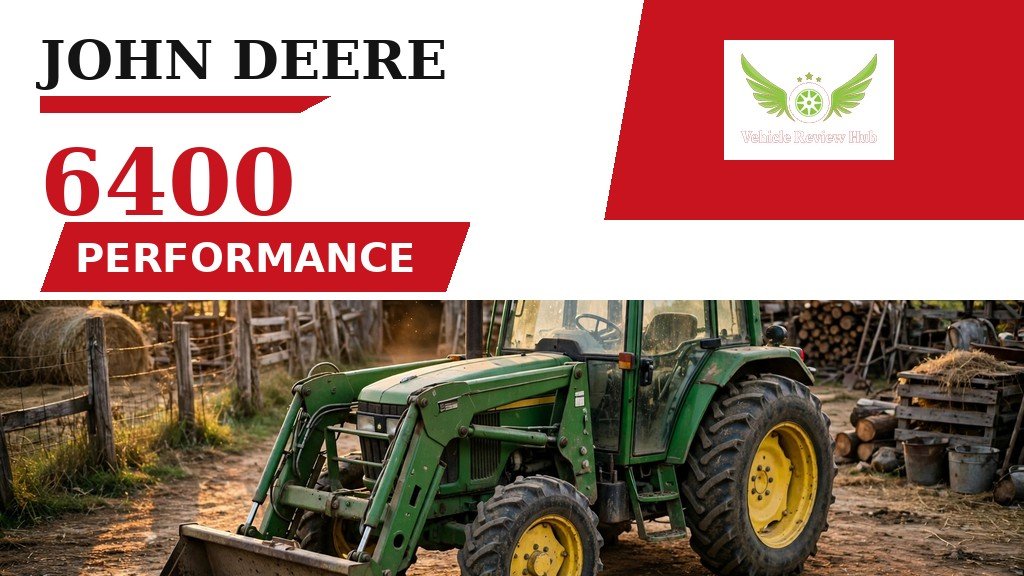
Brochure horsepower tells you very little about what a tractor actually does in the field. What matters for John Deere 6400 performance is how much of the engine’s 100 horsepower reaches the PTO shaft and the drawbar, how much diesel it drinks doing that work, and whether a thirty-year-old machine can still hold its pace across a long working day. The 6400 has one big advantage here: it is a simple, mechanically governed tractor with no exhaust aftertreatment to manage, so John Deere 6400 performance comes down to engine, gears, tires, and condition — nothing else. Used prices and cab options for the same tractor are covered in the John Deere 6400 review.
At the heart of John Deere 6400 performance sits the John Deere CD4045, a 4.5-litre, four-cylinder turbocharged diesel with a 106 mm bore and 127 mm stroke. It is rated at 100 hp at 2,300 rpm, with peak torque of 298 lb-ft at 1,540 rpm, and claimed PTO output of 85 hp through an independent 540/1,000 rpm rear PTO. Judging John Deere 6400 performance honestly means asking what three decades of use do to those claimed figures.
John Deere 6400 Fuel Consumption and Operating Efficiency
Fuel is the largest running cost on most mixed farms, and John Deere 6400 performance has to be judged at several loads, not from one headline figure. A tractor that sips diesel on light mowing but drinks it on heavy tillage will cost very different amounts depending on the work mix, so this section separates test records from planning estimates for John Deere 6400 performance.
OECD Test Results for PTO Power and Fuel Use
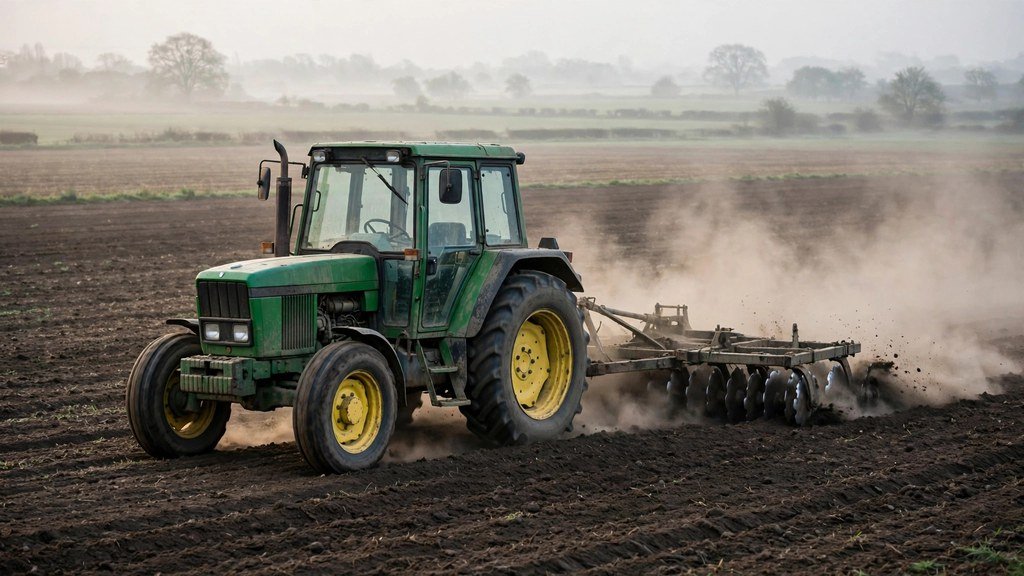
A Nebraska test record does exist for this tractor: Nebraska Summary S158 for the John Deere 6400, published in 1994, which follows the OECD test code the laboratory used at the time. That matters because the Nebraska/OECD procedure measures every tractor the same way. The honest limitation is that the summary page itself carries the test procedures and background, while the detailed data table sits in the full OECD report, which was not retrievable for this guide. You can read the summary record in the Nebraska Summary S158 for the John Deere 6400. What can be stated about John Deere 6400 performance from verified sources is the claimed side of the ledger: 100 hp at the engine and 85 hp claimed at the PTO, from the John Deere 6400 specification compilation and the ManyTractors 6400 specification listing. No specific tested PTO or fuel figure is quoted here, because inventing one from an unread table would be worse than admitting the gap.
That gap shapes how John Deere 6400 performance should be budgeted. With no retrievable tested fuel curve, the planning figures below are estimates, not laboratory results. Light work such as mowing and yard chores should run roughly 2.5 to 3.5 gallons per hour. Steady PTO work such as baling or running a mower-conditioner should run roughly 3.5 to 4.5 gallons per hour. Heavy tillage, where the engine works near full load for hours, should run roughly 5 gallons per hour or more. For John Deere 6400 performance planning, those bands are more useful than any single number, because the same tractor can burn twice as much fuel on a disc harrow as it does on a tedder.
| Work type (planning estimates, not test results) | Fuel use | Hours per cab tank (43.6 gal) |
|---|---|---|
| Light work: mowing, yard chores, transport | 2.5–3.5 gal/hr | Roughly 12–17 hours |
| Steady PTO work: baling, mower-conditioner | 3.5–4.5 gal/hr | Roughly 10–12 hours |
| Heavy tillage: disc, chisel plow, deep work | 5+ gal/hr | Roughly 8 hours or less |
| ROPS tank (29 gal) at 4 gal/hr | 4 gal/hr | Roughly 7 hours |
How Implement Load, Engine Speed and Field Conditions Affect Fuel Use
For John Deere 6400 performance, implement load is the biggest lever on fuel use. The CD4045 makes its peak torque at just 1,540 rpm, well below the 2,300 rpm rated speed, so the engine is happiest lugging at moderate revs with a well-matched implement. An oversized disc that forces full throttle all day will burn far more diesel per acre than a correctly sized one worked at 1,800 rpm, even though both eventually cover the field. The practical rule for John Deere 6400 performance is to size implements to the 85 hp PTO figure, not the 100 hp engine figure, and to let the torque curve do the work.
Field conditions move John Deere 6400 performance just as much. Wet, soft ground raises rolling resistance and wheel slip, so more fuel goes into churning soil than into forward motion. Dry, firm ground and correctly inflated tires do the opposite: the same implement at the same depth can take a full gear higher. Engine speed matters too: throttling back on light jobs saves fuel, while heavy jobs need the revs to hold PTO speed.
John Deere 6400 Field Performance and Drawbar Power
On paper, John Deere 6400 performance describes a mid-size utility tractor: 100 hp at the engine, 85 hp at the PTO, a Category II hitch lifting 5,920 lb at 24 inches, and a closed-center hydraulic system at 2,900 psi. For John Deere 6400 performance, that combination suits 10- to 12-foot hay tools, medium tillage, and loader work — but it is not a heavy primary-tillage tractor.
Hay Equipment, Tillage, Mowing and Material Handling
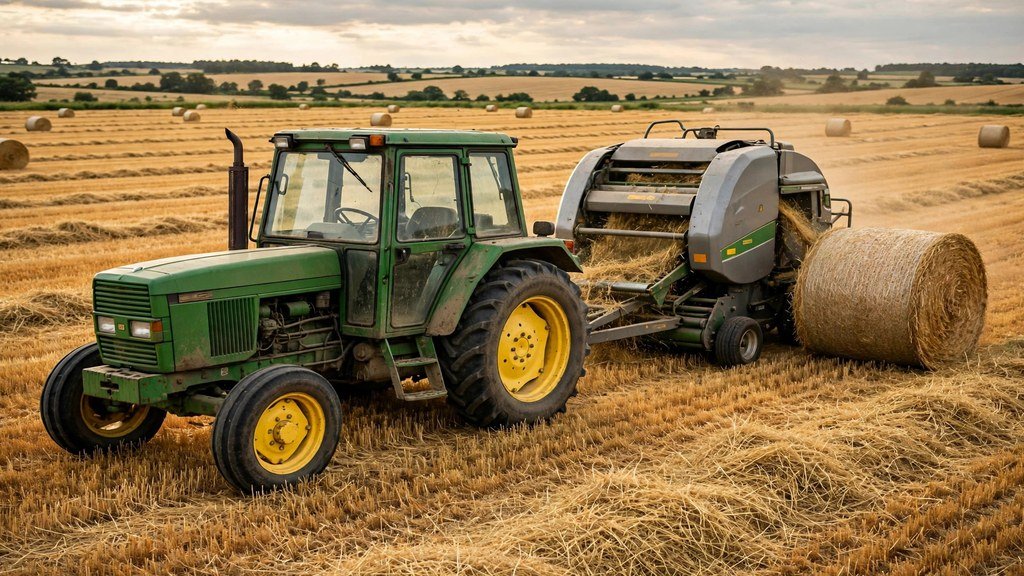
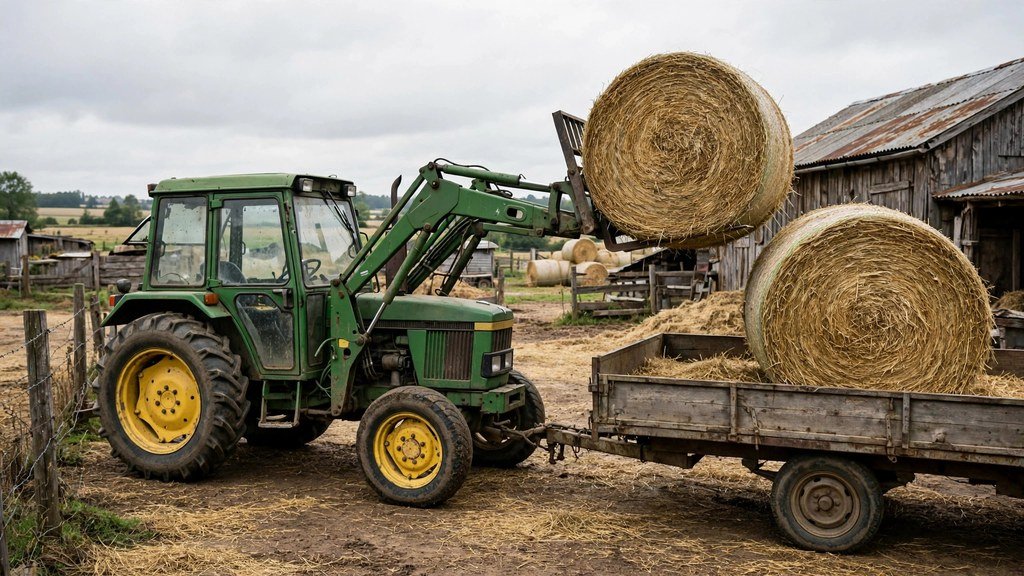
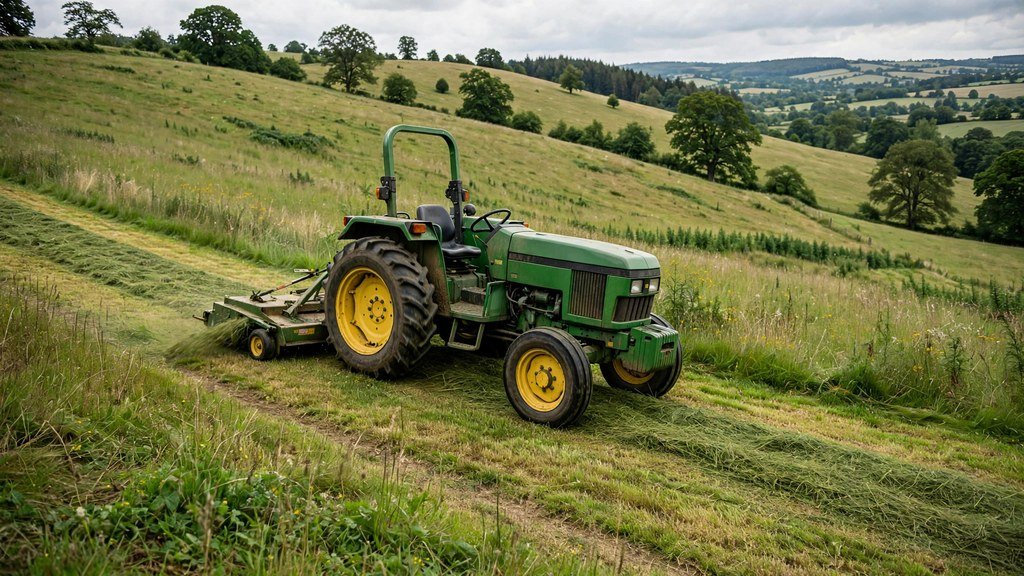
Hay work is where John Deere 6400 performance is most at home. The independent rear PTO offers 540 and 1,000 rpm speeds, and 85 PTO horsepower drives rotary rakes, tedders, mower-conditioners, and 4×5 and smaller 4×6 round balers, provided the baler is matched to crop density and the tractor is not asked to bale uphill in heavy hay at full width. For hay work, John Deere 6400 performance is at its best: steady PTO speed and ample hydraulic flow. On tillage, the sensible limit is medium implements — a disc harrow, a field cultivator, or a light chisel plow in medium soils, with depth and width set to keep the engine in its torque band rather than at full throttle. For mowing, the Category II hitch and available front weights cover batwing mowers and roadside flails, while the factory loader options — the John Deere 620, 640NSL, and 640SL — handle bales, pallets, and feeding.
The video below is a sale walkaround of one 2WD John Deere 6400 fitted with a Buhler 695 front loader, showing 4,814 hours on the meter. It is not field-work footage, so watch it for what it honestly shows: the tractor’s size, the loader setup, and the condition of a working example at that age and hour count, which is exactly what a buyer needs to calibrate John Deere 6400 performance expectations against.
Tested Drawbar Pull, Traction and 2WD vs. MFWD Performance
No retrievable drawbar table was available for this guide — the Nebraska Summary S158 record exists, but its detailed drawbar figures sit in the full OECD report, so no specific pull or slip figure is quoted here. What can be said with confidence about John Deere 6400 performance is structural. Drawbar power always sits below PTO power, because tires, drivetrain, and rolling resistance take their share before the implement ever feels it. As a rule of thumb, expect drawbar output roughly 10 to 15 percent below PTO output on a 2WD machine, and a smaller gap on an MFWD machine with good tires and correct ballast.
The 2WD versus MFWD choice is the single biggest traction decision on a 6400. MFWD was offered as the 4×4 configuration alongside 2WD, and on soft ground, slopes, and loader work it transforms John Deere 6400 performance: less slip, more usable pull, and better braking under load. Two-wheel drive suits flat, firm ground and mostly PTO and mower work, where its lower purchase price and simpler driveline are genuine advantages. For John Deere 6400 performance, tire condition matters as much as drive type: worn rears (18.4-34 ag) slip and burn fuel on any configuration, and mismatched front and rear sizes on an MFWD machine strain the driveline. Ballast helps too: shipping weights run from 7,605 lb (2WD open-station) to 8,755 lb (4WD cab).
John Deere 6400 Transmission, Handling and Operator Comfort
Power figures get the attention, but for John Deere 6400 performance the gearbox decides how much of that power you can actually use without wearing yourself out. The 6400 was sold with two very different transmissions, and the choice between them shapes John Deere 6400 performance more than a few horsepower either way.
SyncroPlus vs. PowrQuad During Everyday Farm Work
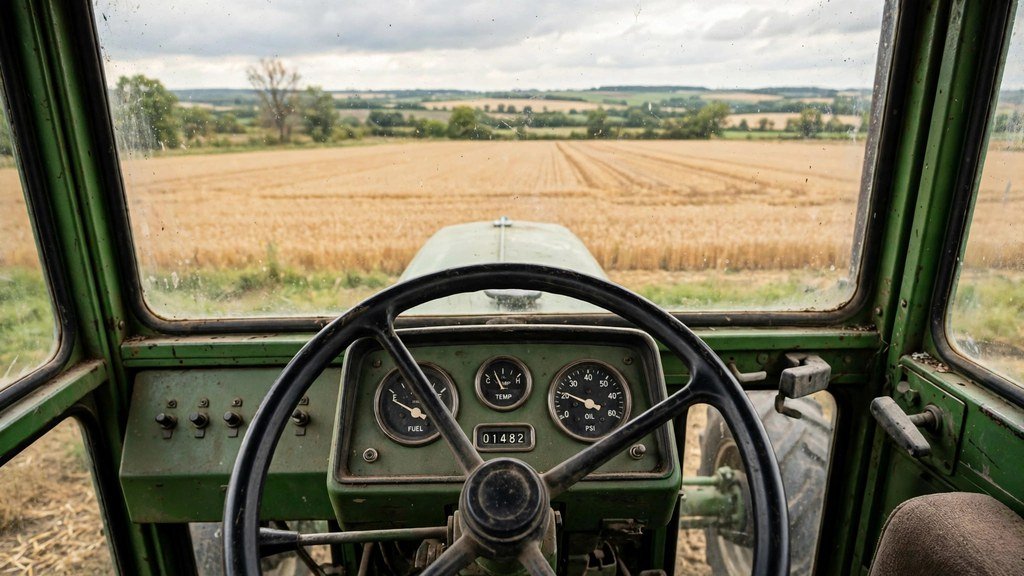
The standard gearbox is the SyncroPlus: a fully synchronized transmission with 12 forward and 4 reverse gears, rising to 21 forward and 7 reverse with the creeper option, worked through a triple wet-disc PermaClutch. The upgrade is the PowrQuad: a partial power shift with 16 forward and 16 reverse gears, or 28 forward and 28 reverse with creeper. For John Deere 6400 performance, the difference is about shifting under load. SyncroPlus is simple, durable, and cheap to keep — you clutch for every range change, and it rewards a patient operator. PowrQuad lets you shift between powershift steps without clutching, which pays off in loader work, baling, and any job with constant speed changes. The creeper option matters for slow work such as transplanting or trenching, where standard first gear is simply too fast. When judging John Deere 6400 performance on a used machine, test every gear and every powershift step: a PowrQuad that slips or shifts harshly is a rebuild quote, while a SyncroPlus with a tired clutch is a far cheaper fix.
Handling follows the same honest pattern. Hydrostatic power steering and hydraulic wet-disc brakes keep handling light and stopping predictable with a full load. The 94.5-inch wheelbase suits yards and headlands.
Cab Comfort, Visibility and Long Working Days
The 6400 came as a two-post foldable ROPS machine or with the optional ComfortGard cab, and that choice shapes John Deere 6400 performance across a working day more than any other option. The cab gives weather protection, heating, and a quieter working environment, which is why cab machines command more money and sell faster. Visibility from the cab is good for loader work and for watching rear implements, with the exhaust stack and cab posts the only real blind spots. The ROPS machine is cheaper, simpler, and easier to service, but a full day in rain, dust, or summer heat is a different proposition, and resale reflects that. For John Deere 6400 performance across long days, check the cab details on any used example: door seals, heater function, wiper condition, and whether the air conditioning — where fitted — still blows cold.
John Deere 6400 Real-World Ownership Experience
Test numbers and spec sheets describe a tractor; owners describe John Deere 6400 performance across decades of work. In owner hands, the 6400’s reputation rests on a simple engine, deep parts support, and a size that fits real mixed farms.
Strengths, Limitations and Practical Farm Applications
The strengths of John Deere 6400 performance are easy to list. The CD4045 is a mechanically governed turbo diesel with no DPF, no DEF, and no regeneration cycles to interrupt work — emissions equipment that simply does not exist on this tractor, so it can never fail or derate the engine. The closed-center hydraulic system at 2,900 psi with 18.7 gpm standard flow (25 gpm optional) runs loaders, mowers, and two to five remotes without drama. Parts availability is deep across Deere and the aftermarket. The limitations are equally plain. John Deere 6400 performance is capped at 85 PTO horsepower, so large square balers, wide discs, and heavy primary tillage are out of reach. The cab, where fitted, is a 1990s design — functional, but louder and less refined than a modern cab. And every 6400 is now at least 25 years old, so rubber, wiring, and seals age even on low-hour machines.
Practically, John Deere 6400 performance fits livestock farms, hay operations, mowing contractors, and diversified farms that need one versatile tractor for loader work, PTO jobs, and medium tillage. It fits less well on large arable farms where a single tractor must pull wide tillage tools all day, or where road transport at high speed dominates the workload.
How Hours, Maintenance and Configuration Affect Performance
Hours alone tell you less than hours combined with maintenance and configuration. A 6400 with 6,000 hours and a full service history is usually a better buy than a 3,000-hour tractor with no records, because the hour meter says nothing about oil changes, coolant care, or clutch abuse. Configuration moves John Deere 6400 performance too: an MFWD cab machine with PowrQuad and a loader is a different working asset from a 2WD open-station SyncroPlus machine, even at the same hours, and the market prices them accordingly. Public anchors illustrate the spread: a 1996 example with 5,996 hours was listed sold at $41,900, while a rougher 6,536-hour example with a missing door was advertised at $13,750 — both from the sold 1996 John Deere 6400 listing and a classified advertisement respectively. Purchase prices and running costs are broken down in the ownership-cost figures, and service intervals and wear checks are listed in the maintenance checklist to run through before money changes hands.
John Deere 6400 Performance FAQs
These are the questions buyers and owners ask most often about John Deere 6400 performance, fuel, and implement matching. Each answer is drawn from verified specifications or labeled clearly as a planning estimate where no test table was retrievable.
How much horsepower does the John Deere 6400 have?
The John Deere 6400 is rated at 100 hp at the engine at 2,300 rpm, with 85 hp claimed at the PTO. For John Deere 6400 performance planning, size implements to the 85 hp PTO figure, not the 100 hp engine figure.
How much fuel does the John Deere 6400 use per hour?
As planning estimates for John Deere 6400 performance, not test results: roughly 2.5 to 3.5 gallons per hour on light work, 3.5 to 4.5 on steady PTO work, and 5 or more on heavy tillage. A cab machine’s 43.6-gallon tank gives roughly 10 to 12 hours of steady PTO work per fill, while the 29-gallon ROPS tank gives roughly 7 hours at 4 gallons per hour.
What is the John Deere 6400 PTO horsepower?
For John Deere 6400 performance, claimed PTO output is 85 hp through an independent 540/1,000 rpm rear PTO. A Nebraska test summary (S158, 1994) exists for the 6400, but its detailed tested figures sit in the full OECD report and were not retrievable for this guide, so no tested PTO figure is quoted.
Does the John Deere 6400 use DEF or have a DPF?
No. The 6400 is a 1990s mechanically governed diesel with no DPF, no DEF, and no regeneration cycles. That simplicity is a genuine part of John Deere 6400 performance: there is no aftertreatment system to fault, derate, or service.
Can the John Deere 6400 handle heavy tillage?
For John Deere 6400 performance, medium tillage is its limit: it handles disc harrows, field cultivators, and light chisel plows in medium soils, but not heavy primary tillage. With 85 PTO horsepower, deep ripping or wide moldboard plows in heavy soil will overload it; match width and depth so the engine works in its torque band rather than at full throttle.
Is the John Deere 6400 good for hay work?
Yes — for John Deere 6400 performance, hay is arguably its strongest job. The 85 hp PTO, 540 and 1,000 rpm speeds, and Category II hitch suit rotary rakes, tedders, mower-conditioners, and 4×5 and smaller 4×6 round balers, and the low torque peak at 1,540 rpm suits steady PTO loads.
What transmissions are available on the John Deere 6400?
For John Deere 6400 performance, two gearboxes were offered: the SyncroPlus fully synchronized gearbox with 12 forward and 4 reverse gears (21 forward and 7 reverse with creeper), and the PowrQuad partial power shift with 16 forward and 16 reverse gears (28 forward and 28 reverse with creeper). PowrQuad suits loader work and constant speed changes; SyncroPlus is simpler and cheaper to maintain.
Should I choose 2WD or MFWD on a John Deere 6400?
For John Deere 6400 performance, choose MFWD unless the tractor will work almost entirely on flat, firm ground. Front drive cuts wheel slip, improves braking on slopes, and raises practical implement size; 2WD is cheaper and simpler but gives up traction exactly where it matters most.
How big is the John Deere 6400 fuel tank?
For John Deere 6400 performance planning, it depends on configuration: 29 gallons on the ROPS machine and 43.6 gallons on the cab machine. Check the tank on the specific used tractor, because the difference is nearly a full working day of PTO work.
What hydraulic flow does the John Deere 6400 provide?
For John Deere 6400 performance, the closed-center pressure-and-flow-compensated system delivers 18.7 gpm as standard at 2,900 psi, with a 25 gpm optional pump. One to five selective control valves were offered, and the Category II hitch lifts 5,920 lb at 24 inches behind the lift points.
What size implements suit John Deere 6400 performance best?
For John Deere 6400 performance, size PTO implements to the 85 hp PTO figure and drawbar implements to roughly 10 to 15 percent below that on 2WD, less on MFWD. In practice: 10- to 12-foot hay tools, medium tillage implements, and 4×5 or smaller 4×6 round balers, with a 620, 640NSL, or 640SL loader for bales and material handling.
Is a high-hour John Deere 6400 still worth buying?
Often, yes — if the history supports it. John Deere 6400 performance depends more on maintenance records, clutch condition, and hydraulic health than on the hour meter alone. A documented 6,000-hour machine is usually a safer buy than an undocumented 3,000-hour one, and the price spread between rough and clean examples reflects exactly that.