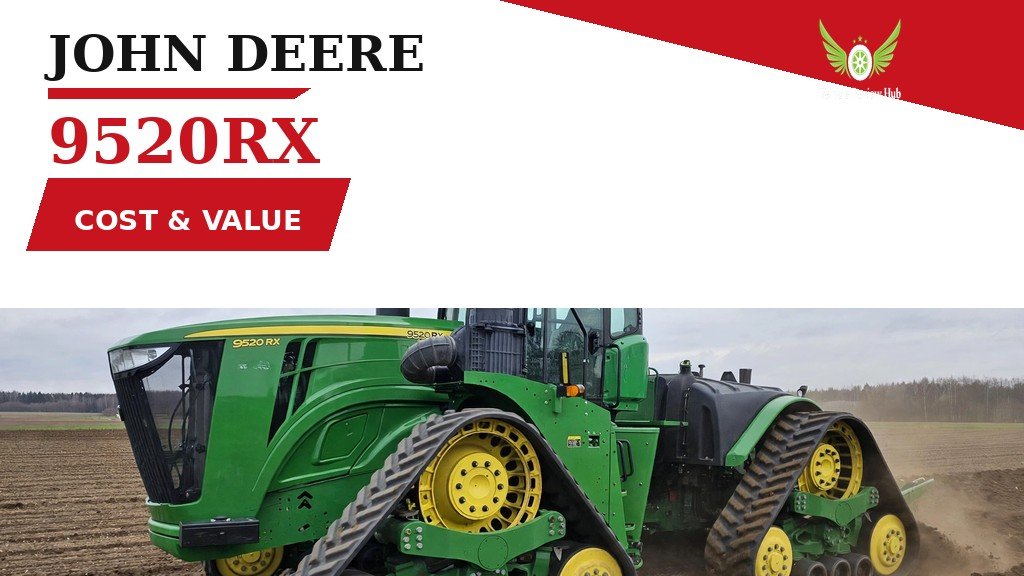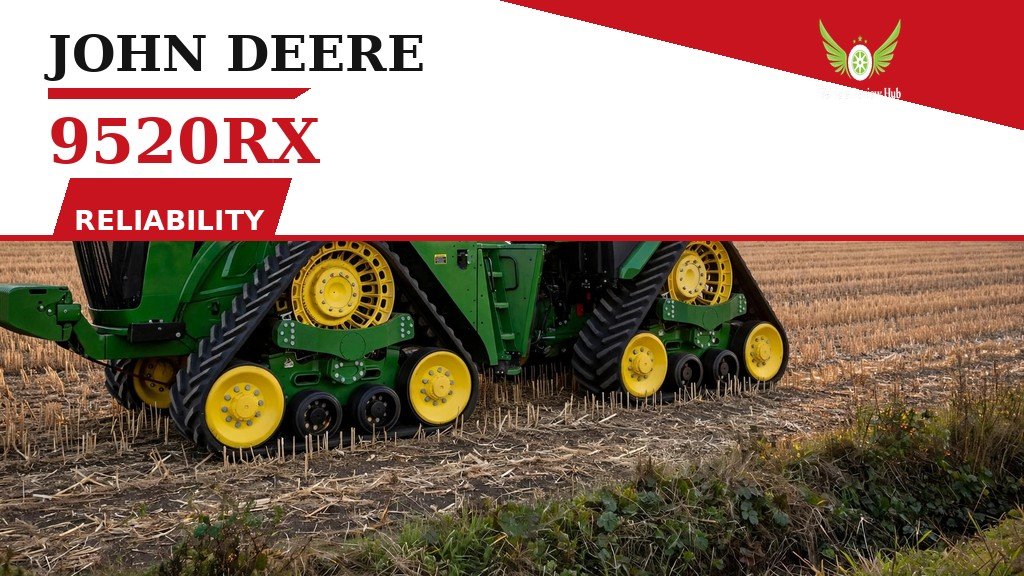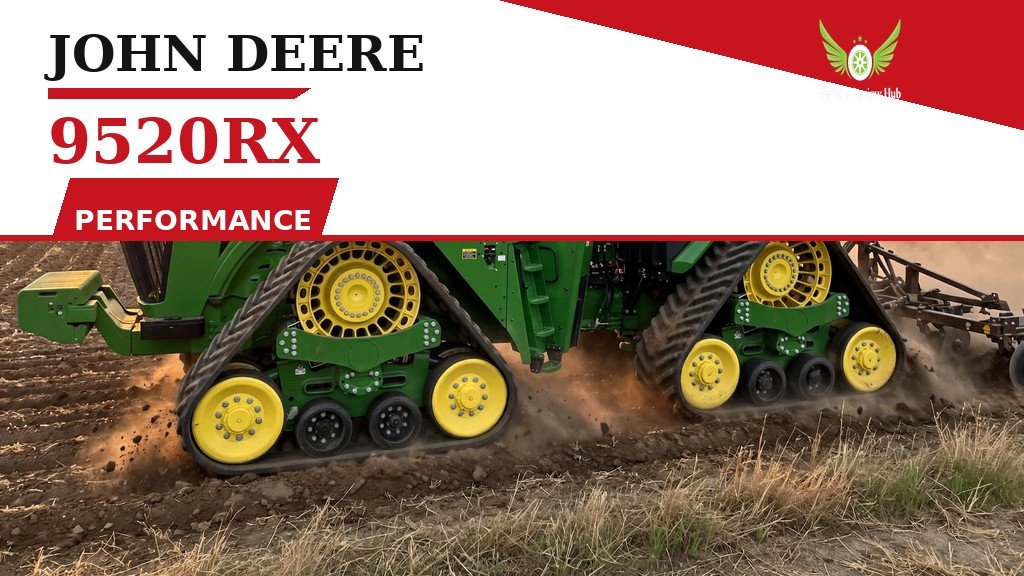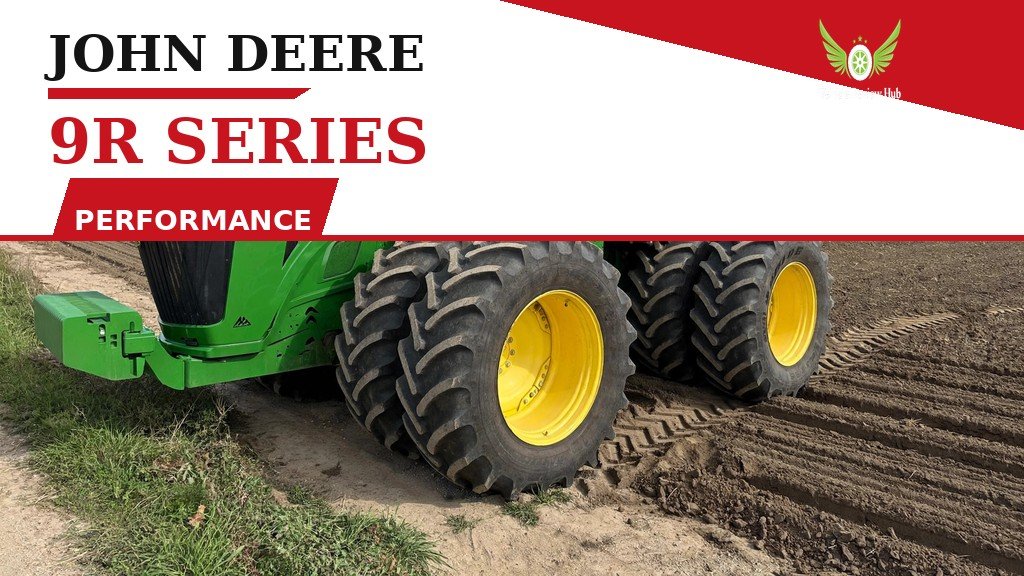
The John Deere 9R Series is the wheeled articulated flagship of Deere’s lineup, built for farms where serious John Deere 9R Series performance is a working requirement, not a luxury. The current wheeled lineup — 9R 390, 9R 440, 9R 490, 9R 540, 9R 590, and 9R 640 — runs Deere’s own JD14 13.6-liter six-cylinder, an 18-speed e18 PowerShift, and up to 110 gpm of hydraulic flow, with a 400-gallon fuel tank that keeps the machine in the field for full days of heavy tillage.
This guide covers John Deere 9R Series performance in the detail a buyer needs: real fuel consumption numbers from the Nebraska Tractor Test, what each model pulls in the field, how the articulated chassis handles, and what owners report after thousands of hours. Every figure below comes from Deere spec sheets, dealer listings, the Nebraska test lab, or labeled owner reports — nothing is guessed.
John Deere 9R Series Fuel Consumption and Runtime
Fuel is the single biggest operating cost on a 9R, so this section leads with hard numbers. The best data available is Nebraska Tractor Test 2260 on the 9R 490 — laboratory-measured fuel burn at defined power levels — supplemented by owner-reported ranges for real fieldwork. Together they give the clearest picture available of John Deere 9R Series performance at the fuel pump.
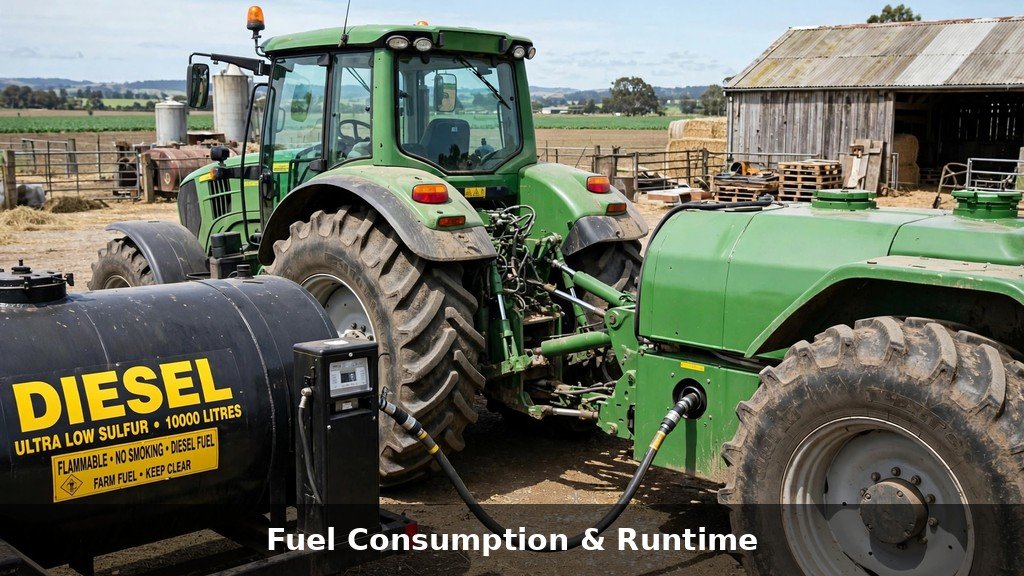
Fuel Use During Heavy Tillage, Drawbar Work and Transport
At the Nebraska lab, the 9R 490 burned 19.75 gallons per hour at maximum power (368.35 hp at 1,800 rpm, 18.66 hp-hr/gal), and 18.37 gph producing 321.89 hp at rated 2,100 rpm. At partial loads the burn drops meaningfully: 16.75 gph at 280.4 hp and 13.66 gph at 210.2 hp. Those are the ceiling and mid-range anchors for John Deere 9R Series performance under load — a 9R 590 pulling a deep ripper at full song will sit at or above 20 gph, while lighter work drops into the low teens.
Owner reports on forums line up with the lab data. Owners describe roughly 8–12 gph for light transport and road work, 12–18 gph for general tillage and planting, and 16–24 gph for sustained heavy draft (deep ripping, heavy discing with the biggest implements). Treat those bands as owner-reported planning figures, not engineering data. With a 400-gallon tank, a 9R 490 at a blended 18 gph runs about 22 hours between fills — most operators fuel once a day during tillage season and never think about it again.
The video below shows a 9R 490 working spring tillage — exactly the kind of sustained heavy-draft work these fuel figures describe:
How Model, Workload and Transmission Affect Fuel Economy
Model choice moves the needle on John Deere 9R Series performance per gallon. The 9R 390 (385 hp SAE rated) burns meaningfully less than the 9R 590 (582 hp SAE rated) doing the same light work, but the gap narrows under full load — a big engine lugging at 1,550 rpm where peak torque lives is often more efficient per acre than a smaller engine screaming at 2,100 rpm to do the same job. That is the practical argument for buying the 9R 540 or 590 for primary tillage: the JD14’s peak torque (1,838 lb-ft on the 540, 2,008 lb-ft on the 590) arrives at just 1,550 rpm, so the engine does its heaviest work well below rated speed.
The e18 PowerShift’s Efficiency Manager matters too. It automatically selects the gear that holds the target ground speed at the lowest practical engine rpm, which trims fuel on partial-load work like planting and spraying. On transport, the 25 mph top speed keeps road time short. DEF consumption is modest — the Nebraska test logged roughly 0.72–0.76 gph of DEF during the power runs, about 4 percent of diesel burn — and the 31.7-gallon DEF tank means DEF refills roughly track diesel refills at a ratio owners never have to think about.
John Deere 9R Series Performance for Large-Scale Farming
The 9R exists for one reason: converting very large horsepower into drawbar pull and PTO work on big acreage. Articulated steering, 45,980 pounds of base weight (ballastable to 60,000 lb), and the JD14’s torque curve are the three pillars of John Deere 9R Series performance in the field.
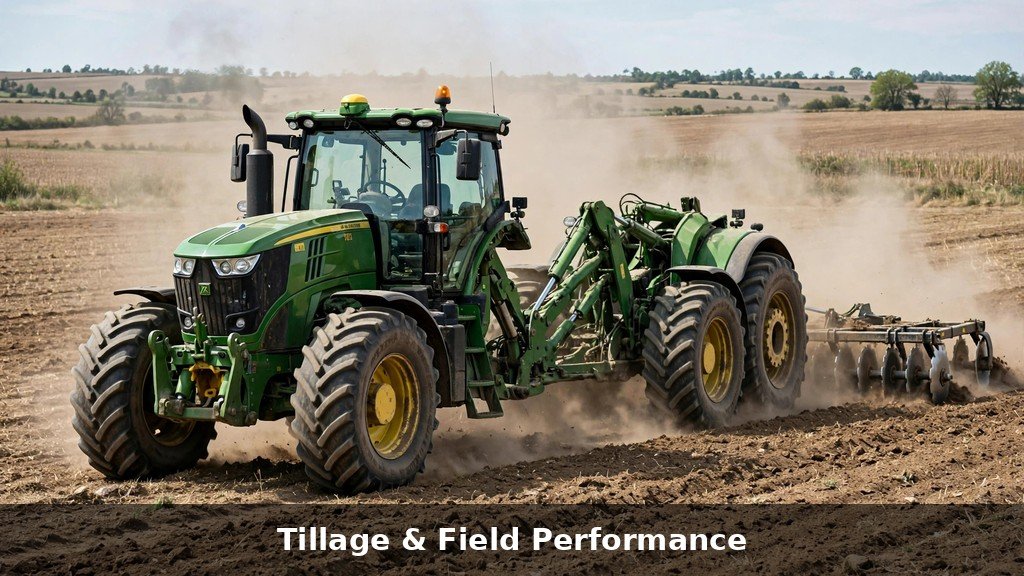
Tillage, Planting, Seeding and Heavy Implement Operation
In primary tillage, the 9R’s advantage is traction more than raw power. Four equal-size tires on an articulated frame put the weight where the pull is, and owners consistently report the 9R 490 and 540 pulling 40- to 60-foot implements that would overwhelm a rigid-frame row-crop tractor. The Category 4N/4 rear hitch lifts 15,000 lb standard and 20,000 lb optional, so the heaviest mounted tools are in range, and the 55 gpm standard hydraulic pump (110 gpm optional dual pumps) feeds large air seeders and planters without starving steering or hitch functions.
For planting and seeding, John Deere 9R Series performance is about consistency: the e18 holds ground speed under varying load, integrated AutoTrac keeps passes straight, and the 1,000-rpm independent PTO (335 hp rated across the line) runs big grain carts and manure equipment. The 10 percent power boost (IPM) adds up to 649 hp on the 9R 590 for transport and mobile PTO work. Compared with the smaller 8R Series performance envelope, the 9R steps into implements the 8R simply cannot pull — the two lines overlap at the margins but serve different acreage.
Drawbar Pull, Traction and High-Load Performance
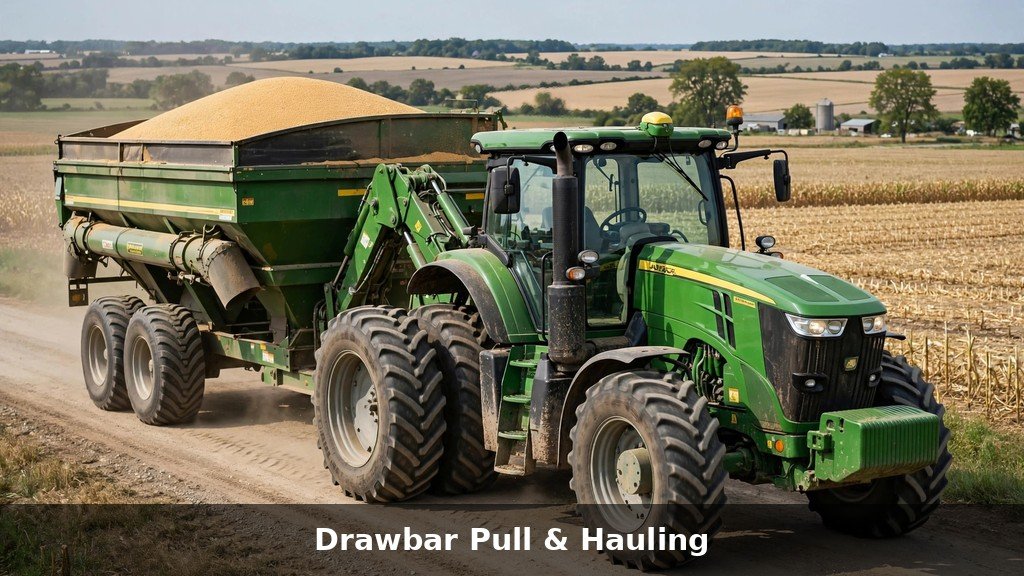
Drawbar work is where articulation pays. The center pivot lets all four wheels follow ground contours, keeping the tire contact patch loaded on uneven ground where a rigid frame would unload a corner and spin. The Category 5 drawbar is rated for a 12,000-lb maximum vertical load, and the full-locking electrohydraulic differentials front and rear are there for the soft spots. Owners pulling tile plows, deep rippers, and heavy scrapers report the 9R keeps moving where lighter tractors stall — that combination of weight, articulation, and torque is the core of John Deere 9R Series performance on the drawbar.
Ballast strategy matters more on a 9R than on smaller tractors. Sustained John Deere 9R Series performance depends as much on setup as on horsepower: base weight is 45,980 lb on the 490, and Deere allows ballasting to 60,000 lb. Too little weight and the tires slip, wasting fuel and chewing rubber; too much and you compact soil and burn extra diesel carrying it. Experienced operators ballast for the heaviest implement in the rotation and accept the compromise, which is also why our 9R Series ownership cost guide treats tire life as a first-order cost — big rubber at this power level is expensive to replace.
John Deere 9R Series Handling, Comfort and Operating Limits
A 46,000-lb articulated tractor handles nothing like a row-crop machine, and the 9R’s limits are about size, turning, and transport rather than power. Understanding these limits is as important as any horsepower figure when judging John Deere 9R Series performance.
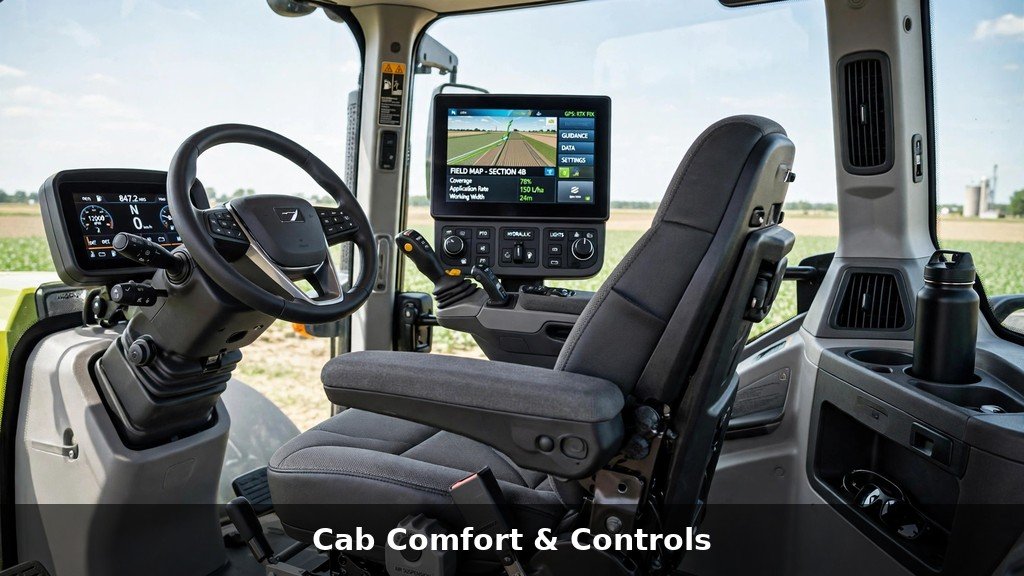
Cab Comfort, Articulated Steering and Operator Visibility
Operator comfort is part of John Deere 9R Series performance too. The CommandView cab offers 115 cubic feet of volume and 71.47 square feet of glass, with the air-suspension seat swiveling 25 degrees left and 40 degrees right so the operator can watch trailing implements without craning. The 12.8-inch G5Plus CommandCenter display, CommandARM controls, and integrated AutoTrac come standard, and three visibility packages (Select, Premium, Ultimate) scale from 18 halogen work lights to 24 LEDs plus convenience lighting and integrated cameras. Reviewers consistently rate the 9R cab among the quietest and most comfortable in the industry — important when the working day is 14 hours.
Articulated steering is hydraulic power steering as standard, with ActiveCommand Steering (ACS) optional. ACS adds variable-ratio feel and straight-line stability that owners praise on road transport — a meaningful upgrade on a machine that spends real time at 25 mph between fields. The steering articulation also gives the 9R its famously tight maneuverability for its size: 19.8 feet of turning radius with brakes on Group 47/48 tires, which is why the 9R can work headlands that would embarrass a rigid-frame tractor of equal power.
Turning Radius, Ballast, Tire Setup and Field Conditions
The limits show up in soft conditions and tight infrastructure. A ballasted 9R at 60,000 lb on duals still exerts serious ground pressure — it will rut wet ground, and it needs wide gates, wide bridges, and planning for road transport (dual configurations run very wide). Tire setup is a genuine decision: duals maximize flotation and traction in the field but complicate transport, while singles narrow the machine at the cost of footprint. Most Corn Belt operators run duals all around and accept the width.
Field conditions also dictate the transmission’s role. The e18’s 18 speeds with Efficiency Manager keep the engine in its torque band, but in the softest going, no gearing substitutes for the tracked 8RX Series or the two-track 9RT — wheels have a ceiling in mud that tracks don’t. For most dry-land grain operations the wheeled 9R delivers the best balance of John Deere 9R Series performance and operating cost; our 9R Series review walks through the wheeled-vs-track decision in detail.
John Deere 9R Series Real-World Owner Experience
Lab numbers and spec sheets only go so far. What owners say after 2,000–5,000 hours on 9Rs tells the real story of John Deere 9R Series performance — the good and the bad — and that is what separates a defensible purchase from an expensive lesson.
Owner-Reported Benefits, Complaints and Operating Trade-Offs
The consistent praise centers on three things: relentless pulling power, cab comfort on long days, and uptime. Owners describe the JD14 as a strong, simple-running engine — a recurring theme in reports on John Deere 9R Series performance. The DOC-plus-SCR aftertreatment (no DPF on this engine) means no parked regenerations interrupting work, a genuine operational advantage owners notice daily. The 500-hour oil change interval with approved oil and filter stretches service intervals compared with older big tractors, and the front-left service panel puts daily checks within easy reach.
Complaints cluster around cost and complexity, not capability. Fuel burn at full draft shocks first-time big-tractor buyers — 20+ gph is real, and it makes the 9R Series maintenance and fuel budget the dominant cost of John Deere 9R Series performance. DEF system faults (sensors, occasional derates) appear in owner reports, as they do across the industry. Tire costs sting: a full set of big rubber on a 9R is a five-figure event. And several owners note that the machine’s size demands respect in the yard — tight farmsteads and narrow lanes are a daily friction the spec sheet doesn’t show.
Choosing the Right Model and Configuration for Your Work
Choosing for John Deere 9R Series performance means matching the model to the implement, not the ego. The 9R 390 and 440 suit large grain operations running big planters, grain carts, and secondary tillage — plenty of tractor for 2,000–4,000 acres. The 9R 490 is the volume seller for heavy tillage on big acreage, and the sweet spot of John Deere 9R Series performance for most operations. The 9R 540 (full 9R 540 specs) and 9R 590 are for the deepest draft work: tile plows, big rippers, and the largest air seeders, where the dual-series turbos and 2,008 lb-ft of torque earn their keep. The flagship 9R 640 tops the range at 640 rated hp (691 max) with 2,179 lb-ft of torque for the heaviest operations.
On configuration: hydraulic capacity is an underrated part of John Deere 9R Series performance, so spec the 110 gpm dual pumps if you run large air seeders or anything with big hydraulic motors — the 55 gpm standard pump is fine for drawbar-heavy work but marginal for hydraulic-hungry implements. The PTO option is worth having even if you rarely use it; it meaningfully widens resale appeal. And buy the visibility package you’ll actually use at night, because a 9R does a large share of its annual hours after dark during planting and harvest windows.
For a sense of what these tractors cost on the used market, recent 2024 9R 490 listings with 500–600 hours sit around $450,000–$455,000 — strong resale that reflects how well the market rates John Deere 9R Series performance over time.
Frequently Asked Questions About John Deere 9R Series Performance
Quick answers to the most common questions about John Deere 9R Series performance, fuel use, and real-world capability.
How much fuel does a John Deere 9R use per hour?
The Nebraska Tractor Test measured 19.75 gph at maximum power on the 9R 490, dropping to 13.66 gph at 210 hp partial load. Owner-reported bands run 8–12 gph for light transport, 12–18 gph for general tillage, and 16–24 gph for sustained heavy draft. The 400-gallon tank delivers roughly 18–25 hours of work between fills depending on load.
What engine is in the John Deere 9R Series?
Deere’s own JD14 13.6-liter (827 cu in) in-line six-cylinder, wet-sleeve, B20-biodiesel compatible. The 390/440/490 use a single wastegated turbocharger; the 540 and 590 use dual series turbochargers. US Final Tier 4 aftertreatment is DOC plus SCR with DEF — notably, no DPF, so there are no parked regenerations.
How much horsepower does the 9R 590 have?
The 9R 590 is rated 582 hp SAE (590 PS) with a 10 percent power boost taking maximum engine power to 640 hp SAE (649 PS). The flagship 9R 640 sits above it at 640 rated hp with 691 max hp. Rated PTO power is 335 hp, and peak torque is 2,008 lb-ft at 1,550–1,600 rpm with a 38 percent PTO torque rise. Those torque figures are what give John Deere 9R Series performance its lugging character in heavy draft.
What is the top speed of the John Deere 9R?
The e18 PowerShift is rated for 40 km/h (25 mph) transport speed. Efficiency Manager automatically picks the most economical gear for the target speed, which keeps fuel burn reasonable on road work.
How tight does a 9R turn?
Turning radius with brakes is 19.8 feet on Group 47/48 tires — remarkably tight for a 46,000-lb articulated tractor, and a genuine advantage on headlands. Without brakes the radius is wider, and transport width on duals demands planning for gates and bridges.
Is the 9R better than the 8RX for tillage?
It depends on conditions. The wheeled 9R offers lower purchase price, simpler maintenance, and easier transport than the four-track 8RX. The 8RX wins on traction and flotation in soft or wet conditions. For dry-land grain farming the wheeled 9R usually delivers the best John Deere 9R Series performance per dollar; for chronically soft ground, tracks earn their premium.