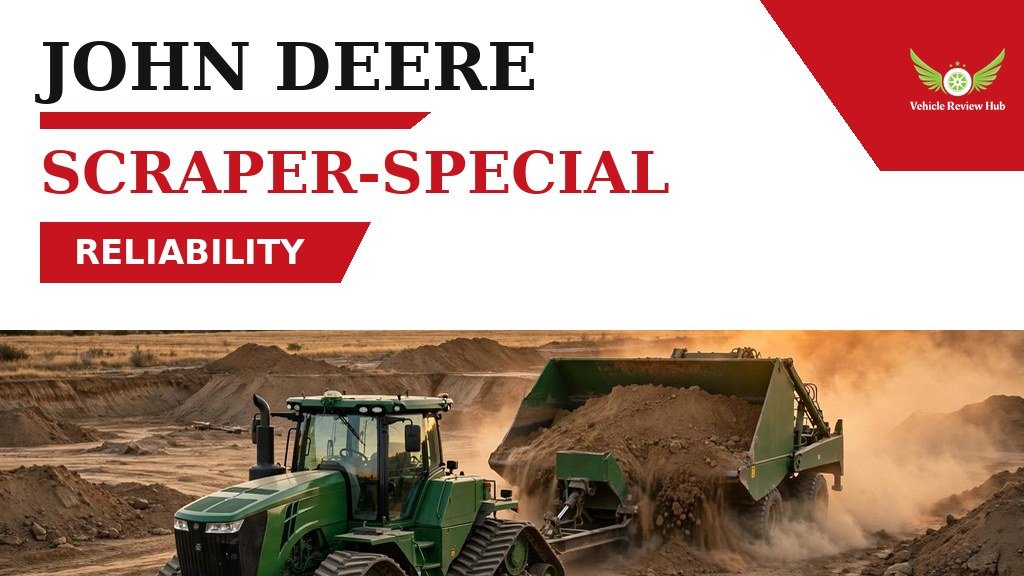
A John Deere Scraper-Special tractor earns its money in the hardest job a farm tractor can do: loading, hauling, and spreading dirt all day, often in dust, heat, and mud. That workload is exactly why John Deere Scraper-Special Tractors maintenance matters more than it does on a tillage tractor. The drawbar, hydraulics, and undercarriage that make these machines so productive are also the parts that wear first.
Scraper-Special is a configuration class, not a single model: it covers wheeled 9R, two-track 9RT, and four-track 9RX tractors. The 2022-and-newer machines run the John Deere JD14 13.6L engine, while older machines were built on earlier platforms. This guide to John Deere Scraper-Special Tractors maintenance covers the service schedule, reliability, common problems, and the pre-purchase inspection, with every figure tied to a named model or labeled as a planning estimate.
John Deere Scraper-Special Tractors Maintenance Schedule and Costs
Scraper work is officially heavy-duty work in Deere’s own service literature: one older 9RX operator’s manual cuts the transmission drive-shaft damper interval from 4,500 hours under normal duty to 3,000 hours specifically for scraper applications. Build your plan around that reality, and the John Deere Scraper-Special Tractors maintenance schedule becomes a predictable routine instead of a series of surprises.
Engine Oil, Filters, Cooling System and Routine Service
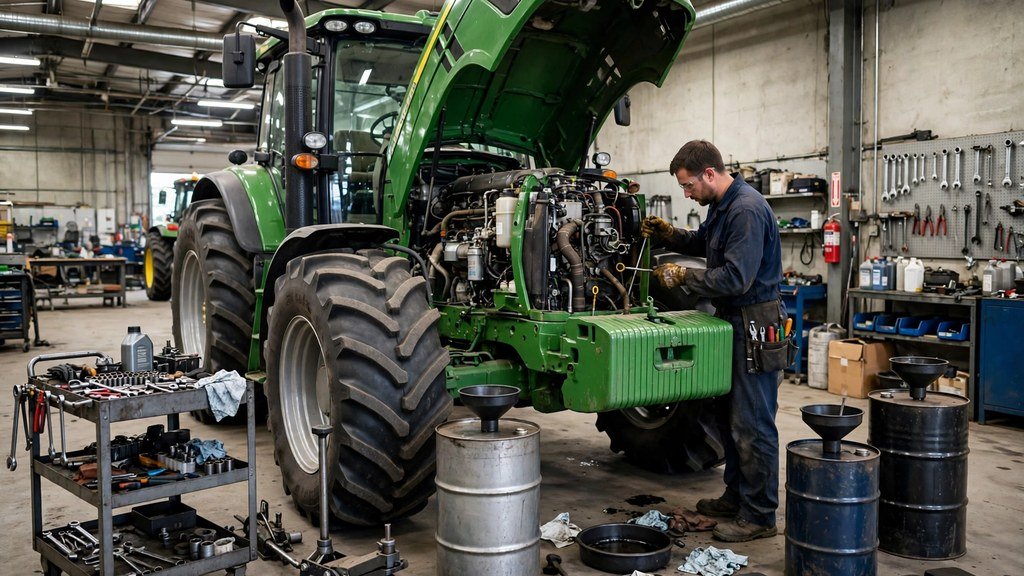
On current Scraper Specials, the headline interval is a 500-hour engine oil and filter change using approved John Deere oil and a genuine filter. TriGreen Equipment confirms the 500-hour interval for the JD14 13.6L engine in the 9R 640, and the same figure appears on the 9R 540 spec sheet and 9RX 490 spec sheet. The JD14 holds about 16.9 gallons of crankcase oil, so a full oil service is a drum-scale job. Sticking to the John Deere Scraper-Special Tractors maintenance schedule here is the cheapest reliability insurance you can buy.
Daily checks cost nothing and catch the expensive failures early. Before the first load, check engine oil, coolant, and transmission-hydraulic levels, drain the water separator, and walk around looking for fresh leaks, loose hardware, and trash packed around the coolers. A clogged radiator or hydraulic oil cooler is the most common reason a big tractor starts running hot in scraper work. Fuel filters go at 500 hours, the primary air filter at 1,500 hours or when the restriction indicator calls for it, and the DEF system gets dealer service at 4,500 hours. The DEF tank holds 31.7 gallons across the current 9R and 9RX Scraper Specials.
Dealer labor rates vary too much by region to quote a single honest number, so price a full year of scheduled John Deere Scraper-Special Tractors maintenance with your dealer before the dirt season starts.
| Service item | Current 9R / 9RX Scraper Special interval | Notes |
|---|---|---|
| Engine oil and filter | 500 hours | Approved John Deere oil and genuine filter; about 16.9 gal sump |
| Fuel filters | 500 hours | Primary and secondary; drain water separator daily |
| Transmission-hydraulic oil and filters | 1,500 hours | About 59 gal without 3-point hitch and PTO |
| Primary air filter | 1,500 hours or as indicated | Secondary element at every fourth primary change |
| DEF system service | 4,500 hours (dealer) | DEF tank 31.7 gal; do not run dry |
| Engine coolant change | 6,000 hours | Check level daily; clean coolers in dusty work |
| Drive-shaft damper (older 9RX manuals) | 3,000 hours in scraper use | 4,500 hours normal duty; scraper use shortens it |
| Daily walk-around | Every working day | Levels, leaks, tires or tracks, drawbar, cooler trash |
Transmission, Hydraulics, Axles, Tires and Tracks
The current Scraper Specials use the John Deere e18 18-speed PowerShift with Efficiency Manager, good for 25 mph, and it shares its oil with the hydraulic system. That shared sump is why the 1,500-hour change matters so much: the same oil that shifts gears also feeds the ejector and apron circuits through up to six rear SCVs. On wheeled 9R Scraper Specials the pump delivers 55 gpm standard and 110 gpm optional, while the 9RX 490 lists 110 gpm as standard, with about 42 gpm available at a single rear SCV. If the ejector starts moving slowly, check the oil level and SCV couplers first: low oil and worn couplers cause more slow hydraulics than failed pumps do.
Axle and final-drive checks belong on the same routine. On tracked machines, check idler hub and midroller oil levels and drive-wheel clearance: packed dirt wears drive-wheel rubber and can crush guide lugs. On wheeled 9R machines, check dual pressures and look for sidewall cuts and stubble damage every morning. That discipline is the core of John Deere Scraper-Special Tractors maintenance.
John Deere Scraper-Special Tractors Reliability and Durability
The reliability story here is really two stories. The core tractor, engine, and transmission are proven Deere hardware, while the wear items are the parts that touch dirt: tracks, tires, drawbar components, and hydraulic couplers. Owners who stay on the service schedule generally report long, dependable service lives. That split is the starting point for John Deere Scraper-Special Tractors maintenance planning.
Engine, PowerShift Transmission and Hydraulic System Care
The JD14 13.6L engine in the current Scraper Specials is a Final Tier 4 design using a diesel oxidation catalyst and selective catalytic reduction, with no diesel particulate filter on the current 9R and 9RX spec sheets. That layout makes DEF quality and the 4,500-hour DEF service genuinely important, and clean fuel and clean air non-negotiable. Clean fuel, clean air, and DEF discipline are where John Deere Scraper-Special Tractors maintenance starts.
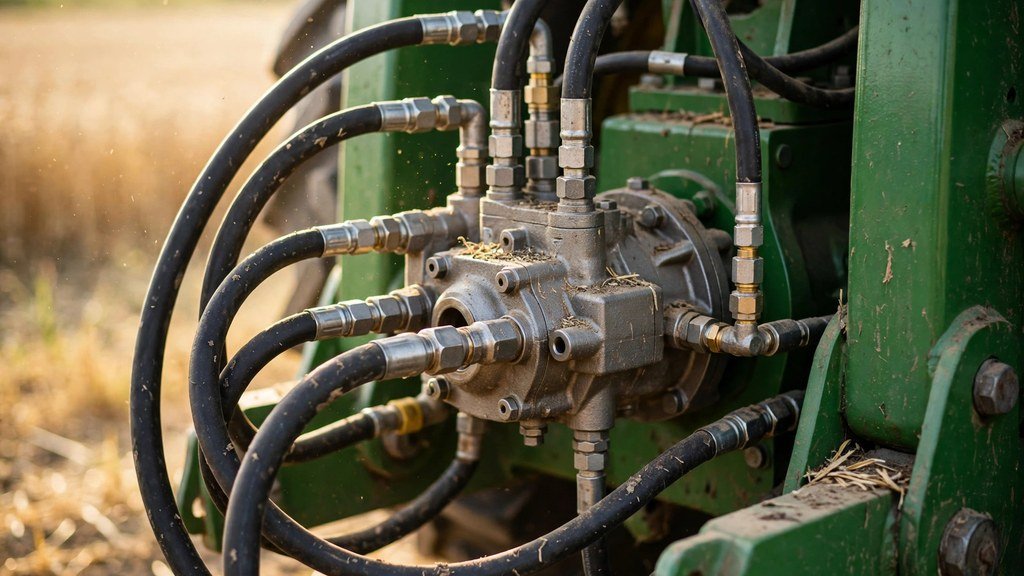
The e18 PowerShift is a durable gearbox, but it is also a precision one. Give it clean oil at the 1,500-hour interval, a recalibration when your dealer recommends it, and attention to early symptoms: harsh shifts, delayed engagement, or a warning light are dealer items, not things to work through for another week. Keep the hydraulic oil clean, keep couplers capped when a scraper is unhooked, and replace a weeping hose before it becomes a burst hose under a loaded scraper. Good John Deere Scraper-Special Tractors maintenance treats the hydraulic system as a safety system, because on a scraper job, it is one.
Factors Affecting Service Life, Downtime and Repair Costs
Three things dominate the service life of a scraper tractor: hours, duty cycle, and ground conditions. A 2022 9RX 640 with 2,100 hours and a 2024 with 500 hours are very different machines: abrasive, rocky soil ages a tractor faster than the same hours on finish grading. Roading is the single biggest track-life killer in Deere’s own guidance, with tread wear rates up to 15 times field rates. Ballast matters too: both front-heavy and rear-heavy setups increase treadbar wear, while a balanced machine wears least. Set your John Deere Scraper-Special Tractors maintenance budget by configuration, not by a single fleet average.
Downtime cost is where scraper tractors differ most from tillage tractors. A tillage tractor that breaks down costs you a day in the field; a scraper tractor that breaks down can idle an entire dirt crew and a job schedule. That is why contractors keep critical wear parts on hand and use JDLink and Expert Alerts where fitted to catch codes early. A realistic John Deere Scraper-Special Tractors maintenance budget therefore includes a wear-parts reserve, not just scheduled services. Model differences are compared in the review, and cycle times and wear are covered in the performance figures.
John Deere Scraper-Special Tractors Common Problems and Warning Signs
No machine in this class is trouble-free, and the honest way to buy or run one is to know the failure modes before they find you: hydraulic leaks, transmission symptoms, cooling trouble, drawbar wear, tire damage, and track and undercarriage wear. All of them are reasons to inspect on schedule, which is the heart of John Deere Scraper-Special Tractors maintenance.
Hydraulic Leaks, Transmission Symptoms and Cooling Issues
Hydraulic leaks usually announce themselves as a slow weep at a coupler, a hose fitting, or a cylinder seal, and the correct response is to fix the weep, not to keep topping up the oil. A hose that weeps under pressure today can burst under a loaded scraper tomorrow. Check hoses for rubbing, cracking, and heat damage, especially near the drawbar and scraper hitch, and replace any hose that shows exposed braid. Fixing weeps early is basic John Deere Scraper-Special Tractors maintenance.
Transmission symptoms to watch for include harsh or delayed shifts, slipping under load, unusual noise from the rear axle area, and any warning on the CommandCenter display. The e18 is electronically managed, so pull the diagnostic code first. Cooling issues show up as a temperature gauge that climbs under load, a fan that runs constantly, or repeated coolant loss with no visible puddle. In scraper work the first suspect is almost always a cooler package packed with dirt and chaff. Never keep working a hot tractor to finish a load: an overheated JD14 is a far bigger bill than a delayed load. A careful John Deere Scraper-Special Tractors maintenance routine catches all three problem families while they are still cheap.
Drawbar Wear, Tire Damage, Track Wear and Undercarriage Checks
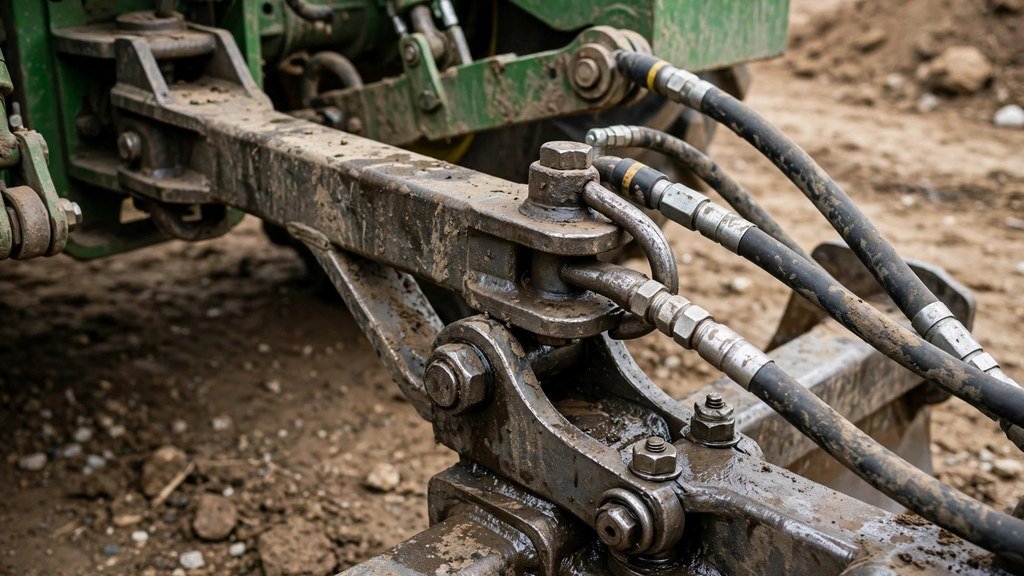
The drawbar is the most scraper-specific wear point on the whole tractor. Current 9RX Scraper Specials include drawbar support for short scraper drawbars, and the 9R 640 carries a Category 5 drawbar rated at 12,000 pounds maximum vertical load, but the pin, bushings, and support bolts still wear under constant cycling. Check the pin for play, elongated holes, and cracks at the support, and retighten the support cap screws on schedule. Drawbar checks are a scraper-specific part of John Deere Scraper-Special Tractors maintenance.
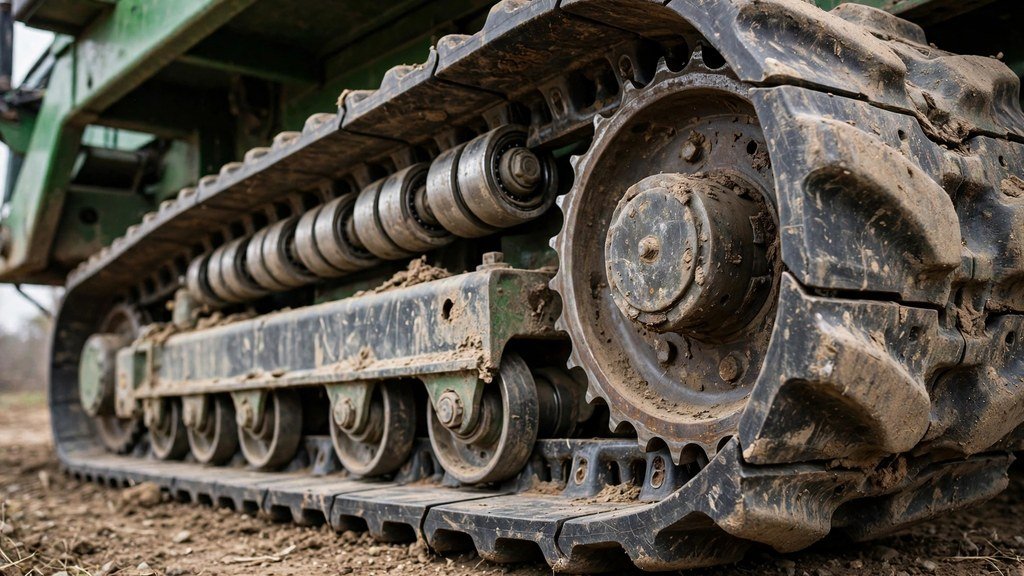
On wheeled machines, tire damage is usually cuts, stubble punctures, and dual-pressure imbalance. On tracked machines, look for cuts or tears perpendicular to the track, missing chunks, and uneven wear around the sprocket and roller areas. Parallel cuts can usually be run for a while, but perpendicular cuts often lead to complete failure, and severed cords mean failure is probably imminent. Check track tension on schedule: loose tracks slip and wear fast, while tight tracks wear components and burn more fuel. Midrollers need replacement when more than a third of the rubber width is lost from either side, when a wheel no longer turns freely, or when less than 5/16 inch of tread depth remains on a drive wheel, and inner and outer midrollers must stay within 30 mm of circumference of each other. Clear trash from the undercarriage daily, because packed material damages guide lugs and raises derailment risk.
The video below is John Deere’s own guide to toe adjustment on track tractors, one of the most useful checks in the John Deere Scraper-Special Tractors maintenance routine.
In their first 50 to 100 hours, expose new belts to dry, dusty soil as soon as possible and precondition them before road work or moist soil. If you must road a tracked machine, cut speed by 1 mph for every 15 degrees Fahrenheit above 75 degrees, and use soil as a lubricant after every 10 miles. That single habit is one of the highest-value items in John Deere Scraper-Special Tractors maintenance.
John Deere Scraper-Special Tractors Inspection and Safety
Buying used, or putting a machine back to work after the off-season, is mostly an inspection exercise. The machine will tell you its history if your John Deere Scraper-Special Tractors maintenance inspection checks the right places: service records, software and diagnostic codes, the drawbar, the brakes, the ballast, and the safety systems.
Checking Service Records, Software Updates and Applicable Recalls
Ask for the full service history matched against the hour meter: 500-hour engine services, 1,500-hour transmission-hydraulic services, and any track or midroller replacements should all be documented. A machine with gaps in its records is not automatically a bad machine, but in John Deere Scraper-Special Tractors maintenance terms, the gaps should be reflected in the price, because you are buying unknown wear. Check for outstanding diagnostic codes through the CommandCenter display or with your dealer, and ask whether software is current: current 9R machines support predictive diagnostics through Expert Alerts, and a dealer can confirm software level and recalls from the serial number. Also verify warranty: Deere’s agricultural base warranty is 24 months or 2,000 hours, so most used scraper tractors are out of base warranty.
Inspecting Scraper Connections, Brakes, Ballast and Safety Systems
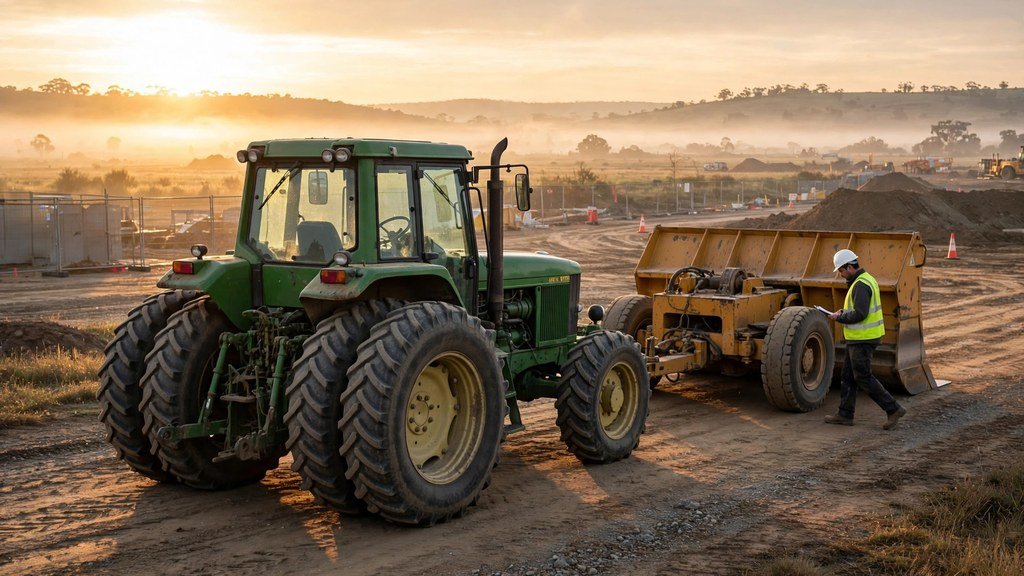
Start at the back of the tractor. Inspect the scraper hitch, drawbar pin and bushings, safety chain if fitted, and hydraulic couplers for leaks, damage, and dust-cap discipline. Cycle the ejector and apron through their full range and watch for slow or drifting movement, which points to cylinder seals or valve trouble. Check the brakes for stopping power and even application, and confirm the park brake holds on a slope. Verify ballast against the machine’s limits: spec sheets list 54,000 pounds for the 9R 540 and 9R 640 and 62,000 pounds for the 9RX 490, while one dealer listing for the 9R 640 shows 67,000 pounds. Check the lights, backup alarm, seat belt, and fire extinguisher too. A thorough John Deere Scraper-Special Tractors maintenance inspection ends with a short test pull: a loaded cycle that proves the drawbar, hydraulics, transmission, and brakes all work together before money changes hands. These inspection findings tie directly to resale value and annual budgets.
John Deere Scraper-Special Tractors Maintenance FAQs
These are the questions owners and buyers actually ask about John Deere Scraper-Special Tractors maintenance, answered directly.
How often should engine oil be changed on a John Deere Scraper-Special tractor?
Every 500 hours on the current 9R and 9RX Scraper Specials, using approved John Deere oil and a genuine filter, or annually if hours come slowly. The JD14 sump holds about 16.9 gallons. In John Deere Scraper-Special Tractors maintenance, never stretch the interval to finish a job.
What is the hydraulic and transmission oil change interval?
Every 1,500 hours for the shared transmission-hydraulic oil and filters on the current spec sheets, with about 59 gallons without a 3-point hitch and PTO. Filters go with the oil. That shared-sump design is why John Deere Scraper-Special Tractors maintenance treats the 1,500-hour service as non-negotiable.
How do I check track tension on a 9RX or 9RT Scraper Special?
Follow your manual’s procedure, using the hydraulic tensioning system and a dealer-supplied tension hose kit, with hydraulic oil below 100 degrees Fahrenheit. Check tension on schedule and after any track work, and re-check it after the first hours of use. That re-check is standard John Deere Scraper-Special Tractors maintenance practice.
How long do track belts and midrollers last?
It depends on roading, ground conditions, and tension discipline, not on any calendar figure. Deere’s guidance warns that roading can increase tread wear up to 15 times field rates, so a regularly roaded machine wears belts far faster than a trailered one. Midrollers are replaced on condition: more than a third of rubber width lost, full-width rubber loss anywhere, a wheel that no longer turns freely, or under 5/16 inch of drive-wheel tread depth.
What are the warning signs of hydraulic trouble?
Slow or jerky functions, a whining pump, milky or burnt-smelling oil, repeated top-ups, and any visible weep at couplers, hoses, or seals. A weeping hose with exposed braid is a replacement item, not a watch item. Put every weep on the John Deere Scraper-Special Tractors maintenance list the day you find it.
How do I keep a scraper tractor from overheating?
Clean the radiator and hydraulic oil cooler package daily in dusty work, keep the coolant at the correct level, and treat a climbing temperature gauge as a stop-work signal. The current 9R 640 uses a maintenance-free hydraulic fan drive, but no fan compensates for a cooler core packed with dirt. Daily cooler cleaning is the single most effective John Deere Scraper-Special Tractors maintenance habit in dusty work.
What does a used Scraper Special cost, and what does that mean for upkeep?
October 2026 dealer listings put a 2022 9RX 640 with around 2,100 hours near $510,000, a 2023 with 850 to 1,260 hours in the $555,000 to $660,000 range, and a 2024 with around 500 to 900 hours in the $620,000 to $655,000 range, while a 2023 wheeled 9R 640 with 629 hours was listed at $574,900. Van Wall also lists a used 2024 9RX 640. Hours and condition move the price more than the model year does. That comparison belongs in any John Deere Scraper-Special Tractors maintenance budget.
Does John Deere Scraper-Special Tractors maintenance differ between 9R, 9RT, and 9RX?
Engine, transmission, and hydraulic schedules are shared across the current generation, but the running gear is not: wheeled 9R machines need tire and dual care, 9RT machines need tension and alignment checks on two belts, and 9RX machines need the same on four belts plus midroller and idler oil levels. Budget your undercarriage time and money by configuration, not by a single fleet average.
Should I service a scraper tractor myself or use a dealer?
Daily checks, greasing, filter and oil services, and track tension checks are realistic owner jobs with the manual in hand, but transmission diagnostics, DEF service, software updates, and major undercarriage work belong with a dealer. Knowing that boundary is part of good John Deere Scraper-Special Tractors maintenance.
Scraper tractors reward owners who treat John Deere Scraper-Special Tractors maintenance as part of the job, not as an interruption to it. Stay on the 500-hour and 1,500-hour services, keep the tracks or tires in spec, and inspect before you buy. Model and price detail sits in the review, and the full cost picture sits in the ownership-cost figures. The current-generation platform and the earlier four-track generation differ in engine, transmission, and track hardware, as the 9RX 590 platform detail and 9620RX platform detail show.