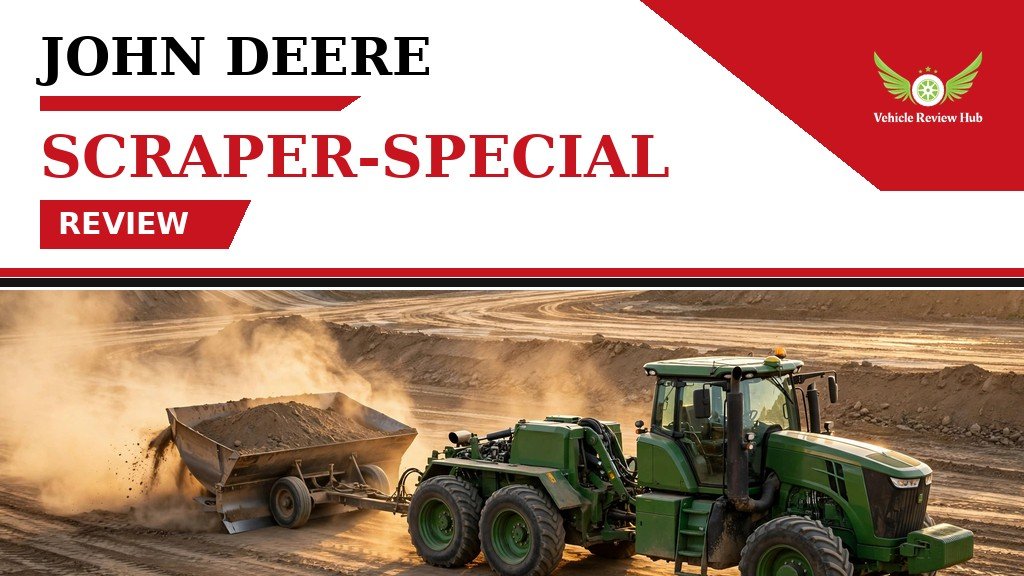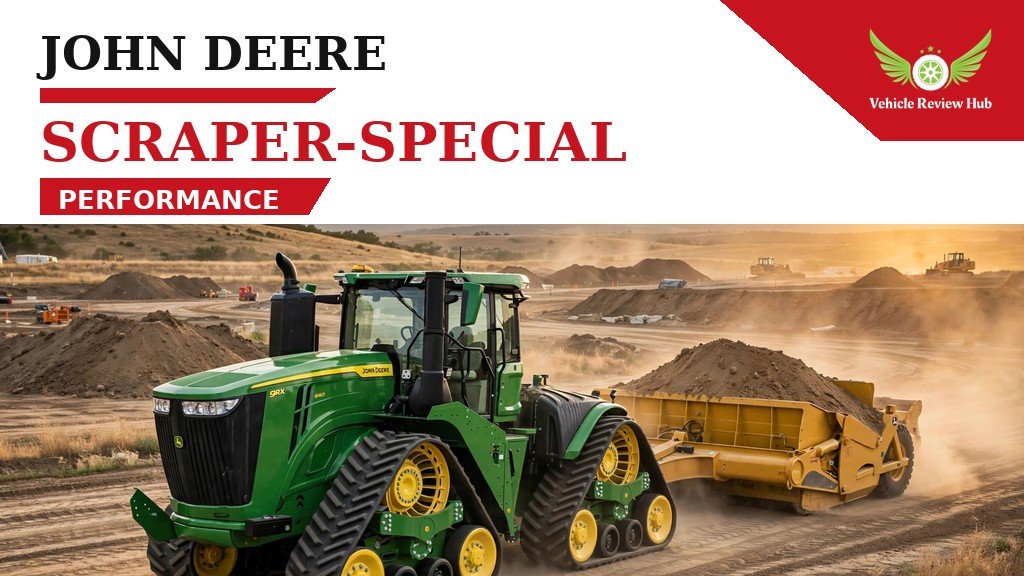
A John Deere Scraper-Special tractor earns its keep on one number: cubic yards moved per gallon of diesel. This guide looks at John Deere Scraper-Special Tractors performance the way contractors do: fuel burned in each phase of the cycle, traction under a full pan, ride quality on haul roads, and what limits production. In short, John Deere Scraper-Special Tractors performance starts with a 490 to 590 rated-horsepower JD14 engine, an e18 PowerShift transmission and up to 110 gpm of hydraulic flow, letting one operator load, haul and spread 16 to 38 cubic yards per pass.
John Deere Scraper-Special Tractors Fuel Consumption and Efficiency
Fuel is the largest controllable cost in scraper work, and the hardest figure to pin down, because John Deere publishes no gallons-per-hour rating for scraper cycles. What the company does publish is the hardware that controls fuel burn. This section separates verified figures from planning estimates, a distinction that matters for John Deere Scraper-Special Tractors performance, where one wrong fuel assumption can ruin a bid.
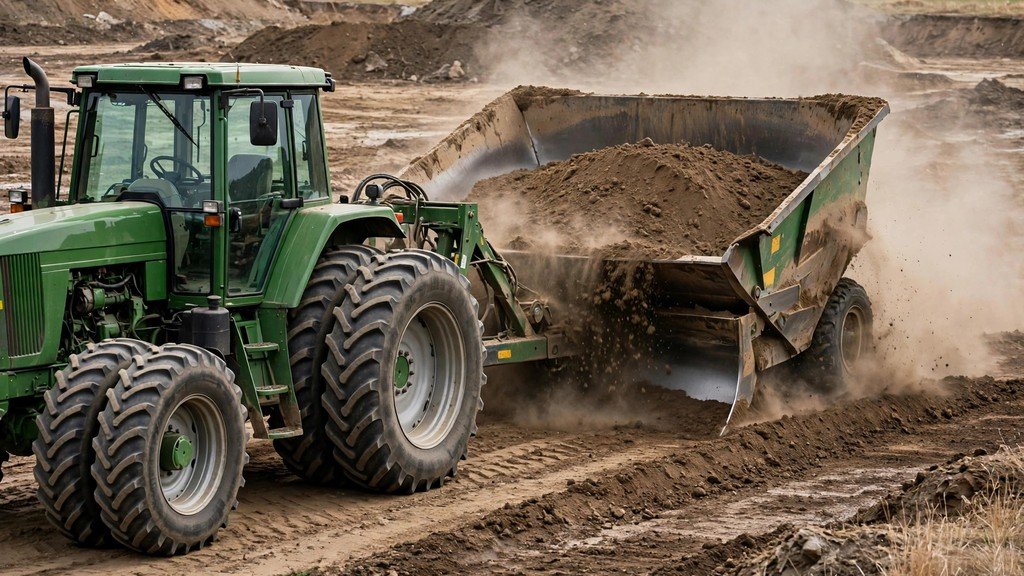
Fuel Use During Scraper Loading, Hauling and Spreading
Loading is the most expensive phase for John Deere Scraper-Special Tractors performance: the cutting edge is in the ground, the engine is near full load, and wheel slip is at its worst. Hauling a full pan comes next, with tens of thousands of pounds behind the drawbar. Spreading is lighter, and the return run lightest.
Because Deere publishes no cycle fuel figures, the table below is a planning estimate built on the standard diesel rule of roughly 0.045 to 0.055 gallons per horsepower-hour at full load. Treat these numbers as budgeting brackets, not factory ratings.
| Cycle phase | Load level | Estimated fuel use, 590-hp class |
|---|---|---|
| Loading the pan | Full load, high slip risk | 27–32 gallons per hour |
| Hauling loaded | High load, steady pull | 22–27 gallons per hour |
| Spreading | Medium load, bowl emptying | 15–20 gallons per hour |
| Return run, empty | Light load | 10–14 gallons per hour |
| Full-cycle average | Mixed phases | 17–23 gallons per hour (estimate) |
One verified fuel fact for John Deere Scraper-Special Tractors performance: Deere states that the JD14 engine uses about 3 percent less fuel than the 13.5L engine it replaced, while making 14 percent more power. Tank size is also verified: the 2015-era wheeled scraper tractors carried a 400-gallon tank for two-shift running, and the current 9RT 540 Scraper Special is listed with a 350-gallon tank.
How Load, Soil, Cycle Time and Engine Power Affect Fuel Economy
Four things move the fuel needle most. Load: a heaped pan in heavy clay holds the engine at full load, while a half load in sandy loam barely works it. Soil: wet, sticky material loads slowly and drags on the bowl, while dry material grips less. Cycle time: maneuvering or waiting for a push dozer burns fuel without moving dirt. Engine power: a 590-horsepower tractor at 70 percent load generally burns less fuel per yard than a 490-horsepower tractor at 100 percent load.
This is where the e18 transmission’s Efficiency Manager earns its place in any discussion of John Deere Scraper-Special Tractors performance. The system matches engine speed and gear to hold ground speed at the lowest practical rpm, and Deere says it dramatically reduces fuel consumption. The Efficiency Manager system on the 9R and 9RT scraper tractors was introduced for exactly this reason and remains standard on the current e18 lineup.
John Deere Scraper-Special Tractors Performance on Earthmoving Jobs
On a jobsite, a scraper tractor is judged on one cycle repeated all day: cut, load, haul, spread, return. The tractor that completes that cycle fastest, with the fullest pan and the least wheel slip, moves the most dirt per dollar.
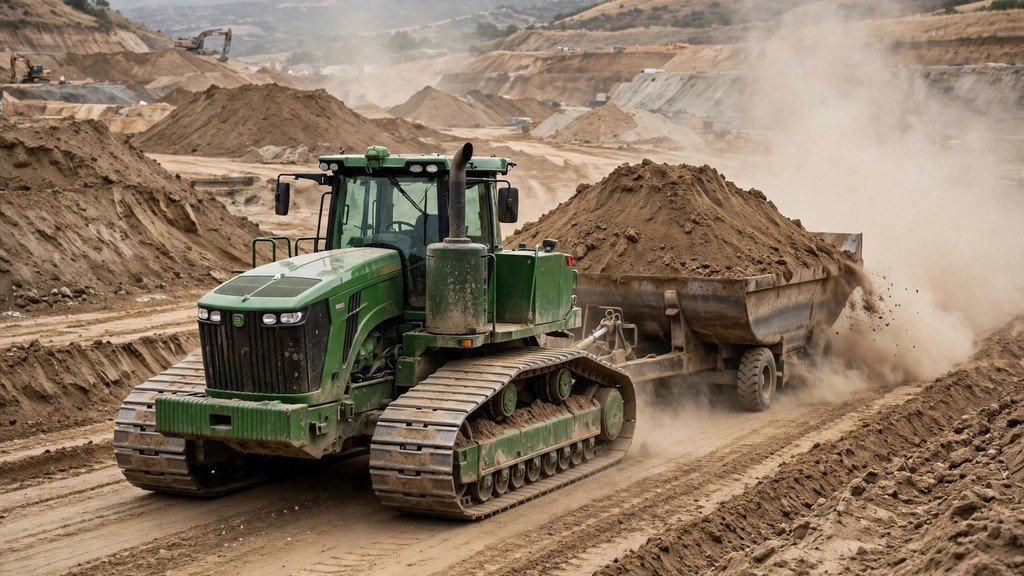
Ejector Scrapers, Carry-All Scrapers and Heavy Pulling Tasks
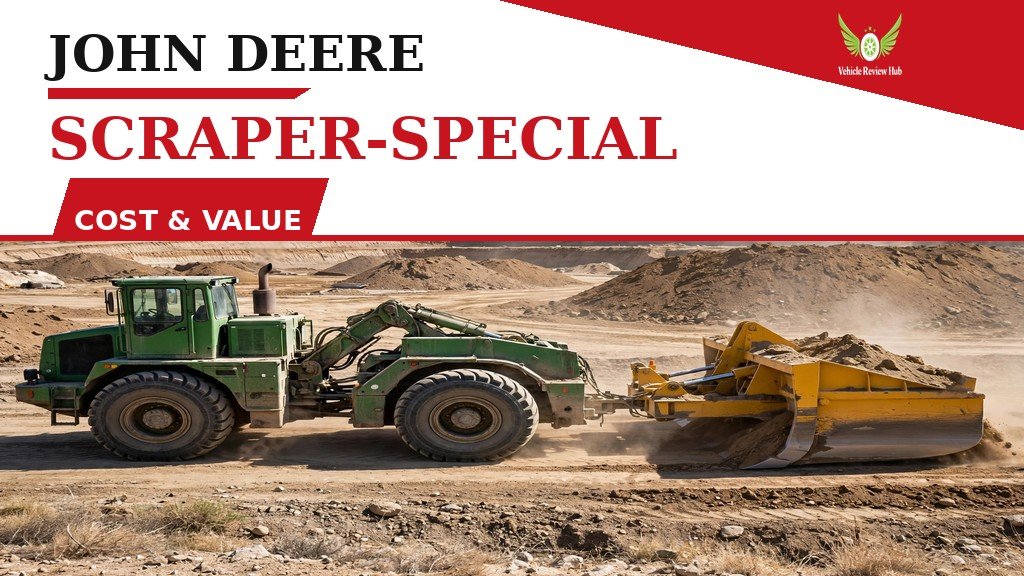
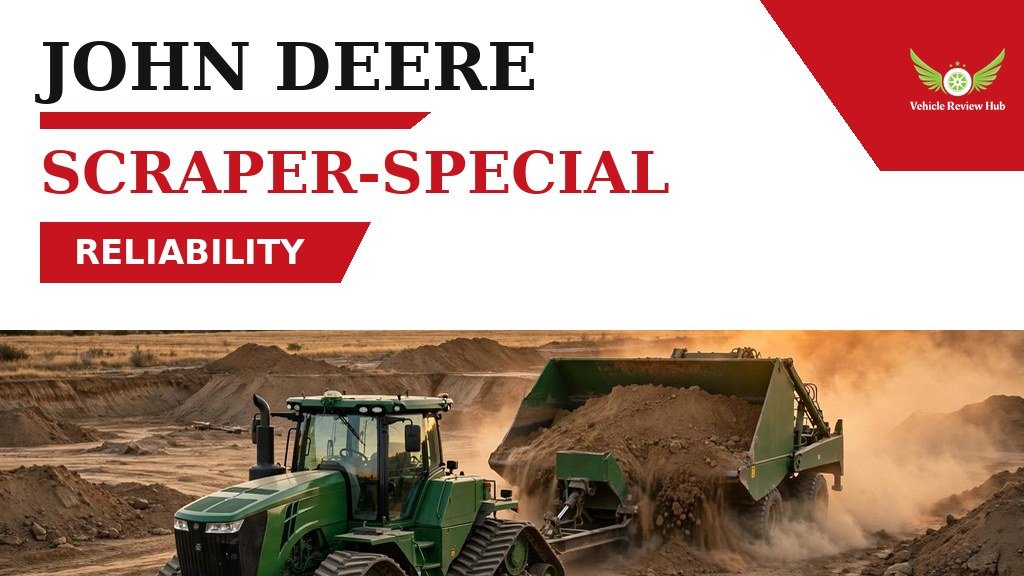
Ejector scrapers are the standard pairing for Scraper-Special tractors. That pairing is the baseline for John Deere Scraper-Special Tractors performance. A fixed blade cuts the material, the bowl fills, and a powered ejector wall pushes the load out during spreading, giving clean discharge in wet, sticky soil. Deere’s ejector lineup runs from the 16-cubic-yard 1612DE through the 20-cubic-yard 2010DE and 2014DE to the 24-cubic-yard 2412DE, and contractors commonly pull them in doubles or triples, moving up to 72 cubic yards per cycle. The newest additions are the direct-hitch 3012 DH at 30 cubic yards and the 3812 DH at 38 cubic yards with a 12-foot cut.
Carry-all scrapers use a different idea: a standard bucket and straight blade carry the load rather than ejecting it, and their extra flotation suits sandy soil. For John Deere Scraper-Special Tractors performance on heavy pulls, torque is what matters: the current 9R 590 Scraper Special makes 2,008 lb-ft at 1,550 rpm, the 9R 540 makes 1,838 lb-ft, and the 9RX 490 makes 1,668 lb-ft, all with a 10 percent power boost and 38 percent torque rise.
| Scraper | Capacity | Best match |
|---|---|---|
| Deere 1612DE ejector | 16 cu yd | Smaller jobs, single pan |
| Deere 2010DE / 2014DE ejector | 20 cu yd | Mid-size earthmoving |
| Deere 2412DE ejector | 24 cu yd | Large jobs; triples reach 72 cu yd per cycle |
| Deere 3012 DH direct hitch | 30 cu yd | Any 9R, 9RT or 9RX; single-operator work |
| Deere 3812 DH direct hitch | 38 cu yd, 12-ft cut | Largest single pan; 9RX 710/770 class power |
| K-Tec 1228 direct mount | 28 cu yd heaped | Fast loading, suspension ride system |
| Ashland 140TS2 ejector | 14 cu yd heaped | Smaller tractors; tandem setup doubles to 28 cu yd |
Drawbar Traction, Hydraulic Response and Scraper Cycle Times
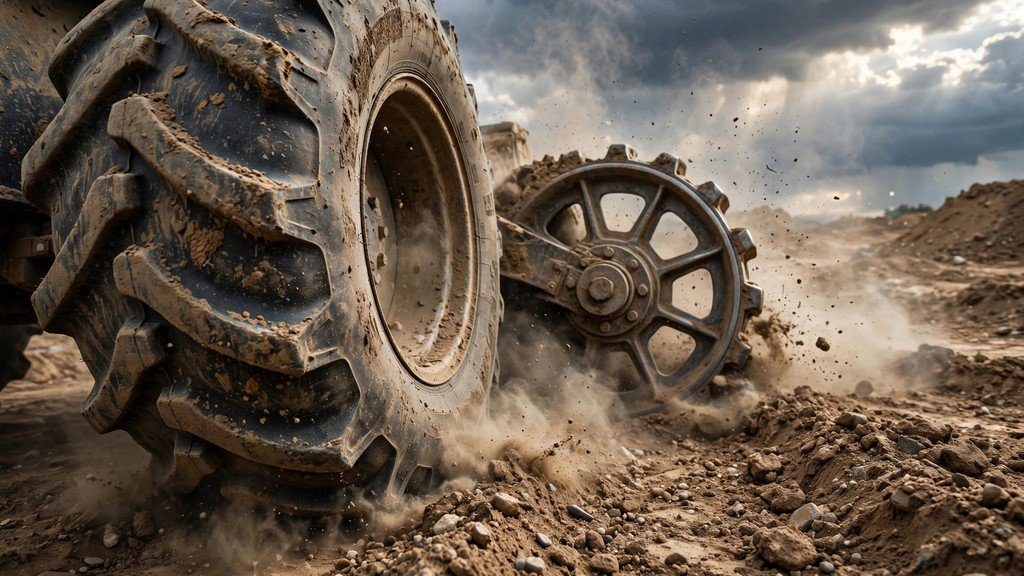
Traction limits John Deere Scraper-Special Tractors performance more often than horsepower. A tractor that spins its wheels while loading burns fuel and time without filling the bowl, which is why Scraper-Special tractors get a dedicated drawbar support — short standard, long optional on wheeled models. Automatic differential lock stays engaged while traveling straight.
Hydraulic response matters just as much for John Deere Scraper-Special Tractors performance. Running two or three pans takes several remotes at once, and the current lineup answers with 55 gpm standard and 110 gpm optional on the wheeled 9R 540 and 9R 590, and 110 gpm standard on the 9RX 490 and 9RT 540, with up to 42 gpm at a single rear SCV. Fast hydraulics shorten load and spread directly: the apron opens, the ejector pushes, the bowl lifts, and the tractor moves again while a slower system is still cycling.
As a worked example — not a factory rating — a 24-cubic-yard pan on a 1,500-foot haul with a 5-minute cycle completes 12 cycles per hour, or about 288 cubic yards per hour before efficiency losses (roughly 230 at 80 percent job efficiency). Shorten that cycle by 30 seconds and the crew gains about 10 percent production. That arithmetic is the whole argument for John Deere Scraper-Special Tractors performance: cycle time, not top speed, is what pays.
The video below shows a 640 hp John Deere 9RX 640 pulling a disk in the field — not a scraper, but a good look at how a four-track tractor in this class handles a heavy draft load, the heart of John Deere Scraper-Special Tractors performance:
John Deere Scraper-Special Tractors Handling and Operator Comfort
A scraper cycle repeats hundreds of times a day, so handling and comfort are production factors. A tired operator loads short and slows the cycle; a comfortable operator with a clear view keeps the rhythm. This section covers how suspension, visibility and maneuvering shape John Deere Scraper-Special Tractors performance over a full shift.
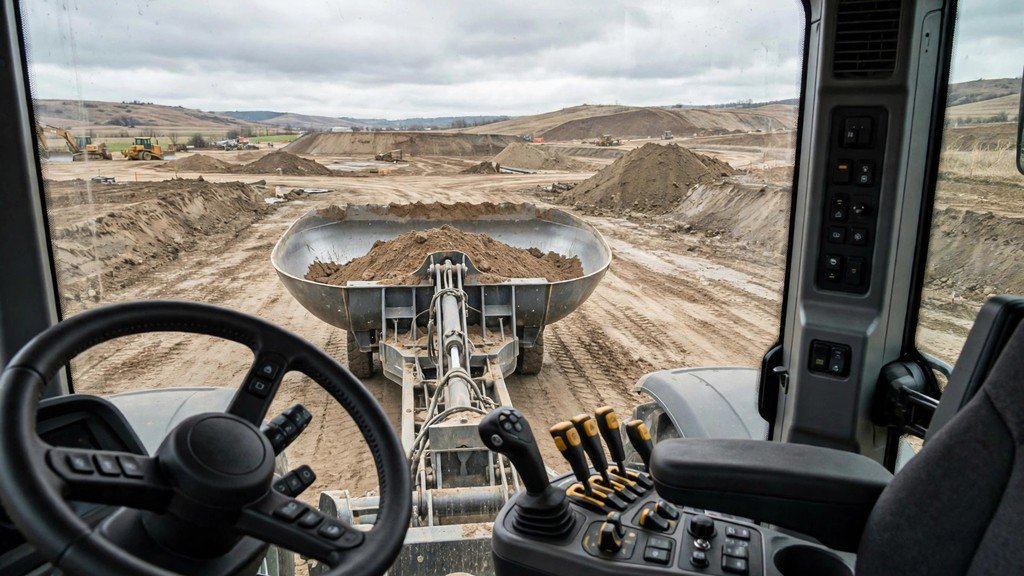
HydraCushion, Cab Visibility and Jobsite Maneuvering
For John Deere Scraper-Special Tractors performance on haul roads, HydraCushion is the wheeled 9R’s signature ride feature against road lope. At high transport speeds, a heavy wheeled tractor with a loaded pan starts to pitch. Deere says HydraCushion virtually eliminates that lope, shortening cycle times loaded and empty; the 9R scraper tractors also gained a 17-inch longer wheelbase. Tracked models differ: the 9RT uses AirCushion, the 9RX uses cab suspension as standard.
Visibility is the other half of John Deere Scraper-Special Tractors performance. The 9 Series cab offers Select, Premium and Ultimate visibility packages with up to 24 LED work lights, and low-profile direct-hitch scrapers keep the operator’s rear view open. At the fill end, the wheeled 9R 590 turns in about 20 feet with brakes on Group 48 tires, while the four-track 9RX 490 needs about 30 feet. Optional ActiveCommand Steering tightens low-speed turns to 3.5 turns lock-to-lock.
Wheel, Two-Track and Four-Track Performance in Different Conditions
For John Deere Scraper-Special Tractors performance, wheels are fastest and cheapest on firm, dry ground. A wheeled 9R transports at 25 mph, turns tightest and costs least to keep in tires — but it is the first configuration to lose traction when the cut turns wet. Two-track 9RT machines split the difference: better flotation and grip than wheels and a narrower profile than four tracks. Four-track 9RX machines are the soft-ground specialists: four belts spread the weight and grip stays high in mud, but turning radius grows.
The honest summary of John Deere Scraper-Special Tractors performance across configurations is that there is no single winner. Dry, firm, long-haul work favors the wheeled 9R. Mixed conditions with some soft spots favor the 9RT. Consistently soft, wet or low-bearing ground favors the 9RX. Contractors who work all three conditions often standardize on one configuration rather than maintaining two undercarriage types. The current JD14/e18 lineup makes that choice cleaner, with a common powertrain across all three configurations.
| Current scraper model | Engine | Rated / max hp | Hydraulics | Base weight |
|---|---|---|---|---|
| 9R 540 Scraper Special | JD14 13.6L | 540 / 594 | 55 std, 110 opt gpm | 45,980 lb |
| 9R 590 Scraper Special | JD14 13.6L | 590 / 649 | 55 std, 110 opt gpm | 45,980 lb |
| 9RT 540 Scraper Special | JD14 13.6L | 540 / 594 | 110 std gpm | 45,375 lb |
| 9RX 490 Scraper Special | JD14 13.6L | 490 / 539 | 110 std gpm | 56,320 lb |
| 9RX 590 Scraper Special | JD14 13.6L | 590 / 649 | 110 std gpm | — |
All five models above use the e18 18-speed PowerShift with Efficiency Manager and a 25 mph top speed. The 9RX 490 Scraper Special adds Camso 6500 Scraper Series tracks, and the 9R 590 Scraper Special lists HydraCushion and ActiveSeat II. For the wheeled line’s earlier generation, see the 9R performance guide.
John Deere Scraper-Special Tractors Real-World Experience
Spec sheets describe the tractor; jobsites describe the system. Real-world scraper work is limited less by rated horsepower than by ground conditions, operator skill, haul-road maintenance and how well the pan matches the tractor. This section covers the practical side of John Deere Scraper-Special Tractors performance.
Productivity Benefits, Operating Limitations and Jobsite Challenges
The biggest productivity benefit in John Deere Scraper-Special Tractors performance is cost per yard. A tractor-scraper system typically costs far less to buy and run than a self-propelled scraper fleet of equal capacity, and one operator handles loading, hauling and spreading without a second machine. The Earthmoving Productivity System adds a measurement benefit older crews never had: it calculates yardage loaded in real time, shows it every pass, photographs the inside of the bowl, and sends fuel burn and wheel-slip data to JDLink for bidding and billing. It retrofits to D-Series scrapers and to 2015-and-newer Scraper-Special tractors.
The limitations are just as real. Wet ground is the first one: when the cut turns to mud, wheeled tractors spin, pans drag, and cycle times stretch. Steep grades are the second: a loaded pan on a grade needs torque and traction together. Dust and visibility are the third, especially on dry haul roads. And maintenance is the fourth: scraper work is hard on drawbars, hitch pins, tires and tracks. All of them show up in John Deere Scraper-Special Tractors performance on jobs where the ground is worse than the bid assumed.
Matching Tractor Power, Scraper Capacity and Ground Conditions
Matching starts with a simple rule: the tractor must load the pan without a push dozer in your normal soil, or you must budget the dozer into the cycle. A 490-horsepower 9RX handles a single 24-yard pan in most soils; a 590-horsepower 9R handles doubles or a 30-yard pan; triples and the 38-yard 3812 DH need the highest-horsepower tractors. Ground conditions then adjust the match for John Deere Scraper-Special Tractors performance: soft ground calls for tracks and a smaller pan, firm ground allows wheels and a bigger pan, and sandy soil calls for a carry-all rather than an ejector.
The rest of the match is about details absent from a horsepower table. Drawbar support must suit the pan’s hitch. Hydraulic flow must cover every remote the pan uses at once, which is why the 110 gpm option exists. Ballast must be set for grip without overloading the axles, and tire or track width must suit the site’s ground pressure. Get those details right and the tractor fades into the background, which is exactly what good John Deere Scraper-Special Tractors performance feels like: the cycle repeats, the yardage adds up, and the only number that matters is the one on the JDLink report. The companion Scraper-Special review covers prices, engines and specs, and the Scraper-Special maintenance guide covers service intervals and wear points.
John Deere Scraper-Special Tractors Performance FAQs
These are the questions contractors and buyers ask most about how Scraper-Special tractors actually perform on the job — fuel, traction, cycle times and configuration choices, answered directly.
How much fuel does a John Deere scraper tractor use per hour?
Deere publishes no gallons-per-hour figure for scraper cycles, so any honest answer is an estimate. Using the standard diesel rule of about 0.045 to 0.055 gallons per horsepower-hour, a 590-horsepower-class tractor burns roughly 27 to 32 gallons per hour while loading, 22 to 27 hauling loaded, and 10 to 14 on the empty return, averaging about 17 to 23 per hour. For John Deere Scraper-Special Tractors performance planning, the Earthmoving Productivity System reports actual fuel burn through JDLink.
What size scraper can a 9R 590 pull?
A 9R 590 Scraper Special, with 590 rated and 649 maximum horsepower and 2,008 lb-ft of torque, is a sweet spot for John Deere Scraper-Special Tractors performance: it handles a single 30-cubic-yard direct-hitch pan, doubles of 20- or 24-yard ejectors, and triples of smaller pans. In heavy clay or on grades, step down one pan size.
Is an ejector scraper or a carry-all scraper better?
For John Deere Scraper-Special Tractors performance, ejectors are better in wet, sticky soil and where spread quality matters, because the powered ejector wall pushes the load out cleanly. Carry-alls are better in sandy soil, where their flotation and bucket design keep the pan moving instead of dragging.
Does HydraCushion really shorten cycle times?
Yes, on haul roads, because it addresses road lope — the pitching a heavy wheeled tractor develops at transport speed with a loaded pan. Deere says HydraCushion virtually eliminates that lope, letting the operator hold speed loaded and empty. The effect is largest on long, rough haul roads. That is a direct gain for John Deere Scraper-Special Tractors performance.
Which is better in mud: wheels, two tracks or four tracks?
Four tracks are best in mud for John Deere Scraper-Special Tractors performance, because four belts spread the tractor’s weight and keep grip when wheels would spin. Two tracks are a strong middle ground with better flotation than wheels and a narrower profile than four tracks. Wheels are fastest and cheapest on firm ground but lose traction first in wet cuts.
How many cubic yards per hour can a scraper tractor move?
It depends on pan size, haul distance and cycle time. As a worked example, a 24-cubic-yard pan on a 5-minute cycle completes 12 cycles per hour, or about 288 cubic yards per hour before efficiency losses — roughly 230 at 80 percent job efficiency. Shorter cycles and bigger pans raise that figure; mud, grades and waiting time lower it.
What hydraulic flow do scrapers need?
For John Deere Scraper-Special Tractors performance, it depends on how many pans and functions run at once. The wheeled 9R 540 and 9R 590 offer 55 gpm standard and 110 gpm optional, while the 9RX 490 and 9RT 540 come standard at 110 gpm, with up to 42 gpm at a single rear SCV. Running doubles or triples is the case for the 110 gpm system.
Do I need a push dozer to load a scraper?
Not always, but often in tough conditions. A correctly matched tractor loads its pan alone in normal soil, and Deere’s AutoLoad system helps by adjusting blade height automatically until the pan is full. In heavy clay or on grades, a push dozer shortens load time enough to pay for itself.
How does Efficiency Manager save fuel?
Efficiency Manager automatically matches engine speed and gear to hold the operator’s ground speed at the lowest practical rpm. That stops the high-rpm, high-slip operation that wastes the most fuel, and Deere says it dramatically reduces fuel consumption. It is standard with the e18 transmission on current scraper models, and it is a core reason John Deere Scraper-Special Tractors performance holds up on fuel across a full shift.
How does John Deere Scraper-Special Tractors performance change in wet soil?
Wet soil slows loading, increases wheel slip and stretches cycle times, and the effect is worst on wheeled tractors. Ejector scrapers handle sticky material better than carry-alls, tracked configurations hold traction longer, and a push dozer or smaller pan often restores the cycle when the ground turns against you.
Can older Scraper-Special tractors match current models on performance?
On raw pulling power, yes — the 2015-era 9620R made 620 rated horsepower from its Cummins QSX15 with 115 gpm of hydraulics. Where current models pull ahead is JD14 fuel efficiency, the e18 transmission’s Efficiency Manager, and Earthmoving Productivity System compatibility, which older machines can add by retrofit. The 9620RX review shows how the same Cummins-era engineering carried into the four-track line, and the 9RX 590 performance guide covers JD14 fuel behavior in detail.