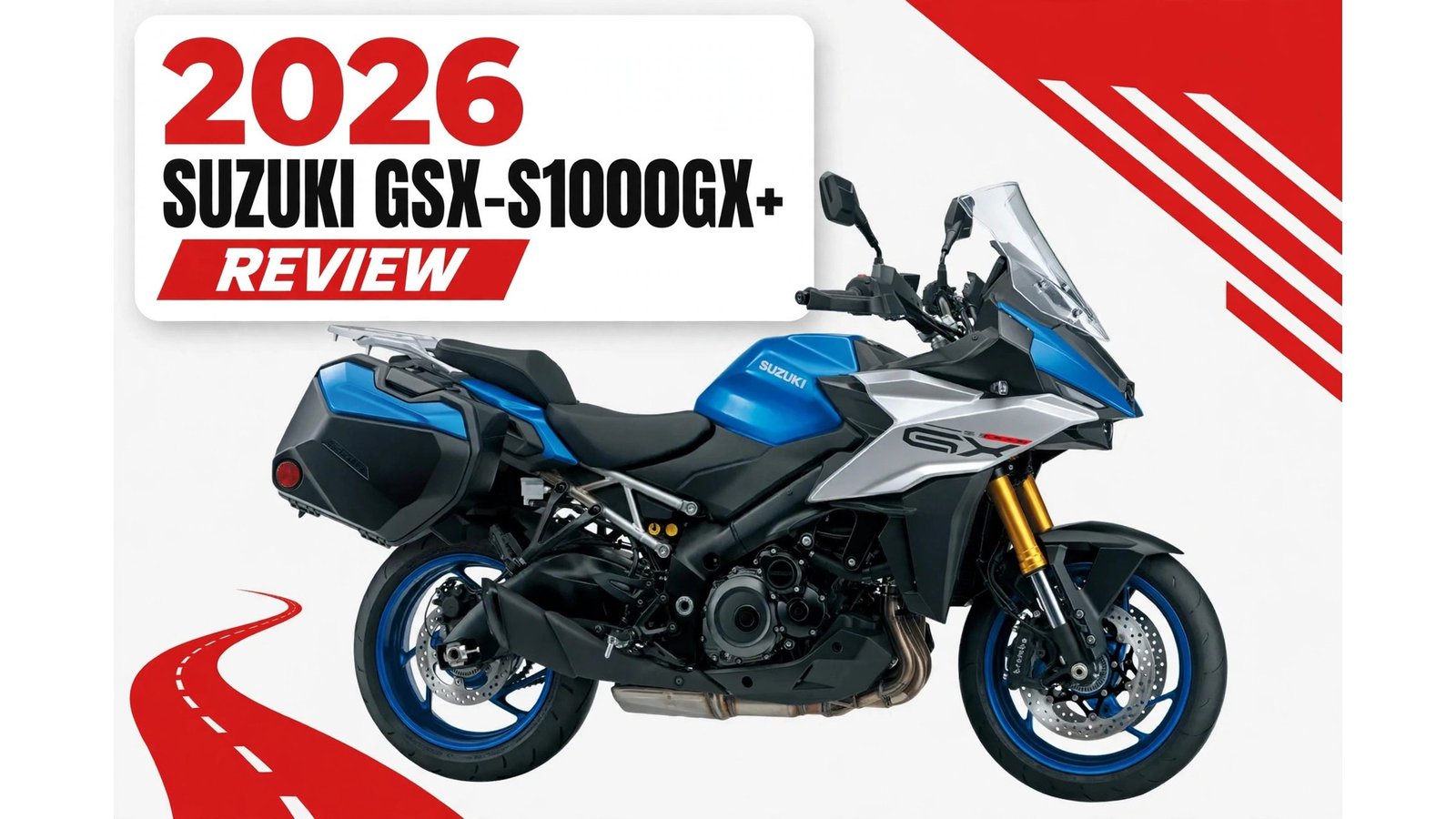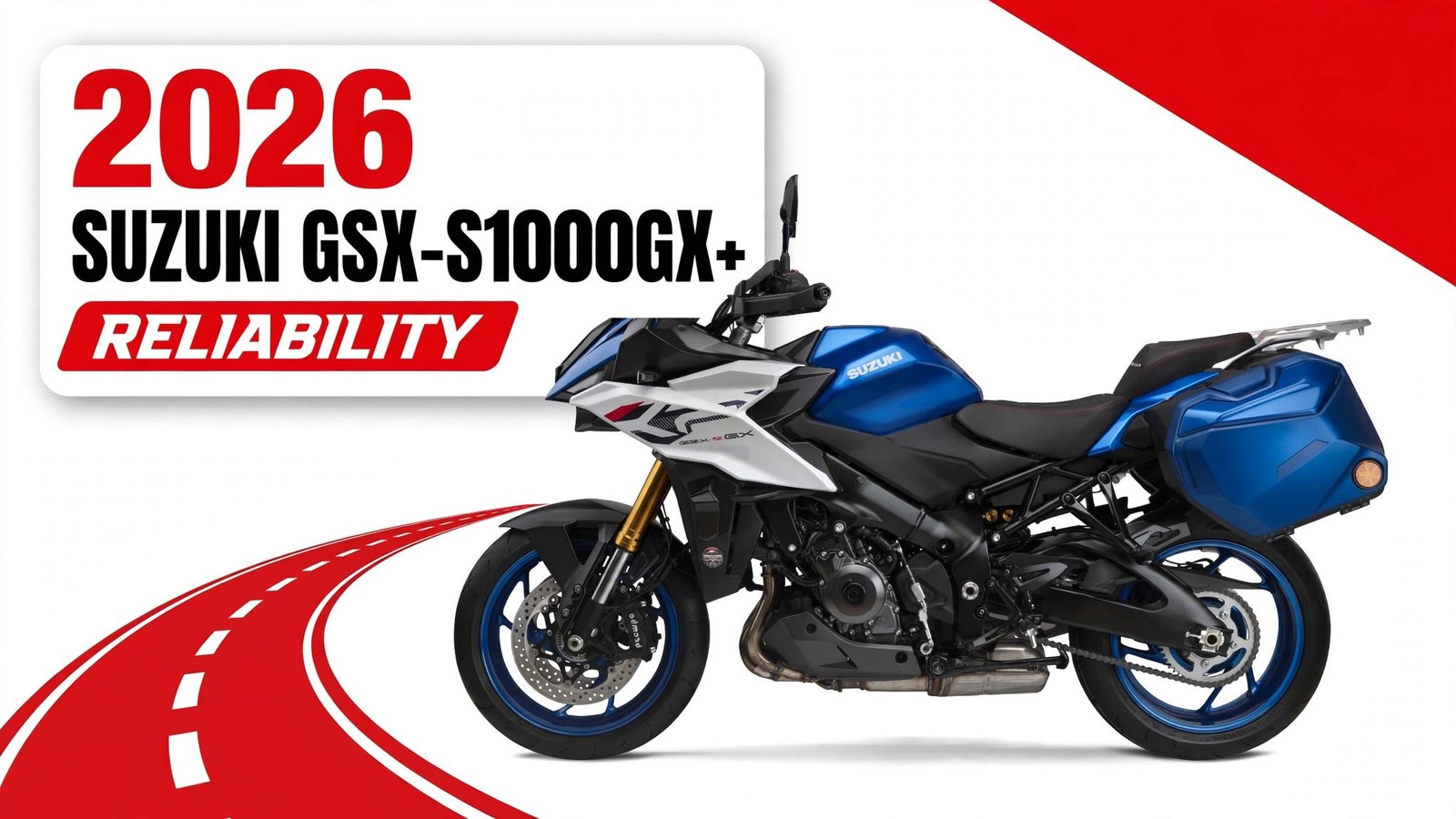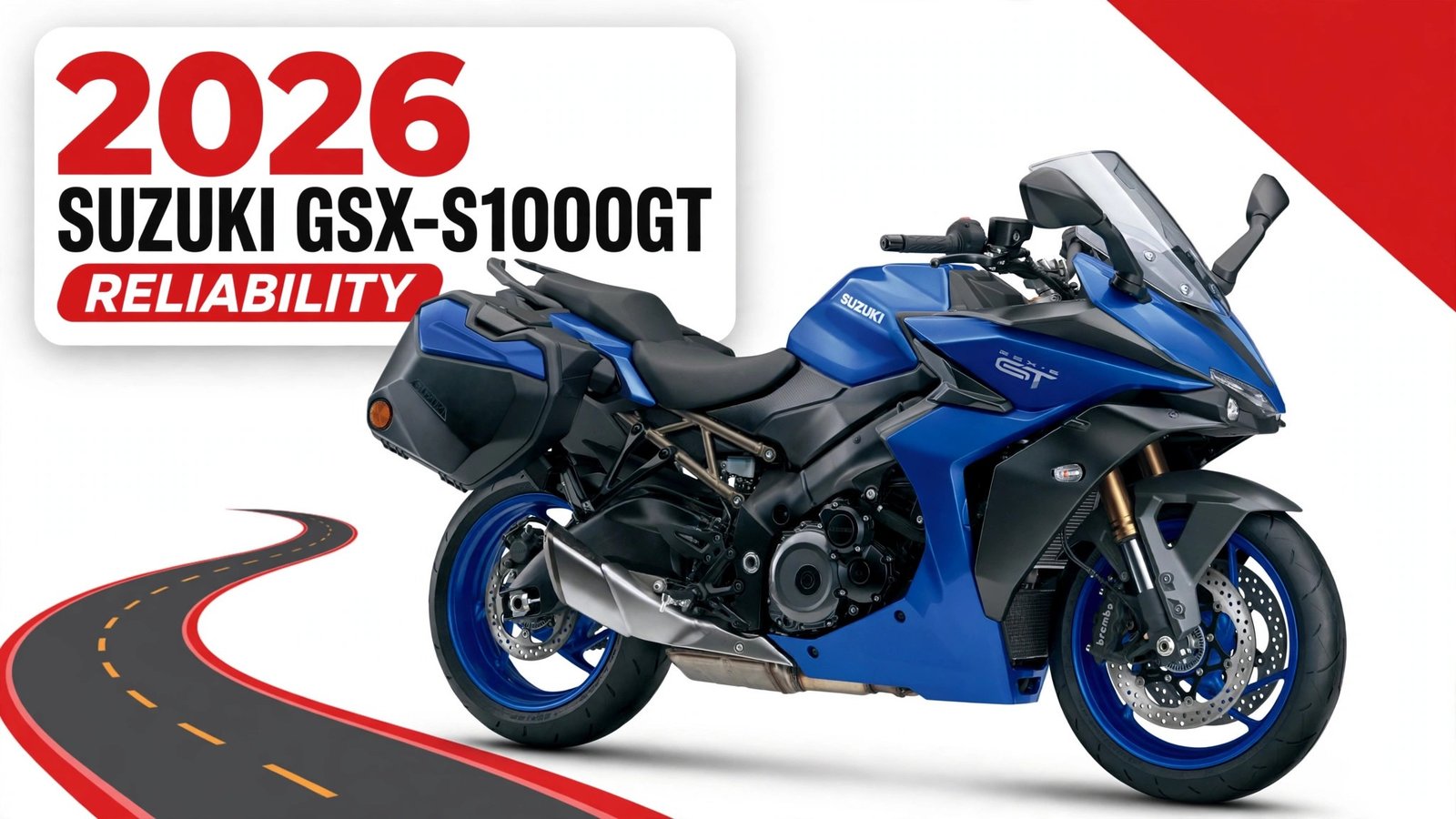
The short answer on Suzuki GSX-S1000GT reliability is good news: the GT is a dependable litre-class sport-tourer with no significant recurring engine faults widely reported, and MCN’s thirteen owners rate it 4.2 out of 5 overall. One owner has covered 27,000 miles without a breakdown, and no NHTSA recall names the GT or GT+. The ownership story is not perfect — thin paint, winter corrosion on fasteners, a soft rear shock and a short 178-mile tank are the real complaints — but none of them stops the bike. This Suzuki GSX-S1000GT reliability guide covers the ratings, the problems, the US maintenance schedule, the costs, and how to keep a GT reliable for years.
Suzuki GSX-S1000GT Reliability Overview
The Suzuki GSX-S1000GT reliability case rests on two things: a long-proven engine and owners who keep riding them. The 999cc inline-four is derived from the 2005–2008 K5 GSX-R1000, an engine with nearly two decades of service behind it, retuned for Euro 5. It is not a new, unproven design, and that shows in the owner record. This section of the Suzuki GSX-S1000GT reliability guide looks at what owners rate the bike, and what mileage, storage and previous care do to it.

MCN Owners Rate It 4.2 of 5, Thirteen Owners
Thirteen owners have reviewed the GT on MCN, and the overall Suzuki GSX-S1000GT reliability rating is 4.2 out of 5. The engine scores highest at 4.6, reliability and build quality at 4.2, ride quality and brakes at 4.0, equipment at 4.2, value against rivals at 4.4. MCN’s own expert rating is a full 5 out of 5. MCN’s experts put it plainly: “No significant recurring engine faults have been widely reported,” and “build quality and attention to detail are excellent, as new.” One 2022 owner, writing at 27,000 miles in March 2025, said: “Excellent reliability, never let me down… the engine has smoothed out considerably over 27,000 miles.” A 2023 GT+ owner, two years and about 7,000 miles in, called it a gorgeous machine for touring Europe. Another 2022 owner summed the engine up as “Brilliant engine, seems bomb proof,” and a 2024 owner preferred it to the Ninja 1000SX and any adventure bike. The MCN owner reviews are the best public record of Suzuki GSX-S1000GT reliability, because they come from people who paid for the bike and lived with it.
How Mileage, Storage and Previous Care Affect Reliability
The 27,000-mile owner is the most useful single data point in this Suzuki GSX-S1000GT reliability guide. His bike did not just survive high mileage — it got better, the engine smoothing out over the miles, because it was serviced regularly: two services a year, costing £750 a year in the UK. High mileage with a full service history is a better buy than low mileage with neglect, because the GT’s weak points are in the finish and the fasteners, and those suffer most from damp storage and skipped cleaning. Dry storage, regular cleaning, and a chain cleaned and lubricated every 600 miles matter more than the odometer. There is no engine-failure pattern in the owner reviews, so judge Suzuki GSX-S1000GT reliability by its service records and condition — general guidance for any used motorcycle, not a GT-specific study.
The video to watch first in this Suzuki GSX-S1000GT reliability guide is MCN’s long-term fleet bike after a year and about 7,000 miles with Emma Franklin — the closest thing to a reliability test this bike has.
Suzuki GSX-S1000GT Common Problems and Wear Items
The GT’s problem list is short and honest: nothing here strands the bike, but several things annoy owners and cost money if ignored. The pattern is consistent across MCN’s expert notes, its known-faults list, and owner reviews — finish and comfort items, not engine failures. This part of the Suzuki GSX-S1000GT reliability guide goes through each one with its source, and the wear items to check on a used bike.
No NHTSA Recall Names the GT or GT+
No recall found in published notices names the GT or GT+ — the published notices were checked, and the GT does not appear in any of them. The recall that causes confusion is 25V505, covered in full under its own heading later in this Suzuki GSX-S1000GT reliability guide — it covers the Katana and the V-Strom 1050, not the GT. A used-GT buyer should still run the VIN through NHTSA’s recall lookup before buying, as a routine check on the actual bike. The absence of a GT recall is a genuine point in the bike’s favour, but it is not a substitute for checking the specific motorcycle in front of you.
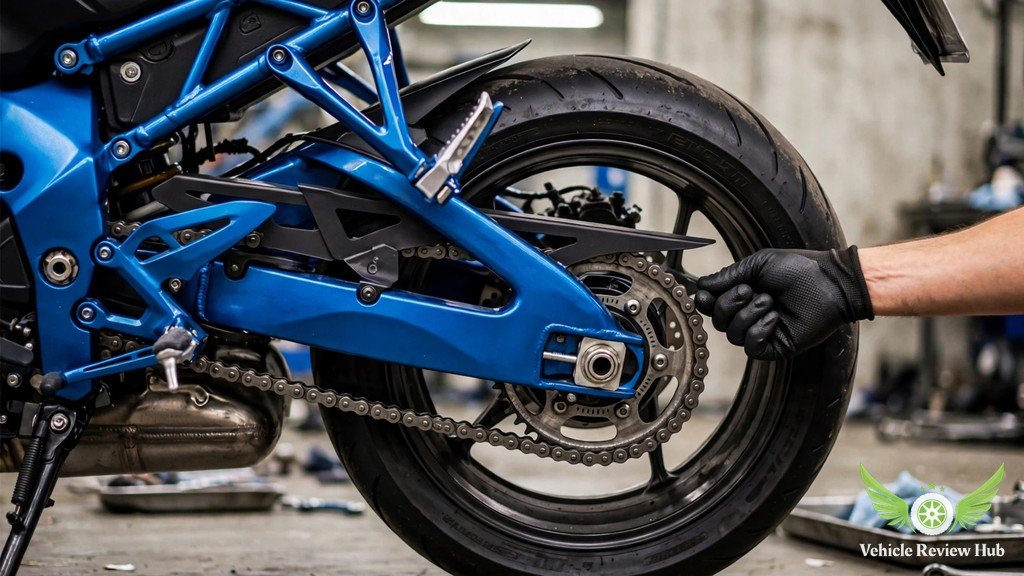
Chain, Sprockets, Tires, Fork Seals, Brakes and Electrical Checks
Thin paint is the most reported cosmetic fault: MCN’s expert and known-faults list both flag it, and owner Dan G found it “pretty thin… chips and a few scratches.” It is cosmetic, not structural. Fasteners and brake fittings are the winter problem — MCN’s expert warns to “keep an eye on the fasteners in the winter,” and the 27,000-mile owner found “fasteners and connectors that quickly degrade if not cleaned regularly.” Regular cleaning and a protective spray keep this under control. The standard rear shock is soft for aggressive riding and has no remote preload adjuster; MCN’s long-term bike had a “wobbly rear end” that was fixed with a Maxton NR4 shock at £630 including VAT in the UK. The stock Dunlop Roadsport 2 tyres are widely replaced early — MCN’s expert says fitting RoadSmart 3 rubber “would greatly enhance ride quality,” the fleet bike ran Michelin Road 6. The brakes are powerful but slightly wooden, with initial bite lacking — MCN and Cycle News blame the old master cylinder. Vibration through the seat at motorway speeds is on MCN’s known-faults list, and one owner reported bars vibrating at certain revs enough to cause numbness on long runs. The fuel gauge is not prominent and there is no low-fuel warning light, which the fleet bike’s rider said “irked me on every long ride.” The seat is hard over distance, the pillion seat is not the best for two-up touring, there is no centre stand, and the mySPIN phone app is clumsy enough that one owner avoids using it. On a used bike, check the chain and sprockets, tyres, fork seals, brake pads, lines and fluid, battery, and electrical connectors for winter corrosion. These are standard checks for any used motorcycle, not failures of Suzuki GSX-S1000GT reliability.
Suzuki GSX-S1000GT Maintenance Schedule and Servicing
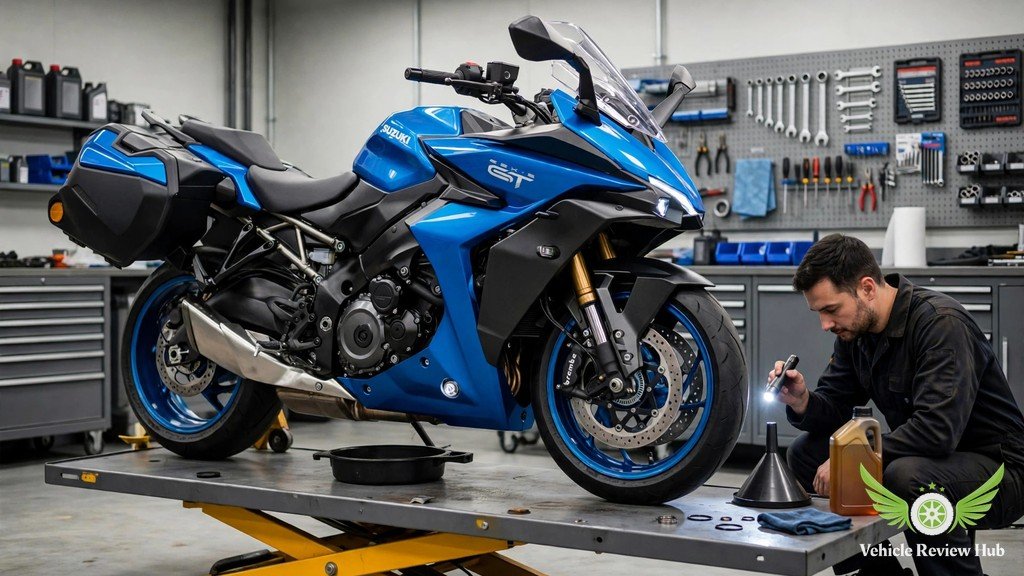
The GT’s service schedule comes from the US owner’s manual, and the headline number is the oil interval: every 3,750 miles — shorter than many rivals and shorter than the UK schedule for the same bike, which is why this Suzuki GSX-S1000GT reliability guide states the US figure first and treats the UK figure separately. The full GT maintenance schedule, transcribed from the owner’s manual, is the reference for everything below.
Oil Every 3,750 Miles in the US Manual
First service: 600 miles or 1,000 km, or two months — engine oil and filter, plus a chassis inspection. After that, engine oil is replaced every 3,750 miles or 6,000 km, or 12 months, whichever comes first. The oil is SAE 10W-40 meeting JASO MA and API SF, SG, SH or SJ, and the filter is replaced at 600, 7,500 and 15,000 miles. That 3,750-mile interval is the number to remember, and it is also the one most often quoted wrong: do not transfer the 2016–2021 GSX-S1000 and GSX-S1000F interval of 3,500 miles to the GT. The chain needs cleaning and lubricating every 600 miles or 1,000 km. Coolant is the long-life type: replace it every four years or 30,000 miles, or every two years or 15,000 miles for the standard type. Sticking to the oil rule is the single most important habit for Suzuki GSX-S1000GT reliability.
Valve Clearance Inspection at 15,000 Miles
Valve clearance is inspected at 15,000 miles or 24,000 km — the big scheduled job on the GT. Do not transfer the 2016–2021 GSX-S1000 and F’s 14,500-mile interval to the GT. The spark plugs are NGK CR9EIA-9 iridium, four of them, inspected at 3,750 and 11,250 miles and replaced at 7,500 and 15,000 miles — covered in full below. A valve check at 15,000 miles is a normal cost for a litre-four, best done by a dealer or a competent independent shop with the shim record kept. The GT performance guide covers what the engine does; this Suzuki GSX-S1000GT reliability guide covers what it costs to keep doing it.
| Service item | Interval (US manual) |
|---|---|
| First service (oil + filter + chassis check) | 600 miles / 1,000 km or 2 months |
| Engine oil (SAE 10W-40, JASO MA) | Every 3,750 miles / 6,000 km or 12 months |
| Oil filter | Replace at 600, 7,500 and 15,000 miles |
| Chain clean + lubricate | Every 600 miles / 1,000 km |
| Spark plugs (NGK CR9EIA-9 iridium, 4) | Inspect 3,750 and 11,250 miles; replace 7,500 and 15,000 miles |
| Valve clearance inspection | 15,000 miles / 24,000 km |
Suzuki GSX-S1000GT Tires, Brakes and Suspension Maintenance
Tyres, brakes and suspension are where the GT’s running costs actually land, because the engine asks for so little. The stock setup works, but owners routinely improve it, and the manual’s small items — plugs, chain, fluid — keep the bike feeling new. This section covers the plug changes, the UK oil-interval difference, and the wear items that define Suzuki GSX-S1000GT reliability.
Spark Plugs Replaced at 7,500 and 15,000 Miles
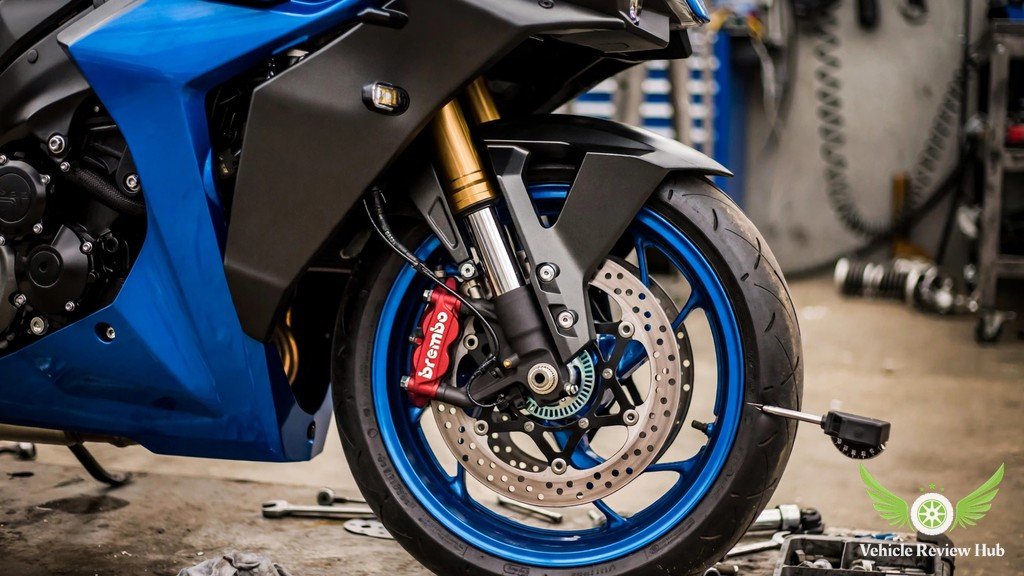
The spark plugs are NGK CR9EIA-9 iridium, four of them: inspect at 3,750 and 11,250 miles, replace at 7,500 and 15,000 miles. Replace, not inspect only — that distinction matters, because a plug change is a real parts cost on the 7,500-mile service, and it falls on the same visit as the oil-filter change. Iridium plugs last well, but Suzuki still calls for them at those miles, and a GT that skipped them idles rougher and starts harder. On the tyres, the stock Dunlop Roadsport 2 is acceptable but widely replaced early: owners commonly switch to RoadSmart 3, Michelin Road 6 or Roadtec 01. Check the fork seals at every service, and keep the brake fluid fresh — the slightly wooden feel gets worse with old fluid and tired pads. The rear shock deserves an early decision: if it feels soft for your weight and riding style, budget for an aftermarket unit — the Suzuki GSX-S1000GT reliability fix — rather than living with it, as the fleet bike did with its Maxton replacement.
UK Sources Say 7,500-Mile Oil: a Different Market
UK sources say the GT’s standard service falls every 7,500 miles or 12 months, with the valve check every 15,000 miles or 24,000 km. That 7,500-mile oil figure is correct for the UK bike — not the US figure. The US manual says 3,750 miles, and this Suzuki GSX-S1000GT reliability guide uses the US figure throughout, because its readers are US riders buying US bikes. The difference is a different-market schedule, not a mistake: Suzuki sets the interval by market. A US owner who follows the UK 7,500-mile interval doubles the oil-change gap the US manual calls for. The valve interval is the same in both markets — 15,000 miles. When in doubt, the manual that came with the bike governs.
Suzuki GSX-S1000GT Maintenance and Ownership Costs
The GT is cheap to buy for its class and modest to run, with the fuel bill as its main weakness and the short oil interval as its main quirk. The 2027 GT+ costs $14,599 plus a $750 destination charge. This part of the Suzuki GSX-S1000GT reliability guide puts the numbers together — fuel, servicing, tyres, parts and insurance — and labels every figure by its market.

Fuel, Routine Servicing, Tires and Replacement Parts
Fuel is the biggest running cost in Suzuki GSX-S1000GT reliability — the litre-four drinks in the mid-30s. Rider tested 35.5 mpg in the US, about 178 miles from the 5.0-gallon tank, and motorcycle.com saw a consistent 35 mpg on its first ride. At 10,000 miles a year and 35.5 mpg, that is about 282 gallons — multiply by your local fuel price for the year’s fuel bill. Routine servicing in the UK runs about £410 a year according to MCN’s August 2026 figures — a UK number, not to be quoted as a US price. The high-mileage UK owner at 27,000 miles paid £750 a year for two services. No verified US dealer service price was found for the GT, so this guide does not invent one: prices vary by region and shop, so get a quote from your local dealer before buying. Tyres are a regular cost — the stock Roadsport 2 set, or the RoadSmart 3, Road 6 or Roadtec 01 replacements owners prefer. Two parts warnings: retrofitting the GT+ side cases to a base GT costs over $1,000 in parts alone, and a Maxton NR4 rear shock costs £630 including VAT in the UK. The GT review guide covers the purchase prices year by year; these are the costs after you own it.
One US Dataset Puts GT+ Insurance Near $960 a Year
One US dataset puts GT+ insurance near $960 a year. Boundless Rider’s August 2025 analysis of its own internal premium data gives $960 a year for the GSX-S1000GT+, against $1,053 for the naked GSX-S1000, and claims a saving of $815 a year against the GSX-R1000. That is one dataset, from one company’s own book: illustrative, not a national average, and your premium will vary by location, riding record and age. The UK comparison is different again — MCN Compare fully comprehensive quotes put the GT+ at £714.07 against the Ninja 1100SX SE at £624.48 — UK figures, not US costs. For Suzuki GSX-S1000GT reliability as an ownership proposition, the insurance number is encouraging: a litre-class sport-tourer that insures for under a thousand dollars a year in one US dataset is cheap for its performance. Get quotes for the exact bike and your circumstances before buying, and compare like for like against the rivals in the GT comparison guide.
| Cost item | Figure | Source / market |
|---|---|---|
| Fuel (tested) | 35.5 mpg, ~178 miles per tank | Rider, US test |
| Annual servicing | About £410 a year | MCN UK, Aug 2026 |
| GT+ insurance | $960 a year | Boundless Rider, Aug 2025, illustrative |
| GT+ side-case retrofit | Over $1,000 in parts | motorcycle.com first ride |
How to Keep a Suzuki GSX-S1000GT Reliable
Keeping a GT reliable is straightforward, because the bike asks for regular attention rather than expensive repairs. The owners with the best experiences service on schedule, clean the bike in winter, and keep records. This final section of the Suzuki GSX-S1000GT reliability guide turns the whole article into a checklist, and clears up the one recall wrongly attached to this bike.
Preventive Maintenance, Records and Regular Inspections
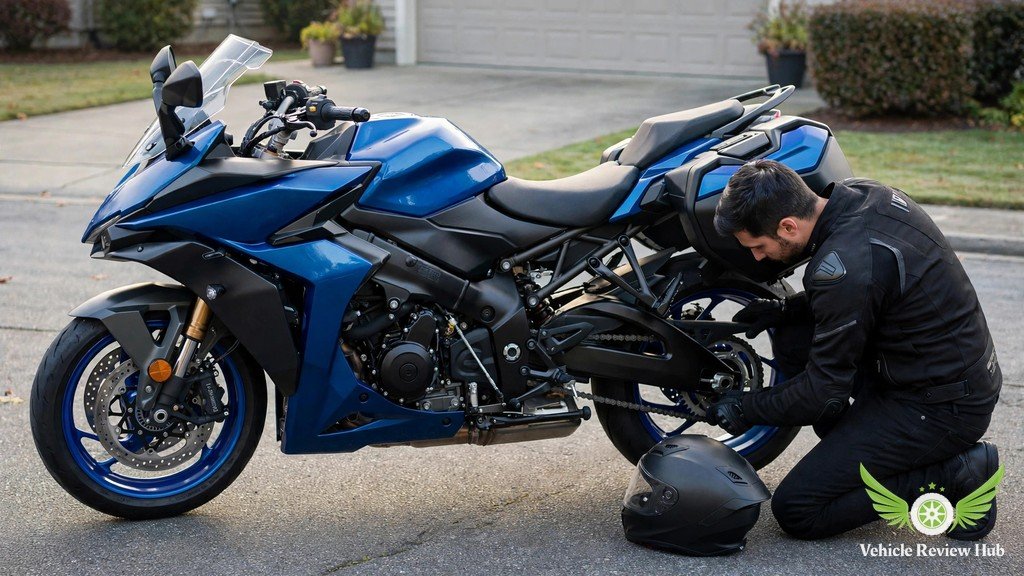
Follow the 3,750-mile oil rule, using the 10W-40 oil the manual specifies — the first rule of Suzuki GSX-S1000GT reliability. Clean and lubricate the chain every 600 miles — a dry chain wears sprockets fast. Protect the fasteners and electrical connectors in winter with a corrosion inhibitor such as ACF-50, and wash the bike after winter rides. Check the rear shock and the tyres early, because both are the items owners most often upgrade, and catch a weeping fork seal before it contaminates the brakes. Keep every service record, because a full history matters for resale and is the first thing a careful buyer asks for when judging Suzuki GSX-S1000GT reliability. A ten-minute regular inspection — chain tension, tyre condition, brake pad thickness, fluid levels, fastener condition — catches most problems while they are cheap. The warranty behind all of this is a 12-month unlimited-mileage limited warranty in the USA, per Suzuki USA’s 2027 GT+ page — but twelve months passes quickly, so the habits are what carry the bike after the warranty ends.
Recall 25V505 Covers the Katana, Not This Bike
Recall 25V505 covers the Katana, not this bike — the distinction matters because the two share a platform. The recall, reported on August 7 2025 under Suzuki numbers 3A06 and 3A07, covers an upper headlight beam that is too bright, a noncompliance with FMVSS 108: 2020–2025 V-Strom DL1050 models, 1,393 bikes, plus 2020 and 2024 Katana GSX-S1000S models, 150 bikes — 1,543 bikes in total — with free headlamp replacement and owner letters mailed on November 7 2025. The Katana is the GSX-S1000S naked, but the GT and GT+ are not named. The NHTSA owner letter for 25V505 lists the affected models, and the GT is not among them. Do not let a seller, a listing, or a forum post confuse the Katana recall with the GT — Suzuki GSX-S1000GT reliability has no recall attached to it — and if a used GT is ever offered with a story about a headlight recall, check the VIN yourself through NHTSA’s recall lookup.
Suzuki GSX-S1000GT Reliability: Frequently Asked Questions
Direct answers to the questions riders ask about Suzuki GSX-S1000GT reliability. Every figure is labelled by source and market.
Is the Suzuki GSX-S1000GT reliable?
Yes. MCN’s thirteen owners rate Suzuki GSX-S1000GT reliability 4.2 out of 5, MCN’s experts report no significant recurring engine faults, and one owner has covered 27,000 miles without a breakdown. The weak points are cosmetic and comfort items, not engine failures.
What do MCN owners rate the GSX-S1000GT?
Thirteen owners rate Suzuki GSX-S1000GT reliability 4.2 out of 5 overall on MCN, with the engine at 4.6, reliability and build quality at 4.2, ride quality and brakes at 4.0, equipment at 4.2, and value against rivals at 4.4. MCN’s expert rating is 5 out of 5.
Does the GSX-S1000GT have any recalls?
No recall found in published notices names the GT or GT+. The published notices were checked and Suzuki GSX-S1000GT reliability has no recall against it. Run the VIN through NHTSA’s recall lookup before buying a used bike.
Does recall 25V505 affect the GSX-S1000GT?
No. Recall 25V505 covers 1,393 V-Strom DL1050 models from 2020–2025 and 150 Katana GSX-S1000S models from 2020 and 2024 — 1,543 bikes in total — for an over-bright upper headlight beam. The GT and GT+ are not named, and Suzuki GSX-S1000GT reliability is unaffected.
How often should I change the oil on a GSX-S1000GT?
Every 3,750 miles or 6,000 km, or every 12 months, whichever comes first, under the US owner’s manual. First service is at 600 miles, using SAE 10W-40 meeting JASO MA. Do not use the older GSX-S1000’s 3,500-mile interval — Suzuki GSX-S1000GT reliability runs on 3,750.
When does the GSX-S1000GT need a valve check?
At 15,000 miles or 24,000 km — not the 2016–2021 GSX-S1000’s 14,500 miles. Suzuki GSX-S1000GT reliability puts the valve check at 15,000 miles in both the US and UK manuals.
When should the spark plugs be replaced?
The NGK CR9EIA-9 iridium plugs — four of them — are inspected at 3,750 and 11,250 miles and replaced at 7,500 and 15,000 miles — the plug rule in Suzuki GSX-S1000GT reliability.
What are the most common problems on the GSX-S1000GT?
Thin paint that chips, fasteners and brake fittings that corrode in winter if not cleaned, a rear shock soft for aggressive riding with no remote preload adjuster, Roadsport 2 tyres owners replace early, a hard seat, seat vibration at motorway speeds, and no centre stand. None of them is an engine fault, and none dents Suzuki GSX-S1000GT reliability.
Is the GSX-S1000GT rear suspension too soft?
For aggressive riding, yes — the best-known weakness in Suzuki GSX-S1000GT reliability: MCN’s expert and its long-term fleet bike both found the standard rear shock soft, with a wobbly rear end and no remote preload adjuster. The fleet bike was fixed with a Maxton NR4 shock at £630 including VAT in the UK. For relaxed touring it is less of an issue.
How much does it cost to service a GSX-S1000GT?
UK servicing runs about £410 a year according to MCN — the baseline for Suzuki GSX-S1000GT reliability costs, and a high-mileage UK owner paid £750 a year for two services at 27,000 miles. No verified US dealer service price was found, so get a quote from your local dealer. Fuel is about 282 gallons a year at 10,000 miles and 35.5 mpg, and insurance in one US dataset is about $960 a year for the GT+.
How do I keep a GSX-S1000GT reliable for years?
Change the oil every 3,750 miles, clean and lubricate the chain every 600 miles, protect the fasteners in winter, check the tyres, fork seals and brakes regularly, and keep every service record — the routine behind Suzuki GSX-S1000GT reliability. The engine itself rarely gives trouble, so neglect is the only realistic way to hurt it.