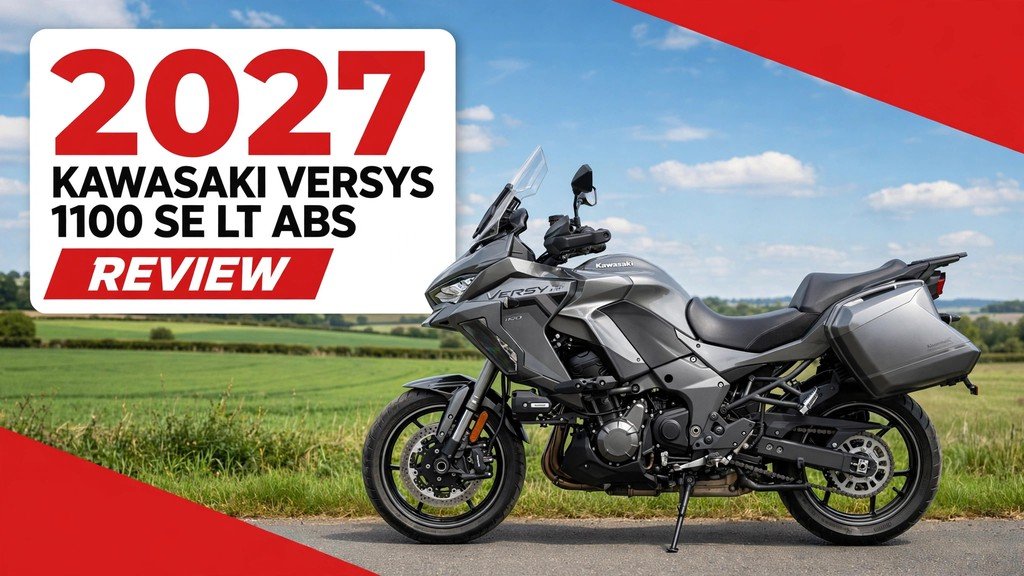
The short answer in this Kawasaki Versys 1100 SE LT ABS review is that Kawasaki’s new flagship tourer is the old Versys 1000 SE LT+ with a bigger engine, a higher price and the same touring brief. The 1,099cc inline-four makes a claimed 133 hp, the Skyhook semi-active suspension and the 28-litre panniers come standard, and the 2027 model costs $20,639 delivered. It is the most complete Versys Kawasaki has ever sold in the United States, and it is also the most expensive one.
This Kawasaki Versys 1100 SE LT ABS review works through the prices year by year, because there is no 2026 US model at all, and it gives the press verdicts straight: the torque is praised by every tester, the seat is criticised by nearly all of them, and the engine’s extra size shows up in the midrange.
Kawasaki Versys 1100 SE LT ABS Overview and Model-Year Updates
This Kawasaki Versys 1100 SE LT ABS review starts with what changed and what did not. The bike is a gen-4 Versys 1100, the direct successor to the Versys 1000 SE LT+ that Kawasaki sold in the US from 2019 to 2024. The chassis, tank and riding position are familiar; the engine is new, the name is new, and the model years skip 2026 entirely in the United States.

Stroke Alone: 1,043 Becomes 1,099cc
The whole engine change in this Kawasaki Versys 1100 SE LT ABS review comes down to 3 mm of stroke. Kawasaki kept the 77.0 mm bore and lengthened the stroke from 56.0 mm to 59.0 mm, taking displacement to 1,099cc. That single change drives the rest: compression rises to 11.8:1, the intake funnels grow 45 mm longer, the cams are new, the flywheel is 3 percent heavier, a secondary balancer is added, and the header is a revised 4-2-1 design with an oil cooler added. Fifth and sixth gears are longer and the rear sprocket drops to 42 teeth, cutting cruising revs by about 7 percent. The Versys 1000 S performance guide shows what the old 1,043cc four could already do.
Name Is SE LT ABS, Not SE LT+
The name matters because it tells you what is standard. The US bike is called the Versys 1100 SE LT ABS, and it is the only Versys 1100 trim sold in the United States. SE means Skyhook suspension, LT means the 28-litre panniers are included, and ABS means the cornering-aware KIBS braking system. The old bike wore a plus sign, SE LT+, and the new bike drops it. There is no base Versys 1100 in the US, so the name is the whole kit list. In Europe the same bike is sold as the Versys 1100 SE, with base and S trims below it, so European reviews sometimes describe a cheaper bike an American buyer cannot buy.
The video below is RoadRUNNER’s full review of the exact US 2025 Versys 1100 SE LT, nine minutes of riding impressions and a walk around the bike. It covers the engine, the suspension and the seat that every written test argues about.
Kawasaki Versys 1100 SE LT ABS Engine and Specifications
The engine is the story of this Kawasaki Versys 1100 SE LT ABS review, and the numbers need care because the same figure wears three different units. Kawasaki claims 133 hp at 9,000 rpm and 82.5 lb-ft at 7,600 rpm, with a six-speed gearbox, a bi-directional quickshifter and an assist and slipper clutch. The spec sheet also prints 99.0 kW and 135 PS, which are the same 133 hp in other units. This guide uses horsepower throughout.
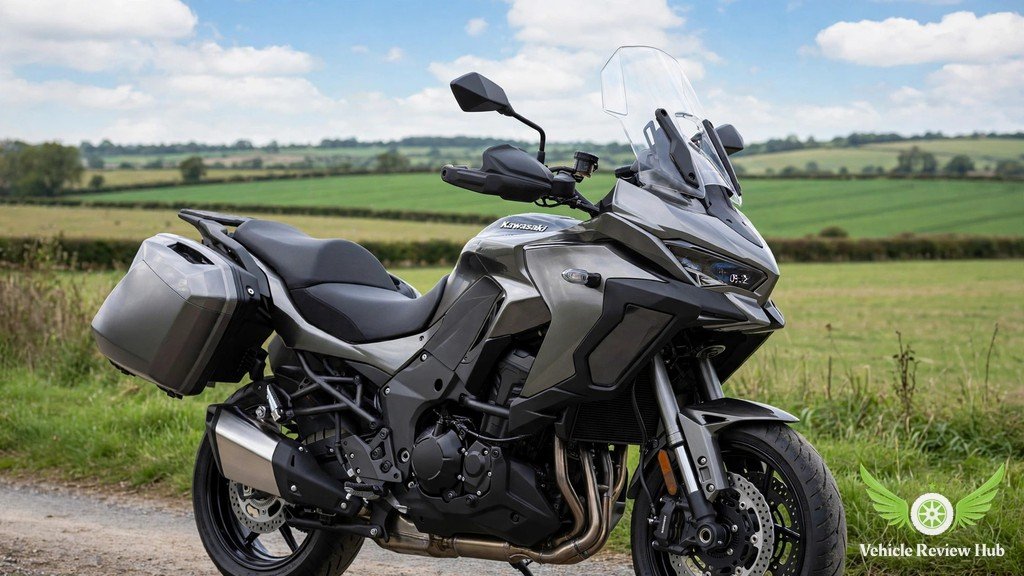
133 Horsepower, ISO 4106 Footnote
Kawasaki’s spec sheet carries a footnote on the 133 hp figure, and this Kawasaki Versys 1100 SE LT ABS review prints it because it changes what the number means. The footnote says the horsepower was measured to ISO standard 4106, which reads differently from the SAE standards used for many cars, so the figure may read higher than under an SAE test. That is why the 133 hp claim and the independent dyno figure below sit so far apart. The same footnote sits on the 82.5 lb-ft torque figure, which Kawasaki prints as 112 Nm. For comparison, the Ninja 1100SX with the same basic engine claims 134 hp and 83.2 lb-ft, and the Ninja 1100SX ABS review covers that bike’s own numbers.
The only independent dyno figure in the world comes from Bike magazine in the UK: 119 bhp and 74 lb-ft at the wheel, reported secondhand from the April 2025 issue, page 62. That is only 1 bhp and 1 lb-ft more than the old Versys 1000, so the claimed jump from 118 hp to 133 hp is mostly paper. What testers actually feel is the midrange, and this Kawasaki Versys 1100 SE LT ABS review finds every launch review agreeing the new engine pulls harder from 2,000 to 7,000 rpm, where a tourer spends its life. No US dyno run exists yet, so there is no American wheel figure to quote.
| Specification | Versys 1100 SE LT ABS | Versys 1000 SE LT+ |
|---|---|---|
| Engine | 1,099cc inline-four | 1,043cc inline-four |
| Bore x stroke | 77.0 x 59.0 mm | 77.0 x 56.0 mm |
| Compression ratio | 11.8:1 | 10.3:1 |
| Claimed power | 133 hp @ 9,000 rpm | 120 PS / 118 hp @ 9,000 rpm |
| Claimed torque | 82.5 lb-ft @ 7,600 rpm | 75 lb-ft @ 7,500 rpm |
| Curb weight | 571.1 lb | 566.7 lb with bags |
| Seat height | 33.1 in | 33.1 in |
| Fuel tank | 5.5 gal | 5.5 gal |
Notes for this Kawasaki Versys 1100 SE LT ABS review table: power and torque are Kawasaki’s claimed figures, measured to ISO 4106. The 1100’s 571.1 lb curb weight excludes the panniers; the 1000 SE LT+ figure of 566.7 lb includes them. The dyno figure of 119 bhp at the wheel is a UK secondhand figure, not a US test.
Bags Excluded From the 571 Pound Weight
The 571.1 lb curb weight in this Kawasaki Versys 1100 SE LT ABS review is the bike without its panniers, and the bags add 20 lb on top. Kawasaki prints it as 571.1 pounds claimed, plus 20 pounds with saddlebags, so a loaded SE LT weighs about 591 lb before a rider climbs on. That matters because the old SE LT+ was usually quoted at 566.7 lb with its bags fitted. The payload is 485 lb, and the tank, wheelbase and seat height are all carried over from the 1000.
Kawasaki Versys 1100 SE LT ABS Price and Market Availability
Price is where this Kawasaki Versys 1100 SE LT ABS review has to be careful, because the bike skipped a model year. The 2025 model launched at $19,499 before destination, and the 2027 model lists at $19,799 before destination. There is no 2026 US model, price or destination charge, so any 2026 figure online comes from another market or a dealer guessing. Both prices below are delivered prices, MSRP plus destination, each tagged with its year.
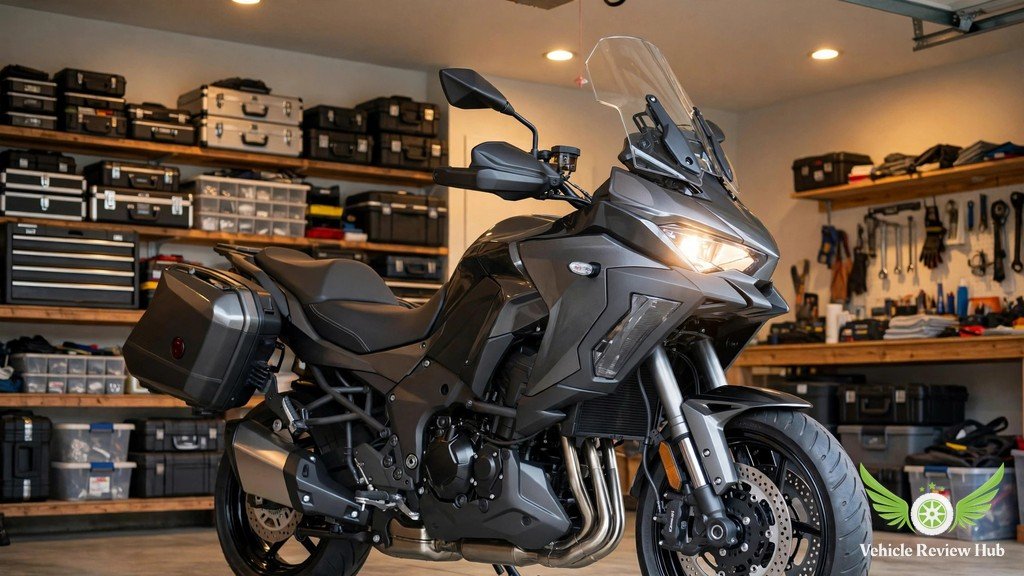
Kawasaki Versys 1100 SE LT ABS Price in the USA: $19,799
The $19,799 figure in this Kawasaki Versys 1100 SE LT ABS review is the 2027 manufacturer’s suggested retail price, and the delivered price is $20,639 once the $840 destination charge is added. The 2025 model, the launch year, listed at $19,499 with an $815 destination charge, for a delivered price of $20,314. The 2027 bike therefore costs $300 more on the sticker and $325 more delivered than the launch bike. The Motorcycle.com comparison lists the 2025 bike at $19,499 with an $815 destination charge.
The last US Versys 1000, the 2023 SE LT+, cost $19,359 delivered, so the 2027 1100 costs about $1,280 more. That money buys the bigger engine, the Skyhook suspension, the panniers, the heated grips and the hand guards, all standard. There is no cheaper Versys 1100 in the US, so the price is the price.
| Model year | MSRP | Destination | Delivered |
|---|---|---|---|
| 2025 Versys 1100 SE LT ABS | $19,499 | $815 | $20,314 |
| 2027 Versys 1100 SE LT ABS | $19,799 | $840 | $20,639 |
| 2023 Versys 1000 SE LT+ (last US 1000) | $18,899 | $460 | $19,359 |
Notes for this Kawasaki Versys 1100 SE LT ABS review table: delivered prices are MSRP plus destination, year-tagged. There is no 2026 US model year, so no 2026 row exists. The 2025 destination charge of $815 comes from the Motorcycle.com specification database.
2026 Price Rests on Secondary Sources
There is no official US price for a 2026 Versys 1100 SE LT ABS because Kawasaki never sold one in the United States that year. The model went from 2025 straight to 2027, and Rider Magazine’s 2026 list has no Versys 1100 on it. That means any 2026 price you find comes from a secondary source, and this Kawasaki Versys 1100 SE LT ABS review will not print one as a US figure. Canada did get a 2026 LT SE at $20,999 Canadian, but that is a different market with a different price.
Kawasaki Versys 1100 SE LT ABS Design, Features and Technology
The design of this Kawasaki Versys 1100 SE LT ABS review is a story of standard equipment. The Skyhook suspension, panniers, heated grips, hand guards, centre stand, cruise control, quickshifter and cornering lights all come on the one US trim. The bike looks like a Versys 1000 at a glance, but the electronics are the most complete set Kawasaki has ever fitted to a Versys.

Skyhook Suspension, Bags and Grips Standard
The Skyhook system, Kawasaki’s KECS semi-active suspension, is the headline feature of this Kawasaki Versys 1100 SE LT ABS review, and it is standard on the only US trim. A 43 mm inverted Showa fork up front and a horizontal back-link Showa BFRC Lite shock at the rear both carry KECS damping, the fork takes manual preload and the shock takes electronic preload, and both ends travel 5.9 inches. The system adjusts damping as you ride, with preload modes for rider, luggage, passenger and combinations, each fine-tunable in ten steps. The 28-litre panniers are included, not an accessory. Heated grips and hand guards are standard, the TFT display pairs with the RIDEOLOGY app, cruise control is standard, the quickshifter now works from 1,500 rpm, and the LED cornering lights turn with the bike. A USB-C port sits on the handlebar, and the windscreen moves 40 mm on two knobs that need two hands.
Calipers: Kawasaki Names No Brand
The brakes on this Kawasaki Versys 1100 SE LT ABS review carry no brand name, because Kawasaki names none. The front brakes are dual 310 mm petal discs with radial-mount four-piston monobloc calipers, the rear is a single 260 mm petal disc with a one-piston caliper, and the whole system runs through KIBS, Kawasaki’s cornering-aware ABS, fed by a Bosch six-axis IMU. The US spec sheet says the discs are petal-shaped, front and rear, and Cycle News agrees. One European review calls its press bike’s discs round, though its own spec table says petal, so the US sheet is the authority for the American bike. As for who makes the calipers, one single-source report names one brand and an aggregator names another, and neither is confirmed by Kawasaki, so this guide prints no brand at all. The brake electronics are KTRC traction control with three levels plus off, four ride modes, two power modes and the KCMF cornering management function. The centre stand is standard on the US bike, and the bodywork carries self-healing paint.
Kawasaki Versys 1100 SE LT ABS Riding Experience and Comfort
The riding experience in this Kawasaki Versys 1100 SE LT ABS review splits into two stories that every launch tester tells the same way. The engine is the good story, smooth and strong in the midrange, and the seat is the bad story. The chassis sits in between, comfortable at touring pace and less happy when pushed hard. Taken together, the bike is an easy tourer that asks one compromise: the saddle.

Torque Smooth as Butter, Said MO
Motorcycle.com gave the 1100 SE LT an 84.0 percent editors score after its Baja first ride, calling the torque smooth as butter. This Kawasaki Versys 1100 SE LT ABS review finds the same praise in Cycle News, which says the bike pulls like a tractor, with acres of torque from 2,000 to 7,000 rpm, and RevZilla notes 75 mph arrives at about 5,000 rpm. Cycle News calls the quickshifter so smooth it almost feels boring. The RevZilla first ride covers the same Baja launch from the road, with the same verdict on the midrange.
The vibration question is where the testers split, and this Kawasaki Versys 1100 SE LT ABS review presents both camps with their names on them. Motorcycle.com and RevZilla both report a buzz at 6,000 to 7,000 rpm. Cycle News disagrees, saying the only niggles arrive north of 8,000 rpm. A buyer should test ride the bike through 6,000 rpm before deciding.
Seat Far Too Stiff, Said RevZilla
The seat is the one thing nearly every tester agrees on, and the agreement is not kind. RevZilla calls it far too stiff, tolerable for the first 60 miles and then a problem. Motorcycle.com found it getting antsy at 65 miles into a day. Cycle News calls it extremely uncomfortable after a few hours. This Kawasaki Versys 1100 SE LT ABS review reports that consensus plainly: on a touring bike, a stiff seat is the difference between a 500-mile day and a 200-mile day. One owner in India calls the same seat a sofa on two wheels, but that is one voice against three launch tests. The seat height is 33.1 inches, tall for shorter riders. Budget for an aftermarket seat, or at least a long test ride, before you sign. The Ultimate Motorcycling review lists the same 33.1-inch seat height and the same standard kit, and its verdict on the price is that $19,499 gets your attention.
Kawasaki Versys 1100 SE LT ABS Review: Pros, Cons and Verdict
The verdict of this Kawasaki Versys 1100 SE LT ABS review is that Kawasaki built the most complete Versys it has ever sold in America, and then charged accordingly. The engine is stronger where it counts, the suspension and luggage come standard, and the electronics are the best in the family. The seat is the flaw, and it is a real one on a bike built for long days. A buyer who fits the seat, or plans to change it, gets a tourer that needs nothing added. A buyer who cannot live with it should look at the smaller Versys 650, which our Versys 650 review covers as the lighter, cheaper sibling in the same family.
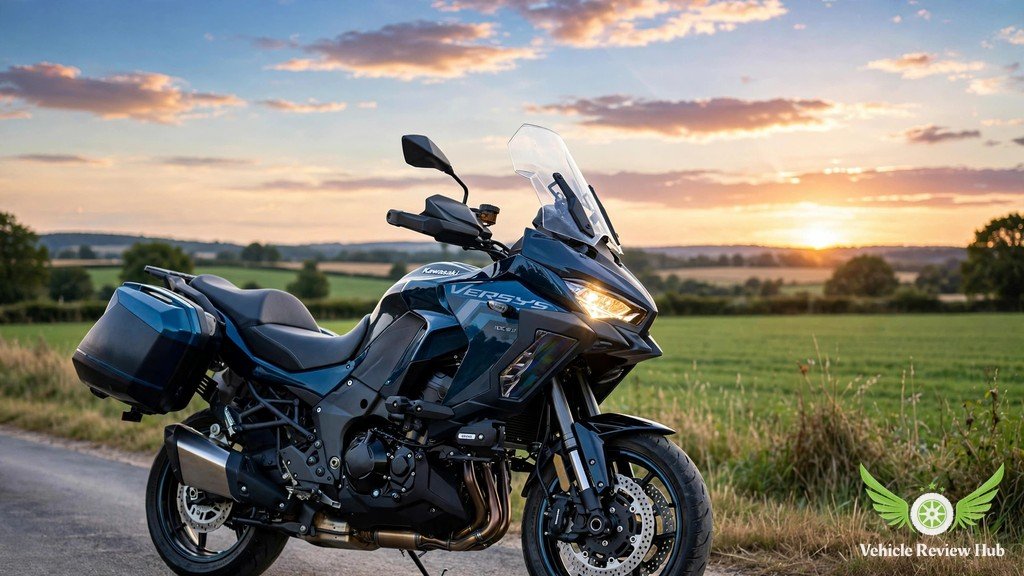
Main Advantages and Limitations of the Kawasaki Versys 1100 SE LT ABS
The 1,099cc four pulls hard from 2,000 rpm, the Skyhook suspension adapts to the road, and the panniers, grips, guards and centre stand are all standard. The limitations are just as clear: the seat is too stiff, the bike weighs 571.1 lb before its bags, the price has passed $20,000 delivered, and there is no cheaper Versys 1100. MCN rates the bike 4 out of 5 overall, and the 1000PS test verdict is 4.5 out of 5. The one owner review on record, a single UK rider, rates the bike 3 out of 5 overall.
| Strength | Detail |
|---|---|
| Midrange torque | Strong from 2,000 to 7,000 rpm, praised by every launch tester |
| Skyhook suspension | KECS semi-active damping, standard on the only US trim |
| Standard luggage | 28-litre panniers included, plus heated grips and hand guards |
| Electronics | IMU, cornering ABS, traction control, four ride modes, cruise, quickshifter |
| Seat comfort | Too stiff, per RevZilla, Motorcycle.com and Cycle News |
| Weight | 571.1 lb before panniers, about 591 lb with them fitted |
| Price | $20,639 delivered for 2027, $20,314 for 2025, no cheaper trim |
Notes for this Kawasaki Versys 1100 SE LT ABS review table: the press scores are Motorcycle.com 84.0 percent, MCN 4 out of 5 overall and 1000PS 4.5 out of 5. The single UK owner review rates the bike 3 out of 5 overall, which is one voice, not a survey.
24 Month Limited Warranty, Officially
The warranty on this Kawasaki Versys 1100 SE LT ABS review is 24 months limited in the United States, which is the official Kawasaki term for the bike. Kawasaki Protection Plus extended cover is available in 12, 24, 36 and 48 month terms for buyers who want more. Do not mix it with the UK warranty, which runs four years with unlimited miles. Service intervals run every 7,600 miles or 12 months, with oil, filter and spark plugs at every service and the valve check at 15,000 miles in the US. The verdict stands: buy the 1100 SE LT if you want the most complete Versys ever sold here, and budget for a seat.
Kawasaki Versys 1100 SE LT ABS Review: Frequently Asked Questions
Direct answers to the Kawasaki Versys 1100 SE LT ABS review questions buyers ask most, including the ones American readers ask first.
How much does the Kawasaki Versys 1100 SE LT ABS cost?
The 2027 model costs $19,799 before destination and $20,639 delivered. This Kawasaki Versys 1100 SE LT ABS review also lists the 2025 launch price: $19,499 before destination and $20,314 delivered.
Is there a 2026 Kawasaki Versys 1100 SE LT ABS?
No. Kawasaki skipped the 2026 model year in the United States, so this Kawasaki Versys 1100 SE LT ABS review covers the 2025 and 2027 models only. Canada did get a 2026 LT SE, listed at $20,999 Canadian.
How much power does the Versys 1100 SE LT ABS make?
Kawasaki claims 133 hp at 9,000 rpm and 82.5 lb-ft at 7,600 rpm, measured to ISO 4106. This Kawasaki Versys 1100 SE LT ABS review notes the only independent dyno figure is a UK wheel figure of 119 bhp, reported secondhand.
Does the Versys 1100 SE LT ABS come with panniers?
Yes. The 28-litre panniers are standard on the only US trim, and this Kawasaki Versys 1100 SE LT ABS review counts them as part of the price, not an accessory. They add 20 lb to the 571.1 lb curb weight.
Is the seat really that uncomfortable?
Three launch tests say so. RevZilla calls the seat far too stiff, Motorcycle.com found it getting antsy at 65 miles, and Cycle News calls it extremely uncomfortable after a few hours. This Kawasaki Versys 1100 SE LT ABS review recommends a long test ride before buying.
What is Skyhook suspension?
Skyhook is Kawasaki’s KECS semi-active suspension, standard on the SE LT. This Kawasaki Versys 1100 SE LT ABS review describes it as a 43 mm inverted Showa fork and a BFRC Lite rear shock that adjust their damping as you ride, with electronic preload at the rear.
How heavy is the Versys 1100 SE LT ABS?
The curb weight is 571.1 lb without the panniers, and about 591 lb with the standard 28-litre cases fitted. This Kawasaki Versys 1100 SE LT ABS review notes the dry weight is 520.4 lb, also without bags.
Does the Versys 1100 SE LT ABS have cruise control?
Yes. Electronic cruise control is standard, and this Kawasaki Versys 1100 SE LT ABS review lists it alongside the TFT display, the cornering lights, the heated grips and the quickshifter.
What is the warranty on the Versys 1100 SE LT ABS?
The US warranty is 24 months limited. This Kawasaki Versys 1100 SE LT ABS review warns not to confuse it with the UK warranty, which runs four years with unlimited miles.
Is the Versys 1100 SE LT ABS good for beginners?
No. At 571.1 lb with 133 hp and a 33.1-inch seat, this Kawasaki Versys 1100 SE LT ABS review calls it a bike for experienced riders. New riders should look at the smaller Versys 650 instead.
What colours does the Versys 1100 SE LT ABS come in?
The 2025 US bike came in Metallic Graphite Gray with Metallic Diablo Black only. This Kawasaki Versys 1100 SE LT ABS review lists the 2027 colours as Metallic Deep Blue with Metallic Carbon Gray.
Should I buy the Versys 1100 SE LT ABS or the Versys 1000 SE LT+?
Buy the 1100 if you want the new bike, the Skyhook suspension and the bigger engine. This Kawasaki Versys 1100 SE LT ABS review puts the 2027 model at $20,639 delivered against the last 1000 at $19,359, a gap of about $1,280 for a new bike with more kit.