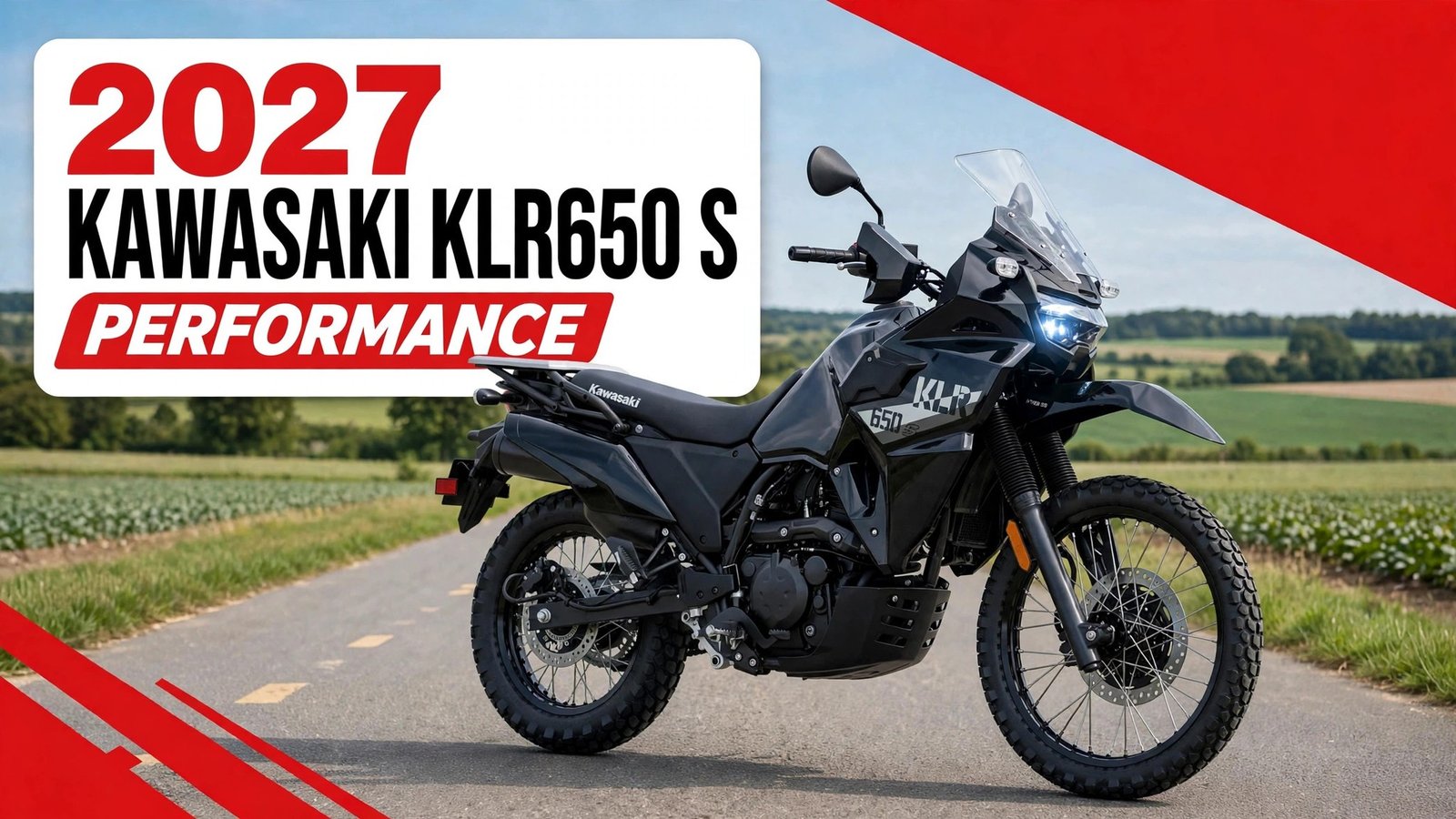
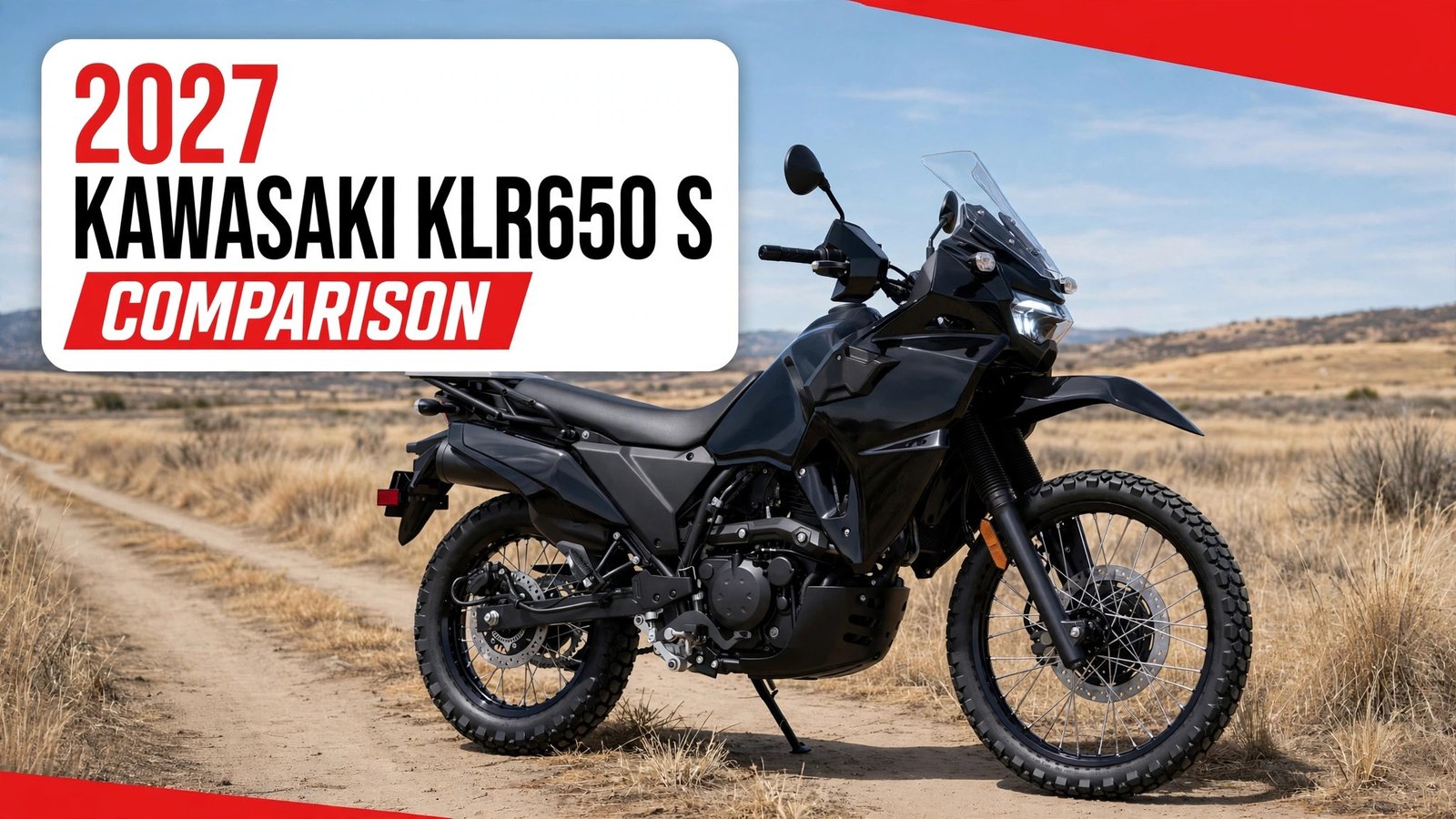
The 2027 Kawasaki KLR650 Adventure is a reliable motorcycle with a short warranty and a clean recall record. No gen-3 KLR650 has been recalled in the United States, the engine is a proven single with a 15,000-mile valve check, and the only real arguments about its reliability are the balancer tensioner and a fuel-pump part number. The 12-month warranty is the weakest part of the ownership story.
The Adventure is a trim of the third-generation KLR650, not a separate model, so its reliability record is the gen-3 KLR650 record. Our companion KLR650 reliability guide covers the base bike, and our companion Adventure review covers the kit, the colours and the prices. This guide focuses on what is different about the Adventure: the factory cases and their latches, the auxiliary lights and their wiring, and the extra 26.5 pounds the kit adds.
Kawasaki KLR650 Adventure Reliability Overview
The Adventure’s reliability story is simple: a proven single, a clean recall record, and a handful of known weak points. This Kawasaki KLR650 Adventure reliability overview starts with the service intervals.
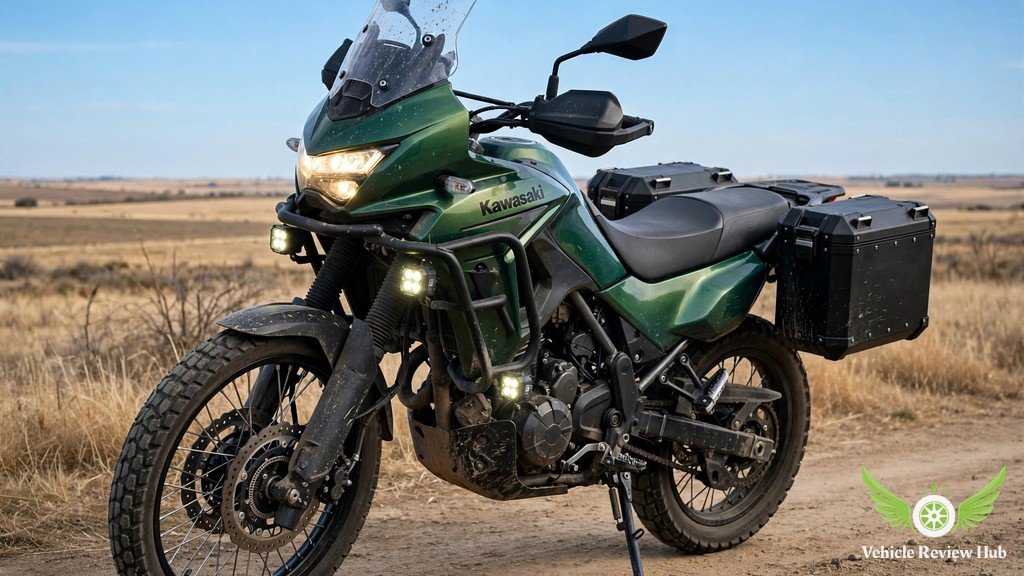
Valve Inspection at 15,000 Miles
The valve clearance check falls at 24,000 km, which the KLR chart prints as 15,000 miles. Some sources print a slightly different mile figure for the same 24,000 km interval, but the KLR chart itself prints 15,000. Outside the United States the same chart prints 42,000 km for the valve check, which is 26,250 miles, but that is not the US figure.
The clearances are 0.10 to 0.20 mm intake and 0.20 to 0.30 mm exhaust, measured cold, and the valves are shim-under-bucket, which makes adjustment a dealer job for most owners. The check is an inspection: many bikes need no shim change at the first check. Budget for dealer labour at 15,000 miles, and price the bike down if the seller cannot show the check was done.
How Mileage, Storage and Previous Care Affect Reliability
A gen-3 KLR650 with 20,000 miles and a service record beats a 5,000-mile bike that sat in a shed for two years. The chain is the first thing storage punishes: the chart calls for lubrication every 600 km, or 400 miles, and a dry chain shows it in stiff links and hooked teeth. Check the chain and sprockets, the tyres for flat spots and cracking, and the brake fluid.
On a 2022 bike, the first-year quirks matter more than the odometer: rough low-rpm fuel mapping, minor electrical gremlins, and cold-start difficulty below about 25 degrees Fahrenheit on some units, linked to the decompression cam pin and handled case by case under warranty. The 2023 and later bikes were refined, so a 2022 at the same price as a 2023 is the worse buy. Ask for the service record and check the Adventure-only electrics before paying.
Kawasaki KLR650 Adventure Common Problems and Wear Items
The Adventure shares the base bike’s weak points and adds two of its own: the cases and the lights. This Kawasaki KLR650 Adventure reliability section lists the problems owners actually report.

The balancer tensioner, known to owners as the doohickey, is the longest-running argument in KLR650 reliability, and the sources split. ProCycle, writing in 2026, says Kawasaki redesigned the part for the third generation, with a stronger adjustment bolt, torqued to 115 in-lb. ADV Pulse (2021) said the tensioner did not receive updates for 2022, TopSpeed (September 2026) said the 2022 bike kept the same gen-2-era tensioner, and HotCars (2026) said an update in 2022 finally resolved it. Motorcycle.com, at the 2022 launch, reported that Kawasaki told them the tensioner remains the same from the gen-two era. This Kawasaki KLR650 Adventure reliability guide does not pick a side: treat the tensioner as a judgement call, not a settled fact.
The history is clear enough. On gen-1 bikes the stamped lever breaks and the spring goes weak, with about one in three gen-1 engines affected by 20,000 miles according to KLR650.net, an owner-community estimate. Gen-2 bikes got a stronger lever, but the spring still loses tension early. The fix is the Eagle Mike kit.
Oil use is a gen-1 and gen-2 story, not a gen-3 one. The 2008 and 2009 bikes had flawed piston rings and burned oil chronically, some a quart per 1,000 miles, and the 2010 to 2018 bikes are the safe window. On the gen-3 bike there is no documented oil-use pattern, and Cycle News’s 2022 Adventure test found the oil sight window still full after more than 1,000 miles.
| Wear item | What owners report | Which bikes | What to check |
|---|---|---|---|
| Balancer tensioner | Lever and spring wear; sources split | All generations; gen-1 worst | Listen for chain noise |
| Oil use | Chronic burning | 2008-2009 | Sight window before every ride |
| First-year mapping | Rough low-rpm running, cold starts | Some 2022 | Ask about dealer visits |
| Case latches | No detachment account found | Adventure only | Latch hooks, rotor engagement, mounting rubbers, seals |
| Handguards | Guards fold back at speed | Adventure | Check guard mounts |
Notes for this Kawasaki KLR650 Adventure reliability wear table: every row is labelled by generation, because a gen-1 problem is not a gen-3 problem, and the doohickey row carries a genuine split in the sources.
Check the Case Mounts After a Drop
Two targeted searches, including owner forums, found no KLR-specific account of a side case detaching in a crash, and this Kawasaki KLR650 Adventure reliability guide says so plainly. What the cases do need is a check after any drop: the latch hooks and the one-key rotor engagement, the mounting-point rubbers, and the seal around the lid. A latch that does not click shut with a firm press needs attention before the next tour.
Vibration loosens fasteners on this bike generally, and the pannier-holder bolts are no exception: check them at every service, and check the seal after washing or riding in rain. Rider Magazine’s thunderstorm test found the cases bone dry inside.
No Systematic Latch Failure Pattern Found
There is no systematic latch-failure pattern in the evidence searched for this Kawasaki KLR650 Adventure reliability guide. No NHTSA complaint mentions the Adventure’s cases, and the owner reports searched show no repeated latch failures. That is an absence of evidence, not a proof of perfection: a latch can still wear and a seal can still leak.
The film below is Dirt Bike Magazine’s first ride of the 2022 Adventure, not a long-term reliability study. The reliability evidence in this Kawasaki KLR650 Adventure reliability guide lives in the text, not in the film.
Kawasaki KLR650 Adventure Maintenance Schedule and Servicing
The service chart is short and cheap, and this Kawasaki KLR650 Adventure reliability section prints it in full.

Oil and Filter Every 7,500 Miles
Engine oil and filter change every 12,000 km, which the KLR chart prints as 7,500 miles, with SAE 10W-40 oil. The capacity is 1.9 litres with the filter left in, 2.0 litres with the filter removed, and 2.1 litres dry. One split to know: the 2009 service manual says every 6,000 miles, while the owner’s-manual chart says 7,500, and this Kawasaki KLR650 Adventure reliability guide headlines the owner’s-manual figure. Check the oil level through the sight window before every ride, with the bike held level.
| Service item | Interval | Notes |
|---|---|---|
| Oil and filter | Every 12,000 km / 7,500 miles | SAE 10W-40 |
| Valve clearance, inspect | Every 24,000 km / 15,000 miles | Measured cold |
| Spark plug | Every 12,000 km / 7,500 miles | NGK DPR8EA-9 |
| Air filter | Clean at inspection | Replace if damaged |
| Coolant | Every 3 years | 1.5 litres |
| Brake fluid | Every 2 years | Front and rear |
| Brake hoses | Every 4 years | Replace |
| Fuel hoses | Every 5 years | Replace |
| Chain, lubricate | Every 600 km / 400 miles | More often in dust |
| Chain slack | Every 1,000 km / 600 miles | Inspect |
| Initial service | 1,000 km / 600 miles | First service |
Notes for this Kawasaki KLR650 Adventure reliability service table: the intervals come from the KLR owner’s-manual chart as printed in the 2013 and 2018 manuals; the gen-3 manual chart was not directly sighted.
Check the Fuel Pump Kit at a Dealer, Not NHTSA
The fuel pump is the one place where this Kawasaki KLR650 Adventure reliability guide has to be careful, because the evidence is thin and the internet is not. There is no NHTSA recall for any gen-3 KLR650, and no Transport Canada KLR650 fuel recall was found. What does exist is a part number: MC23-05, listed in a Volza export filing dated 26 February 2024 as “KIT, PUMP-FUEL, MC23-05, KAWASAKI”. That filing proves MC23-05 is a genuine Kawasaki part number for a fuel-pump kit, but it does not prove it is a service bulletin, a recall, or a dealer action, and it names no model.
The doc’s framing is still the right advice: ask a dealer. A parts-kit code would not appear in a NHTSA VIN recall search, so a clean VIN check does not clear the question. The one real complaint on the gen-3 record is electrical, not a pump failure: NHTSA complaint ODI 11481956, filed 30 August 2022, describes a 2022 bike that would not start after an hour and a half, with fewer than 600 miles on it.
Owner guides also mention early fuel-pump bearing failures on gen-3 bikes, but those guides are AI-generated aggregator pages, not citable sources. If your Adventure stumbles or will not start hot, the pump is worth checking at the dealer.
Kawasaki KLR650 Adventure Tires, Brakes and Suspension Maintenance
Tyres, brakes and suspension are wear items, not problems, and this Kawasaki KLR650 Adventure reliability section covers what the chart asks for.
The Fog Lamp Has No Separate Service Procedure
The fog lamps are the Adventure’s one electrical item with no procedure of its own in the owner’s manual. The manual this guide’s chart comes from was printed in 2013, before the Adventure trim arrived, and it contains no fog-lamp section at all. The manual’s only lighting checks are the lights-and-switches operation check and the headlight aiming check, and this Kawasaki KLR650 Adventure reliability guide does not invent a procedure it does not contain.
What the lamps do need is a check of their own: the mounts on the engine-guard bar, the wiring where it passes the steering head, and the switch on the handlebar. The lamps are LED units with no user-serviceable bulb, so a dead lamp is a dealer replacement of the unit. The 26-amp generator leaves 80 W for accessories.
Tire, Brake and Suspension Checks That Matter
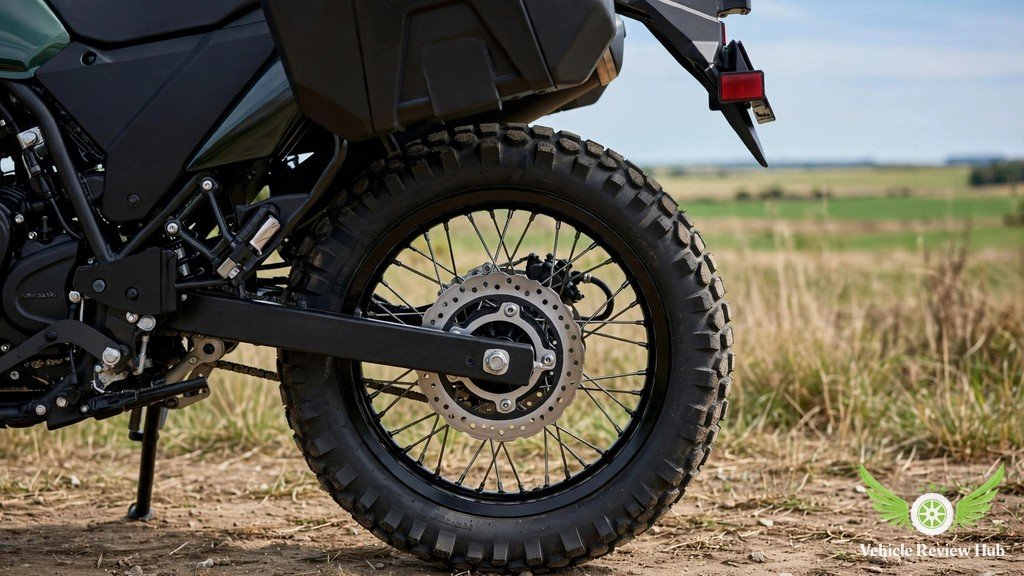
The tyres are 90/90-21 front and 130/80-17 rear, Dunlop K750 dual-sport rubber as fitted at launch, and the rear wheel is 17-inch, which matters when ordering a replacement. Check pressures before every ride, tread depth and cracking at every service, and spoke tightness, which the chart lists as a dealer inspection, and this Kawasaki KLR650 Adventure reliability guide lists the same checks.
The brakes are a single 300 mm front disc with a two-piston caliper and a single 240 mm rear disc, both with ABS that cannot be switched off from the handlebar. The chart changes the brake fluid every two years and the brake hoses every four. The front fork carries 7.9 inches of travel and the rear Uni-Trak shock 8.0 inches on the current Kawasaki sheet, against 7.3 inches in Kawasaki’s own 2022 launch material, and this Kawasaki KLR650 Adventure reliability guide prints 8.0 inches with the split labelled. Check the fork seals for weeping, the rear shock for leaks, and the Uni-Trak linkage.
Kawasaki KLR650 Adventure Maintenance and Ownership Costs
The Adventure is cheap to run and cheap to fix, and this Kawasaki KLR650 Adventure reliability section puts numbers to it.

Fuel, Routine Servicing, Tires and Replacement Parts
Cycle News measured 49 mpg with the bags packed on back-country roads, and Motorcycle.com averaged 35.2 mpg on an 800-mile freeway run at nearly full throttle, so the honest range is 35 to 49 mpg from the 6.1-gallon tank, or 215 to 300 miles between fill-ups. Our Adventure performance guide works through the same figures in detail. Routine servicing is an oil and filter change every 7,500 miles, a spark plug at the same interval, and a valve check at 15,000 miles, and the valve check is the only expensive item.
Tyres and chains are the running costs that add up. The Dunlop K750s are dual-sport rubber with a soft compound, so expect shorter life than a road tyre, and the chain needs lubrication every 400 miles. Replacement parts are cheap and widely available, and the same parts fit every gen-3 bike.
Owner ratings are thin: no MCN owners’ rating exists for this bike, and this Kawasaki KLR650 Adventure reliability guide will not invent one. The substitutes carry small samples: BikeZ rates the 2023 KLR650 at 63.2 out of 100 overall, with reliability 73.1 and value 75.6, from four owners, and Review Centre rates it 4.2 out of 5 overall, with reliability 4.7 and value 4.7, from 26 owners, mostly on older bikes.
No Gen 3 Recall on NHTSA’s List
No gen-3 KLR650 has been recalled in the United States. That is the result of a check of NHTSA’s recalls results table on 18 November 2026, covering model years 2022, 2023, 2025 and 2026. The 2027 model has no NHTSA entry yet, so the site returns no results for it, which is not the same as a clean record: the bike only reaches dealers in early December 2026.
Clean on recalls is not clean on complaints, and this Kawasaki KLR650 Adventure reliability guide prints both halves. The 2022 model has one complaint, the electrical no-start already described, and four manufacturer communications. The 2023 plain model has 16 complaints, the 2023 Adventure none and two manufacturer communications, and the 2023 S one. The 2025 and 2026 models have no complaints and no communications, and investigations stand at zero. NHTSA lists the model as “KLR650”, with no space, and its VIN search covers only the last 15 years.
The three real recalls on this nameplate are all gen-2, all from 2008 and 2009: 08V-520 for turn-signal stalks, bulletin MC 08-14; 09V-059 for muffler mounting bolts, covering 16,167 units; and 09V-062 for main wiring harness chafe, covering 16,168 units, bulletin MC09-03. A used gen-2 bike should have all three cleared before money changes hands.
| Model year | Recalls | Complaints | Manufacturer communications |
|---|---|---|---|
| 2022 | 0 | 1 | 4 |
| 2023 (plain) | 0 | 16 | 2 |
| 2023 Adventure | 0 | 0 | 2 |
| 2023 S | 0 | 0 | 1 |
| 2025 | 0 | 0 | 0 |
| 2026 | 0 | 0 | 0 |
| 2027 | No NHTSA entry yet | – | – |
Notes for this Kawasaki KLR650 Adventure reliability NHTSA table: the counts come from NHTSA’s recalls results table, checked on 18 November 2026; the 2027 model has no entry yet, so “no results found” is not a clean bill of health.
How to Keep a Kawasaki KLR650 Adventure Reliable
Reliability on a KLR650 is mostly a matter of doing the small jobs on time, and this Kawasaki KLR650 Adventure reliability guide turns the chart into a routine.
Preventive Maintenance, Records and Regular Inspections
Keep a record, because this Kawasaki KLR650 Adventure reliability guide is built on records: every oil change, every chain lube, every valve check, with the date and the mileage, in a notebook or on the phone. A buyer pays more for a bike with a record.
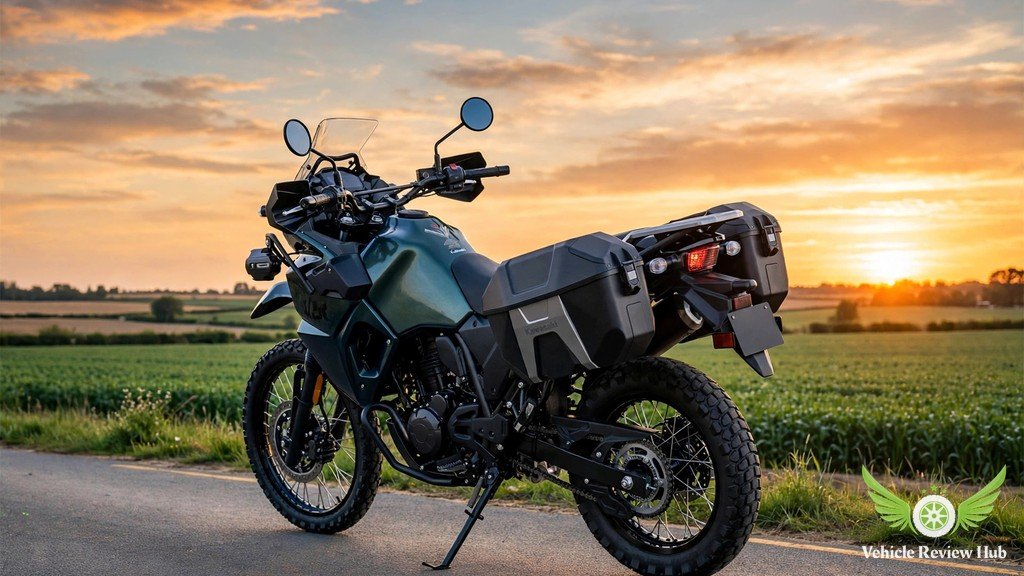
Inspect the bike the same way every time: tyres, chain, brakes, fork seals, case latches and mounts, and the aux-light wiring. Do it after every drop and before every long trip, on the sidestand, because this bike has no centre stand. The high-mileage stories are real: six-figure mileages are common in owner forums. Those bikes got there on records and routine, not on luck.
A Clean VIN Check Does Not Clear the Fuel Pump Action
Run the VIN through NHTSA’s recall search before buying, even though the gen-3 record is clean, because the search is free and it takes a minute. A clean result is the expected result on a gen-3 KLR650. It does not mean the bike has no outstanding dealer work, because a parts-kit code like MC23-05 would not appear in a VIN recall search at all. Only a dealer can say whether a fuel-pump kit was fitted, so ask the dealer.
A VIN search shows recalls, not service history, not crash damage, and not the state of the chain, the tyres, or the case latches. This Kawasaki KLR650 Adventure reliability guide treats the VIN check as the first step: sit on the bike, start it cold, and ride it before paying.
Kawasaki KLR650 Adventure Reliability: Frequently Asked Questions
These are the questions buyers ask most often about the Adventure’s reliability, and each answer comes from the same sources as the rest of this Kawasaki KLR650 Adventure reliability guide.
How Often Does the Adventure Need a Valve Check?
Every 24,000 km, which the KLR chart prints as 15,000 miles. The clearances are 0.10 to 0.20 mm intake and 0.20 to 0.30 mm exhaust, measured cold, and the valves are shim-under-bucket, so adjustment is a dealer job. Outside the United States the same chart prints 42,000 km, which is 26,250 miles, but that is not the US figure, and this Kawasaki KLR650 Adventure reliability guide uses the US figure.
How Often Should I Change the Oil?
Every 12,000 km, or 7,500 miles, with the filter, using SAE 10W-40 oil. The capacity is 1.9 litres with the filter left in and 2.0 litres with the filter removed. The 2009 service manual says every 6,000 miles, but this Kawasaki KLR650 Adventure reliability guide headlines the owner’s-manual figure.
Has the KLR650 Adventure Been Recalled?
No. No gen-3 KLR650 has been recalled in the United States, according to the NHTSA check this Kawasaki KLR650 Adventure reliability guide made on 18 November 2026, and investigations stand at zero for every year.
What Is the Doohickey, and Does the Adventure Need the Fix?
The doohickey is the engine balancer tensioner, and the sources split on whether the gen-3 bike fixed it. ProCycle says Kawasaki redesigned the part with a stronger bolt, while ADV Pulse, TopSpeed and Motorcycle.com all report that the tensioner is unchanged from the gen-two era. The Eagle Mike kit is the standard fix, and this Kawasaki KLR650 Adventure reliability guide treats it as a judgement call.
Is There a Fuel Pump Problem?
There is no fuel-pump recall on the gen-3 KLR650, and no Transport Canada KLR650 fuel recall was found. MC23-05 is a genuine Kawasaki part number for a fuel-pump kit, listed in a Volza export filing dated 26 February 2024, but it is a part number, not a bulletin or a recall, and the filing names no model. Ask a dealer whether a kit was fitted to the bike you are buying, because this Kawasaki KLR650 Adventure reliability guide cannot settle it from the filing alone.
Do the Side Cases Fall Off?
No KLR-specific account of a case detaching was found in two targeted searches, and this Kawasaki KLR650 Adventure reliability guide says so plainly. No systematic latch-failure pattern appears in the NHTSA data or owner reports searched.
How Long Does the Warranty Last?
The US warranty is 12 months limited, which is short by modern standards and the weakest part of the ownership story in this Kawasaki KLR650 Adventure reliability guide. Buy the bike for its record and its price, not for its warranty.
Does the Adventure Burn Oil?
The gen-3 bike has no documented oil-use pattern, and this Kawasaki KLR650 Adventure reliability guide says so plainly. The oil-burning problem belongs to the 2008 and 2009 bikes, which had flawed piston rings, and the 2010 to 2018 bikes are the safe window.
What Tyres Does the Adventure Use?
Dunlop K750 dual-sport tyres, 90/90-21 front and 130/80-17 rear, and the rear wheel is 17-inch, which matters when ordering a replacement. Check pressures before every ride, tread depth and cracking at every service, and spoke tightness. This Kawasaki KLR650 Adventure reliability guide uses the chart’s sizes throughout.
Can the ABS Be Switched Off?
No. ABS is the only rider aid on the KLR650, and it cannot be switched off from the handlebar, as this Kawasaki KLR650 Adventure reliability guide notes. The only way to defeat it is to pull the ABS fuse or fit an aftermarket kill switch.
What Should I Check on a Used Adventure?
Run the VIN through NHTSA’s recall search, ask for the service record, and check the chain and sprockets, the tyres, the case latches and mounts, and the aux-light mounts and wiring. On a 2022 bike, ask about the first-year quirks this Kawasaki KLR650 Adventure reliability guide lists: rough low-rpm fuel mapping and cold-start difficulty below about 25 degrees Fahrenheit.
How Many Miles Will an Adventure Last?
Six-figure mileages are common in owner forums, and one 100,000-mile bike needed only a fuel pump and water-pump seals outside normal wear. This Kawasaki KLR650 Adventure reliability guide treats that as an anecdote, not a promise. The bikes that get there follow the chart: chain lubrication every 400 miles, oil and filter every 7,500 miles, and a valve check at 15,000 miles.