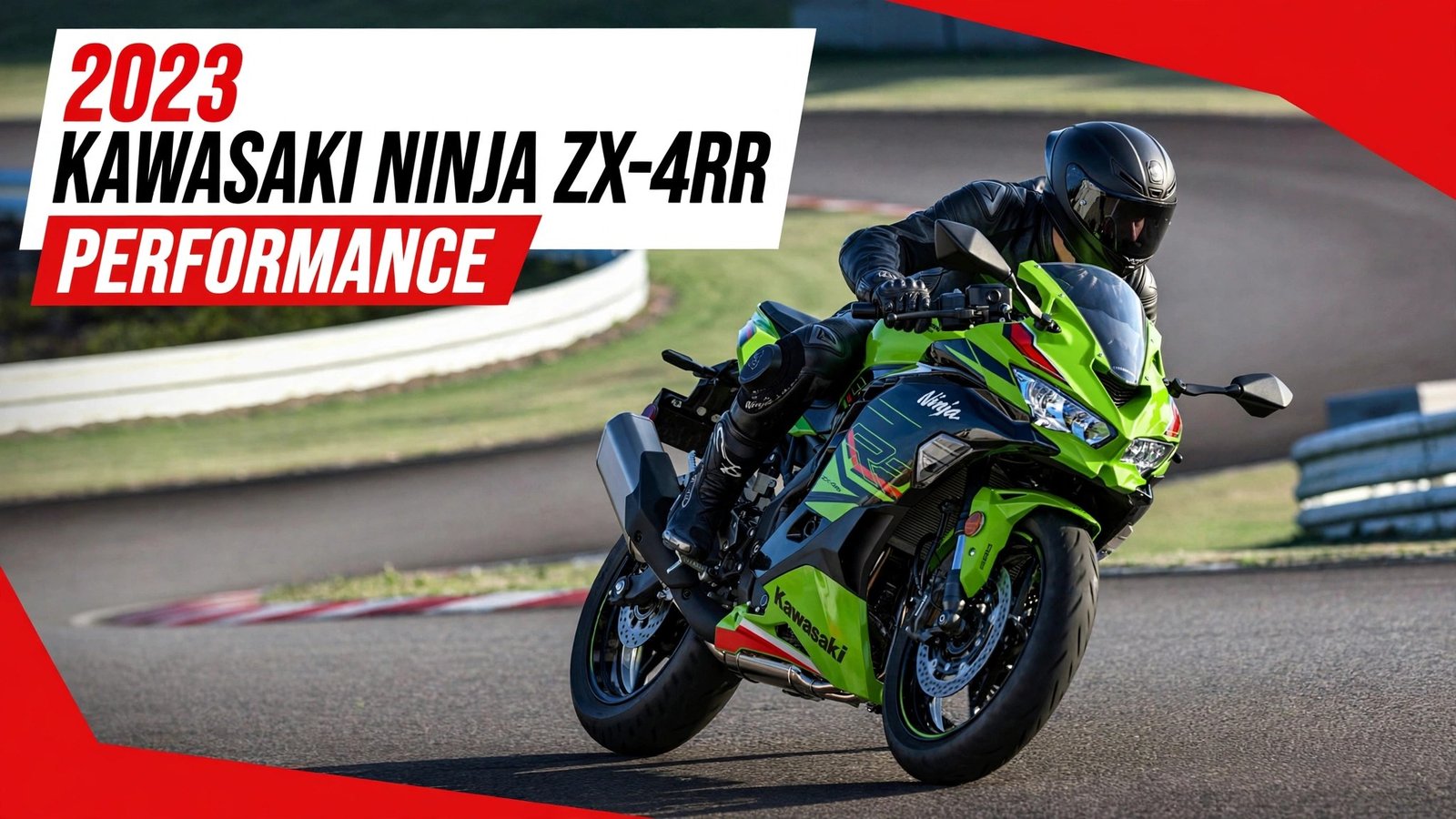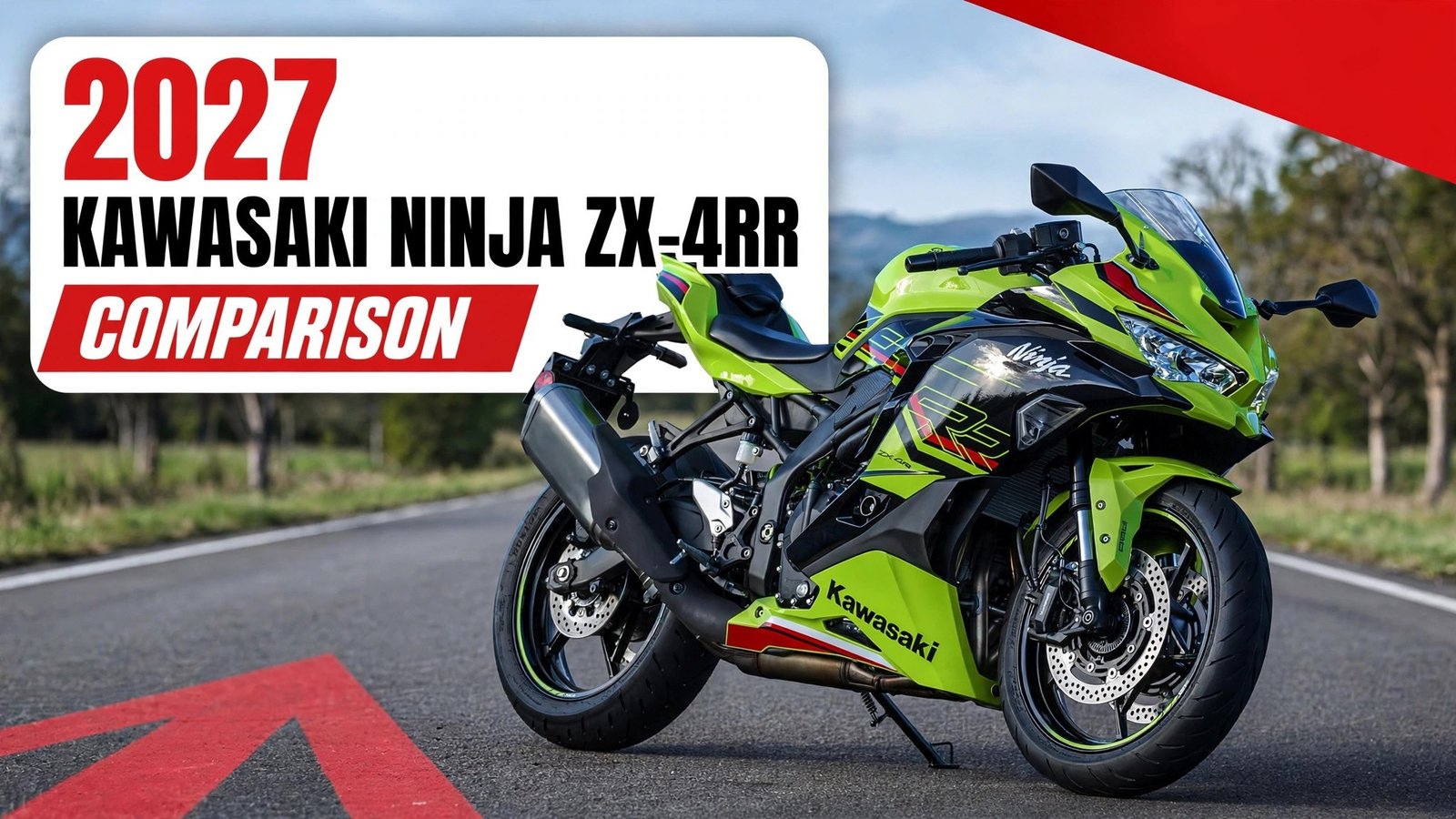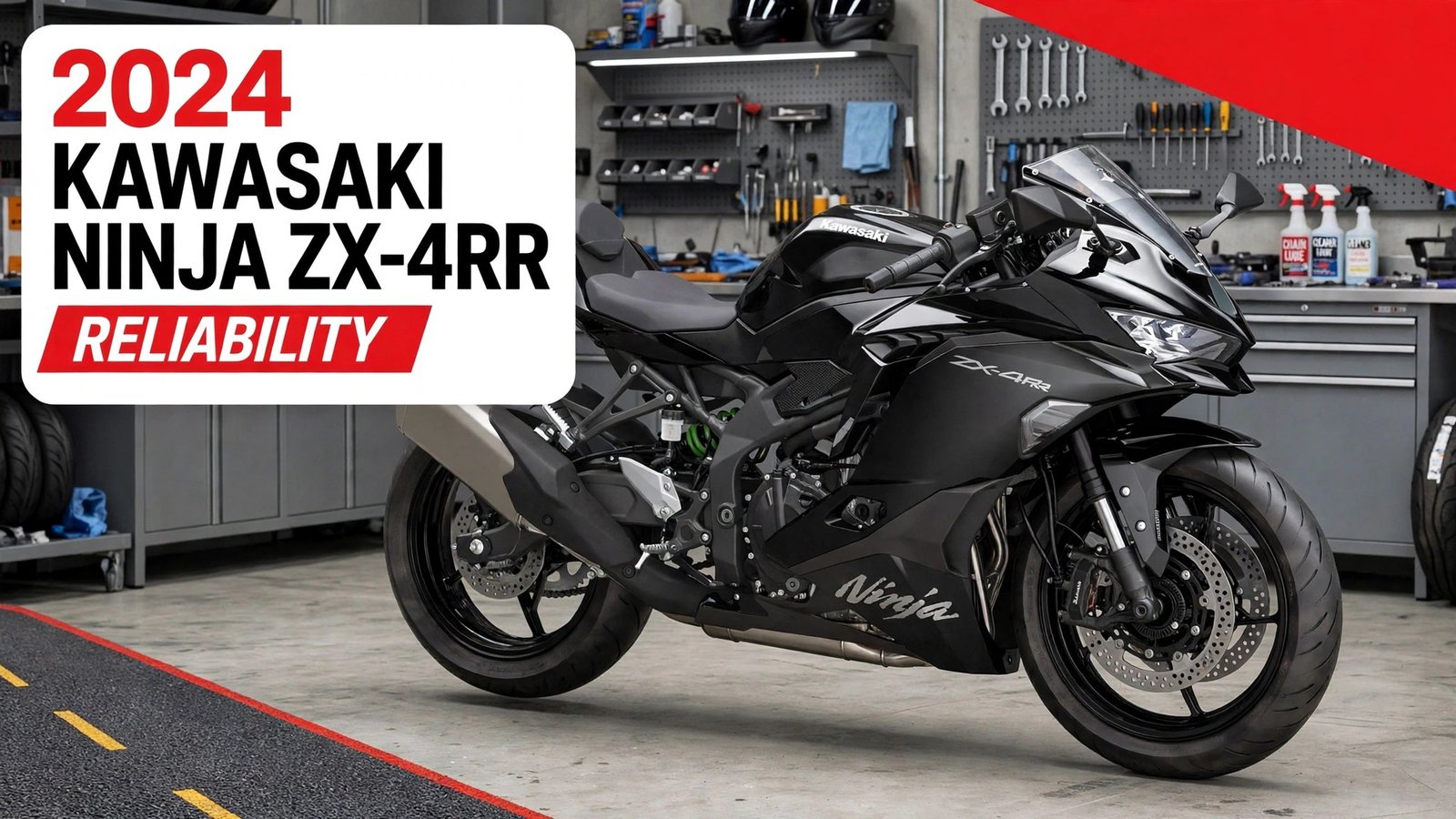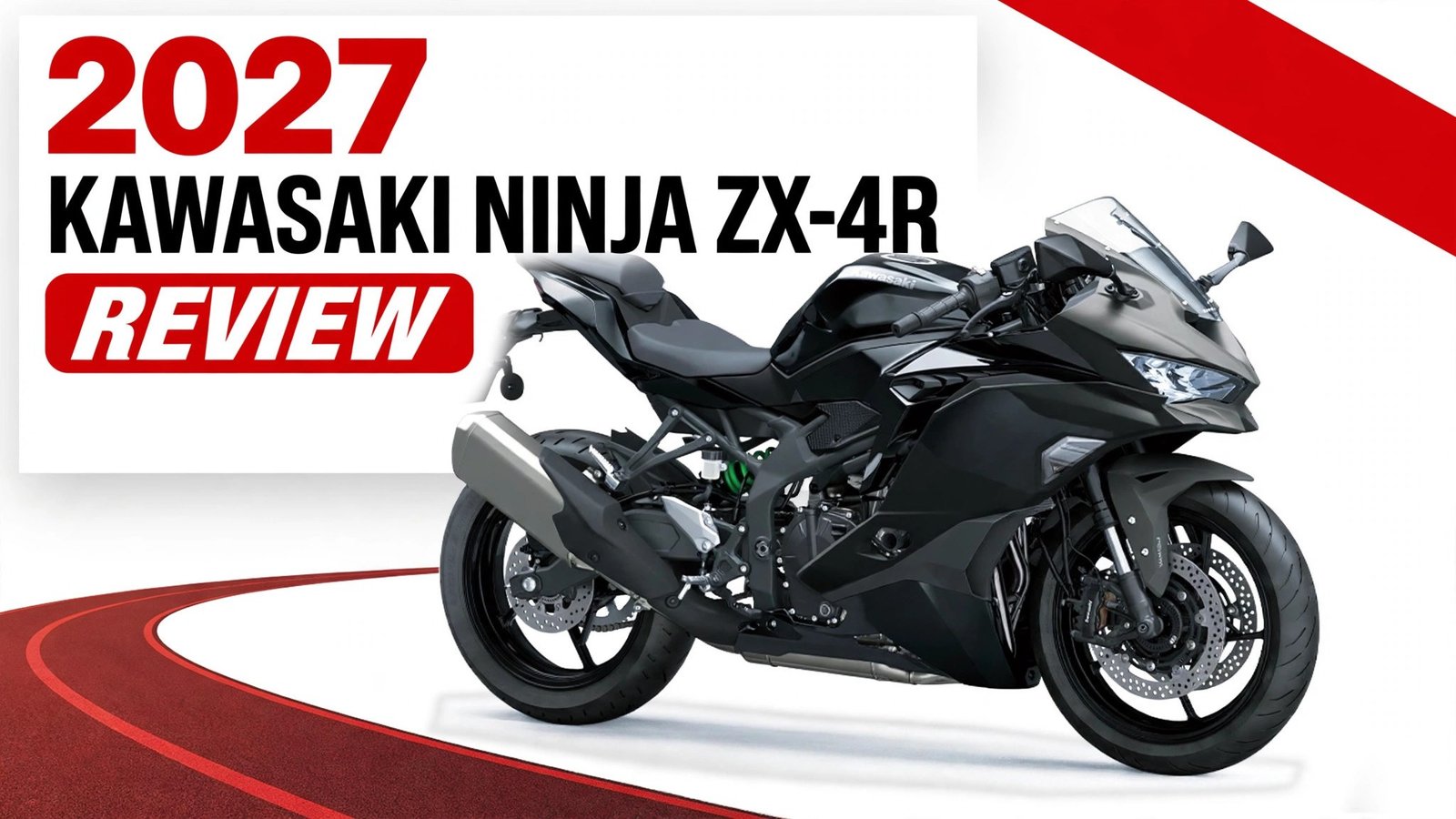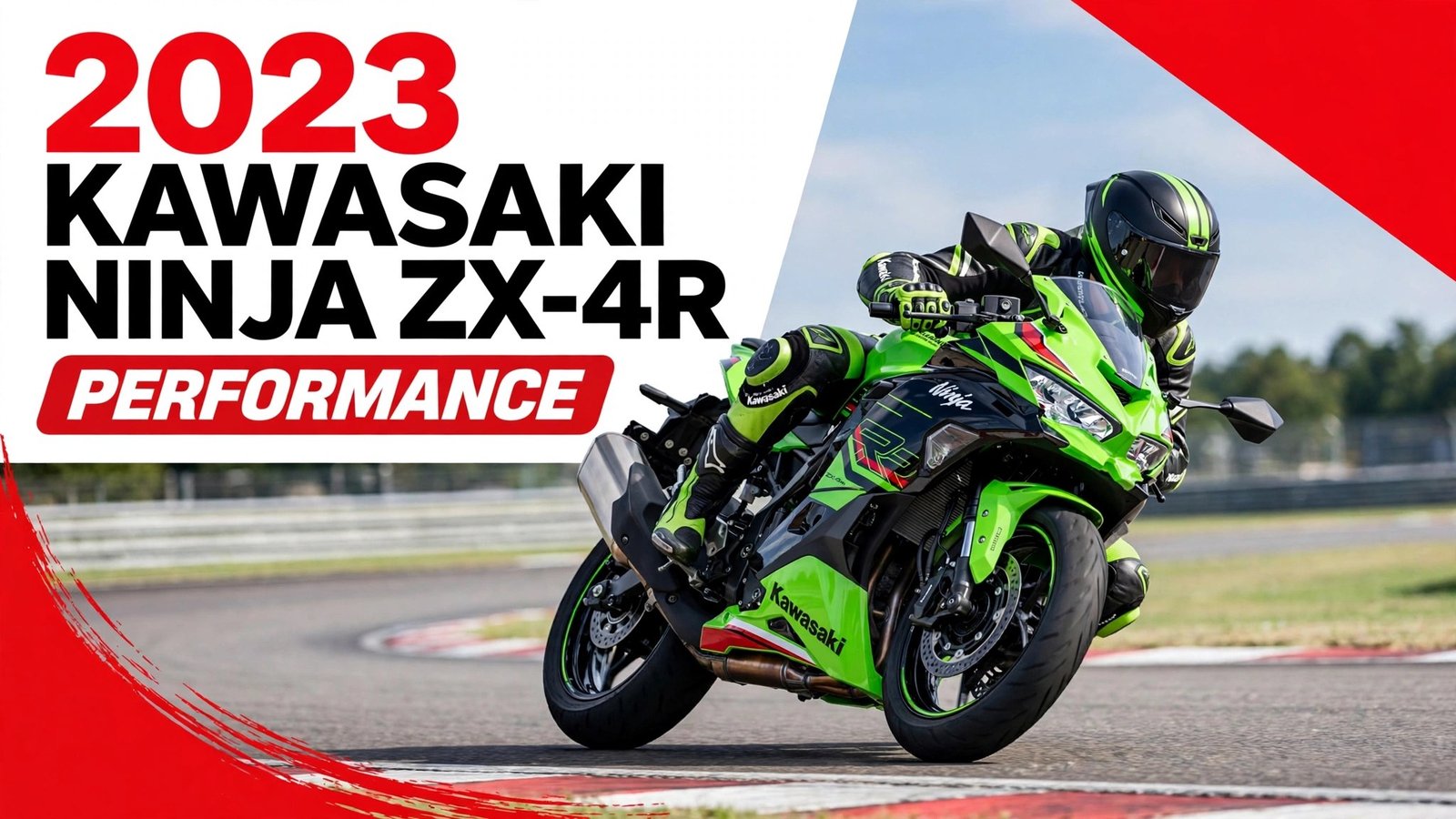
A stock American Kawasaki Ninja ZX-4R makes 56.3 hp at the rear wheel, tops out at 124 mph by GPS, and returns around 41 mpg by the EPA-style estimate — yet the bike feels faster than those numbers suggest — its power lives where most bikes have already given up. This Kawasaki Ninja ZX-4R performance guide measures the bike properly: the dyno figures from three shops, the only GPS-verified top-speed run, the honest fuel-economy picture, what an ECU flash unlocks, and how the chassis carries its 418 lb. The short version: this Kawasaki Ninja ZX-4R performance story is about a bike slower on paper than its rivals and more exciting once the tach passes 10,000 rpm.
Kawasaki Ninja ZX-4R Engine Performance and Power Delivery
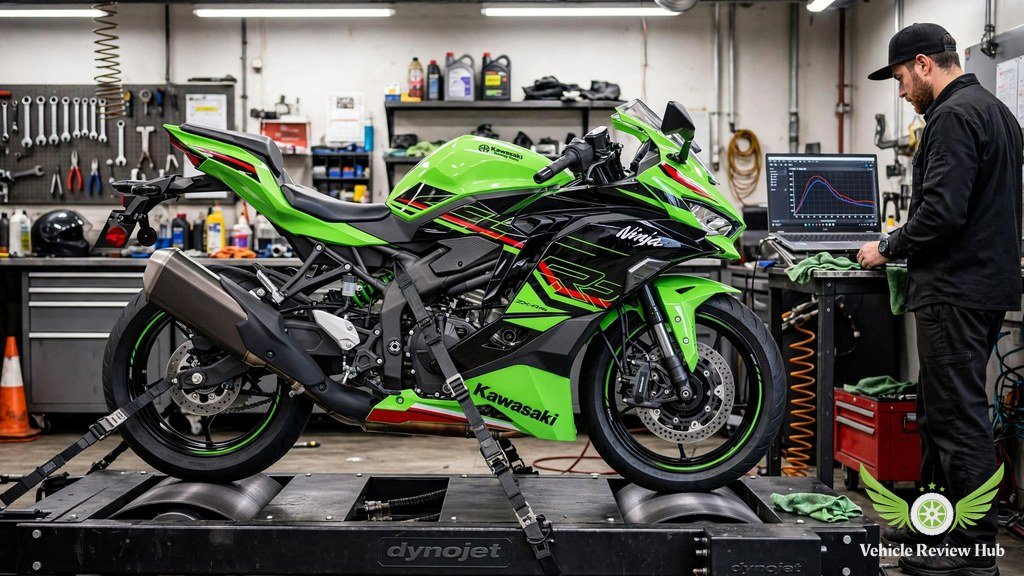
The engine is a 399cc liquid-cooled inline-four, and this Kawasaki Ninja ZX-4R performance guide starts with what it actually makes at the wheel — not what the brochure claims. Three shops have dyno-tested a stock US bike, and all three agree: the American bike makes the mid-50s at the rear wheel.
56.3 Rear-Wheel HP (Cycle World)
Cycle World’s dyno test put a stock 2023 ZX-4RR on its in-house Dynojet 250i and measured 56.3 hp at 11,700 rpm and 25.8 lb-ft of torque at 11,300 rpm — the headline number of this Kawasaki Ninja ZX-4R performance guide. Kawasaki’s own US claim is 56.0 hp at 11,500 rpm and 26.5 lb-ft at 11,000 rpm, so the dyno and the claim agree almost exactly. The power curve is linear and flexible low and mid, then stops building above about 11,500 rpm — a flat spot where the North American noise-emissions tune caps the revs. RevZilla’s first ride describes it plainly as “the unmistakable flat-spot in power above about 11,500 rpm. It’s a noise-emissions thing, we’re told.” The tach reads to 16,000 rpm, but the US tune gives it nothing extra past 11,500 rpm — the plateau is the tune, not a fault.
The other two stock dyno numbers belong in this Kawasaki Ninja ZX-4R performance guide too — they confirm the picture rather than contradict it. Graves Motorsports’ chart shows the stock bike at “just shy of 60 hp at the rear wheel” with peak power around 11,500 rpm; RevZilla’s first ride put it as “60 horses at the back tire instead of, say, 72”. 2 Wheel DynoWorks measured 53.3 hp and 24.7 lb-ft — “around 56 horsepower at the crank”. Three shops, three dynos, three different days — and every one of them lands in the mid-50s at the wheel. This Kawasaki Ninja ZX-4R performance guide does not average them — that would be false precision.
| Source | Rear-wheel hp | Torque | Notes |
|---|---|---|---|
| Cycle World | 56.3 hp at 11,700 rpm | 25.8 lb-ft at 11,300 rpm | Stock 2023 RR |
| Graves chart | Just shy of 60 hp | Not stated | Peak around 11,500 rpm |
| 2 Wheel DynoWorks | 53.3 hp | 24.7 lb-ft | About 56 hp at the crank |
| Kawasaki claim | 56.0 hp at 11,500 rpm | 26.5 lb-ft at 11,000 rpm | Claim, not measured |
Note: Rear-wheel dyno figures and crankshaft claims are different measurements — never compare them directly without saying which is which. This Kawasaki Ninja ZX-4R performance table keeps them separate.
Ten Best Lightweight 2023
Cycle World named the 2023 Kawasaki Ninja ZX-4RR its Best Lightweight Streetbike in the Cycle World Ten Best Bikes 2023 awards, writing that “a 15,000-plus rpm redline and track-ready equipment make the Kawasaki Ninja ZX-4RR unique in the lightweight sportbike segment”. The award went to the RR, not the plain R — but the R shares the RR’s engine, frame and chassis, so this Kawasaki Ninja ZX-4R performance guide credits it as a platform award. It was not given for the dyno number, the weakest in the class, but for the bike’s character — the only small four-cylinder sportbike on sale.
Kawasaki Ninja ZX-4R Top Speed and Acceleration
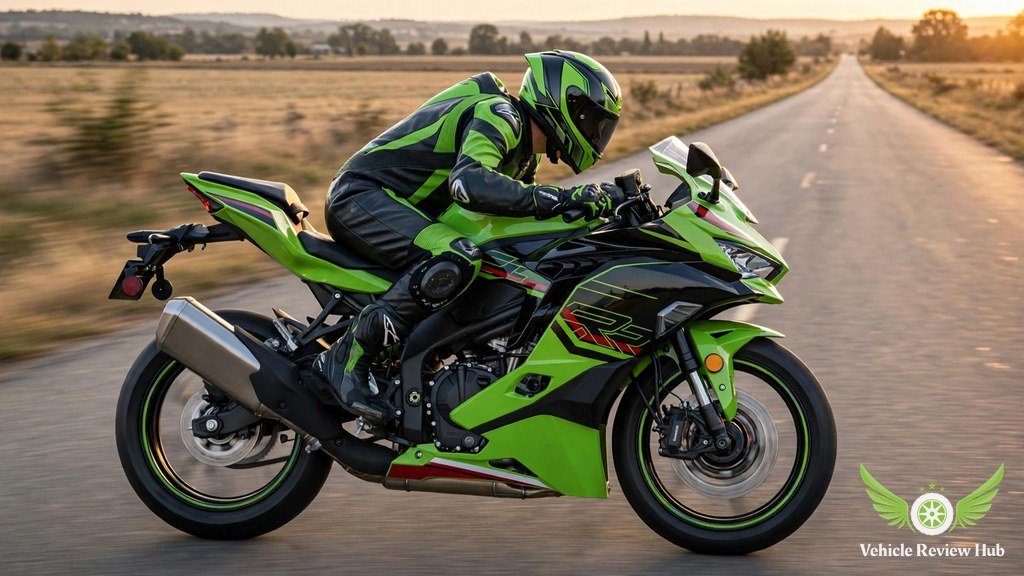
Top speed is the number every ZX-4R argument comes back to, and this Kawasaki Ninja ZX-4R performance guide prints only the figure actually measured on a stock American bike.
131 Indicated, 124 by GPS
RevZilla’s 2023 first ride is the only GPS-verified stock top-speed test of the American bike: 131 mph on the dash, 124 mph by GPS. The tester’s own words are the basis of the figure: “If one were to hold a ZX-4RR wide open for a couple of miles on a road like this, one would reach approximately 131 mph, as shown on the dash (GPS-verified 124 mph). We chose to use an airport runway, instead, and you can see the video evidence here.” The test was run on the RR, and this Kawasaki Ninja ZX-4R performance guide says so plainly — no outlet tested the plain R separately. The R shares the RR’s engine, tune, gearing and aerodynamics, so the RR figure is the best available proxy, but a proxy, not an R-specific test.
RevZilla filmed the run on an airport runway — a stock 2023 ZX-4RR, 131 mph on the dash and 124 mph on the GPS:
Two numbers circulate online that must never be printed as the US bike’s top speed, and this Kawasaki Ninja ZX-4R performance guide names both. The first is 147.94 mph, from TST Industries: a modified bike on a dyno, with a full exhaust, race air filter and ECU tune, whose dash showed 162 mph during the run. It is not a stock bike and not a road speed. The second is 151 mph (243 km/h), from an Asian-market bike in an Over Ride Magazine video — the Asian bike has the full-power 76 to 80 hp tune. Any article quoting 151 mph for the US ZX-4R is quoting the wrong market.
| Figure | Value | Source and conditions |
|---|---|---|
| Top speed (GPS) | 124 mph | RevZilla, stock 2023 RR, airport runway |
| Top speed (dash) | 131 mph indicated | Same run; dash reads high |
| Thunderhill straight | 124 mph on the speedometer | Rider first ride; track, not GPS |
| 0–60 mph | 4.60 seconds (estimate) | MotorcycleDB estimate, not a test |
| Quarter-mile | No time on record | No US outlet published one |
Note: The dash reading and the GPS reading differ — the dash over-reads by about 7 mph. This Kawasaki Ninja ZX-4R performance guide prints the GPS figure as the top speed.
No Quarter-Mile on Record
There is no quarter-mile time on record for the ZX-4R, and this Kawasaki Ninja ZX-4R performance guide says so rather than inventing one or borrowing the Ninja 400’s or the R7’s. No US outlet published a ZX-4R quarter-mile run, and no instrumented 0–60 mph test exists. The only 0–60 number in circulation is MotorcycleDB’s computed estimate of 4.60 seconds — an aggregator’s calculation, not a test result. The gearing is short — first idles at 6 mph, second at 8 mph — so the bike needs revs to move.
Kawasaki Ninja ZX-4R Mileage and Fuel Economy
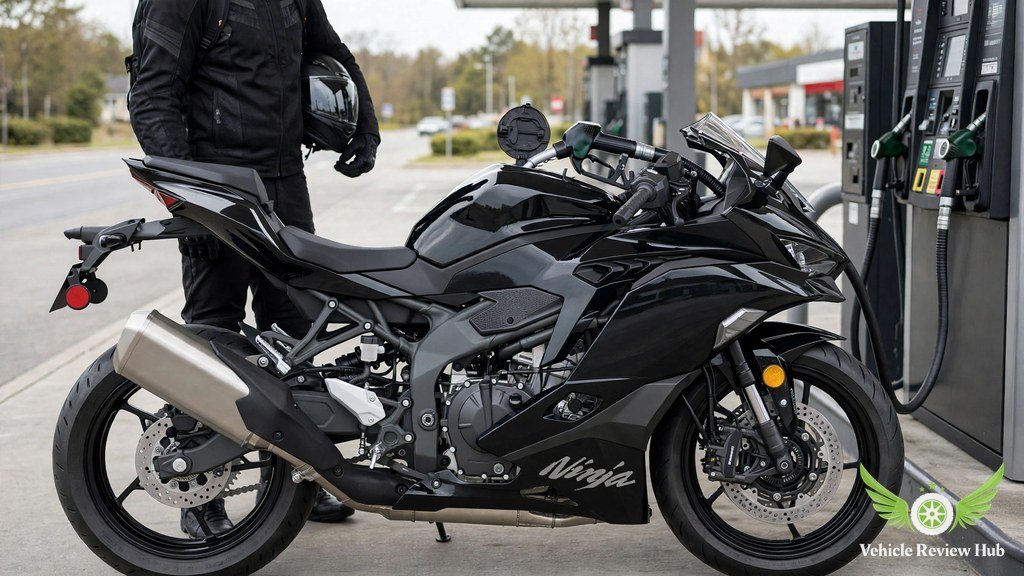
Fuel economy is the one place where this Kawasaki Ninja ZX-4R performance guide has to correct the record: the 41-mpg figure everyone quotes was never a test result. No outlet published a measured average MPG for the US bike. What exists is an estimate, a lab figure and owner reports — all labelled below.
EPA Estimates Around 41 MPG
The 41-mpg figure is MotorcycleDB’s EPA-style estimate: 41.2 US mpg (5.71 L/100 km), described as “based on the published US (EPA-style) fuel economy estimate”. It is not a tested average, and this Kawasaki Ninja ZX-4R performance guide does not call it one. The lab figure Kawasaki publishes where WMTC consumption is quoted is 46.1 mpg (5.1 L/100 km) — a laboratory number, not a road number. TotalMotorcycle’s guide lists 55.0 mpg, the same WMTC-derived figure expressed differently, not a US test result. Owners report about 39 to 47 mpg in gentle riding and much less when ridden hard; FastestLaps lists 37 mpg. The honest answer is around 41 mpg in ordinary mixed riding, closer to 46 in gentle use, and well under 40 when ridden hard.
Range is a calculation, not a tested figure: 4.0 gallons at 41.2 mpg is about 165 miles, and at 46.1 mpg about 185 miles. One genuine saving: the bike runs on regular 87-octane unleaded, confirmed by RevZilla and Kawasaki, so it does not need premium fuel.
| Figure | Value | What it is |
|---|---|---|
| EPA-style estimate | 41.2 mpg (5.71 L/100 km) | MotorcycleDB estimate, not a test |
| WMTC figure | 46.1 mpg (5.1 L/100 km) | Kawasaki lab figure, not a road test |
| Owners, gentle riding | 39–47 mpg | Owner-reported range |
| FastestLaps figure | 37 mpg (6.4 L/100 km) | Aggregator figure |
| Range at the estimate | About 165 miles | Calculated: 4.0 gal × 41.2 mpg |
Note: No outlet published a measured average MPG for the US bike, so this Kawasaki Ninja ZX-4R performance table labels every figure by its source.
Flash Numbers Are Not Stock
Every flashed or modified MPG or power claim must be labelled as such and kept out of the stock figures. A flashed bike with a full exhaust uses more fuel, not less, and its power figures belong in the flash section below. The stock numbers are 56.3 hp, 124 mph by GPS, and about 41 mpg by estimate. Anything bigger came from a modified bike — and a bike advertised at “76 hp” or “80 hp” is a flashed bike whose warranty is already void.
Kawasaki Ninja ZX-4R Real-World Riding Experience
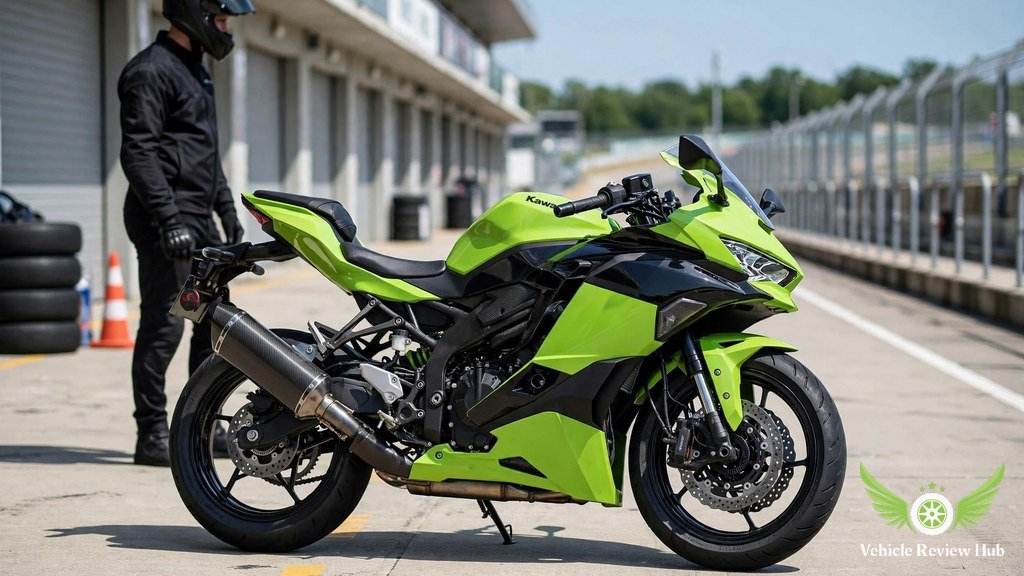
On the road the ZX-4R is two bikes in one: a polite commuter below 10,000 rpm and a screaming little supersport above it. This Kawasaki Ninja ZX-4R performance guide leans on the first rides at Thunderhill Raceway and 140 miles of California back roads. Below 10,000 rpm it is easy and unthreatening; above it, the engine “seems happy to live above 10,000 rpm, wailing like a banshee but still nice ‘n smooth”, in RevZilla’s words. The riding position is compact but not punishing: RevZilla’s 6’2″ tester called the bike “far from too small”, the 31.5-inch seat is low for a supersport, and the clutch is light. The ZX-4R review covers the model-year history and prices; this Kawasaki Ninja ZX-4R performance guide covers what the bike does with them.
Flash Unlocks 70-Plus HP
The ECU flash is the single biggest performance fact about this bike, and this Kawasaki Ninja ZX-4R performance guide keeps the ladder straight. A 2 Wheel DynoWorks mail-in flash remaps the US bike toward its original tune: their stock bike made 53.3 hp, and the flash alone took it to just over 70 hp. Add an aftermarket slip-on and an air filter and the number creeps up to nearly 74 hp. Graves Motorsports’ numbers, covered in Ultimate Motorcycling’s 13 fast facts, sit higher up the same ladder: a Graves cat-back slip-on plus a tune nets 76 hp at the rear wheel, and a full system pumps it to 80 hp. None of those figures is stock, and this Kawasaki Ninja ZX-4R performance guide never prints one without the word “flashed” attached.
| Configuration | Rear-wheel hp | Source |
|---|---|---|
| Stock (Cycle World) | 56.3 hp | Cycle World |
| ECU flash only | 70+ hp | 2 Wheel DynoWorks; stock exhaust |
| Flash + slip-on, air filter | Nearly 74 hp | 2 Wheel DynoWorks |
| Graves slip-on + tune | 76 hp | Graves Motorsports; Ultimate Motorcycling |
| Full system + tune | 80 hp | Graves race bike, 348 lb |
Note: Every figure above the stock line is a flashed figure — never quote 70, 76 or 80 hp as a stock number. This Kawasaki Ninja ZX-4R performance table keeps the stock row first.
Flashed Bike Is Not Street Legal
A flashed ZX-4R is not street legal as a practical matter, and this Kawasaki Ninja ZX-4R performance guide states that plainly. The flash kits are sold for closed-course and race use: the flash removes the EPA noise-compliant tune — federal emissions and noise tampering on a road bike — and it voids the warranty. RevZilla’s owner source put it without hedging: “every owner has to flash the ECU and void their warranty if they want to feel the true character of the engine”. This Kawasaki Ninja ZX-4R performance guide does not soften that to “may void the warranty” — the owner’s account is that flashing voids it. Flash the bike and you own a track-day weapon with no factory warranty and no legal standing on the road; keep it stock and you own a 56-hp bike. The reliability guide covers the warranty and service consequences.
Kawasaki Ninja ZX-4R Handling, Braking and Stability
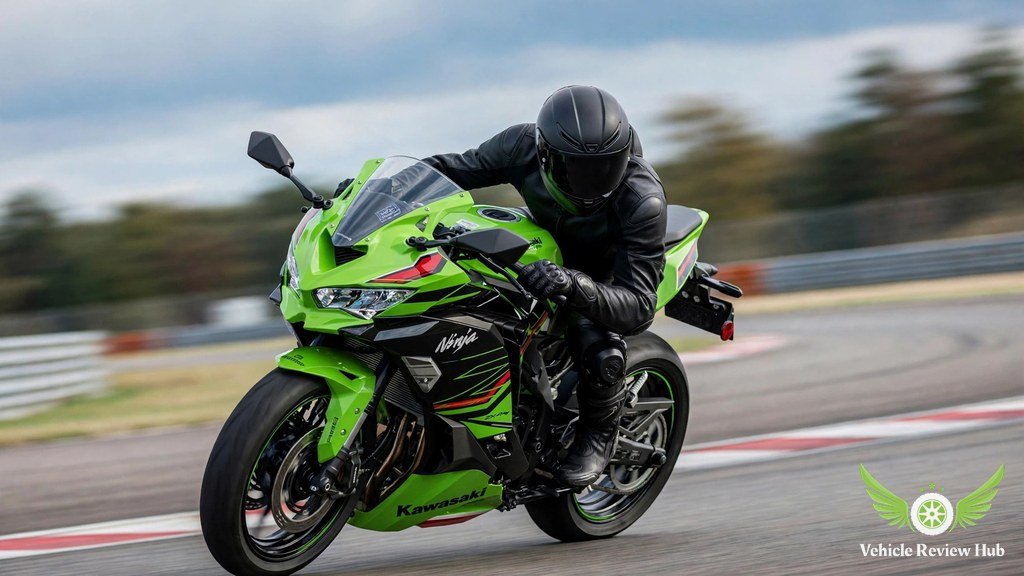
The chassis is the part of this Kawasaki Ninja ZX-4R performance story that needs no excuses. A short 54.3-inch wheelbase, a steep 23.5-degree rake and light steering give the bike a razor-sharp turn-in — Rider Magazine called it “willing to flick onto its side” — and RevZilla found it “clearly in its element” on track. The steel trellis frame and steel swingarm manage the 414.5 lb curb weight without flexing, in Ultimate Motorcycling’s words. That weight is the catch: the four-cylinder engine and the premium chassis cost weight, though the bike carries it well — RevZilla wrote that it “felt 20 or 30 pounds lighter than the spec sheet claims”.
Handling, Braking and Stability on Real Roads
The front end is a 37 mm Showa SFF-BP fork — preload-adjustable on the RR, non-adjustable on the R — and the rear is the BFRC Lite shock, fully adjustable on the RR with 4.9 inches of travel against the R’s 4.4 inches. Which fork leg carries the preload adjustment is disputed between RevZilla and Cycle World, so this Kawasaki Ninja ZX-4R performance guide names no side until the owner’s manual settles it. The brakes are dual 290 mm discs with radial-mount four-piston Nissin monobloc calipers and ABS: RevZilla found good power and feel, “more than enough to slow down a bike that’s making less than 70 horsepower”. No instrumented 60–0 braking distance was published for the US bike, so this Kawasaki Ninja ZX-4R performance guide prints none. The electronics are the weak point, as the ZX-4R review explains: no IMU, so the three-mode KTRC works from wheel-speed sensors only, with no lean-angle intervention and no cornering ABS.
Measured 418 lb on CW’s Scales
Cycle World’s dyno article states the scale figure plainly: “Before hitting our in-house Dynojet 250i dynamometer, the 2023 Kawasaki Ninja ZX-4RR tipped our automotive scales at 418 pounds.” That is the measured weight, and this Kawasaki Ninja ZX-4R performance guide keeps it separate from the claimed weight and RevZilla’s own measurement — three different measurements of the same bike. Kawasaki claims 414.5 lb curb for both the R and the RR, every year. RevZilla’s spec table lists 420 lb for its 2023 RR. The owner’s manual spec table says curb mass 188 kg (415 lb) — the same bike in metric rounding. The point is what the weight means against the class: the ZX-4R weighs essentially the same as a Ninja 650 (412 lb claimed) and the R7 (414 lb) while making 17 to 26 hp less, and the RC 390 weighs 365 lb wet — 53 lb less, for 16 hp less. The bike is not a lightweight by class standards, even if it feels like one.
| Bike | Weight | Rear-wheel hp | What the weight means |
|---|---|---|---|
| ZX-4RR claimed | 414.5 lb | 56.3 hp | Kawasaki spec sheet, R and RR |
| ZX-4RR measured | 418 lb | 56.3 hp | Cycle World scales, 2023 RR |
| ZX-4RR (RevZilla) | 420 lb | — | RevZilla spec table, 2023 RR |
| KTM RC 390 | 365 lb | 40.2 hp | 53 lb lighter, 16 hp less |
| Ninja 650 claimed | 412 lb | About 60 hp (rear wheel) | Same weight, far more power |
Note: Claimed curb, measured scale weight and a rival magazine’s figure are three different measurements — this Kawasaki Ninja ZX-4R performance table labels each one.
Kawasaki Ninja ZX-4R Performance Compared With Other Sport Bikes
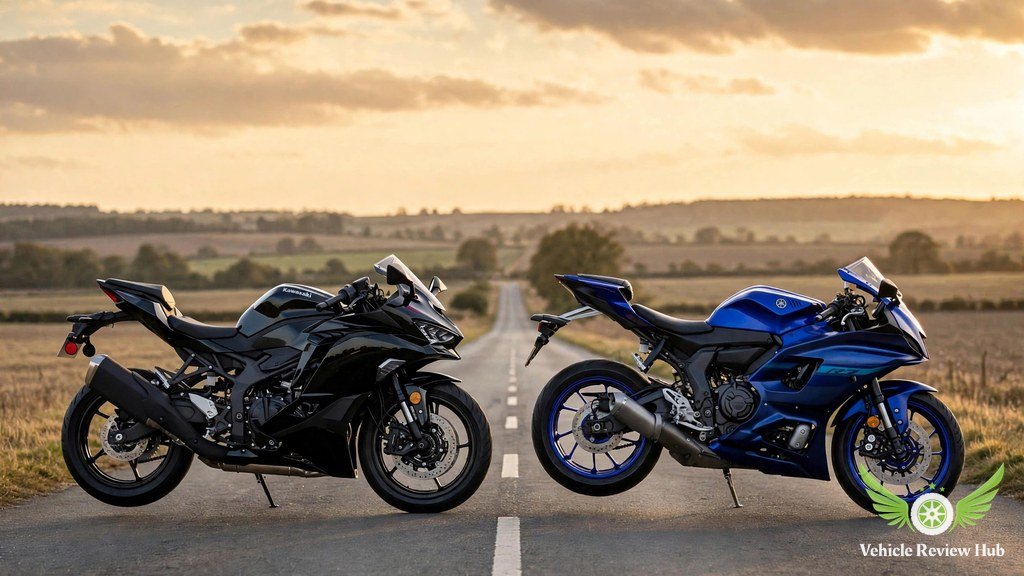
Against its rivals the ZX-4R loses every numbers argument and still has a case to make. The full comparison — R7, GSX-8R and the RR, on price, power and value — lives in the ZX-4RR comparison.
Kawasaki Ninja ZX-4R vs Yamaha YZF-R7
The Yamaha YZF-R7 makes about 73 hp from its 689cc CP2 parallel twin — roughly 17 hp more than the US ZX-4R — and about 30 lb-ft more torque, at the same money ($9,399 against $9,299). On paper the R7 is faster everywhere, and this Kawasaki Ninja ZX-4R performance guide says so without hedging. The ZX-4R’s only performance answer is revs and sound: a 16,000 rpm tach, a four-cylinder scream against a parallel-twin thump, and a chassis 30 lb lighter in spirit if not on the scale. The R7 also has the electronics the ZX-4R lacks — a six-axis IMU against wheel-speed-only traction control. A buyer who wants the faster bike buys the R7; a buyer who wants the more exciting bike has a real decision to make. The Ninja 500 review shows what $5,299 buys in a twin.
Is the Kawasaki Ninja ZX-4R Suitable for Beginner Riders?
Yes, with caveats — and this Kawasaki Ninja ZX-4R performance guide gives the balanced answer rather than a yes or a no. The bike is light and compact, with a low 31.5-inch seat, traction control and ride modes, and is manageable at low revs: the electronics give new riders a real safety net, and the bike “starts out manageable” below 10,000 rpm. But it makes its power high in the rev range — “once you rev it out it pulls harder than most beginner bikes” — and it costs more upfront and to insure than a twin 400. The honest verdict is that the ZX-4R is a good second bike and a demanding first bike, and only with an MSF course first. A new rider should budget for the insurance quote first, and know the bike’s own reliability guide lists the most demanding service schedule of any Ninja — oil, filter and four spark plugs at every 7,600-mile service.
Kawasaki Ninja ZX-4R Performance Frequently Asked Questions
The ZX-4R’s performance numbers get quoted wrong more often than any bike in its class. These are the direct answers from this Kawasaki Ninja ZX-4R performance guide.
How much power does a stock ZX-4R make on the dyno?
Cycle World measured 56.3 hp at 11,700 rpm and 25.8 lb-ft at 11,300 rpm on its Dynojet 250i — the best-documented stock figure. Graves’ chart reads just shy of 60 rear-wheel hp, and 2 Wheel DynoWorks measured 53.3 hp. All three agree the stock US bike makes the mid-50s at the wheel, and this Kawasaki Ninja ZX-4R performance guide leads with Cycle World’s number.
What is the ZX-4R’s top speed?
RevZilla GPS-verified 124 mph (131 mph indicated) on a stock ZX-4RR at an airport runway. The plain R was never tested separately, so the RR figure is the best available proxy. Never quote the 151-mph Asian-market figure or the 147.94-mph modified dyno figure as the US top speed — this Kawasaki Ninja ZX-4R performance guide names both.
What MPG does the ZX-4R get?
The EPA-style estimate is about 41 mpg (MotorcycleDB, 41.2 mpg). No outlet published a measured average, so no tested figure exists. The WMTC lab figure is 46.1 mpg, and gentle-riding owners report 39 to 47 mpg. This Kawasaki Ninja ZX-4R performance guide prints the estimate as an estimate and the lab figure as a lab figure.
How much power does an ECU flash add?
A 2 Wheel DynoWorks flash takes the stock bike to 70-plus hp with the stock exhaust. A Graves slip-on plus a tune nets 76 rear-wheel hp, and a full system reaches 80. All of those are flashed figures — never quote them as stock, and this Kawasaki Ninja ZX-4R performance guide labels every one as modified.
Is a flashed ZX-4R street legal?
No, as a practical matter. The flash removes the EPA noise-compliant tune and voids the warranty — RevZilla’s owner source states it directly. Flash kits are sold for closed-course and race use, so a flashed bike is a track-day bike, not a road bike.
Is the ZX-4R good for beginners?
Manageable at low revs with traction control and ride modes, and a low 31.5-inch seat — but the power lives above 10,000 rpm, and insurance is notably expensive. It is a good second bike and a demanding first bike, and only with an MSF course first. This Kawasaki Ninja ZX-4R performance guide recommends the Ninja 400 as the easier alternative in the same showroom.