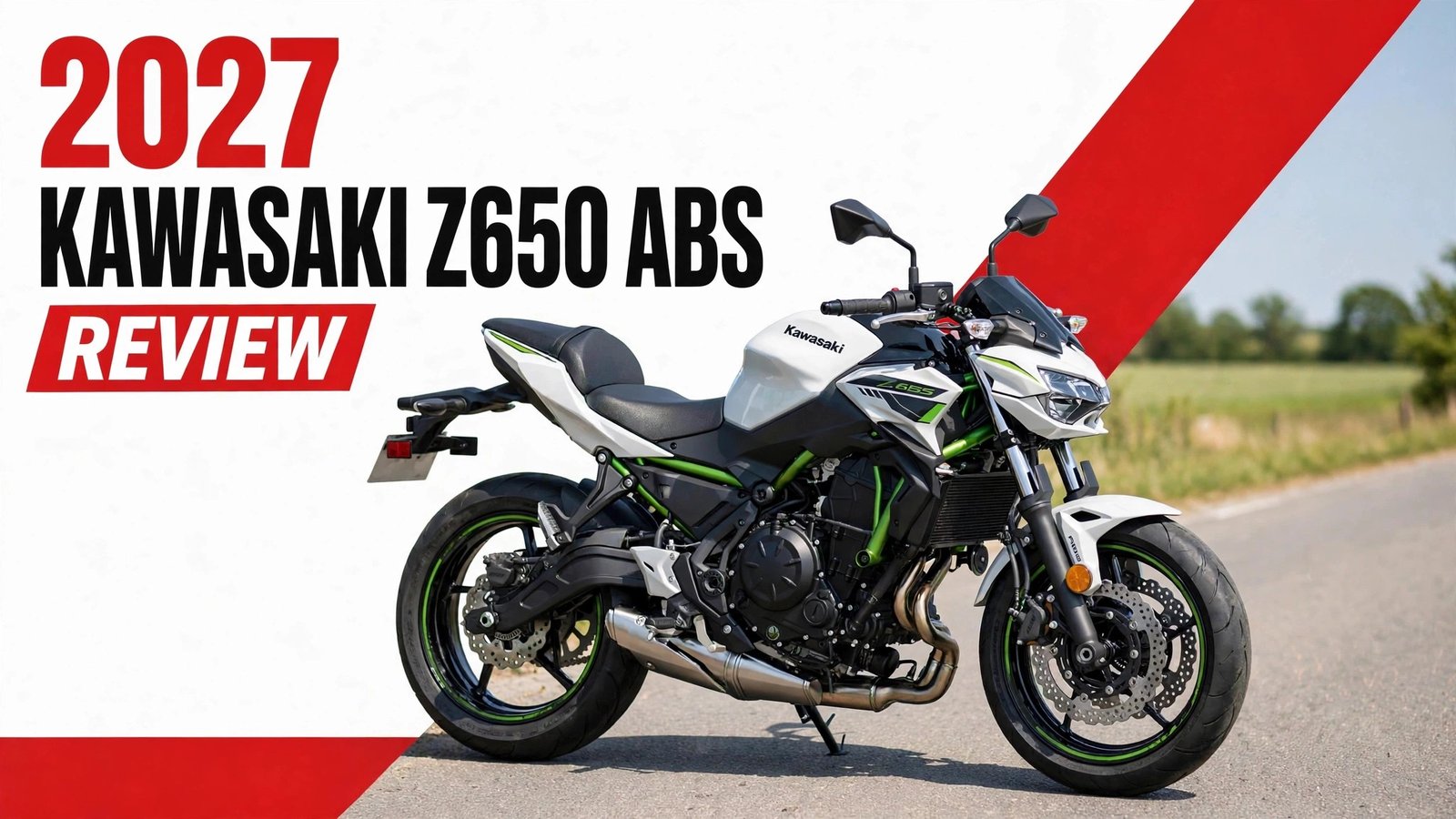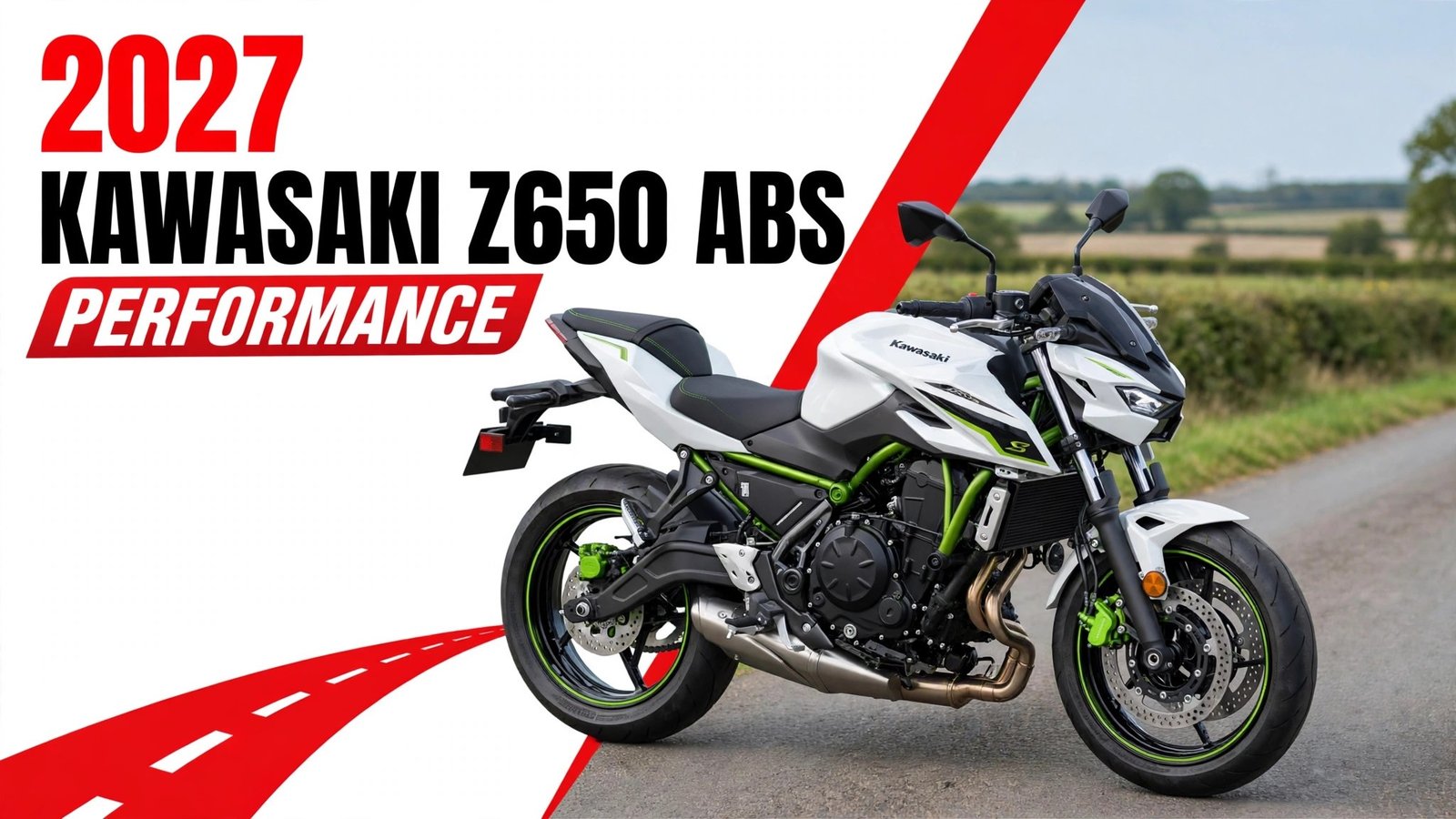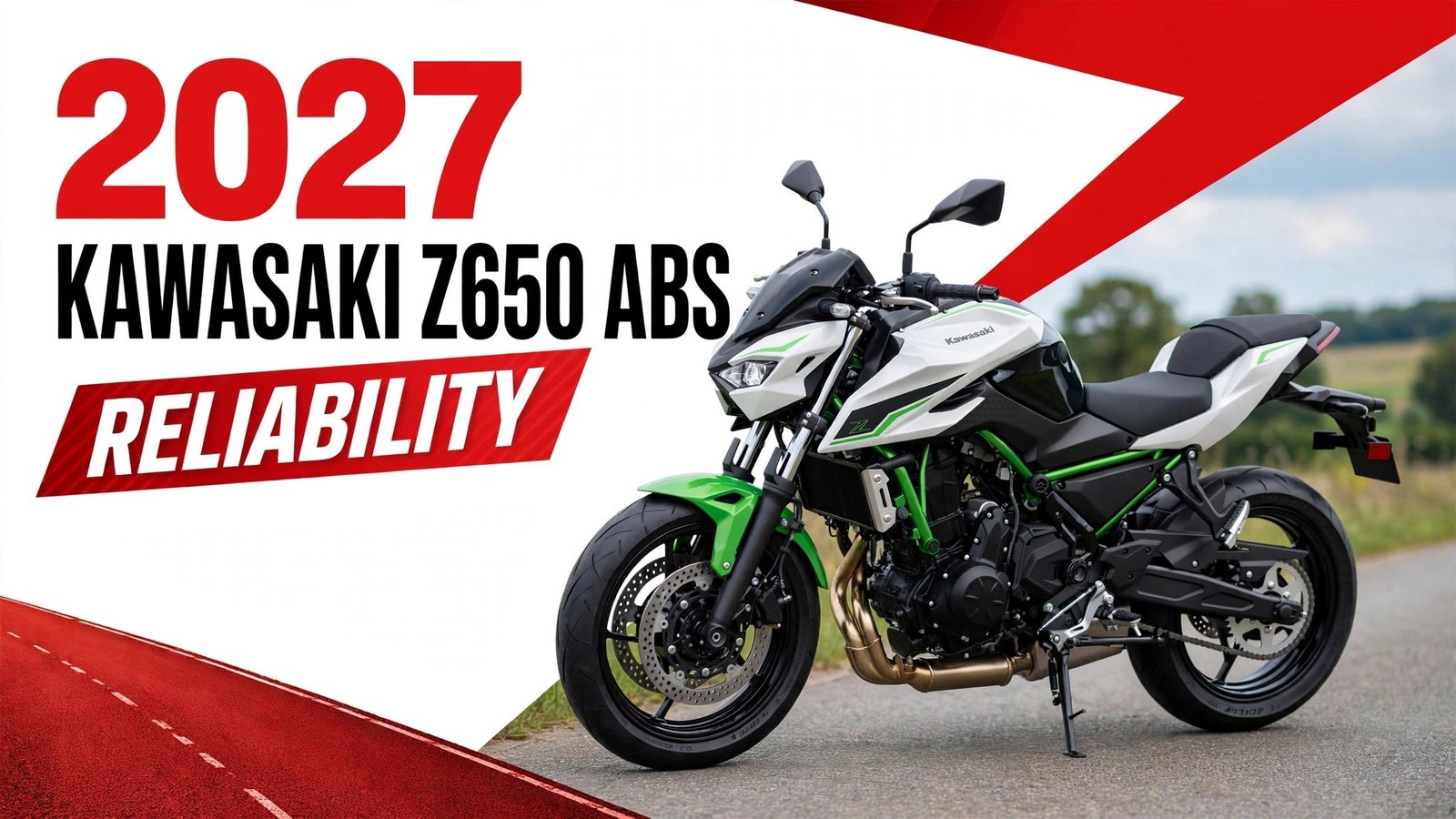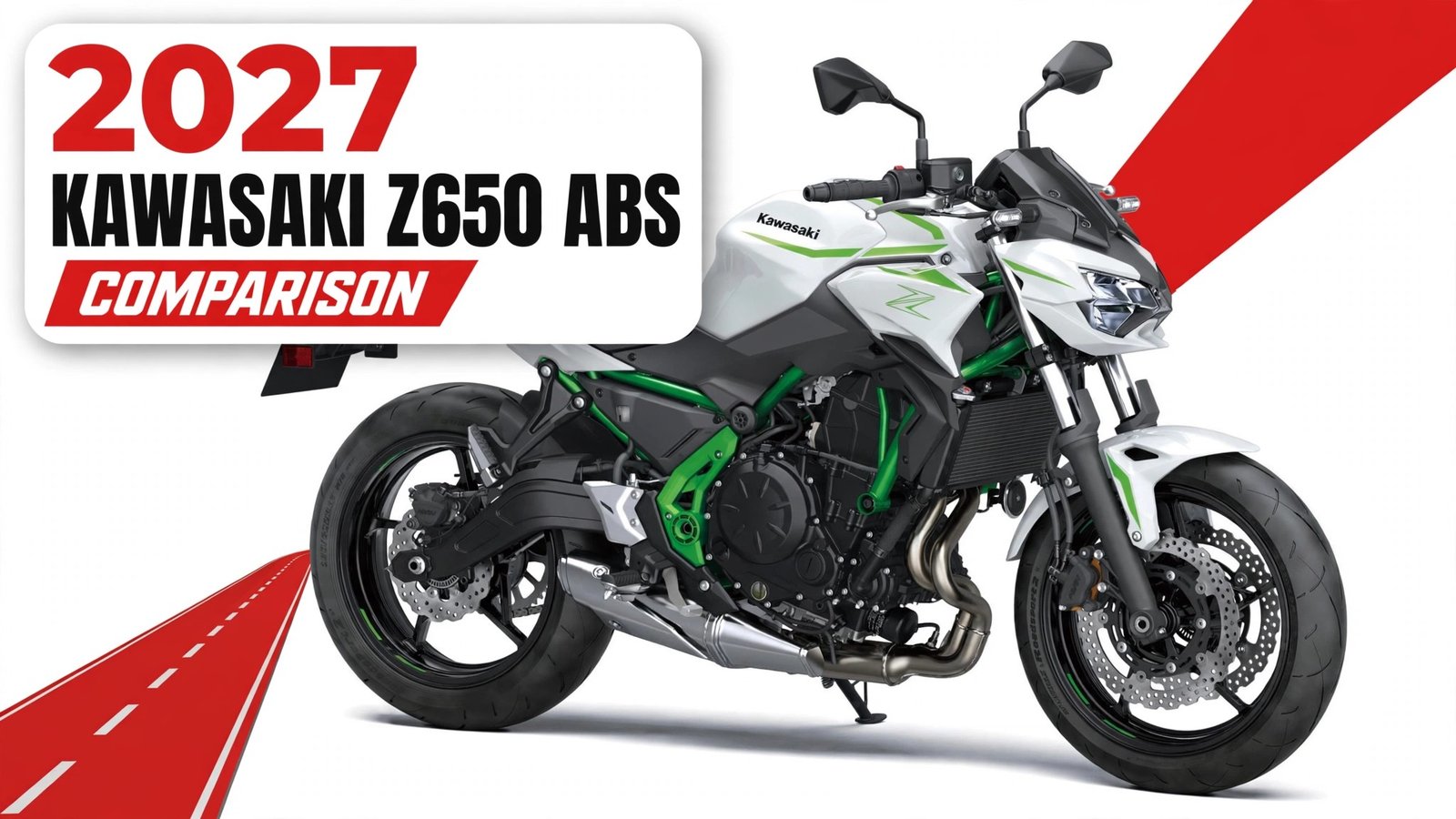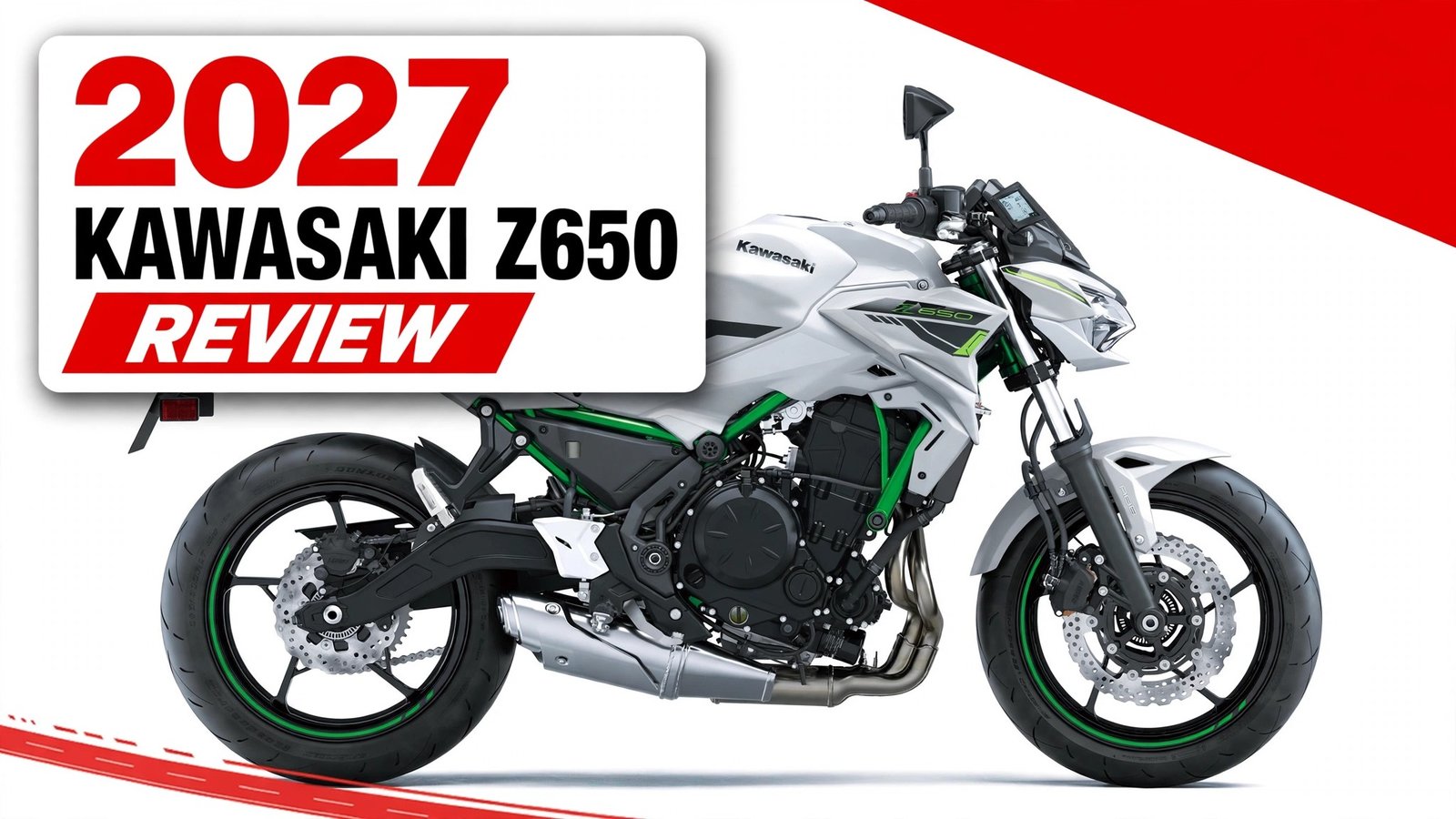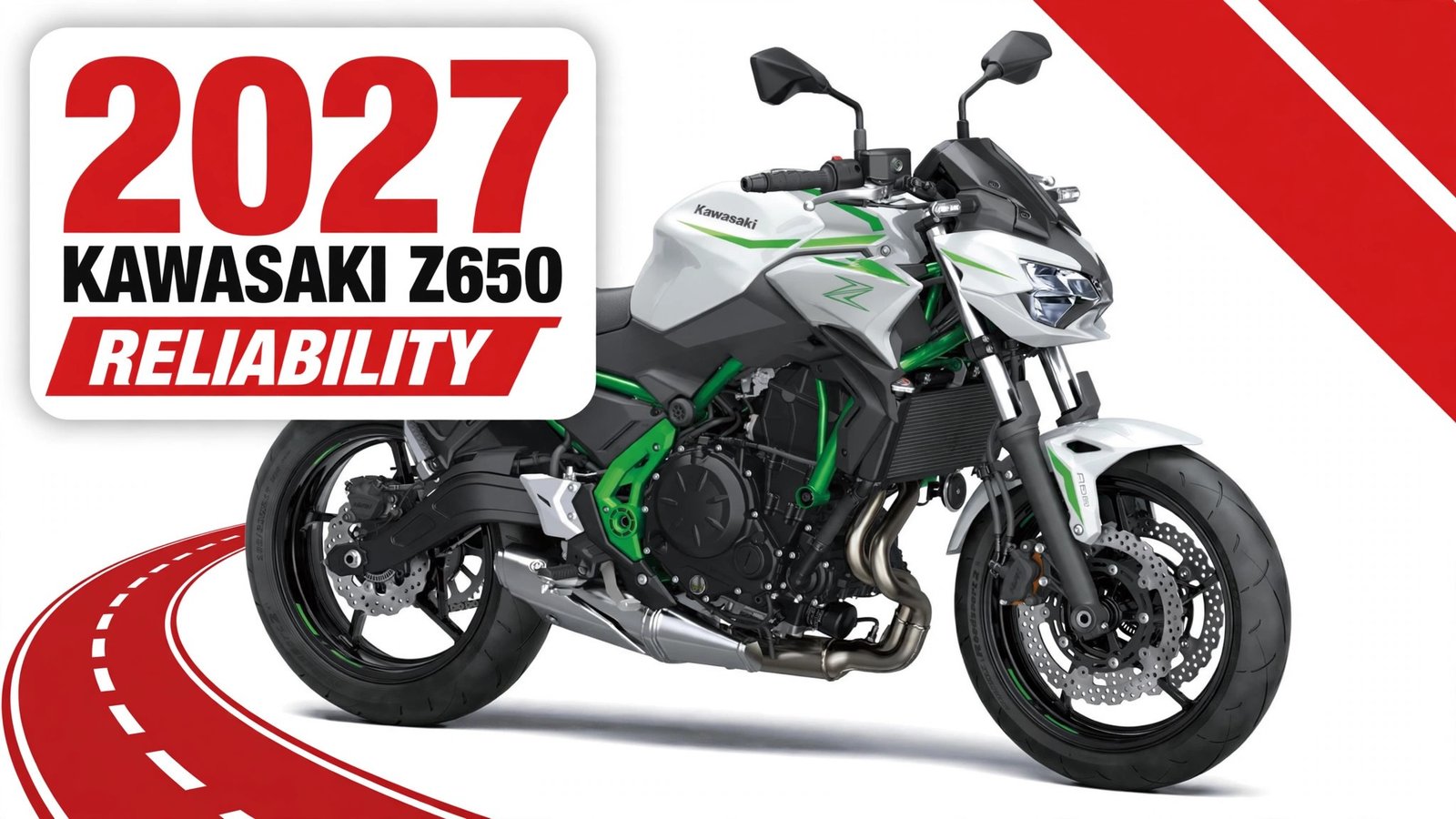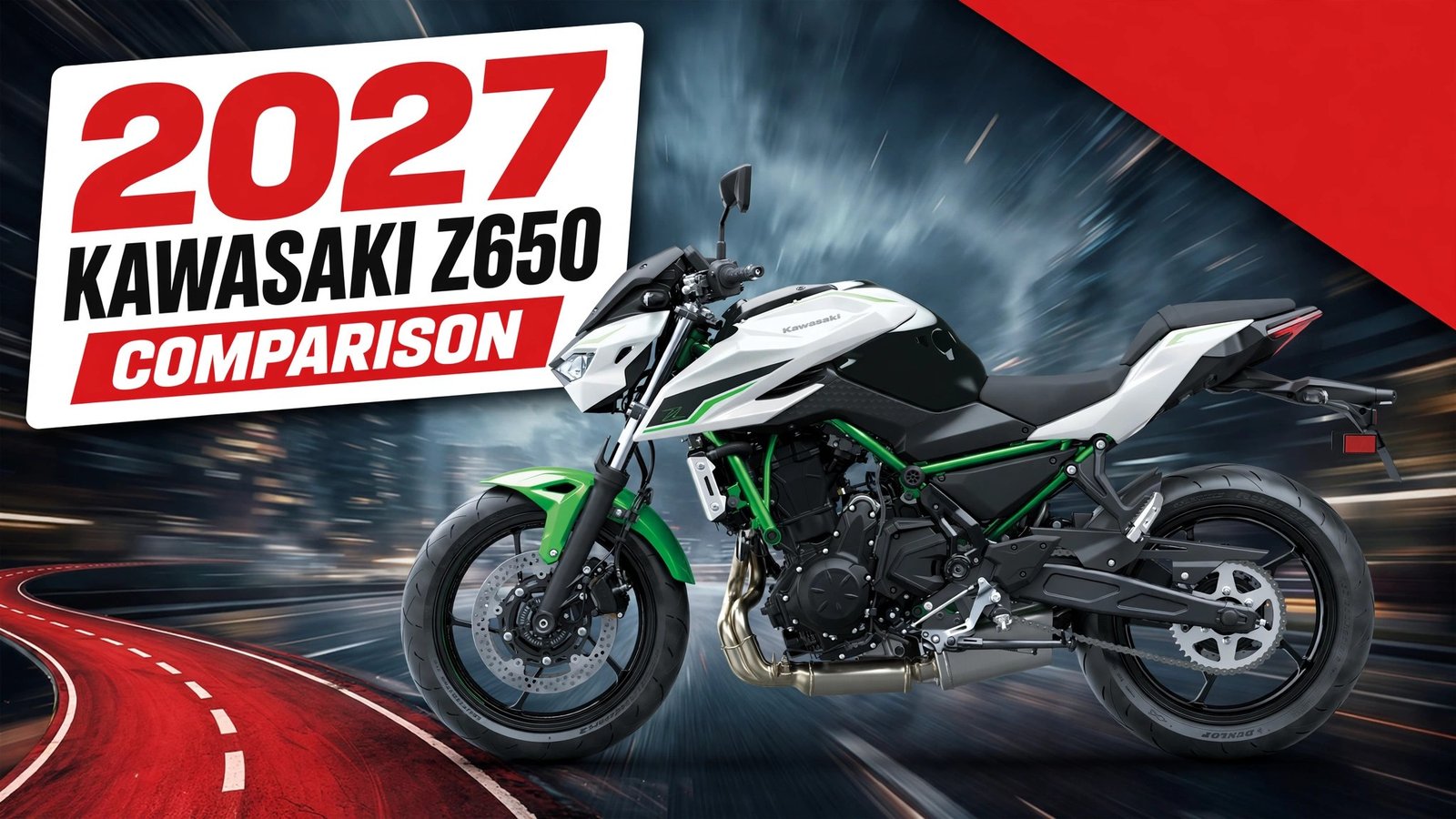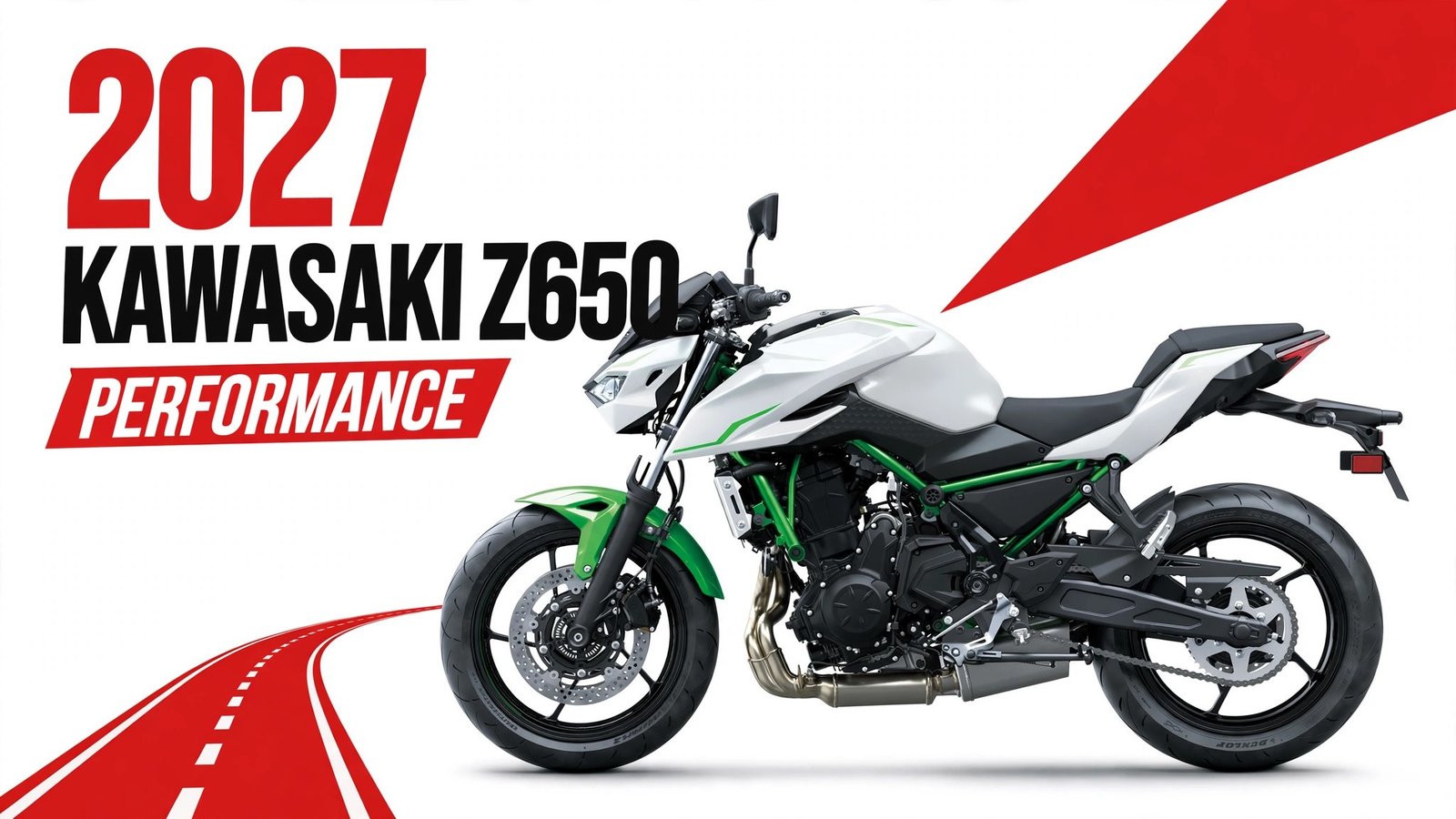
The Kawasaki Z650 makes 67.0 hp on Kawasaki’s spec sheet and 60.95 hp on Motorcycle.com’s 2017 dyno, and that gap between claimed and measured is the honest starting point for this Kawasaki Z650 performance guide. There is no official top speed, no published MPG figure, and no US 0–60 mph time in the verified record — and two figures that circulate online, a “59.9 hp” dyno and a “12.41” quarter-mile, have no source that could be verified. This Kawasaki Z650 performance guide prints only the numbers that can be traced to a named test.
The bike itself is the naked twin of the Ninja 650: a 649cc parallel twin in a steel trellis frame, with a claimed 67.0 hp at 8,000 rpm and a 416.7 lb curb weight. It is the lightest-feeling bike in its class rather than the most powerful, and the test record backs that up — the Z650 finished runner-up in Motorcycle.com’s 2017 five-way shootout, and fourth in the 2021 six-way test. This Kawasaki Z650 performance guide works through the dyno record, the top speed, the fuel economy, the riding experience, the handling, and the MT-07 comparison, in that order.
Kawasaki Z650 Engine Performance and Power Delivery
This Kawasaki Z650 performance section starts with the engine, because everything else follows from what the 649cc twin puts to the rear wheel. Kawasaki claims 67.0 hp at 8,000 rpm on every spec sheet from 2019 to 2027, with torque printing two ways: 48.5 lb-ft at 6,500 rpm on the 2019–2025 sheets and 47.2 lb-ft at 6,700 rpm on the 2026–2027 sheets. The measured figures are lower, as rear-wheel dyno figures always are, and this Kawasaki Z650 performance guide keeps the claimed and measured numbers apart.
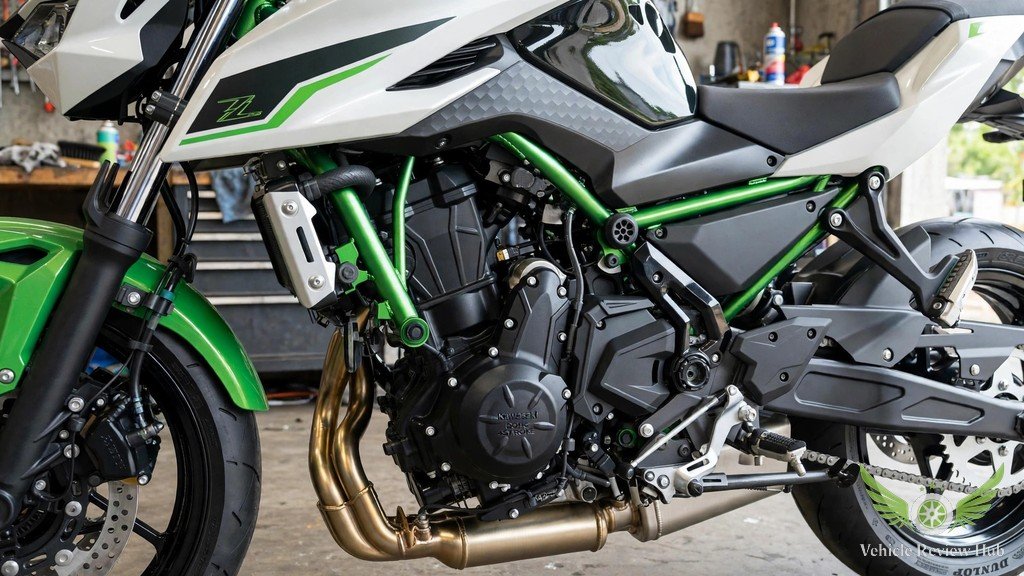
Dyno: 59.9 hp in 2017
The heading above carries a figure this Kawasaki Z650 performance guide cannot verify. No source for a “59.9 hp” Z650 dyno run could be found after four targeted searches, and the only “59.9 bhp” figure in the record is the Vulcan S’s claimed power — a different bike’s brochure number, not a Z650 dyno result. The body says this plainly: there is no verified 59.9 hp dyno figure for the Z650, so this Kawasaki Z650 performance guide does not print it as a result. The two dyno runs that can be verified are both from Motorcycle.com.
The first verified run is from Motorcycle.com’s 2017 middleweight naked shootout, where the Z650 made 60.95 hp at 8,000 rpm and 43.71 lb-ft at 6,700 rpm at the rear wheel. On the same dyno the Suzuki SV650 made 71.6 hp and the Yamaha FZ-07 made 68.2 hp. The gap between the claimed 67.0 hp and the measured 60.95 hp is about 6 hp of normal drivetrain loss. This Kawasaki Z650 performance guide never presents 60.95 hp as “the bike’s power” without the word dyno, and never averages the two Motorcycle.com runs into a single number.
| Test | Rear-wheel power | Rear-wheel torque | Source |
|---|---|---|---|
| 2017 five-way shootout | 60.95 hp @ 8,000 rpm | 43.71 lb-ft @ 6,700 rpm | Motorcycle.com, 2017 |
| 2021 six-way shootout | 61.4 hp @ 8,100 rpm | Not published | Motorcycle.com, 2021 |
Note: This Kawasaki Z650 performance dyno table lists the only two verified rear-wheel runs in the record, both from Motorcycle.com and never blended. The claimed figure is 67.0 hp at 8,000 rpm on the spec sheet, and no source could be verified for a “59.9 hp” dyno figure, so it appears nowhere in this table.
61.4 hp, Lowest of Six
Four years later, the same bike made almost the same power. In Motorcycle.com’s 2021 six-way dyno test, the Z650 made 61.4 hp at 8,100 rpm — the lowest of the six bikes. The rest of the group read: Tuono 660 at 84.6 hp, CB650R at 81.9 hp, Trident 660 at 72.3 hp, SV650 at 70.7 hp, and MT-07 at 70.0 hp. The Z650 was 8.6 hp behind the next-slowest bike, the MT-07, and 23.2 hp behind the Tuono — and this Kawasaki Z650 performance guide never calls the Z650 the quick bike in its class.
The power gap looks worse on paper than it feels on the road, and the testers said so. Motorcycle.com’s editor-in-chief wrote that a rider would be disappointed in the Z650’s power “only if you looked at the dyno chart”, because in normal use and even at elevated speeds the midrange “feels as strong as any bike in this group”. The 649cc twin’s strength is low- and mid-range torque. What the dyno does settle is the class order: the Z650 is the slowest bike in the 2021 group on outright power. The full comparison of the three doc rivals is in the Kawasaki Z650 comparison blog.
Kawasaki Z650 Top Speed and Acceleration
This Kawasaki Z650 performance section deals with the two numbers buyers ask for first — top speed and acceleration. Kawasaki publishes no top-speed figure for the Z650 on any year’s spec sheet, and there is no verified US 0–60 mph figure at all. What exists instead is a magazine figure, an owner video, and one Indian VBox test, and this Kawasaki Z650 performance guide labels each one for exactly what it is.
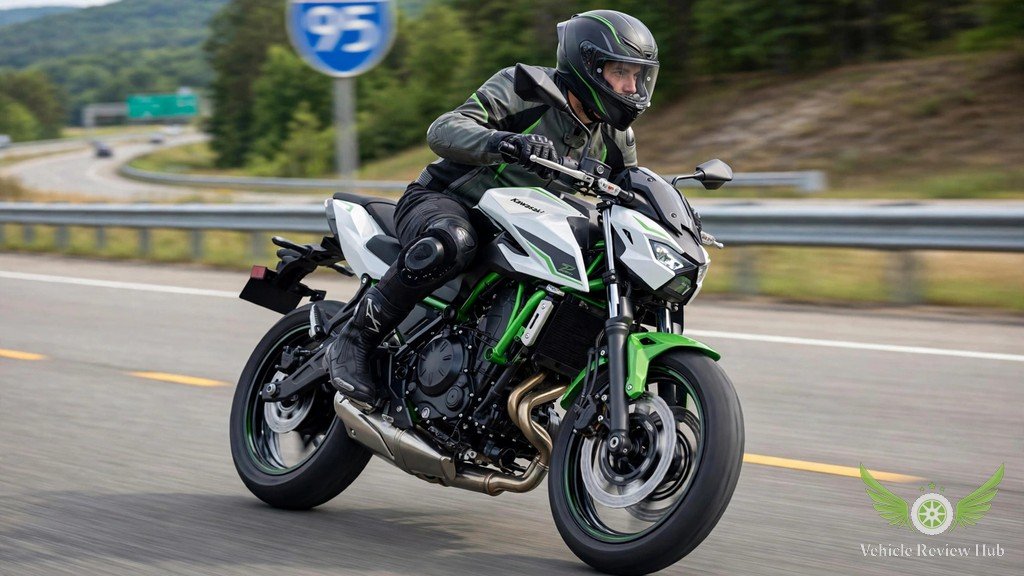
In the video below, a 2023 Z650 owner tops out at 123 mph on I-95 — but read the number carefully, because it is a speedometer reading on a public highway, not a GPS-verified test figure. The speedometer on most bikes reads a few mph high at triple-digit speeds. This Kawasaki Z650 performance guide pairs the video with the top-speed section because it is the only moving footage of a Z650 at its limit.
Quarter: 12.41 at 102.96
The heading above carries a figure this Kawasaki Z650 performance guide cannot verify — it has no traceable source behind it. No source for a “12.41 at 102.96” Z650 quarter-mile could be found after four targeted searches, and the figure should not be printed as a verified fact anywhere — not in a table, not in a comparison, and not as a rival-beating claim. The 12.41-second quarter-mile at 102.96 mph has no traceable source, so this Kawasaki Z650 performance guide treats it as unverified and uses the one timed quarter-mile that can be traced instead.
That timed run comes from ZigWheels’ 2017 road test, which put the Z650 through a VBox and recorded 13.32 seconds for the quarter-mile. The trap speed printed alongside it is too slow for a 13.32-second quarter, so it is not printed here — a suspect trap speed would only confuse the record. The same VBox session recorded 0–100 km/h in 4.48 seconds, the fastest attributed acceleration figure for the bike: ZigWheels’ 2017 VBox test. No US 0–60 mph figure exists in the verified record, and this Kawasaki Z650 performance guide never prints one.
| Figure | Value | Source and status |
|---|---|---|
| Official top speed | None published | Kawasaki publishes no top-speed figure on any spec sheet |
| MCN top speed | 125 mph | MCN 2017–2019 review page |
| Owner top speed | 123 mph | 2023 owner video, speedometer reading on I-95, not GPS-verified |
| 0–100 km/h | 4.48 seconds | ZigWheels 2017 VBox test |
| Quarter-mile (verified) | 13.32 seconds | ZigWheels 2017 VBox test; trap speed not printed (suspect) |
| Quarter-mile (unverified) | 12.41 at 102.96 | No source found — never print as a verified fact |
Note: This Kawasaki Z650 performance table keeps verified and unverified figures in separate rows on purpose. The 12.41-second quarter-mile is listed only so a reader who has seen it elsewhere knows it could not be verified — it is not a result this guide stands behind.
No Official Top Speed
Kawasaki has never published a top speed for the Z650, and that absence is itself the answer. The best-sourced figure is MCN’s 2017–2019 review page, which lists 125 mph alongside 68 bhp and a 165-mile tank range — a magazine figure, not a factory claim. The owner video in this section shows 123 mph on the speedometer. Neither number is GPS-verified, and this Kawasaki Z650 performance guide says so rather than rounding either one up into a headline. The full rival picture is in the Kawasaki Z650 comparison blog.
Kawasaki Z650 Mileage and Fuel Economy
This Kawasaki Z650 performance section answers the economy question: Kawasaki publishes no MPG figure for the Z650 on any US spec sheet, so every number below is an observed figure from a named test, never a factory claim. The observed figures cluster tightly — the mid-40s in hard riding, the low-50s in gentle riding — and this Kawasaki Z650 performance guide prints each one with its source.
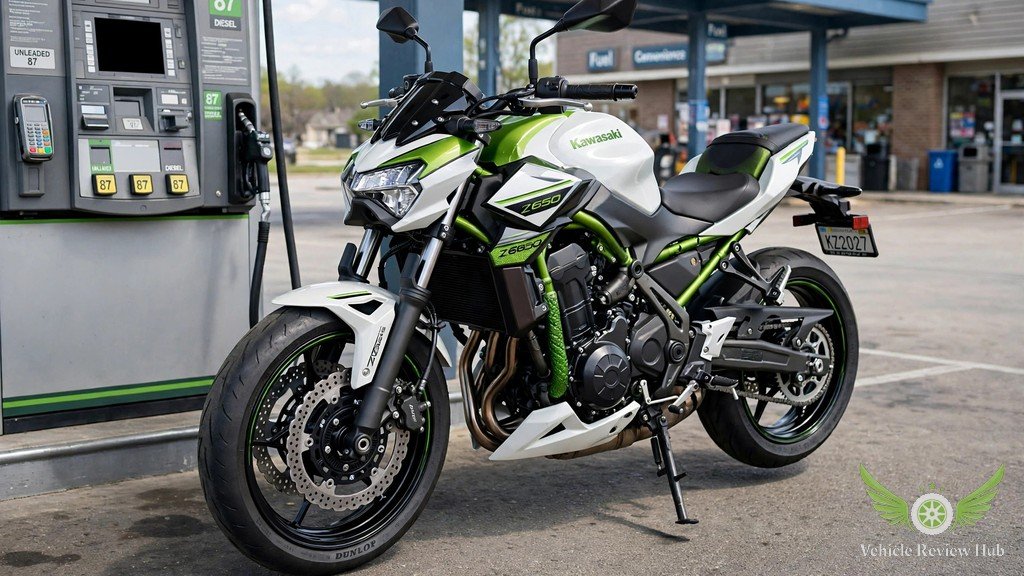
47 mpg in Cycle World Test
The heading above carries a figure this Kawasaki Z650 performance guide could not confirm. Two targeted searches found no Cycle World test that records 47 mpg for the Z650. The heading stays as the document printed it, but the body must say this plainly: the Cycle World 47 mpg figure could not be confirmed at writing, so this Kawasaki Z650 performance guide does not print it as a test result. The only 47 mpg figure in the verified record is the Yamaha FZ-07’s observed economy in Motorcycle.com’s 2017 shootout — a different bike’s number, not the Z650’s.
Kawasaki Publishes No MPG
No US spec sheet for the Z650 lists an MPG figure — only what testers actually measured. Motorcycle.com’s 2017 shootout observed 44 mpg for the Z650, and Men’s Journal averaged about 44 mpg over 474 miles of mostly spirited riding on Angeles Crest Highway in two weeks. At the gentle end, Bennetts saw around 53 mpg most of the day on the 2017 launch ride in Spain, and 50 mpg under hard riding, for a real-world range of 211 miles. Kawasaki claims 55 mpg, above every observed figure except Bennetts’ gentle day. With a 4.0-gallon tank, 44–53 mpg works out to roughly 175–210 miles between fill-ups.
| Source | Observed MPG | Conditions |
|---|---|---|
| Motorcycle.com, 2017 shootout | 44 mpg | Shootout test riding |
| Men’s Journal, 2017 | About 44 mpg | 474 miles, mostly spirited riding, two weeks |
| Bennetts, 2017 launch | About 53 mpg | Most of the day, Spain launch ride |
| Bennetts, 2017 launch | 50 mpg | Hard riding at the end of the day |
| MCN review page | 50 mpg average | Review-page average; 165-mile tank range |
| Kawasaki (claimed) | 55 mpg | Claimed figure, not an observed test result |
Note: This Kawasaki Z650 performance fuel-economy table uses only observed figures from named tests, plus Kawasaki’s claimed 55 mpg labelled as a claim. The “47 mpg in Cycle World Test” figure from the document could not be confirmed at writing and appears nowhere in this table. At 44–53 mpg observed and a 4.0-gallon tank, real-world range is roughly 175–210 miles by calculation.
Kawasaki Z650 Real-World Riding Experience
This Kawasaki Z650 performance section is about what the numbers cannot show: how the bike feels when a rider actually lives with it. The dyno says the Z650 is the slowest bike in its class, and the testers agreed — but the same testers ranked it second overall in 2017. This Kawasaki Z650 performance guide keeps the riding quotes attributed to the people who said them.
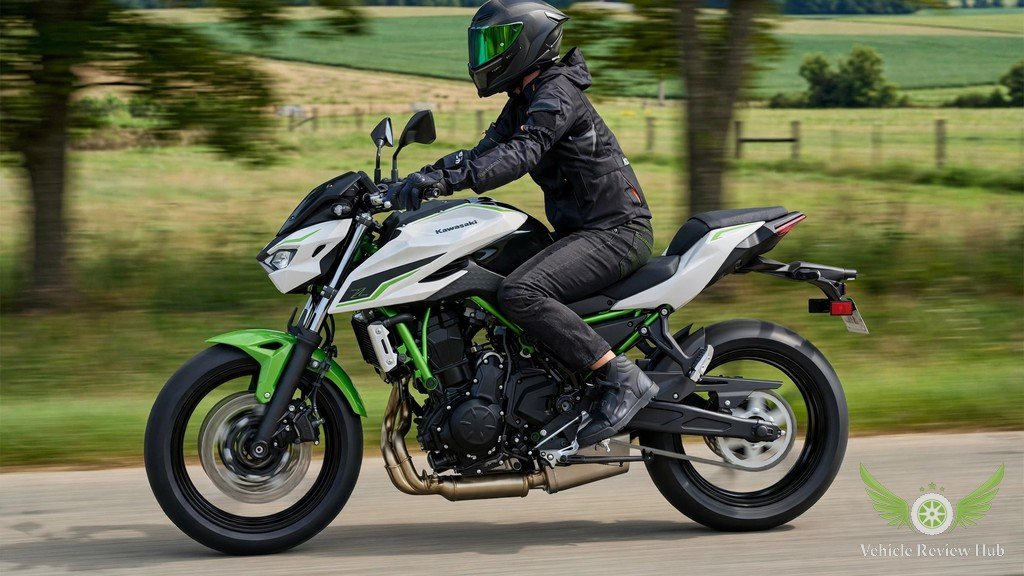
The Riding Experience Buyers Actually Talk About
In Motorcycle.com’s 2017 five-way shootout, the Z650 finished runner-up with 83.0% against the Yamaha FZ-07’s winning 84.4%, ahead of the Suzuki SV650 at 82.2% — and it won the Handling and Suspension categories outright. Thai Long Ly ranked the Z650 number one in the test: it “just did everything well” and he was “left searching for negatives. Of which I have none.” Evans Brasfield said he “could really flip a coin between it and the FZ-07 and be completely happy with either one”. Four years later the bike held up: in the 2021 six-way test the Z650 finished fourth with all three testers — Ryan Adams 4th at 81.9%, John Burns 4th at 82.1%, Troy Siahaan 4th at 80.0%. That is the riding story in one line: the Z650 wins on manners, not on power, and this Kawasaki Z650 performance guide counts that as a real strength.
Vibration Past 4,500 rpm
Every tester who rode the Z650 found the same trade-off: a buzz that arrives in the mid-range and returns near the top of the rev range. ZigWheels wrote that “a prominent buzz crops up between 4000 and 5000rpm”, and Bennetts’ 2017 launch testers felt vibration “bang on 6000rpm in top at 120kph (74.5mph)”. Motorcycle.com’s editor-in-chief noted that the bike “buzzes hard around 7-8000 rpm”, and Evans Brasfield put it plainly: the Z650 has “more high-rpm vibration than the other bikes” in the shootout, “but it never becomes annoying”. The pattern is consistent across three separate tests — a buzz at 4,000–5,000 rpm, another around 7,000–8,000 rpm — and no tester called it a deal-breaker. At 80 mph in top gear, around 6,000 rpm, the 2021 testers found it “smooth as buttuh”. This Kawasaki Z650 performance guide reports it as a watch item, not a defect. The maintenance side of ownership is covered in the Kawasaki Z650 reliability blog.
Kawasaki Z650 Handling, Braking and Stability
This Kawasaki Z650 performance section covers the part of the bike the testers liked best. The Z650 won the Handling and Suspension categories in the 2017 shootout, and its brakes earned the highest praise in the group — which is why this Kawasaki Z650 performance guide treats the chassis as the bike’s real performance story.
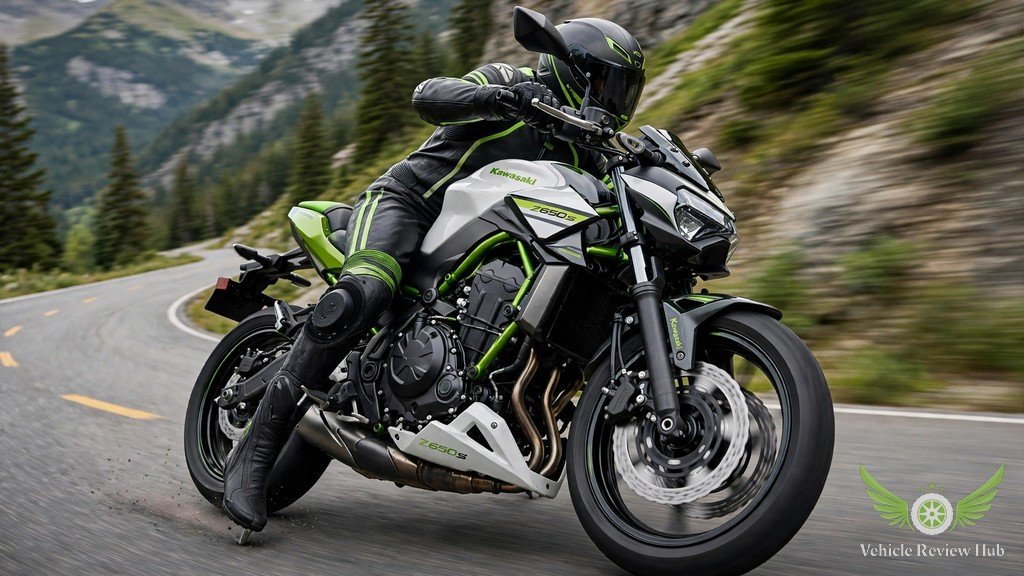
Best Braking of the Trio
Motorcycle.com’s 2017 testers called the Z650’s brake feel “the most confidence-inspiring of this group”, and the hardware explains why: dual 300 mm petal discs with two-piston Nissin calipers and ABS up front, and a single 220 mm petal disc with a single-piston caliper and ABS at the rear. On the scorecard the Brakes category was a near-tie — Z650 85.0%, SV650 85.0%, FZ-07 85.5% — but the testers’ words put the Kawasaki first on feel. Ultimate Motorcycling’s 2017 three-way comparison added that the Z650 “gets the steepest rake (by 0.8 degrees), and a short wheelbase” — a 24.0-degree rake, 3.9-inch trail and 55.5-inch wheelbase — which is why the bike turns so quickly. The same comparison noted the FZ-07 carries a 20 mm wider rear tyre: 180/55-17 against the Z650’s 160/60-17.
Softest Springs in Shootout
The document’s claim that the Z650 has the softest springs in the shootout checks out — but the wording comes from the 2021 test. Motorcycle.com’s 2021 six-way testers wrote that the Z650 “feels like it’s got the lightest-sprung suspension” in the group, and that the soft springs let a rider “flop the Z onto its side pretty much instantly trail-braking into corners” — at the cost of the bike “sproinging up and down over the bumps”. The 2017 scorecard tells the same story: the Z650 won the Suspension category at 85.0%, ahead of the SV650 at 84.5% and the FZ-07 at 82.5%. RevZilla’s 2017 first ride found the same character from the saddle: the suspension is “undersprung for a 205-pound rider” but “felt balanced overall”, with a preload adjuster at the rear and a non-adjustable 41 mm telescopic fork up front. Motorcycle.com’s own comparison in the same 2021 test put the order plainly: the MT-07’s springs were “a bit stiffer than the Kawasaki’s but softer than the other contestants” — the Z650’s were the softest in the group. That is the honest summary: the softest springs in the group, the best handling scores in the 2017 test, and a rear shock that only adjusts for preload — and this Kawasaki Z650 performance guide never calls the soft suspension a defect.
| Bike (2021 six-way) | Claimed power | 2021 MO dyno power | 2021 placing |
|---|---|---|---|
| Aprilia Tuono 660 | 100 hp (global) | 84.6 hp @ 10,500 rpm | 2nd |
| Honda CB650R | 94 hp | 81.9 hp @ 10,800 rpm | 5th (Ryan Adams 3rd) |
| Triumph Trident 660 | 80 hp (global) | 72.3 hp @ 10,300 rpm | 1st (winner) |
| Suzuki SV650 | ~75 hp (global) | 70.7 hp @ 8,600 rpm | 6th |
| Yamaha MT-07 | ~73.4 hp (global) | 70.0 hp @ 8,500 rpm | 3rd |
| Kawasaki Z650 | 67.0 hp @ 8,000 rpm | 61.4 hp @ 8,100 rpm | 4th (all three testers) |
Note: This Kawasaki Z650 performance table is the 2021 six-way dyno and placing record from Motorcycle.com, all six bikes on the same dyno. The Z650 made the least power in the group and still finished fourth with every tester — the placing is a riding verdict, not a power ranking.
Kawasaki Z650 Performance Compared With Other Sport Bikes
This Kawasaki Z650 performance section puts the Z650 against the bike buyers cross-shop most: the Yamaha MT-07. The two are the closest rivals in the class — both parallel twins, both naked — and the test record separates them cleanly. This Kawasaki Z650 performance guide keeps the comparison to the figures that can be verified.
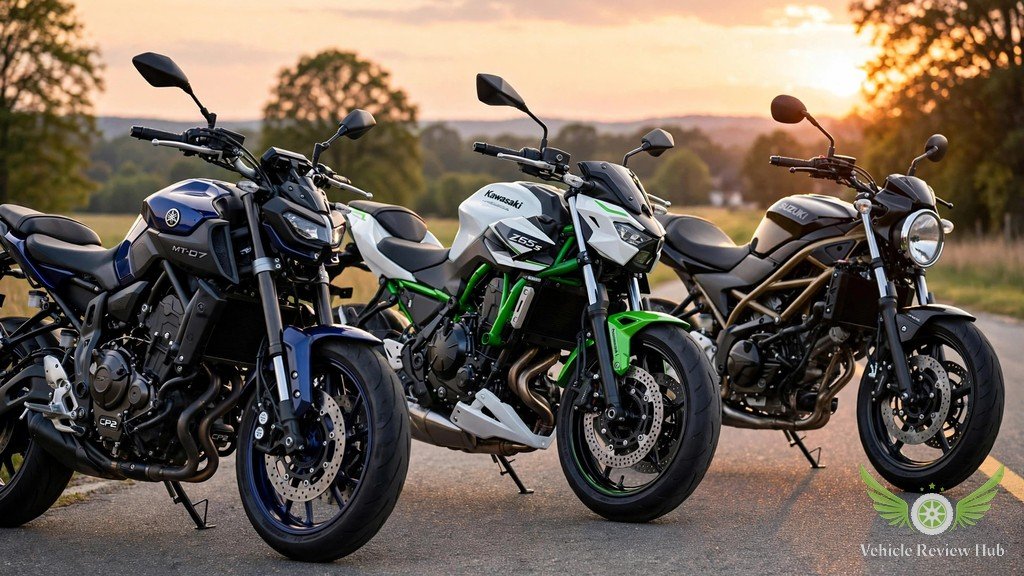
Kawasaki Z650 vs Yamaha MT-07
On power the MT-07 wins clearly. Its 689cc CP2 twin is rated around 73.4 hp globally — Yamaha USA publishes no hp figure — and it made 70.0 hp at 8,500 rpm on Motorcycle.com’s 2021 dyno against the Z650’s 61.4 hp, a gap of 8.6 hp on the same dyno. The torque gap is just as clear: the MT-07 made 48.7 lb-ft at 6,300 rpm, the most torque in the 2021 group, against the Z650’s 43.71 lb-ft. On price the Z650 wins just as clearly: the 2027 Z650 S ABS is $7,899 plus $685 destination, or $8,584 delivered, against the 2026 MT-07 at $8,599 plus $675, or $9,274 delivered — a $690 gap in the Kawasaki’s favour. The 2025-and-later MT-07 is also the more modern bike, with a 41 mm inverted fork, radial brakes, ride-by-wire and a 5-inch TFT. The choice is therefore a real one: the MT-07 for more power and more technology, the Z650 for the cheaper delivered price and the softest suspension in the group. The 2021 testers placed the MT-07 third and the Z650 fourth — ahead of the CB650R and the SV650, both of which made more power than the Z650 on the same dyno. The full four-bike comparison is in the Kawasaki Z650 comparison blog; the price and spec story is in the Kawasaki Z650 review blog.
Is the Kawasaki Z650 Suitable for Beginner Riders?
The short answer is that the Z650 is one of the friendliest 650s a new rider can buy — and still not a true beginner bike. It is light at 416.7 lb curb, upright, narrow, and forgiving, with a predictable twin and a 31.7-inch seat most riders can reach easily. But 67 claimed hp and 416 lb is a real step up from a 300–400cc starter bike, and the bike’s own testers say so: the 2025 first-ride review called it “one of the best middleweight naked bikes on the market” and then added, “But is it beginner-friendly? Not quite.” This Kawasaki Z650 performance guide agrees. A new rider is better served by a smaller bike first — a Z400, a Ninja 400, or a 300 — and then stepping up to the Z650 once throttle control, braking and traffic sense are second nature.
Kawasaki Z650 Performance: Frequently Asked Questions
These are the questions buyers ask most about Kawasaki Z650 performance — answered with only what the record can verify.
What is the Kawasaki Z650’s top speed?
Kawasaki publishes no official top speed. MCN lists 125 mph, and a 2023 owner topped out at 123 mph on a US highway (speedometer reading, not a GPS-verified test).
How fast is the Z650 to 100 km/h?
ZigWheels recorded 4.48 seconds to 100 km/h on a VBox in 2017. No verified US 0–60 mph figure exists.
What did the Z650 make on the dyno?
60.95 hp at 8,000 rpm in Motorcycle.com’s 2017 shootout, and 61.4 hp at 8,100 rpm in its 2021 six-way test — the lowest of the six bikes that year. No source could be verified for a “59.9 hp” dyno figure.
What MPG does the Z650 get?
Kawasaki publishes no MPG figure. Motorcycle.com observed 44 mpg in its 2017 shootout; Bennetts observed about 53 mpg in normal riding and 50 mpg riding hard.
Why does the Z650 vibrate?
Testers report a buzz between 4,000 and 5,000 rpm and again around 7,000–8,000 rpm. Motorcycle.com’s tester put it plainly: more high-rpm vibration than the other bikes in the shootout, “but it never becomes annoying.”
Is the Z650 suitable for beginner riders?
It is one of the friendliest 650s — light, upright, with a predictable twin — but 67 claimed hp and a 416-lb curb weight put it a step above a true beginner bike. A new rider is better served by a smaller bike first, then stepping up to the Z650.