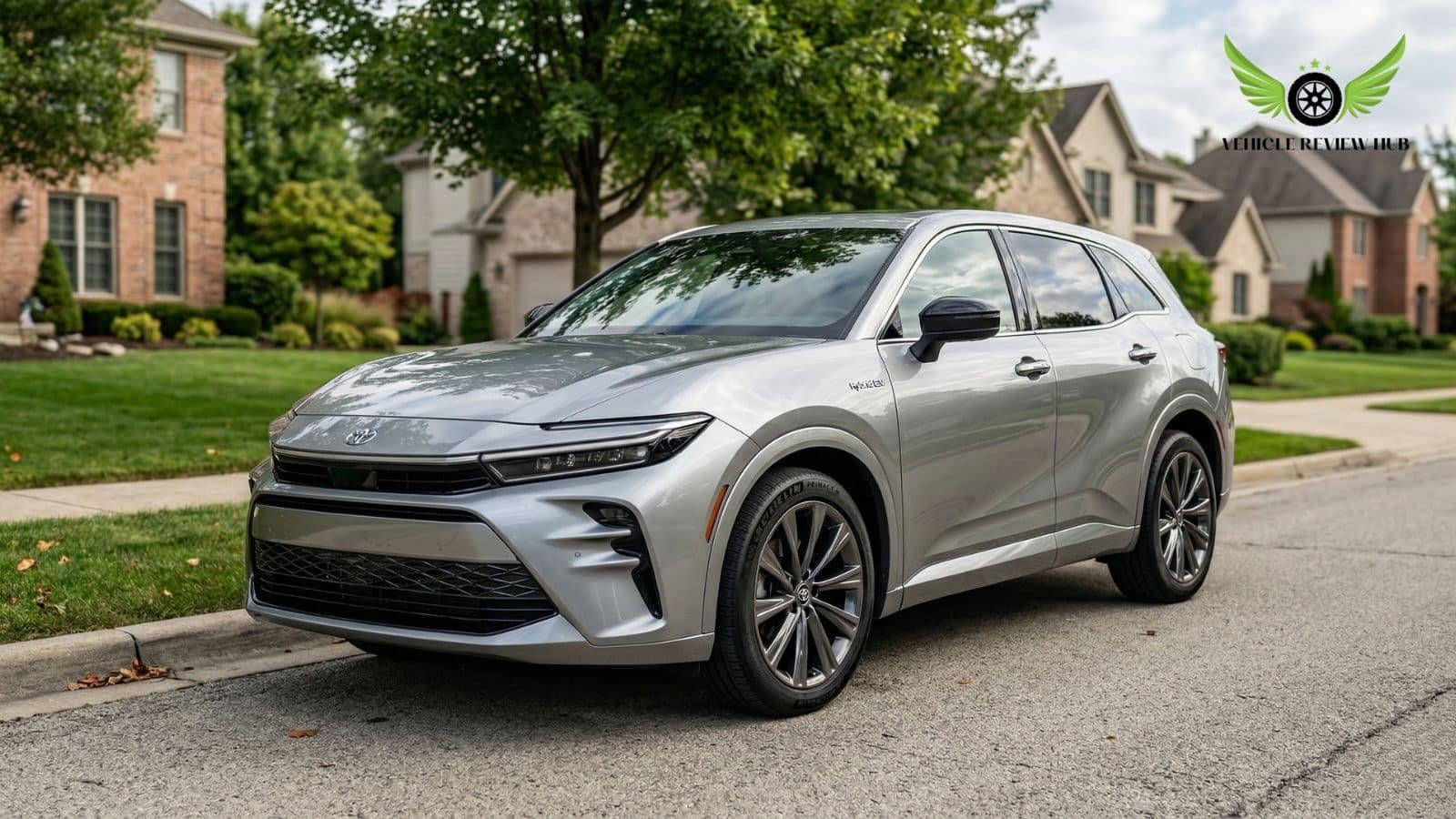
The 2026 Toyota Crown Signia Review starts with one important question: where does this new model fit in America’s growing hybrid SUV market? Toyota has positioned the Crown Signia hybrid SUV as the spiritual successor to the discontinued Venza, but with a more premium identity. It blends sedan-like ride comfort with SUV practicality, targeting buyers who want efficiency without stepping fully into Lexus territory.
In this 2026 Toyota Crown Signia Review, it’s clear that Toyota’s new premium crossover is designed for shoppers comparing upscale hybrid crossovers under the luxury price bracket. Many U.S. buyers are searching for it as a value-focused alternative to Lexus models while still expecting refinement, advanced safety tech, and standard all-wheel drive. Others are specifically looking for updated information about Toyota Crown Signia Price, trims, and long-term ownership value before making a decision.
As of now, if Toyota has not officially announced major 2026 changes, buyers should expect core features and hybrid performance to carry over from the previous model year, with possible minor tech or packaging adjustments.
This guide will break down trims, specifications, pricing structure, real-world fuel economy expectations, and ownership costs. If you’re also comparing hybrid options, you may want to explore our hybrid SUV comparison guide, SUV buying guide, and Toyota vs Lexus breakdown for deeper insight before choosing your next crossover.
2026 Toyota Crown Signia Overview – Premium Hybrid-Only Crossover Positioning
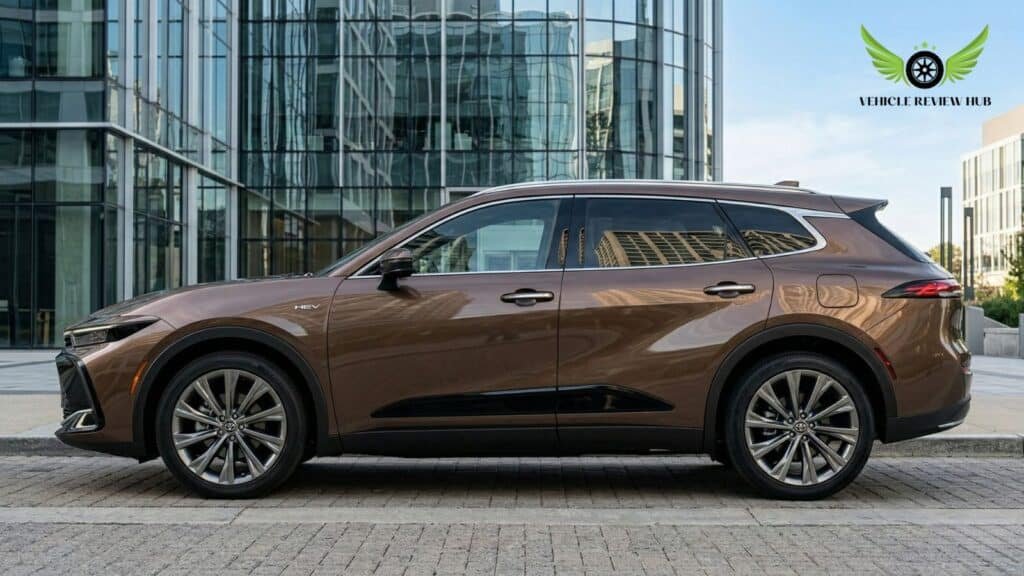
The 2026 Toyota Crown Signia Review clearly shows that this model is not just another Toyota SUV—it represents a strategic shift toward a more refined, hybrid-focused crossover for U.S. buyers. Positioned as a premium midsize hybrid SUV, it fills the gap between practical Toyota crossovers and entry-level Lexus models.
This vehicle competes in the two-row hybrid crossover segment, where efficiency, comfort, and technology matter more than towing capacity or rugged off-road capability. Instead of targeting large families needing a third row, it focuses on buyers who want upscale materials, quiet cabin insulation, and smooth hybrid performance for daily commuting and highway travel.
Toyota’s move upscale is intentional. The previous Venza built a loyal audience that valued hybrid efficiency and comfort, but it lacked a strong brand identity. The Crown Signia builds on that formula with bolder styling, more distinctive design cues, and a clearly premium positioning. It is widely recognized as the Venza successor, but with stronger branding and improved perceived quality.
Unlike traditional Toyota SUVs such as the Highlander or 4Runner, this crossover prioritizes ride comfort over utility. The hybrid-only strategy simplifies the buying process—every model comes electrified, reflecting Toyota’s broader electrification direction in the U.S. market.
Consider a real-world buyer: a former Venza owner who commutes 40 miles daily and values fuel savings but also wants a quieter, more premium cabin. Instead of moving to Lexus and paying higher insurance and maintenance costs, this Toyota premium hybrid crossover provides similar refinement with Toyota’s long-term reliability reputation.
For shoppers comparing the Toyota Crown Signia Price against Lexus NX or RX hybrids, the value equation becomes clearer. It offers advanced design and hybrid efficiency while keeping Toyota-level ownership costs. Within Toyota’s hybrid lineup, it stands as the brand’s most premium two-row hybrid crossover option.
How Crown Signia Replaces the Toyota Venza in the USA
The Crown Signia directly replaces the Venza in Toyota’s U.S. lineup, marking a clear Toyota Venza replacement strategy rather than just a name change. When Toyota phased out the Venza after the 2024 model year, it wasn’t because hybrid demand was weak. In fact, hybrid interest was growing. The issue was positioning. The Venza sat awkwardly between the RAV4 Hybrid and the Highlander Hybrid, and many buyers struggled to understand where it fit.
The Crown Signia represents a more confident hybrid crossover transition. Instead of marketing it as a quiet, understated alternative, Toyota aligned it with the Crown nameplate—already associated with premium styling and elevated comfort. That shift signals to buyers that this is not simply a practical hybrid SUV, but a more refined two-row crossover aimed at customers cross-shopping Lexus.
What changed? Design presence is stronger. Interior presentation feels more upscale. Brand messaging is clearer. The strategy moved from “efficient and sensible” to “efficient and premium.”
Here’s a simplified comparison:
Category | Toyota Venza | Crown Signia |
Role in Lineup | Mid-level hybrid crossover | Premium two-row hybrid crossover |
Powertrain Strategy | Hybrid-only | Hybrid-only |
Brand Identity | Low-profile comfort model | Crown-branded upscale model |
Target Buyer | Practical efficiency-focused | Premium commuter / Lexus alternative |
Real-world example: A Venza owner who appreciated smooth hybrid driving but wanted a more distinctive design and higher-end interior now finds that the Signia delivers that upgrade—without moving into full luxury pricing.
As explained in the broader 2026 Toyota Crown Signia Review, this replacement reflects Toyota refining its hybrid strategy, not abandoning it. For deeper insight, you can also explore our Toyota hybrid lineup comparison to see how the transition reshapes the brand’s SUV structure.
Who the Crown Signia Is Designed For
The ideal buyer for this model is a premium hybrid SUV buyer who values efficiency, comfort, and quiet refinement over rugged capability. Based on its positioning, the Crown Signia is clearly engineered for drivers who spend most of their time in cities and suburbs rather than off-road trails. In this 2026 Toyota Crown Signia Review, the target audience becomes clear: professionals, empty nesters, and small families who want an upscale daily driver without entering the full luxury price bracket.
Lifestyle fit matters here. This works best as an urban commuter SUV—someone driving 20–50 miles per day, mixing highway cruising with stop-and-go traffic. The hybrid-only setup appeals strongly to this group because it delivers consistent fuel efficiency without requiring plug-in charging habits. Buyers don’t need to change their routine; they just refuel and drive while benefiting from electrified performance.
For professionals, it offers a refined cabin suitable for client meetings or long commutes. For small families, it provides two-row practicality, modern safety systems, and comfortable rear seating for children or teens. Cargo space supports weekend travel and grocery runs without stepping into oversized three-row territory.
Real-world example: a suburban consultant commuting into the city daily may want Lexus-like smoothness but prefer Toyota’s long-term reliability and lower ownership costs. This crossover fits that mindset perfectly.
However, it is not designed for heavy towing, serious off-road driving, or buyers needing maximum cargo capacity. Those shoppers would be better served by a larger or more utility-focused SUV.
How It Differs from RAV4 Hybrid and Highlander Hybrid
At a strategic level, the Crown Signia separates itself by focusing on refinement and premium positioning rather than maximum practicality or entry-level affordability. While all three models are hybrid SUVs within Toyota’s electrified portfolio, they serve clearly different buyer priorities.
The RAV4 Hybrid competes in the compact SUV segment. It is efficiency-focused, value-driven, and widely considered Toyota’s mainstream hybrid choice. It offers strong fuel economy and everyday usability, but interior materials and ride isolation are tuned more for practicality than luxury.
The Highlander Hybrid sits at the opposite end. It targets families needing three-row seating and greater passenger capacity. It emphasizes versatility and space, making it suitable for larger households or buyers needing occasional extra seating.
The Crown Signia positions itself between those two—but closer to premium territory. It is a two-row crossover with standard hybrid power, designed for buyers who want more refinement than the RAV4 but do not need the third row of the Highlander. In this 2026 Toyota Crown Signia Review, that positioning becomes clear: it is Toyota’s most upscale non-Lexus hybrid SUV option.
Buyers often cross-shop these models because pricing overlaps at certain trims. However, Toyota avoids direct competition by clearly separating size, seating configuration, and cabin experience.
Category | RAV4 Hybrid | Crown Signia | Highlander Hybrid |
Segment | Compact Hybrid SUV | Premium Midsize Hybrid SUV | Midsize 3-Row Hybrid SUV |
Seating | 5 passengers | 5 passengers | 7–8 passengers |
Powertrain Strategy | Hybrid available | Hybrid-only | Hybrid available |
Positioning | Value-focused | Premium-focused | Family utility-focused |
Pricing Tier | Entry to mid-level | Upper-mid tier | Mid to upper tier |
Real-world example: a commuter upgrading from a compact SUV may find the RAV4 too basic but the Highlander unnecessarily large. The Crown Signia fits buyers seeking elevated comfort without stepping into Lexus pricing.
For a broader context, you can also review our Toyota hybrid lineup comparison and SUV buying guide to better understand how these three models serve distinct roles within Toyota’s strategy.
Toyota Crown Signia Price and Trim Breakdown
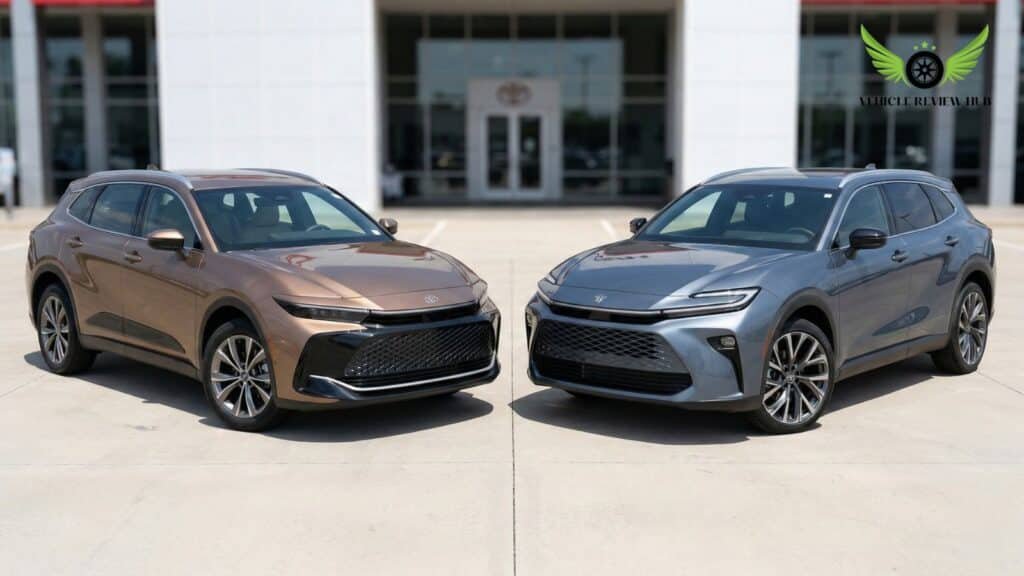
As of the latest confirmed model year, Toyota has structured the Crown Signia lineup with two primary trims: XLE and Limited. If final 2026 MSRP figures are not officially released at the time of reading, pricing is expected to follow the most recently confirmed model year structure with only minor adjustments. The previously confirmed starting price was positioned in the mid-$40,000 range for the base trim, placing it clearly above compact Toyota hybrids but below most Lexus crossovers.
The Toyota Crown Signia Price reflects its premium positioning. Unlike the RAV4 Hybrid, which offers multiple entry-level configurations, the Signia comes standard with hybrid power and all-wheel drive. That means even the base XLE includes higher baseline equipment, which explains the elevated MSRP. The Limited trim increases the price into the upper-$40,000 range before destination and options, and a fully loaded price can approach the low-$50,000 bracket depending on packages and dealer add-ons.
Trim | Drivetrain | Estimated MSRP (Base) | Estimated Fully Loaded Price | Positioning |
XLE | Hybrid AWD | Mid-$40,000 range | High-$40,000 range | Entry premium hybrid |
Limited | Hybrid AWD | Upper-$40,000 range | Low-$50,000 range | Near-luxury alternative |
From a segment perspective, the Toyota Crown Signia Price sits between mainstream midsize hybrids and entry-level luxury SUVs. Buyers often cross-shop it with Lexus NX Hybrid or Hyundai Santa Fe Hybrid. However, Toyota avoids direct internal overlap by keeping this model exclusively two-row and premium-focused.
Real-world example: a commuter upgrading from a RAV4 Hybrid may find the price jump justified by quieter ride quality, upgraded materials, and stronger resale expectations—without paying full luxury-brand ownership costs.
For a broader comparison, review our Toyota hybrid lineup breakdown and SUV buying guide to understand how this pricing strategy fits within Toyota’s electrified SUV structure.
Crown Signia XLE Features and Pricing
The Crown Signia XLE carries a base MSRP in the mid-$40,000 range (based on the most recently confirmed model year pricing). That starting price immediately tells you this is not positioned as a budget hybrid—it’s an entry point into Toyota’s premium two-row SUV space.
Mechanically, the XLE comes standard with Toyota’s 2.5-liter hybrid system paired with electronic all-wheel drive. Unlike some competitors where AWD costs extra, here it’s included. That alone explains part of the pricing structure. You’re not paying to “add” hybrid or AWD—it’s built into the foundation.
Feature-wise, the XLE includes a large digital instrument display, a wide infotainment touchscreen with wireless smartphone connectivity, Toyota Safety Sense driver-assist systems, power-adjustable front seats, dual-zone climate control, and keyless entry with push-button start. In practical terms, most buyers won’t feel like they purchased a stripped-down model.
From a cost perspective:
- Base MSRP: Mid-$40,000 range
- Destination charge: Typically adds around $1,300–$1,500
- Optional accessories: Roof rails, all-weather mats, and dealer-installed add-ons can push the real-world transaction price higher
Why is it considered the value trim? Because competitors at similar starting prices often require upgrades for AWD or advanced safety systems. Meanwhile, lower-priced rivals may not include hybrid power at all.
For example, a buyer cross-shopping a base midsize SUV might save upfront money—but would sacrifice hybrid efficiency and premium interior refinement. That balance is where the XLE earns its value reputation within the Toyota Crown Signia Price structure.
Crown Signia Limited Features and Pricing
The Crown Signia Limited carries a starting MSRP in the upper-$40,000 range (based on the most recently confirmed model year), placing it several thousand dollars above the XLE. After adding destination charges and common dealer fees, real-world transaction pricing typically moves into the low-$50,000 range depending on options.
The upgrade from XLE to Limited is not about performance—the hybrid powertrain remains the same. The difference is centered on comfort, materials, and presentation. The Limited adds larger alloy wheels, a panoramic glass roof, ventilated front seats, premium interior trim finishes, and an upgraded JBL audio system. Technology enhancements may also include additional driver-assist features and digital display refinements depending on package selection.
The price jump exists because Toyota positions this trim as a near-luxury alternative without the Lexus badge. Buyers are paying for sensory upgrades: better sound quality, improved cabin atmosphere, and more upscale materials. These are daily-experience improvements rather than mechanical ones.
Cost Breakdown Overview
Cost Component | Estimated Range |
Base MSRP | Upper-$48,000 range |
Destination & Handling | ~$1,300–$1,500 |
Optional Accessories (paint, mats, add-ons) | $500–$2,000+ |
Estimated Fully Loaded Price | Low-$50,000 range |
Real-world example: A professional commuting 30 miles daily may choose the Limited for ventilated seating and premium audio, especially in warmer U.S. climates. The panoramic roof also enhances cabin openness, making long highway drives more comfortable.
When compared carefully to entry-level luxury crossovers, the Limited often delivers similar comfort features while maintaining Toyota’s reputation for lower long-term ownership costs. That balance is what justifies the premium over the XLE trim.
XLE vs Limited – What You Actually Get for the Extra Money
Upgrading from XLE to Limited is worth it only if you truly value added comfort and a more upscale cabin feel. From a mechanical standpoint, both trims use the same hybrid powertrain and standard all-wheel drive system, so you are not paying for extra horsepower or better fuel economy. The difference is centered entirely on refinement and convenience.
The XLE already includes key features most buyers expect in this price range: Toyota’s hybrid system, AWD, a large infotainment display with wireless smartphone connectivity, heated front seats, dual-zone climate control, and a full suite of driver-assistance technology. For many buyers, this trim delivers everything necessary for daily commuting and family use.
The Limited justifies its higher MSRP—typically several thousand dollars more—by adding upgrades that enhance the ownership experience. These commonly include ventilated front seats, a panoramic glass roof, larger alloy wheels, premium interior trim accents, and a JBL upgraded sound system. These features do not change performance, but they significantly improve comfort, cabin atmosphere, and long-distance enjoyment.
Category | XLE | Limited |
Hybrid AWD | Standard | Standard |
MSRP Range | Mid-$40,000s | Upper-$40,000s |
Wheels | Standard alloy | Larger premium alloy |
Front Seats | Heated | Heated + Ventilated |
Roof | Standard | Panoramic glass |
Audio | Standard system | JBL premium system |
The typical MSRP gap falls in the $3,500–$5,000 range before destination fees (usually around $1,300–$1,500). Real-world example: a commuter driving an hour each day in a hot climate may find ventilated seats and premium audio worth the extra cost, while a buyer focused purely on hybrid efficiency may see better value staying with the XLE.
Value-wise, choose XLE for practical efficiency and lower upfront cost. Choose Limited if daily comfort and a more luxury-like environment matter enough to justify the price difference.
Toyota Crown Signia Hybrid Powertrain and Key Specifications
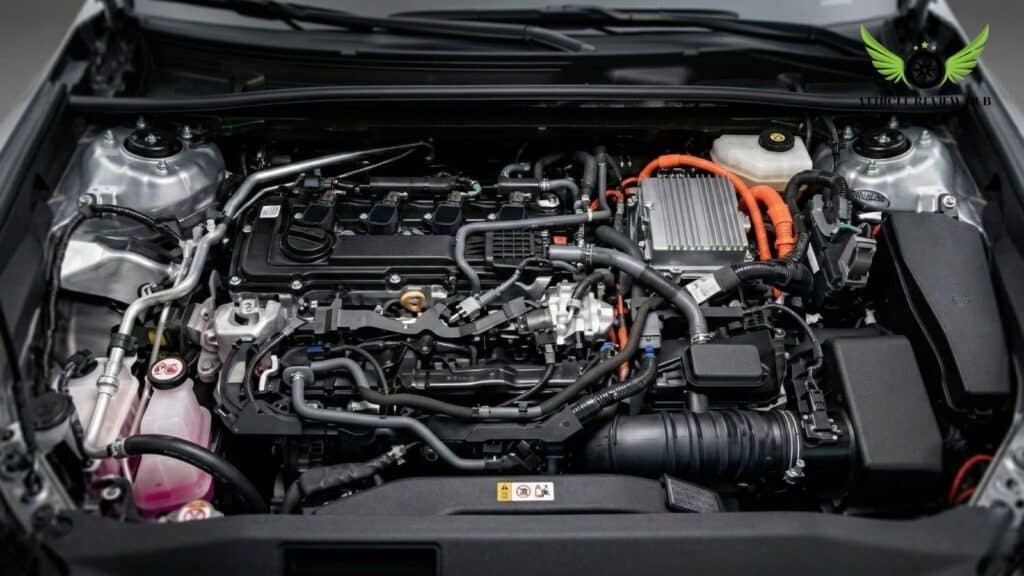
The Crown Signia is built around a single, standardized hybrid powertrain designed to prioritize smoothness, efficiency, and year-round usability. In this 2026 Toyota Crown Signia Review, the mechanical strategy is straightforward: one well-proven hybrid system, standard electronic all-wheel drive, and no traditional gasoline-only option.
Under the hood sits a 2.5-liter four-cylinder engine paired with Toyota’s hybrid system that integrates electric motor-generators and a high-voltage battery pack. Instead of using a conventional stepped automatic transmission, the system operates through an electronically controlled continuously variable transmission (e-CVT). This setup blends gasoline and electric power seamlessly, keeping the engine operating in an efficient range while allowing the electric motors to assist during acceleration and low-speed driving.
Toyota uses this configuration because it balances three priorities:
- Strong real-world fuel economy for a midsize two-row SUV
- Quiet operation in urban traffic
- Proven long-term durability based on years of hybrid development
The all-wheel drive system is electrically managed. Under normal driving, the vehicle primarily powers the front wheels to conserve fuel. When additional traction is needed—such as during rain, snow, or rapid acceleration—a rear electric motor automatically engages to send torque to the back wheels. Because there is no mechanical driveshaft constantly turning, this design reduces parasitic energy loss compared to traditional AWD systems.
From a real-world perspective, this setup benefits commuters the most. For example, a driver navigating daily stop-and-go traffic will notice smoother launches from electric assist and quieter cabin behavior at low speeds. On highways, the system transitions efficiently between gas and electric power without noticeable gear changes.
For buyers comparing Toyota’s electrified lineup, this powertrain positions the Crown Signia as a refined, efficiency-focused hybrid crossover rather than a performance-oriented SUV. If you’re exploring how it fits within Toyota’s broader hybrid SUV range, reviewing the full hybrid lineup comparison will help clarify where this model stands in size, output, and intended use.
2.5L Hybrid System, Horsepower and AWD Setup
The Crown Signia uses Toyota’s 2.5-liter Dynamic Force four-cylinder engine paired with a dual-motor hybrid system. This setup is designed for efficiency and smooth power delivery rather than aggressive performance. The gasoline engine works together with front electric motor-generators through an electronically controlled CVT (e-CVT), which continuously blends engine and electric output instead of shifting through fixed gears.
Here’s how the integration works: at low speeds or light throttle, the vehicle can rely more heavily on electric power. As acceleration demand increases, the gasoline engine engages seamlessly while the electric motors provide supplemental torque. The e-CVT manages this transition automatically, keeping the engine operating in an efficient range while maintaining smooth forward motion.
The all-wheel drive system uses Toyota’s electronic AWD-i configuration. Instead of a mechanical driveshaft connecting front and rear axles, a separate rear electric motor powers the rear wheels when additional traction is required. During normal cruising, the vehicle primarily operates in front-wheel drive to preserve fuel efficiency. When wheel slip or higher load is detected, the rear motor activates instantly to stabilize the vehicle.
Hybrid Powertrain Specifications
Component | Specification |
Engine | 2.5L 4-cylinder gasoline engine |
Hybrid System | Toyota Hybrid System with motor-generators |
Transmission | Electronically controlled CVT (e-CVT) |
Drivetrain | Electronic AWD-i (rear electric motor) |
Combined Net Horsepower | 240 hp (manufacturer-rated) |
Fuel Requirement | Regular unleaded |
In real-world driving, this configuration benefits commuters who frequently encounter mixed city and highway conditions. The electric assist improves low-speed smoothness, while the rear motor enhances stability during rain or light snow without the mechanical complexity of traditional AWD systems.
Towing Capacity and Real-World Capability
The official towing capacity for the Toyota Crown Signia is 2,700 pounds when properly equipped. That figure places it above many compact hybrid crossovers, but still below traditional midsize SUVs designed specifically for heavier hauling.
In realistic terms, 2,700 pounds is enough for a small fishing boat, a lightweight pop-up camper, a pair of jet skis, or a compact utility trailer loaded with yard equipment. It gives owners flexibility for weekend recreation without stepping into truck territory. The hybrid system provides smooth low-end torque assistance from its electric motors, which helps during initial acceleration when pulling a trailer.
However, this SUV is not engineered for sustained heavy towing. Larger travel trailers, enclosed car haulers, or multi-axle campers often exceed 3,500 pounds once loaded. Consistently towing near maximum capacity can increase drivetrain heat and reduce long-term efficiency—especially in hot climates or mountainous terrain. The Crown Signia’s platform and cooling systems prioritize efficiency and ride comfort over heavy-duty load management.
For example, a suburban driver who occasionally tows a small aluminum boat to a nearby lake will find the Signia fully capable and stable. But a family planning cross-country RV trips with a large camper would be better served by a body-on-frame SUV or pickup designed for higher tow ratings.
In everyday use—school runs, commuting, highway travel—the vehicle feels composed and efficient. Its towing capacity is best viewed as a flexibility feature for light recreational use, not a core work-focused capability.
Cargo Space, Passenger Space and Practicality
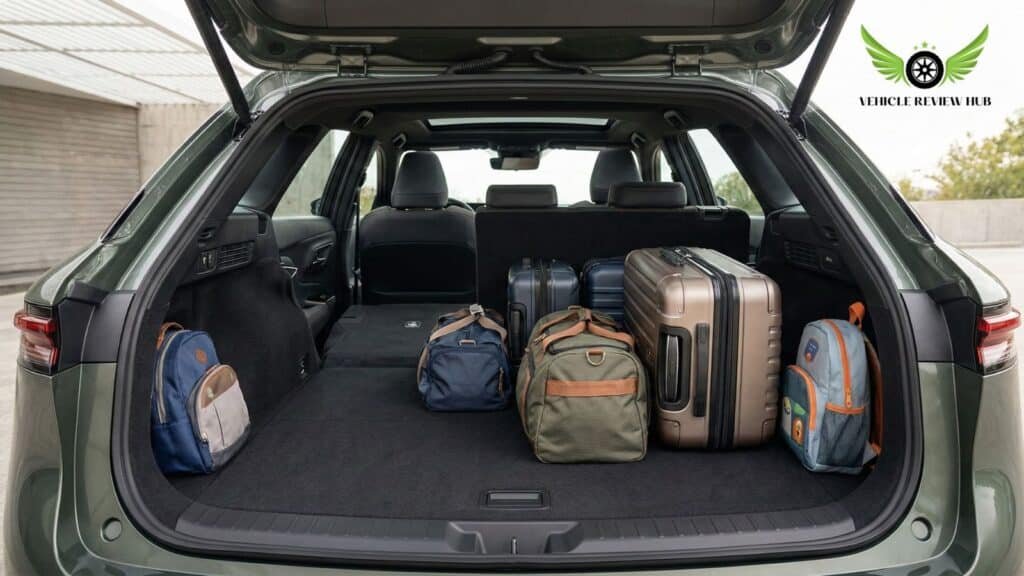
The Toyota Crown Signia offers 25.8 cubic feet of cargo space behind the second row, expanding to 68.8 cubic feet with the rear seats folded down. These are manufacturer-published measurements and place it solidly within the midsize two-row hybrid crossover category.
For families, the layout is designed around everyday flexibility. The rear seats split and fold flat, allowing longer items—such as strollers, small furniture boxes, or sports gear—to fit without awkward angles. The wide cargo opening and relatively low lift-over height make grocery loading or luggage placement easier compared to taller, body-on-frame SUVs. Underfloor storage compartments also help organize smaller items so they don’t roll around during daily driving.
Passenger space is equally practical. Total passenger volume is approximately 99.3 cubic feet, with 42.1 inches of front legroom and 37.1 inches of rear legroom. That means adults can comfortably sit in both rows, making it suitable for small families or couples who frequently travel with friends.
Measurement | Specification |
Cargo (Seats Up) | 25.8 cu ft |
Cargo (Seats Folded) | 68.8 cu ft |
Passenger Volume | ~99.3 cu ft |
Front Legroom | 42.1 inches |
Rear Legroom | 37.1 inches |
Compared to compact hybrids, the Crown Signia provides noticeably more rear passenger comfort while maintaining a refined interior feel. However, it does not offer third-row seating like larger midsize SUVs.
In real-world use, a family of four can fit weekly groceries plus backpacks without folding seats. For a weekend trip, folding the rear seats creates enough space for multiple carry-on suitcases and recreational gear, making it a practical yet premium daily driver.
Interior Design, Technology and Safety Features
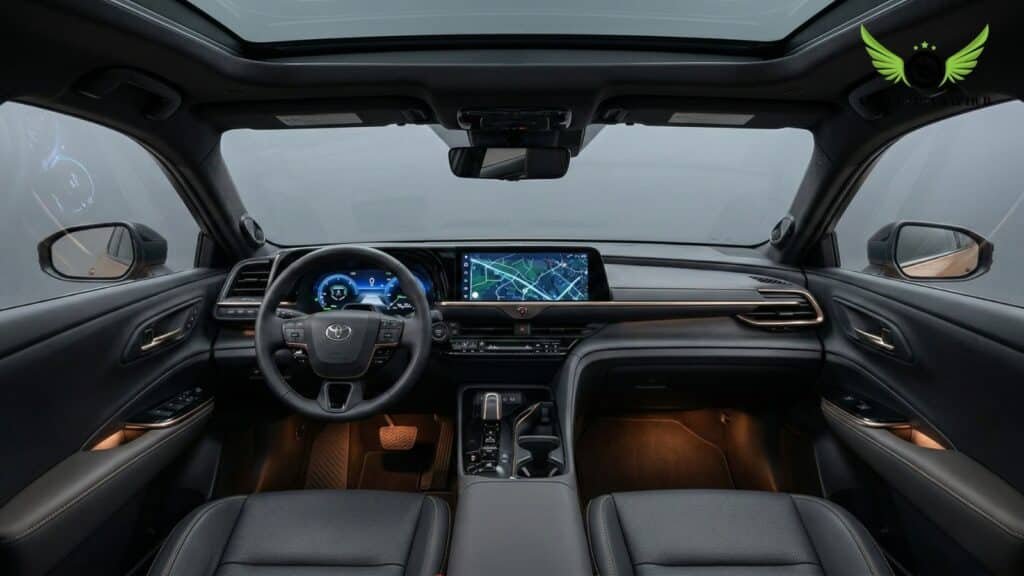
The interior of the Crown Signia is designed to feel intentionally elevated, not just modern. From the moment you sit inside, the layout emphasizes horizontal lines, clean surfaces, and a driver-focused dashboard. Toyota avoids excessive visual clutter and instead creates a calm environment that feels closer to an entry-level luxury vehicle than a typical midsize crossover.
Material quality plays a major role in that perception. Soft-touch surfaces cover the upper dashboard and door panels, while leather-trimmed seating is standard across trims. Subtle metallic or wood-style accents (depending on configuration) add contrast without appearing flashy. The seats are shaped for long-distance comfort, with supportive bolstering that benefits highway commuters. Cabin insulation is also improved compared to more mainstream Toyota SUVs, helping reduce road and wind noise.
Toyota aimed upscale here for a strategic reason. Buyers moving out of sedans—or considering a Lexus—expect refinement, not just practicality. By improving tactile materials and minimizing hard plastics in visible areas, Toyota positions this SUV as a premium hybrid crossover without crossing fully into luxury-brand pricing.
Technology is centered around large digital displays, including a wide infotainment screen and a configurable digital instrument cluster. Wireless Apple CarPlay and Android Auto come standard, and the interface prioritizes clarity over complexity. Physical buttons remain for climate control, which many drivers prefer over fully touch-based systems. Compared to some competitors that rely heavily on screen-only controls, this balance improves everyday usability.
Safety features are comprehensive. Toyota Safety Sense includes adaptive cruise control, lane tracing assist, blind spot monitoring, and automatic emergency braking as standard. This reduces the need to upgrade trims just for essential driver assistance.
Real-world example: A professional commuting 40 miles daily benefits from quiet cabin tuning, intuitive controls, and adaptive cruise during highway traffic. For families, the spacious second row and straightforward tech layout make it easy to manage both passengers and devices without distraction.
Overall, the Crown Signia blends comfort, technology, and safety into a refined package aimed at buyers who want an upscale feel without stepping into a separate luxury brand.
Cabin Materials, Comfort and Panoramic Roof
The Crown Signia’s interior is built around everyday comfort with a noticeably upscale feel. Instead of focusing on flashy design elements, the cabin emphasizes supportive seating, soft-touch materials, and a quiet environment that makes longer drives less tiring. The overall layout feels open and horizontally structured, which helps create a sense of width inside the vehicle.
The seats are trimmed in leather upholstery, with power adjustment for the driver and front passenger. Heating is standard for the front seats, and higher trims add ventilation for improved comfort in warmer climates. The seat cushions are shaped for long-distance support rather than aggressive sport bolstering, making them better suited for commuters and families. Rear passengers benefit from generous legroom and a well-angled seatback that improves comfort on highway trips.
A panoramic fixed-glass roof is available on the upper trim level. This large glass panel stretches across much of the roofline, allowing more natural light into both rows and giving the cabin a more spacious atmosphere. A power sunshade is included to reduce glare or heat when needed.
However, the panoramic roof is not available on every trim. Buyers selecting the base XLE model will not receive it unless moving up to the Limited trim, where it comes as part of the premium configuration.
Overall, the Crown Signia combines quality materials, thoughtful seat design, and an available panoramic roof to create a refined interior experience aimed at comfort-focused drivers.
12.3-Inch Infotainment, Digital Cluster and JBL Audio
The technology layout inside the Crown Signia is built around clarity and ease of use rather than visual overload. A 12.3-inch center touchscreen anchors the dashboard, paired with a fully digital 12.3-inch instrument cluster behind the steering wheel. This dual-screen arrangement creates a modern cockpit feel while keeping driving data and entertainment functions clearly separated.
The infotainment system runs Toyota’s latest multimedia interface, designed with large icons and a straightforward menu structure. Navigation, audio controls, vehicle settings, and connected services are accessible without digging through complex submenus. The system supports wireless Apple CarPlay and Android Auto, allowing compatible smartphones to connect without cables. Voice control is integrated for hands-free commands, which is particularly useful during highway driving.
Screen size plays a practical role here. A 12.3-inch display allows navigation maps and media controls to remain readable at a glance, reducing distraction. Meanwhile, the digital instrument cluster can be customized to show hybrid energy flow, safety alerts, or driving information in a clean, easy-to-read format.
Audio quality also varies by trim. The standard system delivers balanced sound for everyday listening, while the upgraded JBL audio system—available on higher trims—adds enhanced clarity and deeper bass through additional speakers and amplification. For commuters spending extended time in traffic, this upgrade noticeably improves the in-cabin experience.
Toyota Safety Sense 3.0 and Standard Driver Assist Features
Toyota equips the Crown Signia with Toyota Safety Sense 3.0 (TSS 3.0) as standard, meaning every trim receives the brand’s latest generation of active driver-assistance technology. The goal of this suite is not autonomy, but collision risk reduction and reduced driver fatigue during daily commuting and highway travel.
TSS 3.0 combines camera and radar sensors mounted at the front of the vehicle to monitor traffic conditions ahead. The Pre-Collision System is designed to detect vehicles, pedestrians, and in certain situations cyclists. If it senses a potential frontal collision, it first alerts the driver with audible and visual warnings. If the driver does not respond in time, the system can apply automatic braking support to help mitigate impact severity.
Full-Speed Dynamic Radar Cruise Control maintains a preset following distance from the vehicle ahead, adjusting speed smoothly in traffic. Lane Departure Alert works with steering assist to gently guide the vehicle back if it begins drifting without a turn signal. Lane Tracing Assist can help keep the SUV centered in clearly marked highway lanes when cruise control is active. Additional features include Road Sign Assist, which displays detected speed limit signs on the instrument cluster, and Automatic High Beams that switch between high and low beams based on traffic.
Optional but Recommended Feature Checklist:
Safety Feature | Function |
Pre-Collision System | Forward collision detection + braking support |
Dynamic Radar Cruise Control | Adaptive cruise with distance control |
Lane Departure Alert | Warning + steering correction |
Lane Tracing Assist | Lane centering support |
Road Sign Assist | Displays detected traffic signs |
Automatic High Beams | Auto light adjustment |
These systems operate in the background to assist the driver, but they require attentive supervision at all times.
Is the 2026 Toyota Crown Signia Worth Buying?
The short answer is yes — the 2026 Toyota Crown Signia is worth buying for many buyers, but not for everyone. This SUV delivers a blend of refined comfort, hybrid efficiency, and sensible technology that sets it apart in its segment.
If you are a comfort-oriented hybrid crossover shopper, someone who spends a lot of time commuting, values quiet cabin feel, and wants standard driver-assist tech, this SUV makes strong sense. The Crown Signia isn’t about raw performance; it’s about refined everyday usability — smooth power delivery, supportive seats, and a driving experience that feels more grown-up than typical compact crossovers.
The value exists in how well it balances premium feel with everyday practicality. Unlike many rivals that require expensive options just to add AWD or key safety tech, the Crown Signia brings hybrid AWD, Toyota Safety Sense, and a modern infotainment experience as part of the package. When you factor in long-term fuel savings and Toyota’s reputation for reliability, the Toyota Crown Signia Price starts to look like good value for buyers looking to step up from basic SUVs without paying luxury-brand premiums.
Real-world example: a suburban professional who previously drove a compact hybrid sedan may choose this SUV for the added space and comfort — without sacrificing efficiency — and feel more relaxed on long drives or daily highway traffic.
However, there are limitations. This model isn’t ideal if you need:
- Heavy towing capability (its towing capacity is modest),
- Third-row seating for larger families,
- Or off-road performance for rugged conditions.
In a balanced view, the Crown Signia is best for individuals or small families who want a more comfortable, well-equipped hybrid SUV with everyday usability and a refined cabin — not for buyers who need maximum cargo space, rugged utility, or hardcore towing. If you’re deciding between hybrid crossovers, comparing it with alternatives in our hybrid SUV buying guide can help clarify where it shines most.
Best Trim for Value Buyers
The best trim for value-focused buyers is the XLE. It delivers everything that defines the Crown Signia—hybrid efficiency, standard all-wheel drive, advanced safety technology, and a modern interior—without pushing the price into near-luxury territory.
The reason XLE offers the best balance is simple: the mechanical foundation is identical to the higher trim. You get the same 2.5L hybrid system, the same electronic AWD setup, and the same Toyota Safety Sense 3.0 package. That means fuel economy, drivetrain reliability, and core safety performance do not change if you skip the Limited.
From a cost standpoint, the XLE typically starts in the mid-$40,000 range. After destination fees (usually around $1,300–$1,500), most buyers land a few thousand dollars below the Limited’s entry price. The Limited often adds $4,000–$6,000 depending on configuration. What does that extra money buy? Primarily comfort upgrades such as ventilated seats, a panoramic glass roof, larger wheels, and a premium JBL sound system.
For a commuter driving 15,000 miles per year, those extras may not justify the higher monthly payment. However, the XLE still provides heated seats, large digital displays, wireless smartphone integration, and a quiet, well-insulated cabin.
If your priority is long-term value, resale strength, and hybrid efficiency rather than luxury touches, the XLE stands out as the smartest trim choice in the lineup.
When a Lexus RX Might Be a Better Choice
A Lexus RX can be the better choice if your priority is full luxury execution rather than near-luxury value. While the Crown Signia delivers a refined hybrid experience, the RX is engineered and marketed as a true premium SUV from the ground up.
What does Lexus offer beyond Toyota? First, interior craftsmanship steps up another level. The RX typically uses higher-grade leather options, more intricate trim detailing, expanded ambient lighting themes, and a quieter cabin tuning philosophy. Second, drivetrain variety is broader. Depending on configuration, the RX lineup includes more powerful turbocharged or performance-oriented hybrid variants, giving buyers options beyond efficiency-focused tuning. Suspension calibration is also more isolated, emphasizing ride polish over cost balance.
The price difference exists for several reasons. Lexus invests more heavily in interior finishing, advanced sound systems (such as premium-branded audio), additional customization choices, and a luxury-focused dealership experience. Service perks, extended comfort features, and brand positioning all contribute to the higher MSRP.
When does upgrading make sense? If you value maximum cabin quietness, stronger acceleration, elevated badge prestige, and a luxury ownership environment, the RX justifies its higher cost. It may also make sense for executives or buyers who regularly host clients and want the extra image factor.
However, if your focus is on hybrid efficiency, lower long-term ownership cost, and strong resale value without paying a luxury premium, the Crown Signia remains the more rational choice. The decision ultimately depends on whether you prioritize prestige and refinement above price efficiency.
Frequently Asked Questions About the 2026 Toyota Crown Signia
If you’re researching this hybrid crossover, these are the most common questions buyers ask before making a decision. Below are clear, direct answers to help you quickly understand ownership, pricing, and everyday usability.
Is the 2026 Toyota Crown Signia hybrid-only?
Yes. Every trim comes with Toyota’s 2.5L hybrid powertrain and standard electronic AWD. There is no gas-only version available.
What is the towing capacity?
The official towing capacity is 2,700 pounds when properly equipped. It is suitable for light trailers, small boats, or recreational gear, but not heavy campers.
How many people can it seat?
It is a two-row SUV with seating for five passengers. There is no third-row option.
What is the starting Toyota Crown Signia Price?
The starting MSRP is typically in the mid-$40,000 range for the XLE trim. The Limited trim moves into the upper-$40,000 range before destination and options.
Does it have wireless Apple CarPlay and Android Auto?
Yes. Wireless Apple CarPlay and Android Auto are supported on the standard infotainment system.
Is it better than the RAV4 Hybrid?
It depends on your priorities. The Crown Signia offers more interior refinement and a more premium feel, while the RAV4 Hybrid focuses more on affordability and compact practicality.
Is it comparable to the Lexus RX?
It offers similar hybrid efficiency and comfort-focused driving, but the Lexus RX provides higher-grade materials, more powerful engine options, and a stronger luxury-brand experience.