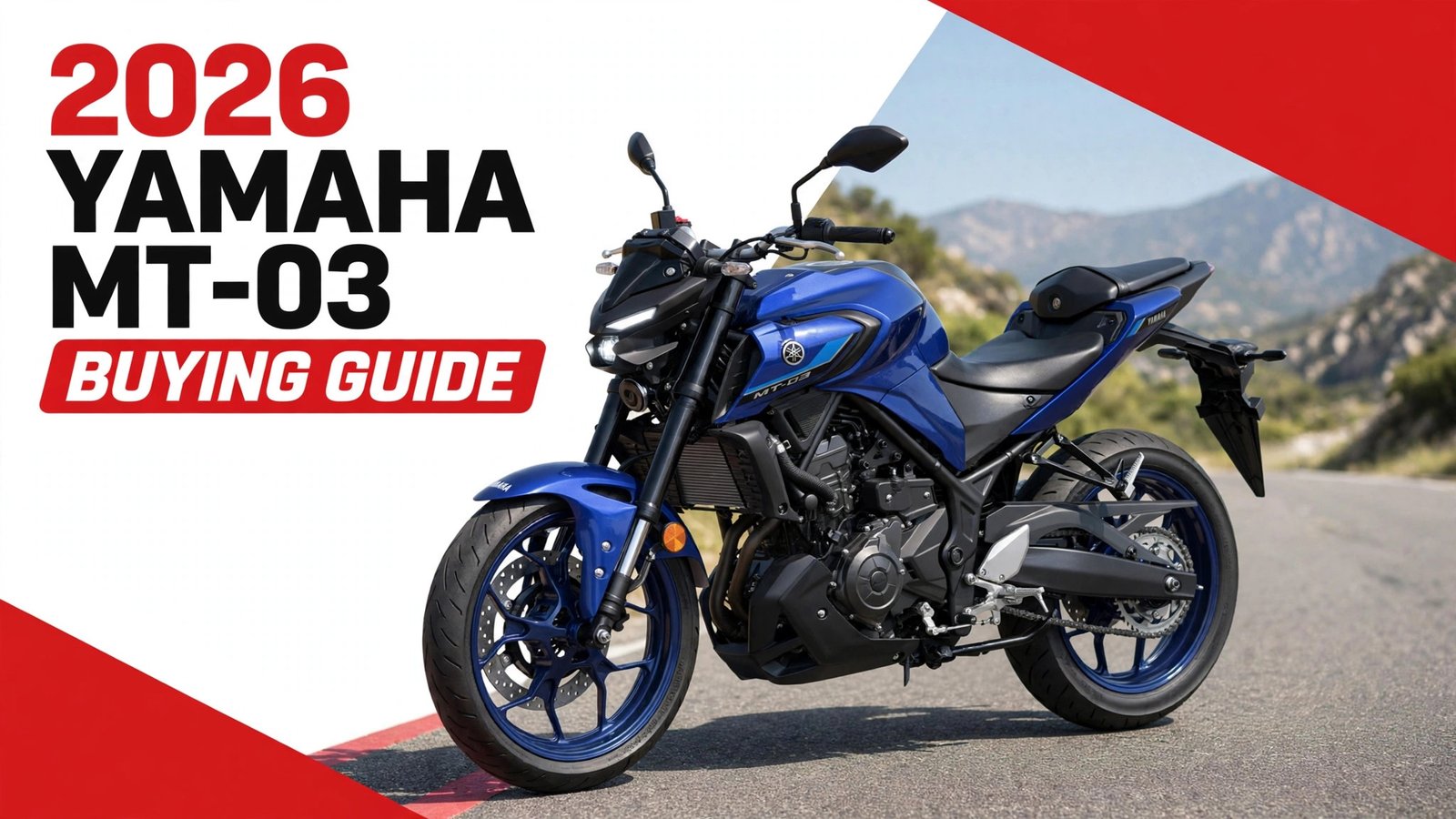
A used MT-03 is one of the smartest first motorcycles you can buy, and this Yamaha MT-03 buying guide explains why: it is light, cheap to run, and easy to sell on. This Yamaha MT-03 buying guide covers used prices, insurance and running costs, inspection checks, model-year differences, and Yamaha’s own alternatives. The MT-03 is a genuine US-market bike sold through official dealers, not a grey import.
Yamaha MT-03 Price and Market Availability
Price comes first in this Yamaha MT-03 buying guide: a new MT-03 carries a $4,999 MSRP, while used 2020–2021 bikes ask around $3,800–$4,500 — so a used bike priced near new money must be clean and documented.
What Does a Used Yamaha MT-03 Cost in the USA?
Used prices in this Yamaha MT-03 buying guide are asking prices from Cycle Trader and dealer listings, not sold prices; the closing deal is often a few hundred dollars lower, especially privately.
| Model years | Observed asking range | What the listings show |
|---|---|---|
| 2020–2021 | $3,800–$4,500 | 2020: $3,799–$3,999; 2021: $4,199–$4,499 |
| 2022–2023 | $4,000–$4,900 | 2022: $3,995–$4,719; 2023: $3,995–$4,895 |
| 2024 | $4,200–$4,800 | $4,190–$4,500; one 726-mile 2024 at $4,990 |
| 2025-on, used | $4,300–$4,999 | Near-new used 2025: $4,295–$4,975 |
Two warnings matter in this Yamaha MT-03 buying guide. A price far below the band usually means damage, missing records, or a title problem, and a 5-mile used 2025 at $4,899 saves just $100 against new MSRP while giving up the new-bike warranty start. This Yamaha MT-03 buying guide rates 2022–2023 bikes the sweet spot: current generation with first-owner depreciation absorbed. The full MT-03 review covers the riding experience behind these prices.
Is the Yamaha MT-03 Available Through Official US Dealers?
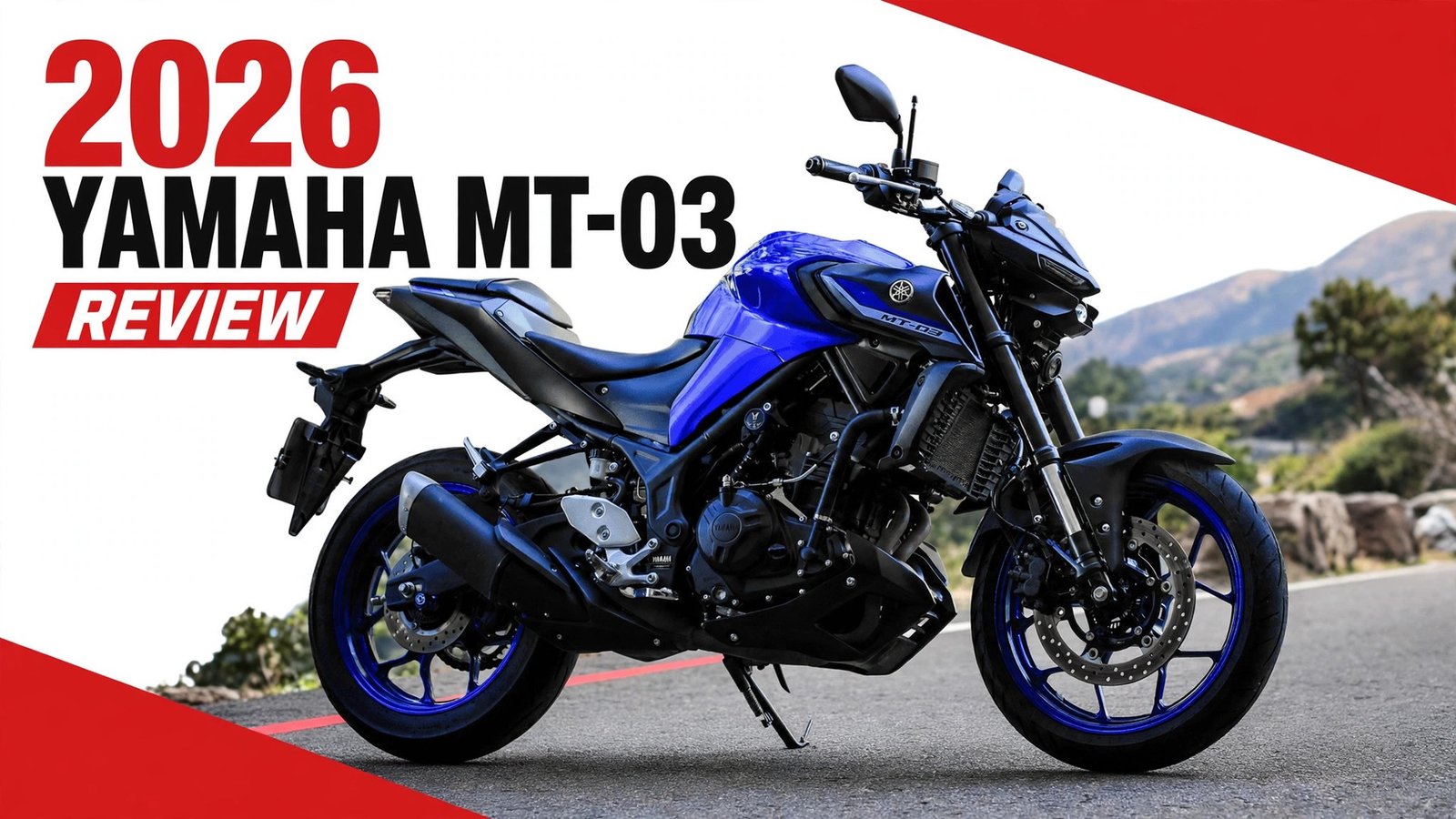
Yes, and this Yamaha MT-03 buying guide counts that as a real advantage: the MT-03 has been a regular US Yamaha lineup model since 2020, so dealers can check the VIN and handle warranty on new or nearly new bikes. Parts are a non-issue through the shared R3 platform. MSRP ran $4,599 in 2020–2021, $4,799 in 2022, and $4,999 from 2023 through 2026; one dealer listing at $5,599 is dealer pricing above MSRP, and destination charges apply on top — the 2022 listing showed $430. A 2026 MT-03 review confirms the current $4,999 pricing and specification.
Yamaha MT-03 Insurance and Ownership Costs
Insurance is the running cost new riders most often underestimate, and this Yamaha MT-03 buying guide treats it as a cost to quote before buying, not after. A $4,999, 321cc naked sits at the cheap end of every insurer scale.

What Affects Motorcycle Insurance Premiums for a Beginner Naked Bike?
Five factors dominate a beginner’s quote, and this Yamaha MT-03 buying guide lists them in order: age and experience first; location second, with MoneyGeek’s October 2026 data putting monthly full-coverage averages from about $14 in Montana to $47 in Rhode Island; coverage level third; the bike fourth; and endorsement and training fifth. Planning ranges for a 40-year-old with a clean record were about $141 a year liability-only and $364 full coverage, rising to about $820 for a 25-year-old, $1,230 for a 19-year-old, and $1,446 for a 16-year-old for full coverage. This Yamaha MT-03 buying guide therefore tells new riders to budget high and quote the exact VIN; a 2026 motorcycle insurance cost guide compiling the MoneyGeek figures is a useful cross-check.
How to Estimate Fuel, Maintenance, Parts and Other Ownership Expenses
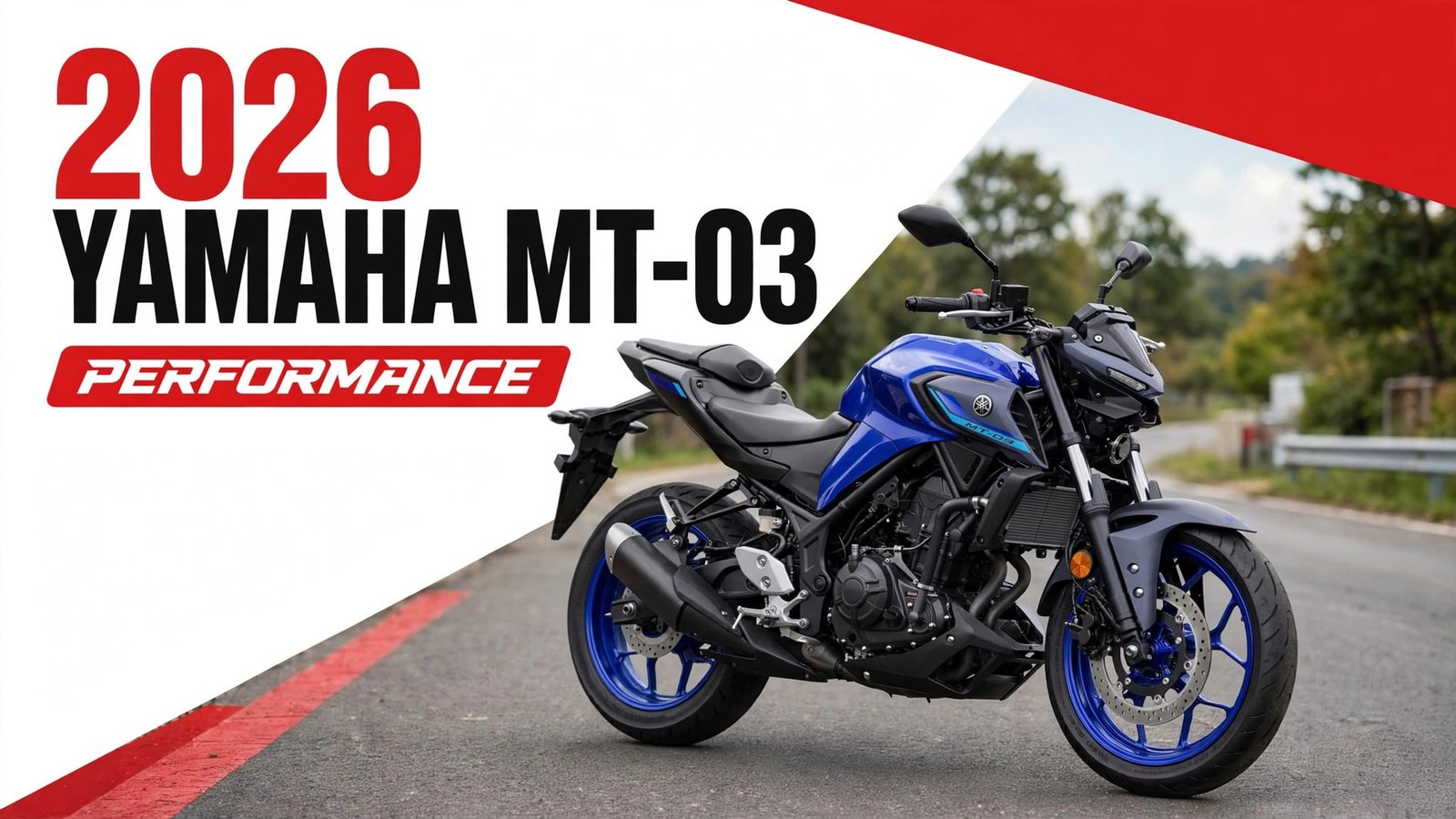
Fuel is the MT-03’s quiet superpower, and this Yamaha MT-03 buying guide puts numbers on it: Yamaha estimates 62 mpg for 2025–2026 models and 56 mpg for 2020–2024 models, with a 3.7-gallon tank. At 5,000 miles a year and $3.50 a gallon, that is roughly $282 a year for a 2025-on bike and about $313 earlier. The performance figures behind those estimates are covered in the MT-03 performance write-up. Maintenance in this Yamaha MT-03 buying guide follows Yamaha’s small-bike pattern: first service at 600 miles, oil every 4,000 miles, coolant every three years, brake fluid every two years, brake hoses every four years, and chain checks every 800 km. Valve clearance needs honest handling: the US-manual pattern is 26,600 miles, while some schedules list 24,000 miles (40,000 km), so follow your own manual. Parts stay friendly through the shared R3 platform — but budget the first year for tires, chain, and fluids if their dates are unknown.
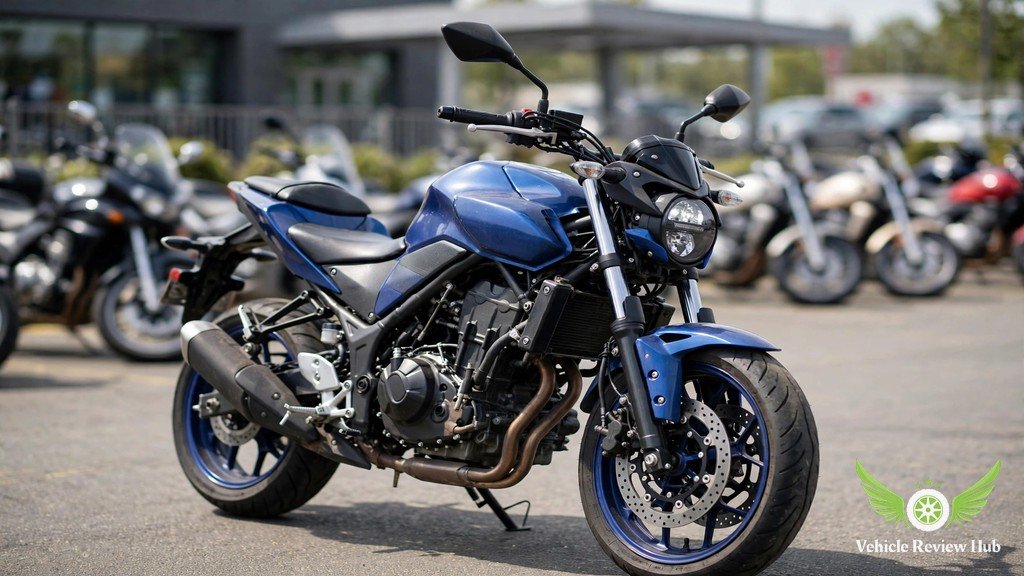
How to Inspect a Used Yamaha MT-03
Inspection is simple on this bike, and this Yamaha MT-03 buying guide keeps it that way: no complex electronics hide faults, so a careful half-hour check catches most problems. Bring a flashlight and a tire gauge, insist on a cold start, and walk away if the seller refuses a cold start, a test ride, or a VIN check
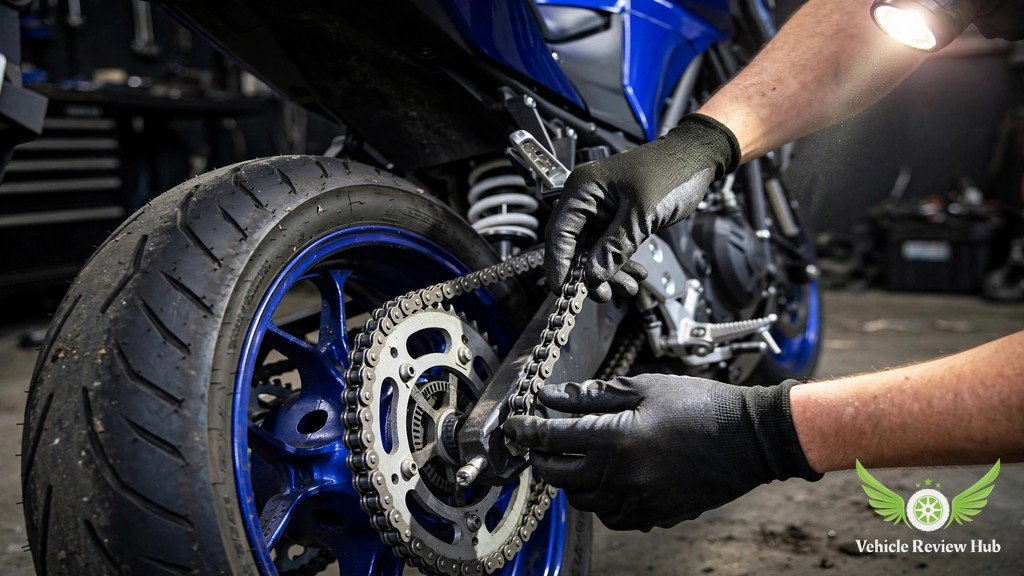
Checking the Engine, Cold Start, Service Records and Maintenance History
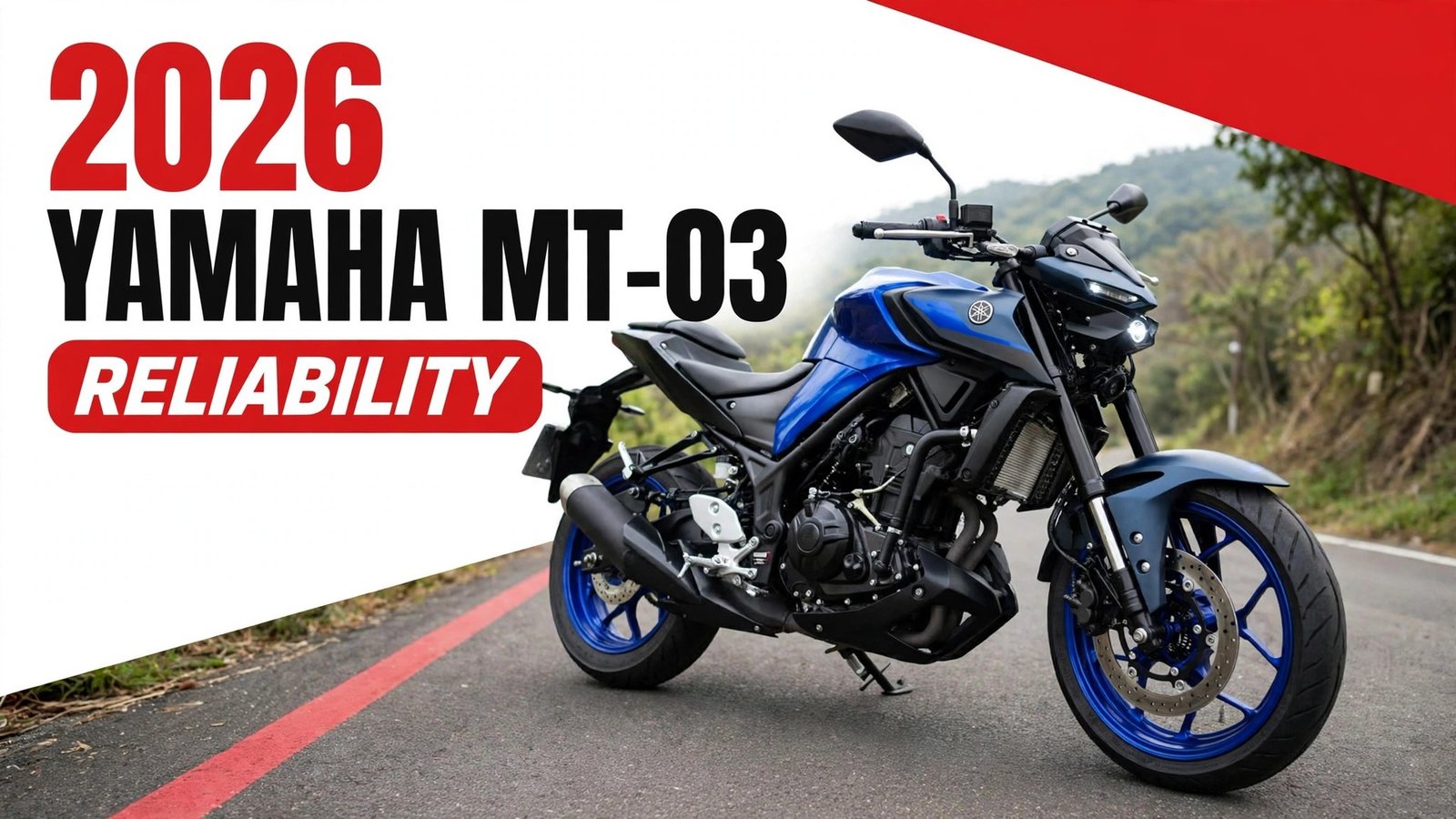
Start cold, says this Yamaha MT-03 buying guide: the engine should fire promptly, idle steadily, and show no smoke once warm. Check oil level and color, look for weeping around the valve cover and water pump, and read scuffed bar ends as a standstill drop but bent levers as a harder fall. Service records are worth real money in this Yamaha MT-03 buying guide: ask for the 600-mile first service and every 4,000-mile oil service, The service intervals in the MT-03 reliability and maintenance write-up are the checklist to carry. Run the VIN through Yamaha’s recall check before paying: campaign 20V611 (Yamaha 990139) covers the rear reflector on certain 2015–2020 R3s, the 2020 MT-03, and 2018–2020 XMAX scooters, with a free replacement, while campaign 21V048 (Yamaha 990144) covers a VIN mismatch on the certification label on certain 2019–2021 R3s, 2019–2020 XMAX scooters, and the 2020 MT-03, with a free correct label. Both populations cover all three models together, so coverage is by VIN, not year alone. See the 20V611 reflector recall record and the 21V048 VIN label recall record.
Inspecting the Frame, Tires, Brakes, Chain and Suspension
Walk the frame and swingarm for cracks, dents, or fresh paint hiding crash repair. Check tire date, tread depth, and whether the rear is squared off from highway miles. Brakes are deliberately simple — a single 298mm front disc with a two-piston caliper and ABS, plus a single 220mm rear disc with ABS — so check pad thickness, disc scoring, and lever feel. This Yamaha MT-03 buying guide warns plainly: the MT-03 has never had dual front discs, radial calipers, or lean-sensitive ABS in the USA, and any bike claiming them is modified or misdescribed. The chain is the most neglected item on a used small bike: check slack, feel for tight spots, and inspect sprockets for hooked teeth. Suspension is a 37mm KYB inverted fork with 5.1 inches of travel and a single shock with seven-step preload and 4.9 inches of travel; check fork seals for weeping and bounce both ends for dead damping, then finish with the electrics.
Yamaha MT-03 Model Years and Features to Compare
The MT-03’s history is short: one meaningful update in 2025. So this Yamaha MT-03 buying guide frames the choice simply — pay more for a 2025-on bike, or save money on a near-identical 2020–2024 bike. Either way, this Yamaha MT-03 buying guide says condition beats year.

Comparing 2020-2024 Models With 2025-On Update Versions
Every US MT-03 shares the same core package, and this Yamaha MT-03 buying guide lists it once: 321cc twin, six-speed gearbox, 373-pound wet weight, 30.7-inch seat, 54.3-inch wheelbase, 3.7-gallon tank, 37mm KYB inverted fork, and single-disc ABS brakes front and rear. The 2025 update changed the ownership experience rather than performance: Y-Connect connectivity, a USB-A socket, and an assist-and-slipper clutch became standard, the LCD was revised, and estimated economy stepped from 56 mpg to 62 mpg. 2025–2026 colors are Team Yamaha Blue, Ice Storm, and Matte Stealth Black (some listings say Matte Raven Black).
| Feature | 2020–2024 models | 2025-on models |
|---|---|---|
| Display | LCD digital instrumentation | Revised LCD |
| Y-Connect connectivity | Not standard | Standard |
| USB socket | Not standard | USB-A beside the display |
| Clutch | Standard clutch | Assist-and-slipper clutch |
| Estimated economy | 56 mpg | 62 mpg |
| Engine, weight, seat, brakes | 321cc twin, 373 lb, 30.7 in, ABS | Unchanged |
One rule must be held strictly, and this Yamaha MT-03 buying guide calls it the easiest trap: the MT-03 has an LCD display, not a TFT display, on every US model year. A listing claiming a TFT screen describes another model or market. The same discipline applies to rider aids: no US MT-03 has traction control or riding modes, on any year. A 2023 MT-03 specification listing confirms the pre-update equipment set.
Which Features Matter Most: Assist and Slipper Clutch and Y-Connect?
Of the 2025 upgrades, this Yamaha MT-03 buying guide rates the assist-and-slipper clutch most important: lighter lever effort in traffic and less rear-wheel hop on downshifts. Y-Connect is useful but secondary, since a phone mount and headset achieve most of it on an earlier bike. So the logic in this Yamaha MT-03 buying guide runs: judge a clean 2023 at $4,400 versus a used 2025 at $4,800 on the whole bike; within $200, take the 2025; on a strict budget, a recorded 2020–2021 bike at $3,800–$4,200 beats a 2025 with unknown history. Condition and records beat model year every time.
Yamaha MT-03 vs Other Yamaha Models: Which One to Buy in the USA
Yamaha’s own lineup is the MT-03’s toughest competition, and this Yamaha MT-03 buying guide frames it as riding position, budget, and growth path The faired YZF-R3 shares the engine and chassis but adds bodywork and a committed position, while the MT-07 doubles the displacement and attitude for much more money.

YZF-R3 at $5,499 With the Same Engine and MT-07 at $8,599 as the Upgrade
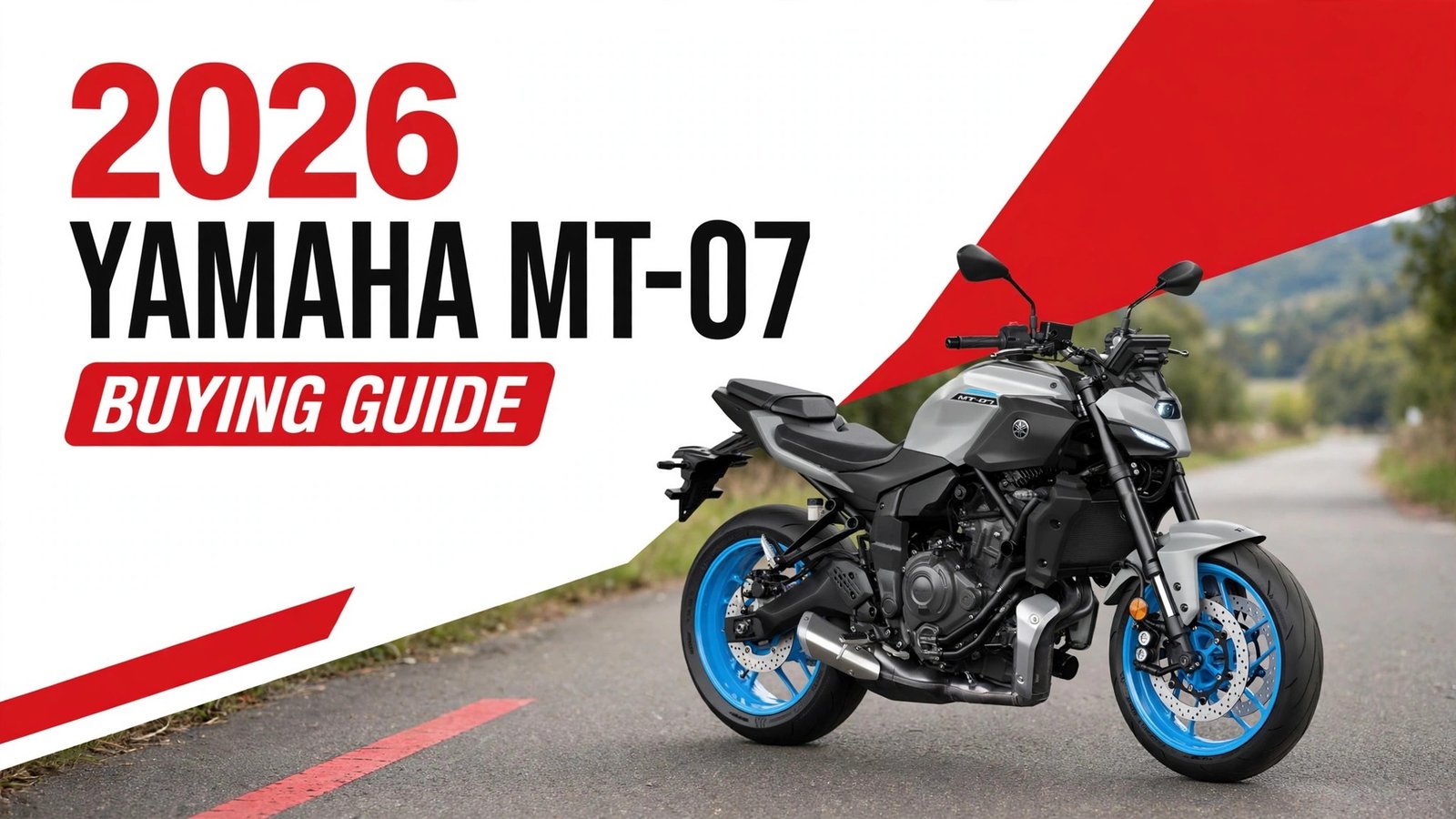
The YZF-R3 costs $5,499 new — $500 more than the MT-03 — for the same 321cc twin in a faired, sportier package, and this Yamaha MT-03 buying guide says to sit on both before deciding: the R3’s clip-on bars give a committed position and better highway wind protection, while the MT-03’s wide upright bars give better leverage in traffic. Running costs are nearly identical. The YZF-R3 review covers the faired bike in full. The MT-07 at $8,599 is the upgrade path and a big step: a 689cc CP2 twin, 403-pound wet weight on 2025-on models, and from 2023 a 5-inch TFT with Y-Connect, plus ride-by-wire, riding modes, and switchable traction control from 2025. That is $3,600 more than a new MT-03 — usually too much bike too soon for a new rider. Learn on the MT-03, then step up; the MT-07 review and MT-07 buying guide cover that market when the step comes.
Why There Is No US MT-03 Version With TFT, Traction Control or Riding Modes
Buyers sometimes ask whether a higher-spec MT-03 exists, and this Yamaha MT-03 buying guide answers no, on every US model year: Yamaha positions the MT-03 as the entry to the MT family, and its price depends on simple electronics — an LCD display, dual-channel ABS, and no ride-by-wire, IMU, or lean-sensitive systems. Adding them would push the bike into MT-07 price territory and defeat its purpose. Rival brands make the same trade, while the KTM 390 Duke is the exception, offering a TFT and cornering ABS for $5,899. If a TFT or traction control is a must-have, this Yamaha MT-03 buying guide says plainly: buy a different bike, not a version of the MT-03 that does not exist.
Is Buying a Used Yamaha MT-03 Worth It?
For most new and returning riders, yes — with two conditions from this Yamaha MT-03 buying guide: buy on condition and records rather than the lowest price, and pay the 2025 premium only when the whole bike justifies it. The case rests on low purchase prices, low running costs, a shared R3 platform keeping parts cheap, and resale values that hold. The video below asks the bargain question the way a buyer should hear it, and this Yamaha MT-03 buying guide uses it as the verdict’s starting point. That discipline is what this Yamaha MT-03 buying guide is built on. That is why this Yamaha MT-03 buying guide recommends the used route for most buyers.

This Yamaha MT-03 buying guide recommends watching Bike-urious’ 2020 MT-03 first-ride review from the US launch:
Benefits and Risks of Buying a Used MT-03 in the USA
The benefits stack up in this Yamaha MT-03 buying guide: 373 pounds wet, a 30.7-inch seat, and a narrow body make slow-speed handling painless; the twin is smooth and forgiving; fuel economy of 56–62 mpg keeps weekly costs trivial; and insurance sits at the cheap end of the market. MCN’s owner reviews rate the 2020-on MT-03 4 out of 5 overall, with reliability at 4.3 out of 5 and value at 4.7 out of 5 — from only three owners. See the MCN MT-03 review and owner ratings. The risks are plain too: minimal wind protection above 70 mph, soft suspension for heavier riders, a seat that gets uncomfortable after about ninety minutes, and no windscreen, luggage, or center stand as standard. Above all, the narrow price spread makes overpaying easy — a $4,900 used 2023 with worn tires, a tired chain, and no records is worse value than a $4,999 new 2026.
US-Market Alternatives: Kawasaki Z500, Honda CB300R and KTM 390 Duke
If the MT-03 does not fit, this Yamaha MT-03 buying guide says test ride three rivals first. The Kawasaki Z500 ABS, at $5,699 for 2026, is the closest step up: a 451cc twin making 51 horsepower, a 30.9-inch seat, LCD on the base model, and a TFT on the $6,399 SE. The Honda CB300R, repriced to $4,499 for 2026 from $5,149, undercuts the MT-03 by $500: a 286cc single making 31 horsepower and a claimed 71 mpg. The KTM 390 Duke, at $5,899, is the tech leader: a 399cc single making 44 horsepower, a 5-inch TFT, and cornering ABS. A budget first-buyer comparison confirms the same price ladder.
| Model | 2026 price | Engine and output | Standout tech |
|---|---|---|---|
| Yamaha MT-03 | $4,999 | 321cc twin, about 42 hp | LCD, Y-Connect/USB from 2025, ABS |
| Honda CB300R | $4,499 | 286cc single, 31 hp | LCD, dual-channel ABS, 316 lb |
| Kawasaki Z500 ABS | $5,699 | 451cc twin, 51 hp | LCD base, TFT on SE, 30.9-in seat |
| KTM 390 Duke | $5,899 | 399cc single, 44 hp | 5-in TFT, cornering ABS, WP suspension |
The verdict of this Yamaha MT-03 buying guide is that the MT-03 is the balanced pick: not the cheapest, not the most powerful, and not the most equipped, but the one that gets the beginner formula most right. Buy the CB300R if budget is absolute, the Z500 for more highway muscle, the 390 Duke for electronics, and the MT-03 for the safe middle that holds its value.
Yamaha MT-03 Buying Guide FAQs
These are the questions buyers ask most often, answered directly from the verified figures in the sections above, so this Yamaha MT-03 buying guide stays consistent throughout.
How much does a used Yamaha MT-03 cost in the USA?
In this Yamaha MT-03 buying guide, observed asking prices run $3,800–$4,500 for 2020–2021 bikes, $4,000–$4,900 for 2022–2023 bikes, $4,200–$4,800 for 2024 bikes, and $4,300–$4,999 for used 2025-on bikes — asking prices, not sold prices.
Is the Yamaha MT-03 a good first bike?
Yes. This Yamaha MT-03 buying guide rates it one of the least intimidating full-size motorcycles for a new rider, at 373 pounds wet with a 30.7-inch seat, a smooth 321cc twin, and dual-channel ABS. Its limits are highway wind protection and soft suspension.
Does the Yamaha MT-03 have a TFT display?
No. This Yamaha MT-03 buying guide confirms every US MT-03, including 2025-on models, has an LCD display — revised in 2025 to show connected-smartphone information. A listing claiming a TFT screen on an MT-03 describes another model or market.
Does the Yamaha MT-03 have traction control or riding modes?
No. This Yamaha MT-03 buying guide confirms no US MT-03 has traction control, riding modes, ride-by-wire, or an IMU on any model year. Its safety net is dual-channel ABS and light weight.
What changed on the MT-03 in 2025?
In this Yamaha MT-03 buying guide, the 2025 update added Y-Connect connectivity, a USB-A socket, and an assist-and-slipper clutch, plus a revised LCD and an economy step from 56 mpg to 62 mpg. Engine, weight, seat, and brakes are unchanged.
What should I check when inspecting a used MT-03?
In this Yamaha MT-03 buying guide, insist on a cold start, check oil, coolant, fork seals, chain, sprockets, tires, brakes, ABS, and frame condition. Match the frame VIN to the title and label, run a recall check for 20V611 and 21V048 on 2020 bikes, and ask for the service records.
Are there any Yamaha MT-03 recalls?
In this Yamaha MT-03 buying guide, two recalls touch the 2020 MT-03: 20V611 (Yamaha 990139) for the rear reflector, with a free replacement, and 21V048 (Yamaha 990144) for a VIN mismatch on the certification label, with a free correct label. Both populations cover the R3 and XMAX too, so coverage is by VIN alone.
How much does MT-03 insurance cost?
In this Yamaha MT-03 buying guide, MoneyGeek’s October 2026 averages were about $141 a year liability-only and $364 a year full coverage for a 40-year-old with a clean record, rising to about $820 for a 25-year-old and $1,446 for a 16-year-old. New riders should budget high and quote the exact VIN.
Should I buy a used MT-03 or a new one?
In this Yamaha MT-03 buying guide, buy used when a clean bike with records sits well below new money — a good 2022–2023 bike at $4,000–$4,500 is the sweet spot in this Yamaha MT-03 buying guide — and buy new when the used price creeps near $4,999, since the new bike adds a warranty and fresh tires and chain.