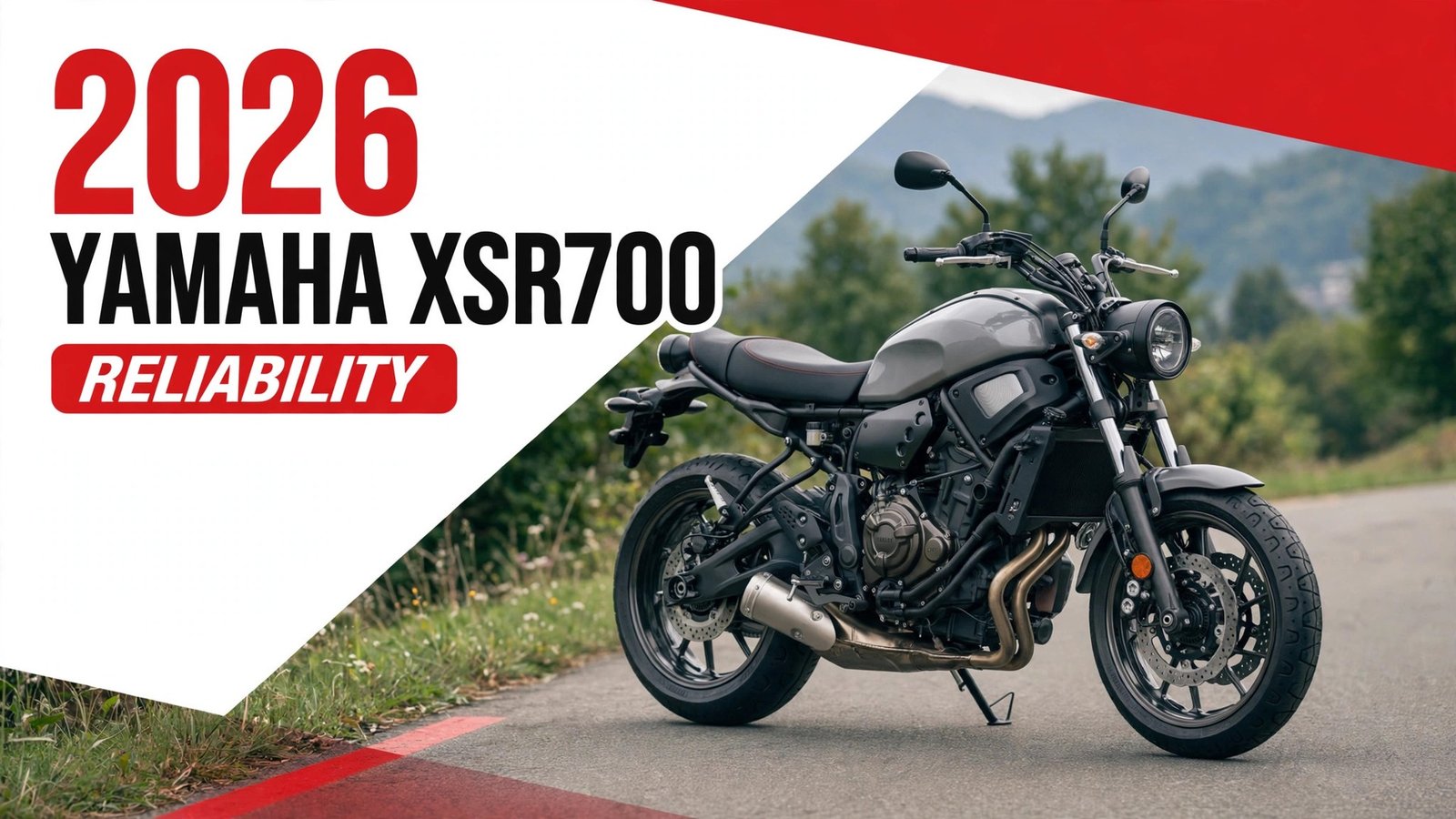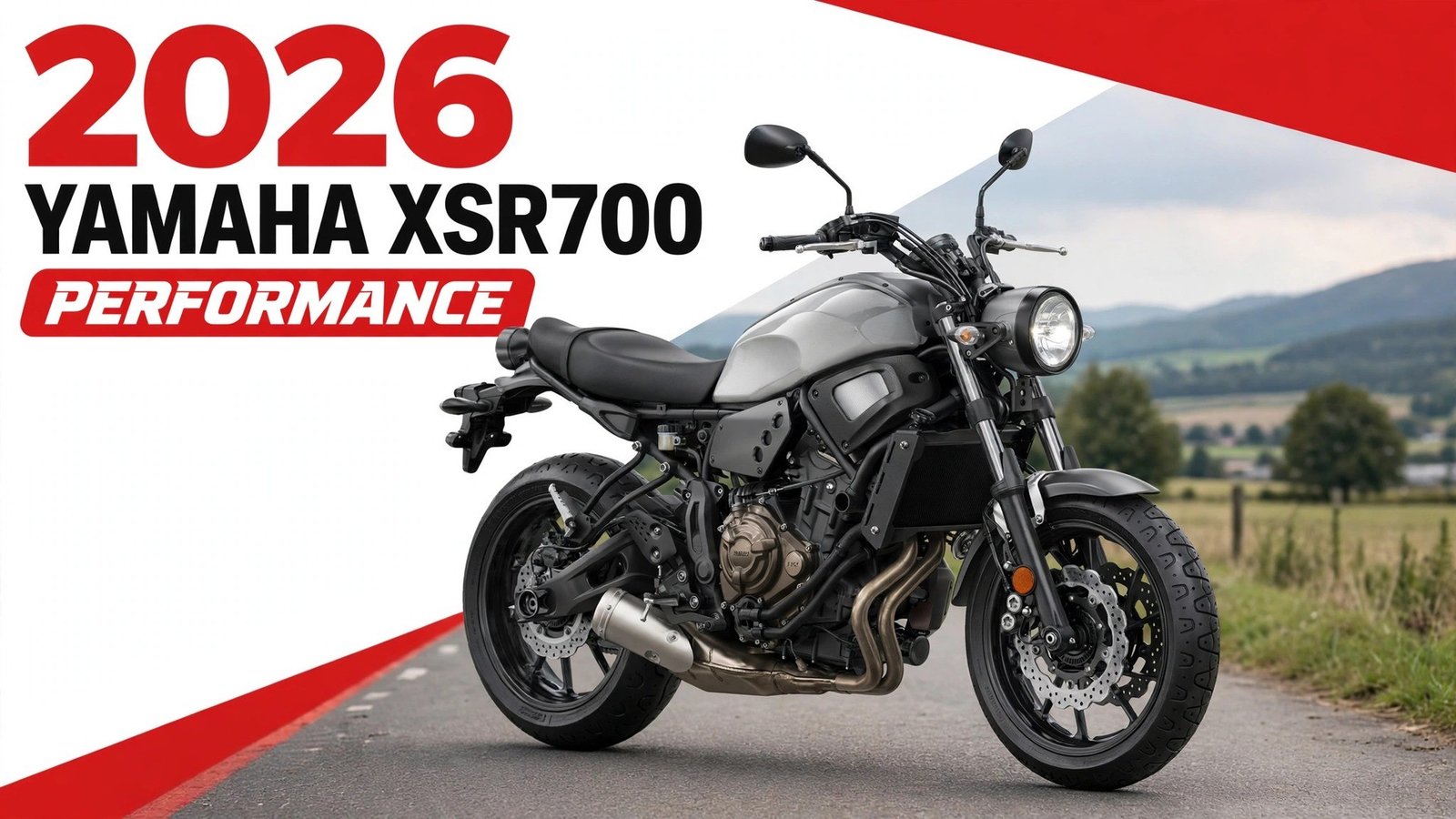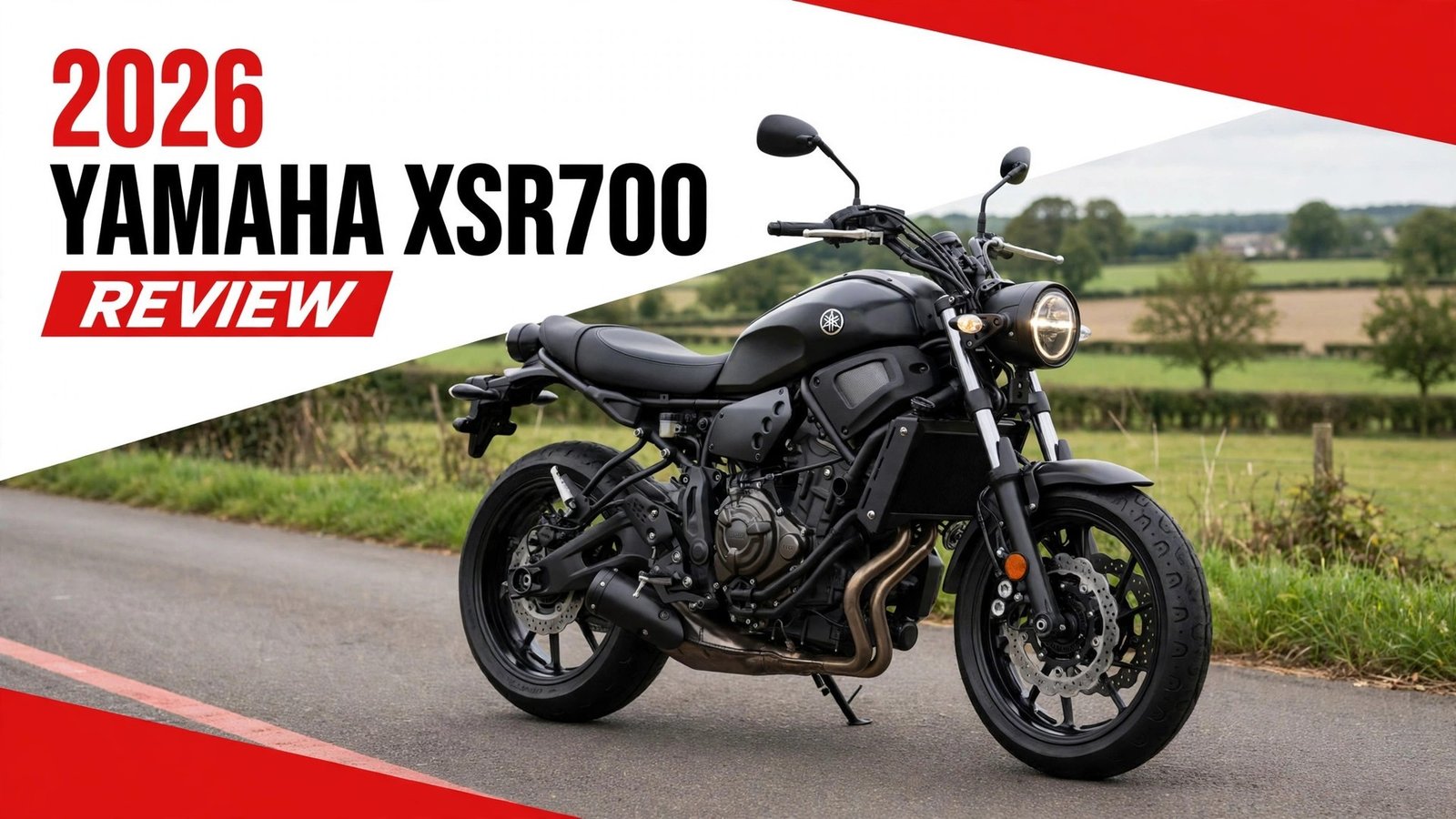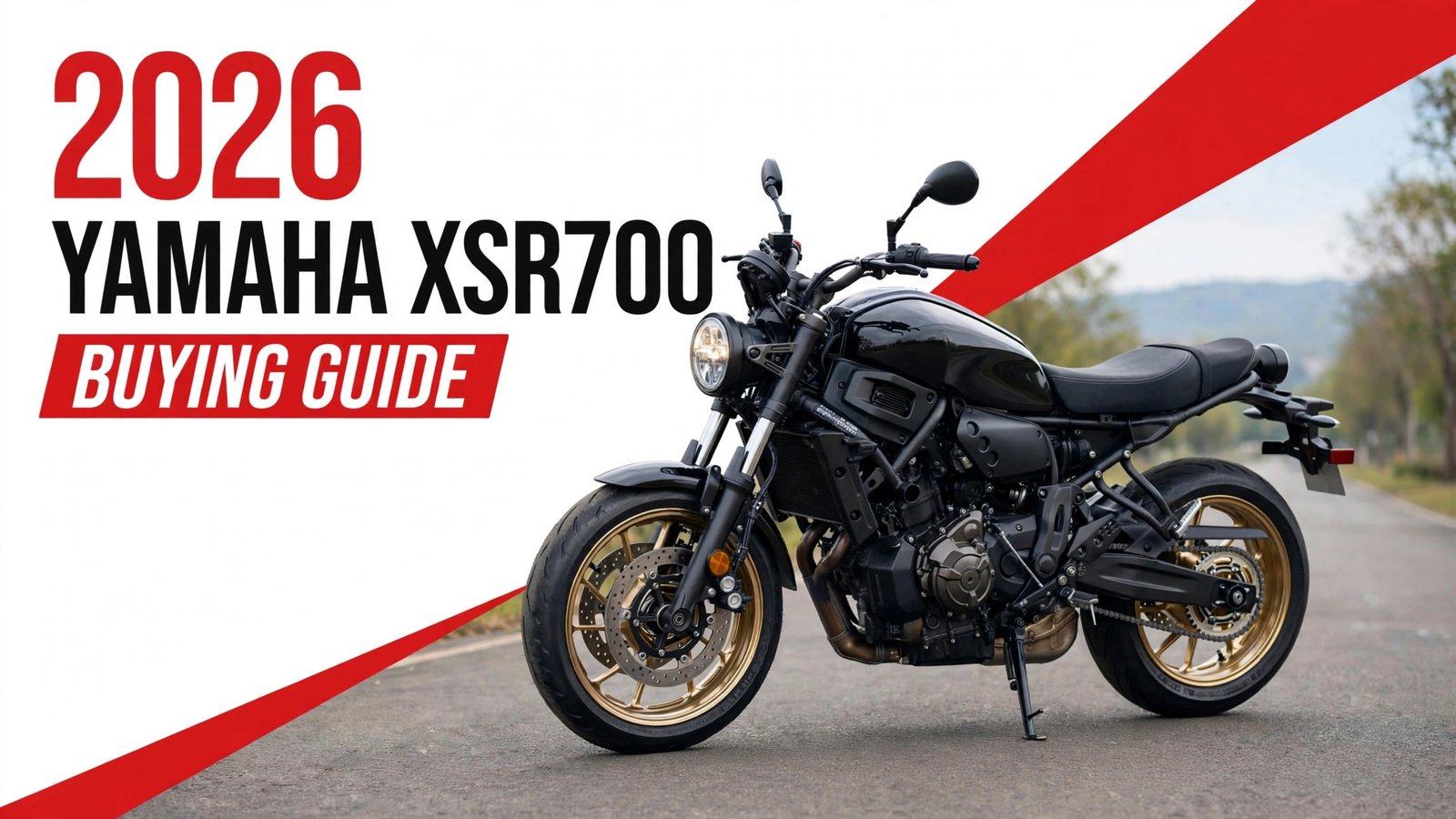
Here is the short answer this Yamaha XSR700 buying guide opens with: buy a used 2022-on bike if your budget stretches to it, and buy a clean 2018–2021 bike only after a careful corrosion and history check. The XSR700 is one of the simplest motorcycles still on sale in America. It uses Yamaha’s proven 689cc CP2 twin, weighs just 410 pounds wet, and asks only for regular servicing and chain care. This Yamaha XSR700 buying guide covers real October 2026 asking prices, insurance and running costs, inspection checks, model-year changes, and the MT-07 comparison. This Yamaha XSR700 buying guide will help you pick the right year and price.
Yamaha XSR700 Price and Market Availability
New prices, dealer asking prices and private-sale asking prices all describe different things, so this Yamaha XSR700 buying guide separates them, using observed dealer listings from October 2026 rather than guesses.
What Does a Used Yamaha XSR700 Cost in the USA by Year?
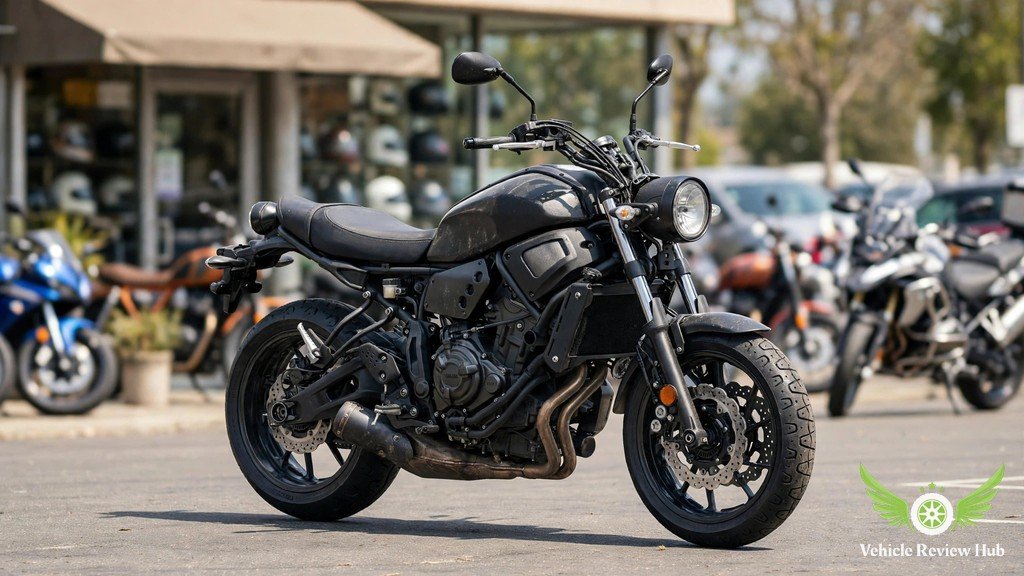
Used XSR700 prices fall into three bands, based on October 2026 dealer listings, and this Yamaha XSR700 buying guide stresses that these are asking prices, not sold prices. Early 2018–2021 bikes ask about $5,800 to $7,500, including $5,799 for a 2021 bike in Fort Pierce, Florida, and $6,799 for a clean 2018 bike in Deptford, New Jersey. Middle-band 2022–2024 bikes ask roughly $6,900 to $8,000, including $6,900 for a 2022 bike in Marshall, Texas; nearly new 2025 bikes ask $7,498 to $7,999. The most useful pattern in this Yamaha XSR700 buying guide is that leftover new 2025 bikes were advertised at $7,749 to $7,999, sometimes cheaper than a used 2025, so always price a new leftover first.
| Model year band | Asking price, October 2026 | What you get |
|---|---|---|
| 2018–2021 | About $5,800–$7,500 | Pre-update bike, 282 mm discs, Phantom tires |
| 2022–2024 | About $6,900–$8,000 | LED lighting, 298 mm discs, Road 5 tires |
| 2025 used | About $7,500–$8,000 | Nearly new, Raven, 2022-on update |
| 2025 new leftover | $7,749–$7,999 | Full warranty, no previous owner |
Is the Yamaha XSR700 Available Through Official US Dealers?
Yes. The XSR700 is a current model in Yamaha’s US range, and official dealers can supply it. Yamaha’s own 2026 XSR700 specifications confirm the $8,599 MSRP plus $675 destination charge and the Raven-only colour. The XSR700 is a niche retro model, so many dealers hold one example or none, and the right bike may be a state or two away; a private sale is cheaper and puts the full inspection burden on you. Either way, the checks in the inspection section of this Yamaha XSR700 buying guide apply identically. The companion XSR700 review covers the full model-year story, and this Yamaha XSR700 buying guide recommends searching neighbouring states first.
| Year | US MSRP | Notes |
|---|---|---|
| 2018 | $8,499 | US launch; Gray/Aluminum, Raspberry |
| 2019 | $8,499 | Aluminum/Red |
| 2020 | $8,499 | White/Red, gold rims |
| 2021 | Carried over | Same bike as 2020 |
| 2022 | $8,799 | LED update year |
| 2023 | $8,899 | Raven |
| 2024 | $8,899 | Carried over |
| 2025 | $8,599 | Raven only; price cut |
| 2026 | $8,599 + $675 dest. | Raven only; same as MT-07 |
Yamaha XSR700 Insurance and Ownership Costs
Insurance and running costs decide whether a cheap used bike stays cheap, and the XSR700 is unusually kind here: standard-class pricing, a 689cc twin, and shared Yamaha parts. This part of the Yamaha XSR700 buying guide separates costs you can estimate from ones that depend on your age, record and ZIP code.
What Affects Motorcycle Insurance Premiums for a Retro Naked Bike?
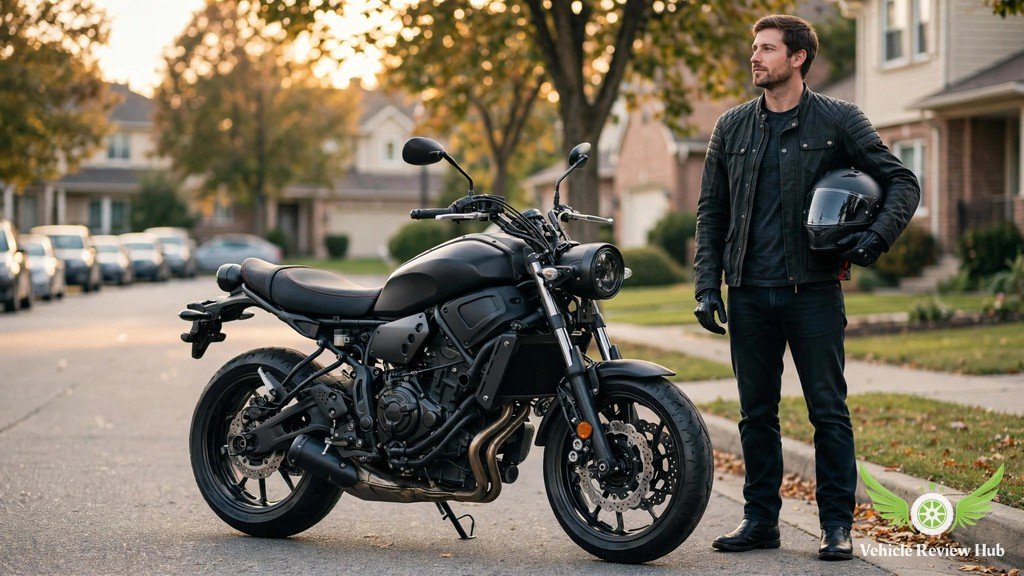
Insurers price a retro naked on bike class, engine size, rider age and record, location and garaging. Standards cost less to insure than supersports. Published MoneyGeek analysis from October 2026 puts liability-only cover for a 40-year-old rider with a clean record on a mid-size standard at about $141 a year, and full coverage at about $364 a year. Insurify’s 2026 averages run higher, at roughly $81 a month liability-only and $179 a month full coverage. Treat every figure in this Yamaha XSR700 buying guide as a planning estimate, then get quotes against the exact VIN, declare any modifications, and remember that a financed bike requires full coverage.
How to Estimate Fuel, Maintenance, Parts and Other Ownership Expenses
Fuel is the easiest cost to estimate. Yamaha estimates 58 mpg, and with a 3.7-gallon tank that gives a theoretical range of about 215 miles, although Rider magazine’s long-term 2018 bike averaged 51.7 mpg in real use, for about 191 miles, or roughly $340 a year in fuel at 5,000 miles, in this Yamaha XSR700 buying guide’s estimate. Routine servicing follows the XSR700 maintenance schedule: a first service at 600 miles, then every 4,000 miles or six months, with Yamalube 10W-40 oil and a valve check at 26,600 miles. Budget a routine dealer service in the low hundreds each year, with the valve service the one big bill in the first 30,000 miles. The companion XSR700 reliability guide covers the full service pattern in this Yamaha XSR700 buying guide.
| First-year cost item | Estimate | Basis |
|---|---|---|
| Fuel, 5,000 miles | About $340 | 51.7 mpg tested, $3.50/gal |
| Insurance, full coverage | About $364 and up | MoneyGeek, 40-year-old clean record |
| Routine servicing | About $200–$400 | One or two 4,000-mile services |
| Tires, amortised | About $150–$250 | Road 5 pair over its life |
| Chain, pads, sundries | About $100–$200 | Lubricant, adjustment, wear items |
| Estimated total | About $1,150–$1,450 | Excludes purchase price, valve service |
How to Inspect a Used Yamaha XSR700
A used XSR700 rewards a slow inspection and punishes a quick one, because its weak points hide where a glance misses them. This Yamaha XSR700 buying guide keeps every check below doable in a driveway with a torch, a tire gauge and a chain ruler.
Checking the Engine, Cold Start, Service Records and Maintenance History
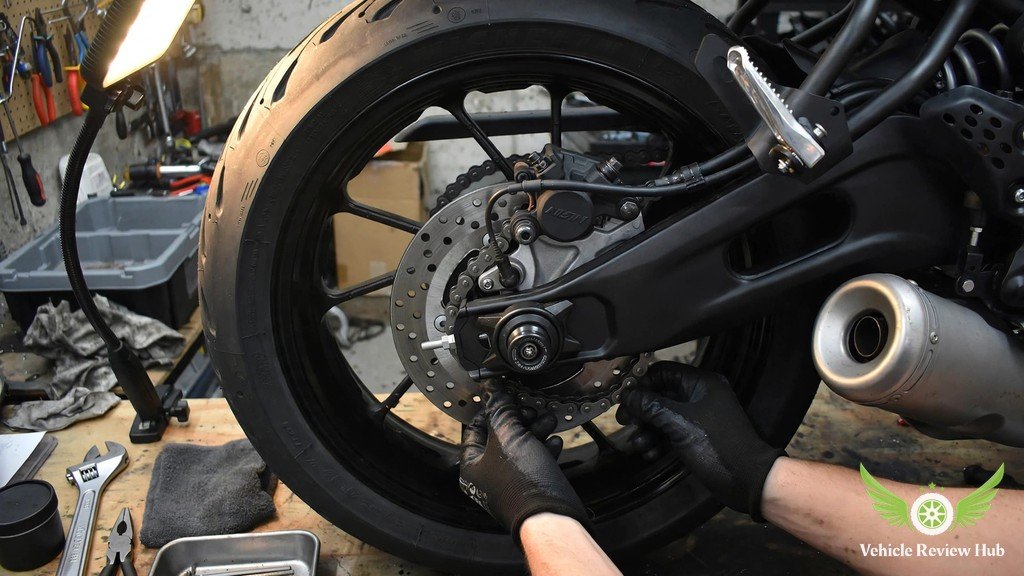
Always insist on a cold start, as this Yamaha XSR700 buying guide stresses: ask the seller not to warm the bike, then watch for a steady idle without smoke or rattles. Work the clutch and gearbox: the XSR700 has no assist-and-slipper clutch. Ask for the service book or dealer invoices showing the 600-mile first service and later 4,000-mile services, as this Yamaha XSR700 buying guide recommends. Check the VIN before paying: the one recall that definitely names the XSR700 is the 2018 chain-guard bolt recall, covering certain 2018 MT-07J and XSR700J models, 3,493 units, under campaign number 990120. If a seller mentions clutch drag, treat it as a VIN-check item only: no verified US campaign number exists for XSR700 clutch drag.
Inspecting the Frame, Swingarm Finish, Tires, Brakes and Chain
Check the swingarm and coolant pipes for corrosion: these are owner-reported inspection points, not verified defects, so light marking is a bargaining point, but heavy corrosion deserves a professional look, as this Yamaha XSR700 buying guide advises. Check the frame for crash damage and fork seals for weeping; the fork is a conventional 41 mm unit with 5.1 inches of travel on every year, so any inverted-fork claim is simply wrong. Check tire dates and tread, noting Road 5 tires on 2022-on bikes, and cold pressures of 33 psi front and 36 psi rear. Measure front discs against the year, 282 mm on 2018–2021 bikes and 298 mm from 2022 on, with a 245 mm rear disc, and check chain slack at 51 to 56 mm. A neglected chain is the classic sign of a neglected XSR700, which is why this Yamaha XSR700 buying guide lists it as a must-check.Yamaha XSR700 Model Years and Features to Compare
The XSR700’s model history is simple: one major update in 2022, and almost nothing else. This section of the Yamaha XSR700 buying guide lays out what changed, what did not, and which changes should drive your decision.
Comparing 2018-2021 Models With 2022-On Update Versions
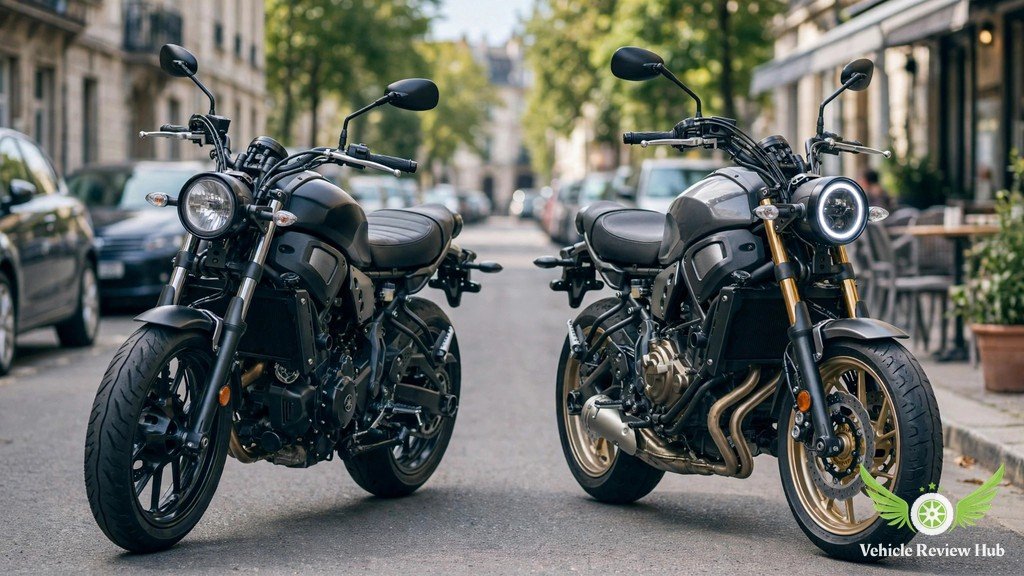
The 2018 to 2021 bikes are the original US XSR700, with a round headlight, a round LCD display, Pirelli Phantom tires, dual 282 mm front discs with ABS, and a conventional 41 mm fork. The 2022 update, described by Cycle World, brought a round LED headlight, LED indicators moved to redesigned radiator side cowls, larger 298 mm front discs, a revised front fork, and Michelin Road 5 tires. The round LCD meter moved forward above the headlight, with new switchgear. Colours help date a bike, and this Yamaha XSR700 buying guide notes Raven from 2023 onward. A well-kept early bike is still a good buy in this Yamaha XSR700 buying guide’s view, and the XSR700 performance figures include the Cycle World dyno result of 67.91 hp at 8,790 rpm from a stock 2018 US bike.
Which Features Matter Most: LED Lighting, LCD Position and Tire Change?
Of the 2022 changes, tires matter most, lighting at night, and LCD position at a glance. The Road 5 tires beat the Phantoms in wet grip and longevity. The LED headlight is brighter, and the repositioned LCD is easier to read at a glance. Together they make the 2022-on bike the better buy when the price gap is under $1,000, in this Yamaha XSR700 buying guide’s judgement. What did not change matters just as much: no US XSR700 of any year has a TFT display, traction control, ride modes, an IMU, cornering ABS, a quickshifter, cruise control, Y-Connect or a Smart Key, and the throttle is cable-operated on every year. The fork is conventional on every year, never inverted, and there is no assist-and-slipper clutch on any XSR700, a point this Yamaha XSR700 buying guide repeats because listings get it wrong.
Yamaha XSR700 vs MT-07: Which One to Buy in the USA
Every XSR700 shopper faces the same question, because Yamaha sells both bikes at the same $8,599 sticker with the same 689cc CP2 engine. This section of the Yamaha XSR700 buying guide settles the comparison on facts.
Same $8,599 Price and CP2 Engine, But MT-07 Adds Modes, TC and TFT
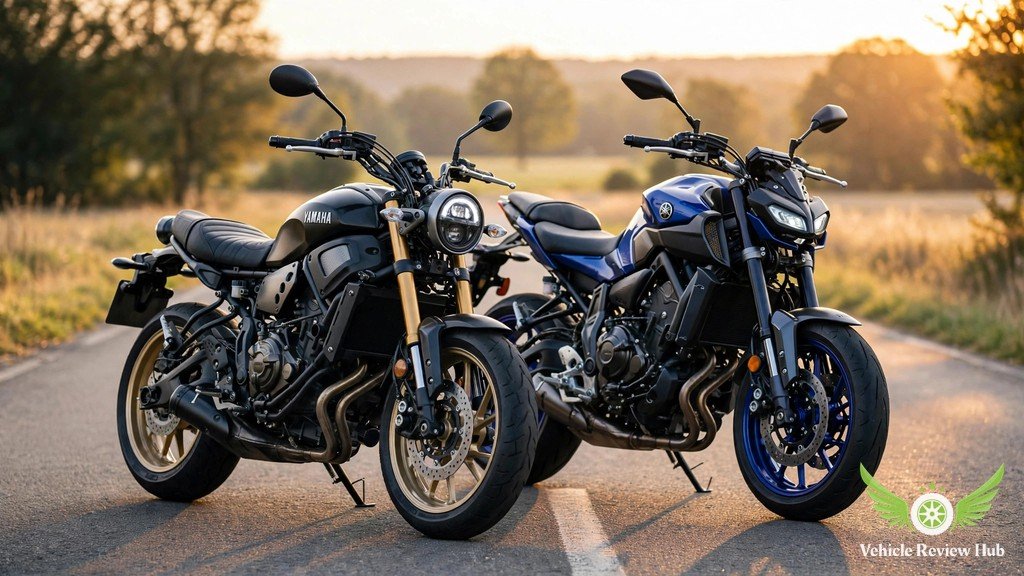
Both bikes share the 689cc CP2 twin, a six-speed gearbox, chain final drive, a 3.7-gallon tank, and an $8,599 sticker for 2026. The current MT-07 adds selectable ride modes, switchable traction control, and a 5-inch TFT display, where the XSR700 has none of those. The MT-07’s TFT arrived in 2023, and its ride modes and traction control arrived with the 2025 update, which also brought an electronic throttle, an assist-and-slipper clutch and an inverted fork. The MT-07 is also 7 pounds lighter at 403 pounds wet, with a lower 31.7-inch seat. A detailed TopSpeed comparison reaches the same conclusion: the MT-07 gives you newer hardware and more technology for identical money. If your priority is the latest electronics and the lower seat, the MT-07 wins on paper, and the MT-07 review explains that bike’s package. That paper victory does not settle the real-world choice in this Yamaha XSR700 buying guide, because the MT-07’s advantages come with complexity.
When Retro Style, Roomier Ergonomics and Simplicity Win Over Technology
The XSR700 wins in three places that matter every day, and this Yamaha XSR700 buying guide weighs them seriously. First, style: the retro design, round headlight, two-texture seat and aluminium tank covers give it a presence the MT-07 avoids. Second, ergonomics: the wider handlebar, taller 32.9-inch seat and roomier rider triangle suit taller riders better than the MT-07’s compact layout. Third, customisation: the XSR700 was designed to be personalised, with a detachable rear subframe, tank covers that unbolt for painting, and a large accessory range. Choose the XSR700 if you love the retro look, want the roomier position, or plan to customise. Choose the MT-07 if you want the TFT, traction control and ride modes, need the lower 31.7-inch seat. Either choice buys you the same excellent CP2 engine, a comfortable place for a Yamaha XSR700 buying guide to leave you.
Is Buying a Used Yamaha XSR700 Worth It?
After prices, costs, inspections and comparisons, the verdict comes down to a simple balance: the XSR700 is a proven, light, economical retro twin with well-understood weak points, sold at a price that undercuts most rivals. This final section of the Yamaha XSR700 buying guide weighs the case honestly, then places the bike against the three rivals to cross-shop.
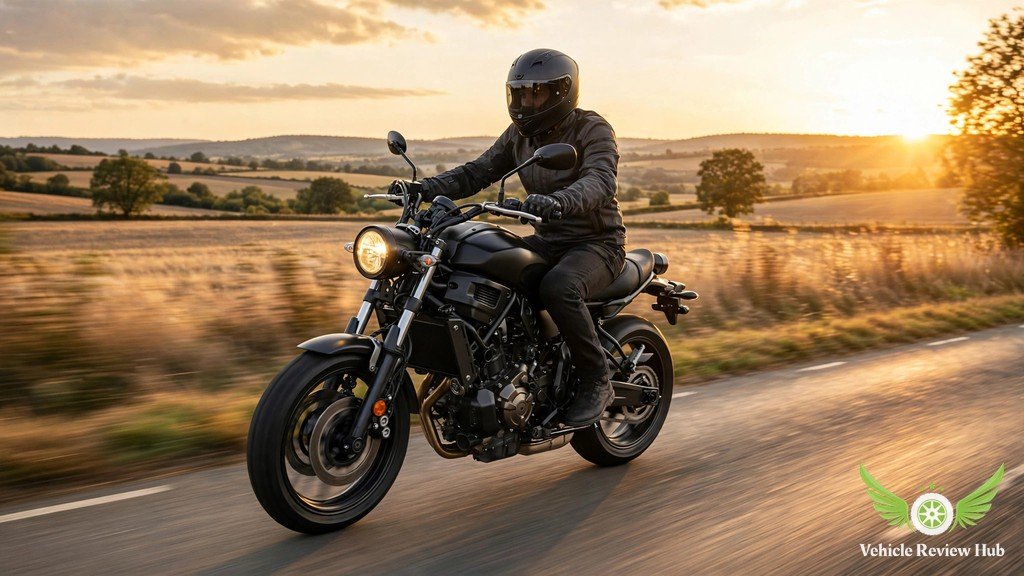
Benefits and Risks of Buying a Used XSR700 in the USA
The benefits start with the engine: the CP2 twin is one of the proven middleweight engines on sale, with strong low- and mid-range delivery. The chassis is light at 410 pounds, fuel economy is genuinely good at a tested 51.7 mpg, and servicing is simple. Owners like the bike too: MCN’s owner reliability rating stands at 4.8 out of 5, although this Yamaha XSR700 buying guide must flag that it comes from only nine owner reviews, a tiny sample. The risks in this Yamaha XSR700 buying guide are equally specific and manageable. The rear shock is the most common complaint: MCN notes that it is soft and underdamped, and many owners upgrade it. Owner-reported corrosion on the swingarm and coolant pipes needs checking on every used bike, and the used market is thin. The verdict in this Yamaha XSR700 buying guide is clear: buy the best-condition 2022-on bike your budget allows, or a well-documented early bike at the bottom of its price band.
For a direct buying comparison, this Yamaha XSR700 buying guide includes MOTOBOB’s “New 2022 Yamaha XSR900 vs XSR700: Which Should You Buy?” below. It compares the 2022 XSR700 against its bigger XSR900 sibling rather than covering the XSR700 alone, but its buy-or-not verdict is exactly the question this Yamaha XSR700 buying guide answers.
US-Market Alternatives: Z650RS, Honda CB650R and Speed Twin 900
If the XSR700 does not fit, three US rivals deserve a test ride, and this Yamaha XSR700 buying guide frames each one against the Yamaha. The Kawasaki Z650RS, at $8,999 for 2026, is the retro rival: a 649cc twin with KTRC traction control and an assist-and-slipper clutch, a lower 31.5-inch seat, and about 412 pounds curb weight. It adds the electronics the Yamaha lacks, but costs $400 more. The Honda CB650R E-Clutch, at $8,699 plus a $600 destination for 2026, moves to an inline-four with Honda’s E-Clutch and a larger 4.1-gallon tank. The Triumph Speed Twin 900, at $11,495 for 2026, is the premium step up: a 900cc twin making about 64 hp and 59 lb-ft, but it costs nearly $2,900 more than the Yamaha. None of these bikes makes the XSR700 a bad buy in this Yamaha XSR700 buying guide’s judgement. A full 2022 XSR700 specifications roundup lets you compare the Yamaha’s numbers.
| Motorcycle | 2026 US MSRP | Engine | Seat height | What it adds over the XSR700 |
|---|---|---|---|---|
| Yamaha XSR700 | $8,599 + $675 dest. | 689cc twin | 32.9 in | Baseline: simplest package |
| Kawasaki Z650RS ABS | $8,999 | 649cc twin | 31.5 in | Traction control, slipper clutch, lower seat |
| Honda CB650R E-Clutch | $8,699 + $600 dest. | 649cc four | 31.9 in | Four-cylinder smoothness, E-Clutch, 4.1-gal tank |
| Triumph Speed Twin 900 | $11,495 | 900cc twin | 30.7 in | Bigger engine, lowest seat, heritage finish |
Yamaha XSR700 Buying Guide FAQs
These are the questions shoppers ask most often about buying an XSR700 in the USA, answered directly from the research behind this Yamaha XSR700 buying guide, and this Yamaha XSR700 buying guide covers the full topic below.
Is a used Yamaha XSR700 a good buy in the USA?
Yes, for most retro middleweight riders. This Yamaha XSR700 buying guide rates it highly for its proven 689cc twin, light 410-pound chassis, good economy and simple servicing, at asking prices from roughly $5,800 to $8,000. Condition matters most, so follow the inspection checklist.
What is the best year of the Yamaha XSR700 to buy used?
In this Yamaha XSR700 buying guide’s view, the 2022-on bikes are the best used buy, because the update added LED lighting, larger 298 mm front discs, Michelin Road 5 tires and a better-positioned LCD. A clean 2018–2021 bike is still good value at the bottom of its band.
How much should I pay for a used Yamaha XSR700?
In this Yamaha XSR700 buying guide, expect asking prices of about $5,800 to $7,500 for 2018–2021 bikes, about $6,900 to $8,000 for 2022–2024 bikes, and about $7,500 to $8,000 for used 2025 bikes, based on October 2026 dealer listings. These are asking prices, not sold prices, so negotiate, as this Yamaha XSR700 buying guide recommends.
Does the Yamaha XSR700 have traction control or ride modes?
No. No US XSR700 of any year has traction control, ride modes or cornering ABS, only conventional ABS and a cable throttle. If those aids matter, the MT-07 at the same $8,599 price adds them, and this Yamaha XSR700 buying guide recommends comparing the two.
Does the Yamaha XSR700 have a TFT display?
No. Every XSR700 year uses a round LCD display, never a TFT, a fact this Yamaha XSR700 buying guide stresses because listings get it wrong. The 2022 update repositioned that LCD, but it is still an LCD.
Does the Yamaha XSR700 have an assist-and-slipper clutch?
No. This Yamaha XSR700 buying guide is clear: the XSR700 has a conventional multiplate wet clutch on every year, with no assist-and-slipper function. The MT-07 gained one in 2025, but that change did not transfer to the XSR700.
Are there any recalls on the Yamaha XSR700?
In this Yamaha XSR700 buying guide, one recall definitely names the XSR700: the 2018 chain-guard bolt recall covering certain 2018 MT-07J and XSR700J models, 3,493 units, under Yamaha campaign number 990120. Neither the FZ-09 and XSR900 handlebar recall nor the Hawaii TPS filing names the XSR700. Run the VIN through Yamaha and NHTSA lookups before buying.
Should I buy the XSR700 or the MT-07?
Buy the XSR700 for retro styling, roomier ergonomics, mechanical simplicity, or customisation. Buy the MT-07 for ride modes, traction control, a 5-inch TFT display and a lower 31.7-inch seat. Both cost $8,599 for 2026 and share the same CP2 engine, and this Yamaha XSR700 buying guide leaves that choice to you.