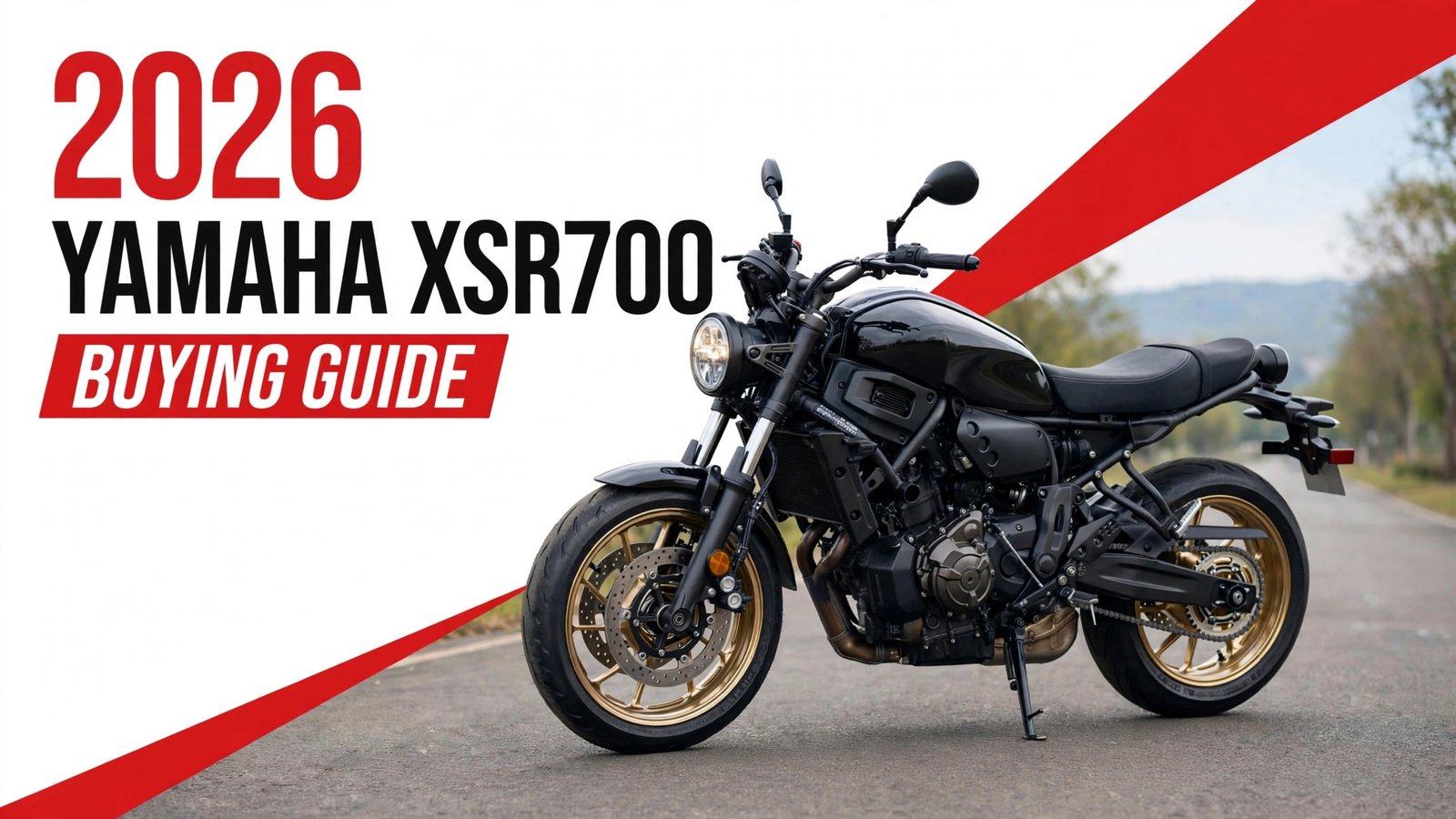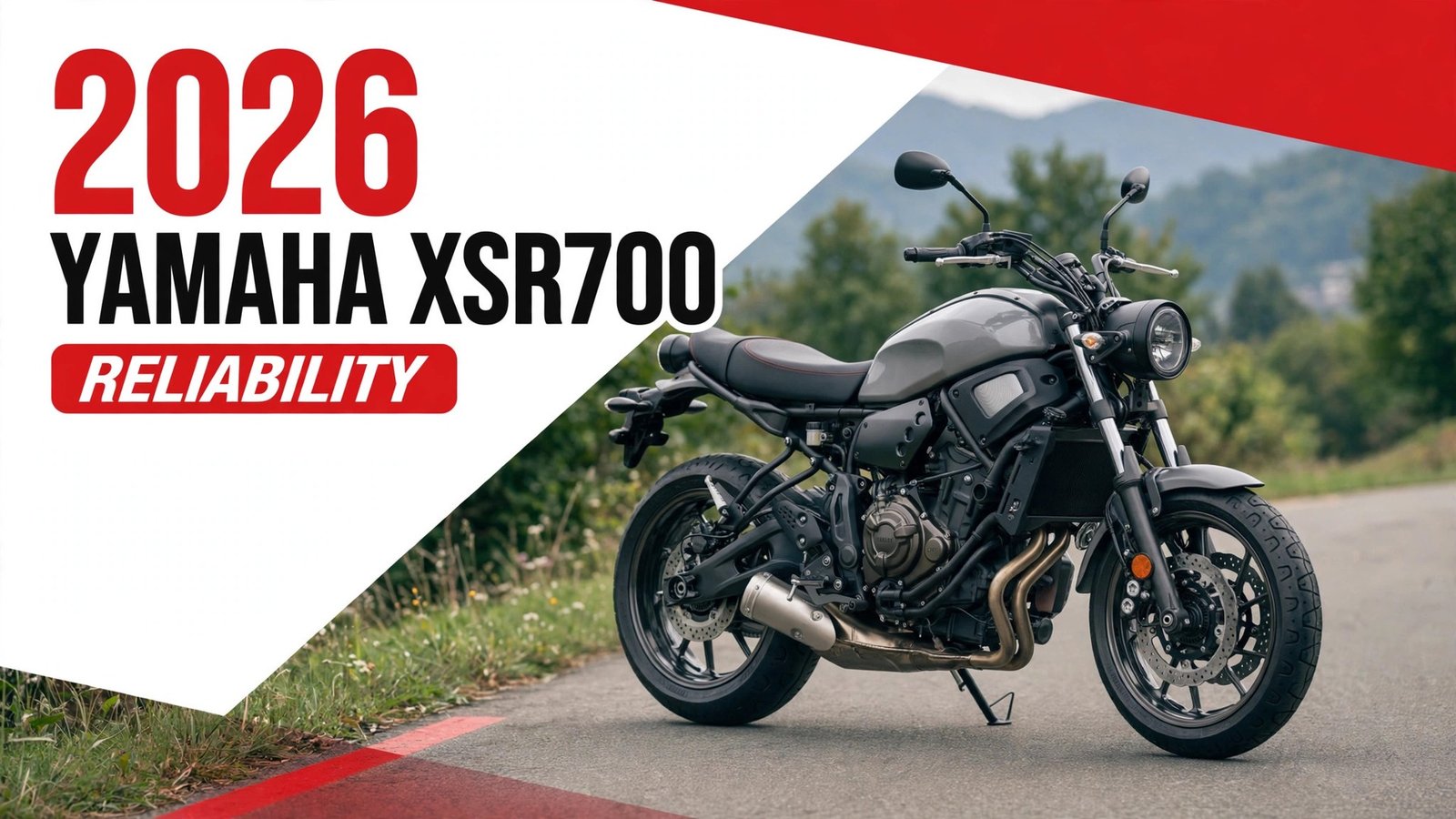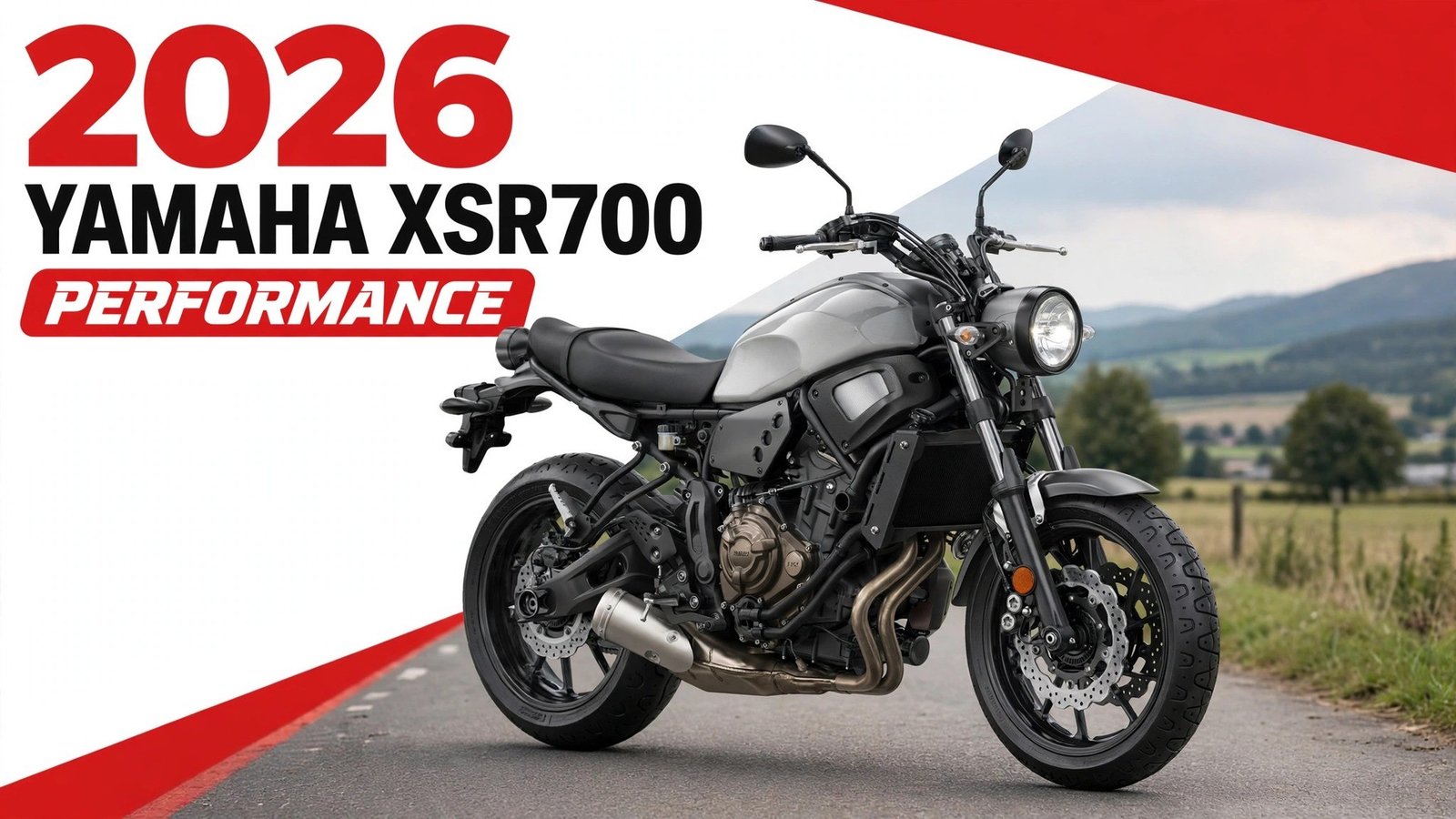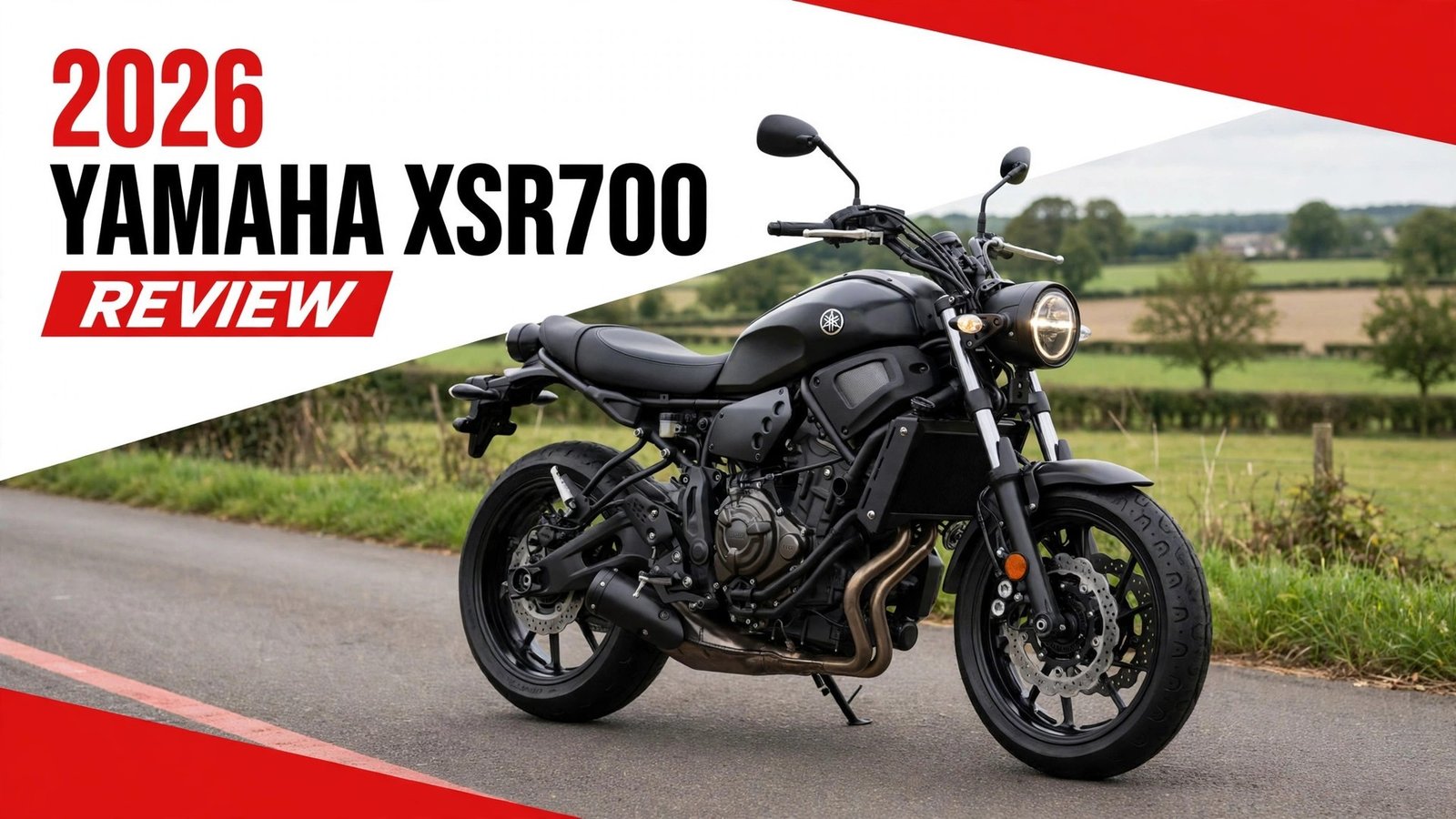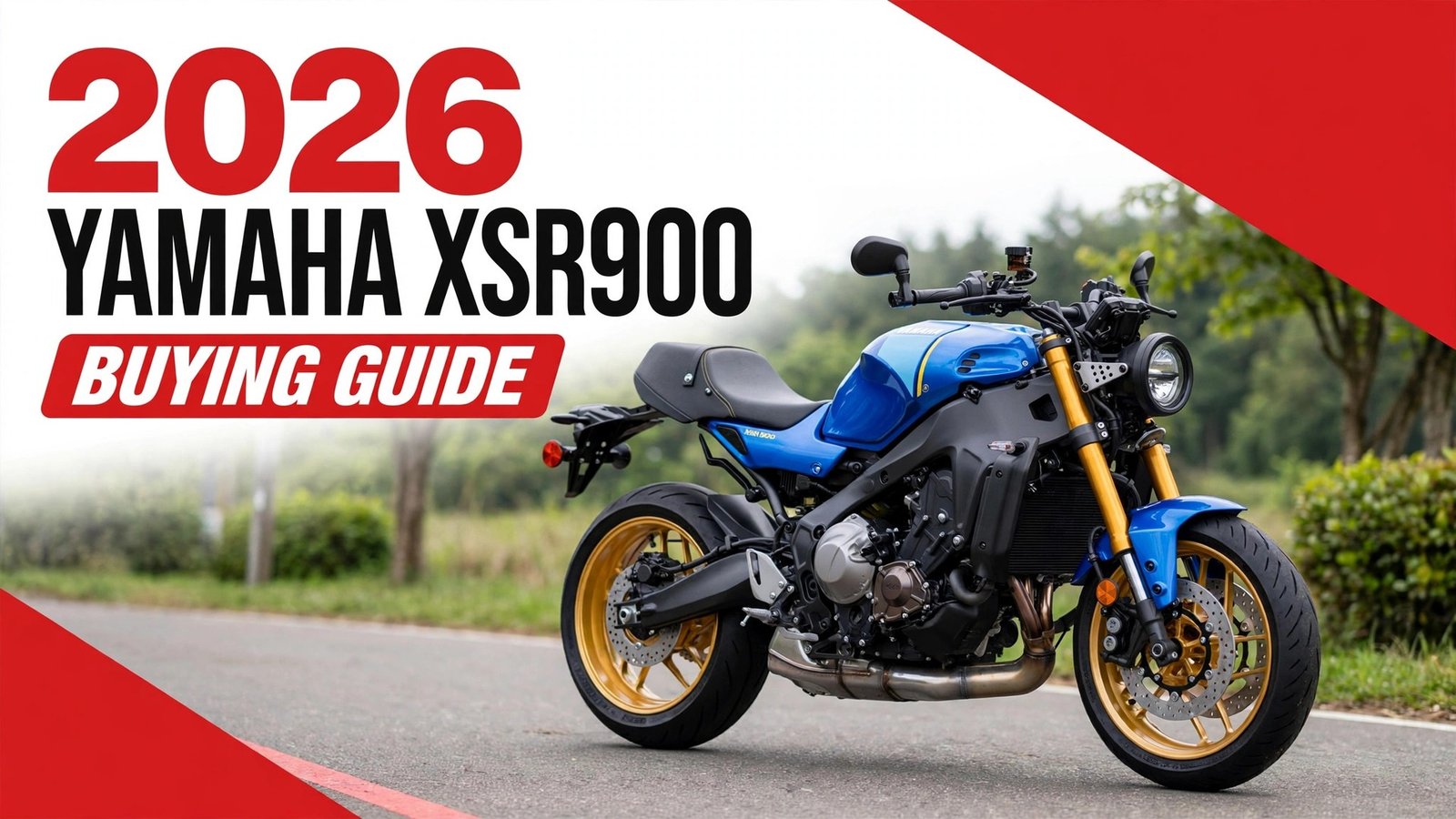
A used XSR900 is one of the smartest retro buys in America, and this Yamaha XSR900 buying guide explains why: a superb 890cc triple with modern electronics and styling that does not age. This Yamaha XSR900 buying guide covers used prices, insurance and running costs, inspection, model years, and rivals. The headline first: a new 2026 XSR900 lists at $10,599, while clean used examples start around $5,500 — the price spread this Yamaha XSR900 buying guide starts with.
Yamaha XSR900 Price and Market Availability
Price is where this Yamaha XSR900 buying guide earns its keep, because the XSR900 has lived two lives: the 847cc original and the redesigned 890cc bike. That split drives used prices more than mileage alone, and this Yamaha XSR900 buying guide separates the two generations first.

What Does a Used Yamaha XSR900 Cost in the USA by Generation?
Used prices in this Yamaha XSR900 buying guide are observed asking prices from US dealer and private listings seen in October 2026, not sold prices. The cheapest way in is a 2016–2018 bike: a 2017 example asked $5,499 in Pennsylvania and another $7,950 in Missouri, with 2016 bikes between $5,991 and $7,899, so this Yamaha XSR900 buying guide puts the early 847cc band at roughly $5,500–$8,000. The 2019–2021 bikes sit higher: a 2020 asked $6,995 in Florida while another asked $10,101, and 2021 bikes ranged from $7,199 to $9,795, giving this Yamaha XSR900 buying guide a $7,000–$10,100 band. The redesigned 2022–2024 bikes command the most: a 2022 asked $7,250 in California, a 2023 private sale asked $7,199 in Texas, a 2024 asked $7,989 in Ohio, and tidy 2024s asked $9,795–$10,399, so this Yamaha XSR900 buying guide puts the 890cc band at roughly $7,250–$10,400. Nearly new 2025 bikes barely discount: dealers advertised new 2025 XSR900s at $9,799 against the $10,599 sticker, so a used 2025 must cost clearly less. The pattern in this Yamaha XSR900 buying guide is simple: pay the 890cc premium only when the electronics and condition justify it.
| Generation | Observed asking range (USA, Oct 2026) | What the listings show |
|---|---|---|
| 2016–2018 (847cc) | $5,500–$8,000 | 2017: $5,499–$7,950; 2016: $5,991–$7,899 |
| 2019–2021 (847cc) | $7,000–$10,100 | 2020: $6,995–$10,101; 2021: $7,199–$9,795 |
| 2022–2024 (890cc) | $7,250–$10,400 | 2022: $7,250–$10,399; 2023: $7,199–$7,999; 2024: $7,989–$10,399 |
| 2025-on (890cc, used) | Near new money | New 2025s at $9,799 vs $10,599 MSRP |
Is the Yamaha XSR900 Available Through Official US Dealers?
Yes. The standard XSR900 is officially sold in the United States through Yamaha dealers, and, as this Yamaha XSR900 buying guide notes, that matters for parts, warranty, and service. The new-bike price ladder shows steady, modest rises: $9,999 for 2022, confirmed by RevZilla’s 2022 first-ride review; $10,199 for 2023, per webBikeWorld’s 2023 overview; $10,299 for 2024; and $10,599 for 2025 and 2026, with a $700 destination charge on the 2026 bike per Motorcycle.com’s 2026 specifications. The early bike was cheaper new: the 2016 bike listed at $9,490, or $9,990 for the 60th Anniversary Yellow edition, per J.D. Power’s 2016 values page. For 2026, Yamaha lists Raven and Heritage White, and this Yamaha XSR900 buying guide notes dealer discounts on leftover 2025 bikes as the easiest way to buy new below sticker.
Yamaha XSR900 Insurance and Ownership Costs
Insurance is the running cost buyers most often guess wrong, and this Yamaha XSR900 buying guide treats it as a quote-first item. The XSR900 is a 117-horsepower-class retro, not a beginner bike, and insurers price it accordingly, so this Yamaha XSR900 buying guide separates the advertised floor from real-world prices.
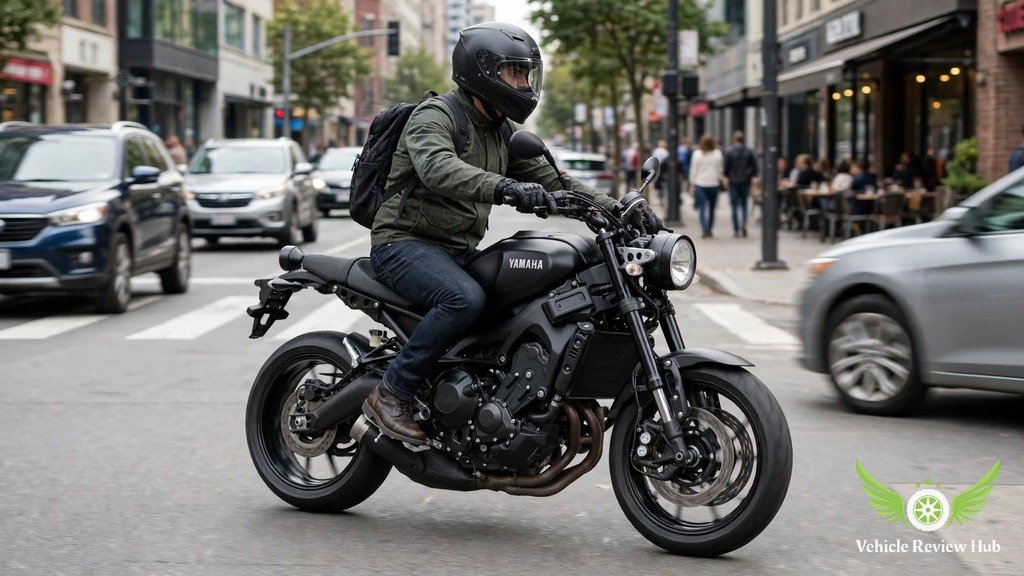
What Affects Motorcycle Insurance Premiums for a Retro Naked Bike?
Five factors dominate a quote, and this Yamaha XSR900 buying guide lists them in order: age and experience, riding record, location and theft risk, storage, and cover level. The advertised floor looks cheap: Progressive advertises liability rates starting at $75 a year for a basic policy, not available in all states and covering nothing on your own bike. Reality sits higher: one long-term owner reported paying $280 a year for a 2016 XSR900 with Progressive after decades of claim-free riding. Younger riders, riders with claims or tickets, city addresses, and street parking should expect materially more. Modifications matter too: an aftermarket exhaust, tail tidy, or ECU flash should be declared, since undeclared mods can complicate a claim, and this Yamaha XSR900 buying guide advises quoting the exact VIN before paying a deposit.
How to Estimate Fuel, Maintenance, Parts and Other Ownership Expenses
Fuel is reasonable: Yamaha claims 49 mpg, and Cycle World’s tested average for the 2022-on bike was 45.8 mpg in US gallons, so this Yamaha XSR900 buying guide budgets on the tested figure. With a 3.7-gallon tank, that means roughly 170 miles between fill-ups in real riding. Routine servicing follows the MT-09-platform pattern of a service every 4,000 miles, with valve-clearance checks every 26,600 miles in US manuals — the valve service is the one big dealer bill, so this Yamaha XSR900 buying guide tells buyers to check it has been done on any bike near that mileage. Tires are the recurring cost: the S22 set in 120/70ZR17 front and 180/55ZR17 rear is a premium sport tire, and a hard-ridden set wears in a few thousand miles. Chains, sprockets, brake pads, and brake fluid every two years complete the picture in this Yamaha XSR900 buying guide.
How to Inspect a Used Yamaha XSR900
Inspection is straightforward on this bike, and this Yamaha XSR900 buying guide keeps it to a careful half-hour check: bring a torch and a tire gauge, insist on a cold start, and walk away if the seller refuses one.
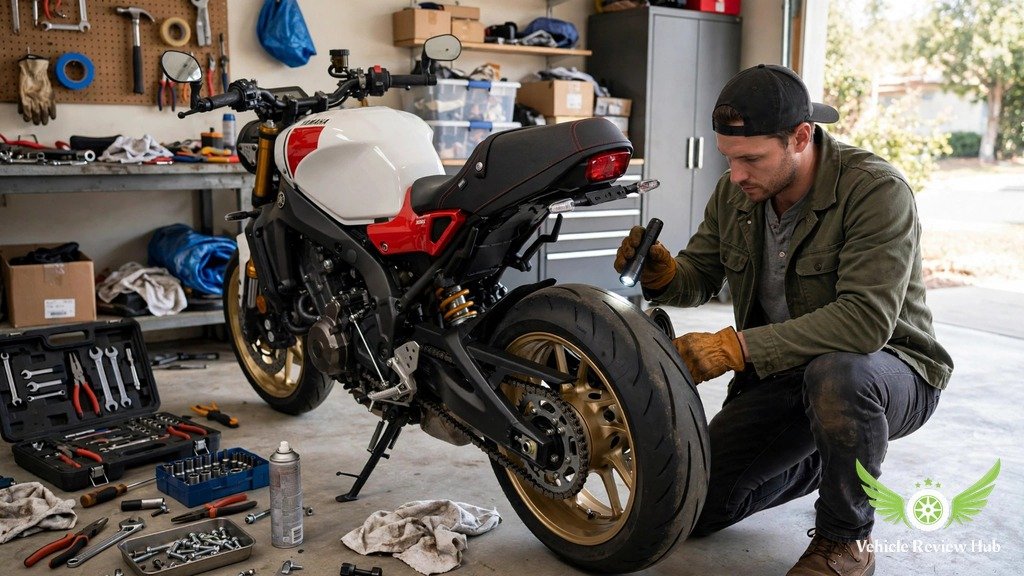
Checking the Engine, Cold Start, Service Records and Maintenance History
Start cold, says this Yamaha XSR900 buying guide: the triple should fire promptly, idle steadily, and show no smoke once warm. Listen for camchain rattle on start-up, check the oil level and colour, and look for weeping around the valve cover and water pump. Service records are worth real money in this Yamaha XSR900 buying guide: the schedule runs on 4,000-mile intervals with valve checks at 26,600 miles, so ask for the book and match stamps to mileage. On 2022-on bikes, check the electronics on start-up: the TFT should be bright and responsive, the quickshifter should work both ways, and no warning lights should stay lit. On any used XSR900, run the VIN through Yamaha’s recall lookup and a dealer enquiry before buying: one filing worth knowing is the Hawaii-distributor TPS filing known as 25V248, which covers certain 2022–2024 XSR900s and requires an ECU reprogram and TPS replacement — a Hawaii filing, not a nationwide recall. Do not confuse it with the nationwide 22V130 ECU recall, which covers certain 2021–2022 MT-09, MT-09 SP, and Tracer 9 GT models and does not name the XSR900 at all.
Inspecting the Frame, Tires, Brakes, Chain and Suspension
Walk the die-cast aluminum frame and swingarm for cracks, dents, or fresh paint hiding crash repair, then read the plastics and bar ends: scraped levers, pegs, and bar-end mirrors all hint at a spill, and this Yamaha XSR900 buying guide treats aftermarket levers and exhausts as clues. Check tire date codes, tread depth, pad thickness, and lever feel — a spongy lever means air or old fluid. The 41mm KYB inverted fork should show no oil weeping past the seals and no pitting on the stanchions, and the rear shock should rebound cleanly; on 2025-on bikes it is fully adjustable including high- and low-speed compression, so check those adjusters move. Chain slack and lubrication tell the ownership story on any chain-drive bike: a dry, kinked, or over-tight chain means sprockets are next. Finish with the paperwork — title, lien check, and a VIN match — and this Yamaha XSR900 buying guide says a seller who resists any of it is a seller to leave.
Yamaha XSR900 Model Years and Features to Compare
The XSR900’s history is short but split in two, and this Yamaha XSR900 buying guide frames the choice simply: the 847cc original is the value buy, the 890cc redesign is the tech buy, and the 2025 update is the screen-and-electronics buy. Condition still beats year, but this Yamaha XSR900 buying guide says year decides which bike you buy.
Comparing 847cc 2016-2021 Models With 2022-On and 2025-On Versions
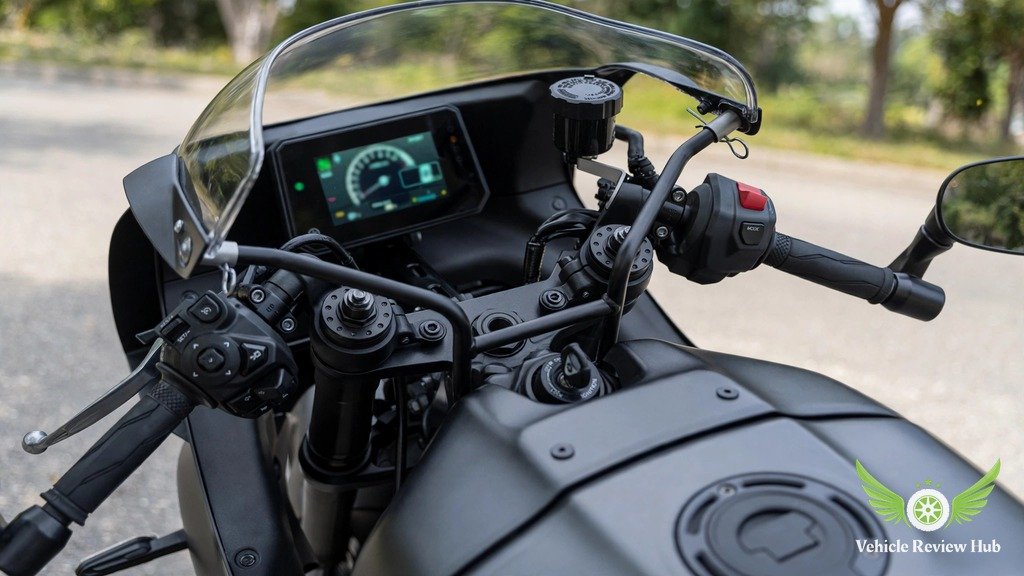
Every XSR900 shares the same idea — a CP3 triple in retro clothes — but the generations differ in almost every measurable way, and this Yamaha XSR900 buying guide lists them plainly. The 2016–2021 bike uses the 847cc triple with a round LCD, D-Mode ride modes, and switchable traction control, but no IMU, no lean-sensitive aids, no cruise control, no TFT, and no factory quickshifter; its seat is 32.7 inches and it weighs around 430 pounds. The 2022 redesign brought the 890cc CP3, a new die-cast frame, a 6-axis IMU with lean-sensitive traction control, slide control, lift control, and cornering ABS, cruise control, a bi-directional quickshifter, a 3.5-inch TFT, and a 31.9-inch seat at 425 pounds wet. The 2025 update kept that package and changed the interface: a 5-inch TFT, smartphone connectivity, and a revised rear shock. The full XSR900 review covers the riding experience, and the XSR900 performance figures explain what the 890cc engine delivers.
| Feature | 2016–2021 (847cc) | 2022–2024 (890cc) | 2025-on (890cc) |
|---|---|---|---|
| Engine | 847cc triple | 890cc CP3 triple | 890cc CP3 triple |
| Display | Round LCD | 3.5-inch TFT | 5-inch TFT + Y-Connect |
| Electronics | D-Mode, switchable TC, no IMU | 6-axis IMU, lean-sensitive aids, cruise control | As 2022, plus BSR and speed limiter |
| Quickshifter | No factory quickshifter | Bi-directional quickshifter | Third-generation quickshifter |
| Seat / weight | 32.7 in / ~430 lb | 31.9 in / 425 lb | 31.9 in / 425 lb |
Which Features Matter Most: 5-Inch TFT, Back Slip Regulator and Quickshifter?
Of the 2025 updates, this Yamaha XSR900 buying guide rates the 5-inch TFT most important for daily use: it replaces the small 3.5-inch display with four themes including an XSR-exclusive analog-style tachometer, adds Y-Connect connectivity with Garmin StreetCross navigation, and brings a dash-mounted USB-C port plus new switchgear. The Back Slip Regulator, new for 2025, deserves a plain explanation: it is not a second slipper clutch. Yamaha’s own description says a Back Slip Regulator reduces rear-wheel lockup under engine braking by controlling the torque supplied to the wheel, and it shines in low-grip situations where the mechanical slipper clutch alone struggles — an electronic backstop for aggressive downshifts, working alongside the assist-and-slipper clutch, not replacing it. The quickshifter matters too: the 2022-on bike already shifted both ways without the clutch, and the 2025 bike gets Yamaha’s third-generation quickshifter. The verdict in this Yamaha XSR900 buying guide: the TFT justifies the 2025 premium for riders who value connectivity, and the Back Slip Regulator is a genuine safety net for wet-road riders.
Yamaha XSR900 vs Other Yamaha Models: Which One to Buy in the USA
The XSR900 does not compete only with other brands, and this Yamaha XSR900 buying guide compares it with its own showroom siblings first. The MT-09 and XSR700 answer different questions, and this Yamaha XSR900 buying guide says the wrong sibling is the most common mistake after the wrong generation.
MT-09 With the Same CP3 Platform and XSR700 at $8,599
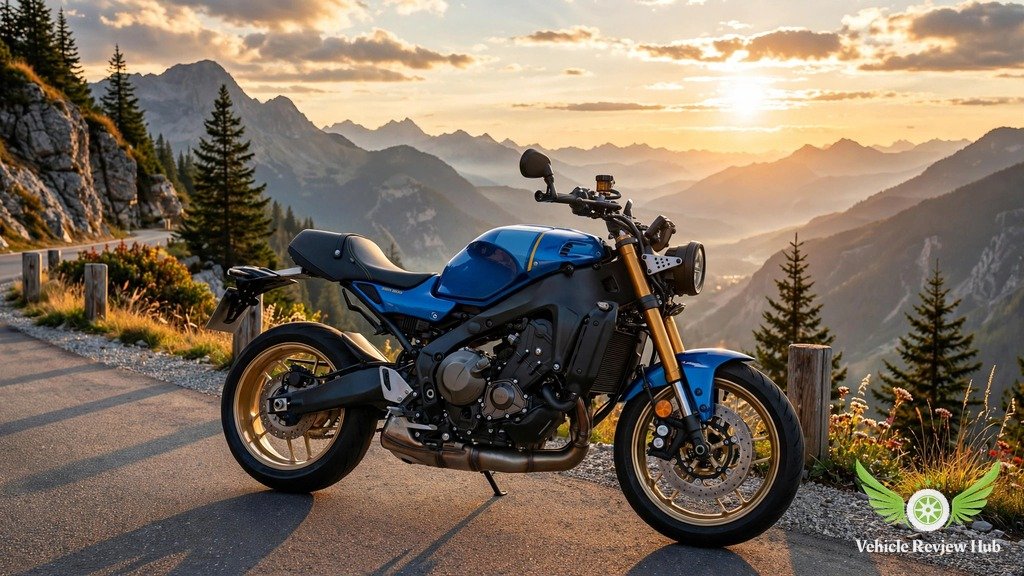
The MT-09 shares the XSR900’s 890cc CP3 platform, frame, and electronics suite, but it is the sharper, more aggressive bike: a shorter 56.3-inch wheelbase against the XSR900’s 58.9 inches, and a $10,899 sticker for 2026 — $300 more than the XSR900’s $10,599. The MT-09 review covers that bike in full, and this Yamaha XSR900 buying guide frames the choice as style and stability against aggression: buy the XSR900 for retro looks and a calmer ride, and buy the MT-09 for the sharpest handling. Do not mix their hardware: the XSR900 uses fully adjustable KYB suspension and a Brembo radial master cylinder, while the MT-09 SP’s Öhlins shock, Stylema calipers, and Smart Key never appeared on the XSR900. The XSR700 at $8,599 for 2026 is a different proposition: a 689cc twin with far less power and simpler equipment, and this Yamaha XSR900 buying guide recommends it only to riders who want a lighter, cheaper, less intimidating retro — the MT-07 review covers its twin.
XSR900 GP: Not on Sale in the US and the Unconfirmed 2027 Report Explained
The XSR900 GP is a separate model, not a trim level, and this Yamaha XSR900 buying guide states its US status plainly: not sold in the United States. The GP adds a front fairing and clip-on bars in tribute to Yamaha’s 1980s Grand Prix machines, but no US dealer can order one and no US MSRP exists. Yamaha brought a GP to Laguna Seca in July 2025 for Wayne Rainey to ride, and reports since then suggested a 2027 US arrival. That report is unconfirmed: Yamaha has not announced a US launch, price, or date for the GP, and this Yamaha XSR900 buying guide treats it as speculation. Do not pay an import premium or let a seller dress a standard XSR900 with a fairing and call it a GP. Until then, the standard XSR900 is the only XSR900 an American buyer can buy new.
Is Buying a Used Yamaha XSR900 Worth It?
For an experienced rider who wants retro style without retro performance, yes — with two conditions from this Yamaha XSR900 buying guide: the right generation, and condition and records. The case rests on a superb engine, a modern chassis, and resale that holds, and this Yamaha XSR900 buying guide starts its verdict with the video below.

This Yamaha XSR900 buying guide recommends Yammie Noob’s “So You Want a Yamaha XSR900,” which walks through the bike’s history, quirks and issues, styling, rivals, and a direct “Should You Get One?” verdict:
Benefits and Risks of Buying a Used XSR900 in the USA
The benefits stack up in this Yamaha XSR900 buying guide: a CP3 triple with real character, a chassis that handles far better than its retro looks suggest, modern electronics on 2022-on bikes, and strong aftermarket support. The risks are equally plain: the seat is firm and thin on long rides, wind protection is minimal, the 3.7-gallon tank limits range, and the 847cc bike’s electronics feel a generation behind. Reliability reporting is encouraging but thin: MCN rates the 2022-on bike 5 out of 5 for reliability from only 4 owners, a tiny sample this Yamaha XSR900 buying guide cites with that limit. The narrow price spread makes overpaying easy: a $10,399 used 2024 with worn tires and no records is worse value than a discounted new 2025 at $9,799. The XSR900 reliability and maintenance write-up covers service intervals and wear items.
US-Market Alternatives: Honda CB1000 Hornet SP, Z900RS SE and Speed Twin
If the XSR900 does not fit, this Yamaha XSR900 buying guide says the alternatives split three ways. The Honda CB1000 Hornet SP at $10,999 for 2026 is the value shock: a 1000cc four with an Öhlins rear shock and Brembo Stylema calipers for barely more than the XSR900. The Kawasaki Z900RS SE at $14,599 for 2026 is the heritage rival: a 948cc four with an Öhlins S46 shock and Brembo M4.32 calipers, but it costs $4,000 more than the Yamaha. The Triumph Speed Twin 1200 at $13,795 for 2026 is the premium twin: a 1200cc twin with 104 horsepower; its RS version reaches $15,995. The verdict of this Yamaha XSR900 buying guide: the XSR900 is the balanced pick — cheaper than all three rivals, faster-feeling than the Triumph, and more characterful than the Honda.
| Bike (USA, new) | 2026 price | Engine and output | Standout tech |
|---|---|---|---|
| Yamaha XSR900 | $10,599 | 890cc triple, 117 hp claimed | 5-in TFT (2025-on), IMU aids, BSR, quickshifter |
| Honda CB1000 Hornet SP | $10,999 | 1000cc four, ~155 hp | Öhlins shock, Brembo Stylema calipers |
| Kawasaki Z900RS SE | $14,599 | 948cc four, 115 hp | Öhlins S46 shock, Brembo M4.32 calipers |
| Triumph Speed Twin 1200 | $13,795 | 1200cc twin, 104 hp | Marzocchi USD fork, Brembo brakes |
Yamaha XSR900 Buying Guide FAQs
These are the questions buyers ask most often, answered directly from the verified figures above, so this Yamaha XSR900 buying guide stays consistent throughout.
How much does a used Yamaha XSR900 cost in the USA?
In this Yamaha XSR900 buying guide, observed asking prices run roughly $5,500–$8,000 for 2016–2018 bikes, $7,000–$10,100 for 2019–2021 bikes, and $7,250–$10,400 for 2022–2024 bikes (listings seen in October 2026, not sold prices).
What changed on the 2025 Yamaha XSR900?
The 2025 bike gained a 5-inch TFT with Y-Connect and Garmin StreetCross navigation, a USB-C port, switchgear, customizable ride modes, a Back Slip Regulator, a variable speed limiter, a third-generation quickshifter, and a KYB rear shock.
What is the Back Slip Regulator on the XSR900?
The Back Slip Regulator, new for 2025, reduces rear-wheel lockup under engine braking by controlling the torque supplied to the wheel. It works alongside the assist-and-slipper clutch.
Should I buy a 2016–2021 XSR900 or a 2022-on bike?
In this Yamaha XSR900 buying guide, buy the 2022-on bike if your budget reaches it: the 890cc engine, IMU electronics, cruise control, quickshifter, and TFT are a generational step up.
Does the XSR900 have Öhlins suspension or Stylema brakes?
No. The XSR900 uses fully adjustable KYB suspension and a Brembo radial master cylinder with four-piston calipers. Öhlins suspension and Stylema calipers belong to other bikes, including the MT-09 SP.
Is there a Yamaha XSR900 recall I should check?
Run the VIN through Yamaha’s recall lookup before buying. The Hawaii-distributor TPS filing known as 25V248 covers certain 2022–2024 XSR900s and requires an ECU reprogram and TPS replacement — a Hawaii filing, not a nationwide recall. The nationwide 22V130 recall does not cover the XSR900.
Is the XSR900 GP coming to the USA in 2027?
Unconfirmed. Reports have suggested a 2027 US arrival, and Yamaha showed a GP at Laguna Seca in July 2025, but Yamaha has not announced a US launch, price, or date.
What are the best alternatives to a used XSR900?
In this Yamaha XSR900 buying guide, the Honda CB1000 Hornet SP at $10,999, the Kawasaki Z900RS SE at $14,599, and the Triumph Speed Twin 1200 at $13,795 are the closest new alternatives.