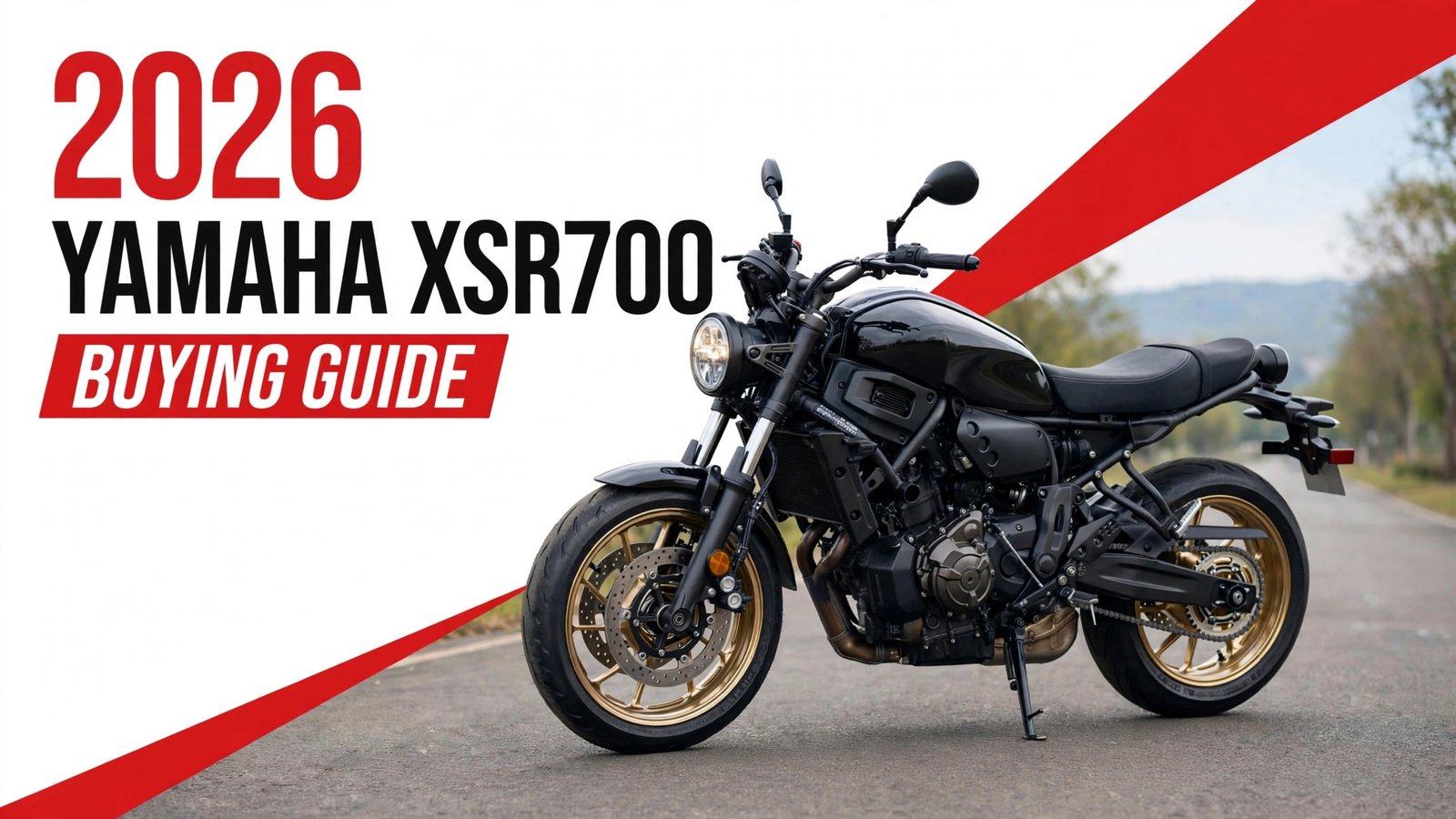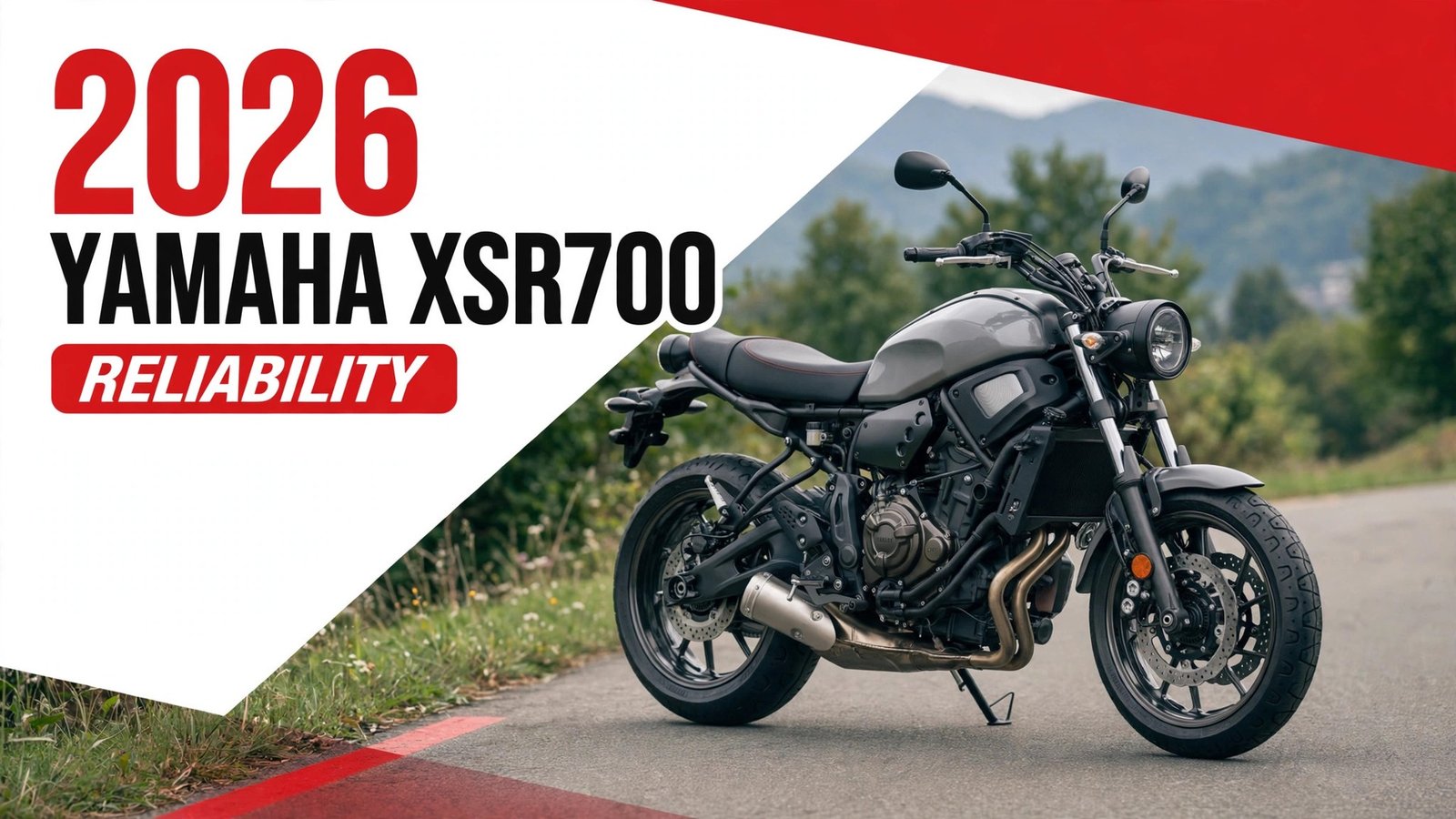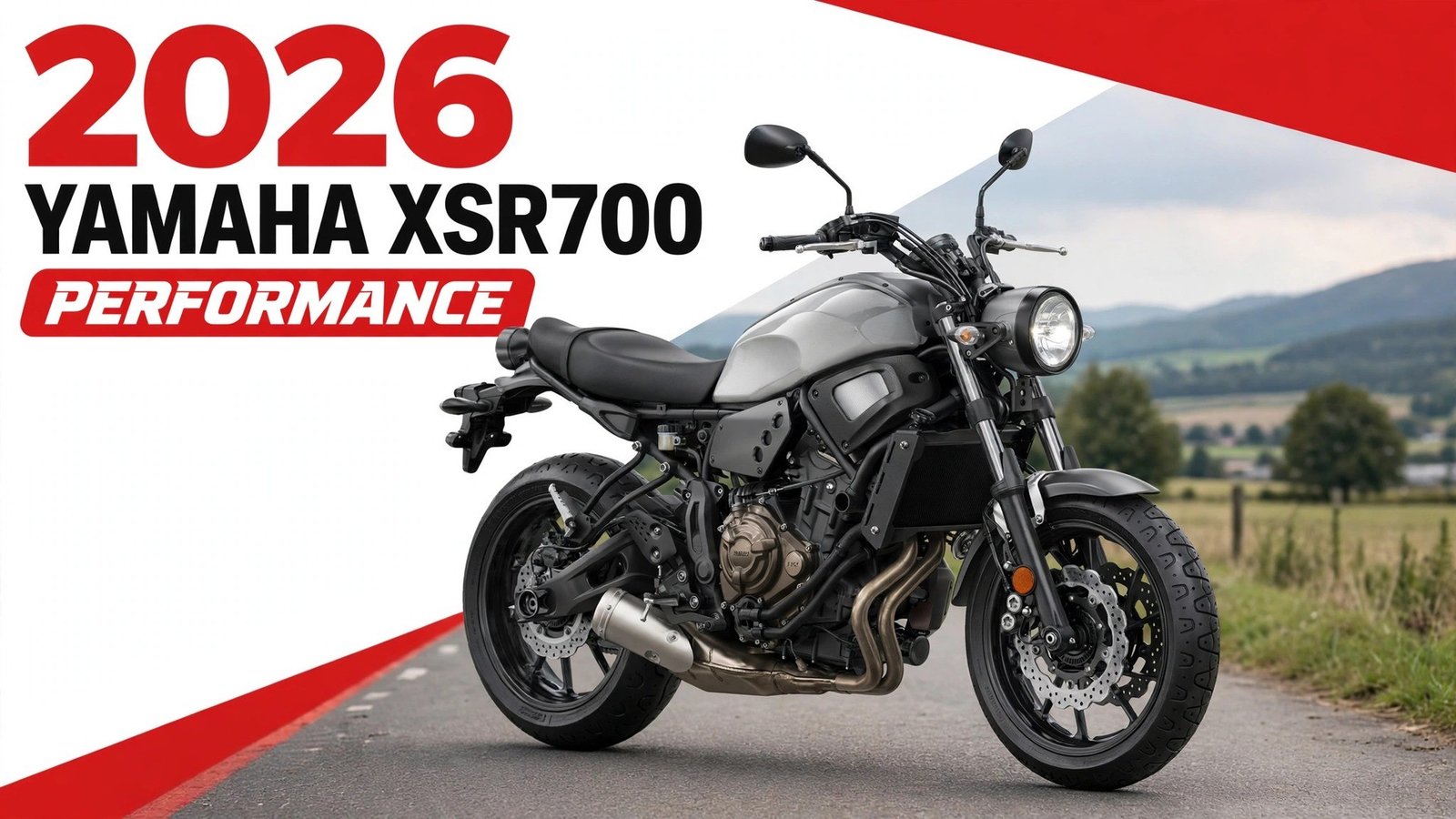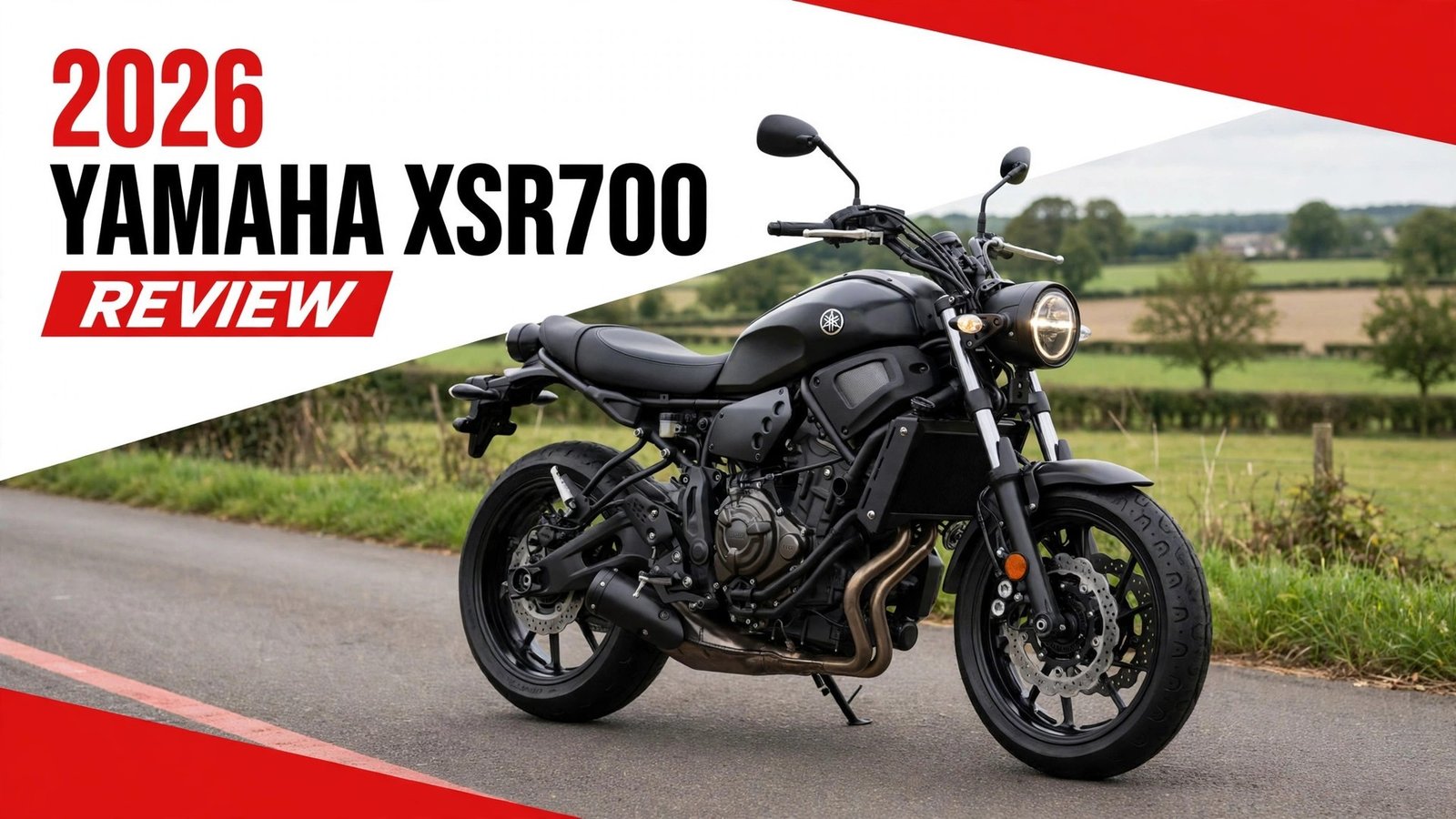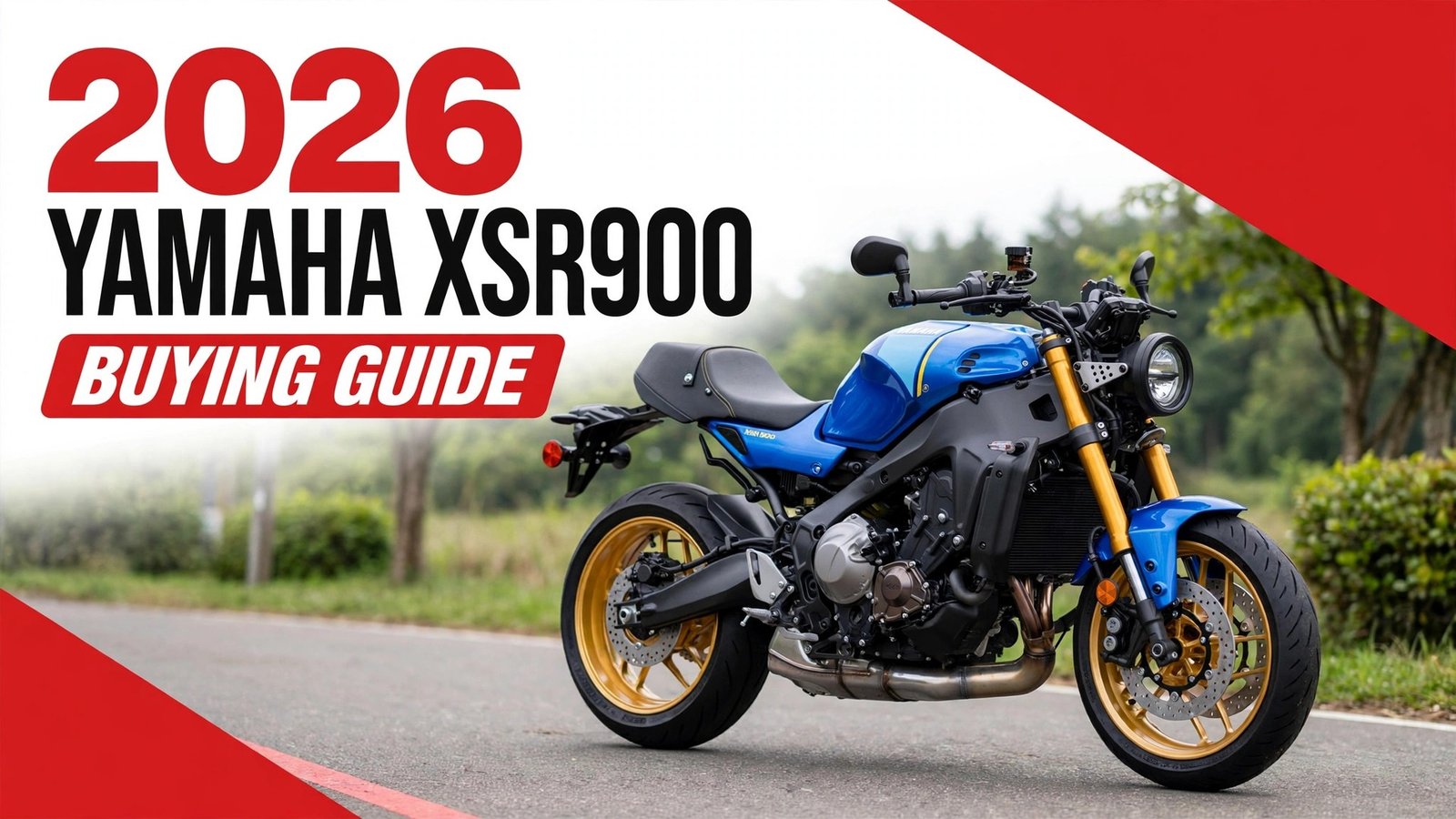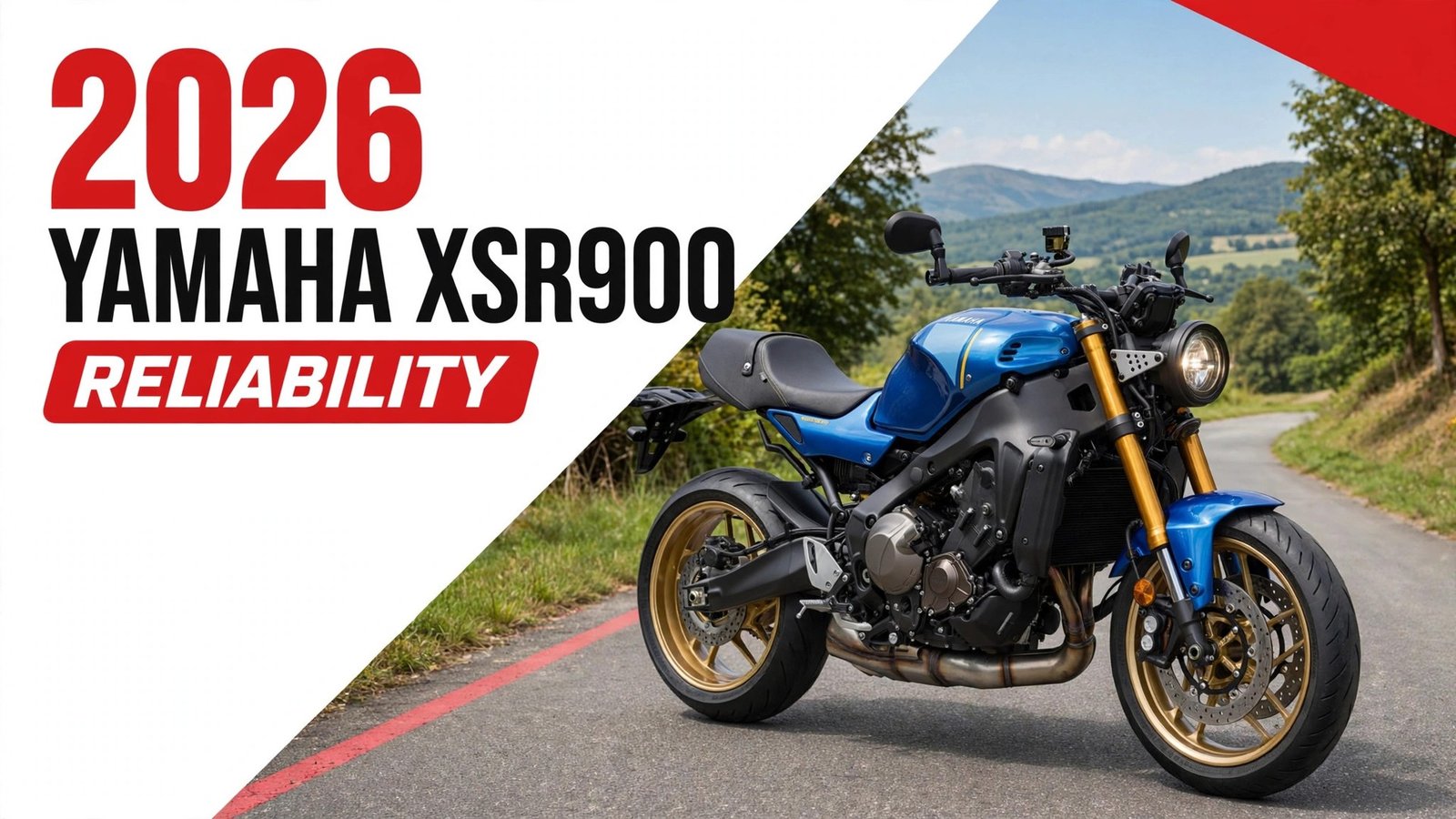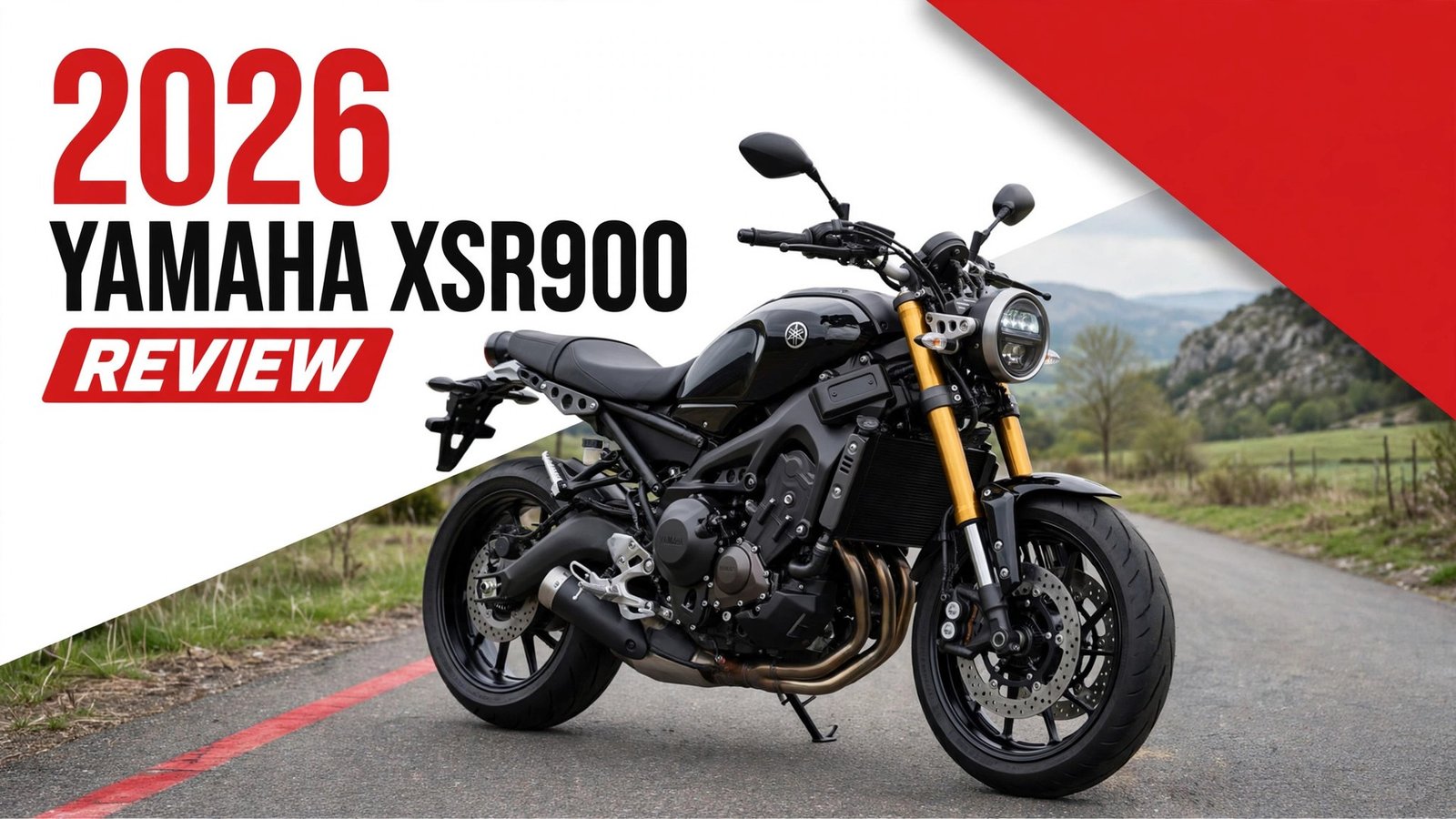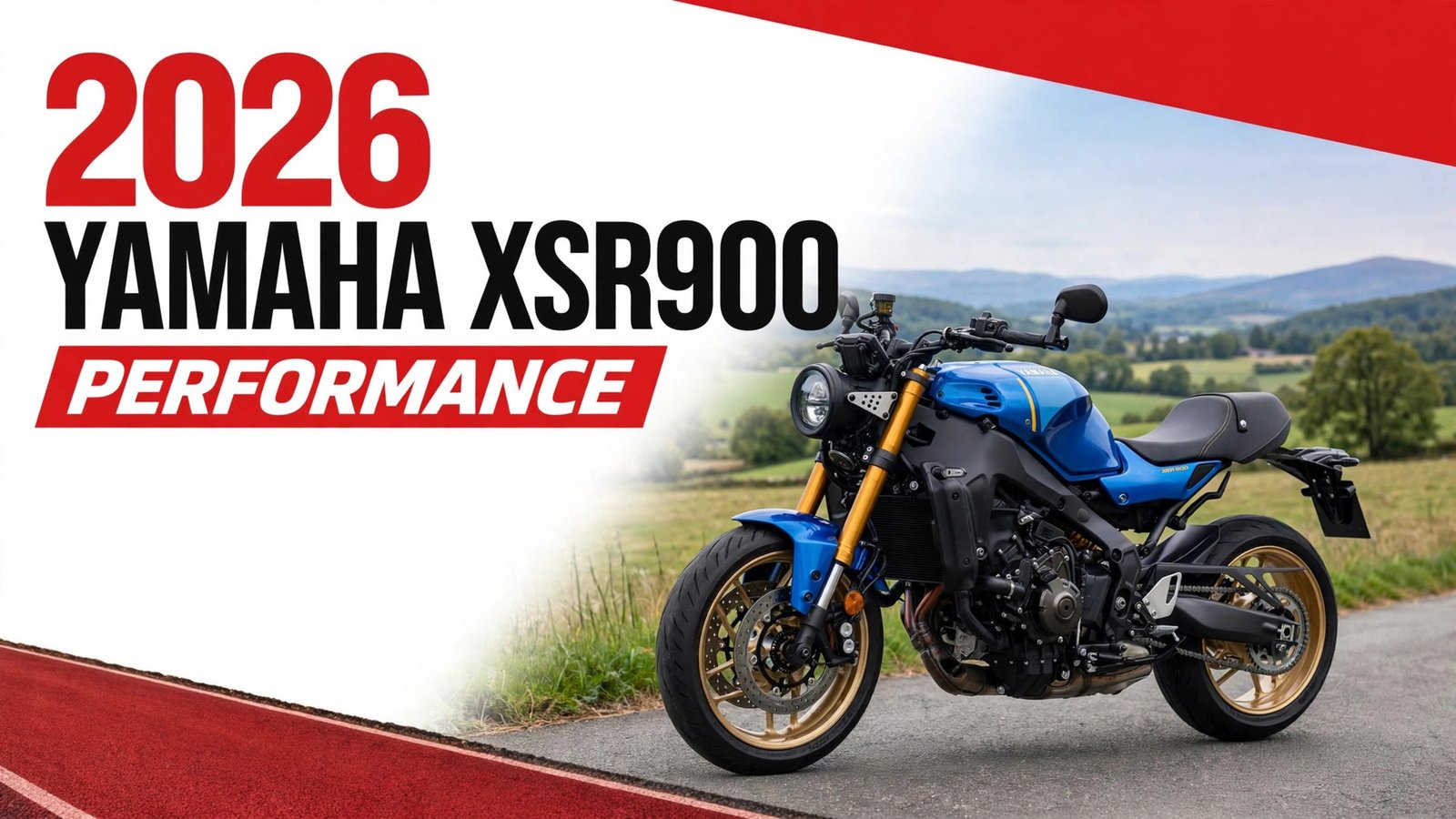
The Yamaha XSR900 performance story is simple: this retro-styled naked puts genuine sportbike pace behind a round headlight. Yamaha XSR900 performance means a 890cc CP3 triple that Cycle World measured at 105.97 rear-wheel horsepower, a 0–60 mph run of 3.03 seconds, and a quarter mile of 10.97 seconds — figures recorded on the XSR900 itself, not borrowed from its MT-09 platform sibling. This Yamaha XSR900 performance guide separates tested figures from claimed ones, explains why a stock bike stops near 130 mph while derestricted bikes reach 144 mph, and sets real Yamaha XSR900 performance fuel economy against Yamaha’s 49 mpg estimate.
Yamaha XSR900 Engine Performance and Power Delivery
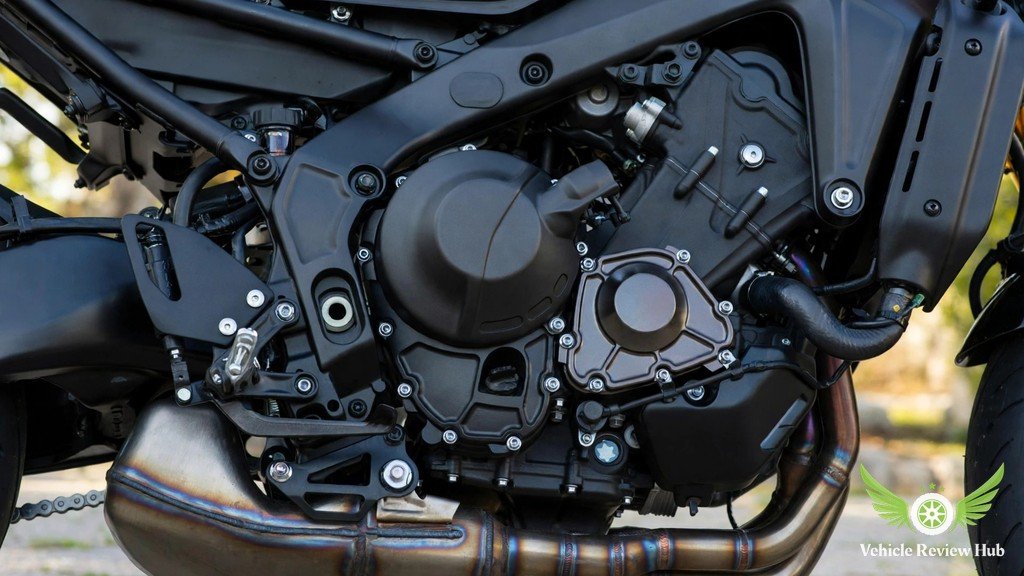
Yamaha XSR900 performance starts with the CP3 triple, revised substantially for the 2022 redesign. The 2022-on bike uses the 890cc version, up from the 847cc unit in the 2016–2021 XSR900.
Dyno Range 106 to 108 RWHP: Cycle World 105.97 HP and Rider 108 HP
Two independent American dyno tests frame Yamaha XSR900 performance power, and they agree closely. Cycle World ran a 2022 XSR900 on its in-house Dynojet 250i and recorded a peak 105.97 horsepower at 9,970 rpm and 63.49 lb-ft of torque at 7,030 rpm, documented in the Cycle World dyno test. Rider Magazine’s rear-wheel dyno test of the same 2022 bike produced 108 horsepower at 10,000 rpm and 63 lb-ft at 7,200 rpm, published in Rider’s 2022 review. That 106-to-108 rear-wheel range is the honest Yamaha XSR900 performance answer: the small gap reflects different dynos, correction factors, and test days, not a different motorcycle. Yamaha’s European claim is higher — 117 horsepower and 68.6 lb-ft — but that is a crankshaft figure to European conventions, and Yamaha publishes no US horsepower figure. So a listing quoting 117 hp for a US bike repeats the European claim, while Yamaha XSR900 performance at the rear wheel is the 106–108 hp the American tests measured. Cycle World’s test of the 847cc 2020 bike recorded 103.98 horsepower and 58.92 lb-ft.
| Source | Peak power | Peak torque | What it measures |
|---|---|---|---|
| Cycle World dyno (2022 bike) | 105.97 hp @ 9,970 rpm | 63.49 lb-ft @ 7,030 rpm | Rear wheel, Dynojet 250i |
| Rider dyno (2022 bike) | 108 hp @ 10,000 rpm | 63 lb-ft @ 7,200 rpm | Rear wheel |
| Yamaha European claim | 117 hp @ 10,000 rpm | 68.6 lb-ft @ 7,000 rpm | Crankshaft, EU convention |
| Cycle World dyno (2020 bike, 847cc) | 103.98 hp | 58.92 lb-ft | Rear wheel, previous generation |
The curve matters more than the peak for Yamaha XSR900 performance on the road. The CP3’s crossplane crankshaft builds torque early, so the bike pulls hard from low revs rather than demanding high rpm — and that midrange is why Yamaha XSR900 performance feels stronger than its peak figure suggests.
Six-Speed Transmission, Gear Shifting and CP3 Power Delivery
Yamaha XSR900 performance reaches the rear wheel through a six-speed gearbox with a cable-actuated assist-and-slipper clutch, plus a third-generation quickshifter working both up and down the gears. The quickshifter lets a rider hold the throttle open and shift at full pace. The assist function lightens the lever, while the slipper function, supported by Yamaha’s Back Slip Regulator, reduces rear-wheel hop on aggressive downshifts. Ride-by-wire throttle (YCC-T) feeds the six-axis IMU’s rider aids: power modes, lean-sensitive traction control, slide control, lift control, and brake control. Yamaha XSR900 performance delivery changes with the mode selected, but the engine’s character does not: tractable below about 5,000 rpm, surging through the midrange, eager to the 10,500 rpm redline. One chassis detail shapes how Yamaha XSR900 performance feels: a swingarm longer than the MT-09’s stretches the wheelbase to 58.9 inches, steadying the bike under hard acceleration.
Yamaha XSR900 Top Speed and Acceleration
Top speed and acceleration are where Yamaha XSR900 performance claims get most confused online, because unrestricted test bikes, speedometer readings, and estimates circulate as if they were stock-bike facts.
Cycle World Tested 0-60 in 3.03 Seconds and Quarter Mile in 10.97 Seconds
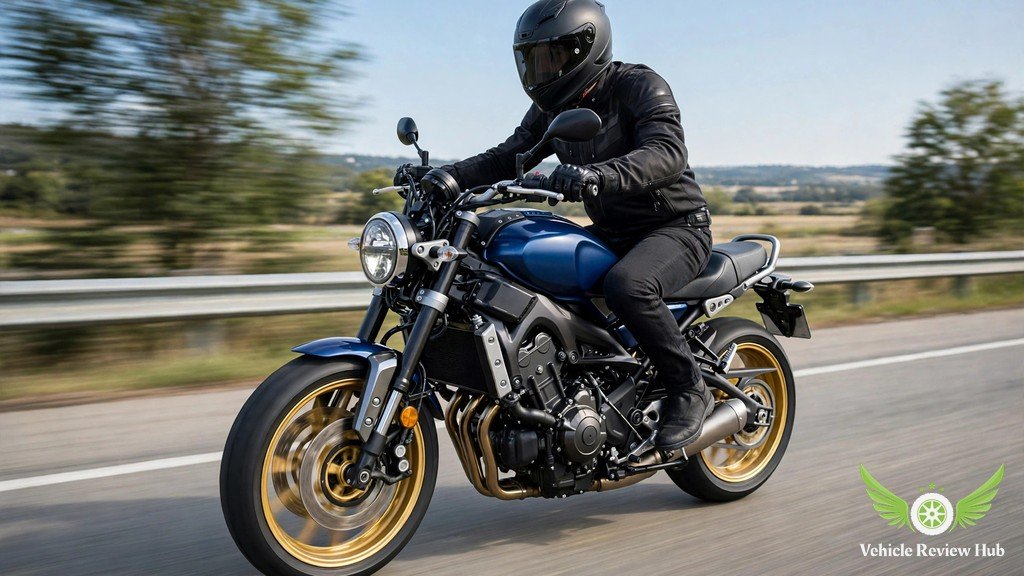
Cycle World’s instrumented test of the 2022 XSR900 is the benchmark for Yamaha XSR900 performance acceleration: 0–60 mph in 3.03 seconds and a quarter mile in 10.97 seconds at 126.41 mph. The full Yamaha XSR900 performance test sheet adds context: 0–30 mph in 1.47 seconds, 0–100 mph in 6.32 seconds, top-gear roll-ons of 40–60 mph in 2.72 seconds and 60–80 mph in 2.92 seconds, and braking from 60–0 mph in 130.32 feet. Those roll-on figures explain the bike’s real-world punch: in top gear, without downshifting, the XSR900 gathers speed fast enough to pass highway traffic with authority. A second independent test tells the same story from a harder day: MotoStatz recorded 0–60 mph in 3.26 seconds and a quarter mile of 11.15 seconds at 125.5 mph — but that bike was modified with an aftermarket exhaust and ECU flash and tested in heat and humidity, so its times are not stock figures and this Yamaha XSR900 performance guide does not present them as such.
| Test | 0–60 mph | 0–100 mph | Quarter mile | Braking 60–0 |
|---|---|---|---|---|
| Cycle World (2022, stock) | 3.03 s | 6.32 s | 10.97 s @ 126.41 mph | 130.32 ft |
| MotoStatz (modified bike, poor conditions) | 3.26 s | 6.48 s | 11.15 s @ 125.5 mph | Not published |
Top Speed Around 130 MPH Restricted: Why 144 to 145 MPH Is Not Stock
A stock XSR900 will barely crack a real 130 mph, showing around 140 mph on its speedometer, because the bike is restricted — the finding of the MotoStatz top-speed test. The 144 mph figure in many Yamaha XSR900 performance roundups is real, but it is not a stock figure: MotoStatz reached 144 mph only with the restrictions removed on its modified bike, and the engine then ran out of aerodynamics rather than power. Bennetts’ 145 mph listing is explicitly an estimate, not a tested result. Two effects confuse the issue: speedometers read optimistic, so 140 mph indicated is roughly a real 130 mph, and the restriction caps the bike before its power runs out. For a US buyer, the honest Yamaha XSR900 performance top-speed statement is therefore: about 130 mph real on a stock bike, 144 mph only derestricted, and no verified stock-bike test showing more. Cycle World’s dyno run of the 2022 XSR900 shows the power behind these acceleration numbers:
Note that this is Cycle World’s dyno test video, not a top-speed run: it documents the 105.97 hp measurement discussed above, and Yamaha XSR900 performance at the top end is governed by the restriction and the wind, not by a shortage of power.
Yamaha XSR900 Mileage and Fuel Economy
Fuel economy is the least glamorous part of Yamaha XSR900 performance. The XSR900 carries a small 3.7-gallon tank, so every mile-per-gallon figure translates directly into how often a rider stops.

Official Yamaha 49 MPG Estimate for 2026 and 3.7-Gallon Tank
Yamaha lists the 2026 XSR900 at 49 mpg estimated, and Rider’s 2022 specification chart repeats the same 49 mpg claimed figure alongside the 3.7-gallon tank. At the claimed figure, a full tank covers about 181 miles — adequate, but not generous, and this Yamaha XSR900 performance guide stresses that 49 mpg is an estimate, not a road-test measurement. That estimate is the starting point for any Yamaha XSR900 performance fuel calculation.
Cycle World Tested Average 45.8 MPG US and Real-World Fuel Range
Cycle World’s test of the 2022 XSR900 returned an average of 45.8 mpg in US gallons, and that tested figure is the most useful Yamaha XSR900 performance economy number available. At 45.8 mpg, the 3.7-gallon tank gives a real-world range of about 169 miles — roughly 12 miles less than the claimed figure suggests. Bennetts’ UK test reported 50 mpg tested, but that is an imperial-gallon figure: converted, it equals about 41.6 mpg in US gallons, or roughly 155 miles from the 14-liter tank. For Yamaha XSR900 performance budgeting, plan fuel stops every 150–170 miles in mixed riding, and every 130–150 miles on fast highway or spirited back-road days.
| Figure | MPG | Range from 3.7 gal | Notes |
|---|---|---|---|
| Yamaha claimed / estimated | 49 mpg (US, est.) | About 181 miles | Estimate, not a test |
| Cycle World tested average | 45.8 mpg (US) | About 169 miles | Best US test figure |
| Bennetts tested | 50 mpg imperial (41.6 US) | About 155 miles | UK test; gallon labeled |
Yamaha XSR900 Real-World Riding Performance
Test numbers describe the XSR900 at full throttle, but Yamaha XSR900 performance in daily use is mostly about the middle of the rev range and the riding position.
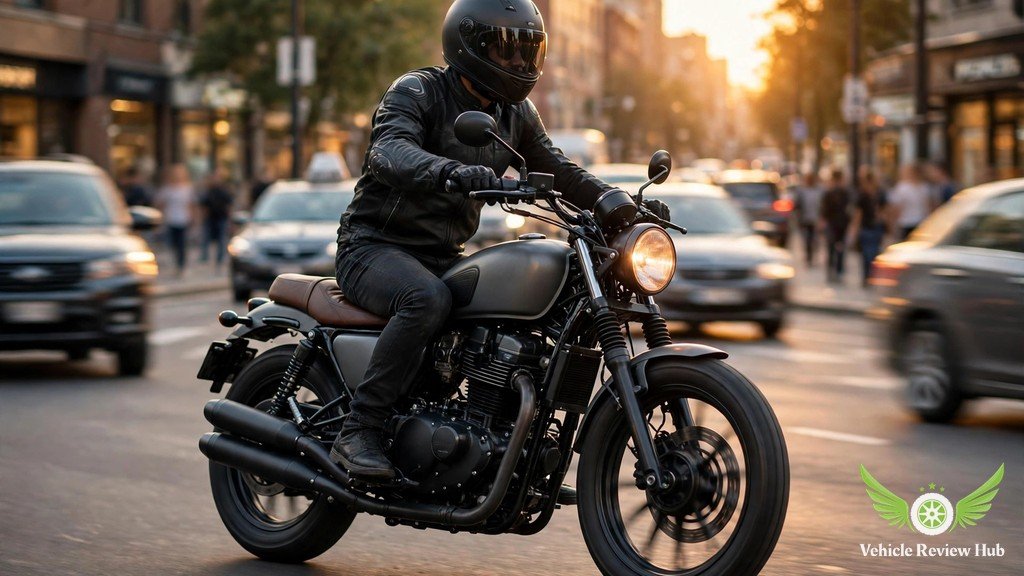
City Riding, Traffic Performance and Everyday Acceleration
In the city, Yamaha XSR900 performance is at its most usable. The CP3’s low-end torque means the bike pulls cleanly from low revs without constant gear-changing, and the upright bars, 31.9-inch seat, and 425 lb weight make it easy to manage in traffic. Everyday Yamaha XSR900 performance acceleration — the 40–60 mph top-gear roll-on Cycle World measured in 2.72 seconds — is the figure that matters most around town: gaps in traffic open instantly, without a downshift.
Highway Riding, Overtaking Ability and Long-Distance Limitations
On the highway, Yamaha XSR900 performance trades comfort for pace. Overtaking is effortless — the 60–80 mph top-gear roll-on of 2.92 seconds means a rider can pass without dropping a gear. The limits are wind and range, not power: with no wind protection in stock form, sustained speeds above 80 mph become physically tiring, and even Yamaha’s accessory screen does little at highway speeds. But the honest long-distance verdict for Yamaha XSR900 performance is a 150-mile-stint motorcycle: firm retro seat, wind blast, and 3.7-gallon tank all point to frequent, short stops rather than all-day touring.
Yamaha XSR900 Handling, Braking and Stability
Yamaha XSR900 performance is not only about the engine — on a 425 lb bike with 106-plus rear-wheel horsepower, the chassis and brakes decide how much of that power a rider can actually use.
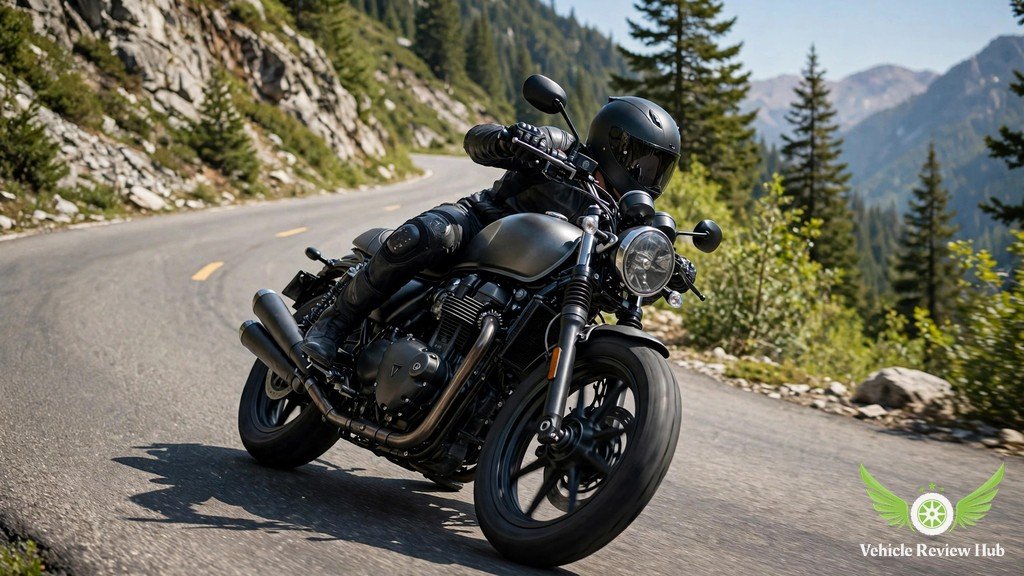
Fully Adjustable KYB Suspension, Chassis, S22 Tires and Cornering
The XSR900 uses a lightweight aluminum controlled-fill die-cast frame with a 58.9-inch wheelbase, 25.0 degrees of rake, and 4.3 inches of trail. Suspension is fully adjustable KYB front and rear: a 41mm upside-down fork with preload, compression, and rebound adjustment and 5.1 inches of travel, and a KYB monoshock with preload and rebound adjustment and 5.4 inches of travel. Tuned stiffer than the MT-09’s units for Yamaha XSR900 performance, they give a more controlled ride, and the longer swingarm adds straight-line and corner-exit stability. Tires are Bridgestone Battlax Hypersport S22 in 120/70ZR17 front and 180/55ZR17 rear — a sporty hypersport tire with ample dry grip — mounted on lightweight SpinForged 10-spoke wheels. Yamaha XSR900 performance cornering benefits from the whole package: the bike tips in predictably, holds a line, and the lean-sensitive electronics work in the background.
Brembo Radial Master Cylinder, Disc Brakes and Cornering ABS Features
Braking pairs a Brembo radial front master cylinder with Advics four-piston calipers gripping dual 298mm front discs, plus a single-piston caliper on a 245mm rear disc, with lean-sensitive cornering ABS. The caliper brand matters and is easy to get wrong: the calipers are Advics units, not Brembo Stylema calipers — Stylema calipers are an MT-09 SP feature and do not appear on the XSR900, and this Yamaha XSR900 performance guide states that plainly so buyers are not misled by listings that copy SP specifications. Cycle World’s measured braking backs up the hardware: 60–0 mph in 130.32 feet. The Brembo master cylinder gives firm, progressive lever feel, while cornering ABS adjusts intervention by lean angle rather than treating every stop as an upright one.
Yamaha XSR900 Performance Compared With Other Retro Naked Bikes
Every retro naked promises heritage looks with modern pace, but Yamaha XSR900 performance separates itself on measured results rather than styling.
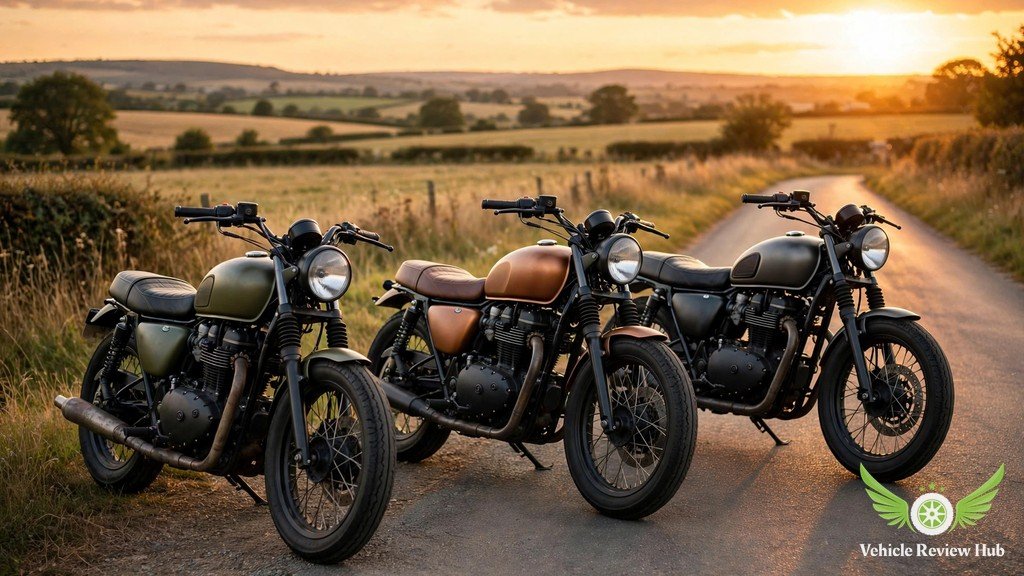
Yamaha XSR900 vs Kawasaki Z900RS and Triumph Speed Twin 1200
The Kawasaki Z900RS brings a 948cc inline-four making a claimed 111 horsepower and 72.3 lb-ft of torque, but it carries about 474 lb wet — roughly 50 lb more than the XSR900 — and its 4.5-gallon tank is the largest here, as listed in the Z900RS specifications. The Triumph Speed Twin 1200 brings a 1200cc parallel twin making a claimed 103.5 horsepower and 83 lb-ft, the most torque of the three, but the heaviest at 476 lb wet, per the Speed Twin 1200 first look. Against both, Yamaha XSR900 performance wins on power-to-weight: the lightest bike with the highest rear-wheel horsepower, the quickest tested acceleration, and the most complete electronics suite (six-axis IMU, lean-sensitive aids, cruise control, up/down quickshifter). The Z900RS counters with a smoother four-cylinder character and a bigger tank, while the Speed Twin counters with twin-cylinder torque feel — but neither matches Yamaha XSR900 performance pace, and both cost more than $10,599. Bennetts’ 2022 review of the XSR900 reached the same conclusion from the saddle: a bike that never stopped making its tester smile.
| Model | Engine / claimed power | Torque | Wet weight | Tank | Seat height | Price |
|---|---|---|---|---|---|---|
| Yamaha XSR900 | 890cc triple, 117 hp EU claim (106–108 RWHP tested) | 68.6 lb-ft claimed (63–63.5 tested) | 425 lb | 3.7 gal | 31.9 in | $10,599 (2026 US) |
| Kawasaki Z900RS | 948cc inline-four, 111 hp claimed | 72.3 lb-ft | About 474 lb | About 32.3 in | About $12,100 (2024 listing) | |
| Triumph Speed Twin 1200 | 1200cc parallel twin, 103.5 hp claimed | 83 lb-ft | 476 lb | 3.8 gal | 31.7 in | $13,595 (2025 US) |
Is the Yamaha XSR900 Suitable for Experienced Riders and Daily Riding?
For experienced riders, Yamaha XSR900 performance is an emphatic yes: the bike rewards skill without punishing it, the electronics suite lets a rider tune intervention, and the chassis stays composed at the pace the engine encourages. For daily riding, the answer is yes with conditions: the bike commutes well — tractable engine, light clutch, manageable weight, quickshifter — but the small tank, firm seat, and lack of wind protection make it a better short-commute and weekend bike than a long-distance daily tool. For beginners, the answer is no: 106-plus rear-wheel horsepower, a 3.03-second 0–60 time, and a willing front wheel are not beginner ingredients. The full XSR900 review covers styling, pricing, and equipment, while service intervals are covered in the reliability and maintenance write-up, and used prices in the buying guide. The MT-09 shares the platform, but its own test figures differ — the MT-09 review covers that bike separately — and no MT-09 figure is used as an XSR900 figure anywhere in this guide.
Yamaha XSR900 Performance FAQs
These are the questions riders ask most often about Yamaha XSR900 performance, answered directly from the tested figures above so this guide stays consistent throughout.
How much horsepower does the Yamaha XSR900 make?
Yamaha’s European claim is 117 horsepower at 10,000 rpm, measured at the crankshaft. Independent rear-wheel dyno tests of the 2022 bike recorded 105.97 horsepower (Cycle World) and 108 horsepower (Rider), so the honest Yamaha XSR900 performance answer is 106–108 rear-wheel horsepower. Yamaha publishes no horsepower figure for the US market.
What is the Yamaha XSR900 0-60 mph time?
Cycle World tested the stock 2022 XSR900 at 0–60 mph in 3.03 seconds. An independent MotoStatz test recorded 3.26 seconds, but that bike was modified and tested in poor conditions.
What is the Yamaha XSR900 quarter-mile time?
Cycle World recorded a quarter mile of 10.97 seconds at 126.41 mph for the stock 2022 bike. MotoStatz recorded 11.15 seconds at 125.5 mph on its modified test bike.
What is the top speed of the Yamaha XSR900?
A stock XSR900 reaches about 130 mph in real terms (around 140 mph indicated) because it is restricted. The 144 mph figure comes from a derestricted, modified bike, and Bennetts’ 145 mph listing is an estimate — neither is a stock-bike result, so Yamaha XSR900 performance top speed should be quoted as around 130 mph stock.
What MPG does the Yamaha XSR900 get?
Yamaha estimates 49 mpg for the 2026 bike, while Cycle World tested an average of 45.8 mpg in US gallons. Bennetts tested 50 mpg in imperial gallons, which converts to about 41.6 mpg in US gallons. Budget Yamaha XSR900 performance fuel planning on the tested figures, not the estimate.
How far can the XSR900 go on a full tank?
From its 3.7-gallon tank, expect about 181 miles at the claimed 49 mpg, about 169 miles at Cycle World’s tested 45.8 mpg, and about 155 miles at Bennetts’ tested consumption. Plan Yamaha XSR900 performance fuel stops every 150–170 miles in mixed riding.
What tires does the XSR900 use?
The 2022-on bike uses Bridgestone Battlax Hypersport S22 tires for Yamaha XSR900 performance cornering: 120/70ZR17 front and 180/55ZR17 rear. The XSR900 GP uses S23 tires, a different specification.
Does the XSR900 have Brembo Stylema calipers?
No. The XSR900 uses Advics four-piston calipers on dual 298mm discs, actuated by a Brembo radial master cylinder, with cornering ABS. Brembo Stylema calipers are an MT-09 SP feature and are not fitted to the XSR900.
Does the XSR900 have a quickshifter?
Yes — the 2022-on bike has a third-generation quickshifter working both up and down the gears, plus an assist-and-slipper clutch and Yamaha’s Back Slip Regulator for engine-braking control. It is standard equipment on Yamaha XSR900 performance models from 2022 on.
Is the XSR900 good for beginners?
No. With 106-plus rear-wheel horsepower, a 3.03-second 0–60 time, and a willing front wheel, Yamaha XSR900 performance is aimed at experienced riders.
Is the XSR900 suitable for daily riding?
Yes, with conditions: it commutes well thanks to its tractable engine, light clutch, and quickshifter, but the 3.7-gallon tank, firm seat, and lack of wind protection make it better for short commutes and weekend rides than for long highway days.
Did the 2025 XSR900 change performance?
No. The 2025 update replaced the 3.5-inch TFT display with a 5-inch TFT and adapted the CP3 engine to Euro5+ emissions rules without changing performance output, so Yamaha XSR900 performance figures from the 2022-on bike still apply.
Are MT-09 test figures the same as XSR900 figures?
No. The MT-09 shares the CP3 platform but has its own chassis, gearing feel, and test results. This guide uses only XSR900 tests for XSR900 claims, and any MT-09 figure mentioned elsewhere should be labeled as MT-09.