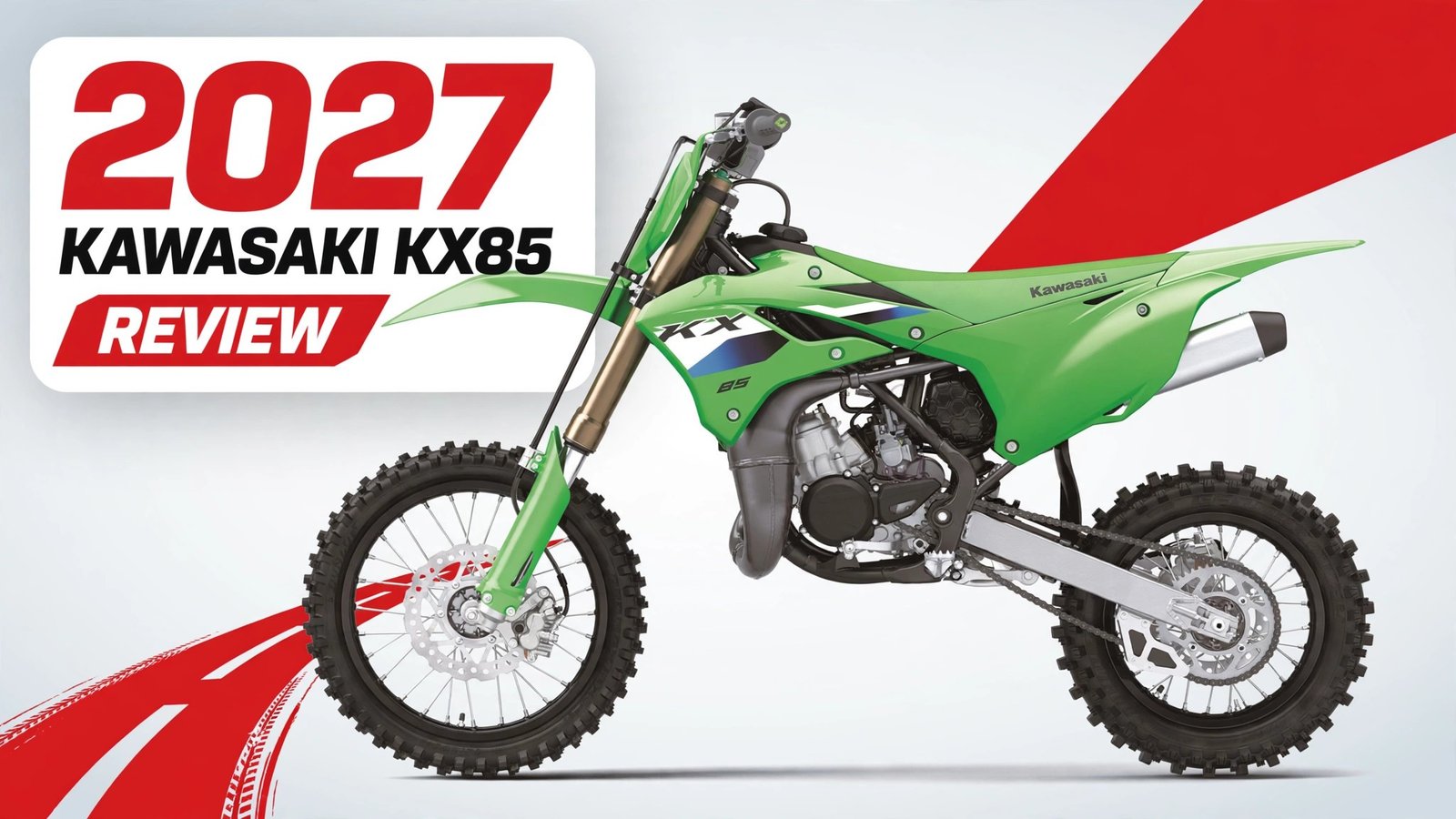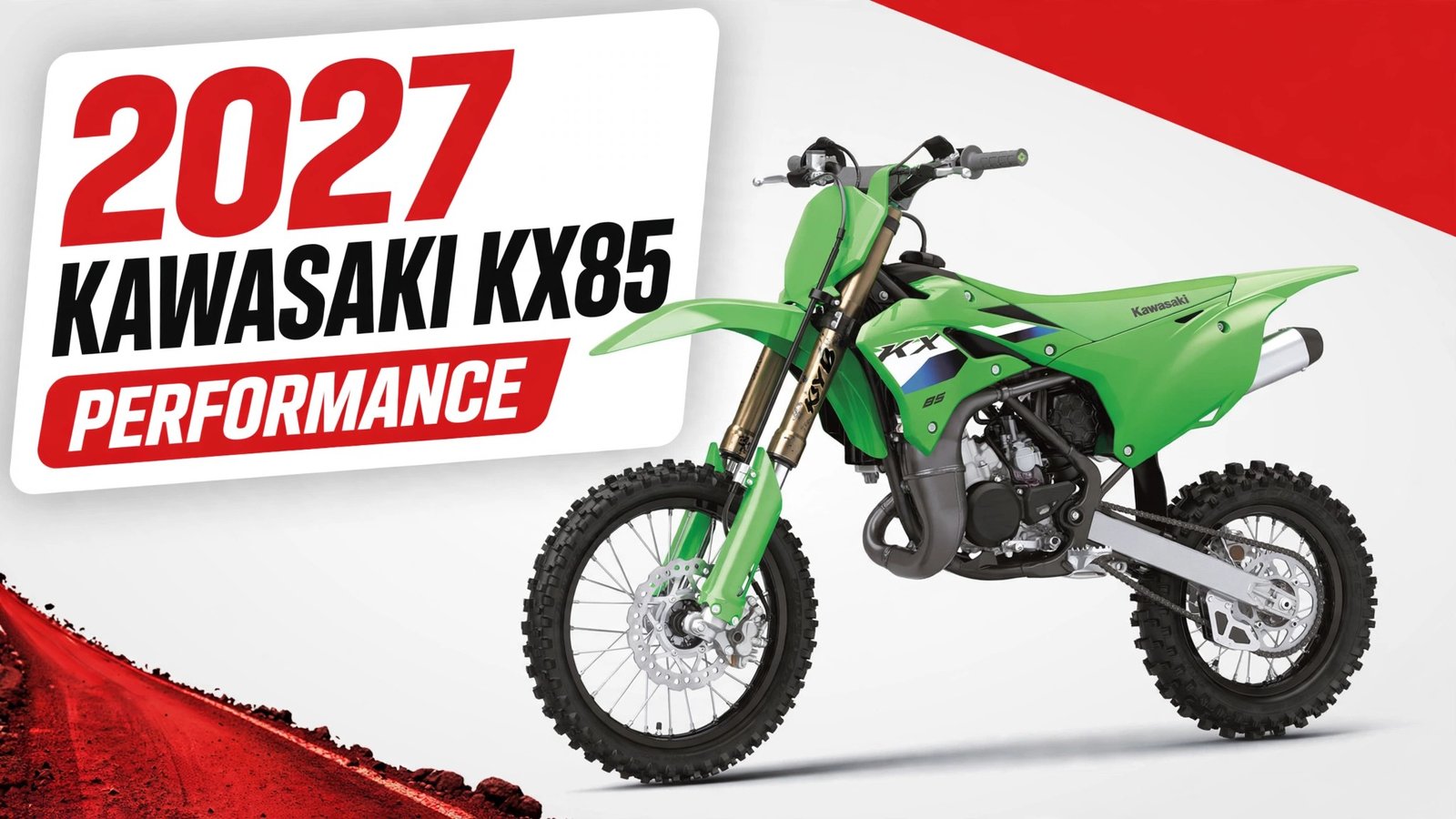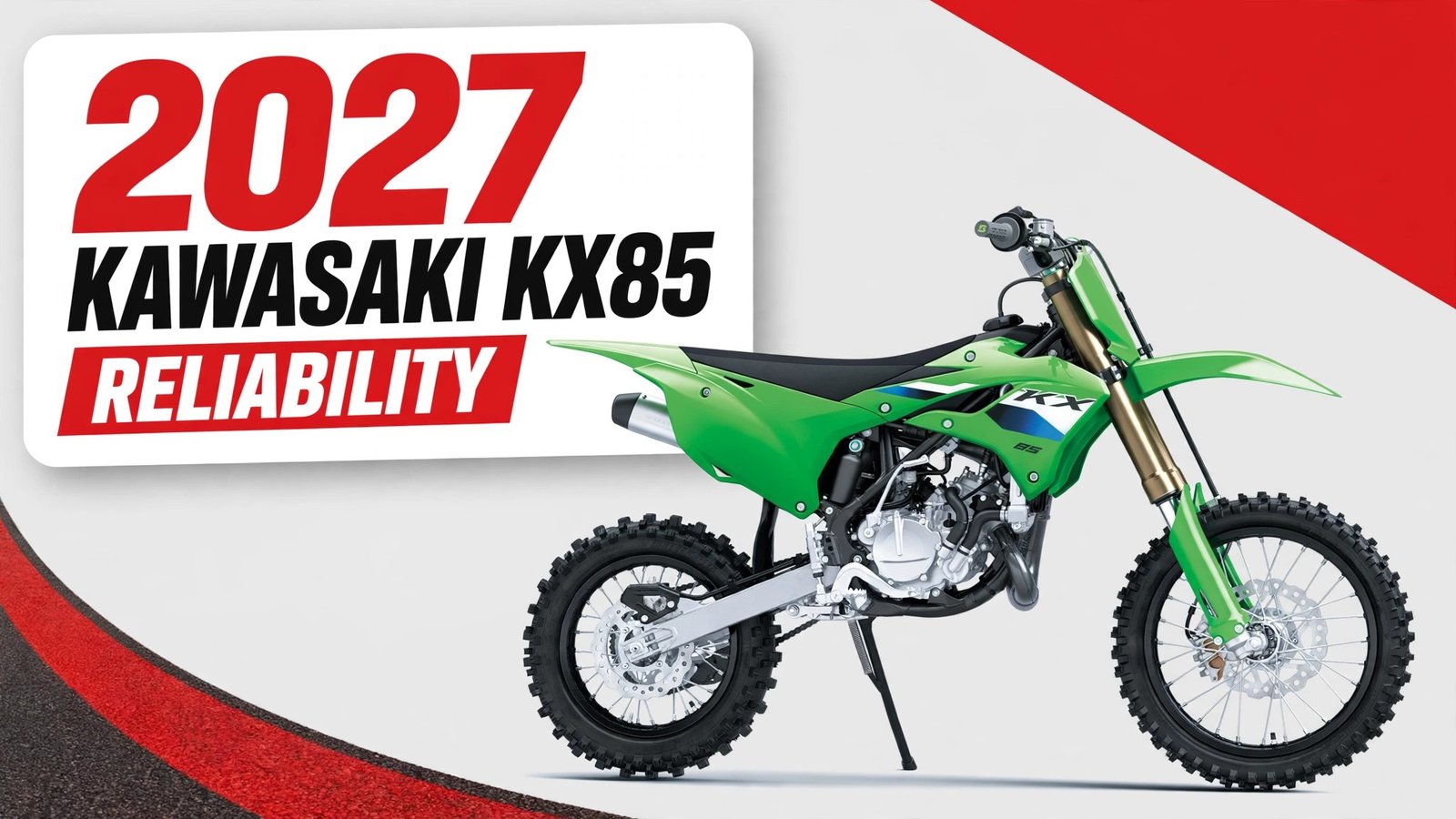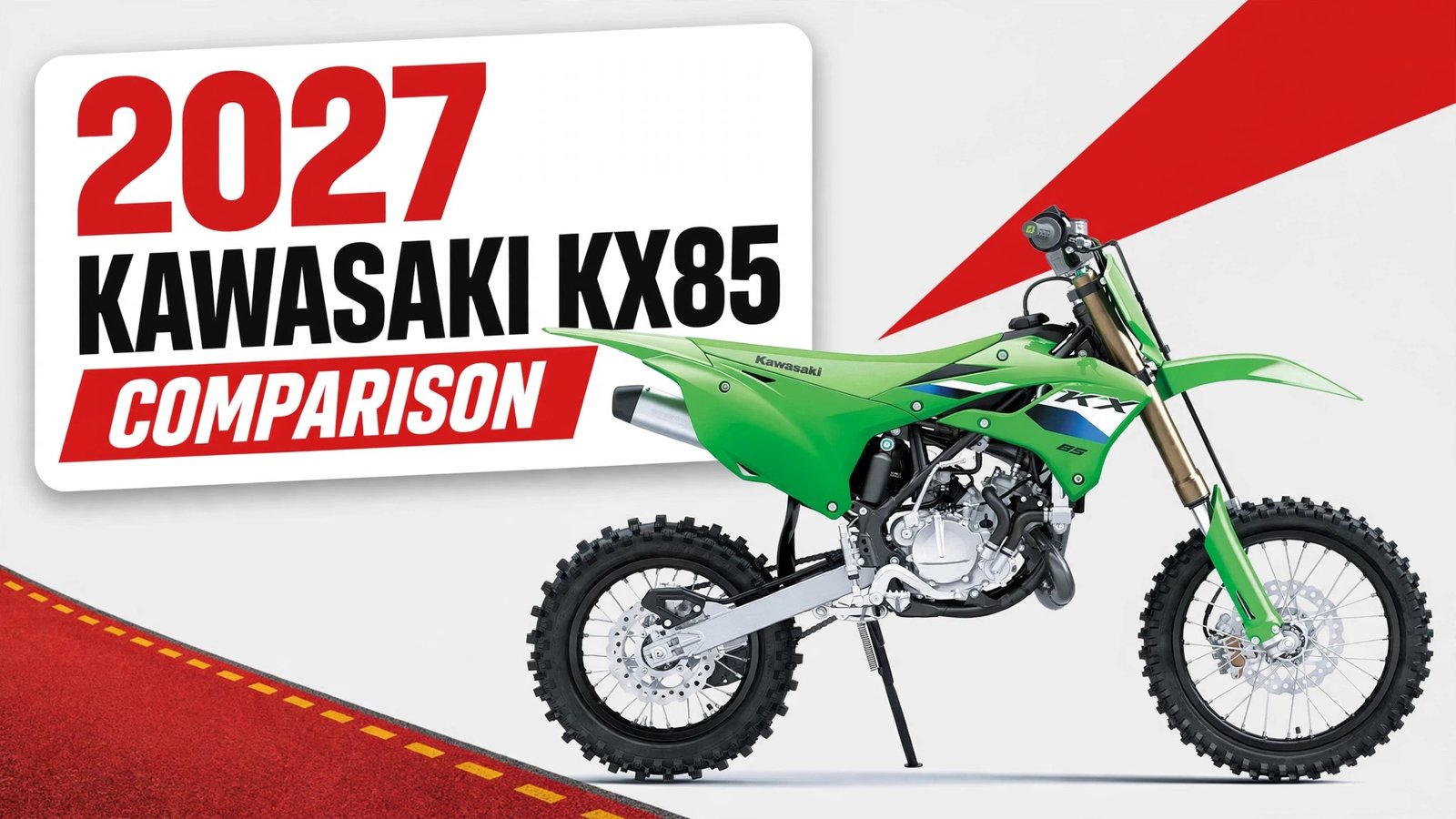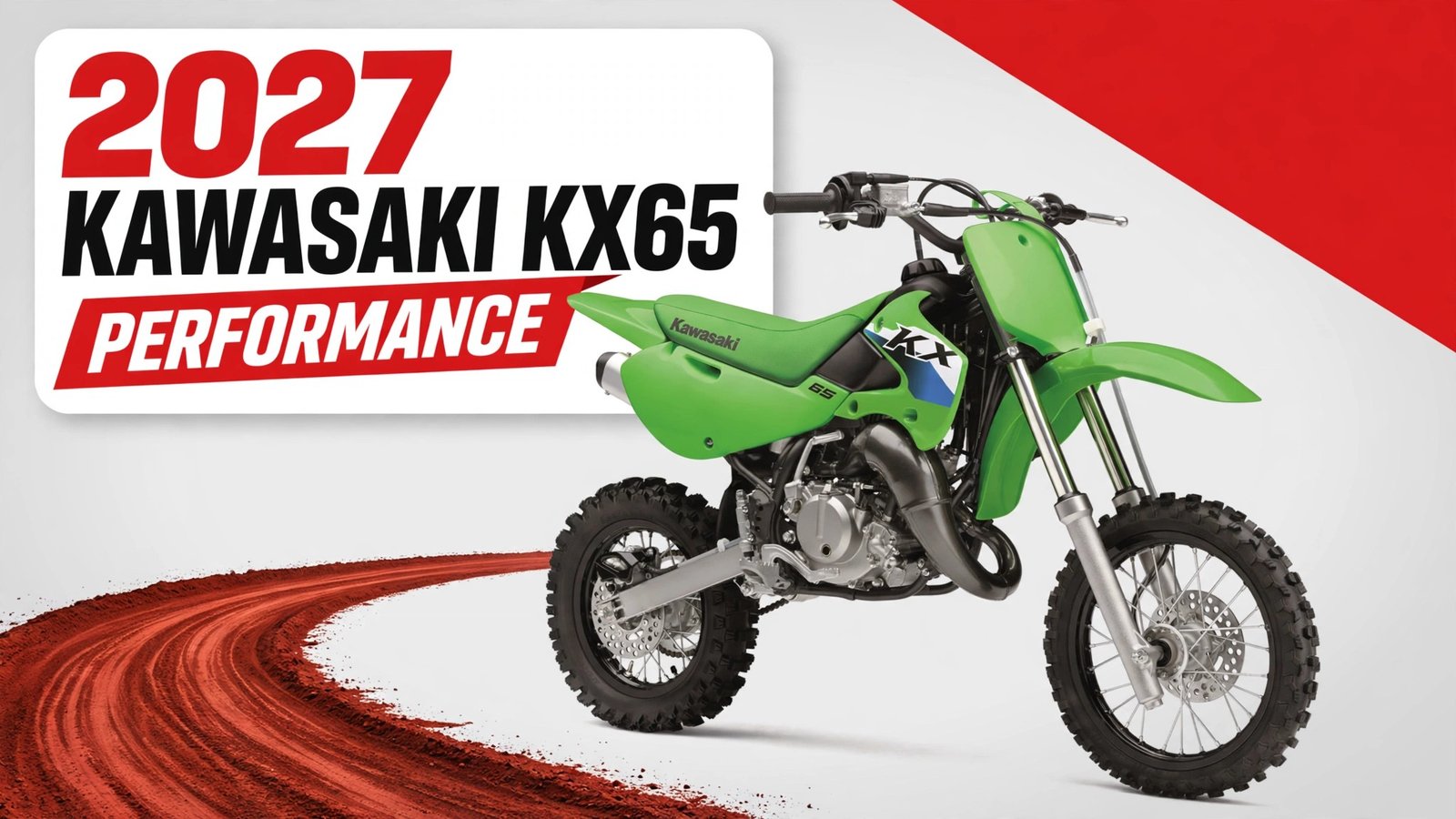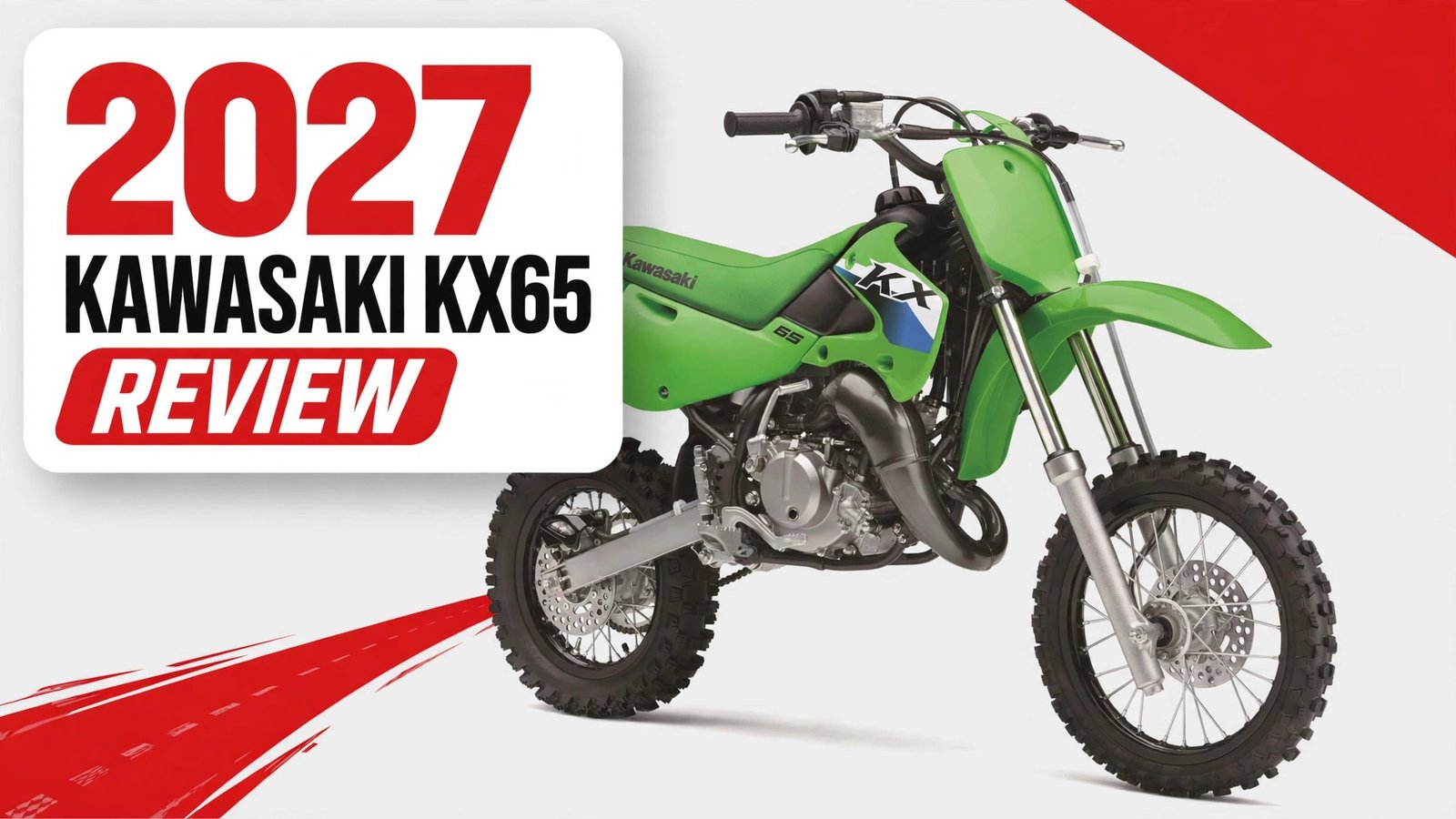
The 2027 Kawasaki KX65 is the cheapest way into proper junior motocross racing in the United States, and this Kawasaki KX65 review explains why a motorcycle that first appeared in 2000 is still on sale with a $4,249 price tag. Kawasaki has not redesigned the little two-stroke in a quarter of a century, and that is the whole point: a simple, light, 64cc racer that parents can buy, maintain and hand down.
What follows in this Kawasaki KX65 review is the full picture for US buyers: the price and the delivered cost, the 64cc engine and its Mikuni carburettor, the competition-only design, and who the bike actually fits. The short version is that the KX65 trades outright speed for simplicity and value, and for a young rider moving up from a 50cc play bike, that trade still makes sense.
Kawasaki KX65 Overview and Model-Year Updates
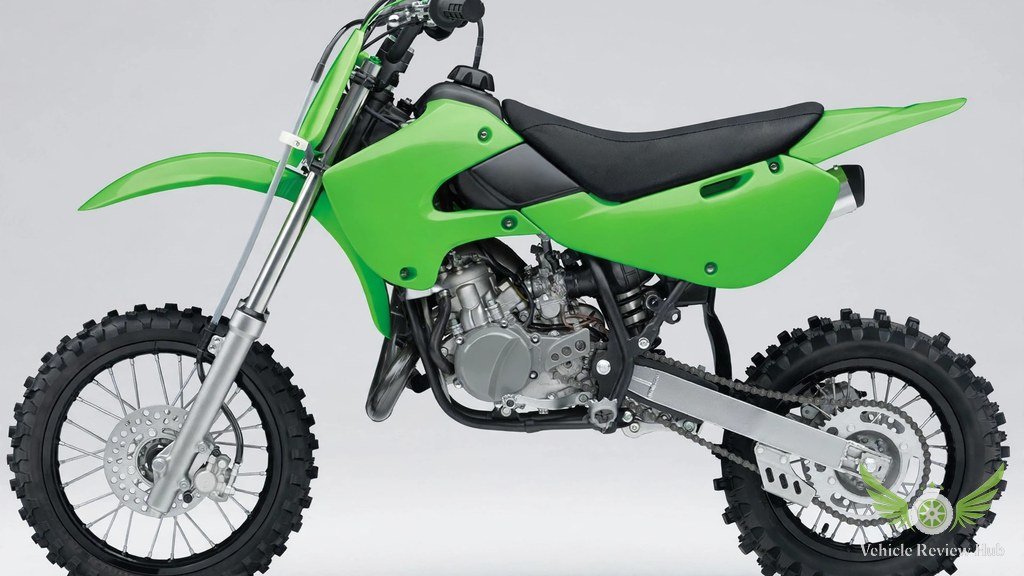
Any honest Kawasaki KX65 review has to start with the bike’s age, because the KX65 is not a new motorcycle wearing retro styling. It is an old motorcycle that never went away. Kawasaki introduced it in 2000 as the successor to the KX60, revised it once in 2002, and has sold essentially the same machine ever since, with only graphics and part-number changes along the way.
Unchanged Since 2000
The heading says unchanged since 2000, and the substance is right, but the precise claim is that the KX65 is fundamentally unchanged since the 2002 (A3) revision. The 2000-2001 bikes, the A1 and A2 models, differed from the 2002-and-later machine in ways a buyer shopping used bikes should know: the early seat sat at 720 mm on the A1 and 730 mm on the A2, against 760 mm from the A3 onward, while dry weight rose from 53 kg to 57 kg, the wheelbase grew from 1,110 mm to 1,120 mm, ground clearance went from 270 mm to 305 mm, the rake moved from 26.5 degrees to 27 degrees, rear travel increased from 225 mm to 240 mm, and the final reduction changed from 46/13 to 47/13. Kawasaki’s own service manual records every one of those changes. The chain and sprocket agree: 420-108 and 45-tooth on the early bikes, 420-110 and 47-tooth from 2002.
Since that 2002 revision, the story is one of stability. The official Kawasaki spec sheets for 2024, 2025, 2026 and 2027 are identical apart from how the curb weight is presented: the 2024 and 2025 sheets list only 132.2 lb, while the 2026 and 2027 sheets list 126.1 lb without fuel and 132.2 lb with fuel, and that is the same motorcycle described two ways. Histories record a small suspension-travel bump around 2002-2003, but the exact model year is not settled, so this Kawasaki KX65 review treats the 2002 revision as the one meaningful change in the bike’s life. That is why this Kawasaki KX65 review calls the bike fundamentally unchanged since 2002 rather than since 2000.
Still Listed for 2027
The 2027 KX65 is live on Kawasaki’s US website right now, priced at $4,249 in Lime Green, which makes it one of the longest continuously sold youth motocross bikes in the country. Kawasaki’s June 2, 2026 press release lists the KX65 alongside the KX85, KX85 L and KX112 in its 2027 youth motocross range, so there is no sign of the little 65 being dropped. For parents, that continuity is practical: parts, manuals and know-how for a 2027 bike match a bike built a decade ago. That continuity is one of the reasons this Kawasaki KX65 review recommends the bike to parents who want a machine they can keep running for years.
Kawasaki KX65 Engine and Specifications
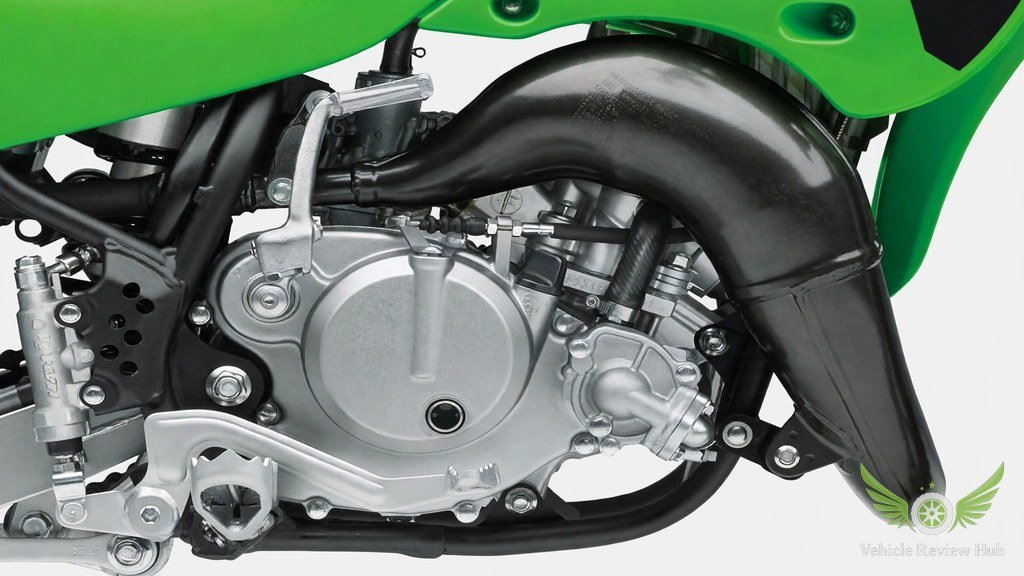
The engine is where this Kawasaki KX65 review gets specific, because the 64cc two-stroke single is the reason the bike exists and the reason it is slower than its rivals. It is a liquid-cooled, reed-valve single with a six-speed gearbox and a manual clutch, built to teach young riders how a real race bike works rather than to win a horsepower contest.
| Specification | 2027 Kawasaki KX65 |
|---|---|
| Engine | 64cc, liquid-cooled, 2-stroke single, reed valve |
| Bore x stroke | 44.5 x 41.6 mm |
| Compression ratio | 8.4:1 |
| Carburettor | 24 mm Mikuni VM24SS |
| Ignition | CDI with digital advance |
| Transmission | 6-speed return shift, wet multi-disc manual clutch |
| Frame | High-tensile steel semi-double cradle |
| Front suspension | 33 mm leading-axle telescopic fork, 4-way rebound damping, 8.3 in travel |
| Rear suspension | Uni-Trak single shock, stepless 3-turn rebound, adjustable preload, 9.4 in travel |
| Brakes | Single 180 mm disc, single-piston caliper, front and rear |
| Seat height | 29.9 in |
| Curb weight | 126.1 lb without fuel / 132.2 lb with fuel |
| Fuel capacity | 1.0 gal (3.8 L) |
| Tyres | 60/100-14 front, 80/100-12 rear |
| Colour | Lime Green only |
Note: Figures are from the official 2027 KX65 spec sheet, and this Kawasaki KX65 review uses the 44.5 mm bore figure throughout. The 45.5 mm figure printed in the 2020, 2023 and 2024 sheets is a Kawasaki typo, since 45.5 x 41.6 mm would displace about 67.7cc, not 64cc.
Carb Is Mikuni, Not Keihin
The carburettor is a 24 mm Mikuni VM24SS, and the distinction matters because a surprising number of listings and forum posts call it a Keihin. Kawasaki’s service manual states the carburetion system as “MIKUNI VM24SS” in its general specifications, the European 2027 spec page says the same, and the US spec sheet lists a 24 mm Mikuni carburettor. The Keihin belongs to the bigger KX85, which runs a 28 mm Keihin, and the confusion comes from buyers mixing up the two bikes.
For a parent jetting the bike, the point is simple: buy Mikuni VM24SS parts and jets, not Keihin parts, and use the service manual’s jetting tables rather than a generic 65cc guide. The carburettor feeds a 64cc single through a reed valve, with CDI ignition and digital advance, and there is no power valve. The Yamaha YZ65 and the Austrian bikes both have one, and the KX65 does without, and that is a detail this Kawasaki KX65 review flags because it explains part of the power gap to the rivals.
Frame Is Semi-Double Cradle
The frame is a high-tensile steel semi-double cradle, a conventional steel chassis that suits the bike’s job: strong enough for a young racer, cheap to repair, and unchanged for decades, so any frame part ordered for a 2027 bike fits far older machines. The suspension matches: a 33 mm fork with four-way rebound damping and 8.3 inches of travel up front, and a Uni-Trak shock with 9.4 inches of travel at the rear. Both ends carry a single 180 mm disc with a single-piston caliper, the smallest brakes in the class, and the chassis is where this Kawasaki KX65 review finds the bike’s character: honest and proven, but the least sophisticated hardware in the 65cc class. A parent comparing hardware should read that as a warning and a reassurance at once, which is a theme this Kawasaki KX65 review returns to in the verdict.
Kawasaki KX65 Price and Market Availability
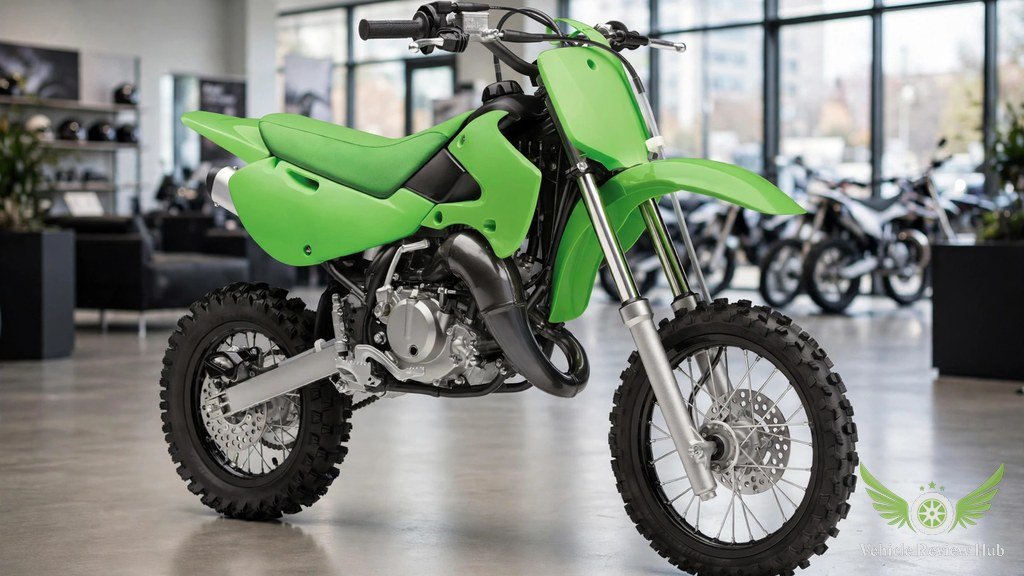
Price is the KX65’s strongest argument, and this Kawasaki KX65 review puts the numbers first because they explain most of the bike’s appeal. At $4,249, the 2027 KX65 undercuts every rival in its class by at least $250 on MSRP, and by far more against the Austrian bikes, while the delivered price stays under $4,600 before tax and fees. Nothing else in this Kawasaki KX65 review matters as much as that gap, because it is the reason the bike sells.
| Model year | MSRP | Destination | Delivered |
|---|---|---|---|
| 2027 | $4,249 | $315 | $4,564 |
| 2026 | $4,249 | $315 | $4,564 |
| 2025 | $4,249 | $305 | $4,554 |
| 2024 | $4,249 | $255 | $4,504 |
| 2023 | $3,999 | $245 | $4,244 |
Note: MSRP figures are from Kawasaki’s official spec sheets. Destination charges are dealer and motorcycle.com figures, not Kawasaki-published numbers, so treat the delivered totals as current-best estimates with about $10-$15 of source variance. This Kawasaki KX65 review labels the destination charge on every use for exactly that reason.
Kawasaki KX65 Price in the USA: $4,249 (2027)
The 2027 KX65 costs $4,249 before destination, and that figure has now held flat for four model years: the official Kawasaki spec sheets for 2024, 2025, 2026 and 2027 all read $4,249. Add the $315 destination charge reported by dealers and motorcycle.com and the delivered price is $4,564. The 2023 bike was $3,999, so the jump to the 2024 price was $250, or about 6.3 percent, and nothing has moved since, which is why this Kawasaki KX65 review calls the price the bike’s strongest argument.
One conflict is worth naming. Motorcycle.com, Dirt Bike Magazine’s 2024 buyer’s guide and BikeCatalog all print $4,199 for the 2024 KX65, but Kawasaki’s own 2024 spec-sheet PDF says $4,249, and 2024 dealer brochures agree at $4,249 plus $255 destination. The $4,199 figure looks like a launch price superseded mid-year, so the manufacturer governs here and this Kawasaki KX65 review uses $4,249 for 2024 with the $4,199 figure noted as the conflicting print.
For comparison, the Yamaha YZ65 costs $4,499 for 2027, the KTM 65 SX $5,899 and the Husqvarna TC 65 $5,999, which puts the Kawasaki $250 below the Yamaha and $1,650 to $1,750 below the Austrians on MSRP alone. The full rival-by-rival price comparison is in our Kawasaki KX65 comparison guide.
Holiday Cash: $200 in the US
The heading says $200, and that figure understates the offer. Kawasaki’s own homepage, checked in November 2026, advertises up to $200 in holiday cash plus up to $700 in factory savings on select youth motorcycles and ATVs, with the 2025-2027 KX65, KX85, KX112 and KLX140R models eligible for up to $700 off as a factory-direct incentive plus $200 holiday cash. The offer runs through December 31, 2026, and requires completing the Holiday Cash form.
The important words are “up to”. The maximum combined saving is $900, which would bring a 2027 KX65 to $3,664 before tax and fees if the full $700 factory incentive applies, but neither figure is guaranteed, and the factory saving depends on the dealer’s participation. Even so, a discount of any size on a $4,249 motorcycle is meaningful, and it is worth asking the dealer to price the bike with both incentives applied before signing anything. That is the deal this Kawasaki KX65 review recommends asking about first at the dealership.
Kawasaki KX65 Design, Features and Technology
The KX65 looks like a shrunken factory motocrosser and nothing else, and this Kawasaki KX65 review stresses the point because first-time buyers sometimes expect trail-bike equipment. There is none: the bike is a closed-course competition machine, and Kawasaki strips out everything a race bike does not need. A buyer who understands that will understand the rest of this Kawasaki KX65 review.
No Lights, No Instruments
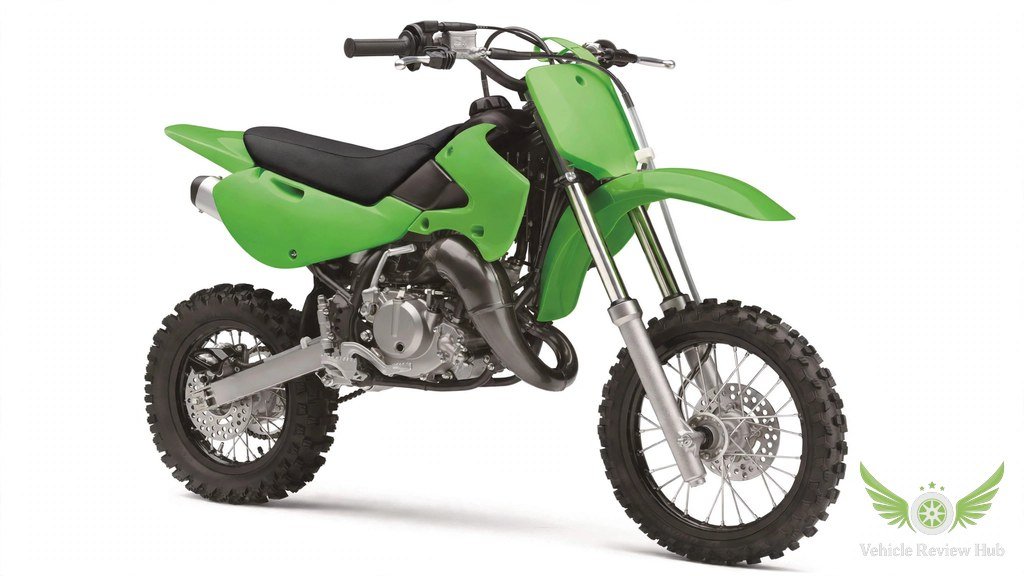
There are no lights, no instruments, no electric start and no key. The spec sheet lists CDI ignition with digital advance and a primary kick start, and nothing else electrical. The owner’s manual is explicit that the KX65 is a competition model only, for closed-course sanctioned competition, and not for public streets, so a parent buying one for trail riding or riding to school is buying the wrong motorcycle.
What the bike does carry is proper race hardware in miniature: a 33 mm conventional fork, a Uni-Trak linkage rear shock, 14-inch front and 12-inch rear wheels with 60/100-14 and 80/100-12 tyres, and Lime Green plastics with a black seat. It is the only colour for 2027, and the styling deliberately matches the full-size KX range, which is part of the appeal for a young rider who wants to look like the riders they watch. It is the look this Kawasaki KX65 review expects young riders to love most about the bike.
No Spark Arrestor Claim
This Kawasaki KX65 review does not claim the bike has no spark arrestor, because Kawasaki’s own sources do not confirm the fitment either way. The defensible statement is the one the manual makes: the KX65 is a closed-course competition motorcycle, and many closed-course venues and racing series require a spark arrestor for practice or for certain events. A parent planning to ride anywhere outside a sanctioned track should check the venue’s rules and the bike’s exhaust first, and the same check applies to noise limits, which vary by track and by state. When in doubt, ask the track, not the sales brochure: advice this Kawasaki KX65 review applies to every closed-course rule, not just the arrestor.
Kawasaki KX65 Riding Experience and Comfort
Riding the KX65 is a lesson in what a small two-stroke teaches, and this Kawasaki KX65 review is frank about who the bike fits. The KX65 is built for a child, and Kawasaki says so in plain language in the owner’s manual: the rider should weigh less than 121 lb, and the bike has no warranty at all. Parents who read those two facts first will get the most from this Kawasaki KX65 review.
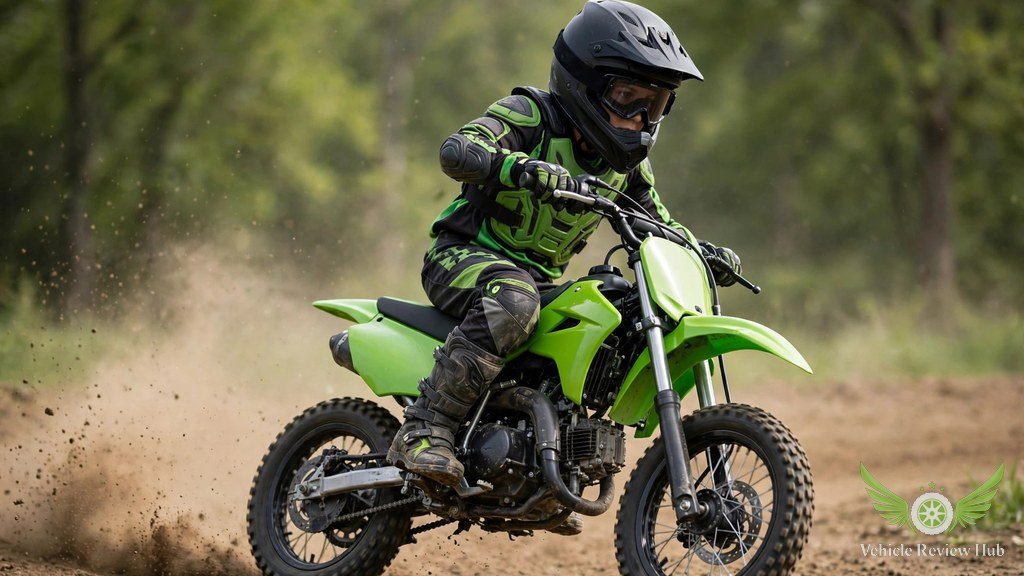
Palmer Compound’s durability test shows what this Kawasaki KX65 review keeps coming back to: the bike is tiny. Kison takes his new KX65 to the local track in Corona, California, and a grown adult rides the little bike to see how it holds up. The video’s title promises a blown engine, but the narration never mentions one — what you get is a fun ride and an upbeat post-ride review in English.
Rider Weight: Under 121 lb
Kawasaki’s service manual and owner’s manuals state that the motorcycle is designed for a rider weighing less than 121 pounds (55 kg), and that exceeding the limit could damage the motorcycle. That is a hard limit, not a suggestion, and it shapes who should buy the bike: a young rider moving up from a 50cc machine, typically in the 7-to-10 age range that third-party buying guides suggest, though Kawasaki itself publishes no age figure at all.
The seat height is 29.9 inches, the wheelbase is 44.1 inches, and the curb weight is 126.1 lb without fuel or 132.2 lb with a full 1.0-gallon tank, so the bike is small and light enough for a child to pick up after a fall and to control at low speed. The six-speed manual clutch is part of the education: unlike the automatic-clutch play bikes many children start on, the KX65 asks its rider to learn clutch control, gear selection and two-stroke power delivery from the first ride, and that is the sizing test this Kawasaki KX65 review recommends over any age chart.
Sold As-Is, No Warranty
The 2013 KX65 owner’s manual carries a disclaimer of warranty that could hardly be clearer: the motorcycle is sold as is, with all faults, obvious or concealed, and there are no warranties, expressed or implied, including warranties of merchantability or fitness for purpose. Motorcycle.com lists the KX65 warranty as a dash, against the 12-month limited warranty on Kawasaki’s street bikes. That disclaimer is the single most important sentence in this Kawasaki KX65 review for a parent’s wallet.
That puts the KX65 in sharp contrast with its rivals. The Yamaha YZ65 carries a 30-day limited warranty covering the engine, frame, swingarm and monoshock only, while the KTM 65 SX and Husqvarna TC 65 carry a one-year premium manufacturer’s warranty from the 2027 model year. A Canadian dealer page claims a six-month warranty for the 2027 KX65, but that conflicts with the US owner’s-manual disclaimer and could not be verified, so this Kawasaki KX65 review reports the US position: no warranty, sold as-is.
Kawasaki KX65 Review: Pros, Cons and Verdict
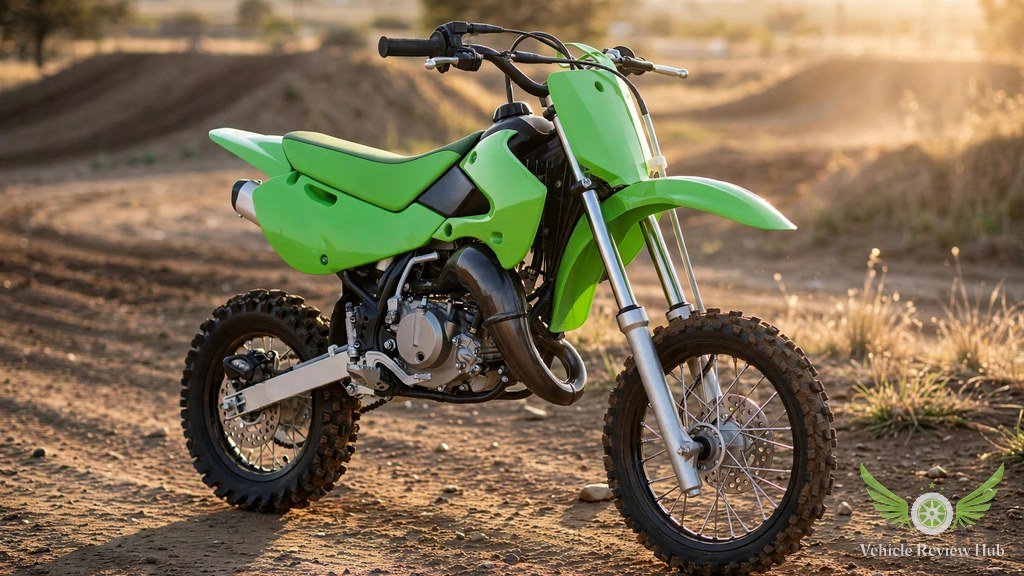
So where does that leave the 2027 bike? This Kawasaki KX65 review ends where it started: with the price, because the KX65 is the cheapest proper junior motocrosser in the United States and the oldest design in its class. The bike asks its buyer to accept 2002 hardware in exchange for a $4,249 price tag, and for the right rider that is a good trade. Nothing in this Kawasaki KX65 review changes that judgement.
| Bike (2027) | MSRP | Destination | Delivered |
|---|---|---|---|
| Kawasaki KX65 | $4,249 | $315 | $4,564 |
| Yamaha YZ65 | $4,499 | $320 | $4,819 |
| KTM 65 SX | $5,899 | $425 | $6,324 |
| Husqvarna TC 65 | $5,999 | $425 | $6,424 |
Note: Rival MSRP figures are the manufacturers’ 2027 US prices, and this Kawasaki KX65 review labels the destination charges by source because the Kawasaki and Yamaha figures are dealer-reported rather than manufacturer-published.
Main Advantages and Limitations of the Kawasaki KX65
The advantages are straightforward. The KX65 is the cheapest 65cc racer in the United States at $4,249, it is the only bike in the class with a rising-rate linkage rear suspension: Motocross Action’s 2018 test states that only the KX65 offers one, against the linkless Yamaha and the PDS rear ends on the Austrian bikes, and it is the simplest machine to own, with a carburettor instead of fuel injection, a steel frame, and parts that have barely changed in two decades. The 64cc two-stroke is also genuinely easy to work on, and the maintenance schedule is short and clear, which our Kawasaki KX65 reliability guide covers in full: a point this Kawasaki KX65 review stresses because a bike this simple is a bike a family can actually maintain.
The limitations are equally straightforward. The engine is the weakest in the class on the only US dyno ever published: Motocross Action’s 2018 test measured 13.77 hp for the KX65 against 17.45 hp for the Yamaha YZ65 and 16.52 hp for the KTM 65 SX, a gap the magazine described as 25 percent less power across the board, though the peak-figure maths is 21.1 percent below the Yamaha and 16.6 percent below the KTM. There is no power valve, the fork is a rebound-only conventional unit, the brakes are the smallest in the class, and the bike carries no warranty at all. The full dyno breakdown, including what the 2018 figures do and do not prove about the current bikes, is in our Kawasaki KX65 performance guide.
No Age Limit Is Published
Kawasaki publishes a weight limit and no age limit, and that distinction matters for parents. The 121 lb ceiling is a Kawasaki figure from the owner’s manual; the ages of 7 to 10, or 7 to 11, that appear in buying guides are third-party suggestions, not Kawasaki’s, and they should be treated as rough guidance rather than a rule. The honest way to size the bike is by the child: under 121 lb, tall enough to reach the ground from a 29.9-inch seat, and ready to learn a manual clutch and a six-speed gearbox. A child who meets those tests will get more from the KX65 than from any other bike at the price, and a child who has outgrown it, in size or in speed, should look at the KX85 step-up instead, which our comparison guide covers. To close this Kawasaki KX65 review plainly: the KX65 is not the fastest, newest or best-equipped 65cc motocrosser on sale in 2027, and it does not try to be. It is the cheapest, the simplest and the most honest, and for a young rider’s first real race bike, that combination is still hard to beat.
Kawasaki KX65 Review FAQs
These are the questions US buyers ask most often about the 2027 KX65, answered from the verified facts in this Kawasaki KX65 review: price, the 2002 revision, the Mikuni carburettor, warranty, rider size and current discounts.
How much does the 2027 Kawasaki KX65 cost?
$4,249 MSRP plus a $315 destination charge, which comes to $4,564 delivered before tax and fees. The destination charge is dealer and motorcycle.com sourced, not a Kawasaki-published figure. The price has been $4,249 since 2024; the 2023 bike was $3,999. This Kawasaki KX65 review uses the manufacturer’s $4,249 figure throughout.
Has the KX65 really not changed since 2000?
Almost. It was all-new in 2000 and revised in 2002, with a taller seat, more rear travel and different gearing; since the 2002 revision only graphics and part numbers have changed, and the 2024-2027 spec sheets are identical. This Kawasaki KX65 review states it precisely: fundamentally unchanged since the 2002 (A3) revision.
Does the KX65 have a Keihin carburettor?
No. It uses a 24 mm Mikuni VM24SS. The Keihin belongs to the bigger KX85, which runs a 28 mm Keihin.
Is there a warranty on the KX65?
No. Kawasaki sells it as-is with no warranty at all in the USA, unlike the Yamaha YZ65, which carries a 30-day limited warranty, and the KTM and Husqvarna, which carry a one-year warranty from 2027. That contrast is one this Kawasaki KX65 review highlights in the verdict.
What age or size rider is the KX65 for?
Kawasaki publishes a rider weight limit of under 121 lb and no age limit. Third-party guides suggest ages 7-10, but that is not a Kawasaki figure.
Can I get money off a new KX65?
Possibly. Kawasaki’s homepage offers up to $200 holiday cash plus up to $700 in factory savings on 2025-2027 KX65s, valid through December 31, 2026. “Up to” means the maximum, not a guaranteed $900, so $900 is the maximum saving, and the real saving depends on the dealer.