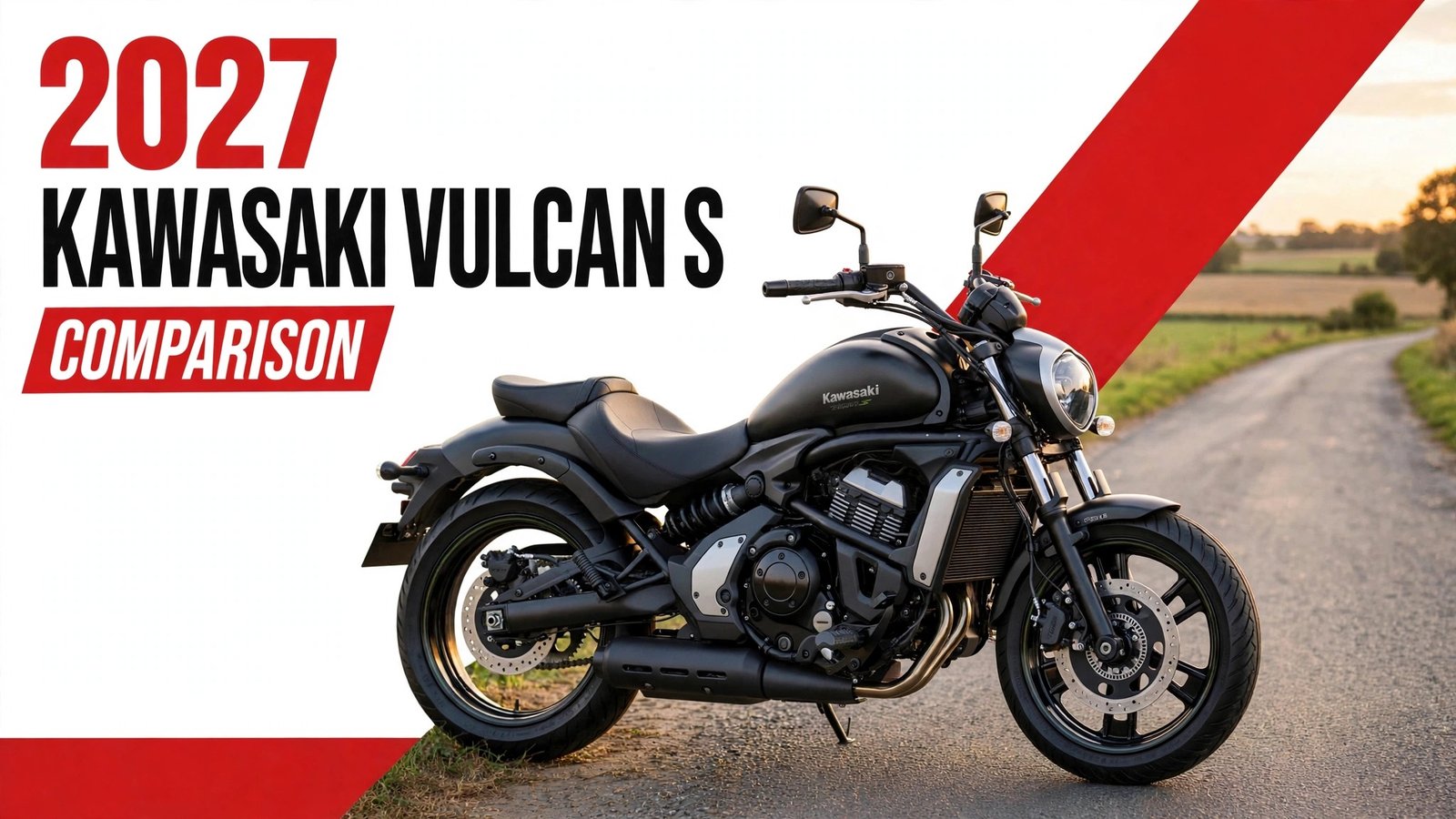
The Vulcan S wins this Kawasaki Vulcan S comparison on engine and fit, and loses it on price. At $8,834 delivered for a 2026 ABS model, it costs $1,435 more than the Rebel 500 and $1,385 more than the Eliminator ABS. It gives you 60 horsepower, the longest wheelbase in the group and the only adjustable ergonomics here. The Super Meteor 650 is the closest rival on character at $7,899, but it gives up 13 horsepower and carries 33 extra pounds.
The shape of the whole Kawasaki Vulcan S comparison is simple. The Vulcan S is the sportiest and most powerful of the four, the Rebel 500 is the lightest and cheapest, the Eliminator is the lightest Kawasaki, and the Super Meteor 650 is the slowest-revving twin with the biggest tank and the longest warranty. The right one depends on whether you value power, price, weight or tradition most.
Kawasaki Vulcan S Overview and Its Closest Rivals
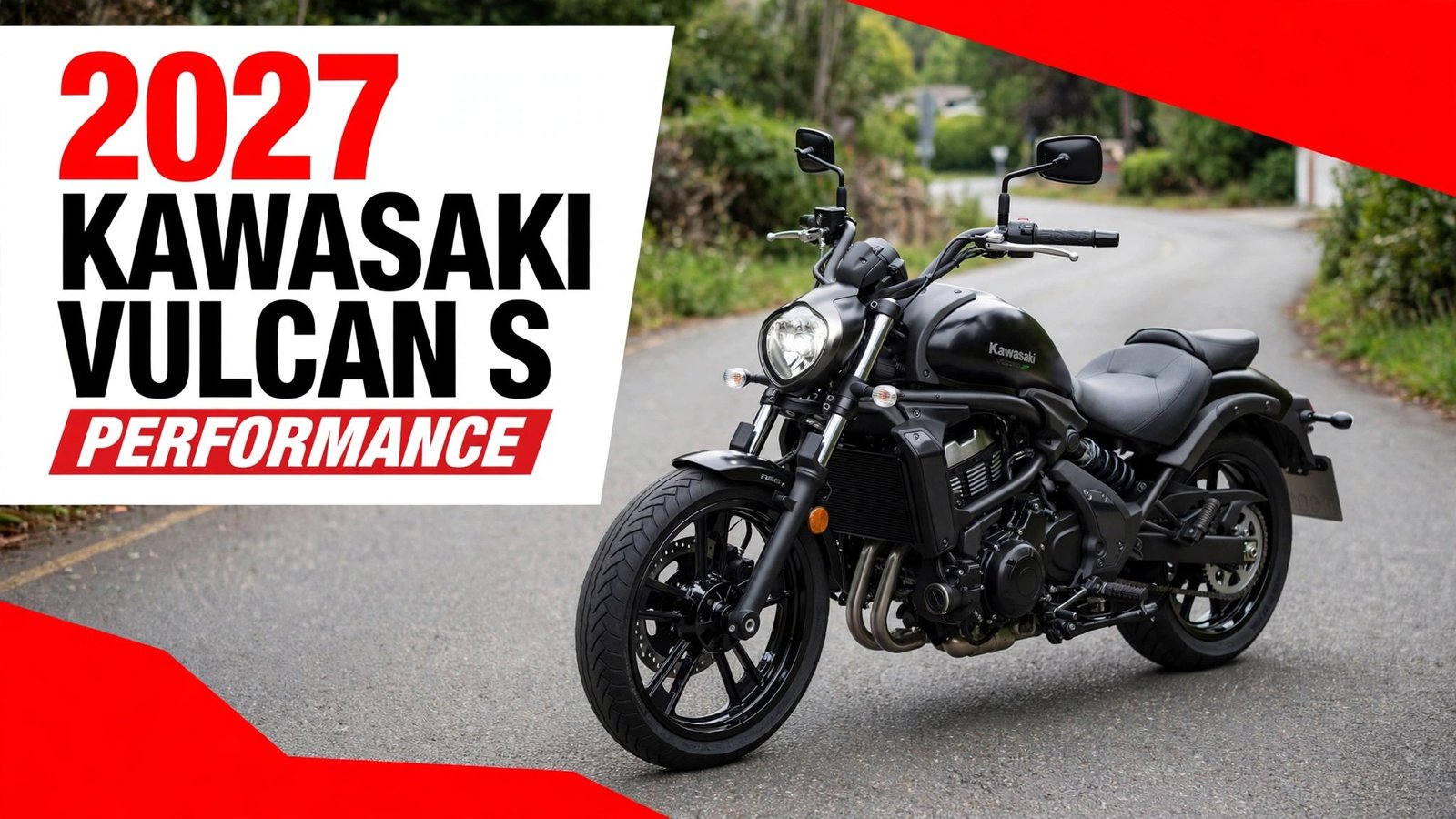
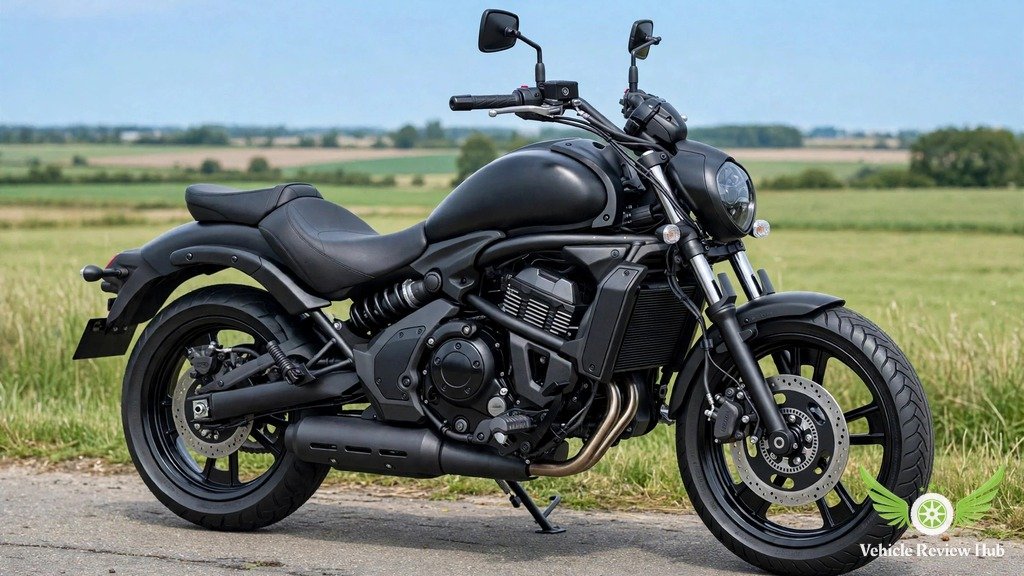
The Vulcan S is Kawasaki’s sport cruiser: a 649cc liquid-cooled parallel twin borrowed from the Ninja 650 and Versys 650, retuned for low and midrange torque, in a long, low chassis with a 27.8-inch seat and Ergo-Fit adjustability. It has been the same bike since it launched in 2015, and that sameness is a strength in a Kawasaki Vulcan S comparison, because a decade of owners has already tested it. The 2027 model is ABS-only at $8,099 plus $685, or $8,784 delivered, as covered in our Vulcan S review.
Why These Three Rivals: Benchmark, Sibling, Twin
Each rival tests the Vulcan S in a different way. The Honda Rebel 500 is the benchmark: America’s best-selling middleweight cruiser, the lightest bike here at 414 pounds, and the cheapest at $7,399 delivered. The Kawasaki Eliminator is the sibling: Kawasaki’s own 451cc parallel-twin cruiser, about 110 pounds lighter and $1,385 cheaper in ABS trim. The Royal Enfield Super Meteor 650 is the twin in the old sense: a 648cc parallel twin, almost the same displacement, air-oil cooled and slower revving. The same 649cc twin also powers the Versys 650 in our Versys 650 comparison.
How the Four Bikes Differ at a Glance
Here is the whole Kawasaki Vulcan S comparison on one table. Every figure is a 2026 model-year figure, and prices are delivered except the Super Meteor 650, whose destination charge was not verified.
| Figure | Kawasaki Vulcan S ABS | Honda Rebel 500 | Kawasaki Eliminator ABS | Royal Enfield Super Meteor 650 |
|---|---|---|---|---|
| Engine | 649cc parallel twin, liquid-cooled | 471cc parallel twin, liquid-cooled | 451cc parallel twin, liquid-cooled | 648cc parallel twin, air-oil cooled |
| Power | 60 hp @ 7,500 rpm | 46 hp @ 8,500 rpm (47 PS) | 51 hp @ 10,000 rpm | 47 hp @ 7,250 rpm (34.6 kW) |
| Torque | 46.5 lb-ft @ 6,600 rpm | 31.7 lb-ft @ 7,000 rpm | 31.7 lb-ft @ 7,500 rpm | 38.6 lb-ft @ 5,650 rpm |
| Seat height | 27.8 in | 27.2 in | 28.9 in | 29.1 in |
| Weight | 498.3 lb (ABS) | 414 lb | 388 lb (wet) | 531.3 lb (wet) |
| Tank | 3.7 gal | 3.0 gal | 3.4 gal | 4.15 gal |
| Wheelbase | 62.0 in | 58.7 in | 59.8 in | 59.0 in |
| Transmission | 6-speed, chain | 6-speed, chain | 6-speed, chain | 6-speed, chain |
| Front brake | 300 mm disc + ABS | 296 mm disc + ABS | 310 mm disc + ABS | 320 mm disc + ABS |
| 2026 price | $8,834 delivered (ABS) | $7,399 delivered | $7,449 delivered (ABS) | $7,899 MSRP (destination unverified) |
Notes for this Kawasaki Vulcan S comparison at-a-glance table: the Vulcan S figures are from the Kawasaki USA 2027 spec sheet; the Rebel 500 figures are from the Honda Powersports 2026 page (torque is the published CMX500 figure of 43 Nm, since Honda USA does not publish it); the Eliminator figures are from Kawasaki’s 2026 spec sheet; and the Super Meteor 650 figures and price are from Royal Enfield’s own specification sheet and November 2026 dealer listings.
Kawasaki Vulcan S vs Honda Rebel 500
This is the pairing most buyers actually shop, and the hardest test in this Kawasaki Vulcan S comparison. The Rebel 500 is the benchmark middleweight cruiser in America: lighter, cheaper and easier to live with. The Vulcan S has to earn its $1,435 premium with a stronger engine and a better fit, and on those two counts it does.
Engine, Specs and Performance Side by Side
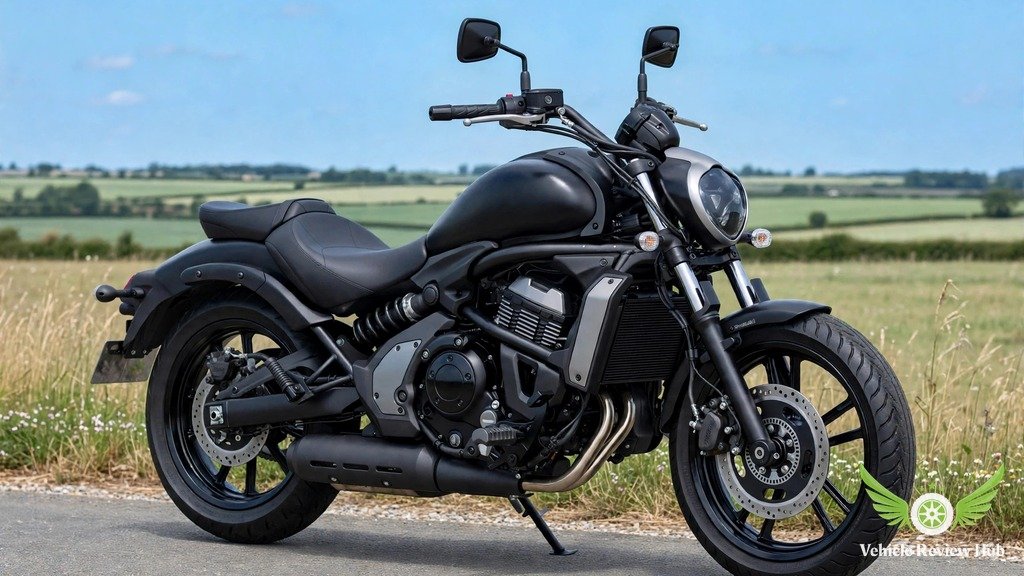
The engine gap is the whole story. The Vulcan S makes 60 horsepower at 7,500 rpm and 46.5 lb-ft at 6,600 rpm from its 649cc twin, while the Rebel 500 makes about 46 horsepower at 8,500 rpm and 31.7 lb-ft at 7,000 rpm from its 471cc twin. Cycle World measured the Vulcan S Cafe at 13.40 seconds and 93.57 mph in the quarter mile in its Café Cruise trio test, the only instrumented quarter-mile figure in this Kawasaki Vulcan S comparison.
The Rebel answers with weight and manners. At 414 pounds it is 84 pounds lighter than the Vulcan S ABS, its seat is 0.6 inches lower at 27.2 inches, and its wheelbase is 3.3 inches shorter at 58.7 inches. It also has a slipper clutch, which the Vulcan S does not. Fuel range still favours the Vulcan S in this Kawasaki Vulcan S comparison: the Rider Magazine road test measured 38.8 to 56.1 mpg and about 179 miles from its 3.7-gallon tank, while the Rebel carries only 3.0 gallons.
Price, Equipment and Which Suits Which Rider
A 2026 Rebel 500 costs $6,799 plus $600, or $7,399 delivered, with ABS standard on every trim, and the SE costs $6,999 plus $600, or $7,599 delivered, according to the Honda Powersports 2026 page. A 2026 Vulcan S ABS costs $8,149 plus $685, or $8,834 delivered, so the Kawasaki costs $1,435 more. Both carry a 12-month limited warranty and ABS as standard, so the premium buys engine and fit: the Vulcan S has Ergo-Fit adjustability with 18 configurations, while the Rebel has a fixed riding position.
Kawasaki Vulcan S vs Kawasaki Eliminator
The Eliminator is the awkward rival in this Kawasaki Vulcan S comparison: it wears the same badge, costs $1,385 less in ABS trim, and weighs about 110 pounds less. Is the Vulcan S worth the extra money over its own smaller sibling? Yes for power and highway comfort, no for lightness and city ease.

Engine, Specs and Performance Side by Side
The Eliminator’s 451cc parallel twin is a surprise: Kawasaki’s own spec sheet rates it at 51 horsepower at 10,000 rpm with 31.7 lb-ft at 7,500 rpm, stronger than the Rebel 500 and only 9 horsepower behind the Vulcan S. The 45 PS figure that circulates online is the restricted Indian tune, not the US bike. Even so, the Vulcan S still wins the engine argument in this Kawasaki Vulcan S comparison: 60 horsepower at 7,500 rpm against 51 at 10,000 rpm.
Where the Eliminator wins is weight and size. At 388 pounds wet it is about 110 pounds lighter than the 498.3-pound Vulcan S ABS, the largest gap in the group. Its wheelbase is 59.8 inches against 62.0, its seat is 28.9 inches against 27.8, and its 310 mm front disc is 10 mm larger than the Vulcan S front disc. Both are six-speed chain-drive twins with ABS and assist-and-slipper clutches. On a twisty road the Eliminator’s lightness makes it easier to flick around; on a highway the Vulcan S’s weight and torque make it steadier. That lightness is the Eliminator’s best argument in this Kawasaki Vulcan S comparison.
Price, Equipment and Which Suits Which Rider
The Eliminator undercuts the Vulcan S at every trim. The 2026 base model costs $6,499 plus $650, or $7,149 delivered, the ABS model costs $6,799 plus $650, or $7,449 delivered, and the SE ABS costs $7,099 plus $650, or $7,749 delivered. Against the 2026 Vulcan S ABS at $8,834 delivered, the ABS Eliminator saves $1,385 and the SE ABS saves $1,085. The Vulcan S non-ABS at $8,334 delivered is still $885 more than the Eliminator ABS. The one thing the Vulcan S has that the Eliminator cannot match is Ergo-Fit: the Eliminator’s pegs, bars and seat are fixed.
Kawasaki Vulcan S vs Royal Enfield Super Meteor 650
The Super Meteor 650 is the closest rival on paper and the furthest on the road in this Kawasaki Vulcan S comparison. Both bikes are 648cc parallel twins under $9,000, but the Vulcan S is a liquid-cooled, high-revving twin with a 9,900 rpm limit, while the Super Meteor is an air-oil-cooled, slow-revving twin that makes its best torque at 5,650 rpm.

Engine, Specs and Performance Side by Side
The numbers favour the Kawasaki. The Vulcan S makes 60 horsepower at 7,500 rpm and 46.5 lb-ft at 6,600 rpm, while the Super Meteor makes 47 horsepower at 7,250 rpm and 38.6 lb-ft at 5,650 rpm, so the Vulcan S is 13 horsepower and 7.9 lb-ft ahead, according to Royal Enfield’s own technical specification sheet. The Super Meteor’s torque arrives 950 rpm lower, but the Vulcan S has more of everything and revs 2,650 rpm higher, and it is the only bike in this Kawasaki Vulcan S comparison with an instrumented quarter mile of 13.40 seconds at 93.57 mph. The Super Meteor answers with size and range: at 531.3 pounds wet it is the heaviest bike here, with the biggest tank at 4.15 gallons.
The chassis figures split the same way in this Kawasaki Vulcan S comparison. The Super Meteor’s seat is 29.1 inches, the tallest in the group, and its wheelbase is 59.0 inches against 62.0. The Super Meteor has the biggest front brake here, a single 320 mm disc with dual-channel ABS against 300 mm on the Vulcan S, and a 43 mm upside-down fork.
The film below is a long-term report on the Royal Enfield Super Meteor 650, not a head-to-head test and not a Vulcan S film: ZigWheels ran one for 7,000 km and reported on living with it. No English head-to-head video of the Vulcan S against any rival exists.
Price, Equipment and Which Suits Which Rider
The Super Meteor is cheaper on the sticker and harder to price exactly. November 2026 dealer listings put the 2026 model at $7,899, which is $250 less than the 2026 Vulcan S ABS at $8,149 and $935 less than its $8,834 delivered price, but Royal Enfield’s destination charge was not verified, so no delivered figure is printed here and the true gap is smaller than $935. The trim split was not pinned down: the same $7,899 appears on listings for both Astral and Interstellar models. The Super Meteor costs less than the Vulcan S, and its three-year warranty on new bikes in the US is three times as long as the 12-month warranty on the other three.
Kawasaki Vulcan S Price and Value Compared
Price is where this Kawasaki Vulcan S comparison gets honest. The Vulcan S is the most expensive bike in the group: $1,435 over the Rebel 500, $1,385 over the Eliminator ABS, and about $935 over the Super Meteor 650 before delivery. The question is whether the premium buys anything a rider will notice every day: it buys the strongest engine, the longest wheelbase and the only adjustable ergonomics here.
Ergo-Fit Parts Are Not All Free
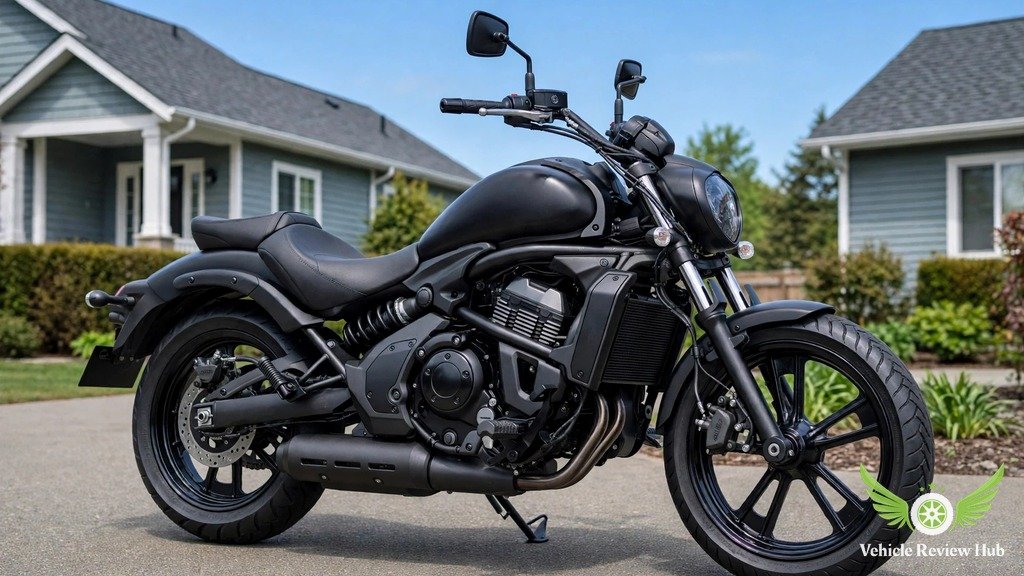
Ergo-Fit is the Vulcan S feature most often misunderstood, and this Kawasaki Vulcan S comparison has to state it plainly. The fitting is free: Kawasaki’s own current dealer copy, on the Kawasaki USA Vulcan S page, promises that after you purchase a Vulcan S, you will have the option to get fitted at no additional cost. The system gives 18 configurations from three seats, two handlebars and three footpeg positions. But the parts for a later change are not free: Kawasaki’s own accessory notes say genuine accessories may need to be purchased. No priced parts list was verified, so no part price is printed here: get the fit right at purchase.
None of the three rivals offers anything like it: the Rebel 500, the Eliminator and the Super Meteor 650 all have fixed riding positions, and the only way to change the reach on any of them is aftermarket parts. That makes Ergo-Fit the one feature in this Kawasaki Vulcan S comparison that no rival can match at any price.
Running Costs and Resale Value Compared
Running costs favour the Vulcan S more than the sticker price suggests. Owner-reported ranges in the TopSpeed long-term ownership guide put routine maintenance at $150 to $400 a year and major services at $500 to $800, with $1,000 to $1,500 over five years. The Rebel 500 is cheaper to run still. The Super Meteor 650 is the wildcard: its three-year warranty covers more than any rival, but its US dealer network is thinner. No Vulcan S-specific insurance figure was found in this Kawasaki Vulcan S comparison, so none is printed.
Resale is the Vulcan S quiet advantage in this Kawasaki Vulcan S comparison. Used prices reported by aggregators run $4,500 to $7,500, and one aggregator claims low-mileage examples typically retain 65 to 75 percent of their value after three years. The bike has been mechanically unchanged since 2015. The reliability record is covered in our Vulcan S reliability guide.
| Bike (2026) | MSRP | Destination | Delivered |
|---|---|---|---|
| Kawasaki Vulcan S ABS | $8,149 | $685 | $8,834 |
| Kawasaki Vulcan S non-ABS | $7,649 | $685 | $8,334 |
| Honda Rebel 500 (ABS std) | $6,799 | $600 | $7,399 |
| Honda Rebel 500 SE | $6,999 | $600 | $7,599 |
| Kawasaki Eliminator (non-ABS) | $6,499 | $650 | $7,149 |
| Kawasaki Eliminator ABS | $6,799 | $650 | $7,449 |
| Kawasaki Eliminator SE ABS | $7,099 | $650 | $7,749 |
| Royal Enfield Super Meteor 650 | $7,899 | Not verified | Not verified |
| Honda Shadow Phantom | $8,699 | $600 | $9,299 |
Notes for this Kawasaki Vulcan S comparison price table: all prices are 2026 model-year US figures, and delivered means MSRP plus destination charge. The Vulcan S and Eliminator prices are from Kawasaki’s 2026 spec sheets, the Rebel 500 and Shadow Phantom prices are from Honda Powersports, and the Super Meteor 650 price of $7,899 is from November 2026 dealer listings. The 2027 Vulcan S ABS costs $8,784 delivered, $50 less than the 2026 ABS model.
Kawasaki Vulcan S Comparison Verdict and US Alternatives
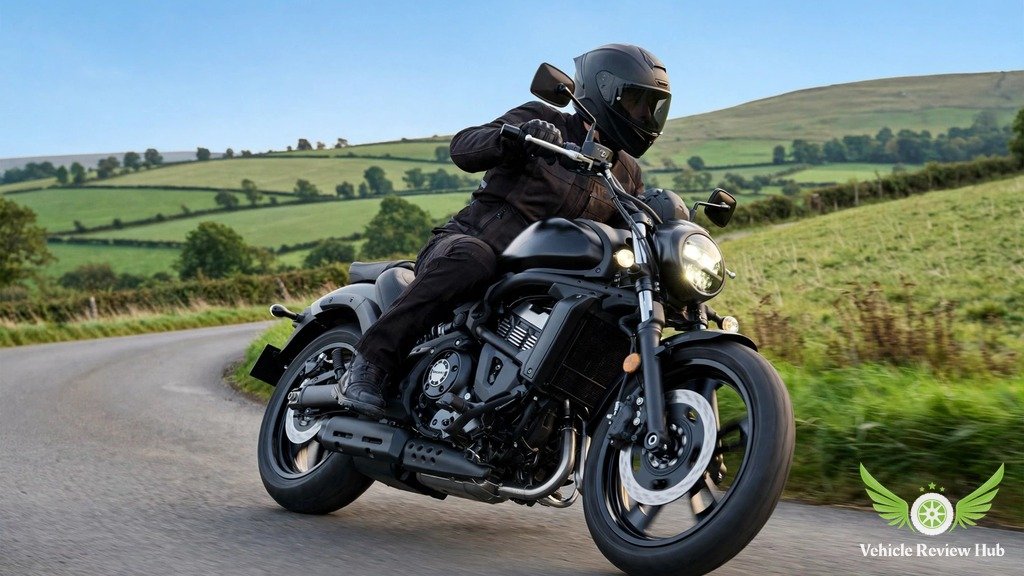
The verdict of this Kawasaki Vulcan S comparison is that the Vulcan S is the best motorcycle in the group and the second-best value. It has the strongest engine, the longest wheelbase, the best tested quarter mile and the only adjustable ergonomics, and it costs $1,435 more than the cheapest rival. If you ride on the highway, ride two-up, or fall outside average size, buy the Vulcan S. If you ride mostly in town, are shorter or newer, or want the most bike for the least money, buy the Rebel 500. See our Vulcan S performance guide.
Verdict: Fit and Engine Keep It Relevant
Eleven years after launch, the Vulcan S is still relevant because its two strengths have not been matched. No rival in this Kawasaki Vulcan S comparison makes 60 horsepower from a middleweight twin, and no rival adjusts to the rider the way Ergo-Fit does. The weaknesses are real: a 3.7-gallon tank that stops the ride near 179 miles, a rear shock with only 3.2 inches of travel, and a price $1,435 above the benchmark.
Shadow Phantom Alternative
The Honda Shadow Phantom is not a fourth rival in this Kawasaki Vulcan S comparison but an alternative for a different kind of rider. At $9,299 delivered, it costs $465 more than the 2026 Vulcan S ABS, and it is a slow-revving 745cc liquid-cooled V-twin with a five-speed gearbox and a shaft final drive, the only shaft bike here. Honda publishes no horsepower figure for it, and independent tests put it at about 44 to 45 horsepower with about 48 lb-ft, so it is the slowest bike here despite having the biggest engine. Its seat is 25.6 inches, the lowest in the group, and it weighs 553 pounds with ABS.
Kawasaki Vulcan S Comparison: Frequently Asked Questions
The questions buyers ask most often, answered with the verified figures from this Kawasaki Vulcan S comparison.
Which is better, the Vulcan S or the Rebel 500?
The Vulcan S is the better motorcycle and the Rebel 500 is the better value. The Vulcan S has 60 horsepower against about 46 and 46.5 lb-ft against 31.7, plus Ergo-Fit adjustability, while the Rebel 500 is 84 pounds lighter and $1,435 cheaper. In this Kawasaki Vulcan S comparison, buy the Vulcan S for power and fit; buy the Rebel 500 for lightness and price.
Is the Vulcan S faster than the Rebel 500?
Yes. The Vulcan S makes 60 horsepower and 46.5 lb-ft against the Rebel 500 at about 46 horsepower and 31.7 lb-ft, and Cycle World measured the Vulcan S Cafe at 13.40 seconds and 93.57 mph in the quarter mile. No magazine has published an equivalent Rebel 500 run, and this Kawasaki Vulcan S comparison rates the Vulcan S as the quickest bike in the group.
How much more does the Vulcan S cost than the Eliminator?
The 2026 Vulcan S ABS costs $8,834 delivered against the Eliminator ABS at $7,449 delivered, a gap of $1,385. The base Eliminator at $7,149 delivered is $1,685 cheaper, and the SE ABS at $7,749 delivered is $1,085 cheaper. This Kawasaki Vulcan S comparison treats the gap as the price of the bigger engine and Ergo-Fit.
Is the Super Meteor 650 cheaper than the Vulcan S?
Yes, on the sticker. November 2026 dealer listings put the 2026 Super Meteor 650 at $7,899, which is $250 less than the 2026 Vulcan S ABS at $8,149 and $935 less delivered. But Royal Enfield’s destination charge was not verified, so the true delivered gap is smaller. This Kawasaki Vulcan S comparison prints only the verified $7,899 figure.
Which bike has the lowest seat height?
The Honda Shadow Phantom has the lowest seat in this Kawasaki Vulcan S comparison at 25.6 inches, followed by the Rebel 500 at 27.2 inches and the Vulcan S at 27.8 inches. The Eliminator sits at 28.9 inches and the Super Meteor 650 at 29.1 inches.
Is the Vulcan S good for beginners compared with the Rebel 500?
The Rebel 500 is the better beginner bike. It is 84 pounds lighter, 0.6 inches lower, $1,435 cheaper, and easier to handle at low speed, with a slipper clutch the Vulcan S does not have. The Vulcan S is still forgiving, but in this Kawasaki Vulcan S comparison the Rebel 500 is the recommended first bike.
Which bike is best for long rides?
The Vulcan S is the best long-distance bike in this Kawasaki Vulcan S comparison. Its 60-horsepower engine cruises at highway speed without strain, its 62.0-inch wheelbase is the longest here, and its Ergo-Fit system lets you tune the reach. The Super Meteor 650 has the biggest tank at 4.15 gallons, but it is 33 pounds heavier and 13 horsepower weaker.
Does the Vulcan S have more power than the Super Meteor 650?
Yes, by 13 horsepower. The Vulcan S makes 60 horsepower at 7,500 rpm and 46.5 lb-ft at 6,600 rpm, while the Super Meteor 650 makes 47 horsepower at 7,250 rpm and 38.6 lb-ft at 5,650 rpm. The Super Meteor’s torque arrives lower, but the Vulcan S is the most powerful bike in this Kawasaki Vulcan S comparison.
What is the cheapest cruiser in this comparison?
The Kawasaki Eliminator base model is the cheapest at $7,149 delivered for 2026, followed by the Rebel 500 at $7,399 delivered and the Eliminator ABS at $7,449 delivered. The Super Meteor 650 lists at $7,899 before delivery, and the Vulcan S ABS is the most expensive of the three doc rivals at $8,834 delivered. The Shadow Phantom is the most expensive bike in this Kawasaki Vulcan S comparison at $9,299 delivered.
Is Ergo-Fit really free?
The fitting is free, the parts are not. Kawasaki’s current dealer copy promises that after you purchase a Vulcan S, you will have the option to get fitted at no additional cost, and the system offers 18 configurations from three seats, two handlebars and three footpeg positions. But genuine Kawasaki accessories may need to be purchased for certain adjustments, and this Kawasaki Vulcan S comparison prints no part price.
Which bike holds its value best?
The Vulcan S holds its value well, and this Kawasaki Vulcan S comparison rates it ahead of its rivals on resale. Used prices reported by aggregators run $4,500 to $7,500, and one aggregator claims low-mileage examples typically retain 65 to 75 percent of their value after three years. The bike has been mechanically unchanged since 2015.
Should I buy the Vulcan S or the Shadow Phantom?
Buy the Vulcan S for power, handling and adjustable fit, and the Shadow Phantom for the traditional V-twin rumble, a shaft drive and the lowest seat in the class. The Vulcan S makes 60 horsepower against about 44 to 45 for the Shadow Phantom, weighs 55 pounds less, and costs $465 less. In this Kawasaki Vulcan S comparison, the Shadow Phantom is the alternative for the rider who values tradition over performance.