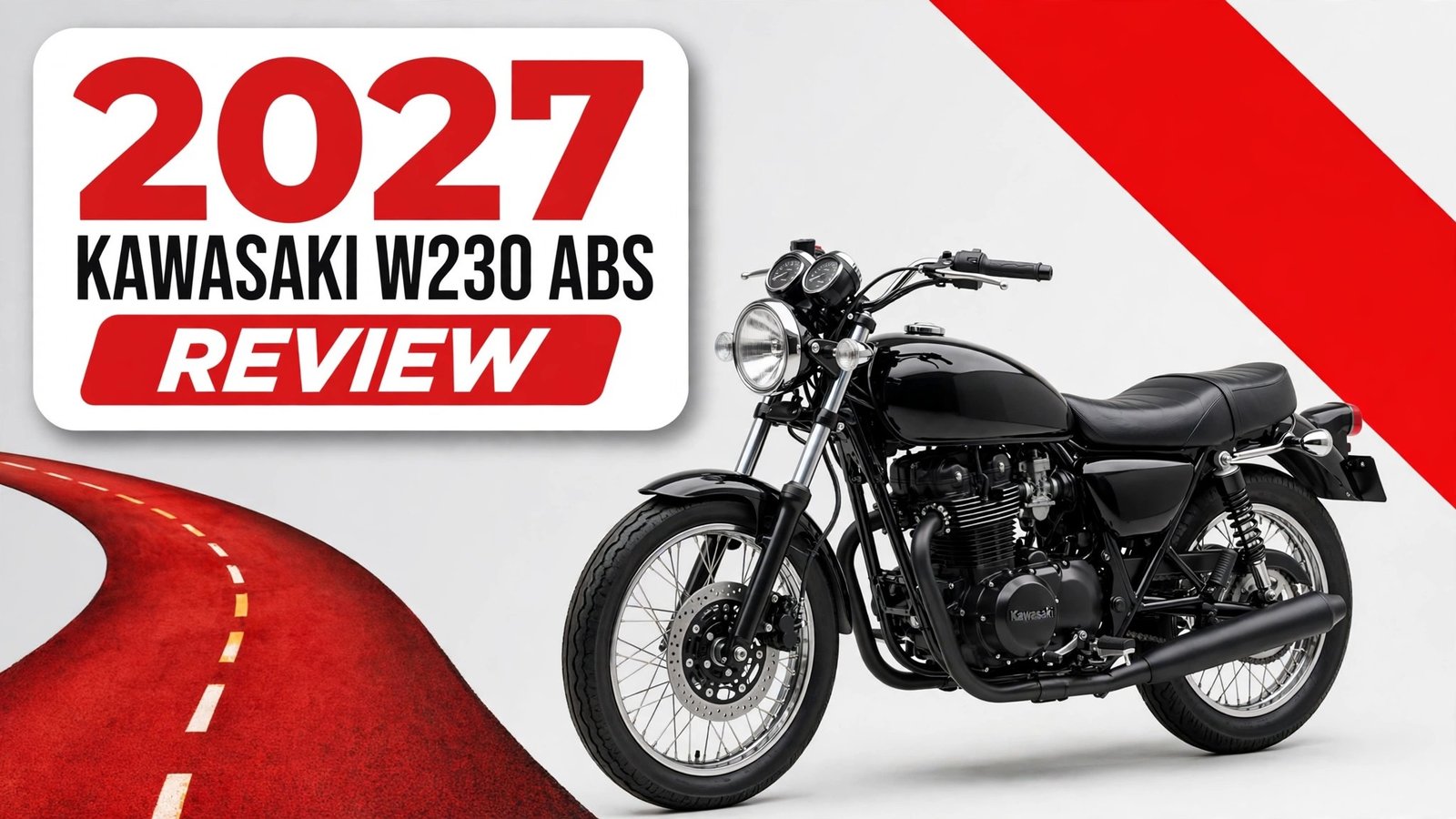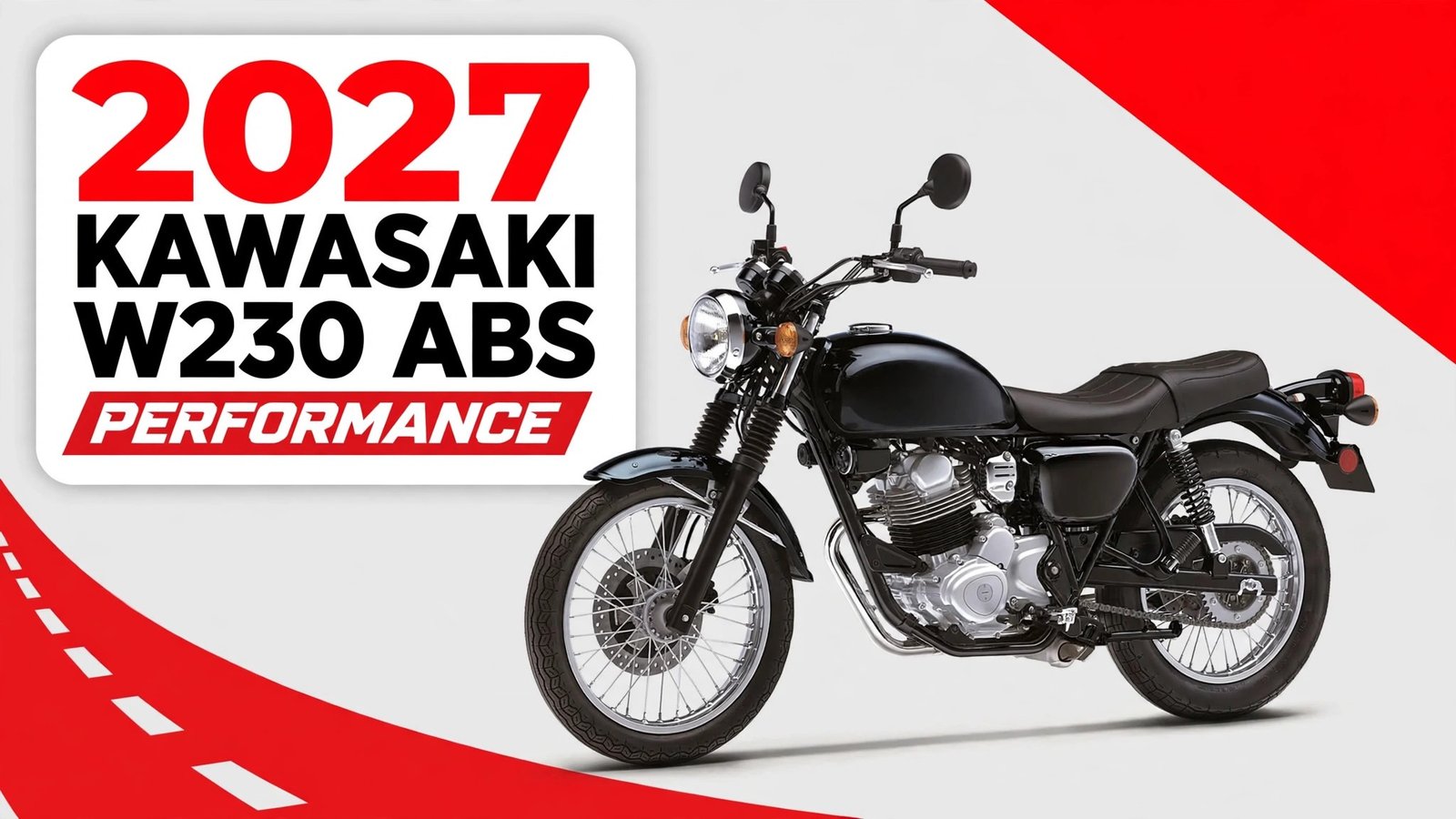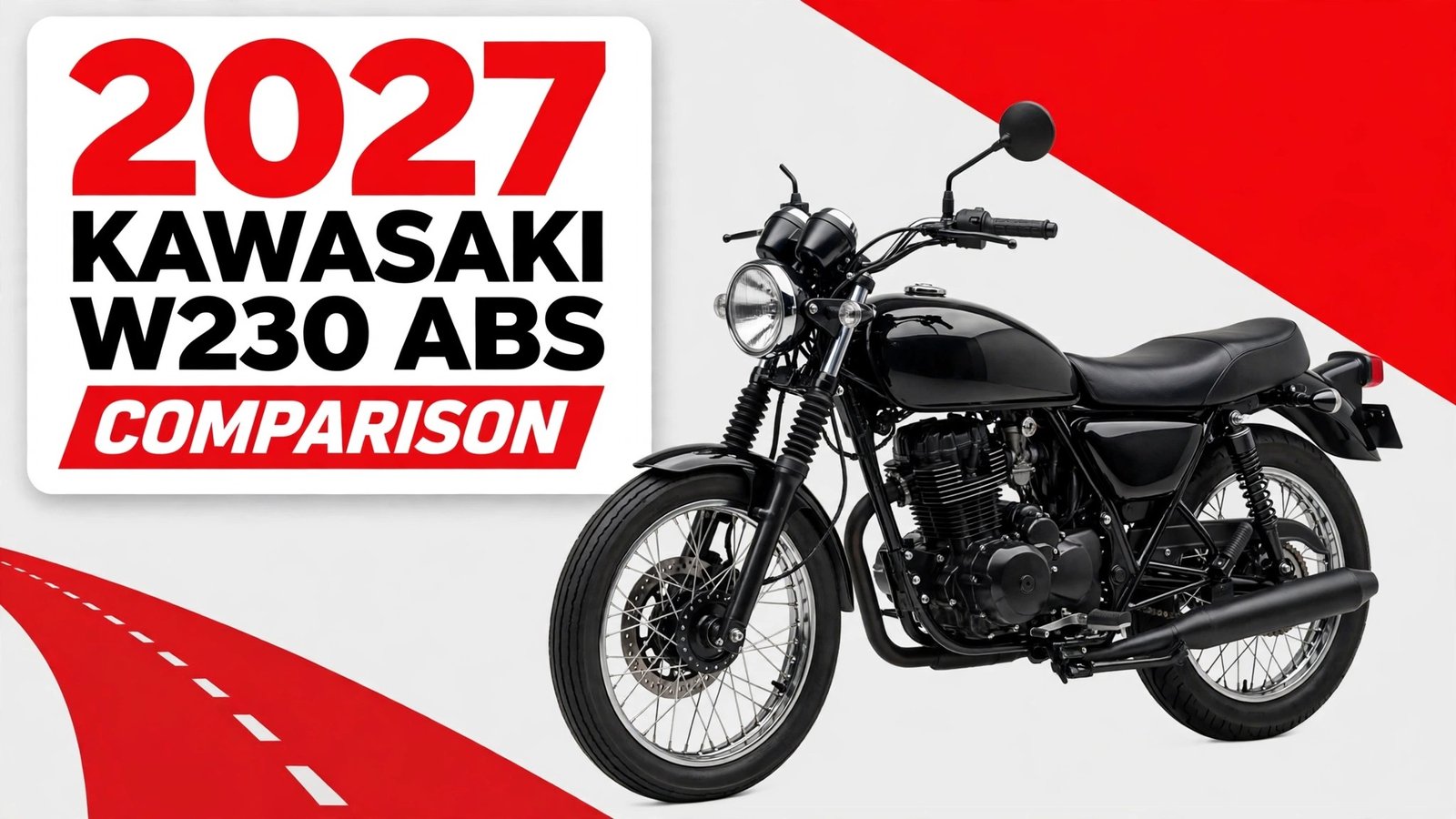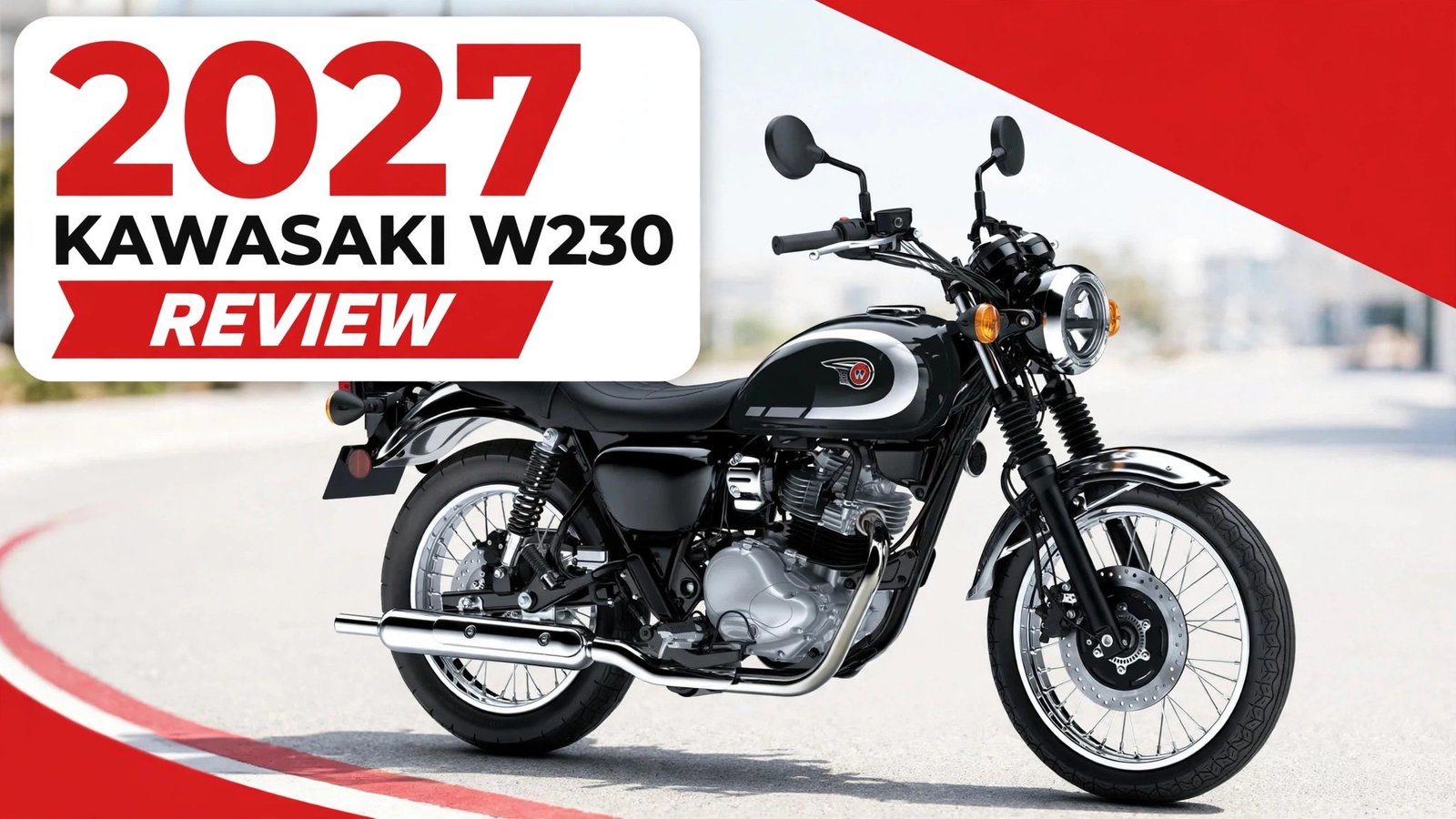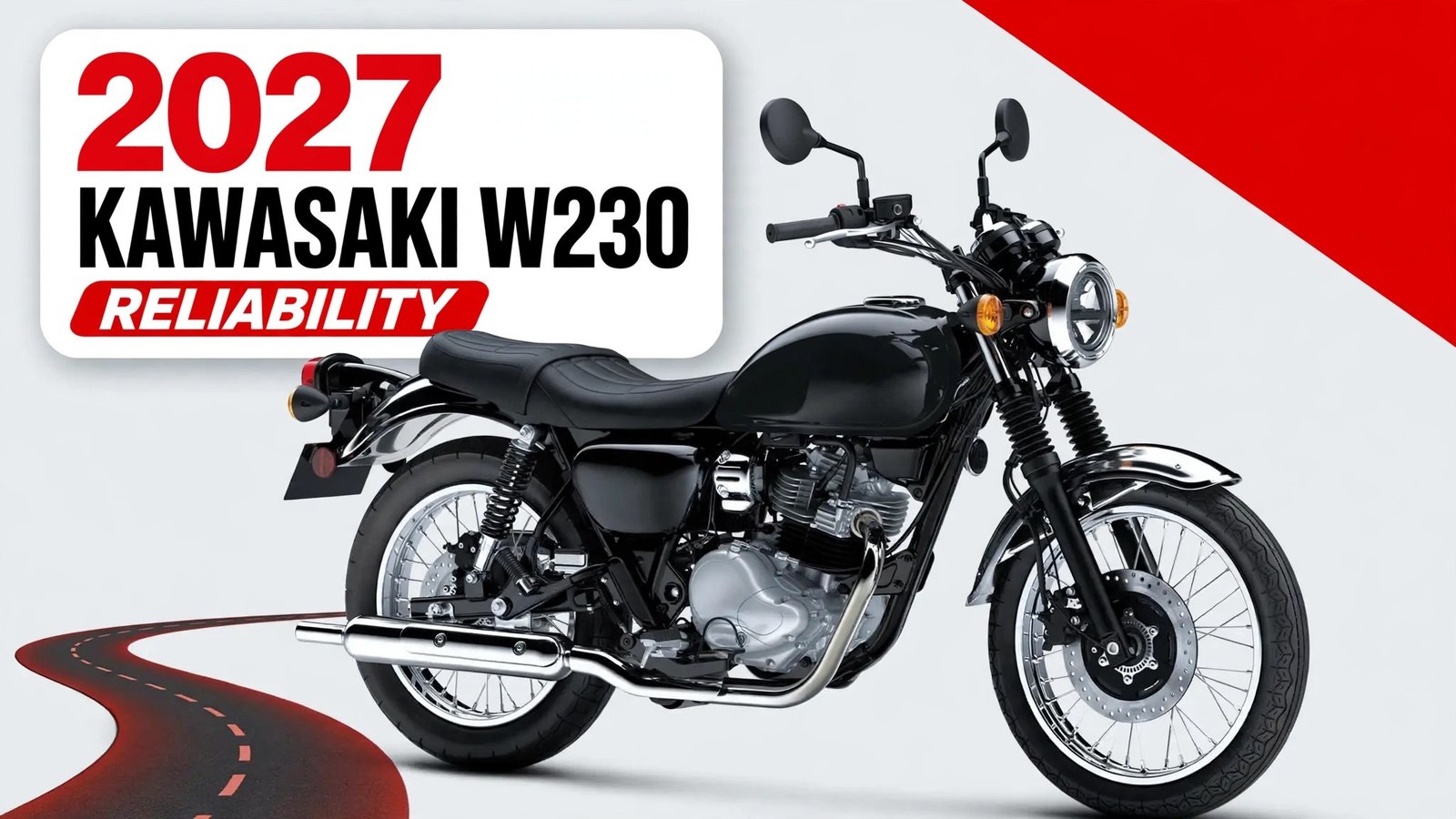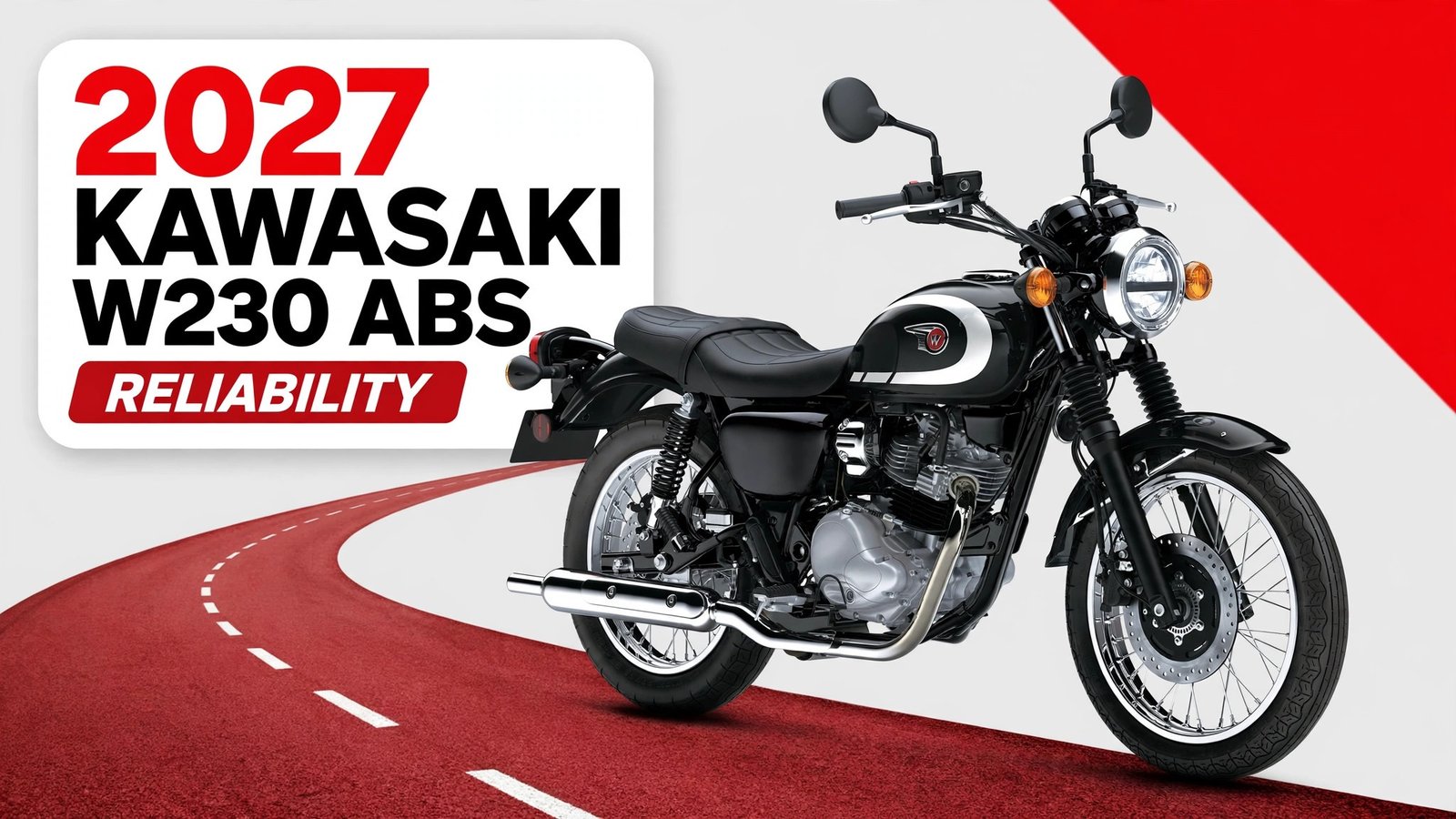
Two recalls, zero complaints and one owner thread: that is the whole reliability record of the Kawasaki W230 ABS after two model years on sale in the United States. This Kawasaki W230 ABS reliability guide works through both recalls in full, the parts that wear, the service schedule nobody has published yet, and the ABS hardware whose prices nobody can verify. The short version is good news for the ABS itself — neither recall touches the brakes, and no owner has filed a complaint about anything at all.
The bike behind the record is the same machine as the base W230: Kawasaki sells exactly one W230 in the United States, it wears ABS in its name, and the ABS is standard on the only trim. It is built in Thailand, it costs $5,899 for 2027, and it is mechanically identical across all three model years. What follows is what is verified, what is still unknown, and what to check before buying one used — and this Kawasaki W230 ABS reliability guide labels every gap rather than filling it.
Kawasaki W230 ABS Reliability Overview

The reliability story of this bike is short because the bike is young: the first US bikes arrived as 2025 models, and the record covers two model years of sales. Two safety recalls, zero NHTSA complaints, and a single owner thread about shifting — that is the evidence base. This Kawasaki W230 ABS reliability guide starts there, because the size of the record matters as much as what is in it: a bike with two years of sales cannot have a ten-year failure history, and no honest guide pretends otherwise.
Neither Recall Is an ABS Fault
Neither of the W230 ABS’s two recalls involves the brakes or the ABS in any way. The first, 25V363, is a ground-point stall: paint on the engine mount interfered with the electrical ground between the battery and the frame, and the fix is a new battery harness. The second, 26V387, is a turn-signal bulb failure: bulbs from Fiem Industries in India can carry foreign material or cracks, and the fix is four new bulbs. The NHTSA component fields say it plainly — ENGINE for the first, EXTERIOR LIGHTING: TURN SIGNAL: BULBS for the second. For a bike whose name carries ABS, that is the most useful reliability fact in this Kawasaki W230 ABS reliability guide: the system the bike is named for has no recall and no complaint against it.
How Mileage, Storage and Previous Care Affect Reliability
No long-term reliability data exists for this bike yet, and any guide that prints failure rates for it is inventing them. The oldest US bikes are 2025 models with a few thousand miles at most — one owner thread reports about 700 miles, one video owner about 800. Check both campaigns by VIN before buying used, and check the repair marks — a white paint mark left of the VIN for the harness fix, and a white paint mark at the end of the frame number for the bulbs. Previous care is the real variable — and on this bike, the only owner evidence is a single thread about shifting, which this Kawasaki W230 ABS reliability guide covers in the next section.
Kawasaki W230 ABS Common Problems and Wear Items
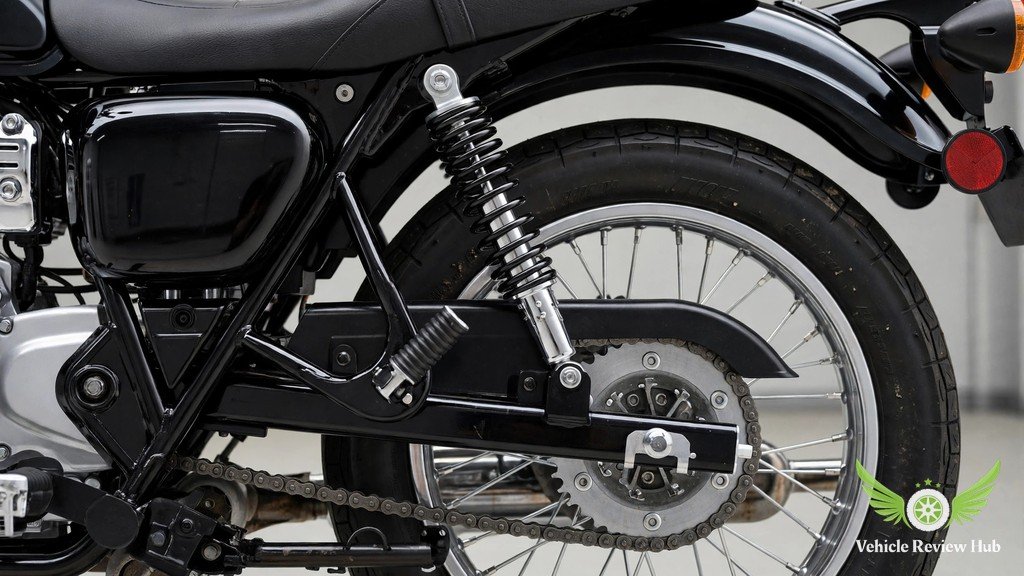
The list of things that actually go wrong on this bike is short, and this Kawasaki W230 ABS reliability guide prints it in full rather than padding it: two recalls, one owner thread about shifting, and the small niggles a beginner tester named. Nothing else is verified — no engine failures, no electrical failures beyond the ground recall, no ABS failures of any kind.
25V363: Ground, Not Brakes
Recall 25V363 covers 482 of the 2025 bikes — every one of them a BJ230A, the only W230 ABS model code — built between October 2, 2024 and March 31, 2025. The defect is in the ground, not the brakes: cosmetic paint on the portion of the engine mount designed to ground the engine made the electrical ground between the battery and the frame unstable, and an interruption of current to the ECU can stall the engine while it is running. Kawasaki’s Japanese distributor reported three stalled engines in March 2025, a fourth in April, and the recall was decided on May 23, 2025, with the Part 573 filed on June 23. The remedy is a new harness connecting the battery’s negative terminal to the engine and frame, fitted free of charge, and repaired bikes carry a white paint mark left of the VIN. Owner letters went out in mid-June 2025, and the recall carries a do-not-drive advisory — Kawasaki advises owners not to ride until the harness is fitted. Owners can check whether their bike is affected by VIN, and this Kawasaki W230 ABS reliability guide recommends doing so before any used purchase. The campaign is a single-model recall: the 482 bikes are the whole campaign, and the estimated share with the defect is 1 percent — a small campaign, and one this Kawasaki W230 ABS reliability guide records as a ground fault, not a brake fault.
26V387: Bulbs, Not Brakes
Recall 26V387 covers 840 bikes across the 2025 and 2026 model years combined — never 840 per year — built between October 2, 2024 and October 28, 2025. The defect is in the turn-signal bulbs: improper process controls at Fiem Industries in Sonipat, India, left some bulbs with foreign material or cracks, and the filament can be damaged early enough that a front or rear turn signal fails to light. The remedy is all four turn-signal bulbs replaced free of charge, with repair kit 99999-1116 and about fifteen minutes of labour, and repaired bikes carry a white paint mark at the end of the frame number. Owner letters were expected on July 7, 2026, under the Part 573 filed on June 12, 2026. Unlike the stall recall, this one carries no do-not-drive advisory — Kawasaki issued a stop sale on the 2025 and 2026 bikes but did not tell owners to stop riding. That stop-sale detail matters for used buyers, and this Kawasaki W230 ABS reliability guide flags it for that reason. Two numbers need care here: the 840 covers both model years together, and the 9,857-unit figure that appears in Japanese reports is Japan’s MLIT campaign for the W230 and the Meguro S1 combined — it is not the US count. No completion percentage is verified for this campaign, so this Kawasaki W230 ABS reliability guide prints none.
Beyond the recalls, the owner evidence is one thread. A South Georgia owner writing on the BITOG forum in April 2025 — the bike’s only detailed owner report found — said shifting was flawless for the first 200 miles, then became gritty overnight, easing with a change to Mobil 1 V-Twin 20W-50 but never quite returning to the original feel, with two or three failures to accelerate shifting into fifth or sixth gear. The beginner tester agreed on the seat and added a stiff throttle and a late-engaging clutch. One thread and one test are not a defect pattern — the bike has zero NHTSA complaints — but they are the only owner voices this Kawasaki W230 ABS reliability guide has, so they are printed as they are: one owner, one tester, no wider claim.
| Campaign | Years | Bikes | Defect | Remedy |
|---|---|---|---|---|
| 25V363 | 2025 only | 482 | Ground-point stall (engine ground) | New battery harness, free; do-not-drive advisory |
| 26V387 | 2025–2026 combined | 840 | Turn-signal bulbs (Fiem) | All four bulbs, free; kit 99999-1116 |
| Complaints | 2025–2027 | 0 | None filed | — |
Note: Both campaigns are single-model recalls, and neither names the brakes or the ABS — the fact this Kawasaki W230 ABS reliability guide keeps coming back to. Check both by VIN before buying used: the 2027 bike is covered by neither.
Kawasaki W230 ABS Maintenance Schedule and Servicing
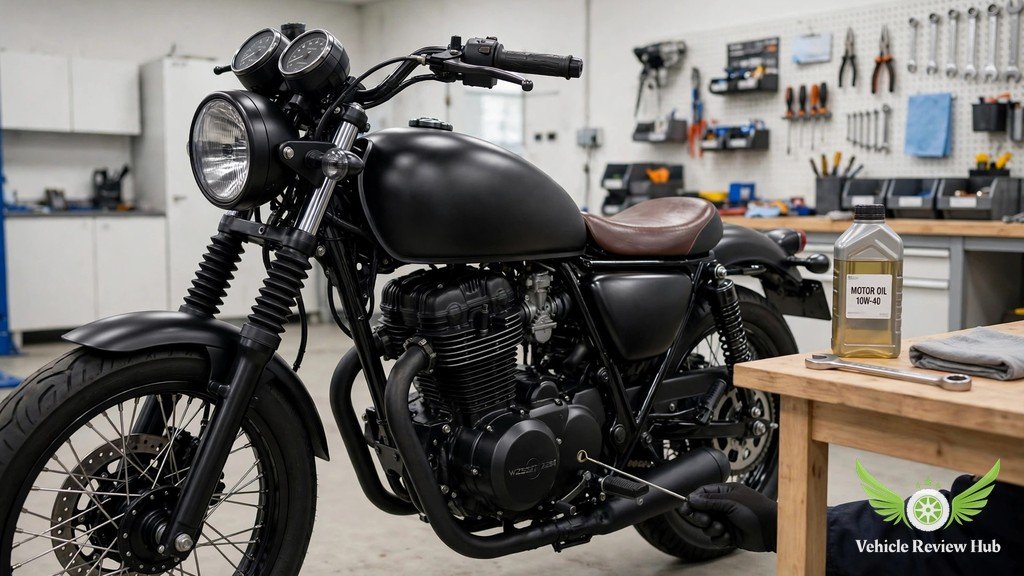
Here is where the record goes thin. No US owner’s manual for the W230 ABS has been found, so no US service interval, oil specification or valve figure is verified from any official source. This Kawasaki W230 ABS reliability guide prints what the secondary sources say — and where they disagree — rather than presenting any of it as the manual.
Fluid Interval Is Generic Only
Brake fluid is DOT 4, and the change interval is every two years — but that figure is Kawasaki-generic, not W230-specific. It comes from Kawasaki’s standard practice: a 2006 Australian Kawasaki owner’s manual lists brake fluid front and rear for replacement every two years. No W230-specific source states a fluid-change interval at all, and no ABS-specific service item or interval was found anywhere for this bike. Print the two-year figure only as generic Kawasaki practice, never as a figure from the W230’s manual, because the manual has not been read, and this Kawasaki W230 ABS reliability guide will not dress a generic figure up as a model-specific one.
US Manual Still Unread
Until the manual is found, no first-service mileage, oil specification or capacity, valve-check interval, spark-plug or air-filter interval, or brake-fluid interval is verified for this bike. The secondary sources that do print figures disagree with each other: MotoSpecDB, claiming an official manual as its source without citing a manual number, lists a first service at 1,000 km, oil and filter at 6,000 and 12,000 km, valves at 12,000 km, a NGK LMAR9G plug, chain slack of 25–35 mm and SAE 10W-40 JASO MA2 oil at 1.1 litres with the filter; MotorcycleDB instead lists a NGK SILMAR9B9 plug and chain slack of 25–45 mm; Maxabout lists the valve check at 6,000 km. The doc’s Asian-market 6,000 km chart is a doc claim only — no Asian-market manual was independently verified either. This Kawasaki W230 ABS reliability guide prints the disagreement and settles none of it.
Kawasaki W230 ABS Tires, Brakes and Suspension Maintenance

The wear items on this bike are ordinary — tyres, brake pads, chain, fork oil — but the ABS hardware that watches them is not, and its prices are the least verified numbers in this whole cluster. This Kawasaki W230 ABS reliability guide separates the two: the checks below are straightforward, and the parts prices are stated as unknown wherever they are unknown. The checks themselves are simple; the prices are not — a split this Kawasaki W230 ABS reliability guide keeps visible throughout the section.
Modulator: $1,257 to $1,290
No retail price was found for the ABS modulator — not $1,257, not $1,290, and not any figure in between. The heading keeps the doc’s range verbatim, but the range has no source: searches across Partzilla, Babbitt’s, Ron Ayers, PartShark and CMSNL, plus eBay and Amazon listings, found no retailer listing for the pump at all, and the parts dataset that lists 170 W230 ABS parts carries no price fields and no ABS hydraulic unit whatsoever. What is verified is the part itself: PUMP-ASSY-OIL,ABS,WET, part number 16082-0928, one pump watching both wheels through separate circuits, with independent wheel-speed sensors front and rear. Until a retailer publishes one, the honest price for the modulator is unknown — and this Kawasaki W230 ABS reliability guide will not fill that blank with an unsourced number. The full hardware record lives in the Kawasaki W230 ABS review, which works through the pump, the sensors and the supplier question.
| ABS part | Part number | Retail price found? |
|---|---|---|
| ABS pump / modulator | 16082-0928 | None — no retail price found |
| Sensor rotor (front and rear, same part) | 21007-0683 | None — no retail price found |
| Wheel-speed sensor, front | 21176-1218 | None — no retail price found |
| Wheel-speed sensor, rear | 21176-1219 | None — no retail price found |
| ABS hoses | 43095-2018 / 2019 (front), 43095-2285 / 2286 (rear) | None — no retail price found |
Note: Every part number above is verified from Kawasaki’s own parts catalog; every price is unverified. The 2027 pump part number is not verified either — the 2027 parts index returns an error. This Kawasaki W230 ABS reliability guide lists the numbers a buyer can check and refuses the ones nobody can.
Tire, Brake and Suspension Checks That Matter
The checks themselves need no manual. Brakes are a single 265 mm front disc with a two-piston caliper and a single 220 mm rear disc with a single-piston caliper, both under ABS; check pad thickness and disc condition, and watch the ABS warning lamp on the dash at start-up. No publication has measured a braking distance, so the Kawasaki W230 ABS performance guide covers that gap rather than this one. The chain is sealed — check slack and lubrication, and note the sources disagree on the slack figure itself, 25–35 mm against 25–45 mm, so measure against the figure your dealer confirms rather than either number here. None of these checks needs a part price — and on this bike, that is just as well, because this Kawasaki W230 ABS reliability guide could not verify one.
Kawasaki W230 ABS Maintenance and Ownership Costs

Ownership costs on this bike are dominated by two facts: the purchase price is low, and almost every replacement-part price worth knowing is unverified. Fuel is the one running cost with real numbers behind it. This Kawasaki W230 ABS reliability guide works through all three — fuel, servicing and parts — and labels each figure by its source.
Fuel, Routine Servicing, Tires and Replacement Parts
The tank holds 3.1 gallons, and the US EPA certification figures as republished by MotorcycleDB are 89.1 mpg for 2025 and 88.8 mpg for 2026 — labelled as republication, because fueleconomy.gov lists no motorcycles and no primary EPA source was found. The maker’s published figure is 40.0 km/L, or 94.1 US mpg, and the one US owner with two fills recorded 84 and 94 mpg during break-in. Routine servicing has no verified price because it has no verified schedule: with no US manual, no dealer service menu was verified either, and this Kawasaki W230 ABS reliability guide prints no labour figure it cannot source. Tyres are the standard wear item — 90/90-18 front, 110/90-17 rear — and replacement parts carry the same warning as the ABS hardware: the part numbers are verified, the prices are not. That is the whole running-cost picture this Kawasaki W230 ABS reliability guide can verify: fuel with labelled figures, servicing without a schedule, and parts without prices. The full four-bike comparison lives in the Kawasaki W230 ABS comparison guide.
| Model year | MSRP | Destination | Delivered |
|---|---|---|---|
| 2025 | $5,599 | $420 | $6,019 |
| 2026 | $5,699 | $435 | $6,134 |
| 2027 | $5,899 | $435 | $6,334 |
Note: All three years are mechanically identical — only the price, the colour and a 0.1 lb weight rounding change. The 2025 colour is Metallic Ocean Blue/Ebony, 2026 is Metallic Matte Dark Green, and 2027 is Ebony. This Kawasaki W230 ABS reliability guide uses the 2027 price as the current one: $5,899 plus $435 is $6,334 delivered, per the 2027 spec sheet.
Sensor Rotor About $90
No retail price was found for the sensor rotor either — the “about $90” in the heading is the doc’s figure, and it has no source anywhere. What is verified is the part: ROTOR,SENSOR, part number 21007-0683, fitted once at the front and once at the rear — the same part at both ends — and shared with the KLX230 platform, including the 2026 KLX230 Sherpa S ABS and the 2023 KLX230 S. The rotor is a wear item in principle — a damaged or corroded sensor ring will trip the ABS warning lamp — but with no price published, the only honest statement is that the part number is 21007-0683 and its retail price is unknown, and this Kawasaki W230 ABS reliability guide will not guess at it.
How to Keep a Kawasaki W230 ABS Reliable
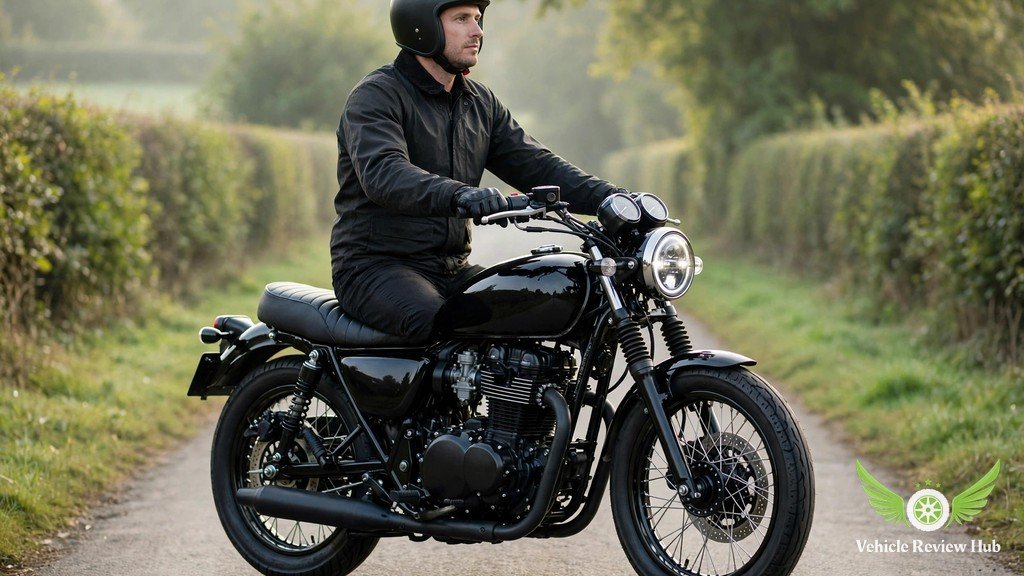
Keeping one of these reliable is mostly a matter of doing the ordinary things and the one extraordinary one: check the recalls by VIN. This Kawasaki W230 ABS reliability guide closes with the checklist that follows from everything above.
Preventive Maintenance, Records and Regular Inspections
First, check both recalls by VIN — on NHTSA’s site or with a Kawasaki dealer — before buying and again at every service: a 2025 bike can carry both campaigns, a 2026 bike the bulb campaign, and a 2027 bike neither. Second, keep records: with no published service schedule, a stamped record of what was done and when is the only proof a used buyer can rely on. Third, inspect regularly — tyres and pressures, chain slack and lubrication, pad thickness, brake fluid level and the ABS warning lamp at start-up. The bike itself helps — an air-cooled single with one electronic rider aid and no ride modes has very little to go wrong — but the record above shows the failures that do exist are found by checking, not by waiting, which is the whole point of this Kawasaki W230 ABS reliability guide.
KLX Recall Does Not Apply
One recall must be named so it can be excluded. Recall 22V397 covers the 2020–2022 KLX230 models only — the LX230A KLX230 ABS (1,220 units) and the LX230G KLX230 S ABS (703 units), 1,923 bikes in total — and the defect was a front brake disc of a smaller diameter than specified, fitted to the front wheel. The remedy was the correct front disc, part 41080-0709, with new pads. It does not apply to the W230 ABS: the W230 is model code BJ230A, built from October 2024, while the KLX bikes are LX230A and LX230G, built between June 2019 and February 2022 — a different model code and an earlier production run, with no KLX230 recall at all for 2025 or 2026. The W230 ABS’s brake record is clean: no brake recall, no ABS recall, and no complaint — the finding this Kawasaki W230 ABS reliability guide opened with.
Kawasaki W230 ABS Reliability FAQs
The answers below stick to verified figures, and this Kawasaki W230 ABS reliability guide labels every gap.
Has the Kawasaki W230 ABS been recalled?
Yes, twice — and neither recall is an ABS defect. Recall 25V363 covers 482 of the 2025 bikes for a ground-point stall, fixed with a new battery harness free of charge under a do-not-drive advisory. Recall 26V387 covers 840 bikes across 2025 and 2026 combined for turn-signal bulbs, fixed with all four bulbs replaced free of charge. This Kawasaki W230 ABS reliability guide stresses the point: the brakes and the ABS appear in neither campaign.
How do I check if my W230 ABS is affected by a recall?
Check both campaigns by VIN on NHTSA’s site or with a Kawasaki dealer. Recall 25V363 covers 2025 BJ230A bikes built between October 2, 2024 and March 31, 2025; recall 26V387 covers 2025–2026 BJ230A bikes built between October 2, 2024 and October 28, 2025. The 2027 bike is covered by neither — a fact worth confirming on the VIN all the same. That check is the single most useful step this Kawasaki W230 ABS reliability guide recommends before buying used.
Are there any complaints about the W230 ABS?
Zero NHTSA complaints are on file as of November 25, 2026, across every model string and all three model years — 2025, 2026 and 2027. Complaints are owner-filed and can appear later, and the three stalled-engine reports behind the ground recall went to Kawasaki’s Japanese distributor rather than to NHTSA, so they do not contradict the zero. This Kawasaki W230 ABS reliability guide will update the count if a complaint appears.
What does the ABS pump cost to replace?
Unknown. No retail price was found for the pump — Kawasaki part number 16082-0928 — at any retailer, so the $1,257 figure has no source and is not printed here as a fact. The same applies to the sensor rotor, part number 21007-0683: the “about $90” figure is likewise unverified. Only the part numbers are verified, and this Kawasaki W230 ABS reliability guide prints them instead of prices it cannot source.
What is the W230 ABS’s service schedule?
The US owner’s-manual chart is unverified — no US service interval, oil specification or capacity, or valve figure was found. Brake fluid is DOT 4, changed every two years per Kawasaki’s standard practice — a generic figure, never a W230-manual figure. Until the manual is found, this Kawasaki W230 ABS reliability guide cannot give a model-specific schedule.
Does the KLX230 brake recall affect the W230 ABS?
No. Recall 22V397 covers 2020–2022 KLX230 models only — LX230A and LX230G, 1,923 units, for a wrong front brake disc. The W230 ABS is model code BJ230A, built from October 2024, a different model code and a later production run. No KLX230 recall exists for 2025 or 2026. This Kawasaki W230 ABS reliability guide names the recall only to exclude it.