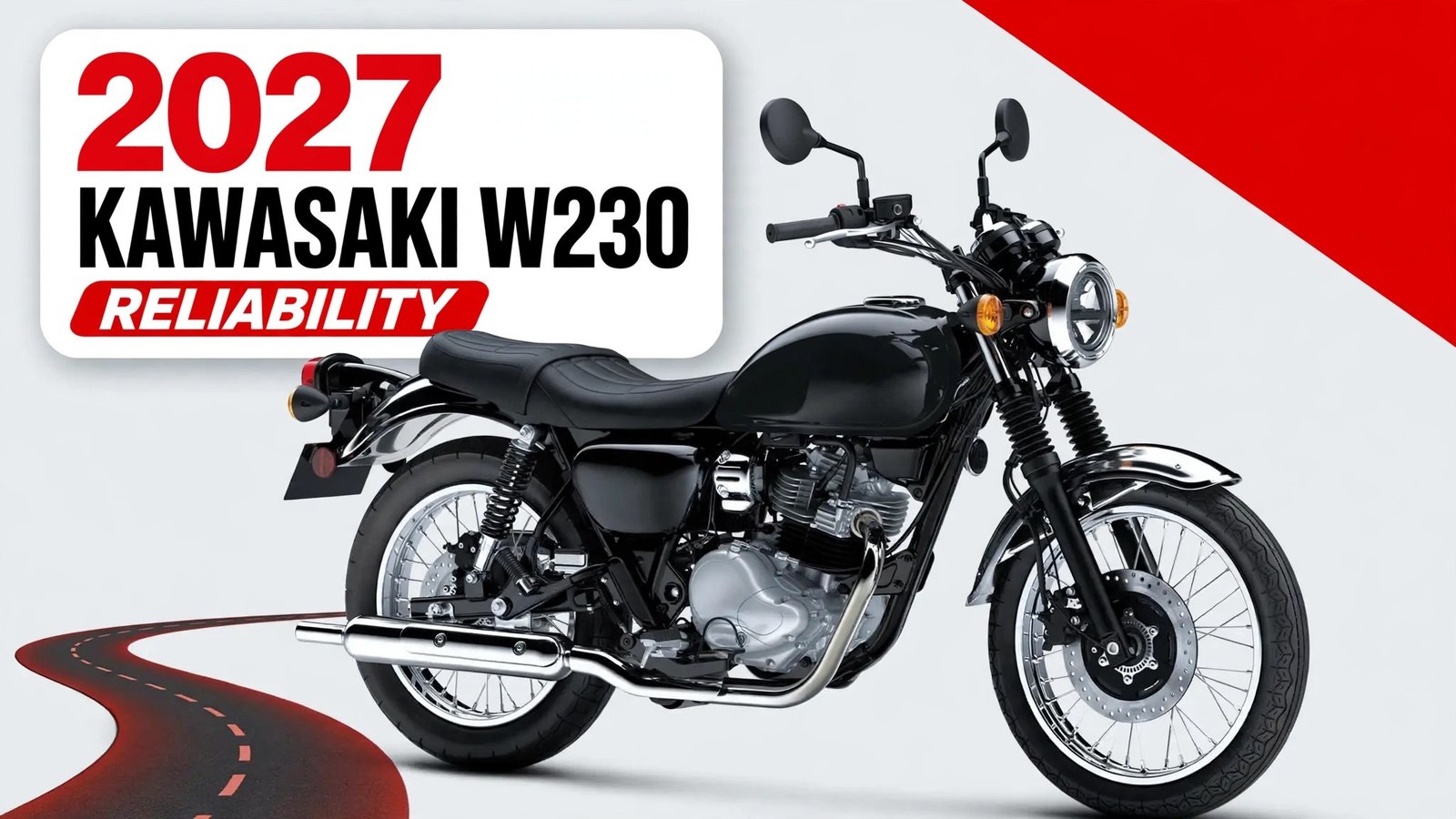
The Kawasaki W230 is only two model years old, and its reliability record is already written down in official documents: two NHTSA recalls covering 482 bikes and 840 bikes, zero owner complaints on file, and a US service chart that nobody has yet published. This Kawasaki W230 reliability guide works from those documents — the Part 573 recall reports themselves — instead of repeating what forums and listicles assume about a small, simple, air-cooled single.
That simplicity is the bike’s best reliability argument. A 233cc single making 17 hp, with two valves, a six-speed gearbox, disc brakes at both ends and no rider aids beyond ABS has very little to go wrong, and the record so far in this Kawasaki W230 reliability guide matches that promise. What follows in this Kawasaki W230 reliability guide is the recall record in full, the owner problems that actually exist, the maintenance picture as it stands, and what to check before buying a used one.
Kawasaki W230 Reliability Overview
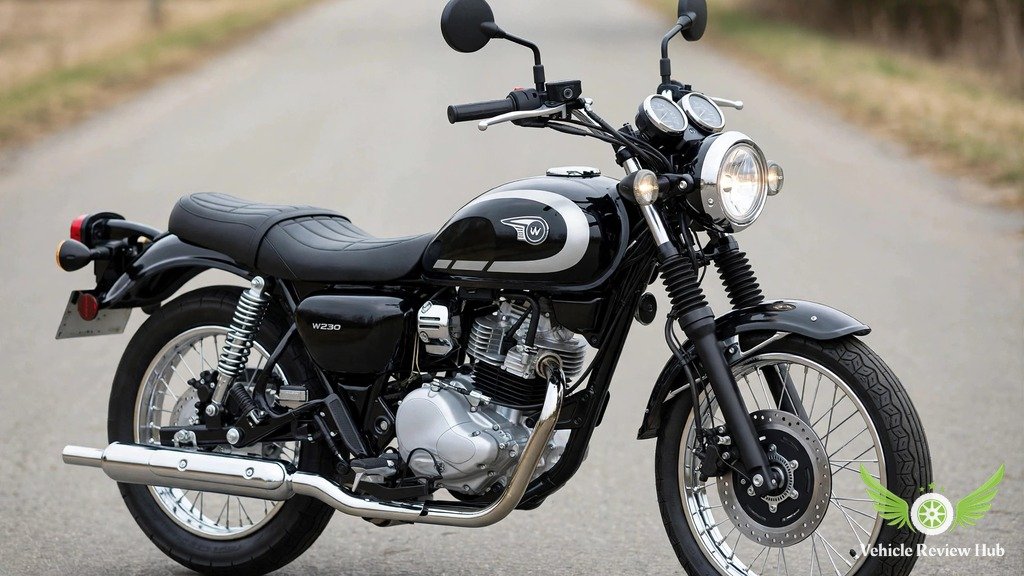
The short version of the W230’s reliability story is encouraging with one clear exception. Two recalls in its first two years is a lot for a new model, yet both were caught early, both have free remedies, and not a single owner complaint has reached NHTSA. This Kawasaki W230 reliability overview starts with the recalls, then looks at how mileage, storage and previous care shape a used bike, because the newest W230 is already two model years old and used examples are appearing.
Two Recalls in Two Years
The W230 carries two NHTSA campaigns, and this Kawasaki W230 reliability guide covers both in full — the W230 is the only bike named in each. The first is 25V363, a ground-point stall affecting 482 of the 2025 bikes, fixed free with a new battery harness. The second is 26V387, a turn-signal bulb failure affecting 840 bikes across 2025 and 2026 combined, fixed free with all four bulbs replaced.
How Mileage, Storage and Previous Care Affect Reliability
No long-term W230 data exists, because the bike has only been on sale in the United States since 2025 — the oldest examples are barely two years old, and nobody has published a high-mileage test. What follows in this Kawasaki W230 reliability guide is general guidance, labelled as such, not W230 failure data. Storage matters more than mileage on a bike this young: rubber ages whether the bike moves or not, a chain left dry will stiffen, and a battery left flat can hide the ground-connection weakness that caused the first recall.
Kawasaki W230 Common Problems and Wear Items
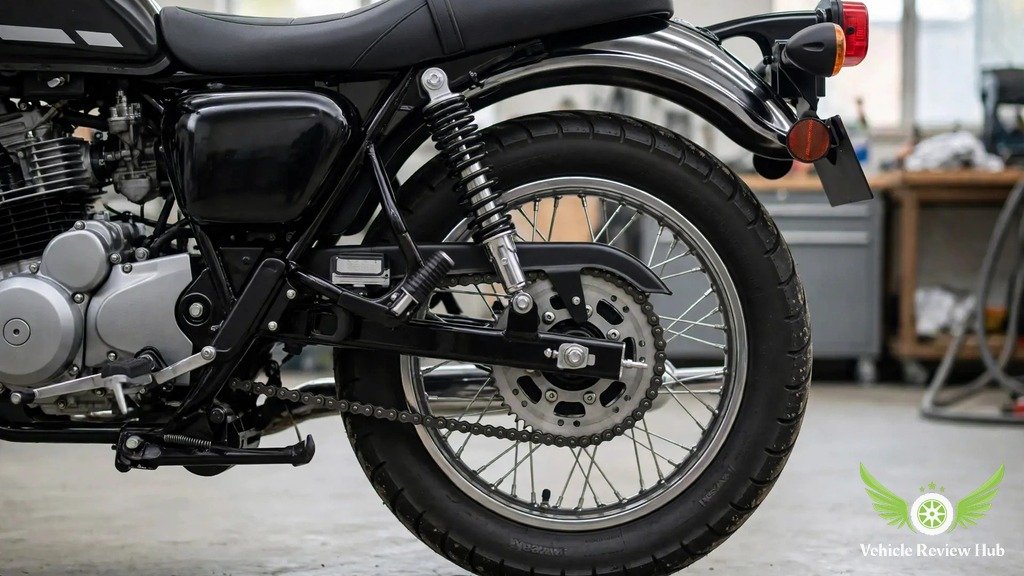
The W230’s common problems are, in practice, its two recalls plus a short list of owner-reported quirks. This Kawasaki W230 reliability section covers each recall in full, with the defect, the affected bikes, the remedy and the owner-letter dates, so a buyer can check a specific bike against the record instead of guessing.
25V363: Ground Point Stall
The first recall in this Kawasaki W230 reliability guide, NHTSA 25V363, is a stall risk. Cosmetic paint on the engine-mount grounding portion can make the electrical ground connection between the battery and the frame unstable, interrupting current to essential components such as the ECU and stalling the engine while riding. The Part 573 report, submitted on June 23, 2025, names certain 2025 BJ230A bikes built between October 2, 2024 and March 31, 2025 — 482 bikes in total, and the campaign total is also 482, so the W230 is the only model affected. Kawasaki estimated that 1 percent of those bikes carry the defect. The chronology is short: three stalled-engine reports reached Kawasaki’s Japanese distributor in March 2025, the investigation found the paint and ground cause in April along with a fourth report, and the recall was decided on May 23, 2025. The remedy is a replacement battery harness connecting the battery’s negative terminal to the engine and frame, fitted free of charge, and repaired bikes are marked with a white paint mark left of the VIN. The Part 573 carries a do-not-drive consumer advisory, and Transport Canada’s matching recall says the same. Owner letters went out in mid-June 2025. By the second quarter of 2025, 94 of the 482 bikes had been remedied, with none unreachable and none removed from the count — the completion figure this Kawasaki W230 reliability guide prints.
26V387: Signal Bulbs Fail
The second recall in this Kawasaki W230 reliability guide, NHTSA 26V387, is a turn-signal failure. Some bulbs from supplier Fiem Industries in India contain foreign material or have cracks, so the filament can be damaged early and the front or rear turn signals can fail to light. The Part 573 report, submitted on June 12, 2026, names certain 2025–2026 BJ230A bikes built between October 2, 2024 and October 28, 2025 — 840 bikes in total, and again the campaign total is 840, so the W230 is the only model affected. That 840 spans both model years combined, never 840 per year. The remedy, confirmed in the dealer bulletin and the NHTSA summary rather than the original Part 573 (whose remedy section was blank at filing), is a replacement of all four turn-signal bulbs, free of charge, taking about fifteen minutes. Owner letters were expected to be mailed on July 7, 2026. There is no do-not-drive advisory for this campaign — Kawasaki issued a stop sale but did not advise owners to stop riding. Two confusions need clearing up: the same defect also appears in a Japan MLIT campaign covering 9,857 W230 and Meguro S1 bikes in Japan, which is not the US figure, and the US figure of 840 covers the W230 only. No completion percentage is printed here, because the quarterly report for this campaign could not be located — a “~35% fixed” figure circulates online without a verifiable source, and this Kawasaki W230 reliability guide does not repeat it. The Part 573 report is the source for the defect, the count and the production window.
| Campaign | Bikes affected | Defect | Remedy |
|---|---|---|---|
| 25V363 (2025) | 482 (2025 BJ230A only) | Ground-point stall — paint interferes with battery-to-frame ground, engine can stall | Battery harness replacement, free; white paint mark left of VIN; do-not-drive advisory |
| 26V387 (2025–2026) | 840 (both years combined) | Turn-signal bulbs fail — foreign material or cracks in Fiem bulbs | All four bulbs replaced, free; about 15 minutes; no do-not-drive advisory |
Note: Both campaigns are single-model, and this Kawasaki W230 reliability guide prints the proof: the W230 slice and the campaign total are identical in each Part 573 report. The 840 figure for 26V387 spans 2025 and 2026 combined, never per year, and the Japan figure of 9,857 bikes is a different campaign in a different market. The ZX-6R campaigns 25V798 and 25V376, the KX450 CPSC recall and the Yamaha Ténéré 700 signal recall are not this bike’s recalls. This Kawasaki W230 reliability table prints only the two campaigns that name the W230.
Kawasaki W230 Maintenance Schedule and Servicing
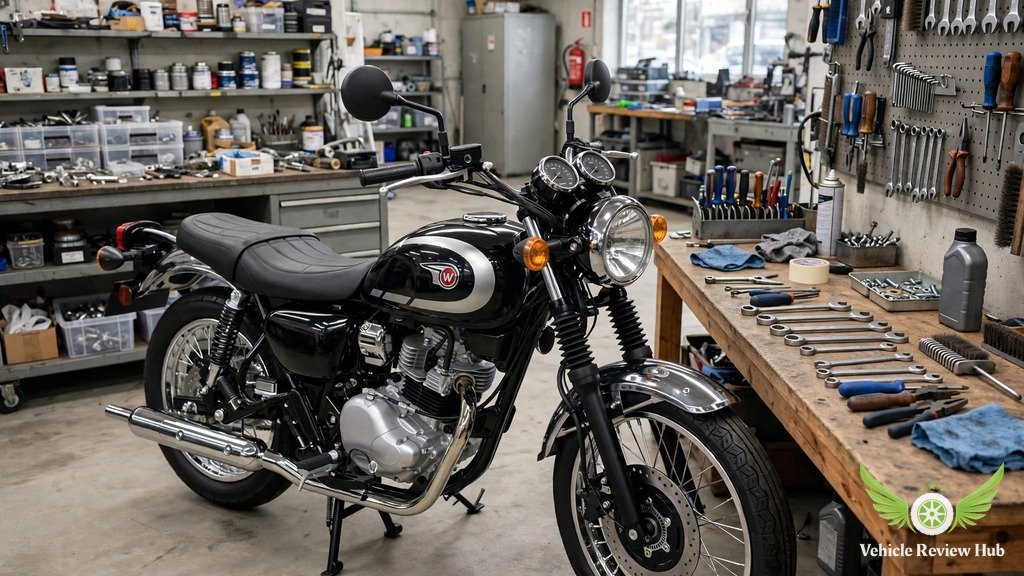
Maintenance is the one area of this bike where the honest answer is that the paperwork has not been found. No US owner’s-manual service chart was located in this research, so this Kawasaki W230 reliability section says plainly what is verified, what the doc claims about an Asian-market chart, and what a buyer should do instead of guessing at intervals.
US Manual Chart Unverified
The US owner’s-manual maintenance chart is unverified — and this Kawasaki W230 reliability guide found no first-service mileage, oil specification or capacity, valve-check interval, or spark-plug or air-filter interval from a US source. That is a statement about the state of the research, not a claim that the bike has no schedule: every W230 ships with an owner’s manual, and the manual that comes with the bike is the document a buyer should follow. Until that chart is read from a US manual, this Kawasaki W230 reliability guide prints no US service interval, no oil figure and no valve figure as a verified fact. The practical advice is simple: ask the selling dealer to show the service chart from the bike’s own manual, keep the service book stamped.
Asian Chart: 6,000 km Checks
The doc’s Asian-market chart uses 6,000 km checks — and that figure is a doc claim only, never a verified figure in this Kawasaki W230 reliability guide. No Asian-market W230 manual was located in this research, so the 6,000 km figure is printed here labelled as the doc’s Asian-market figure, not as the US schedule and not as a verified interval. A buyer should not plan servicing around it: the US manual may use different intervals, different units and different items, and the two charts should never be mixed. Until the US chart is read, the safest course is the one above: follow the manual that came with the bike, keep records of every service, and treat any interval found online as unverified until a dealer confirms it against the US manual.
Kawasaki W230 Tires, Brakes and Suspension Maintenance

The W230’s running gear is as simple as its engine — narrow tyres, a disc brake at each end with ABS, a sealed chain and twin rear shocks with preload adjustment — and this Kawasaki W230 reliability guide checks each of them below. This Kawasaki W230 reliability section pairs the strongest fact in the bike’s record — zero complaints — with the checks that actually matter on a used example.
Zero Complaints on File
Zero NHTSA complaints are on file for the W230 as of November 25, 2026. That figure was checked across all twelve combinations of model string and model year — “w230”, “w 230”, “er230” and “w230 abs” for 2025, 2026 and 2027 — and every query returned a count of zero. The stalled-engine reports in the 25V363 chronology do not contradict the zero — those three reports went to Kawasaki’s Japanese distributor, not to NHTSA, so they never entered the US complaint count. For a bike in its first two years, zero complaints alongside two quickly handled recalls is a clean record, and this Kawasaki W230 reliability guide prints it as exactly that.
Tire, Brake and Suspension Checks That Matter
The checks that matter in this Kawasaki W230 reliability guide are the ones a buyer can do with eyes and hands. The tyres are a 90/90-18 front and a 110/90-17 rear, named by Ultimate Motorcycling as the IRC Grand High Speed GS-11 — check the tread, the sidewalls for cracks, and the date code, because rubber ages on a bike that sat in storage just as it wears on one that was ridden. The brakes are a single 265mm front disc with a two-piston caliper and a single 220mm rear disc with a one-piston caliper, ABS on both wheels every model year — check pad thickness, disc scoring and lever feel, and remember that the rear is a disc, not the drum some early coverage assumed. The sealed chain needs tension and lubrication checked, and the twin rear shocks carry preload adjustment, so check that both sides match and the seals are dry.
| Check | What to look for | Why it matters |
|---|---|---|
| Tyres (90/90-18 front, 110/90-17 rear) | Tread depth, sidewall cracks, date code | Rubber ages in storage as well as in use; a low-mileage bike can still need tyres |
| Brakes (265mm front, 220mm rear, ABS both) | Pad thickness, disc scoring, lever feel | Both ends are discs; a soft lever or scored disc is the first sign of neglected maintenance |
| Sealed chain | Tension, lubrication, stiff links | A dry or stiff chain wears sprockets and robs the little power the bike has |
| Suspension (37mm fork, twin shocks) | Fork seals dry, both shocks set to the same preload | Leaking seals and mismatched preload show up as a hard, unsettled ride |
| Battery ground connection | White paint mark left of the VIN (25V363 fix done) | The mark proves the stall-recall harness was fitted; its absence on a 2025 bike is a warning |
| Turn signals (all four) | All four bulbs light, lenses undamaged | The 26V387 recall replaced all four bulbs; check the fix was done on 2025–2026 bikes |
Note: No chain-slack figure, tyre pressure or torque value is printed in this Kawasaki W230 reliability table, because none was verified from a US source for this bike. The figures that are printed — tyre sizes, disc sizes, fork diameter and travel — come from Kawasaki USA’s spec sheets. A dealer should set chain tension and tyre pressures from the bike’s own manual.
Kawasaki W230 Maintenance and Ownership Costs

Owning a W230 is cheap in the ways that matter: it sips fuel, its recall remedies cost nothing, and its simple running gear keeps routine work small. The costs that do exist are the ones every small bike carries — fuel, tyres and routine servicing — and this Kawasaki W230 reliability section prices what can be priced from verified figures and says plainly where no verified figure exists.
Fuel, Routine Servicing, Tires and Replacement Parts
Fuel is the W230’s cheapest running cost. The US EPA rates the 2025 bike at 89.1 US mpg and the 2026 bike at 88.8 US mpg, and the single owner who tracked fill-ups recorded 84 and 94 mpg over two break-in fills — so a realistic figure is around 90 mpg, and a 3.1-gallon tank gives roughly 280 miles between fill-ups. The Kawasaki W230 performance guide carries the full MPG breakdown. Replacement parts carry the same rule: the recall remedies are free, and everything else should be priced from a Kawasaki dealer, not from a forum post. The purchase prices in this Kawasaki W230 reliability guide are verified — 2025 at $5,599 plus $420 destination, 2026 at $5,699 plus $435, and 2027 at $5,899 plus $435 — and the full Kawasaki W230 review carries the price ladder with the destination conflict resolved.
Gritty Shifting, One Thread
The only owner-reported problem beyond the recalls in this Kawasaki W230 reliability guide comes from a single thread. On April 20, 2025, a user called “faltic” on the Bob Is The Oil Guy forum reported that shifting on his new W230 “was flawless the first 200 miles then overnight became gritty” — never refusing to take a gear, just losing the effortless feel it started with. He added that the grittiness eased with a change to Mobil 1 V-Twin 20W50, though the original effortlessness did not return, and that two or three times he experienced a failure to accelerate when shifting into fifth or sixth. NastyNils lists gritty or notchy shifting during the break-in period as a known issue, attributed to the factory oil fill. Ultimate Motorcycling’s beginner tester reported a related quirk from the same period: a clutch that engages late and gave her trouble shifting at first. The full riding picture, including that stiff throttle and firm seat, is in the Ultimate Motorcycling beginner review.
| Item | Figure | Note |
|---|---|---|
| 2025 MSRP + destination | $5,599 + $420 = $6,019 | Kawasaki USA 2025 spec sheet |
| 2026 MSRP + destination | $5,699 + $435 = $6,134 | Kawasaki USA 2026 spec sheet |
| 2027 MSRP + destination | $5,899 + $435 = $6,334 | Kawasaki USA 2027 spec sheet |
| Fuel economy (US EPA) | 89.1 US mpg (2025); 88.8 US mpg (2026) | Owner fills: 84 and 94 mpg, one owner, two fills |
| Recall remedies | Free | Battery harness (25V363) and all four bulbs (26V387), dealer-fitted |
| Routine service cost | Not verified | US service chart unverified; get a written dealer quote |
Note: Leftover 2025 bikes were advertised from $3,599 in a Cycle Trader snapshot dated December 13, 2025, with the lowest verified price at $3,584 — that is late-2025 pricing, never a current price. No used W230 price is printed here, because none was verified. This Kawasaki W230 reliability table prints only purchase prices from Kawasaki USA’s own spec sheets.
How to Keep a Kawasaki W230 Reliable
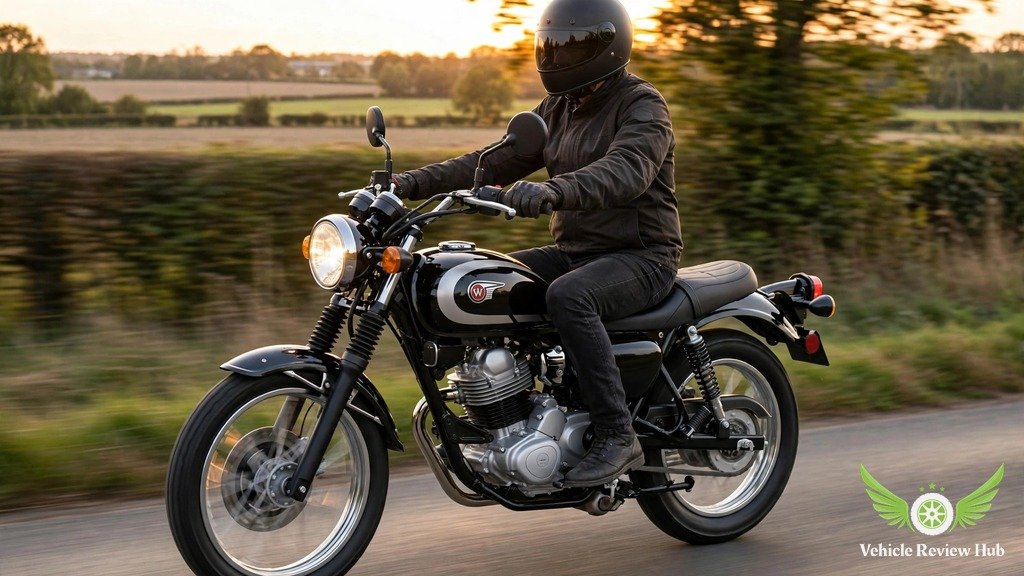
Keeping a W230 reliable is mostly a matter of doing the simple things on time: check the two recalls by VIN, keep the chain and tyres in order, and keep records of everything. This Kawasaki W230 reliability section closes with the preventive habits that matter and the VIN check every buyer should run before money changes hands.
Preventive Maintenance, Records and Regular Inspections
Preventive care on a W230 is straightforward, and the advice in this Kawasaki W230 reliability guide is general guidance, labelled as such — no W230-specific long-term data exists yet to prove one routine better than another. Inspect the chain, tyres and brakes regularly, keep the chain lubricated, and check the battery connections, because the first recall was a ground-connection fault and a clean, tight battery terminal is cheap insurance. Store the bike under cover and on a tender if it sits for weeks, since a flat battery and ageing rubber are the two things that punish a stored bike first. Keep every service receipt and record, not only because it protects resale value but because a paper trail is the fastest way to prove the recall work was done.
VIN-Check Both Campaigns
Before buying any used W230, check both recalls by VIN — on NHTSA’s website or with a Kawasaki dealer. The 25V363 stall recall covers 2025 BJ230A bikes built between October 2, 2024 and March 31, 2025, and the fix is proven by the white paint mark left of the VIN. The 26V387 bulb recall covers 2025–2026 BJ230A bikes built between October 2, 2024 and October 28, 2025, and the fix is a replacement of all four turn-signal bulbs. The Kawasaki W230 comparison shows how the bike’s price and running costs stack up against its rivals, for buyers weighing a used W230 against a new Hunter 350 or Speed 400.
Kawasaki W230 Reliability FAQs
The questions below cover what buyers ask about most in this Kawasaki W230 reliability guide: the two recalls, the VIN check, the complaint record, the service schedule, the shifting thread and the used-bike inspection. Every answer labels its figures for what they are.
Has the Kawasaki W230 been recalled?
Yes, twice. The 25V363 stall recall covers 482 of the 2025 bikes, fixed free with a battery-harness replacement, and the 26V387 signal-bulb recall covers 840 bikes across 2025 and 2026 combined, fixed free with all four bulbs replaced. Both are single-model campaigns, and this Kawasaki W230 reliability guide prints the Part 573 figures for each.
How do I check if my W230 is affected by a recall?
Check both campaigns by VIN on NHTSA’s website or with a Kawasaki dealer. The 25V363 recall covers 2025 BJ230A bikes built between October 2, 2024 and March 31, 2025, and the 26V387 recall covers 2025–2026 BJ230A bikes built between October 2, 2024 and October 28, 2025 — the two windows this Kawasaki W230 reliability guide prints.
Are there any complaints about the W230?
Zero NHTSA complaints are on file as of November 25, 2026, across all model strings and model years 2025–2027. Complaints are owner-filed and can appear later, and the stalled-engine reports in the 25V363 chronology went to Kawasaki’s Japanese distributor, not to NHTSA — so they do not contradict the zero. This Kawasaki W230 reliability guide finds a clean complaints record, with two quickly handled recalls beside it.
What is the W230’s service schedule?
The US owner’s-manual chart is unverified — no US service interval was found in this research. The doc’s Asian-market chart uses 6,000 km checks, which is a doc claim only and never the US schedule. Follow the manual that came with the bike, and never treat an online interval as verified until a dealer confirms it. This Kawasaki W230 reliability guide prints no US interval as a verified fact.
Does the W230 have shifting problems?
One owner thread reports gritty shifting after 200 miles that eased with an oil change, and NastyNils lists gritty or notchy shifting during break-in as a known issue, attributed to the factory oil fill. One thread is not a defect pattern — and the bike has zero NHTSA complaints. A buyer test-riding a used W230 should shift through all six gears and feel for grittiness, as this Kawasaki W230 reliability guide recommends.
What should I check before buying a used W230?
VIN-check both recalls, confirm the battery-harness fix (white paint mark left of the VIN) and the four-bulb replacement were done, and check the chain, both discs and tyre condition. No used price is printed here — none was verified. This Kawasaki W230 reliability guide also recommends asking for service records and checking that the bike was stored under cover.