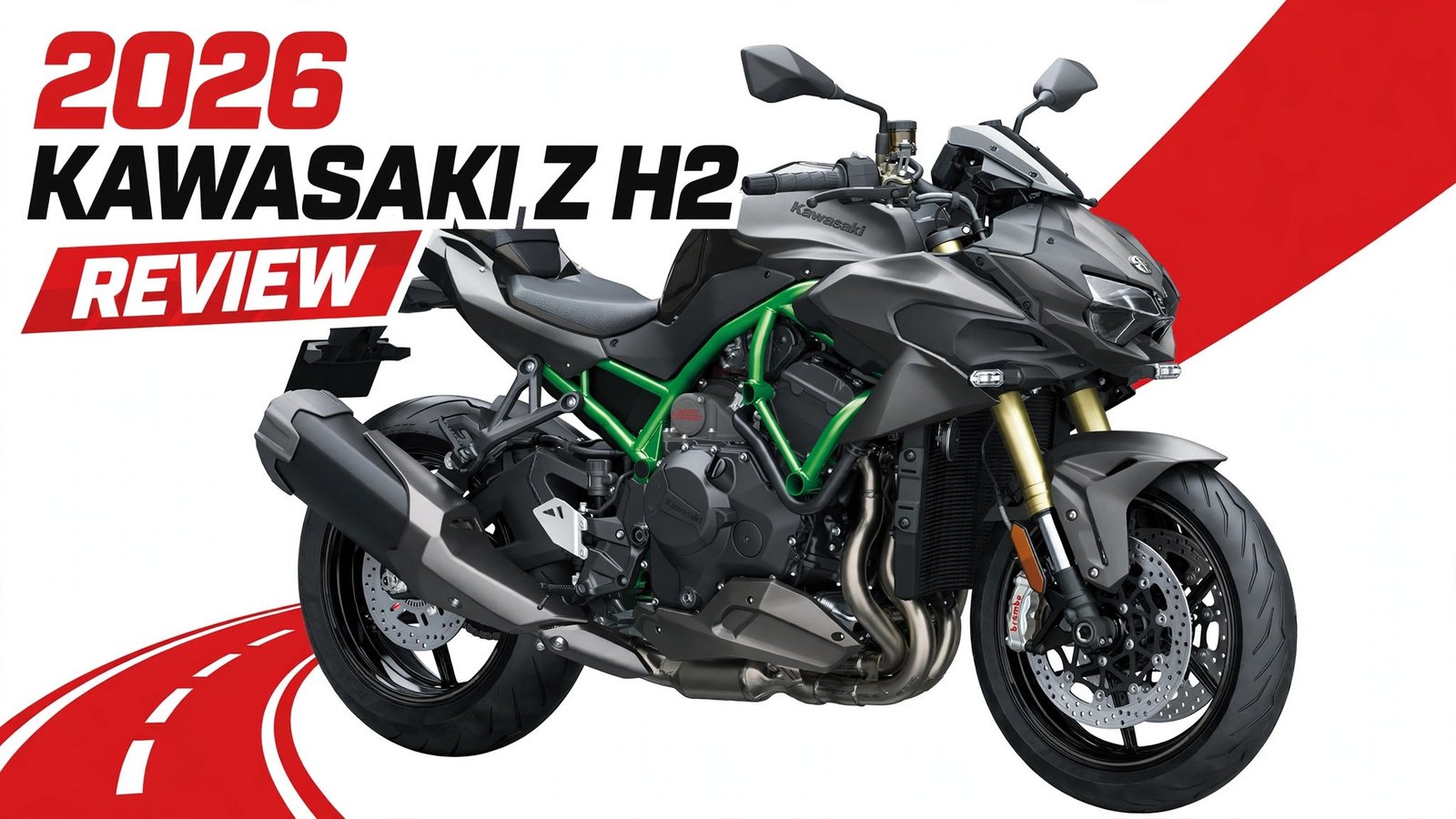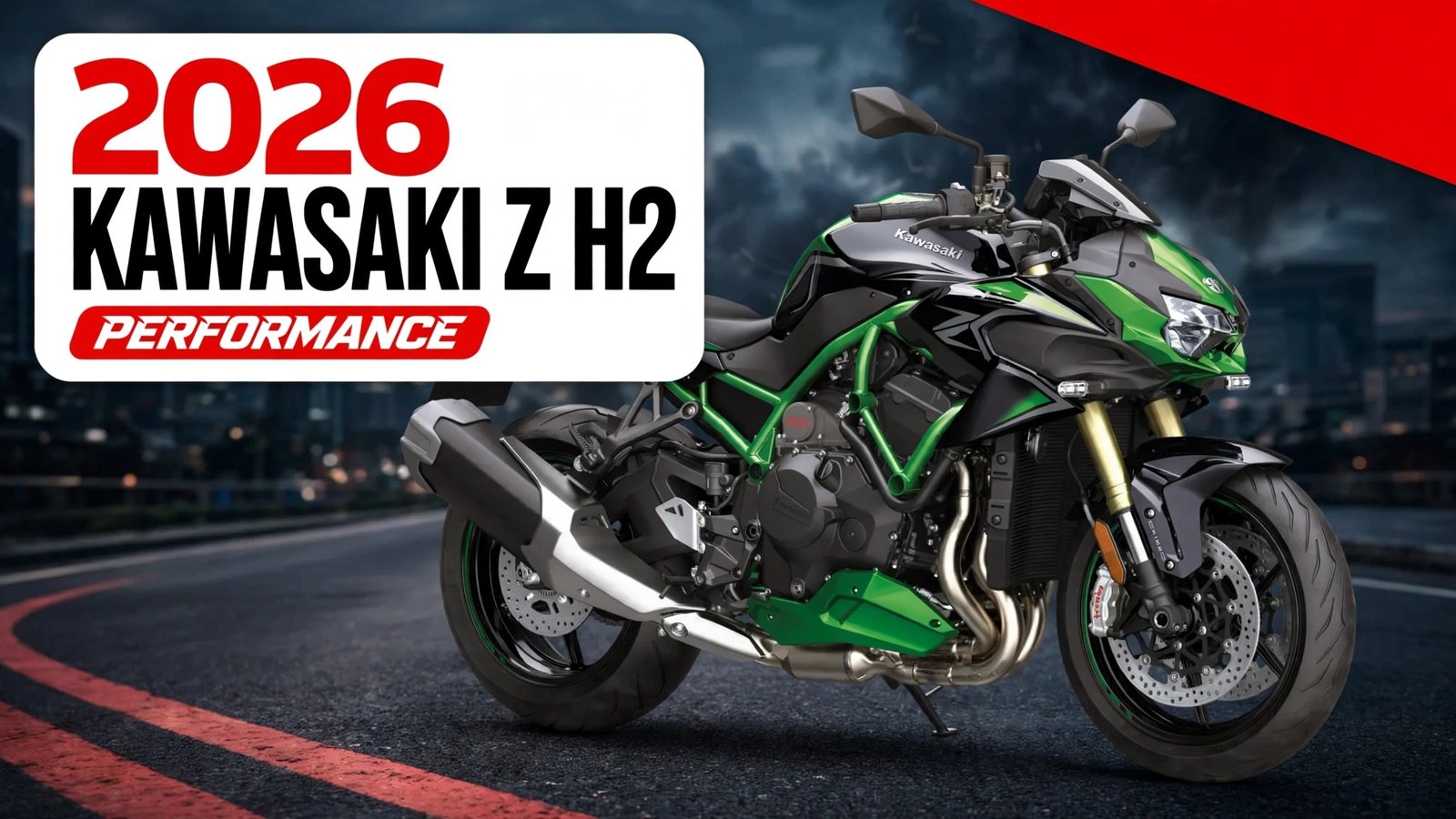
The Kawasaki Z H2 is the only supercharged naked in its class, and its performance figures are the most argued-over numbers attached to any modern Kawasaki. Claimed output is 197.1 hp, the launch price was $17,000, and the rear-wheel figures measured by three different publications span 160 to 182 hp. This Kawasaki Z H2 performance guide separates the tested figures from the estimates, covers the verified top speed, quarter-mile and mileage, and explains why the bike feels faster than its dyno sheet suggests.
The short version is that no single dyno figure defines this bike, because the three published rear-wheel runs land 22 hp apart; the best-sourced top speed is 168 mph on GPS; and the economy runs from 28 to 45 mpg depending on the road. The bike was revealed at the Tokyo Motor Show in October 2019 before its February 2020 press launch at Las Vegas Motor Speedway. In this Kawasaki Z H2 performance guide you will find the verified dyno spread, the quarter-mile the magazines actually timed, and the handling verdicts.
Kawasaki Z H2 Engine Performance and Power Delivery
Power is where any Kawasaki Z H2 performance guide has to start, because the supercharger is the whole point of the bike. A 998cc liquid-cooled inline-four with a centrifugal supercharger sits in a trellis frame, driven by a planetary gear train off the crankshaft, the impeller spinning up to 9.2 times crank speed. Cycle World’s 2020 buyers-guide page quotes the launch first ride at length, including the ‘genial open seating’ line repeated in the riding section below. There is no belt in the drive and no intercooler, and the claimed figures are 197.1 hp at 11,000 rpm and 101.1 lb-ft at 8,500 rpm — database figures, since Kawasaki’s own sheets print torque of 101.0 lb-ft and no power line at all.
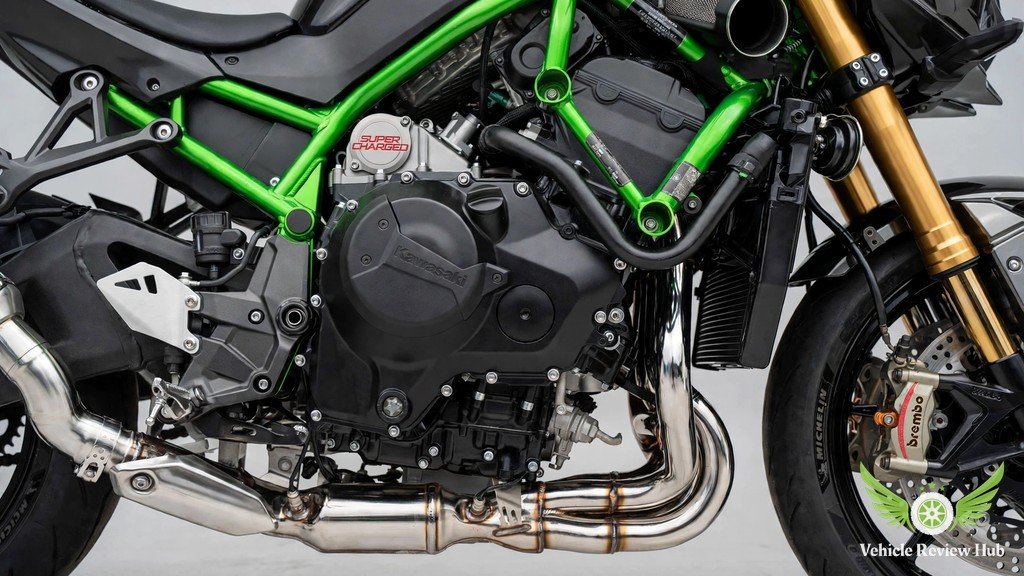
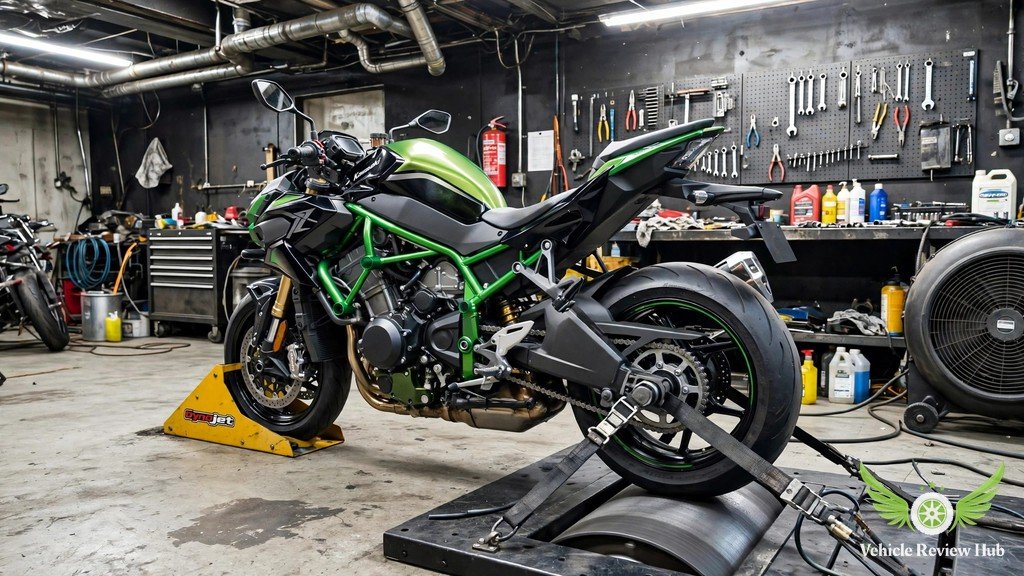
Cycle World ran the 2021 SE on its in-house Dynojet 250i, and the 79-second video below shows the run itself, ending on the on-screen result of 167.22 hp at 10,580 rpm. There is no narration — the figures are on screen, not spoken — and this is the SE’s run, never the 178 hp estimate this Kawasaki Z H2 performance guide corrects below.
Dyno: 178 Rear-Wheel hp
The heading above is wrong, and this Kawasaki Z H2 performance guide corrects it in the first sentence: no dyno test has ever printed 178 rear-wheel hp for the Z H2. The figure comes from a single estimates page, MotoStatz, which names no dyno, no publication, no bike year and no dyno model, and every citation of 178 hp traces back to that one page. It is an estimate, not a measurement, and it must never be quoted as a dyno result.
What the magazines actually measured is a spread: three publications, three bikes, three dynos, three answers from 160 to 182 hp at the rear wheel, reported here labelled by publication, bike and dyno, never blended into one figure. The track-only Ninja H2R uses the same supercharged family in a far more extreme state, at 322 hp claimed.
| Publication | Bike | Dyno | Rear-wheel figure |
|---|---|---|---|
| Bennetts | 2020 base | Pergusa dyno | 160 bhp @ 10,405 rpm, 85 ft-lb @ 8,557 rpm |
| Cycle World | 2021 SE | Dynojet 250i (in-house) | 167.22 hp @ 10,580 rpm, 87.60 lb-ft @ 8,560 rpm |
| Motorcycle Mojo | 2020 base | Riders Choice Bazzaz dyno | 182 hp @ 10,400 rpm |
Note: This Kawasaki Z H2 performance guide prints all three dyno figures because no single run defines the bike. Bennetts tested a 2020 base in very hot conditions and flagged the heat as the reason for the low figures, Cycle World tested a 2021 SE on its own Dynojet 250i, and Motorcycle Mojo tested a 2020 base on a Bazzaz dyno. The 22 hp spread is dyno and day, not a change in the bike.
167 hp Figure Is the SE
The second dyno heading is the correct one: the 167 hp figure belongs to the SE, and to the SE alone. Cycle World ran a 2021 Z H2 SE on its in-house Dynojet 250i and recorded 167.22 hp at 10,580 rpm and 87.60 lb-ft at 8,560 rpm, and that run is the source of every honest “167 hp” citation for this bike. It is not a base-bike figure: the base’s two published runs are Bennetts’ 160 bhp and Motorcycle Mojo’s 182 hp, both on 2020 bikes.
The 197.1 hp claim is a crank figure from the Motorcycle.com database; the 160 to 182 hp figures are rear-wheel measurements, and the gap between them is ordinary drivetrain loss plus dyno and method variance. For buyers comparing dyno sheets, the lesson of this Kawasaki Z H2 performance guide is simple: ask which bike, which dyno and which day before believing any single number.
Kawasaki Z H2 Top Speed and Acceleration
Top speed and acceleration are where the estimates page does the most damage, because its three figures — 176.8 mph, 10.13 seconds and a 2.91-second 0–60 — look like test results and are none of them. This Kawasaki Z H2 performance guide prints only what a publication actually measured, with the method named, and says plainly where no timed figure exists.
Tested Top Speed: 176.8 mph
The heading above is wrong as a tested figure, and this Kawasaki Z H2 performance guide corrects it in the first sentence: 176.8 mph has never been tested. It is a MotoStatz-only estimate, and every citation of it traces to that single estimates page. The best-sourced tested figure is 168 mph on GPS, recorded by Ultimate Motorcycling on a 2020 base bike on the banked oval at Las Vegas Motor Speedway — the same launch venue where Cycle News rode the bike in February 2020.
MCN quotes around 175 mph for the base bike and 166 mph for the SE, a 9 mph gap between its own pages with no method named. Motorcycle.com saw 158 mph indicated on the speedometer, not GPS. RevZilla says “almost 170 mph” without naming a method, and Bennetts managed 153 mph on track in a group test that was never a top-speed run. Kawasaki publishes no official top speed for the Z H2 at all, and the 186 mph figure in a TopSpeed listicle is unsourced and is not used here. That is why this Kawasaki Z H2 performance guide leads with the GPS figure and labels everything else.
| Publication | Bike | Figure | Method |
|---|---|---|---|
| Ultimate Motorcycling | 2020 base | 168 mph | GPS, LVMS banked oval |
| MCN | Base | ~175 mph | Method unlabelled |
| MCN | SE | 166 mph | Method unlabelled |
| Motorcycle.com | Base | 158 mph | Speedometer (indicated) |
| RevZilla | — | “Almost 170 mph” | Unlabelled |
| Bennetts | 2020 base | 153 mph | Track, group test (not a top-speed run) |
Note: No publication has GPS-verified a top speed above 168 mph for the Z H2, and this Kawasaki Z H2 performance guide leads with that figure for that reason. The MCN pages disagree with each other by 9 mph, so neither MCN figure is picked silently over the other.
Quarter in 10.13 Seconds
The heading above is wrong as a verified figure, and this Kawasaki Z H2 performance guide corrects it in the first sentence: 10.13 seconds is a MotoStatz Dragy claim with no timeslip published, not a timed quarter-mile. The verified publication figure is MCN’s 10.7 seconds on a Z H2 SE, with no trap speed published — that is the quarter-mile figure this Kawasaki Z H2 performance guide prints.
No major publication has published a timed 0–60 mph run for the Z H2, so this guide prints no 0–60 figure as a fact. The estimates page claims 2.91 seconds and FastestLaps lists 3.4 seconds as an estimate; both are estimates, and neither is a test. What the magazines did time are roll-ons: Bennetts measured 60–180 kph in 5.33 seconds on a 2020 base, and Chase on Two Wheels measured 40–80 mph in third gear in 3.19 seconds on a 2022 base. The roll-on figures are the useful numbers for road riders, and this Kawasaki Z H2 performance guide prints them because no timed 0–60 exists. Cycle World published no quarter-mile time for the Z H2, so none is attributed to it.
Kawasaki Z H2 Mileage and Fuel Economy
Mileage is the one area where the Z H2’s figures are consistent, and this Kawasaki Z H2 performance guide can print them without a correction. Motorcyclist’s 2023 test recorded 40–45 mpg on the freeway and 28–30 mpg on back roads: a supercharged litre bike that is thrifty on the motorway and thirsty when ridden hard.
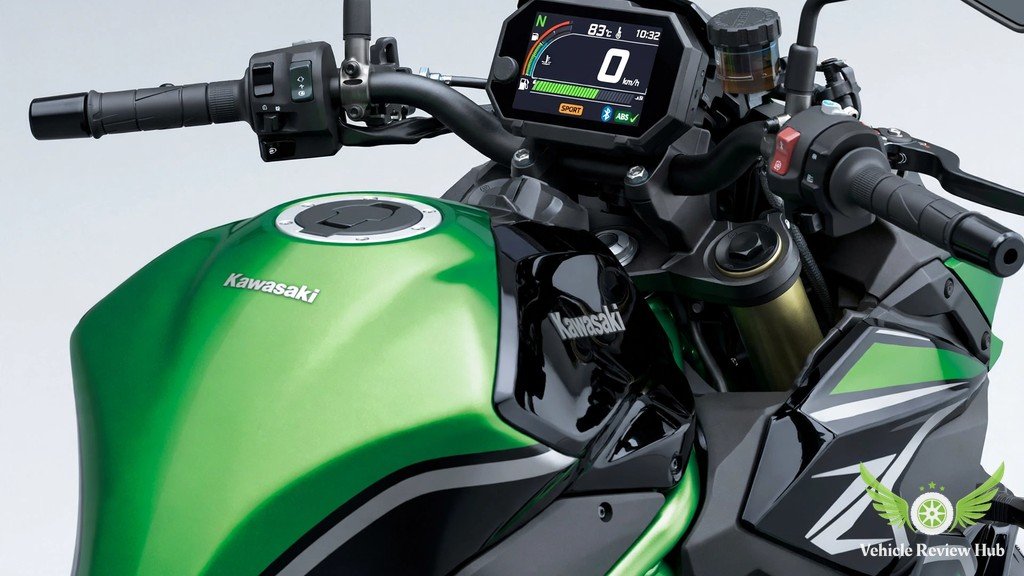
40 to 45 mpg Freeway
The freeway figure comes from Motorcyclist’s 2023 test, cited here via the mirror whose footer credits MotorCyclistOnline.com, with a TopSpeed scrape of the same review corroborating the numbers. Forty to 45 mpg on the freeway is a road figure, not a lab figure: the WMTC laboratory cycle returns 6.0 L/100 km, which converts to 39.2 US mpg. The freeway figure is also the one that makes the 5.0-gallon tank work, and this Kawasaki Z H2 performance guide uses it for the range arithmetic below. The 40–45 mpg band is the figure this Kawasaki Z H2 performance guide quotes as the headline economy.
28 to 30 on Back Roads
The back-roads figure is the other half of the same Motorcyclist test: 28 to 30 mpg when the roads turn twisty and the throttle stays open. Cycle News recorded 22 mpg on an SE under hard riding; MCN’s SE average of 34 mpg in UK gallons converts to 28.3 US mpg, and Bennetts’ 35 mpg average converts to 29.1 US mpg. The back-roads figure is the honest one for buyers who ride twisty roads, and this Kawasaki Z H2 performance guide prints it beside the freeway figure so neither is quoted alone. The 28–30 mpg figure is the one this Kawasaki Z H2 performance guide quotes for twisty-road riding.
With a 5.0-gallon tank, those figures imply roughly 200 to 225 miles on the freeway and 140 to 150 miles on back roads — arithmetic from the test figures, never a tested range. There is no US EPA motorcycle MPG figure for the Z H2, so none is printed here.
| Source | Condition | mpg (US) |
|---|---|---|
| Motorcyclist (2023 test) | Freeway | 40–45 |
| Motorcyclist (2023 test) | Back roads | 28–30 |
| Cycle News | SE, hard riding | 22 |
| Bennetts | Average (UK 35 mpg) | 29.1 |
| Bennetts | Motorway (UK 40 mpg) | 33.3 |
| MCN | SE average (UK 34 mpg) | 28.3 |
| WMTC lab cycle | Laboratory (6.0 L/100 km) | 39.2 |
Note: UK mpg × 0.83267 = US mpg, and this Kawasaki Z H2 performance guide shows the conversion for every UK figure it prints. The WMTC figure is a laboratory cycle result, not a road measurement.
Kawasaki Z H2 Real-World Riding Experience
Numbers aside, the riding experience is what buyers actually ask about, and this Kawasaki Z H2 performance guide leans on the testers who rode the bike rather than on any invented ride. The testers agree: instant supercharged torque from low revs, an upright and comfortable riding position, and a bike that feels faster than its rivals in a straight line.
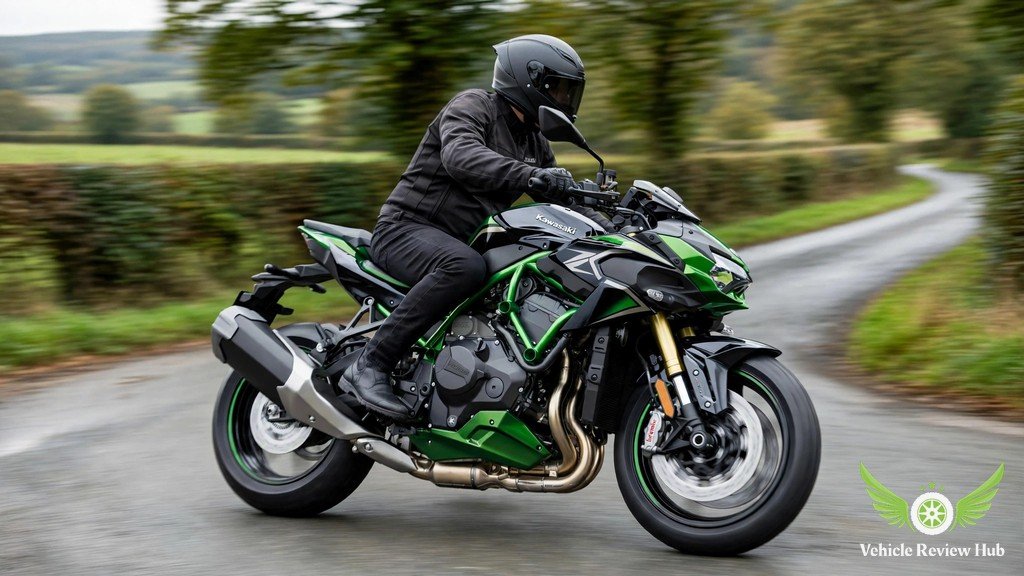
The Riding Experience Buyers Actually Talk About
No owner-forum statistics or quotes are printed here — forum sentiment was not systematically researched. What the testers agree on is the delivery: the supercharger gives the Z H2 low-down and midrange punch that no naturally-aspirated rival matches, the upright position and wide flat bar make it a road bike rather than a track bike, and the cruise control — standard on the Z H2 — is the long-distance asset the 2020 Ducati Streetfighter V4 lacked. Cycle World put the launch impression plainly: “The Z H2 presents as expected: a naked literbike with genial open seating and cockpit dimensions; a wide, low-rise handlebar; a fat fuel tank (narrowed below and behind for the knees, thanks much); and a modestly padded seat. And. Huge. Freaking. Power!” The delivery is the reason this Kawasaki Z H2 performance guide calls the bike faster than its dyno sheet suggests. The firm seat and wind exposure at speed are the limits every tester names.
Feels Faster Than Ducati
The heading is a verified tester quote: CycleNews’ 4 July 2020 comparison of the 2020 Z H2 against the 2020 Ducati Streetfighter V4 S says the Kawasaki’s acceleration “feels dramatically faster” than the Ducati’s, praising its low-down torque, while the Ducati wins on mid-corner poise and brakes. The verdict captures the trade: the Ducati’s “mid-corner poise put it firmly ahead” and its “Brembo/Brembo brake setup trumped the Nissin/Brembo combination”, yet “$24K Ducati just takes the cake… but for $17K, the Kawasaki makes a very good argument”. Both bikes in that test were 2020 models — the Ducati made 208 hp in 2020, not the 205 hp of the current generation — so the verdict covers the 2020 bikes only. That trade, thrust against poise, is the heart of this Kawasaki Z H2 performance guide’s comparison section, and the full comparison, with 2026 prices, is in our Kawasaki Z H2 comparison.
Kawasaki Z H2 Handling, Braking and Stability
Handling is where the Z H2’s weight shows, and this Kawasaki Z H2 performance guide is honest about it: at 527.0 to 531.4 lb depending on year and trim, it is the heaviest bike in its rival set by more than 55 lb, and the testers feel that weight in slow turns.

Rear Shock Is the Weak Point
The rear shock is the hardware story behind this heading: the base bike’s conventional fully-adjustable rear shock against the SE’s KECS semi-active suspension with Skyhook damping. The published evidence for the step up is MCN’s scoring — 5 out of 5 for the SE against 4 out of 5 for the base — and the Cycle World and Motorcycle.com first rides both name the suspension as the difference. No shock spring-rate or damping figure was verified for either trim, so none is printed here. The suspension is the one place where spending more changes the bike, and this Kawasaki Z H2 performance guide names the SE’s KECS system as the step up. The suspension verdict in this Kawasaki Z H2 performance guide rests on the MCN scores and the first-ride reports, not on a measurement that was never published. The weight the shock carries is verified: the SE is 531.4 lb, the base 527.0 lb on 2020/2021 bikes and 529.2 lb on 2022/2023 bikes.
Handling, Braking and Stability on Real Roads
On real roads the tester consensus is consistent: the Z H2 is stable at speed, planted under braking, and heavy in slow turns. The brakes are hardware, not opinion — dual 320 mm discs with Brembo M4.32 calipers on the base every year and on the SE from 2022, the 2021 SE alone wearing Brembo Stylema calipers, and a single rear disc with a Nissin caliper. No publication has published a 60–0 mph braking distance for the Z H2, so this Kawasaki Z H2 performance guide prints none: the section is written from the hardware and the tester impressions, not from an invented distance. Our Kawasaki Z H2 reliability guide covers the brake and suspension maintenance behind that hardware, including the rear disc split between 250 and 260 mm by year.
Kawasaki Z H2 Performance Compared With Other Sport Bikes
This Kawasaki Z H2 performance guide compares the Z H2 against the three bikes buyers actually cross-shop: the Ducati Streetfighter V4, the Aprilia Tuono V4 Factory and the Yamaha MT-10 SP. The comparison here is performance only — power, weight and what the magazines measured — with prices and equipment in our Kawasaki Z H2 comparison.

Kawasaki Z H2 vs Ducati Streetfighter V4
On claimed power the Ducati leads: 205 hp at 12,650 rpm for the 2026 US Streetfighter V4 against the Z H2’s 197.1 hp at 11,000 rpm, and the Ducati is 110 lb lighter at 421 lb against the SE’s 531.4 lb. On the road the gap reverses in one place only: the Z H2’s supercharged torque from low revs, which CycleNews said “feels dramatically faster” than the Ducati’s in its 2020 comparison. The Ducati wins the rest of the test — mid-corner poise, brakes, and the lighter chassis — and it costs more, $24,595 for 2026 against the SE’s $21,999, or $25,890 delivered against $22,839. The 2020 test bikes are not the 2026 bikes — the 2020 Streetfighter made 208 hp, and no current-generation test exists — so the verdict is quoted as a 2020 verdict. The price gap is part of the performance story, and this Kawasaki Z H2 performance guide prints it because $3,051 delivered separates the two bikes. The Ducati comparison in this Kawasaki Z H2 performance guide is a 2020 verdict with 2026 figures, and the two are never blended. The award behind the Z H2’s reputation is Motorcycle.com’s: it named the 2020 Z H2 its Best Naked Motorcycle of 2020, with the Ducati Streetfighter V4 as runner-up, and MCN’s Z H2 review rates the base bike 4 out of 5 and the SE 5 out of 5.
| Bike (2026) | Claimed power | Weight | Measured performance |
|---|---|---|---|
| Kawasaki Z H2 SE | 197.1 hp @ 11,000 rpm | 531.4 lb | Dyno 167.22 hp (Cycle World, 2021 SE); top speed 168 mph GPS (Ultimate Motorcycling, 2020 base); quarter 10.7 s (MCN, SE) |
| Ducati Streetfighter V4 | 205 hp @ 12,650 rpm | 421 lb | No current-generation direct test vs Z H2 |
| Aprilia Tuono V4 Factory | 180 hp @ 11,800 rpm (published) | 465.2 lb | No direct test vs Z H2 |
| Yamaha MT-10 SP | Not published (Euro 163.6 hp) | 472 lb | No direct test vs Z H2 |
Note: The Z H2 is the only supercharged bike in this set and the heaviest by more than 55 lb, and this Kawasaki Z H2 performance guide prints the rival figures as published: the Tuono’s 180 hp is Aprilia’s PS-rounded figure, the MT-10 SP’s US figure is unpublished by Yamaha, and the Ducati’s US figure is 205 hp, never the 214 hp Euro PS figure. No direct test of the Tuono or the MT-10 SP against the Z H2 exists, so no ridden verdict is printed for either.
Is the Kawasaki Z H2 Suitable for Beginner Riders?
No — and the reasons are not in doubt. This Kawasaki Z H2 performance guide answers the beginner question in one line because the figures answer it themselves: 197.1 hp claimed, 527 lb or more depending on year and trim, a supercharged delivery that arrives from low revs, and a launch price of $17,000. The upright riding position does not change any of that, and no publication recommends the Z H2 for beginners. The full model run, prices and verdict are in our Kawasaki Z H2 review, and the supercharged sport-tourer sibling is covered in our Ninja H2 SX review.
Kawasaki Z H2 Performance FAQs
The questions below cover the figures buyers ask about most in this Kawasaki Z H2 performance guide: the dyno spread, the top speed, the quarter-mile, the mileage, the beginner question, and the Ducati comparison.
How much power does the Kawasaki Z H2 make on a dyno?
This Kawasaki Z H2 performance guide prints the spread, not a single figure: Bennetts measured 160 bhp on a 2020 base, Cycle World measured 167.22 hp on a 2021 SE on its Dynojet 250i, and Motorcycle Mojo measured 182 hp on a 2020 base on a Bazzaz dyno. The 178 hp figure circulating online comes from an estimates page, not a dyno test.
What is the top speed of the Kawasaki Z H2?
The best-sourced tested figure in this Kawasaki Z H2 performance guide is 168 mph GPS, recorded by Ultimate Motorcycling on a 2020 base on the Las Vegas Motor Speedway banked oval. Kawasaki publishes no top speed. The 176.8 mph figure comes from an estimates page, not a test.
How fast is the Kawasaki Z H2 in the quarter-mile?
MCN timed the Z H2 SE at 10.7 seconds, with no trap speed published. The 10.13-second figure circulating online is a Dragy claim from an estimates page, with no timeslip published.
What mileage does the Kawasaki Z H2 get?
Motorcyclist’s 2023 test recorded 40–45 mpg on the freeway and 28–30 mpg on back roads, the figures this Kawasaki Z H2 performance guide prints as the headline economy. Cycle News recorded 22 mpg on an SE under hard riding. There is no US EPA motorcycle MPG figure.
Is the Kawasaki Z H2 good for beginners?
No. It is a 197.1 hp supercharged litre bike weighing 527 lb or more, launched at $17,000, as this Kawasaki Z H2 performance guide records. Its upright riding position does not make it a beginner bike.
Does the Z H2 feel faster than the Ducati Streetfighter V4?
According to CycleNews’ 2020 comparison, yes — its acceleration “feels dramatically faster” than the Ducati’s, thanks to low-down supercharged torque. The Ducati still won the comparison on mid-corner poise and brakes.