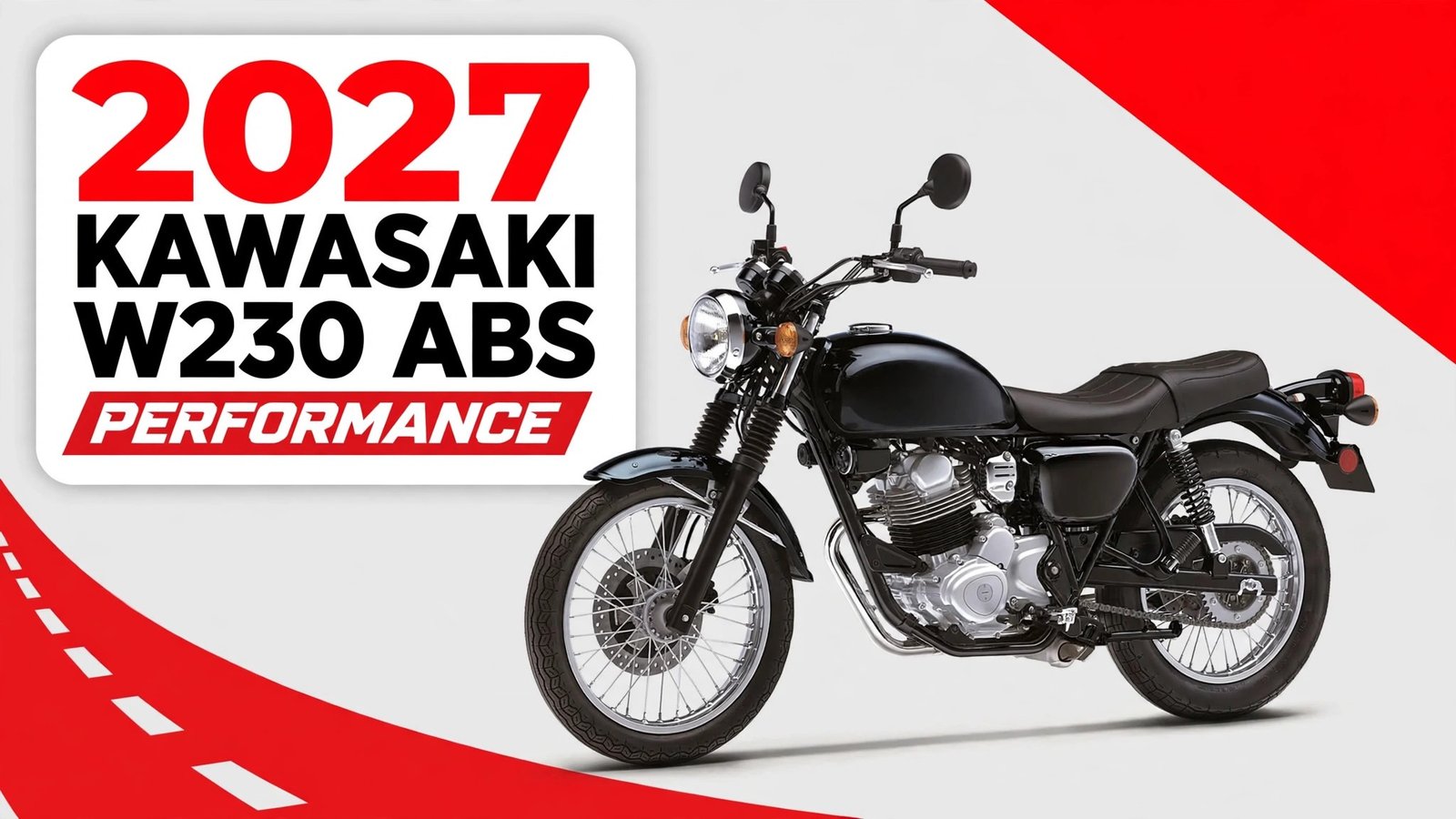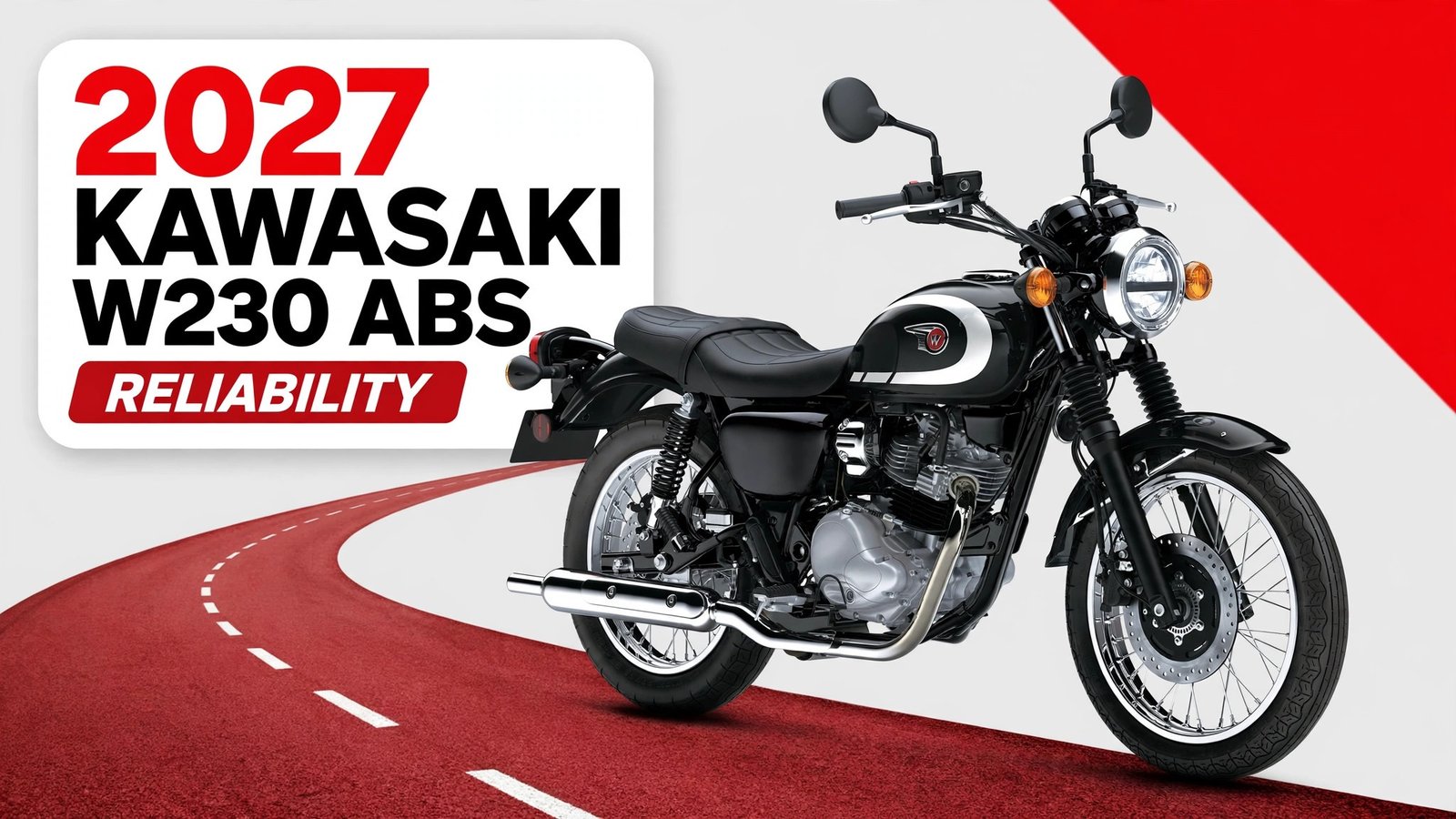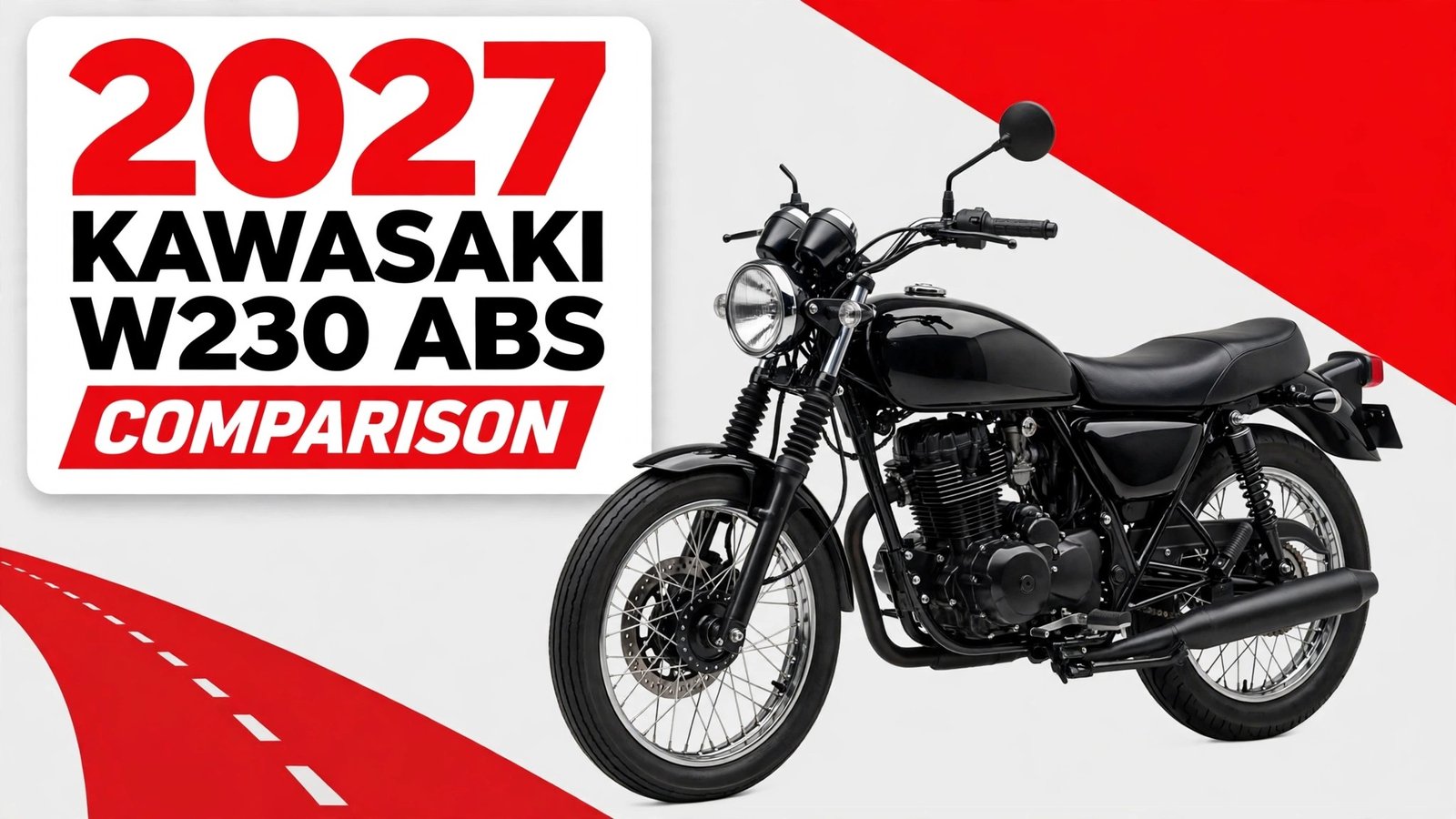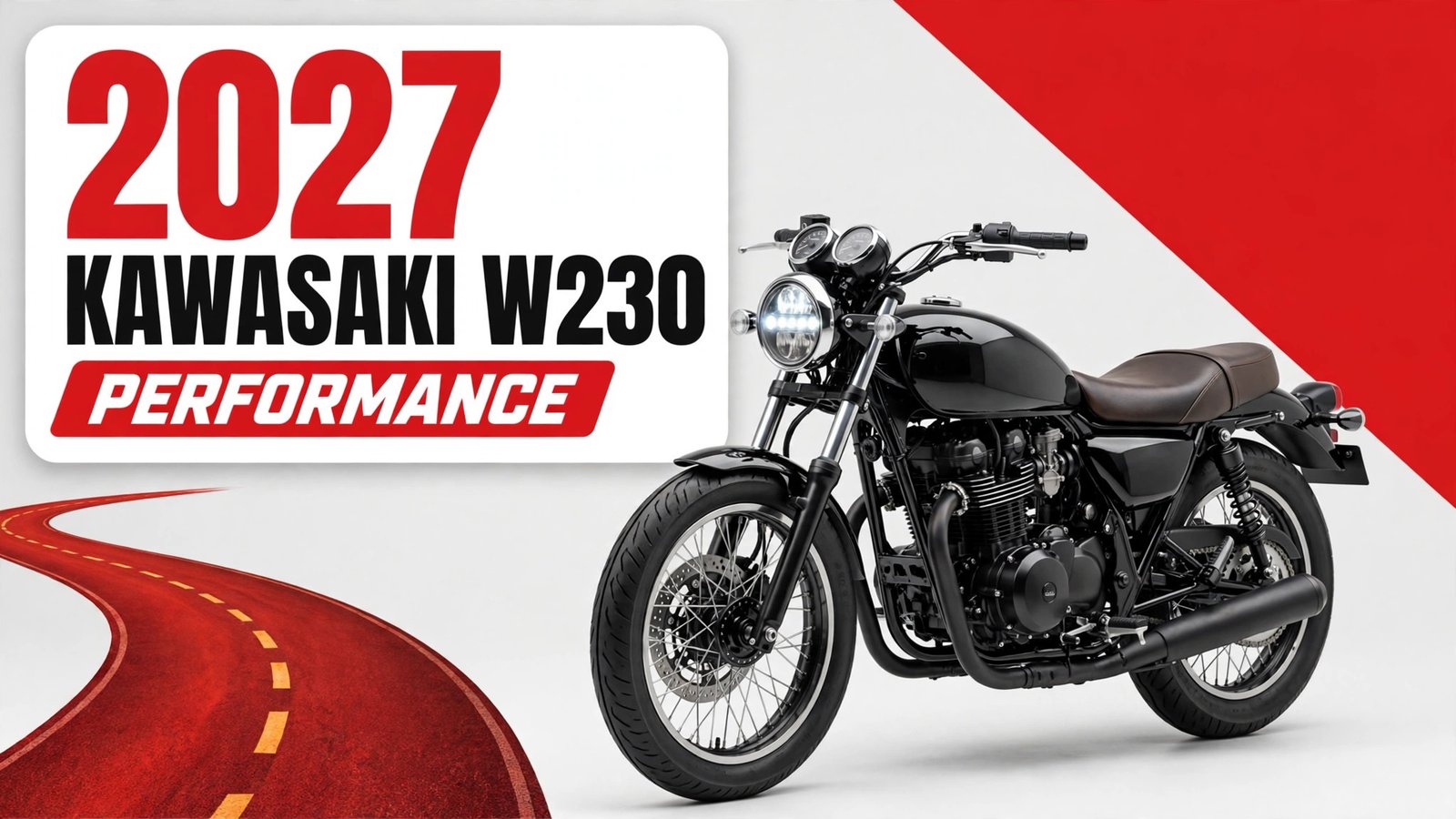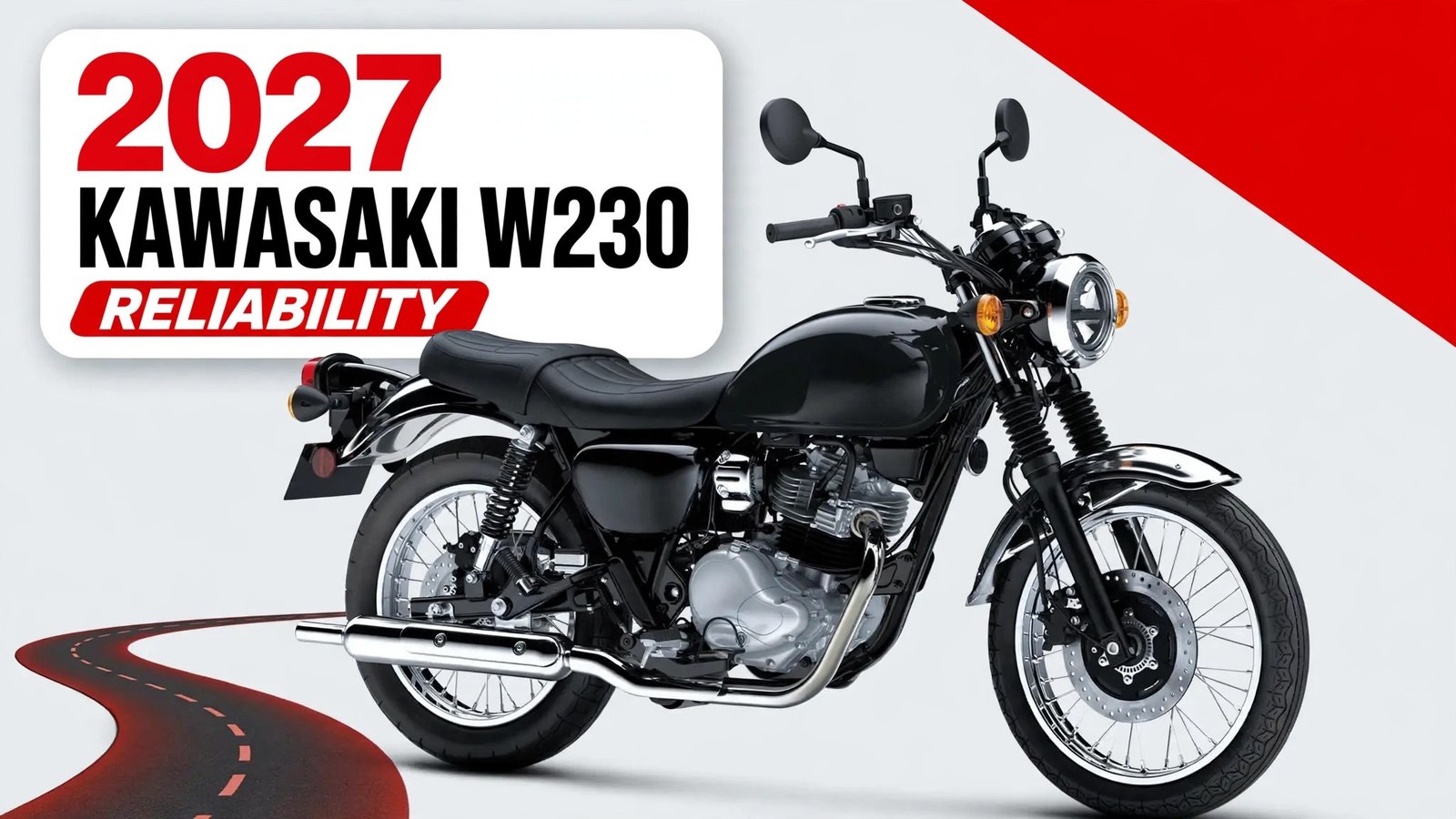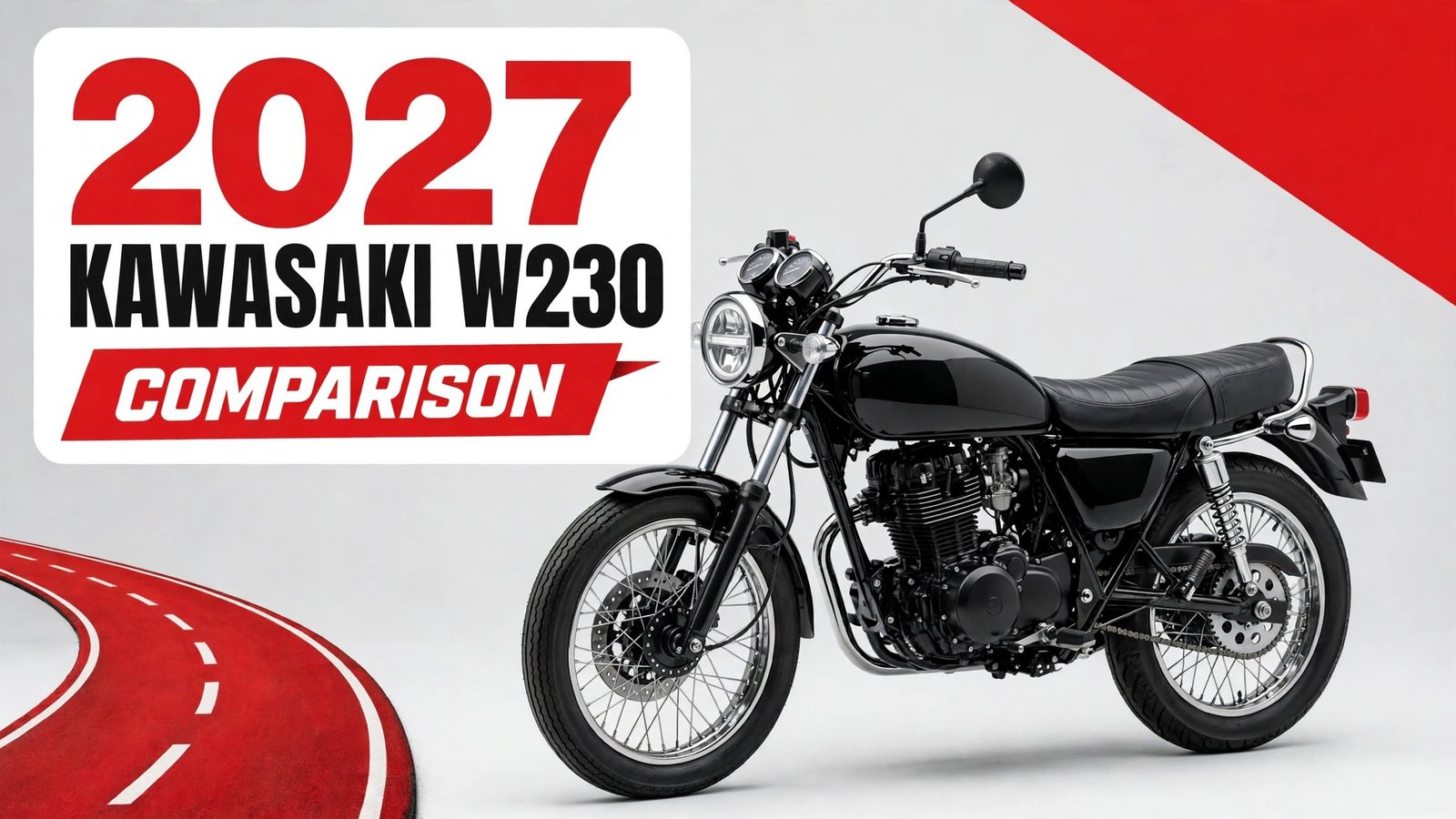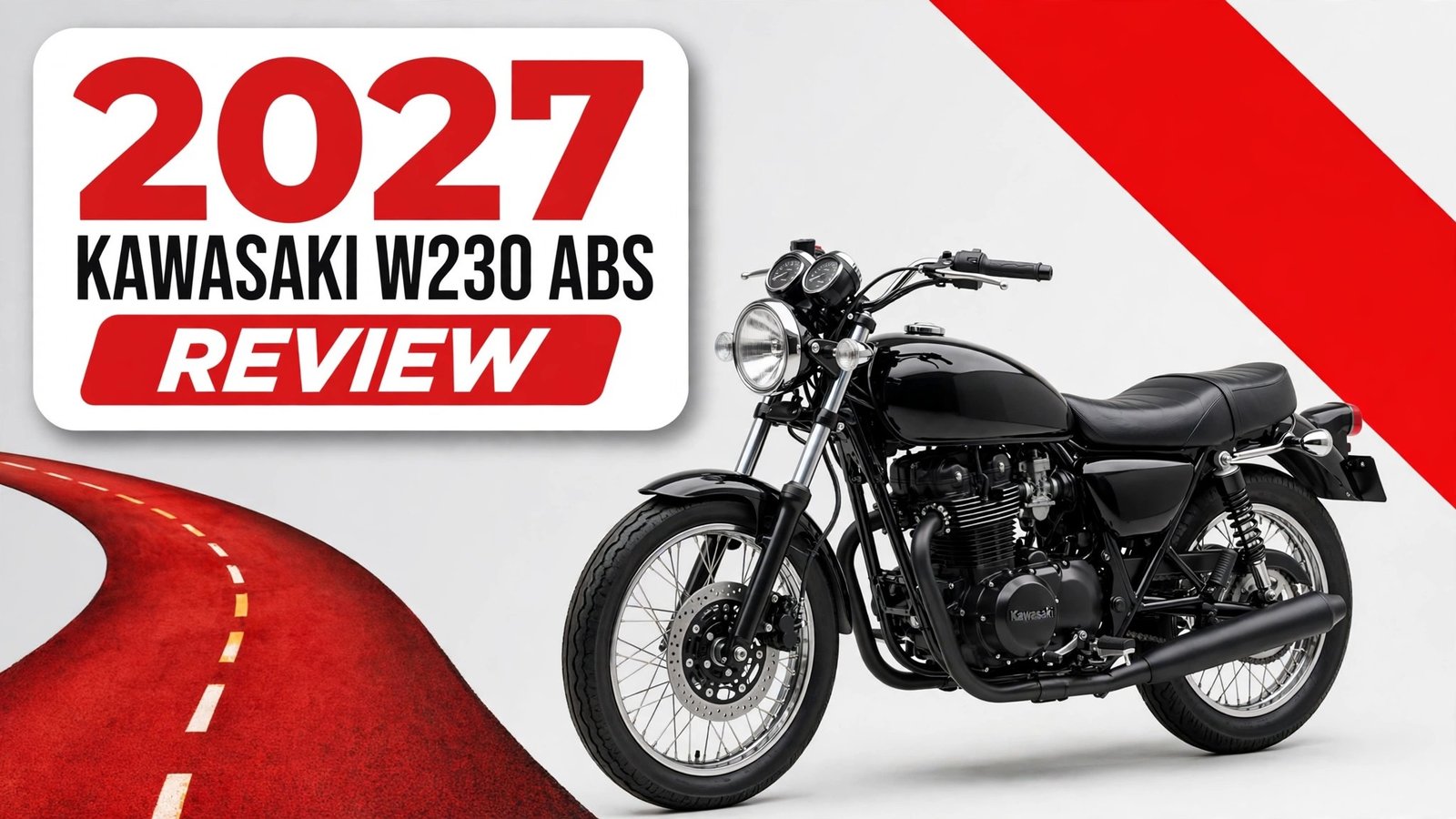
Kawasaki sells exactly one W230 in the United States, and it wears ABS in its name. There is no cheaper non-ABS version, no ABS delete option, and no second W230 in any other market without the system. This Kawasaki W230 ABS review starts with that fact: the $5,899 price for 2027 buys the ABS as standard equipment, and the 17 hp single carries it on both wheels.
The W230 ABS is a small retro naked built in Thailand, priced against the Royal Enfield Hunter 350 and the Triumph Speed 400, and aimed at new and returning riders. It makes 17 hp at 7,000 rpm from a 233cc air-cooled single, weighs 315.3 lb with a full tank, and sits just 29.3 inches off the ground. This Kawasaki W230 ABS review checks the price ladder, the spec sheet, the ABS hardware, and what the only ridden test actually said.
Kawasaki W230 ABS Overview and Model-Year Updates
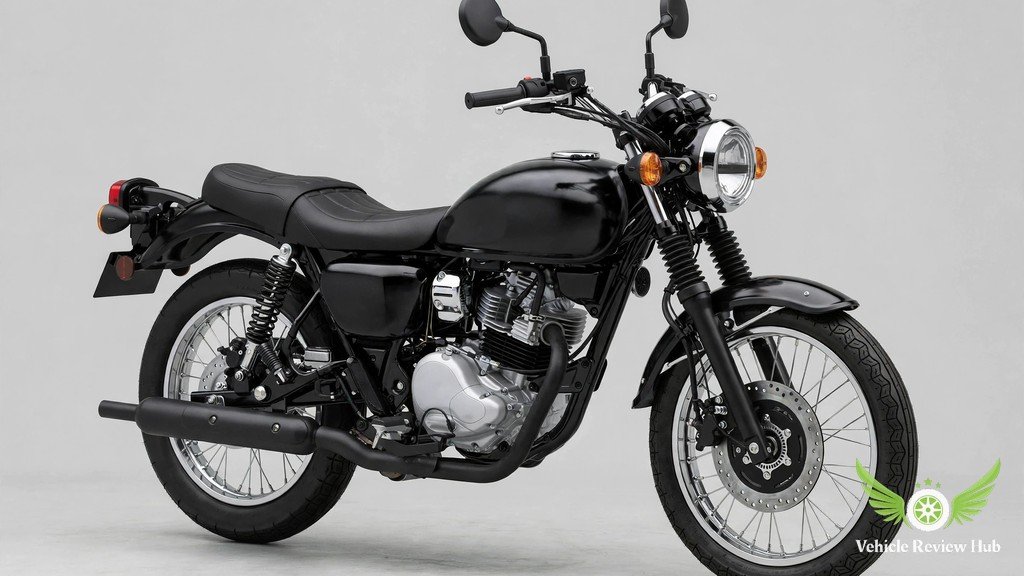
The W230 ABS arrived in the United States as a 2025 model and has run unchanged through 2027: three model years, one variant, one engine, one brake setup. What changed is the price, the colour, and a tenth of a pound on the scale. This Kawasaki W230 ABS review opens with the model-year record: the newest bike is not a different bike.
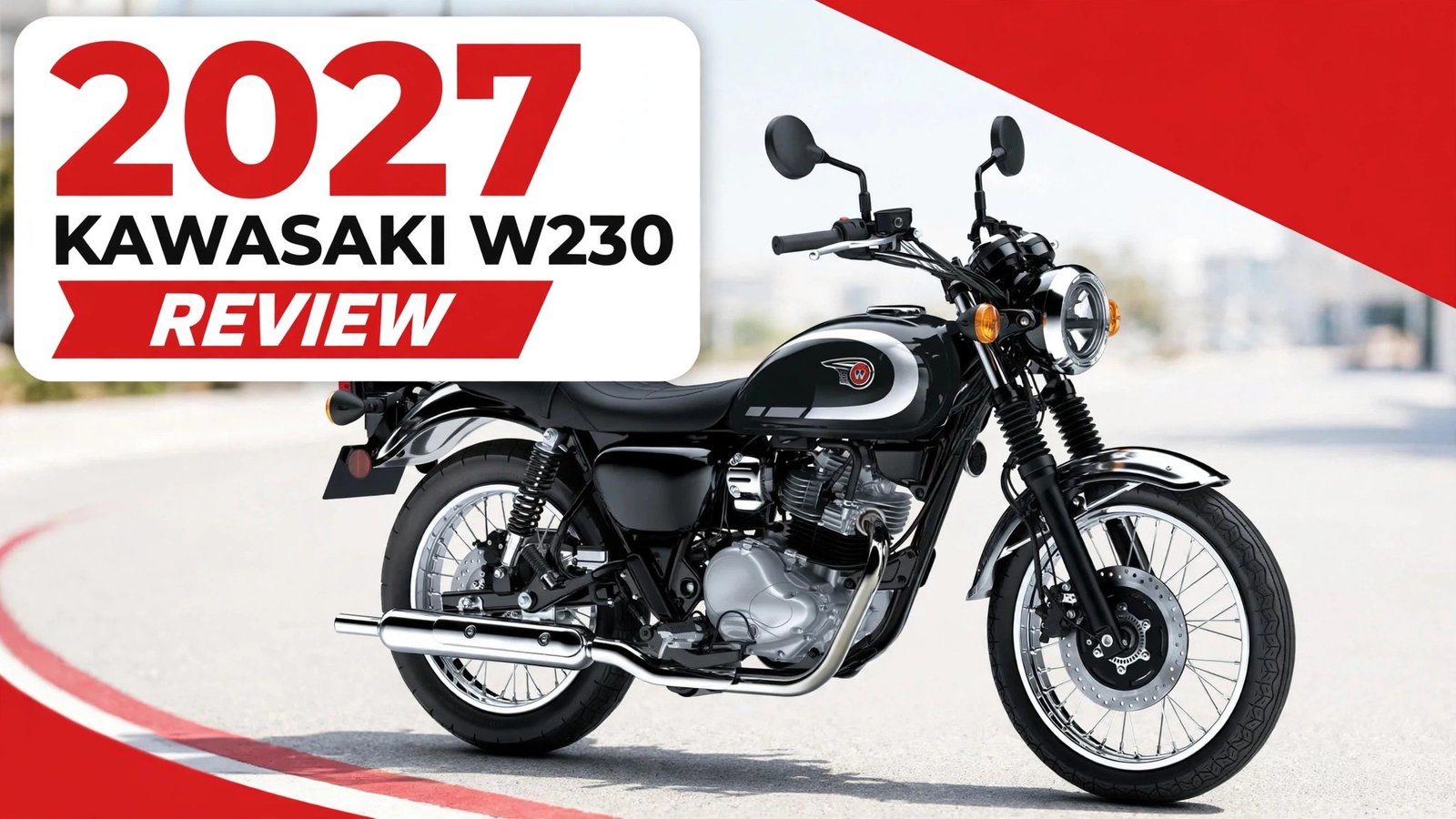
Small CC ADV’s first-ride review of the 2027 Kawasaki W230, uploaded on October 27, 2026, opens with a close walkaround — the tank’s W badge, the pea-shooter exhaust, the round headlight — then takes the bike out on the road. The presenter calls it nimble and light, smooth and easy, and very comfortable. It is a first ride, not a full test, and it is the same machine as the W230 ABS: Kawasaki sells only one W230, and it carries ABS on both wheels.
No Non-ABS Version Exists
There is no non-ABS W230 anywhere in the world. Kawasaki USA lists exactly one W230 variant in every model year, named W230 ABS on every spec sheet, model page, press release and parts catalog, with ABS standard on the only trim. The October 2024 press release names it the W230 ABS from the first line, and no market — Japan, Europe, Australia, Thailand — sells the bike without the system. Ultimate Motorcycling put it plainly: Kawasaki has ABS in the model name, but because there is no non-ABS version, there is nothing to compare it against. This Kawasaki W230 ABS review treats that as settled, because every source that names the bike agrees.
Name Is W230 ABS, Every Year
The name stays the same across all three model years: the 2025 bike is the W230 ABS, model code BJ230ASFAL; the 2026 bike is the W230 ABS, model code BJ230ATFAL; the 2027 bike is the W230 ABS, model code BJ230AVFAL. This Kawasaki W230 ABS review uses the full name throughout for exactly that reason: shortening it to “W230” would hide the one feature that defines the whole cluster. The updates: the 2025 bike cost $5,599 plus $420 destination in Metallic Ocean Blue over Ebony; the 2026 bike cost $5,699 plus $435 in Metallic Matte Dark Green; the 2027 bike costs $5,899 plus $435 in Ebony, which is black. Curb weight moved from 315.2 lb to 315.3 lb in 2026 and stayed there. Nothing else changed.
| Specification | 2027 Kawasaki W230 ABS |
|---|---|
| Engine | 233cc air-cooled single, SOHC 2 valves |
| Power | 17 hp at 7,000 rpm (ISO 4106) |
| Torque | 14.0 lb-ft at 5,800 rpm |
| Transmission | 6-speed, return shift, sealed chain |
| Front brake | Single 265 mm disc, 2-piston caliper, ABS |
| Rear brake | Single 220 mm disc, single-piston caliper, ABS |
| Curb weight | 315.3 lb |
| Seat height | 29.3 in |
| Fuel capacity | 3.1 gal |
| Tyres | 90/90-18 front, 110/90-17 rear |
Note: All figures in this Kawasaki W230 ABS review table are Kawasaki USA’s own 2027 spec-sheet figures; the 2025 and 2026 sheets print the same figures except for the 0.1 lb curb-weight rounding.
Kawasaki W230 ABS Engine and Specifications
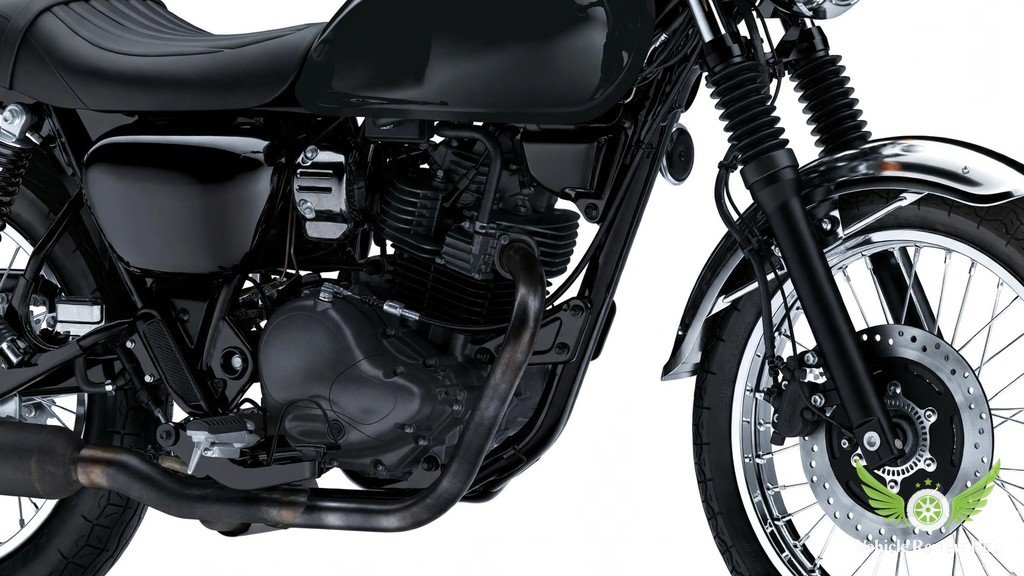
The engine is the least surprising part of this bike and the most honest: a 233cc air-cooled single with two valves, a 32 mm throttle body and a counterbalancer, making 17 hp at 7,000 rpm and 14.0 lb-ft at 5,800 rpm (ISO 4106). This Kawasaki W230 ABS review prints those numbers as claimed figures, because no dyno run of the W230 exists anywhere to check them against; the peaks are the only hard data, and everything else about how the engine feels comes from one ridden test and one owner, both quoted later in this review. The rest of the spec sheet is short: bore and stroke 67.0 by 66.0 mm, compression 9.0:1, ignition TCBI, a six-speed gearbox with return shift and a Positive Neutral Finder, a semi-double cradle steel frame, a 37 mm fork (4.6 in) and twin rear shocks (3.7 in). Rake and trail are 27.0 degrees and 3.7 inches, the wheelbase is 55.7 inches, and ground clearance is 5.9 inches. The 2027 spec sheet prints every one of those figures.
Supplier Is Never Named
Kawasaki names no supplier for the W230 ABS system anywhere. The bike’s own parts list calls the pump only “PUMP-ASSY-OIL,ABS,WET”, part number 16082-0928, with no maker named beside it. This Kawasaki W230 ABS review states that plainly because the obvious guess is wrong: the sibling KLX230’s pumps are listed as marked Bosch, part numbers 16082-0920 and 16082-0916, and those are the KLX230’s pumps, not this bike’s. What the parts catalog does prove is the hardware: one pump, 16082-0928, on bracket 11058-1619; separate wheel-speed sensors front and rear, 21176-1218 and 21176-1219; the same sensor rotor at both ends, 21007-0683; and four ABS hoses. Every one of those part numbers comes from Kawasaki’s own 2025 and 2026 parts diagrams.
Dual-Channel, No IMU
Kawasaki never uses the words “dual-channel” for this bike, and this Kawasaki W230 ABS review will not put the term in Kawasaki’s mouth. What Kawasaki does say on every spec sheet is that the front carries a single 265 mm disc with a two-piston caliper and ABS, and the rear a single 220 mm disc with a single-piston caliper and ABS. The “dual-channel” wording comes only from secondary sources such as Wikipedia and TopSpeed, but the architecture is functionally dual-channel: independent wheel-speed sensors front and rear, separate ABS circuits, and one pump watching both wheels. There is no IMU anywhere on this bike, and the spec sheet lists Anti-lock Brake System as the sole electronic rider aid — no traction control, no ride modes, no cornering ABS. The system does one job: it watches both wheels and stops them locking under braking.
Kawasaki W230 ABS Price and Market Availability

The price ladder is short, and every step comes from Kawasaki’s own sheets: 2025 was $5,599 plus $420 destination, 2026 was $5,699 plus $435, and 2027 is $5,899 plus $435. This Kawasaki W230 ABS review prints the delivered totals because the destination charge is part of what a buyer pays. A $778 destination figure seen at one dealer is dealer-inflated, never a Kawasaki charge.
| Model year | MSRP | Destination | Delivered | Colour |
|---|---|---|---|---|
| 2025 | $5,599 | $420 | $6,019 | Metallic Ocean Blue / Ebony |
| 2026 | $5,699 | $435 | $6,134 | Metallic Matte Dark Green |
| 2027 | $5,899 | $435 | $6,334 | Ebony |
Note: MSRP and destination figures in this Kawasaki W230 ABS review table are Kawasaki USA’s own spec-sheet figures for each model year; the 2025 destination of $420 is corroborated by two Motorcycle.com compare pages.
Kawasaki W230 ABS Price in the USA: $5,899 (2027)
The 2027 bike costs $5,899 before destination and $6,334 once the $435 charge is added — the figure that matters for a buyer walking into a dealer today. The 2027 model exists — its spec sheet and model page are both live on Kawasaki USA. This Kawasaki W230 ABS review puts the 2027 price in the heading because it is the current price: the $200 rise over the 2026 bike buys nothing new except the Ebony colour and the model year on the title. Against its rivals the 2027 price is the dearest in the retro group — the Royal Enfield Hunter 350 costs $4,299, the Honda Rebel 300 costs $5,349, and the Triumph Speed 400 costs $5,495, all before destination. This Kawasaki W230 ABS review does not pretend the price is a bargain. What the price does buy is the lightest bike in the group at 315.3 lb, the lowest seat at 29.3 inches, and the only six-speed gearbox among the retro singles. The Kawasaki W230 ABS comparison works through whether that $1,400 trade is worth it.
No Premium to Compute
There is no ABS premium to compute here, because there is no non-ABS price to subtract from: one variant, one trim, ABS standard, every model year. The question “how much extra does the ABS cost” has no answer here, and this Kawasaki W230 ABS review says so rather than inventing one. The contrast is Kawasaki’s own KLX230 S, which does sell ABS as a paid option — $300 extra in both 2025 and 2026, $4,999 against $5,299 in 2025 and $5,199 against $5,499 in 2026. That $300 is a real premium on a real second trim. The rivals are the same: the Hunter 350, the Speed 400 and the Rebel 300 all carry ABS as standard equipment in the United States. The buyer is not paying extra for the system; the buyer is paying the bike’s price, and the system comes with it, and this Kawasaki W230 ABS review counts that as the whole of the premium story.
Kawasaki W230 ABS Design, Features and Technology
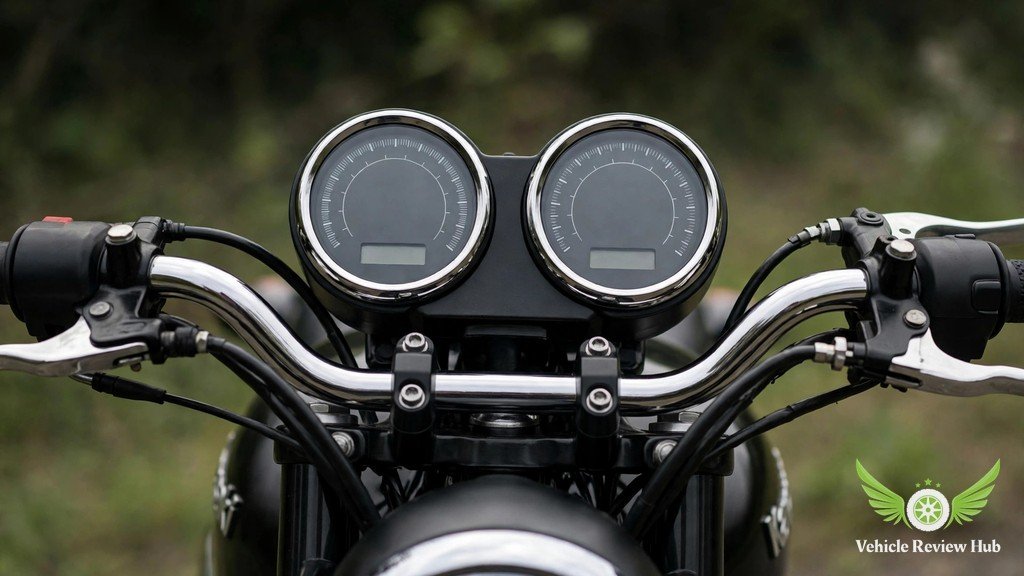
The design is the reason this bike exists: a single round headlight, analog dials, spoked-style wheels, a 37 mm fork, twin rear shocks and a pea-shooter exhaust. This Kawasaki W230 ABS review treats the retro styling as the bike’s main selling point, because the spec sheet gives a buyer no other reason to pick it over a faster, cheaper rival. The technology list is short on purpose: an analog speedometer and tachometer with a small LCD, a low-fuel warning lamp, and the ABS itself — no gear indicator, no fuel gauge, no TFT dash, no rider mode. The W line around it is still alive: the W800 continues at $10,699 for 2026 and $10,999 for 2027, and the W175 is new to the USA for 2026 at $2,999. The W230 ABS sits between them as the middle W, and Kawasaki’s own W-series history traces the line back to the 650-W1.
Pump Alone Costs $1,257
No retail price was found for the ABS pump, so the figure in the heading above has no source behind it. This Kawasaki W230 ABS review searched web search, indexed listings and the major parts retailers, and no retailer anywhere lists a price for pump part number 16082-0928. The part number is verified from Kawasaki’s own parts diagrams; the price is not, and this review will not print it as a fact. The sensor rotor (21007-0683) and wheel-speed sensors (21176-1218, 21176-1219) are the same: verified parts, unverified prices. The only dollar figure tied to the pump part number anywhere is an import value: Volza data shows nine units shipped from Thailand to Indonesia in May 2025 for $1,126.71 in total, about $125 a unit. That is a bulk import value, not a dealer price, so a buyer budgeting for an out-of-warranty ABS repair should ask a dealer for a quote.
No Off-Switch Found
There is no ABS off-switch on the W230 ABS. No switch exists in the handlebar parts diagram, which lists only the clutch switch and the control housings. This Kawasaki W230 ABS review checked the parts catalog rather than guessing: an off-switch would show up in the handlebar diagram if it existed. It does not: the system is always on, on both wheels. The contrast is the sibling KLX230 family, where the Sherpa S ABS and the KLX230SM ABS do have selectable ABS — that feature belongs to the Sherpa and the supermoto, not to this retro roadster.
Kawasaki W230 ABS Riding Experience and Comfort
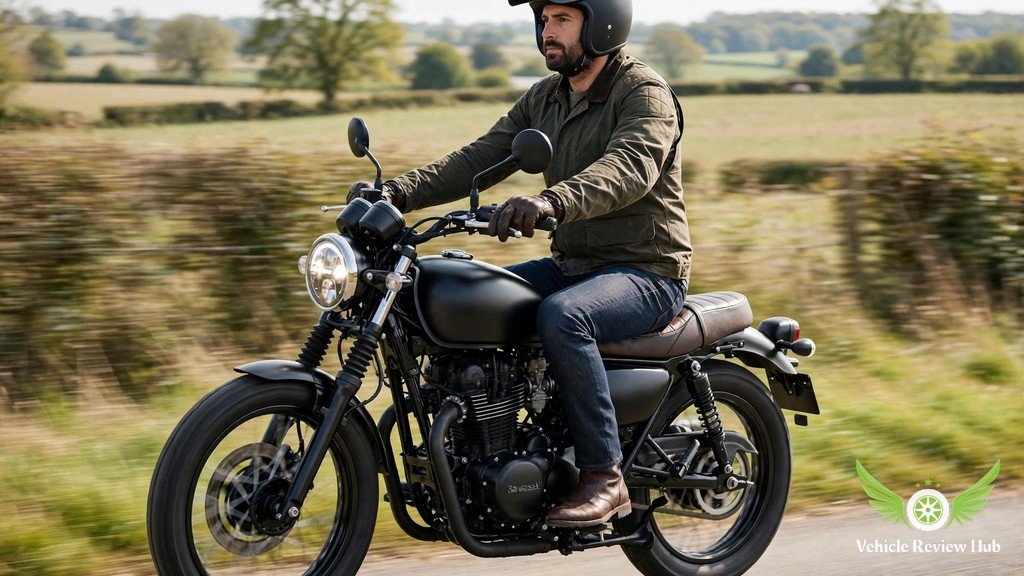
Only one ridden test of this bike exists in print, and it comes from a beginner. Allison, writing for Ultimate Motorcycling in August 2025, rode the 2025 bike around San Luis Obispo with less than a year of riding experience, and her verdict is the most useful riding evidence this Kawasaki W230 ABS review has. She called the bike super fun and easy to ride and said she felt enough confidence in its IRC tyres to lean it over farther than she thought she could. The only other riding voice is a single owner: a South Georgia owner writing on a forum in April 2025, at about 700 miles, said the bike was old-school smooth and torquey for what it is, and that every time he pulled it out he caught himself just looking at it. The Ultimate Motorcycling beginner review is the source for the full account, and the Kawasaki W230 ABS performance guide carries the power and economy figures.
Riding Position and Comfort Over Longer Distances
No long-distance comfort test of this bike exists, and this Kawasaki W230 ABS review says so rather than guessing. The riding position is upright, the seat is 29.3 inches high, and the bike weighs 315.3 lb. What is known about comfort comes from short rides: Allison called the firm seat not very comfortable and the suspension a bit stiff, and the owner agreed on the seat, writing that it looks comfortable but after twenty minutes a rider will rethink that. The two small complaints are the throttle and the clutch: Allison said the throttle feels stiff and takes more effort to turn, and that the clutch has a late engagement which was difficult to get used to. The owner reported a different gearbox quirk — shifting was flawless for the first 200 miles, then became gritty overnight, and the grittiness eased with a change to a heavier oil but never quite went back — and two or three occasions when the bike failed to accelerate shifting into fifth or sixth gear.
Testers Call Brakes Great
The entire basis for this heading, in this Kawasaki W230 ABS review, is one beginner, one sentence. Allison wrote: “The brakes are great, though with a quick response, so I have to be careful not to squeeze the lever too hard or too fast.” This Kawasaki W230 ABS review quotes her exactly and states the limit plainly: one sentence, one rider, no measured braking distance anywhere to back it up. She never writes the word ABS anywhere in her review, and no ridden tester has discussed the ABS by name in any published text this research found. The owner gives the counterpoint: he called the brakes a little on the soft side, but added that if a rider gets into them they will let the bike stop on a dime. The hardware is a single 265 mm front disc with a two-piston caliper and a single 220 mm rear disc with a single-piston caliper, both under ABS, and no publication has measured a braking distance for this bike. This Kawasaki W230 ABS review will not invent one.
Kawasaki W230 ABS Review: Pros, Cons and Verdict

The verdict is not close on the numbers, and this Kawasaki W230 ABS review does not pretend otherwise. The bike is the weakest and the second-dearest in its group: 17 hp against the Speed 400’s 39.5, and $5,899 against the Hunter’s $4,299. What it offers instead is the lightest bike in the group at 315.3 lb, the lowest seat at 29.3 inches, a six-speed gearbox, and the retro W-series character none of its rivals has. Buy it for lightness, low seat and heritage; buy the Hunter for value and power, the Speed 400 for performance, and the Rebel 300 for the lowest seat at 27.2 inches. The full recall record lives in the Kawasaki W230 ABS reliability guide, and the Kawasaki W230 review covers the same machine under its shorter name.
Main Advantages and Limitations of the Kawasaki W230 ABS
The advantages start with the size and the seat. At 315.3 lb and a 29.3-inch seat, this is the easiest bike in its group for a shorter or newer rider to manage, and the only one with a six-speed gearbox. The styling is the real draw, and the fuel economy is strong: US EPA 89.1 mpg for 2025 and 88.8 mpg for 2026, and one owner recording 84 and 94 mpg over two break-in fills. This Kawasaki W230 ABS review counts lightness, seat height, standard ABS and economy as the bike’s genuine strengths. The limitations are just as plain: seventeen horsepower is the least in the group, and the bike carries two recalls in its first two years — 25V363, a ground-point stall on 482 of the 2025 bikes, and 26V387, a turn-signal bulb failure on 840 bikes across 2025 and 2026. Neither recall is an ABS fault, but a buyer still has to check both campaigns by VIN before buying used. The seat is firm, the suspension is stiff, the throttle is stiff, and the clutch engages late. There is no gear indicator and no fuel gauge, only a low-fuel warning lamp. And the price is the problem that will not go away: $1,400 over the Hunter on sticker price for less than half the Speed 400’s power. At a leftover $3,599 — late-2025 clearance pricing, not a current price — the case becomes strong; at $5,899 it is a heritage purchase.
Origin Print Errors Exist
The US W230 ABS is built in Thailand, and this Kawasaki W230 ABS review calls it a verified fact, not a guess. NHTSA’s vehicle decoder, reading published US VIN ML5BJJA17SDA05689, names the manufacturer Kawasaki Motors Enterprise (Thailand) Co., Ltd., plant Pluak Daeng, Rayong, Thailand. The decode returned a clean result with the check digit valid, and five further dealer listings publish ML5 US VINs for 2025 W230 ABS bikes. ML5 is Thailand’s VIN code. This Kawasaki W230 ABS review states the origin as settled: the evidence is a government decoder reading a real bike’s VIN. The print errors sit on Motorcycle.com’s compare pages: “Manufacturer Country: Japan” — wrong as a build country — and a linked brake system listed as standard, when Kawasaki lists ABS only. Both errors have been repeated elsewhere, which is why this Kawasaki W230 ABS review names them. The Part 573 filing for recall 25V363 and the Part 573 filing for recall 26V387 name the affected bike as the BJ230A W230 ABS and say nothing about brakes at all.
Kawasaki W230 ABS Review FAQs
The questions below cover what buyers ask about most in this Kawasaki W230 ABS review.
Is the Kawasaki W230 ABS really built in Thailand?
Yes. NHTSA’s vPIC decode of a published US VIN (ML5BJJA17SDA05689) names the manufacturer Kawasaki Motors Enterprise (Thailand) Co., Ltd., plant Pluak Daeng, Rayong, Thailand — and five further dealer listings publish ML5 US VINs for 2025 W230 ABS bikes. This Kawasaki W230 ABS review states the origin as settled fact on that evidence.
How much does the 2027 Kawasaki W230 ABS cost?
$5,899 MSRP + $435 destination = $6,334 delivered (Kawasaki USA). The 2026 bike is $5,699 + $435 = $6,134; the 2025 bike was $5,599 + $420 = $6,019. This Kawasaki W230 ABS review prints the delivered totals because the destination charge is part of what a buyer pays.
Is there a non-ABS W230?
No. No non-ABS version exists in any market; ABS is standard on the only US trim, every model year. The “ABS” in the name is a naming fact, not a trim level. This Kawasaki W230 ABS review found no W230 without ABS in any price, spec sheet, dealer listing or review.
Who makes the W230 ABS system?
Kawasaki names no supplier for the W230’s pump (part number 16082-0928). The sibling KLX230’s pump is marked Bosch — that is the KLX230’s pump, not the W230’s, and must never be transferred to this bike. This Kawasaki W230 ABS review names that trap explicitly.
Does the W230 ABS have an ABS off-switch?
No. None was found in Kawasaki’s parts catalog or any published source. The KLX230 Sherpa S ABS and KLX230SM ABS do have selectable ABS — the W230 does not. This Kawasaki W230 ABS review checked the handlebar parts diagram.
Does the W230 ABS have a gear indicator or a fuel gauge?
Neither. The dash is an analog speedometer + tachometer with a small LCD (odometer, trip, clock) and a low-fuel warning lamp — not a gauge. The Honda Rebel 300, one of its rivals, has both. This Kawasaki W230 ABS review lists the missing items plainly.