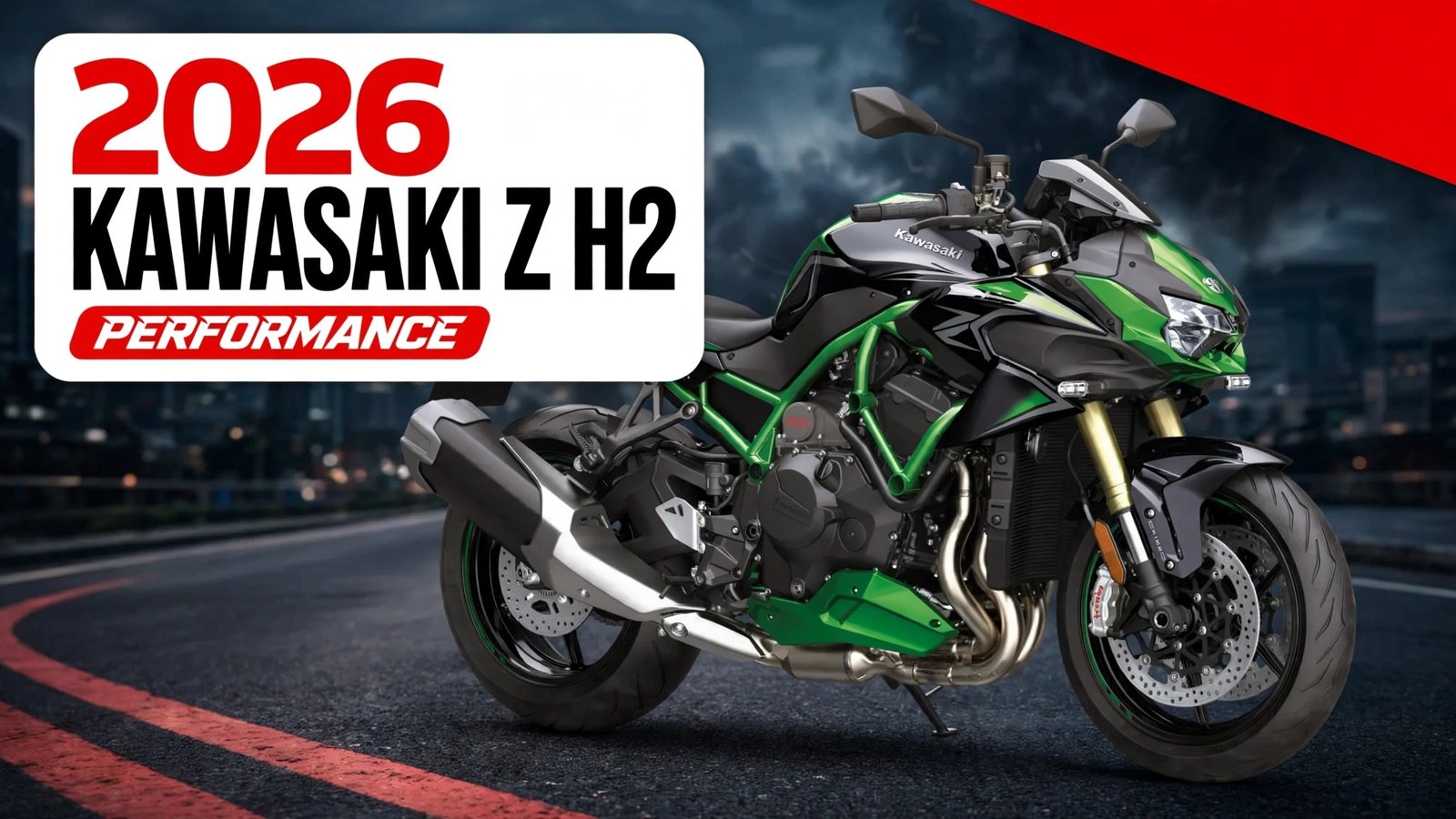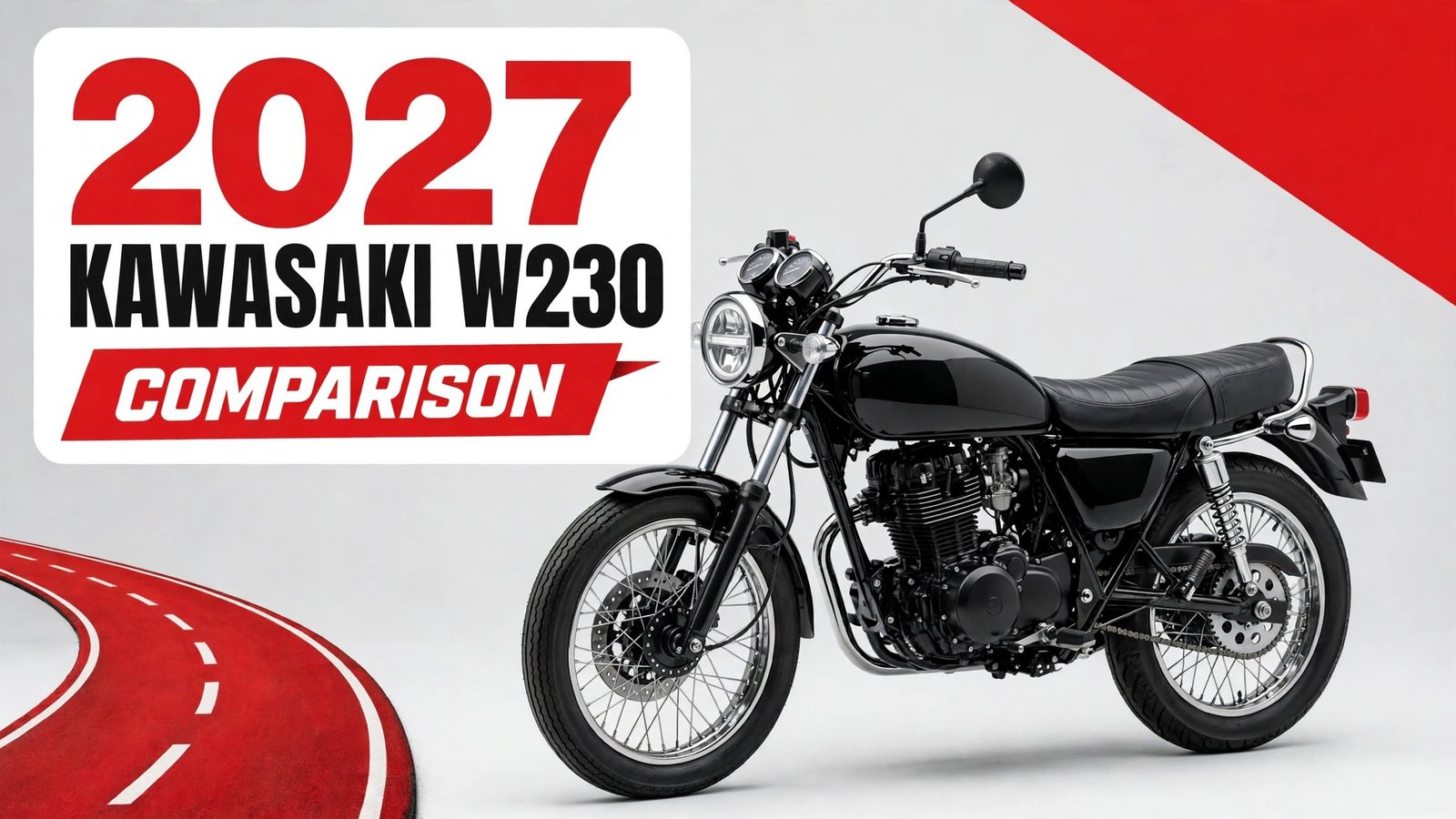
The Kawasaki W230 asks $5,699 for 17 hp in 2026, and that single fact makes this Kawasaki W230 comparison unavoidable. Two of its three rivals make more power for less money, and the third makes more than twice the power for $204 less on MSRP. The W230’s case has to be built on something other than the spec sheet, and this Kawasaki W230 comparison builds it from the verified figures — prices from the manufacturers’ own sites, power from claimed figures, and running costs from the EPA and one owner’s fill-ups.
Three bikes line up against the W230, and each one attacks it from a different direction: the Hunter 350 undercuts it by $1,400 and still makes more power, the Speed 400 outguns it by 22.5 hp and still costs less, and the Classic 350 offers the same retro promise at a lower price. What follows in this Kawasaki W230 comparison is each rival taken on its own terms, then the price and value picture, then a verdict on who should buy the W230.
Kawasaki W230 Overview and Its Closest Rivals

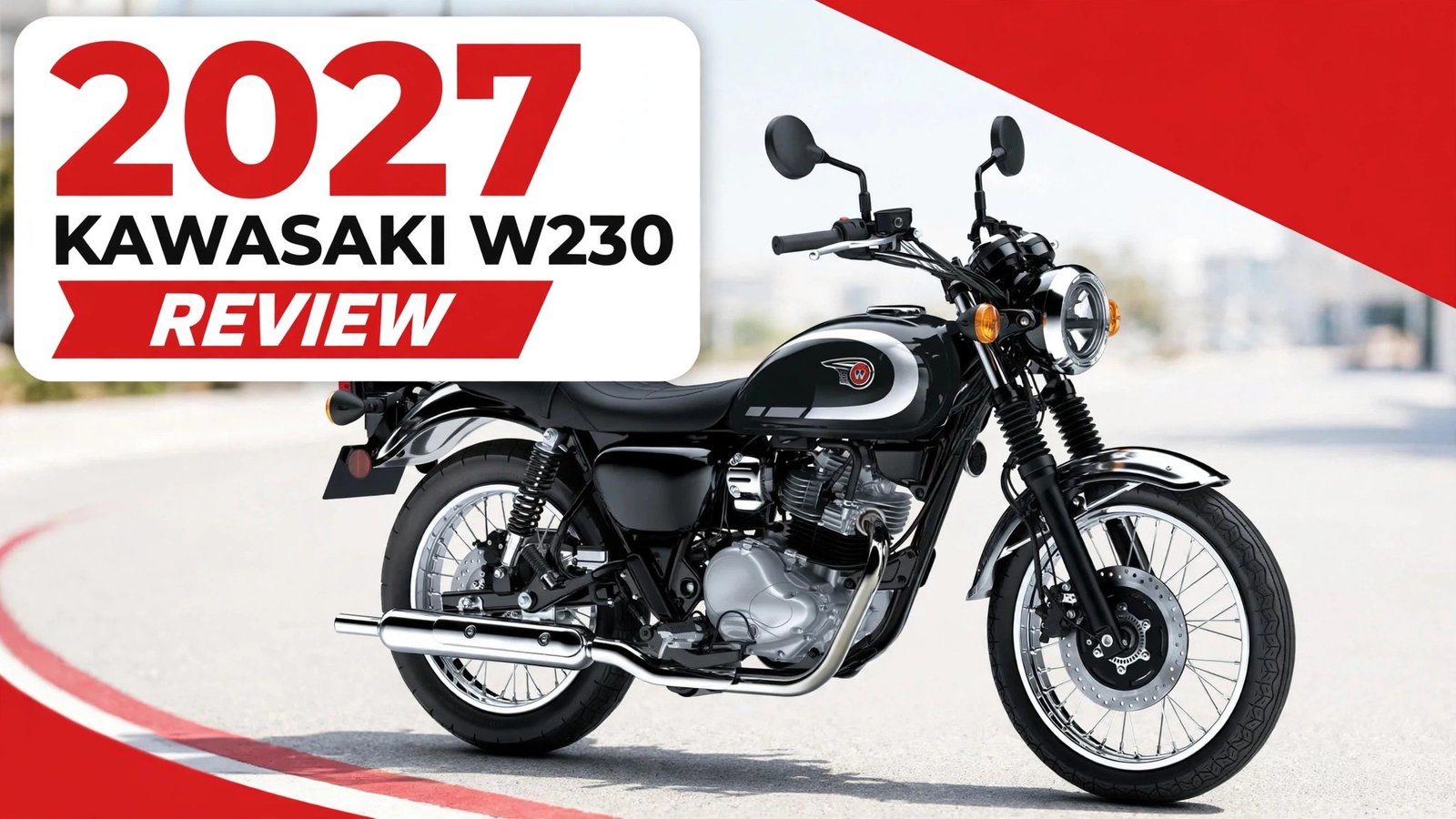
The W230 is the smallest and lightest bike in this Kawasaki W230 comparison, and the weakest and second-dearest too. That contradiction is the whole story: a 233cc air-cooled single making 17 hp, weighing 315.3 lb and priced at $5,699, standing next to two 349cc Royal Enfields at $4,299 and $4,599 and a 398cc liquid-cooled Triumph at $5,495. The W230 does not win this Kawasaki W230 comparison on paper — only on lightness, simplicity and the W-series name, if at all.
Banditmanuk’s Motorcycle Live roundup, uploaded on November 25, 2026, walks the show floor past the sub-£10,000 bikes — it is a walkaround, not a head-to-head test. The Kawasaki W230 appears at 3:52 for about 44 seconds: a black retro Kawasaki close-up, handlebars, twin clocks, headlight and tank, while the presenter calls it ‘an incredible 4,654 pounds’ and says he really likes it. That £4,654 is a UK show price, not a US one.
Cheapest Rival Beats Its Power
The cheapest bike in this Kawasaki W230 comparison is also more powerful than the W230. The Royal Enfield Hunter 350 costs $4,299 — $1,400 less than the W230’s $5,699 — and its 349cc air-oil-cooled single makes 20.2 bhp at 6,100 rpm against the W230’s 17 hp at 7,000 rpm. The Classic 350, at $4,599 base, makes the same 20.2 bhp for $1,100 less than the W230. Even the Speed 400, the dearest bike here on its $5,495 Triumph figure, is $204 cheaper than the W230 on MSRP while making 39.5 hp — more than twice the W230’s output. On 2026 MSRP the W230 is the weakest bike in the group and the second-dearest, and no honest Kawasaki W230 comparison can hide that.
How the Four Bikes Differ at a Glance
The four bikes differ in more than price and power, and the differences shape who each one suits. The W230 is the only one with a six-speed gearbox among the Royal Enfields — both Enfields run five speeds — and the only one under 320 lb. The Speed 400 is the only liquid-cooled bike, the only one with ride-by-wire, and the only one with a radial front brake caliper. The Hunter and Classic share the same 349cc engine and 20.2 bhp, but the Classic is 31 lb heavier, taller by 0.59 in at the seat, and rides on a 19-inch front wheel where the Hunter runs 17-inch wheels at both ends. The table below puts the four bikes side by side on the figures that decide this Kawasaki W230 comparison.
| Bike (2026) | Engine | Claimed power | Weight | Delivered price |
|---|---|---|---|---|
| Kawasaki W230 ABS | 233cc air-cooled single, 6-speed | 17 hp @ 7,000 rpm | 315.3 lb curb | $6,134 ($5,699 + $435) |
| Royal Enfield Hunter 350 | 349cc air-oil-cooled single, 5-speed | 20.2 bhp @ 6,100 rpm | 399 lb curb | $4,844 ($4,299 + $545) |
| Triumph Speed 400 | 398.15cc liquid-cooled single, 6-speed | 39.5 hp @ 8,000 rpm | 375 lb wet | $6,095 ($5,495 + $600) |
| Royal Enfield Classic 350 | 349cc air-oil-cooled single, 5-speed | 20.2 bhp @ 6,100 rpm | 430 lb curb | $5,144 base ($4,599 + $545) |
Note: All figures in this Kawasaki W230 comparison table are the manufacturers’ claimed figures for 2026 US models. Royal Enfield and Triumph publish no dollar destination or freight figure, so the $545 and $600 figures are dealer-published. The W230’s 17 hp is an ISO 4106 crank figure. No dyno of the W230 exists, so no measured rear-wheel figure can be printed for it.
Kawasaki W230 vs Royal Enfield Hunter 350
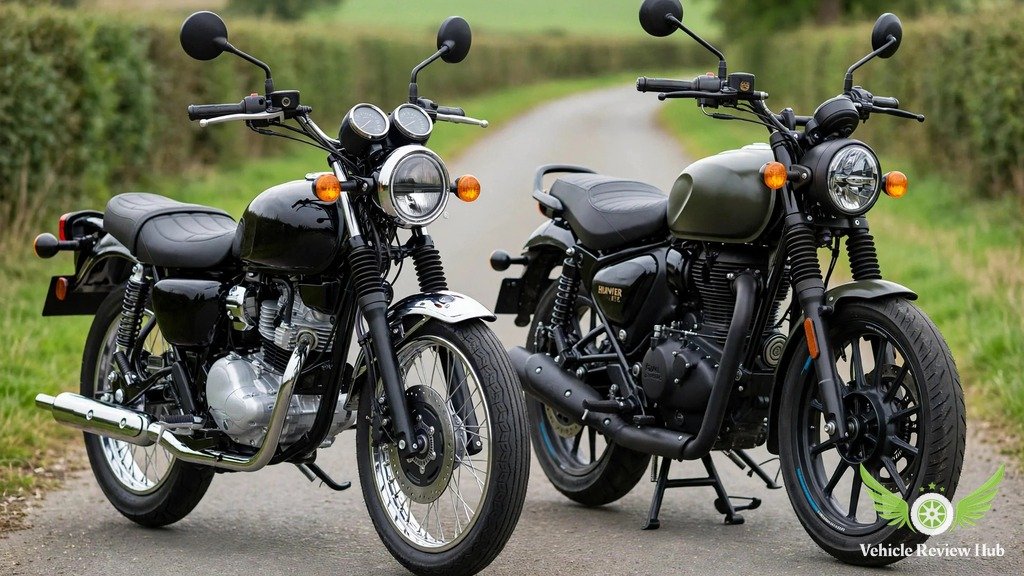
The Hunter 350 is the W230’s hardest rival to beat: it wins on the two numbers most buyers check first and loses on the two the W230 owns. This Kawasaki W230 comparison starts with the Hunter because the $1,400 price gap and the 3.2 bhp power gap are the bluntest facts in the group.
Engine, Specs and Performance Side by Side
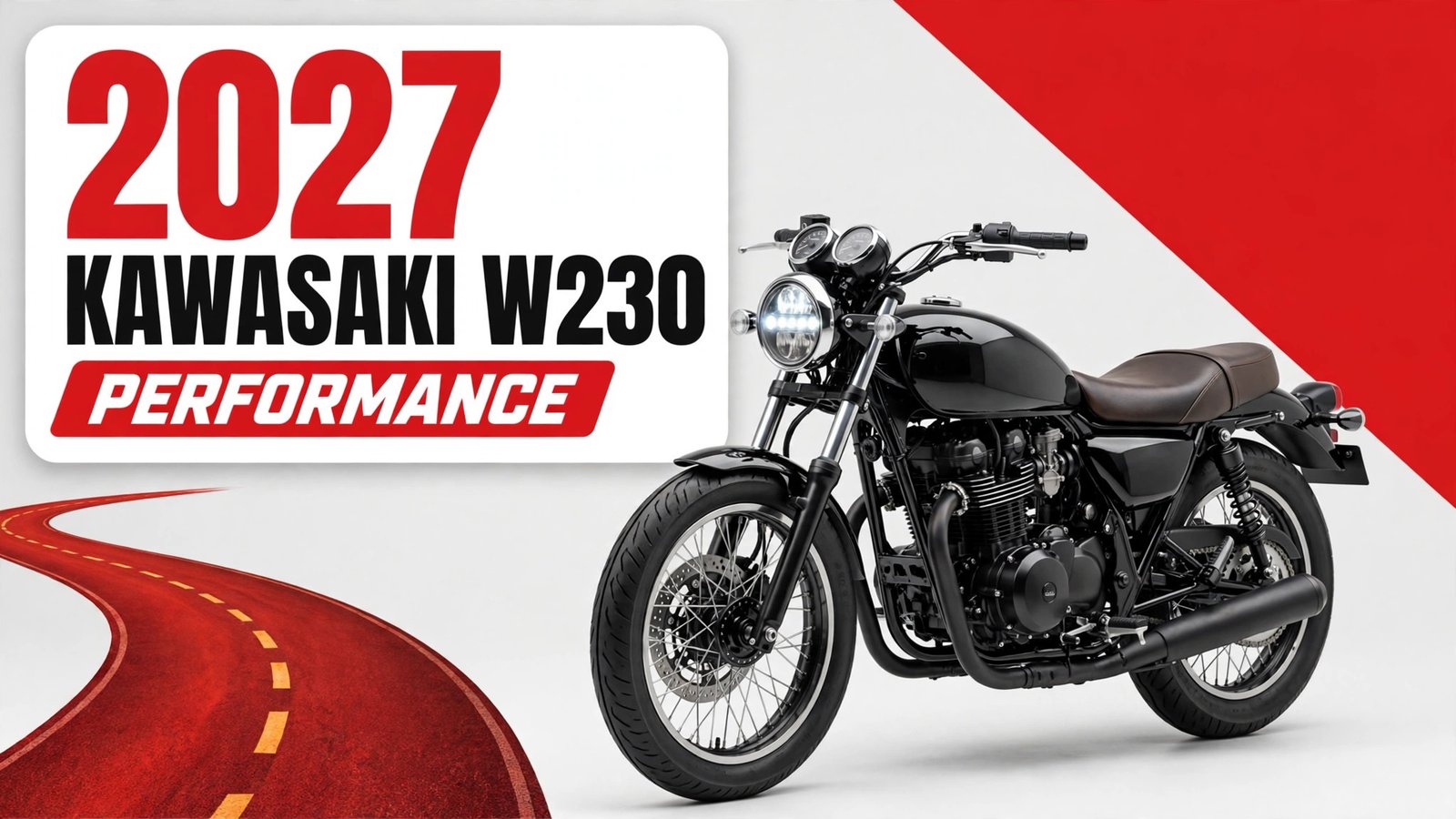
The Hunter’s 349cc air-oil-cooled single makes 20.2 bhp at 6,100 rpm and 19.9 lb-ft at 4,000 rpm, against the W230’s 17 hp at 7,000 rpm and 14.0 lb-ft at 5,800 rpm. The Hunter’s extra 116cc and its lower power peak give it more torque where a city rider uses it, and its five-speed gearbox is one ratio short of the W230’s six — the W230 is the only bike here with a six-speed among the Royal Enfields. Both bikes are air-cooled singles with old-school character, but the Hunter’s engine is the bigger and stronger one. Neither bike has a tested top speed worth quoting: the W230’s only figure is Wikipedia’s 75–80 mph estimate, labelled “(est.)” and uncited, and no timed run exists for either bike. The Hunter 350 page confirms the 2026 price and the 20.2 bhp figure, and the W230’s figures come from Kawasaki’s own spec sheet. No W230 dyno exists, and the Hunter has no published rear-wheel figure in this research either, so this Kawasaki W230 comparison rests on the claimed figures — and on those the Hunter wins.
Price, Equipment and Which Suits Which Rider
The Hunter costs $4,299 against the W230’s $5,699, and $4,844 delivered against the W230’s $6,134 — a $1,290 gap. The Hunter also carries more equipment for the money: a 300mm front disc with dual-channel ABS, a 270mm rear disc, and 17-inch wheels wearing 110/70-17 and 140/70-17 tyres, against the W230’s 265mm front and 220mm rear discs and narrow 90/90-18 and 110/90-17 tyres. What the W230 gives back is 84 lb less weight — 315.3 lb curb against the Hunter’s 399 lb — a seat 1.8 in lower at 29.3 in against 31.1 in, and the W-series heritage that stretches back to the 1965 650-W1. Buy the Hunter for value and power, the W230 for lightness and heritage — that is the honest split this Kawasaki W230 comparison reaches.
Kawasaki W230 vs Triumph Speed 400
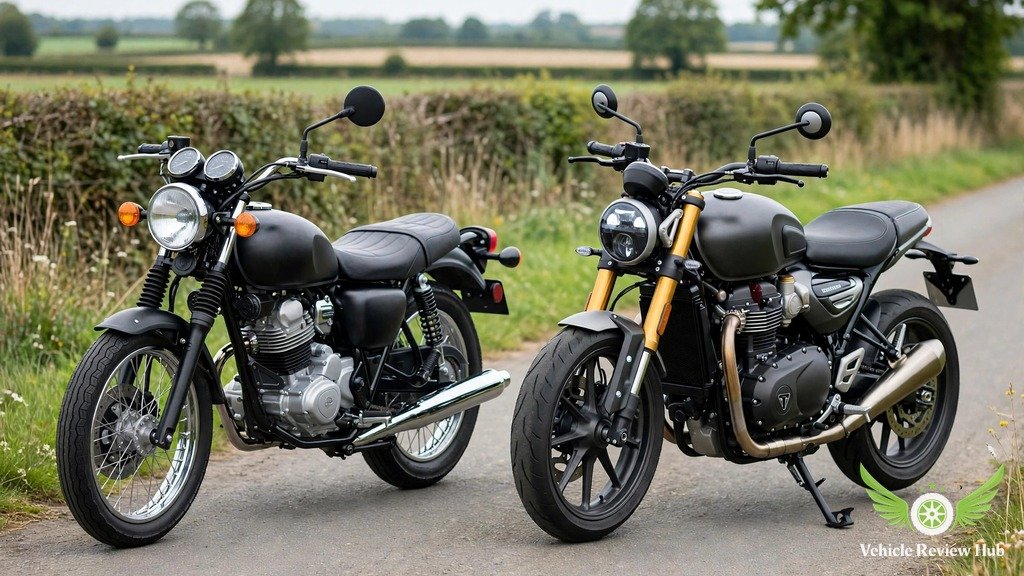
The Speed 400 is the one rival the W230 cannot argue with on performance: 39.5 hp against 17 hp is not a contest but a different class of motorcycle wearing a similar retro suit. This Kawasaki W230 comparison treats it as the performance pick of the group, and the W230’s only answers are weight and character.
Engine, Specs and Performance Side by Side
The Speed 400’s 398.15cc liquid-cooled DOHC single makes 39.5 hp at 8,000 rpm and 27.7 lb-ft at 6,500 rpm — more than twice the W230’s 17 hp and nearly twice its 14.0 lb-ft. It is the only liquid-cooled bike in this Kawasaki W230 comparison, the only one with Bosch EFI and ride-by-wire, and the only one with a four-piston radial front caliper on a 300mm disc. The W230’s air-cooled 233cc single is a generation older in concept, and it shows in every number. The Speed 400 is the only rival with a six-speed to match the W230’s six, and its 375 lb wet weight is 60 lb more than the W230’s 315.3 lb curb — the one measurement where the W230 still leads. No W230 dyno exists, but the Speed 400’s claimed 39.5 hp needs no dyno to settle the question. The Speed 400 page on Triumph’s US site confirms the $5,495 price and the 39.5 hp figure. On claimed figures the Speed 400 is far quicker, and no head-to-head test exists to complicate that — this Kawasaki W230 comparison rests on the manufacturers’ claims, and on those the Speed 400 wins on speed by a distance.
Price, Equipment and Which Suits Which Rider
On Triumph’s own figure the Speed 400 costs $5,495 — $204 less than the W230’s $5,699 — and $6,095 delivered against the W230’s $6,134, so the faster bike is also the cheaper one on the manufacturer’s numbers. Four dealer listings show $5,595 instead, which would make the Speed 400 $6,195 delivered — and Triumph’s own $5,495 governs this Kawasaki W230 comparison. Either way the price gap is small and the performance gap is enormous. The Speed 400’s equipment list is longer too: ride-by-wire, a radial front brake, Metzeler Sportec M9RR tyres, and a 3.43-gallon tank against the W230’s 3.1 gallons. The full Kawasaki W230 performance guide carries the W230’s numbers, with every figure labelled for what it is.
Kawasaki W230 vs Royal Enfield Classic 350
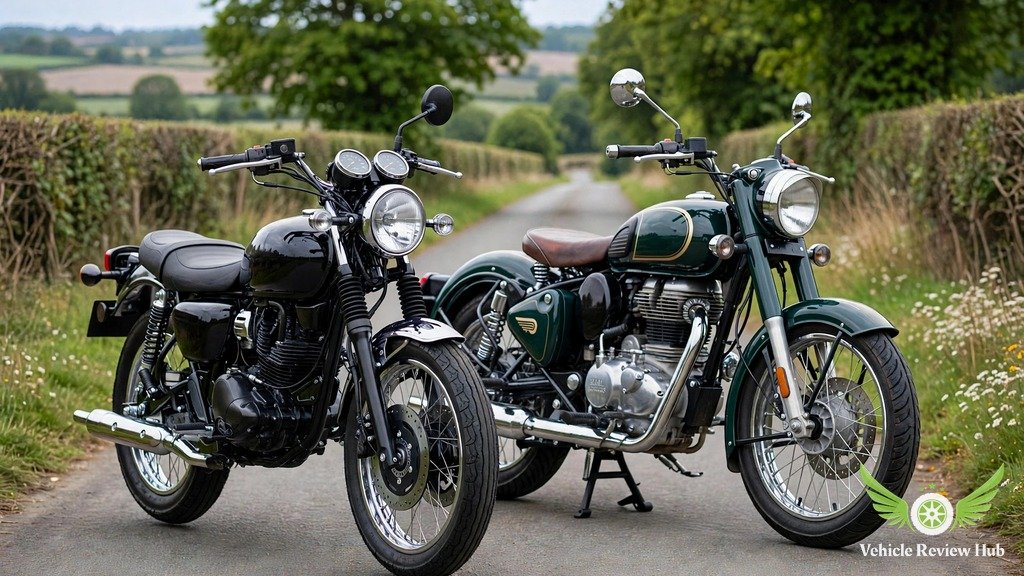
The Classic 350 is the closest thing to the W230’s own idea of a motorcycle — a retro single with vintage styling, a low price and modest power — undercutting the W230 by $1,100 while making more power. This Kawasaki W230 comparison treats the Classic as the heritage rival, the one that forces the W230 to justify its premium on character alone, since the Classic has plenty of nostalgia too.
Engine, Specs and Performance Side by Side
The Classic shares the Hunter’s 349cc air-oil-cooled single, so it makes the same 20.2 bhp at 6,100 rpm and 19.9 lb-ft at 4,000 rpm — 3.2 bhp and 5.9 lb-ft more than the W230’s 17 hp and 14.0 lb-ft. It is the heaviest bike in this Kawasaki W230 comparison at 430 lb curb, 115 lb more than the W230, and the tallest at the seat at 31.69 in against 29.3 in. Its 19-inch front wheel gives it a different stance from the W230’s 18-inch front, and its 300mm front and 270mm rear discs match the Hunter’s braking hardware. The W230’s six-speed gearbox is one ratio more than the Classic’s five, and its 315.3 lb curb weight is the lightest in the group by a wide margin. No tested top speed or dyno exists for either bike, so this Kawasaki W230 comparison rests on claimed figures — and on those the Classic wins on power while the W230 wins on lightness. The Classic 350 page on Royal Enfield’s US site confirms the $4,599 base price and the 20.2 bhp figure.
Price, Equipment and Which Suits Which Rider
The Classic starts at $4,599 base — $1,100 less than the W230’s $5,699 — and $5,144 delivered against the W230’s $6,134, a $990 gap. Higher colours and trims run to $4,999, still $700 under the W230 on MSRP. The Classic’s equipment is the Hunter’s with a different dress: the same engine, the same brakes, a larger 3.43-gallon tank against the W230’s 3.1 gallons, and a classic post-war look arguably closer to the W230’s own 1965 heritage than the Hunter’s roadster style. The W230 answers with 115 lb less weight, a seat 2.39 in lower and a six-speed gearbox — but the Classic answers back with more power, more torque, a bigger tank and a lower price. The Kawasaki W230 review carries the full price ladder and the W230’s own spec sheet figures.
Kawasaki W230 Price and Value Compared
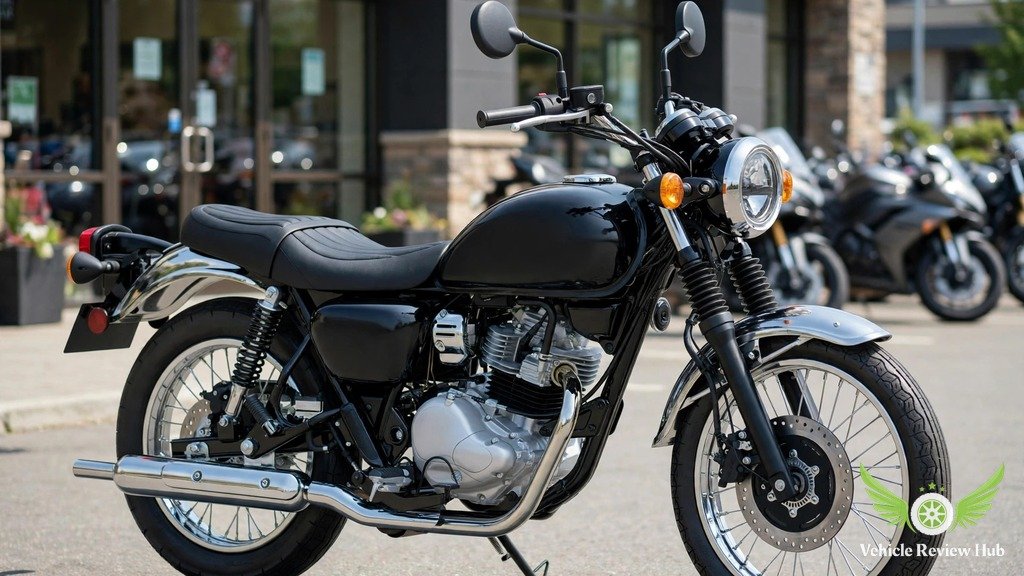
Price is where this Kawasaki W230 comparison turns against the W230 most sharply: $1,290 more delivered than the Hunter, $990 more than the Classic base, and $39 more than the Speed 400 on Triumph’s own figure — while making the least power in the group. The only price argument the W230 has is the leftover market, and even that is dated.
Leftover 2025s From $3,599
Leftover 2025 W230s were advertised from $3,599 in a Cycle Trader snapshot dated December 13, 2025, with the lowest verified price at $3,584 — roughly $2,000 off the $5,599 MSRP. That is late-2025 pricing, never a current price, and this Kawasaki W230 comparison prints it only with that date attached. A leftover 2025 at $3,599 changes the value picture completely: at that price the W230 undercuts the Hunter by $700 on MSRP and the Classic by $1,000. But leftover stock is finite, the rebate behind the lowest prices ran until December 31, 2025, and no current leftover price has been verified — a buyer today must check a dealer for what is left. The W230’s own price ladder is $5,599 for 2025, $5,699 for 2026 and $5,899 for 2027, with destination at $420 for 2025 and $435 for 2026 and 2027.
| Bike (2026) | MSRP | Delivered |
|---|---|---|
| Kawasaki W230 ABS (2025) | $5,599 | $6,019 ($420 destination) |
| Kawasaki W230 ABS | $5,699 | $6,134 ($435 destination) |
| Royal Enfield Hunter 350 | $4,299 | $4,844 ($545 destination) |
| Triumph Speed 400 | $5,495 (Triumph) | $6,095 ($600 freight) |
| Royal Enfield Classic 350 | $4,599 base | $5,144 base ($545 destination) |
| Kawasaki W230 ABS (2027) | $5,899 | $6,334 ($435 destination) |
Note: All MSRP figures in this Kawasaki W230 comparison table are the manufacturers’ own 2026 US figures, except the 2027 W230 row, which is Kawasaki’s 2027 spec sheet. The $545 and $600 destination figures are dealer-published, since neither Royal Enfield nor Triumph publishes a dollar figure. The Speed 400’s $5,495 is Triumph’s own figure; four dealer listings show $5,595, which would make it $6,195 delivered — disclosed in the Speed 400 section above. The W230’s 2025 destination was $420, not $435, and the $778 figure seen at one dealer is dealer-inflated, never a Kawasaki charge.
Running Costs and Resale Value Compared
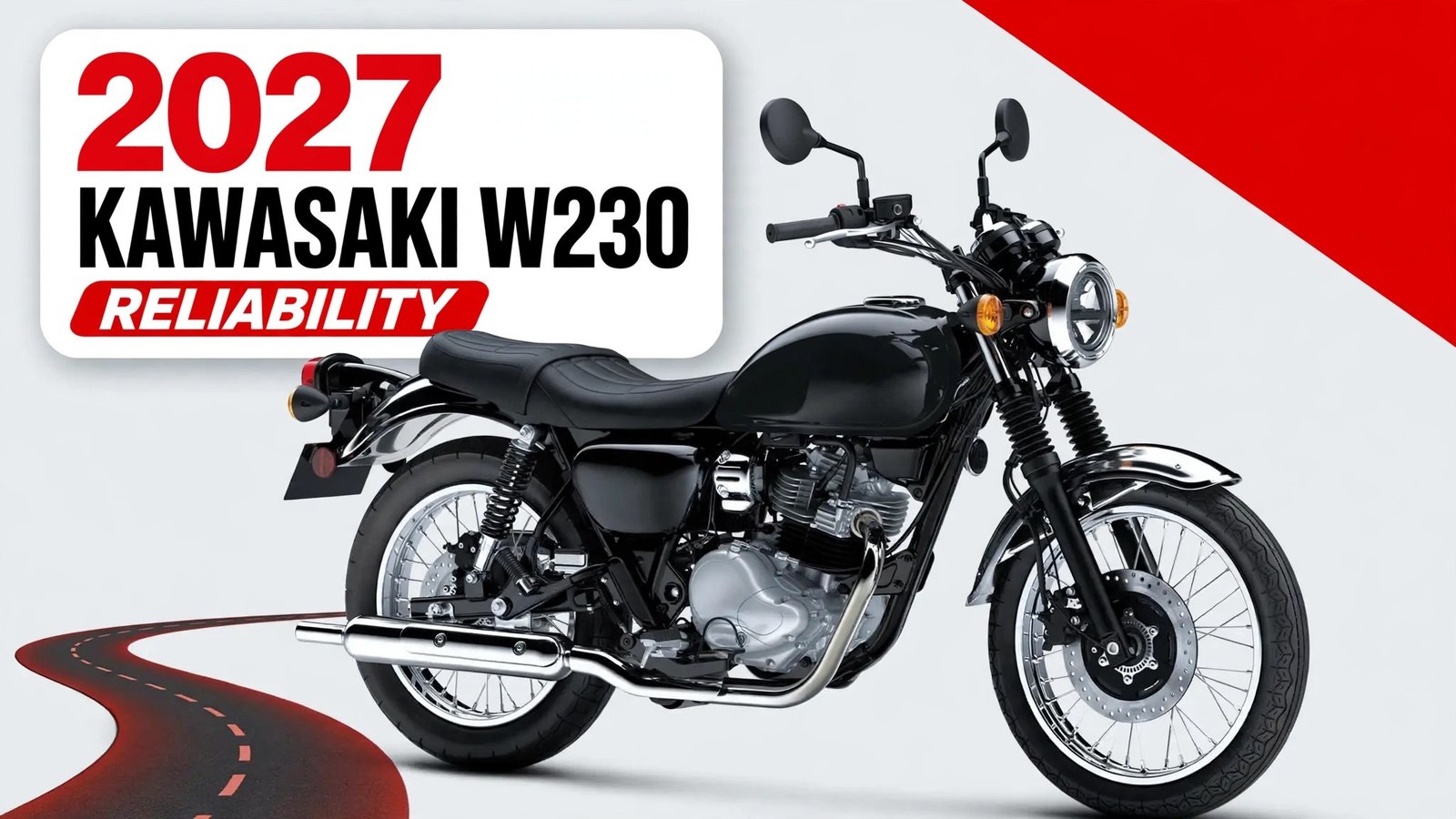
Running costs narrow the W230’s price disadvantage, but they do not erase it. The W230’s US EPA ratings are 89.1 mpg for 2025 and 88.8 mpg for 2026, and the single owner who tracked fill-ups recorded 84 and 94 mpg over two break-in fills — the best fuel economy in this Kawasaki W230 comparison by a clear margin, since no EPA or owner figure was verified for any rival in this research. A 3.1-gallon tank gives the W230 roughly 280 miles at 90 mpg. Both of the W230’s recalls — the 482-bike stall recall (25V363) and the 840-bike signal-bulb recall (26V387) — carry free remedies, costing an owner nothing but a dealer visit. The W230’s simple running gear keeps routine work small, though no US service interval, oil figure or valve figure has been verified from the W230’s own manual, so no service-cost comparison can be printed as a fact. Resale is the W230’s weak spot in this Kawasaki W230 comparison: no used W230 price was verified, and the late-2025 leftover discount of roughly $2,000 shows how fast the new price can fall. The Kawasaki W230 reliability guide carries the full recall record and the VIN-check guidance every used buyer should run.
| Running cost | Kawasaki W230 | Rivals |
|---|---|---|
| Fuel economy (US EPA) | 89.1 US mpg (2025); 88.8 US mpg (2026) | No EPA figure published for any rival |
| Owner fuel economy | 84 and 94 mpg, one owner, two fills | No verified owner figure for any rival |
| Tank range (approx.) | ~280 miles (3.1 gal at 90 mpg) | Hunter/Classic 3.43 gal; Speed 400 3.43 gal |
| Recall remedies | Free (battery harness + all four bulbs) | No W230-rival recall compared here |
| Routine service cost | Not verified (US chart unread) | Not compared — no verified figures |
| Used price | None verified | None verified |
Note: This Kawasaki W230 comparison table prints only verified figures. The W230’s EPA ratings are US figures for 2025 and 2026; the owner figure is one owner and two break-in fills, never a fleet average. No EPA, owner-economy, service-cost or used-price figure was verified for the Hunter 350, Classic 350 or Speed 400 in this research, so those cells say so plainly rather than guessing.
Kawasaki W230 Comparison Verdict and US Alternatives

The verdict in this Kawasaki W230 comparison is not close on the numbers, and it should not pretend to be: the W230 is the weakest and second-dearest bike in its group, and the only way to recommend it is to be honest about what it is not. What follows is that honest verdict, and the two bigger W alternatives for buyers who want more of the same idea.
Verdict: Heritage at a Premium
The W230 charges a premium over both Royal Enfields while making less power — $1,400 over the Hunter and $1,100 over the Classic base — and it charges $204 more than the Speed 400 on Triumph’s own figure while making less than half its power. That is the verdict this Kawasaki W230 comparison reaches from the verified price and power table. The W230’s case is character, lightness and simplicity: 315.3 lb against 399, 430 and 375 lb; a 29.3-inch seat against 31.1, 31.69 and 31.1 inches; a six-speed gearbox; analog dials; no rider aids beyond ABS; and a W-series lineage back to the 1965 650-W1. Buy the W230 if those things matter more than power and price, and if the low seat and light weight fit a shorter or newer rider. Buy the Hunter for value and power, the Speed 400 for performance, and the Classic for retro style at the lowest price. At a leftover $3,599 the W230’s case becomes strong; at $5,699 it is a heritage purchase, and this Kawasaki W230 comparison says so plainly.
W800 Continues, W175 Is New
Two bigger W alternatives sit above and below the W230 in Kawasaki’s own lineup, and neither is a return — the W800 continues, and the W175 is new. The W800 ABS has run continuously in the US since its 2020 reintroduction: 2026 at $10,699 plus $685 destination, and 2027 at $10,999 plus $685. It is a 773cc air-cooled twin with an assist and slipper clutch the W230 does not have, and it is the bike for the buyer who loves the W idea but wants twice the engine. The W175 LTD is new to the USA for 2026: $2,999 plus $435 destination for both 2026 and 2027, a 177cc single making 13 hp with a five-speed gearbox and ABS on the front brake only, built in India. Neither bike changes this Kawasaki W230 comparison’s verdict — the W230 still sits between them as the middle W — but both prove the W line is alive in the US.
Kawasaki W230 Comparison FAQs
The questions below cover what buyers ask about most in this Kawasaki W230 comparison: the cheapest bike, the most powerful bike, the lightest bike, which rival suits which rider, the leftover 2025 price, and the Speed 400 choice.
Which bike is cheapest in this comparison?
The Royal Enfield Hunter 350: $4,299 MSRP, $4,844 delivered with the $545 dealer-published destination. The Classic 350 starts at $4,599; the Speed 400 is $5,495 on Triumph’s own figure; the W230 is $5,699 for 2026. This Kawasaki W230 comparison ranks the W230 third of four on price, ahead of only the Speed 400.
Which bike is the most powerful?
The Triumph Speed 400 by a long way: 39.5 hp at 8,000 rpm. The Hunter 350 and Classic 350 make 20.2 bhp; the W230 makes 17 hp — the weakest in the group. No dyno of the W230 exists, so this Kawasaki W230 comparison rests on the manufacturers’ claimed figures.
Which bike is the lightest?
The W230 at 315.3 lb curb — lighter than the Speed 400 at 375 lb wet, the Hunter 350 at 399 lb curb and the Classic 350 at 430 lb curb. Lightness is the W230’s strongest card in this Kawasaki W230 comparison, and it pairs with the group’s lowest seat at 29.3 inches.
W230 or Hunter 350 — which suits which rider?
The Hunter is $1,400 cheaper on MSRP and makes 20.2 bhp against 17 hp; the W230 is 84 lb lighter, lower at 29.3 in against 31.1 in, and the only one with a six-speed gearbox and a retro W-series heritage. Buy the Hunter for value and power; buy the W230 for lightness and heritage. That is the split this Kawasaki W230 comparison reaches.
Can I still buy a new 2025 W230 cheap?
Leftover 2025s were advertised from $3,599 in late 2025, with the lowest verified price at $3,584 — that is late-2025 pricing from a Cycle Trader snapshot dated December 13, 2025, not a current price. Check a dealer for what is left now. This Kawasaki W230 comparison prints the $3,599 figure only with that date attached.
W230 or Speed 400 — which suits which rider?
The Speed 400 is the performance pick: 39.5 hp, liquid-cooled, six-speed, radial front brake, at $5,495 on Triumph’s own figure. The W230 is the heritage pick: 17 hp, air-cooled single, retro styling, at $5,699 for 2026. The Speed 400 is both quicker and cheaper on MSRP — the W230’s case in this Kawasaki W230 comparison is character, lightness and simplicity, not speed or value.