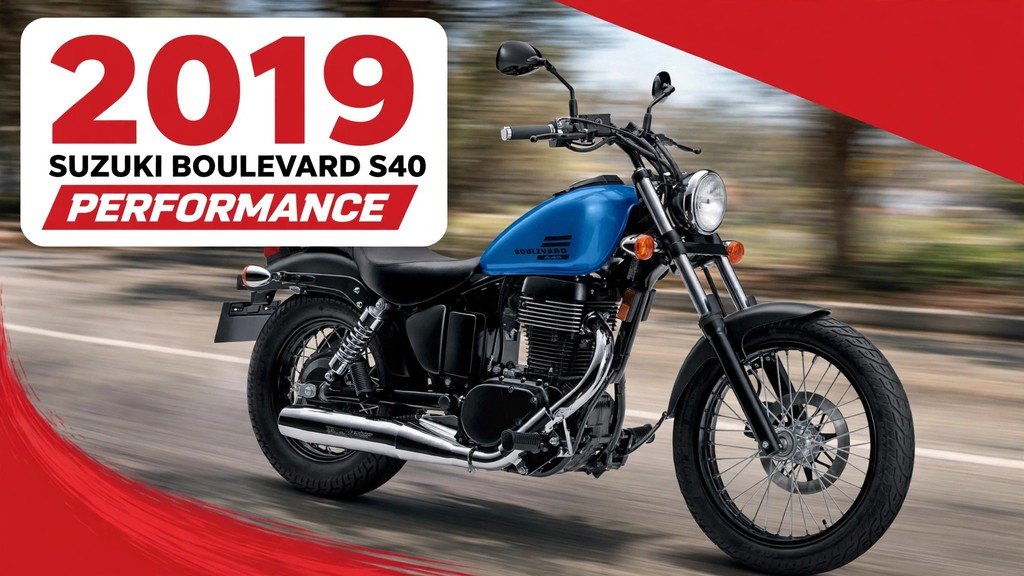
The short answer in this Suzuki Boulevard S40 reliability guide is that the bike is simple enough to be genuinely dependable — and demanding enough that a neglected one will show it fast. A 652cc air-cooled single with a carburetor, a belt drive and no electronics has very little to break, and the service manual asks for oil, filter and valve work at every single interval. That is the whole story of Suzuki Boulevard S40 reliability: a motorcycle that rewards an owner who reads the manual.
Suzuki Boulevard S40 Reliability Overview
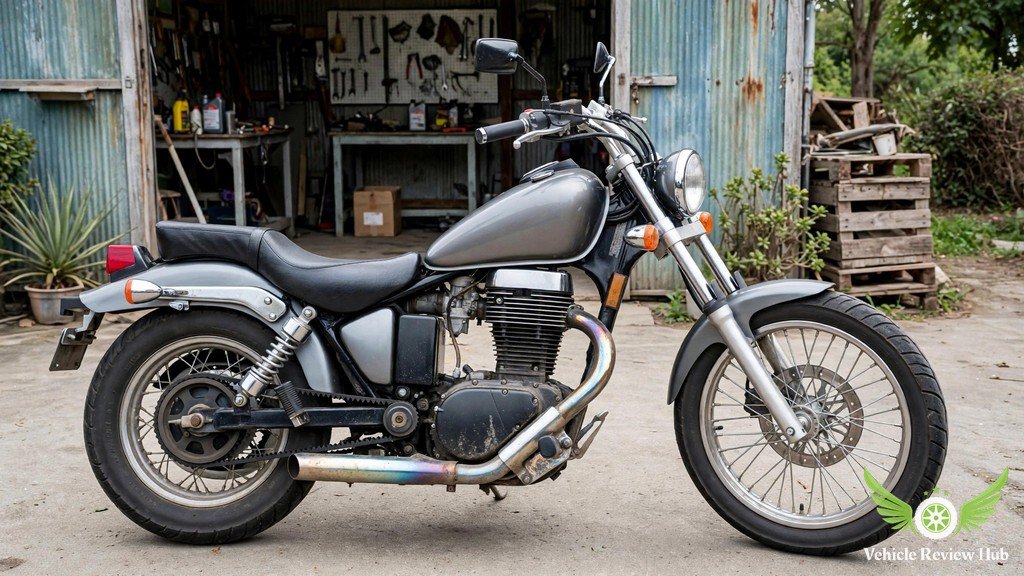
The S40’s reliability reputation comes from its age and simplicity. The same engine, carburetor, gearbox and belt drive ran from the 1986 LS650 Savage to the last 2019 Boulevard S40 with no meaningful change, so thirty years of owners have found the same handful of faults and fixes. This section of the Suzuki Boulevard S40 reliability guide covers what the record actually shows — no recall found in published notices, a large owner community, and evidence that is self-selected by nature.
No Recall Found, but Always Run the VIN
No recall was found in published notices for the Suzuki Boulevard S40, the LS650 or the Savage. Suzuki’s own recalls page returns zero hits for the model, and the regulator/rectifier campaign 11V-108 does not list the S40 among its models. That phrasing matters — “no recall found”, not a verified zero, because the NHTSA API is broken. Buyers should still run any used bike’s VIN through the NHTSA recalls lookup before handing over money, because aggregators often attribute the C50’s two recalls to the S40 by mistake. The Boulevard C50 reliability guide covers those two campaigns; they belong to the C50, not to this bike. The full history and pricing of this model are in the Suzuki Boulevard S40 review, and Suzuki Boulevard S40 reliability starts from a clean record on paper.
A Large Owner Community, Self-Selected Evidence
The S40 has one of the largest owner communities of any single-cylinder cruiser, centred on suzukisavage.com, and Clymer covers the LS650 Savage and Boulevard S40 from 1986 to 2015 in a single manual. That community is the best source of reliability evidence for this bike — and the evidence is self-selected. People post when something breaks, not when nothing does, so forums overstate every fault’s frequency. The honest reading is that the S40’s faults are few, well understood and cheap to fix. The community’s value is practical: step-by-step fixes for the head plug leak and the petcock, torque figures, part numbers and thirty years of used-buyer checklists. A new owner who joins that community and follows the manual has the two best tools the bike offers.
Suzuki Boulevard S40 Common Problems and Wear Items
The S40’s problem list is short, and every item on it is owner-documented rather than factory-acknowledged. There is no service bulletin and no recall behind any of them — which is why a buyer needs to know them before purchase. This section of the Suzuki Boulevard S40 reliability guide covers the two faults every owner should check first, plus the wear items that the manual schedules.
The Infamous Head Plug Oil Leak, Owner-Documented
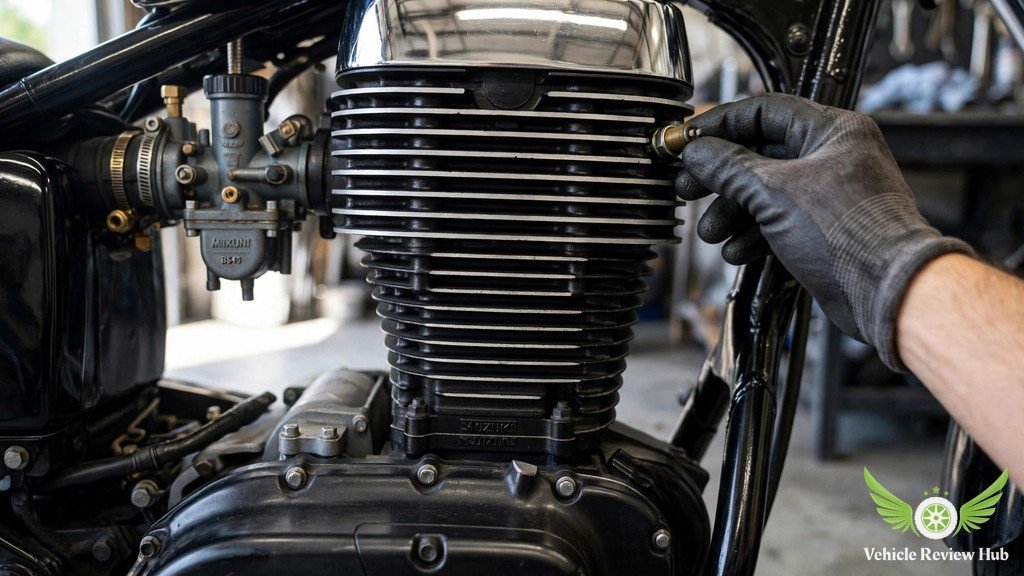
The best-known S40 fault is the cylinder-head plug oil leak — the head cap on top of the single cylinder weeps oil, and owners have documented it for years. The fix is an OEM upgraded head cap, which fits tighter and seals properly; owner MrInternet69’s write-up is the clearest version of the job. The leak is owner-documented, not a Suzuki bulletin, so no dealer will fix it under any campaign — and it is visible. A used S40 with oil weeping around the head plug is telling you the job has not been done, and the fix is cheap — an upgraded cap and a gasket, not an engine rebuild. Check the head plug on every used bike — the first check for Suzuki Boulevard S40 reliability — and budget the part if it weeps. Left alone, the leak stays small and messy rather than catastrophic — but it is the clearest sign of how the previous owner treated the bike.
Vacuum Petcock Failures Starve the Engine
The second fault to check is the vacuum-operated fuel petcock, which owners report can fail and starve the engine of fuel. The symptom is a bike that stumbles, loses power or dies as if it has run out of fuel — then runs again on reserve. The petcock opens by engine vacuum, so when its diaphragm fails, fuel stops flowing. There is no Suzuki bulletin for it; the owner fix is a manual petcock conversion or an OEM replacement valve. Test it directly: run the bike, switch the petcock through its positions, and watch for hesitation or starvation under load. A failed petcock is not expensive, but a bike that dies in traffic is a safety problem — so check it before buying, not after. The S40 has no fuel gauge and no warning light, so the petcock and the trip meter are the rider’s only fuel management — and a healthy petcock is part of Suzuki Boulevard S40 reliability in daily use.
Suzuki Boulevard S40 Maintenance Schedule and Servicing
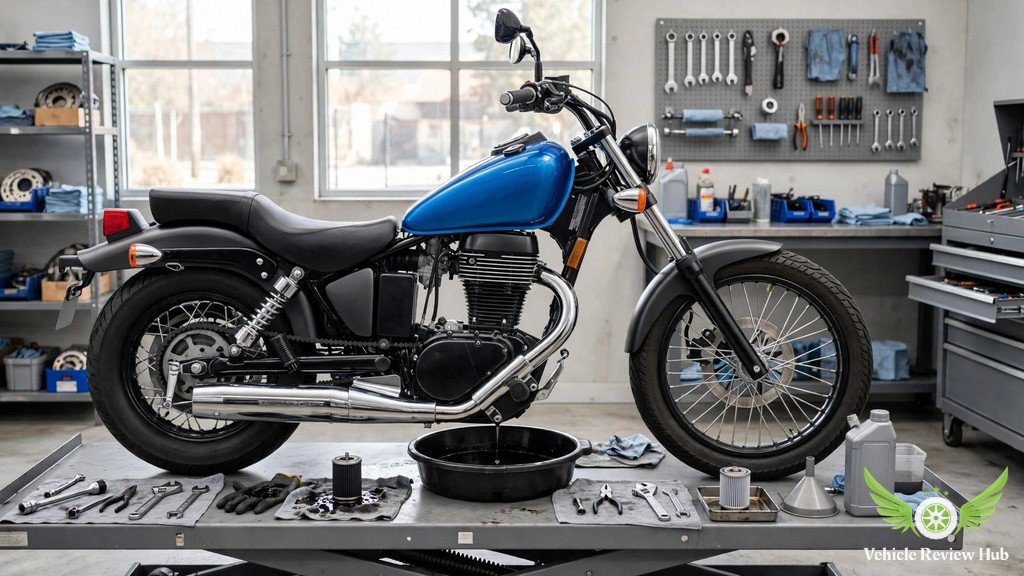
The S40’s service schedule is the most important fact in this Suzuki Boulevard S40 reliability guide — the opposite of what the bigger Boulevard V-twins ask for. The manual’s columns are 600, 4,000, 7,500, 11,000 and 14,500 miles — and at every one the oil is replaced, the oil filter is replaced, and the valve clearances are inspected and adjusted. The full S40 service chart from the manual is the source for the chart below.
The video below is Adrian of YouMotorcycle’s “How To Change Oil – Suzuki Boulevard S40 / Savage” — a 6:35 step-by-step oil and filter change on the actual bike, the exact job the next section covers. It is a how-to video, not a full service-manual walkthrough.
Oil and Filter at Every Single Interval
Engine oil (10W-40) is replaced at every column of the manual’s chart — 600, 4,000, 7,500, 11,000 and 14,500 miles — and the oil filter (HFA3608) is replaced at every column too. That is the S40’s own rule, and it is the opposite of the C50 and the M109R, where the filter is replaced only at 600 and 11,000 miles. Do not copy the bigger bikes’ rule into this bike. The drain bolt torques to 12–18 Nm; the basic service interval is every 3,500 miles or yearly. The air filter is replaced at 7,500 and 14,500 miles and cleaned every 2,000 miles; the spark plugs (NGK DPR8EA-9, alternative X24EPR-UP) are inspected at 4,000 and 11,000 miles and replaced at 7,500 and 14,500. The full step-by-step is in the YouMotorcycle oil and filter change guide that the video above comes from. Short oil intervals are the cheapest way to protect Suzuki Boulevard S40 reliability — a single-cylinder air-cooled engine works its oil hard, and fresh oil at every column is what the manual demands.
Valve Clearance Checked at Every Interval Too
Valve clearances are inspected and adjusted at every column as well — 600, 4,000, 7,500, 11,000 and 14,500 miles. Again, the opposite of the bigger Boulevard V-twins: the C50 checks its valves every 7,500 miles, the M109R only at 14,500 miles. The single overhead camshaft with four valves is simple to check, and the manual asks for it every time the bike is serviced. A used S40 with no record of valve work has unknown clearances, and tight valves on an air-cooled single are a real problem for Suzuki Boulevard S40 reliability — hard starting, poor running, and eventually burnt valves. Ask for service records showing valve adjustments at the manual’s intervals; their absence is a negotiating point, not a deal-breaker, but the buyer will need to do the job. The Boulevard M109R reliability guide shows the other end of the family: the valve check comes only at 14,500 miles.
| Item | 600 mi | 4,000 mi | 7,500 mi | 11,000 mi | 14,500 mi |
|---|---|---|---|---|---|
| Engine oil (10W-40) | R | R | R | R | R |
| Oil filter (HFA3608) | R | R | R | R | R |
| Valve clearances | I / adjust | I / adjust | I / adjust | I / adjust | I / adjust |
| Air filter (K&N SU-6595) | — | — | R | — | R |
| Spark plugs (NGK DPR8EA-9) | — | I | R | I | R |
| Front forks / rear suspension | I | — | I | — | I |
Brake fluid is replaced every 2 years and brake hoses every 4 years, on time rather than mileage, and the California model’s vapour hose is replaced every 4 years. R means replace, I means inspect.
Suzuki Boulevard S40 Tires, Brakes and Suspension Maintenance
The running gear is as simple as the engine: spoked wheels with tube-type tires, a single front disc and a rear drum, a belt that only needs inspecting, and non-adjustable suspension. This section of the Suzuki Boulevard S40 reliability guide covers the belt, the tires, the brakes and the one owner-community check that is not in the manual’s schedule.

Belt Inspected Every 2,000 Miles, No Change Interval
The drive belt is inspected every 2,000 miles, and Suzuki schedules no belt change interval — the belt is inspected, not replaced on a timetable. That is a genuine advantage over a chain, which needs cleaning and lubrication, and over a shaft, which needs oil changes. Check it for cracks, fraying and missing teeth, and check the belt axle nut torque of 65 Nm (47 lb-ft) whenever the wheel has been off. A belt inspected on schedule lasts a very long time; one never looked at can fail without warning and leave the bike stranded. Tires are tube types — 100/90-19 front, 140/80-15 rear — at 29 psi front and 33–36 psi rear. The front fork and rear suspension are inspected for leaks and pitting at 600, 7,500 and 14,500 miles, and the annual checklist also covers steering-head bearings and chassis bolts. Brake fluid (DOT 4) is replaced every two years and brake hoses every four years, and the single 240mm front disc and rear drum are inspected at every service — modest hardware, adequate on a 381-pound bike, and simple to keep in order, which is part of Suzuki Boulevard S40 reliability.
Cam-Chain Tensioner Check Around 10,000 Miles
Owner-reported cam-chain tensioner failures exist on the S40, including a 2005 LS650 whose tensioner had extended beyond its limit at 31,000 miles. The manual does have a cam-chain tension adjuster inspection procedure, but it does not schedule that check “around 10,000 miles” — that timing is owner-community guidance, not a Suzuki interval. Listen for a rattle or clanking from the engine’s left side, especially on a cold start, and have the tensioner checked if it appears — a small job that protects Suzuki Boulevard S40 reliability. It is not a reason to avoid the bike — a known wear item on a high-mileage single, and the community’s guidance exists because owners found the failures first. A used bike with a quiet engine and a record of tensioner attention is a better buy than one whose owner never listened for the noise.
Suzuki Boulevard S40 Maintenance and Ownership Costs
The S40 is one of the cheapest motorcycles in America to keep running: cheap parts, short service jobs and fuel economy over 50 mpg. This section of the Suzuki Boulevard S40 reliability guide puts numbers on the running costs and explains why so many AI-written buying guides get the maintenance figures wrong.

Fuel, Routine Servicing, Tires and Replacement Parts
Fuel is the smallest cost: the two tested figures are 55 mpg (Motorcycle Consumer News, 1996) and 52.9 mpg (Motorcycle Cruiser, 2006), roughly 148 miles from the 2.8-gallon tank — and Suzuki publishes no MPG figure at all. Routine servicing is an oil and filter change, a valve check and a look at the belt — all doable by a home mechanic with basic tools — and the oil filter (HFA3608) and spark plug (NGK DPR8EA-9) are common parts. Tires are tube-type spoked-wheel sizes, 100/90-19 front and 140/80-15 rear, and a set costs far less than the wide rubber on a big cruiser. The last new S40 sold for $5,799 plus $395 destination in 2019, and clean used examples commonly list in the $2,500–$4,500 range — a marketplace range, not a verified price — so the purchase is cheap and the running costs stay cheap, the practical side of Suzuki Boulevard S40 reliability. The Suzuki Boulevard S40 performance guide covers the fuel-economy tests in detail. The last bikes carried Suzuki’s 12-month unlimited-mileage limited warranty, but every S40 on the road today is long out of warranty — so the owner’s maintenance habits are the only warranty left. The archived Suzuki USA 2019 S40 page confirms the price, the warranty wording and the full specification.
SEO Pages Contradict the Manual: Trust the Manual
AI-written buying guides print S40 maintenance figures that contradict the service manual on almost every line — and buyers who follow them will service the bike wrong. The table below names the contradictions. Oil “every 3,000 miles” or “every 5,000 miles” is wrong: the manual says oil and filter at every column. Valves “every 10,000 miles” is wrong: the manual says every column. “Lubricate the chain” is wrong: the S40 has a belt, and there is nothing to lubricate. Shaft drive, ABS, a 27.2-inch seat, a 3.2-gallon tank and a 478-pound wet weight are all wrong against Suzuki’s spec table — belt drive, no ABS ever, 27.6-inch seat, 2.8-gallon tank, 381 pounds curb. When a web page and the manual disagree, the manual wins — and the manual’s chart is the one printed in this Suzuki Boulevard S40 reliability guide.
| Item | What SEO pages claim | What the service manual says |
|---|---|---|
| Engine oil | Every 3,000 or 5,000 miles | Replace at every column: 600 / 4,000 / 7,500 / 11,000 / 14,500 mi |
| Oil filter | With the oil, or only at 600 and 11,000 mi | Replace at every column, same as the oil |
| Valve clearance | Every 10,000 miles | Inspect and adjust at every column |
| Final drive | Chain — lubricate it; or shaft drive | Belt drive — inspect every 2,000 mi, no change interval |
| Brakes | ABS fitted / ABS optional | No ABS ever; single 240mm front disc, rear drum |
| Seat / tank / weight | 27.2 in seat, 3.2 gal tank, 478 lb wet | 27.6 in seat, 2.8 gal tank, 381 lb curb |
How to Keep a Suzuki Boulevard S40 Reliable
Keeping an S40 reliable is not complicated — a short list, done on time, every time. One cylinder, one carburetor, a belt and no electronics means very little to go wrong beyond the items this Suzuki Boulevard S40 reliability guide has already named.

Preventive Maintenance, Records and Regular Inspections
Follow the manual’s chart and keep records of every job — the foundation of Suzuki Boulevard S40 reliability. Check the head plug for oil weep at every service, test the petcock under load, and listen for the cam-chain rattle on cold starts. Keep the carburetor clean: the Mikuni BS40 suffers from sitting, and a bike that has stood for months will need the carb cleaned before it runs properly. Store it with the tank full and the battery charged, and inspect the tires, steering-head bearings and chassis bolts on the annual checklist. Records matter as much as the work: a used S40 with receipts and a stamped service history is worth more than the same bike without one, because the next buyer can see the intervals were kept. The Boulevard C50T reliability guide makes the same point for its bigger sibling.
Early Bikes: Starter Kickback Before the Limiter
Early S40s and Savages have an owner-reported starter kickback problem, and the story has two halves. The hardware is real and documented: the manual has a Starter Torque Limiter and Starter Clutch section, and the annual checklist inspects the automatic decompression cable. The kickback itself is owner-reported, not a Suzuki bulletin, and there is no recall for it. The limiter protects the starter, and a bike whose decompression cable is correctly adjusted starts cleanly. A buyer looking at an early bike should listen on a cold start for kickback or harsh cranking, and check the decompression cable. It is a minor fault on a long list of minor faults — none a reason to avoid the bike, and all reasons to buy the best-maintained example rather than the cheapest one.
Suzuki Boulevard S40 Reliability: Frequently Asked Questions
Direct answers to the questions riders ask about Suzuki Boulevard S40 reliability — the service intervals, the known faults, the recalls and what to check before buying a used one.
Is the Suzuki Boulevard S40 reliable?
Yes. Suzuki Boulevard S40 reliability holds up when the manual’s schedule is followed. The air-cooled single, carburetor and belt drive have very little to break, and the known faults — the head plug leak and the petcock — are cheap owner-documented fixes. A neglected S40 will show it fast.
How often should I change the oil on a Suzuki Boulevard S40?
At every column of the manual’s chart: 600, 4,000, 7,500, 11,000 and 14,500 miles, using 10W-40. Ignore web pages that say every 3,000 or 5,000 miles — those figures contradict the manual.
Does the oil filter need changing at every service?
Yes. For Suzuki Boulevard S40 reliability, the oil filter is replaced at every interval, exactly like the oil — 600, 4,000, 7,500, 11,000 and 14,500 miles. Do not follow the bigger Boulevard V-twins’ rule — filter only at 600 and 11,000 miles. The S40’s rule is the opposite.
What is the head plug oil leak on the S40?
An owner-documented leak from the cylinder-head plug (head cap) on top of the single cylinder. It weeps oil around the cap and is fixed with an OEM upgraded head cap. There is no recall and no bulletin for it — check the head plug on every used bike.
What is the vacuum petcock problem?
The vacuum-operated fuel petcock can fail and starve the engine, so the bike stumbles or dies as if out of fuel even with a full tank. It is owner-reported, with no Suzuki bulletin. The owner fix is a manual petcock conversion or an OEM replacement valve.
Are there any recalls on the Suzuki Boulevard S40?
No recall was found in published notices for the S40, LS650 or Savage. Run the VIN on the NHTSA recalls lookup before buying used, since the C50’s recalls are often wrongly attributed to the S40.
How often do valve clearances need checking?
At every interval — 600, 4,000, 7,500, 11,000 and 14,500 miles — inspected and adjusted each time. That frequency is the backbone of Suzuki Boulevard S40 reliability, and far more often than the C50 (every 7,500 miles) or the M109R (only at 14,500 miles).
When does the drive belt need replacing?
Suzuki schedules no belt change interval. The belt is inspected every 2,000 miles for cracks, fraying and tension, and replaced only when inspection shows wear. The belt axle nut torques to 65 Nm (47 lb-ft).
What is the cam-chain tensioner issue?
Owner-reported tensioner failures exist, including a 2005 LS650 whose tensioner extended beyond its limit at 31,000 miles. The “check around 10,000 miles” timing is owner-community guidance, not a Suzuki interval. Listen for a rattle on cold starts.
How much does it cost to run a Suzuki Boulevard S40?
Very little — cheap running costs are part of Suzuki Boulevard S40 reliability. Tested fuel economy is 52.9–55 mpg, the oil filter and spark plug are common cheap parts, and tires are small tube-type sizes. Clean used examples commonly list in the $2,500–$4,500 range, and routine servicing is a home-mechanic job.
What should I check before buying a used S40?
The head plug for oil weep, the petcock under load, the belt for cracks and tension, the cam-chain area for rattles on a cold start, and the service records for oil, filter and valve work — the five checks that decide Suzuki Boulevard S40 reliability on a used bike. Then run the VIN on the NHTSA recalls lookup.
Does the Suzuki Boulevard S40 have ABS?
No. No ABS was ever fitted to any S40 or Savage in any year or any market. The brakes are a single 240mm front disc and a rear drum, and the only instrument is a tank-mounted analogue speedometer — no tachometer, no fuel gauge.