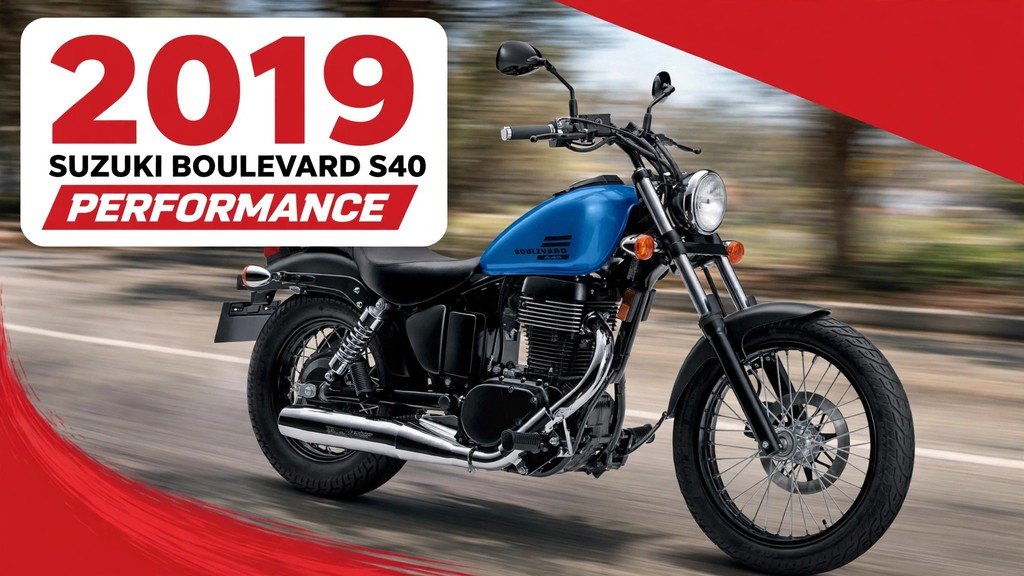
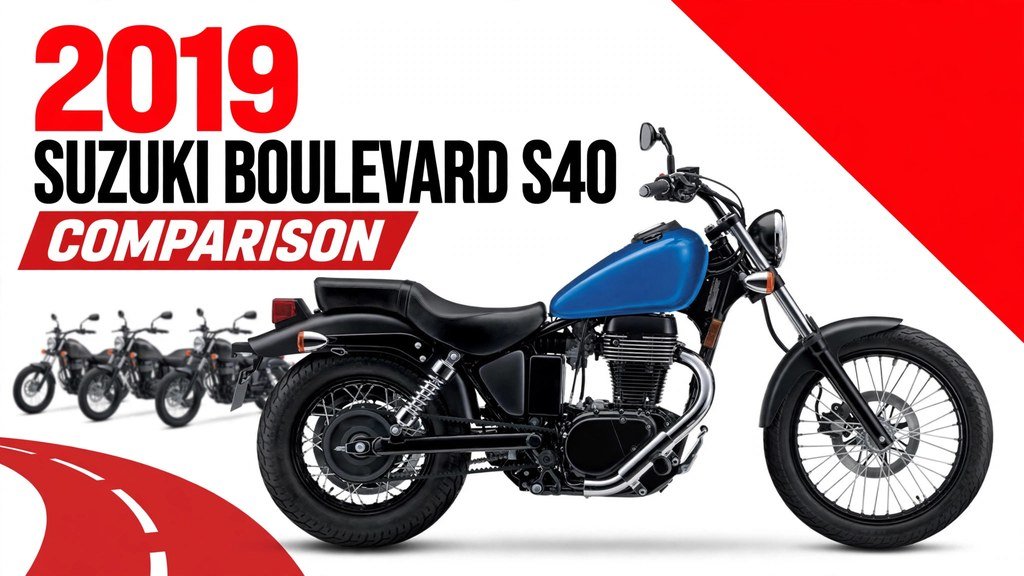
The short answer in this Suzuki Boulevard S40 review: the last new S40 sold in the USA was a 2019 model at $5,799 plus $395 destination — a 652cc air-cooled single-cylinder cruiser with a carburetor, a belt drive and just 381 pounds of curb weight. Suzuki dropped it quietly for 2020, so there is no new one to buy — but the used market is full of them, and the bike barely changed in 33 years. This Suzuki Boulevard S40 review covers the prices, the specs, the Savage history and what it is actually like to own one.
Suzuki Boulevard S40 Overview and Model-Year Updates
The S40 is the oldest name in Suzuki’s Boulevard family and the simplest cruiser the company ever sold in America — and the subject of this Suzuki Boulevard S40 review. It started life as the LS650 Savage in 1986, became the Boulevard S40 in 2005, and left the US market after 2019 without a farewell. This section of the Suzuki Boulevard S40 review explains when it was sold, when it was not, and why the 2019 bike is the one to shop for.

The video below is Didge Dez’s “Zuki to Kino” ride on a 2008 Suzuki Boulevard S40 — not a 2019 bike, and not a formal Suzuki Boulevard S40 review, but the platform never changed, so the ride still shows what the S40 feels like on the road.
Last US Year Was 2019: Dropped Quietly for 2020
2019 is the last US model year for the S40, and Suzuki never made a fuss about ending it. There is no 2020 S40 on Suzuki’s US site — the page returns a 404 — and no discontinuation announcement has ever surfaced. The 2019 bike came in Metallic Oort Gray or Metallic Triton Blue. Global production ran a little longer, through 2020 in some markets. Every price in this Suzuki Boulevard S40 review is a last-new price, not a current one: the $5,799 figure is what the final bikes sold for, and the bikes you find today are used ones. A buyer who wants a new S40 will not find one, but used examples are plentiful — a 2015 bike and a 2019 bike are essentially the same machine.
The US Run Was Not Continuous: Missing 1989-94
The S40’s American history has a hole in it that most listings gloss over. The LS650 Savage arrived in the USA in 1986 as Suzuki’s first cruiser, sold for three years, and then vanished from the American market from 1989 through 1994. It came back for 1995 at $3,999 and was renamed Boulevard S40 for the 2005 model year. The early American bikes were 4-speeds; the 5-speed arrived in 1993, so the returning 1995 bike already had it. Any listing that claims a continuous 1986–2019 US run is wrong, and any “1990 Savage” for sale in the USA deserves a hard look at its paperwork. The gap explains why the oldest American Savages are all 1986–88 bikes — a detail this Suzuki Boulevard S40 review keeps because listings so often get the history wrong.
Suzuki Boulevard S40 Engine and Specifications
The S40’s engine is the whole point of the bike: a single air-cooled cylinder, a carburetor, and nothing else to go wrong. It is the largest single-cylinder cruiser Suzuki ever built, and the simplest engine in the entire Boulevard line. This section of the Suzuki Boulevard S40 review covers the numbers and what they mean on the road.
652cc Air-Cooled Single at 94.0 by 94.0mm
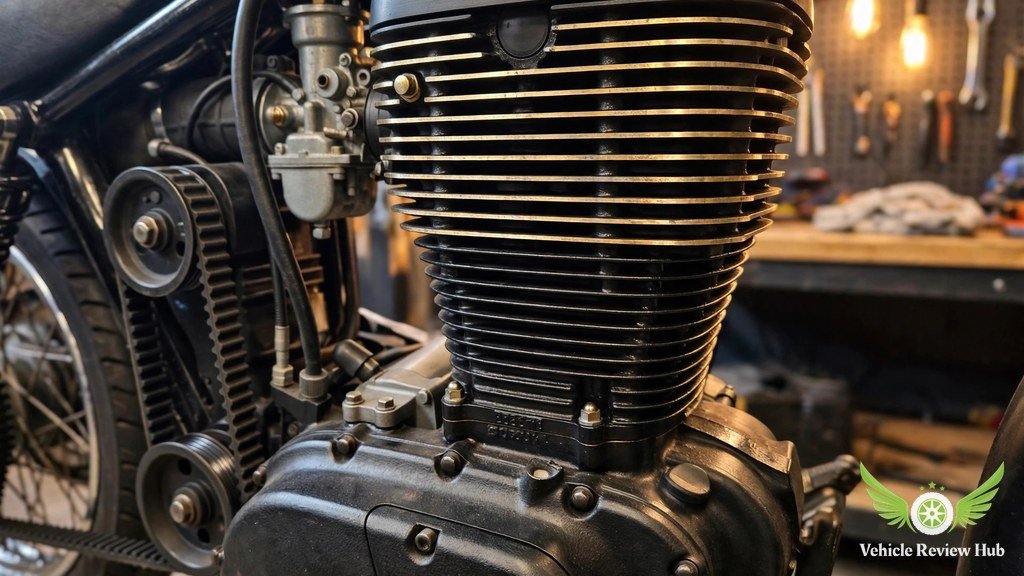
The engine displaces 652cc from a single air-cooled cylinder with a square 94.0 by 94.0 mm bore and stroke, a single overhead camshaft, four valves and 8.5:1 compression. A twin-swirl combustion chamber head, a high-mass crankshaft and a balance shaft tame the single’s shake. The database-circulated claim is 31 hp at 5,400 rpm and 37 lb-ft at 3,400 rpm — a figure that cannot be traced to a Suzuki USA publication, so this Suzuki Boulevard S40 review labels it as a database figure, not a factory claim. What was actually measured is close: Motorcycle Consumer News’ 1996 dyno recorded 31 hp at the rear wheel with 30.5 lb-ft of rear-wheel torque. Suzuki USA itself publishes no horsepower or torque figure for the S40, which is worth knowing before believing any listing that quotes a factory power number. The full specification, as Suzuki published it for 2019, is below.
| Item | Specification (2019) |
|---|---|
| Engine | 652cc air-cooled single, SOHC, 4 valves |
| Bore × stroke | 94.0 × 94.0 mm (3.70 × 3.70 in) |
| Compression ratio | 8.5:1 |
| Fuel system | Mikuni BS40 single carburetor |
| Transmission | 5-speed constant mesh, electric starter |
| Final drive | Belt drive |
| Front brake | Single 240mm disc |
| Rear brake | Drum |
| Wheels / tires | Spoked; front 100/90-19, rear 140/80-15 |
| Seat height | 27.6 in (700 mm) |
| Curb weight | 381 lb (173 kg) |
| Fuel tank | 2.8 US gal (10.6 L, including reserve) |
| Wheelbase | 58.3 in (1,480 mm) |
| Warranty | 12-month unlimited-mileage limited warranty |
Carbureted Its Whole Life, Never Fuel Injected
Every S40 and Savage ever sold ran the same Mikuni BS40 single carburetor, from the 1986 Savage to the final 2019 bike. No version was ever fuel-injected in any market, and any listing that claims it is simply wrong. The carburetor is simple to clean, simple to rejet and simple to understand — and the reason the bike needs a choke on a cold morning and a little patience after sitting. The only instrument is a tank-mounted analogue speedometer — there is no tachometer and no fuel gauge, so reserve comes from the vacuum petcock, and the rider learns the bike’s range by the trip meter and the reserve switch. The full specification, as Suzuki published it for 2019, is in the archived Suzuki USA 2019 S40 page, and the model’s history is laid out in Wikipedia’s Suzuki Boulevard S40 article. In this Suzuki Boulevard S40 review, the carburetor counts as a feature, not a flaw — one reason a 30-year-old S40 can still be kept running with basic tools.
Suzuki Boulevard S40 Price and Market Availability
The S40 was always the cheapest way into Suzuki’s cruiser range, and its final price tells the story: $5,799 for the last new bike in 2019. Today the only S40s for sale are used ones, and the price picture is a used-market picture. This section of the Suzuki Boulevard S40 review lays out the new prices year by year and what the used market looks like now.
Suzuki Boulevard S40 Price in the USA: $5,799 for 2019
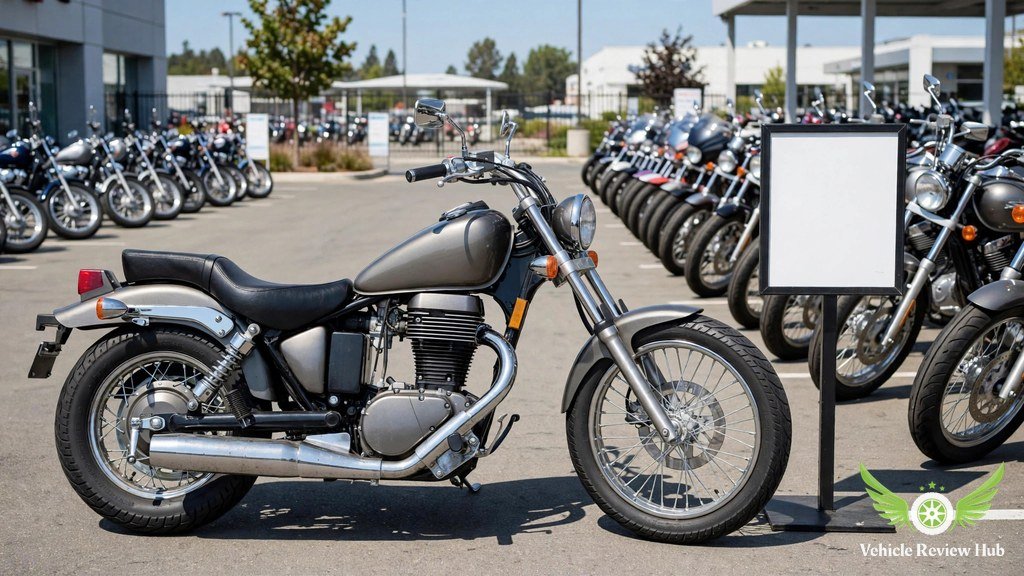
The 2019 S40 listed at $5,799 plus a $395 destination charge — $6,194 before tax and title, per Suzuki USA’s own 2019 page. One split is worth naming: motorcycle.com’s spec database prints a $380 destination charge, which would make the total $6,179 — $15 less than Suzuki’s figure. This Suzuki Boulevard S40 review headlines Suzuki’s $395, because the manufacturer’s own page outranks a database. The price path shows how little the bike moved: $5,099 in 2011, $5,699 in 2013 and 2014, $5,499 in 2015 and 2016, $5,749 in 2018 and $5,799 in 2019. No 2017 price was verified, so none is printed here. On the used market, clean running examples commonly list in the $2,500–$4,500 range — a marketplace range, not a verified figure. The table below lists the verified new prices.
| Model year | MSRP | Destination | Total before tax |
|---|---|---|---|
| 2011 | $5,099 | — | — |
| 2013 | $5,699 | — | — |
| 2014 | $5,699 | — | — |
| 2015 | $5,499 | — | — |
| 2016 | $5,499 | $350 | $5,849 |
| 2018 | $5,749 | $365 | $6,114 |
| 2019 | $5,799 | $395 | $6,194 |
Bikez 2021 and 2022 Listings Are Not US Years
A buyer searching for a newer S40 will trip over Bikez listings for 2021 and 2022 models — but neither is a US model year. Suzuki never sold a 2020, 2021 or 2022 S40 in the United States, and Suzuki’s own 2020 page returns a 404. The Bikez pages are database listings for other markets and other years, and they are not evidence that a newer American S40 exists. The same caution applies to aggregator pages listing a “2020 S40” price: the last American bike is the 2019. The Total Motorcycle 2019 S40 guide confirms the $5,799 US price and the 2019 colours, Metallic Oort Gray and Metallic Triton Blue. In this Suzuki Boulevard S40 review, the practical rule is simple: shop by condition and maintenance history, not by model year — a well-kept 2012 and a well-kept 2019 are the same bike underneath.
Suzuki Boulevard S40 Design, Features and Technology
The S40’s design is a study in subtraction: one cylinder, one carburetor, a belt, a drum brake, and nothing electronic. It is the lightest Boulevard Suzuki ever sold, and the only one with a belt final drive. This section of the Suzuki Boulevard S40 review covers what the bike has, what it deliberately does without, and why both matter.

Belt Drive and Just 381 Pounds Curb Weight
The S40 weighs 381 pounds at the curb — the lightest figure in this Suzuki Boulevard S40 review — and Suzuki’s own marketing called that out: lightweight for easy maneuverability. It is the lightest bike in the Boulevard family by a wide margin — the Boulevard C50 review covers a bike that carries 230 pounds more, and the Boulevard M109R review covers one that carries nearly twice the S40’s weight. The belt final drive is the other signature: the S40 is the only belt-drive model among Suzuki’s cruisers, where its bigger Boulevard siblings all use shaft drive. A belt needs no chain lube and no oil changes, just an inspection every 2,000 miles — Suzuki scheduled no belt change interval. The wheels are spoked — a skinny 19-inch front and a 140/80-15 rear — and the whole package is narrow enough that short legs reach the ground easily.
No ABS, No Tachometer, No Fuel Gauge Ever
No ABS, no tachometer and no fuel gauge were ever fitted to any US S40 or Savage in any year, and no ABS version exists in any market — claims of “ABS models in Canada or Europe” in AI-written buying guides are wrong. The brakes are a single 240mm front disc and a rear drum — modest hardware, adequate because there is so little weight to stop. The only instrument is the tank-mounted analogue speedometer, so the rider tracks fuel by the trip meter and switches to reserve on the vacuum petcock. That petcock is the one piece that demands attention: owner reports show the vacuum-operated valve can fail and starve the engine, and the common owner fix is a manual petcock conversion or an OEM replacement. This Suzuki Boulevard S40 review is blunt about the missing equipment because it is the bike’s defining trade-off — a new rider gets a motorcycle with nothing to distract them, and also nothing to save them, and the price reflects that.
Suzuki Boulevard S40 Riding Experience and Comfort
On the road the S40 feels like what it is: a light, low, narrow single that is happiest below highway speed. Motorcycle Cruiser’s 2006 test of the bike, then twenty years old, still describes it best — comfortable and willing around town, running out of breath as speed climbs. This section of the Suzuki Boulevard S40 review covers the riding position, the handling and the small tank.

Riding Position, Handling and Low-Speed Maneuverability
The riding position is feet-forward and relaxed, with a low 27.6-inch seat, a narrow tank and a short 58.3-inch wheelbase — easy to manage at parking-lot speed. Motorcycle Cruiser’s testers called its handling very responsive, and noted its narrowness lets short legs reach the ground at a stop easily. Larger riders, over 5 feet 10 inches with a 32-inch inseam, feel confined, and two-up riding overloads the little single — the passenger gets little room and the engine works hard. The balance shaft tames the single’s shake, and at 60 mph the engine spins 3,940 rpm. The honest limit is the interstate: the same 2006 test said the bike feels a bit out of breath at 65 mph and is not particularly happy on a wide-open interstate, though it has enough power below 75. For back roads, boulevards and commuting, the S40 is in its element; for sustained fast highway work, it is the wrong tool.
Seat Height 27.6 Inches and a 2.8-Gallon Tank
The seat sits 27.6 inches off the ground — 700 mm in Suzuki’s spec table — the same figure as the bigger Boulevard C50T, though the S40 is far smaller and lighter underneath. The fuel tank holds 2.8 US gallons including reserve. The two tested economy figures give a realistic range: 55 mpg from Motorcycle Consumer News in 1996 and 52.9 mpg from Motorcycle Cruiser in 2006 — roughly 148 miles on the later figure. The small tank is the bike’s most practical limitation after its highway pace — a rider planning a long day needs to know where the fuel stops are, and that reserve is a petcock position, not a warning light. The upside is real: at over 50 mpg on the highway, the S40 costs very little to run.
Suzuki Boulevard S40 Review: Pros, Cons and Verdict
The verdict on the S40 is simple to state and worth the detail behind it: it is the cheapest, simplest and lightest cruiser Suzuki ever sold in America, and it asks its rider to accept a carburetor, a drum brake and no electronics in exchange. This final section of the Suzuki Boulevard S40 review weighs the advantages against the limitations and ends with the warranty the last bikes carried.
Main Advantages and Limitations of the Suzuki Boulevard S40
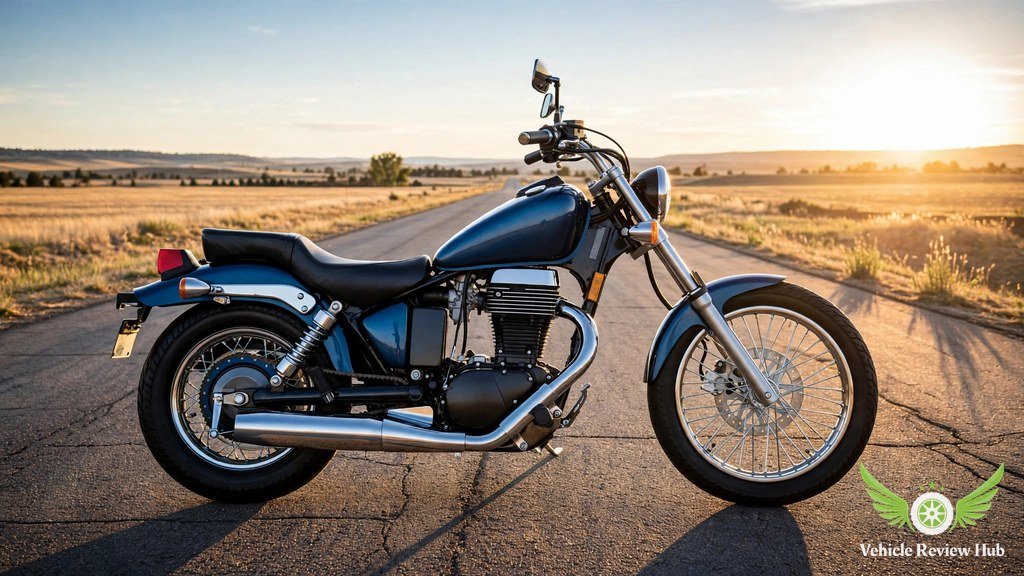
The advantages start with weight and simplicity. At 381 pounds the S40 is easy to pick up, park and ride slowly, and its air-cooled single, single carburetor and belt drive give an owner very little to maintain and very little that can break expensively. The service schedule is short and honest — oil, filter and valve checks at every interval, a belt that only needs inspecting — and the full S40 service chart from the manual fits on one page. Fuel economy over 50 mpg in both named tests keeps running costs low, and used prices in the $2,500–$4,500 range make it one of the cheapest running motorcycles in America. The limitations are the mirror image: no ABS, no tachometer, no fuel gauge, a rear drum brake, a 2.8-gallon tank and an engine that runs out of breath at 65 mph. The head-plug oil leak and the vacuum petcock failure are both owner-documented issues a buyer should check for, and no recall was ever found in published notices for the S40 — so buyers should run the VIN on the NHTSA recalls lookup before buying used. The Boulevard M109R reliability guide shows what a heavier, more complex Boulevard costs to keep; the S40 is the opposite end of that scale. For a new rider, a short rider or a rider who wants a simple second bike, the advantages win — that is the bottom line of this Suzuki Boulevard S40 review. For a rider who commutes at 75 mph every day, they do not.
Twelve-Month Unlimited-Mileage Warranty as Last Sold
The last S40s carried Suzuki’s 12-month unlimited-mileage limited warranty — the exact wording on the 2019 page, and the same wording as the C50 and C50T, but not the M109R’s “12-month limited”. Suzuki Extended Protection was available as an extension when the bikes were new, but every S40 on the road today is out of warranty — the warranty’s real value now is what it says about the bike’s era. A used buyer should treat the warranty line as a history note and spend the money on a pre-purchase inspection instead: check the head plug for oil weep, test the petcock, look at the belt, and ask for service records — the schedule asks for oil, filter and valve work at every interval, and a neglected bike shows it quickly. That is the honest end of this Suzuki Boulevard S40 review — a simple bike, honestly built, that rewards an owner who reads the manual.
Suzuki Boulevard S40 Review: Frequently Asked Questions
Direct answers to the questions riders ask about the Suzuki Boulevard S40 — the prices, specs, history and reliability this Suzuki Boulevard S40 review covers, and whether it still makes sense to buy one used.
What is the last year of the Suzuki Boulevard S40?
2019 — the last year of the bike this Suzuki Boulevard S40 review covers. Suzuki dropped the S40 quietly for 2020: the 2020 page on Suzuki’s US site returns a 404 and no discontinuation announcement was ever made. Global production ran through 2020 in some markets, but no 2020 S40 was sold in the USA.
How much did a new Suzuki Boulevard S40 cost?
The 2019 model listed at $5,799 plus a $395 destination charge, for $6,194 before tax and title. Earlier years were cheaper: $5,099 in 2011, $5,699 in 2013–14, $5,499 in 2015–16, and $5,749 in 2018. Used examples commonly list in the $2,500–$4,500 range.
Is the Suzuki Boulevard S40 fuel injected?
No — and this is one of the firmest facts in this Suzuki Boulevard S40 review. The bike ran a Mikuni BS40 single carburetor its whole life, from the 1986 Savage to the final 2019 bike. No version was ever fuel-injected in any market, and any listing claiming fuel injection is wrong.
How much horsepower does the Suzuki Boulevard S40 have?
Suzuki USA never published a horsepower figure. The database-circulated claim is 31 hp at 5,400 rpm with 37 lb-ft at 3,400 rpm, and the only measured figure is Motorcycle Consumer News’ 1996 dyno test: 31 hp at the rear wheel with 30.5 lb-ft of rear-wheel torque.
What is the top speed of the Suzuki Boulevard S40?
No instrumented or GPS top-speed test was ever published. Owner estimates run 81–85 mph, labelled as estimates only. Note that 81 mph is also the 1996 quarter-mile trap speed, which some sites mislabel as a top speed.
How fast is the Suzuki Boulevard S40 in the quarter mile?
Two instrumented figures exist and both stand: 15.3 seconds at 81.1 mph (Motorcycle Consumer News, 1996) and 16.35 seconds at 77.2 mph (Motorcycle Cruiser, 2006). The 2006 bike was slower than the 1996 bike — different bikes, different days, different testers.
What MPG does the Suzuki Boulevard S40 get?
The two named, tested figures are 55 mpg (Motorcycle Consumer News, 1996) and 52.9 mpg (Motorcycle Cruiser, 2006). Suzuki never published an MPG figure. On the 52.9 mpg figure, the 2.8-gallon tank gives roughly 148 miles of range.
Does the Suzuki Boulevard S40 have ABS?
No. As this Suzuki Boulevard S40 review notes, no ABS was ever fitted to any S40 or Savage in any year or any market. It also has no tachometer and no fuel gauge — the only instrument is a tank-mounted analogue speedometer, with reserve via the vacuum petcock.
Is the Suzuki Boulevard S40 belt or chain drive?
Belt drive — the S40 is the only belt-drive model among Suzuki’s cruisers, where its bigger Boulevard siblings, the C50, C50T and M109R, all use shaft drive. Suzuki schedules a belt inspection every 2,000 miles and no belt change interval.
How heavy is the Suzuki Boulevard S40?
381 pounds at the curb, with a 27.6-inch seat height. That makes it the lightest Boulevard Suzuki ever sold, and one of the lightest cruisers of any brand — a large part of why it suits new and shorter riders.
Are there any recalls on the Suzuki Boulevard S40?
No recall was found in published notices for the S40, LS650 or Savage, and Suzuki’s own recalls page returns zero hits for the model. That phrasing matters — “no recall found”, not a verified zero. Buyers should still run the VIN before buying used, since the C50’s two recalls are often wrongly attributed to the S40 by aggregators.
Is the Suzuki Boulevard S40 a good beginner bike?
Yes, with one honest limit — and that limit is the point this Suzuki Boulevard S40 review keeps coming back to. Its 381-pound weight, 27.6-inch seat, gentle single-cylinder power and low used price make it one of the easiest cruisers to learn on, and its simple carbureted engine is cheap to keep. The limit is the highway: it runs out of breath around 65 mph, so a rider commuting at 75 mph every day should look at something bigger.