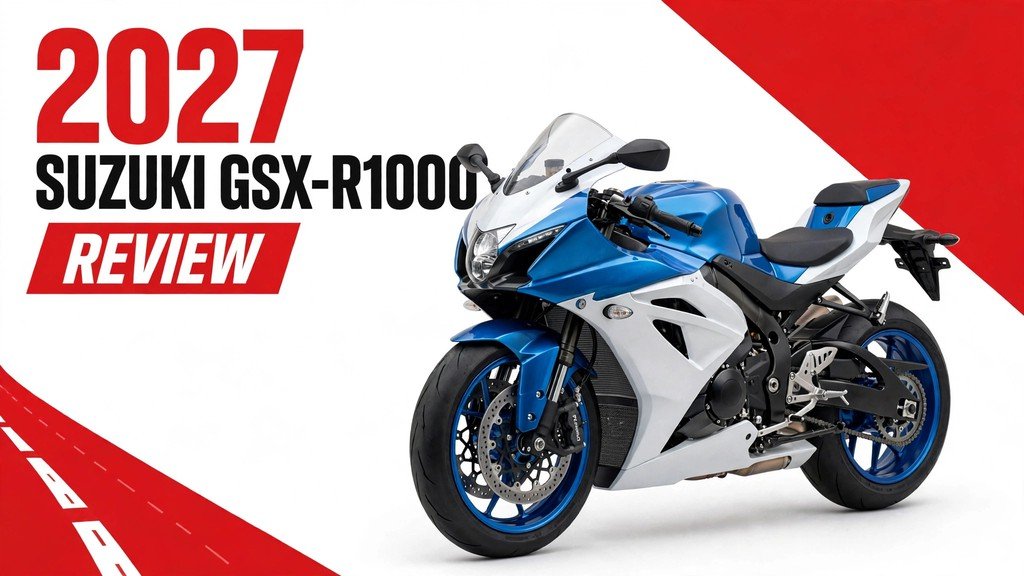
The 2027 Suzuki GSX-R1000 costs $16,399 plus a $750 destination charge, $17,149 delivered. That buys the cheapest ABS litre bike in America against its named rivals, and a motorcycle that is a heavy revision of the proven 2017 (L7) platform — not a clean-sheet new generation. Suzuki has reworked the 999.8cc inline-four with a higher 13.8:1 compression ratio, fitted a new Bosch six-axis IMU with Smart TLR Control, and given the base model the quickshifter, launch control and full electronics suite that used to be reserved for the R. Suzuki has published no horsepower figure for the US bike — the only published number is the global claim of 192.3 hp at 13,200 rpm. This Suzuki GSX-R1000 review covers the engine, the three trims, the real prices and the ride.
Suzuki GSX-R1000 Overview and Model-Year Updates
The GSX-R1000 has been Suzuki’s litre-class superbike since the 2001 K1, and the 2017 L7 was its last full redesign. For 2027 Suzuki revised that proven platform thoroughly rather than replacing it: the aluminium twin-spar frame and swingarm are fundamentally unchanged from 2017, while the engine, electronics and trim structure are all new. All three 2027 trims — base, R and RS — are 40th Anniversary Edition models, marking 40 years of GSX-R since 1985. The base bike is the story of this Suzuki GSX-R1000 review: it now gets the full S.I.R.S. electronics suite and costs $100 less than the 2025 base bike did.
The video below is Bullmoto’s first look at the 2027 40th Anniversary bike at a dealer — a walkaround covering the colours, engine updates, seat height and instrument cluster. It is a first look, not a first ride, so it shows the bike standing still rather than being ridden.
2027 Is a Real Update, Not Just New Colours
The 2027 update is real and extensive, even though the frame is not new. Suzuki raised compression from 13.2:1 to 13.8:1 with new forged pistons, larger exhaust valves, a new crankshaft and 48 mm throttle bodies, and fitted an all-new 4-2-1 exhaust with a smaller titanium muffler. The electronics are the bigger step: a new Bosch six-axis IMU underpins Smart TLR Control, which integrates traction control, wheelie control and Roll Torque Control, and the base trim now gets the bi-directional quickshifter and launch control that were R-only before. Motorcycle.com’s 2027 first ride called the updated electronics “a big step up” and stressed the frame and swingarm remain fundamentally unchanged from the 2017 platform — a refinement of a proven package, not a reinvention. The bike also meets Euro 5+ emissions, and Suzuki calls it the quickest-accelerating GSX-R model yet, though that is a marketing claim rather than a measured number.
Announced for 2026, Sold as a 2027 in the US
Suzuki Motor USA did announce a 2026 GSX-R1000 and GSX-R1000R in August 2025, celebrating four decades of GSX-R — but no 2026 US MSRP was ever published, and Motorcycle.com’s July 2025 first look noted that US pricing and availability had not been announced. The updated bike, announced globally on July 31, 2025, reached US buyers as a 2027 model, with the new RS trim added to the range. Whether any 2026-model-year bike was actually delivered or registered in the US is unverified, so this guide does not claim either way. What is certain is the 2027 pricing: Suzuki opened a reservation window from July 8 to July 31, 2026, and the Suzuki 2027 lineup announcement lists all three trims with their MSRPs.
Suzuki GSX-R1000 Engine and Specifications
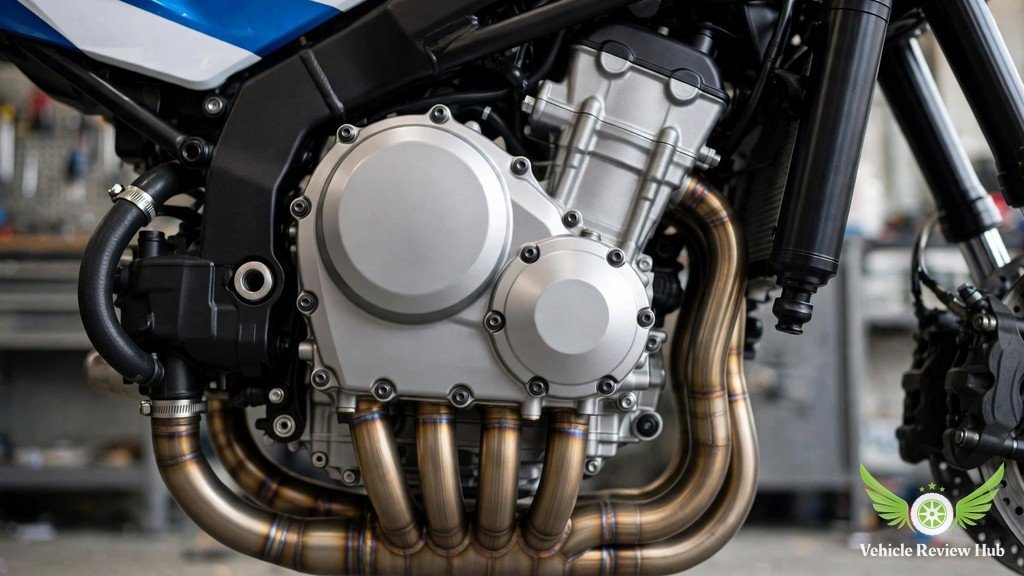
The heart of the bike is the 999.8cc liquid-cooled inline-four, carried over in bore and stroke from the L7 but reworked inside. It keeps SR-VVT, Suzuki’s centrifugal variable valve timing on the intake cam, and adds larger exhaust valves, a new camshaft with reduced overlap and a new crankshaft. On Suzuki’s global figures that is 195 PS (192.3 hp) at 13,200 rpm and 110 Nm (81.1 lb-ft) at 11,000 rpm — lower than the old bike’s 202 PS / 199 hp claim, so anyone quoting 202 hp for the 2027 bike is using the wrong number.
| Specification | 2027 Suzuki GSX-R1000 |
|---|---|
| Engine | 999.8cc liquid-cooled inline-four, DOHC, SR-VVT |
| Bore x stroke | 76.0 x 55.1 mm |
| Compression ratio | 13.8:1 (was 13.2:1) |
| Claimed power (global) | 195 PS / 192.3 hp @ 13,200 rpm |
| Claimed torque (global) | 110 Nm / 81.1 lb-ft @ 11,000 rpm |
| US published hp/torque | None — Suzuki USA publishes no figure |
| Transmission | 6-speed constant mesh, chain final drive |
| Clutch | SCAS wet multi-plate (slipper/assist) |
| Front suspension | Showa BPF (base); gold Showa BFF (R/RS) |
| Rear suspension | Showa remote-reservoir shock (base); BFRC-Lite (R/RS) |
| Front brakes | Brembo 4-piston monobloc twin disc, ABS (320 mm T-drive on R/RS) |
| Rear brake | Nissin 1-piston single disc, ABS |
| Tyres | 120/70ZR17 front, 190/55ZR17 rear, Bridgestone RS11 |
| Seat height | 32.5 in (825 mm) |
| Curb weight | 448 lb (203 kg) |
| Fuel capacity | 4.2 US gal (16.0 L) |
| Wheelbase | 55.9 in (1,420 mm) |
999.8cc With SR-VVT and a Higher 13.8:1 Ratio
The higher compression ratio is the headline engine change, reached with new forged pistons, exhaust valves enlarged from 24 mm to 25 mm, and a new crankshaft. The throttle bodies grew from 46 mm to 48 mm, and the all-new 4-2-1 exhaust moves the catalytic converter closer to the engine while shrinking the titanium muffler from 8.3 litres to 5.5 litres. SR-VVT itself is unchanged — the same centrifugal mechanism on the intake cam sprocket that the L7 introduced. The engine does not make more claimed power than the old bike: the global 195 PS figure is below the old 202 PS claim, and RevZilla’s claim of 7.1 hp more than the outgoing US-spec bike cannot both be right on the same basis. Independent dyno numbers tell their own story — Cycle World measured 177.2 hp at the rear wheel from a 2017 R, Motorcycle.com’s 2017 shootout dyno read the base bike at 161 hp, and Brock’s Performance dyno’d a stock 2027 base at 158.22 rear-wheel hp at 11,150 rpm.
Quickshifter and Launch Control Reach the Base at Last
For 2027 the base GSX-R1000 finally gets the electronics that used to justify the R’s premium. The bi-directional Quick Shift System and launch control — which holds the engine at 9,500 rpm — are now standard on all three trims, along with the full S.I.R.S. suite: three SDMS ride modes (A Active, B Basic, C Comfort), Smart TLR Control combining 10-mode traction control with a lift limiter and Roll Torque Control, cornering ABS with rear-lift control, slope-dependent control, Suzuki Easy Start and Low RPM Assist. The 2025 base bike had no quickshifter at all, so this is a genuine upgrade rather than a spec-sheet reshuffle. The base does not get a TFT dash: the instrument panel is a black-background LCD inspired by the GSX-RR MotoGP dash, and Motorcycle.com’s first ride even sighed, “Why are we still using an LCD screen?”
Suzuki GSX-R1000 Price and Market Availability
The 2027 GSX-R1000 starts at $16,399, and all three trims are 40th Anniversary Editions. The R costs $17,939 and the new range-topping RS costs $18,639. Add the $750 destination charge — sourced from Motorcycle.com and dealer listings, not printed by Suzuki — and the delivered prices are $17,149, $18,689 and $19,389. That makes the base bike the cheapest ABS litre bike in America against the rivals Suzuki’s own comparison names, undercutting the Honda CBR1000RR ABS by $1,025 and the Kawasaki ZX-10R ABS by $1,690 delivered.
| Trim | 2027 MSRP | Destination | Delivered | 2025 MSRP |
|---|---|---|---|---|
| GSX-R1000 (base) | $16,399 | $750 | $17,149 | $16,499 |
| GSX-R1000R | $17,939 | $750 | $18,689 | $18,649 |
| GSX-R1000RS | $18,639 | $750 | $19,389 | New trim |
Suzuki GSX-R1000 Price in the USA: $16,399 for 2027
The $16,399 base price comes straight from Suzuki’s own announcement: “The GSX-R1000 40th Anniversary Edition will carry an MSRP of $16,399, while the GSX-R1000R 40th Anniversary Edition is priced at $17,939 and the premium GSX-R1000RS 40th Anniversary Edition will be available starting at $18,639.” The delivered totals above are simple arithmetic — MSRP plus $750 — not Suzuki-published totals, and buyers should expect dealer fees on top. One dealer listing shows a $20,273 RS total, but that includes freight, setup and an $85 documentation fee, so it is not the MSRP-plus-destination figure. For context, the Suzuki GSX-R750 review shows the 750 costs $14,299 delivered — $2,850 less than the 1000 — for 250cc less and no electronics at all.
Cheaper Than 2025, Plus $750 Destination
Unusually, the 2027 bike is cheaper than the one it replaces: the 2025 base cost $16,499, so the 2027 base is $100 cheaper, and the 2025 R cost $18,649, so the 2027 R is $710 cheaper. A $18,299 figure for the 2025 R circulates in some secondary sources — it is wrong; Suzuki’s own 2025 R page listed $18,649. The RS is a new trim with no 2025 equivalent. The $750 destination charge is the same for all three trims, confirmed by Motorcycle.com’s spec database and dealer listings such as Cycle Motion. Suzuki’s own pages only footnote that the MSRP excludes destination freight, without naming a dollar figure.
Suzuki GSX-R1000 Design, Features and Technology
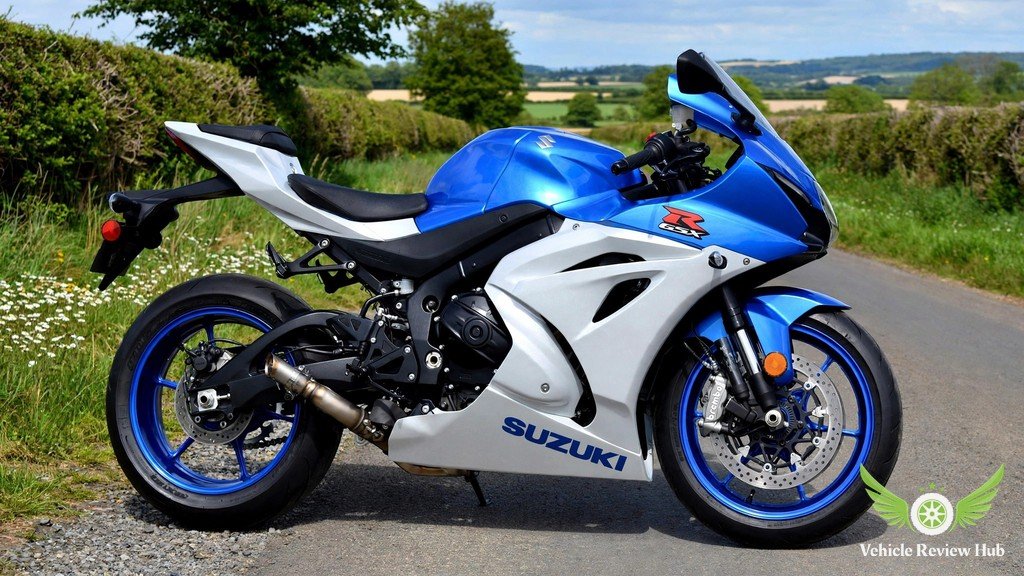
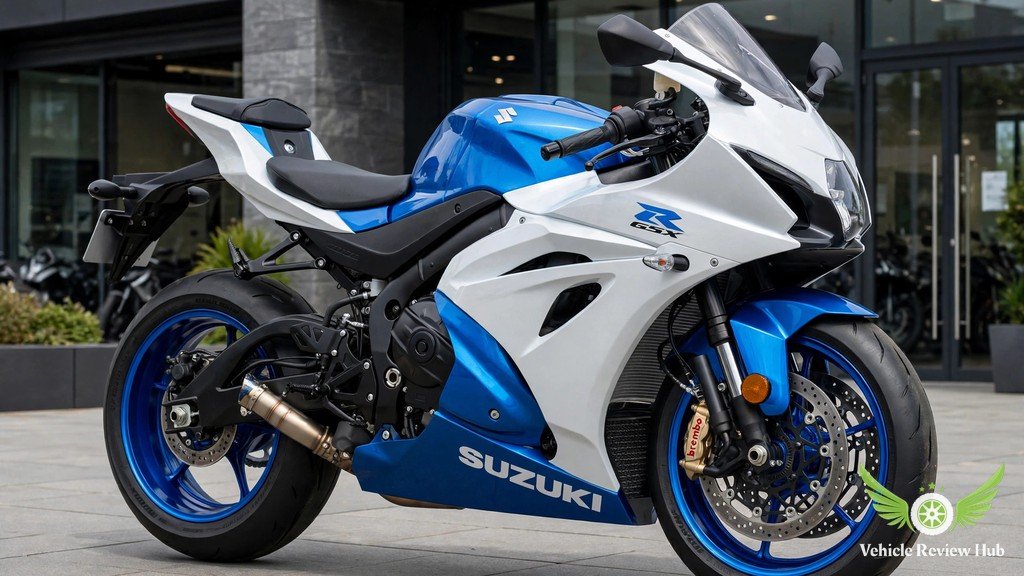
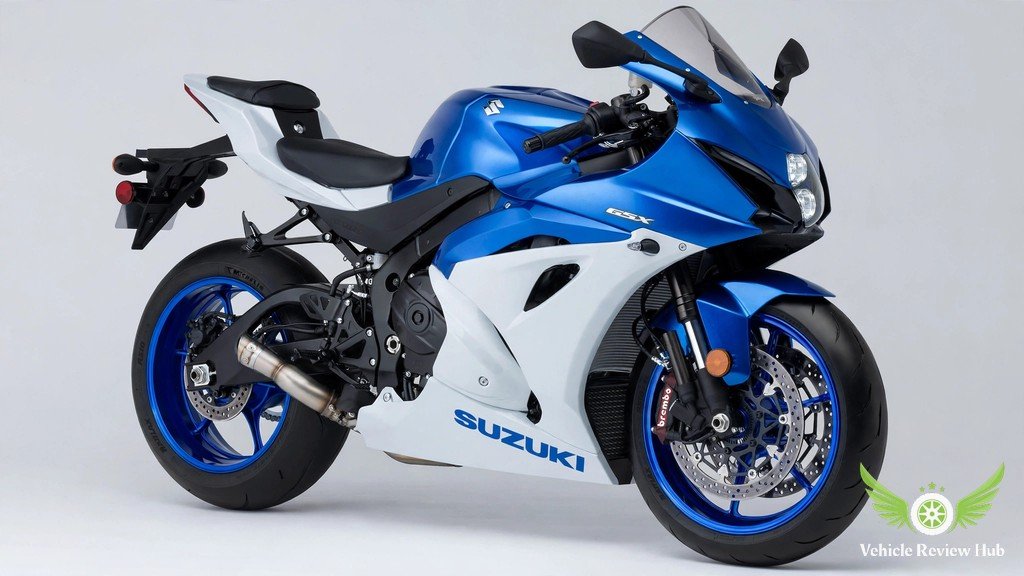
The 2027 bike keeps the L7’s basic fairing shape and twin-spar frame — sharp, compact and unmistakably a Gixxer. The signature livery is Pearl Vigor Blue and Pearl Tech White, the 40th Anniversary scheme, and the base bike is also offered in Pearl Ignite Yellow and Metallic Mat Stellar Blue. The R and RS add a Candy Daring Red and Pearl Tech White option; a solid Candy Daring Red bike would be wrong here, since that was the 750’s base colour. All three trims ride on Bridgestone Racing Street RS11 tyres, which Suzuki describes as track-day-ready, and the 190/55 rear is wider than the 750’s 180-section tyre.
Three Trims: Base, R at $17,939, RS at $18,639
The three trims differ mainly in suspension, brakes and bodywork, not the engine — all three share the same 999.8cc motor, electronics suite and 448 lb curb weight. The base runs a fully adjustable Showa Big Piston Front Fork and a remote-reservoir rear shock. The R, at $1,540 over the base, upgrades to the gold-anodized Showa Balance Free Front Fork and BFRC-Lite shock, 320 mm Brembo T-drive floating rotors with stainless-steel brake lines, adjustable swingarm pivots and a lightweight race-ready upper triple clamp. The RS, at $2,240 over the base, is the R plus carbon-fibre winglets and an included colour-matched solo tail cowl — the R’s solo cowl is an optional dealer purchase. The Cycle News RS review confirms the chassis, swingarm, brakes and suspension remain 2017 carryovers, which is why the trim differences matter more than any “new generation” claim.
Winglets Are Standard Only on the RS
The carbon-fibre winglets are the RS’s visual signature, standard only on the RS. Suzuki’s press release describes them mounted to the sides of the front cowling, with design cues from the GSX-R1000R-based CN Challenge bike that races the Suzuka 8 Hours. The R can have winglets as an optional accessory, but Suzuki calls those “CF-look” — carbon-fibre look, not real carbon — so they should not be described as the same part. The base has no winglets at all, standard or accessory. Motorcycle.com’s global first ride says “the R model now gets steel-braided brake lines and winglets,” but that describes the global 2026 R, not the US 2027 R.
Suzuki GSX-R1000 Riding Experience and Comfort
On the road the GSX-R1000 behaves like a big GSX-R always has: smooth, linear and inviting rather than violent. First-ride reports from the 2027 launch at Monteblanco describe the same smooth L7 delivery — power that lays down cleanly and invites the rider to ask for more — with the new electronics making the bike easier to ride fast. The riding position is committed but not punishing, and the 32.5-inch seat lets most riders get both feet down at a stop.
Riding Position, Handling and Low-Speed Maneuverability
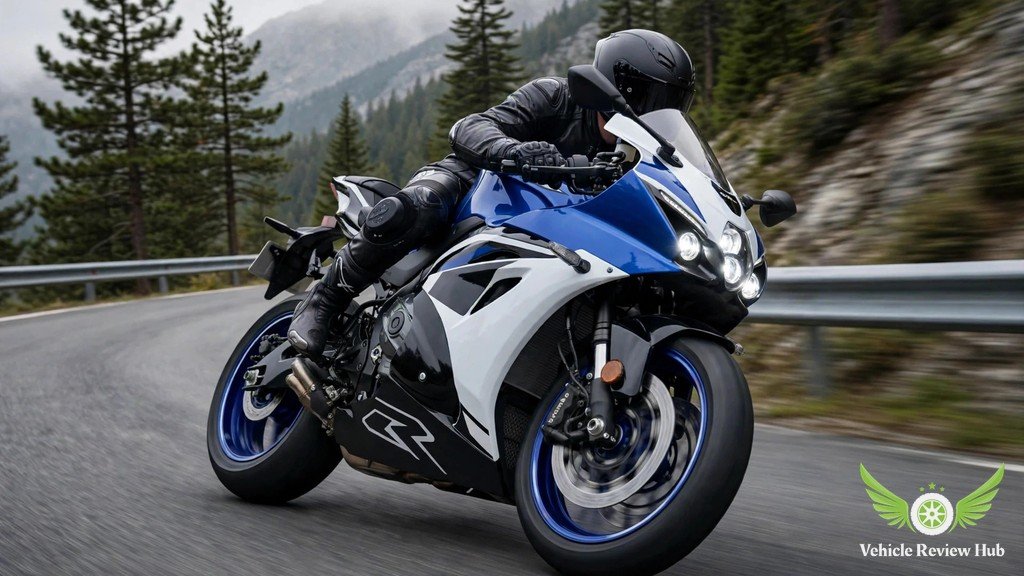
The riding position is a classic superbike crouch — clip-ons low, pegs high, tank narrow enough to grip with the knees — but the L7 platform was always one of the more accommodating litre bikes, and the 2027 bike keeps that. At low speed the 448 lb weight and 55.9-inch wheelbase make it manageable for its class, though no litre superbike is a city bike: the steering lock is limited, the clutch is light thanks to the slipper/assist design, and Low RPM Assist helps stop-start riding. On the move the chassis is the known quantity — the same twin-spar frame and swingarm as the 2017 bike, praised for stability and feedback for nearly a decade. The Motorcycle.com 2027 first ride notes the updated electronics are a big step up while the chassis stays familiar — exactly what a returning GSX-R rider wants.
448 Pounds and a 32.5-Inch Seat
Curb weight is 448 lb (203 kg) and seat height is 32.5 inches (825 mm), identical across all three trims and the same as the L7’s figures. That is not a coincidence — the frame, swingarm and bodywork are fundamentally the same as the 2017 bike, so the weight did not change with the update. For a litre superbike 448 lb is competitive but not class-leading, and the 4.2-gallon tank is small for touring — it is a track-capable superbike first and a road bike second. The 32.5-inch seat sits 0.6 inches higher than the GSX-R750’s 31.9-inch seat, so shorter riders coming from the 750 will notice the difference. Riders who want the lighter, lower option should read the GSX-R750 review — the 750 is 29 lb lighter at 419 lb curb with a 31.9-inch seat.
Suzuki GSX-R1000 Review: Pros, Cons and Verdict
This Suzuki GSX-R1000 review finds the verdict depends on what the buyer wants from a litre bike. If the buyer wants the cheapest way into a new ABS superbike with a full electronics suite, the GSX-R1000 wins — $17,149 delivered undercuts every named ABS rival, and the base bike now carries the quickshifter, launch control and IMU electronics that used to cost R money. If the buyer wants the newest chassis or the most power on paper, the Suzuki loses — the frame is a 2017 carryover, the global 192.3 hp claim is below the old bike’s 202 hp, and Brock’s stock 2027 dyno read 158.22 rear-wheel hp. In short, Suzuki has made its proven litre bike better equipped and slightly cheaper, without pretending it is something it is not.
| Pros | Cons |
|---|---|
| Cheapest ABS litre bike in America at $17,149 delivered | Frame and swingarm are a 2017 carryover, not a new generation |
| Full electronics suite now standard on the base trim | Suzuki USA publishes no hp figure; global claim is below the old 202 hp |
| Cheaper than the 2025 bike — base $100 less, R $710 less | LCD dash, not a TFT — testers asked why it is still LCD |
| Proven L7 platform with a decade of parts and knowledge | Brakes called “dated” by Motorcycle.com (though MCN praised the feel) |
| Smooth, linear power delivery that invites more throttle | 4.2-gallon tank is small for touring; 448 lb is not class-leading |
Main Advantages and Limitations of the Suzuki GSX-R1000
The main advantage is value with equipment: no other new ABS litre bike costs $17,149 delivered, and no other base trim in the class includes a bi-directional quickshifter, launch control and a six-axis IMU suite as standard. The second advantage is the platform’s proven record — the L7 has been in production since 2017, every part is available, and the six NHTSA recalls are all behind it, none after 2018. The main limitations are the ones this guide has labelled honestly throughout: the chassis is nine years old, the power claim went down rather than up, the dash is an LCD, and the brakes drew a “dated” verdict from Motorcycle.com’s 2027 first ride — though that verdict is contested, since MCN’s review summary calls the brake feel excellent. The GSX-R750 comparison reaches a similar conclusion one class down: the old Suzuki wins on engine and value and loses on electronics — except here, the 1000 has finally caught up on electronics too.
Twelve-Month Unlimited-Mileage Warranty
Every 2027 GSX-R1000 carries a 12-month unlimited-mileage limited warranty, worded identically in the R brochure, the RS brochure, the base brochure and the R product page. Longer coverage is available through Suzuki Extended Protection (SEP). The warranty is short by car standards but standard for a superbike. A bike in production since 2017 with six recalls behind it — the last in October 2018 — is a known quantity, and the 2005–06 frame campaign, the biggest reliability story in the model’s history, is a check for used buyers rather than a 2027 concern. Buyers should still check any used GSX-R1000’s recall history, and owners of 2005–06 bikes should look for the frame reinforcement brace under the top spar behind the steering head.
Suzuki GSX-R1000 Review: Frequently Asked Questions
Direct answers to the questions riders ask in a Suzuki GSX-R1000 review.
How much does a 2027 Suzuki GSX-R1000 cost?
$16,399 plus a $750 destination charge, $17,149 delivered. The R costs $17,939 plus $750, $18,689 delivered, and the RS costs $18,639 plus $750, $19,389 delivered.
Is the 2027 GSX-R1000 a new generation?
No. It is a heavy revision of the 2017 (L7) platform — the aluminium twin-spar frame and swingarm are fundamentally unchanged from 2017, while the engine, electronics and trim structure are new.
How much horsepower does the 2027 GSX-R1000 make?
Suzuki USA publishes no horsepower figure for the US bike. The only published number is the global claim of 195 PS, or 192.3 hp, at 13,200 rpm. The old 202 hp claim belongs to the previous bike. Brock’s Performance dyno’d a stock 2027 base at 158.22 rear-wheel hp at 11,150 rpm.
Does the GSX-R1000 have a TFT display?
No. The instrument panel is a black-background LCD inspired by the GSX-RR MotoGP dash. Some sources wrongly claim a 4.2-inch TFT — that display belongs to the SV-7GX announced in the same Suzuki lineup, not the GSX-R1000.
What is the difference between the base, R and RS?
All three share the same engine, electronics and 448 lb weight. The R, at $1,540 over the base, adds the gold Showa BFF fork, BFRC-Lite shock, 320 mm Brembo T-drive rotors and steel lines. The RS, at $2,240 over the base, is the R plus carbon-fibre winglets and an included solo tail cowl.
Does the base model have a quickshifter?
Yes, for 2027. The bi-directional Quick Shift System and launch control are now standard on all three trims, including the base — the 2025 base bike had no quickshifter at all.
How fast is the Suzuki GSX-R1000?
Suzuki has not disclosed a top-speed figure. Compiled reports put it around 186 mph with the speed limiter engaged, and Cycle World’s 2017 first ride recorded an indicated 184 mph. No named outlet has published a GPS-verified top-speed test, so 186 mph is a compiled figure, not an instrumented result.
What is the seat height and weight of the GSX-R1000?
Seat height is 32.5 inches and curb weight is 448 lb, identical across all three trims and the same as the 2017 bike’s figures.
How many recalls has the GSX-R1000 had?
Six NHTSA campaigns in total, none after 2018: the 2005–06 frame campaign, the side-stand switch, the front brake master cylinder, the drive-chain adjuster, the 2017–18 ECM fault and the 2017–18 fuel-pump O-ring. A “seventh” sometimes appears because the frame campaign was numbered both 08V-022 and 09V022 — it is the same campaign.
Is the GSX-R1000 a good beginner bike?
No. It makes around 158 rear-wheel horsepower on a stock dyno run and weighs 448 lb. A beginner is better served by a smaller bike with rider aids and a lower seat.
What colours does the 2027 GSX-R1000 come in?
The base comes in Pearl Vigor Blue and Pearl Tech White, the signature 40th Anniversary scheme, or Pearl Ignite Yellow and Metallic Mat Stellar Blue. The R and RS add a Candy Daring Red and Pearl Tech White option.
Should I buy the GSX-R1000 or the GSX-R750?
Buy the 1000 for a full electronics suite, ABS and litre-bike power at $17,149 delivered. Buy the 750 for the lightest, simplest Suzuki superbike — $14,299 delivered, $2,850 less, 419 lb and no electronics to service, but no ABS, no traction control and no quickshifter.