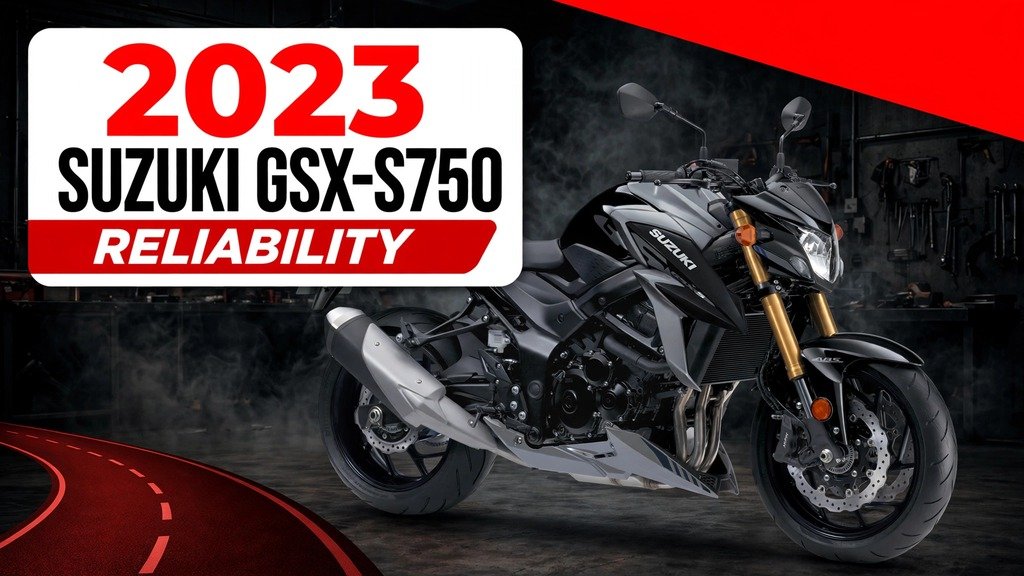
The Suzuki GSX-S750 is gone from American showrooms, and that is exactly why it deserves a second look. Suzuki sold its last new one in the USA as a 2023 model — the GSX-S750Z at $8,649 and the GSX-S750Z ABS at $9,149, plus $440 destination — and then quietly dropped the bike from the line-up with no announcement of a return. This Suzuki GSX-S750 review looks at the bike as it actually was: a 749cc inline-four naked built from the 2005 GSX-R750’s engine. If you are shopping for a used middleweight naked in the USA, this Suzuki GSX-S750 review gives you the final prices, the full specs, the test results and the ownership picture.
Suzuki GSX-S750 Overview and Model-Year Updates
The GSX-S750 arrived in the USA for 2015 as Suzuki’s answer to the Yamaha FZ-09: a street-tuned four-cylinder naked priced under $8,000, aimed at riders who wanted real power without superbike money. This Suzuki GSX-S750 review covers both generations — the 2015–2016 original and the revised 2018–2023 version.
Last US Year Was 2023, No Announcement
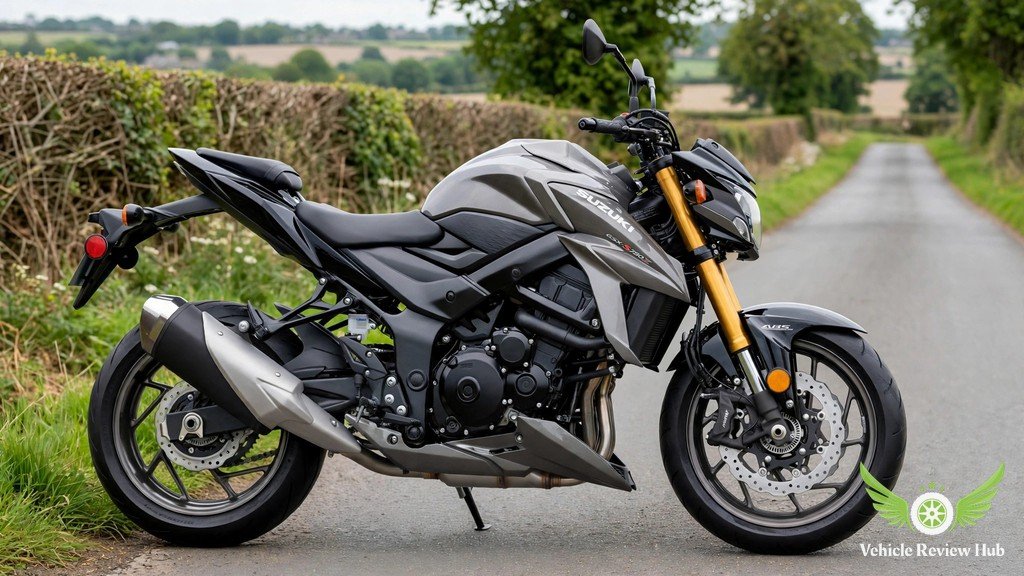
The last GSX-S750 sold new in the USA was a 2023 model, and Suzuki never issued a farewell. The 2023 press release simply listed the GSX-S750Z and GSX-S750Z ABS as returning models, and the 2024 line-up arrived without them. There was no successor announcement either: the GSX-8S, Suzuki’s all-new 776cc parallel-twin naked, had already launched as a 2023 model and overlapped with the 750 for exactly one year. No Suzuki statement calls the 8S the S750’s replacement.
No 2017 Model and No California at First
There is no 2017 GSX-S750 in the USA, and that gap confuses used-bike listings to this day. Suzuki skipped the 2017 model year while it reworked the bike for Euro 4 emissions, then launched the redesigned machine as an early-release 2018 model in the spring of 2017.
That last point matters for the early bikes. The 2015 and 2016 GSX-S750 was a 49-state motorcycle — it was not sold in California at all. From 2018 onward the GSX-S750 was 50-state legal, so the later bikes carry no such restriction. The performance guide has the full year-by-year test record behind these changes.
Suzuki GSX-S750 Engine and Specifications
The engine is the reason this bike exists and the reason it still matters. It is a 749cc liquid-cooled inline-four with dual overhead cams and sixteen valves, derived from the 2005 GSX-R750’s K5 engine — and the word “derived” does real work here. This Suzuki GSX-S750 review does not call it the same engine as the GSX-R750 — it is a retuned street version of that architecture, with a 72.0 × 46.0 mm bore and stroke against the GSX-R750’s 70.0 × 48.7 mm.

749cc Four From the 2005 GSX-R750 K5
Suzuki USA publishes no horsepower or torque figure for the GSX-S750 at all — Cycle World’s claimed-spec table for the bike reads “Horsepower: N/A / Torque: N/A” — so every power figure for this bike is either a Suzuki global claim or a magazine dyno result, and this Suzuki GSX-S750 review labels each one. The revised second-generation bike (2018–2023) claimed 112.4–112.6 bhp — 114 PS — at 10,500 rpm and 81 Nm (59.7 lb-ft) at 9,000 rpm.
On the dyno, the numbers land where you would expect for a detuned sportbike engine. The 2018 bike has no exact published rear-wheel peak — Motorcycle.com described it only as “nearly 100” horsepower — so the honest wording for the later bike is around 100 horsepower at the rear wheel.
Traction Control Arrived With the 2018 Update
The 2015 and 2016 bikes had no electronic rider aids at all — no traction control, no ride modes, no ABS. The 2018 update added Suzuki Advanced Traction Control with three sensitivity modes plus OFF, adjustable on the fly from the handlebar: Mode 1 for skilled riders on good grip, Mode 2 for most riders and city use, and Mode 3 for wet or cold conditions.
What the bike never got is just as important. No GSX-S750 has a TFT dash, ride-by-wire, ride modes, a quickshifter or cruise control. The dash went from an analog tachometer with a small LCD in 2015–2016 to a full LCD panel in 2018 — speedometer, tachometer, gear position, coolant temperature, fuel range, average and instant consumption, traction-control and ABS icons, and a clock — but it is still an LCD, not a colour TFT. The table below puts the two generations side by side so the differences are easy to see.
| Item | 2015–2016 (Gen 1) | 2018–2023 (Gen 2) |
|---|---|---|
| Engine | 749cc liquid-cooled inline-4, DOHC, 16-valve | Same, revised internals |
| Bore × stroke | 72.0 × 46.0 mm | 72.0 × 46.0 mm |
| Claimed power | 104.6 hp @ 10,000 rpm | 112.4–112.6 bhp (114 PS) @ 10,500 rpm |
| Claimed torque | 59 lb-ft (80 Nm) @ 9,000 rpm | 59.7 lb-ft (81 Nm) @ 9,000 rpm |
| Dyno (rear wheel) | 99.1 hp @ 10,170 rpm (Cycle World); 96.1 hp @ 10,300 rpm (Motorcycle.com) | Around 100 hp (no exact peak published) |
| Curb weight | 463 lb | 465 lb (non-ABS); 469–470 lb (ABS) |
| Seat height | 815 mm (32.1 in) | 820 mm (32.2–32.3 in) |
| Fuel tank | 17.5 L (4.6 US gal) | 16.0 L (4.22 US gal) |
| Dash | Analog tach + LCD | Full LCD (not TFT) |
| Front brakes | Twin 310 mm discs, 2-piston sliding calipers | Twin 310 mm wave discs, Nissin 4-piston radial monobloc |
| Traction control / ABS | None / none | 3 modes + OFF, no IMU / Z and ABS trims only |
The spec table in this Suzuki GSX-S750 review uses Suzuki’s own figures and the named dyno runs.
Suzuki GSX-S750 Price and Market Availability
There is no new GSX-S750 price to quote, and any blog that prints one is inventing it. The honest price story in this Suzuki GSX-S750 review is the final one: the last US model year, 2023, with the last published MSRPs. This Suzuki GSX-S750 review gives you those final figures, the price history behind them, and what the bike actually costs on the used market today.
Suzuki GSX-S750 Price in the USA: Final Prices
The GSX-S750 launched in the USA at $7,999 for the base bike and $8,149 for the Z in 2015, and over eight model years the base price rose by only $650 — to $8,649 in 2023, a rise of about 8 percent.
The used market has noticed. Dealer asking prices in November 2026 put a clean 2023 Z ABS at $7,999 — about 87 percent of its original $9,149 MSRP. A realistic budget for a clean used GSX-S750 is $6,000–$8,000, and the comparison puts those used prices against the current rivals. No KBB or NADA book value could be retrieved for any used GSX-S750 year, so this Suzuki GSX-S750 review cites dealer asking prices only and says so.
2023 Z $8,649, Z ABS $9,149 Plus $440
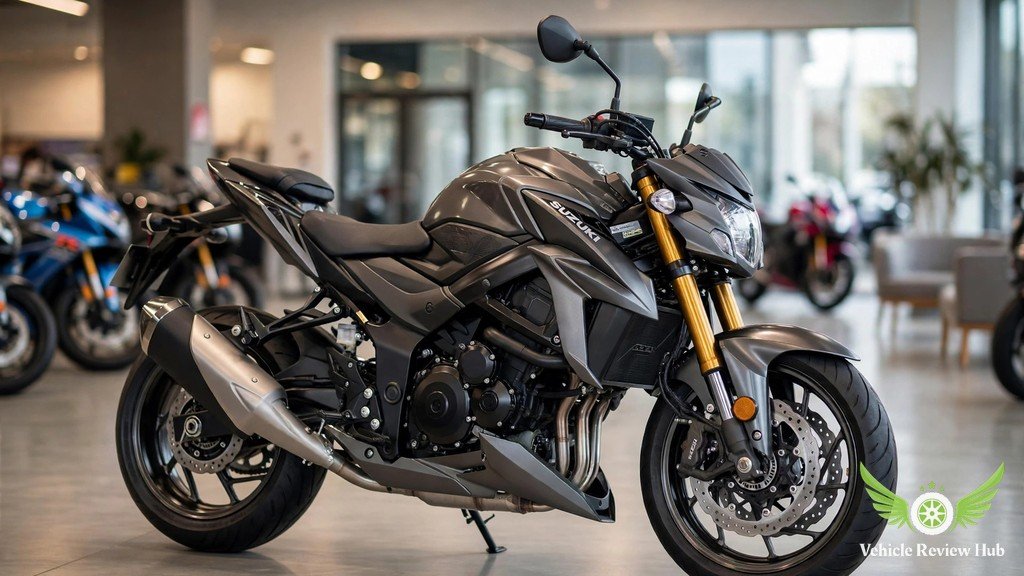
The 2023 GSX-S750Z cost $8,649 plus a $440 destination charge — $9,089 delivered. The 2023 GSX-S750Z ABS cost $9,149 plus $440 — $9,589 delivered.
The table below shows the full US price history; destination charges for 2015 and 2019 were not found, so those years show no delivered total.
| Model year | Variants (USA) | MSRP | Destination | Delivered |
|---|---|---|---|---|
| 2015 | GSX-S750 / GSX-S750Z | $7,999 / $8,149 | Not published | — |
| 2016 | GSX-S750 | $7,999 | $350 | $8,349 |
| 2017 | No US model year | — | — | — |
| 2018 | GSX-S750 / GSX-S750Z (ABS) | $8,299 / $8,899 | $365 | $8,664 / $9,264 |
| 2019 | GSX-S750Z (no ABS) / GSX-S750 ABS (no Z) | $8,499 / $8,899 | Not published | — |
| 2020 | GSX-S750 / GSX-S750Z ABS | $8,499 / $8,899 | $395 | $8,894 / $9,294 |
| 2021 | GSX-S750Z / GSX-S750Z ABS | $8,499 / $8,899 | $395 | $8,894 / $9,294 |
| 2022 | GSX-S750 / GSX-S750Z ABS | $8,549 / $8,949 | $425 | $8,974 / $9,374 |
| 2023 | GSX-S750Z / GSX-S750Z ABS | $8,649 / $9,149 | $440 | $9,089 / $9,589 |
The price table in this Suzuki GSX-S750 review is built from Suzuki press releases and Motorcycle.com spec pages.
Suzuki GSX-S750 Design, Features and Technology
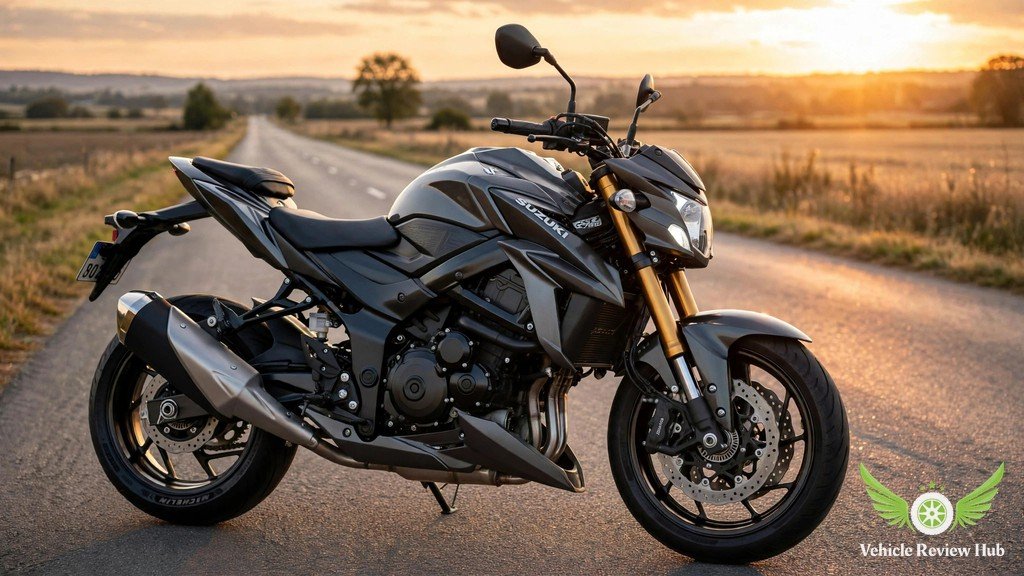
The GSX-S750 looks like what it is: a naked roadster built around a sportbike engine. It is a handsome bike in the way honest machinery is handsome, and the 2023 Z models added blacked-out styling with gold-anodised fork outer tubes that give the front end a finished look. This Suzuki GSX-S750 review spends time on the details that actually decide a purchase — the trim badges, the brakes and the dash — because those are the places where the bike is most often misdescribed.

Z Does Not Mean ABS: Check the Trim
The single most important trap in this Suzuki GSX-S750 review is the letter Z. On most Suzuki models a Z suffix means something consistent; on the GSX-S750 its meaning flipped twice. In 2015 and 2016, Z meant special paint and graphics — gold fork tubes, red fork adjuster bolts, a red shock spring and a blue chain — and no ABS on any variant, for $150 more. In 2018, Z meant blacked-out styling plus ABS, for $600 more. In 2019, the meaning flipped again: the Z had blacked-out styling and no ABS, while ABS moved to the plain GSX-S750 ABS in Pearl Glacier White. In 2023 every bike was a Z, and only the Z ABS had ABS.
The practical advice in this Suzuki GSX-S750 review is simple: never buy a GSX-S750 on the badge alone. Check the model name on the title and the spec sheet, and look for the ABS hardware itself — the tone rings and the ABS pump — rather than trusting a seller’s claim that “Z means ABS”. The reliability guide has the full trim-by-year breakdown.
Nissin Radial Brakes, Not Brembo
Several AI-generated buying guides claim the GSX-S750 has Brembo brakes. It does not — and this Suzuki GSX-S750 review says so plainly. The front calipers on the 2018 and later bikes are Nissin four-piston radial-mount monoblocs clamping twin 310 mm wave-style discs. The 2015 and 2016 bikes had two-piston sliding calipers on the same 310 mm discs, and testers criticised them for weak initial bite — Cycle World and Motorcycle.com both marked the early brakes down. The 2018 Nissin upgrade fixed that: Cycle World said the new calipers “should put a stop to criticism the previous gen’s dated brake system has generated”, and Motorcycle.com’s 2017 three-way shootout called the 2018 bike’s brakes the best of its group, “hands down”, scoring them 90.8 percent against the Kawasaki Z900’s 85.0 and the Aprilia Shiver 900’s 84.2.
The video below is Motoroids’ review of the GSX-S750 from India — the bike shown is the same model, but it is an Indian-market review, so the prices and market context are Indian, not American. It is still a useful walkaround of the bike’s design and features.
The headlight is a halogen H4 unit, not an LED, and the tyres are Bridgestone Battlax Hypersport S21 in 120/70ZR17 front and 180/55ZR17 rear on 10-spoke cast wheels.
Suzuki GSX-S750 Riding Experience and Comfort
On the road, the GSX-S750 feels like a sportbike engine in a streetbike chassis. This Suzuki GSX-S750 review draws on the named magazine tests rather than invented seat time: Cycle World, Motorcycle.com, RevZilla and ZigWheels all rode the bike, and their verdicts agree more than they disagree.

Riding Position, Handling and Low-Speed Maneuverability
Testers consistently praised the steering. The 2018 bike improved, but Cycle World still noted that damping “is calibrated on the sporting side, providing responsive handling feel and steadfast stability at the expense of ride comfort when encountering sharp bumps”, and Motorcycle.com’s long-term test agreed that “it only hurts over big sharp bumps”.
At low speed the bike is easy to manage. Low RPM Assist, added in 2018, nudges the engine speed up at take-off to resist stalling, and the Easy Start system fires the engine with a single touch of the starter — two aids this Suzuki GSX-S750 review counts among the 2018 bike’s real improvements. The GSX-8S review shows how Suzuki’s newer parallel-twin successor handles the same jobs with lighter controls and a quickshifter, if those matter to you.
465 to 470 Pounds: Heavy for the Class
At 465 pounds for the non-ABS bike and 469–470 pounds for the ABS version, the second-generation GSX-S750 is heavy for a middleweight naked, and testers noticed. Motorcycle.com’s 2017 three-way measured the Suzuki at 467 pounds fully fuelled — two pounds lighter than the Z900 it was tested against, but still a heavy bike to push around a parking lot or pick up after a tip-over. One Motorcycle.com comparison lists 436 pounds measured, which conflicts with its own 464.7-pound figure — this Suzuki GSX-S750 review uses the consistent 465–467-pound band.
The weight shows up in two places: slow-speed handling and fuel economy, where the 2015–2016 bike returned 36.9–41.7 mpg in Motorcycle.com testing. The 2018 bike did better — 46–48 mpg in Motorcycle.com’s long-term test — helped by the revised engine mapping and the shorter final-drive gearing.
Suzuki GSX-S750 Review: Pros, Cons and Verdict
So where does the GSX-S750 stand now that it is gone? It stands as the cheapest honest way into a 100-horsepower inline-four naked. This Suzuki GSX-S750 review ends with the balance sheet: what the bike does better than anything near its used price, what it cannot do, and who should still buy one.
Main Advantages and Limitations of the Suzuki GSX-S750
The advantages in this Suzuki GSX-S750 review start with the engine. A K5-derived inline-four with a flat torque curve and around 100 rear-wheel horsepower is a combination nothing else at $6,000–$8,000 used can match in this class.
The limitations are the mirror image: heavy at 465–470 pounds, preload-only suspension with a firm ride, a heavy clutch, and electronics that stop at traction control and ABS. The 2015–2016 bikes have weak brakes and no ABS at all, and they were never sold in California. MCN’s 30 UK GSR750 owners rate reliability 4.3 out of 5, and MCN has no owner score for the GSX-S750 itself. The table below summarises the trade-off.
| Pros | Cons |
|---|---|
| K5-derived 749cc inline-four, around 100 hp at the rear wheel | Heavy at 465–470 lb for the class |
| 2018 Nissin radial brakes rated best in Motorcycle.com’s three-way test | Preload-only suspension at both ends; firm, sometimes harsh ride |
| Quick steering, comfortable seat, slick-shifting gearbox | No TFT, no ride modes, no quickshifter, no cruise control |
| Simple ownership: one recall only (2018, fuel-pump O-ring) | 2015–16 bikes: weak brakes, no ABS, never sold in California |
| Flat used prices: $6,000–$8,000 buys a clean bike | Discontinued — no new bike, no dealer support beyond parts |
| Traction control, Easy Start and Low RPM Assist (2018+) | Small 16.0 L tank on 2018+ bikes; heavy clutch pull |
The pros and cons in this Suzuki GSX-S750 review come from the named magazine tests.
Twelve-Month Unlimited-Mileage Warranty
Every GSX-S750 sold new in the USA carried Suzuki’s 12-month unlimited-mileage limited warranty, and this Suzuki GSX-S750 review notes that warranty is now expired on every bike — even the last 2023 models are past their twelve months.
The verdict of this Suzuki GSX-S750 review is straightforward. Buy the 2018-or-later bike, preferably a Z ABS, for $6,000–$8,000, and you get a genuine 100-horsepower inline-four naked with good brakes, a comfortable seat and a clean reliability record for less money than any comparable new middleweight. The GSX-S1000 review covers the bigger GSX-S sibling if you want more power still, and the SV650 review covers the V-twin alternative at a similar used price.
Suzuki GSX-S750 Review: Frequently Asked Questions
Direct answers to the questions riders ask about this Suzuki GSX-S750 review.
Is the Suzuki GSX-S750 still sold in the USA?
No. The last US model year was 2023. There is no new GSX-S750 to buy in America, and no current US price exists. This Suzuki GSX-S750 review uses the final 2023 prices throughout, and the only way into the bike now is the used market.
What was the final US price of the GSX-S750?
The 2023 GSX-S750Z cost $8,649 and the 2023 GSX-S750Z ABS cost $9,149, plus a $440 destination charge — $9,089 and $9,589 delivered, as this Suzuki GSX-S750 review records. Those figures are verified by Suzuki’s own March 2023 press release and by Motorcycle.com’s 2023 spec page for the Z ABS.
How much power does the GSX-S750 make?
Suzuki USA publishes no horsepower figure, so the honest answer has two parts. The global claim for the 2018–2023 bike is 112.4–112.6 bhp (114 PS) at 10,500 rpm, and the 2015–2016 bike claimed 104.6 hp at 10,000 rpm — the claims this Suzuki GSX-S750 review labels as global, not Suzuki USA figures. On the dyno, Cycle World’s 2015 test measured 99.1 rear-wheel horsepower at 10,170 rpm, and Motorcycle.com measured 96.1 horsepower at 10,300 rpm.
What is the top speed of the GSX-S750?
140 mph, tested by Cycle World in its 2015 comparison against the Yamaha FZ-09, which was electronically limited to 130 mph. That is the tested figure this Suzuki GSX-S750 review uses. Whether Cycle World’s figure was GPS or speedometer is not stated in the accessible text, so this Suzuki GSX-S750 review does not claim GPS.
Does the Z in GSX-S750Z mean ABS?
Not reliably. Z meant paint-only with no ABS in 2015–2016, ABS in 2018, no ABS in 2019, and ABS again from 2020; in 2023 every bike was a Z and only the Z ABS had ABS. That is why this Suzuki GSX-S750 review calls the Z badge the single most important trap in the cluster. Cycle World’s 2020 buyer’s guide documents the 2019 swap and the 2020 switch-back.
Does the GSX-S750 have Brembo brakes?
No. The front calipers on 2018 and later bikes are Nissin four-piston radial-mount monoblocs on twin 310 mm wave discs, as Suzuki’s own one-sheet states. The 2015–2016 bikes had two-piston sliding calipers that testers criticised for weak initial bite, and the 2018 Nissin upgrade fixed that — Motorcycle.com rated the 2018 bike’s brakes the best of its three-bike group. This Suzuki GSX-S750 review keeps the two brake generations separate.
What is the fuel economy of the GSX-S750?
Tested US economy runs from the high-30s to the high-40s in US gallons, depending on the year. Motorcycle.com measured 36.9 mpg on the 2015 bike, 41.7 mpg on the 2016 bike, and 46–48 mpg on the 2018 bike in its long-term test — the figures this Suzuki GSX-S750 review uses. This Suzuki GSX-S750 review does not use the 45 mpg figure sometimes quoted for this bike — that is MCN’s UK-Imperial-gallon figure for the predecessor GSR750, not a US test result.
How heavy is the GSX-S750?
The first-generation bike weighed 463 pounds wet. The second-generation bike weighs 465 pounds without ABS and 469–470 pounds with ABS — the one-pound variance is rounding across sources. Motorcycle.com measured 467 pounds fully fuelled in its 2017 three-way test. That is the weight band this Suzuki GSX-S750 review uses.
What recalls affect the GSX-S750?
Exactly one recall names the GSX-S750, and this Suzuki GSX-S750 review lists it here: campaign 18V694000 from October 2018, covering 2018 bikes only, for a fuel-pump O-ring that may have been twisted during installation and could leak fuel. The remedy is a free replacement of the O-ring and the fuel-tank inner vessel. NHTSA’s recall database returns zero recalls for every other GSX-S750 model year. The GSX-R750’s brake and chain recalls do not apply to this bike. The 6,928 figure sometimes quoted is the total across all five models in that campaign, not the GSX-S750-only count; Suzuki’s campaign code is 2A87.
What is the service schedule for the GSX-S750?
Oil every 3,500 miles, with the filter replaced only at 600 and 11,000 miles — not at every service. Iridium spark plugs (NGK CR9EIA-9) are replaced at 7,500 miles, valve clearances are inspected at 14,500 miles. MaintenanceSchedule.com’s US-manual schedule has the full table, and the reliability guide covers servicing and ownership costs in detail. Note that the owner’s manual does not publish valve-clearance figures for this bike, so this Suzuki GSX-S750 review does not print any.
Is the GSX-S750 a good beginner bike?
It can be, with caveats. The upright riding position, the predictable linear power delivery, the traction control on 2018 and later bikes, and Low RPM Assist all help a newer rider. Against that, the bike weighs 465–470 pounds, the clutch pull is heavy, the suspension is firm, and the engine wants revs to make its power. RevZilla’s 2015 first ride praised the bike’s approachability while noting the throttle snap and the lack of ABS on the early bike. This Suzuki GSX-S750 review rates the 2018-or-later Z ABS as the sensible beginner pick.
Should I buy a used GSX-S750 or a new GSX-8S?
Buy the used GSX-S750 if you specifically want its inline-four character, its lower price, or its simplicity — a clean 2018-or-later Z ABS for $6,000–$8,000 is a lot of motorcycle for the money. Buy the new GSX-8S if you want a warranty and modern electronics: the 2027 GSX-8S costs $9,499 delivered, $90 cheaper than the last new GSX-S750 ABS was. This Suzuki GSX-S750 review treats the 8S as the de facto successor, not an official replacement, but for most buyers shopping today the new 8S is the more complete motorcycle.