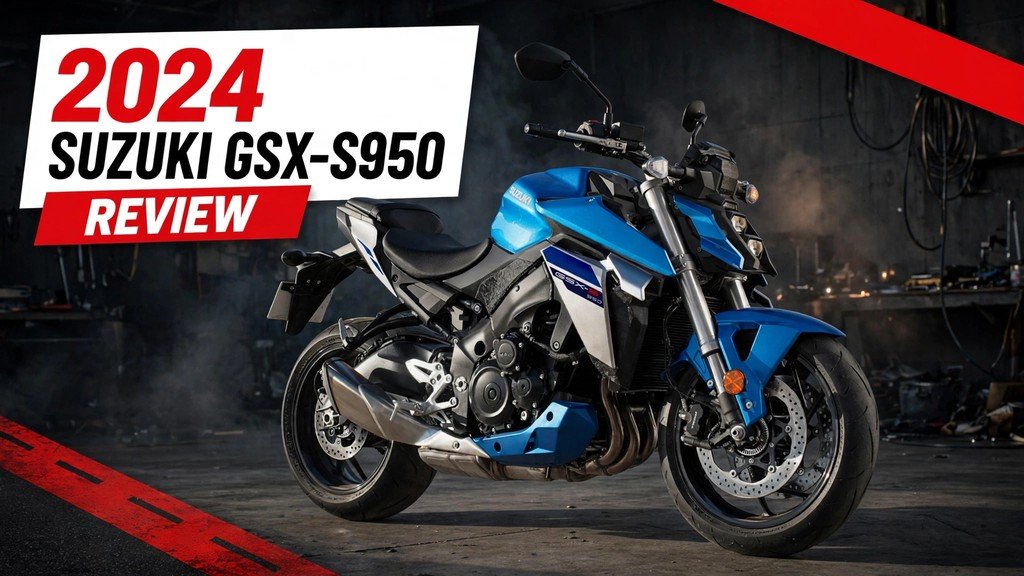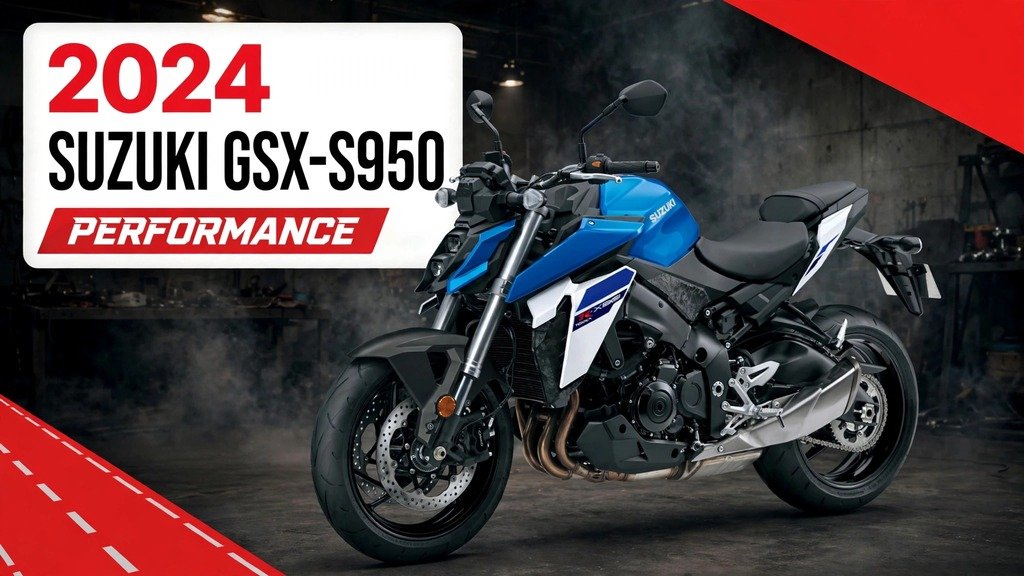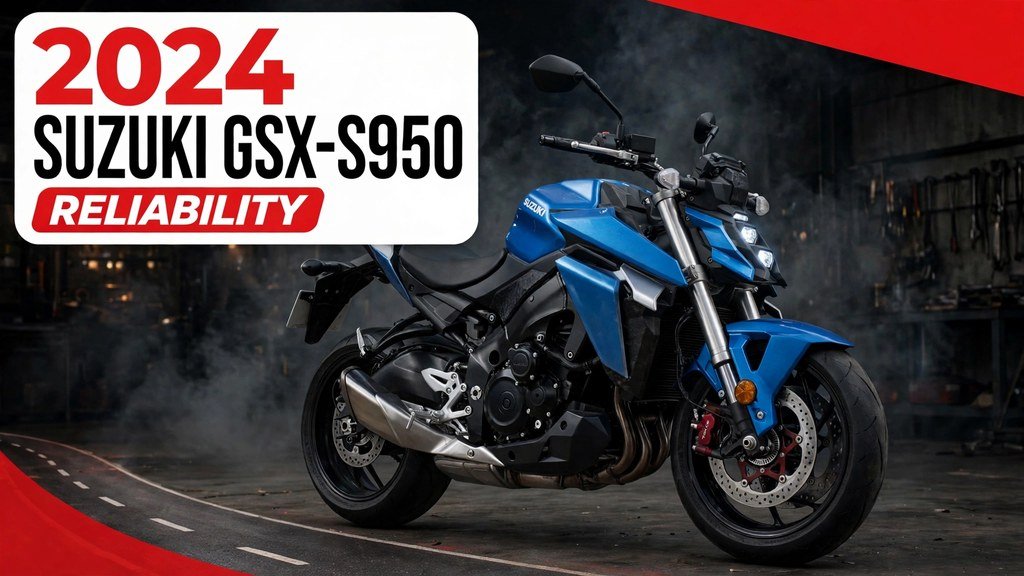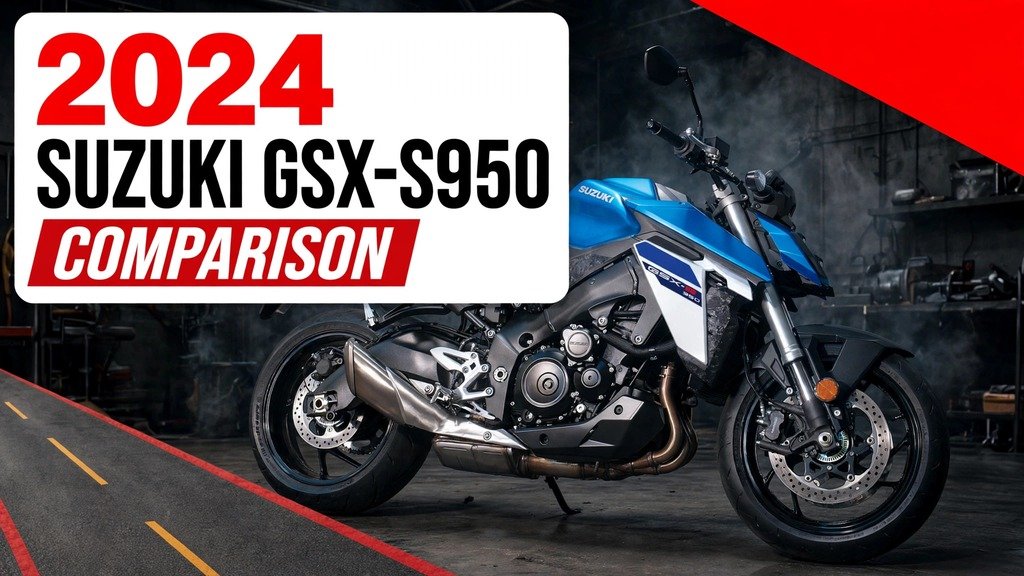
The Suzuki GSX-S950 is a strange bike to compare: a big-bike engine in a small-licence cage — 999cc and 95 PS, built to be restricted to 47.5 PS for A2 holders. This Suzuki GSX-S950 comparison pits it against the two rivals that share its A2 big-bike class, the Kawasaki Z900 A2 and the Yamaha MT-09 A2, and against its own full-power sibling, the GSX-S1000. The short answer: the Z900 A2 is the value pick, the MT-09 A2 is the lightest and best-equipped, and the 950 only wins on engine size and low-down torque. For full-licence riders the 950’s case collapses, because in the UK in 2026 the 152 hp GSX-S1000 costs only £400 more. And for Americans there is no case at all — the 950 was never sold in the USA. For prices, specs and the riding verdict, see the GSX-S950 review; for power, top speed and fuel economy, see the GSX-S950 performance guide; for service intervals and ownership costs, see the GSX-S950 reliability guide.
Suzuki GSX-S950 Overview and Its Closest Rivals
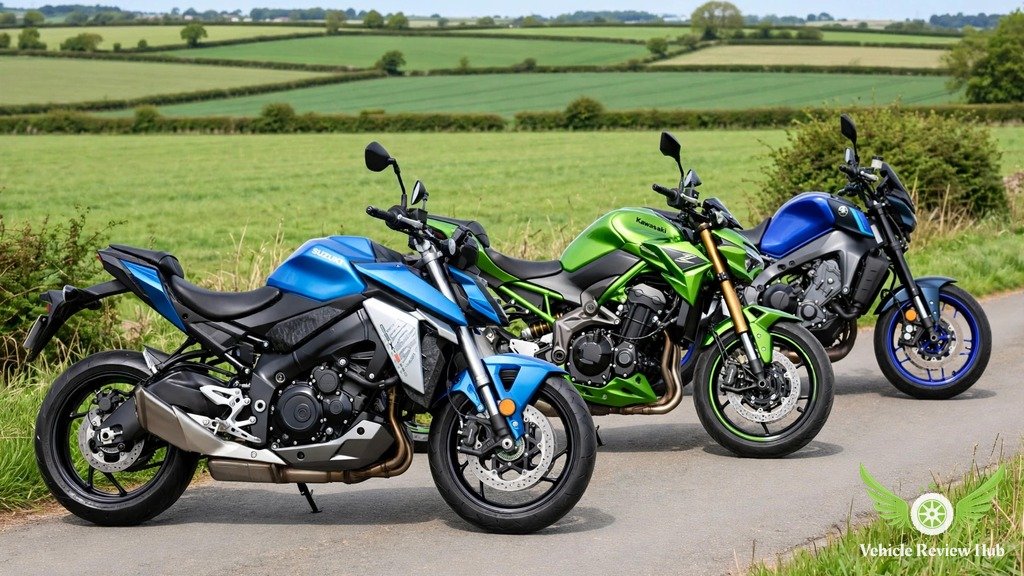
Three bikes share the 950’s A2 big-bike class, and a fourth shares its engine. This Suzuki GSX-S950 comparison starts with why those three rivals, and how the four bikes differ on paper.
Why These Three Rivals: the A2 Big-Bike Class
A2 law shapes this whole class: a bike may only be restricted to 35 kW if its unrestricted power is no more than 70 kW, so every bike here makes 95 PS or less in full-power form and 47.5 PS restricted. The Kawasaki Z900 A2 is a factory 70 kW homologation of the standard Z900, sold at the same list price. The Yamaha MT-09 A2 is different: the full-power MT-09 makes 119 hp, which is above the 70 kW origin limit, so it cannot legally be restricted — Yamaha instead sells a separate factory 70 kW homologation that is restricted to 35 kW. The GSX-S1000 is here because it is the 950’s twin — the same 999cc block and 214 kg, with 152 PS instead of 95. One honest limit on this Suzuki GSX-S950 comparison: no outlet has ridden the three A2 bikes together. The verdict below is built from solo reviews and spec sheets, and it says so.
How the Four Bikes Differ at a Glance
On paper the four bikes are closer than their badges suggest. This Suzuki GSX-S950 comparison puts the headline figures side by side first.
| Bike | Engine | Power (full / A2) | Torque | Kerb weight | Tank |
|---|---|---|---|---|---|
| Suzuki GSX-S950 | 999cc inline-4 | 95 PS / 47.5 PS | 92 Nm (A2: 76 Nm) | 214 kg | 19 L |
| Kawasaki Z900 70kW | 948cc inline-4 | 95 hp / 47.5 hp | 92.8 Nm | 213 kg | 17 L |
| Yamaha MT-09 35kW | 890cc inline-3 | 95.2 PS / 47.6 PS | 93 Nm | 193 kg | 14 L |
| Suzuki GSX-S1000 | 999cc inline-4 | 152 hp (no A2 version) | 106 Nm | 214 kg | 19 L |
The figures in this Suzuki GSX-S950 comparison table are manufacturer claims — no dyno exists for the 950, so no rear-wheel figure is printed here.
Suzuki GSX-S950 vs Kawasaki Z900
The Z900 is the 950’s most dangerous rival: the same 95 hp for less money with better equipment. This Suzuki GSX-S950 comparison starts with the engine, then the price.

Engine, Specs and Performance Side by Side
The two inline-fours are almost twins on paper in this Suzuki GSX-S950 comparison: the 950’s 999cc makes 95 PS at 7,800 rpm with 92 Nm at 6,500 rpm, and the Z900 70kW’s 948cc makes 95 hp at 7,200 rpm with 92.8 Nm. Both weigh about the same — 214 kg for the Suzuki, 213 kg for the Kawasaki — and both restrict to 47.5 hp for A2 holders. Where they split is character and equipment. The Z900 is the lighter-feeling bike with a 5-inch TFT, four ride modes, an IMU with cornering ABS, a quickshifter and cruise control on the 2025 model. The 950 counters with a bigger tank and more torque low down, 76 Nm at 3,250 rpm in A2 trim. The only outlet to ride both in A2 trim, MOTOCICLISMO’s three-way test, found the Suzuki holds its power most steadily across the rev range and accelerates and recovers a little better than the Z900, while the Kawasaki’s engine felt laziest. No outright winner was declared.
Price, Equipment and Which Suits Which Rider
Price is where the Z900 wins outright. In the UK the 2025 Z900 costs £9,199, against £10,599 for a 2026 950 at Fowlers — a verified £1,400 gap, covered in full in the price section below. Equipment widens the gap further: the 2025 Z900 carries a 5-inch TFT, an IMU, a quickshifter and cruise control, while the 950 has an LCD dash and three-mode traction control. The 950’s answers are comfort and range — a bigger tank, a more relaxed seat, and the visual presence of a full-size super naked. Buy the Z900 A2 for the same 95 hp, with better equipment and stronger residuals. Buy the 950 if you want the biggest engine in the class and the most torque at low revs — a dealer reflash restores the full 95 hp for under €100. This Suzuki GSX-S950 comparison scores the Z900 ahead on value, and the 950 ahead on engine size alone.
Suzuki GSX-S950 vs Yamaha MT-09
The MT-09 is the lightest and most advanced bike in this class, and the only triple. This Suzuki GSX-S950 comparison puts the 999cc four against the 890cc three.
Engine, Specs and Performance Side by Side
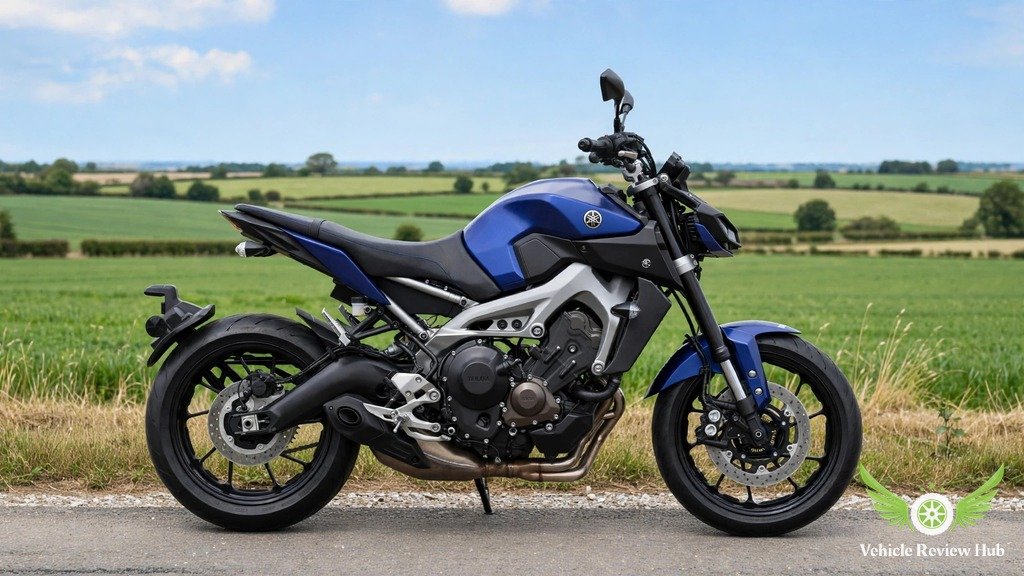
The MT-09 A2 is a different kind of bike from the 950. Its 890cc CP3 triple makes 95.2 PS at 9,000 rpm with 93 Nm, and it weighs just 193 kg — 21 kg less than the 950 — so it feels far livelier despite the same headline power. The 950’s answer is torque: 92 Nm at 6,500 rpm, and 76 Nm at just 3,250 rpm in A2 trim. The full-power MT-09 makes 119 hp, above the 70 kW origin limit, so it cannot legally be restricted to A2. The A2 MT-09 is a separate factory 70 kW homologation, restricted to 35 kW — not a dealer kit fitted to the 119 hp bike. Moto-Académie confirms the separate homologation. In MOTOCICLISMO’s three-way A2 test, the MT-09 had the highest top speed of the three and accelerated practically the same as the Suzuki thanks to its lower weight. The 950’s edge is range: a 19-litre tank and 311 km against the Yamaha’s 14 litres and 280 km.
Price, Equipment and Which Suits Which Rider
The MT-09 A2 sits between the two rivals on price. In the UK in 2025 it costs £10,106 — about £493 less than the 950’s £10,599 dealer price, but £907 more than the Z900’s £9,199. Equipment is the MT-09’s strongest card: a 6-axis IMU, cornering ABS, a quickshifter, cruise control and anti-wheelie — the most advanced electronics in this Suzuki GSX-S950 comparison by a clear margin. The 950 counters with a simpler package: an LCD dash, three-mode traction control, and a dealer network that services it out of the shared GSX-S1000 manual. Buy the MT-09 A2 for the lightest bike, the liveliest engine and the best electronics. Buy the 950 if you want the biggest engine, the longest range and the most relaxed, full-size feel. This Suzuki GSX-S950 comparison scores the MT-09 ahead on equipment and agility, and the 950 ahead on torque and touring range.
Suzuki GSX-S950 vs Suzuki GSX-S1000
The GSX-S1000 is the 950’s twin with the restrictor removed — the same engine, the same weight, the same tank, 57 hp more. This Suzuki GSX-S950 comparison is the one that decides whether the 950 makes sense at all.

Engine, Specs and Performance Side by Side
The two Suzukis share the same 999cc K5-derived inline-four block, frame, 214 kg kerb weight, 1,460 mm wheelbase and 19-litre tank. The difference is the tune: the 950 makes 95 PS at 7,800 rpm with 92 Nm at 6,500 rpm, and the 1000 makes 152 PS at 11,000 rpm with 106 Nm at 9,250 rpm — 62% of the power, with peak power arriving 3,200 rpm lower. MCN puts it plainly: the engine is used to running close to 150 bhp, so in lower-power form it is highly unlikely to have reliability issues. No outlet has published a direct instrumented comparison of the two bikes, and no dyno exists for the 950 — so this Suzuki GSX-S950 comparison stays with the claimed crank figures. The 1000 cannot be A2-restricted, because 152 PS is far above the 70 kW origin limit — that single fact is the 950’s reason to exist.
Price, Equipment and Which Suits Which Rider
Equipment is where the sibling gap is widest. The GSX-S1000 carries Brembo radial monobloc calipers against the 950’s Tokico units, a fully adjustable gold 43 mm KYB fork against the 950’s silver non-adjustable fork, five-mode traction control against three, three S-DMS ride modes against none, an up-and-down quickshifter against none, and LED indicators against the 950’s bulbs. The 2025 1000 also has a 5-inch TFT, while the 950’s 2025 TFT is reported but unconfirmed by Suzuki. In the UK in 2026 the GSX-S1000 costs £10,999, only £400 more than the 950’s £10,599, for 57 hp more and the full equipment list. The gap was wider at launch — £10,999 against £9,999 in 2021. Buy the GSX-S1000 if you hold a full A licence: there is no rational case for paying £400 less for 57 hp less. Buy the 950 only if you hold an A2 licence, or will hold one soon — a dealer reflash restores the full 95 PS afterwards. This Suzuki GSX-S950 comparison is blunt on the point: for full-licence buyers, the 950’s value case collapses.
Suzuki GSX-S950 Price and Value Compared
Prices are where this comparison is won and lost — and where bad pairs mislead. This Suzuki GSX-S950 comparison uses only same-market, year-labelled prices, and says plainly where a popular claim fails.
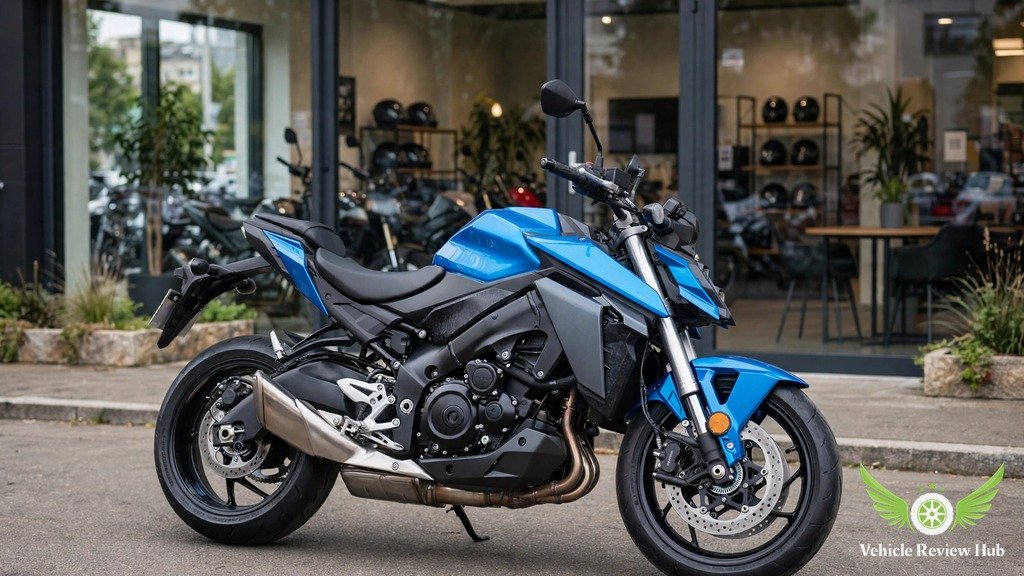
The video below is an English walkaround introduction to a blue 2022 GSX-S950 by Usernamekate — not a road test, and with no Z900 or MT-09 in it. Its comparison value is the GSX-S1000 angle: a dedicated section on the differences from the S1000 and one on market position and value. The channel discloses sponsors and affiliate links in the description.
Z900 A2 Undercuts It by £1,400 in the UK
The headline figure here is a correction, not a claim. The doc heading said the Z900 A2 undercuts the 950 by about €2,300 — that figure was tested against every same-market, same-year pair the research could source, and no pair produces it. In France in 2022 the Z900 was actually €200 dearer (€10,199 against €9,999); at the UK launch in 2021 the gap was about £0 to £100; in the UK in 2022 it was roughly £800 to £1,100. The closest verified gap is the UK 2025/26 pair: the 950 at £10,599 from Fowlers against the Z900 at £9,199 — £1,400, worth about €1,674 at 13 November 2026 rates. That is the verified undercut, and this Suzuki GSX-S950 comparison prints it with the market and the year attached.
| Bike | Price (market, year) | Note |
|---|---|---|
| Suzuki GSX-S950 | £10,599 (UK, 2026 dealer stock) | Fowlers; UK launch 2021 was £9,999 |
| Suzuki GSX-S950 | €9,999 (France, 2022) | Standard price; A2 version €10,400 |
| Suzuki GSX-S950 | €11,490 (Croatia, M6 2026 model, Aug 2025 list) | Incl. 25% VAT + special vehicle tax |
| Kawasaki Z900 | £9,199 (UK, 2025) | A2 70kW version same price as standard |
| Kawasaki Z900 | from €10,199 (France, 2024) | Previous model before 2025 update |
| Yamaha MT-09 | £10,106 (UK, 2025) | 35kW version same price as standard |
| Yamaha MT-09 | €10,799 (France, 2024) | Standard MSRP; 35kW version same price |
| Suzuki GSX-S1000 | £10,999 (UK, 2026) | Only £400 more than the 950 in the UK |
| Suzuki GSX-S1000 | €13,400 (Germany, 2025) | 2025 list price; Ireland €13,950 |
The figures in this Suzuki GSX-S950 comparison table are list or dealer prices — never a conversion presented as a market price, and never a dollar price for the 950.
Running Costs and Resale Value Compared
Running costs favour the rivals on fuel and the 950 on simplicity. The 950’s official WMTC figure is 6.1 litres per 100 km with a 311 km range; the Z900 manages 4.7 to 4.8 litres per 100 km and 354 km, and the MT-09 uses 5.0 litres per 100 km for 280 km. Servicing has one 950-specific figure: £120 a year, from the single MCN owner — one owner’s number, not a dataset. Resale is where the 950 looks weakest. MCN’s guide value is £7,400 used against £9,999 new, a single Gumtree listing put a low-mileage 2021 bike at £6,494, and 1000PS records a first-year trend of minus 12%. The Z900 holds up better in the same guides — MCN lists £8,100 to £9,200 used for a 2025 bike against £9,199 new. This Suzuki GSX-S950 comparison scores the Z900 ahead on running costs and resale, and the 950 ahead only on service simplicity.
Suzuki GSX-S950 Comparison Verdict and US Alternatives
The verdict splits by licence and by continent. This Suzuki GSX-S950 comparison ends with the price paradox that American buyers should know about, and the bikes they can actually buy.

Americans Get Full Power for Less Money
The price paradox is real — but only on matched recent pairs, and the body of this Suzuki GSX-S950 comparison must say so plainly. Take Croatia in 2025: the 950’s M6 model lists at €11,490, about $12,699 at 13 November 2026 rates, while the American 2027 GSX-S1000 costs $11,548 delivered — so the American pays $1,151 less for 57 hp more. Take the UK in 2026: the 950 at £10,599 is about $14,002, and the American pays $2,454 less. But take France in 2022: the 950 was €9,999, about $11,051, and the American pays $497 more — the paradox fails on that pair. The reason is timing: European prices rose while Suzuki cut the US 2027 S1000 price by $1,191. Label the year on both sides, every time. One caveat belongs in every version of this claim: US prices exclude sales tax and dealer fees, while EU and UK prices include 20 to 25% VAT. Like for like: the same GSX-S1000 costs $11,548 delivered in the USA in 2027, against €13,400 in Germany in 2025, €13,950 in Ireland, €14,999 in the Netherlands in 2025 and £10,999 in the UK in 2026 — Europeans pay roughly $3,300 to $5,000 more for the identical full-power bike. The paradox is mostly a Europe-versus-US pricing gap, not something unique to the 950.
Real US Alternatives: GSX-8S and Z900
Americans cannot buy the 950 at all — it was never sold in the USA, and a 2022 bike only becomes eligible for import under the 25-year rule in 2047. The honest equivalents are all full-power, because the USA has no A2 licence class and the 950’s whole proposition — big bike, small power, A2-legal — has no American equivalent. The Suzuki GSX-8S is the cheapest way in: the 2027 bike costs $8,749 plus $750 destination, $9,499 delivered, for a 776cc parallel twin with 82 hp. The Kawasaki Z900 is the closest American match to the 950’s class: the 2026 Z900 ABS costs $9,999 plus $840 destination, $10,839 delivered, for the full 123 hp inline-four. And the GSX-S1000 itself is the punchline of this Suzuki GSX-S950 comparison — $11,548 delivered for the 2027 bike, less than a European pays for the detuned 950 in the UK or Croatia. The full-power sibling is covered in the GSX-S1000 review, and the 8S is covered in the GSX-8S review and the GSX-8S comparison.
| Bike (USA) | MSRP | Destination | Delivered |
|---|---|---|---|
| Suzuki GSX-8S (2027) | $8,749 | $750 | $9,499 |
| Kawasaki Z900 ABS (2026) | $9,999 | $840 | $10,839 |
| Suzuki GSX-S1000 (2027) | $10,798 | $750 | $11,548 |
The figures in this Suzuki GSX-S950 comparison table are US delivered totals with the model year labelled. The 950 itself has no row here, because it was never sold in the USA.
Suzuki GSX-S950 Comparison: Frequently Asked Questions
Direct answers to the questions riders ask about this Suzuki GSX-S950 comparison.
Which is better, the GSX-S950 or the Kawasaki Z900 A2?
The Z900 A2 wins on value in every market where prices can be matched — in the UK in 2025/26 it costs £1,400 less, with a TFT, an IMU, a quickshifter and cruise control. This Suzuki GSX-S950 comparison scores the 950 ahead only on engine size and low-down torque: 999cc and 76 Nm at 3,250 rpm in A2 trim, against the Z900’s 948cc.
Is the GSX-S950 faster than the MT-09 A2?
Neither bike in this Suzuki GSX-S950 comparison has a measured top speed from a named outlet, so there is no timed answer. In MOTOCICLISMO’s three-way A2 test the MT-09 had the highest top speed of the three, while the Suzuki held its power most steadily across the rev range. This Suzuki GSX-S950 comparison treats the MT-09 as the quicker-feeling bike, because it is 21 kg lighter.
Is the GSX-S950 the same bike as the GSX-S1000?
Almost. The two share the same 999cc block, frame, 214 kg weight and 19-litre tank, but the 1000 makes 152 PS against the 950’s 95 PS, with Brembo brakes, a fully adjustable gold fork, five-mode traction control, ride modes and a quickshifter. This Suzuki GSX-S950 comparison covers the full equipment gap in the sibling section above.
Why is the GSX-S950 not sold in the USA?
Suzuki built it specifically for the European market and its A2 licence rules — the 95 PS cap exists so the bike can be restricted to 47.5 PS for A2 holders. The USA has no A2 licence class, so the bike’s whole reason to exist does not apply there. This Suzuki GSX-S950 comparison uses UK and European prices only.
How much cheaper is the Z900 A2 than the GSX-S950?
The verified gap is £1,400 in the UK, using 2025/26 prices: the 950 at £10,599 from Fowlers against the Z900 at £9,199. That is about €1,674 at 13 November 2026 rates. This Suzuki GSX-S950 comparison rejects the older “about €2,300” claim — no same-market, same-year pair produces it, and in France in 2022 the Z900 was actually €200 dearer.
Can the Yamaha MT-09 be restricted to A2?
Not the full-power bike: the 119 hp MT-09 is above the 70 kW origin limit, so it cannot legally be restricted. Yamaha sells a separate factory 70 kW homologation, restricted to 35 kW, at the same list price. This Suzuki GSX-S950 comparison labels it the “35kW version” everywhere, never as a dealer-restricted MT-09.
Which of the three A2 nakeds is lightest?
The Yamaha MT-09 A2, at 193 kg — 21 kg lighter than the 950 and 20 kg lighter than the Z900. The 950 and the Z900 are near-identical at 214 kg and 213 kg. This Suzuki GSX-S950 comparison notes the weight gap as the main reason the MT-09 feels livelier than either four-cylinder rival.
Which A2 naked has the best electronics?
The MT-09 A2, by a clear margin: a 6-axis IMU, cornering ABS, a quickshifter, cruise control and anti-wheelie, plus a fully adjustable fork. The 2025 Z900 is next, with an IMU, cornering ABS, a quickshifter and cruise. This Suzuki GSX-S950 comparison scores the 950 last on electronics — LCD dash, three-mode traction control, no ride modes and no quickshifter.
Is the GSX-S950 worth it over the GSX-S1000?
Only if you hold an A2 licence. In the UK in 2026 the GSX-S1000 costs £10,999, just £400 more than the 950’s £10,599, for 57 hp more and the full equipment list. This Suzuki GSX-S950 comparison is blunt on the point: for full-licence buyers, the 950’s value case collapses, and the 1000 is the buy.
What is the price paradox American buyers should know about?
On matched recent pairs, an American pays less for the full-power GSX-S1000 than a European pays for the detuned 950: Croatia 2025, €11,490 against $11,548 delivered, is $1,151 less for 57 hp more. But the paradox fails on the France 2022 pair, where the American pays $497 more. This Suzuki GSX-S950 comparison states the year on both sides, and notes the VAT caveat: US prices exclude sales tax, EU prices include 20 to 25% VAT.
Which bike holds its value best?
The Z900, on the thin data available: MCN lists £8,100 to £9,200 used for a 2025 Z900 against £9,199 new, while the 950’s guide value is £7,400 against £9,999 new. This Suzuki GSX-S950 comparison labels the used figures as thin — one guide value and one listing is not a market average.
Can Americans buy a GSX-S950 in 2026?
Not new, and not used until 2047, when a 2022 bike becomes eligible under the 25-year import rule. Until then the honest American alternatives are the GSX-8S at $9,499 delivered, the Z900 at $10,839 delivered, or the GSX-S1000 itself at $11,548 delivered. This Suzuki GSX-S950 comparison points American readers there rather than inventing a way to buy one.