The 2027 Suzuki RM-Z250 is a reliable motocross bike — the long-term test bikes keep running. Motocross Action has run 50-plus hours a year on its test bikes since 2019 with no serious issues. But Suzuki RM-Z250 reliability comes with a condition that every buyer must understand before the first moto. The owner’s manual schedules everything in engine hours, and the intervals are short — oil every 6 hours, a new piston and ring every 12 hours, the air filter cleaned after every ride. This Suzuki RM-Z250 reliability guide walks the full hour-based schedule, names the one real common problem, and separates it from the two non-patterns that get repeated online.
Suzuki RM-Z250 Reliability Overview
The RM-Z250 has been mechanically the same bike from 2019 through 2026, and the 2027 update is the first real change in that span. Seven model years of the same 249cc single, KYB suspension and manual, tested every year by the same magazine, is the best durability evidence there is. Suzuki RM-Z250 reliability starts here: what those test bikes survived, and why hours, storage and previous care matter more than the model year.
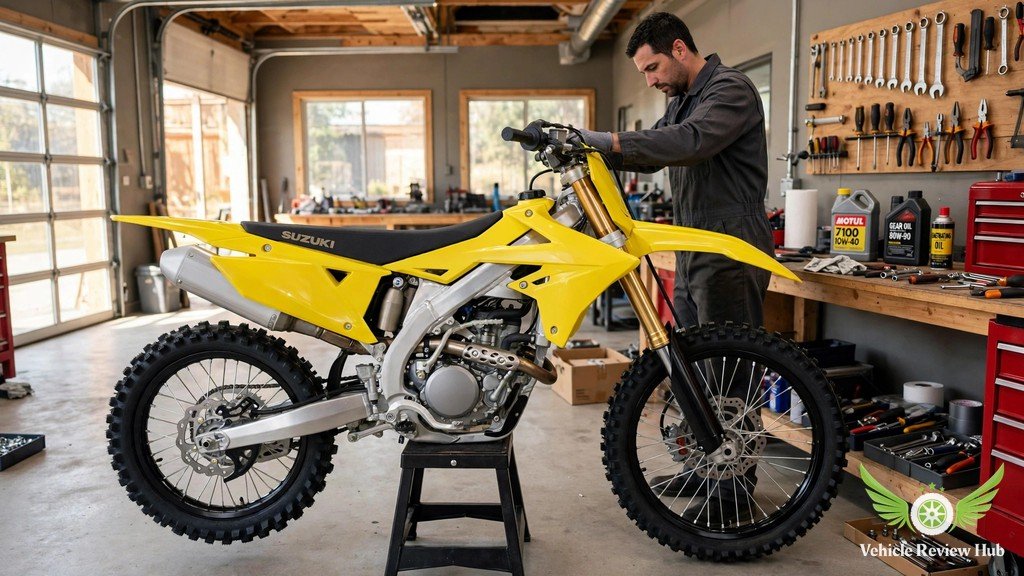
MXA Ran 50-Plus Hours a Year Without Issues
The entire long-term durability record is Motocross Action’s annual test fleet, and it is a strong record. Motocross Action’s 2026 race test puts it plainly: “We have consistently put over 50 hours on our RM-Z250 test bikes every year since 2019 with no serious issues. We even ran the same chain guide and slider last year for all 50 hours with no quibbles.” The same magazine calls the engine “a solid engine with a long lifespan” in the same test. There is no owner survey, no high-mileage owner report and no fleet data beyond that — Suzuki RM-Z250 reliability rests on one magazine’s test bikes, and this guide says so rather than implying a broader owner consensus that does not exist.
How Hours, Storage and Previous Care Affect Reliability
Hours are the only honest measure of a used RM-Z250, because the bike has no odometer. A 2023 bike with 20 hours and a 2025 bike with 120 hours are not the same purchase. Storage matters because a bike that sits with old fuel and a dirty filter corrodes from the inside. Previous care matters most: the 12-hour piston replacement is the most expensive routine item, and a seller who cannot show when it was last done is selling an overdue bike. For Suzuki RM-Z250 reliability, a used bike means one whose hour count, oil-change history and piston history can be shown — without those three, the price should reflect the work. The Suzuki RM-Z250 review covers the 2027 update and price history in full.
Suzuki RM-Z250 Common Problems and Wear Items
There is exactly one documented common problem on the 2019-and-later RM-Z250, and two things called problems without any documented pattern behind them. This Suzuki RM-Z250 reliability section names the clutch slip Motocross Action has reported two years running, then explains why stalling and valve-train trouble do not belong on the same list.
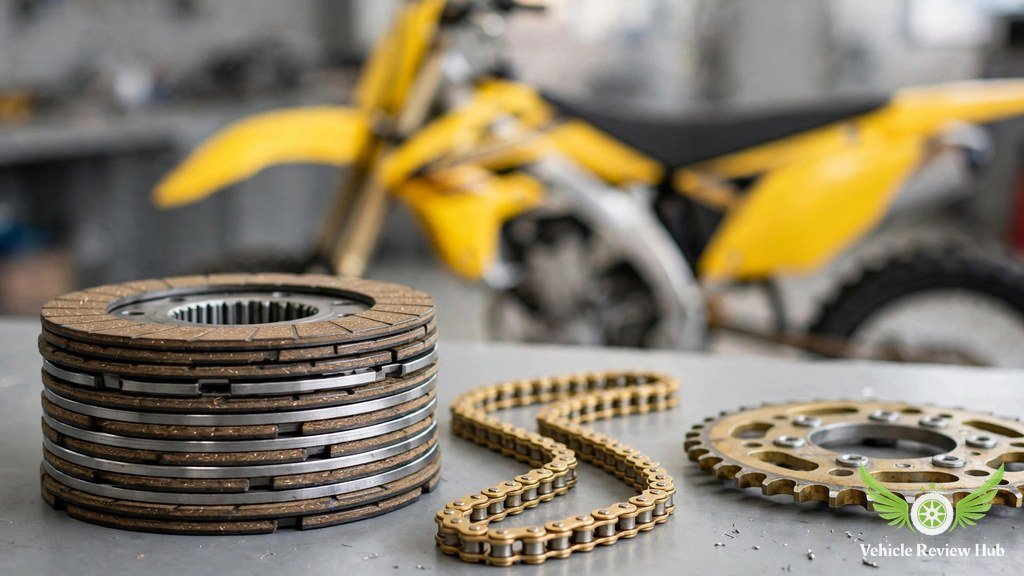
No Documented Valve-Train Defect Pattern
No documented valve-train defect pattern exists for the 2019-and-later RM-Z250. Motocross Action’s long-term test bikes report no catastrophic issues, and no magazine found a valve-train failure pattern on this generation. That does not mean the valves never need attention: the manual calls for a valve-clearance inspection every 12 hours, and the inspection matters precisely because a tight valve shows up as hard starting and lost power long before it becomes a failure. What Suzuki RM-Z250 reliability means here is routine inspection, not defect repair. No verified clearance figures for the current generation were located — check the service manual or a dealer rather than trusting a forum post.
Stalling Complaints Are Inconvenience, Not Failure
Stalling complaints exist, but no magazine-documented stalling pattern exists for the 2019-and-later RM-Z250. The anecdotes are mostly about older carbureted bikes from 2004 to 2014 — a different generation, not this bike. The honest framing is that stalling is owner-reported, mostly on older bikes, and the kick-start-only consequence is what matters: a stall mid-moto costs time because there is no electric start to recover instantly. The RM-Z250 has never had electric start, so every stall is a kick-start restart while the rest of the class pushes a button. That is an inconvenience built into the specification, not a failure pattern. The Suzuki RM-Z250 performance guide covers the same gap from the riding side.
Suzuki RM-Z250 Maintenance Schedule and Servicing
Everything on this bike is scheduled in engine hours, because it has no odometer and cannot measure miles. The 2019 owner’s manual chart has three columns — every race or 2 hours, every 3 races or 6 hours, and every 6 races or 12 hours — and the intervals are short by street-bike standards. This Suzuki RM-Z250 reliability section reproduces the chart’s headline items — the schedule itself is the ownership story: cheap to buy, demanding to keep.
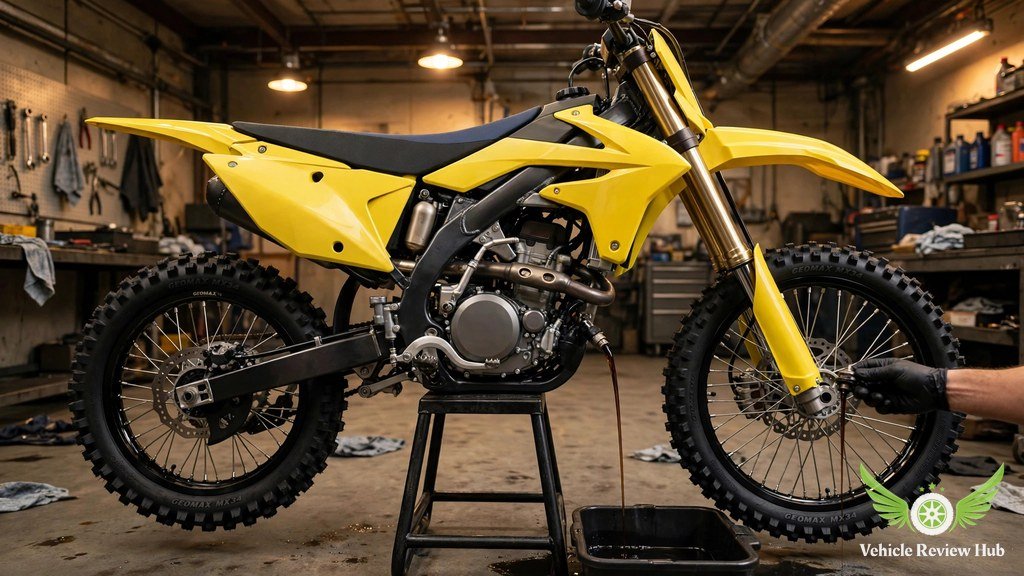
The video below is a full oil change on a 2023 RM-Z250, which shares its chassis and engine with the 2019–2023 bikes. It shows the drain bolts, oil screen and filter — not the 12-hour piston change this Suzuki RM-Z250 reliability guide covers above.
Oil Every Six Hours on the Manual Chart
Engine oil is replaced every 6 hours, after the first initial break-in change. Oil discipline is the first rule of Suzuki RM-Z250 reliability. The specification is SAE 10W-40, API SG/SH/SJ/SL/SM/SN plus JASO MA, with ECSTAR recommended — and the manual warns against “Energy Conserving” or “Resource Conserving” oils, because the same oil serves engine, transmission and clutch. The oil filter is a separate interval and a common trap: the filter is replaced only at 12 hours, not at every oil change, so a blog or a seller that says “oil and filter every 6 hours” is wrong. The front fork oil and the drive-chain buffer and guide are replaced at the same 6-hour interval. The full chart is in the 2019 RM-Z250 owner’s manual (pages 61–62).
Piston and Ring Replacement at 12 Hours
The piston and the piston ring are replaced every 12 hours. That is a replacement interval, not an inspection — the manual says R at 12 hours — and it is the single most expensive routine item on this bike. The 12-hour service is the real cost of owning this bike: a top-end refresh every 12 hours. No verified dealer price for a 12-hour piston job was found, so this Suzuki RM-Z250 reliability guide does not invent one — ask a dealer for the quote before buying, and budget for it as a recurring cost, not a one-off.
| Item | Interval | Action |
|---|---|---|
| Engine oil | Every 6 hours | Replace (after 1st break-in) |
| Engine oil filter | Every 12 hours | Replace — NOT every service |
| Valve clearance | Every 12 hours | Inspect |
| Piston | Every 12 hours | Replace |
| Piston ring | Every 12 hours | Replace |
| Air cleaner | Every race / 2 hours | Clean; replace element as necessary |
| Front fork oil | Every 6 hours | Replace |
| Drive chain buffer and guide | Every 6 hours | Replace |
| Drive chain | Every race; replace every 6 hours | Inspect and lubricate; slack adjust every 30 min |
| Clutch | Every race | Inspect; replace plates as necessary |
| Radiator hose and coolant | Every year | Replace |
| Brake hose and brake fluid | Every year | Replace |
The intervals in this Suzuki RM-Z250 reliability table come from the 2019 owner’s manual chart (pages 61–62). The headline intervals — oil at 6 hours, filter and piston at 12 hours — are unchanged by the 2027 update. The spark plug is an NGK CR8EIB-10, the plug this Suzuki RM-Z250 reliability guide records from the manual chart.
Suzuki RM-Z250 Tires, Brakes and Suspension Maintenance
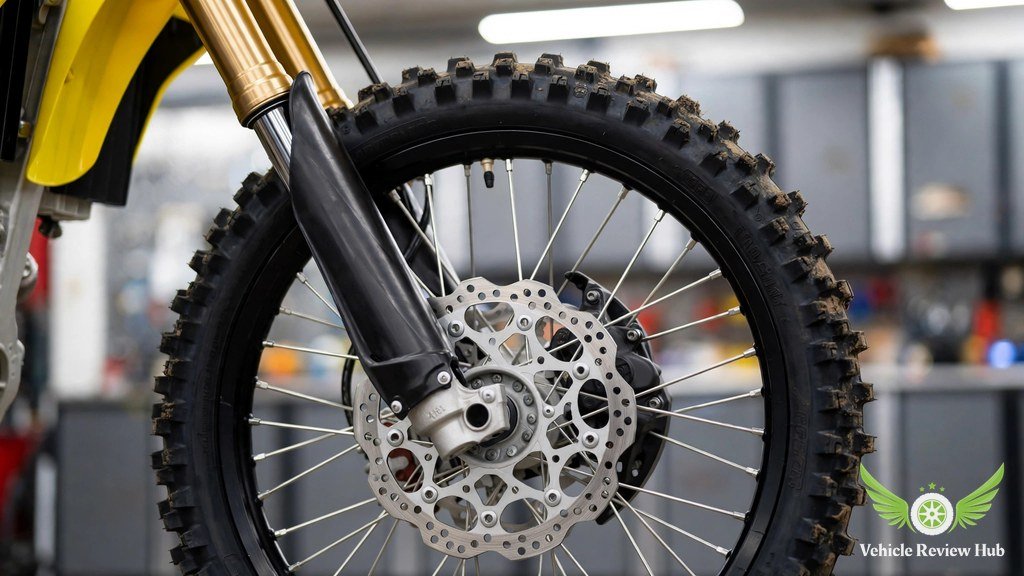
The wear items are the ones the rider touches every ride: the air filter, the tyres, the brakes and the suspension. None is a weakness on its own, but all are on short intervals, and neglecting the cheapest — the air filter — is the fastest way to create an expensive engine problem. This Suzuki RM-Z250 reliability section covers the pre-ride checks and the intervals that keep the chassis and brakes honest.
Air Filter Cleaned After Every Ride
The air cleaner is cleaned after every ride — every race, or every 2 hours, on the manual chart — and the element is replaced as necessary. The manual specifies MOTUL AIR FILTER CLEAN and OIL or equivalents, and warns not to twist or wring the element — wringing tears the foam. This is the most consequential routine care on the bike: a dirty or torn filter passes grit straight into the intake, past the valves and into the cylinder the 12-hour piston interval protects. Air-filter care is where Suzuki RM-Z250 reliability is won or lost. A used bike with a clean, freshly oiled filter and a spare in the toolbox was owned by someone who understood the schedule. A Motosport oil-change guide walks the same job step by step.
Valve Clearance Inspection at 12 Hours
Valve clearance is inspected every 12 hours, at the piston and ring service. A tight valve announces itself early — hard starting, lost power — and catching it at the check is a shim adjustment, while ignoring it is a burned valve. Suzuki RM-Z250 reliability here is a matter of showing up on schedule: the inspection interval is short, the symptom is obvious, and the cost of the check is small next to the cost of the repair. This guide prints no valve-clearance figures in millimetres — none were verified for the 2019-and-later bike, and the figures circulating online come from the 2007 manual — so check the service manual or a dealer for the current spec.
Suzuki RM-Z250 Maintenance and Ownership Costs
The RM-Z250 is the cheapest 250cc four-stroke motocross bike on list price — $8,499 plus $650 destination, $9,149 delivered for 2027 — and the most demanding to keep. That is the ownership equation: a low purchase price and a short, expensive service schedule. This Suzuki RM-Z250 reliability section prices what can be priced, says plainly where no verified price exists, and explains why used values are softer than the new price suggests.

Fuel, Routine Servicing, Tires and Replacement Parts
Fuel is premium unleaded, minimum 90 pump octane, maximum 10 percent ethanol, in a 6.3-litre tank — and use is measured in hours, not miles, so there is no fuel-economy figure to budget against. Routine servicing is the oil, filter, air-filter oil, chain lube and fork oil on the chart above, all jobs a home mechanic can handle. Those consumables are the day-to-day reality of Suzuki RM-Z250 reliability. This Suzuki RM-Z250 reliability guide will not invent a price for any of those jobs. No dealer service-labour price list and no verified parts prices were found — the costs are unquoted, and a buyer should get the 12-hour service quote from a dealer before buying.
| Cost item | Interval | What to budget |
|---|---|---|
| Engine oil (10W-40, JASO MA) | Every 6 hours | Routine consumable; home-mechanic job |
| Oil filter | Every 12 hours | Routine consumable; NOT every oil change |
| Piston and ring | Every 12 hours | The big scheduled cost — price unquoted, ask a dealer |
| Air filter (clean + oil) | After every ride | Cheapest care on the bike; element replaced as necessary |
| Front fork oil | Every 6 hours | Routine service — price unquoted, ask a dealer |
| Clutch plates | As necessary on inspection | The one real wear item — price unquoted, ask a dealer |
The figures in this Suzuki RM-Z250 reliability table are the manual’s intervals; “unquoted” means no verified dealer or parts price was found.
| Used model year | Average asking price | Source |
|---|---|---|
| 2019 | $4,300–$4,500 | 1000PS average market prices, Nov 2026 |
| 2023 | $5,800–$6,000 | 1000PS average market prices, Nov 2026 |
| 2014 | $3,600–$3,800 | 1000PS average market prices, Nov 2026 |
Motocross Action’s resale warning: it is hard to get good money for a used RM-Z250 when dealerships already mark new ones down below list price. The Suzuki RM-Z250 comparison puts the new-bike prices against the Honda, Yamaha and Kawasaki rivals.
No Recalls Found in CPSC or NHTSA
No recall exists for the RM-Z250 in the USA, on the records checked. The NHTSA recalls database was queried for model years 2019, 2021, 2023, 2024, 2025, 2026 and 2027, and every year returned zero results — Count 0, no recall records. A web search found no recall notice naming the RM-Z250 at the Consumer Product Safety Commission either. The honest framing: the CPSC search found no notice, which is not a verified CPSC database check, and the NHTSA system covers road vehicles, so off-road competition bikes are thinly covered — the zero is a verified NHTSA zero, not proof no RM-Z250 has ever had a defect. A clean recall record across seven model years is the strongest formal evidence this Suzuki RM-Z250 reliability guide can offer. The NHTSA query behind the claim is the NHTSA recalls API for the 2027 RM-Z250, which returns the zero-result record directly.
How to Keep a Suzuki RM-Z250 Reliable
Keeping an RM-Z250 reliable is not mysterious — it is the manual chart, followed on hours, with records. The bike rewards the owner who changes oil at 6 hours, replaces the piston at 12, cleans the filter after every ride and writes it all down. This Suzuki RM-Z250 reliability section is the short version: the habits that keep the test bikes running past 50 hours a year.

Preventive Maintenance, Records and Regular Inspections
Preventive maintenance on this bike means the chart, not a feeling. Oil at 6 hours, filter at 12, piston and ring at 12, valve inspection at 12, fork oil at 6, chain buffer and guide at 6, bolts retightened after every race, and the air filter cleaned after every ride. Records turn that schedule into resale value: a logbook with dates, hours and parts is the difference between a used bike that sells and one discounted for unknown history. The run-time indicator light is the hour counter — 0.2 seconds of light per hour, up to 100 hours — so a seller’s claimed hours can be checked against the light. Regular inspections are the every-race items: clutch feel, chain slack, brake lever firm, fork clickers where they were left, and bolts retightened. The DR-Z400S review shows the contrast: a street-legal Suzuki single serviced in miles, not hours.
Air-Filter Care Is the First Wear Tell
The air filter is the first wear tell on this bike, and the cheapest diagnostic a buyer has. A clean, freshly oiled filter with a spare in the toolbox means the owner followed the after-every-ride rule; a dry, grey, torn filter means the intake has been breathing dust, and the piston and valves have been paying for it. The manual’s rule is simple — wash, oil, never twist or wring the element — and the consequence of skipping it is the most expensive item on the chart: a piston and ring at 12 hours, sooner if grit got in. That is the whole of Suzuki RM-Z250 reliability in one habit: clean the filter, change the oil, replace the piston on time.
Suzuki RM-Z250 Reliability: Frequently Asked Questions
Direct answers to the questions riders ask about this Suzuki RM-Z250 reliability guide.
How reliable is the Suzuki RM-Z250?
Very reliable on the evidence that exists, with one honest caveat. Motocross Action has run 50-plus hours a year on its test bikes since 2019 with no serious issues, and calls the engine “a solid engine with a long lifespan.” The caveat is that this is one magazine’s test fleet — no owner survey, no high-mileage owner report — so this Suzuki RM-Z250 reliability guide presents the record as exactly that.
How often should I change the oil on an RM-Z250?
Every 6 hours, after the first initial break-in change. Use SAE 10W-40, API SG/SH/SJ/SL/SM/SN plus JASO MA, with ECSTAR recommended, and do not use “Energy Conserving” or “Resource Conserving” oils — the same oil serves engine, transmission and clutch. That 6-hour interval is the foundation of Suzuki RM-Z250 reliability.
Does the RM-Z250 need a new piston every 12 hours?
Yes, on the manual chart: the piston and the piston ring are replaced every 12 hours. That is a replacement interval, not an inspection, and it is the single most expensive routine item on the bike — the headline cost in this Suzuki RM-Z250 reliability guide. The valve clearance is inspected at the same 12-hour service, and the oil filter is replaced at 12 hours too.
How often does the oil filter need replacing?
Only every 12 hours — not at every oil change. Oil is replaced every 6 hours; the filter is replaced at the 12-hour service. A claim of “oil and filter every 6 hours” is wrong for this bike, and this Suzuki RM-Z250 reliability guide corrects it wherever it appears.
When should I check the valve clearances?
Every 12 hours, at the same service as the piston and ring replacement. A tight valve shows up early as hard starting and lost power, and catching it at the check is a shim adjustment rather than a repair. No verified clearance figures were located for the 2019-and-later bike — the figures online come from the 2007 manual — so check the service manual or a dealer. That 12-hour check is central to Suzuki RM-Z250 reliability.
What is the most common problem with the RM-Z250?
Clutch slip — the only documented common problem on the 2019-and-later bike. Motocross Action reported in both 2025 and 2026 that the cable clutch is easy to pull in but tends to slip after a few hard hours of riding. The clutch is a cable-operated wet multi-plate unit sharing oil with the engine, so oil choice affects clutch life, and the manual calls for an inspection after every race, with plates replaced as necessary. It is the one issue every Suzuki RM-Z250 reliability discussion must name.
Does the RM-Z250 stall?
There is no documented stalling pattern for the 2019-and-later bike; the anecdotes online are mostly about older carbureted bikes from 2004 to 2014. What matters is the consequence of any stall: kick start only, no electric start and no battery, so a stall mid-moto costs time while the rest of the class pushes a button. For Suzuki RM-Z250 reliability, the stall matters less than the kick-start restart it forces.
Are there any recalls on the RM-Z250?
No. The NHTSA recalls database was queried for model years 2019, 2021, 2023, 2024, 2025, 2026 and 2027, and every year returned zero results. No recall notice naming the RM-Z250 was found at the Consumer Product Safety Commission either. One honesty note: the NHTSA system covers road vehicles, so off-road competition bikes are thinly covered. A clean recall record is a real pillar of Suzuki RM-Z250 reliability.
How much does it cost to run an RM-Z250 for a season?
No verified figure exists, and this Suzuki RM-Z250 reliability guide does not invent one. No dealer labour price list and no verified parts prices were found for the 12-hour piston job, the valve check or a fork service. What is known: oil every 6 hours, a piston and ring every 12 hours, fork oil every 6 hours, and the chain buffer and guide every 6 hours — plus dealer discounts of $1,000 to $2,000 off the $8,499 list on a new bike. Get the 12-hour quote from a dealer before buying.
What oil should I use in an RM-Z250?
SAE 10W-40, API SG/SH/SJ/SL/SM/SN plus JASO MA, with ECSTAR recommended. Do not use “Energy Conserving” or “Resource Conserving” oils — they affect clutch life, because the same oil serves the engine, transmission and clutch. Fuel is premium unleaded, minimum 90 pump octane, maximum 10 percent ethanol. That oil choice is a small but real part of Suzuki RM-Z250 reliability.
How do I track service hours without an odometer?
With the run-time indicator light: 0.2 seconds of light per hour of engine run time, up to 100 hours, when it stays lit for 20 seconds. It is reset by connecting a 12-volt battery wire and holding the throttle fully open for 5 to 10 seconds. Keep a logbook alongside it — dates, hours and parts — because a written history is what makes a used RM-Z250 sell. Suzuki RM-Z250 reliability starts with honest hour tracking.
Is the RM-Z250 a good bike to buy used?
Yes, if the history can be shown. Check the hours on the indicator light, the oil-change history, and when the piston and ring were last replaced — then pull the air filter, because a clean filter is the first sign the owner followed the schedule. Watch the price: 2019 bikes average $4,300 to $4,500 and 2023 bikes $5,800 to $6,000, while dealer discounts of $1,000 to $2,000 off the new $8,499 list are common, so a used bike with unknown hours is often a worse buy than a discounted new one. That paper trail is what Suzuki RM-Z250 reliability looks like on a used bike.