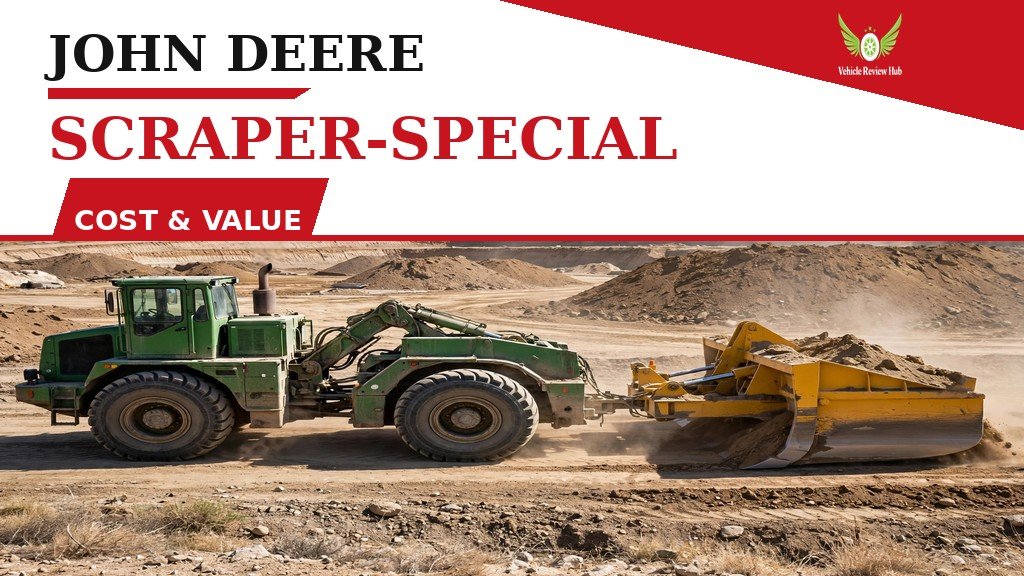
If you are pricing a big earthmoving tractor, the sticker price is only the first line of the bill. A used 9R-class machine can look like a bargain at $365,000 and still cost more per year than a $549,000 machine with half the hours, because of tires, tracks, fuel burn and downtime. John Deere Scraper-Special Tractors ownership cost is best understood as a whole package: the tractor, the scraper behind it, the fuel and service it drinks, the insurance that covers it on a jobsite, and the value left in it when you sell.
The short answer on John Deere Scraper-Special Tractors ownership cost: budget roughly $70,000 to $92,000 a year to run a used 500 to 640 hp scraper tractor at around 600 hours a year, before loan payments and depreciation. The rest of this guide breaks that number down and ends with a buying checklist you can take to the lot.
John Deere Scraper-Special Tractors Total Cost of Ownership
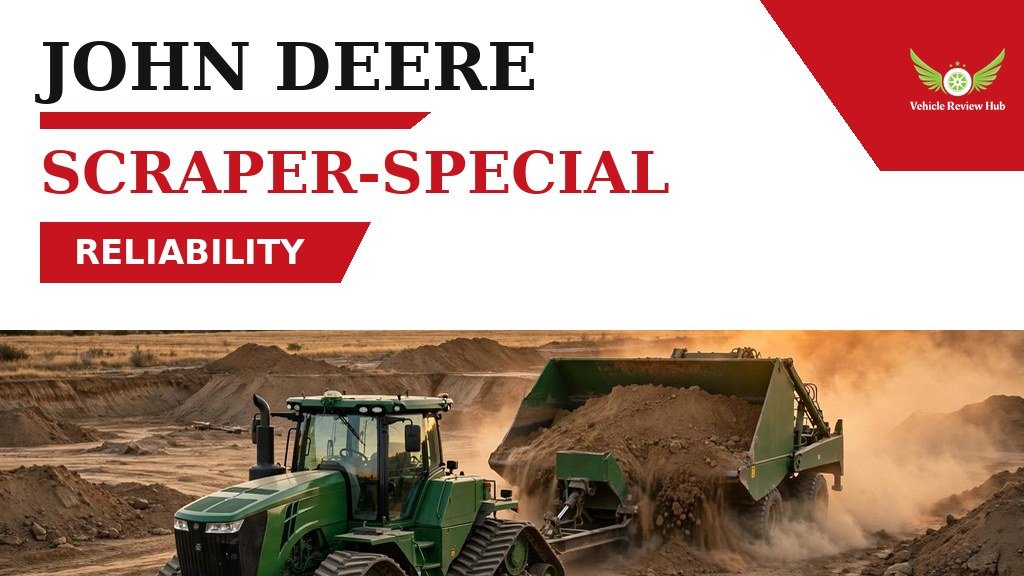
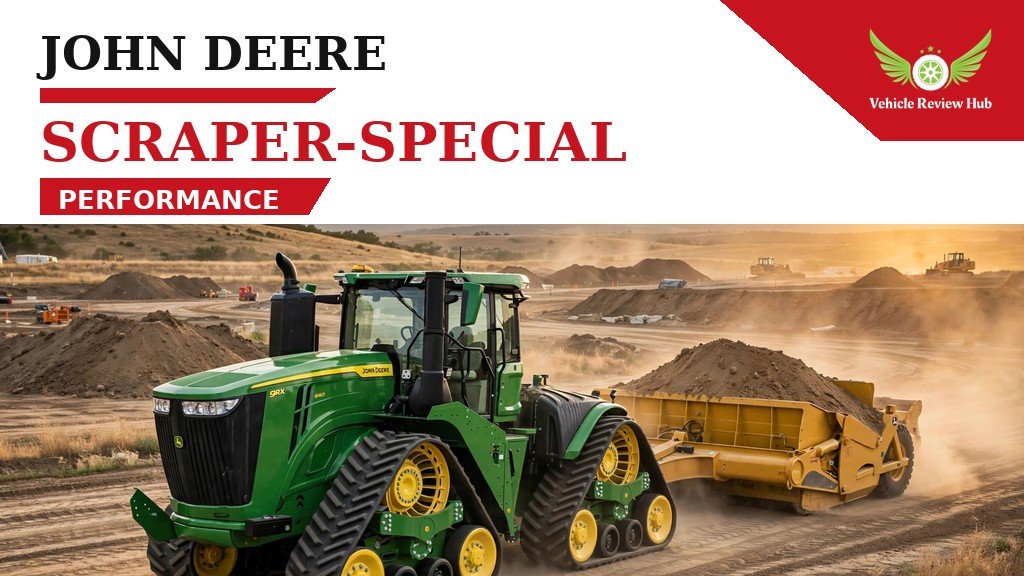
Scraper-Special is a configuration class, not one model, so John Deere Scraper-Special Tractors ownership cost always depends on which machine you buy. A wheeled 9R 490 and a four-track 9RX 590 share the Scraper Special name and drawbar hardware, but burn different fuel, wear different running gear, and sell to different buyers. Every figure in this John Deere Scraper-Special Tractors ownership cost guide is tied to a named model or labeled as a planning estimate.
Fuel, Routine Maintenance and Scraper Operating Expenses
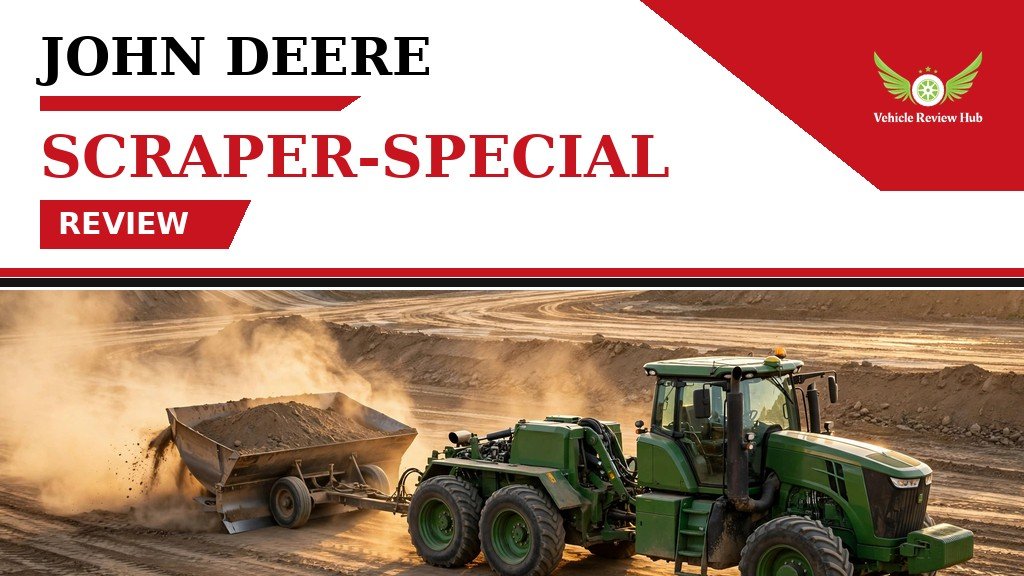
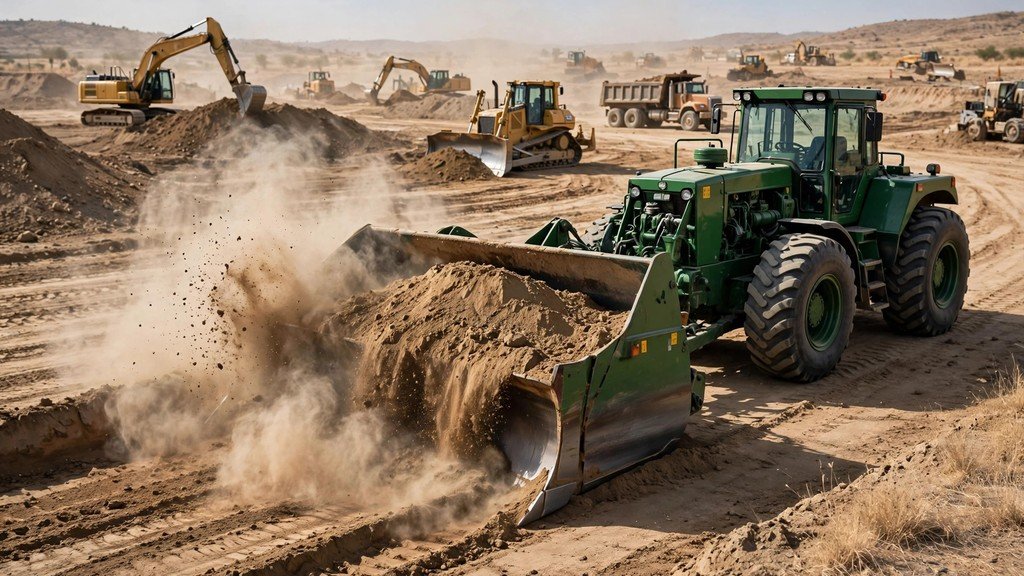
Fuel is the largest single running cost, and scraper work is heavy work. For John Deere Scraper-Special Tractors ownership cost planning, use 13 to 17 gallons per hour under load as a planning estimate for the 490 to 640 hp class. At 600 hours and 15 gallons per hour, that is 9,000 gallons a year.
Routine service is predictable and cheap compared with fuel. Dealer spec sheets across current 9R, 9RT and 9RX scraper models list 500-hour engine oil and 1,500-hour hydraulic intervals, with 6,000-hour coolant. A sensible John Deere Scraper-Special Tractors ownership cost allowance for service is $6,000 to $9,000 a year at 600 hours, covering filters, fluids, grease and diesel exhaust fluid. The scraper itself adds cutting edges, router bits, tires and hydraulic hoses to the same budget — wear items, not surprises, and pricing them into every job is how contractors keep John Deere Scraper-Special Tractors ownership cost under control.
Repairs, Downtime, Financing and Annual Ownership Budget
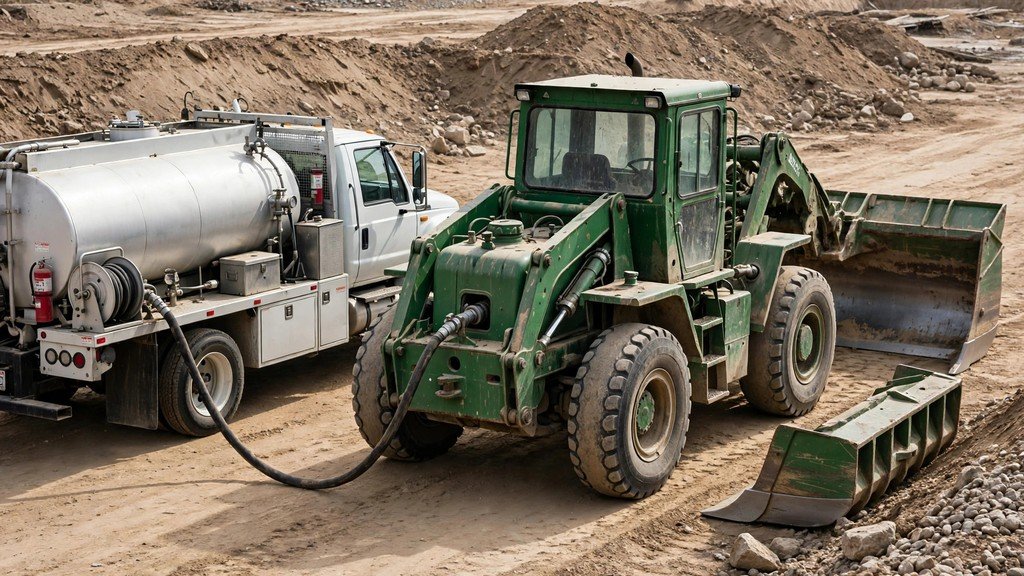
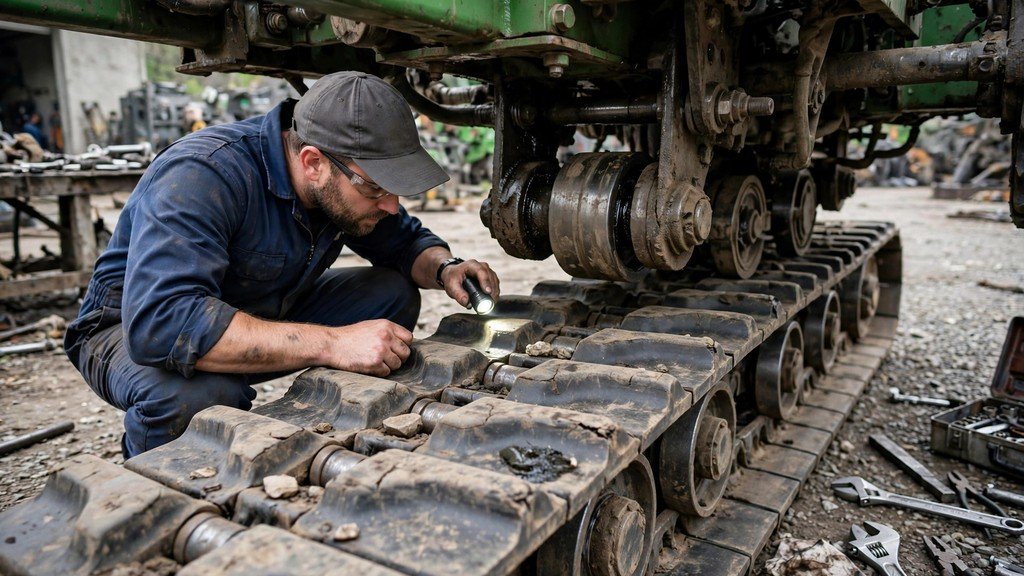
Unscheduled repairs are where cheap tractors get expensive. The items that fail on high-hour scraper tractors are well known: hydraulic hoses and couplers, drawbar pins and bushings, articulation bearings, cooling components, and on tracked machines, mid-rollers and idlers. For John Deere Scraper-Special Tractors ownership cost, a realistic repair reserve is $10,000 to $18,000 a year as a planning estimate, for machines over 4,000 hours or worked in rock. A pre-purchase inspection with fluid analysis is the cheapest money in this budget — it is exactly the paperwork a reconditioned 2018 9520RT listing carries, with third-party fluid analysis and a full PowerGard inspection report.
In John Deere Scraper-Special Tractors ownership cost, downtime costs more than parts. A scraper spread that stops for three days while a hydraulic pump is freighted in can lose a whole grading contract. When you compare John Deere Scraper-Special Tractors ownership cost against a self-propelled scraper fleet, remember Deere’s own claim for the system: about half the labor and a third of the investment of trucks and excavators, saving 30 to 50 cents per cubic yard. That claim is marketing, but the advantage is real: one operator, one engine, and pans you can add or drop. Financing is its own line: rates commonly start around 5 percent a year for strong buyers, according to equipment finance guides, so on a $400,000 machine, even a single point of rate is $4,000 a year in interest.
| Annual cost item | Planning estimate | Notes |
|---|---|---|
| Diesel fuel (600 hrs × 15 gph × $3.75/gal) | $33,750 | Largest single cost |
| Routine service (filters, fluids, grease, DEF) | $6,000 – $9,000 | 500-hr / 1,500-hr intervals |
| Wear reserve (tires or tracks, cutting edges, hoses) | $10,000 – $15,000 | Tracked at top of range |
| Unscheduled repairs | $10,000 – $18,000 | Higher over 4,000 hrs |
| Insurance (inland marine + liability) | $6,000 – $10,000 | 1–3% of value |
| Storage, transport and miscellaneous | $4,000 – $6,000 | Per-move pricing |
| Estimated annual operating total | $70,000 – $92,000 | Planning estimates |
Depreciation sits on top: a used 9R-class machine typically loses $25,000 to $40,000 a year early on, as a planning estimate. Add it in and you get an all-in John Deere Scraper-Special Tractors ownership cost of roughly $95,000 to $130,000 a year — the number to test against what the machine earns per cubic yard on your jobs.
John Deere Scraper-Special Tractors Insurance and Financial Planning
Insurance is a major line in John Deere Scraper-Special Tractors ownership cost: on a half-million-dollar machine that works on other people’s land, it is not optional in practice, even where no law requires it. Most contractors carry scheduled inland marine for the tractor and scrapers, plus liability and commercial auto for the truck and lowboy. John Deere Scraper-Special Tractors ownership cost planning should start with a broker who actually writes contractor equipment, because a farm policy written for field work may exclude commercial earthmoving entirely.
Equipment Insurance, Liability and Jobsite Risk
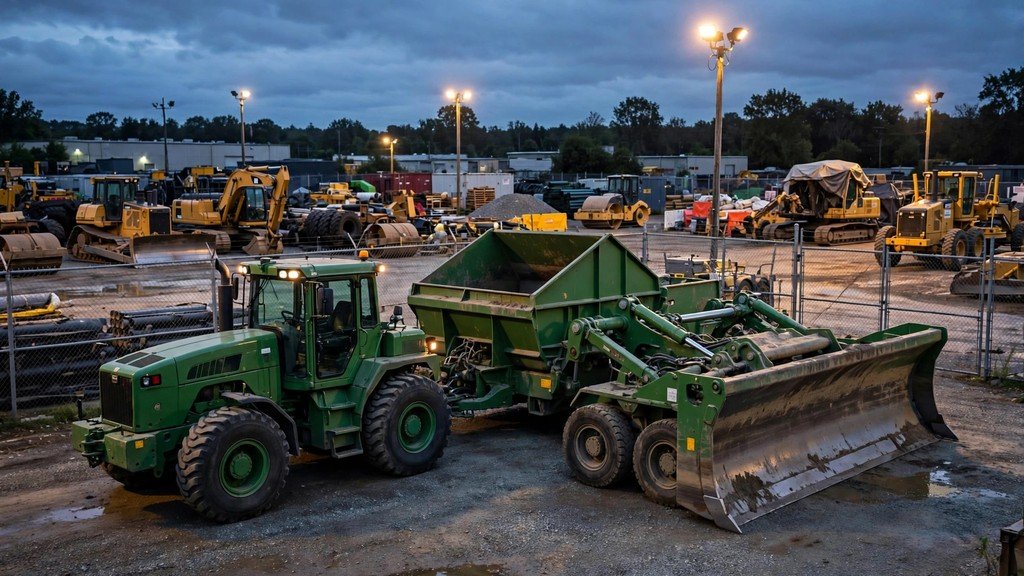
In John Deere Scraper-Special Tractors ownership cost terms, heavy equipment insurance typically runs 1 to 3 percent of the insured value per year, according to contractor insurance guides — so a $400,000 tractor with a $150,000 scraper spread behind it lands around $5,500 to $16,500 a year depending on deductibles, storage and loss history. Confirm coverage while working, in transit, and parked overnight — three different exposures.
Liability is the quieter risk. A scraper spread moving 20-plus cubic yards per pass can damage utilities, roads and neighboring property, and a tracked machine crossing a paved surface can crack it. When you weigh John Deere Scraper-Special Tractors ownership cost, treat a proper liability limit as part of the cost of doing the work, not as an optional extra.
Transport, Storage, Theft and Damage Protection
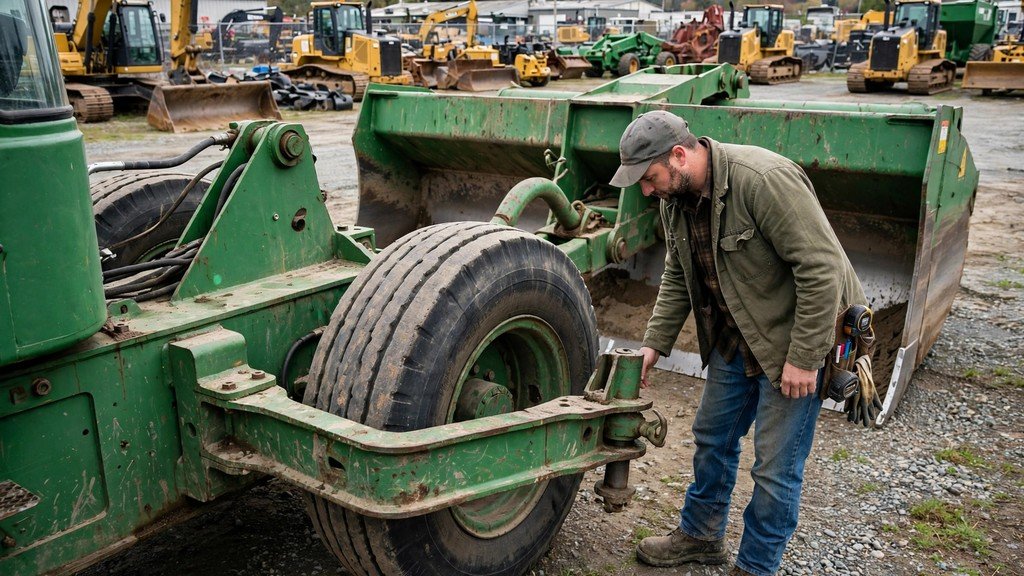
Moving a scraper tractor is a project of its own. A wheeled 9R 590 weighs about 45,980 lb before ballast and a 9RX 590 Scraper Special about 56,320 lb — over-width or over-weight in some states once the scraper is loaded alongside. For John Deere Scraper-Special Tractors ownership cost, budget lowboy moves at heavy-haul rates, permits and escorts quoted per move, Theft protection is mostly about friction: JDLink telematics helps recovery and can earn a premium credit, while a battery disconnect, a locked cab and hitch, and visible parking cost almost nothing.
John Deere Scraper-Special Tractors Depreciation and Resale Value
Resale is where John Deere Scraper-Special Tractors ownership cost surprises first-time buyers in a good way. Clean, documented machines hold value because contractors and leveling crews are always short of them, and a Scraper Special package cannot be cheaply added to a standard tractor later. The factory drawbar support, gudgeon, tow cable and brake provisions are paid for twice: once new, once used. John Deere Scraper-Special Tractors ownership cost over five years therefore depends heavily on buying the right configuration, not just the right horsepower.
How Model, Hours, Configuration and Equipment Affect Price
Hours move John Deere Scraper-Special Tractors ownership cost more than age does. The October 2026 listings below show the pattern clearly: a 2025 9R 590 with 353 hours listed at $549,000, a 2024 with 493 hours at $559,900, the same model-year machine with 909 hours reduced to $460,000, and a 2022 9R 590 with 2,033 hours at $365,000. Configuration moves price next — four-track 9RX machines command a premium, as the 2024 9RX 590 at $652,999 with 519 hours shows — and options (high-flow hydraulics, six SCVs, HydraCushion, guidance, Cat 5 drawbar) move it third. The sibling 9RX 590 and 9620RX ownership cost guides show the same pattern.
| Used machine (October 2026 listings) | Hours | Asking price |
|---|---|---|
| 2025 9R 590 (Van Wall, IA) | 353 | $549,000 |
| 2024 9R 590 (Van Wall, IA) | 493 | $559,900 |
| 2024 9R 590 (Van Wall, IA, reduced) | 909 | $460,000 |
| 2023 9R 590 Scraper Special, ex-rental (C L Boyd) | — | $532,137 |
| 2022 9R 590 (Greenway, AR) | 2,033 | $365,000 |
| 2024 9R 490 (Van Wall, IA, reduced) | 579 | $450,000 |
| 2023 9R 640 (Greenway, AR) | 629 | $574,900 |
| 2022 9RX 590 (Van Wall, IA) | 821 | $525,000 |
| 2024 9RX 590 (Papé, WA) | 519 | $652,999 |
| 2019 9520R (Brandt, AB) | — | $383,513 |
| 2018 9520RT, PowerGard reconditioned (Cross Implement, IL) | 2,556 | $299,900 |
| 2018 9520RX (Papé, OR) | 4,171 | $313,999 |
| Scraper pans: 2019 2112DC auction; 2015 2412DE; 2023 2010DE | — | $135,000; $85,000; $149,900 |
One warning: a price far below comparable machines usually means the seller knows something you do not — worn tracks, a tired pump, or a welded drawbar. Price the tractor and the pan together, and walk away from either half if it fails inspection.
Private Sale, Dealer Trade-In and Resale Preparation
For John Deere Scraper-Special Tractors ownership cost at sale time, dealer trade-in is the fastest exit and usually the cheapest one: a dealer must recondition the machine and sit on it until the next contractor comes along, so trade-in values typically run 10 to 20 percent below private-sale prices as a planning estimate. Private sale earns more and takes longer, and needs service records, fluid analysis and clear photos of the drawbar, tires or tracks, and hour meter.
Resale preparation pays in a specific order: service and document the machine, replace cheap wear items, and keep the Scraper Special paperwork. The original build sheet proving the Scraper Special package is worth real money at sale time.
Buying a John Deere Scraper-Special Tractor
In John Deere Scraper-Special Tractors ownership cost, buying well matters more than buying cheap, because the wrong configuration costs you every day it works. A wheeled 9R that cannot hold traction on wet clay, a 9RT without the high-flow hydraulics its pans need, or a 490 hp tractor on a 38-yard pan will all lose money regardless of purchase price. Work backward from the job: material, haul distance, cycle time, and what the ground does when it rains. The review guide and performance guide cover the range in full.
Choosing Between 9R, 9RT and 9RX Configurations
Wheeled 9R machines are the default choice for most contractors: they road between jobs at up to 25 mph, cost least to maintain, and ride best with HydraCushion suspension. Two-track 9RT machines trade road speed for flotation and traction in soft, wet ground, with 30-inch tracks and an AirCushion ride. Four-track 9RX machines are the premium option: the best traction, the lowest ground pressure, and the highest purchase price and track bill — all of which show up in John Deere Scraper-Special Tractors ownership cost. The maintenance guide details undercarriage costs.
Inside the wheeled range, the current JD14-powered lineup runs from the 9R 490 (490 hp rated, 539 hp maximum) through the 9R 540 (540/594 hp) and 9R 590 (590/649 hp) to the 9R 640 (640/691 hp), all with the e18 18-speed PowerShift and Efficiency Manager. The tracked 9RT range covers the 9RT 470 (470/517 hp), 9RT 520 (520/572 hp) and 9RT 570 (570/627 hp), and the 9RX range includes the 9RX 490 and 9RX 590 Scraper Special models, all documented on dealer spec pages. Older R-series scraper machines — the 9470R and 9520R on the 13.5L PowerTech and the 9570R and 9620R on the Cummins QSX15 — remain common on the used market; the 2015 lineup announcement confirms that engine split. Compare them in the 9570RX ownership cost guide and the 5GV ownership cost guide before you decide between generations. Whichever generation you buy, confirm the Scraper Special hardware on the build sheet: short drawbar support is standard, long support is optional on wheeled machines, and the heavy-duty gudgeon and tow cable are base equipment.
Matching Horsepower, Scraper Capacity and Job Requirements
The first rule of John Deere Scraper-Special Tractors ownership cost is simple: the pan must match the tractor, and the tractor must match the ground. Deere’s ejector scrapers run from the 1512E to the 2112E, and carry-all pans from the 1510C (15.0 cubic yards heaped) to the 2112C (21.5 cubic yards). A 490 to 520 hp tractor handles a single mid-size pan in most soils; a 590 to 640 hp tractor earns its keep on larger pans or tandem sets, and the newest direct-hitch pans — the 30-cubic-yard 3012 DH and 38-cubic-yard 3812 DH — are single-pan units for the high-horsepower 9R range. Buying a bigger pan than your tractor can load in a reasonable distance costs you cycle time on every pass.
The video below is Big Tractor Power’s look at the 2022 9RX line at the Farm Progress Show, including the 590 hp 9RX 590 — useful background on the tractor family before you start shopping used, and a reminder that John Deere Scraper-Special Tractors ownership cost starts with choosing the right machine for the pan.
Before you pay, run the full inspection from the maintenance guide: cold start, smoke color, hydraulic leaks under load, drawbar pins and bushings, articulation play, remaining tire or track life, and an hour-meter check against service records. Ask for fluid analysis, confirm there are no outstanding software updates or recalls. If anything on that list fails, price the repair into your offer or walk away; John Deere Scraper-Special Tractors ownership cost punishes rushed purchases more than patient ones.
Frequently Asked Questions About Scraper-Special Tractor Ownership
These are the questions contractors and first-time buyers ask most often about John Deere Scraper-Special Tractors ownership cost, answered directly from the listing prices, spec sheets and cost ranges in this guide.
How much does John Deere Scraper-Special Tractors ownership cost per year?
For a used 500 to 640 hp machine at around 600 hours a year, plan on roughly $70,000 to $92,000 in operating costs plus $25,000 to $40,000 in depreciation — about $95,000 to $130,000 all-in before loan payments. Fuel alone is roughly $34,000 of that total.
What does a used John Deere scraper-special tractor cost to buy?
October 2026 listings put clean low-hour 9R 590 machines at $549,000 to $559,900, one with around 900 hours at $460,000, and a 2022 with 2,033 hours at $365,000. Older 9520R and 9520RT machines from 2018–2019 listed between $299,900 and $383,513, while four-track 9RX 590 machines listed from $525,000 to $652,999. Used scraper pans listed from $85,000 to $149,900.
Which configuration holds its value best: 9R, 9RT or 9RX?
Four-track 9RX machines typically ask the highest used prices at similar hours — the 2024 9RX 590 at $652,999 shows that — but carry the highest track costs. Wheeled 9R machines are the easiest to resell because the buyer pool is widest. Two-track 9RT machines sit between the two and hold value best where soft-ground work is common. In all three cases, documented history and the factory package matter more than the badge.
How many hours is too many on a used scraper tractor?
There is no single cutoff. A 4,000-hour machine with dealer service records, fresh fluid analysis and a tight drawbar is a better buy than a 1,500-hour machine with no records and a welded drawbar. Above 4,000 hours, John Deere Scraper-Special Tractors ownership cost rises: budget at the top of the repair range and price a track or tire replacement into your offer.
What should I check on the drawbar before buying?
Check the drawbar support, pins and bushings for play, the hitch for cracks or welds, and whether the machine has short or long scraper drawbar support — short is standard, long is optional on wheeled machines. A bent tongue, a cracked support or a welded repair is a negotiating point at best and a walk-away sign at worst.
Do I need the Scraper Special package, or will a standard 9R work?
A standard 9R can pull a scraper with the right conversion kit, but the Scraper Special package adds the reinforced frames, axle supports, heavy-duty gudgeon, drawbar support, tow cable and brake provisions the work actually loads. Buying a genuine Scraper Special also protects resale, because contractors shopping for these machines filter for the package. If the build sheet does not show it, do not pay a Scraper Special price.
What does track replacement cost on a 9RT or 9RX?
Camso 6500 Scraper Series tracks are the severe-duty belts on current 9RX scraper models, with wider, shorter tread bars for traction and puncture resistance. Full track replacement on a four-track machine is a five-figure job, so measure remaining tread and get a dealer quote before you buy.
How much fuel does a scraper tractor burn per hour?
Use 13 to 17 gallons per hour under load as a planning estimate for the 490 to 640 hp class; the top of the range applies to heavy cuts, long hauls and soft ground. At 600 hours a year that is roughly 7,800 to 10,200 gallons, which is why cycle time and haul distance matter more to your fuel bill than the engine badge does.
How do I protect the resale value of my scraper tractor?
Keep dealer service records and fluid analysis, service on schedule, replace cheap wear items promptly, and keep the build sheet proving the Scraper Special package. Sell with clear photos of the drawbar, tires or tracks, and hour meter. Documented machines consistently ask — and get — more than identical machines without paperwork, which is the simplest way to keep John Deere Scraper-Special Tractors ownership cost down over the years you own the machine.
Price the whole machine, not just the asking price: compare listings on annual cost, inspect the drawbar and running gear, insure for the work it does, and keep the records that make it easy to sell. Do those four things and John Deere Scraper-Special Tractors ownership cost becomes a number you control.