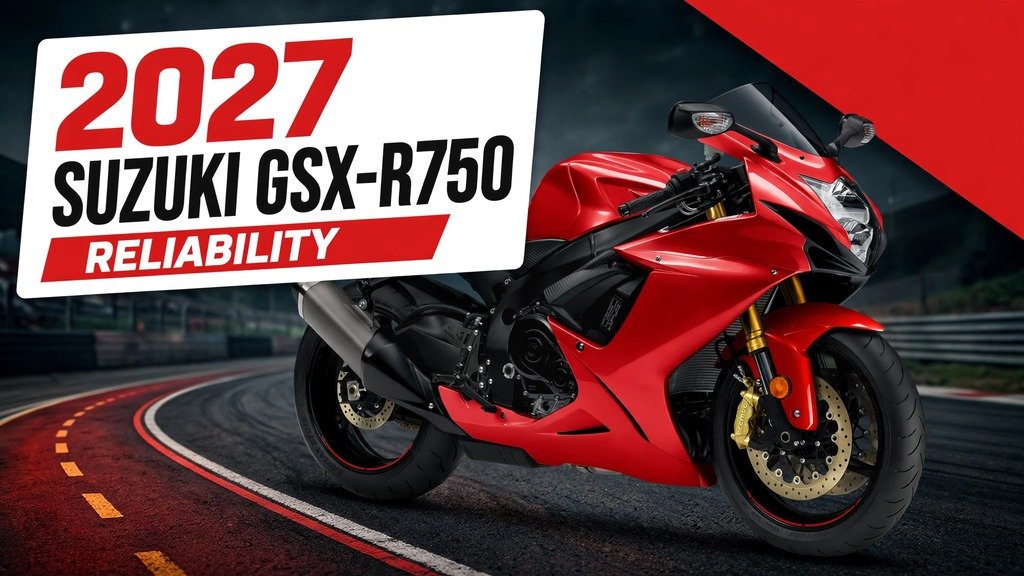
The short answer first: yes — the Suzuki GSX-R750 is a reliable motorcycle by every owner measure that exists. Twenty UK owners rate the 2011–2018 bike 4.8 out of 5 for reliability, MCN says there are “no prevailing problems”, and forums report 30,000 to 50,000 miles on routine maintenance only. This Suzuki GSX-R750 reliability guide covers what actually goes wrong — the regulator and stator on 2006–07 bikes, thin paint — the full service schedule, all six NHTSA recalls, and what the bike costs to own.
Suzuki GSX-R750 Reliability Overview
The Suzuki GSX-R750 reliability story is simple: a mechanically simple engine with no ride-by-wire, no traction control, no TFT dash and no ABS. The GSX-R600 review covers the same platform in the smaller bike, and the picture is the same: the weak points are wear items and one electrical fault on early bikes, not the engine. The 2027 Suzuki GSX-R750 costs $13,549 plus a $750 destination charge, $14,299 delivered, with a 12-month unlimited-mileage limited warranty.

MCN UK Owners: Reliability 4.8 From 20 Reviews
The strongest reliability evidence for the 750 comes from the people who own one. MCN’s 2011–2018 review page carries 20 owner reviews scoring the bike 4.8 out of 5 overall, with reliability and build quality at 4.8 out of 5, the engine at 4.8, ride quality and brakes at 4.7, and value against rivals at 4.5. MCN’s verdict is blunt: “In terms of reliability, GSX-Rs will never let you down… Build quality is very good, but the paint finish isn’t as deep as some machines and can stone chip easily.” One split matters: 4.8 is the owners’ reliability sub-score; MCN’s own reliability score is 4 out of 5, with an overall score of 5 out of 5. The 2000–2003 bike rates 3.8 out of 5 from 19 owners, but that belongs to that generation, not the 2011-on bike.
| Source | Figure | What it means |
|---|---|---|
| MCN, 20 UK owners | Reliability 4.8/5, overall 4.8/5 | Owners rate the bike near-perfect |
| MCN’s own score | Reliability 4/5, overall 5/5 | Slightly below the owners’ rating |
| MCN annual servicing cost | About £260 a year | UK owner-reported |
| UK MOT, first-time pass rate | 79.8% (99,227 tests) | Below the 84.9% class average |
| Long-mileage owner evidence | 30,000–50,000 miles | On routine maintenance only |
| Annual routine service (US) | $300–$400 a year | Owner-reported, not a Suzuki price |
How Mileage, Storage and Previous Care Affect Reliability
Mileage alone tells you little about a used 750 — care tells you almost everything. The weak points are all care-sensitive: thin paint that stone chips and corrodes if the bike lives outside, a chain that needs cleaning and lubrication every 600 miles, and brake fluid replaced every two years. A 30,000-mile bike with a service book beats a 5,000-mile bike that sat in a damp garage for five years. UK MOT data backs the care story up: the GSX-R750’s first-time pass rate is 79.8% across 99,227 tests, below the 84.9% class average, but it has risen 7.2 points since 2005, and low-mileage bikes pass at 85.3% while bikes over 50,000 miles pass at 71.6%. The MOT is a UK roadworthiness check, not a full mechanical inspection, so treat the pass rate as a rough guide to how well bikes are kept, not a verdict on the engine. The one thing mileage does predict is the valve check — due once, at 14,500 miles — so a bike nearing that mileage without a valve service in its history carries a $350–$600 bill, owner-reported pricing from TopSpeed forums.
Suzuki GSX-R750 Common Problems and Wear Items
The Suzuki GSX-R750 reliability record has exactly one failure pattern owners report again and again, and it is electrical, not mechanical: the regulator/rectifier and stator on 2006–07 bikes. Everything else is wear — paint, chains, brake pads, tyres — and the bike’s age shows in the finish before it shows in the engine. MCN’s verdict is that there are “no prevailing problems” beyond that, and the complaints are thin paint and stone chips, not breakdowns.
Regulator and Stator Failures Are Owner-Reported
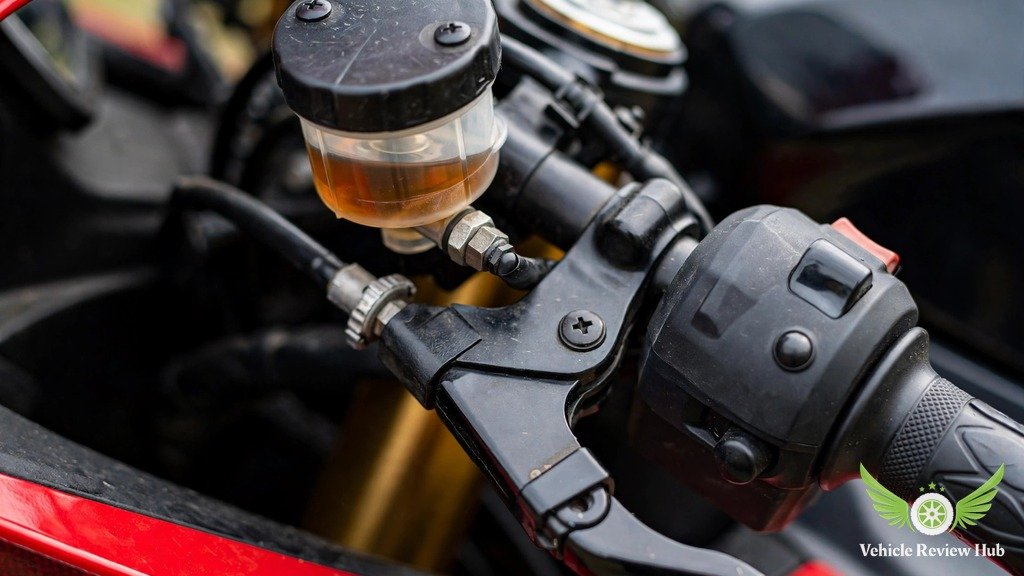
The regulator/rectifier — the part that turns the stator’s AC output into DC to charge the battery — fails on 2006 and 2007 GSX-R750s often enough that owners treat it as a known fault, and the evidence is in the NHTSA complaints file, not in a recall. The 2006 bike has 13 complaints, one of them electrical: a rectifier that burned up twice, taking the stator with it. The 2007 bike has 29 complaints, five or more electrical, including two fires — one at a stoplight that totaled the bike, one at 70 mph with the regulator sparking — and one owner reporting “3 TIMES THE REGULATOR HAS FRIED”. These are owner reports, and they must be labelled that way: no recall covers the 2006–07 regulator, and no Suzuki bulletin admits a pattern. A 2006–07 bike with a dead battery, dim lights or a hot-running regulator deserves a charging-system test before you buy, and a used 2008–2010 bike should have its regulator replaced under the recalls below. A failed regulator can also kill the stator, so a bike that has had one regulator replaced and still eats batteries needs the stator checked too.
2006-07 Bikes Fall Outside Both R/R Recalls
This is the trap that catches buyers: there are two regulator/rectifier recalls, and neither covers a 2006 or 2007 GSX-R750. Recall 11V108, from February 2011, covers 2008–2009 bikes built between July 2007 and September 2009 — the regulator’s circuit board was not glued down properly, the board deforms, and the battery drains or the bike stalls. Recall 16V018, from January 2016, covers 2008–2010 bikes and supersedes 11V108 — a bike already repaired under 11V108 must be repaired again under 16V018. A 2006 or 2007 bike with a fried regulator is an owner-paid repair, not a free recall fix, and one owner wrongly believed a 2007 GSX-R1000 recall covered his 750. When you check a used 750, check the VIN against both recalls, and if the bike is a 2006 or 2007, budget for a regulator as a wear item and test the charging system on the test ride.
Suzuki GSX-R750 Maintenance Schedule and Servicing
Suzuki GSX-R750 reliability rests on the owner’s manual chart, which is identical to the GSX-R600 reliability guide bike’s schedule with one difference — the spark plug. The columns are 600, 4,000, 7,500, 11,000 and 14,500 miles, or 1,000, 6,000, 12,000, 18,000 and 24,000 km, or 2, 12, 24, 36 and 48 months. The pattern is simple: oil at every interval, the oil filter at only two of them, and the valve check once, at the very end.
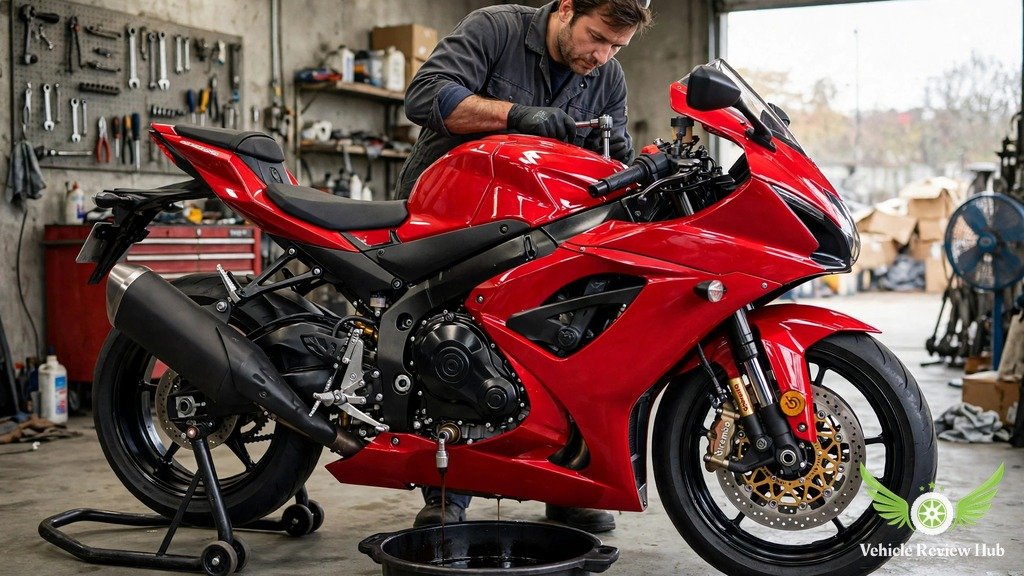
The video below is hitechMotorcycle’s track-day point-of-view ride with an oil-change theme — it shows why oil changes matter on a track-ridden GSX-R, but it is not a full service guide.
Oil at 600, 4,000, 7,500, 11,000 and 14,500
Engine oil is replaced at every interval — 600, 4,000, 7,500, 11,000 and 14,500 miles — with 2.5 litres (2.6 US quarts) with a filter change, 2.9 litres on overhaul, SAE 10W-40. The oil filter is replaced only at 600 miles and at 11,000 miles — the manual’s chart reads “R – – R –”, not the secondary FAQs that claim a filter every 4,000 miles. The drain plug torques to 28 N·m (20 lb-ft). The air cleaner is inspected at 4,000, 7,500 and 14,500 miles and replaced at 11,000. Coolant is replaced at 14,500 miles, or every four years for Suzuki Super Long Life Coolant (blue) — every two years for the normal green coolant. TopSpeed’s claim of an oil change every 3,750 miles is TopSpeed-sourced, not manual-confirmed — the manual’s chart is the authority.
| Item | 600 mi | 4,000 mi | 7,500 mi | 11,000 mi | 14,500 mi |
|---|---|---|---|---|---|
| Engine oil | R | R | R | R | R |
| Engine oil filter | R | – | – | R | – |
| Valve clearance | – | – | – | – | I |
| Spark plugs | – | I | R | I | R |
| Air cleaner | – | I | I | R | I |
| Coolant | – | – | – | – | Replace |
Valve Inspection at 14,500 Miles
The valve clearance is inspected once — at 14,500 miles, which is 24,000 km or 48 months — and at no other interval. That single number is the most misquoted figure in the 750’s service life. HotCars claims a 7,500-mile valve check; that is wrong, the manual says 14,500 miles. Bennetts says a “24,000-mile valve clearance check”; that is also wrong — it is 24,000 kilometres, which is 14,500 miles, and the two numbers are not the same. A valve check is the most expensive routine job on the bike, owner-reported at $350–$600 from TopSpeed forums, because the fairing, tank and cam cover all come off and the shims are measured one by one. It is also the job most often skipped — tight valves burn, and a burned valve is an engine-out repair. When you buy a used 750 past 14,500 miles, ask for the valve-service receipt; if there is none, budget for the job and treat it as a negotiating point, not a reason to walk away.
Suzuki GSX-R750 Tires, Brakes and Suspension Maintenance
The running gear is where the 750’s age is an advantage: fully adjustable Showa suspension at both ends, Brembo monobloc front brakes, and standard tyre sizes that every shop stocks. Nothing here needs a dealer computer — it needs a torque wrench, fresh fluid and a chain gauge.

Plug Is NGK CR9EIA-9, From the 750 Sheet
The spark plug is the one place where Suzuki’s own documents disagree, and the honest answer is to print both. The 2027 brochure lists NGK CR9EIA-9 or DENSO IU27D — the “750 sheet” the heading names — and the plugs are inspected at 4,000 and 11,000 miles and replaced at 7,500 and 14,500 miles. But owner’s-manual-derived schedules print NGK CR9E instead, following the older service-manual tradition. This is a genuine split between Suzuki’s own documents, not an error by either side, so this guide presents both and corrects neither. What must not be done is borrowing the 600’s plug gap for the 750 — the 750’s plug gap is not verified anywhere. Buy the plug the brochure names and change it on the chart’s schedule.
Brake Fluid, Coolant and Chain Care on Schedule
Brake fluid is inspected at every interval and replaced every two years — DOT4 from a sealed container — and the brake hoses are inspected at every interval and replaced every four years. That matters more on this bike than on most, because the 750 is the only bike in its 2011 shootout trio with rubber brake lines instead of steel-braided ones, and the 2025 Next Gen testers found the lever going mushy with fade on track. Fresh fluid and steel-braided lines are the first two upgrades most owners make: old rubber lines swell, and swollen lines give a soft lever exactly when you need a firm one. The front brakes are fully floating 310 mm twin discs with radial-mount four-piston Brembo Monobloc calipers, and the rear is a Nissin single-piston caliper — MCN lists the rear disc at 220 mm, a secondary figure. The drive chain is an RK525ROZ5Y with 116 links, cleaned and lubricated every 600 miles, with 20 to 30 mm of slack at its loosest point, and the chassis bolts and nuts are tightened at every interval. The suspension is fully adjustable at both ends — Showa Big Piston Fork up front, a single Showa shock with a remote reservoir at the rear — and the 2025 testers found the 750 the most firmly sprung and damped bike in the test, so a harsh-feeling bike probably needs a set-up for the rider’s weight, not new parts. Tyres are 120/70ZR17 front and 180/55ZR17 rear, tubeless, on 17-inch three-spoke cast aluminium wheels.
Suzuki GSX-R750 Maintenance and Ownership Costs
Owning a 750 is cheap by supersport standards, because there is nothing electronic to service and nothing exotic to replace. The costs are fuel, routine servicing, tyres and the occasional wear part — and the biggest single bill, the valve check, comes once at 14,500 miles. The GSX-R600 performance guide works through the dyno numbers for the smaller bike; what matters here is what the 750 costs to keep on the road, and the answer is less than any of its modern rivals. Cycle World’s most recent dyno run measured 121.5 hp at the rear wheel on a 2022-model bike, which is why the 750 still earns its keep.

Fuel, Routine Servicing, Tires and Replacement Parts
Fuel is the 750’s smallest honest cost and its least-tested number. Suzuki publishes no MPG figure, and motorcycles are exempt from EPA fuel-economy testing, so every number is third-party: MCN’s long-term test averaged 39 mpg Imperial — about 32.5 US mpg — over 10,000-plus miles, Ultimate MotorCycling averaged about 40 mpg, and Bennetts lists 41 mpg. With the 4.5-gallon tank (4.2 gallons on the California model), 40 mpg works out to about 180 miles between fill-ups — derived arithmetic, not a tested figure. Routine servicing runs $300–$400 a year for standard service, owner-reported, and the valve check adds $350–$600 once at 14,500 miles. Tyres are the regular consumable — a 120/70 front and 180/55 rear in standard supersport sizes — and the chain is an RK525ROZ5Y with 116 links, replaced as a kit with the sprockets when it stretches past its slack limit. A regulator/rectifier for a 2006–07 bike is an owner-paid wear item, and the brake master cylinder on a 2004–2013 bike is a free recall replacement if the VIN was never checked. Sixteen years of production means every part is available.
Six Recalls Total: One the 600 Never Had
Six NHTSA campaigns name the GSX-R750, covering model years 1996 to 2014, with none since 2015. That count rests on NHTSA’s flat-file data, not the API alone — the live NHTSA API returns only five campaigns because it misses the 1999 campaign entirely. Five of the six also cover other Suzuki models; the sixth, the 2014 drive-chain adjuster campaign, is the one the 600 never had. The campaign that matters most to a buyer is the 2013 front brake master cylinder recall, 13V449: 210,228 bikes in total, of which 55,572 were GSX-R750s, with the per-year counts summing exactly — 2004: 5,872; 2005: 8,266; 2006: 9,959; 2007: 13,768; 2008: 5,411; 2009: 3,550; 2010: 22; 2011: 4,556; 2012: 2,122; 2013: 2,046. A used 2004–2013 bike must have its VIN checked for the free master-cylinder replacement. The full list is in the table below, and the recall history is also on NHTSA’s recalls page.
| Campaign | Model years | Defect | Units affected |
|---|---|---|---|
| 98V133000 (Jun 1998) | 1996–1997 | Fuel-tank gasket leak, fire risk | 17,007 (all models) |
| 99V132000 (May 1999) | 1999 (unconfirmed) | Cam chain tensioner, inconsistent tension | 7,828 (600 + 750) |
| 11V108000 (Feb 2011) | 2008–2009 | Regulator board deforms, battery drain | 73,426 (12 models) |
| 13V449000 (Oct 2013) | 2004–2013 | Master cylinder corrosion, lost brake pressure | 210,228 total; 55,572 GSX-R750s |
| 14V629000 (Oct 2014) | 2011–2014 | Chain adjuster loosens, wheel misalignment | 23,073 (750 + 1000) |
| 16V018000 (Jan 2016) | 2008–2010 | Regulator charge failure, stall | 68,344 (many models) |
How to Keep a Suzuki GSX-R750 Reliable
Suzuki GSX-R750 reliability is mostly a matter of doing the simple things on time. The bike rewards routine care and punishes neglect in the same places every old Suzuki does. The GSX-R600 comparison shows the same trade-offs at the smaller bike’s price; the 750’s ownership story is the same, with one extra recall to check and one extra spark-plug part number to know.
Preventive Maintenance, Records and Regular Inspections
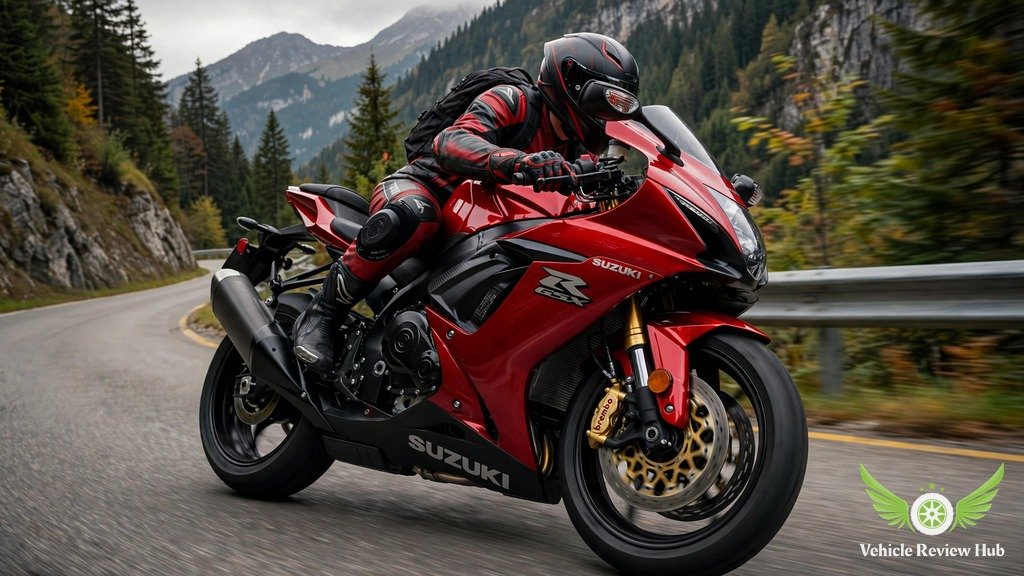
The preventive routine is short: change the oil at every interval in the chart, change the filter at 600 and 11,000 miles only, check the valve clearance once at 14,500 miles, replace the brake fluid every two years and the coolant every four, clean and lubricate the chain every 600 miles and keep its slack between 20 and 30 mm, and tighten the chassis bolts at every interval. Keep the receipts — a used 750 with a service book sells faster and for more money than one without. Inspect the bike the same way every time: paint for stone chips and corrosion, the regulator area for heat damage on a 2006–07 bike, the chain for stretch, the tyres for age as well as tread, and the brake lever for the mushy feel of old fluid or tired rubber lines. A bike with its two regulator recalls done, its master cylinder replaced under 13V449 and its chain adjuster replaced under 14V629 has every known factory fix already applied — and on a 2011–2014 bike, all three can apply at once.
Chain Adjuster Recall 14V-629: 2011-2014 Bikes
Recall 14V629000, from October 2014, is the one the GSX-R600 never had — and it is the reason this Suzuki GSX-R750 reliability guide exists as a separate document from the 600’s. It covers 2011–2014 GSX-R750s (and 2009–2014 GSX-R1000s only): the left-side drive-chain adjuster can loosen, the rear wheel goes out of alignment, and the chain can derail. The campaign covered 23,073 bikes, and the remedy is a new left-side chain adjuster and axle nut, about thirty minutes of work, free at a Suzuki dealer under campaigns 2A40–2A43. The recall began on 17 October 2014. A used 2011–2014 bike must have its VIN checked for this recall alongside the master-cylinder recall — a bike that missed one probably missed the other.
Suzuki GSX-R750 Reliability: Frequently Asked Questions
Direct answers to the questions riders ask about Suzuki GSX-R750 reliability.
Is the Suzuki GSX-R750 reliable?
Yes. Twenty UK owners rate the 2011–2018 bike 4.8 out of 5 for reliability, MCN says there are “no prevailing problems”, and forums report 30,000 to 50,000 miles on routine maintenance only.
How often does the GSX-R750 need an oil change?
At every service interval — 600, 4,000, 7,500, 11,000 and 14,500 miles — with 2.5 litres (2.6 US quarts) with a filter change. The oil filter is replaced only at 600 and 11,000 miles.
When does the GSX-R750 need a valve check?
Once, at 14,500 miles (24,000 km, 48 months). HotCars’ claim of a 7,500-mile valve check is wrong, and Bennetts’ “24,000-mile” figure confuses kilometres with miles.
What spark plug does the GSX-R750 use?
Suzuki’s own documents disagree: the 2027 brochure lists NGK CR9EIA-9 or DENSO IU27D, while owner’s-manual-derived schedules print NGK CR9E. Both fit. The 750’s plug gap is not verified — do not use the 600’s figure.
How many recalls has the GSX-R750 had?
Six NHTSA campaigns, covering model years 1996 to 2014, with none since 2015. The count rests on NHTSA flat-file data, because the NHTSA API misses the 1999 campaign entirely — and that campaign’s GSX-R750 coverage is unconfirmed.
Does the 2006–2007 GSX-R750 have a regulator recall?
No. Both regulator/rectifier recalls cover 2008-on bikes only: 11V108 covers 2008–2009, and 16V018 covers 2008–2010. A 2006–07 bike with a failed regulator is an owner-paid repair.
What is the chain adjuster recall 14V-629?
Recall 14V629000 (October 2014) covers 2011–2014 GSX-R750s: the left-side drive-chain adjuster can loosen and the rear wheel can go out of alignment. The free remedy is a new adjuster and axle nut, about thirty minutes.
How much does it cost to maintain a GSX-R750?
About $300–$400 a year for routine servicing, owner-reported, plus $350–$600 once for the 14,500-mile valve check. Fuel runs about 40 mpg, giving roughly 180 miles from the tank.
How many miles will a GSX-R750 last?
Forums report 30,000 to 50,000 miles on routine maintenance only, and well-maintained examples are reported at 50,000 to 75,000 miles without major internal work.
Does the GSX-R750 have ABS?
No. The GSX-R750 has no ABS in any year, not even as an option. It also has no traction control, no quickshifter, no IMU and no TFT display; its only rider aids are the two S-DMS engine maps and a slipper clutch.
What is the warranty on a 2027 GSX-R750?
A 12-month unlimited-mileage limited warranty, per Suzuki’s 2027 brochure, with Suzuki Extended Protection as an extra-cost option. MCN’s “two year unlimited mileage” is the UK warranty, not the US one.
What should I check before buying a used GSX-R750?
Check the VIN for all six recalls — especially the free master-cylinder replacement on 2004–2013 bikes and the chain-adjuster recall on 2011–2014 bikes. Ask for the 14,500-mile valve-service receipt, test the charging system on a 2006–07 bike, and look for stone chips and corrosion in the paint.