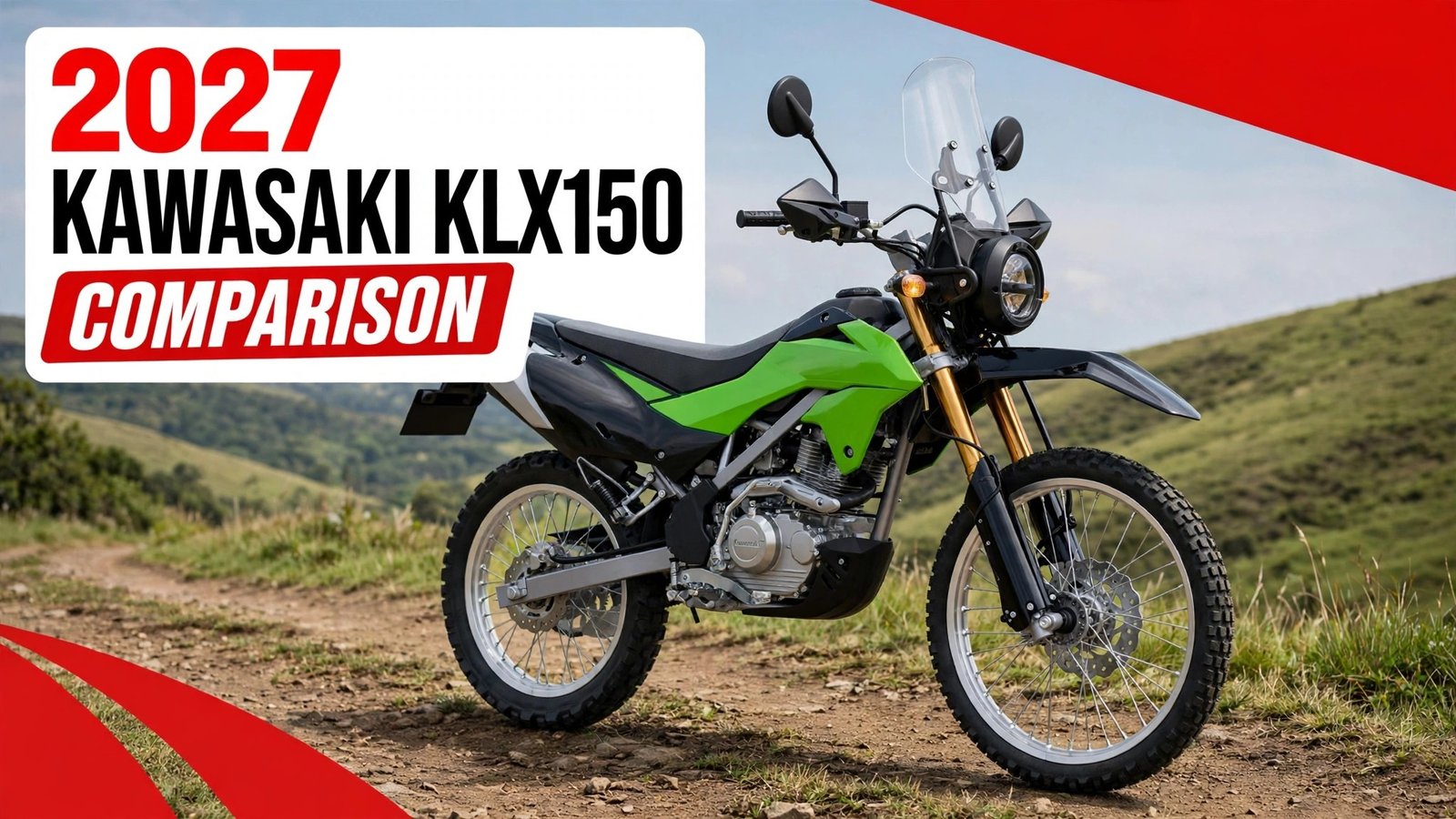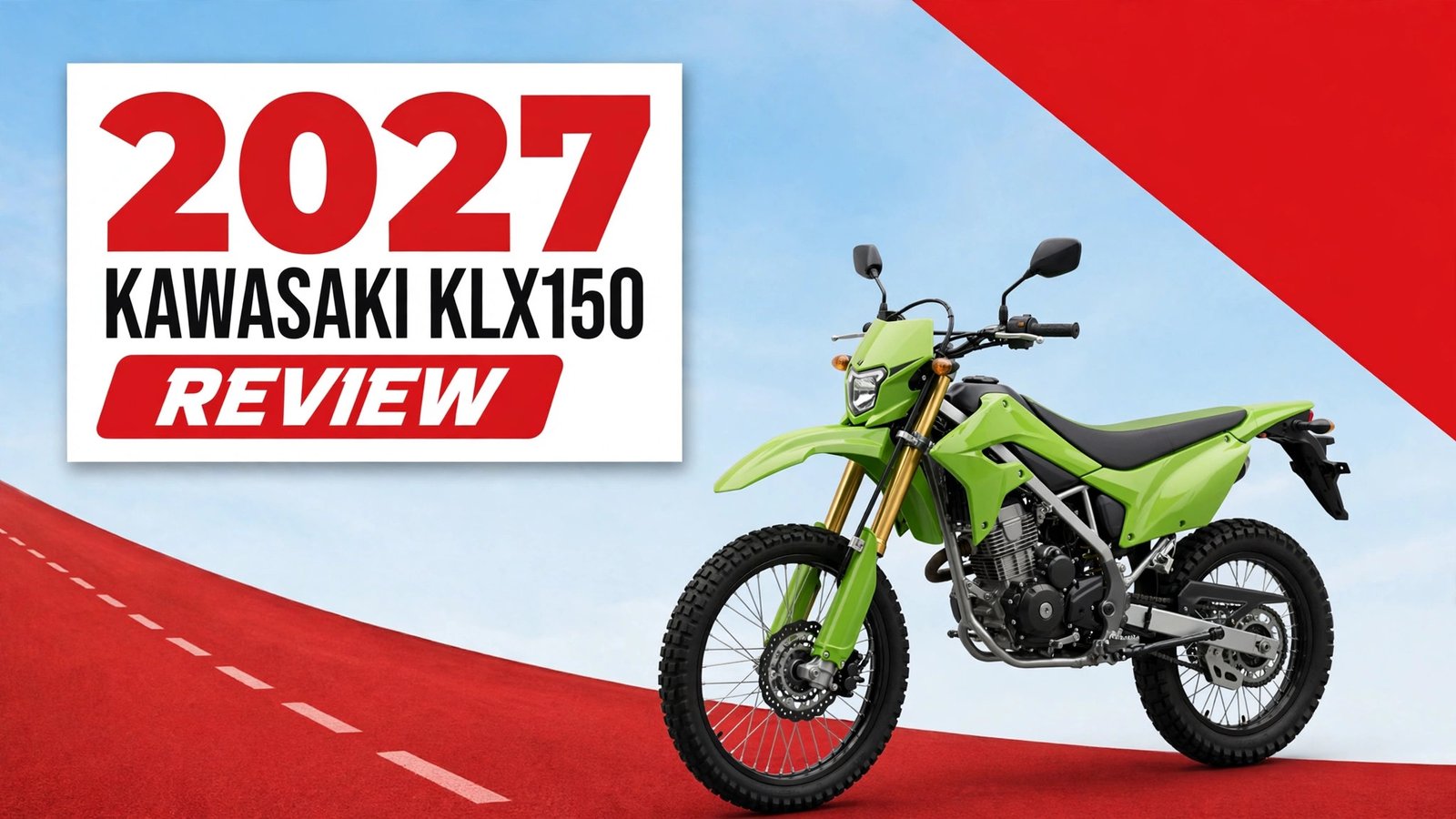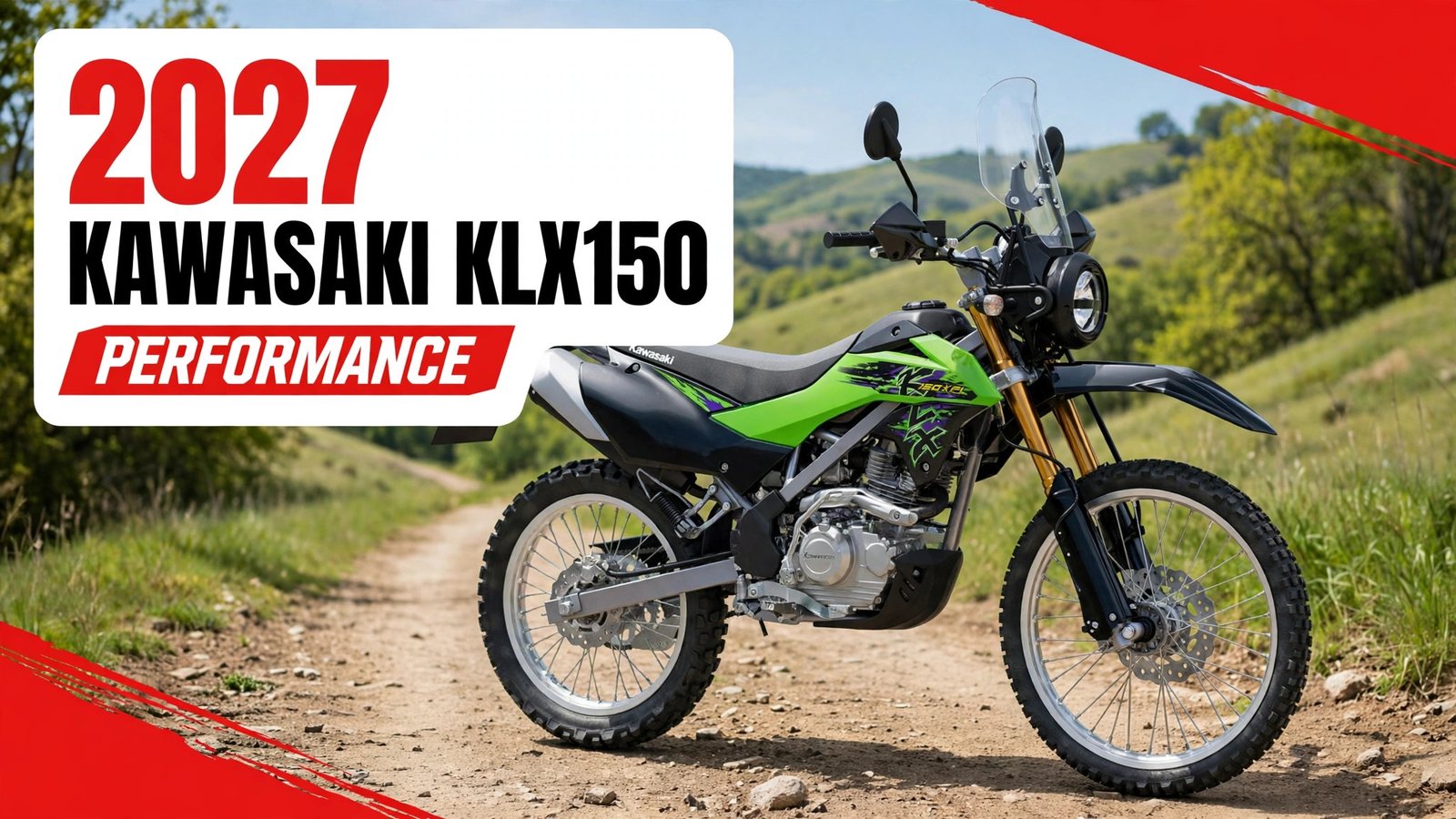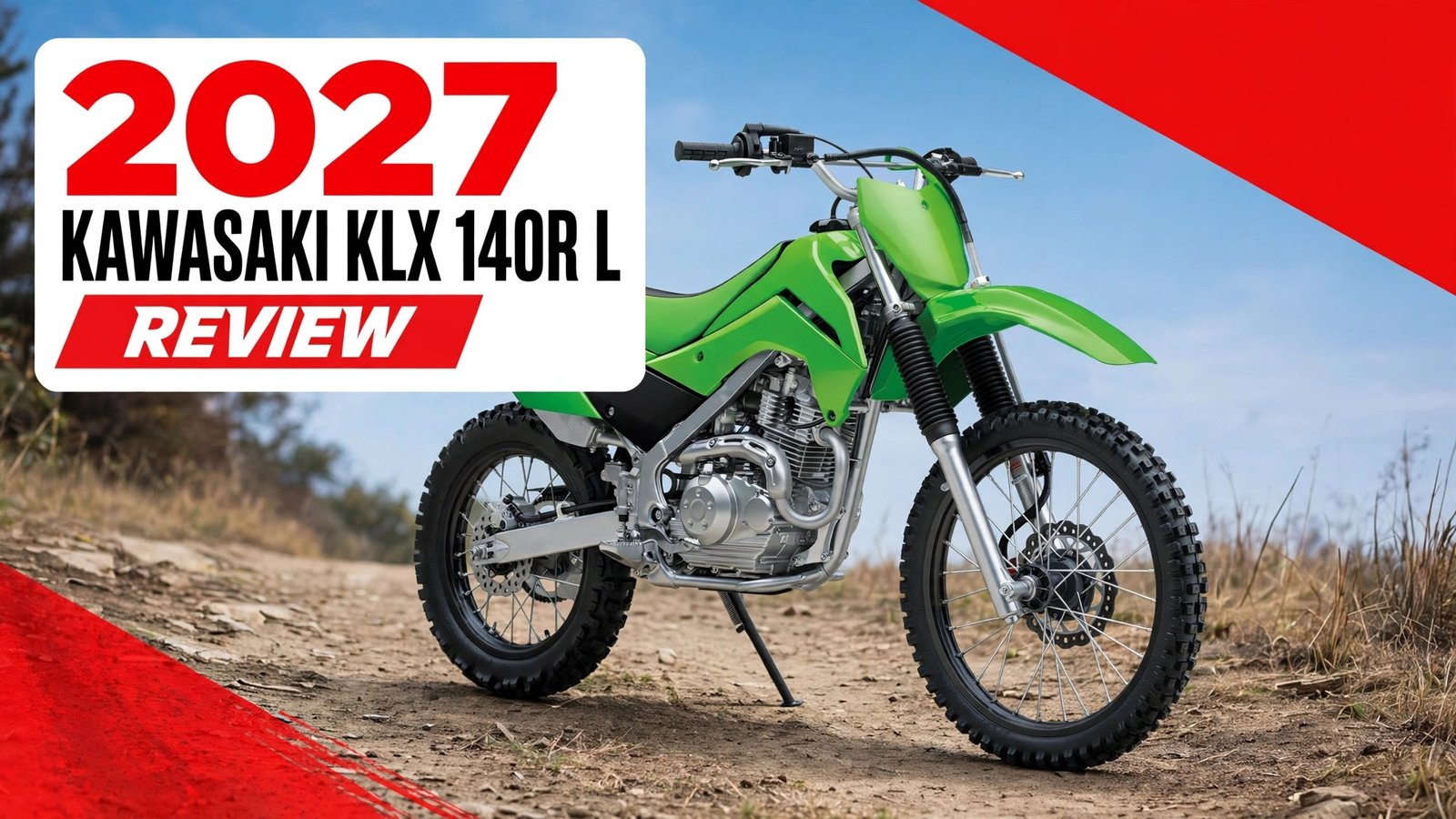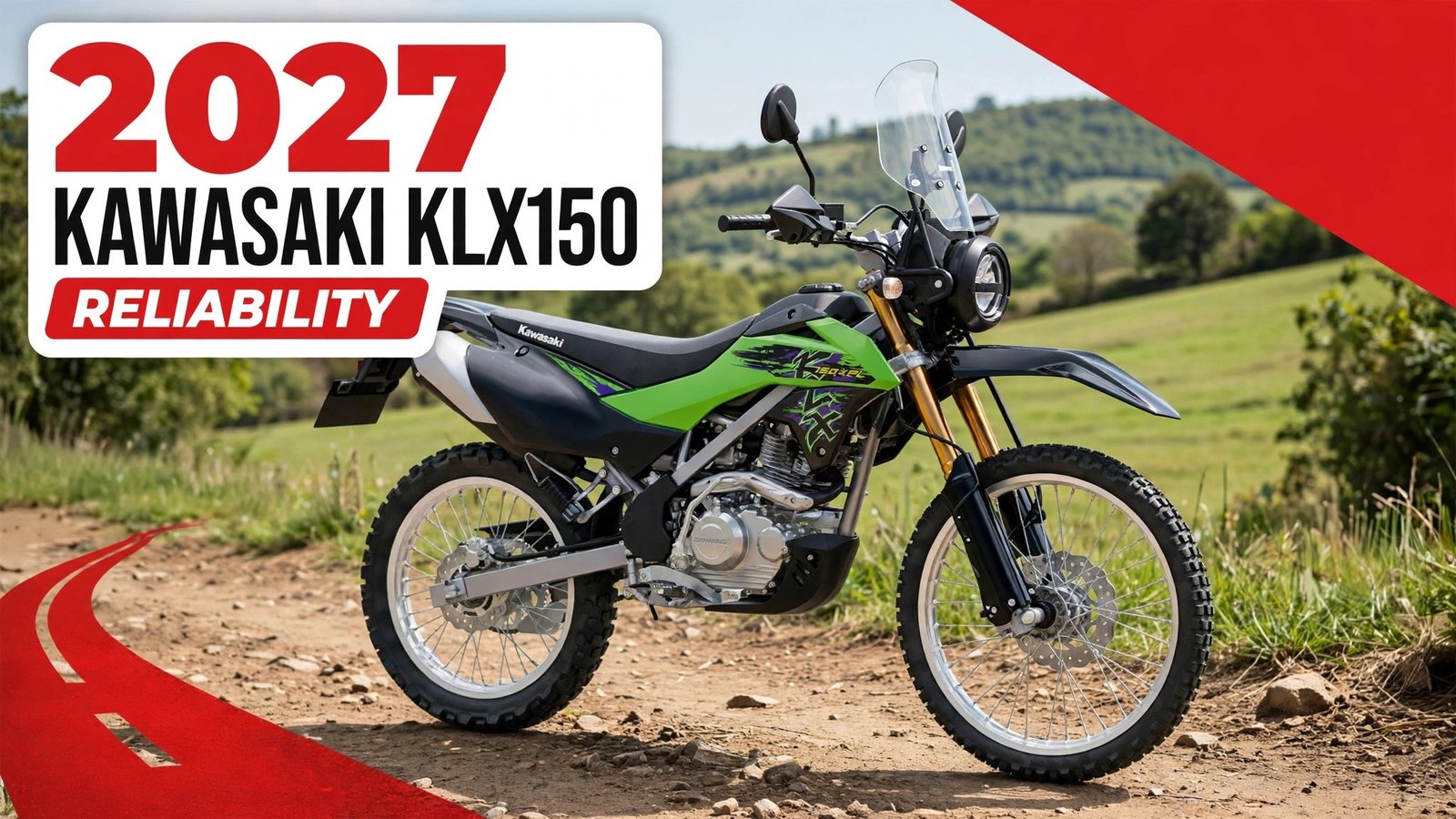
The Kawasaki KLX150 is a simple bike, and that simplicity is the heart of this Kawasaki KLX150 reliability guide. The Indonesian-built dual sport was never sold in the United States, so no American recall record or long-term test exists. This Kawasaki KLX150 reliability guide reports the findings plainly: no recall was found naming the KLX150 in any market searched, no signature defect is documented, and the full factory service schedule could not be found in citable form.
This Kawasaki KLX150 reliability guide labels every figure by its source: factory figures where they exist, owner practice where they do not, and generic class guidance where that is all there is. Kawasaki KLX150 reliability starts from a simple platform: a 144cc air-cooled single with a Keihin NCV24 carburettor, a five-speed manual gearbox, and electric and kick starting, in production in Indonesia since 2009.
Kawasaki KLX150 Reliability Overview
The overview of Kawasaki KLX150 reliability starts with the search results, because they are the strongest evidence this guide can offer: across Indonesia, the Philippines, Bangladesh and Australia, and in the American NHTSA database, no recall naming the KLX150 turned up.
No Recalls Found in Any Market
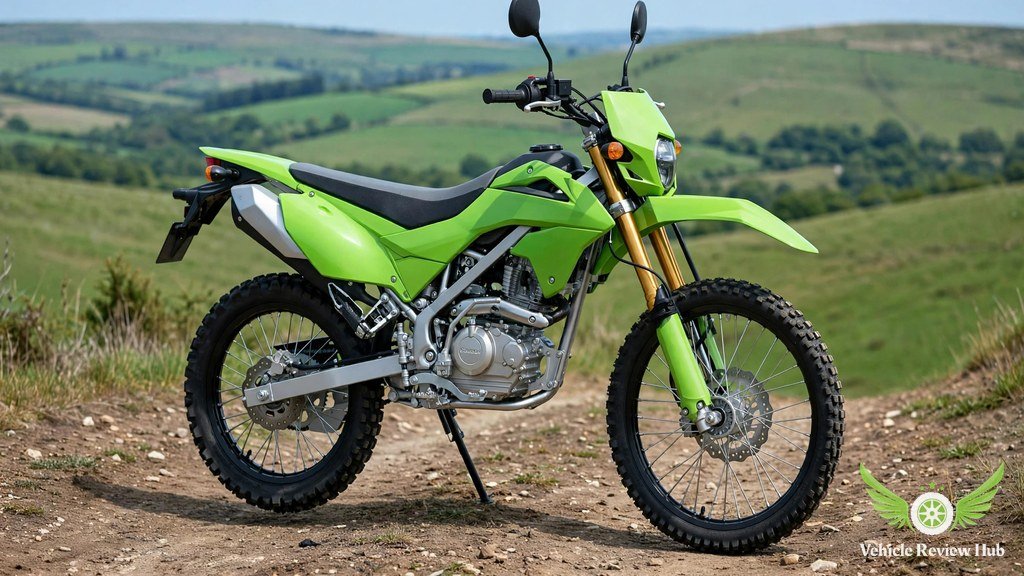
No recall naming the KLX150 was found in any market searched, including the NHTSA database, where the model returns zero records for 2024 and 2026. That zero is a search result, not proof on its own: NHTSA covers US-market vehicles, and the 150 was never sold in the United States, so a zero there is expected rather than surprising. The same search was run against the control case, a 2024 Ninja 500, which does return a recall record, so the search itself works. No recall was found in Indonesian, Philippine, Bangladeshi or Australian sources either, and the American KLX140R’s recall belongs to a different bike. The Kawasaki USA KLX lineup page does not list the KLX150 at all.
| Market searched | Result |
|---|---|
| NHTSA database (USA) | Zero records for 2024 and 2026 |
| Indonesia | No recall found |
| Philippines | No recall found |
| Bangladesh | No recall found |
| Australia | No recall found |
Notes: the figures in this Kawasaki KLX150 reliability table are search results, not proof of a clean record. The control search on a 2024 Ninja 500 returned a recall record, which shows the search itself works.
How Mileage, Storage and Previous Care Affect Reliability
A used KLX150 is only as reliable as its previous owner made it. No odometer-based reliability data exists for the bike, so there is no mileage figure at which problems start. What matters instead is care: chain and sprocket wear, air-filter sealing, carburettor cleanliness, and crash damage tell a buyer more than the odometer does. A low-mileage bike that sat for a year with old fuel in the carburettor can be a worse buy than a higher-mileage bike that was ridden and serviced regularly. Storage matters too, since a bike kept outside in tropical rain ages faster than one kept under cover. A buyer should check the chain, the air box, the carburettor, and the frame for crash marks before the odometer.
Kawasaki KLX150 Common Problems and Wear Items
The common-problems section of this Kawasaki KLX150 reliability guide is short, because the evidence is short: no signature defect is documented, and the watch items that exist are owner-reported or carried over from the shared carburettor platform, not proven faults.
No Signature Defect Documented
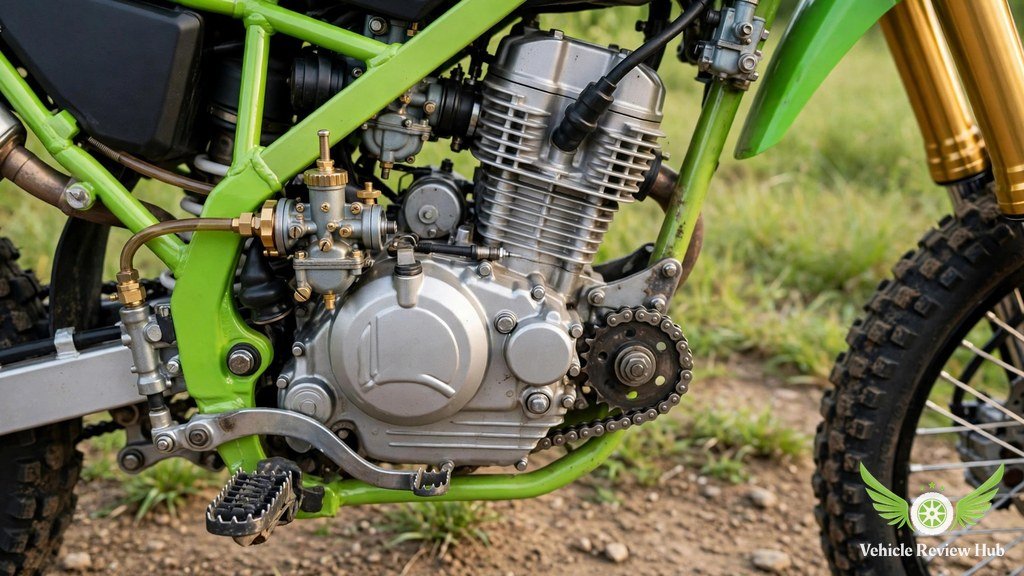
No signature defect is documented for the KLX150 in any source searched, including owner forums and reviews. The 7,000 km user review, the longest single-owner account found, reports only two flaws: early vibration in the first 3,000 km, which settled after the third oil change, and vibration above 90 km/h. The 7,000 km owner review is the closest thing to a long-term report that exists. The Kawasaki KLX 140R reliability guide covers the American platform sibling, whose documented record is a different story.
Watch-Item Evidence Is Thin, Honestly
The watch items in this Kawasaki KLX150 reliability guide are labelled as watch items, not defects, because the evidence for each one is thin. The best-known is pilot-jet stalling: a new Indonesian site reports that the KLX150 idles on a pilot jet with a very small hole, that trail dust past a poorly sealed air filter can block it, and that the engine then dies when the throttle closes. Cleaning is a bowl-off job with carburettor cleaner and compressed air, never a wire, and the air-box seal should be checked at the same time. That site is new, published in November 2026, so this Kawasaki KLX150 reliability guide treats it as a lead rather than an authority, and the pilot-jet size for the 150 itself is unverified.
| Watch item | Evidence | What to do |
|---|---|---|
| Pilot-jet stalling | Owner-reported, new site, lead only | Check air-box seal, clean carburettor, never use a wire |
| Vibration early and above 90 km/h | 7,000 km owner review | Settles with running-in and oil changes |
| Carburettor vs fuel injection | Design fact, not a defect | More frequent cleaning, cold-start care |
| No ABS, no tachometer before 2023 | Equipment gap, not a defect | Know the spec before buying used |
Notes: every item in this Kawasaki KLX150 reliability table is a watch item, not a documented defect. The pilot-jet report comes from a new site and is treated as a lead.
Kawasaki KLX150 Maintenance Schedule and Servicing
The maintenance section of this Kawasaki KLX150 reliability guide is where honesty costs the most, because the full factory service schedule could not be verified. The KLX150 owner’s manual and service manual were not found in citable form, and the documents circulating online under that name are scraped compilations of video titles, not the Kawasaki manual. What follows is what could be verified, with each figure labelled by its source.
The video below is a Philippines KLX150 oil change by Ralph731 TV, showing the correct oil level and bolt torque specs. It is a general oil-change guide, not a full maintenance schedule.
Full Schedule Could Not Be Verified
The full service schedule for the KLX150 could not be verified, and this Kawasaki KLX150 reliability guide says so directly rather than printing a schedule from another bike. The owner’s manual and the service manual were not found in citable form, and the mirror PDFs that carry the manual’s name are scraped compilations of YouTube video titles. That means no factory valve, oil, or brake-fluid interval can be printed for the 150. The American KLX140R has all of those figures in its own manual, but the 150 has an odometer where the 140R has none, a different manual, and a different service life, so the 140R’s hour-based intervals do not transfer. The Kawasaki KLX 140R L reliability guide shows what a verified factory schedule looks like for the American sibling.
Spark Plug Every 12,000 km
The one interval this Kawasaki KLX150 reliability guide can print with confidence is the spark plug: every 12,000 km, using an NGK CR7E plug. The plug type comes from a parts guide that names the NGK CR7E for the KLX150, and the 12,000 km figure comes from a generic 150cc preventive-maintenance plan and from Honda owner-manual guidance for the same class. Neither source is the KLX150’s own manual, so this Kawasaki KLX150 reliability guide presents 12,000 km as the commonly cited interval for this class.
| Service item | Interval or practice | Part or figure | Source |
|---|---|---|---|
| Spark plug | Every 12,000 km | NGK CR7E | Generic 150cc plan, class guidance |
| Engine oil | Owner practice only | SAE 10W-40, 0.93 L | Owner video, service-manual citation |
| Oil drain plug torque | At every oil change | 18 Nm | Owner video, service-manual citation |
| Oil filter cover torque | At every oil change | 8.8 Nm | Owner video, service-manual citation |
| Valve clearance | Not verified | No figure published here | Manual not found |
| Brake fluid and hoses | Not verified | No figure published here | Manual not found |
Notes: the figures in this Kawasaki KLX150 reliability table are labelled by source. The spark plug interval is class guidance, not a factory figure, and the oil figures are owner-video-sourced.
Kawasaki KLX150 Tires, Brakes and Suspension Maintenance
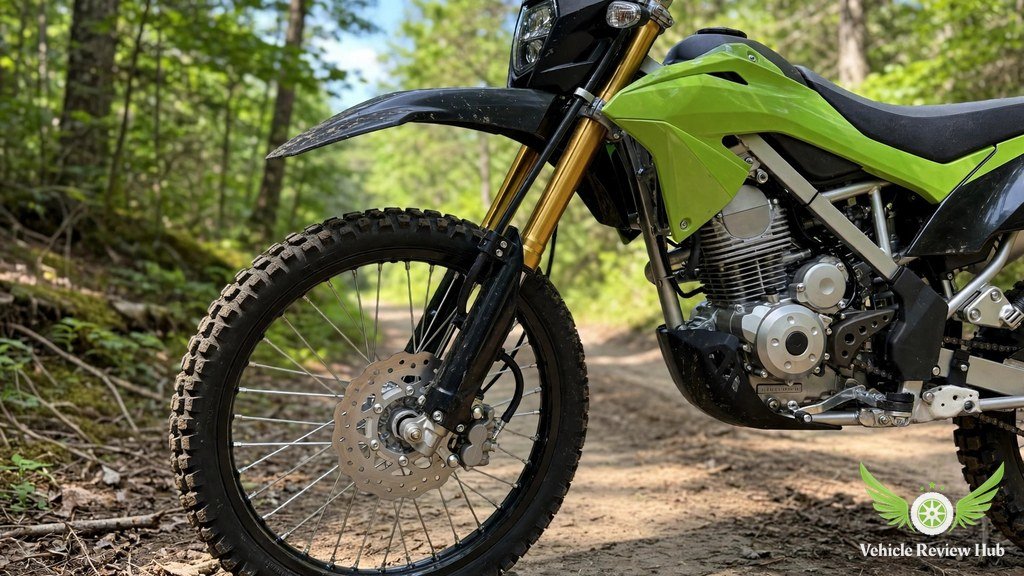
Tyres, brakes and suspension are the parts of Kawasaki KLX150 reliability that an owner can check without a manual. The hardware is simple: knobby tyres on tall 21/18 wheels, petal discs at both ends with no ABS, and an inverted fork up front with a preload-only rear shock. No factory pressure, fluid or fork-oil figure was found for the 150.
Oil Practice Is Owner-Sourced Only
Oil practice for the KLX150 is owner-sourced only, and this Kawasaki KLX150 reliability guide labels it that way because no Kawasaki Motor Indonesia oil interval was found. What is verified is the oil itself and the quantities around it: SAE 10W-40, the Kawasaki Genuine Oil 4T 10W-40 SL-MA used by Indonesian dealers, with 0.93 litres when the filter is not removed, a drain plug torque of 18 Nm, and filter cover bolts at 8.8 Nm. Those figures come from the Ralph731 TV oil-change video, which cites the service manual, and they match the shared hardware of the KLX140 family, which makes them plausible but still owner-video-sourced rather than manual-verified for the 150.
Tire, Brake and Suspension Checks That Matter
The checks that matter on the KLX150 are the ones a rider can do before every trail ride, and they are the backbone of Kawasaki KLX150 reliability in daily use. Tyres are 2.75-21 at the front and 4.10-18 at the rear on the standard bike, knobby and tube type, so check pressures, knob wear and tube condition. Brakes are a 240 mm petal disc at the front with a twin-piston caliper and a 190 mm petal disc at the rear with a single-piston caliper, with no ABS on any variant, so check pad wear and disc condition. Suspension is a 35 mm inverted fork with 185 mm of travel and a Uni-Trak rear shock with preload adjustment only and 192 mm of travel, so check for fork seal leaks and set the rear preload for the rider’s weight.
| Component | Specification | Check |
|---|---|---|
| Front tyre | 2.75-21, knobby, tube type | Pressure, knob wear, tube condition |
| Rear tyre | 4.10-18, knobby, tube type | Pressure, knob wear, tube condition |
| Front brake | 240 mm petal disc, twin-piston caliper | Pad wear, disc condition |
| Rear brake | 190 mm petal disc, single-piston caliper | Pad wear, disc condition |
| Front suspension | 35 mm inverted fork, 185 mm travel | Fork seal leaks, stanchion condition |
| Rear suspension | Uni-Trak single shock, preload only, 192 mm travel | Preload setting, shock leaks |
| Final drive | Chain, 46/14 sprockets | Tension, sprocket tooth wear |
Notes: the figures in this Kawasaki KLX150 reliability table are factory specifications from Kawasaki Motor Indonesia. No factory pressure, brake-fluid, fork-oil or chain-slack figure was found for the 150, so none is printed here, and no KLX140R figure is used in its place.
Kawasaki KLX150 Maintenance and Ownership Costs
Ownership costs are the part of Kawasaki KLX150 reliability where this guide refuses to invent numbers. No verified servicing price list, parts price list or insurance figure was found for the bike, so no money figure appears in this section at all.
Fuel, Routine Servicing, Tires and Replacement Parts
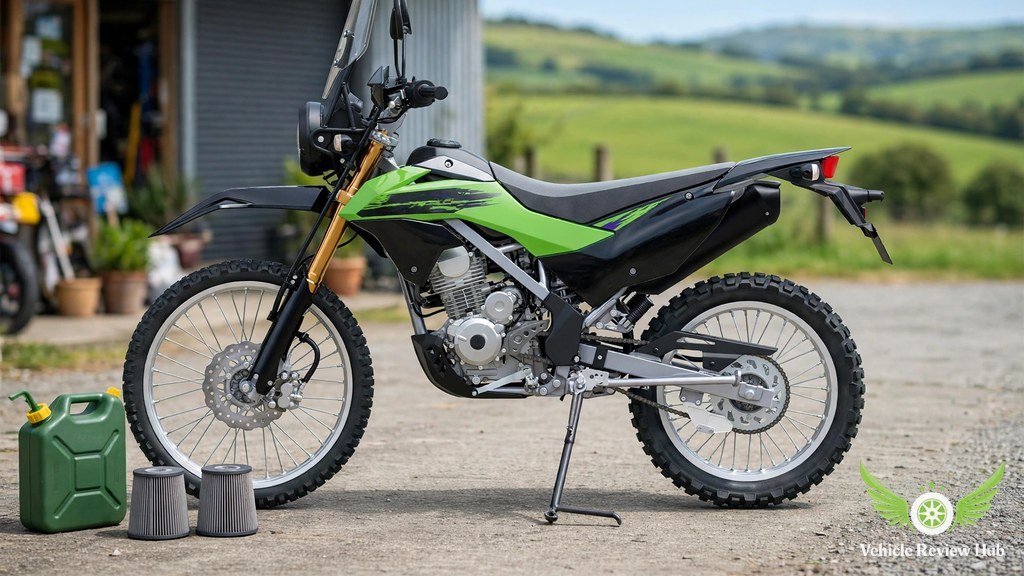
Fuel is the one cost-adjacent figure with a source: the Otomotif instrumented test returned 31.8 km per litre, and two owner sources corroborate it at about 32 km per litre. With a 6.9-litre tank that works out to roughly 219 km of range. Routine servicing is the oil, the spark plug and the air filter, and the costs table below lists intervals and part numbers only, with no money figures, because none was found in citable form. The Otomotif instrumented test is the source for the fuel figure, and the Kawasaki KLX150 performance guide explains why the bike is thirsty, with the carburettor and the short gearing named as the causes.
| Cost item | Interval or practice | Part |
|---|---|---|
| Fuel | 31.8 km per litre tested | 6.9 litre tank, about 219 km range |
| Engine oil | Owner practice only | SAE 10W-40, 0.93 L |
| Spark plug | Every 12,000 km | NGK CR7E |
| Air filter | Check at every service | Clean and reseal, check air-box seal |
| Chain and sprockets | Check tension and teeth regularly | Chain final drive, 46/14 sprockets |
| Brake pads | Check wear at every service | 240 mm front, 190 mm rear petal discs |
Notes: this Kawasaki KLX150 reliability table lists intervals and part numbers only, with no money figures. The fuel figure is the Otomotif tested 31.8 km per litre.
Parts Shared With the KLX140 Platform
Parts sharing is one of the quiet strengths of Kawasaki KLX150 reliability, because the 150 shares its 144cc engine architecture with the American KLX140R: the same bore and stroke, the same air-cooled SOHC two-valve design, and the same five-speed gearbox with a wet multi-disc clutch. Consumables such as filters, plugs, chains and brake pads interchange across the family in principle, which is why parts are easy to find in Indonesia. The differences have to be named alongside the sharing: the carburettor is a Keihin NCV24 on the 150 against a PB20 on the 140R, the brakes are 240/190 mm against 220/186 mm, the wheels are 21/18 against 17/14, and the 150 has a kick starter and lights where the 140R has neither. Check the part number before ordering. The Kawasaki KLX150 review explains the full split between the two bikes, and the Kawasaki Motor Indonesia SE page lists the standard chassis figures the SE shares.
How to Keep a Kawasaki KLX150 Reliable
Keeping a KLX150 reliable is mostly a matter of doing the simple things on time. The bike is a simple carburetted single with no electronics to fail, so Kawasaki KLX150 reliability comes down to clean fuel, clean air, fresh oil, and a rider who notices small changes early.
Preventive Maintenance, Records and Regular Inspections
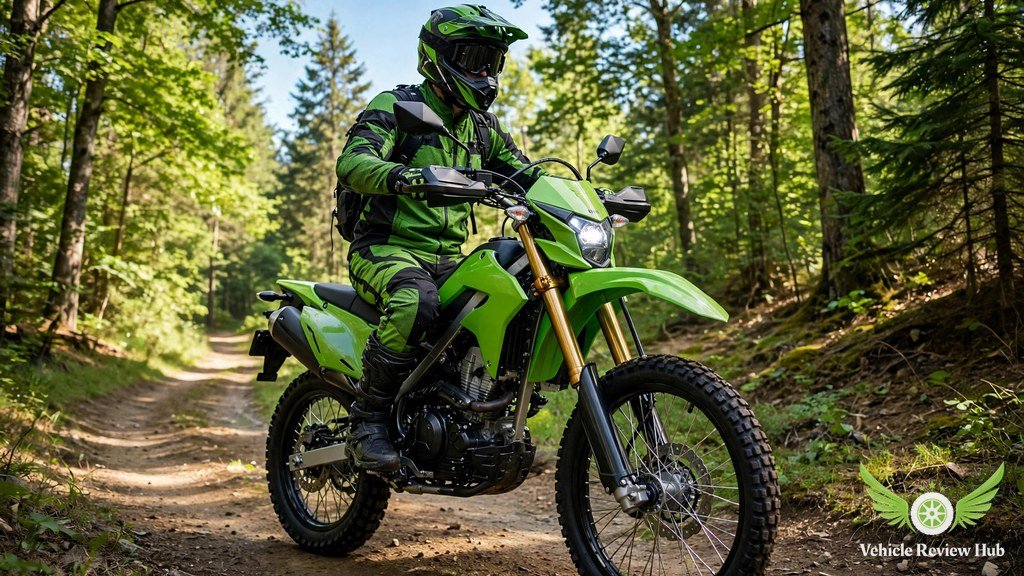
Preventive maintenance on the KLX150 means keeping records and inspecting the bike on a schedule the owner sets, since no factory schedule could be verified for this Kawasaki KLX150 reliability guide. Write down every oil change, every plug change, and every chain adjustment, with the date and the odometer reading. Inspect the chain, the air filter and the air-box seal, the brake pads, the fork seals, and the tyres before every trail ride, and fix small things when they are small: a weeping fork seal, a loose chain, or a dirty air filter all become expensive if they are ignored. Clean the carburettor when the bike starts stalling at closed throttle, and check the air-box seal at the same time, since trail dust past a poor seal is the reported cause. Change the oil often rather than rarely, and use the SAE 10W-40 the dealers use.
Indonesian Warranty Terms Unverified
Indonesian warranty terms for the KLX150 are unverified, and this Kawasaki KLX150 reliability guide prints no warranty figure for the home market. No Kawasaki Motor Indonesia warranty figure was found in citable form, so there is no number to quote and no term to promise. The American KLX140R carries a six-month limited warranty, but that is a different bike in a different market, and it is not printed here as the 150’s warranty. The one warranty figure that does exist comes from Australia, where the 2015 KLX150L was sold with a 12-month warranty.
Kawasaki KLX150 Reliability: Frequently Asked Questions
The questions riders ask most about Kawasaki KLX150 reliability, answered with the verified figures above, with the gaps labelled where no test or record exists.
Has the Kawasaki KLX150 been recalled?
No recall naming the KLX150 was found in any market searched, including the NHTSA database, where the model returns zero records for 2024 and 2026. That zero is a search result, not proof: NHTSA covers US-market vehicles, and the 150 was never sold in the United States, so a zero there is expected. No recall was found in Indonesian, Philippine, Bangladeshi or Australian sources either.
Is the Kawasaki KLX150 a reliable bike?
On the evidence available, yes. No signature defect is documented, no recall was found in any market, and the longest owner account reports only early vibration that settled after the third oil change. Kawasaki KLX150 reliability rests on a simple air-cooled single with no electronics to fail, and the bike’s weak points are the carburettor and the lack of a verified factory service schedule, not a known mechanical fault.
What are the most common problems with the Kawasaki KLX150?
No signature defect is documented, so there is no common-problem list in the usual sense. The watch items in this Kawasaki KLX150 reliability guide are pilot-jet stalling, reported by a new site and treated as a lead, vibration early in the engine’s life and above 90 km/h, and the carburettor itself, which needs more attention than the fuel-injected rivals.
How often should I change the engine oil on a Kawasaki KLX150?
No Kawasaki Motor Indonesia oil interval was found, so this Kawasaki KLX150 reliability guide prints no factory oil interval. Oil practice for the bike is owner-sourced only: use SAE 10W-40, with 0.93 litres when the filter is not removed, a drain plug torque of 18 Nm, and filter cover bolts at 8.8 Nm, all from an owner video that cites the service manual.
What spark plug does the Kawasaki KLX150 use, and how often should it be changed?
The KLX150 uses an NGK CR7E spark plug, and the commonly cited interval is every 12,000 km. The plug type comes from a parts guide, and the interval comes from a generic 150cc maintenance plan and class guidance, not from the KLX150’s own manual, so this Kawasaki KLX150 reliability guide labels the 12,000 km figure as class guidance rather than a factory figure.
Does the Kawasaki KLX150 have a kick starter?
Yes. The KLX150 has both an electric starter and a kick lever, which is one of its clearest differences from the American KLX140R, a bike that is electric start only. For Kawasaki KLX150 reliability that matters, because a flat battery on the 150 means a kick, not a push.
Does the Kawasaki KLX150 have ABS?
No. Braking is by a 240 mm front petal disc and a 190 mm rear petal disc with no ABS on any variant, which is one of the honest limitations recorded in this Kawasaki KLX150 reliability guide.
Is the Kawasaki KLX150 fuel injected?
No. Every KLX150 ever built uses a carburettor, the Keihin NCV24. That is why it is thirstier than its fuel-injected Honda rival, and also why any roadside mechanic in Indonesia can service it, a trade-off this Kawasaki KLX150 reliability guide states plainly.
What tyre sizes does the Kawasaki KLX150 use?
The standard KLX150 uses 2.75-21 at the front and 4.10-18 at the rear, knobby and tube type. The low S variant uses smaller 19/16 wheels, and the supermoto SM uses 17/17 road tyres, so a buyer should check the variant before ordering tyres.
Do KLX140 parts fit the Kawasaki KLX150?
Some do, and some do not, and this Kawasaki KLX150 reliability guide names both sides. The two bikes share the 144cc engine architecture and the same five-speed gearbox with a wet multi-disc clutch, so consumables such as filters, plugs, chains and brake pads interchange in principle. The carburettor, brakes and wheels differ, so check the part number before ordering rather than assuming everything fits.
What warranty comes with a Kawasaki KLX150 in Indonesia?
Indonesian warranty terms for the KLX150 are unverified, and this Kawasaki KLX150 reliability guide prints no warranty figure for the home market. The only warranty figure found comes from Australia, where the 2015 KLX150L was sold with a 12-month warranty. A buyer in Indonesia should confirm the warranty in writing with the selling dealer before paying.
Should I buy a used Kawasaki KLX150?
Yes, if the previous owner cared for it, and the checks in this Kawasaki KLX150 reliability guide are the way to tell. Look at the chain and sprockets, the air filter and air-box seal, the carburettor, and the frame for crash damage before looking at the odometer, since no odometer-based reliability data exists. A low-mileage bike that sat with old fuel in the carburettor can be a worse buy than a higher-mileage bike that was ridden and serviced regularly. Ask for service records, and budget for an oil change and a spark plug on day one.