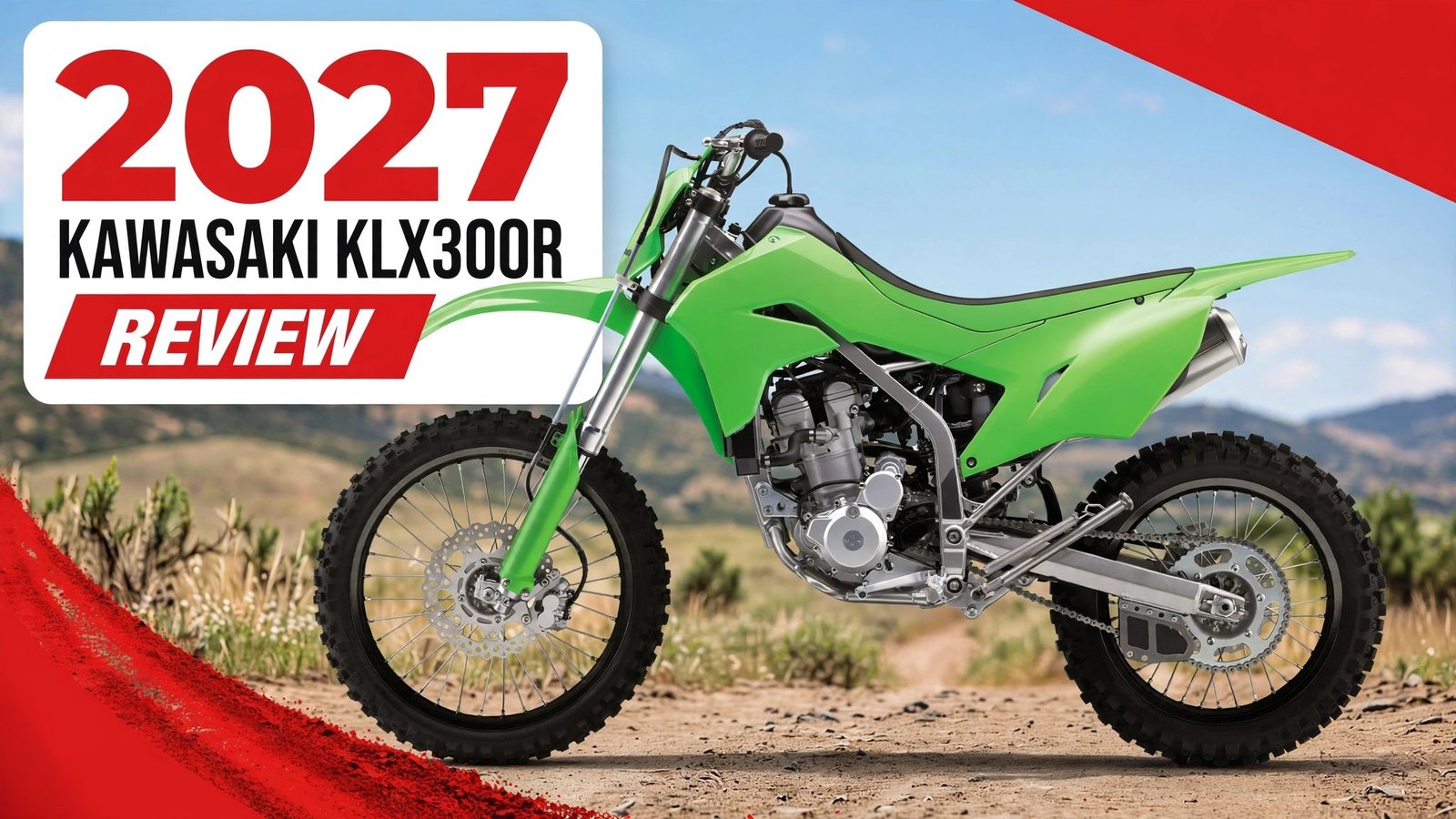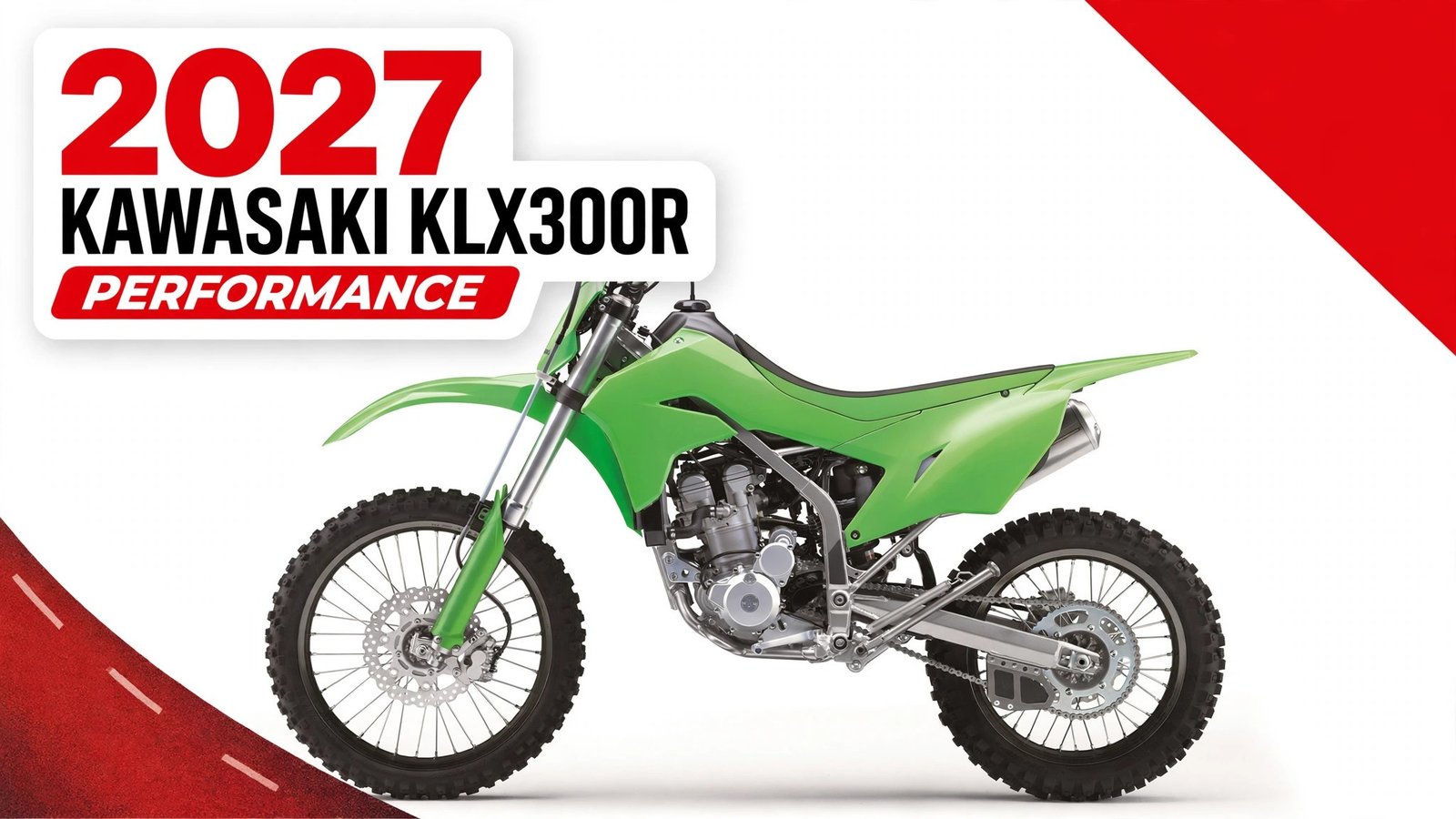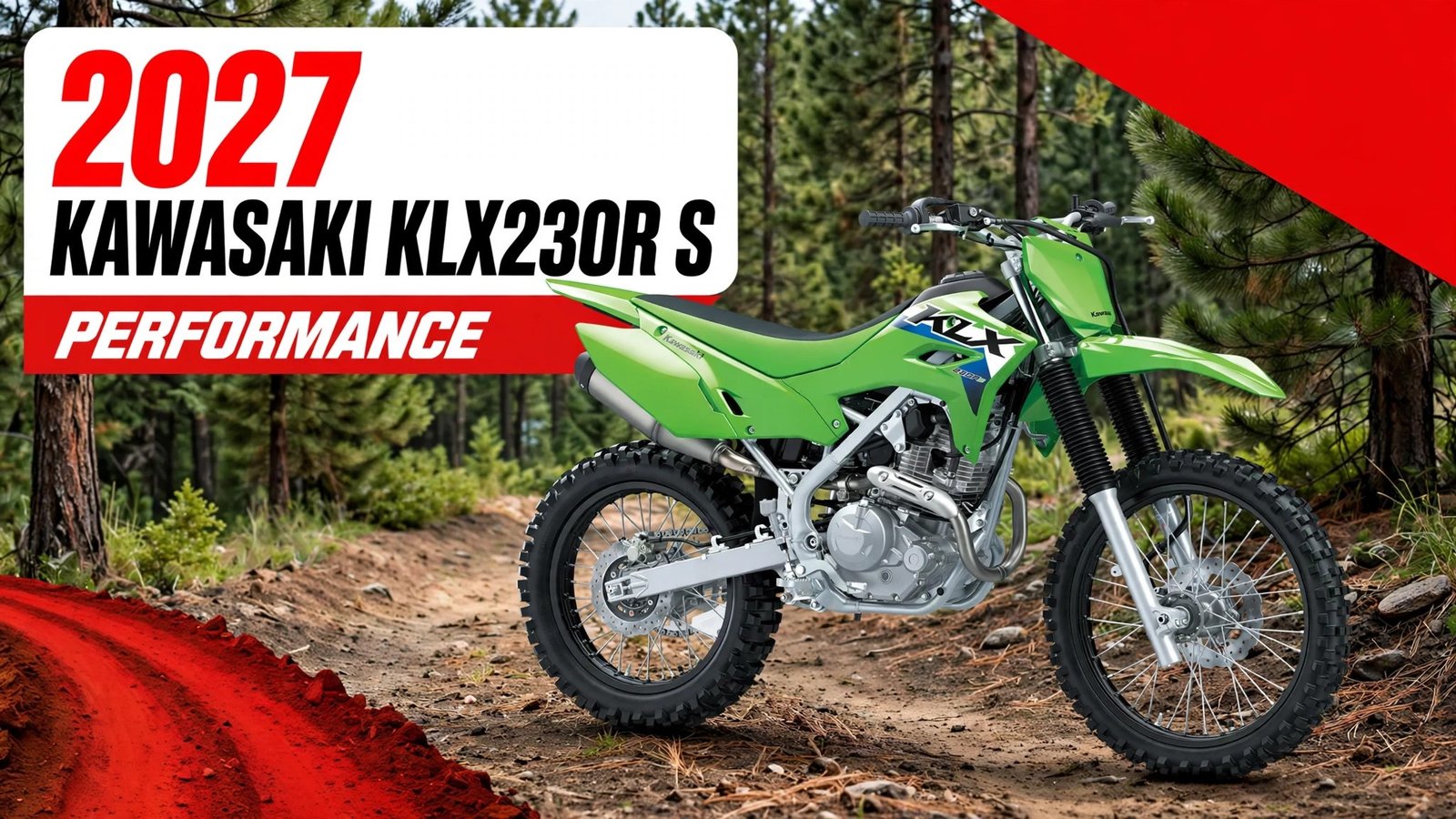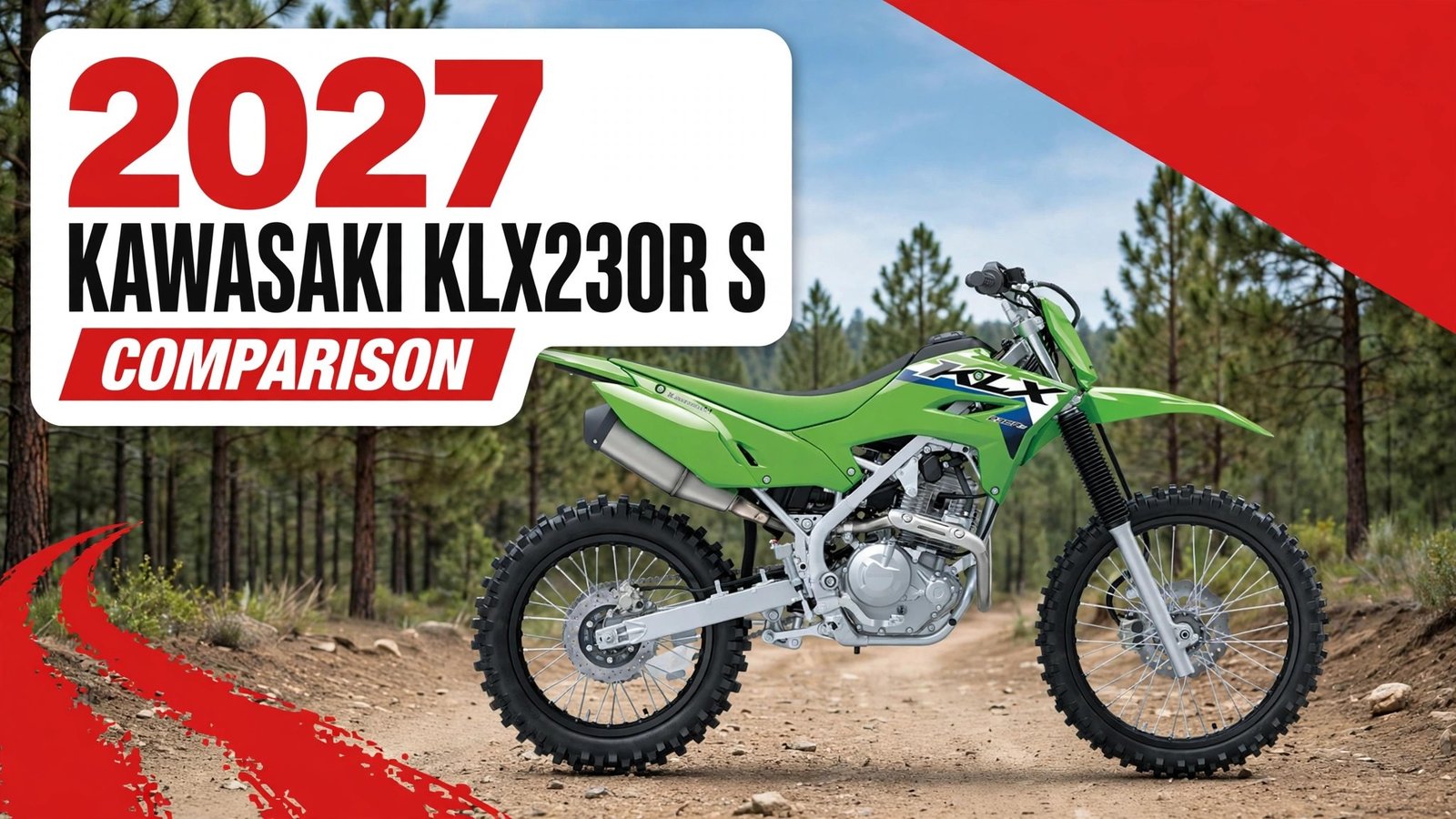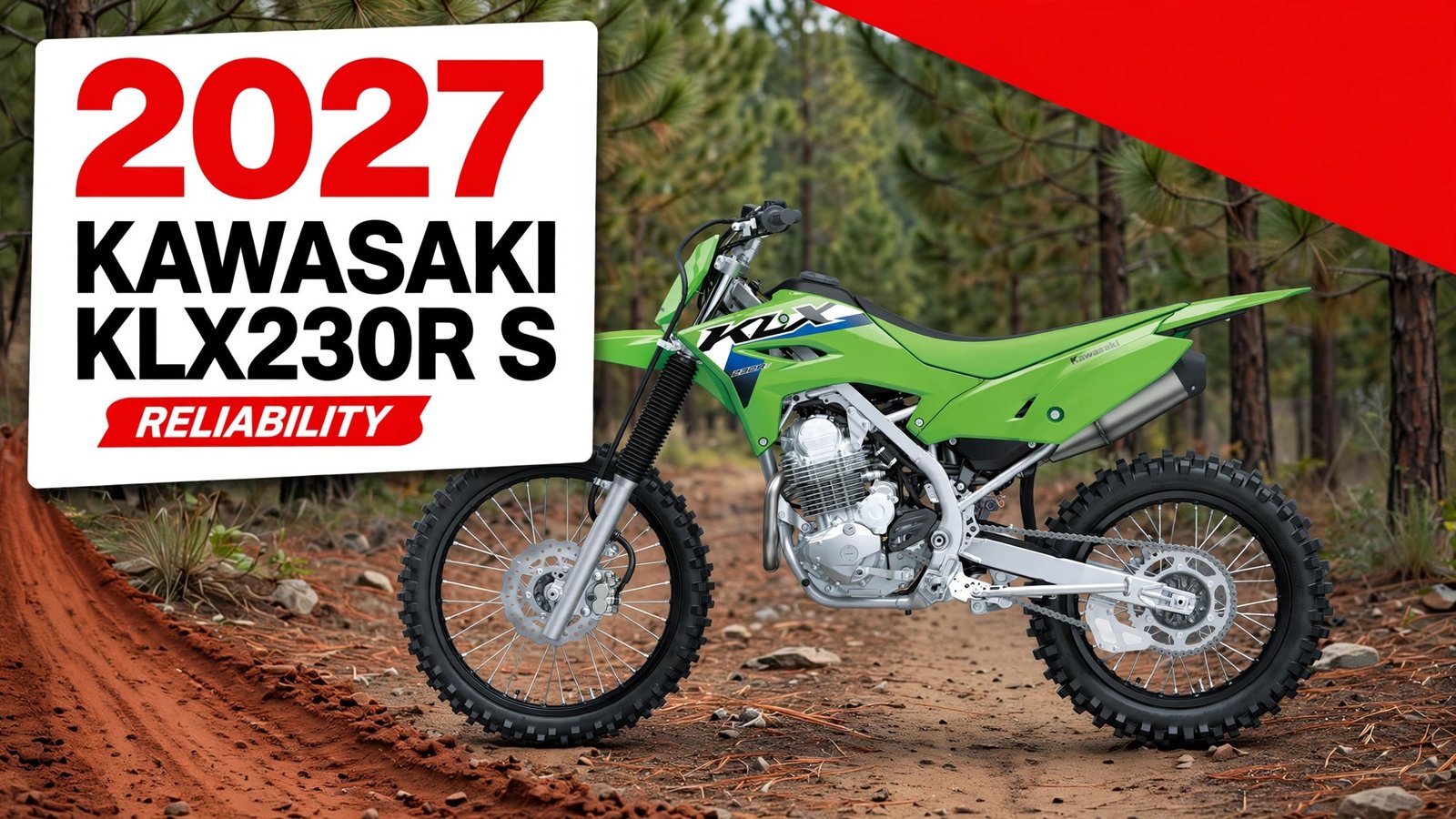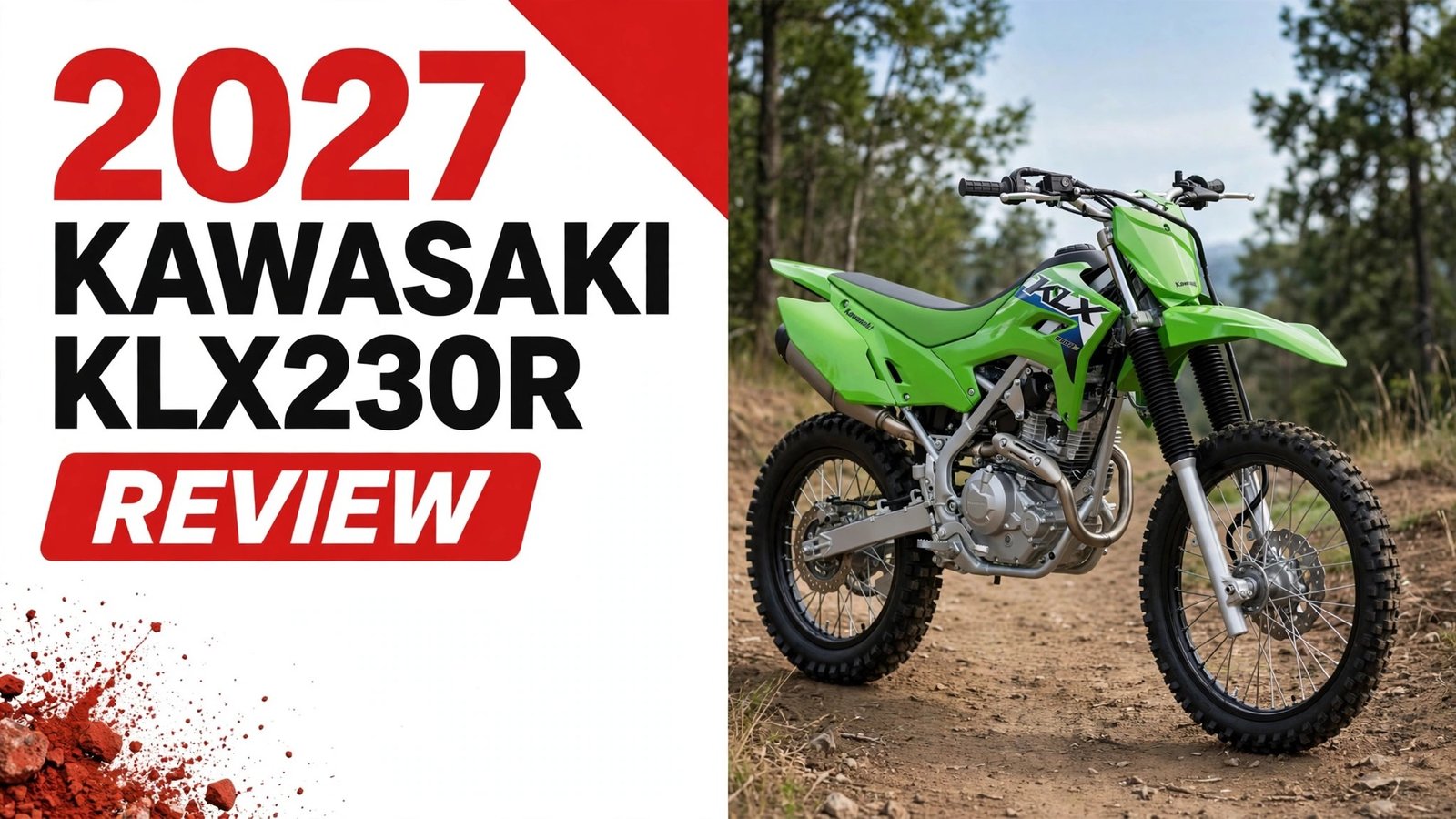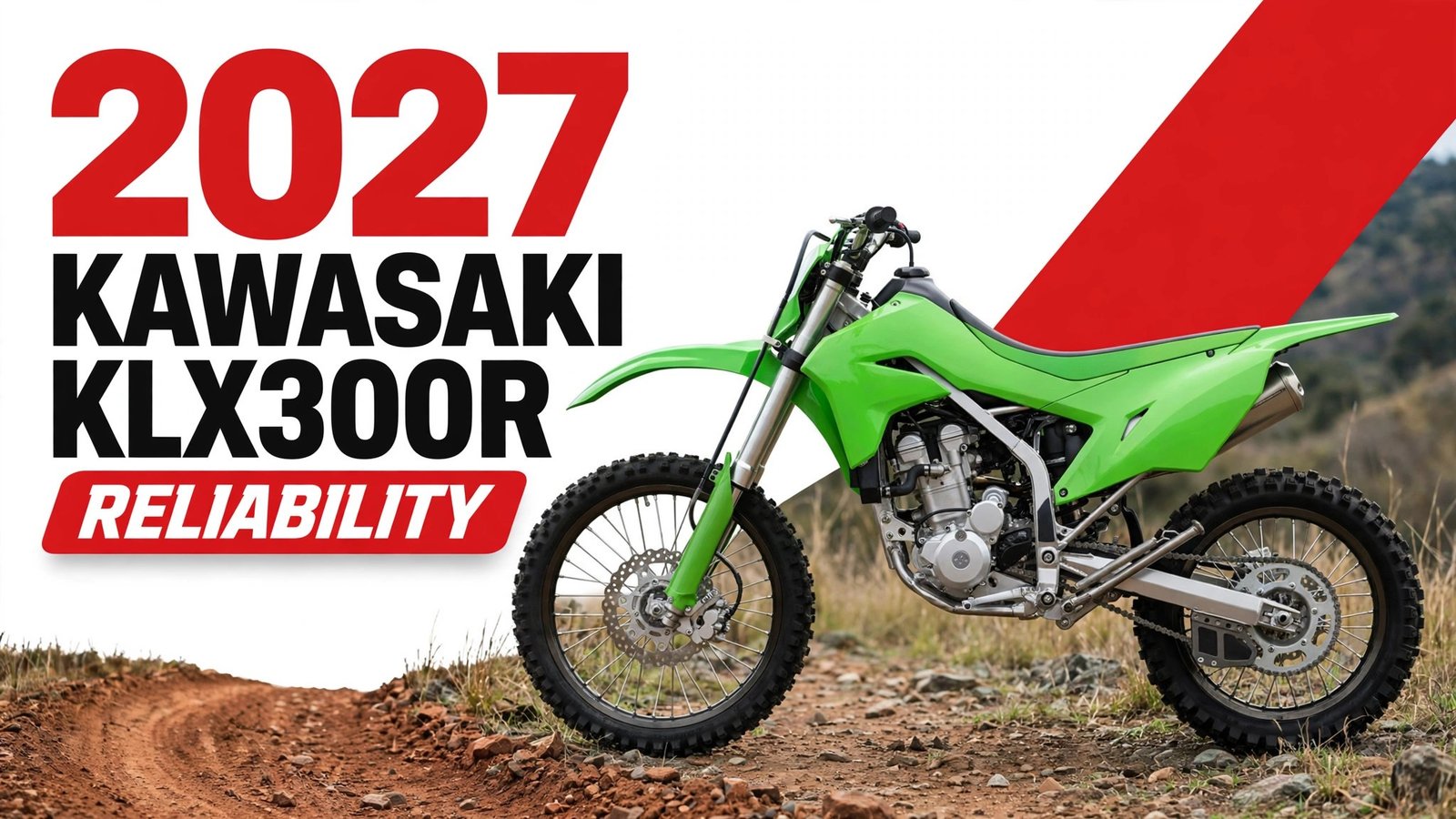
The Kawasaki KLX300R is a simple trail bike, and simple is exactly why its reliability record is clean. A liquid-cooled 292cc single with fuel injection, electric start, no dash, no headlight, no mirrors and no ABS has very little to go wrong, and no recall names the bike with either US safety authority, which is the headline of Kawasaki KLX300R reliability. Kawasaki KLX300R reliability rests on that simplicity plus one discipline the owner must supply: the service schedule runs on hours, and the bike has no meter to count them.
Kawasaki KLX300R Reliability Overview
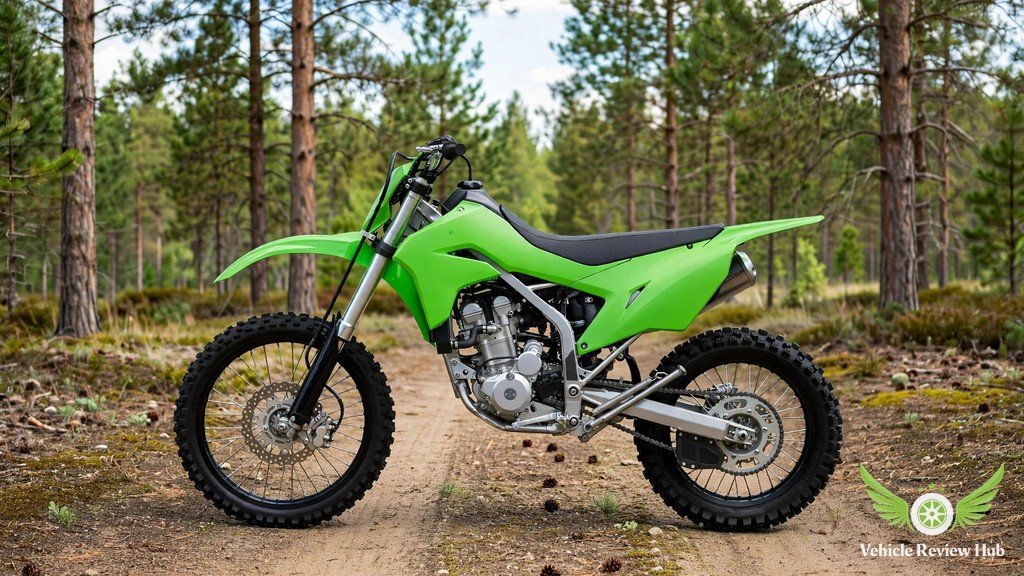
The R is a 2020 clean-sheet machine, not a reworked older bike, and its reliability story starts with what Kawasaki left off it. There is no instrument cluster to fail, no lighting circuit to chase, no ABS pump to bleed and no kick starter to fight. The 292cc liquid-cooled DOHC four-valve single breathes through a 34 mm Keihin throttle body, starts on the button, and runs a six-speed gearbox with a cable clutch. Kawasaki KLX300R reliability is the reliability of a short parts list: engine, fuel injection, chain, suspension, brakes and tyres, with a 6 Month Limited warranty behind them.
Hours Schedule, No Meter Fitted
Off-road bikes are serviced by hours, not miles, and the KLX300R has no hour meter fitted. There is no dash at all, only indicator lamps, so the bike cannot tell its owner when an interval is due. Hours are self-tracked, usually with a notebook, a phone timer or a small aftermarket hour meter wired to the ignition, and that self-tracking is the first habit of Kawasaki KLX300R reliability. That is the single most important fact in Kawasaki KLX300R reliability: the schedule only works if the owner counts. Buyers of a used R should ask for the hour log before they ask about the price, because a seller who tracked hours is a seller who serviced the bike.
The R’s own hour grid was not retrievable for this guide. Kawasaki’s Owner Center manual link for the bike redirects instead of serving the document, so no factory hour interval for the R is printed here as a verified figure. Where this guide states an interval from the documentation, it labels it as the documented schedule rather than a figure verified against the R owner’s manual, and the owner should confirm every interval in the manual that came with the bike, because Kawasaki KLX300R reliability depends on the manual, not on a borrowed schedule.
How Hours, Storage and Previous Care Affect Reliability
Hours are only half the story. A KLX300R that sat for two winters in a damp garage arrives with different problems than one ridden every weekend: fuel goes stale in the tank and the injector, the battery discharges, the chain rusts in place and the fork seals take a set. Storage care matters as much as service care, and a buyer should look for a bike that was stored with a full tank, a charged battery and a clean, lubed chain. Kawasaki KLX300R reliability is honest about this. The bike forgives a lot on the trail, but it does not forgive neglected storage, and a pre-purchase look at those wear points tells a buyer more than any advert claim.
Kawasaki KLX300R Common Problems and Wear Items
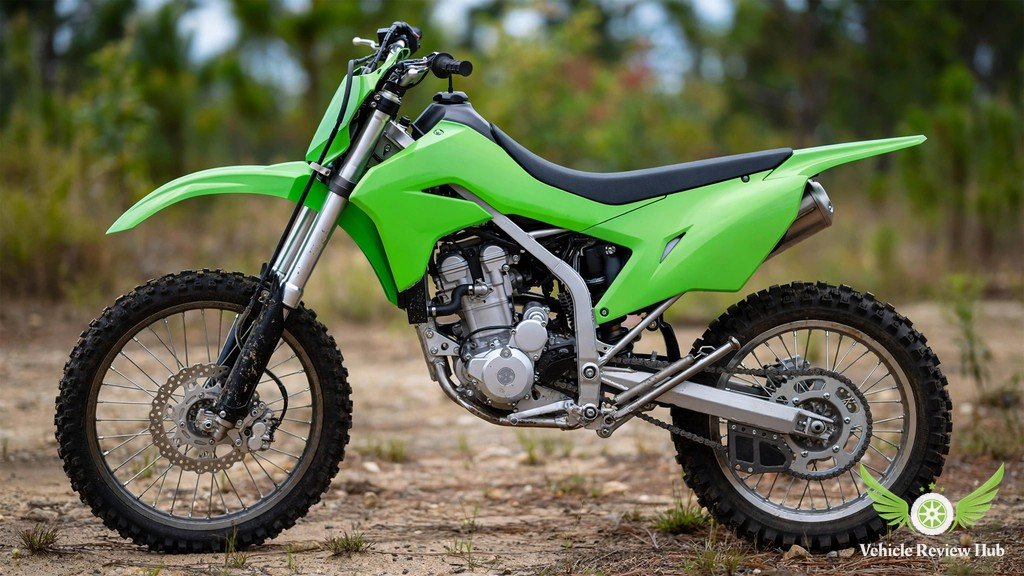
No bike is free of wear, and the R has its own short list. The chain, the tyres, the brake pads and the air filter are the wear items that set the running rhythm of the bike, and Kawasaki KLX300R reliability is mostly a question of replacing them on time.
| Wear item | What wears | What to watch |
|---|---|---|
| Radiators | Fins bent by stones and branches | Folded fins, coolant weeping, guard fitted |
| Chain and sprockets | 520 sealed chain stretches, sprocket teeth hook | Slack 25–35 mm, lube every 5 hours |
| Air filter | Foam filter loads with dust | Clean and re-oil after dusty rides |
| Tyres | Knobs round off, sidewalls cut on rocks | 80/100-21 front, 100/100-18 rear |
| Brake pads | Pads wear faster in mud and grit | 270 mm front petal disc, 240 mm rear petal disc |
| Fork seals | Seals weep after mud and long storage | Oil film on fork tubes, pitting |
| Battery | Discharges in storage, electric start only | No kick starter fitted, keep it charged |
Notes: the chain slack figure of 25–35 mm and the tyre sizes come from the shared-engine street manual and are labelled as such, since the R owner’s manual was not retrievable for this guide. Kawasaki KLX300R reliability depends on the chain and the air filter more than on any other two parts, because both are cheap to service and expensive to ignore.
No Recall Names the R
No recall names the KLX300R in any source consulted for this guide, and that is the strongest single fact in Kawasaki KLX300R reliability. The NHTSA recalls API returned Count:0 for the 2026 KLX300R, and the same API returned Count:1 for a control bike, the 2024 Ninja 500, with campaign 25V146000 for its clutch, which shows the search itself was working when it returned zero for the R. That zero is a search result, not a guarantee, and it is framed that way because the NHTSA website’s own year-make-model search has returned zero for bikes that do have recalls. The R is also off-road-only, so NHTSA coverage is thinner for it than for a street bike in any case. Even so, across the API search and every review and owner source consulted, no recall names the bike, and that is the honest statement of Kawasaki KLX300R reliability on the recall question.
The CPSC record is a different matter and must not be overstated. A search of the saferproducts.gov recall API for the KLX300 returned an empty result, but the same API has returned unfiltered recent recalls in other searches, so it does not honour product filtering reliably. An empty return from that API is not a clean search, and this guide does not print “no CPSC recalls” as a verified fact about Kawasaki KLX300R reliability.
KLX250 Campaigns Are Not Its Record
The KLX250 was the predecessor dual-sport, a 249cc street-legal bike sold in the United States from 2006 to 2014 and again from 2018 to 2020, and its recall campaigns belong to that bike, not to the KLX300R. The two share a family name and nothing else that matters for the recall record: different engine, different chassis, different years. No KLX250 campaign number is named in this guide, because none was verified in this pass and none names the R. Kawasaki KLX300R reliability should be judged on the R’s own record, which is a zero from the NHTSA search with a working control and an inconclusive CPSC return, and not on any campaign that belongs to the 250.
One more campaign must not be attached to the R either. Campaign 22V-397 names street ABS bikes only, and the KLX300R is a non-ABS off-road bike, so that campaign has nothing to do with Kawasaki KLX300R reliability. The R’s spec sheets mark the bike “NON-ABS” every year, and there is no ABS pump, sensor or warning lamp on it to recall.
Kawasaki KLX300R Maintenance Schedule and Servicing
Servicing the R is straightforward work, and most of it is in reach of an owner with basic tools. The engine uses SAE 10W-40 oil meeting the JASO MA2 standard, the oil filter is the HF112 pattern sold as Kawasaki part 52010-1053, and the spark plug is the NGK CR8E, all from the shared-engine street manual and labelled as such. Kawasaki KLX300R reliability is well served by an owner who does the small jobs on time, because the small jobs are the ones that keep the big jobs away.
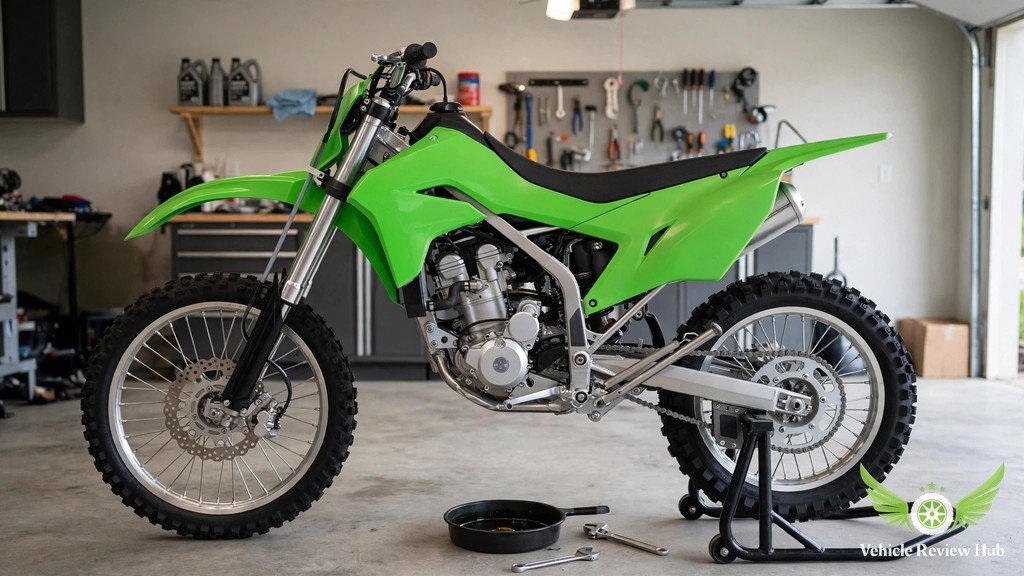
The video below, chosen for this Kawasaki KLX300R reliability guide, is an owner oil-change walkthrough on the R, not a factory service video. It shows the drain, the filter and the refill on the actual bike, which is the single most repeated service job the R needs.
Valve Checks Inside the Hour Grid
Valve checks sit inside the hour grid, which is the part of the R schedule that matters most and is hardest to verify from outside. The R’s own hour grid was not retrievable for this guide, so no factory hour figure for a valve check is printed here. What can be said honestly is that the street KLX300, which shares the engine, lists its valve check at 12,000 km in its own manual, and that figure is a street-bike kilometre figure, not an R hour figure, so it must never be presented as the R’s interval in a Kawasaki KLX300R reliability guide. No valve-clearance figure is printed in this guide at all, because none was verified for the R. Kawasaki KLX300R reliability on valves is a question for the R owner’s manual, and a buyer of a used bike should ask whether the valve check was done and when, rather than assuming it was.
Break-In Ends With Fork and Shock Oil
Break-in on the R ends with fork and shock oil, which is the part of the early schedule that new owners most often skip. The engine break-in itself is the familiar routine of varied revs and an early oil and filter change, but the suspension oil change that closes break-in is what keeps the 43 mm inverted fork and the Uni-Trak shock working the way the testers praised. RevZilla’s 2020 first ride of the KLX230R and KLX300R noted the 11.2 inches of travel at both ends on the new bike, and that travel is only as good as the oil inside it.
| Service item | Interval | Basis |
|---|---|---|
| Engine oil and filter | Per the R hour grid in the owner’s manual | SAE 10W-40, JASO MA2; filter HF112 |
| Air filter | Clean and re-oil after dusty rides | Foam filter, oil after every wash |
| Valve check | Inside the hour grid | No clearance figure verified for the R |
| Spark plug | Per the hour grid | NGK CR8E, shared-engine manual |
| Fork and shock oil | End of break-in, then yearly fork oil | Documented schedule, see notes |
| Coolant | Every 2 years | Documented schedule, see notes |
| Brake fluid | Every 2 years | Documented schedule, see notes |
| Chain lube | Every 5 hours | Documented schedule, see notes |
| Hoses | At 4 years | Documented schedule, see notes |
Notes: the intervals marked “documented schedule” are the schedule as the documentation states it, and were not verified against the R owner’s manual in this pass, because the manual itself was not retrievable. The R’s own hour grid is the authority for the oil, valve and plug intervals, and this guide prints no hour figure it could not verify. Kawasaki KLX300R reliability depends on the owner confirming these intervals in the manual that came with the bike.
Kawasaki KLX300R Tires, Brakes and Suspension Maintenance
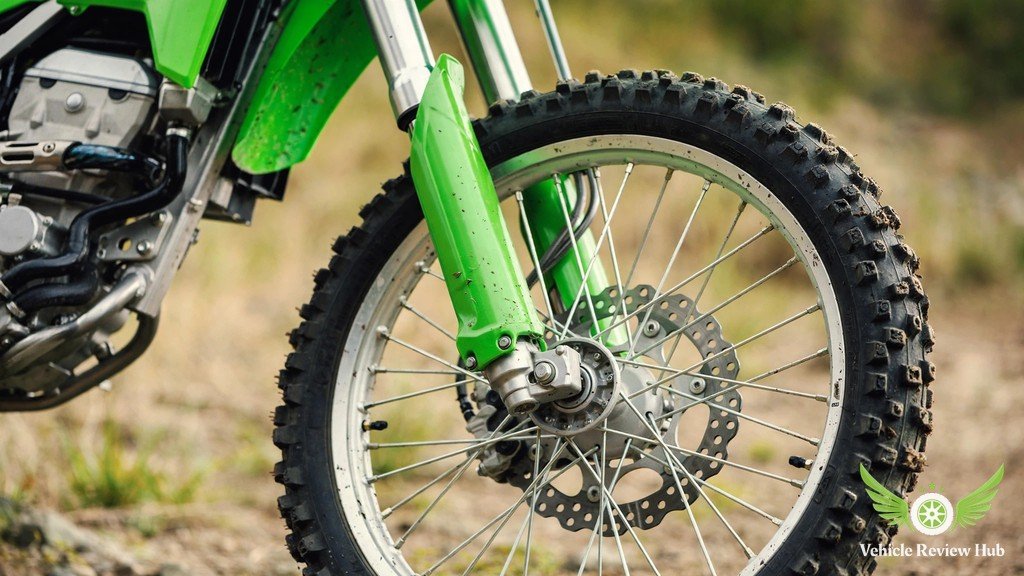
The rolling chassis is where the R earns its keep, and it is also where neglect shows first. The 43 mm inverted fork and the Uni-Trak shock give the R the only fully adjustable suspension in its trail-bike class, and that adjustability is a maintenance item as much as a feature in Kawasaki KLX300R reliability. Fork oil goes yearly, the shock oil follows the break-in change, and the seals on both ends need clean tubes to live. The tyres are 21-inch front and 18-inch rear spoked wheels, and Kawasaki KLX300R reliability in this section is mostly about fluids, seals and rubber, all of it cheap compared with the engine work that neglect would cause.
Coolant and Brake Fluid Every 2 Years
Coolant and brake fluid both run on a two-year cycle in the documented schedule, and both are easy to forget because neither announces itself when it is overdue. Coolant protects the liquid-cooled single from the inside, and old coolant loses its corrosion protection long before it loses its cooling, which is how radiators and water-pump seals start to fail, and why coolant age matters to Kawasaki KLX300R reliability. Brake fluid absorbs water from the air, and wet fluid boils under hard braking and corrodes the calipers from within, so a two-year change is cheap insurance for a bike whose brakes are its only stopping system. Motorcycle.com’s 2020 review scored the R’s brakes 9.0 out of 10, and that score only holds while the fluid is fresh.
Tire, Brake and Suspension Checks That Matter
The checks that matter are the ones a rider can do in ten minutes before a ride. Tyres first: the front is an 80/100-21 and the rear a 100/100-18 on the 2020 to 2023 sheets, written as 3.0 x 21 and 4.6 x 18 on the 2024 and later sheets, which is the same size in different notation and not a tyre change. Look for rounded knobs, sidewall cuts and correct pressure, because a trail tyre that is worn or soft is a tyre that will let go on a loose climb. Brakes next: pad thickness, disc condition and lever feel, with the petal discs checked for cracks at the drilled holes. Suspension last: fork tubes wiped clean and checked for pitting or oil film, the shock linkage greased, and the clickers set where the rider left them. The official 2027 KLX300R spec sheet lists the fork and shock with their full adjustability, and Kawasaki KLX300R reliability depends on keeping that adjustability working.
| Check | What to look for | When |
|---|---|---|
| Tyres | Knob wear, sidewall cuts, pressure | Before every ride |
| Brake pads | Pad thickness, disc cracks, lever feel | Before every ride |
| Fork tubes | Pitting, oil film, seal weeping | Before every ride |
| Shock linkage | Play, dry bearings, grease condition | Every wash |
| Fork oil | Yearly change, documented schedule | Yearly |
| Coolant | Level, colour, corrosion protection | Every 2 years |
| Brake fluid | Colour, lever feel, water contamination | Every 2 years |
| Spokes | Loose or broken spokes, wheel true | Monthly |
Notes: the tyre sizes are given in both notations because the official spec sheets changed how they print the same sizes in 2024, and a buyer comparing sheets should not read that as a tyre change. Kawasaki KLX300R reliability in the chassis comes down to this table: fluids on time, seals kept clean, and rubber replaced before it fails.
Kawasaki KLX300R Maintenance and Ownership Costs
The R is cheap to own for a bike in its class, and the reason is the same as the Kawasaki KLX300R reliability story: a short parts list and owner-serviceable jobs. The 2027 bike lists at $5,799 with a $650 destination charge, $6,449 delivered, and that price buys the only fully adjustable suspension in its trail-bike class. What this section gives instead is the honest shape of the costs, so a buyer can see where the money goes.
Fuel, Routine Servicing, Tires and Replacement Parts
Fuel is the smallest honest unknown in Kawasaki KLX300R reliability costs. The tank holds 2.1 gallons, the bike has a low-fuel lamp and no gauge, and no tester has published a measured MPG figure for the R, so no tank-range figure can be calculated and none is printed here. The street KLX300’s 56 mpg from the Motorcycle.com shootout belongs to the plated street bike, not to the R, and using it to price the R’s fuel would be inventing a number. Tyres are the biggest repeating cost after fuel: a 21-inch front and an 18-inch rear knobby, replaced when the knobs round off rather than on a calendar, and Kawasaki KLX300R reliability costs follow the same rule. The Ultimate Motorcycling review called the R the largest displacement trail bike available from a major manufacturer, and that size comes without a large service bill, because the engine is a single with one cylinder, one cam chain and one set of valves to check.
Fork Oil Yearly, Hoses at 4 Years
Fork oil goes yearly in the documented schedule, and the shock oil follows the break-in change, because suspension oil is the working fluid of the bike’s best feature and it degrades with heat and contamination whether the bike is ridden hard or not. Hoses go at four years, which is the interval that catches owners by surprise: coolant and fuel hoses harden with age and heat, and a four-year-old hose that looks fine on the outside can split under pressure on a hot trail, and that is a Kawasaki KLX300R reliability failure with no warning. Dirt Bikes measured the 2020 bike at 288 pounds full of liquids in California trim.
| Cost item | What it involves | Verified figure |
|---|---|---|
| 2027 purchase | MSRP plus destination | $5,799 + $650 = $6,449 delivered |
| Fuel | 2.1-gallon tank, low-fuel lamp only | No tested MPG, no range figure |
| Oil service | SAE 10W-40 JASO MA2, filter HF112 | Per the R hour grid |
| Tyres | 80/100-21 front, 100/100-18 rear | Replaced on knob wear |
| Chain | 520 sealed chain, slack 25–35 mm | Lube every 5 hours |
| Fork oil | Yearly change, documented schedule | 43 mm inverted fork, 11.2 in travel |
| Coolant and brake fluid | Both every 2 years | Documented schedule |
| Hoses | Coolant and fuel hoses | At 4 years, documented schedule |
| Warranty | Factory cover from new | 6 Month Limited, every year |
Notes: no resale percentage and no running-cost dollar total are printed in this table, because no verified figure exists for either, and this guide does not invent one. The 2027 delivered price of $6,449 is the official spec sheet MSRP plus the destination charge, year-labelled. Kawasaki KLX300R reliability costs stay low while the owner does the small jobs on time, and the expensive failures in this bike’s life are almost always the ones a skipped service caused.
How to Keep a Kawasaki KLX300R Reliable
Keeping an R reliable is a routine, not a project. Track the hours, change the oil, clean the air filter, lube the chain, check the tyres and brakes before every ride, and change the fluids on their two-year cycle. The full picture of the bike, from its 2027 price to its seat height and suspension, is in the KLX300R review, and the KLX300R performance guide covers what the suspension and the engine do on the trail. Kawasaki KLX300R reliability is not a mystery to solve; it is a short list of jobs done on time.
Preventive Maintenance, Records and Regular Inspections
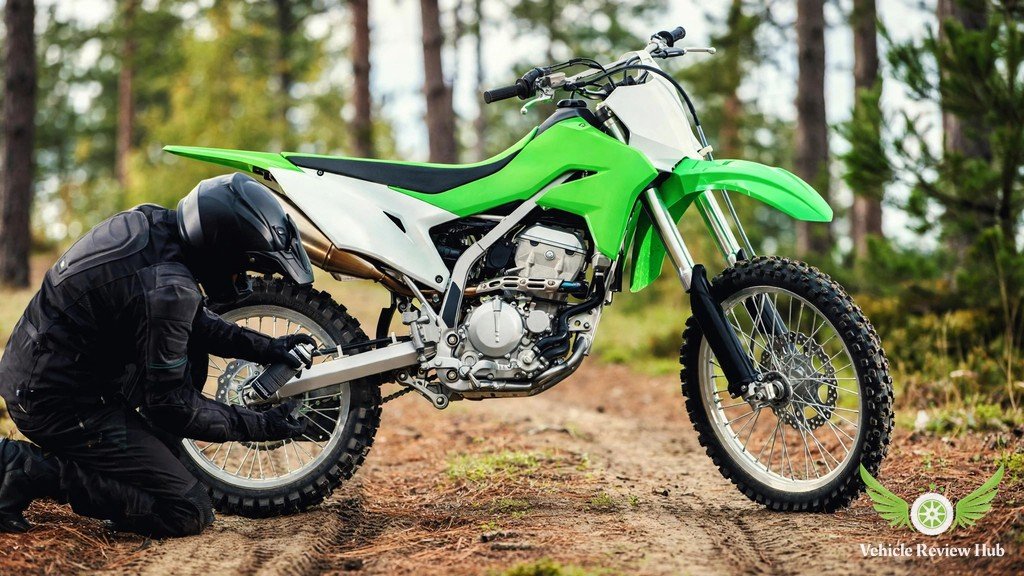
Preventive maintenance starts with a record. Write down the hours at every oil change, every filter clean and every chain lube, and keep the receipts for parts, because a written record is what turns a used bike from a gamble into a known quantity. Inspect the bike after every wash: fork tubes for pitting, radiator fins for folding, chain slack at 25–35 mm, spokes for looseness, brake pads for thickness and the air filter for dust loading, because Kawasaki KLX300R reliability is checked, not assumed. The inspections that matter are the regular ones, done the same way every time, so a change stands out. The same habits apply to the KLX230R review bike, the 233cc air-cooled step-down trail bike, and to the Honda CRF300F review rival. Records and inspections are the two habits that make Kawasaki KLX300R reliability a fact rather than a hope.
Chain Lube Every 5 Hours
The chain is the R’s most honest maintenance item, and Kawasaki KLX300R reliability shows in it first, because it tells the owner exactly what it needs and when. Lube every 5 hours in the documented schedule, and check the slack at the same time, because a dry chain wears the sprockets, a tight chain wears the output-shaft bearing, and a loose chain wears the guides. The chain is a 520 sealed chain, and the slack figure of 25–35 mm comes from the shared-engine street manual, labelled as such. Five hours is not much riding, roughly two or three trail sessions, so the chain job becomes part of the wash routine rather than a separate task.
The final word on Kawasaki KLX300R reliability is that the bike is as reliable as its owner is disciplined. No recall names it, the NHTSA search returned zero with a working control, the CPSC record is inconclusive rather than clean, and the engine, suspension and brakes are simple parts that last when they are serviced on time. The risks are all owner-shaped: uncounted hours, a dry chain, a dirty air filter, old coolant and hoses left past four years. Track the hours, do the small jobs, change the fluids on schedule, and the R will give back years of trail riding for very little money. That is the whole of Kawasaki KLX300R reliability, and it is a short list worth keeping.
Kawasaki KLX300R Reliability Frequently Asked Questions
These answers cover the R’s recall record, its wear items and the service schedule a used buyer should follow in this Kawasaki KLX300R reliability guide — with every interval labelled by its source, because the R’s own hour grid was not retrievable.
Has the KLX300R had any recalls?
No recall names the KLX300R in any source consulted. The NHTSA recalls API returned Count:0 for the 2026 KLX300R, and the same API returned Count:1 for a control bike, the 2024 Ninja 500, with campaign 25V146000 for its clutch — so the search itself was working when it returned zero for the R. That zero is a search result, not a guarantee. The CPSC record is inconclusive, so no claim about CPSC records is printed here.
What are the KLX300R’s common problems?
No signature defect is documented for the R in any source searched, and this Kawasaki KLX300R reliability guide treats the wear list as the whole common-problems story: radiators with fins bent by stones and branches, a 520 sealed chain and sprockets, a foam air filter that loads with dust, knobby tyres that round off, brake pads that wear faster in mud and grit, fork seals that weep after mud and long storage, and a battery that discharges in storage — with electric start only and no kick starter, a flat battery means no ride.
How often should the KLX300R be serviced?
By hours, not miles — and the bike has no hour meter fitted, so the owner must count the hours, usually with a notebook, a phone timer or a small aftermarket hour meter. That self-tracking is the first habit of Kawasaki KLX300R reliability. The R’s own hour grid was not retrievable for this guide, because Kawasaki’s Owner Center manual link redirects instead of serving the document. Where this guide states an interval from the documentation, it labels it as the documented schedule rather than a figure verified against the R owner’s manual, and the owner should confirm every interval in the manual that came with the bike.
What oil and parts does the KLX300R use?
The engine uses SAE 10W-40 oil meeting the JASO MA2 standard, the oil filter is the HF112 pattern sold as Kawasaki part 52010-1053, and the spark plug is the NGK CR8E — all from the shared-engine street manual and labelled as such. The oil capacity is not printed in this Kawasaki KLX300R reliability guide: the two figures found in sources conflict, and neither was verified as the R’s figure. Valve checks sit inside the hour grid, and no valve-clearance figure was verified for the R, so none is printed.
How long is the KLX300R’s warranty?
Six months. The R carries a 6 Month Limited warranty, and that figure appears on every official spec sheet from 2020 to 2027, as this Kawasaki KLX300R reliability guide notes. Six months is the standard warranty for an off-road-only bike in this class, and it covers manufacturing defects, not wear items, crash damage or the consequences of racing. A used KLX300R will almost always be out of warranty, so judge it on condition, hours and maintenance history.
What should I check on a used KLX300R?
Ask for the hour log before asking about the price — that is the first check in this Kawasaki KLX300R reliability guide, because a seller who tracked hours is a seller who serviced the bike. Look at the storage story too: fuel goes stale in the tank and the injector, the battery discharges, the chain rusts in place and the fork seals take a set after two winters in a damp garage. Check the radiator fins, chain slack at 25 to 35 mm, air filter, fork seals and brake pads. And judge the R on its own record — the KLX250’s recall campaigns belong to the 250, not to the R, and no KLX250 campaign number names this bike.