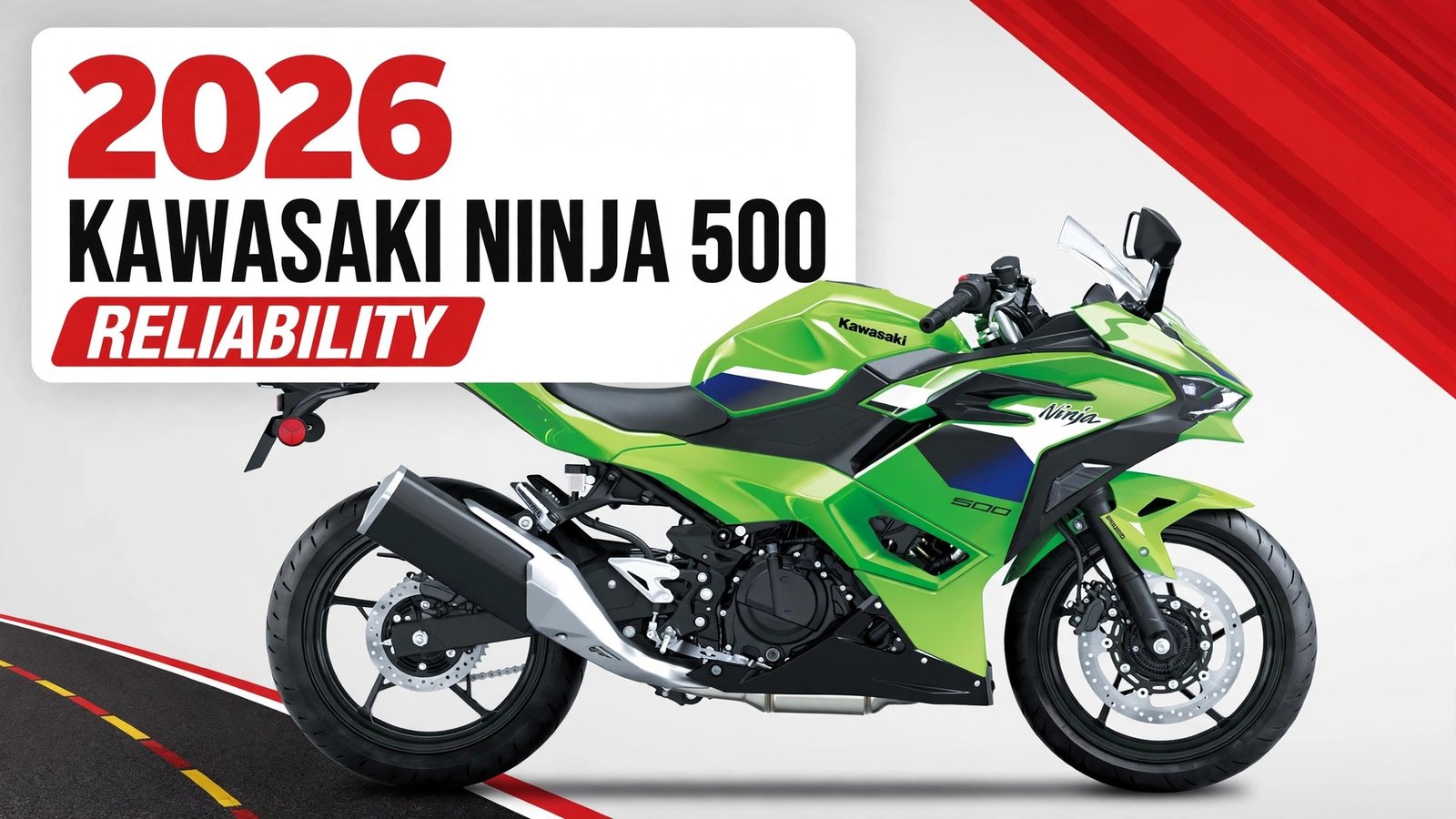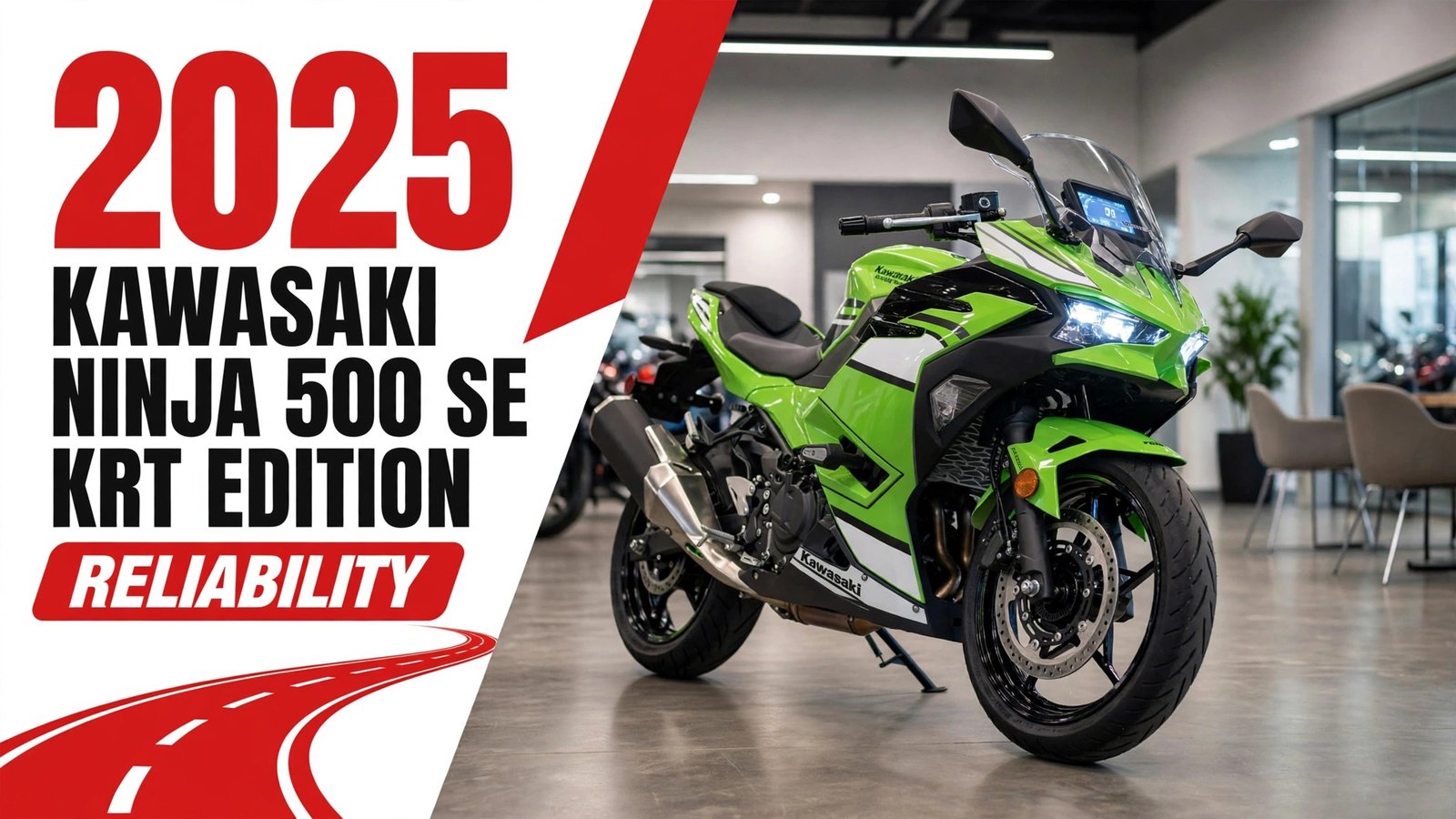
The short answer on Kawasaki Ninja 500 SE KRT Edition reliability is that the bike is a Ninja 500 with KRT paint, so its reliability is the Ninja 500’s reliability. The engine, chassis, brakes and maintenance schedule are the standard 500’s, and the one real problem in the bike’s short life is a clutch recall covering a two-week slice of 2024. This Kawasaki Ninja 500 SE KRT Edition reliability guide works through the recall first, then the maintenance chart from the 500’s own manual, then the ownership costs.
Kawasaki Ninja 500 SE KRT Edition Reliability Overview
The SE KRT is the top trim of the Ninja 500, sold for two model years only, 2024 and 2025, at the same 6,399 dollars as the plain SE ABS. Nothing mechanical separates it from the SE ABS: the same 451cc twin, trellis frame, 41 mm telescopic fork, brakes, TFT dash and KIPASS keyless ignition. Kawasaki Ninja 500 SE KRT Edition reliability therefore stands or falls on the 500’s record, and that record is short — the bike is only two model years old — but clean apart from one recall. That is the whole of Kawasaki Ninja 500 SE KRT Edition reliability in one sentence.
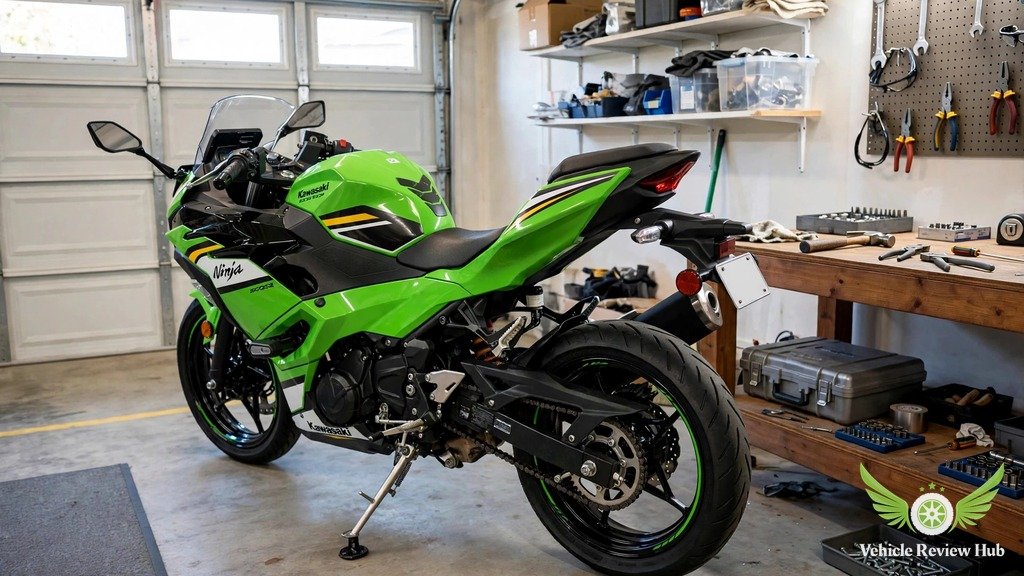
Valve Clearance Every 15,200 Miles
The headline service item is the valve inspection, due every 24,000 km — 15,200 miles — from the 500’s own manual chart. The valves are inspected at 24,000 km and again at 48,000 km; they are not adjusted on a fixed schedule. Kawasaki Ninja 500 SE KRT Edition reliability depends on that inspection being done on time, because a skipped valve check is the one maintenance miss that can turn into an expensive engine job. The clearance specifications were not verified from a source read for this guide, so this guide prints the 15,200-mile interval only — never the 400’s clearances as the 500’s.
How Mileage, Storage and Previous Care Affect Reliability
Three things decide how reliable a used SE KRT will be, and mileage is the least important. First, the 2024 recall slice: a 2024 SE KRT built between 22 January and 6 February 2024 needs the clutch recall check, and the white paint mark proves the fix was done. Second, service history: the one verified used listing, a 2024 KRT Edition SE ABS with 15,413 miles at Crossbay Motorsports in Bay Shore, New York, shows what “high mileage” means in late 2026 — and a bike with a full dealer history at that mileage beats a low-mileage bike with no records. Third, storage: the chart runs on mileage OR time, so a low-mileage bike that sat still still needs its annual service, its brake fluid at two years and its coolant at three years — and time-based ageing is part of Kawasaki Ninja 500 SE KRT Edition reliability too. That is how Kawasaki Ninja 500 SE KRT Edition reliability is judged in practice: records over mileage.
Kawasaki Ninja 500 SE KRT Edition Common Problems and Wear Items
No widespread defect pattern has been documented for the 500 beyond the one recall below. The bike is two model years old, and the press owner sample is tiny — MCN’s 2024 review carries two owner reviews, both rating reliability five out of five — so Kawasaki Ninja 500 SE KRT Edition reliability is a clean short record. The documented nits are small: the exhaust heat shield crowds the right footpeg, the mirrors vibrate, and the stock suspension is soft for heavier riders. The base bike’s LCD dash is not a nit here — this trim has the TFT — and the 400’s clutch-slip history is not this bike’s problem: the 500 launched with revised clutch parts. That clean short record is the whole of Kawasaki Ninja 500 SE KRT Edition reliability so far.
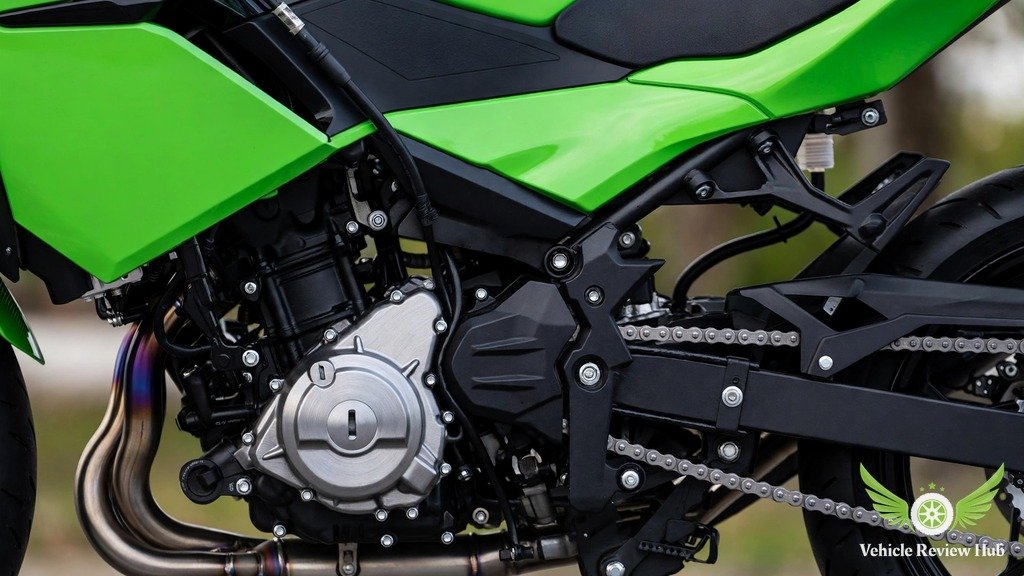
Brahpuccino’s video below is a 5,000-mile owner review of a 2025 Ninja 500 ABS in black and red — not the SE KRT Edition, so treat its trim-specific claims with care. This Kawasaki Ninja 500 SE KRT Edition reliability guide uses it as an owner-mileage report, not a trim review.
Its Own Codes Sit in the Recall
The SE KRT’s own model code sits inside the only US recall this bike has. It is the one recall in the whole of Kawasaki Ninja 500 SE KRT Edition reliability. NHTSA campaign 25V-146, Kawasaki’s own campaign MC25-04, covers 3,742 units — 1,057 Z500 ABS and SE ABS bikes plus 2,685 Ninja 500s — and the Part 573 report’s Vehicle 1 line names the “KRT Edition SE ABS” explicitly. The affected Ninja 500 codes are EX500G, EX500H and EX500J — the SE KRT’s code is EX500J. The defect is a clutch release shaft not properly welded to the lever: with continued use the lever can come apart, disabling the clutch. The supplier was New Somthai Motor Work, and the report says someone on the line may have mistakenly used “trial parts”. The component is the clutch release shaft, part 13102-0087, replaced free with repair kit P/N 99999-0975. That single fault is the whole recall story for Kawasaki Ninja 500 SE KRT Edition reliability, and a 2024 bike is decided by one check: is the VIN inside the window, and is the white paint mark there?
2025 Bikes Are Outside It
A 2025 SE KRT cannot be in the recall, because the recall population is 2024 builds only. The NHTSA recalls API returns Count:1 for the 2024 Ninja 500 — campaign 25V146000 — and Count:0 for 2025, 2026 and 2027. That is a search result, not proof on its own, but the control works: the API finds the 2024 campaign. The same API returns Count:0 for the 2024 Eliminator too. Two other campaigns sometimes get attached to the 500 by mistake — 23V-515, the 2023 ZX-4RR alternator rotor recall, and 24V-221, a ZX-4R spark plug recall — and neither belongs to this bike, nor does the 2021 Ninja 400’s cam chain tensioner recall, 20V-774. For Kawasaki Ninja 500 SE KRT Edition reliability, the 2025 story is the absence of a recall, not a new one.
| Recall fact | Detail | Source |
|---|---|---|
| Campaign | NHTSA 25V-146 / Kawasaki MC25-04 | Part 573 |
| Population | 3,742 (Z500 1,057, Ninja 500 2,685) | Part 573 |
| Production window | 22 January – 6 February 2024 | Part 573 |
| SE KRT code | EX500J, named KRT Edition SE ABS | Part 573 |
| Defect | Clutch release shaft weld | Part 573 |
| Component | Clutch release shaft 13102-0087 | Part 573 |
| Remedy | Free, kit 99999-0975 | Bulletin MC25-04 |
| Proof of repair | White paint mark by frame number | Bulletin MC25-04 |
| 2025–2027 bikes | Not affected, Count:0 | NHTSA API |
Note: every figure in this table comes from the NHTSA Part 573 report for 25V-146 and the Kawasaki bulletin MC25-04. This Kawasaki Ninja 500 SE KRT Edition reliability guide prints the recall as the bike’s one known fault — not a reason to avoid the model, since the repair is free and the mark proves it. The full report is the NHTSA Part 573 report for 25V-146.
Kawasaki Ninja 500 SE KRT Edition Maintenance Schedule and Servicing
The maintenance chart for this bike comes from the 500’s own owner’s manual: a service every 7,600 miles or every year, whichever comes first, with engine oil and the oil filter changed at every service — and that simple discipline is the heart of Kawasaki Ninja 500 SE KRT Edition reliability. The first service is at 600 miles. The chart below is the schedule a buyer should hold any used SE KRT against, and it is the schedule that decides Kawasaki Ninja 500 SE KRT Edition reliability: stamps in the book mean the bike has been looked after, and a bike without them is a negotiation, not a bargain.
Two Weeks of 2024 Production
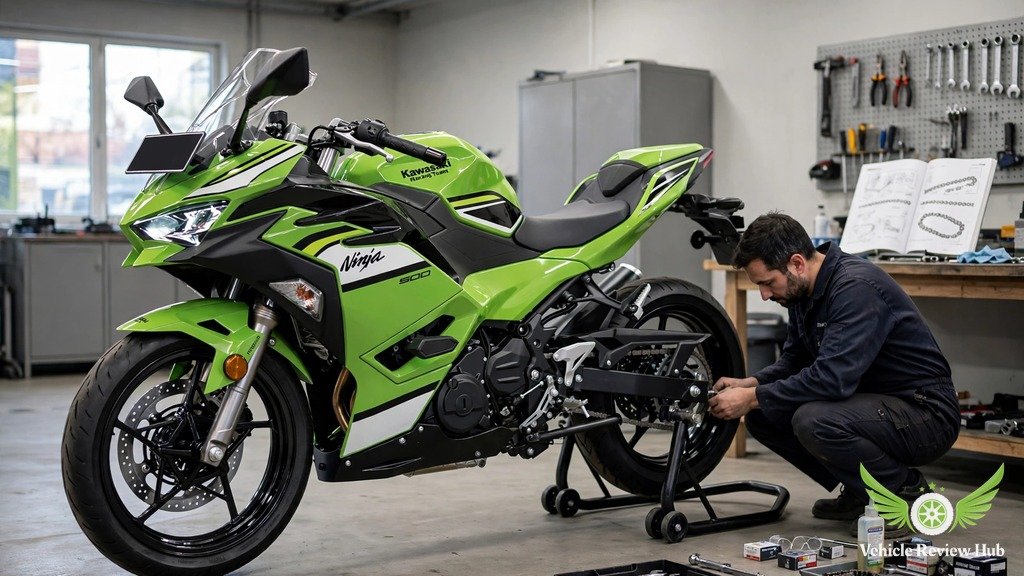
The recall covers a two-week slice of 2024 production — 22 January to 6 February 2024. Kawasaki sent a stop-sale notice to dealers on 6 March 2025, submitted the Part 573 report on 17 March 2025, and mailed owner letters on 24 March 2025. Owners who paid for the repair before the letter can claim reimbursement with documented costs. The two-week window is what makes the used-buyer check so quick: a 2024 SE KRT built outside those fifteen days was never in the recall, and one built inside them needs the white paint mark. That narrow window is why Kawasaki Ninja 500 SE KRT Edition reliability for a 2024 bike is a VIN check, not a gamble. There is no wider campaign, no second recall and no affected 2025 bike. The window is the whole recall story for Kawasaki Ninja 500 SE KRT Edition reliability.
Chart from the 500’s Own Manual
The chart below is transcribed from the 2024 Ninja 500 owner’s manual — the 500’s own chart, not the Z500’s and not the 400’s. The Z500 shares the identical platform and schedule, which is why an earlier draft of this heading named the Z500 manual. The manual’s chart is the source for every interval here, and the site that transcribed it is used for its chart only — its prose prints European power figures and the wrong suspension and dash descriptions, so none of its prose is cited. The full transcription is the 2024 Ninja 500 maintenance schedule, and the intervals below decide Kawasaki Ninja 500 SE KRT Edition reliability in practice.
| Service item | Interval | Detail |
|---|---|---|
| Engine oil + oil filter | Every service | 2.3 L 10W-40; drain bolt 30 Nm |
| First service | 600 miles | Oil + filter, inspection |
| Routine service | 7,600 miles or yearly | Whichever first |
| Valve clearance inspection | 15,200 mi (24,000 km) | Inspect only |
| Spark plugs | Every service | NGK LMAR9G, gap 0.7–0.8 mm |
| Air cleaner + fuel filter | 15,200 mi (24,000 km) | More often if dusty |
| Coolant, hoses, O-rings | 36,000 km / 3 years | Nitrate-free |
| Brake fluid | 15,200 mi / 2 years | DOT-4 |
| Brake hoses + rubber parts | Every 4 years | Hoses, rubber parts |
| Drive chain | Lube every 400 miles | Slack 20–30 mm; rear axle 98 Nm |
Note: the oil volume is 2.3 litres with the filter — not the Ninja 400’s 2.0 litres — and the chain slack of 20 to 30 mm was verified from the 500’s own manual. This Kawasaki Ninja 500 SE KRT Edition reliability guide prints the chart as the manual gives it, and the one figure it does not print is the valve clearance specification.
Kawasaki Ninja 500 SE KRT Edition Tires, Brakes and Suspension Maintenance
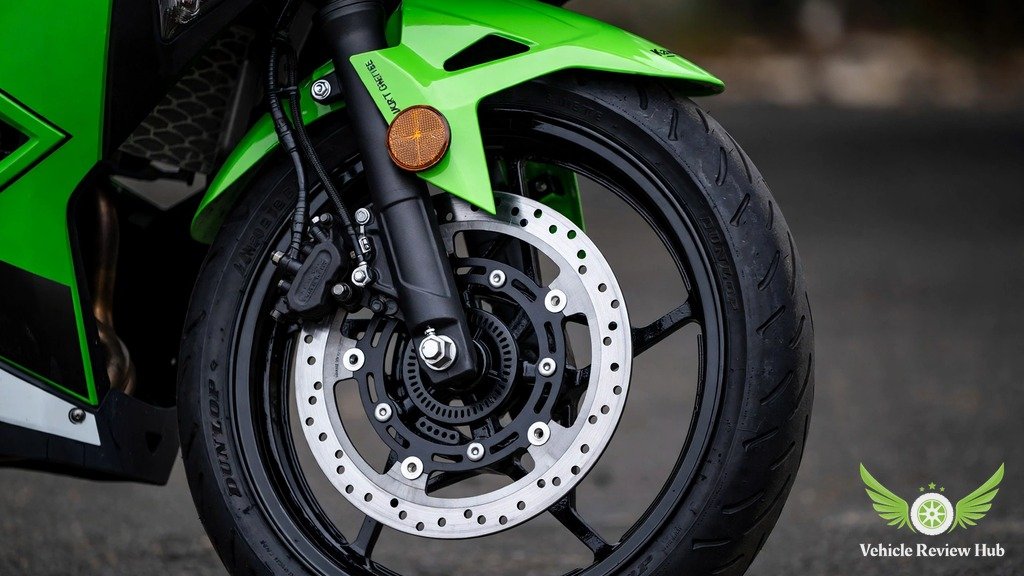
Tyres, brakes and suspension are where a used SE KRT shows its history. The factory fitment is the Dunlop Sportmax GPR300 — a budget tyre many owners replace first — on 17-inch cast wheels, with a 310 mm front disc and a 220 mm rear disc, ABS standard on this trim. The checks below are the ones that matter at a viewing, and they carry Kawasaki Ninja 500 SE KRT Edition reliability on the road: pressures, pad thickness, chain slack and fork seals.
White Paint Mark Proves the Fix
The white paint mark is the visible proof that the recall repair was done, and it is the most useful thing a used buyer can look for. The service bulletin instructs the dealer to “Make a white paint mark [M] to the left of the first digit of the frame number as shown” after fitting the replacement shaft. A 2024 SE KRT with the mark has had the free repair; one inside the two-week window without the mark still needs it, and the repair is free at a dealer. The mark sits on the frame, not on a sticker or a piece of paper, so it cannot be lost with the service book. For Kawasaki Ninja 500 SE KRT Edition reliability, the paint mark is the whole used-buyer test in one glance.
Tire, Brake and Suspension Checks That Matter
Start with the tyres: front 110/70-17 at 200 kPa (28 psi) and rear 150/60-17 at 225 kPa (32 psi), checked for cracking on a bike that has sat. The brake pad service limits are 1.0 mm front and 1.5 mm rear — pads below those need replacing, and the fluid level drops as the pads wear, so a low reservoir is a pad check, not just a top-up. Brake fluid is DOT-4, replaced at 15,200 miles or every two years, with the hoses and rubber parts replaced every four years. The chain is the most frequent job: lube every 400 miles, check the slack every 600 miles, and keep it at 20 to 30 mm on the lower run midway between the sprockets, bike in neutral on its kickstand — and check it in more than one place, since a chain wears unevenly. Rear axle torque is 98 Nm; clutch free play is 2 to 3 mm. On suspension, look for fork seal leaks and smooth operation; the stock suspension is soft for heavier riders. The wear items are the chain, the tyres and the brake pads; the SE extras are cosmetic, not mechanical. Our Kawasaki Ninja 400 reliability guide covers the same checks on the older bike, and the numbers differ — do not carry the 400’s figures across, because the figures that decide Kawasaki Ninja 500 SE KRT Edition reliability are the 500’s own.
| Consumable or check | Specification | When |
|---|---|---|
| Engine oil | 2.3 L 10W-40 | Every service |
| Oil filter | HF303RC (= 16097-0008), 17.5 Nm | Every service |
| Spark plugs | NGK LMAR9G, gap 0.7–0.8 mm | Every service |
| Drive chain | Sealed chain; slack 20–30 mm | Lube 400 mi; check 600 mi |
| Tyre pressures | Front 28 psi; rear 32 psi | Every ride check |
| Brake pads | Service limit 1.0 mm front / 1.5 mm rear | Every service |
| Brake fluid | DOT-4 | 15,200 mi / 2 years |
| Idle speed | 1,300 ± 50 rpm | Every service |
Note: no part prices are printed in this table, because none were verified — only the part numbers and specifications. This Kawasaki Ninja 500 SE KRT Edition reliability guide lists what the bike needs, not what it costs; the one verified cost figure is below, labelled as a UK figure.
Kawasaki Ninja 500 SE KRT Edition Maintenance and Ownership Costs
Ownership costs are mostly routine: oil and a filter at every service, plugs at every service, chain lube every 400 miles, tyres when they wear and brake pads at their limits. There is no expensive scheduled item — the valve inspection at 15,200 miles is the biggest job. What this section does not do is invent dollar figures: no service, tyre or insurance cost is printed without a named source. Kawasaki Ninja 500 SE KRT Edition reliability is cheap to maintain on the chart, and the costs that surprise owners are the ones nobody verified — this guide leaves those blank. That is the honest frame for Kawasaki Ninja 500 SE KRT Edition reliability costs: cheap on the chart, blank where nobody verified.
Fuel, Routine Servicing, Tires and Replacement Parts
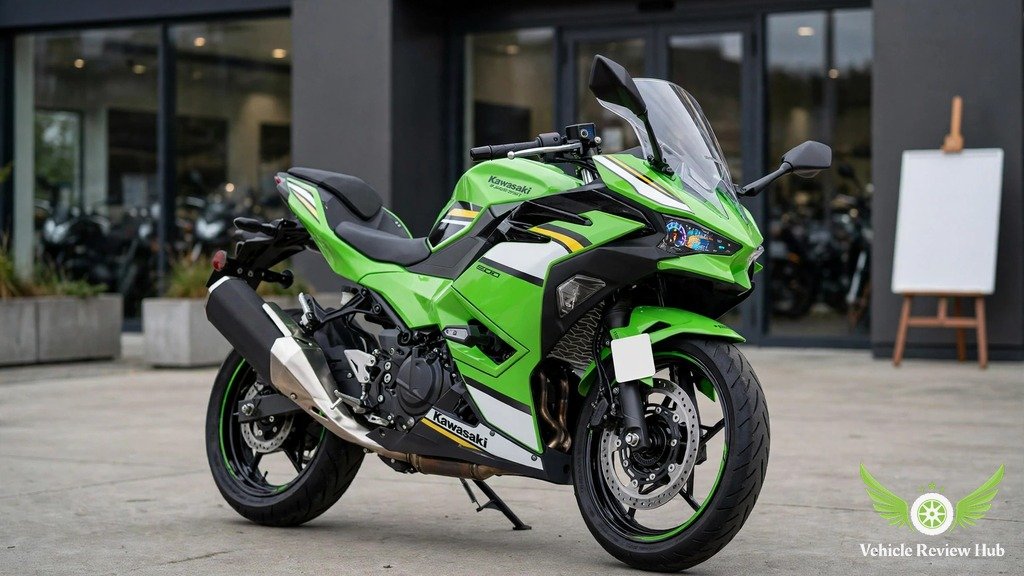
Fuel is the cheapest part of running this bike: the 3.7-gallon tank and the lab economy figure of 62.0 mpg give a lab range of 229 miles, and the only owner-measured figure verified is Chase on Two Wheels’ 54 mpg on a 222-mile mountain day. Routine servicing follows the chart above, with the HF303RC oil filter and the NGK LMAR9G plugs as the recurring parts — and those two parts are the recurring cost of Kawasaki Ninja 500 SE KRT Edition reliability. Tyres are the first wear item most owners meet: the factory Dunlop Sportmax GPR300 is a budget tyre, commonly the first upgrade. The only servicing cost figure verified for this guide comes from MCN’s UK owner sample — annual servicing at £1,000, never a US cost. No tyre, insurance or dealer labour dollar figure was verified for the US market. Our Kawasaki Ninja 500 reliability guide covers the same costs for the standard bike — the SE KRT adds no servicing cost over the SE ABS. For Kawasaki Ninja 500 SE KRT Edition reliability, the honest cost picture is a cheap routine schedule and one UK-labelled servicing figure.
Fob and TFT Prices Unverified
No verified replacement price exists for the 500’s KIPASS fob or for its full-colour TFT display, and this guide does not print one. Prices quoted online for the Concours 14’s KIPASS fob belong to a different bike with different part numbers — they are not this bike’s prices, and they are not printed here. What is known is that the fob is dealer-programmed, so a lost fob means a dealer visit, and that the TFT is an SE-only part shared with the SE ABS. Kawasaki Ninja 500 SE KRT Edition reliability does not depend on either price — the fob and the screen either work or they do not — but a buyer should know that neither replacement cost has been verified, and should ask the dealer for a quote rather than trusting a figure found online for another model.
How to Keep a Kawasaki Ninja 500 SE KRT Edition Reliable
Keeping this bike reliable is a matter of following the chart and keeping records. The schedule is short, the jobs are simple, and the one recall is free and checkable. The buyer who does those three things gets the same bike the testers rode. Follow the chart and keep the records, and Kawasaki Ninja 500 SE KRT Edition reliability looks after itself. The evidence is consistent: Motorcycle.com’s first ride scored the bike 86.5 percent overall, RevZilla’s first ride weighed its test bike at 381 lb, and MCN’s 2024 review carries two owner reviews rating reliability five out of five. Our Kawasaki Ninja 500 SE KRT Edition review covers the trim and the price, and our Kawasaki Ninja 500 SE KRT Edition performance guide covers what the bike does on the road.
Preventive Maintenance, Records and Regular Inspections
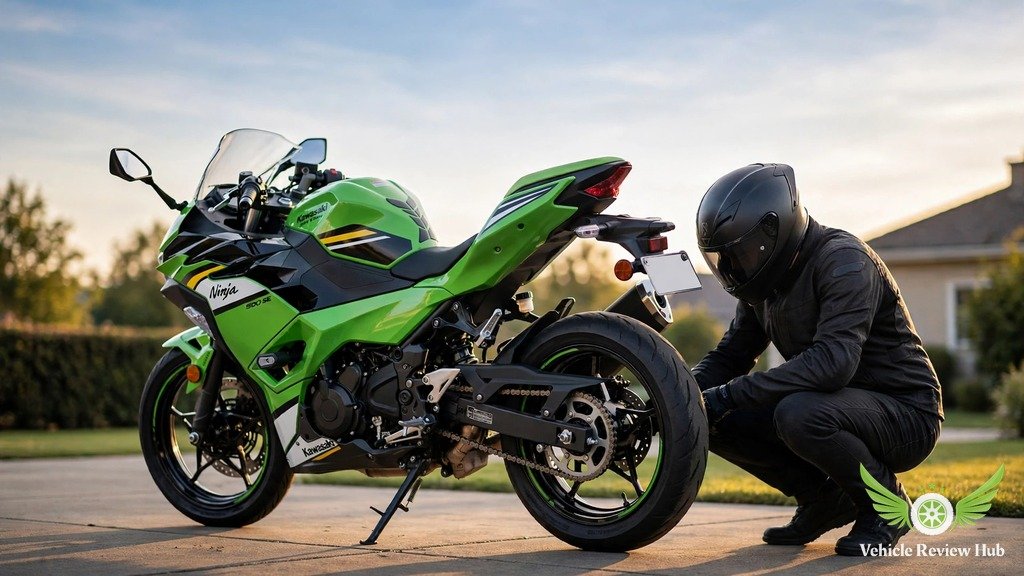
Follow the chart, not the odometer alone — that is the first rule of Kawasaki Ninja 500 SE KRT Edition reliability. The service interval is every 7,600 miles or every year, and a bike that sits still still ages — oil, brake fluid at two years and coolant at three years all run on time as well as mileage. Keep the service book stamped and keep the receipts: on a two-year-old bike, the records are worth more than the odometer reading. Inspect the annual items every service — throttle, brakes, pads, leaks, clutch, wheels and tyres, suspension, steering, lights and fasteners — and check the chain slack in more than one place. The valve inspection at 15,200 miles is the one job to book ahead, and the brake fluid change at the same interval is the one owners most often forget. Kawasaki Ninja 500 SE KRT Edition reliability is a maintenance story, not a luck story: the chart is short, the jobs are known, and the bike rewards the owner who does them on time.
Keep Both KIPASS Fobs Safe
The SE KRT starts without a key: the KIPASS fob in a pocket releases the steering lock and the main switch. Keep the fob safe — it is the cheapest insurance in Kawasaki Ninja 500 SE KRT Edition reliability — and keep any spare that came with the bike in a separate safe place. The owner’s manual material checked for this guide did not confirm how many fobs the bike is supplied with, so this guide does not state a fob count as fact — check what came with your bike. If a fob is lost, the replacement is dealer-programmed, so a lost fob means a dealer visit, and no replacement price has been verified for this bike. The fob is a small part of Kawasaki Ninja 500 SE KRT Edition reliability, but it is the part that strands the bike if it goes missing.
The final word on Kawasaki Ninja 500 SE KRT Edition reliability is that the bike has one known fault, one clear check and one short maintenance chart. The fault is the 2024 clutch recall, the check is the VIN plus the white paint mark, and the chart is a service every 7,600 miles or every year with valves inspected at 15,200 miles. A 2025 SE KRT skips the recall entirely, which is the simplest version of Kawasaki Ninja 500 SE KRT Edition reliability there is, and nothing else in the bike’s short record suggests a pattern. Buy the 2024 bike with the paint mark and the service book, buy the 2025 bike with the service book, and keep both fobs safe.
Kawasaki Ninja 500 SE KRT Edition Reliability Frequently Asked Questions
The SE KRT is a Ninja 500 with KRT paint, so its reliability is the Ninja 500’s reliability. This Kawasaki Ninja 500 SE KRT Edition reliability guide answers the six questions buyers ask most, starting with the one recall in the bike’s short life and the maintenance chart from the 500’s own manual.
Is the Kawasaki Ninja 500 SE KRT Edition reliable?
The record is short but clean apart from one recall. The bike is only two model years old, and the press owner sample is tiny: MCN’s 2024 review carries two owner reviews, both rating reliability five out of five. No widespread defect pattern has been documented beyond the 2024 clutch recall below. The documented nits are small: the exhaust heat shield crowds the right footpeg, the mirrors vibrate, and the stock suspension is soft for heavier riders. This Kawasaki Ninja 500 SE KRT Edition reliability guide calls that a clean short record, not a proven long-term one.
What is the 25V-146 clutch recall?
NHTSA campaign 25V-146, Kawasaki’s own campaign MC25-04, covers 3,742 units: 1,057 Z500 bikes plus 2,685 Ninja 500s built between 22 January and 6 February 2024. The defect is a clutch release shaft not properly welded to the lever, which can come apart with continued use and disable the clutch. The SE KRT’s own model code, EX500J, sits inside the recall. The repair is free, using kit P/N 99999-0975, and the visible proof is a white paint mark to the left of the first digit of the frame number. This Kawasaki Ninja 500 SE KRT Edition reliability guide prints the recall as the bike’s one known fault, not a reason to avoid the model, since the repair is free and the mark proves it.
How do I check whether a 2024 SE KRT needs the recall?
Check the VIN against the two-week production window, 22 January to 6 February 2024, and look for the white paint mark on the frame, to the left of the first digit of the frame number. A 2024 SE KRT with the mark has had the free repair; one built inside the window without the mark still needs it, and the repair is free at a dealer. A 2025 SE KRT cannot be in the recall, because the population is 2024 builds only: the NHTSA recalls API returns Count:1 for the 2024 Ninja 500 and Count:0 for 2025, 2026 and 2027.
What is the maintenance schedule?
A service is due every 7,600 miles or every year, whichever comes first, with the first service at 600 miles. Engine oil and the oil filter are changed at every service, and the spark plugs, NGK LMAR9G, are replaced at every service too. The valve inspection is due every 15,200 miles, and brake fluid is replaced at 15,200 miles or every two years, using DOT-4. This Kawasaki Ninja 500 SE KRT Edition reliability guide prints the chart from the 500’s own manual, not the Z500’s and not the 400’s. The valve clearance specifications were not verified from a source read for this guide, so only the 15,200-mile interval is printed.
What oil, chain and tyre figures should I use?
Engine oil is 2.3 litres of 10W-40 with the filter, not the Ninja 400’s 2.0 litres, with the drain bolt torqued to 30 Nm and the HF303RC oil filter to 17.5 Nm. Drive chain slack is 20 to 30 mm, checked on the lower run midway between the sprockets, with the chain lubed every 400 miles and the rear axle torqued to 98 Nm. Tyre pressures are 28 psi front and 32 psi rear. Brake pad service limits are 1.0 mm front and 1.5 mm rear, and clutch free play is 2 to 3 mm. These are the 500’s own figures, and this Kawasaki Ninja 500 SE KRT Edition reliability guide never carries the 400’s figures across.
How much does a replacement KIPASS fob or TFT display cost?
No verified replacement price exists for either, and this guide does not print one. Prices quoted online for the Concours 14’s KIPASS fob belong to a different bike with different part numbers, so they are not this bike’s prices. What is known is that the fob is dealer-programmed, so a lost fob means a dealer visit, and the TFT is an SE-only part shared with the SE ABS. The owner’s manual material checked for this guide also did not confirm how many fobs the bike is supplied with, so this Kawasaki Ninja 500 SE KRT Edition reliability guide does not state a fob count as fact: check what came with your bike.