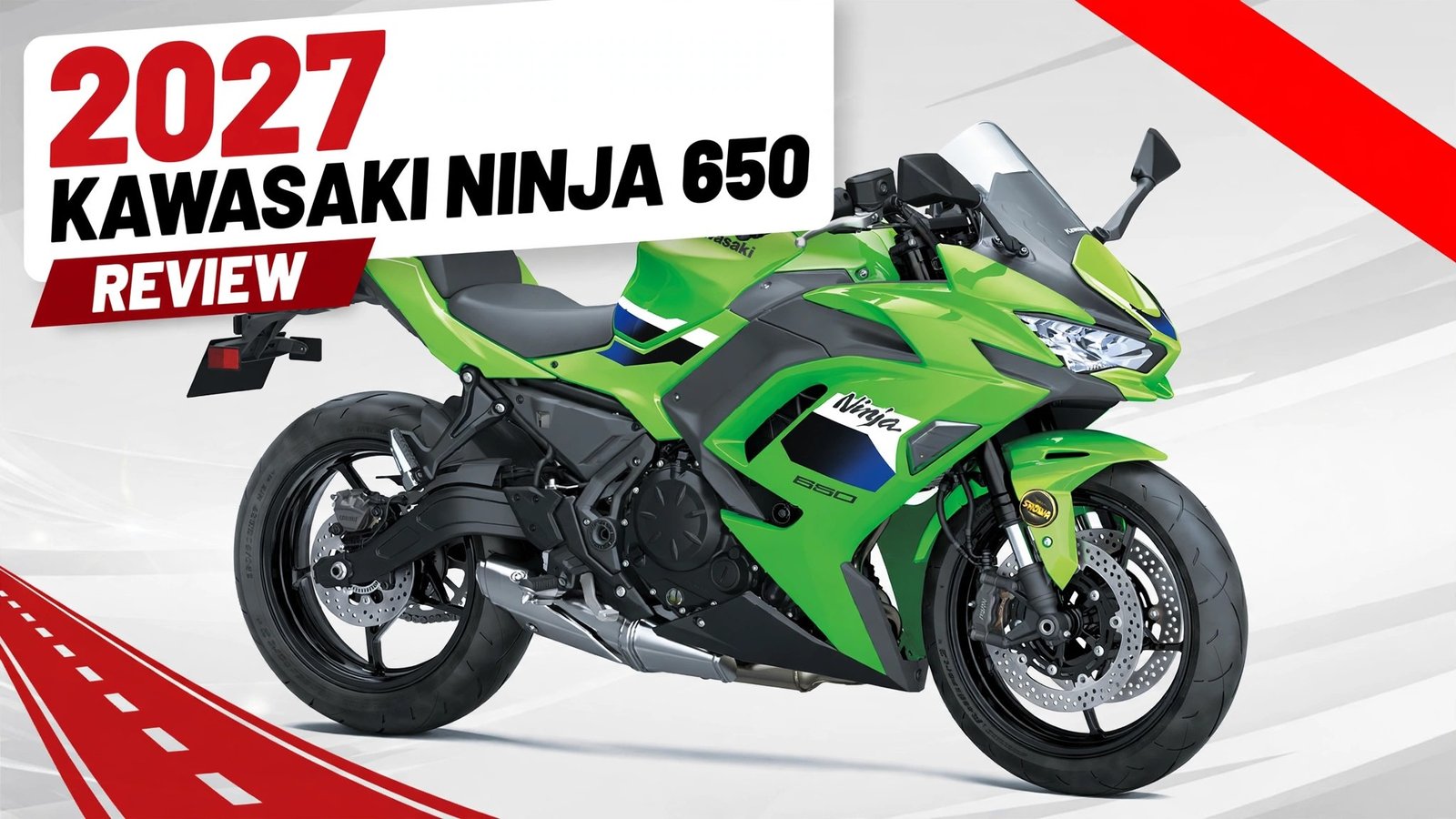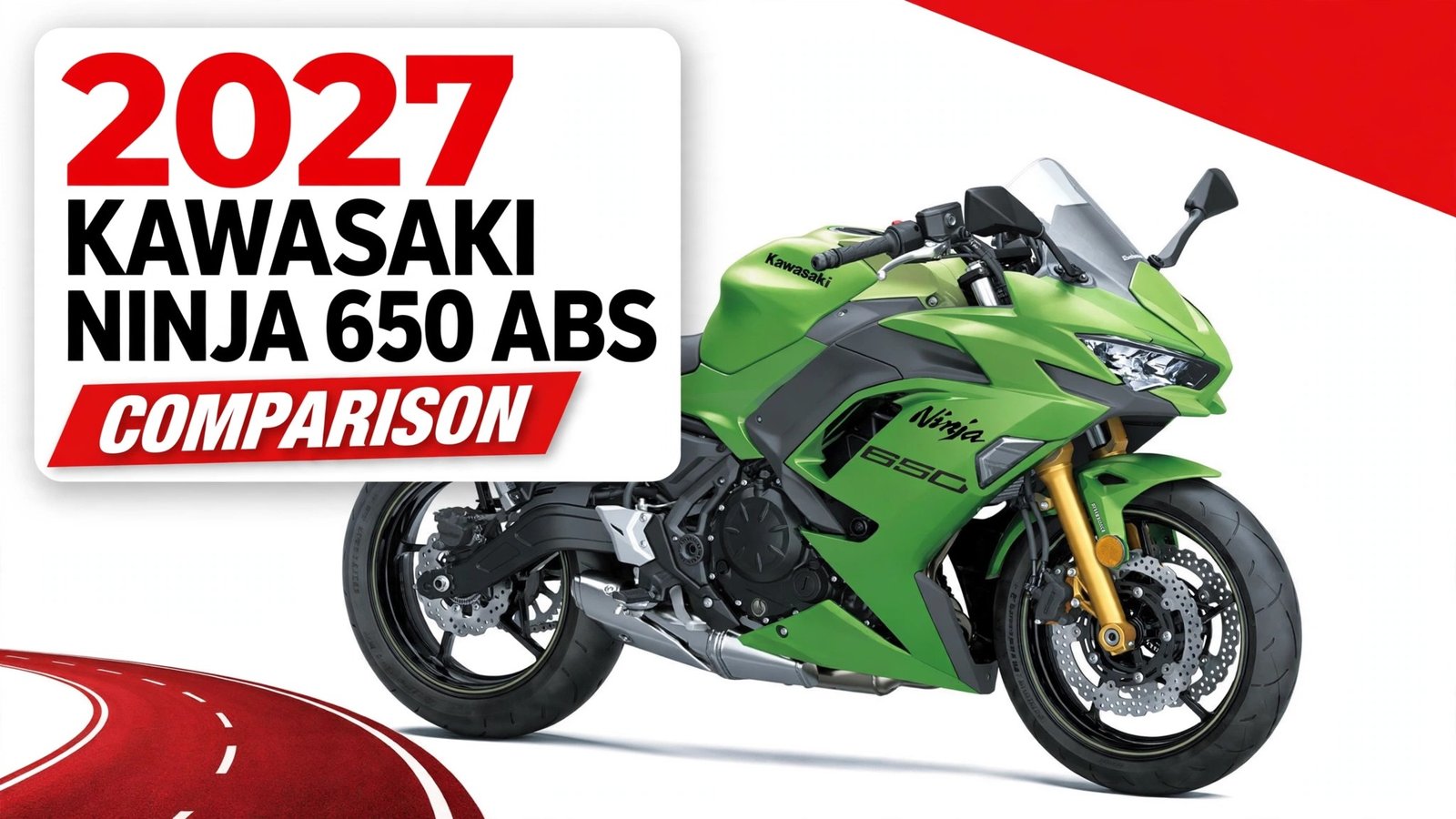
For 2027, Kawasaki made the decision for you. The Ninja 650 ABS is the only Ninja 650 on sale in the United States, at $8,099 before destination, and the ABS premium has simply vanished. This Kawasaki Ninja 650 ABS comparison puts that bike against the three machines a buyer actually cross-shops: the last non-ABS Ninja 650 from 2026, the Suzuki SV650, and the Yamaha YZF-R7. The question is no longer whether to pay for ABS, and this Kawasaki Ninja 650 ABS comparison prices every one of them to the dollar.
The short answer is yes for most riders. The 2027 ABS bike is $100 cheaper than the 2026 ABS bike, gains a 37 mm inverted fork and radial calipers, and sits $50 below the SV650 on MSRP. But the ABS system itself is unchanged: a conventional two-channel setup with no cornering logic and no IMU. In this Kawasaki Ninja 650 ABS comparison, that distinction matters, because the R7 brings a six-axis IMU and a quickshifter for its extra money. What follows is the full Kawasaki Ninja 650 ABS comparison.
Kawasaki Ninja 650 ABS Overview and Its Closest Rivals
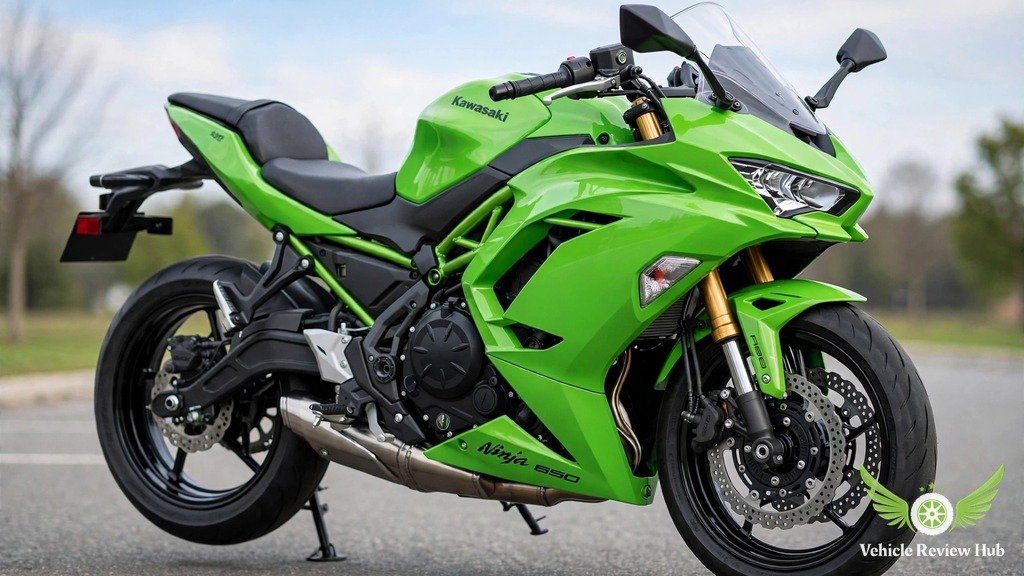
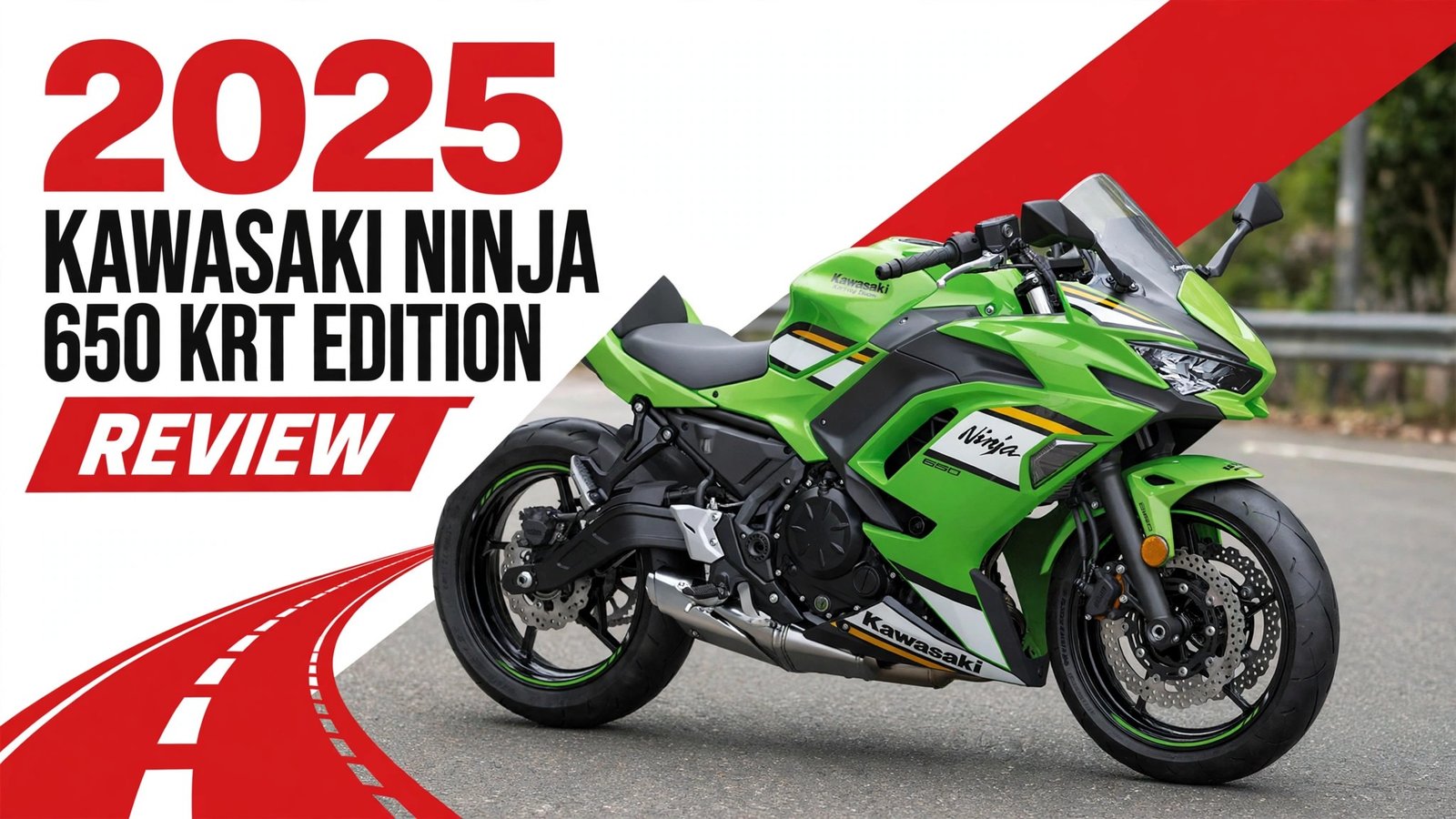
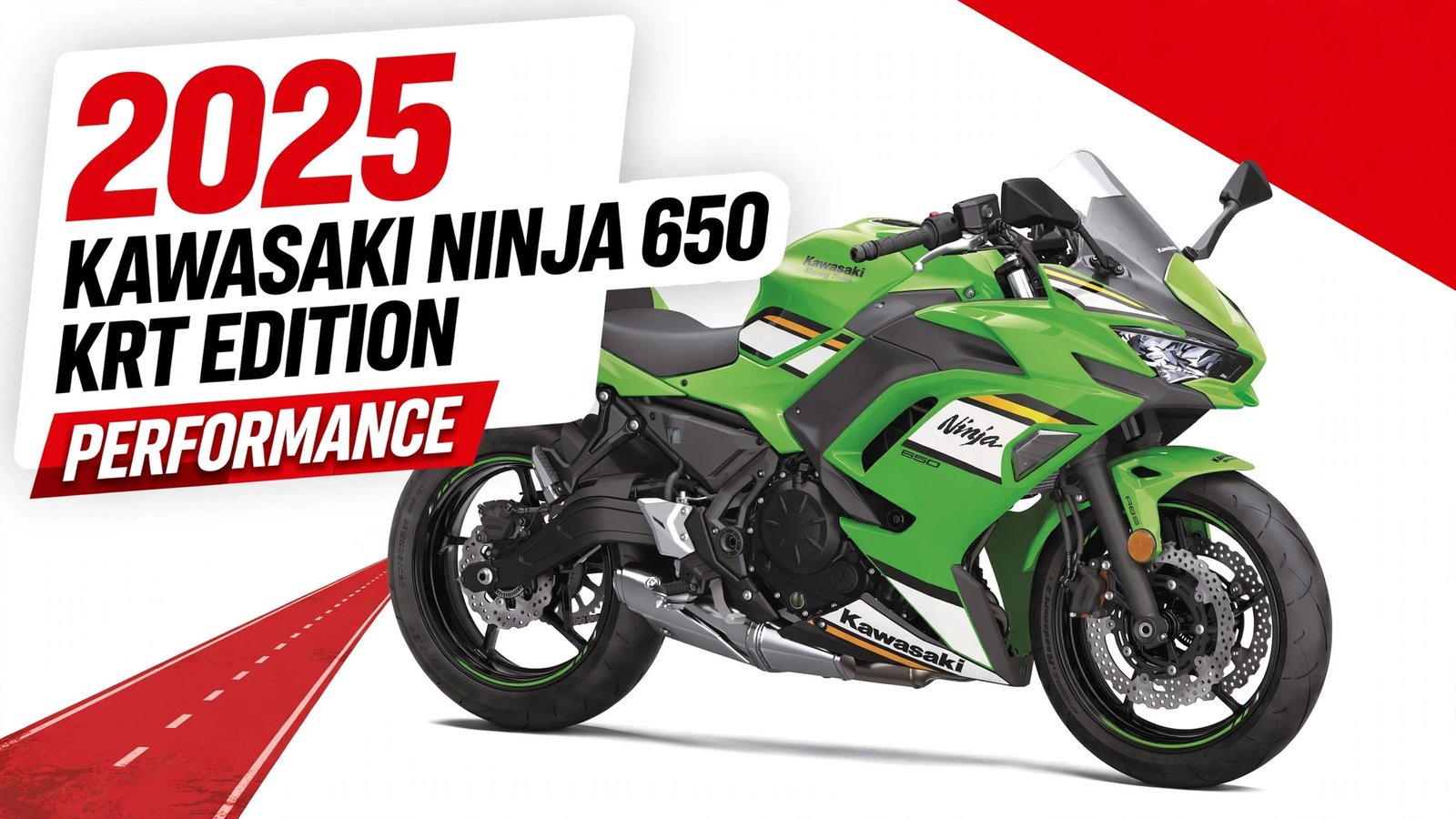
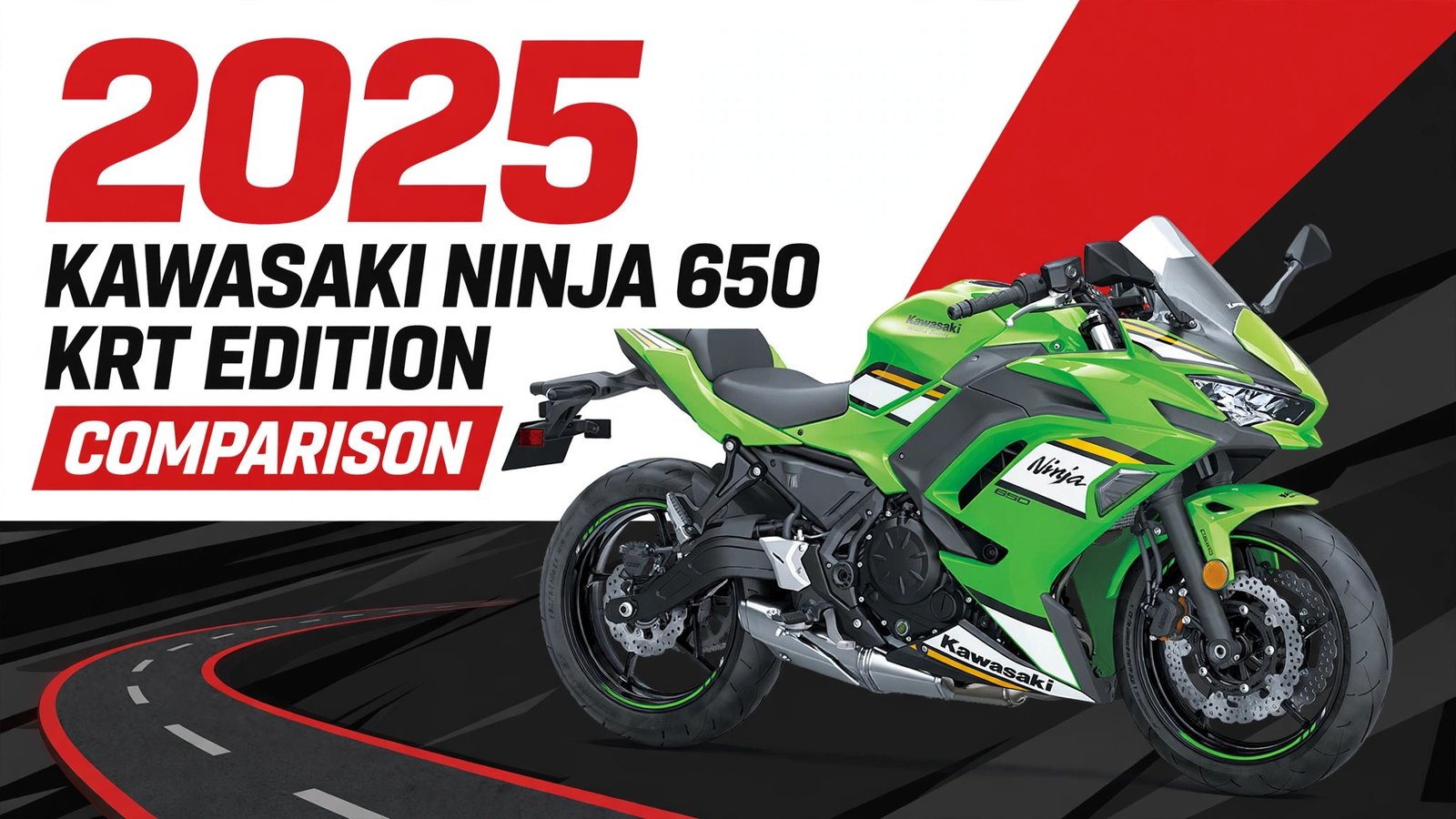
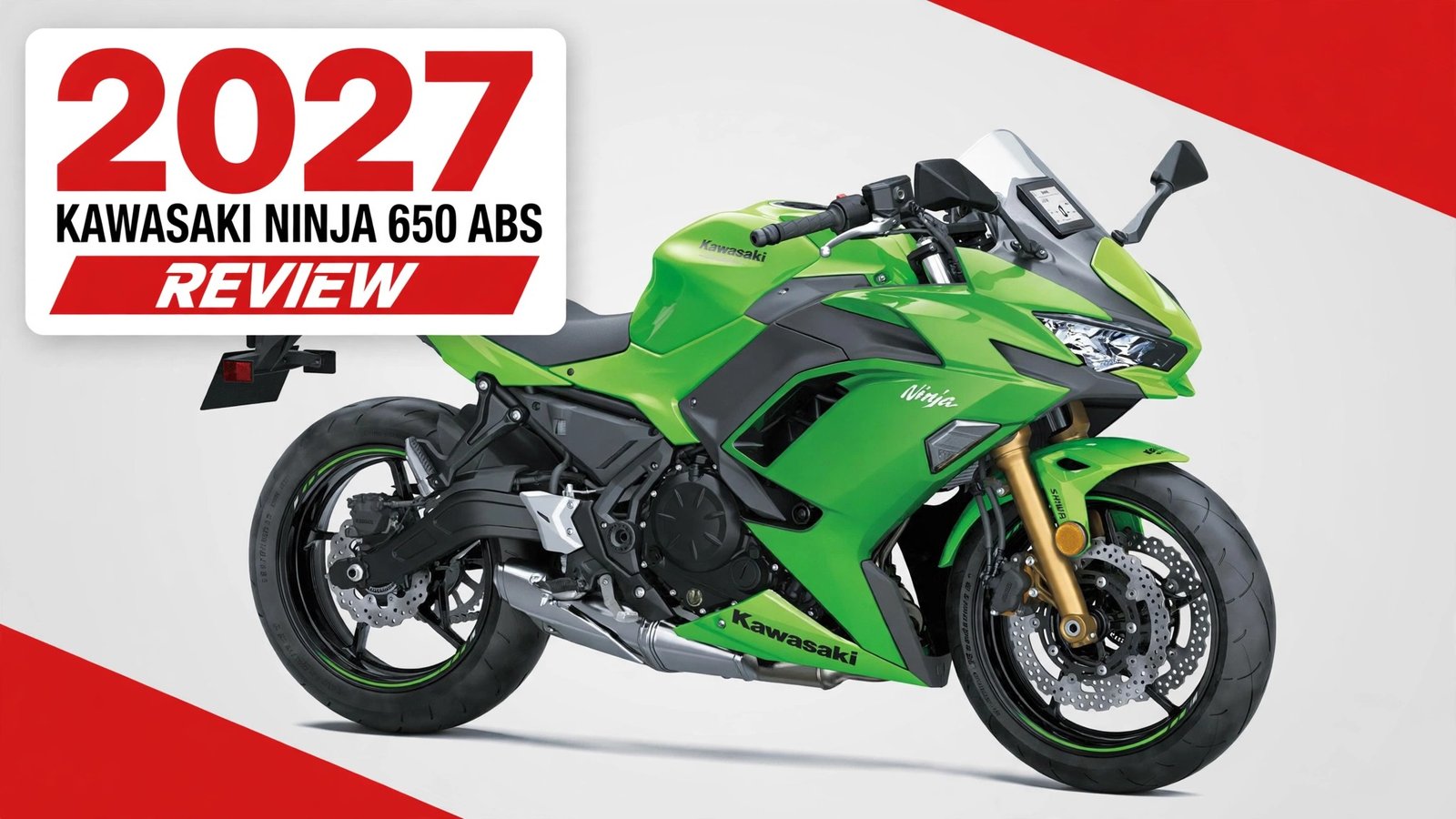
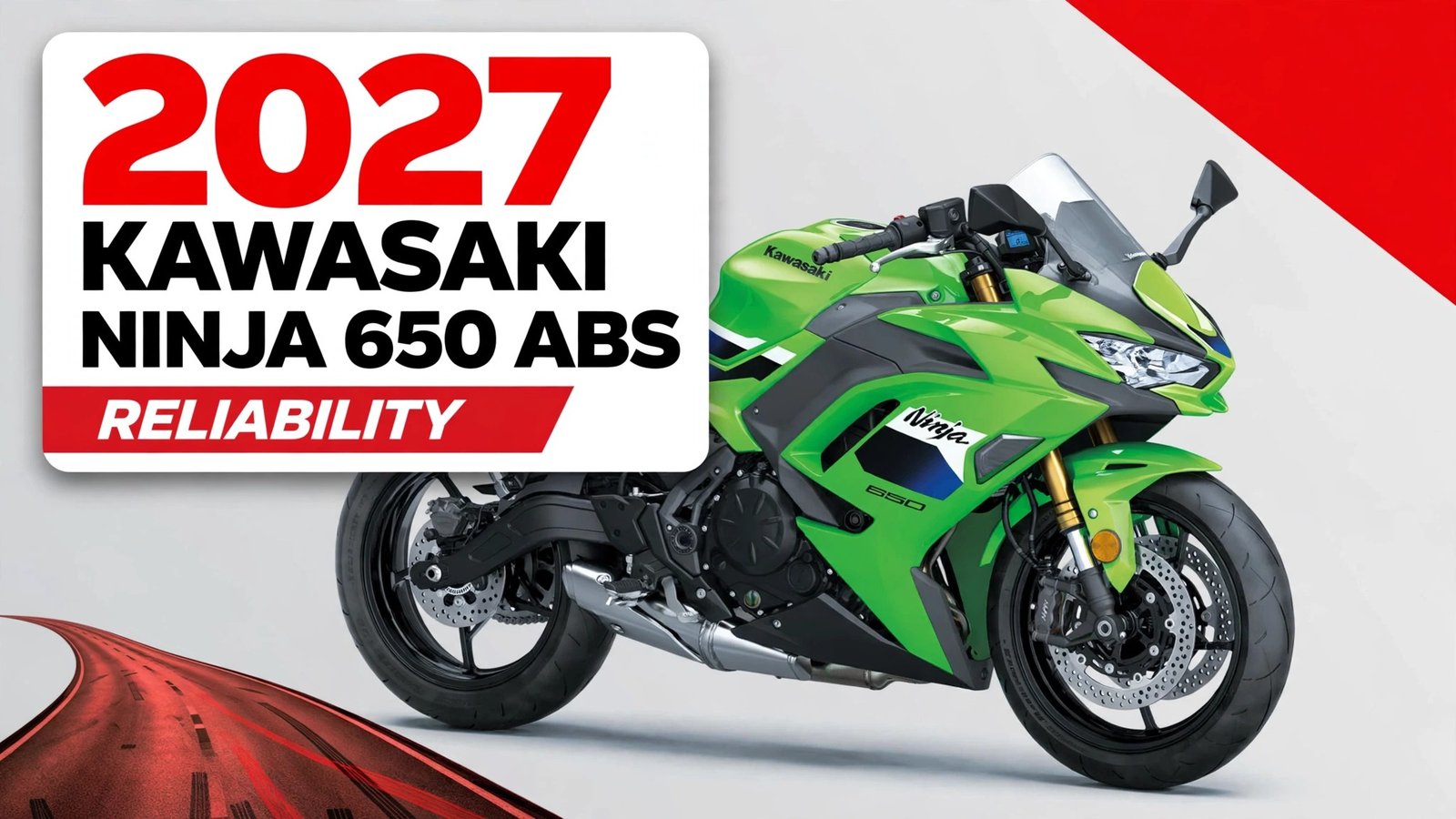
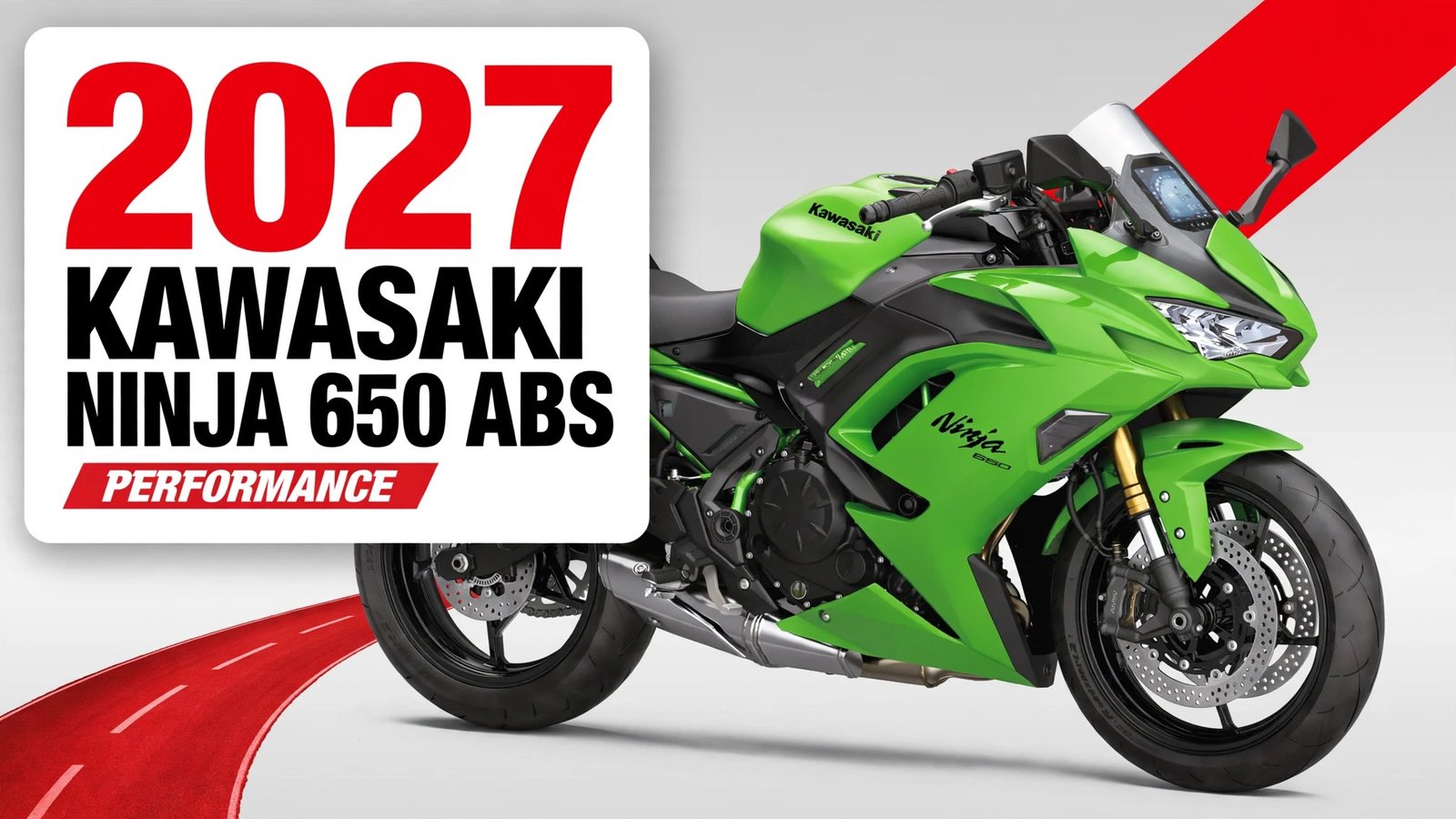
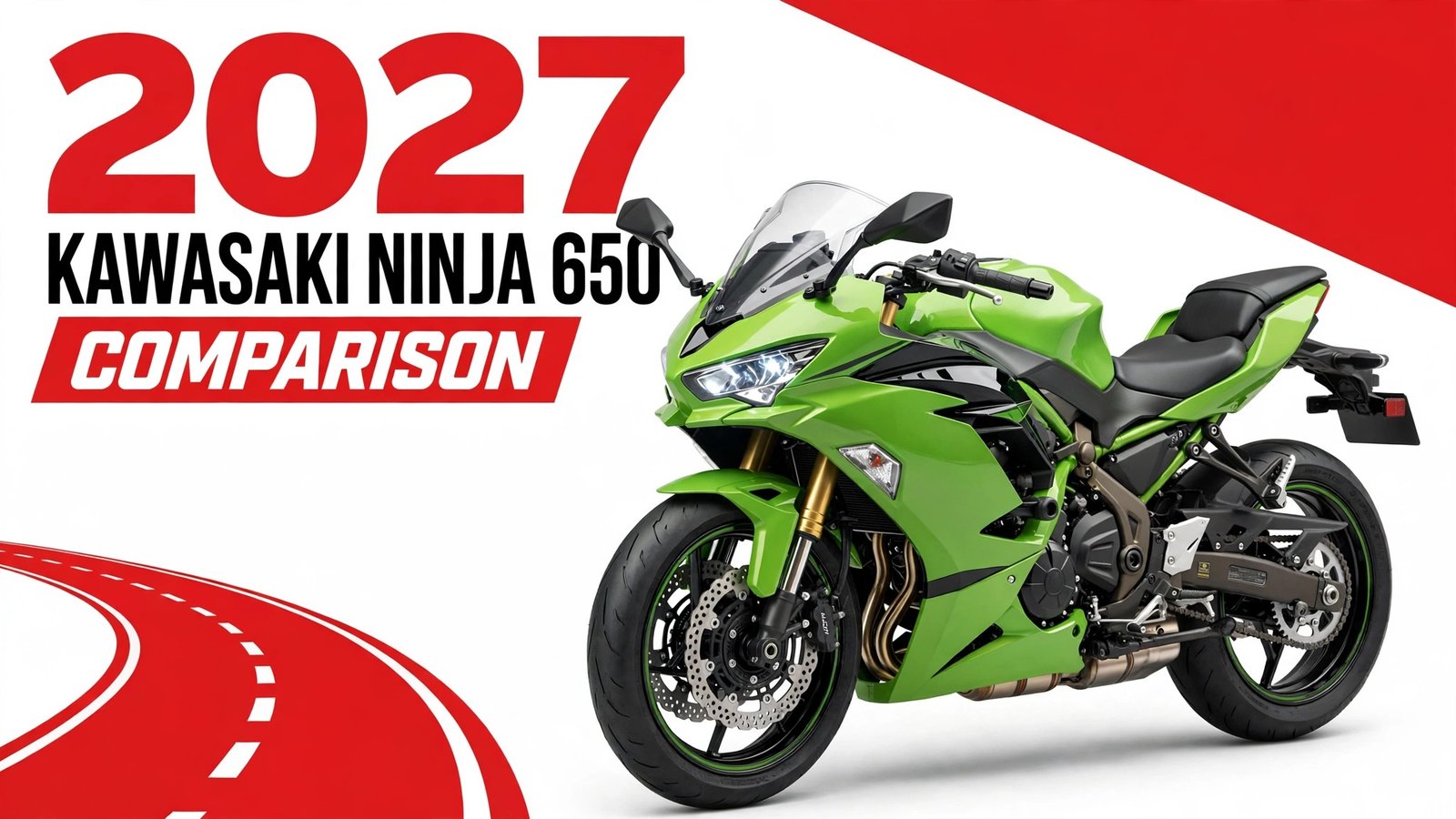
The Kawasaki Ninja 650 ABS comparison starts with a bike that is easy to describe and hard to argue with. The 2027 Ninja 650 ABS is a 649cc parallel twin claiming 67.0 hp at 8,000 rpm and 48.5 lb-ft at 6,700 rpm, measured to ISO 4106, with a 4.3-inch TFT dash and two-mode KTRC. It weighs 427.8 lb in 50-state trim, 425.6 lb in 49-state trim, and carries 4.0 gallons of fuel. The 2027 upgrade is the front end: a 37 mm inverted Showa SFF-BP fork and radial-mount four-piston calipers on dual 300 mm semi-floating discs.
ABS Is No Longer the Question
ABS was an option on the Ninja 650 for fourteen years. It arrived in 2013 at a $500 premium, settled at $400, and rose to $600. For 2027 there is no non-ABS bike, no KRT Edition, and no premium to pay. That is why this Kawasaki Ninja 650 ABS comparison treats ABS as the baseline, not the feature. The 2027 bike’s ABS is the same conventional two-channel system as before, documented as a Bosch 9.1M unit on the 2017-on bikes, with no lean-sensitive logic and no IMU on any Ninja 650. The reliability guide explains the system; the safety net now comes free.
How the Four Bikes Differ at a Glance
Four bikes, four characters. The ABS 650 is the comfortable faired twin with the newest front end. The 2026 non-ABS 650 is the same motorcycle with the old fork. The SV650 is the naked V-twin with the most claimed power and the simplest kit. The R7 is the supersport: the lightest, the tallest, and the most expensive. The table below anchors the Kawasaki Ninja 650 ABS comparison.
| Item | Ninja 650 ABS (2027) | Ninja 650 non-ABS (2026) | Suzuki SV650 (2026) | Yamaha YZF-R7 (2026) |
|---|---|---|---|---|
| MSRP | $8,099 base / $8,299 premium | $7,599 | $8,149 | $9,399 |
| Destination | $685 | $685 | $600 | $675 |
| Delivered (MSRP + destination) | $8,784 / $8,984 | $8,284 | $8,749 | $10,074 |
| Engine | 649cc parallel twin | 649cc parallel twin (same) | 645cc 90° V-twin | 689cc CP2 parallel twin |
| Claimed power | 67.0 hp @ 8,000 / 48.5 lb-ft @ 6,700 | 67.0 hp @ 8,000 / 48.5 lb-ft @ 6,700 (same) | 75.1 hp @ 8,500 / 47.2 lb-ft (64 Nm) | 72.4 hp @ 8,750 / 50.2 lb-ft @ 6,500 |
| Curb / wet weight | 427.8 lb (50-state) / 425.6 lb (49-state) | 421.2 lb | 437 lb | 417 lb |
| Seat height | 30.9 in | 31.1 in | 30.9 in | 32.7 in |
| Fuel tank | 4.0 gal | 4.0 gal | 3.8 gal | 3.7 gal |
| Front fork | 37 mm inverted Showa SFF-BP | 41 mm telescopic | 41 mm telescopic | 41 mm inverted KYB, fully adjustable |
| Front brakes | Dual 300 mm, radial 4-piston, ABS | Dual 300 mm petal, 2-piston, no ABS | Dual 290 mm discs, ABS | Dual 298 mm discs, Brembo radial master, ABS |
| Dash | 4.3-in TFT + Rideology | 4.3-in TFT + Rideology | LCD (no TFT) | 5-in TFT |
| Traction control | KTRC, 2 modes + OFF (no IMU) | KTRC, 2 modes + OFF (no IMU) | None | IMU-based, lean-sensitive |
| Quickshifter | Accessory only | Accessory only | None | Gen-3 up/down standard |
Note: Delivered prices in this Kawasaki Ninja 650 ABS comparison are MSRP plus the destination charge only. The SV650’s $8,749 does not include a $250 Suzuki freight surcharge that appears in some dealer pricing.
Kawasaki Ninja 650 ABS vs Kawasaki Ninja 650
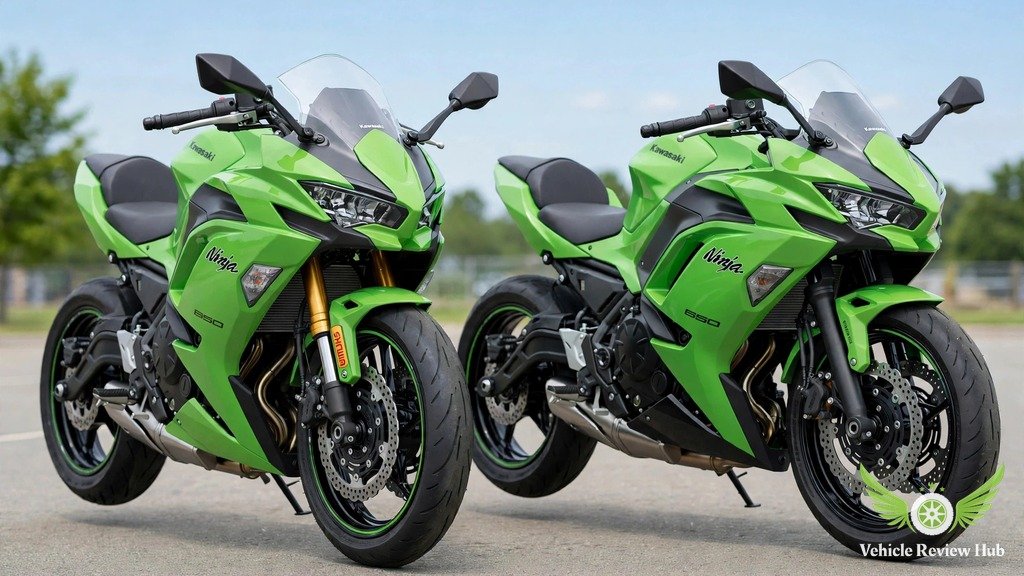
The first pairing in this Kawasaki Ninja 650 ABS comparison is the 2027 ABS bike against its own non-ABS twin from 2026. There is no non-ABS 2027 bike, so the comparison runs across one model year. The two bikes look identical: the same motorcycle except for the ABS tone ring and sensor, the price, and the front end.
Engine, Specs and Performance Side by Side
There is no performance gap to find. Both bikes use the same 649cc parallel twin, the same claimed 67.0 hp at 8,000 rpm and 48.5 lb-ft at 6,700 rpm. The measured rear-wheel figures are the same too: MCN’s long-term test recorded 60.38 bhp at the rear wheel on a stock bike, and Rider Magazine recorded 60.6 hp at 8,100 rpm on the same engine in the Z650. No US dyno run of a current bike exists, and no test has separated ABS from non-ABS fuel consumption, so the Kawasaki Ninja 650 ABS comparison finds no speed difference and no mileage difference between the two. Top speed has no official figure and no instrumented test; riders report just over 200 km/h, about 124 to 125 mph. Cycle World’s 3.5-second 0 to 60 claim belongs to the 2014 bike. The difference is braking. The performance guide covers the measured figures.
| Item | Ninja 650 ABS (2027) | Ninja 650 non-ABS (2026) |
|---|---|---|
| MSRP | $8,099 base / $8,299 premium | $7,599 |
| Delivered (MSRP + $685 destination) | $8,784 / $8,984 | $8,284 |
| Engine / claimed power | 649cc twin, 67.0 hp @ 8,000 / 48.5 lb-ft @ 6,700 | 649cc twin, 67.0 hp @ 8,000 / 48.5 lb-ft @ 6,700 (same) |
| Measured rear-wheel power | MCN 60.38 bhp stock; Rider 60.6 hp (Z650, same engine) | Same engine, same figures |
| Curb weight | 427.8 lb (50-state) / 425.6 lb (49-state) | 421.2 lb |
| Seat height / wheelbase | 30.9 in / 54.9 in | 31.1 in / 55.5 in |
| Front fork | 37 mm inverted Showa SFF-BP | 41 mm telescopic |
| Front brakes | Dual 300 mm semi-floating discs, radial 4-piston calipers, ABS | Dual 300 mm petal discs, 2-piston calipers, no ABS |
| ABS weight difference | — | 2.2 lb lighter than the 2026 ABS bike (423.4 lb); the 7 lb figure is the 2017 bike’s only |
Note: The two bikes in this Kawasaki Ninja 650 ABS comparison are different model years, so the weight gap is not a pure ABS figure. The same-year gap is the 2026 pair, 421.2 lb against 423.4 lb, a 2.2 lb difference.
Price, Equipment and Which Suits Which Rider
The gap is exactly $500 on MSRP and exactly $500 delivered: $7,599 against $8,099, and $8,284 against $8,784. For that $500 the 2027 buyer gets the ABS system, the inverted fork, and the radial calipers. The 2026 bike is the old front end with no ABS. The Kawasaki Ninja 650 ABS comparison recommends the 2027 bike for almost every buyer: $500 buys the safety net and the chassis upgrade. The one exception is the leftover 2025 KRT ABS: a new one was listed at $7,999 total, which undercuts the 2027 bike’s $8,784 delivered price by $785. That $785 is a gap, not a discount: the KRT was listed at its own MSRP, and the bike is the old one.
Kawasaki Ninja 650 ABS vs Suzuki SV650
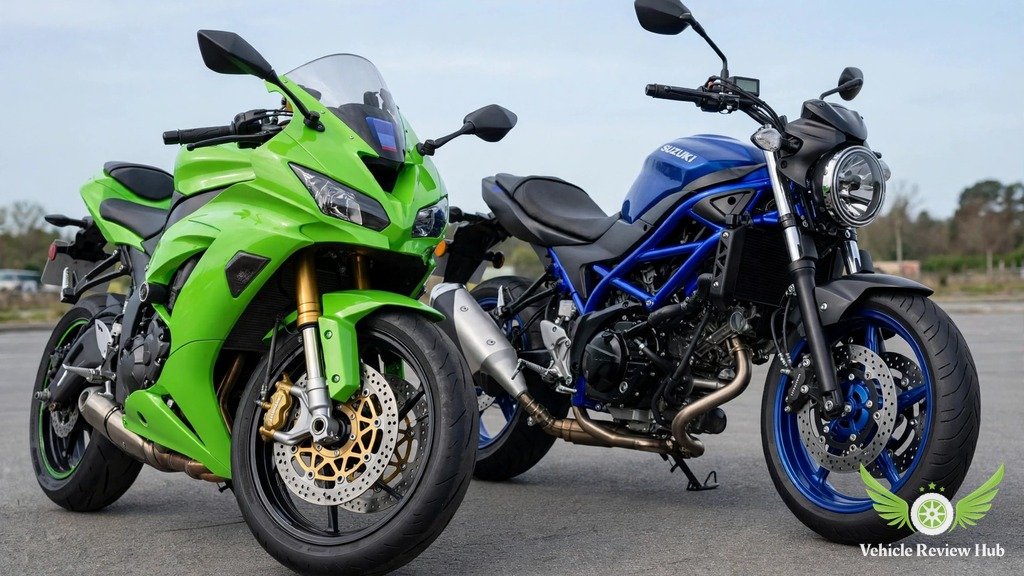
The second pairing in this Kawasaki Ninja 650 ABS comparison is the classic one. The SV650 and the Ninja 650 have been rivals since 2006, when Motorcycle.com ran its first shootout: the Suzuki won on handling, power, brakes, and suspension, and the Kawasaki won on comfort and ease. Twenty years later the same split holds.
Engine, Specs and Performance Side by Side
On claimed power the SV650 wins. Its 645cc 90-degree V-twin is claimed at 75.1 hp at 8,500 rpm from launch, with 47.2 lb-ft of torque, or 64 Nm, and the post-2021 Euro 5 revision is 73 hp. No peak torque rpm is printed: the sources disagree. The Ninja 650’s 649cc parallel twin claims 67.0 hp at 8,000 rpm and 48.5 lb-ft at 6,700 rpm. MCN recorded 60.38 bhp at the rear wheel on a stock 650. The SV650 is heavier at 437 lb against 427.8 lb, and simpler, with no traction control, quickshifter, or ride modes. The Kawasaki Ninja 650 ABS comparison scores the SV650 ahead on engine character and the 650 ahead on equipment and comfort.
| Item | Ninja 650 ABS (2027) | Suzuki SV650 (2026) |
|---|---|---|
| MSRP / delivered | $8,099 / $8,784 | $8,149 / $8,749 |
| Engine | 649cc parallel twin | 645cc 90° V-twin |
| Claimed power | 67.0 hp @ 8,000 / 48.5 lb-ft @ 6,700 | 75.1 hp @ 8,500 launch / 73 hp Euro 5; 47.2 lb-ft (64 Nm, no peak rpm) |
| Measured rear-wheel power | MCN 60.38 bhp stock | No named-outlet dyno found |
| Curb weight / seat / tank | 427.8 lb / 30.9 in / 4.0 gal | 437 lb / 30.9 in / 3.8 gal |
| Front fork / brakes | 37 mm inverted Showa SFF-BP; dual 300 mm, radial 4-piston, ABS | 41 mm telescopic; dual 290 mm discs, ABS |
| Dash / electronics | 4.3-in TFT + Rideology; KTRC 2 modes + OFF | LCD dash; no TC, no QS, no ride modes |
Note: The SV650’s 75.1 hp is the launch claim; 73 hp is the Euro 5 revision.
Price, Equipment and Which Suits Which Rider
This is where the SV650’s case gets complicated. The SV650’s MSRP of $8,149 sits $50 above the ABS 650’s $8,099, but its delivered price of $8,749 sits $35 below the ABS 650’s $8,784, because Suzuki’s destination charge is $600 against Kawasaki’s $685. The Kawasaki Ninja 650 ABS comparison calls that a dead heat on price and a clear win for the Kawasaki on equipment: a TFT dash against an LCD, two-mode traction control against none, and a full fairing against a naked bike. The SV650’s answer is its V-twin engine, with a character no parallel twin matches. The SV650 performance and SV650 reliability guides carry the Suzuki’s own record. Buy the SV650 for the sportier twin, the 650 for the fairing, TFT, and newer front end. The SV650 comparison puts it against its own rivals.
Kawasaki Ninja 650 ABS vs Yamaha YZF-R7
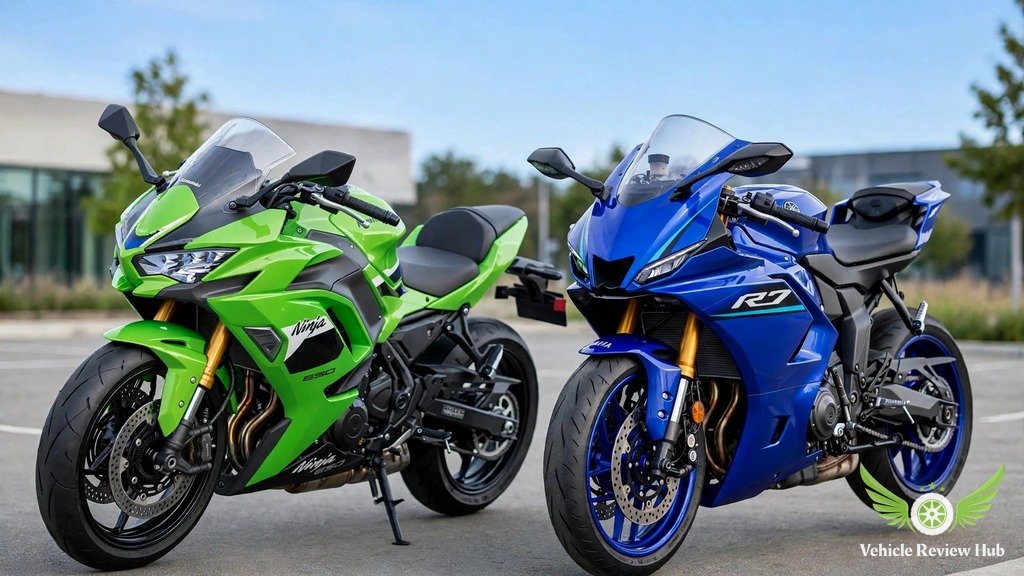
The third pairing in this Kawasaki Ninja 650 ABS comparison is the price jump. The R7 costs $9,399 before destination and $10,074 delivered, which is $1,300 more than the ABS 650 on MSRP and $1,290 more delivered, and Yamaha sells a different motorcycle for it: a supersport. The YZF-R7 review covers the Yamaha in full.
Engine, Specs and Performance Side by Side
The R7’s 689cc CP2 parallel twin claims 72.4 hp at 8,750 rpm and 50.2 lb-ft at 6,500 rpm, 5.4 hp and 1.7 lb-ft more than the 650, in a bike that weighs 417 lb, 10.8 lb less. The 2026 refresh separates them most: a six-axis IMU, ride-by-wire, a quickshifter, cruise control, ride modes, and a 5-inch TFT. The 650’s ABS is conventional, with no IMU; the R7’s is IMU-based. In this Kawasaki Ninja 650 ABS comparison the R7 is the faster, sharper, and more advanced motorcycle, and the 650 is the more comfortable and more forgiving one.
| Item | Ninja 650 ABS (2027) | Yamaha YZF-R7 (2026) |
|---|---|---|
| MSRP / delivered | $8,099 / $8,784 | $9,399 / $10,074 |
| Engine | 649cc parallel twin | 689cc CP2 parallel twin |
| Claimed power | 67.0 hp @ 8,000 / 48.5 lb-ft @ 6,700 | 72.4 hp @ 8,750 / 50.2 lb-ft @ 6,500 |
| Curb weight / seat / tank | 427.8 lb / 30.9 in / 4.0 gal | 417 lb / 32.7 in / 3.7 gal |
| Front fork / brakes | 37 mm inverted Showa SFF-BP; dual 300 mm, radial 4-piston, conventional ABS | 41 mm inverted KYB, fully adjustable; dual 298 mm, Brembo radial master, IMU-based ABS |
| Dash / electronics | 4.3-in TFT + Rideology; KTRC 2 modes + OFF, no IMU | 5-in TFT; six-axis IMU, ride modes, gen-3 up/down QS, cruise control |
Note: The R7 figures in this Kawasaki Ninja 650 ABS comparison are the 2026 refresh figures. The 70th Anniversary Edition price is unverified.
Price, Equipment and Which Suits Which Rider
The R7 asks $1,290 more delivered than the ABS 650, and it spends that money on electronics and riding position rather than on raw power: 5.4 hp more, a quickshifter, cruise control, ride modes, an IMU, and a bigger TFT, in exchange for a taller seat, clip-on bars, and a smaller tank. The Kawasaki Ninja 650 ABS comparison says the R7 suits the rider who wants a supersport for track days and fast weekend roads, while the 650 suits the rider who commutes and tours, because its upright bars, lower seat, and larger tank are easier to live with. A rider stepping up should read the YZF-R3 review first. In this Kawasaki Ninja 650 ABS comparison, the 650’s case is value and comfort and the R7’s is performance and electronics.
Kawasaki Ninja 650 ABS Price and Value Compared
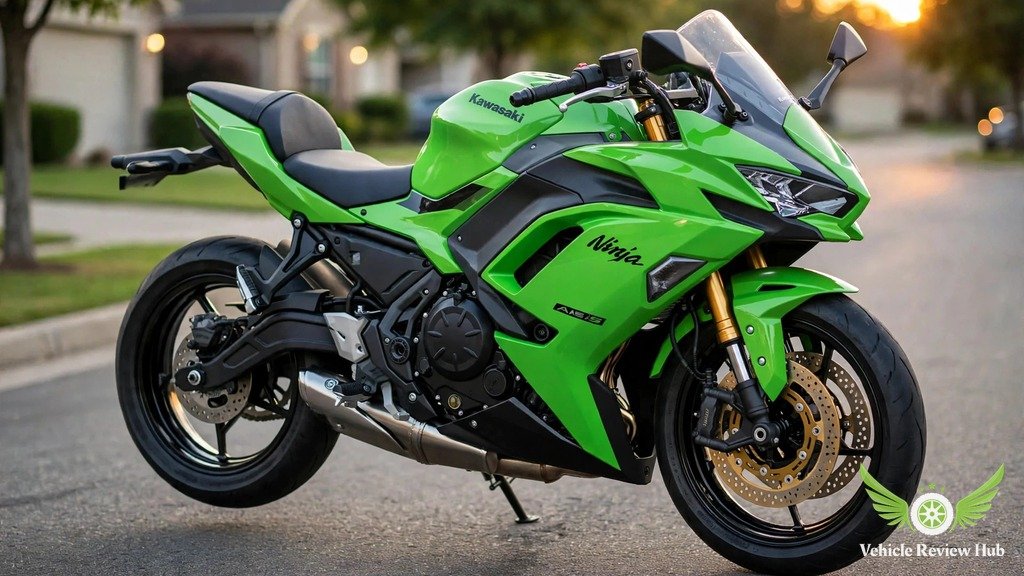
On price, the 2027 bike wins on paper. On MSRP the order is non-ABS $7,599, ABS $8,099, SV650 $8,149, R7 $9,399; delivered it is non-ABS $8,284, SV650 $8,749, ABS $8,784, R7 $10,074. The 2027 specifications list the prices and the $685 destination charge.
SV650 Sits $50 Above on MSRP, $35 Below Delivered
This heading corrects the document’s gap figure, which matches no arithmetic in any year. The real figures: the SV650’s MSRP of $8,149 sits $50 above the ABS 650’s $8,099, and the SV650’s delivered price of $8,749 sits $35 below the ABS 650’s $8,784. The Kawasaki Ninja 650 ABS comparison puts the SV650 $50 above on MSRP and $35 below delivered, the destination charges at work: $600 against $685. No other year gives it either: against the 2026 ABS bike $50 below on MSRP and $135 below delivered, against the 2025 bike $150 above and $85 above, against the 2027 premium colours $150 below and $235 below. The two bikes cost the same money, within $50 either way.
| Bike | MSRP | Destination | Delivered | Gap to ABS 650 delivered |
|---|---|---|---|---|
| Ninja 650 non-ABS (2026) | $7,599 | $685 | $8,284 | $500 cheaper |
| Ninja 650 ABS (2027, base) | $8,099 | $685 | $8,784 | — |
| Ninja 650 ABS (2027, premium colours) | $8,299 | $685 | $8,984 | $200 more (paint only) |
| Suzuki SV650 (2026) | $8,149 | $600 | $8,749 | $35 cheaper |
| Yamaha YZF-R7 (2026) | $9,399 | $675 | $10,074 | $1,290 more |
| NEW 2025 Ninja 650 KRT ABS (leftover) | $7,999 total | Included | $7,999 | $785 cheaper (old bike, at MSRP) |
Note: Delivered prices in this Kawasaki Ninja 650 ABS comparison are MSRP plus destination only. The 2025 ABS bike cost $7,999 plus $665, or $8,664 delivered. The $8,899 sometimes seen for 2025 is the 2024 ABS price.
Running Costs and Resale Value Compared
Service is every 7,500 miles or yearly: oil and filter each time, plugs NGK CR9EIA-9 every 7,500 miles, valve check every 24,000 km (15,200 miles in the chart), brake fluid every two years, coolant every three. The Kawasaki Ninja 650 ABS comparison prints no cost-per-year figure, because no verified dealer cost exists. Fuel is the one measured number: MCN averaged 49.44 mpg over 9,500 miles, about a 198-mile range, a calculation. On resale, no verified used price band or resale percentage exists. The only verified used data point is a used 2025 ABS bike in Columbia, Tennessee, at $7,999 after offers with 7,124 miles, the same as a new leftover 2025 KRT ABS. A used bike at new-leftover money is not a deal.
Kawasaki Ninja 650 ABS Comparison Verdict and US Alternatives
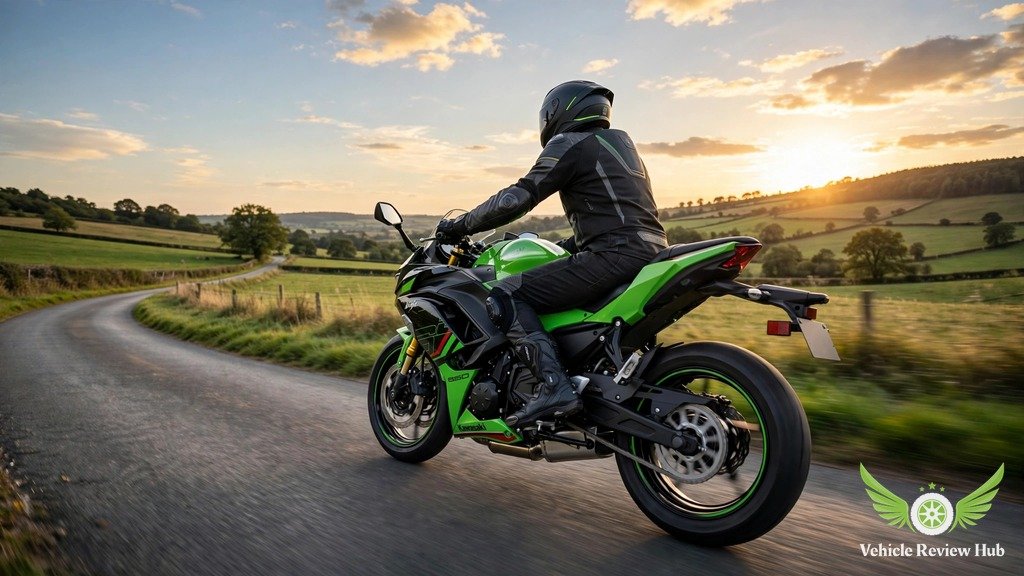
The verdict of this Kawasaki Ninja 650 ABS comparison is that the 2027 bike wins its own class on value, comfort, and the front end, and loses only where the buyer wants more power or more electronics. In this Kawasaki Ninja 650 ABS comparison, it is $100 cheaper than the 2026 ABS bike and the cheapest faired middleweight twin on MSRP in this set. It also carries the longest US sales record since 2006, with two recalls, both predating ABS. The parent comparison reaches the same conclusion.
Verdict: The Basic System, Standard
The ABS on the 2027 Ninja 650 is the same conventional two-channel system Kawasaki has fitted since 2013, with no cornering logic and no IMU, and the 2027 upgrade is the fork and the calipers, not the ABS logic. Cycle World’s Tom Montano wrote in April 2017 that he hardly noticed the system until actually needing it, on the 2017 ABS bike alone. The counter-evidence is ZigWheels’ Indian-market BS6 test, which measured 100 to 0 km/h in 46.08 metres and 80 to 0 in 30.39 metres. The Kawasaki Ninja 650 ABS comparison lands on the honest middle: the system is a proven safety net no US test has measured for braking distance, and it is now standard. The 650’s weakness is power and electronics. The review, performance, and reliability guides carry the full record.
GSX-8R Adds Modes and a Quickshifter
The GSX-8R is not in any table here, but it adds the electronic kit the 650 lacks. It has Suzuki’s Intelligent Ride System: three power modes, multi-level traction control, a bi-directional quickshifter, a 5-inch TFT, a 41 mm inverted Showa SFF-BP fork, and Nissin radial four-piston calipers on twin 310 mm discs. It has no IMU, no cornering ABS, and no cruise control. The Kawasaki Ninja 650 ABS comparison notes the price carefully, without mixing years: the 2027 bike is $9,199 plus $750, or $9,949 delivered, while the 2026 bike was $9,699 plus $700, or $10,399 delivered. Its 776cc twin claims 81.8 hp at 8,500 rpm, which is 83 PS, and 57.5 lb-ft; Cycle World’s dyno recorded 72.75 hp at 8,120 rpm and 51.73 lb-ft at 6,630 rpm, at 453 lb wet. The GSX-8R review, GSX-8R performance, GSX-8R reliability, and GSX-8R comparison guides carry the full 8R record. For the premium pole, the Aprilia RS 660 sits at $11,849 base and $14,149 Factory on Aprilia’s own US store, an alternative, not a rival.
Kawasaki Ninja 650 ABS Comparison Frequently Asked Questions
These answers close the Kawasaki Ninja 650 ABS comparison.
Which is cheaper, the Ninja 650 ABS or the Suzuki SV650?
It depends on which price you mean. The SV650’s MSRP of $8,149 sits $50 above the ABS 650’s $8,099, while its delivered price of $8,749 sits $35 below. In this Kawasaki Ninja 650 ABS comparison the two bikes cost the same money within $50 either way, so choose on the motorcycle: the SV650 for the V-twin, the 650 for the fairing.
Is the 2027 Ninja 650 ABS cheaper than the 2026 ABS bike?
Yes, on the base colours. The 2027 ABS bike costs $8,099, which is $100 cheaper than the 2026 ABS bike’s $8,199, and $8,784 delivered against the 2026 bike’s $8,884. The 2027 premium colours cost $8,299, $100 dearer. This Kawasaki Ninja 650 ABS comparison uses the $8,099 base price as its headline figure.
Does the Ninja 650 ABS have cornering ABS?
No. The Ninja 650’s ABS is a conventional two-channel system that prevents wheel lock-up under hard straight-line braking, with no lean-sensitive logic and no IMU on any Ninja 650. The Bosch 9.1M unit is documented on 2017-on bikes only. The R7 is the bike in this Kawasaki Ninja 650 ABS comparison with an IMU-based, lean-sensitive system, fitted as part of its 2026 refresh.
Is the non-ABS Ninja 650 still worth buying?
Only as a leftover. The 2026 non-ABS 650 costs $7,599, or $8,284 delivered, which is $500 less than the 2027 ABS bike, but it has the old fork and no ABS. This Kawasaki Ninja 650 ABS comparison recommends the 2027 bike for almost every buyer: $500 buys the safety net and the chassis upgrade. The leftover 2025 KRT ABS at $7,999 total is the one exception.
How much heavier is the ABS bike than the non-ABS bike?
On the same model year, 2.2 lb. The 2026 ABS bike weighs 423.4 lb against the 2026 non-ABS bike’s 421.2 lb. The 7 lb figure belongs to the 2017 bike only, when RevZilla recorded 419 lb without ABS and 426 lb with it. The 2027 bike weighs 427.8 lb, 6.6 lb more than the 2026 non-ABS bike, but that includes the new fork and calipers, so this Kawasaki Ninja 650 ABS comparison does not call it an ABS penalty.
Which bike is best for a beginner stepping up?
In this Kawasaki Ninja 650 ABS comparison, the Ninja 650 ABS is the best first big bike in this set, but it is not a first-ever motorcycle. It claims 67.0 hp, with ABS that makes it more forgiving. The SV650 suits the naked V-twin rider. This Kawasaki Ninja 650 ABS comparison recommends the 650 ABS for the rider moving up, and the R7 for the rider who has already owned a middleweight.