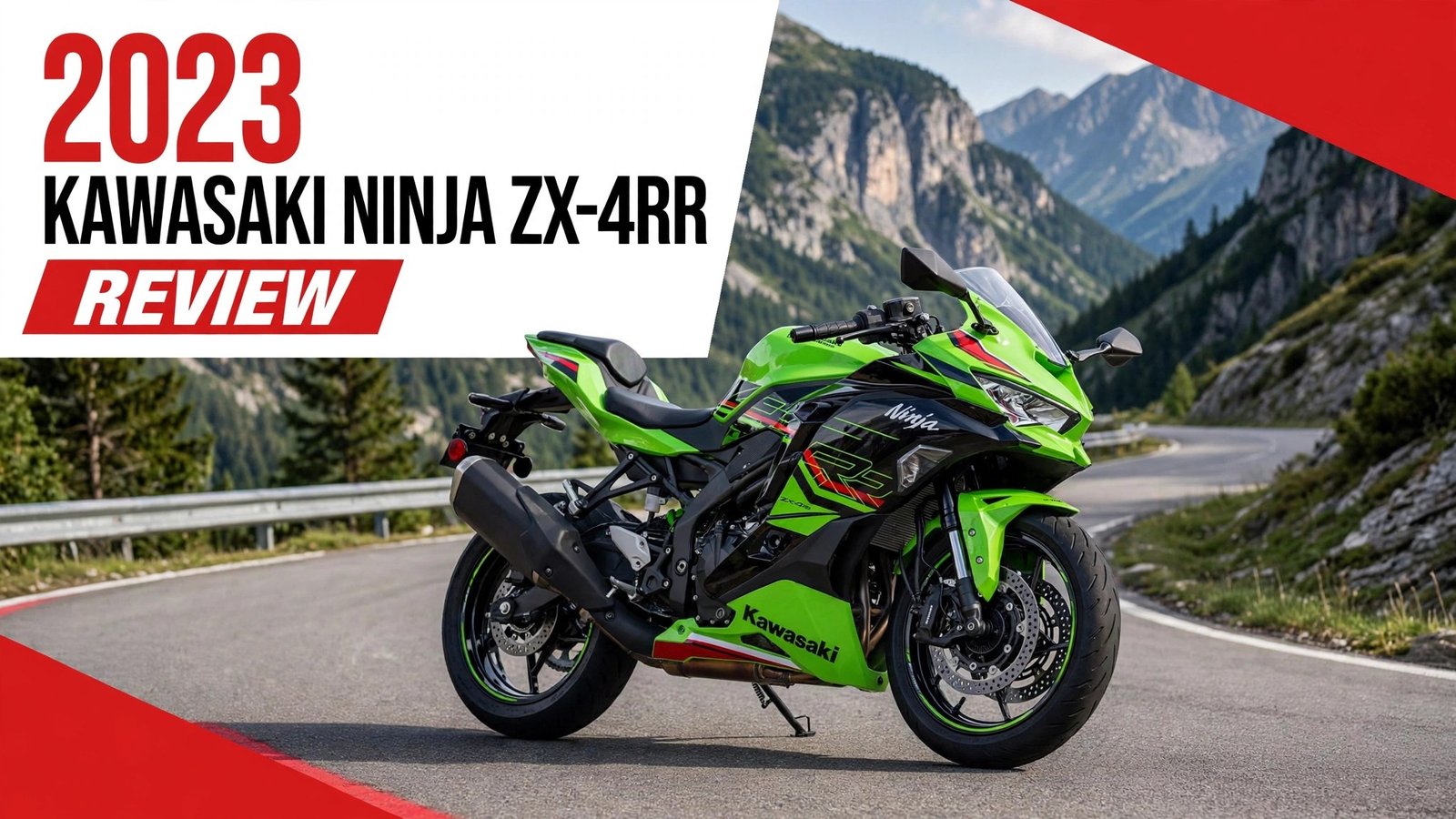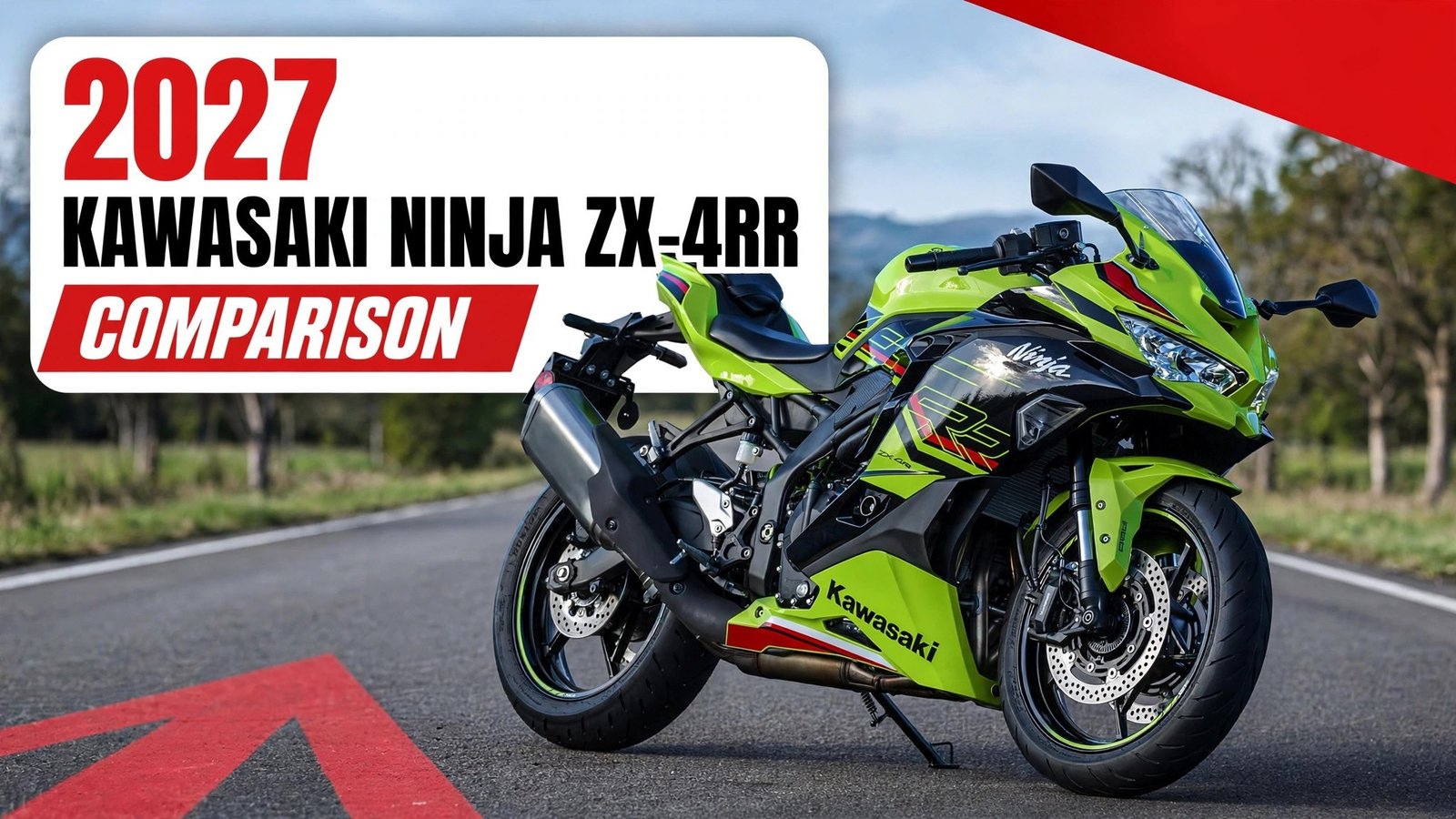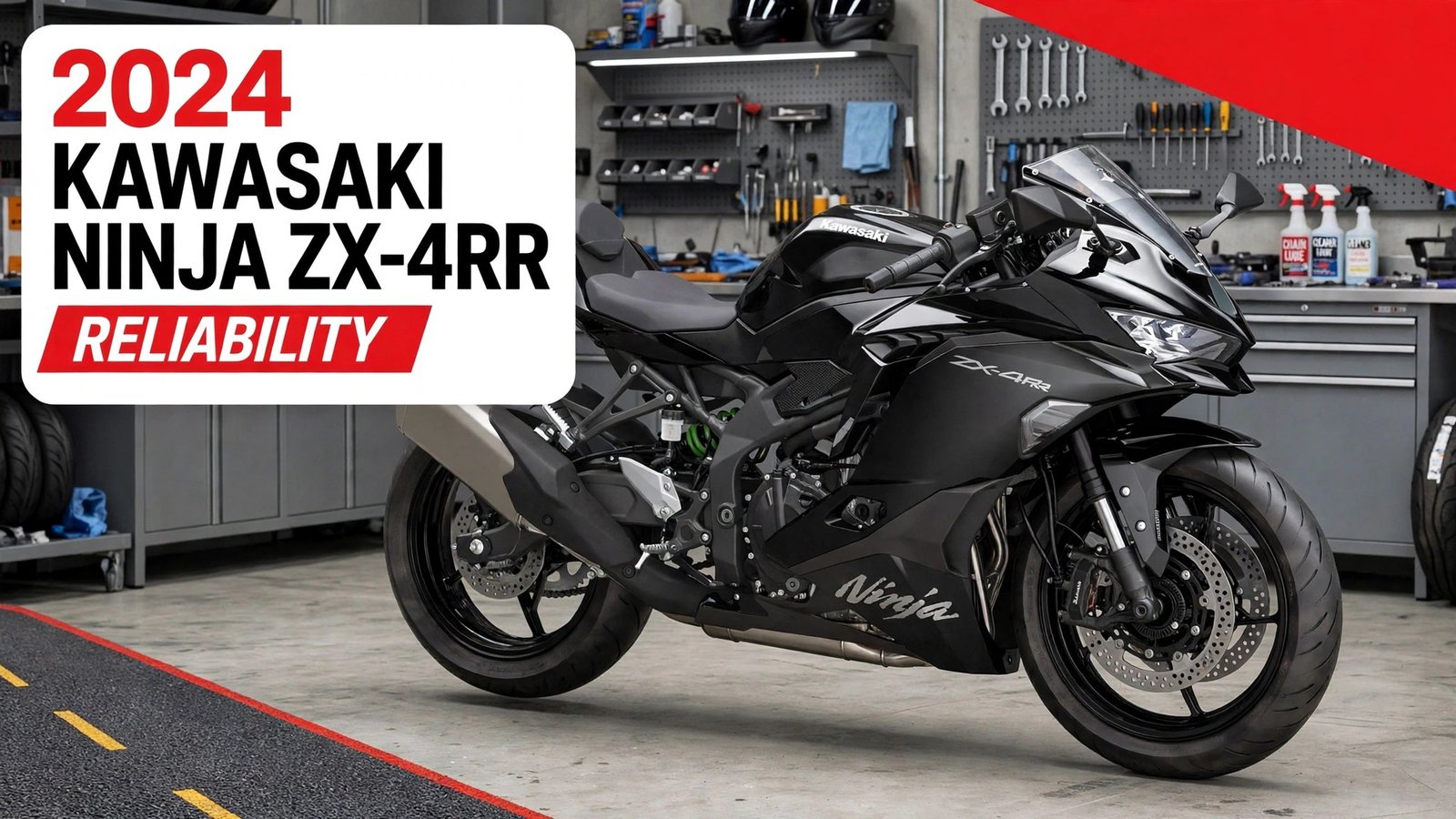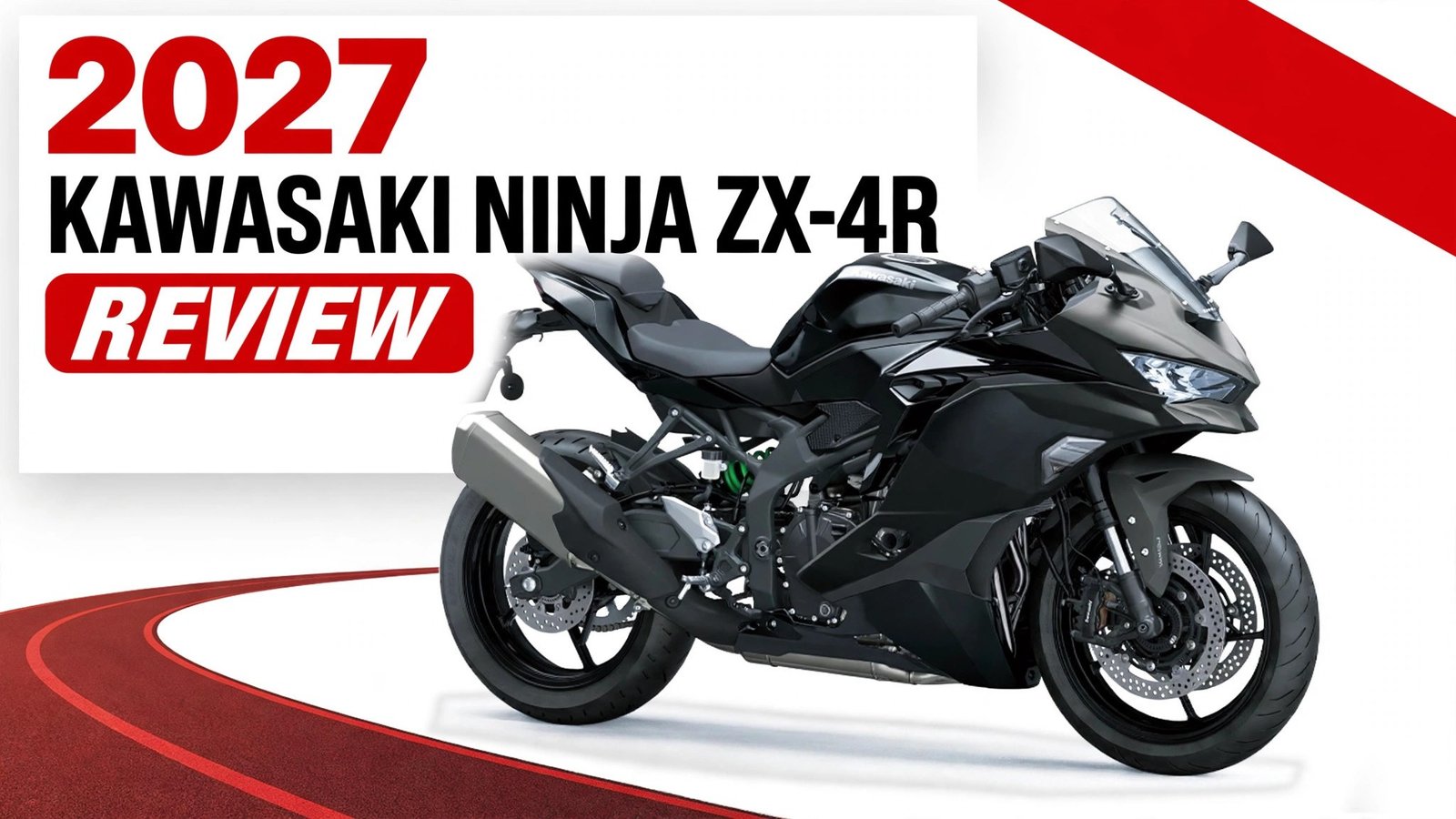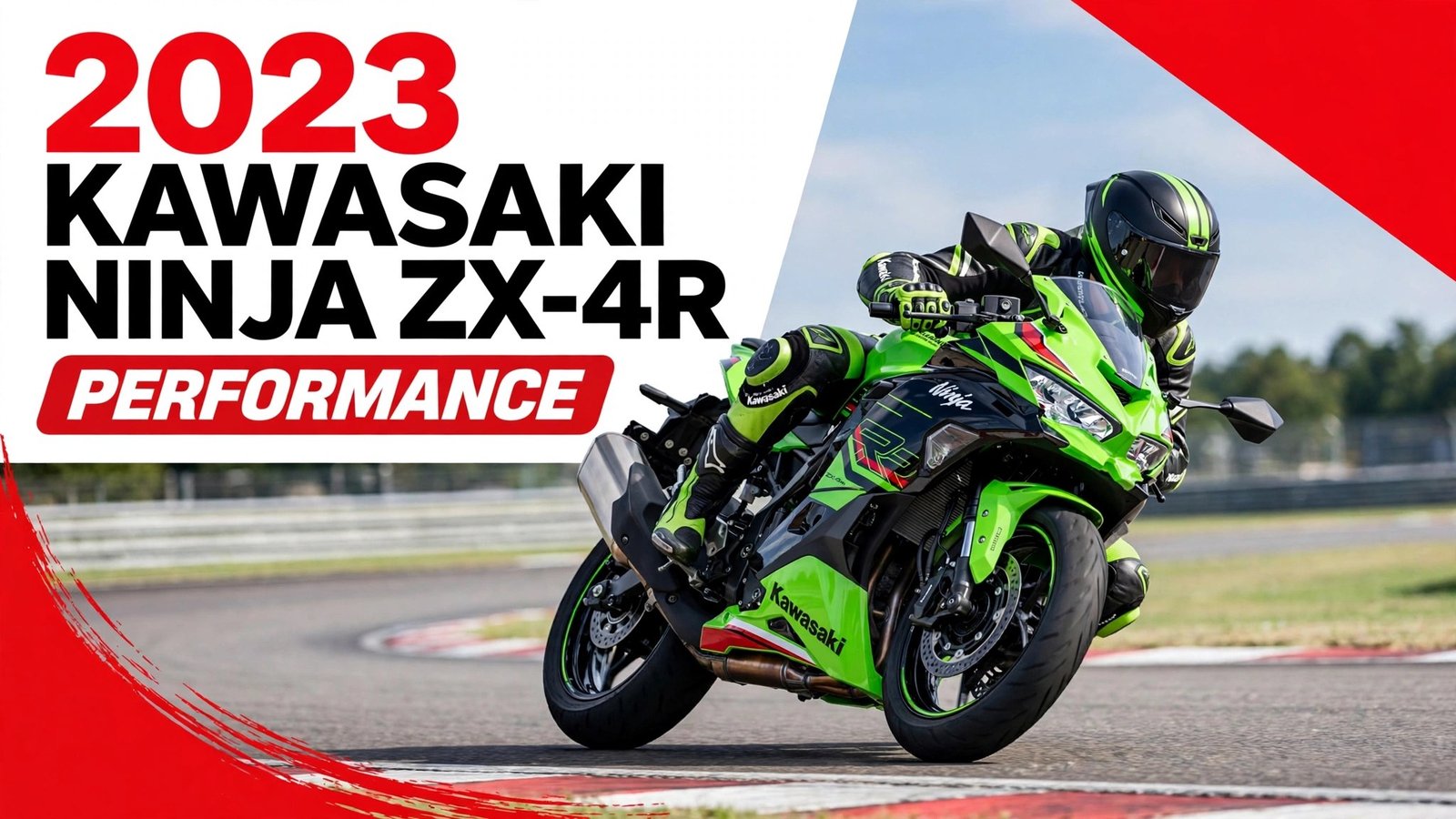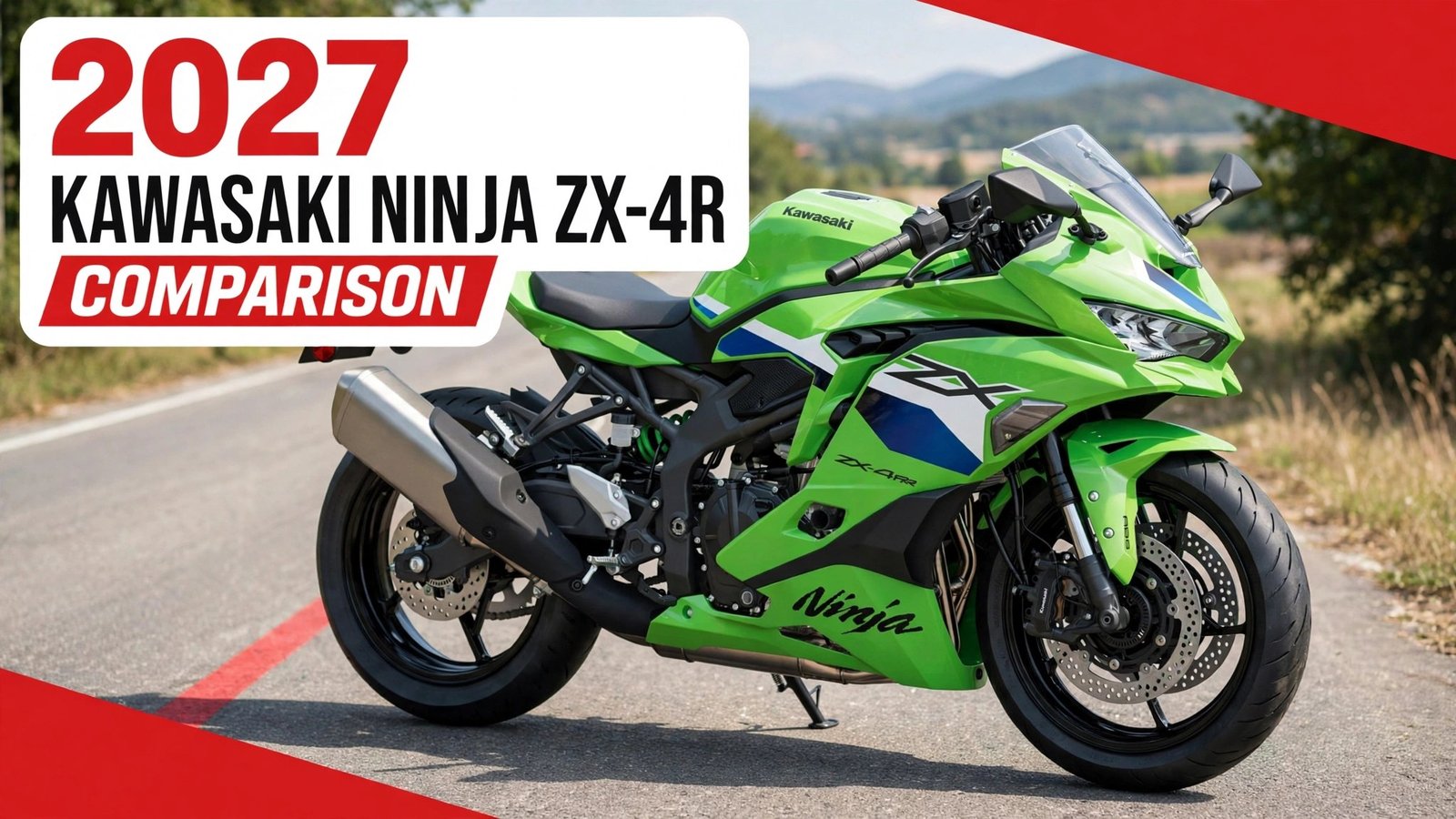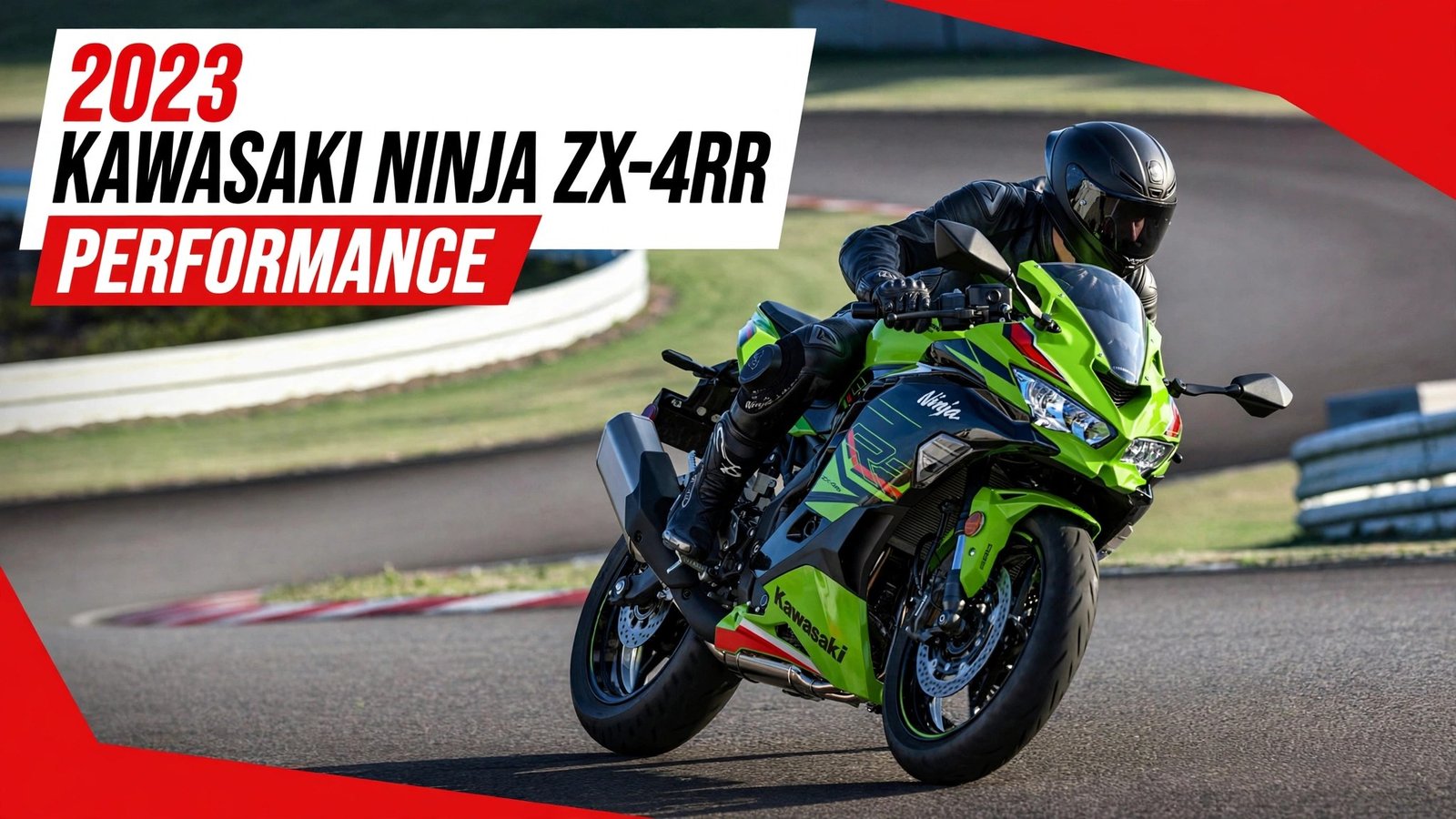
The Kawasaki Ninja ZX-4RR performance story starts with a contradiction: a 399cc four-cylinder that revs to 16,000 rpm, yet makes only 56 horsepower in America. Cycle World measured 56.3 hp at the rear wheel, RevZilla recorded 124 mph by GPS, and no outlet has published a quarter-mile time. This guide works through the verified numbers, and says plainly where no number exists.
Everything here is the US bike. The European ZX-4RR makes 76 hp from the same engine, and that gap is the whole story of Kawasaki Ninja ZX-4RR performance: the American tune is capped for noise regulations, the power plateaus above 11,500 rpm, and the only way past it is an ECU flash that voids the warranty. The companion ZX-4RR review covers prices and model years; this guide is about what the bike does on the road and at the fuel pump.
Kawasaki Ninja ZX-4RR Engine Performance and Power Delivery
The engine is a 399cc liquid-cooled inline-four, 57.0 x 39.1 mm bore and stroke, 12.3:1 compression, four 34 mm throttle bodies on a ride-by-wire system. Kawasaki claims 56 hp at 11,500 rpm and 26.5 lb-ft at 11,000 rpm, and the dyno numbers below show the claim is honest. What the claim does not show is the shape: flexible and linear low and mid-range, then flat above 11,500 rpm. That plateau defines Kawasaki Ninja ZX-4RR performance.
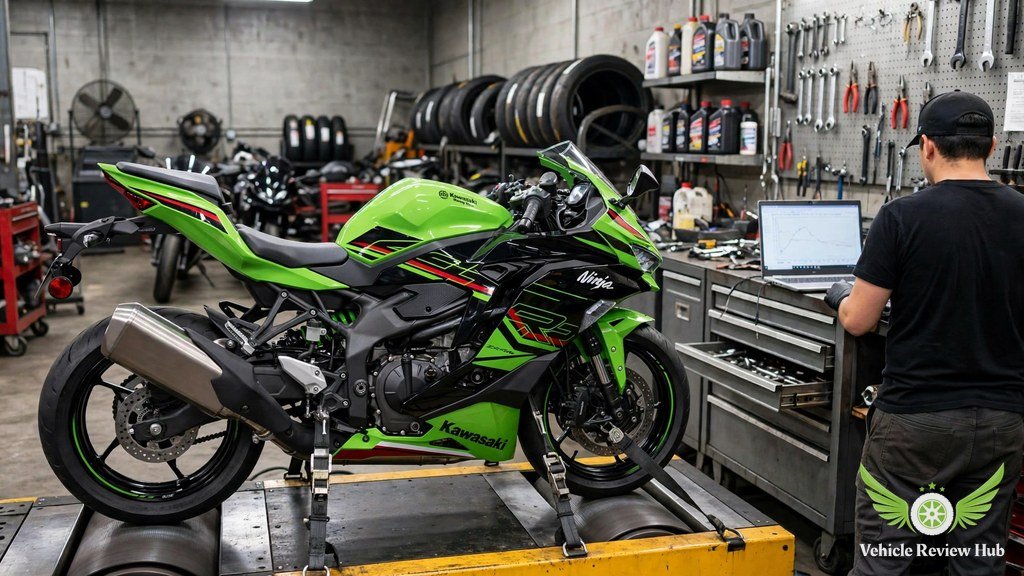
56.3 HP on CW’s Dyno
On Cycle World’s in-house Dynojet 250i, the stock 2023 ZX-4RR produced 56.3 hp at 11,700 rpm and 25.8 lb-ft of torque at 11,300 rpm. The bike on the dyno was the RR itself — the most direct rear-wheel number for this motorcycle. The Cycle World dyno test also recorded the curve’s shape: power climbs cleanly to about 11,500 rpm and then stops building, with a brief dip just beyond 9,000 rpm. The US tune gives it nothing extra past the plateau — the first fact of Kawasaki Ninja ZX-4RR performance.
Other dynos read the same ballpark: Graves just shy of 60 hp, 2 Wheel DynoWorks at 53.3 hp, TST at 58.56 hp. Different dynos and correction factors — all four agree the stock US bike makes the mid-50s at the wheel, roughly 25 percent down on the European claim, and that spread is the honest baseline of Kawasaki Ninja ZX-4RR performance.
| Source | Stock rear-wheel power | Torque |
|---|---|---|
| Cycle World, Dynojet 250i | 56.3 hp @ 11,700 rpm | 25.8 lb-ft @ 11,300 rpm |
| 2 Wheel DynoWorks | 53.3 hp | 24.7 lb-ft |
| TST Industries | 58.56 hp | 19.46 lb-ft |
| Graves Motorsports chart | Just shy of 60 hp | Not published |
| Kawasaki US claim (crank) | 56 hp @ 11,500 rpm | 26.5 lb-ft @ 11,000 rpm |
Note: All four dyno figures are rear-wheel numbers from different dynos on different days, so they should never be averaged into one figure. The Kawasaki claim is a crankshaft figure, not a dyno figure, and this Kawasaki Ninja ZX-4RR performance guide uses the US figures throughout. The same dyno numbers are covered in the ZX-4R performance guide.
TST Industries put its ZX-4RR on the dyno at its WORX Tuning Facility in this video — the same shop behind the TST rows in the flash table below.
Ten Best Lightweight 2023
Cycle World named the 2023 Kawasaki Ninja ZX-4RR its Best Lightweight Streetbike in the Ten Best Bikes 2023 awards, and the award names the RR specifically — not the platform, not the R. The citation reads: “A 15,000-plus rpm redline and track-ready equipment make the Kawasaki Ninja ZX-4RR unique in the lightweight sportbike segment.” The award went to a 56-horsepower bike in a category where horsepower usually decides everything. It is the clearest statement that Kawasaki Ninja ZX-4RR performance is about more than the dyno sheet.
Kawasaki Ninja ZX-4RR Top Speed and Acceleration
Top speed is the one straight-line number verified for a stock US ZX-4RR, with a GPS figure beside the dashboard figure. Acceleration is the opposite: no American outlet has published an instrumented 0–60 mph time or a quarter-mile time for a stock bike. What follows is the honest split, and both halves belong in any fair account of Kawasaki Ninja ZX-4RR performance.
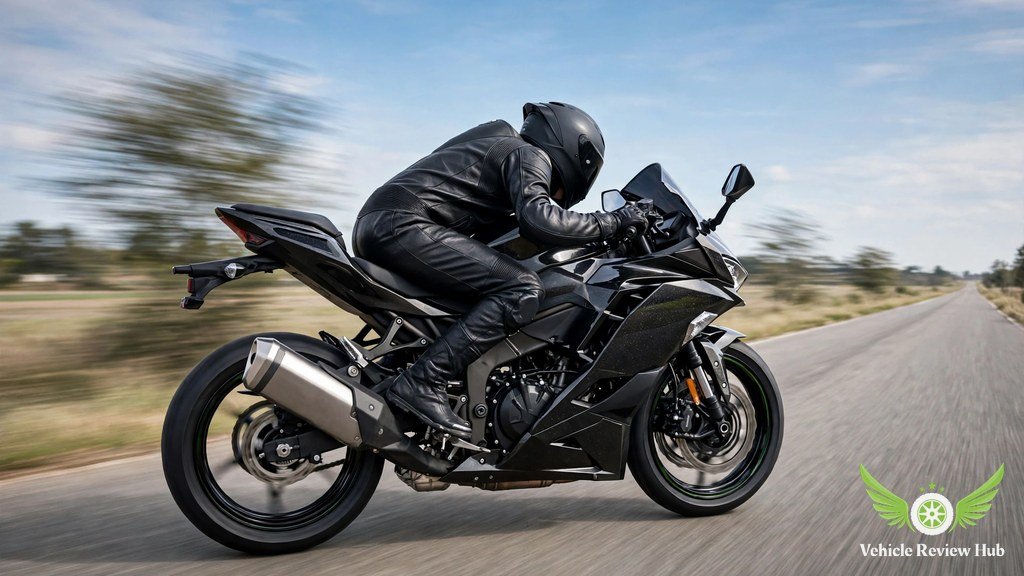
131 Indicated, 124 by GPS
RevZilla’s 2023 first ride of the stock ZX-4RR gives the verified top speed: 131 mph on the dashboard, 124 mph by GPS. The test bike was the RR, the run was made on an airport runway, and the GPS figure is the one to quote. Because the bike tested was the RR itself, this Kawasaki Ninja ZX-4RR performance guide presents it as the RR’s own top speed, not a proxy borrowed from the R.
Two bigger numbers circulate online, and neither belongs to a stock US bike. The 151 mph figure comes from an Asian-market bike with the full-power tune. The 147.94 mph figure comes from a modified bike on a dyno — Akrapovic full system, MWR race air filter and ECU tune, dash showing 162 mph. Neither is a stock bike and neither is a road speed. The seven-mph gap between indicated and GPS is the usual speedometer optimism, worth remembering in any discussion of Kawasaki Ninja ZX-4RR performance.
On acceleration, there is no instrumented US 0–60 mph test for the ZX-4RR. The only number in circulation is MotorcycleDB’s computed estimate of 4.60 seconds — an aggregator estimate, not a test result. The gearing feels short: first gear idles at 6 mph and second at 8 mph on the dash. The final drive is a 520 sealed O-ring chain, and spec listings give the sprockets as 14 teeth front and 48 rear with a 3.429 final reduction ratio. The bike’s character is a top-end rush rather than a launch — the acceleration half of Kawasaki Ninja ZX-4RR performance.
4-to-3 False Neutrals Found
Roadracing World’s August 2023 intro, written from the RR’s launch event at Thunderhill, found one quirk: “The ZX-4RR had a tendency to catch a false neutral downshifting between the 4th and 3rd-gear, so I had to be really deliberate on that downshift if I was using auto-blip — and I finally started using the clutch after my fifth missed shift.” The bike was the RR, the setting was the track, and auto-blip was in use. A false neutral is an incomplete shift that happens on many bikes when a shift is rushed; the fix is to pull the clutch and re-shift deliberately. This is a shift-technique quirk, not a transmission failure, not a recall and not a common problem: no pattern in owner reports, and no reason to think every RR does it. Motorcycle.com’s first ride noted separately that the quickshifter’s downshift timing “felt off”. A buyer who feels it should shift around it — a small footnote in Kawasaki Ninja ZX-4RR performance, not a reason to walk away.
Kawasaki Ninja ZX-4RR Mileage and Fuel Economy
Fuel economy is the one area of Kawasaki Ninja ZX-4RR performance where the headline number is an estimate. No outlet has published a measured average MPG for the US bike, so this section lays out every figure in circulation with its label attached, and works out the range from the estimate.
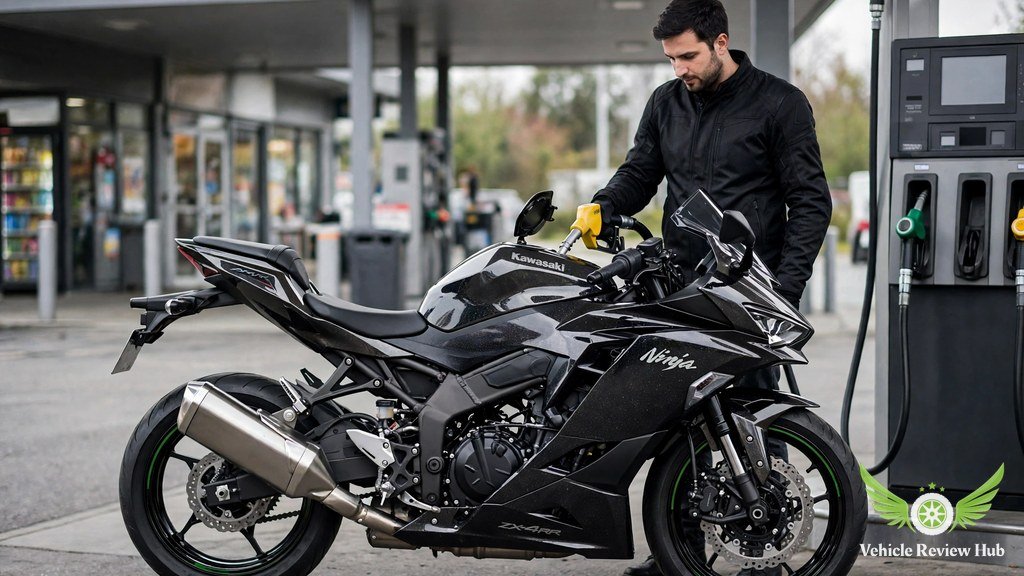
EPA Estimate 41.2 MPG
The 41.2 mpg figure is MotorcycleDB’s EPA-style estimate for the US bike — not a tested average, and this guide does not present it as one. The WMTC lab claim is 46.1 mpg (5.1 L/100 km). TotalMotorcycle’s guide lists 55.0 mpg, but that is the same WMTC-derived figure expressed differently (4.3 L/100 km), not a US test result. Owners riding gently report roughly 39–47 mpg, and FastestLaps lists 37 mpg as an aggregator figure — the honest way to present Kawasaki Ninja ZX-4RR performance at the fuel pump.
Range follows from the estimate: the tank holds 4.0 gallons, so 41 mpg gives about 165 miles at the EPA estimate and about 185 miles at the WMTC figure. No outlet has published a tested tank range. A flashed bike with a full system will use more fuel, not less.
No Stock Quarter-Mile Exists
No US outlet has published a quarter-mile time for a stock ZX-4RR, and that is the whole of this section: there is no honest number to print. FastestLaps lists an estimated 14.7 seconds at 110 mph for the European bike — an estimate for a different tune, not a test of a US bike. Borrowing the Ninja 400’s or the R7’s quarter-mile time would be worse than printing nothing — different power delivery, gearing and weight. Until an outlet runs a stock US bike down a strip with a timer, the column stays blank. That blank is part of the honest record of Kawasaki Ninja ZX-4RR performance.
Kawasaki Ninja ZX-4RR Real-World Riding Experience
On the road, the ZX-4RR is two bikes in one. Below 11,500 rpm it is flexible, linear and easy to ride fast; above it, the US tune goes flat and the revs stop paying. That split is what the flash fixes. This section covers the flashed numbers honestly — every figure labelled as flashed, never as stock — and the price of unlocking them. That price is the hidden half of Kawasaki Ninja ZX-4RR performance.
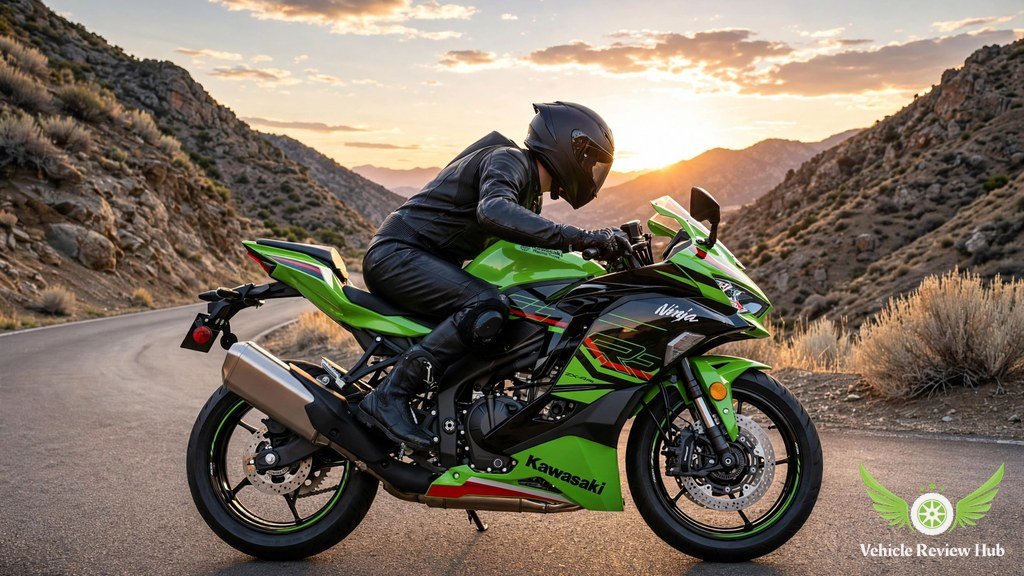
Flashed Bike Made 70-Plus HP
The heading here is corrected from the document’s “Flashed Bike Made 68.5 HP”: no published dyno chart shows a 68.5 hp figure for a flashed US ZX-4RR. Three searches found no named source for it; the 2WDW dyno overlay shows the verified figures instead: a flash alone takes the bike just past 70 hp at the wheel. Every verified flashed figure is 70 hp or above, so 70-plus is the honest heading — the verified ladder of Kawasaki Ninja ZX-4RR performance. The TST Industries flash article gives the cleanest version: stock 58.56 hp, flash alone 70.39 hp, then a Stage 1 WORX tune with an Akrapovic full system and an MWR race air filter at 76.02 hp. Peak torque climbs the same ladder, from 19.46 lb-ft stock to 25.77 flashed and 27.80 at Stage 1 — the clearest single picture of Kawasaki Ninja ZX-4RR performance once the US tune is removed.
2 Wheel DynoWorks’ numbers tell the same story on a different dyno: the ECU tune lifts the stock 53.3 hp figure to just over 70 hp with no other changes, and adding a slip-on and an air filter takes it to nearly 74 hp. Graves lands in the same place: a slip-on plus a tune nets a claimed 76 hp at the rear wheel, and a full exhaust system pushes it to 80 hp. Inside Motorcycles found the flash eliminates the dead zone past 12,000 rpm; the slip-on alone had minimal impact. The flash is where the power is, not the pipe — the single biggest unlocked gain in Kawasaki Ninja ZX-4RR performance.
| Setup | Rear-wheel power | Source |
|---|---|---|
| Stock (2WDW dyno) | 53.3 hp | 2 Wheel DynoWorks |
| Flash only (2WDW) | Just over 70 hp | 2 Wheel DynoWorks |
| Flash + slip-on + air filter | Nearly 74 hp | 2 Wheel DynoWorks |
| Stock (TST dyno) | 58.56 hp | TST Industries |
| Flash only (TST) | 70.39 hp | TST Industries |
| Stage 1: full system + filter + tune | 76.02 hp | TST Industries |
| Graves slip-on + tune | 76 hp | Graves Motorsports |
| Graves full system + tune | 80 hp | Graves Motorsports |
Note: Every figure in this table above the stock rows is a FLASHED figure, never a stock figure, and the two dynos disagree on the stock baseline (53.3 hp on 2WDW’s dyno, 58.56 hp on TST’s), so flash gains should be read on one dyno at a time. No published dyno chart shows 68.5 hp for a flashed US bike. The TopSpeed underpowered report covers the 2WDW figures in the same place — the flashed half of Kawasaki Ninja ZX-4RR performance.
Flash Is Off-Road Only
The flash kits are sold for closed-course and race use. The flash removes the EPA noise-compliant tune — federal emissions and noise tampering on a road bike — and it voids the warranty, not “may void” it. RevZilla’s owner source put it plainly: every owner has to flash the ECU and void their warranty to feel the true character of the engine. A flashed ZX-4RR is a track bike: the 70-plus horsepower is real, the warranty is gone, and the bike is no longer street-legal. The 2 Wheel DynoWorks mail-in flash costs $349.99 now, up from $329.99 at launch, and the running costs that follow — more fuel, and the plug and valve schedule in the ZX-4RR reliability guide — are the other half of the price. That trade is the warranty half of Kawasaki Ninja ZX-4RR performance.
Kawasaki Ninja ZX-4RR Handling, Braking and Stability
The chassis is where the RR earns its price. A short 54.3-inch wheelbase, a steep 23.5-degree rake and a steel trellis frame give it razor-sharp turn-in, and the fully-adjustable rear shock is hardware the plain R cannot match. The scale figure is the only disappointment — the chassis side of Kawasaki Ninja ZX-4RR performance.
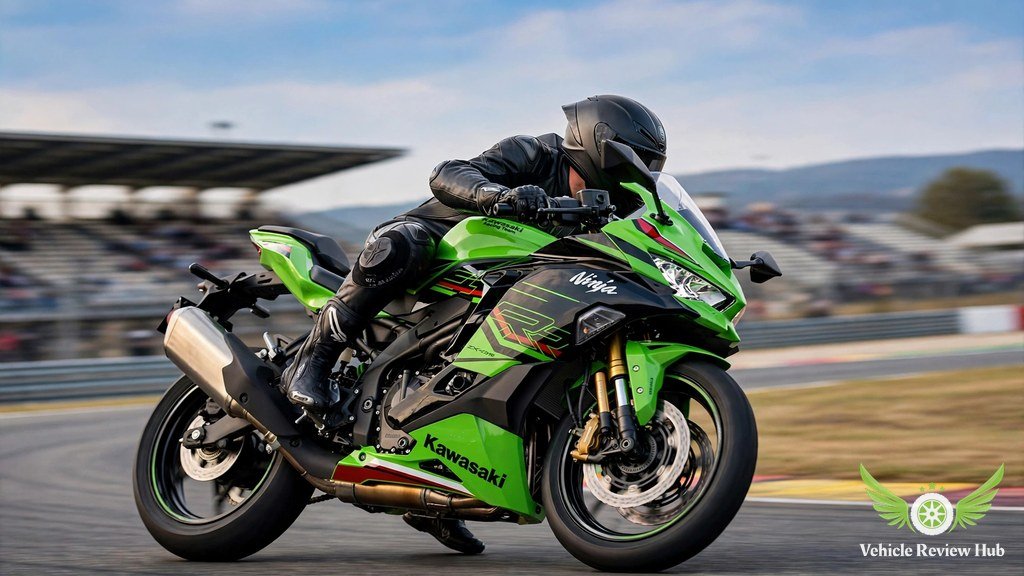
Handling, Braking and Stability on Real Roads
Rider Magazine called the turn-in razor-sharp, and RevZilla found the bike in its element on track. The steel trellis frame and swingarm manage the 414.5-pound curb weight without flexing. The RR’s Showa BFRC Lite rear shock is the handling difference against the R and the single biggest chassis advantage in Kawasaki Ninja ZX-4RR performance: fully adjustable for preload, compression and rebound; the R’s rear is preload-only. RevZilla’s 200-pound rider still found the rear overwhelmed mid-corner. At the front, the 37 mm Showa SFF-BP fork carries spring-preload adjustment on one leg only, with no damping adjustment; the two first rides disagree on which leg. The Ninja 650 ABS performance guide covers a heavier twin for contrast.
Braking is dual 290 mm front discs with radial-mount four-piston Nissin monobloc calipers and ABS, and RevZilla found good power and feel for a bike making less than 70 horsepower. No instrumented 60–0 braking distance has been published, so this guide prints none. The bike tracks straight and holds a line through fast sweepers, and the electronics — three-mode KTRC from wheel-speed sensors only, with no IMU and no cornering ABS — stay out of the way. That balance is what Kawasaki Ninja ZX-4RR performance feels like from the saddle.
Measured 418 lb Wet
Before the dyno run, Cycle World put its 2023 ZX-4RR test bike on automotive scales and recorded 418 pounds. The three figures should stay separate and labelled: Kawasaki claims 414.5 lb curb, Cycle World measured 418 lb, and RevZilla lists 420 lb. The owner’s manual gives the same bike as 188 kg, or 415 lb. The Ninja 650 performance numbers put it in context: the ZX-4RR weighs essentially the same as a Yamaha YZF-R7 at 417 lb and sits within about 11 lb of a Ninja 650 at 425.6 lb claimed, while making 11 to 16 hp less than those two bikes. It carries its weight well — the weight half of Kawasaki Ninja ZX-4RR performance.
Kawasaki Ninja ZX-4RR Performance Compared With Other Sport Bikes
Against its rivals, the ZX-4RR loses on the numbers and wins on character. The R7 and GSX-8R make more power for less money, and the RS 660 makes nearly double the power for more money. This section is the short performance-only comparison; the full comparison is in the ZX-4RR comparison. That standing is the bottom line of Kawasaki Ninja ZX-4RR performance.
Kawasaki Ninja ZX-4RR vs Yamaha YZF-R7

The 2026 Yamaha YZF-R7 is a 689cc CP2 parallel twin making 72.4 hp at 8,750 rpm and 50.2 lb-ft at 6,500 rpm, at 417 lb wet, for $9,399 plus $675 destination — $10,074 delivered. Against the RR’s 56 hp, 26.5 lb-ft, 414.5 lb and $10,649 delivered, the R7 makes roughly 16 hp more and 24 lb-ft more, weighs about the same, and costs $600 less. The honest stock position is that the R7 is faster everywhere, and the RR’s only answer is revs and sound — the hardest fact in Kawasaki Ninja ZX-4RR performance. Motorcycle.com’s uncorked test, with both bikes flashed, found the RR made 70 hp from a 400cc engine. The Motorcycle.com uncorked test and the Ultimate Motorcycling RR vs R7 comparison agree: the R7 is the faster, more practical bike, and the RR is the more special one. TopSpeed’s 2023 claim that the ZX-4RR went faster than an R7 is about the Asian-market 151-mph video. That is the honest verdict of Kawasaki Ninja ZX-4RR performance against its closest rival.
| Bike | Claimed power | Weight | Delivered price |
|---|---|---|---|
| 2027 Kawasaki Ninja ZX-4RR | 56 hp @ 11,500 rpm | 414.5 lb claimed | $10,649 |
| 2026 Yamaha YZF-R7 | 72.4 hp @ 8,750 rpm | 417 lb wet | $10,074 |
| 2027 Suzuki GSX-8R | 82 hp claimed | 452 lb | $9,949 |
| Aprilia RS 660 (base) | 105 hp | Not stated here | $11,849 + destination |
Note: The GSX-8R has no IMU — its traction control works from wheel speed only — and its 41 mm Showa SFF-BP fork is non-adjustable with a preload-only rear shock. Its Cycle World dyno figure is 72.75 hp. The RS 660 Factory is $14,149 for 2026 (the $13,999 figure is the 2025 Factory). The Ninja 500 performance numbers show the other end of the range: a 451cc twin making 51 hp for far less money — the honest summary of Kawasaki Ninja ZX-4RR performance.
Is the Kawasaki Ninja ZX-4RR Suitable for Beginner Riders?
Yes, with caveats — and the caveats decide it. The bike is light and compact, with a low 31.5-inch seat, traction control and four ride modes, and manageable at low revs. But the power lives high in the rev range, and revved out it pulls harder than most beginner bikes. It also costs more upfront and more to insure than a twin 400. The balanced answer is that the ZX-4RR is a good second bike and a demanding first bike — buy it first only after an MSF course, with the insurance quoted before the deposit, knowing the bike’s real performance arrives above 11,500 rpm, where a new rider has the least margin for error. That is the beginner’s verdict on Kawasaki Ninja ZX-4RR performance.
Kawasaki Ninja ZX-4RR Performance: Frequently Asked Questions
The numbers in this guide raise the same six questions every time, answered directly below with the source behind each figure. Every answer uses the US bike’s figures only.
How much power does a stock ZX-4RR make on the dyno?
Cycle World measured 56.3 hp at 11,700 rpm and 25.8 lb-ft at 11,300 rpm on its Dynojet, the RR itself on the rollers. Other dynos read 53.3 to 58.6 hp stock — all in the mid-50s, all rear-wheel figures. That spread is the honest dyno picture of Kawasaki Ninja ZX-4RR performance.
What is the ZX-4RR’s top speed?
131 mph on the dash, 124 mph by GPS, verified by RevZilla on an airport runway with a stock 2023 RR. The 151-mph figure is from an Asian-market bike, not a US one. Kawasaki Ninja ZX-4RR performance at the top end is 124 mph by GPS, and that is the figure to quote.
What MPG does the ZX-4RR get?
About 41 mpg on the EPA-style estimate — the fuel-economy answer for Kawasaki Ninja ZX-4RR performance. No outlet has published a measured average; gentle-riding owners report roughly 39–47 mpg. The WMTC lab figure is 46.1 mpg, and the bike takes 87-octane regular unleaded.
How much power does an ECU flash add?
A flash alone takes a stock bike from about 53–59 hp to just over 70 hp. With a slip-on exhaust and air filter it reaches about 74 hp, and a full system with a tune reaches 76–80 hp at the rear wheel. Those are flashed figures, never stock — the aftermarket half of Kawasaki Ninja ZX-4RR performance.
Is a flashed ZX-4RR street legal?
No. The flash is sold for closed-course use, and it voids the warranty. A flashed bike is a track bike, and the 70-plus horsepower comes with the warranty gone and the bike no longer street-legal for road use.
Is the ZX-4RR good for beginners?
It can be, with caveats. It is light and compact with a low 31.5-inch seat and rider aids, but it makes its power high in the rev range and costs more to insure than a twin 400. Take an MSF course first, and get the insurance quote before the deposit. That is the beginner answer for Kawasaki Ninja ZX-4RR performance.