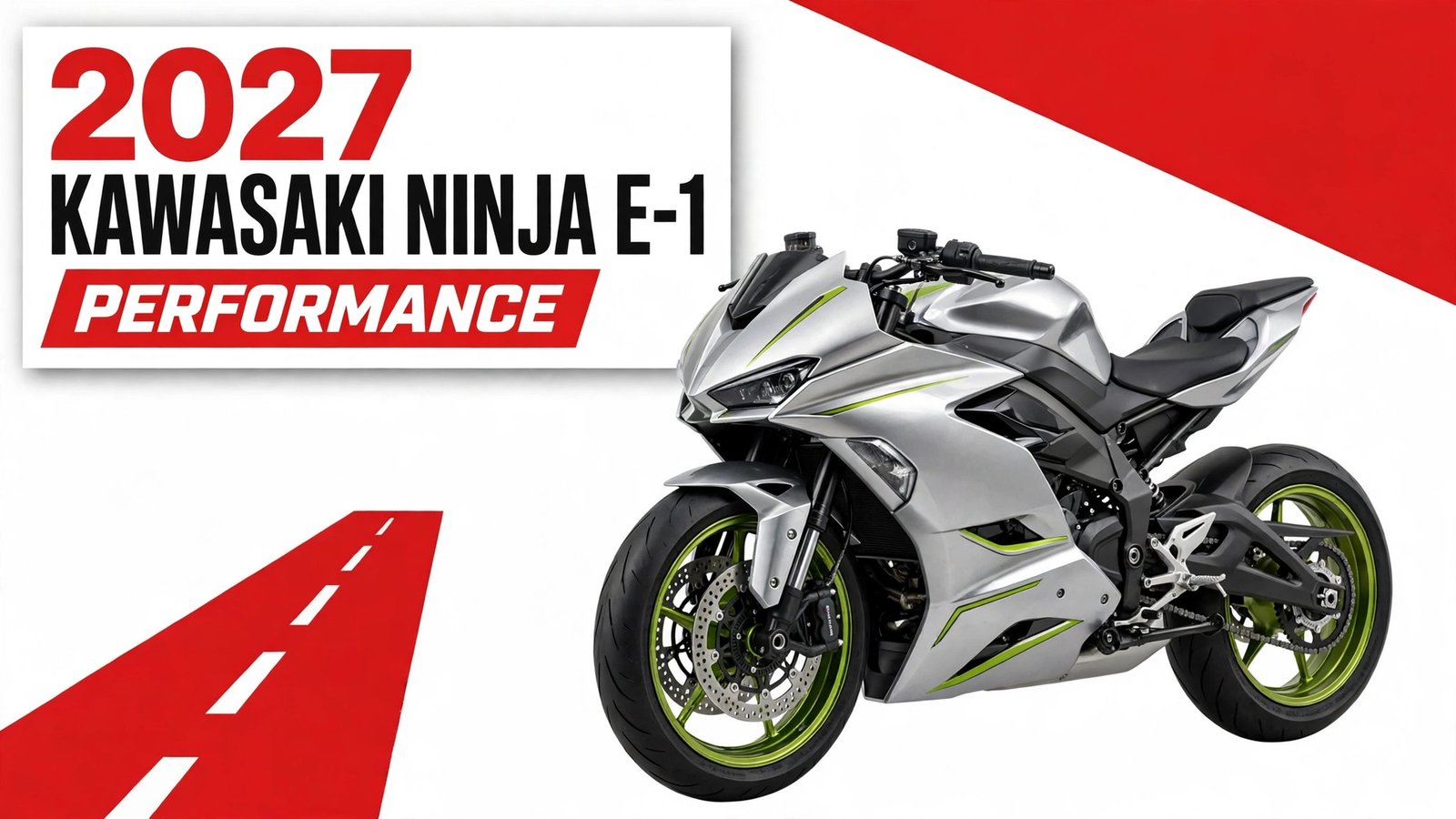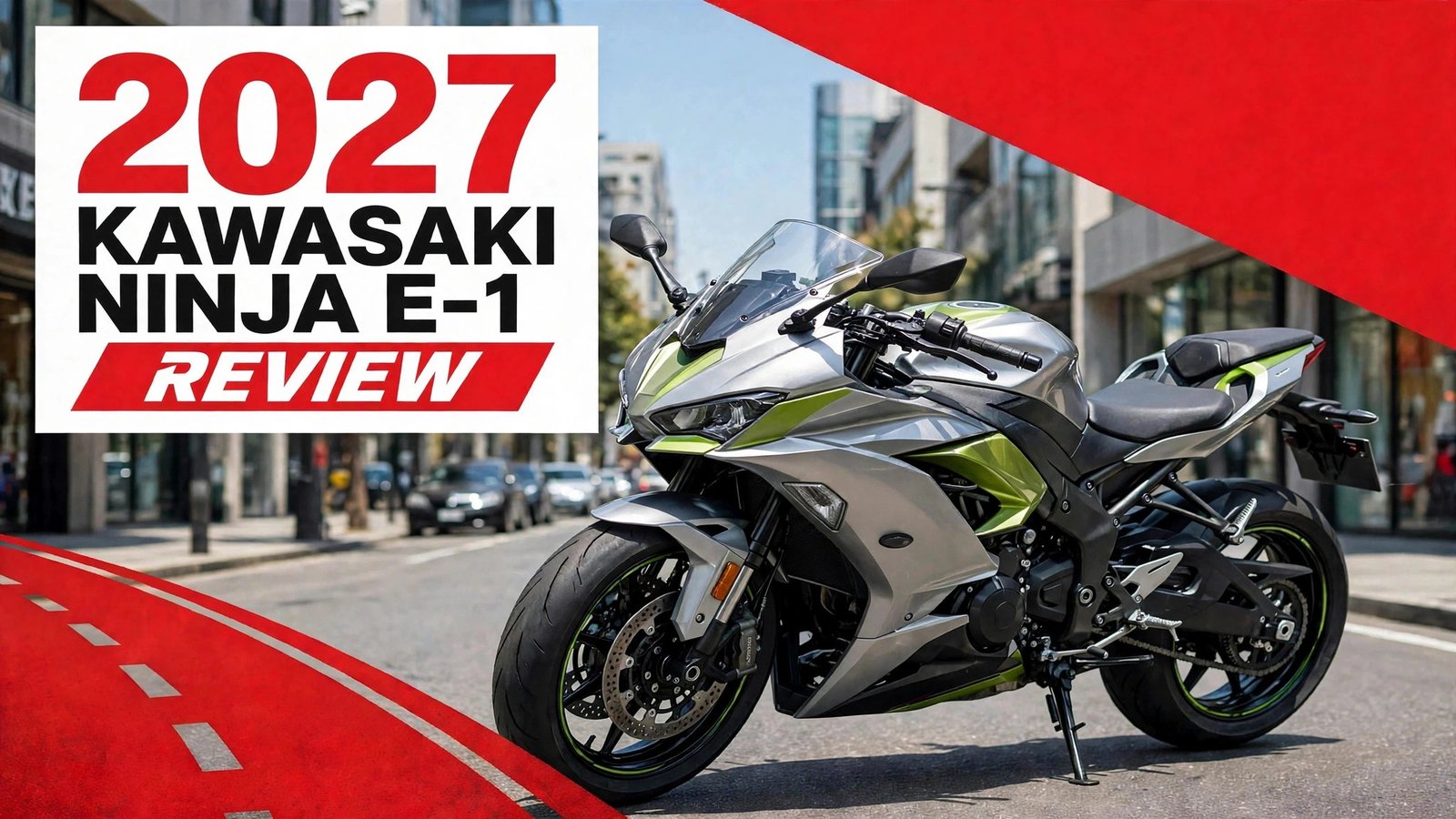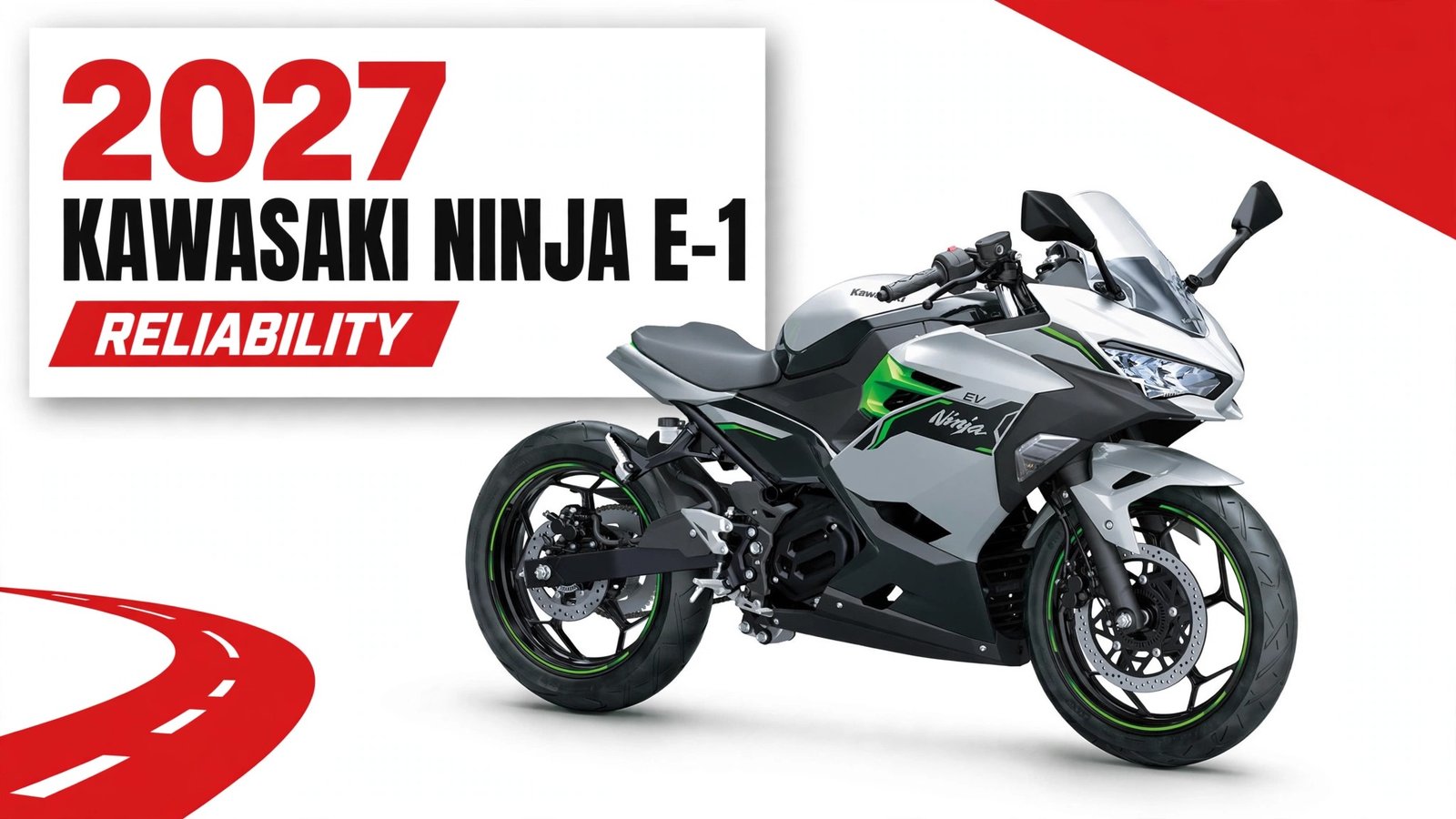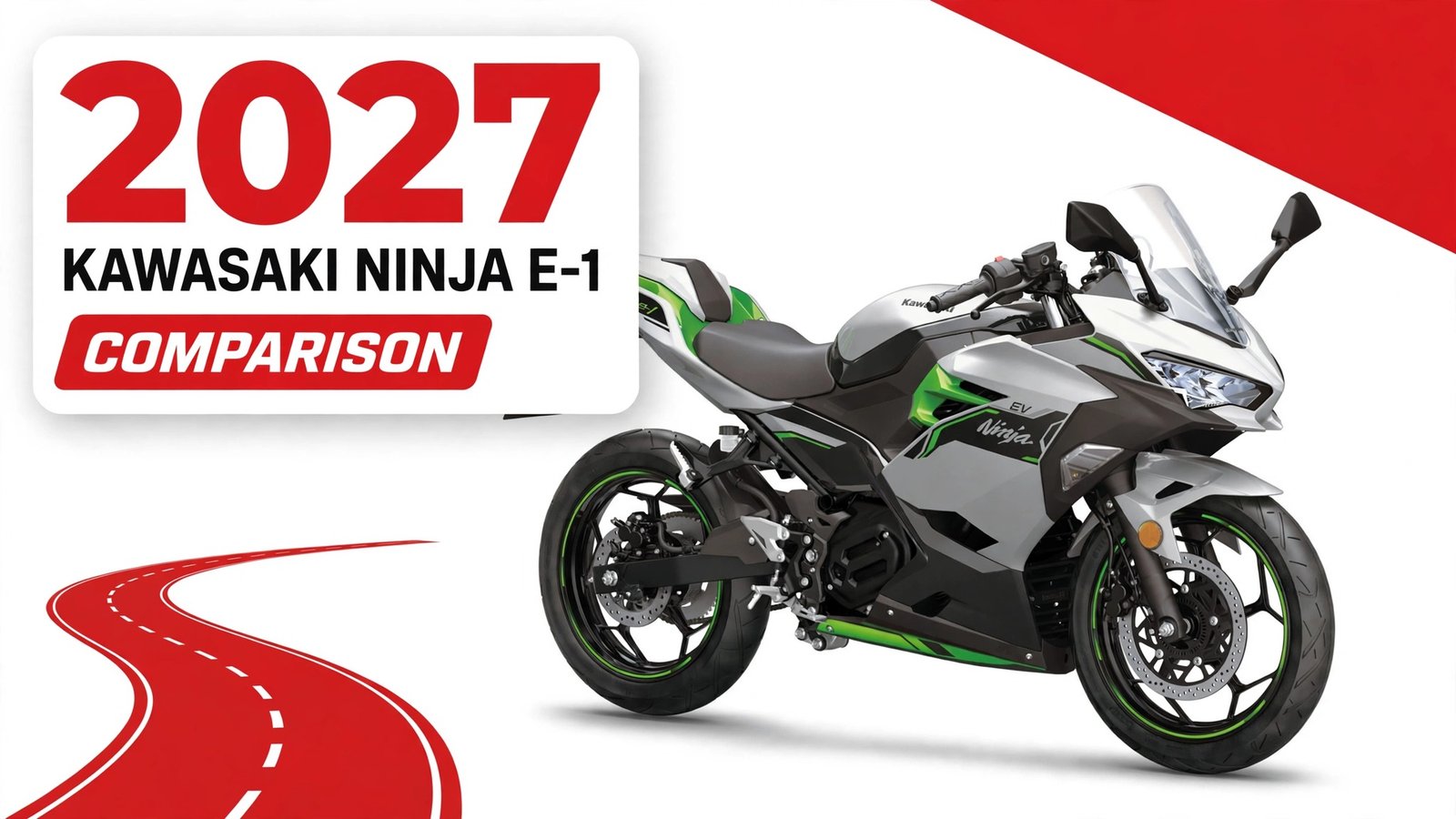
The short answer to this Kawasaki Ninja e-1 comparison is that the Ninja e-1 is the best-looking electric commuter in its price band and the worst value at its list price. At $7,899 it costs more than the Ryvid Anthem, goes slower, and travels barely half as far — yet it is the only bike here still sold new.
The Ninja e-1 returned for 2027 unchanged at the same $7,899 it carried in 2024, the year the market rejected it. The 2024 bike’s market average now sits at $4,540, a 43 percent drop in two years. So this Kawasaki Ninja e-1 comparison reads the bike twice: at list price, where it loses on nearly every number, and at leftover price.
Kawasaki Ninja e-1 Overview and Its Closest Rivals
This Kawasaki Ninja e-1 comparison starts with the bike itself: a faired, clip-on-barred electric commuter with two removable 1.5 kWh packs and a 41-mile claimed range. The three rivals each attack it from a different direction — the Z e-1 from inside the same family, the Anthem on price and speed, and the FXE on being a proper motorcycle.
Same Price the Market Rejected
The 2027 Ninja e-1 costs $7,899 — the same price the 2024 bike carried, and the 2024 bike did not sell at that price. The $7,599 launch announcement is not the selling price. The market’s verdict is visible in the listings: new 2024 bikes were advertised at $3,999 in Monroe, Washington in November 2026. That sameness is the first finding of this Kawasaki Ninja e-1 comparison: the bike did not get better, it came back.
How the Four Bikes Differ at a Glance
The table below is the whole Kawasaki Ninja e-1 comparison in one place.
| Figure | Kawasaki Ninja e-1 (2027) | Kawasaki Z e-1 (2024) | Ryvid Anthem | Zero FXE (2024) |
|---|---|---|---|---|
| Price (MSRP / list) | $7,899 | $7,599 | $6,495 | $12,495 |
| Power (rated / peak) | 5.0 kW / 9.0 kW (6.7 / 12.1 hp) | 5.0 kW / 9.0 kW (6.7 / 12.1 hp) | 7.2 kW / 9.4 kW (9.7 / 12.6 hp) | 33 kW / 34 kW (44 / 46 hp) |
| Top speed (continuous) | 55 mph (65 mph e-boost) | 53 mph (63 mph e-boost) | 75+ mph | 85 mph |
| Claimed range | 41 mi | 41 mi | 75 mi city | 105 mi city |
| Battery | 2x 1.5 kWh (removable) | 2x 1.5 kWh (removable) | 4.3 kWh (removable) | 7.2 kWh (fixed) |
| Curb weight | 308.7 lb | 297.7 lb | 235 lb | 298 lb |
| Warranty (bike / battery) | 24 months / no separate term | 24 months / no separate term | 24 months / 24 months | 2 yr / 5 yr unlimited miles |
Note: The Ninja e-1 and Z e-1 figures are from Kawasaki’s 2027 Ninja e-1 spec sheet and Kawasaki’s 2024 Z e-1 spec sheet. No delivered price is computed for the 2027 Ninja e-1 in this Kawasaki Ninja e-1 comparison, because its destination charge is unverified.
Kawasaki Ninja e-1 vs Kawasaki Z e-1
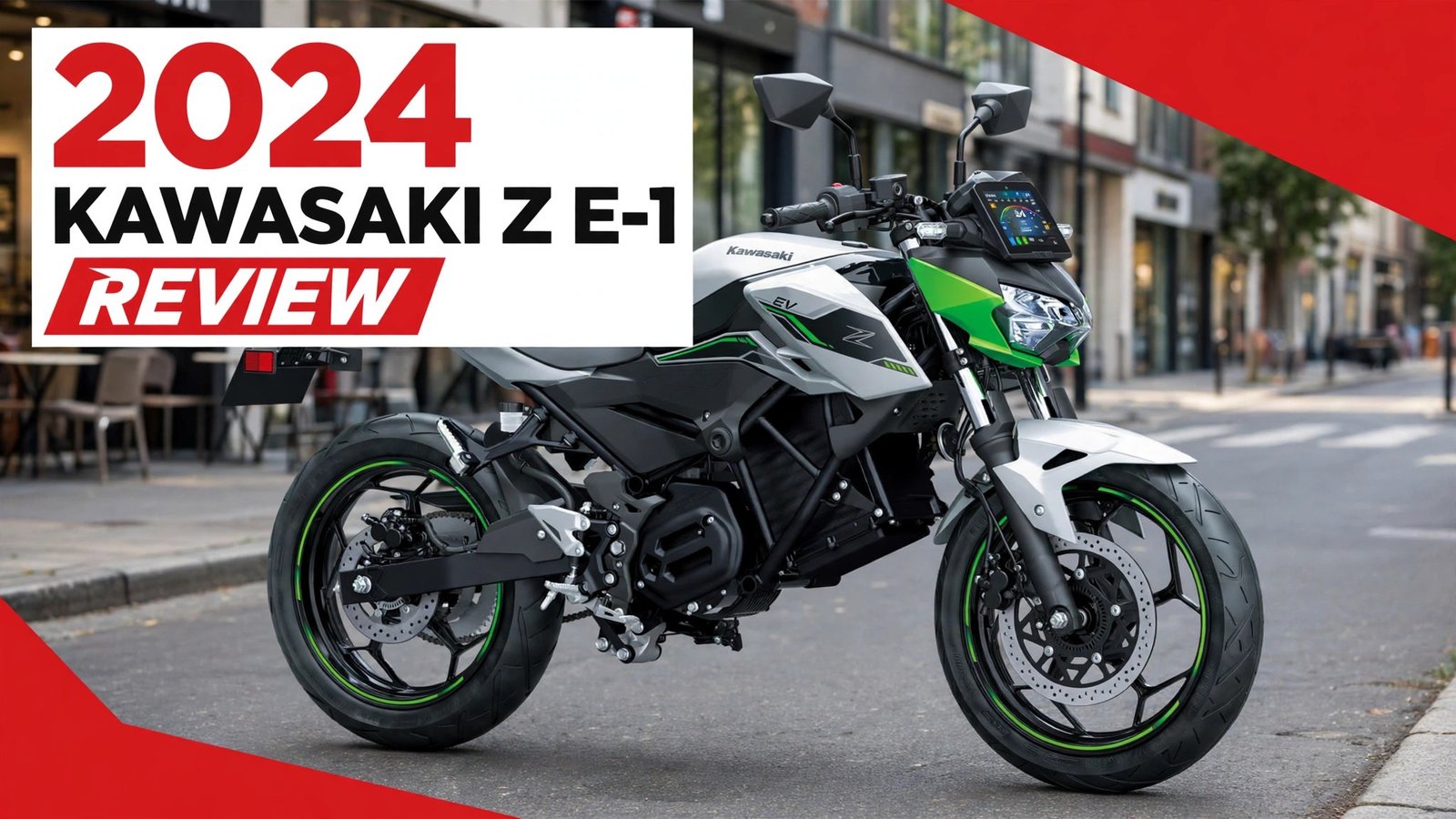
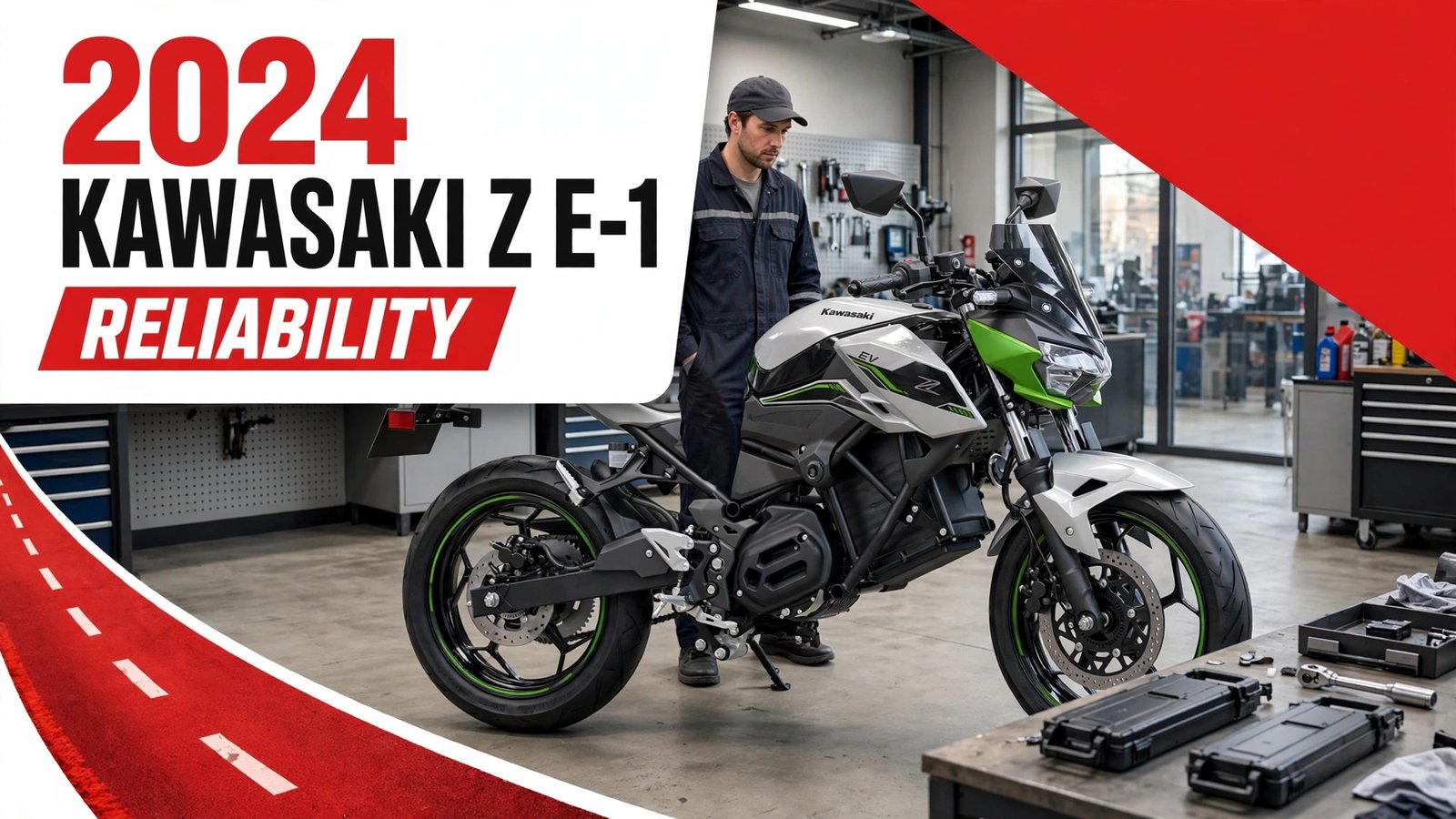
The first rival in this Kawasaki Ninja e-1 comparison is the bike the Ninja e-1 shares its garage with. The Z e-1 is the same platform, powertrain, battery, range, charge and warranty. TopSpeed put it plainly: styling is all that separates Kawasaki’s all-electric e-1 bikes.
Motor, Specs and Performance Side by Side
In this Kawasaki Ninja e-1 comparison there is no performance gap to find between the twins, because there is no performance difference. Both use the same air-cooled motor, 5.0 kW rated and 9.0 kW at peak with e-boost. Both carry two removable 1.5 kWh packs and charge at 120 V only. Both carry the same recall, NHTSA 25V-118, for a missing battery anchor — the Ninja’s slice is 112 bikes and the Z’s slice is 104. THE PACK’s Brussels test used half the battery over 30 km of spirited riding and called the bike perfect for a beginner rider.
| Figure | Kawasaki Ninja e-1 (2027) | Kawasaki Z e-1 (2024) |
|---|---|---|
| Price (MSRP) | $7,899 | $7,599 |
| Motor (rated / peak) | 5.0 kW / 9.0 kW (6.7 / 12.1 hp) | 5.0 kW / 9.0 kW (6.7 / 12.1 hp) |
| Torque | 29.7 lb-ft | 29.7 lb-ft |
| Top speed, Road (e-boost) | 55 mph (65 mph) | 53 mph (63 mph) |
| Top speed, Eco (e-boost) | 40 mph (47 mph) | 40 mph (45 mph) |
| Battery | 2x 1.5 kWh, removable | 2x 1.5 kWh, removable |
| Curb weight | 308.7 lb | 297.7 lb |
| US run | 2024 + 2027 | 2024 only |
Note: The speed figures in this Kawasaki Ninja e-1 comparison are from Kawasaki’s 2027 Ninja e-1 spec sheet and Kawasaki’s 2024 Z e-1 spec sheet. The Ninja’s Eco boost is 47 mph on both sheets — only the Z e-1 prints 45 mph. The 52 mph figure in some press coverage is the global kilometre-per-hour conversion, not the US figure. The recall figures are from the NHTSA Part 573 report for 25V-118.
Price, Equipment and Which Suits Which Rider
The Ninja’s case is the fairing, the clip-ons and the future. The fairing gives the bike the Ninja look, the clip-ons give it the sport position with an upright triangle behind them, and the future is the 2027 return. The Z’s case in this Kawasaki Ninja e-1 comparison is the price and the position: $300 cheaper, 11 lb lighter, and wide bars many city riders prefer to clip-ons. The Z is also the cheaper leftover, listed as low as $2,999 in Florida in November 2026. Our Z e-1 comparison covers the same rivals from the naked bike’s side.
So the twin question in this Kawasaki Ninja e-1 comparison is what the $300 buys. At list price it buys the fairing, the clip-ons and the future — and the market said in 2024 that the fairing was not worth $300 at $7,899. At leftover prices the gap narrows to the fairing alone. Buy the Ninja if you want the faired sport look and a bike still sold new. Buy the Z if you want the naked position and the lowest leftover price.
Kawasaki Ninja e-1 vs Ryvid Anthem
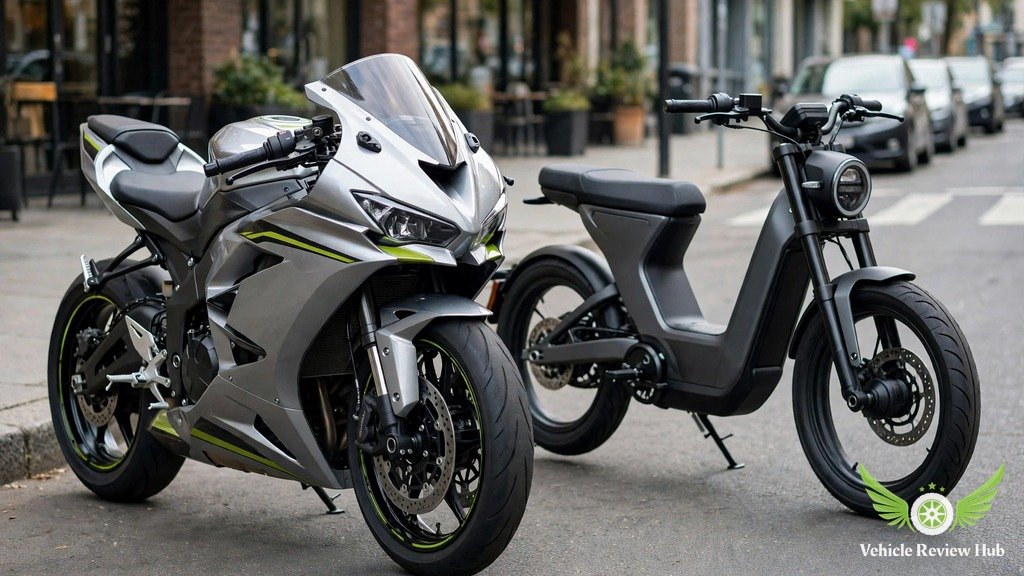
The Ryvid Anthem is the rival this Kawasaki Ninja e-1 comparison cannot soften. It is an American startup bike from Irvine, California, sold direct with no dealer network — and on every number that matters to a commuter, it beats the Ninja e-1. It costs $1,404 less, goes 20 mph faster, travels 34 miles further and weighs 74 lb less. The Ninja’s case is the dealer network and the brand.
Motor, Specs and Performance Side by Side
The Anthem’s motor is rated at 7.2 kW and peaks at 9.4 kW (9.7 / 12.6 hp), against the Ninja e-1’s 5.0 kW rated and 9.0 kW peak. Its torque is 52.8 lb-ft against the Ninja’s 29.7. Its single removable 4.3 kWh battery is bigger than the Ninja’s two 1.5 kWh packs combined, which is where the 75-mile city range comes from. The Anthem tops 75 mph and weighs 74 lb less at 235 lb. It is the only bike in this Kawasaki Ninja e-1 comparison with Level 2 charging.
| Figure | Kawasaki Ninja e-1 (2027) | Ryvid Anthem |
|---|---|---|
| Price (MSRP / list) | $7,899 | $6,495 |
| Motor (rated / peak) | 5.0 kW / 9.0 kW (6.7 / 12.1 hp) | 7.2 kW / 9.4 kW (9.7 / 12.6 hp) |
| Torque | 29.7 lb-ft | 52.8 lb-ft |
| Top speed | 55 mph (65 mph e-boost) | 75+ mph |
| Claimed range | 41 mi | 75 mi city |
| Battery | 2x 1.5 kWh, removable | 4.3 kWh, removable |
| Curb weight | 308.7 lb | 235 lb |
| Charging | 120 V only, 3.7 hr per pack | Level 2 charging |
| Warranty (bike / battery) | 24 months / no separate term | 24 months / 24 months |
Note: The Ninja e-1 figures in this Kawasaki Ninja e-1 comparison are from Kawasaki’s 2027 Ninja e-1 spec sheet. The Anthem figures are from Ryvid’s own Anthem page, where the current base price is $6,495 — a $7,995 figure that appears in some sources is unsupported and is not printed here. The ranges are measured differently.
Price, Equipment and Which Suits Which Rider
The Anthem’s risks are the risks of a startup. It is sold direct, so there is no dealer to walk into. Ryvid’s longevity is unproven, and its service network is small. The Ninja e-1’s risks are the risks of its own spec sheet: a 41-mile range, a 55 mph cap, and a resale market that values the 2024 bike at $4,540. The Anthem also has a 24-month battery warranty, where the Ninja e-1 has no separate battery term — a gap this Kawasaki Ninja e-1 comparison notes in the table above.
So the Anthem question in this Kawasaki Ninja e-1 comparison is a question about what a buyer trusts more — numbers or a network. Buy the Anthem if the numbers decide it: cheaper, faster, longer-ranged, lighter, Level 2 charging. Buy the Ninja e-1 if the network decides it.
Kawasaki Ninja e-1 vs Zero FXE
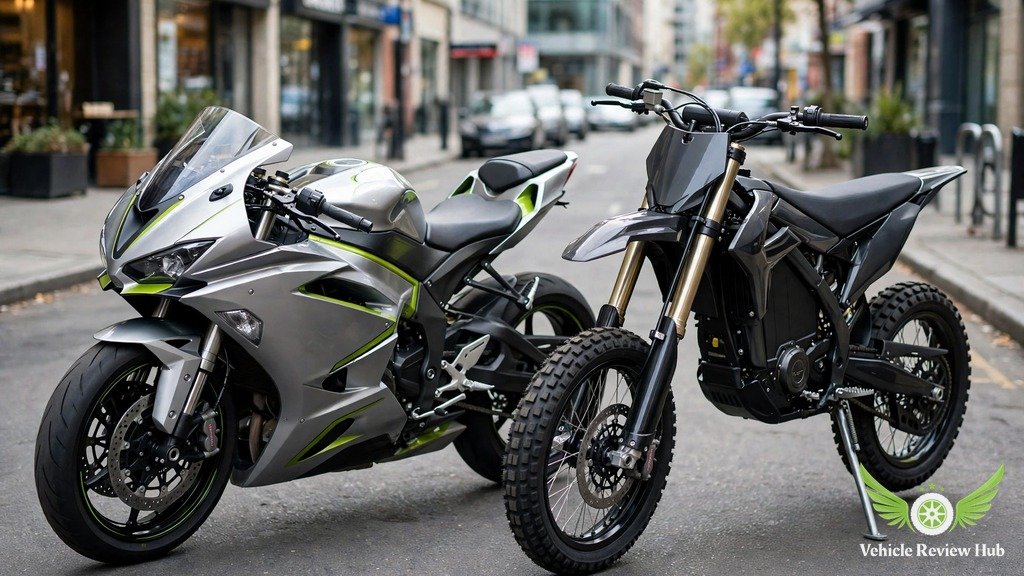
The Zero FXE is the rival that changes the question this Kawasaki Ninja e-1 comparison is asking. Against the FXE, the Ninja e-1 is competing with a real motorcycle that happens to be electric. The FXE makes 46 hp against the Ninja’s 12.1, goes 85 mph against the Ninja’s 55, and travels 105 miles against the Ninja’s 41.
Motor, Specs and Performance Side by Side
The FXE’s motor is rated at 33 kW and peaks at 34 kW, for 44 hp rated and 46 hp at the peak, with 78 lb-ft of torque — more than two and a half times the Ninja e-1’s 29.7 lb-ft. Its 7.2 kWh battery is fixed, not removable — the one clear disadvantage against the Ninja e-1. Its 105-mile city range and 85 mph top speed are highway numbers where the Ninja’s 41 miles and 55 mph cap are city numbers. The FXE weighs 298 lb and carries the best battery warranty in this Kawasaki Ninja e-1 comparison: five years with unlimited miles.
| Figure | Kawasaki Ninja e-1 (2027) | Zero FXE (2024) |
|---|---|---|
| Price (MSRP / list) | $7,899 | $12,495 |
| Motor (rated / peak) | 5.0 kW / 9.0 kW (6.7 / 12.1 hp) | 33 kW / 34 kW (44 / 46 hp) |
| Torque | 29.7 lb-ft | 78 lb-ft |
| Top speed | 55 mph (65 mph e-boost) | 85 mph |
| Claimed range | 41 mi | 105 mi city |
| Battery | 2x 1.5 kWh, removable | 7.2 kWh, fixed |
| Curb weight | 308.7 lb | 298 lb |
| Warranty (bike / battery) | 24 months / no separate term | 2 yr / 5 yr unlimited miles |
Note: The Ninja e-1 figures are from Kawasaki’s 2027 Ninja e-1 spec sheet. The FXE figures are from Zero’s own site and the 2024 Zero FXE listing, which confirms the 5-year battery warranty and the $12,495 list price. The Ninja e-1’s removable packs are its one practical advantage over the FXE in this Kawasaki Ninja e-1 comparison.
Price, Equipment and Which Suits Which Rider
The FXE’s risks are the price, the fixed battery and the network. At $12,495 it costs nearly twice the Ninja e-1’s list price, and Zero’s dealer network is smaller than Kawasaki’s. The Ninja e-1’s risks in this Kawasaki Ninja e-1 comparison are the range, the cap and the resale. But at leftover prices the argument shifts: a leftover 2024 FXE was listed at $7,999 — $100 more than a new Ninja e-1 at $7,899.
Buy the FXE if you want an electric motorcycle that can do everything a petrol motorcycle can do — highway speed, a 105-mile range, 46 hp. Buy the Ninja e-1 if you want the cheaper, lighter, simpler city bike. That is the split this Kawasaki Ninja e-1 comparison comes down to.
Kawasaki Ninja e-1 Price and Value Compared
Everything in this Kawasaki Ninja e-1 comparison so far has been priced at the list. This section reprices it at the money buyers actually pay. At $7,899 the Ninja e-1 is a hard sell against the Anthem at $6,495. At $3,999 it is a different bike — the same 55 mph cap and the same 41-mile range, but at a price where those limits are reasonable for a city commuter.
Cap Used at Leftover Money
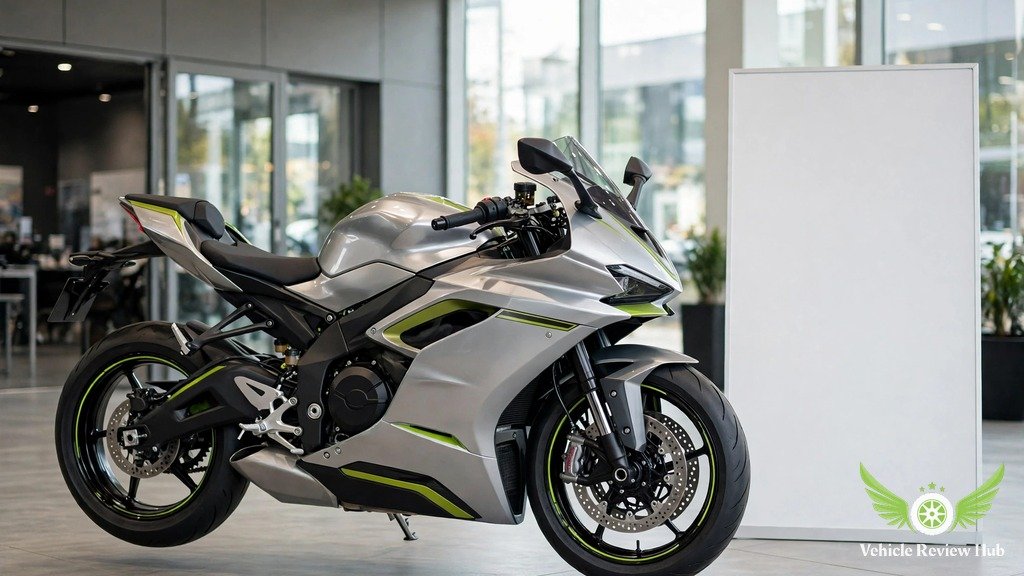
At $7,899 the 55 mph cap is a deal-breaker for most riders, because the same money buys the Ninja 500 with 51 hp and no cap at all, or the Anthem with 75 mph for $1,404 less. At $3,999 the same cap is a reasonable commuter’s compromise. The cap is also lower in the real world than on the sheet — TopSpeed’s week-long Phoenix test saw the bike tap out at just over 50 mph in Road mode. The leftover listings from November 2026 make the point in dollars: Adventure Motorsports in Monroe, Washington advertised a new 2024 Ninja e-1 at $3,999, while Jacksonville Powersports advertised a $4,500 headline that became $6,079 after $1,579 in fees. The headline is not the price in this Kawasaki Ninja e-1 comparison; the fee stack is part of the price.
Bikes and Beards bought the cheapest full-electric Ninja they could find — a leftover Ninja e-1 — and found the listing had lied about it.
The video above is a leftover-buy story, not a review — the title says the listing lied, and the bike in the video is a leftover Ninja e-1 bought cheap. That is exactly the transaction this Kawasaki Ninja e-1 comparison is about. Before paying, check the VIN against the 25V-118 recall, confirm both battery packs are present, and confirm the charger is included. The recall covers 2024 bikes only — the Z e-1’s recall is the same campaign — and the remedy is a battery anchor that takes ten minutes or less to fit.
| Listing (November 2026) | Headline price | Fees added | Total before tax |
|---|---|---|---|
| Adventure Motorsports, Monroe WA (new 2024) | $3,999 | Not listed | $3,999 |
| Jacksonville Powersports, FL (new 2024) | $4,500 | $640 freight + $540 prep + $399 doc | $6,079 |
| Central Coast Yamaha, Santa Maria CA (used 2024, 104 mi) | $5,045 | Not listed | $5,045 |
| 1000PS market average (2024, avg 5 km) | $4,540 | n/a | $4,540 |
Note: The Monroe and Jacksonville listings in this Kawasaki Ninja e-1 comparison were live in November 2026 — the Monroe listing at Adventure Motorsports and the Jacksonville fee stack in the dealer’s own brochure, dated November 18, 2026. The market average is from 1000PS.
Running Costs and Resale Value Compared
Running costs are where the electric bikes converge. The fuel is electricity, and no per-mile or per-charge cost figure exists for this bike — none is printed here, because none has been published. Routine servicing is chain, brakes, tyres and battery terminals — no oil, no coolant, no valves and no spark plugs on the Ninja e-1 or the Z e-1. The packs are the only big-ticket item, and no confirmed replacement-pack price was found, so no pack price is printed in this Kawasaki Ninja e-1 comparison. What differs is resale.
| Bike | List price | Leftover / market price | Drop from list |
|---|---|---|---|
| Kawasaki Ninja e-1 (2024) | $7,899 | $4,540 market average | 43 percent |
| Kawasaki Z e-1 (2024) | $7,599 | $2,999 leftover low | 61 percent |
| Ryvid Anthem | $6,495 | Unproven (too new, direct sales) | Not known |
| Zero FXE (2024) | $12,495 | $7,999 leftover | 36 percent |
Note: The Ninja e-1 market average in this Kawasaki Ninja e-1 comparison is from 1000PS for a 2024 bike at an average of 5 km. The Z e-1 leftover low of $2,999 is the Power Lodge Florida listing from November 2026. The FXE leftover price of $7,999 is from Zero’s own leftover listing.
Kawasaki Ninja e-1 Comparison Verdict and US Alternatives
The verdict of this Kawasaki Ninja e-1 comparison depends on the price on the invoice, not the price on the spec sheet. At $7,899 the Ninja e-1 loses to the Anthem on the numbers, loses to the FXE on capability, and loses to the Ninja 500 on value. At $3,999 it is a fair price for a 41-mile city commuter with a fairing and a dealer behind it.
Verdict: Fairing and Network
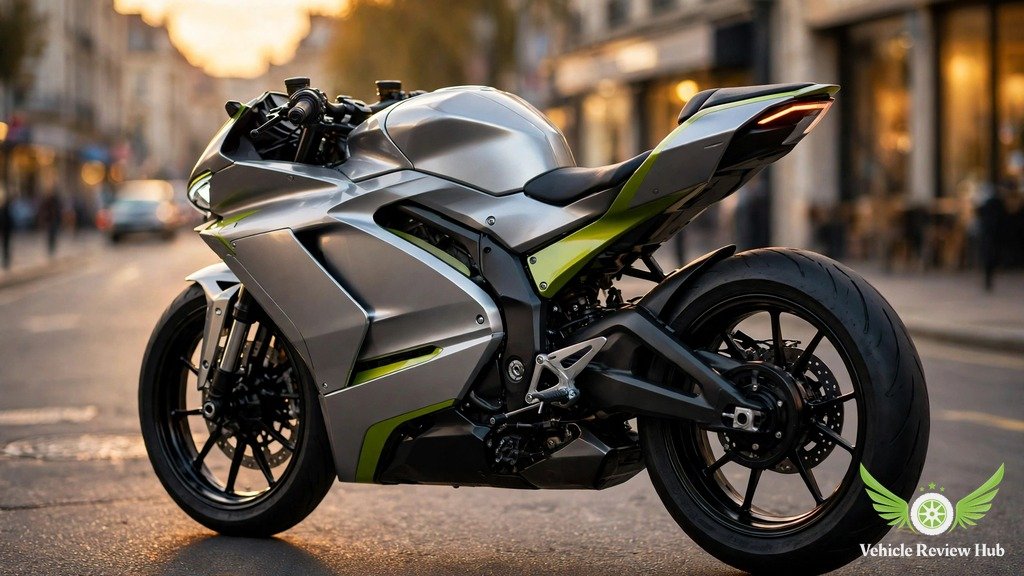
The Ninja e-1’s $300 premium over the Z e-1 buys the fairing, the clip-ons and the future. The fairing is the look. The clip-ons are the position — an upright triangle behind sport bars. The future is the 2027 return and the warranty starting in 2027. At list price the premium is a hard sell, and the market said so in 2024. At leftover prices the premium is the fairing alone — the verdict of this Kawasaki Ninja e-1 comparison on the $300 question.
The network is the Ninja’s real advantage over the Anthem and the FXE in this Kawasaki Ninja e-1 comparison. Kawasaki’s full US dealer network and a 24-month warranty from a manufacturer with 60 years in the US market — that is the case against a startup with no dealers. But the advantage should not be overstated: not every Kawasaki dealer stocks the e-1 or services it regularly, so a buyer should confirm that their local dealer services the e-1 first.
Ninja 500 Is the Control
The honest control in this Kawasaki Ninja e-1 comparison is the petrol bike that costs less and does more. The 2026 Ninja 500 ABS costs $5,799 plus a $650 destination charge, for $6,449 delivered, $1,450 less than the Ninja e-1’s list price. It makes 51.0 hp, it has no speed cap and will do 100 mph or more, and it travels 200 miles or more on a tank. The Ninja 500 performance figures are not close to the e-1’s.
So the control conclusion is plain: the Ninja e-1 is for the rider who wants an electric bike and a city commuter, and who will pay more for silence, simplicity and no petrol. The Ninja 500 is for the rider who wants a motorcycle. A rider who needs a highway, a long range or a low price should buy the 500 — it wins all three. A rider who charges at home should buy the e-1 as a leftover. That is the finding this Kawasaki Ninja e-1 comparison keeps coming back to.
Kawasaki Ninja e-1 Comparison: Frequently Asked Questions
The questions below are the ones buyers actually ask when they compare the Ninja e-1 against its rivals in a Kawasaki Ninja e-1 comparison. The answers are short, direct, and based on the figures in the tables above.
Should I buy the Ninja e-1 or the Z e-1?
Buy the Ninja if you want the faired sport look, the upright triangle behind clip-ons, and a bike still sold new with a warranty starting in 2027. Buy the Z if you want the naked position, the wider bars and the lowest leftover price — Z e-1 leftovers were listed as low as $2,999. Neither is a highway bike, and this Kawasaki Ninja e-1 comparison finds no performance difference between them at all.
Is the Ryvid Anthem better than the Ninja e-1?
On the numbers, yes: the Anthem costs $6,495 (vs $7,899), goes 75+ mph (vs 55 mph), has a 75-mile city range (vs 41 miles), weighs 235 lb (vs 308.7 lb) and has Level 2 charging. The Ninja’s case is Kawasaki’s dealer network and a 24-month warranty from a manufacturer with 60 years in the US market. The Anthem has no dealer network.
Is the Zero FXE better than the Ninja e-1?
The FXE is a real motorcycle: 46 hp, 85 mph, 105-mile city range, and a 5-year battery warranty. It costs $12,495 new — $4,596 more than the Ninja e-1. A leftover 2024 FXE was listed at $7,999, about the same as a new Ninja e-1. The Ninja is the cheaper, lighter, simpler city bike; the FXE is the bike for a rider who wants an electric motorcycle that can do everything a petrol bike can do.
Should I buy a leftover Ninja e-1?
At leftover prices near $4,000, yes — if you want a city commuter and you charge at home. At the $7,899 list price, the bike’s 55 mph cap and 41-mile range are a hard sell. Check the VIN against the 25V-118 recall first, confirm both battery packs are present, and confirm the charger is included. And read the fee stack: a $4,500 headline can become $6,079 once freight, prep and doc fees are added.
Is the Ninja 500 a better buy than the Ninja e-1?
For most riders, yes. The 2026 Ninja 500 ABS costs $6,449 delivered — $1,450 less than the Ninja e-1’s $7,899 list price — with 51 hp, no speed cap, a 200+ mile range and the same dealer network. The e-1 is for the rider who specifically wants an electric bike and a city commuter; the 500 is for the rider who wants a motorcycle.
What does the Ninja e-1’s $300 premium over the Z e-1 buy?
The full fairing, the clip-on handlebars and the future: the Ninja is the only e-1 that returned for 2027, so a new Ninja e-1 carries a warranty starting in 2027. At list price the premium is a hard sell — the market rejected $7,899 in 2024. At leftover prices the premium is the fairing alone, and that is the final finding of this Kawasaki Ninja e-1 comparison.