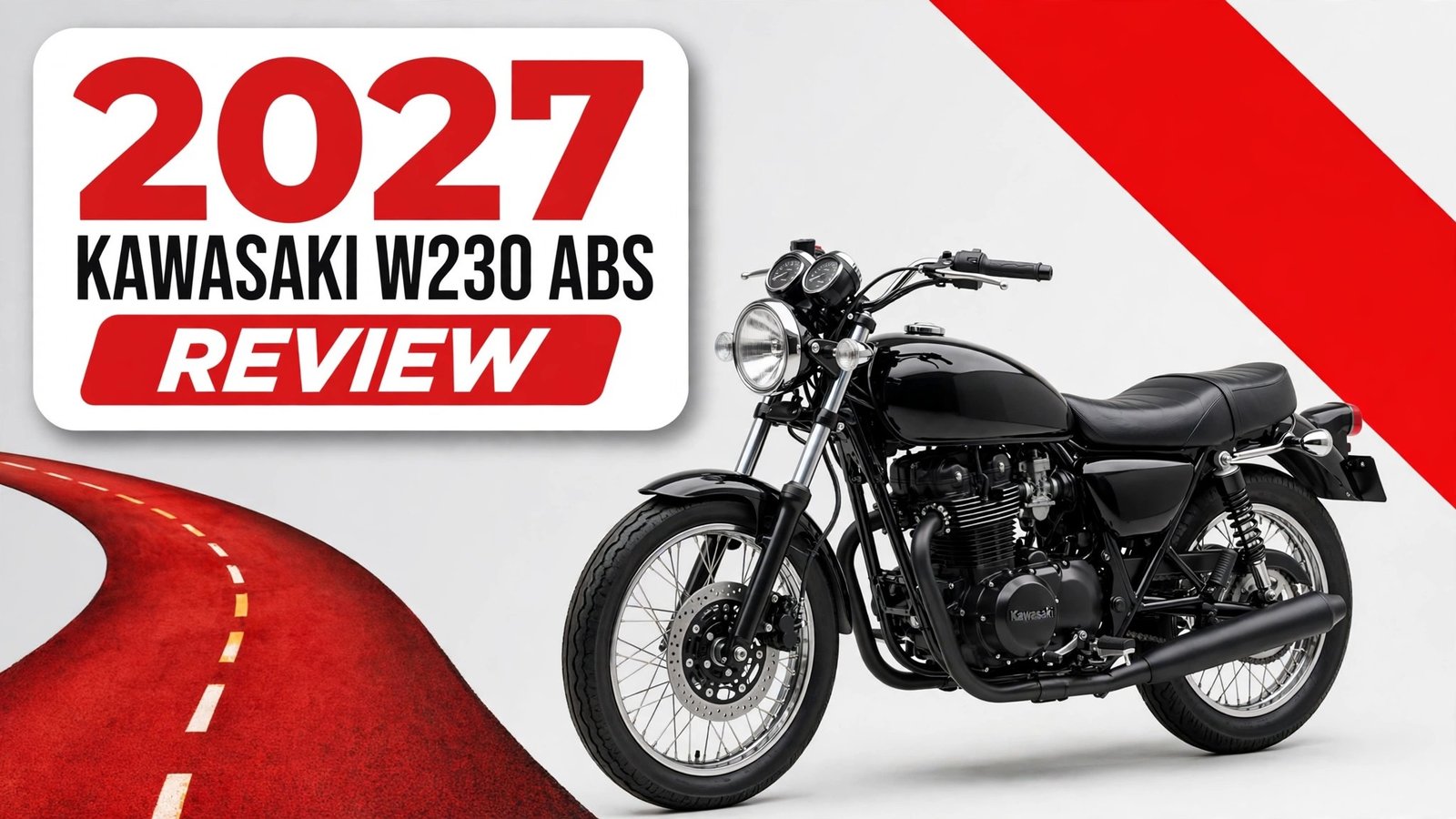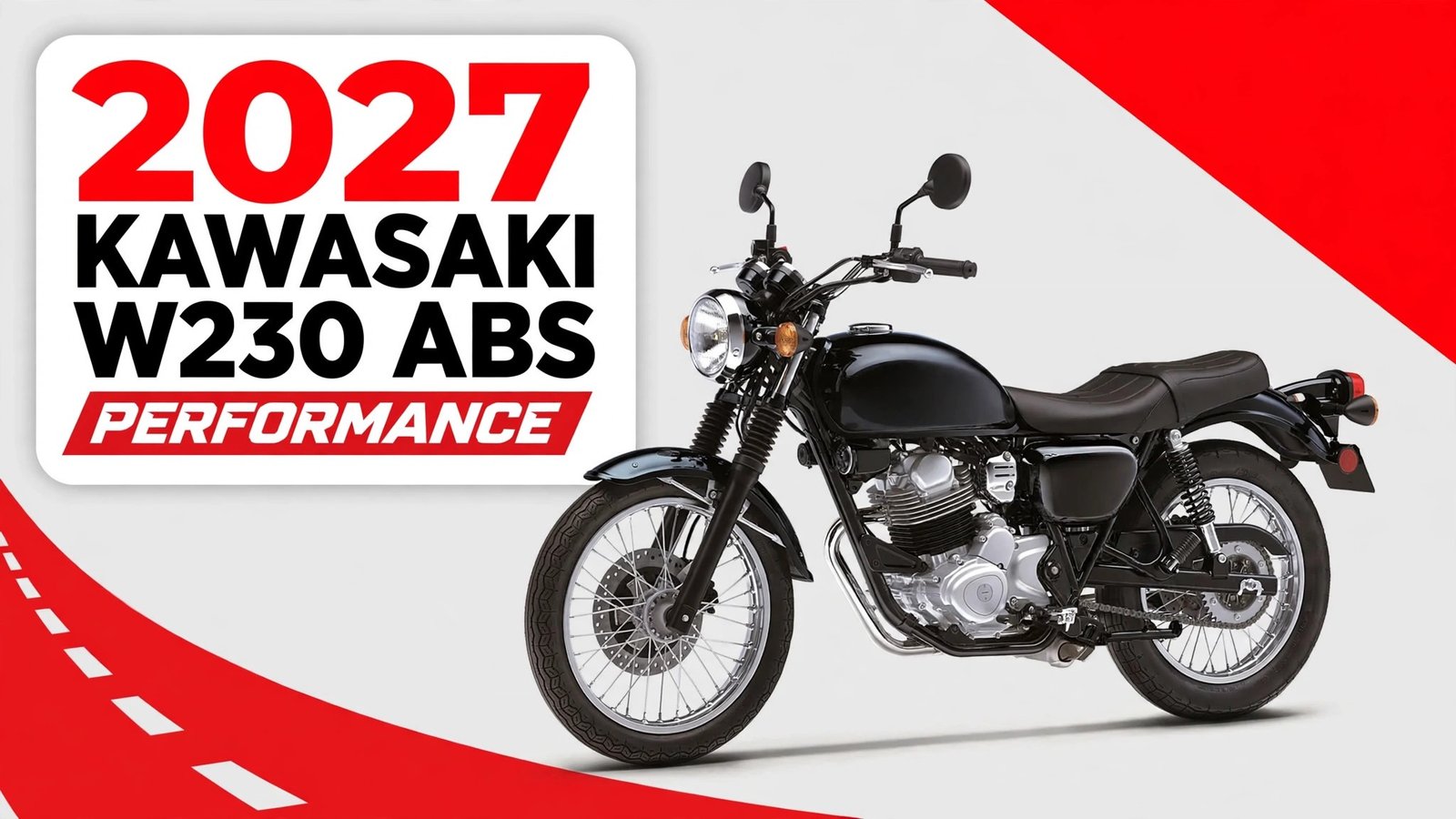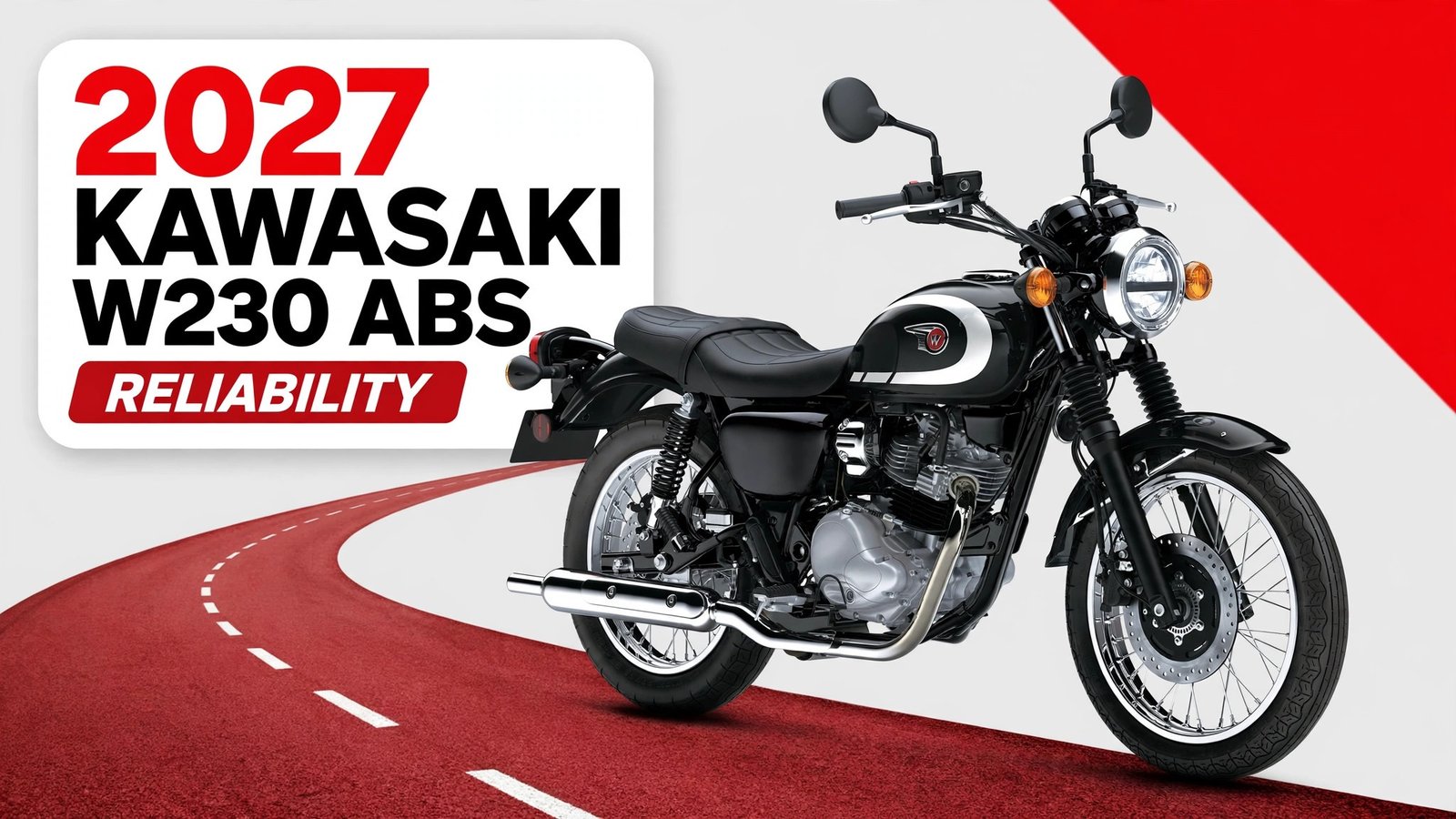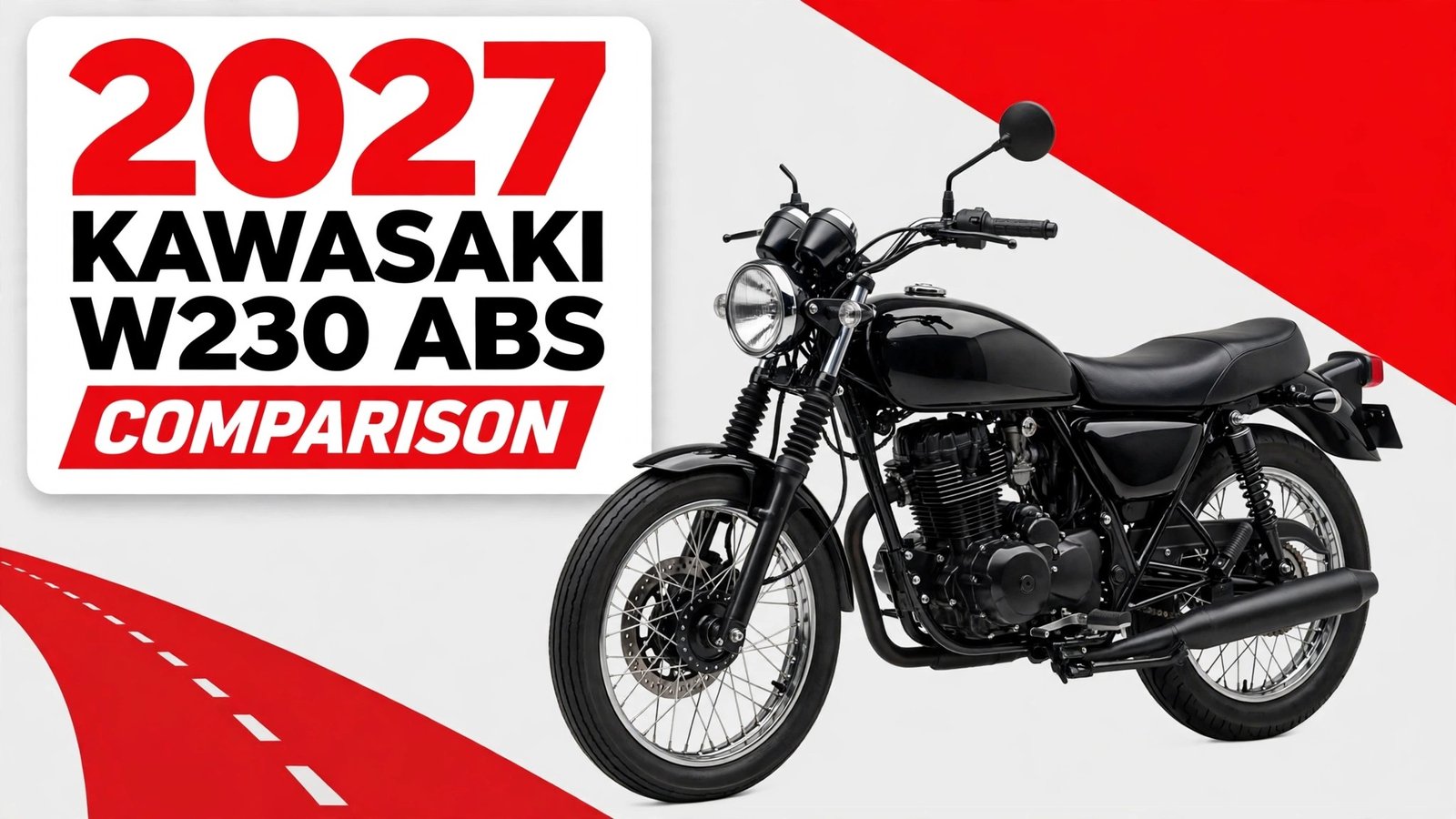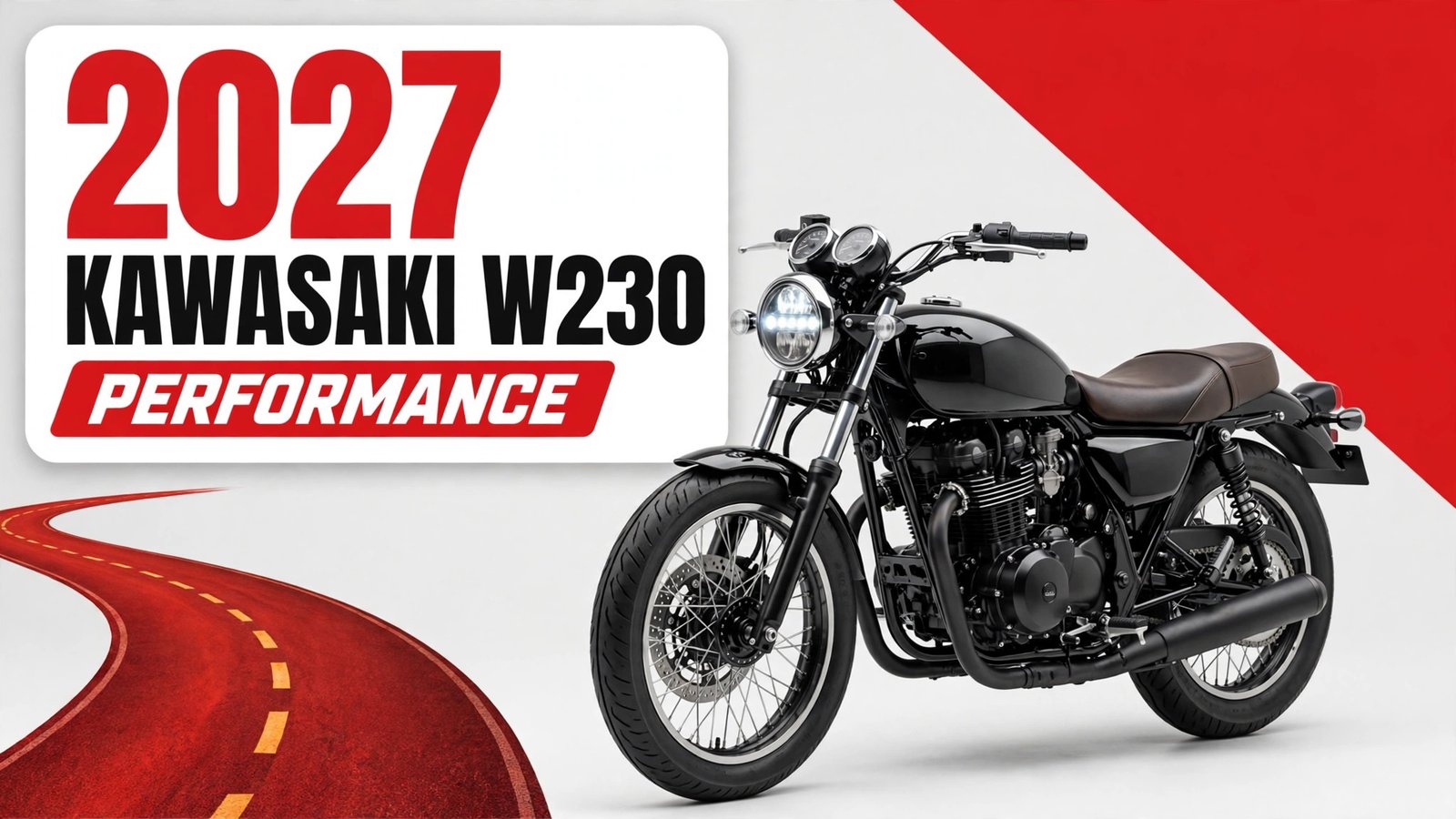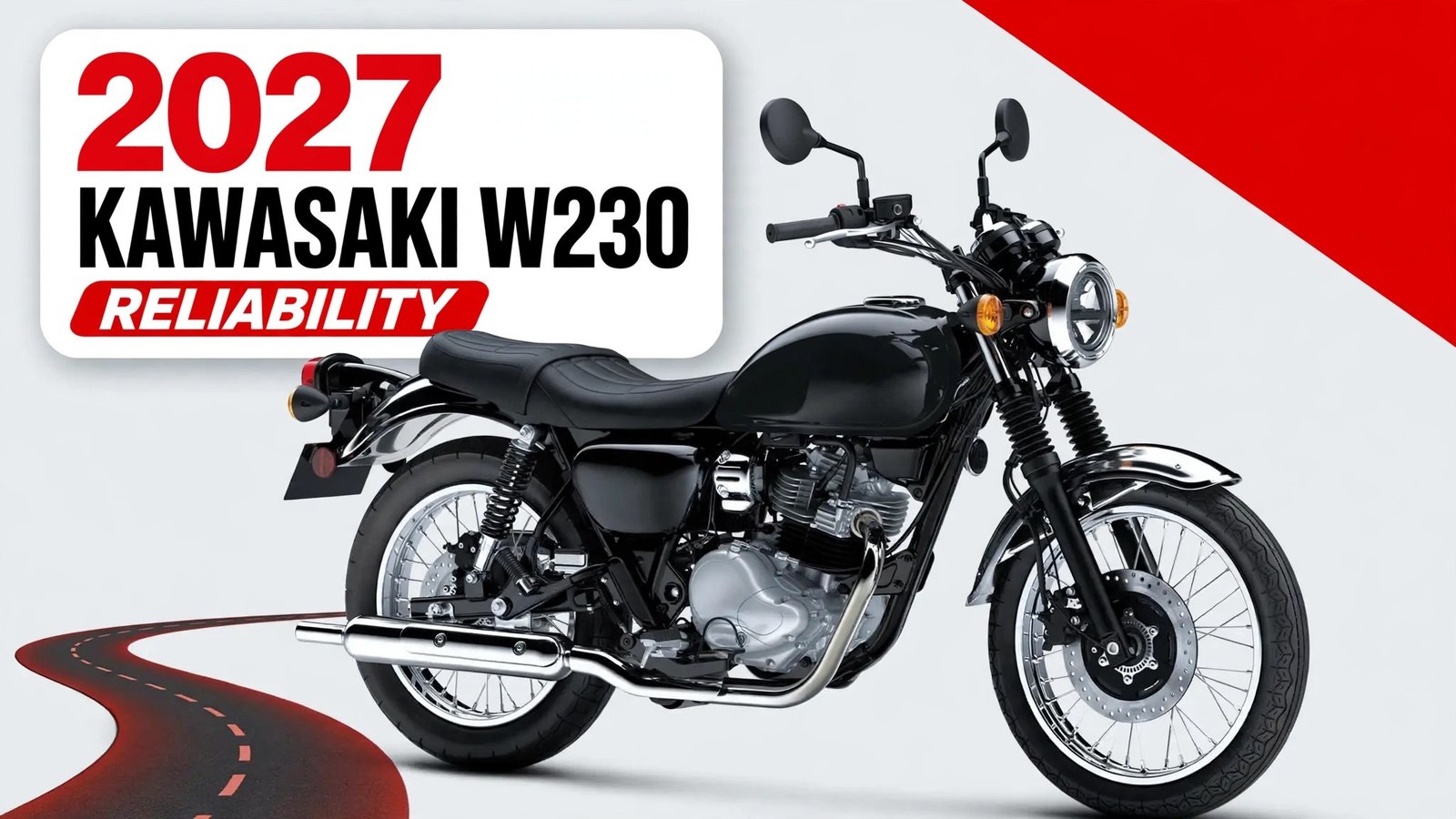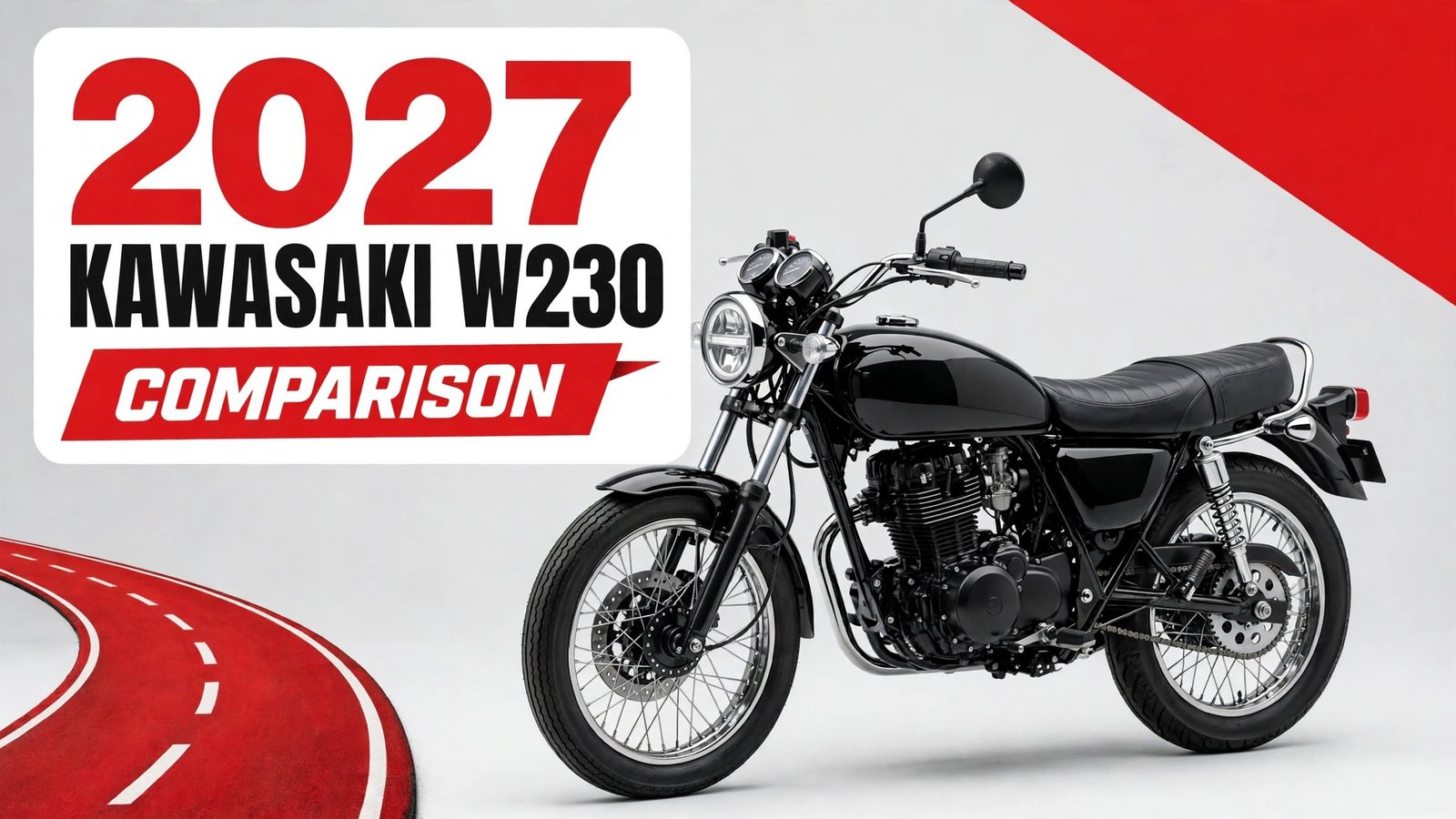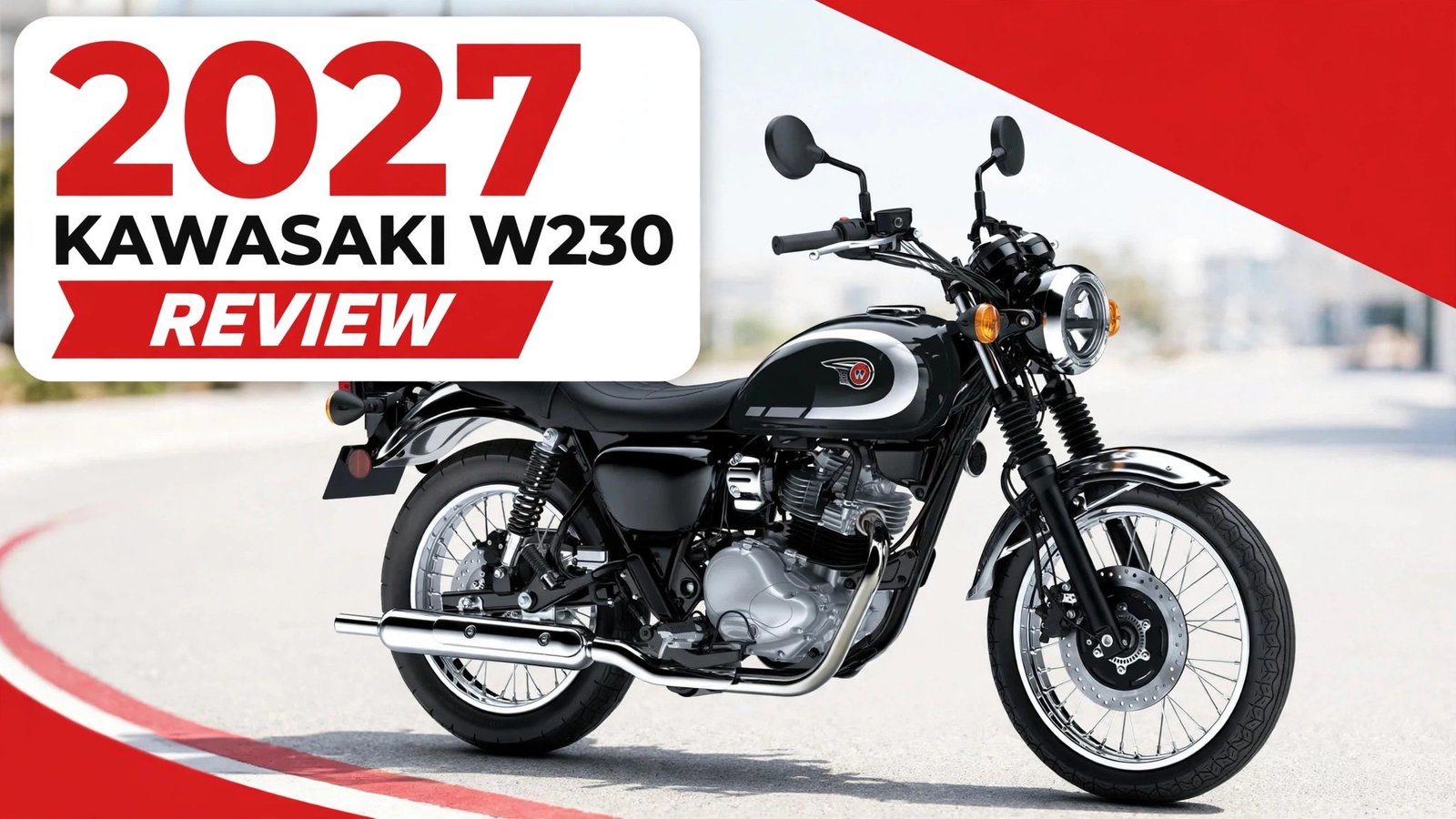
Kawasaki brought the W name back to America in 2025 with a small retro single that looks like it rolled out of 1965. This Kawasaki W230 review covers the bike as it stands in the USA: a 233cc air-cooled single making 17 hp, a 6-speed gearbox, disc brakes at both ends, a 29.3-inch seat and 315.3 lb at the curb. It is the lightest, simplest bike in Kawasaki’s retro line — but it arrives with two recalls in its first two years.
The headline numbers are easy to state, and this Kawasaki W230 review states them plainly. The 2027 bike costs $5,899 plus $435 destination, or $6,334 delivered; the 2025 bike cost $5,599 plus $420, and the 2026 bike $5,699 plus $435. Nothing mechanical changed across those three years — only the price, the colour and a 0.1 lb rounding.
Kawasaki W230 Overview and Model-Year Updates
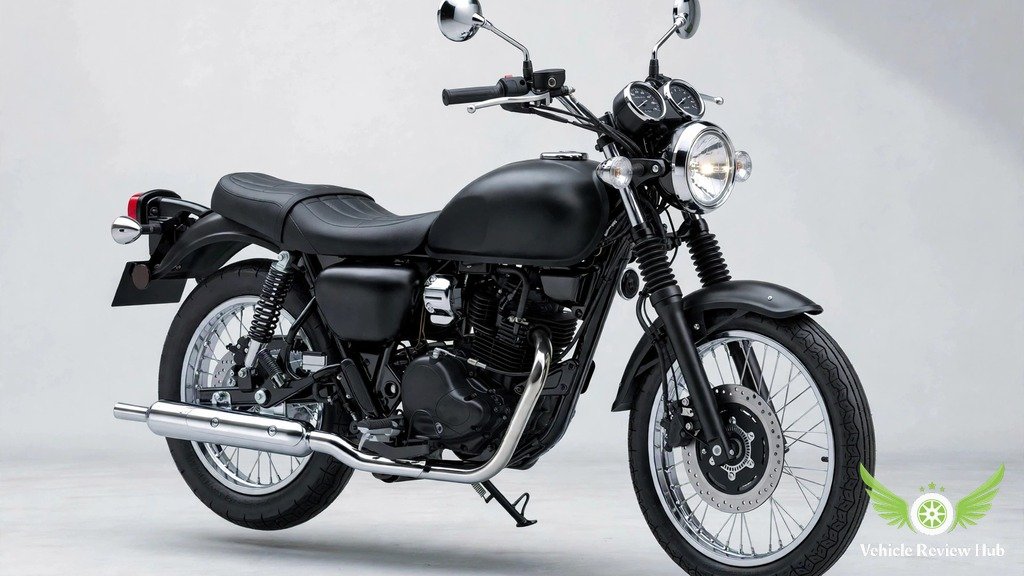
The W230 is Kawasaki’s smallest retro motorcycle and its most direct nod to the W series that started in the 1960s. It is a single-cylinder, air-cooled, steel-framed naked: round headlight, analog dials, spoked-style wheels, twin rear shocks, pea-shooter exhaust. That simplicity is the bike’s defining character: the look and feel of an old machine with the reliability and dealer support of a new one, as this Kawasaki W230 review sees it.
Ride with Warro covered 1,000 km on his 2026 Kawasaki W230 in about ten days and filmed this owner’s review from the saddle — helmet-cam riding on dirt, country roads and highway, talking through the low seat, the light clutch, the missing gear indicator and the vibration around 80–100 km/h. He would recommend the bike, and the video below is that review, in English.
Thailand-Built, ML5 VINs
The build country of the US W230 is UNVERIFIED, and this Kawasaki W230 review says so up front rather than repeating a claim it cannot prove. No published US W230 VIN, Kawasaki statement or press release ties the US bike to Thailand. What is verified is the code: NHTSA’s vPIC lists ML5 as Kawasaki Motors Enterprise Thailand, while MH4 is Indonesia. So if a W230 VIN starts with ML5, that bike is Thailand-built — but nobody has published a US W230 VIN to check. The trap is the engine: the W230 shares its 233cc single with the Indonesia-built KLX230 family, but engine-sharing proves nothing about where the W230 itself is assembled. Buyers who care should read the first three characters of the VIN on the bike in front of them.
Continues Into 2027
The W230 is not a one-year experiment. Kawasaki sells it in the USA for 2025, 2026 and 2027, and the 2027 model is confirmed by Kawasaki’s own 2027 spec sheet, which lists the same engine, power claim and chassis as the launch bike. This Kawasaki W230 review counts that continuity as a quiet vote of confidence: three model years without a mechanical change means Kawasaki believes the bike has found its buyers. Colours run 2025 Metallic Ocean Blue over Ebony, 2026 Metallic Matte Dark Green and 2027 Ebony. Mechanically, a 2025 and a 2027 W230 are the same motorcycle, which matters when leftover 2025 bikes appear at deep discounts.
Kawasaki W230 Engine and Specifications
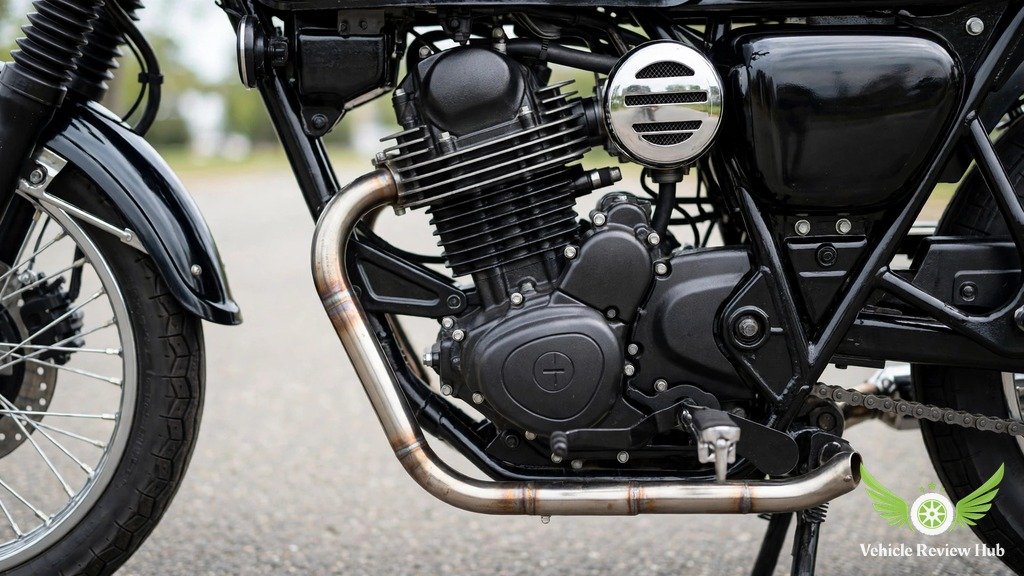
The engine is the whole point of this motorcycle, and this Kawasaki W230 review starts there: it is deliberately old-fashioned. A 233cc air-cooled single with two valves, a 32mm throttle body and a six-speed gearbox is about as simple as a new motorcycle gets in 2027. This Kawasaki W230 review lists the specifications exactly as Kawasaki publishes them, because the spec sheet is the most reliable document on this bike — no independent dyno run exists to argue with it.
17 hp, Kawasaki Publishes It
Kawasaki claims 17 hp at 7,000 rpm and 14.0 lb-ft of torque at 5,800 rpm for the W230, measured to ISO 4106, and those are the only power figures this Kawasaki W230 review prints as the bike’s own. The engine is a 233cc four-stroke single, single overhead camshaft, two valves, 67.0 x 66.0 mm bore and stroke, 9.0:1 compression, 32mm-throttle-body fuel injection and TCBI ignition with digital advance. Japan and Europe rate the same engine at 18 PS at 7,000 rpm and 18.6 Nm at 5,800 rpm — home-market figures, labelled as such, never the US numbers. No dyno test of the W230 exists anywhere after four targeted searches and a sweep of Cycle World and MCN, so there is no measured rear-wheel figure to quote and this Kawasaki W230 review does not invent one. The closest related data belongs to the sibling KLX230R, and the Kawasaki W230 performance guide labels it as the KLX230R’s every time. On the road that means modest, honest pace: 17 hp pulling 315 lb is enough for city streets and back roads.
Rear Brake Is a Disc
Yes — the rear brake is a disc, and this Kawasaki W230 review states it plainly because older retro singles often ran drums and some early coverage assumed this one did too. The W230 carries a single 265mm front disc with a two-piston caliper and a single 220mm rear disc with a one-piston caliper, with ABS on both wheels every model year. All three years’ sheets list the same setup, and no other rider aids appear on any of them: no traction control, no riding modes, no slipper clutch. The chassis is equally straightforward — a 37mm fork with 4.6 inches of travel, twin preload-adjustable shocks with 3.7 inches, a steel semi-double-cradle frame, and 27.0 degrees of rake with 3.7 inches of trail. The tyres are a 90/90-18 front and 110/90-17 rear, named by Ultimate Motorcycling as the IRC Grand High Speed GS-11.
| Specification | 2027 Kawasaki W230 ABS |
|---|---|
| Engine | 233cc 4-stroke single, SOHC, 2 valves, air-cooled |
| Bore x stroke | 67.0 x 66.0 mm |
| Compression ratio | 9.0:1 |
| Claimed power | 17 hp @ 7,000 rpm (ISO 4106) |
| Claimed torque | 14.0 lb-ft @ 5,800 rpm |
| Transmission | 6-speed, return shift, sealed chain, Positive Neutral Finder |
| Front brake | Single 265mm disc, 2-piston caliper, ABS |
| Rear brake | Single 220mm disc, 1-piston caliper, ABS |
| Suspension | 37mm telescopic fork, 4.6 in travel; twin shocks, preload adjustable, 3.7 in travel |
| Wheelbase | 55.7 in |
| Seat height | 29.3 in |
| Ground clearance | 5.9 in |
| Fuel capacity | 3.1 gal |
| Curb weight | 315.3 lb (2026–2027); 315.2 lb (2025) |
| Tyres | 90/90-18 front, 110/90-17 rear |
Note: All figures in this Kawasaki W230 review table come from Kawasaki USA’s 2027 spec sheet; the bike is mechanically identical for 2025–2027, with only the MSRP, colour and a 0.1 lb weight rounding differing. The 18 PS and 18.6 Nm figures are home-market ratings, never US figures, and no W230 dyno test exists.
Kawasaki W230 Price and Market Availability

The W230 is a cheap motorcycle by 2027 standards, and its price ladder is one of the cleanest in Kawasaki’s lineup — with one genuine conflict in the 2025 destination charge that this Kawasaki W230 review resolves from Kawasaki’s own documents. Leftover 2025 bikes were advertised at steep discounts late in 2025. The Kawasaki W230 comparison covers the rivals in full, where the W230 turns out to be the second-dearest bike in its group despite making the least power.
Kawasaki W230 Price in the USA: $5,899 (2027)
The 2027 W230 ABS costs $5,899 plus $435 destination, or $6,334 delivered, and Kawasaki prints that total on its own spec sheet. Behind it: the 2025 bike cost $5,599 plus $420, or $6,019 delivered, and the 2026 bike $5,699 plus $435, or $6,134. This Kawasaki W230 review prints all three delivered prices because the destination charge matters here — it rose from $420 to $435 between 2025 and 2026, and the 2025 figure is the one some dealers got wrong. The price position is plain: the Speed 400 is $404 cheaper on MSRP while making more than twice the power, and the W230 sits $1,600 above the Hunter 350’s $4,299. The W230 is not the value pick in its class; its case has to be made on character, lightness and heritage, not on the price tag, and this Kawasaki W230 review is clear about that.
2025 Destination Conflicts
The 2025 destination charge caused real confusion, and this Kawasaki W230 review resolves it from the source documents. Kawasaki’s own 2025 figure is $420 — that is the number on the 2025 spec sheet and the number Motorcycle.com’s database corroborates. The $435 figure that appears on some 2025 listings is the 2026 and 2027 rate, and some dealers charged it on leftover 2025 stock; it is not Kawasaki’s 2025 rate. Kawasaki’s own 2025 model page explains the variance: the dealer sets the actual destination charge and the buyer’s price may vary, and this Kawasaki W230 review quotes it. So a 2025 W230 quoted above a $420 destination charge carries a dealer charge, not the factory figure — treat $6,019 as the delivered benchmark. Leftover 2025 bikes were advertised from $3,599 in a Cycle Trader snapshot dated December 13, 2025 — lowest verified $3,584 — late-2025 pricing only.
| Model year | MSRP | Destination | Delivered |
|---|---|---|---|
| 2025 W230 ABS | $5,599 | $420 | $6,019 |
| 2026 W230 ABS | $5,699 | $435 | $6,134 |
| 2027 W230 ABS | $5,899 | $435 | $6,334 |
Note: Prices in this Kawasaki W230 review are from Kawasaki USA’s spec sheets for 2025–2027, and the delivered totals are the totals Kawasaki prints. The 2025 destination is $420; $435 is the 2026 and 2027 rate. Leftover-2025 prices from $3,599 come from a Cycle Trader snapshot of December 13, 2025 — late-2025 pricing only.
Kawasaki W230 Design, Features and Technology
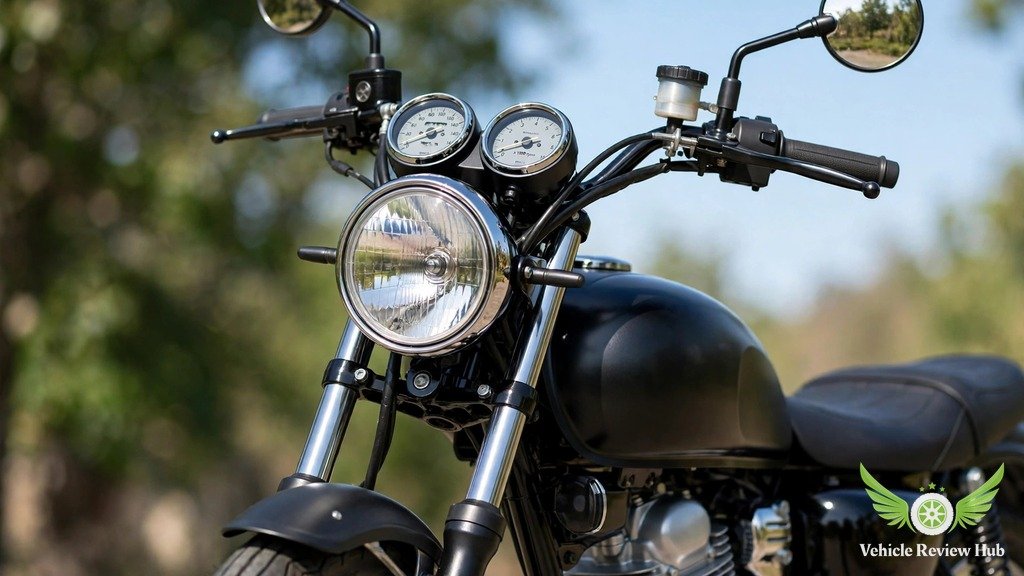
The W230 looks like a motorcycle from another era because that is the brief it was built to. The round headlight, the teardrop tank, the twin rear shocks, the pea-shooter exhaust and the spoked-style wheels all reference the W series of the 1960s. This Kawasaki W230 review finds the design honest: a retro motorcycle that admits it is new, rather than a new one pretending to be old.
Heritage Starts With 1965 W1
The W name goes back to the 650-W1, a 624cc air-cooled overhead-valve parallel twin introduced in 1965 — prototype shown at the 1965 Tokyo Motor Show, bike unveiled in America in February 1966. Kawasaki USA’s press release says the W series began with the 1965 650-W1, and the official W-series history traces the same line, and this Kawasaki W230 review follows Kawasaki USA’s dating. Kawasaki’s global arm dates the W brand to 1966, the US model year. Either way, the W230 is the smallest bike ever to carry the W badge, and the lineage is real — the W800 descends from the same 650-W1. The W230’s contribution, in this Kawasaki W230 review’s reading, is its size: a 233cc single is the entry point to a family that started at 624cc, and it makes the heritage accessible to riders who would never buy a 773cc twin.
No Gear Indicator or Fuel Gauge
The dash is as spartan as the rest of the bike, and buyers should know exactly what they are — and are not — getting. The W230 has a separate analog speedometer and tachometer, plus a small LCD showing the odometer, trip meter and clock only. There is no gear indicator and no fuel gauge. What the bike does have is a low-fuel warning lamp — a warning light, not a gauge: it tells the rider the tank is low, not how much fuel is left. Ultimate Motorcycling’s 2025 buyer’s guide confirms it, describing a dash without a gear indicator or fuel gauge. This Kawasaki W230 review counts the omission as a fair trade rather than a defect: a retro bike with a gear indicator would be a contradiction, and the 3.1-gallon tank with a warning lamp is enough for a day’s riding rather than a tour.
Kawasaki W230 Riding Experience and Comfort
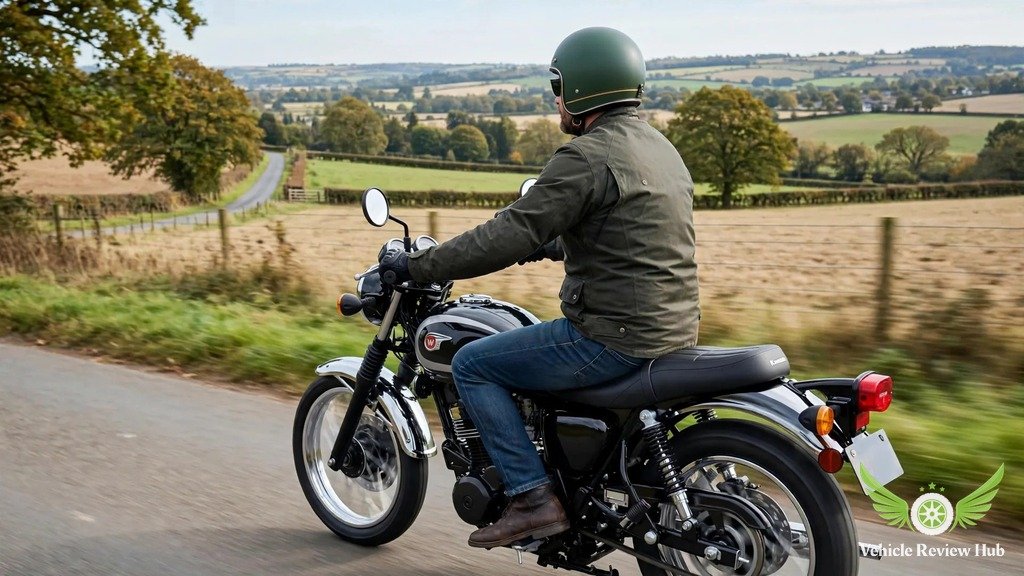
On the road, the W230 is exactly what its numbers suggest: light, low, gentle, easy. This Kawasaki W230 review draws its riding impressions from attributed sources — a beginner tester who rode the bike for Ultimate Motorcycling and an owner who logged around 700 miles — because no magazine has published a measured road test, and this review invents no test data of its own.
Curb Weight Is 315 Pounds
The W230 weighs 315.3 lb at the curb for 2026 and 2027, and 315.2 lb for 2025 — a spec-sheet rounding, not a real difference. Dry weight is 293.3 lb for 2026–2027 and 293.2 lb for 2025 — one of the lightest street motorcycles Kawasaki sells. Ultimate Motorcycling’s beginner tester, Allison, said the bike’s lightness gave her the confidence to lean it over farther than she thought she could. Against its rivals the advantage is real — 84 lb lighter than the Hunter 350 and 60 lb lighter than the Speed 400 on the wet-weight figure — and lightness is the W230’s strongest card in this Kawasaki W230 review.
Riding Position and Comfort Over Longer Distances
The riding position is upright and relaxed, with a low seat, wide bar and footpegs set for comfort rather than ground clearance. The same beginner tester found the throttle stiff — she had to put in more effort to turn it to get to the power — the seat firm and not very comfortable, the suspension a bit stiff, and the clutch late to engage, which gave her trouble shifting at first. She praised the brakes as great with a quick response, warning herself not to squeeze too hard or too fast. Her overall verdict was warm — buzzing around San Luis Obispo, the bike was super fun and easy to ride — but the caveats stand. An owner with around 700 miles agrees: the engine is old school smooth and torquey, the brakes soft at first but able to stop on a dime, the seat a rethink after 20 minutes. Longer distances are therefore the weak point this Kawasaki W230 review flags: the firm seat and stiff suspension suit short rides and city use. The full reliability picture is covered in the Kawasaki W230 reliability guide: 482 bikes recalled for a ground-point stall and 840 for turn-signal bulbs, with zero NHTSA complaints on file.
Kawasaki W230 Review: Pros, Cons and Verdict

The W230 is a motorcycle that makes sense once the buyer stops comparing it with faster bikes and starts comparing it with the feeling it sells. It is light, low, simple and handsome, with a heritage badge no rival in its price range can match. It is also the weakest and second-dearest bike in its group, with two recalls in its first two years and honestly limited long-distance comfort. Weighing those two sides together, this Kawasaki W230 review finds a bike easy to recommend to the right rider and easy to talk out of for the wrong one.
Main Advantages and Limitations of the Kawasaki W230
The advantages, as this Kawasaki W230 review weighs them, start with the weight and the seat: 315.3 lb and a 29.3-inch seat make the W230 approachable for almost any rider, and the gentle 17 hp single is easy for a beginner to learn on. The retro styling is the real thing rather than a costume, the 6-speed and Positive Neutral Finder are proper hardware, and the disc brakes with ABS on both wheels are modern safety kit. The limitations are equally concrete: the least power in the class, a firm seat and stiff suspension, no gear indicator or fuel gauge, and two recalls already — 482 bikes for a stall and 840 for signal bulbs. The price is the awkward middle: at $5,899 the W230 costs $1,600 more than the Hunter 350 while making less power, and $404 more than the Speed 400 while making less than half its power. The buyer pays for lightness, heritage and simplicity, and should know the deal before signing.
| Advantages | Limitations |
|---|---|
| 315.3 lb curb weight — one of the lightest street bikes Kawasaki sells | 17 hp is the least power in its comparison group |
| 29.3 in seat height suits new and shorter riders | Firm seat and stiff suspension limit long-distance comfort |
| Genuine W-series heritage back to the 1965 650-W1 | No gear indicator and no fuel gauge — warning lamp only |
| Disc brakes with ABS on both wheels, every year | Two recalls in two years: 482 bikes (stall) and 840 bikes (signal bulbs) |
| Simple air-cooled single with a 6-speed gearbox | $5,899 MSRP is $1,600 more than the Hunter 350 and $404 more than the Speed 400 |
Note: The figures in this Kawasaki W230 review table are Kawasaki USA’s published claims and the NHTSA Part 573 recall counts (25V363: 482 bikes; 26V387: 840 bikes across 2025–2026 combined). The price gaps use 2026 MSRPs — Hunter 350 $4,299, Speed 400 $5,495 — against the 2027 W230 at $5,899.
W800 Continues and W175 Is New
The W family around the W230 is worth one paragraph because it frames the buying decision. The W800 has not returned — it has been in the US lineup continuously since 2020, continuing for 2026 at $10,699 plus $685 and for 2027 at $10,999 plus $685. It is the big retro twin at 773cc, with an assist and slipper clutch the W230 lacks. The W175 LTD is genuinely new to the USA for 2026, announced on June 2, 2026, at $2,999 plus $435 for both 2026 and 2027 — a 177cc single making 13 hp with a 5-speed gearbox and front-brake-only ABS, built in India. So the family spans $2,999 to $10,999, and the W230 sits in the middle at $5,899. The W175 is the cheapest way into the W look; the W800 is the full-size retro twin; and the W230, the subject of this Kawasaki W230 review, is the lightest W, with a 6-speed and ABS on both wheels. That is the verdict of this Kawasaki W230 review: heritage at a premium, worth it for the rider who values lightness and character over speed and value, and wrong for anyone who counts horsepower per dollar.
Kawasaki W230 Review FAQs
The questions below cover what buyers ask about most in this Kawasaki W230 review: where the bike is built, what the 2027 bike costs, how much power it makes, whether the rear brake is a drum, what the dash shows, and whether a new rider should buy one.
Is the Kawasaki W230 made in Thailand?
That is UNVERIFIED for the US bike. No published US W230 VIN or Kawasaki statement ties it to Thailand, though the ML5 VIN prefix means Thailand-built if a bike carries it — NHTSA’s vPIC lists ML5 as Kawasaki Motors Enterprise Thailand. This Kawasaki W230 review asserts neither Thailand nor Indonesia for the US bike; buyers should read the first three characters of the VIN on the bike in front of them.
How much does the 2027 Kawasaki W230 cost?
The 2027 W230 ABS costs $5,899 MSRP plus $435 destination, or $6,334 delivered, per Kawasaki USA’s 2027 spec sheet. The 2026 bike cost $5,699 plus $435 and the 2025 bike $5,599 plus $420, as this Kawasaki W230 review’s price table shows. Leftover 2025 bikes were advertised from $3,599 in late 2025 — late-2025 pricing, not a current price.
How much power does the W230 make?
Kawasaki claims 17 hp at 7,000 rpm and 14.0 lb-ft of torque at 5,800 rpm, measured to ISO 4106 — the only power figures this Kawasaki W230 review prints as the bike’s own. No dyno test of the W230 exists, so there is no measured rear-wheel figure. The closest related data is the sibling KLX230R at 17.9 hp on Cycle World’s Dynojet 250i — labelled as the KLX230R’s, never the W230’s. Japan and Europe rate the same engine at 18 PS and 18.6 Nm, home-market figures, not US ones.
Does the W230 have a rear drum brake?
No. The W230 has a single 220mm rear disc with ABS on every model year, and a single 265mm front disc with ABS. Some early coverage assumed a drum, but all three years’ spec sheets list the rear disc. This Kawasaki W230 review states it plainly because the drum assumption still appears in buyer questions.
Does the W230 have a gear indicator or a fuel gauge?
Neither. The dash is a separate analog speedometer and tachometer with a small LCD showing odometer, trip meter and clock only, plus a low-fuel warning lamp — a warning light, not a gauge. Ultimate Motorcycling’s 2025 buyer’s guide confirms it in plain words for this Kawasaki W230 review, describing a dash without a gear indicator or fuel gauge.
Is the W230 a good beginner bike?
Yes, with honest caveats. It is light at 315.3 lb at the curb, low at 29.3 inches in the seat and gentle at 17 hp — and Ultimate Motorcycling’s beginner tester called it super fun and easy to ride. The same tester found a stiff throttle, a firm seat and a late-engaging clutch, so this Kawasaki W230 review recommends it to new riders who accept those quirks.