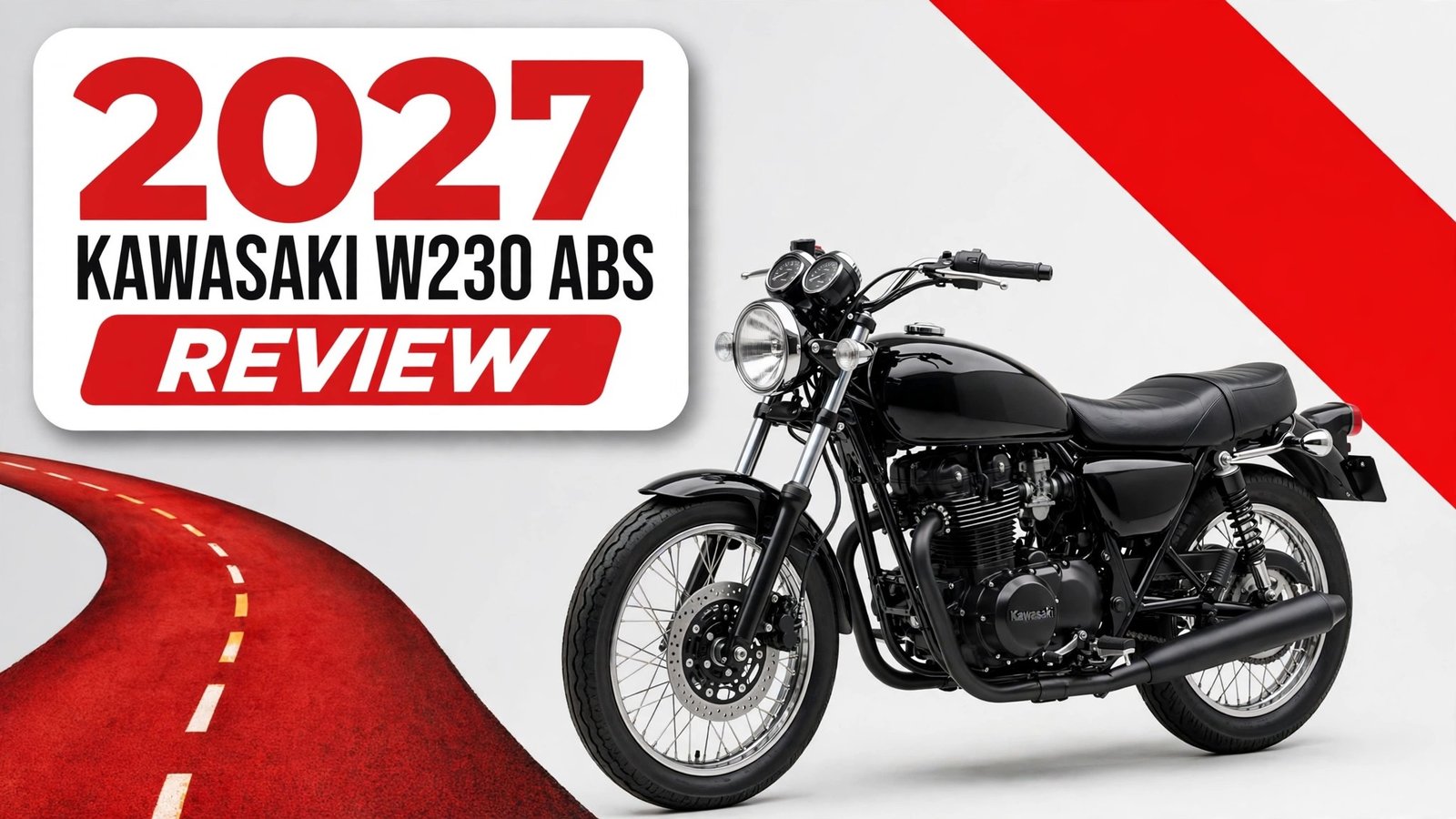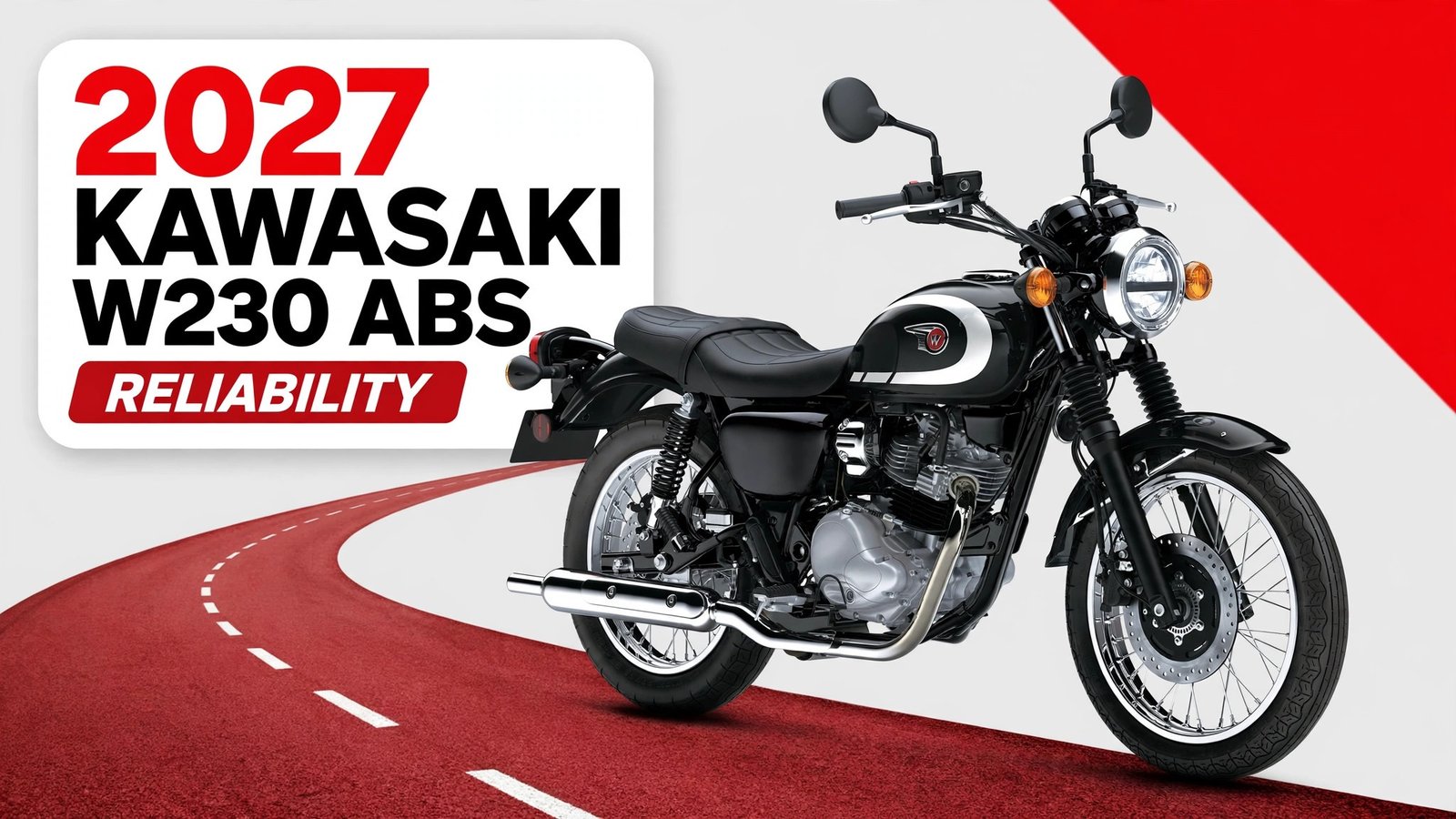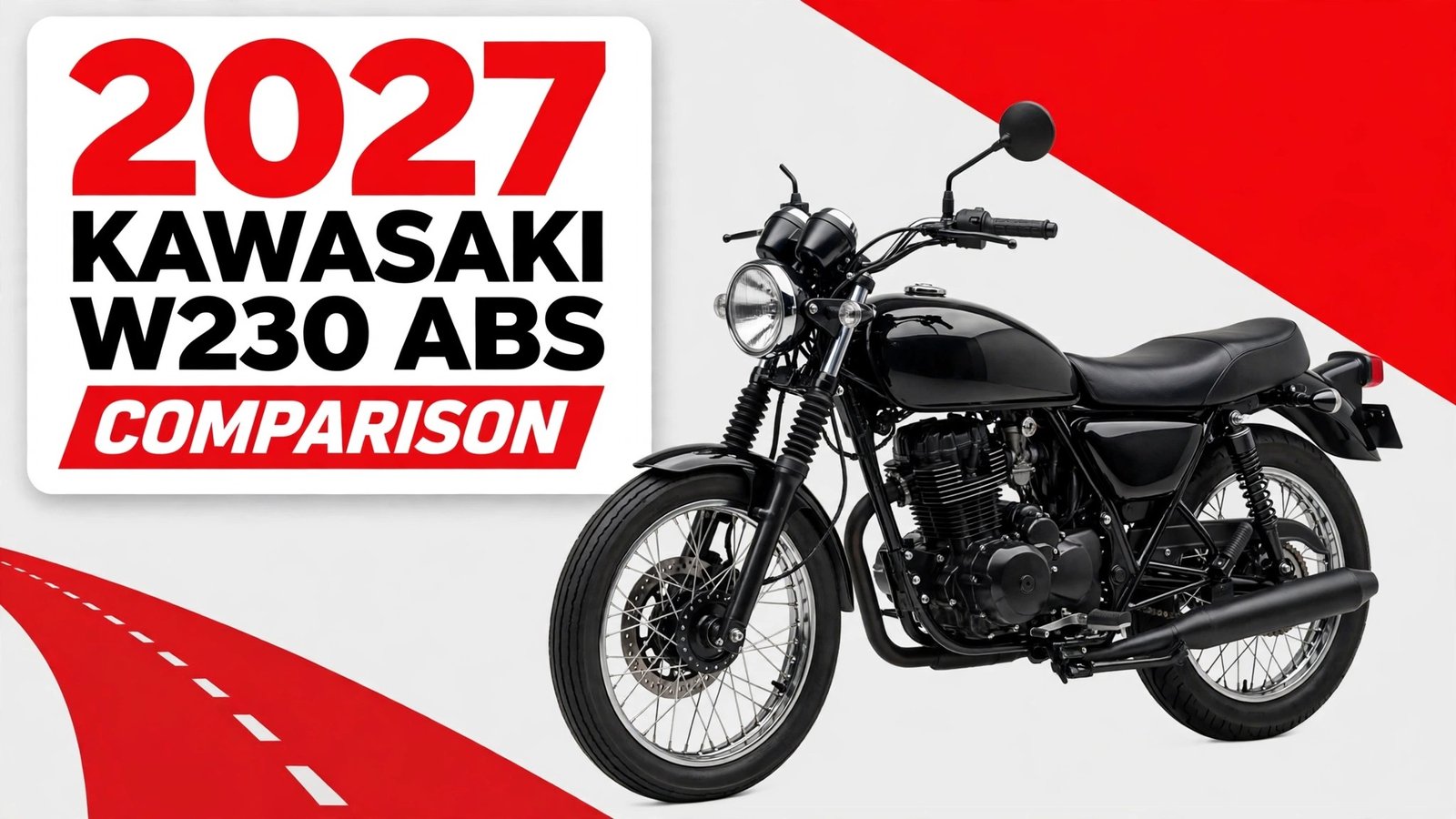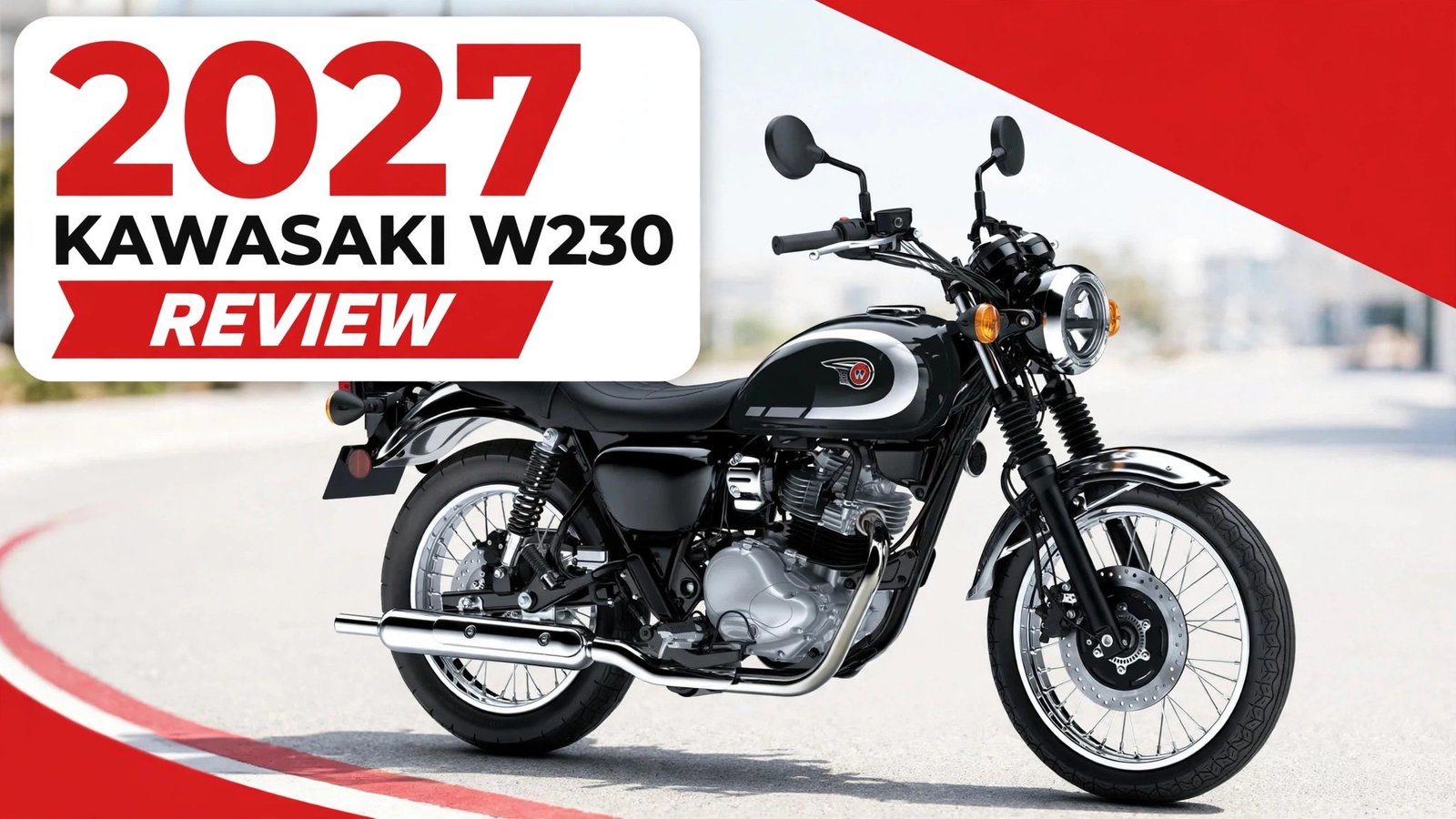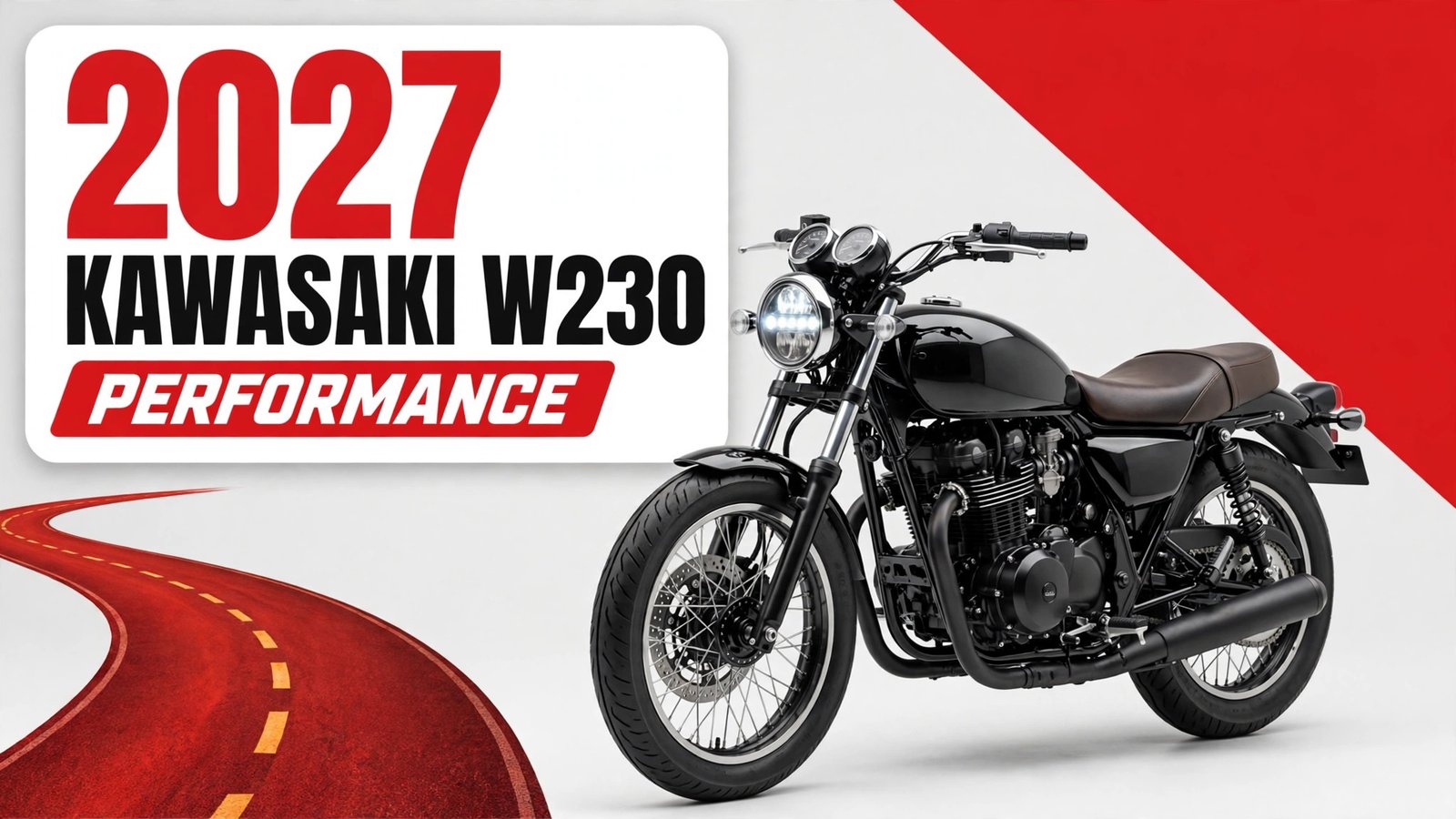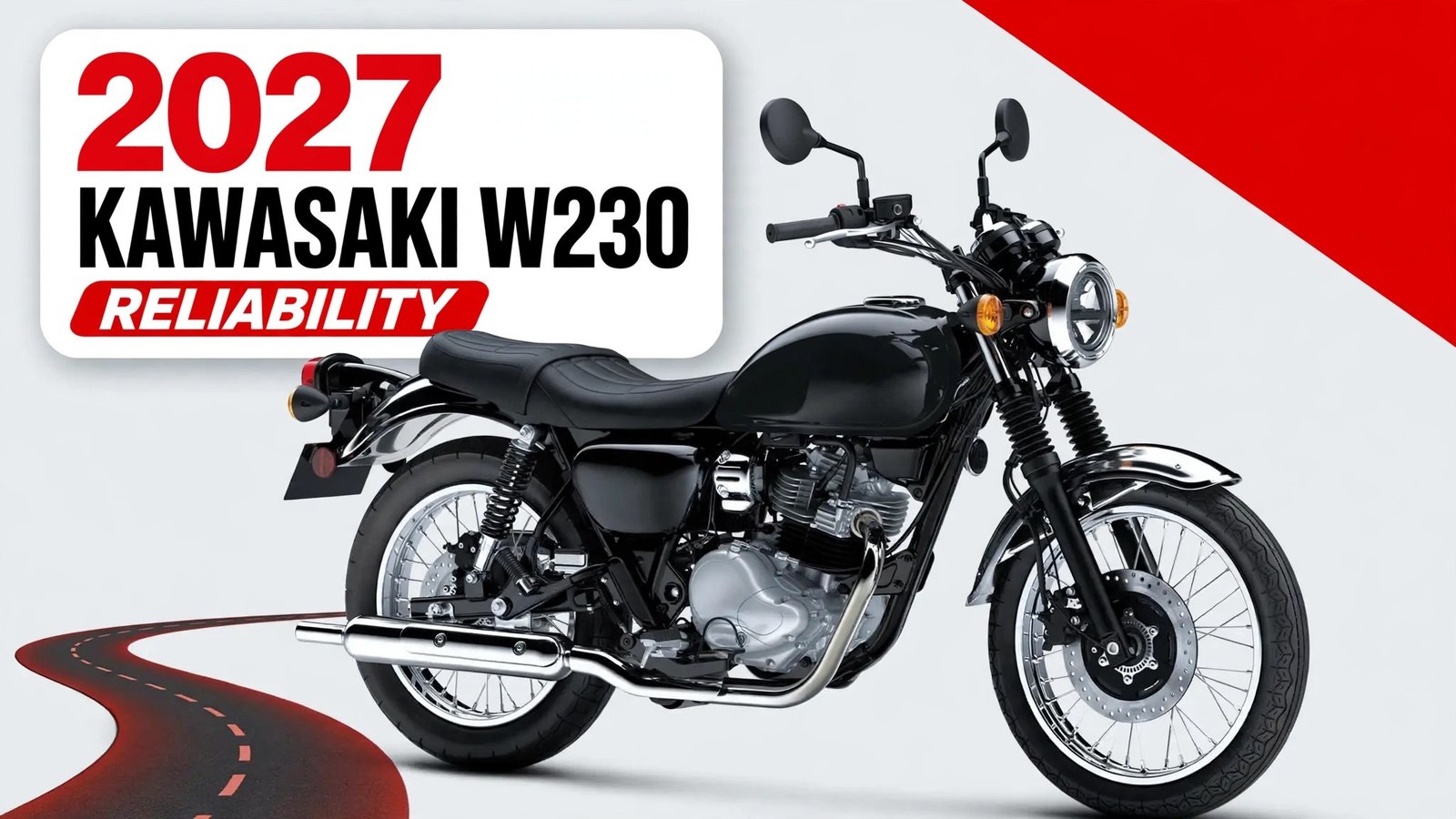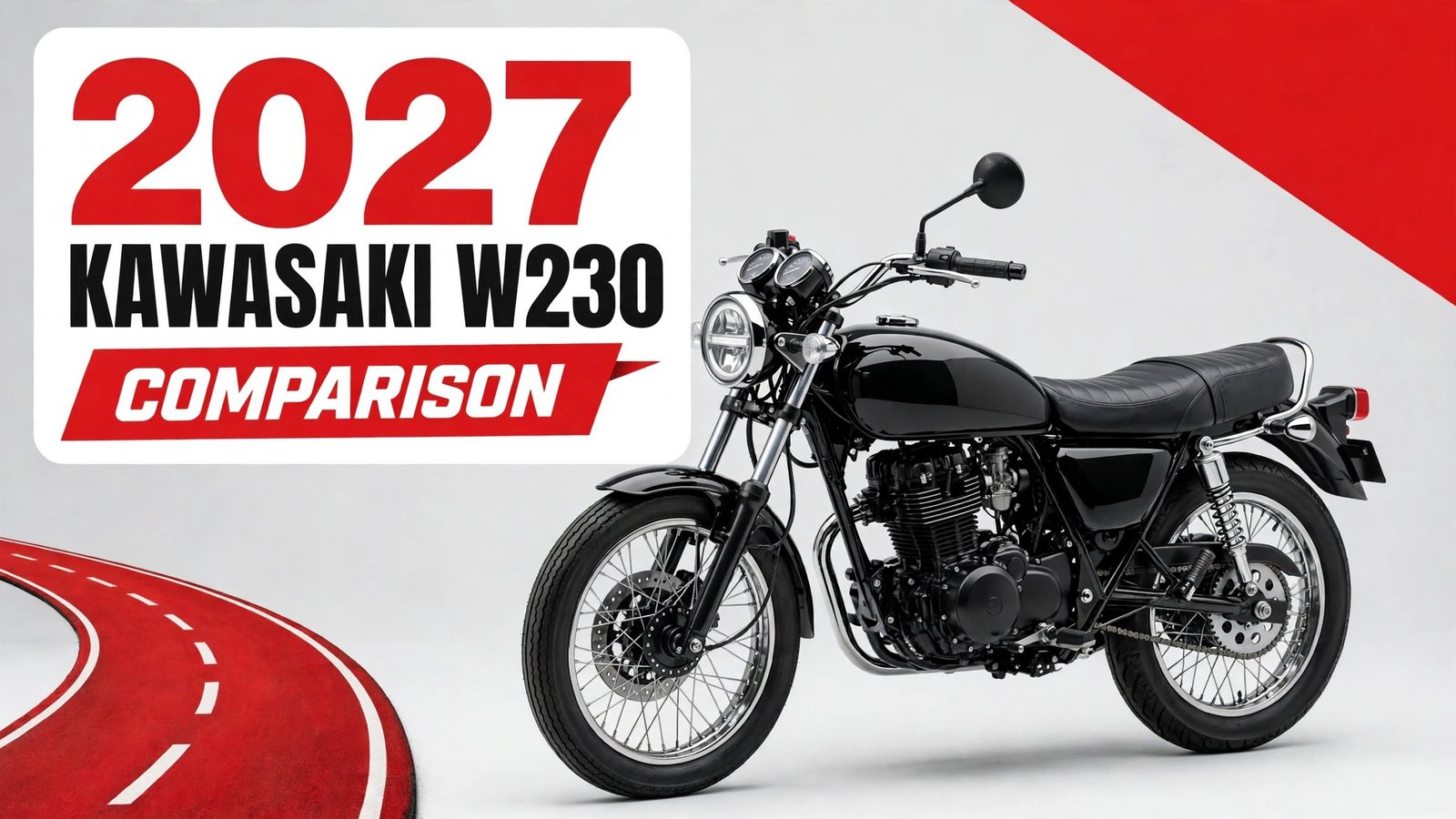
This Kawasaki W230 ABS performance guide starts with a blunt fact: almost every number a buyer wants from a performance guide does not exist yet. No one has put it on a dyno, timed it to 60 mph, run it through a quarter mile, or measured a braking distance or a GPS top speed. What exists instead is a claimed peak power figure from Kawasaki, fuel-economy figures that all need their gallon and method labelled, one beginner’s ridden test and one owner’s break-in thread. This Kawasaki W230 ABS performance guide prints exactly that — and labels every gap rather than filling it.
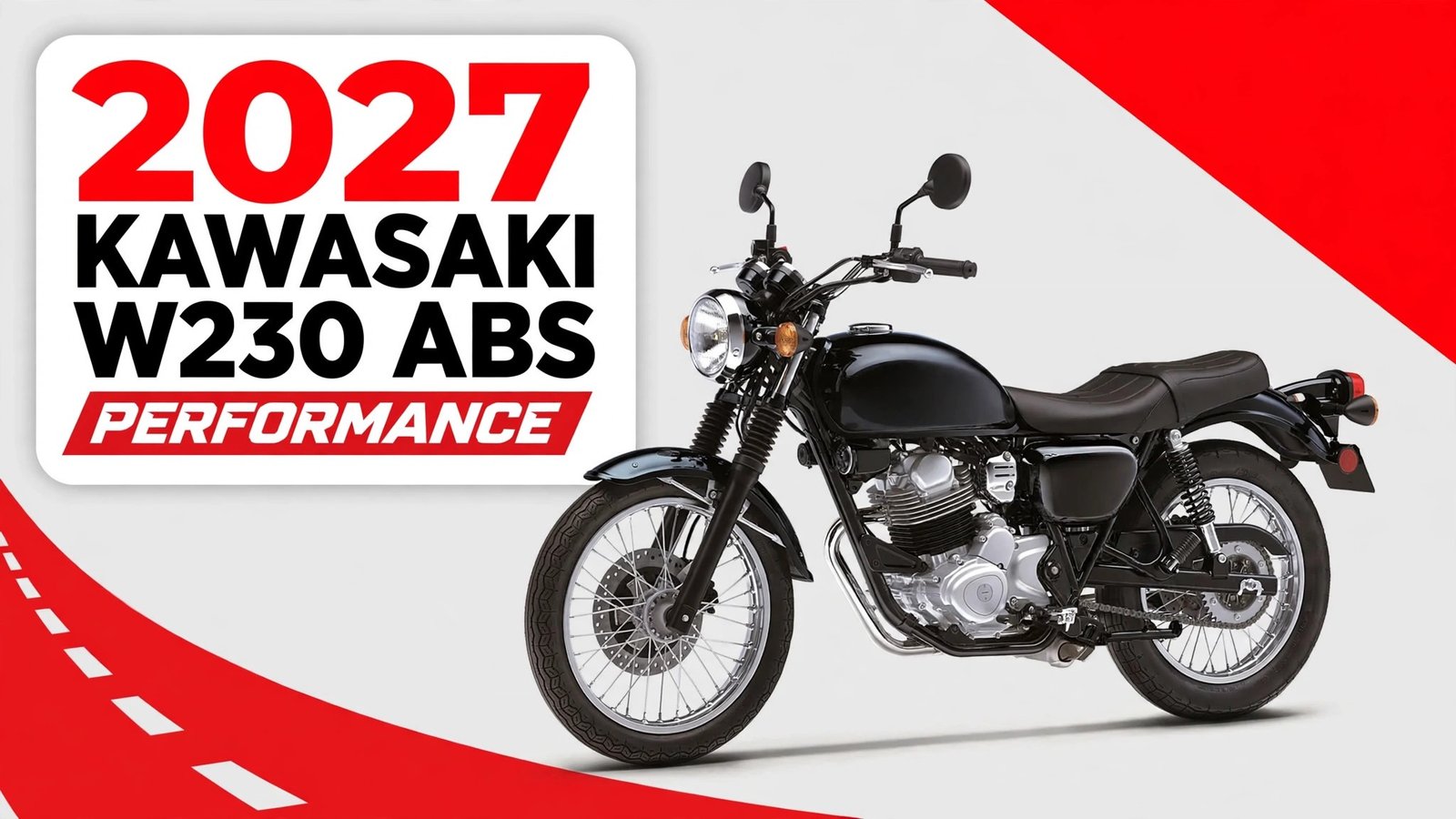
The bike itself is the same machine as the base W230: Kawasaki sells exactly one W230 in the United States, and it wears ABS in its name. The 233cc air-cooled single makes a claimed 17 hp, the bike weighs 315.3 lb with a full tank, and the seat sits 29.3 inches high. This Kawasaki W230 ABS performance guide works through what those numbers mean on the road, what the nearest measured data says, and where the honest answer is still “nobody has tested it”.
Kawasaki W230 ABS Engine Performance and Power Delivery
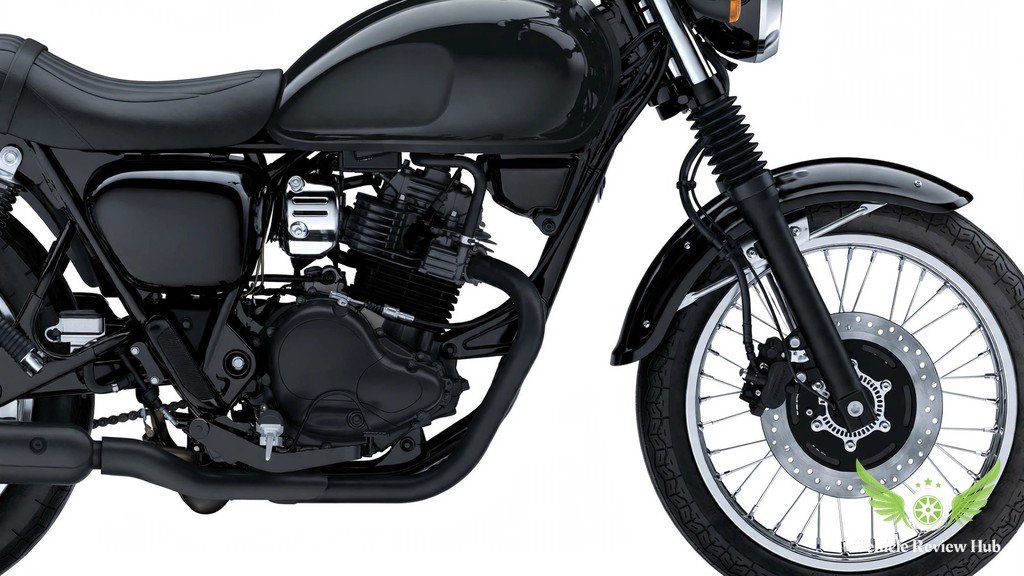
The engine is a 233cc air-cooled single with two valves, a 32 mm throttle body and a counterbalancer, making a claimed 17 hp at 7,000 rpm and 14.0 lb-ft at 5,800 rpm (ISO 4106). Bore and stroke are 67.0 by 66.0 mm, compression is 9.0:1, and the six-speed has return shift with a Positive Neutral Finder. This Kawasaki W230 ABS performance guide prints those as claimed figures, because no dyno run of the W230 exists anywhere to check them against.
No Dyno Exists, ABS or Not
No W230 dyno run exists — not for the W230 ABS and not for the base W230, the same machine. Targeted searches across the major publications, dyno shops, YouTube and owner forums found nothing. The closest measured data comes from the sibling KLX230R: Cycle World’s 2022 KLX230R run on a Dynojet 250i made 17.9 hp at 7,700 rpm and 14.4 lb-ft at 6,100 rpm at the rear wheel; Dirt Rider’s 2021 run made 17.3 hp at 7,800 rpm and 13.3 lb-ft at 6,300 rpm. Those are the KLX230R’s numbers, not this bike’s, and this Kawasaki W230 ABS performance guide will not present them as W230 figures. The W230 engine differs — heavier flywheel, different cam and exhaust tuning, different cases. FastestLaps lists a “tested power” of 18 ps for the Meguro S1 with no dyno facility named — an aggregator label, not a dyno run.
Where the Power Is Made in the Rev Range
There is no W230 power curve, no dyno chart and no measured peak-rpm figure — only the two claimed peaks. Kawasaki USA says 17 hp at 7,000 rpm and 14.0 lb-ft at 5,800 rpm — the whole of the hard data. Two secondary sources get the rpm wrong: Wikipedia prints “17 hp at 7,500 rpm” against Kawasaki’s 7,000, and TopSpeed writes that “power comes in at 7,800 RPM”. NastyNils rounds the output to “18 hp”. The only riding evidence about how the power feels comes from the one ridden test and the one owner, both quoted later in this Kawasaki W230 ABS performance guide: a beginner who found the bike “super fun and easy to ride” around town, and an owner who called it “old-school smooth and torquey for what it is”.
| Figure | Kawasaki W230 ABS (claimed) | KLX230R (Cycle World dyno, sibling) |
|---|---|---|
| Power | 17 hp at 7,000 rpm (ISO 4106) | 17.9 hp at 7,700 rpm (rear wheel) |
| Torque | 14.0 lb-ft at 5,800 rpm | 14.4 lb-ft at 6,100 rpm (rear wheel) |
| Dyno | None exists | Dynojet 250i, 2022 bike |
Note: The W230 ABS column is Kawasaki USA’s claimed figures; the KLX230R column is the sibling’s measured rear-wheel dyno from Cycle World’s 2022 test — different bikes on different methods, printed side by side only to show what the nearest measured data looks like.
Kawasaki W230 ABS Top Speed and Acceleration
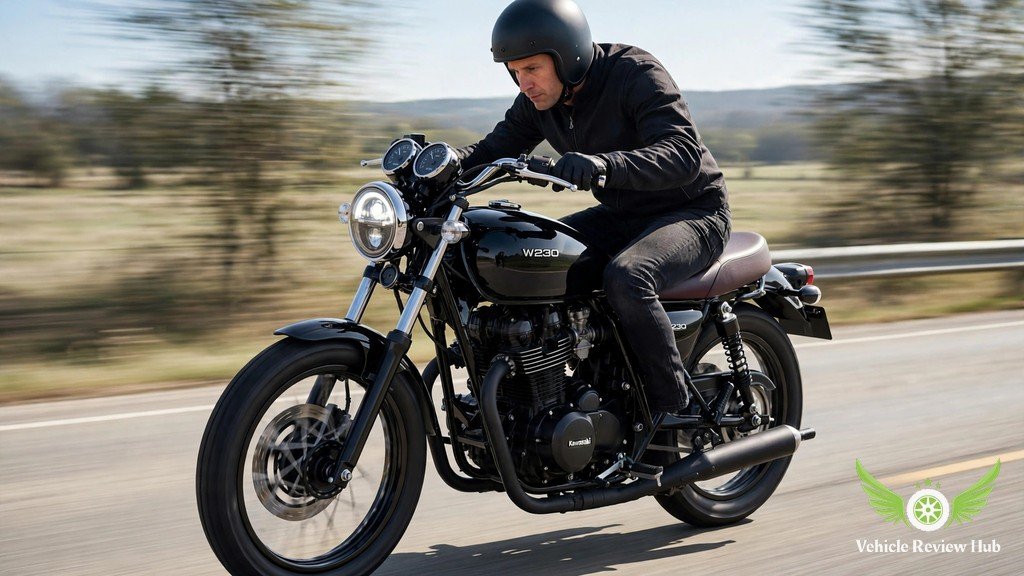
There is no tested top speed for the W230 ABS, and no timed acceleration run of any kind: no GPS top-speed run, no timed 0–60 mph, no quarter-mile time. This Kawasaki W230 ABS performance guide therefore treats top speed and acceleration as an evidence gap, not a figure to guess at.
No Tested Top Speed
The only source for a top-speed number is Wikipedia’s infobox, which prints “121–129 km/h (75–80 mph) (est.)” — the figure carries no citation marker and none of the article’s 11 references attaches to it. It is an uncited editor’s estimate, and this Kawasaki W230 ABS performance guide prints it only as “Wikipedia lists 75–80 mph as an estimate (uncited)”. The other numbers are no better: TopSpeed’s “~70 MPH” is untested and unattributed, BikeBD’s “~120 kmph company claimed” is unsourced on a page that gets the seat and dry weight wrong, FastestLaps gives 113 kph for the Meguro S1 with no test named, and Motoplanete gives “approximately 130 km/h”, labelled approximate. None is a tested figure. The only owner word on speed comes from the BITOG owner faltic, on April 20, 2025: “I haven’t done a top speed test but it does 55 60 no problem” — waiting until 1,000 miles before trying more. The nearest sibling evidence, labelled as the sibling’s: Motorcycle.com’s 2020 KLX230 first ride “topped out at 77 mph” on the speedometer, not GPS.
No Braking Distance Either
No publication prints a measured braking distance for the W230 — not MCN, Cycle World, Motorcycle.com or Bennetts. Bennetts offers only a desk inference, not a test: the single 265 mm front disc and two-piston caliper, with the 220 mm disc and single-piston rear, “should be more than up to the task, abetted by mandatory ABS”. That is a desk technical review written before UK bikes arrived, and this Kawasaki W230 ABS performance guide labels it as such. The only braking figures anywhere are Maxabout’s “60–0 km/h 23 m / 100–0 km/h 45 m” — and they must not be printed: the same page fails basic spec checks and prints untested acceleration figures with no source, and its “Mileage 42 kmpl” is likewise unlabelled. Until a publication measures a stopping distance, no braking distance exists for this bike.
Kawasaki W230 ABS Mileage and Fuel Economy
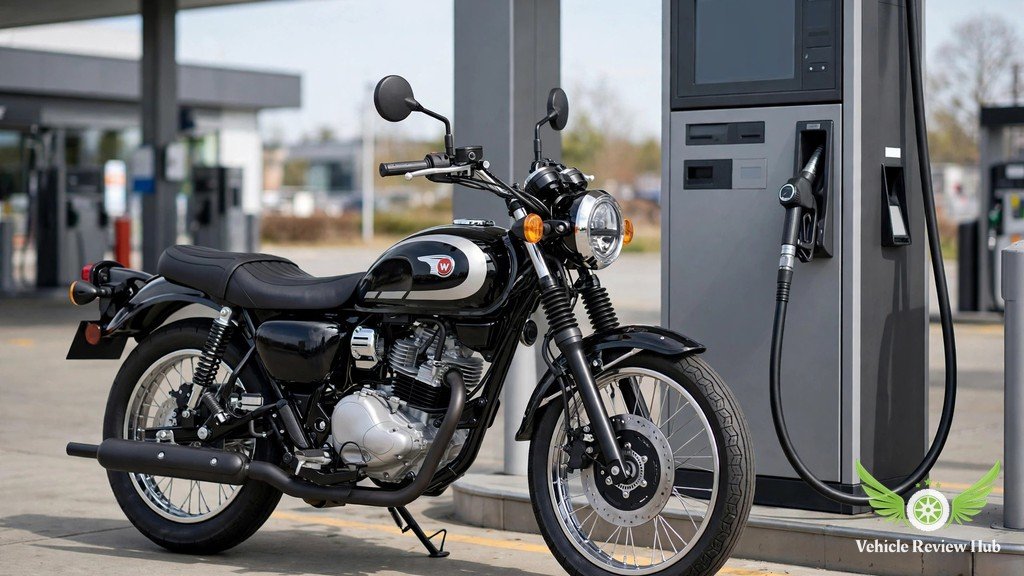
Fuel economy is the one performance area where real numbers exist — but every one needs its source, gallon and test method labelled, because the same figure changes by nearly 20 mpg between gallons and tests. Kawasaki USA publishes no MPG figure at all: the 2027 spec sheet, the USA spec tables on TotalMotorcycle and the October 2024 press release all print no economy figure. Every MPG number in this Kawasaki W230 ABS performance guide therefore comes from Japan, from US EPA certification data, or from owners — never from Kawasaki USA.
Nev, of Nev’s Rides, has owned his W230 since the second week of July 2026 and logged every fill-up. In this ride he works out his real-world economy: 96 mpg over nearly 800 miles, against the 110 mpg he says Kawasaki suggests, and 240–260 miles from a tank. The footage is handlebar POV on UK country roads, with his mate Phil ahead on a T100.
Kawasaki Publishes No MPG
Kawasaki USA’s 2027 model page, opened in full, has a complete spec table with no fuel-economy or MPG row in it. The same is true of the USA spec tables on TotalMotorcycle and of the October 1, 2024 press release. That silence is itself a finding: any MPG figure quoted for this bike traces back to a Japanese test, an EPA certification, or an owner’s fuel log — and mixing them is how the “94 mpg” figure got mislabelled in the first place.
94 mpg Is a Japanese Figure
The “94 mpg” figure is the maker’s published consumption of 40.0 km/L — 2.50 litres per 100 km — which converts to 94.1 US mpg. That is the figure TopSpeed prints as “Kawasaki claims a fuel efficiency figure of 94 miles per gallon”, without saying which gallon or test — and the same article also says “around 100 miles per gallon”, so only the 94 figure with the 40.0 km/L attribution. The 94 figure is NOT the WMTC figure: WMTC gives 40.5 km/L, or 95.3 US mpg, and the constant-speed test gives 48.4 km/L at 60 km/h with two passengers, or 113.8 US mpg. Bennetts’ “113mpg claimed” is the same 40.0 km/L in Imperial gallons — 113.0 Imperial mpg — never a US figure. The American figures are the US EPA certification numbers as republished by MotorcycleDB: 89.1 US mpg for 2025 (certificate SKAXC.233AAC-022-R01) and 88.8 US mpg for 2026 (certificate TKAXC.233AAC-003). One caveat: the EPA figures could not be confirmed against a primary EPA source, because fueleconomy.gov lists no motorcycles, so this Kawasaki W230 ABS performance guide labels them as EPA certification data as republished by MotorcycleDB, not as figures read on EPA.gov. The only owner data is one US owner with two fills: faltic, on the BITOG forum on April 20, 2025, during break-in at about 300 miles — “Also just filled up the W and it figured at 94 mpg. It’s last fill was 84 mpg.” That is n=1 owner, 2 fills: 84 and 94 mpg. The doc’s “78–94” range is wrong — 78 was the same owner’s KLX230, not the W230. NastyNils writes that “some owners report better than 90 mpg”, but names no owners and gives no count, so it stays an unattributed claim. No Fuelly entry for the W230 was found.
| Source | Figure | Gallon / method |
|---|---|---|
| Maker’s published consumption (MotorcycleDB) | 94.1 mpg | US gallons, 40.0 km/L (2.50 L/100 km) |
| Japan WMTC (Kawasaki Japan) | 95.3 mpg | US gallons, 40.5 km/L, Class 2-1, 1 occupant |
| Japan constant-speed (Kawasaki Japan) | 113.8 mpg | US gallons, 48.4 km/L at 60 km/h, 2 passengers |
| US EPA 2025 (MotorcycleDB republication) | 89.1 mpg | US gallons, cert SKAXC.233AAC-022-R01 |
| US EPA 2026 (MotorcycleDB republication) | 88.8 mpg | US gallons, cert TKAXC.233AAC-003 |
| One US owner, 2 fills (break-in) | 84 and 94 mpg | US gallons, n=1 owner |
Note: Every figure in this Kawasaki W230 ABS performance table is labelled by source, gallon and method. The 94 mpg figure is the maker’s 40.0 km/L conversion, not the WMTC figure, and Bennetts’ 113 mpg is Imperial gallons — the same 40.0 km/L in a different gallon.
Kawasaki W230 ABS Real-World Riding Experience
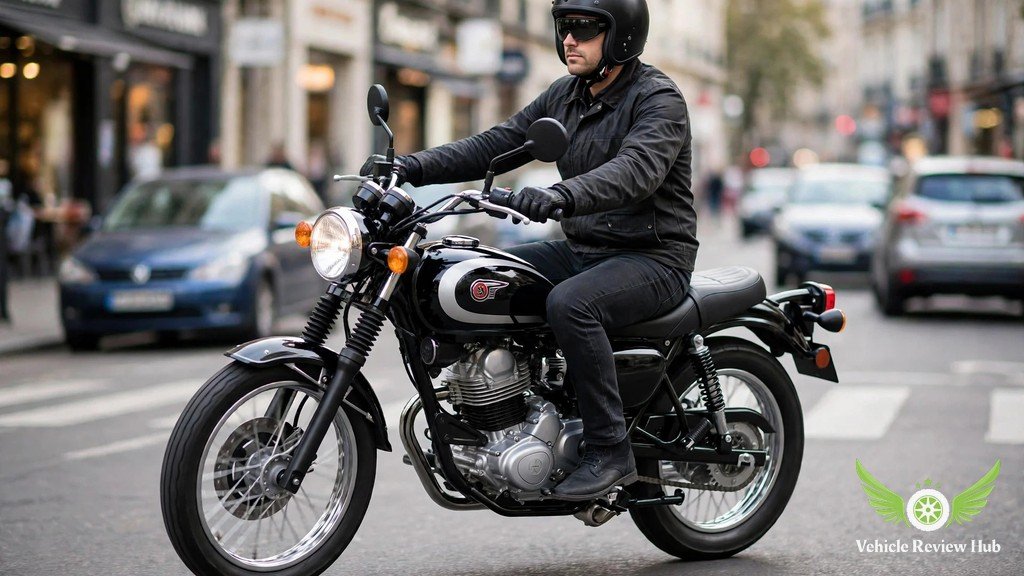
Only one ridden test of this bike exists in print, and it comes from a beginner: Allison, writing for Ultimate Motorcycling in August 2025, rode the 2025 bike around San Luis Obispo with less than a year of riding experience, and her verdict is the most useful riding evidence this Kawasaki W230 ABS performance guide has. The only other riding voice is one owner: a South Georgia owner writing on a forum in April 2025. No new owner material exists beyond those two voices — site searches of Reddit and ADVrider returned zero results. Two voices, one test, one owner thread: that is the whole record.
The Riding Experience Buyers Actually Talk About
Allison called the bike “super fun and easy to ride”, with enough confidence in its IRC tyres to lean it over farther than she thought she could. She also named the flaws plainly: the firm seat is “not very comfortable”, the suspension is “a bit stiff”, the throttle feels stiff and takes more effort to turn, and the clutch engages late. She never ventured onto US Route 101 — not yet confident enough for freeway traffic — “so it had enough power for where I ride”. The owner agreed on the seat — it looks comfortable, but after twenty minutes a rider will rethink that — and called the bike “old-school smooth and torquey for what it is”. He also reported the bike’s one gearbox quirk: shifting was flawless for the first 200 miles, then became gritty overnight, easing with a change to Mobil 1 V-Twin 20W-50 but never quite going back — plus two or three failures to accelerate shifting into fifth or sixth gear. The Ultimate Motorcycling beginner review is the source for the full account.
ABS Never Discussed in Tests
The only ridden tester never writes the word “ABS” anywhere in her review. Her prose covers the brakes in exactly one sentence — “The brakes are great, though with a quick response, so I have to be careful not to squeeze the lever too hard or too fast” — and she never discusses the ABS by name, its feel, or whether it ever intervened. Bennetts and NastyNils mention ABS only as a specification, never as something tested. Kawasaki’s own copy says its ABS “delivers precise braking control to help prevent wheel lockup” — a manufacturer claim, not a test finding, and this Kawasaki W230 ABS performance guide prints it as such. The one contrast comes from the sibling KLX230 family: Cycle News’ Kit Palmer said the Sherpa S ABS “functions well” — but that is the Sherpa, not the W230, and it is not transferred here. MCN’s Facebook post of October 6, 2026 says it rode the UK bike for an “expert review”, but no MCN review text was retrievable, and Ultimate Motorcycling’s promised “expert” test had not appeared. Until a tester writes about the W230’s ABS by name, the honest statement in this Kawasaki W230 ABS performance guide is that no ridden tester has discussed it.
Kawasaki W230 ABS Handling, Braking and Stability
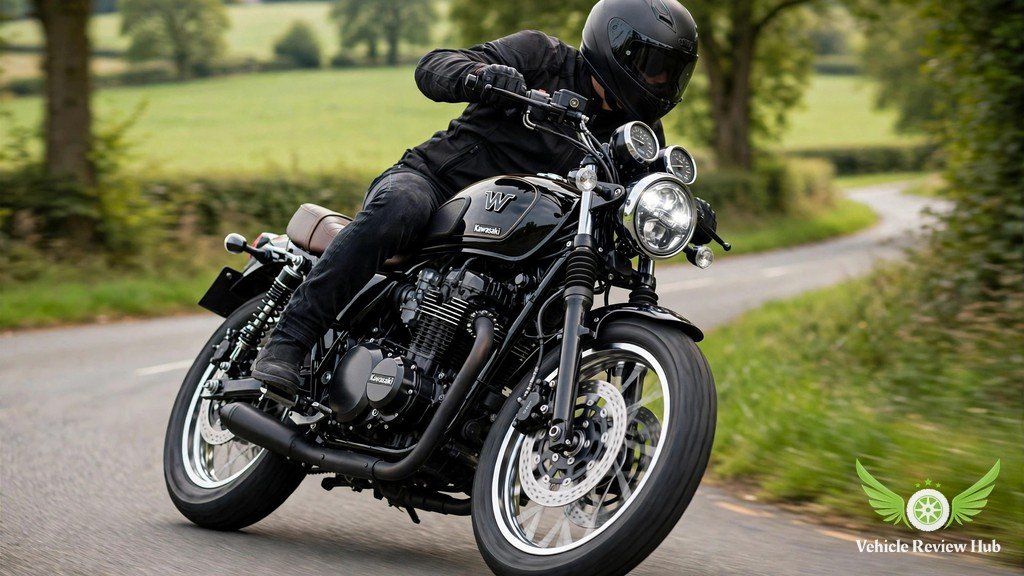
The chassis is conventional and light: a 37 mm fork with 4.6 inches of travel, twin rear shocks with 3.7 inches, a semi-double cradle steel frame, 27.0 degrees of rake with 3.7 inches of trail, a 55.7-inch wheelbase and 5.9 inches of clearance. At 315.3 lb curb with a 29.3-inch seat, the bike is one of the lightest and lowest in its class — and that lightness shapes what this Kawasaki W230 ABS performance guide can say about how it handles, most of it from a single beginner’s short rides.
Both Discs Run Under ABS
Both discs run under ABS: the front carries a single 265 mm disc with a two-piston caliper and ABS, and the rear a single 220 mm disc with a single-piston caliper and ABS. Anti-lock Brake System is the sole electronic rider aid — no traction control, no ride modes, no cornering ABS, no IMU. The architecture is functionally dual-channel: independent wheel-speed sensors front and rear (21176-1218 and 21176-1219), separate ABS circuits, and one pump (16082-0928) watching both wheels. Kawasaki itself never uses the words “dual-channel” for this bike, so this Kawasaki W230 ABS performance guide does not put the term in Kawasaki’s mouth — it says functionally dual-channel, with the parts evidence behind it. There is no ABS off-switch: the handlebar parts diagram lists only the clutch switch and control housings, so the system is always on, on both wheels. The full hardware record lives in the Kawasaki W230 ABS review, which works through the pump, the sensors and the supplier question.
Handling, Braking and Stability on Real Roads
On real roads, the evidence is one beginner’s short rides plus one owner’s break-in miles. Allison’s whole brake verdict is one sentence — “The brakes are great, though with a quick response, so I have to be careful not to squeeze the lever too hard or too fast” — and the owner counters that the brakes are “a little on the soft side” but “will let you stop on a dime” if a rider gets into them. No publication has measured a braking distance, so this Kawasaki W230 ABS performance guide will not invent one. On stability, the only words available are unattributed owner colour: a few owners say the bike shimmies on broken pavement. No long-distance or highway test exists — Allison never took the bike onto US Route 101. What the numbers do say is that a 315.3 lb bike with a 29.3-inch seat is easy to manage at low speed and in town, which is where both riding voices actually used it.
Kawasaki W230 ABS Performance Compared With Other Sport Bikes

This section has one rival: the Triumph Speed 400. No head-to-head test exists, so this Kawasaki W230 ABS performance guide compares claimed figures only, with the years labelled — the Speed 400’s figures are 2026, the W230 ABS’s are 2027. The full four-bike comparison lives in the Kawasaki W230 ABS comparison guide.
Kawasaki W230 ABS vs Triumph Speed 400
On claimed figures the Speed 400 is far quicker: 39.5 hp at 8,000 rpm and 27.7 lb-ft at 6,500 rpm from its 398cc liquid-cooled single, against the W230 ABS’s 17 hp at 7,000 rpm and 14.0 lb-ft at 5,800 rpm. The Speed 400 is the heavier bike at 375 lb wet against 315.3 lb curb, and the price cuts the other way: the Speed 400 costs $5,495 plus $600 destination, $6,095 delivered for 2026, against the 2027 W230 ABS at $5,899 plus $435, $6,334 delivered — so the quicker bike is $239 cheaper delivered than the 2027 W230, and $39 cheaper than the 2026 W230 at $6,134 delivered. Two price traps to avoid: $5,595 at dealers is the Pearl Metallic White colour upcharge, not a mid-year increase, and Cycle World’s lower figure is an uncorroborated outlier no other source shows. The Triumph Speed 400 page is the source for the rival’s figures. This Kawasaki W230 ABS performance guide will not call the contest close: on power alone it is 39.5 against 17.
| Figure | Kawasaki W230 ABS (2027) | Triumph Speed 400 (2026) |
|---|---|---|
| Engine | 233cc air-cooled single | 398cc liquid-cooled single |
| Power | 17 hp at 7,000 rpm (ISO 4106) | 39.5 hp at 8,000 rpm |
| Torque | 14.0 lb-ft at 5,800 rpm | 27.7 lb-ft at 6,500 rpm |
| Gearbox | 6-speed, return shift | 6-speed |
| Weight | 315.3 lb curb | 375 lb wet |
| Seat height | 29.3 in | 31.1 in |
| Delivered price | $6,334 ($5,899 + $435) | $6,095 ($5,495 + $600) |
Note: Claimed figures only — no head-to-head test, dyno run or timed run exists for this pairing, so this Kawasaki W230 ABS performance table compares manufacturer claims, not measured results. The Speed 400’s $5,495 is Triumph’s base MSRP; $5,595 seen at dealers is the Pearl Metallic White colour upcharge.
Is the Kawasaki W230 ABS Suitable for Beginner Riders?
Yes — with the same caveats the one ridden test names. Seventeen horsepower, 315.3 lb curb and a 29.3-inch seat suit beginners: light, low and predictable, with a light clutch, no rider modes or traction control to learn, and ABS standard. Allison’s verdict, from a rider with less than a year of experience, was that it is “a great beginner bike, perfect for riding around a small town like San Luis Obispo”, adding, “However, I think young beginning riders may quickly outgrow it.” The caveats travel with the verdict: stiff throttle, firm seat, late-engaging clutch. This Kawasaki W230 ABS performance guide counts the bike as a genuine beginner machine for town and secondary roads — not a freeway bike, since its only tester never took it onto US Route 101.
Kawasaki W230 ABS Performance FAQs
The answers below stick to verified figures, and this Kawasaki W230 ABS performance guide labels every gap.
Has anyone dyno-tested the W230 ABS?
No. The sibling KLX230R made 17.9 hp at 7,700 rpm on Cycle World’s Dynojet 250i — labelled as the KLX230R’s, never the W230’s. This Kawasaki W230 ABS performance guide prints no W230 dyno figure because none exists.
What is the W230 ABS’s top speed?
No tested top speed exists. Wikipedia lists 75–80 mph as an estimate (uncited), and this Kawasaki W230 ABS performance guide prints it only as that — never as a tested figure.
Has anyone measured its braking distance?
No. No publication prints a measured braking distance, and the only figures anywhere are Maxabout’s unsourced 23 m / 45 m. This Kawasaki W230 ABS performance guide prints no braking-distance figure.
What MPG does the W230 ABS get?
US EPA: 89.1 mpg (2025) / 88.8 mpg (2026), as republished by MotorcycleDB. Japan WMTC: 40.5 km/L = 95.3 US mpg. One US owner recorded 84 and 94 mpg in two fills. This Kawasaki W230 ABS performance guide labels every figure by source and gallon.
Do testers talk about the ABS?
No. The only ridden tester never writes the word “ABS” in her prose; her only brake verdict is one sentence: the brakes are great, with a quick response. This Kawasaki W230 ABS performance guide found no tester who discusses it.
W230 ABS or Speed 400 — which is quicker?
On claimed figures the Speed 400 is far quicker: 39.5 hp at 8,000 rpm against 17 hp at 7,000 rpm, and 375 lb wet against 315.3 lb curb. No head-to-head test exists. This Kawasaki W230 ABS performance guide counts the Speed 400 as the quicker bike on paper.