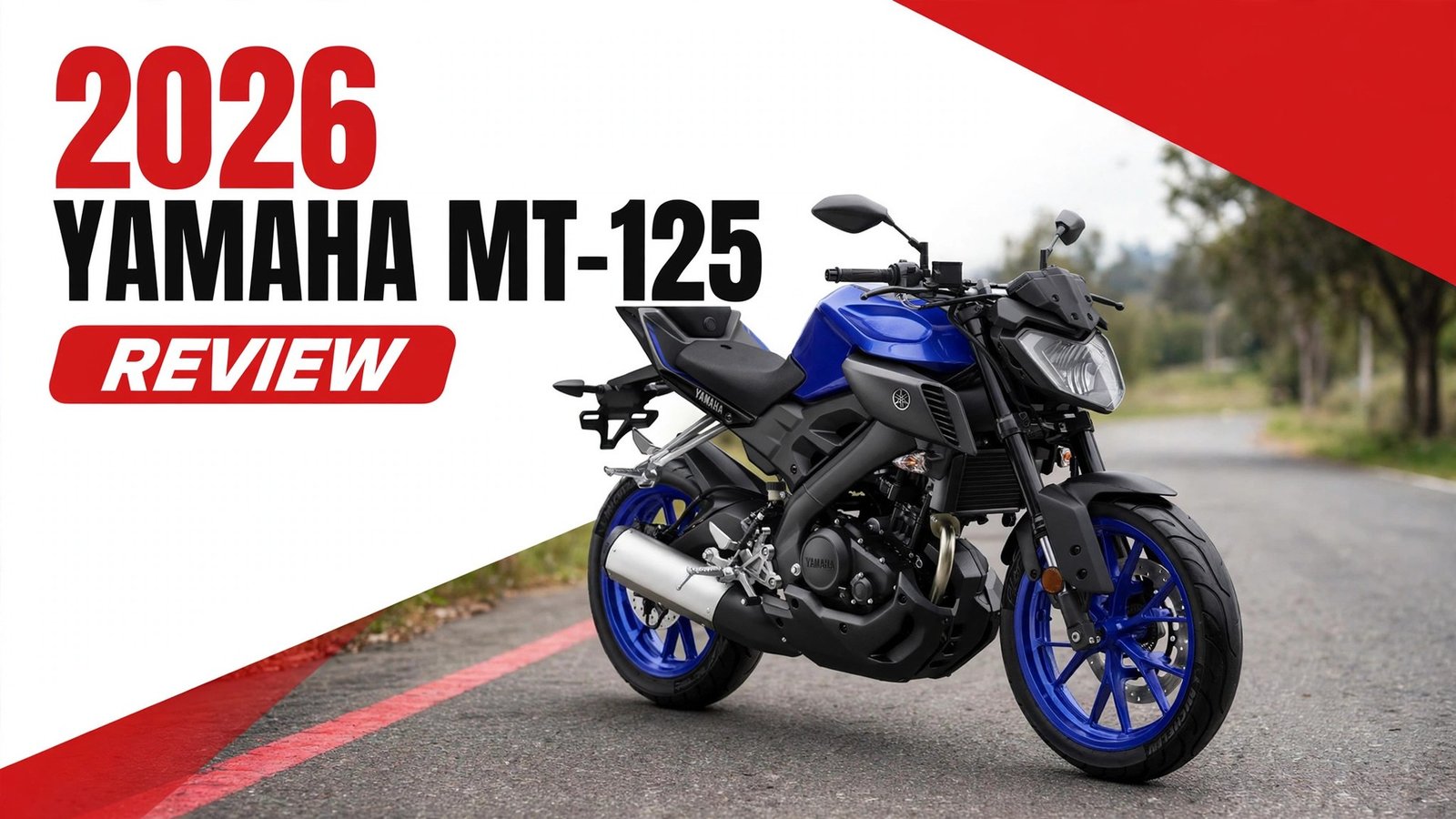
The Yamaha MT-125 is Yamaha’s smallest Hyper Naked, and this Yamaha MT-125 review answers the questions buyers ask: what it costs, what its 125cc engine delivers, and whether it is worth its premium price. This Yamaha MT-125 review covers the 125cc liquid-cooled VVA single, 15 PS at 10,000 rpm, the 5-inch TFT from 2023, and traction control — plus honest limits: 80 mph top speed, a 10-litre tank, and no official USA sale. In the UK, the current model lists at £5,301.
Yamaha MT-125 Overview and Model-Year Updates
The MT-125 has been Yamaha’s learner-legal naked since 2014, and this Yamaha MT-125 review traces its growth from a basic 125 into one of the best-equipped 125s. This Yamaha MT-125 review follows four stages: the original 2014 bike, the major 2020 redesign, the 2023 TFT and traction-control update, and the verified 2027 facelift.
What Is the Yamaha MT-125 and Who Is It Designed For in the A1 Class?
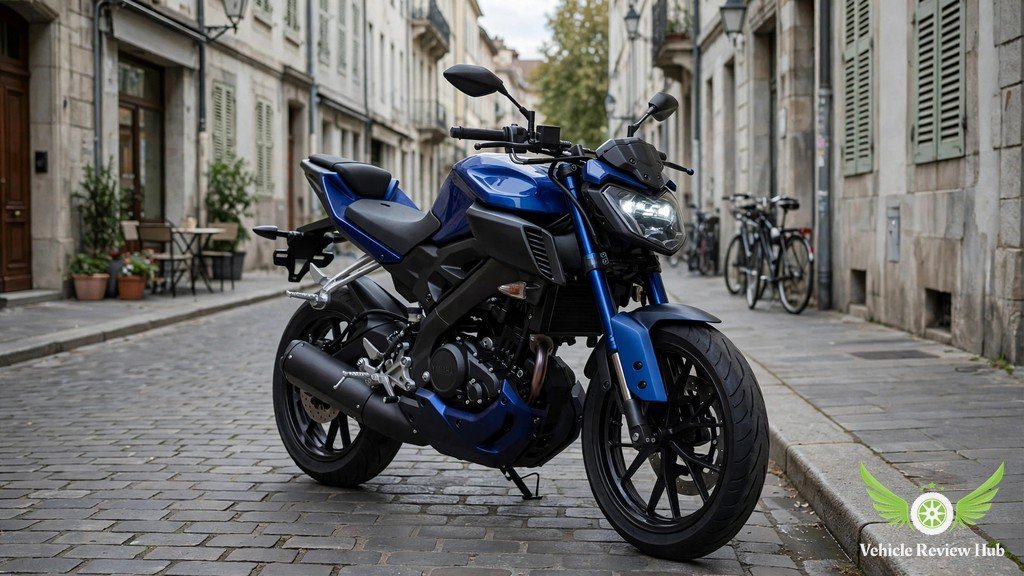
The MT-125 is a 125cc naked motorcycle built for A1 licence holders — in the UK, riders aged 17 and over on a licence limited to 125cc and 11 kW. It sits at that legal ceiling: 11 kW, or 15 PS, so no A1 rider is left wanting for legal power, and this Yamaha MT-125 review rates that positioning as the bike’s whole point. It is designed for new riders wanting a full-size feel rather than a small commuter, and for commuters wanting big-bike styling with 125 running costs. The upright position, 810mm seat (2020-on bike) and near-140 kg weight suit shorter and lighter riders better than most tall adventure-styled 125s. The engine family is shared with the faired YZF-R125, covered in the YZF-R125 review — but the MT-125 is a different motorcycle, with its own frame, bars and riding position, and this Yamaha MT-125 review judges it on its own terms.
Generations: 2014-2019, 2020 VVA Model, 2023 TFT Update and 2027 Facelift
The original MT-125 launched in 2014 on the then-current YZF-R125 platform, a basic 124cc single without Variable Valve Actuation that still won praise for handling and build quality. The first major change came in 2020: a new VVA engine, Deltabox-style frame, 41mm upside-down forks, LED lighting, a new LCD dash, a wider 140-section rear tyre, and an assist-and-slipper clutch. That 2020 bike is the foundation of everything sold since, and this Yamaha MT-125 review treats it as the modern MT-125’s starting point. In 2023 came the electronics update: a 5-inch colour TFT with MyRide connectivity and traction control, fitted for the first time since launch. The 2025 model year brought only colour and graphics updates, and this Yamaha MT-125 review notes the 2025 UK price of £5,251 as the step before today’s £5,301. The 2027 facelift is verified, not a rumour: Yamaha announced it in October 2026, with a redesigned seat, sculpted tank, smoked translucent side panels with an MT logo, blade-style LED position lights, and relocated indicators. Mechanicals are unchanged; new Redline White joins Ice Storm, Icon Blue and Tech Black, and European dealers expect it in early 2027 with pricing still to be confirmed — a 2027 MT-125 styling report confirms the same details.
Yamaha MT-125 Engine and Specifications
The engine is why the MT-125 costs more than most 125s, and this Yamaha MT-125 review puts its numbers in context: 15 PS is the A1 legal maximum, but delivery matters more than the headline. This Yamaha MT-125 review also settles the two figures buyers argue about — weight and tank size.
125cc Liquid-Cooled Single With VVA: 15 PS and 11.5 Nm Explained
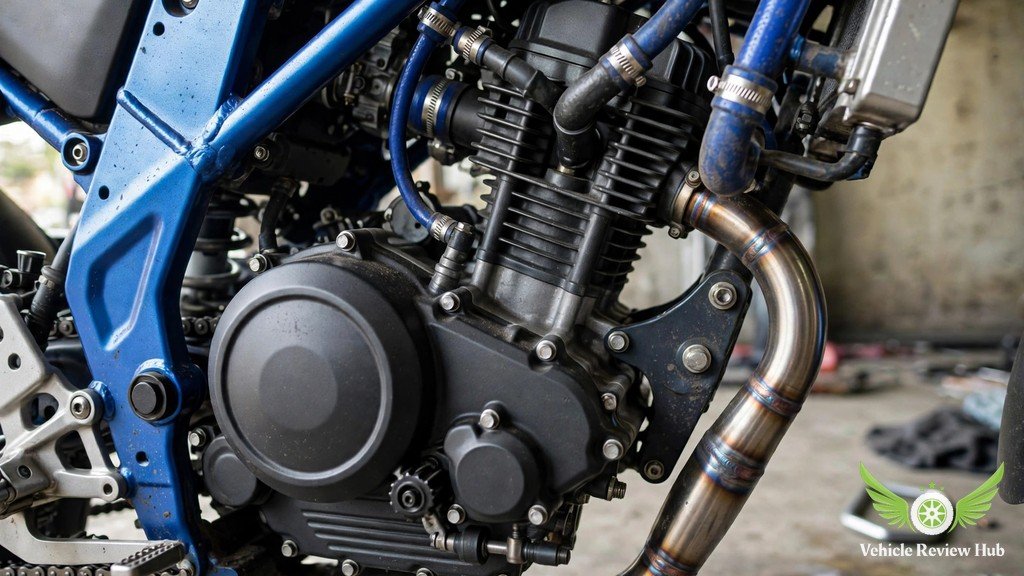
The MT-125 uses a 124cc liquid-cooled, four-stroke single with a single overhead camshaft, four valves, fuel injection and Yamaha’s Variable Valve Actuation, driving through a six-speed gearbox and chain. VVA uses two intake cam profiles — one for low- to mid-range torque, one for top-end power — so the engine pulls cleanly from low revs. Peak output is 15 PS (14.8 bhp) at 10,000 rpm with 11.5 Nm (8.5 lb-ft) at 8,000 rpm — exactly the A1 limit, and this Yamaha MT-125 review stresses no legal 125 can honestly claim more. The MCN MT-125 specifications list the same 15 bhp and 80 mph top speed for the 2020-on bike. Reviewers describe a flexible engine that holds motorway speeds without constant gear-changing, and this Yamaha MT-125 review agrees that flexibility — not peak power — is what makes the bike easy to live with. The performance figures behind that flexibility are covered in detail in the MT-125 performance write-up.
Weight Conflict 138 to 142 kg, Seat Height 810mm and 10L Fuel Tank
Wet weight is the one MT-125 figure where sources genuinely disagree, and this Yamaha MT-125 review states the range rather than inventing a number: 138 kg for the 2014 bike, 140 kg on MCN’s 2020-on specification, and 142 kg wet on Bennetts’ 2023 specification and Yamaha’s 2027 listing. The spread reflects different generations and measuring conventions, not an error to hide — and this Yamaha MT-125 review advises buyers to treat “around 140 kg” as the honest summary. Seat height is 810mm, wheelbase 1,325mm, and the tank holds 10 litres on every 2020-on model. The tank tells the generation story: the 2020 redesign shrank it from 11.5 litres to 10 litres for a larger airbox, a change documented in Bennetts’ 2020 launch report, and this Yamaha MT-125 review notes 10 litres applies to the current bike only. Braking is a 292mm front disc with a radial four-piston caliper and a 220mm rear disc, both with ABS; tyres are 100/80-17 front and 140/70-17 rear.
| Specification | 2020-on Yamaha MT-125 |
|---|---|
| Engine | 124cc liquid-cooled VVA single, 6-speed |
| Power / torque | 15 PS (14.8 bhp) @ 10,000 rpm / 11.5 Nm (8.5 lb-ft) @ 8,000 rpm |
| Weight | 138–142 kg by generation and source |
| Seat height / wheelbase | 810mm / 1,325mm |
| Fuel tank | 10 litres |
| Brakes / tyres | 292mm front + 220mm rear discs, ABS; 100/80-17 + 140/70-17 |
Yamaha MT-125 Price and Market Availability
Price is the MT-125’s hardest argument, and this Yamaha MT-125 review does not dodge it: this is one of the priciest 125 nakeds on sale. This Yamaha MT-125 review gives UK prices first, because the UK is where the bike is sold, then answers the USA question plainly.
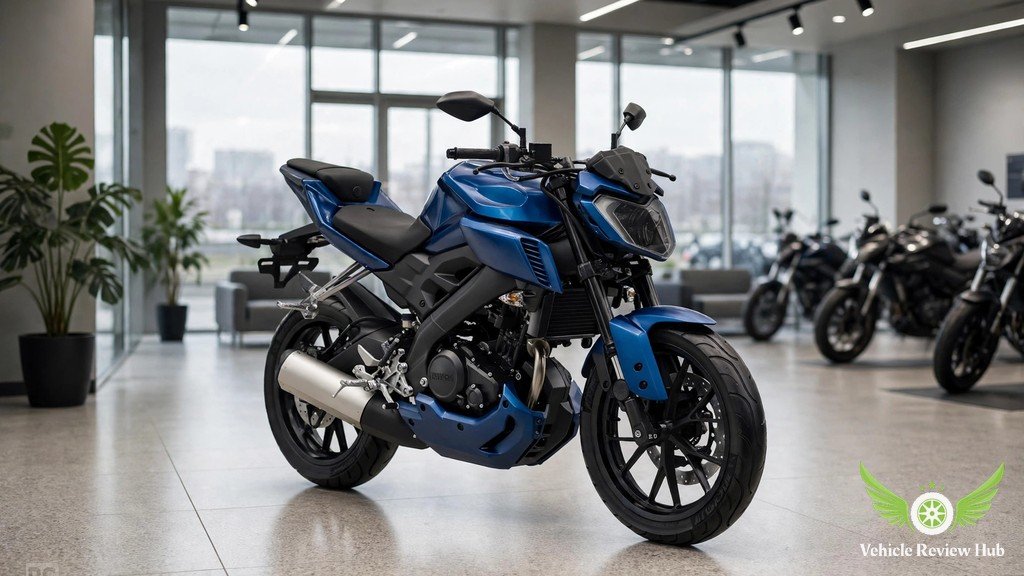
Yamaha MT-125 Price in the UK and European Markets
The current UK list price is £5,301 including on-the-road charges, per Yamaha UK dealer listings for the 2026 model in Icon Blue, Ice Storm and Midnight Black. The ladder shows steady rises: £5,102 for 2023, £5,251 for 2025, and £5,301 today, and this Yamaha MT-125 review notes dealer discounts do appear — one dealer listed a new 2026 bike at £4,990. MCN’s listings put used 2020-on bikes at roughly £4,000–£4,600 and 2014–2019 bikes at £2,600–£3,700, with 2023-on TFT bikes at the top of the range. MCN lists annual servicing at around £160, and the bike carries a two-year warranty. The full used-price picture is covered in the MT-125 buying guide, and this Yamaha MT-125 review recommends budgeting the first service and a chain-and-sprocket check into any used purchase.
Is the Yamaha MT-125 Available in the USA?
No. The Yamaha MT-125 is not officially sold in the United States, has no US MSRP, and no US Yamaha dealer stocks or supports it — and this Yamaha MT-125 review will not invent an American price. The smallest MT sold in the USA is the MT-03 at $4,999 new, as a 2027 MT-125 overview notes, and the MT-03 review covers that bike for American buyers. A private import is a different matter: the USA’s 25-year exemption means a 2014 MT-125 would not become exempt until 2039, and any newer bike would face federal safety and emissions compliance routes that are expensive and uncertain. This is general information only, not legal advice, and this Yamaha MT-125 review advises American readers to treat the MT-125 as a bike to admire from afar unless they take specialist import advice.
Yamaha MT-125 Design, Features and Technology
The MT-125 looks like a scaled-down MT-09, and this Yamaha MT-125 review counts that as a genuine selling point: learner bikes rarely get this finish. This Yamaha MT-125 review separates styling from electronics, because the electronics changed by generation and backdating them misdescribes a used bike.
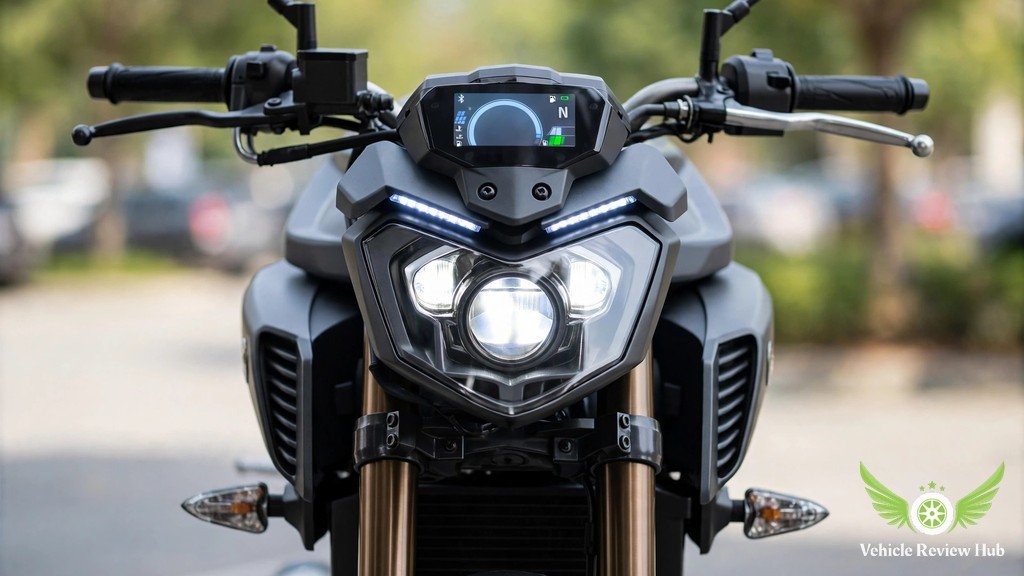
Hyper Naked Styling, LED Lighting and 5-Inch TFT Display From 2023
The styling follows Yamaha’s Hyper Naked formula: mass-forward stance, compact tank, short tail, wide bars, and twin-eye lights flanking a single LED headlight. The 2020 redesign sharpened that look with a new tank and LED lighting, and the 2027 facelift sharpens it again with blade-style lights and smoked side panels. The display is where buyers must check the year: pre-2023 bikes have an LCD dash, 2023-on bikes the 5-inch colour TFT with a Street theme, and this Yamaha MT-125 review warns any pre-2023 bike advertised with a TFT has been modified or misdescribed. The TFT is the bike’s visual centrepiece, and this Yamaha MT-125 review rates it as genuinely useful rather than decoration: speed, gear position, fuel range and phone notifications sit in one clear view.
Traction Control, MyRide Connectivity and Assist and Slipper Clutch
Traction control arrived with the 2023 update — the first time since launch — and works with ABS to add confidence on wet or greasy surfaces, exactly where new riders need it. MyRide pairs the bike’s communication unit with Yamaha’s free app over Bluetooth, showing call, email and message notifications on the TFT, recording ride data, and enabling turn-by-turn navigation. The assist-and-slipper clutch is older: it came with the 2020 redesign, lightening the lever and reducing rear-wheel hop on downshifts, and this Yamaha MT-125 review notes it is standard on every 2020-on bike, not a 2023 addition. A Bennetts 2023 MT-125 review confirms the same 2023 equipment set, and this Yamaha MT-125 review agrees the electronics finally match the chassis.
Yamaha MT-125 Riding Experience and Comfort
On the road, the MT-125 feels like a bigger bike with a 125 engine, and this Yamaha MT-125 review finds that impression holds up in town and on open roads. This Yamaha MT-125 review draws on published road tests and owner accounts below, not on an invented personal test.
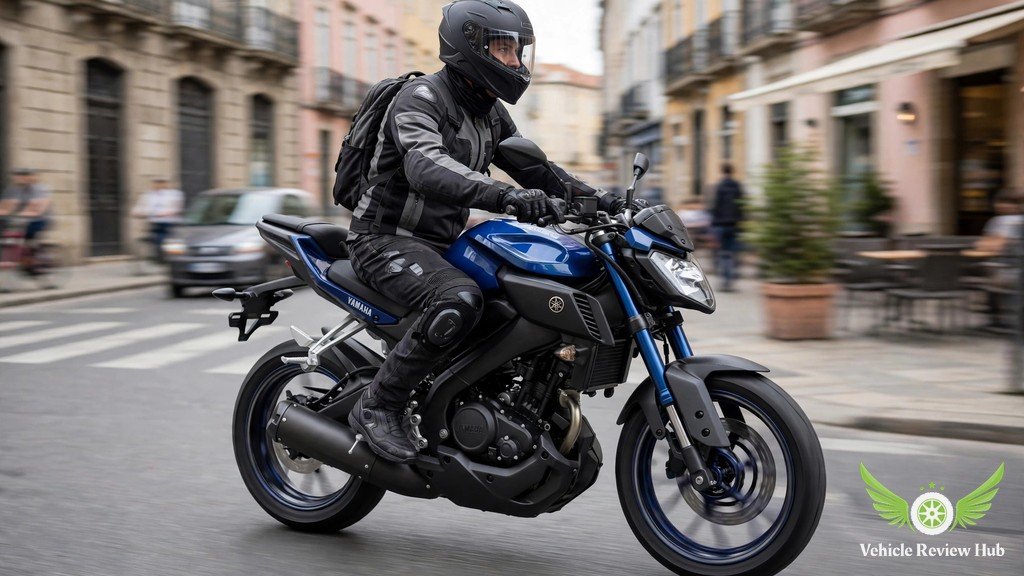
Riding Position, Handling and Low-Speed Maneuverability
The upright position, wide bars and 810mm seat put most riders’ feet flat at stops. At around 140 kg with a low centre of gravity, it changes direction easily, and reviewers praise its low-speed manners — filtering, tight turns and parking are where a new rider’s confidence is built. The non-adjustable 41mm upside-down fork and preload-only rear shock are well judged for the bike’s weight, and this Yamaha MT-125 review notes that the chassis — Deltabox-style frame, aluminium swingarm, and quality suspension — is the main reason the MT-125 feels a class above budget 125s. Braking matches: the radial front caliper and 292mm disc give strong, predictable stopping with ABS backup, and this Yamaha MT-125 review rates the brakes as a clear strength.
City Riding, Highway Comfort and Everyday Practicality
In the city, the MT-125 is in its element: light, narrow, frugal, and quick off the lights. Fuel economy is a genuine strength, and this Yamaha MT-125 review separates the figures: Yamaha’s official consumption of 2.0–2.1 litres per 100 km converts to roughly 134–141 mpg in imperial gallons but only about 112–118 mpg in US gallons, so British and American figures never match. MCN lists 133 mpg imperial average with a 292-mile range, while Bennetts tested 99 mpg imperial on the 2023 bike — a reminder that hard riding costs real fuel even on a 125. On faster roads, MCN lists an 80 mph top speed for the current bike, and this Yamaha MT-125 review is plain about the limit: 70 mph cruising is comfortable, 80 mph is achievable, but wind protection is nil, the seat firm, and taller riders report cramped legroom. No credible instrumented 0–60 mph test exists for this bike, and this Yamaha MT-125 review will not invent one or borrow another model’s figures. For a real-owner perspective after serious miles, watch Moto Dad’s 1,000-mile MT-125 review:
As everyday transport it is practical within its limits: cheap to fuel and insure and easy to park, but the 10-litre tank means frequent stops.
Yamaha MT-125 Review: Pros, Cons and Verdict
Weighing everything above, this Yamaha MT-125 review finds a bike that justifies its price on quality but not on value alone: what it does better than rivals, and where it asks too much.
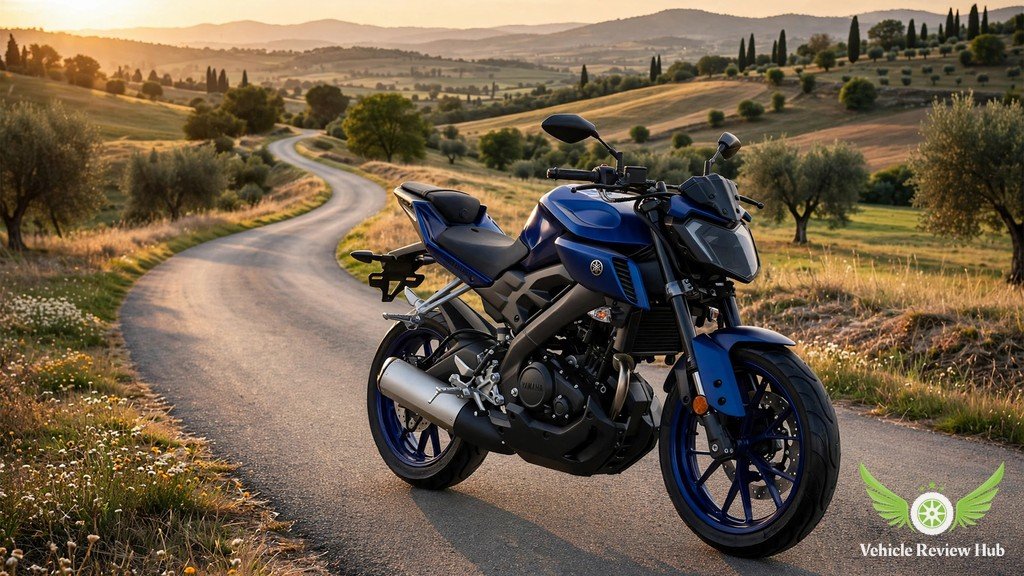
Main Advantages and Limitations of the Yamaha MT-125
The advantages start with the engine: VVA flexibility makes the A1 limit feel generous, and this Yamaha MT-125 review counts that as the bike’s best feature. Second is the chassis — upside-down forks, radial front brake and Deltabox-style frame, rare in this class — and third is the 2023-on electronics: TFT, MyRide and traction control. Fuel economy is the fourth: even Bennetts’ hard-ridden 99 mpg imperial is cheap. Limitations are equally clear. Price leads: at £5,301 the MT-125 is one of the priciest 125 nakeds, and this Yamaha MT-125 review accepts that cheaper rivals make a rational case against it. The seat is firm, legroom is tight for taller riders, the 10-litre tank limits range, and it is not sold in the USA at all. Reliability reporting is thin: MCN’s 5-out-of-5 owner rating comes from only 2 reviews, so this Yamaha MT-125 review treats it as encouraging but far from conclusive.
Who Should Consider the Yamaha MT-125?
This Yamaha MT-125 review recommends the bike to A1 riders who value build quality and handling over the lowest price, and to daily commuters wanting a bike that still feels special after the novelty fades. It suits riders moving up from a 50cc or CBT machine, and returning riders wanting a light second bike. It suits taller riders less well, and makes little sense for motorway touring or American dealer support. The smart buy in this Yamaha MT-125 review is a 2023-on bike: the TFT, traction control and MyRide equipment justify the premium over earlier bikes, while a 2020–2022 bike is the value pick for riders who do not care about the screen. The step-up path is clear, and the MT-07 review covers the 689cc bike most MT-125 riders graduate to. Overall, this Yamaha MT-125 review rates the MT-125 as the class benchmark on quality — expensive, but the bike its rivals are measured against.
Yamaha MT-125 Review FAQs
The questions buyers ask most often, answered from the verified figures above, so this Yamaha MT-125 review stays consistent throughout.
How much does a Yamaha MT-125 cost in the UK?
The current UK list price is £5,301 on-the-road for the 2026 model. The ladder runs £5,102 for 2023 and £5,251 for 2025, though one dealer listed a new 2026 bike at £4,990.
Is the Yamaha MT-125 sold in the USA?
No. The MT-125 is not officially sold in the United States, has no US MSRP, and no US dealer stocks it. The smallest MT sold in the USA is the MT-03 at $4,999 new.
How much power does the Yamaha MT-125 make?
The MT-125 makes 15 PS (14.8 bhp) at 10,000 rpm and 11.5 Nm (8.5 lb-ft) at 8,000 rpm, from a 124cc liquid-cooled VVA single. That is the A1 limit of 11 kW, so no legal 125 can honestly claim more.
What is the top speed of the Yamaha MT-125?
MCN lists an 80 mph top speed for the 2020-on bike. This Yamaha MT-125 review notes 70 mph cruising is comfortable, 80 mph is the maximum, and no credible instrumented 0–60 mph test exists for this bike.
How much does the Yamaha MT-125 weigh?
Sources disagree, so this Yamaha MT-125 review states the range honestly: 138 kg for the 2014 bike, 140 kg on MCN’s 2020-on specification, and 142 kg wet on Bennetts’ 2023 specification and Yamaha’s 2027 listing. Treat “around 140 kg” as the summary.
What size is the Yamaha MT-125 fuel tank?
The tank holds 10 litres on every 2020-on model. The 2020 redesign shrank it from 11.5 litres for a larger airbox, so 10 litres applies to the current bike, not the original.
Does the Yamaha MT-125 have a TFT display?
2023-on bikes have a 5-inch colour TFT with MyRide; pre-2023 bikes have an LCD dash. Any pre-2023 bike advertised with a TFT has been modified or misdescribed.
Does the Yamaha MT-125 have traction control?
Yes, from 2023 — the first time since launch. The assist-and-slipper clutch is older, standard from 2020, so do not confuse the two dates when checking a used bike.
What changed on the 2027 Yamaha MT-125?
The 2027 facelift, announced in October 2026, is styling only: redesigned seat, sculpted tank, smoked side panels with an MT logo, blade-style LED lights, relocated indicators, and a new Redline White colour. Engine, frame, forks, TFT and traction control are unchanged; European dealers expect it in early 2027, pricing still unconfirmed.
How economical is the Yamaha MT-125?
Yamaha’s official 2.0–2.1 litres per 100 km converts to roughly 134–141 mpg imperial but only about 112–118 mpg US. MCN lists 133 mpg imperial average and a 292-mile range; Bennetts tested 99 mpg.
Is the Yamaha MT-125 reliable?
Early evidence is encouraging but thin: MCN’s owner rating of 5 out of 5 comes from only 2 owner reviews, with a matching reliability score from the same tiny sample. Treat it as a positive sign, not proof, and check service history on used bikes.
What are the Yamaha MT-125’s main rivals?
The key rivals are the KTM 125 Duke, the Honda CB125R and the Aprilia Tuono 125, all A1-legal nakeds. The MT-125 typically costs more than most of them, and this Yamaha MT-125 review finds its case rests on chassis quality, the VVA engine and the 2023-on electronics rather than price.
Who should buy a Yamaha MT-125?
A1 riders who value build quality over the lowest price, daily commuters, and riders moving up from a 50cc or CBT machine. Taller riders should test legroom first; American buyers should look at the MT-03 instead.