The short answer is that the Kawasaki Ninja 1100SX SE ABS reliability record is clean so far, and the evidence behind that answer is thin rather than deep. NHTSA shows zero recalls and zero complaints for the 2025, 2026 and 2027 model years, and the two long-term tests that exist both call the bike mechanically solid. This Kawasaki Ninja 1100SX SE ABS reliability guide works through what is actually known, what is still unproven, and what an owner should watch.
Kawasaki Ninja 1100SX SE ABS Reliability Overview

The SE is a first-year bike, launched for 2025 as the replacement for the Ninja 1000SX, so its reliability story is really two stories at once: a clean official record on a new platform, and a proven engine family underneath it. This Kawasaki Ninja 1100SX SE ABS reliability overview starts with the official record, because that is the part that can be checked, and then looks at how mileage, storage and previous care shape what an individual bike actually delivers.
Zero Recalls and Complaints So Far
NHTSA shows zero recalls and zero complaints for the 1100SX SE in all three model years checked, 2025, 2026 and 2027, and that clean record is the strongest fact in this Kawasaki Ninja 1100SX SE ABS reliability guide. The NHTSA recalls database is the place to check it yourself, and the count is zero on both the recalls side and the complaints side.
| Model year | NHTSA recalls | NHTSA complaints | Checked |
|---|---|---|---|
| 2025 | 0 | 0 | 2026-11-17 |
| 2026 | 0 | 0 | 2026-11-17 |
| 2027 | 0 | 0 | 2026-11-17 |
Notes for this Kawasaki Ninja 1100SX SE ABS reliability table: recalls and complaints are NHTSA counts, checked on 2026-11-17; a zero count means nothing has been filed, not that nothing can ever fail; ZX-10R campaigns do not cover the 1100SX.
How Mileage, Storage and Previous Care Affect Reliability
A bike ridden regularly, serviced on schedule and stored dry will outlast one that sat for months with old fuel and a flat battery, even if both have the same low mileage on the clock. The platform underneath the SE is the old 1000SX engine grown by stroke, a family with a long record of high-mileage use, but the SE trim itself has only been on the road since 2025, so this Kawasaki Ninja 1100SX SE ABS reliability guide treats low mileage as a question to ask, not a guarantee to trust.
Kawasaki Ninja 1100SX SE ABS Common Problems and Wear Items
There is no common problem with the 1100SX SE yet, and that sentence matters more than any list of niggles that follows. What exists instead is a short list of small things from the two long-term tests, plus the wear items any sport-tourer carries, and this Kawasaki Ninja 1100SX SE ABS reliability guide keeps the two apart so a single isolated report does not turn into a pattern that never existed.

Heated Grips Are a Wear Item
Heated grips are the SE’s only electrical add-on over the standard bike, which makes them the only SE-specific wear item to watch, and the only report of trouble anywhere is a single isolated one. MCN’s long-term fleet recorded “an isolated heated grip control issue” and nothing more, and the fleet was otherwise described as mechanically solid, so the honest reading is that one bike had one grip-control problem, not that the grips are a weak point. That is exactly how this Kawasaki Ninja 1100SX SE ABS reliability guide frames it, because turning an isolated report into a pattern would be inventing a common problem that does not exist.
Owner Record Is Two Reviews Deep
The whole owner record for this bike is two deep tests, and naming them is more honest than pretending a crowd of owners has spoken. MCN ran an SE in its long-term fleet for roughly 4,500 to 5,000 miles, called it mechanically solid, and reported only small niggles: a sticky throttle when the bike was strapped down in a van or when bar-end accessories pressed on the bar-end weight, and the one isolated heated grip control issue already covered above. Motorcycle.com’s few-months test in Southern California found no defects. This Kawasaki Ninja 1100SX SE ABS reliability guide rests on those two tests and on nothing else, and any claim about a wider owner consensus would be invented. MCN’s owners’ reliability rating for the bike is 3.5 out of 5, from a small sample, so it is a weak signal, not a verdict.
The video below is MCN’s long-term test of the SE, the 4,500-mile fleet bike behind much of this guide, showing the bike in daily use rather than a launch-day first ride.
Kawasaki Ninja 1100SX SE ABS Maintenance Schedule and Servicing
Servicing the SE is straightforward in one sense and awkward in another. The engine and chassis follow the familiar 1000SX platform chart, which is published and easy to follow, but the SE’s two premium parts, the Öhlins shock and the Brembo brakes, do not appear on that chart at all. This Kawasaki Ninja 1100SX SE ABS reliability guide labels every interval below as a platform carry-over, because the 1100SX’s own owner’s-manual chart was not found, and it treats the shock separately, where the honest answer is that no single published figure exists.

Öhlins Service: Manual vs US Guidance
The Öhlins S46 shock is the one part of the SE where the manual and the US guidance point in different directions, and the gap between them is the story. Öhlins’ own general road-shock guidance, which is general guidance and not 1100SX-specific, quotes a 30,000 km service interval in the owner’s manual, roughly 18,600 miles, while Öhlins USA technicians recommend 15,000 to 18,000 miles or once a year, with the front and rear serviced together. None of those figures is a published 1100SX SE interval, and this Kawasaki Ninja 1100SX SE ABS reliability guide prints none of them as one. The S46 adjusts rebound damping and remotely adjustable spring preload only, with no compression adjustment, so the remote preload adjuster is the two-up touring aid and the part to keep free and working.
Oil and Plugs From the Platform Chart
Everything else on the service chart comes from the 1000SX platform, and the figures are the ones owners already know. Oil and filter go every 7,600 miles, spark plugs every 7,600 miles, the first service at 600 miles, and the chain gets cleaned and lubed roughly every 400 miles. The Motorcycle.com SE review covers the few-months test behind this Kawasaki Ninja 1100SX SE ABS reliability guide, and the platform chart above is the schedule its test bike would have followed.
| Service item | Interval | Notes |
|---|---|---|
| Engine oil and filter | Every 7,600 mi | 10W-40, 3.2 L |
| Spark plugs | Every 7,600 mi | Platform figure |
| Valve inspection | 15,000 mi (disputed) | See the valve conflict section |
| First service | 600 mi | Check it was done on used bikes |
| Chain clean and lube | Every ~400 mi | Sealed chain, no published size |
| Öhlins shock service | No published 1100SX figure | General Öhlins guidance only |
Notes for this Kawasaki Ninja 1100SX SE ABS reliability table: all intervals are 1000SX platform carry-overs, labelled as such, because the 1100SX’s own owner’s-manual chart was not found; the valve figure is disputed and neither figure is the official US figure; the Öhlins shock has no published 1100SX service interval.
Kawasaki Ninja 1100SX SE ABS Tires, Brakes and Suspension Maintenance
The SE’s tyres, brakes and suspension are where the premium money sits, so they are also where a used-bike check pays for itself. The tyres are the same Bridgestone Battlax S23 set as the standard bike, the brakes are the Brembo upgrade that every tester argues about, and the suspension is the Öhlins shock covered above. This Kawasaki Ninja 1100SX SE ABS reliability guide treats all three as inspection items first and service items second, because wear you can see is cheaper than wear you discover later.

Brembo Pads and Disc Checks
The Brembo M4.32 calipers are the one brake part nobody disputes, and checking them is mostly a matter of looking. The master cylinder is a different story and needs care in how it is described: Kawasaki’s spec sheet claims a Brembo master cylinder, but Motorcycle.com’s road test of a real 2025 SE says the Nissin master cylinder doesn’t offer quite the feel we’d like, and Visordown also reports a Nissin master cylinder, so the claimed part is Brembo and the seen part is Nissin. The discs carry the same split in miniature, because the press material calls them Brembo discs while Motorcycle.com describes plain 300 mm rotors. This Kawasaki Ninja 1100SX SE ABS reliability guide prints both sides and picks neither, and the calipers themselves are not in dispute.
Tire, Brake and Suspension Checks That Matter
Tyres, brakes and suspension repay a slow walk-around more than any other part of the bike. The Bridgestone Battlax S23 tyres run 120/70 ZR17 at the front and 190/50 ZR17 at the rear, and the checks are the familiar ones: tread depth across the whole tyre rather than only the centre, age cracks on a bike that has sat, and pressures set to the book rather than guessed. The RevZilla SE first ride records the 85 mph cruise cap and the conservative traction control that shape how this bike rides, and its notes on the brakes match what Motorcycle.com found. They are simply the checks that keep a sport-tourer honest, and on a bike whose premium parts are the point of the purchase, they are the checks that confirm the premium parts are still there and still working.
Kawasaki Ninja 1100SX SE ABS Maintenance and Ownership Costs
Ownership costs for the SE are mostly the same as the standard bike, with the premium showing up in the purchase price rather than in the running costs. Fuel, routine servicing, tyres and the occasional replacement part are the real numbers, and this Kawasaki Ninja 1100SX SE ABS reliability guide puts the honest ones first and labels the ones that do not exist yet.

Fuel, Routine Servicing, Tires and Replacement Parts
RevZilla averaged 38.5 mpg over three tanks, Ultimate Motorcycling measured 39 mpg, and Motorcycle.com measured over 40 mpg on long hauls, which works out to roughly 190 to 200 miles from the 5.0-gallon tank in real riding. Kawasaki claims 50 mpg, which is a claim rather than a test result, and no tester has matched it. Tyres are the Battlax S23 set already named, and the one accessory worth pricing is the 28-litre pannier pair at $1,128.96, which is a paid extra on both trims and never standard. This Kawasaki Ninja 1100SX SE ABS reliability guide prints no used SE price, because no used SE listing price was verified, and the only used figure anywhere is a single 2025 base listing at 3,226 miles asking $10,899, which is one listing and not a market price.
Valve Figures Conflict: 15,000 vs 26,250
The valve interval is the one place where this guide refuses to give a single number, because two numbers circulate and neither is verified as the 1100SX’s official US figure. The platform chart says 15,000 miles, which is the figure carried over from the 1000SX and the one printed in the service table above, while the other figure is 26,250 miles, which is 42,000 km, and no 1100SX source for that figure could be verified after multiple searches. This Kawasaki Ninja 1100SX SE ABS reliability guide prints neither figure as the official US figure, and that is the honest position rather than a gap in the writing. The standard 1100SX reliability guide covers the same conflict on the base bike, because the two trims share the engine and the question.
How to Keep a Kawasaki Ninja 1100SX SE ABS Reliable
Keeping an SE reliable is mostly a matter of doing the ordinary things on time and checking the premium parts that make the trim worth buying. Nothing about this bike needs a special routine, and this Kawasaki Ninja 1100SX SE ABS reliability guide ends with the habits that cost little and the checks that catch problems while they are still cheap.
Preventive Maintenance, Records and Regular Inspections
The preventive routine is the platform routine, done on time and written down. Change the oil and filter every 7,600 miles, change the plugs on the same schedule, keep the chain clean and lubed roughly every 400 miles, and do not skip the 600-mile first service on a new or newly bought bike. Inspect the Öhlins shock at every service and keep the remote preload adjuster clean and free, because a seized adjuster is a touring-season problem rather than a workshop problem. Keep every receipt and every stamp, because on a first-year bike the service history is the proof that the bike was cared for, and it is also the proof that protects the 12-month warranty. This Kawasaki Ninja 1100SX SE ABS reliability guide rates records and regular inspections as the cheapest reliability insurance there is, and the habit costs nothing beyond the services the bike needs anyway.
Verify a Used Bike Is a Real SE
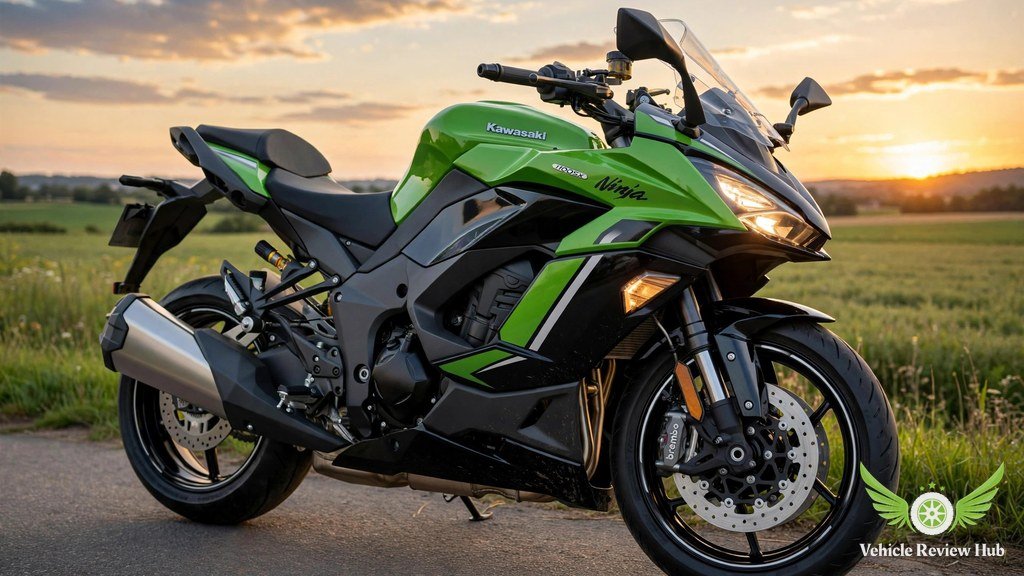
Verifying a used SE means checking the parts that only the SE carries, and doing it in the right order. Start with the Brembo M4.32 calipers, which carry cast “Brembo” lettering, and the steel-braided lines, then the Öhlins S46 rear shock with its yellow spring and remote preload adjuster, then the heated grips, and finally the colour against the SE list: Emerald Blazed Green or Metallic Diablo Black for 2025, Metallic Deep Blue or Metallic Diablo Black for 2026, and Plasma Lime Green or Metallic Diablo Black for 2027. The SE review covers the premium trim’s prices and riding experience, and the SE performance guide covers its dyno run and the brakes in detail. This Kawasaki Ninja 1100SX SE ABS reliability guide treats the calipers, the shock, the grips and the colour together as the proof, because any one of them alone can be copied or swapped.
| Check | Real SE | Standard 1100SX |
|---|---|---|
| Front calipers | Brembo M4.32, cast “Brembo” lettering | Non-Brembo calipers |
| Brake lines | Steel-braided lines | Rubber lines |
| Rear shock | Öhlins S46, yellow spring, remote preload | Showa shock |
| Heated grips | Standard | Paid accessory |
| 2025 colours | Emerald Blazed Green / Metallic Diablo Black | Metallic Carbon Gray |
| 2026 colours | Metallic Deep Blue / Metallic Diablo Black | Metallic Brilliant Golden Black |
| 2027 colours | Plasma Lime Green / Metallic Diablo Black | Metallic Carbon Gray |
| Model code | 2025 ZX1100JSFAL; 2027 ZX1100JVFAL | 2025 ZX1100HSFNL |
Notes for this Kawasaki Ninja 1100SX SE ABS reliability table: check calipers, shock, grips and colour together, because any one item alone can be copied or swapped; the master cylinder is not proof on its own, because the claimed part is Brembo and the seen part is Nissin; the 2026 SE model code is unverified and is not printed here.
Kawasaki Ninja 1100SX SE ABS Reliability: Frequently Asked Questions
Direct answers to the Kawasaki Ninja 1100SX SE ABS reliability questions buyers ask most, drawn from the official record and the two long-term tests behind this guide.
Has the Kawasaki Ninja 1100SX SE ABS had any recalls?
No. NHTSA shows zero recalls and zero complaints for the 2025, 2026 and 2027 model years, checked on 2026-11-17. This Kawasaki Ninja 1100SX SE ABS reliability guide treats that clean record as the strongest official fact available, while noting that a first-year bike has simply not had time to build a failure history.
What are the most common problems with the Kawasaki Ninja 1100SX SE ABS?
There is no common problem yet. The only reported niggles are a sticky throttle when the bike is strapped down in a van, one isolated heated grip control issue, and a confusing TFT interface. This Kawasaki Ninja 1100SX SE ABS reliability guide calls the grip issue isolated, not a pattern, because MCN’s long-term fleet was otherwise mechanically solid.
How often does the Öhlins shock need servicing?
There is no published 1100SX SE shock-service figure. Öhlins general guidance quotes 30,000 km in the manual, roughly 18,600 miles, while Öhlins USA technicians recommend 15,000 to 18,000 miles or once a year. This Kawasaki Ninja 1100SX SE ABS reliability guide presents those as general guidance, not as a published 1100SX interval.
When do the valves need checking on the Kawasaki Ninja 1100SX SE ABS?
The figures conflict and neither is the official US figure. The platform chart says 15,000 miles, while a second figure of 26,250 miles, which is 42,000 km, has no verified 1100SX source. This Kawasaki Ninja 1100SX SE ABS reliability guide prints neither as settled, and an owner should ask the dealer which figure the shop follows.
Are the heated grips reliable?
As far as the record shows, yes. The only reported trouble anywhere is MCN’s single isolated heated grip control issue on its long-term fleet bike, and the fleet was otherwise mechanically solid. This Kawasaki Ninja 1100SX SE ABS reliability guide treats the grips as the SE-specific wear item to watch, and advises testing every heat setting on a used bike.
How do I check a used Kawasaki Ninja 1100SX SE ABS is a real SE?
Check the Brembo M4.32 calipers with cast “Brembo” lettering, the steel-braided lines, the Öhlins S46 shock with its yellow spring and remote preload, the heated grips, and the colour against the SE list for that year. This Kawasaki Ninja 1100SX SE ABS reliability guide warns against using the master cylinder alone as proof, because the claimed part is Brembo and the seen part is Nissin.
How long is the warranty on the Kawasaki Ninja 1100SX SE ABS?
The warranty is 12 months, limited, the same as the standard bike. This Kawasaki Ninja 1100SX SE ABS reliability guide notes that a full service history protects that warranty, and that the first service at 600 miles is the one to confirm on any used bike.
What fuel economy does the Kawasaki Ninja 1100SX SE ABS get?
Testers measured 38.5 mpg at RevZilla over three tanks, 39 mpg at Ultimate Motorcycling, and over 40 mpg at Motorcycle.com on long hauls, which works out to roughly 190 to 200 miles from the 5.0-gallon tank.
How often should I clean the chain?
The platform figure is roughly every 400 miles, with cleaning and lubrication together. This Kawasaki Ninja 1100SX SE ABS reliability guide uses the platform figure, because no 1100SX-specific chain interval is published. The chain is a sealed unit with no published size, so no size is printed here, and the 1000SX’s 525 figure is not carried over.
Does the Kawasaki Ninja 1100SX SE ABS have a Brembo master cylinder?
Kawasaki’s spec sheet claims a Brembo master cylinder, but Motorcycle.com and Visordown both report a Nissin master cylinder on the test bikes they rode. This Kawasaki Ninja 1100SX SE ABS reliability guide presents both sides, because the claimed part is Brembo and the seen part is Nissin.
How much does servicing cost?
No US dealer service price exists, so this Kawasaki Ninja 1100SX SE ABS reliability guide prints no figure here. The only servicing figure anywhere is MCN’s £250 annual servicing, which is UK only and must not be read as an American price. The 1000SX reliability guide covers the platform the SE is built on, including its service schedule.
Is the Kawasaki Ninja 1100SX SE ABS reliable for long-distance touring?
The evidence so far says yes, with the usual first-year caveat. MCN’s long-term fleet covered roughly 4,500 to 5,000 miles and called the bike mechanically solid, with excellent corrosion resistance over winter salt. This Kawasaki Ninja 1100SX SE ABS reliability guide rates the SE as a sound touring choice, provided the shock is inspected and the service history is complete.
The 1100SX SE is a first-year premium bike with a clean official record, two honest long-term tests behind it, and no pattern failure anywhere yet. That is a good start rather than a finished verdict, and the fairest summary of this Kawasaki Ninja 1100SX SE ABS reliability guide is that the bike has earned trust so far and has not yet had time to lose it.