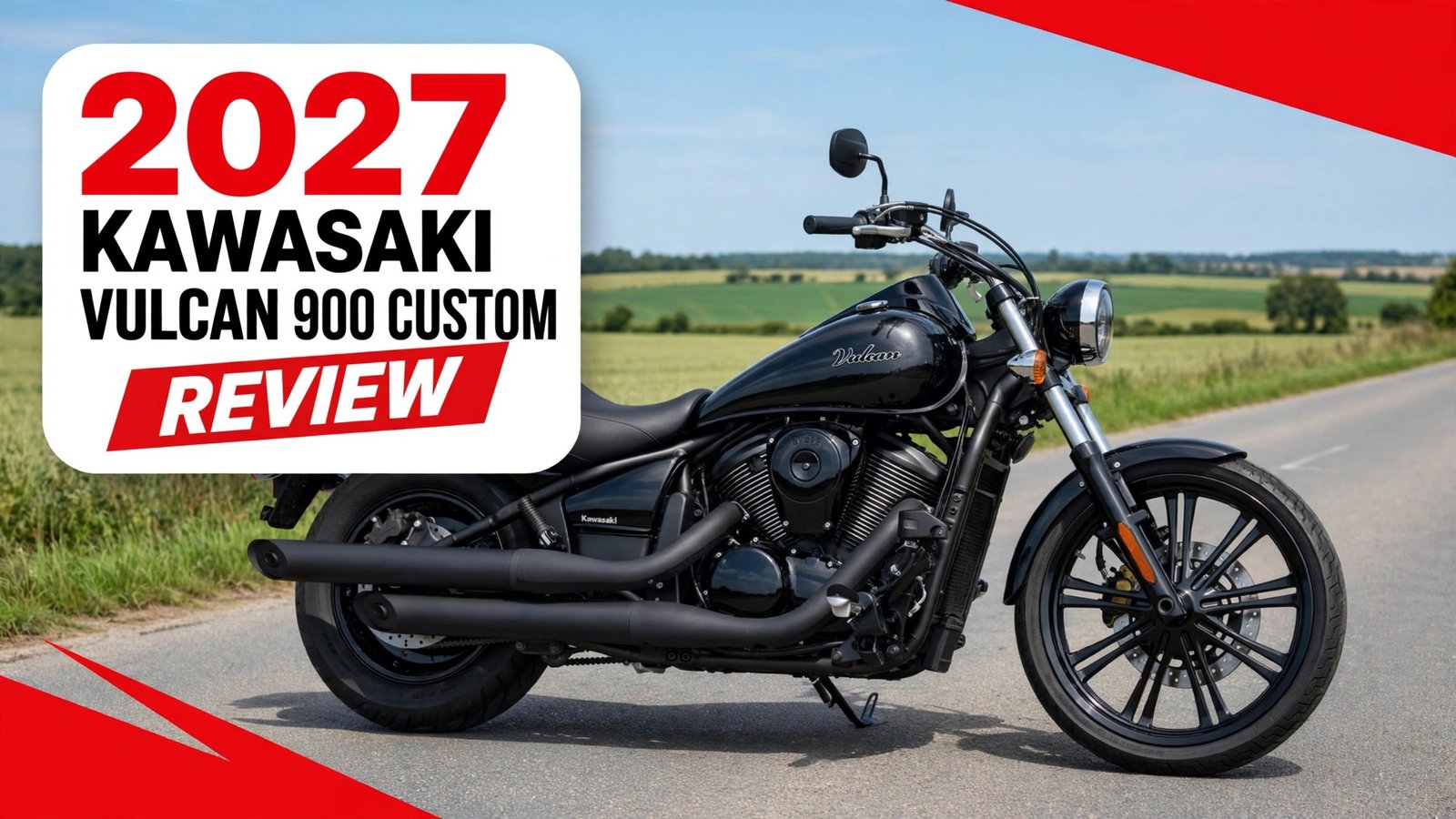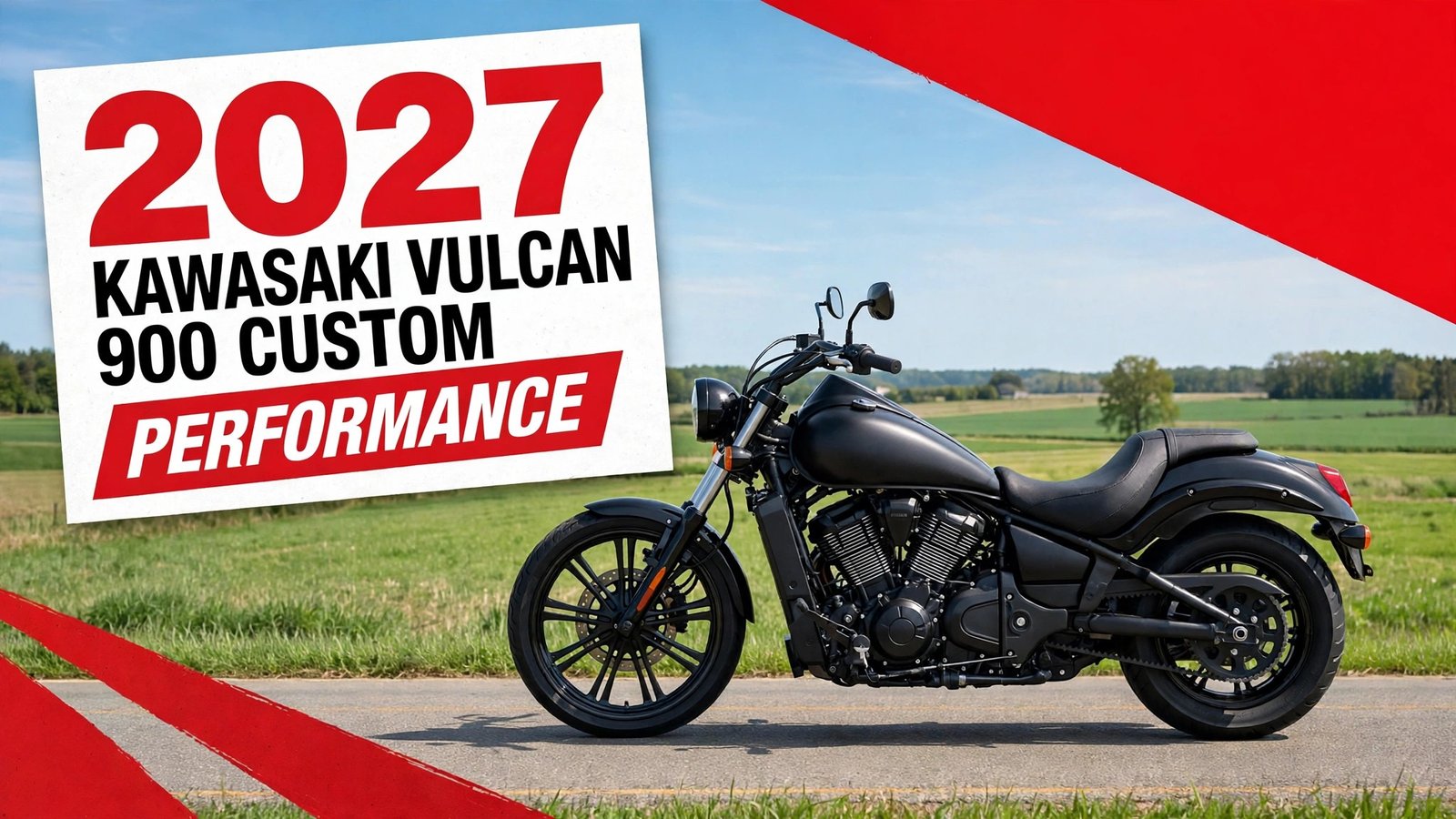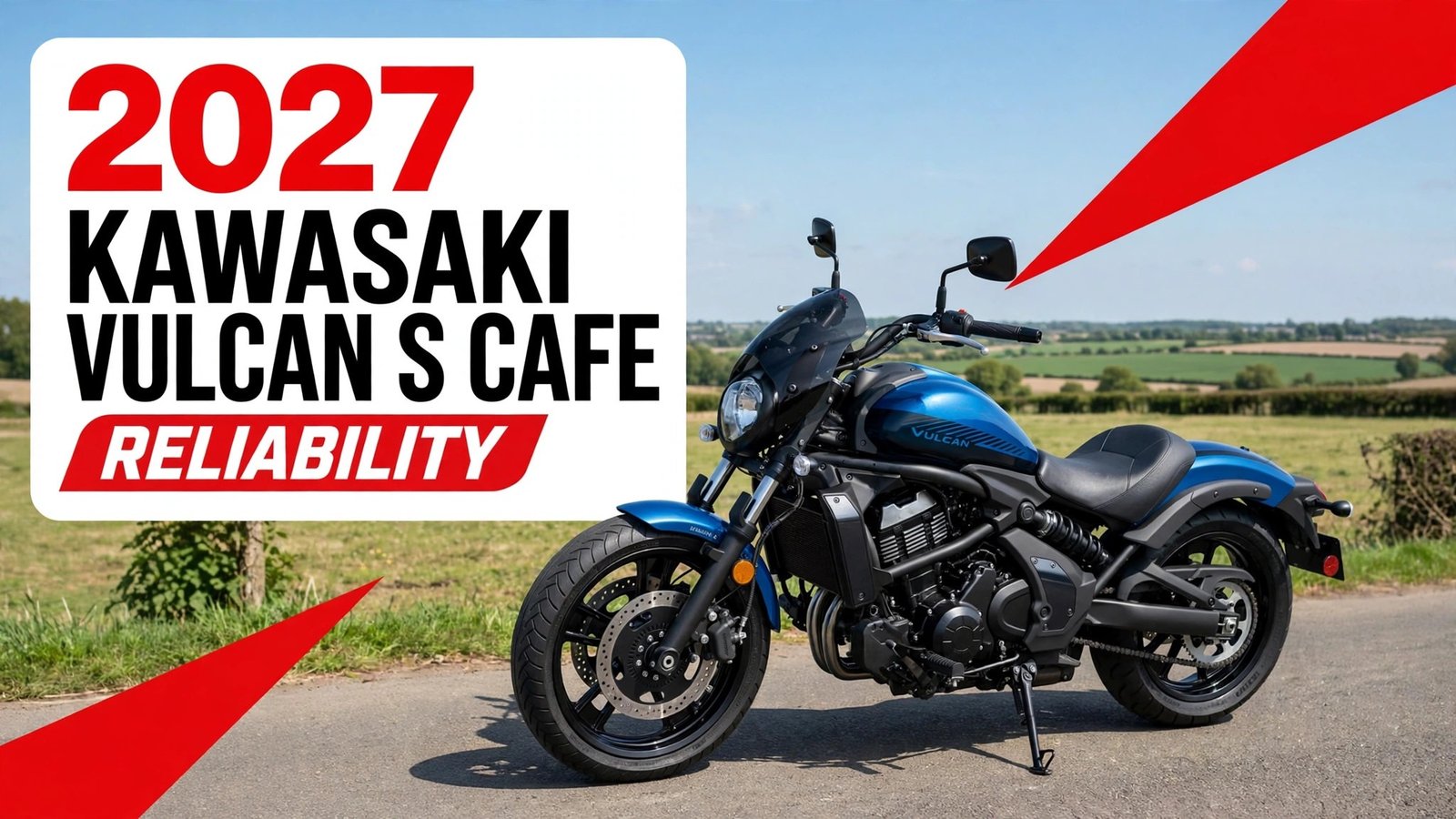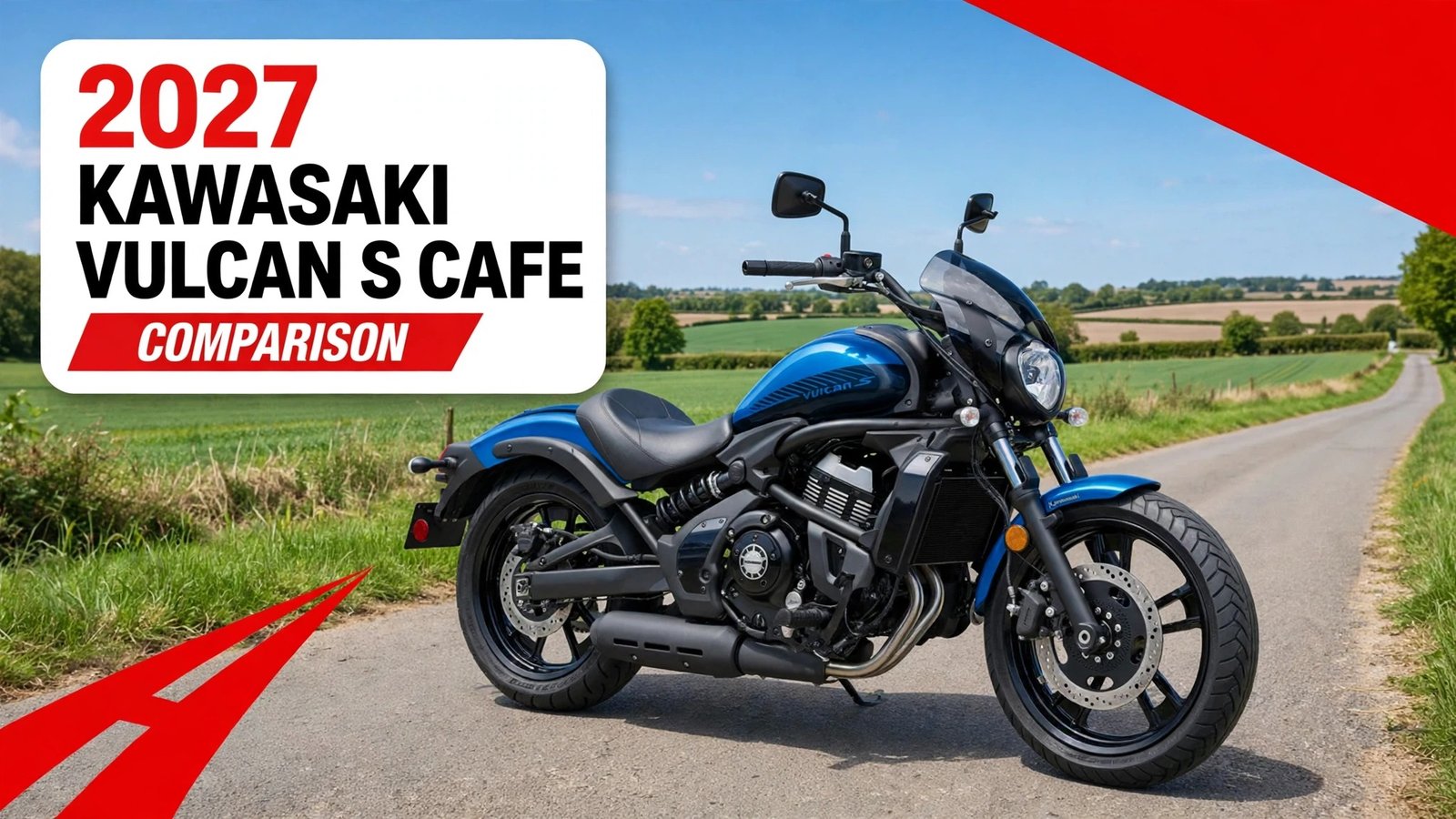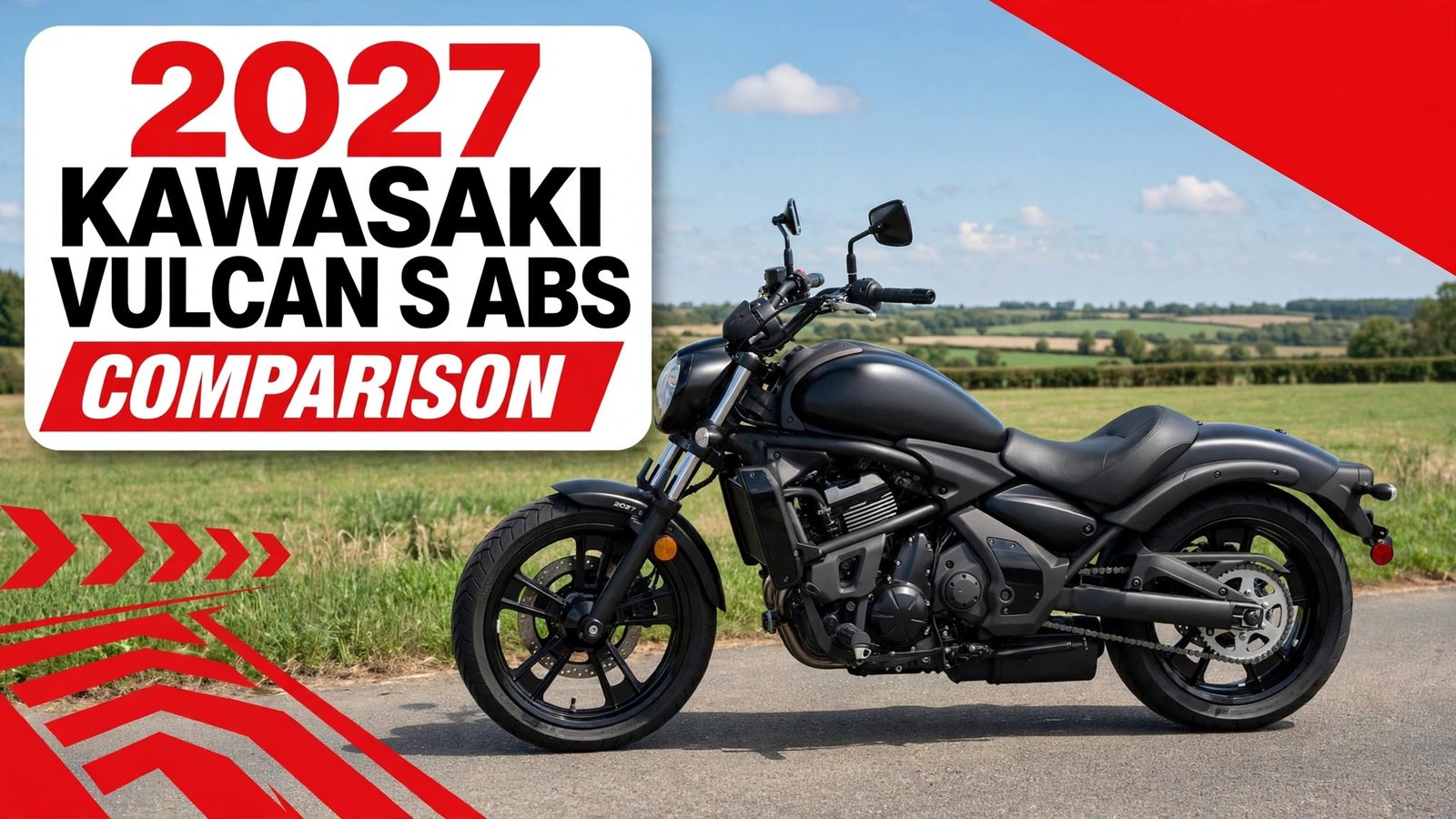
The short answer is that the Vulcan S ABS wins this comparison on power, weight and tested performance — but it is also the most expensive of the four. This Kawasaki Vulcan S ABS comparison puts the 2027 Vulcan S ABS, at $8,099 before destination, against the Honda Rebel 500, the Kawasaki Eliminator SE ABS and the Royal Enfield Super Meteor 650, all on 2026 delivered prices except where a 2027 figure is verified. The Vulcan S ABS has the biggest engine here at 649cc, the most power at 60 hp, and the only instrumented quarter-mile figure in the set, 13.40 seconds at 93.57 mph. The Rebel 500 is the lightest and cheapest, the Eliminator is the in-house little brother, and the Super Meteor 650 is the heaviest and the only five-speed. The rest of this Kawasaki Vulcan S ABS comparison works through each rival one by one, then prices the whole set.
Kawasaki Vulcan S ABS Overview and Its Closest Rivals
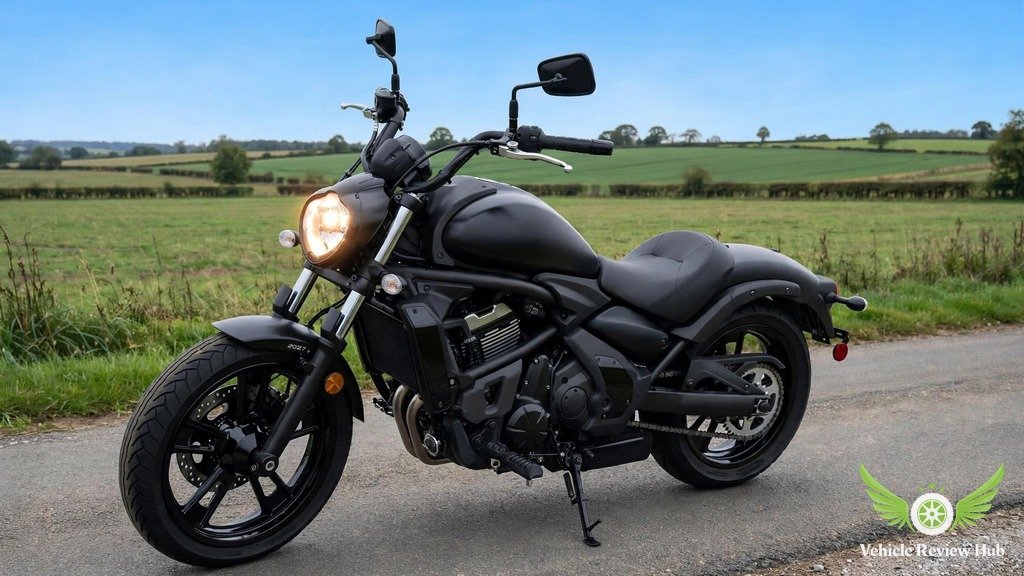
The Vulcan S ABS is the standard Vulcan S with ABS: the Ninja 650’s 649cc parallel twin — the same twin as the Versys 650 — retuned for low and mid-range torque, in a long, low chassis with a 27.8-inch seat. The three rivals in this Kawasaki Vulcan S ABS comparison each test a different part of that idea: the Rebel 500 tests whether a smaller, cheaper twin is enough, the Eliminator tests whether Kawasaki’s own smaller cruiser does the same job for less, and the Super Meteor 650 tests whether a heavier twin with classic styling is the better buy.

Why These Three Rivals: Standard ABS, In-House, Twin
The Rebel 500 is the best-selling bike in this class and the cheapest way into it: $6,799, ABS standard on every trim since 2026, a 471cc twin and a 414-lb curb weight. The Eliminator is the in-house rival: Kawasaki’s own 451cc cruiser, and the SE ABS trim at $7,099 is the closest thing to a smaller Vulcan S ABS that Kawasaki sells. The Super Meteor 650 is the twin rival: Royal Enfield’s 648cc parallel twin, almost the same displacement as the Vulcan’s 649cc, but air-oil cooled, five-speed and 33 lb heavier. Each one is a genuine alternative, and this Kawasaki Vulcan S ABS comparison treats them that way.
How the Four Bikes Differ at a Glance
Four numbers tell most of the story.
| Bike | Engine | Power | Torque | Seat | Curb weight | Tank | Wheelbase |
|---|---|---|---|---|---|---|---|
| Vulcan S ABS (2027) | 649cc parallel twin, liquid-cooled | 60 hp @ 7,500 rpm | 46.5 lb-ft @ 6,600 rpm | 27.8 in | 498.3 lb | 3.7 gal | 62.0 in |
| Rebel 500 (2026) | 471cc parallel twin, liquid-cooled | ~46 hp @ 8,500 rpm | 31.7 lb-ft | 27.2 in | 414 lb | 3.0 gal | 58.7 in |
| Eliminator SE ABS (2026) | 451cc parallel twin, liquid-cooled | 51 hp @ 10,000 rpm | 31.7 lb-ft @ 7,500 rpm | 28.9 in | 390.3 lb | 3.4 gal | 59.8 in |
| Super Meteor 650 (2026) | 648cc parallel twin, air-oil cooled | 47 hp @ 7,250 rpm | 38.6 lb-ft @ 5,650 rpm | 29.1 in | 531.3 lb | 4.15 gal | 59.0 in |
Notes for this Kawasaki Vulcan S ABS comparison at-a-glance table: the Vulcan S ABS figures are Kawasaki USA’s 2027 spec sheet; the Rebel 500 torque is the published CMX500 figure, since Honda USA publishes none; the Eliminator torque and weight are Kawasaki’s own spec sheet; the Super Meteor 650 figures are Royal Enfield’s own tech-spec sheet.
The film below is a real head-to-head with the Vulcan S in it, but the rival is the Harley-Davidson Street 750, not one of the three bikes in this comparison: no English head-to-head of the Vulcan S against the Rebel 500, the Eliminator or the Super Meteor 650 exists, after more than ten searches. Watch it for the Vulcan S against a V-twin cruiser, not as a verdict on the three rivals in this Kawasaki Vulcan S ABS comparison.
Kawasaki Vulcan S ABS vs Honda Rebel 500
The Rebel 500 is the bike most buyers cross-shop against the Vulcan S ABS, and the gap between them is the widest in this Kawasaki Vulcan S ABS comparison: $1,385 delivered and 178cc separate them. The Rebel is lighter, lower and cheaper, and for a lot of riders that is enough. The Vulcan answers with 14 more horsepower, a longer wheelbase, a bigger tank and an adjustable riding position the Rebel cannot match.

Engine, Specs and Performance Side by Side
The Vulcan’s 649cc twin makes 60 hp and 46.5 lb-ft; the Rebel’s 471cc twin makes about 46 hp, and its torque is 31.7 lb-ft — the published CMX500 figure, since Honda USA publishes none. That is a 14 hp and 14.8 lb-ft advantage for the Vulcan. Cycle World measured the Vulcan S Cafe ABS at 0–60 mph in 4.3 seconds, with no instrumented quarter-mile figure for the Rebel 500, and its Dynojet measured 53.5 hp at the rear wheel, more than the Rebel’s claimed crank output. The Rebel fights back on weight: 414 lb against the Vulcan’s 498.3 lb, an 84-lb advantage, with a lower seat and a shorter wheelbase that make it feel smaller and quicker to turn. Braking is close on paper — a single 300 mm front disc with a two-piston Nissin caliper and ABS against a single 296 mm front disc with ABS — but only the Vulcan has a measured stopping distance: 130 feet from 60 mph and 33 feet from 30 mph, measured by Cycle World. Fuel range favours the Vulcan: its 3.7-gallon tank and 48.3-mpg average give about 179 miles, against the Rebel’s 3.0-gallon tank. The Rebel’s counter is simplicity: a smaller engine, a slipper clutch as standard, and nothing to adjust. This Kawasaki Vulcan S ABS comparison calls the performance contest for the Vulcan on the measured figures, and the ease-of-use contest for the Rebel on weight and seat height.
Price, Equipment and Which Suits Which Rider
The 2026 Rebel 500 is $6,799 plus $600 destination, $7,399 delivered; the 2027 Vulcan S ABS is $8,099 plus $685, $8,784 delivered. The $1,385 gap buys the Vulcan’s extra 178cc, its Ergo-Fit system — 18 configurations in total — and its longer service intervals. The Vulcan’s Ergo-Fit fitting is free at purchase, though the parts for a later change cost extra, and no priced parts list was verified, so this Kawasaki Vulcan S ABS comparison does not invent one. The Rebel suits the shorter or newer rider who wants the lightest, cheapest way into a middleweight cruiser and rides mostly in town; the Vulcan suits the rider who rides two-up, tours, or wants the extra power and adjustable ergonomics. The 2027 Rebel 500 price was not confirmed at writing, so this Kawasaki Vulcan S ABS comparison prices the Rebel on its 2026 delivered figure.
Kawasaki Vulcan S ABS vs Kawasaki Eliminator SE ABS
The Eliminator is the awkward rival in this Kawasaki Vulcan S ABS comparison because it comes from the same factory and the same Ninja engine family — and it undercuts the Vulcan S ABS by $1,035 delivered in SE ABS trim. The SE ABS costs $7,099 plus $650 destination, $7,749 delivered, against the Vulcan S ABS at $8,784. The question this Kawasaki Vulcan S ABS comparison has to answer is whether the smaller bike does the same job for less, or whether the Vulcan earns its premium.

Engine, Specs and Performance Side by Side
The Eliminator’s 451cc twin makes 51 hp and 31.7 lb-ft, both from Kawasaki’s own spec sheet. It needs 2,500 more rpm to make its peak power and gives up 14.8 lb-ft of torque, so it feels busier at highway speed. But the Eliminator is 108 lb lighter — 390.3 lb against the Vulcan’s 498.3 lb — and that weight advantage is real: it is easier to handle at a stop and to flick through town. Its front brake is a single 310 mm disc with a twin-piston caliper and ABS, slightly larger than the Vulcan’s 300 mm single. The Vulcan’s measured performance — 13.40 seconds in the quarter mile, 53.5 hp at the rear wheel — has no Eliminator equivalent in the record, and this Kawasaki Vulcan S ABS comparison does not invent one. The Eliminator is the livelier small bike and the Vulcan is the stronger big one: the Eliminator revs harder and weighs less, the Vulcan pulls harder from lower revs.
Price, Equipment and Which Suits Which Rider
The Eliminator range starts at $6,499 for the non-ABS bike, $7,149 delivered, and the ABS trim is $6,799 plus $650, $7,449 delivered. The SE ABS compared here is $7,099 plus $650, $7,749 delivered — $1,035 less than the 2027 Vulcan S ABS at $8,784. For 2027 the Eliminator prices are unchanged from 2026, verified in dealer listings: the 2027 ABS is $6,799 and the SE ABS is $7,099, both before the $650 destination charge. The Vulcan’s equipment advantage is Ergo-Fit: the Eliminator has one riding position, the Vulcan has 18. The Eliminator’s advantage is that it is the newest design of the two, with a trellis frame and a lighter chassis. The Eliminator suits the rider who wants a Kawasaki cruiser, rides mostly alone and would rather keep the $1,035; the Vulcan suits the rider who wants the bigger engine, the longer wheelbase and the adjustable fit. This Kawasaki Vulcan S ABS comparison calls the Eliminator the better value on paper and the Vulcan the better bike on the road.
Kawasaki Vulcan S ABS vs Royal Enfield Super Meteor 650
The Super Meteor 650 is the closest rival on paper and the furthest on philosophy. Its 648cc parallel twin is 1cc smaller than the Vulcan’s 649cc, yet the two bikes could hardly be more different: the Royal Enfield is air-oil cooled, has five gears instead of six, weighs 33 lb more, and costs $7,899 in November 2026 dealer listings — $885 less than the 2027 Vulcan S ABS before destination. This Kawasaki Vulcan S ABS comparison treats the Super Meteor as a genuine alternative for riders who want classic styling and a bigger fuel tank.

Engine, Specs and Performance Side by Side
The Super Meteor’s 648cc SOHC twin makes 47 hp and 38.6 lb-ft, from Royal Enfield’s own tech-spec sheet. That is 13 hp and 7.9 lb-ft in the Vulcan’s favour, and the Vulcan’s extra gear means it cruises at lower revs. The Super Meteor’s torque peaks 950 rpm lower, so it feels relaxed at town speeds, but its 531.3-lb kerb weight blunts the advantage. Its front brake is the biggest in this set, a single 320 mm disc with ABS against the Vulcan’s 300 mm, and its 4.15-gallon tank is the largest here. Its front tyre is a narrow 100/90-19, which suits its classic stance but gives up grip to the Vulcan’s 120/70-18. No instrumented performance figure exists for the Super Meteor 650, so this Kawasaki Vulcan S ABS comparison does not invent one. On the road, the Super Meteor is the smoother, slower, more traditional ride; the Vulcan is the quicker, lighter, more modern one.
Price, Equipment and Which Suits Which Rider
The Super Meteor 650 is listed at $7,899 in November 2026 dealer listings, trim unnamed, and Royal Enfield’s own trim-by-trim US pricing was not pinned down at writing, so this Kawasaki Vulcan S ABS comparison prints no delivered figure for it — its destination charge was not verified. For context, the last manufacturer-anchored trim split was the 2024 model at $6,999 for the Astral and $7,299 for the Interstellar; the $7,499 Celestial figure in one October 2026 report is not used here, since the Celestial is a higher trim that cannot cost less. Against the Vulcan’s $8,784 delivered, the Super Meteor is about $885 cheaper before destination, and it comes with a three-year warranty against the Vulcan’s 12-month limited warranty. The Super Meteor suits the rider who wants the classic look, the bigger tank and the longer warranty, and rides at a relaxed pace; the Vulcan suits the rider who wants 13 more horsepower, 33 lb less weight, a lower seat and a sixth gear.
Kawasaki Vulcan S ABS Price and Value Compared
Price is where this Kawasaki Vulcan S ABS comparison gets honest: the Vulcan S ABS is the most expensive bike in the set. All four bikes are priced on verified 2026 delivered figures, except the Vulcan S ABS, which leads with its 2027 line, and the Eliminator, whose 2027 prices are verified in dealer listings and unchanged from 2026. The Super Meteor 650 has no delivered figure because its destination charge was not verified.
| Bike | MSRP | Destination | Delivered | 2027 note |
|---|---|---|---|---|
| Vulcan S ABS | $8,099 (2027) | $685 | $8,784 | $50 cheaper than 2026 |
| Rebel 500 | $6,799 (2026) | $600 | $7,399 | 2027 price not confirmed |
| Rebel 500 SE | $6,999 (2026) | $600 | $7,599 | SE is $6,999 MSRP, not $7,599 |
| Eliminator ABS | $6,799 (2026) | $650 | $7,449 | 2027 $6,799, unchanged |
| Eliminator SE ABS | $7,099 (2026) | $650 | $7,749 | 2027 $7,099, unchanged |
| Super Meteor 650 | $7,899 (2026 listings) | Not verified | Not printed | 2027 price not confirmed |
| Shadow Phantom | $8,699 (2026) | $600 | $9,299 | Same as 2025 |
Notes: the Vulcan S ABS 2027 figures are Kawasaki USA’s 2027 page; the Rebel 500 figures are Honda Powersports’ 2026 pages; the Eliminator figures are Kawasaki’s spec sheet and Motorcycle.com, 2027 prices from dealer listings; the Super Meteor 650 figure is November 2026 dealer listings, trim unnamed, no delivered figure; the Shadow Phantom is Honda’s $8,699 MSRP plus $600 destination.
Rebel SE Is $6,999, the $7,599 Was a Misread
Some listings present $7,599 as the Rebel 500 SE’s price, and that is the misread this Kawasaki Vulcan S ABS comparison has to correct: $7,599 is the SE’s delivered price, not its MSRP. Honda’s own 2026 SE page lists $6,999 with a $600 destination charge, $7,599 on the road. The base Rebel 500 is $6,799 plus $600, $7,399 delivered, so the SE premium is $200 — the brown diamond-stitch seat, the black fork boots and the colour-matched headlight cowl. Keep MSRP and delivered separate: the Vulcan S ABS at $8,784 delivered is $1,385 above the base Rebel and $1,185 above the SE, not $1,785 above a misread $6,999. The same discipline applies to the Eliminator, where the SE ABS at $7,749 delivered is $300 above the ABS trim at $7,449, and to the Vulcan itself, where the 2027 two-tone at $8,984 delivered is $200 above the base ABS.
Running Costs and Resale Value Compared
The Vulcan S ABS is cheap to keep: routine servicing runs $150–$400 a year and major services $500–$800 each, putting five years at roughly $1,000–$1,500, all owner-reported ranges from TopSpeed. The Rebel 500 and the Eliminator should cost no more, and the Super Meteor’s air-oil-cooled twin is simpler still, with no radiator to service, though its 5,000-mile service intervals are shorter than the Vulcan’s 7,500-mile oil changes. Resale is where the Vulcan’s price premium softens: used Vulcan S models run $4,500–$7,500 by aggregator reports, low-mileage examples claimed to keep 65–75% of their value after three years — an aggregator claim, not a measured figure. The Rebel 500 holds value best of the four by reputation, as the best-selling bike in the class, while the Super Meteor’s heavy discounting on leftover 2024 models — some listed at $6,199 against a $6,999 MSRP — shows its new price is softer than its sticker. This Kawasaki Vulcan S ABS comparison prices the Vulcan as the most expensive to buy and among the cheapest to keep.
Kawasaki Vulcan S ABS Comparison Verdict and US Alternatives
The verdict of this Kawasaki Vulcan S ABS comparison is that the Vulcan S ABS is the best bike in the set and the worst value on the sticker. It has the most power, the longest wheelbase, the only measured quarter-mile figure and the most adjustable riding position, and it costs $1,035–$1,385 more than the three rivals that beat it on price.
Verdict: The ABS Question Answers Itself
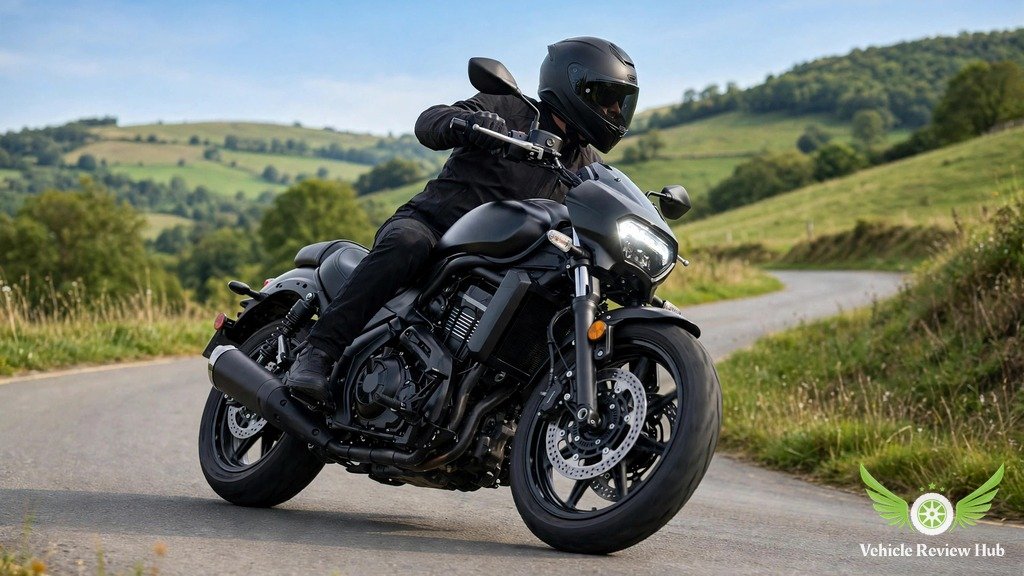
The ABS question answers itself because, from 2027, there is no question left: the Vulcan S is ABS-only, and the non-ABS bike is gone. In 2026 the ABS premium over the non-ABS Vulcan S was $500 — $8,149 against $7,649 — and every figure in this Kawasaki Vulcan S ABS comparison says that $500 was well spent: a 130-foot stop from 60 mph measured by Cycle World, and no ABS fault pattern in eleven years of owner reports. The Vulcan S ABS is the pick for the strongest mid-capacity cruiser; the Rebel 500 is the pick for the cheapest and lightest; the Eliminator SE ABS is the pick for the rider who would rather keep $1,035; the Super Meteor 650 is the pick for classic styling and the longest warranty.
Shadow Phantom Alternative
The Shadow Phantom is the alternative this Kawasaki Vulcan S ABS comparison keeps outside the main three: a 745cc 52° V-twin with shaft drive, a five-speed gearbox and a 25.6-inch seat, the lowest here. Honda lists it at $8,699 for 2026 plus $600 destination, $9,299 delivered — unchanged from 2025 and $515 more than the 2027 Vulcan S ABS. Honda publishes no horsepower or torque figures; independent testing puts it at about 44.6 hp and 47.9 lb-ft, and its 543-lb weight is 45 lb more than the Vulcan’s. Its rear brake is a 276 mm disc since the 2024 update, replacing the old drum, and ABS has been standard since 2025. The Phantom suits the rider who wants a V-twin, shaft drive and the lowest seat in the class. For everyone else in this Kawasaki Vulcan S ABS comparison, the Vulcan S ABS remains the stronger bike at the lower price.
Kawasaki Vulcan S ABS Comparison: Frequently Asked Questions
These are the questions buyers ask most when they put the Vulcan S ABS next to its rivals, answered with the verified figures from this Kawasaki Vulcan S ABS comparison.
Which bike wins the Kawasaki Vulcan S ABS comparison?
The Vulcan S ABS wins this Kawasaki Vulcan S ABS comparison on power, tested performance and adjustability: 60 hp, a 13.40-second quarter mile and the Ergo-Fit system. It loses on price, $8,784 delivered against $7,399 for the Rebel 500.
How much more does the Vulcan S ABS cost than the Rebel 500?
In this Kawasaki Vulcan S ABS comparison, the 2027 Vulcan S ABS is $8,784 delivered and the 2026 Rebel 500 is $7,399 delivered, a gap of $1,385. Against the Rebel 500 SE at $7,599 delivered, the gap is $1,185.
Is the Eliminator SE ABS a smaller Vulcan S ABS?
Close, but not the same bike. In this Kawasaki Vulcan S ABS comparison, the Eliminator SE ABS shares the Ninja-derived twin philosophy and costs $1,035 less delivered, but it has 198cc less, 9 hp less and no Ergo-Fit adjustment.
Why is the Super Meteor 650 cheaper than the Vulcan S ABS?
In this Kawasaki Vulcan S ABS comparison, the Super Meteor 650 is listed at $7,899 in November 2026 dealer listings, about $885 below the Vulcan S ABS before destination. It is heavier, has five gears instead of six and makes 13 hp less.
Does the Rebel 500 have ABS?
Yes. In this Kawasaki Vulcan S ABS comparison, ABS is standard on all Rebel 500 trims since 2026, front and rear, with a single 296 mm front disc and a single 240 mm rear disc.
What is the Vulcan S ABS top speed?
No instrumented top-speed figure exists for the Vulcan S ABS. Claims span 108–120 mph, and this Kawasaki Vulcan S ABS comparison presents that as an unresolved spread.
Which rival is lightest?
In this Kawasaki Vulcan S ABS comparison, the Eliminator SE ABS is the lightest at 390.3 lb curb, followed by the Rebel 500 at 414 lb. The Vulcan S ABS is 498.3 lb and the Super Meteor 650 is 531.3 lb.
Is the Vulcan S ABS worth $1,385 more than the Rebel 500?
Yes, for riders who tour or ride two-up: 14 more horsepower, a longer wheelbase, a bigger tank and Ergo-Fit. This Kawasaki Vulcan S ABS comparison calls the Rebel 500 the better buy in town.
What is the cheapest rival in this comparison?
The Rebel 500 at $7,399 delivered for 2026. In this Kawasaki Vulcan S ABS comparison, the Eliminator ABS is $7,449 delivered and the Eliminator SE ABS is $7,749 delivered.
Does the Vulcan S ABS have the longest warranty?
No. The Vulcan S ABS has a 12-month limited warranty, while the Super Meteor 650 carries a three-year warranty.
Which rival has the biggest fuel tank?
In this Kawasaki Vulcan S ABS comparison, the Super Meteor 650 at 4.15 gallons, followed by the Vulcan S ABS at 3.7 gallons, the Eliminator SE ABS at 3.4 gallons and the Rebel 500 at 3.0 gallons.
Should I buy the Vulcan S ABS or the Shadow Phantom?
Buy the Vulcan S ABS for more power, a sixth gear and a $515 lower delivered price. In this Kawasaki Vulcan S ABS comparison, buy the Shadow Phantom for a V-twin, shaft drive and the lowest seat in the class at 25.6 inches.