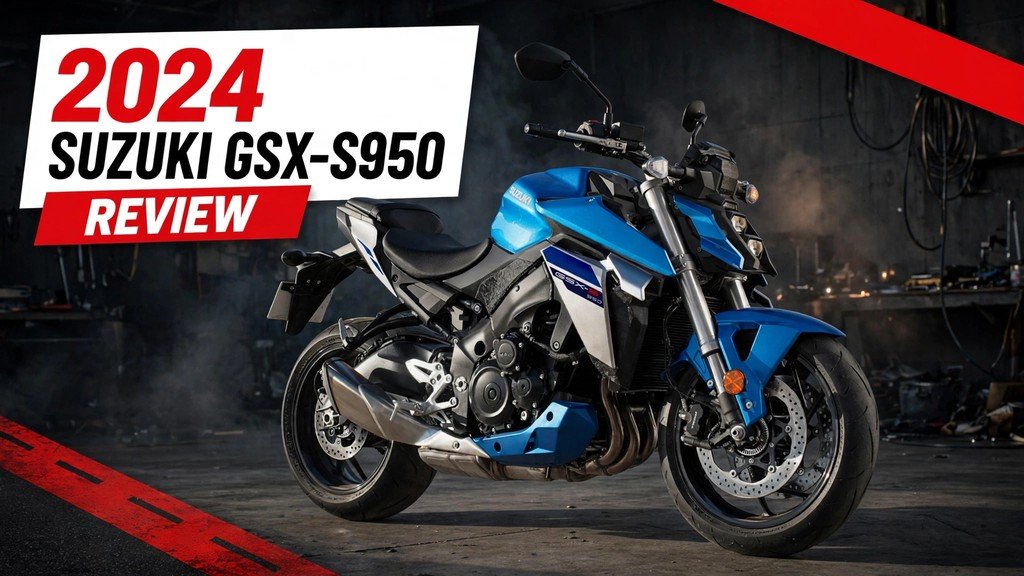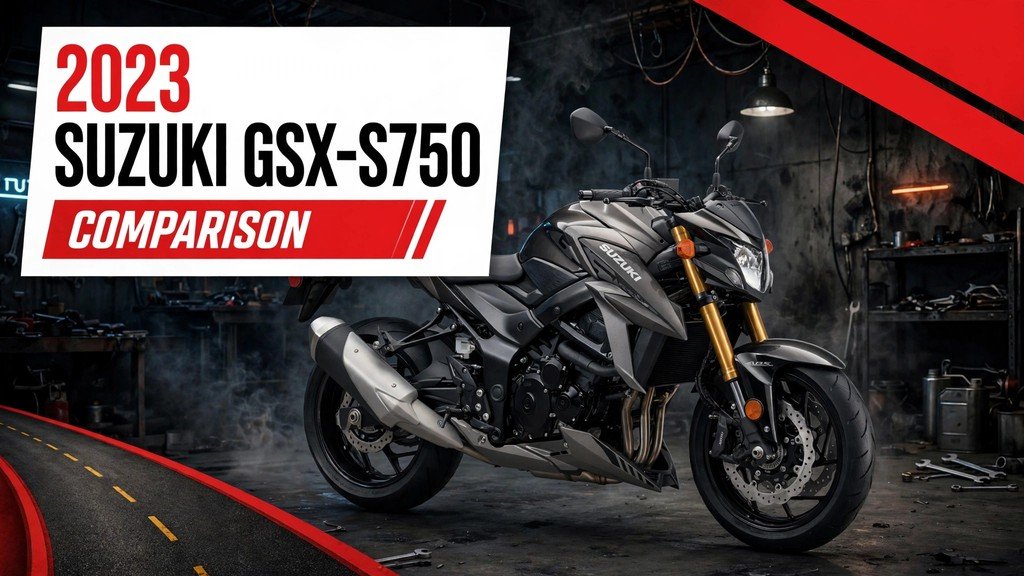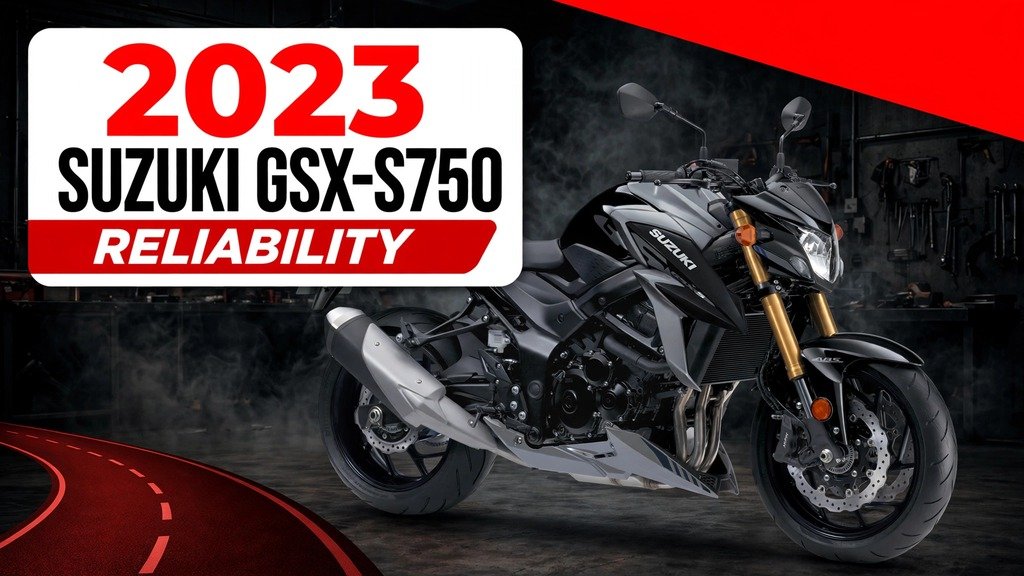
The Suzuki GSX-S750 is a reliable middleweight naked: one recall in nine model years, a simple service schedule, and owner ratings that hold up across two generations. This Suzuki GSX-S750 reliability guide gives the direct answer first — the bike’s weak points are wear items and winter corrosion, not engine or gearbox failures.
Suzuki GSX-S750 Reliability Overview
The GSX-S750 was sold in the USA from 2015 to 2023, skipping 2017. That long, mostly unchanged run is good news for this Suzuki GSX-S750 reliability guide: the engine is a retuned version of the 2005 GSX-R750 K5 unit, with a different bore and stroke (72.0 × 46.0 mm against the GSX-R750’s 70.0 × 48.7 mm), and it spent nearly a decade in service unchanged.
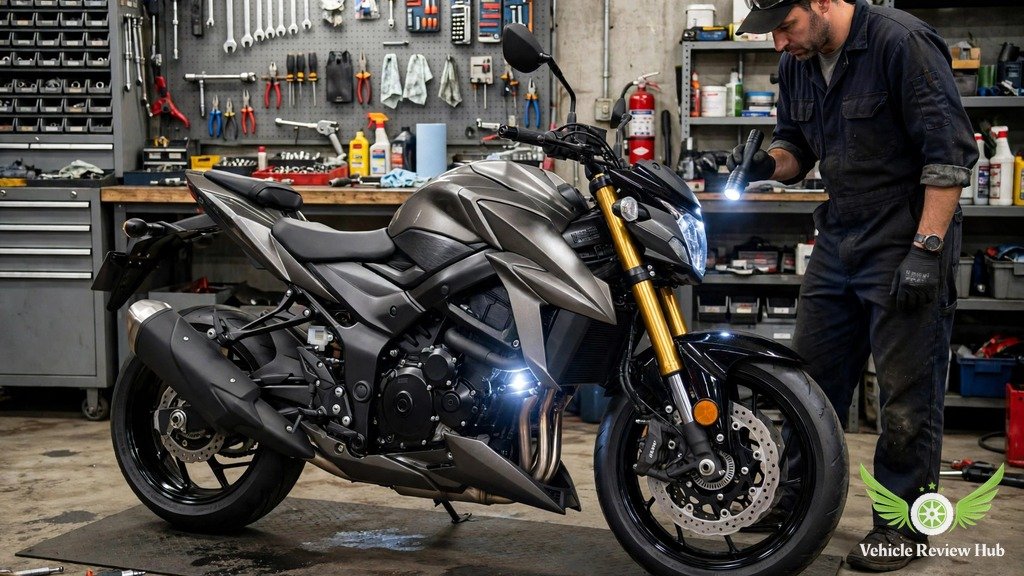
UK Owners: GSR750 Reliability 4.3 of Five
There is no MCN owner score for the GSX-S750 itself — MCN has no owner-review page for this bike at all — so this Suzuki GSX-S750 reliability guide uses the closest real UK owner data, which is the predecessor GSR750. MCN’s 30 UK GSR750 owners rate reliability 4.3 out of 5. The 4.7 out of 5 figure that circulates online is BikeWale India, on just 10 ratings — not UK owners, and not MCN. MCN calls the GSX-S750 “MCN Recommended” in its used guide.
| Source | Rating | Notes |
|---|---|---|
| MCN GSR750 owners (30 owners) | Reliability 4.3/5 | Overall 4.1/5; engine 4.8/5; annual servicing £170 mean |
| MCN editorial (GSR750) | Reliability 4/5 | Editorial score, not an owner score |
| BikeWale India (10 ratings) | 4.7/5 | India market, small sample — NOT a UK owner score |
| Bennetts editorial | 3/5 | GSX-S750 used guide; reflects age and basic kit |
| UK MOT (DVSA, 3,590 tests) | 72/100, rated “good” | 2020 bikes scored 92; lights and indicators cause 68% of failures |
The ratings table in this Suzuki GSX-S750 reliability guide keeps the sources separate. The MOT data is the most direct evidence — across 3,590 UK tests the bike scores 72 out of 100, rated “good”, and the 2020 bikes scored 92, rated “excellent”, with a 93.6% first-time pass rate. For comparison, the Honda CB650R scores 77, the Yamaha XSR700 73, and the Yamaha MT-07 72.
How Mileage, Storage and Previous Care Affect Reliability
Mileage matters less than storage and previous care on this low-stress, liquid-cooled inline-four with a 12.3:1 compression ratio. The one long-term owner report this guide found — a Team-BHP owner in India — covered 53,500 km (about 33,200 miles) and described the experience as “absolutely delightful”, with the work in the last 10,000 km limited to wear items — steering-head cone set, rear suspension and linkage, clutch cable, throttle-body and injector cleaning, chain and sprockets, tyres, and brake rotors at the 4.5 mm threshold. A bike with a full service history is a better buy than a lower-mileage bike that lived outdoors — this Suzuki GSX-S750 reliability guide weighs the records heavier than the odometer.
Suzuki GSX-S750 Common Problems and Wear Items
The honest list of GSX-S750 problems is short — every item is a wear or finish issue, not a mechanical failure.
GSR750 Owners Report Corrosion in the UK
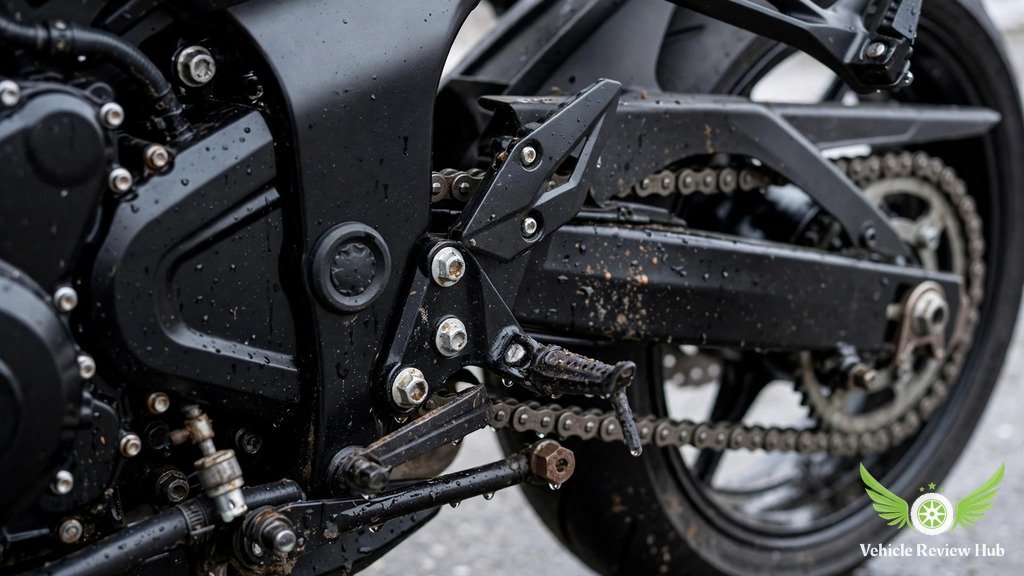
Corrosion is the most commonly reported problem, and it comes from the predecessor’s UK owners rather than from American riders. MCN’s GSR750 owner page notes that “corrosion is also reported fairly commonly”, alongside a few engine and gearbox issues. The Bennetts used guide makes the same point for the GSX-S750 itself and tells buyers to check the fasteners, the exhaust headers, and the chain. With a steel twin-spar and tubular frame, the 2015–2016 bikes were 49-state only, never sold in California — most American bikes never saw the salted winter roads that cause the worst UK corrosion. A buyer in the USA should still check the same places this Suzuki GSX-S750 reliability guide lists: bolt heads, exhaust downpipes, swingarm, and the rear of the engine. This Suzuki GSX-S750 reliability guide treats a corroded chain as a negotiating point, not a reason to walk away, and a corroded frame as a reason to walk away.
Throttle Snap on Reapplication, Tester-Noted
The second known issue is throttle snap on reapplication — a sharp jerk when the throttle is closed and reopened, most noticeable in first and second gear. RevZilla noted it on the 2015 bike, and the ZigWheels first ride reported the same jerk in first and second gear. It is a fuelling trait of the early bike, not a fault that strands the rider, and one reason this Suzuki GSX-S750 reliability guide steers buyers toward the 2018-or-later bike, which added Low RPM Assist, revised fuelling with ten-hole injectors, and a slipper-assist clutch. A heavy clutch pull was the other repeated complaint in the magazine tests — Motorcycle.com called it the heaviest in its group — and it is worth testing on a pre-purchase ride. There is no documented fix for the throttle snap beyond the 2018 fuelling changes, so a 2015–2016 buyer should ride the bike first and decide whether the trait bothers them.
Suzuki GSX-S750 Maintenance Schedule and Servicing
The GSX-S750 service schedule is short, simple, and cheap to follow — why this Suzuki GSX-S750 reliability guide rates the bike so well. Services fall at 600, 4,000, 7,500, 11,000 and 14,500 miles, then every 3,500 miles, with the interval set by odometer reading or months, whichever comes first.
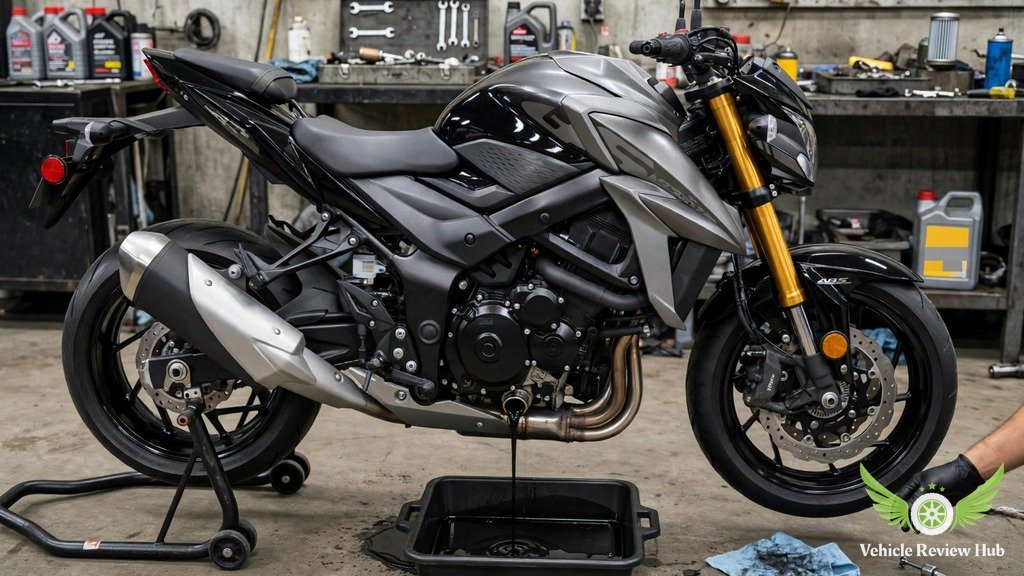
Oil at Every Service Interval
Engine oil is replaced at every service — 600, 4,000, 7,500, 11,000 and 14,500 miles — using SAE 10W-40 oil meeting JASO MA (API SF, SG, SH or SJ). Capacity is 3.2 litres, or 3.6 litres with a filter change. The trap in this Suzuki GSX-S750 reliability guide is the oil filter: it is replaced only at 600 miles and at 11,000 miles, not at every service. One auto-generated FAQ page claims “oil and filter every 3,000 miles” — it contradicts the manual table outright.
| Service item | 600 mi | 4,000 mi | 7,500 mi | 11,000 mi | 14,500 mi |
|---|---|---|---|---|---|
| Engine oil (SAE 10W-40, JASO MA) | Replace | Replace | Replace | Replace | Replace |
| Oil filter | Replace | — | — | Replace | — |
| Air cleaner element | — | Inspect | Inspect | Replace | Inspect |
| Spark plugs (NGK CR9EIA-9 ×4) | — | Inspect | Replace | Inspect | Inspect |
| Valve clearances | — | — | — | — | Inspect only |
| Brake fluid (DOT 4) | — | Inspect | Inspect | Inspect | Inspect — replace every 2 years |
| Coolant (Super Long Life, blue) | — | — | — | — | Inspect — replace every 4 years |
| Drive chain | Inspect | Inspect | Inspect | Inspect | Inspect — clean and lube every 600 mi |
The service table in this Suzuki GSX-S750 reliability guide is the US owner’s manual schedule, via MaintenanceSchedule.com.
Valve Inspection at 14,500 Miles
The valve-clearance inspection falls at 14,500 miles, and it is an inspection only — adjustment only if the clearances are out of spec. Bennetts says “every 14,000 miles”, which conflicts with the manual table; the manual wins, and this Suzuki GSX-S750 reliability guide uses 14,500 miles. One honest gap belongs here: the GSX-S750 owner’s manual does not publish the clearance figures themselves. The closest proxy is the GSX-R750 service manuals for the same K5-derived engine family, which specify 0.08–0.18 mm inlet and 0.18–0.28 mm exhaust, measured cold — but that is a proxy, not a verified GSX-S750 figure, so have a dealer confirm against the GSX-S750 service manual before any adjustment. Do not use the SV650’s figures (0.10–0.20 mm inlet, 0.20–0.30 mm exhaust) for this bike; they belong to a different engine. Most owners find the clearances in spec at the first inspection — the valve check is a checkpoint, not a known trouble spot, and this Suzuki GSX-S750 reliability guide treats it that way.
Suzuki GSX-S750 Tires, Brakes and Suspension Maintenance
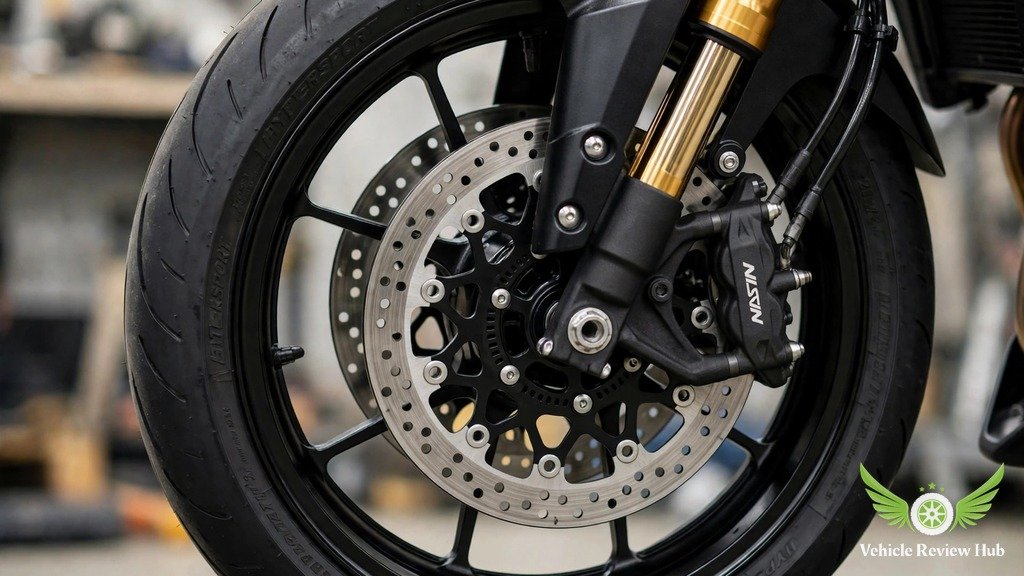
Tyres, brakes and suspension are where the GSX-S750’s two generations differ most, and the maintenance picture in this Suzuki GSX-S750 reliability guide changes with them. The 2015–2016 bike has two-piston sliding front calipers that testers criticised for weak initial bite; the 2018-and-later bike has Nissin four-piston radial-mount monobloc calipers on twin 310 mm wave discs, rated the best brakes in Motorcycle.com’s three-way test at 90.8 percent. The tyres this Suzuki GSX-S750 reliability guide lists are 120/70 ZR17 front and 180/55 ZR17 rear on both generations, with Bridgestone Battlax Hypersport S21 rubber fitted from 2018, at 36 psi front and 42 psi rear, solo and two-up. This Suzuki GSX-S750 reliability guide treats the brake generation as the first thing to identify on any used bike.
Plugs at 7,500, Coolant Four Years
The spark plugs are NGK CR9EIA-9 iridium, four of them, or Denso IU27D as the alternative. They are inspected at 4,000 miles, replaced at 7,500 miles, and inspected again at 11,000 and 14,500 miles. Coolant is Suzuki Super Long Life, blue — inspected at 14,500 miles, replaced every four years or 48,000 km. Brake fluid is DOT 4, inspected from 4,000 miles on and replaced every two years; the brake hose is replaced every four years. The RevZilla first ride of the 2015 bike noted the throttle snap and the lack of ABS on the early bike.
The video below is MC Garage’s generic fork-rebuild guide — not filmed on a GSX-S750, but the fork-seal and oil-change steps it shows are the same job on this bike. The fork is the one suspension item this Suzuki GSX-S750 reliability guide flags beyond preload adjustment.
Chain Cleaned and Lubed Every 600 Miles
The drive chain is inspected at every service and cleaned and lubricated every 600 miles, with slack set to 20–30 mm. It is an RK 525 chain, 114 links, with a final-drive ratio of 2.529. One long-term owner reported chain and sprocket life of about 29,500 km (roughly 18,300 miles), front pads of about 8,000 km, and a rear tyre of about 9,000 km — one rider’s anecdotes, not factory figures. The suspension itself needs little: spring preload is the only adjustment at either end on both generations, the front is a 41 mm KYB inverted fork with 4.7 inches of travel, and the rear is a link-type shock with 5.4 inches of travel on the 2018 bike and 7-way adjustable rear preload.
Suzuki GSX-S750 Maintenance and Ownership Costs
Running a GSX-S750 is cheap by middleweight standards, and the numbers in this Suzuki GSX-S750 reliability guide back that up. Fuel economy in US testing runs from 36.9 mpg on the 2015 bike to 46–48 mpg on the 2018 bike in Motorcycle.com’s long-term test. The tank holds 17.5 litres (4.6 US gallons) on the 2015–2016 bike and 16.0 litres (4.22 US gallons) from 2018, for roughly 170–200 miles between fill-ups. No dealer fixed-price servicing figure for this bike specifically was found anywhere, so this Suzuki GSX-S750 reliability guide prints none — do not trust any site that does. The closest verified figure is the MCN GSR750 owner-reported mean of £170 a year, and Indian owners report about ₹7,000 per routine service with Suzuki synthetic oil.

Fuel, Routine Servicing, Tires and Replacement Parts
Routine servicing is an oil change at every visit, a filter at 600 and 11,000 miles, and plugs at 7,500 miles. Tyres are the biggest recurring cost, and no verifiable UK or US retail price was found for GSX-S750-specific tyres, a chain and sprocket set, or brake pads, so this Suzuki GSX-S750 reliability guide prints no prices for them rather than inventing any. The verified wear pattern: one long-term owner went through a rear tyre in about 9,000 km, front brake pads in about 8,000 km, and a chain and sprocket set in about 29,500 km, with all three brake rotors reaching the 4.5 mm threshold at high mileage. The brake pad codes are known — EBC front non-ABS FA229HH and FA231HH (left and right), front ABS FA347HH, rear FA174HH — which makes ordering straightforward. The Motorcycle.com 2018 first ride covers the updated bike’s traction control, Easy Start and Low RPM Assist.
One Recall Only, and Only 2018 Bikes
Exactly one recall names the GSX-S750, and it covers 2018 bikes only. Campaign 18V694000, filed on 4 October 2018, covers certain 2017–2018 DL650 models, the 2018 GSX-S750 and GSX-S750Z, and 2017–2018 GSX-R1000 models. The issue is a fuel-pump O-ring that may have been twisted during installation, which can cause a fuel leak and a fire risk. The remedy is free: dealers replace the O-ring and the fuel-tank inner vessel, a job Suzuki books at 0.7 hours of labour. The figure that gets misquoted is 6,928 — that is the total number of bikes across all five models in the campaign, not the GSX-S750-only count, which was never published. Do not write “6,928 GSX-S750s recalled.” NHTSA’s API returns exactly one recall for the 2018 model year and zero for every other GSX-S750 year from 2015 to 2023.
| Campaign | Models and years named | Issue | Names the GSX-S750? |
|---|---|---|---|
| 18V694000 (Suzuki 2A87) | 2018 GSX-S750 / GSX-S750Z, plus DL650 and GSX-R1000 models | Fuel-pump O-ring twisted during installation — possible fuel leak; dealers replace the O-ring and fuel-tank inner vessel free | Yes — the only recall that does |
| 13V449000 (Suzuki 2A31–2A36) | 2004–2013 GSX-R600 and GSX-R750; 2005–2013 GSX-R1000 | Front brake master cylinder corrosion — front brake failure | No — GSX-R models only |
| 14V629000 (Suzuki 2A40–2A43) | 2011–2014 GSX-R750; 2009–2014 GSX-R1000 | Drive-chain adjuster damage after a missed upshift | No — GSX-R models only |
| 18V064000 | 2017–2018 GSX-R1000 only | Engine issue on the GSX-R1000 | No — sometimes misread as a 750 recall |
The recalls table in this Suzuki GSX-S750 reliability guide is the full picture from NHTSA’s recall data: one recall names the bike, and three do not.
How to Keep a Suzuki GSX-S750 Reliable
Keeping a GSX-S750 reliable is mostly a matter of following the schedule and keeping the bike clean and dry — the habits this Suzuki GSX-S750 reliability guide closes with.

Preventive Maintenance, Records and Regular Inspections
Change the oil at every service interval, change the filter at 600 and 11,000 miles, and do not skip the 14,500-mile valve inspection — that is the routine this Suzuki GSX-S750 reliability guide recommends. Clean and lube the chain every 600 miles and keep the slack at 20–30 mm. Change the brake fluid every two years and the coolant every four, even if the mileage is low — both age with time, not miles. Keep the service records, as this Suzuki GSX-S750 reliability guide advises — a GSX-S750 with a full history and a clean chain is worth more than the same bike without them, and the comparison shows how the bike’s used prices hold up against its rivals. The GSX-8S reliability guide covers the same habits for the newer twin, and the SV650 reliability guide covers the V-twin sibling — the routine is the same, only the intervals differ.
GSX-R750 Recalls Do Not Belong to This Bike
The most common reliability mistake about the GSX-S750 is counting GSX-R750 recalls against it. That is the confusion this Suzuki GSX-S750 reliability guide clears up first. The two bikes share an engine family and a “750” badge, but the GSX-R750 is a faired sportbike with its own recalls, and none of them names the GSX-S750. Campaign 13V449000 covers 2004–2013 GSX-R600 and GSX-R750 models, 14V629000 covers 2011–2014 GSX-R750 models, and 18V064000 names 2017–2018 GSX-R1000 models only — it appears on GSX-R1000 pages alongside the real GSX-S750 recall, which is how it gets misread. The only campaign that names this bike is 18V694000, the 2018 fuel-pump O-ring recall. The same confusion applies to parts: regulator, rectifier and stator failures are documented on older GSX-R750 generations, not on the GSX-S750, with no evidence for cam-chain tensioner or fork-seal issues on this bike either. If a buying guide credits the GSX-S750 with a GSX-R750 recall or failure pattern, it is wrong — buyers should not walk away from a good bike over another model’s history.
Suzuki GSX-S750 Reliability: Frequently Asked Questions
Direct answers to the questions riders ask about this Suzuki GSX-S750 reliability guide.
Is the Suzuki GSX-S750 reliable?
Yes — this Suzuki GSX-S750 reliability guide rates it reliable on the evidence: one recall in nine model years, a simple service schedule, MCN GSR750 owners rating reliability 4.3 out of 5, and a UK MOT score of 72 out of 100, rated “good”. The known issues are corrosion, throttle snap, and a heavy clutch — wear and finish items, not engine or gearbox failures.
How many recalls does the GSX-S750 have?
One. Campaign 18V694000 names the 2018 GSX-S750 only, for a fuel-pump O-ring that may have been twisted during installation. The remedy — a new O-ring and fuel-tank inner vessel — is free at a Suzuki dealer. The often-quoted 6,928 is the total across all five models, not the GSX-S750-only count. This Suzuki GSX-S750 reliability guide lists the three GSX-R750 recalls that do not apply separately, so they are not counted against it.
How often does the GSX-S750 need an oil change?
At every service, as this Suzuki GSX-S750 reliability guide records: 600, 4,000, 7,500, 11,000 and 14,500 miles, then every 3,500 miles, on SAE 10W-40 oil meeting JASO MA. The interval is set by odometer reading or months, whichever comes first.
When does the GSX-S750 need a valve inspection?
At 14,500 miles, inspection only — adjustment only if the clearances are out of spec. Bennetts says 14,000 miles, but the manual table says 14,500 and the manual wins. One gap this Suzuki GSX-S750 reliability guide notes: the manual does not publish the clearance figures, so a dealer should confirm them against the GSX-S750 service manual before any adjustment.
How often should I change the oil filter on a GSX-S750?
Only at 600 miles and at 11,000 miles, as the service table in this Suzuki GSX-S750 reliability guide shows. The filter is not changed at every service, despite what some auto-generated guides claim. Oil is replaced at every service; the filter is not. Checking a used bike’s records against that pattern is the right test.
What are the common problems with the GSX-S750?
Corrosion on fasteners, exhaust headers and chains, reported most often by UK GSR750 owners; throttle snap, noted by testers on the 2015–2016 bike; and a heavy clutch pull, the heaviest in its group. There is no documented pattern of engine, gearbox, charging-system or cam-chain tensioner failure on this bike, and this Suzuki GSX-S750 reliability guide found no evidence for regulator or stator failure either.
Does the GSX-S750 have a TFT dash or ride modes?
No. The dash is an analog tachometer with a small LCD on the 2015–2016 bikes and a full LCD panel on 2018 and later bikes — never a TFT. There is no ride-by-wire, no ride modes, no quickshifter and no cruise control on any GSX-S750; the only rider aids are the three-mode traction control plus off, ABS on Z trims only, Easy Start and Low RPM Assist on 2018 and later bikes. That is the electronics picture this Suzuki GSX-S750 reliability guide records.
What spark plugs does the GSX-S750 use?
NGK CR9EIA-9 iridium plugs, four of them, or Denso IU27D as the alternative — the plug specification in this Suzuki GSX-S750 reliability guide. They are inspected at 4,000 miles, replaced at 7,500, and inspected again at 11,000 and 14,500; coolant is Suzuki Super Long Life, blue, replaced every four years, and brake fluid is DOT 4, replaced every two years.
How long does a GSX-S750 chain last?
The chain is inspected at every service and cleaned and lubricated every 600 miles, with slack set to 20–30 mm — the chain routine this Suzuki GSX-S750 reliability guide recommends. One long-term owner reported chain and sprocket life of about 29,500 km, roughly 18,300 miles — a single rider’s experience, not a factory figure. A clean, correctly tensioned chain with no tight spots is the best quick check of how a used bike was kept.
Is the GSX-S750 expensive to maintain?
No. Servicing is an oil change at every visit, a filter at 600 and 11,000 miles, and plugs at 7,500 miles. No dealer fixed-price servicing figure for this bike was found, so this Suzuki GSX-S750 reliability guide prints none; the closest verified figure is the MCN GSR750 owner-reported mean of £170 a year. Fuel runs 37 to 48 mpg in US testing, and a clean used bike costs $6,000–$8,000.
Was the GSX-S750 ever recalled for a fuel leak?
Yes, once. The 2018 GSX-S750 was recalled under campaign 18V694000 because the fuel-pump O-ring may have been twisted during installation, which can cause a fuel leak and a fire risk. Dealers replace the O-ring and the fuel-tank inner vessel free of charge — a 0.7-hour job — and any Suzuki dealer can confirm from the VIN whether the remedy was done. That is the only fuel-leak recall in this Suzuki GSX-S750 reliability guide.
Where can I read the full GSX-S750 review?
The review covers the final 2023 prices, the full specs and the ownership picture, the performance guide covers the dyno runs, top speed, quarter-mile and tested fuel economy, and the comparison puts the bike against the Z900, the MT-09 and the GSX-8S on price, power and equipment. This Suzuki GSX-S750 reliability guide covers the servicing, the common problems and the single recall.